Soft blush walls catch the afternoon light, and a plain dining room suddenly feels romantic and alive. That is the charm of good pink dining room decor — a little color goes a long way toward making a space feel warm and inviting. From dusty rose linens to blush velvet chairs, these ideas layer soft pink tones with natural texture for a look that feels grown-up rather than overly sweet, and if you love mixing in a little natural texture too, our farmhouse dining room decor ideas guide pairs beautifully with this softer palette. Every piece works together to create a room that feels fresh, feminine, and full of personality. Get ready to fall for twenty-one gorgeous ways to bring pretty pink charm into your dining room this year.
1. A Blush Pink Accent Wall
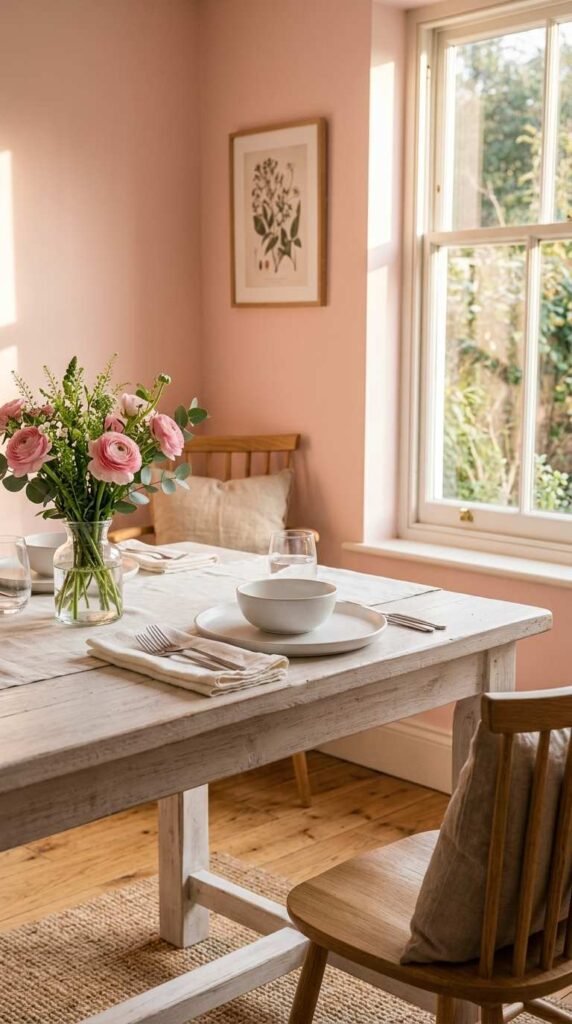
A blush pink accent wall is one of the easiest ways to bring warmth into a dining room without overwhelming the space. Painting just one wall keeps the commitment low while still making a noticeable style statement, especially when paired with natural wood furniture or soft neutral textiles. This idea works so well because it lets the color breathe, rather than surrounding the room in an intense shade that can feel heavy over time. In my experience, blush tones photograph beautifully under natural light, which is exactly why this idea performs so well as a Pinterest-style dining room feature.
Beyond the visual softness, an accent wall also gives you flexibility to change other elements around it without redoing the whole room. Gold light fixtures, white dinnerware, or wood tones all pair naturally with blush pink, making it simple to style seasonally. This approach also suits smaller dining rooms particularly well, since one soft wall adds depth and warmth without shrinking the visual space the way a fully painted room might. I’ve noticed that pairing the wall with sheer curtains enhances the soft glow even further, giving the whole room a gentle, romantic feel that guests immediately notice.
2. Pink Velvet Dining Chairs
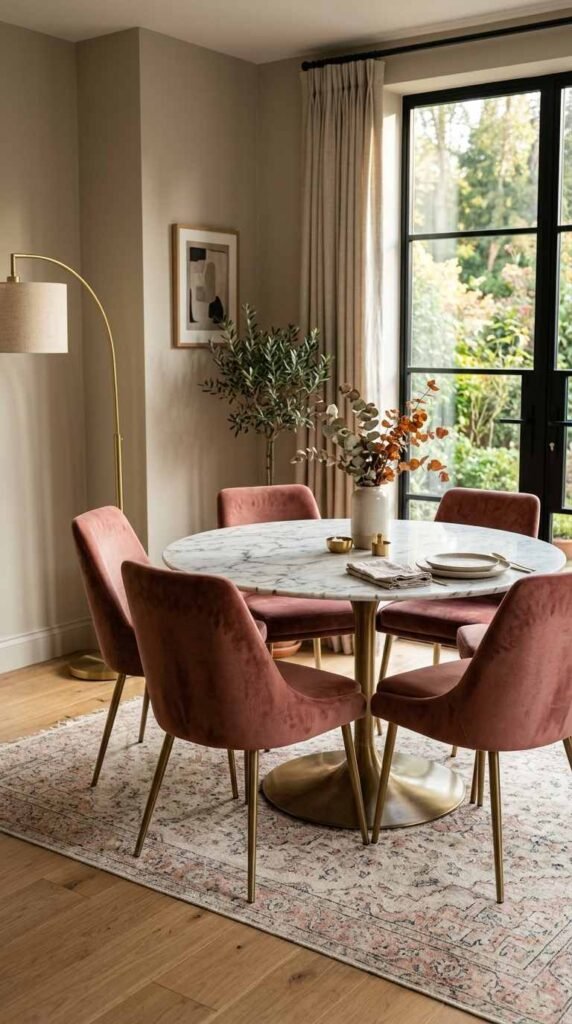
Pink velvet chairs bring an instant sense of softness and luxury to a dining room, even when the rest of the space stays fairly neutral. The plush texture catches light beautifully, giving the chairs a rich, boutique-style appearance that feels elevated without requiring a full redesign. This idea works especially well because chairs are one of the most visible elements in a dining room, making them an easy focal point for introducing color. That’s why many designers recommend starting with statement chairs before committing to a larger color scheme across walls or flooring.
What makes velvet chairs so versatile is how easily they adapt to different table styles, whether paired with a rustic wood table or a sleek modern one. The contrast between soft pink fabric and natural wood or metal legs adds visual interest while keeping the overall look balanced. I’ve seen this work well in many homes, especially when only two or four chairs are upholstered, allowing the color to stand out without feeling overwhelming. This small styling choice consistently delivers a polished, romantic feel that photographs beautifully for both everyday use and special occasions.
3. Dusty Rose Table Linens
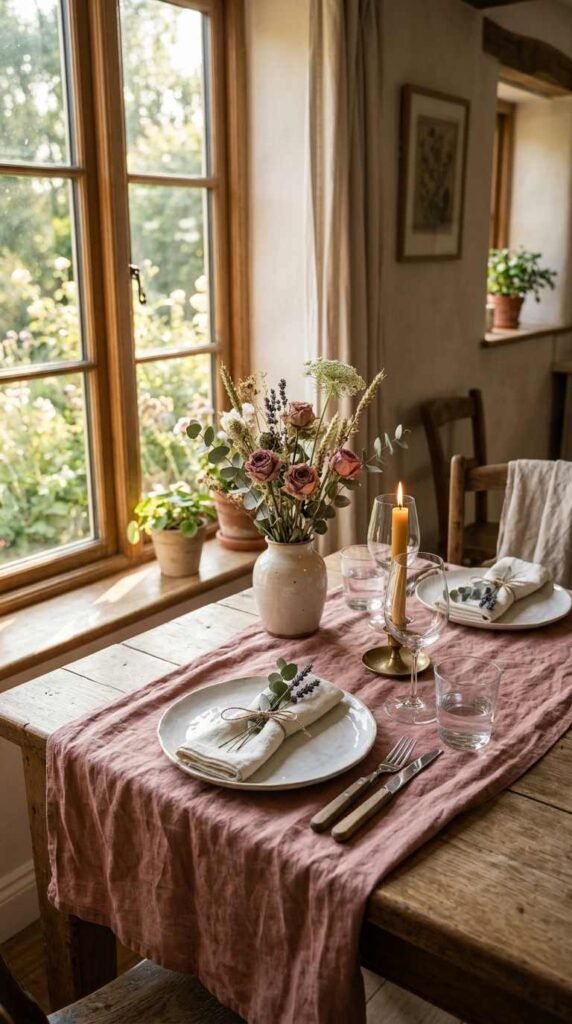
Dusty rose table linens offer one of the simplest ways to introduce pink into a dining room without any major commitment. Unlike bright or bold pink tones, dusty rose feels muted and sophisticated, making it easy to pair with almost any existing decor style. This idea works particularly well for those who want to experiment with color before investing in furniture or wall changes. In my experience, linen fabric holds this softer shade beautifully, since the natural texture diffuses light in a way that feels warm rather than overly saturated or artificial.
Table linens also give you the flexibility to change your dining room’s mood in minutes, simply by swapping colors for different seasons or occasions. Dusty rose pairs especially well with white dinnerware, wood tables, and greenery, creating a calm, balanced tablescape that feels effortless. This approach suits both casual family dinners and more formal gatherings, since the soft tone never feels too playful or too serious. I’ve noticed that adding matching napkins ties the whole look together, making even a simple weekday meal feel a little more intentional and styled.
4. A Pink Floral Centerpiece
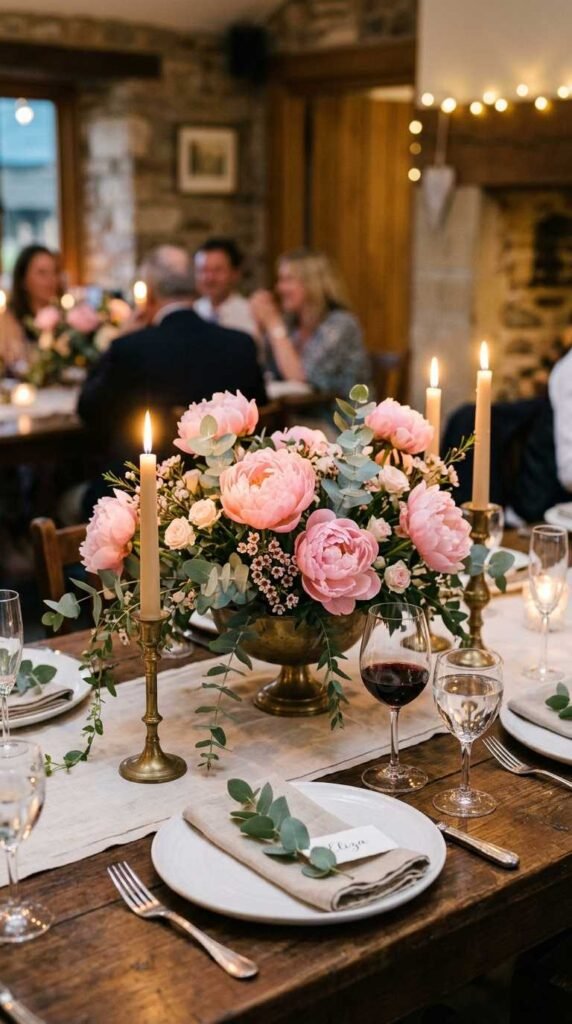
A pink floral centerpiece is one of the fastest ways to bring life and color into a dining room table. Soft blooms like peonies, roses, or ranunculus create a natural focal point that requires very little additional styling to look complete. This idea works so well because fresh flowers add texture, movement, and a soft fragrance that manufactured decor simply can’t replicate. In my experience, a mix of two or three pink shades within the same arrangement creates more depth than a single uniform color, giving the centerpiece a fuller, more natural appearance on the table.
Beyond the visual impact, floral centerpieces also offer incredible flexibility throughout the year, since you can easily swap flower varieties to match the season or occasion. A simple white or clear vase keeps the focus entirely on the blooms, allowing the pink tones to stand out without competing with other tablescape elements. This idea suits both everyday dinners and special gatherings equally well, since fresh flowers instantly elevate the perceived effort behind the table setting. I’ve noticed that guests are always drawn to a floral centerpiece first, making it one of the most impactful styling choices in the entire room.
5. A Pink and Gold Chandelier
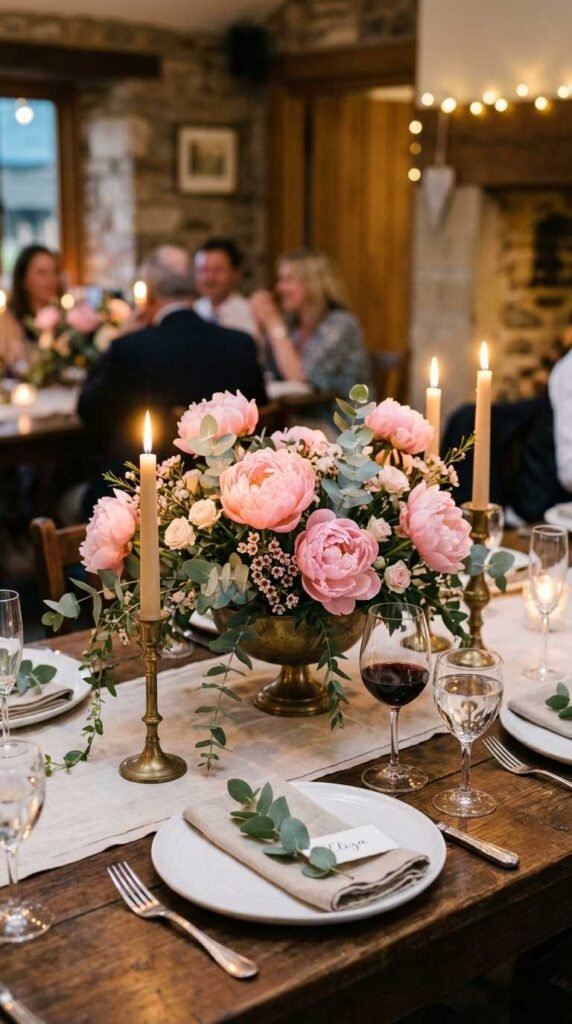
A pink and gold chandelier instantly transforms a dining room into a space that feels curated and intentional. The combination of soft pink glass with warm gold metal creates a balanced look, since the gold prevents the pink from feeling overly sweet or one-dimensional. This idea works particularly well as a statement piece, meaning the rest of the room can stay relatively simple while the chandelier does most of the visual work. That’s why many designers recommend choosing one bold lighting fixture rather than layering multiple pink elements throughout the space at once.
The warm glow this fixture casts also plays a major role in setting the room’s overall mood, especially during evening meals or gatherings. Soft, ambient lighting flatters both the table setting and the people seated around it, which is part of why boutique hotels and upscale restaurants often use similar fixtures. I’ve seen this work well in many homes, particularly when paired with simple white or cream walls that let the chandelier’s colors stand out clearly. This single addition can shift an entire dining room from ordinary to genuinely elegant.
6. A Pink Ceramic Vase Collection
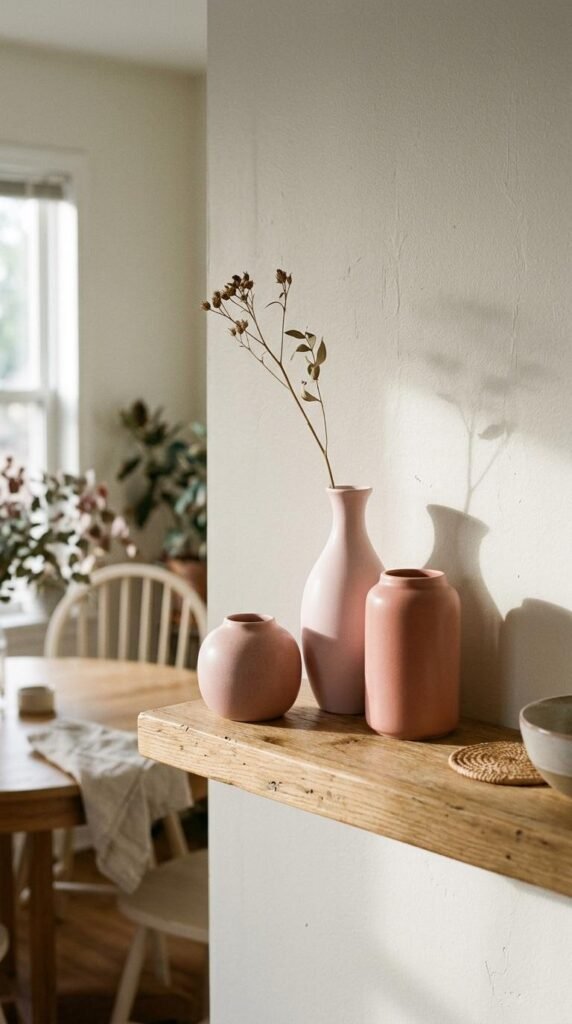
A collection of pink ceramic vases turns an empty sideboard or shelf into a styled focal point with very little effort. Grouping several vases in different shades and shapes creates visual depth, making the display feel curated rather than randomly placed. This idea works especially well for dining rooms that have open surface space but lack a clear decorative anchor. In my experience, odd-numbered groupings, like three or five vases, tend to look more balanced and intentional than even pairs, which is a simple trick used often in professional styling.
This idea also offers practical flexibility, since the vases can hold fresh flowers, dried stems, or simply stand empty as sculptural pieces. Mixing matte and glossy finishes within the same pink family adds another layer of texture, keeping the display from feeling flat or one-note. I’ve noticed that this kind of grouped display photographs particularly well for Pinterest, since the varying heights and textures create natural visual movement across the shelf. It’s a low-cost, high-impact way to bring personality and color into an often-overlooked part of the dining room.
7. Pink Patterned Wallpaper
Choosing the Right Pattern Scale
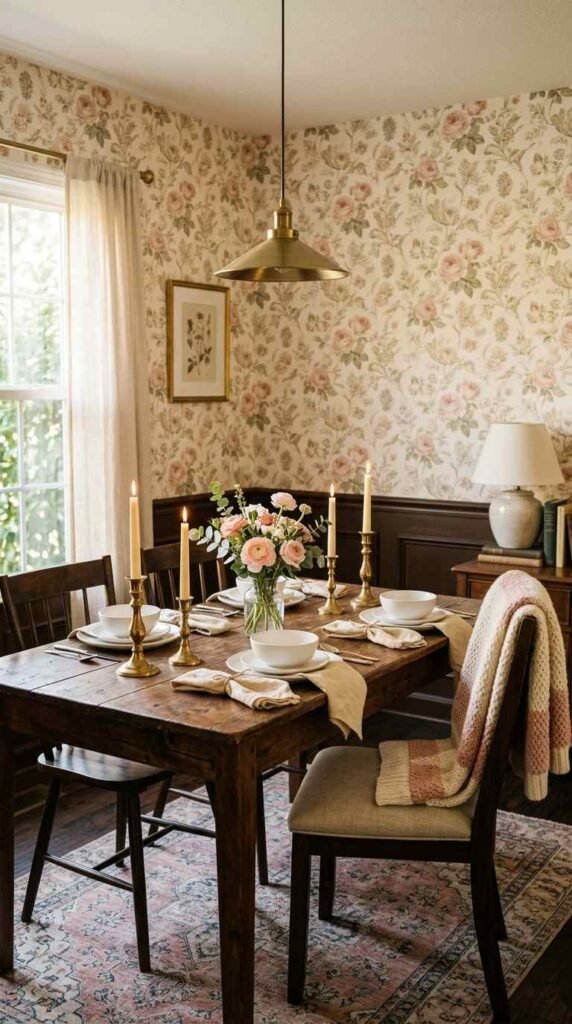
Pink patterned wallpaper brings a level of detail and depth to a dining room that paint alone simply can’t achieve. A soft floral or geometric print adds visual interest to the walls, meaning the rest of the room can stay simple without feeling incomplete. This idea works especially well because wallpaper naturally draws the eye upward and outward, making even a smaller dining room feel more dynamic and styled. In my experience, subtle, smaller-scale patterns tend to age better over time than bold, oversized prints, keeping the space feeling fresh for years.
Wallpaper also eliminates the need for additional wall art in many cases, since the pattern itself becomes the room’s main visual feature. This makes styling the rest of the space significantly easier, as simple furniture and neutral textiles let the wallpaper stand out clearly. Choosing wallpaper for just one wall, rather than the entire room, is also a popular approach for those wanting the look without the full commitment. I’ve noticed that this idea performs especially well on Pinterest, since patterned walls create an instantly recognizable, scroll-stopping backdrop for dining room inspiration photos.
Test a sample swatch under your room’s actual lighting first
Smaller prints suit compact dining rooms without overwhelming the space
Larger, bolder patterns work best on accent walls or bigger rooms
Consider ceiling height, since tall rooms can handle larger-scale designs
8. Blush Pink Curtains
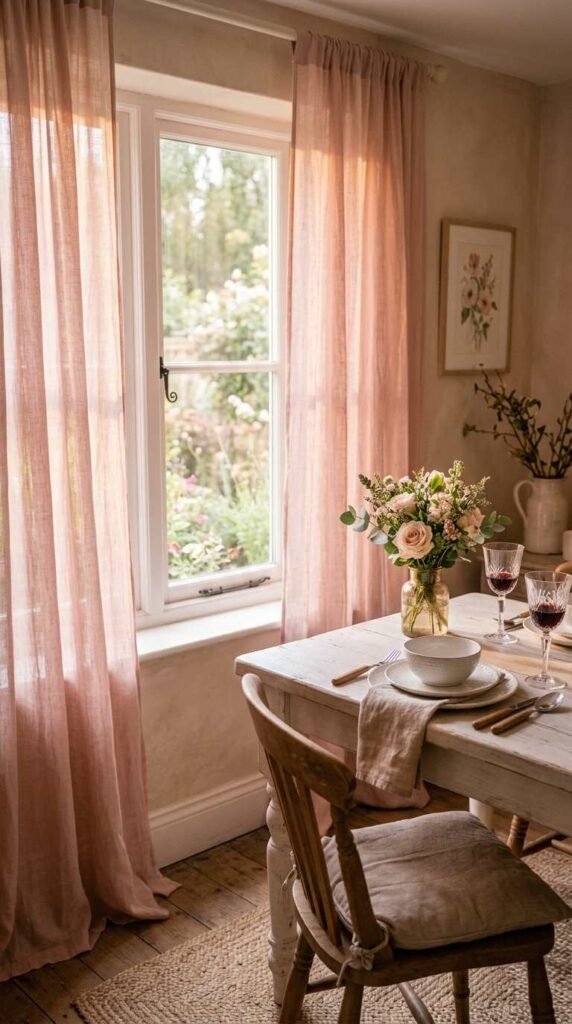
Blush pink curtains are one of the simplest additions that can completely change the feel of a dining room. Hanging near a window, they soften natural light as it enters the space, creating a warm, diffused glow that makes the whole room feel more inviting. This idea works particularly well because curtains require no permanent changes, making them an easy way to test out a pink color scheme before committing further. That’s why many designers recommend starting with window treatments when introducing a new color into an existing room.
Beyond their visual softness, curtains also add a layer of texture that hard surfaces like walls and tables can’t provide on their own. Sheer or lightweight fabrics in blush tones let light filter through beautifully, while still adding a subtle wash of color throughout the day. This idea suits dining rooms of nearly any size, since curtains draw the eye toward the window rather than shrinking the perceived space. I’ve seen this work well in many homes, especially when paired with simple, neutral furniture that lets the soft pink fabric remain the room’s gentle focal point.
9. Pink Glass Stemware
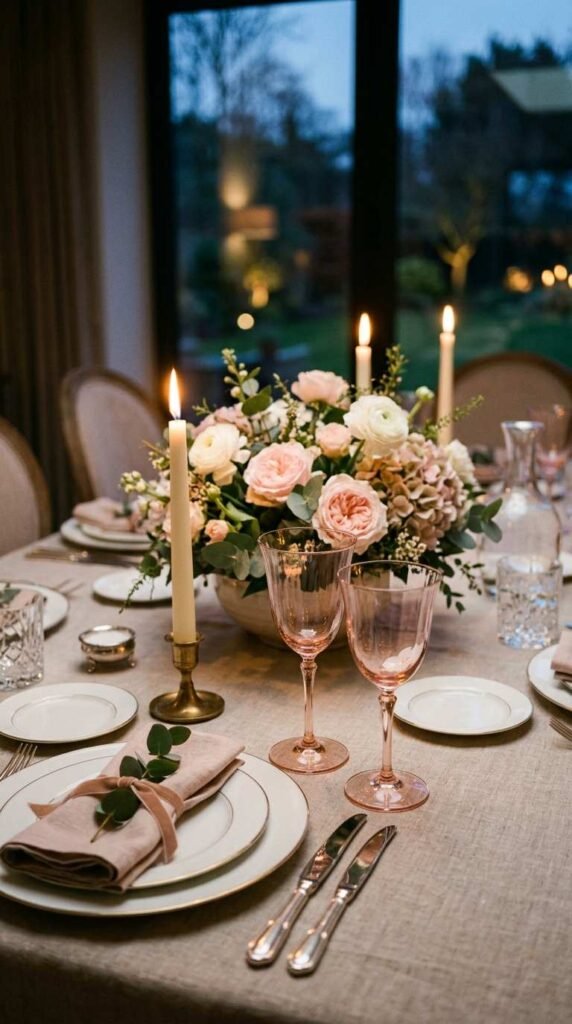
Pink glass stemware is a small detail that makes a noticeably big difference in how a dining table feels. Unlike larger design commitments, glassware is easy to introduce, store, and swap depending on the occasion, making it one of the lowest-effort ways to bring color to the table. This idea works so well because the tinted glass catches and reflects natural light beautifully, adding a subtle sparkle that elevates even a simple weeknight dinner setting. In my experience, pairing pink stemware with plain white dinnerware keeps the look balanced rather than overly themed.
This idea also gives you room to experiment without long-term commitment, since stemware can be swapped seasonally or for special occasions without affecting the rest of the room’s design. Soft pink tones photograph especially well in natural light, which is part of why this detail performs so strongly for styled table settings shared online. I’ve noticed that even just four or six glasses can transform how a table looks in photos, making this one of the most cost-effective upgrades on this entire list. It’s proof that small details often carry the most visual weight.
10. A Pink Upholstered Bench
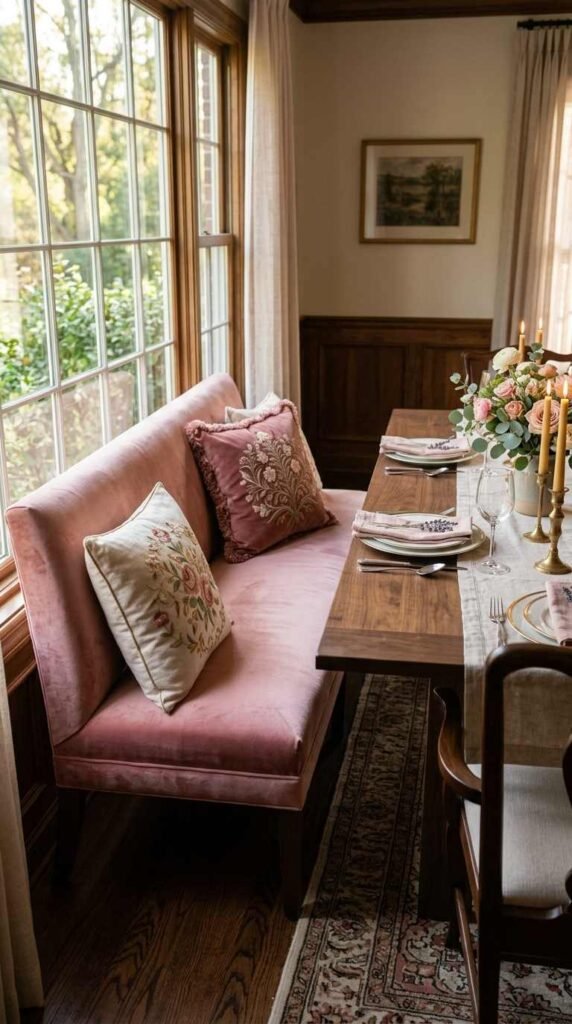
A pink upholstered bench offers a fresh alternative to a full set of matching dining chairs, adding both color and comfort in a single piece of furniture. Placing it along one side of the table creates a relaxed, casual feel, while still making a clear style statement through fabric and tone. This idea works particularly well in dining rooms that need flexible seating, since benches can often seat more people than individual chairs in the same amount of space. In my experience, pairing a bench with mismatched chairs on the opposite side creates a more collected, lived-in look than a fully matched set.
Beyond its practical benefits, an upholstered bench also softens the overall hardness of a dining space filled with wood tables and floors. The fabric adds a tactile element that chairs alone often can’t provide, especially when finished in a soft pink tone that feels warm rather than sharp. This idea suits family dining rooms particularly well, since benches tend to be more forgiving for children and casual everyday use. I’ve seen this work well in many homes, especially when the bench becomes the unexpected style highlight of an otherwise simple table setup.
11. A Pink Art Gallery Wall
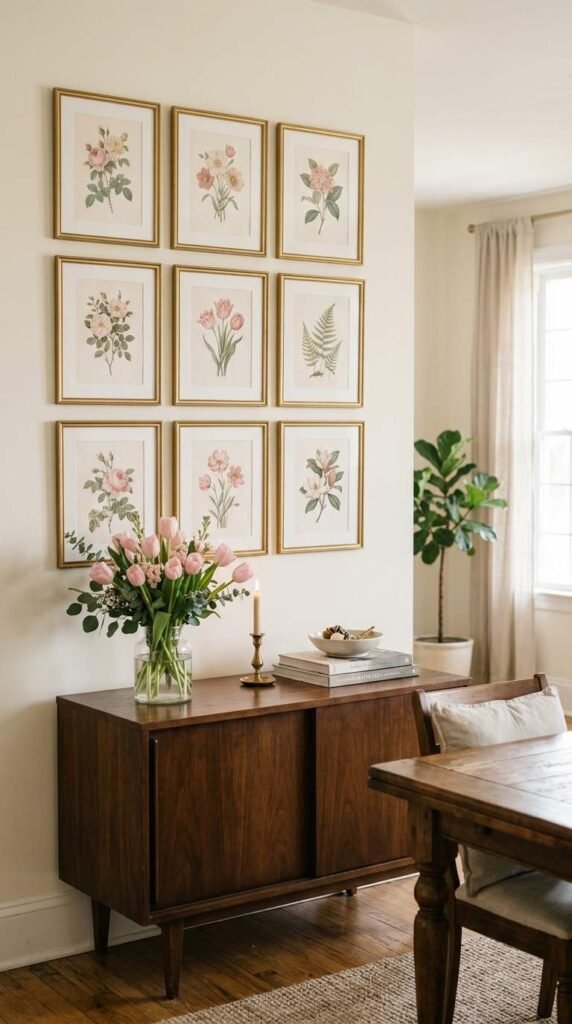
A pink art gallery wall is one of the most effective ways to add personality and color to a dining room without touching the paint or furniture. Curating a mix of framed pieces in varying pink and blush tones creates a layered, artistic display that instantly becomes the room’s focal point. This idea works especially well because it allows for personal expression, meaning no two gallery walls ever look exactly the same. That’s why many designers recommend gallery walls for dining rooms that feel visually flat or lack a clear point of interest.
What makes this idea so practical is how easily it evolves over time, since individual pieces can be swapped, added, or rearranged without disrupting the overall look. Mixing frame sizes and slightly varying pink tones within the artwork keeps the wall feeling curated rather than uniform or overly matched. I’ve noticed that gallery walls also make a dining room feel more finished and intentional, since blank walls often make even well-furnished rooms feel incomplete. This approach turns a simple wall into a genuine conversation piece for guests.
12. A Pink Table Runner
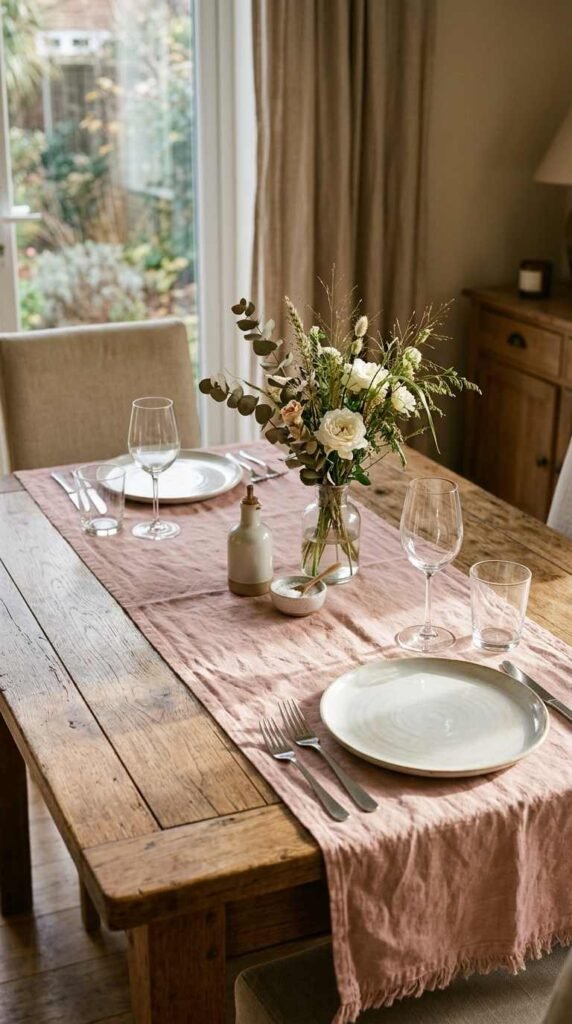
A pink table runner is one of the simplest styling tools for adding color to a dining table without fully covering its surface. Unlike a full tablecloth, a runner allows the natural wood grain or table material to remain visible, creating a balanced look between color and texture. This idea works especially well because it requires very little effort or cost, yet consistently elevates the overall presentation of a table setting. In my experience, a runner in a soft pink tone pairs beautifully with both minimal and more decorative table settings alike.
This idea also offers exceptional versatility, since runners can be swapped in minutes to match seasons, holidays, or personal mood without any major styling overhaul. Placing simple white dinnerware and clear glassware on top keeps the focus on the runner’s color while maintaining an uncluttered, elegant table. I’ve noticed that this small addition photographs particularly well for styled dining content, since the color runs the full length of the table and draws the eye naturally from one end to the other. It’s an easy, low-cost way to keep a dining table looking consistently fresh.
13. Pink Rattan Chair Cushions
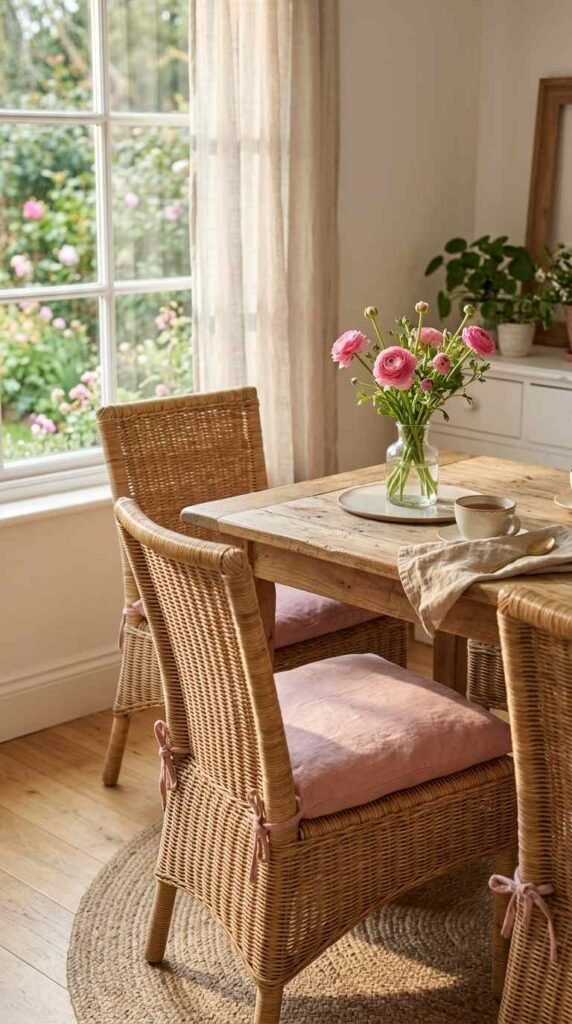
Pink rattan chair cushions bring softness and color to seating that would otherwise feel raw and neutral. Rattan chairs already add natural texture to a dining room, and topping them with a soft pink cushion balances that texture with a touch of warmth and comfort. This idea works particularly well because it doesn’t require replacing the chairs themselves, making it one of the most budget-friendly ways to introduce color into the seating area. In my experience, tie-on cushions in a soft blush or dusty pink tone photograph especially well against the natural woven backdrop of rattan.
This combination also suits a wide range of design styles, since rattan bridges both boho and classic aesthetics while pink cushions add a romantic softness that keeps the look from feeling too rustic. The cushions are easy to remove, wash, or swap seasonally, giving the dining room flexibility without any long-term commitment. I’ve noticed that this pairing works especially well in bright, naturally lit rooms, since the combination of woven texture and soft color feels fresh and airy rather than heavy. It’s a simple upgrade with a genuinely high visual return.
14. A Pink Painted China Cabinet
Choosing the Right Shade
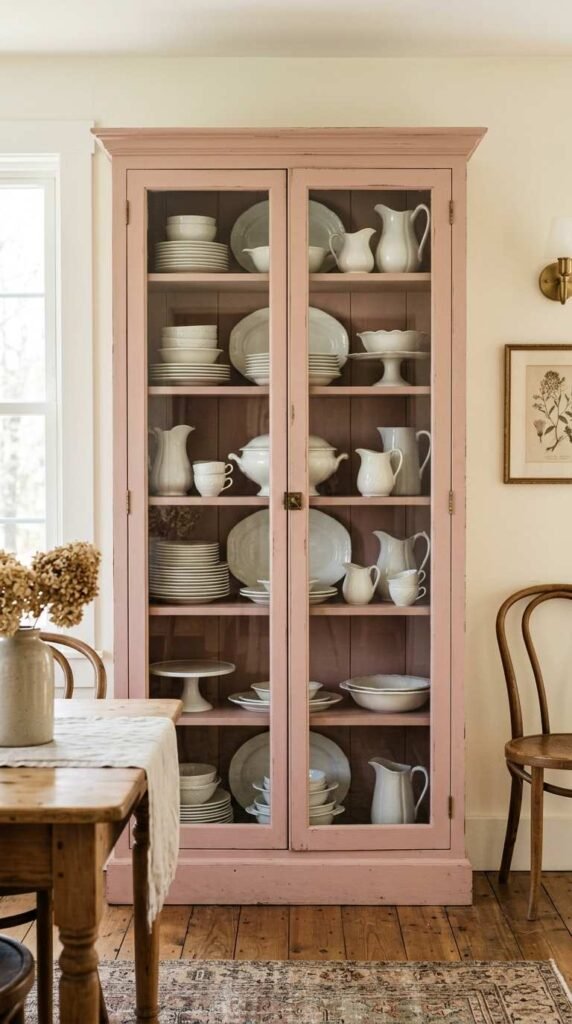
A pink painted china cabinet turns a functional storage piece into one of the dining room’s strongest visual features. Rather than leaving a cabinet in its original wood or white finish, painting it a soft pink shade transforms it into a genuine focal point that draws the eye immediately upon entering the room. This idea works especially well in dining rooms that feel neutral or lack a clear standout piece, since the cabinet does the visual heavy lifting on its own. That’s why many designers recommend starting with furniture paint before considering wall color changes.
Beyond the color itself, a painted china cabinet also lets you display dinnerware, glassware, or collected pieces in an intentional, curated way. The contrast between the soft pink exterior and the white or clear items displayed inside creates a layered, styled look without much additional effort. I’ve seen this work well in many homes, particularly with vintage or secondhand cabinets, since the imperfections in older furniture add character once painted. This idea proves that a single furniture update can completely shift the tone of an entire room.
Matte finishes often look more vintage than glossy ones
Dusty or muted pinks tend to feel more timeless than bright tones
Test paint samples on the cabinet itself under natural light
Consider the wall color behind it to ensure enough contrast
15. A Pink Candle Display
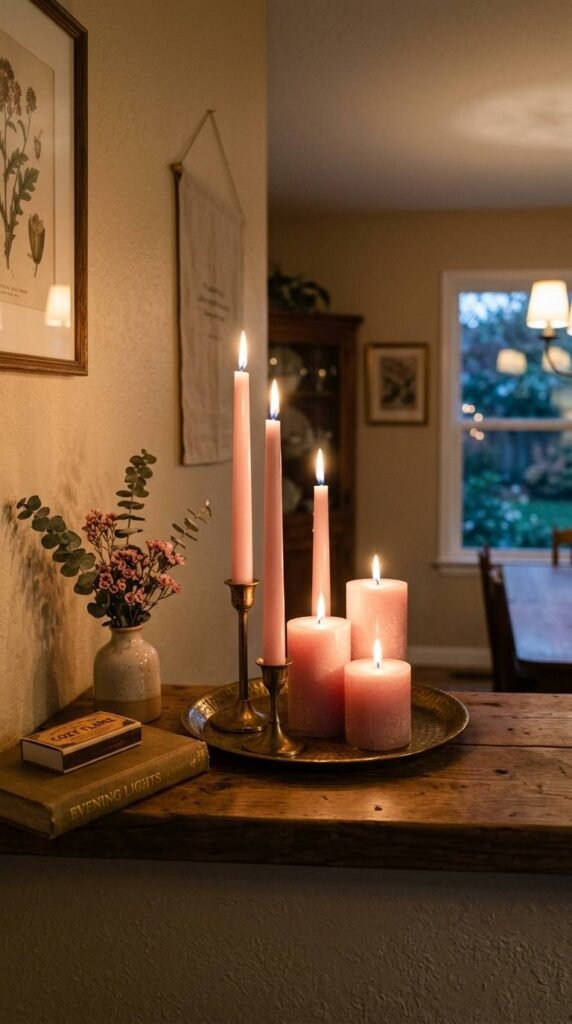
A pink candle display is one of the easiest ways to add both color and ambiance to a dining table in a single styling move. Grouping candles of varying heights creates natural visual interest, while the soft pink tone ties the display into the room’s overall color scheme without requiring any permanent changes. This idea works especially well for evening gatherings, since the warm candlelight enhances the pink tones in a way that overhead lighting simply can’t replicate. In my experience, mixing taper and pillar candles together creates more dimension than using only one candle style.
This idea also offers excellent flexibility, since candles can be added to or removed from an existing tablescape depending on the occasion or mood. Pairing pink candles with brass or gold holders adds warmth and a touch of elegance, echoing the metallic accents often used elsewhere in pink-toned dining rooms. I’ve noticed that this display works particularly well for dinner parties or special occasions, since the soft glow instantly makes the space feel more intimate and considered. It’s a small, affordable detail that consistently elevates the mood of the entire room.
16. Pink and White Striped Textiles
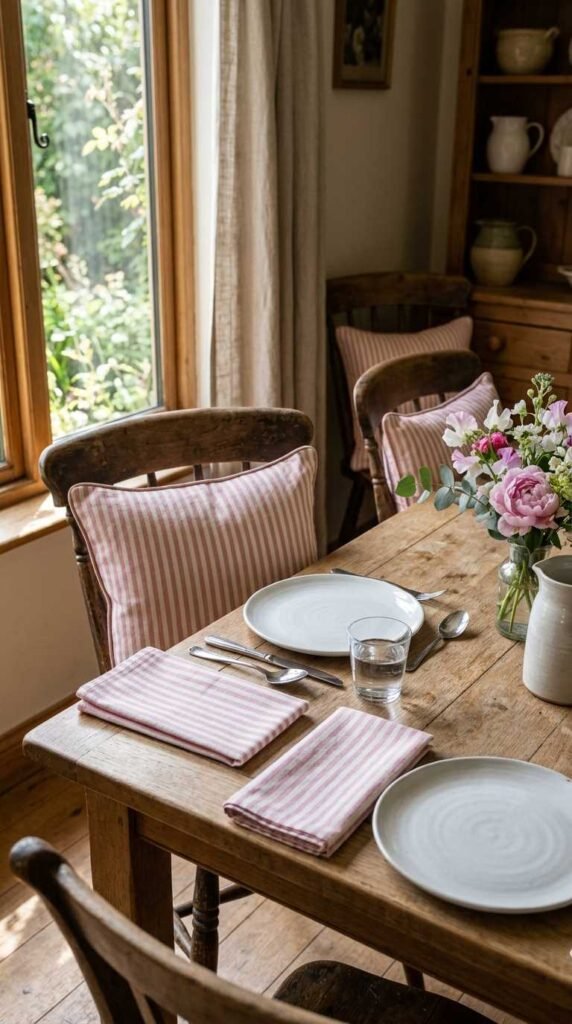
Pink and white striped textiles bring a classic, timeless pattern into a dining room without straying too far from a soft, cohesive color palette. Unlike bold florals or busy prints, stripes feel crisp and structured, making them easy to pair with almost any existing table setting. This idea works particularly well for those who want pattern in their decor without it becoming the room’s dominant visual feature. In my experience, striped napkins paired with a solid pink runner create just the right amount of contrast without looking mismatched or overly busy.
This combination also photographs beautifully, since the clean lines of a stripe pattern read clearly even in smaller design details like napkins or placemats. Mixing striped and solid pink textiles throughout the table setting adds depth while keeping the overall look organized and intentional. I’ve noticed that this pairing works especially well for brunches or daytime gatherings, since the fresh, crisp pattern feels light and inviting under natural sunlight. It’s a simple way to add texture and visual movement to a pink dining room without complicating the color scheme.
17. Pink Marble Accents
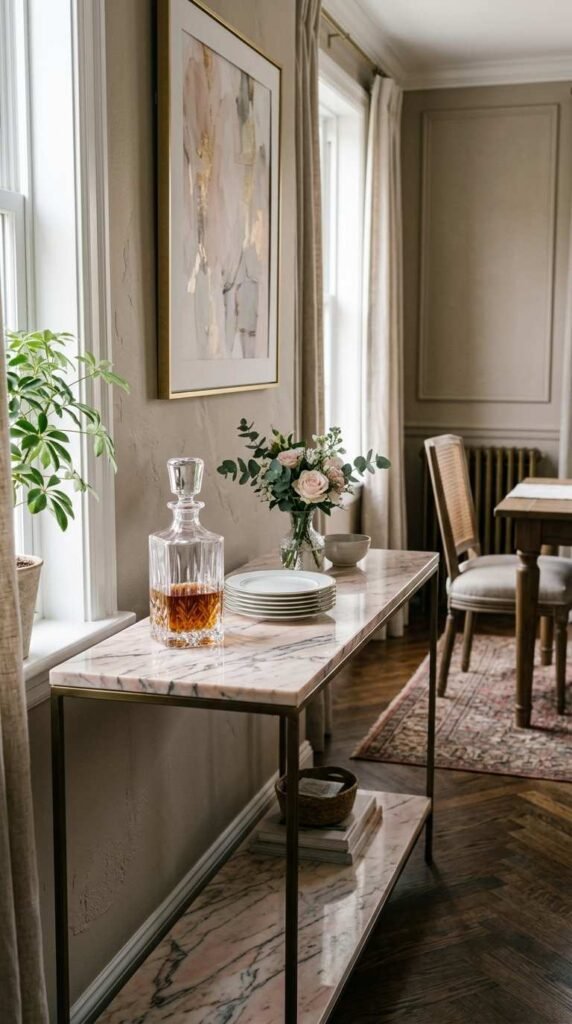
Pink marble accents bring a polished, upscale quality to a dining room that softer textiles or paint alone can’t fully achieve. Small pieces like coasters, trays, or a marble vase introduce color through natural veining, giving the room a more refined, modern edge. This idea works especially well for those who prefer a subtler approach to pink, since the marble’s pattern feels sophisticated rather than overly playful. In my experience, pink marble pairs beautifully with gold or brass hardware, since the warm metal tones complement the stone’s cool, veined surface.
These accents are also incredibly practical, since small marble pieces can be added to nearly any existing table setting without requiring larger furniture changes. A marble serving tray, for example, adds both function and style, making it easy to display candles, flowers, or dinnerware in an elevated way. I’ve seen this work well in many homes, particularly modern or minimalist dining rooms looking to introduce color without disrupting a clean aesthetic. This idea proves that even the smallest material choices can meaningfully elevate a room’s overall feel.
18. A Pink Area Rug
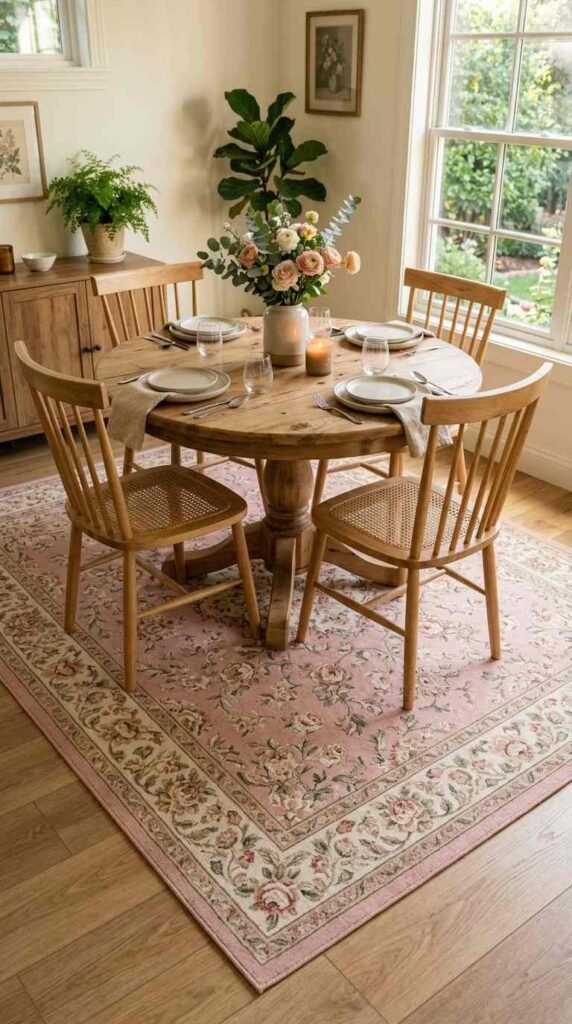
A pink area rug is one of the most effective ways to ground a dining room while introducing color from an often-overlooked surface. Placed beneath the table, a soft pink rug adds warmth and texture underfoot, making the entire space feel more complete and intentional. This idea works particularly well in rooms with hard flooring, since the rug softens the overall look while tying the furniture together visually. In my experience, a rug with a subtle pattern or texture tends to hide everyday wear better than a completely flat, solid-colored option.
This idea also offers a unique advantage, since rugs introduce color across a large surface area without requiring changes to walls or furniture. A soft pink tone underfoot creates a cohesive base that ties together chairs, table linens, and other decor pieces throughout the room. I’ve noticed that rugs also help define the dining area within larger, open-concept spaces, giving the room a clear visual boundary. This idea proves that color doesn’t always need to start at eye level to make a meaningful impact on a room’s overall atmosphere.
19. A Pink Ruffled Lampshade
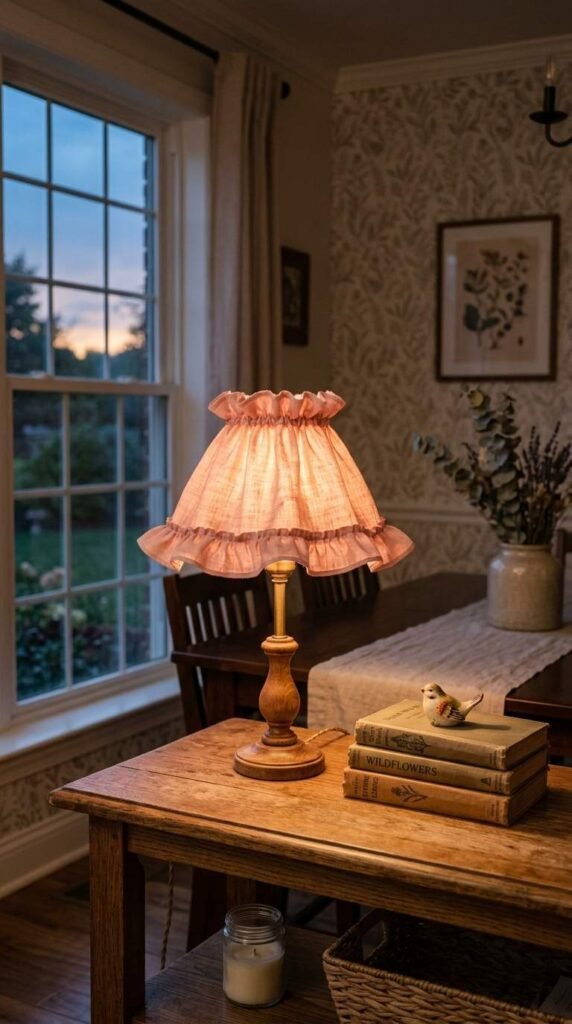
A pink ruffled lampshade turns a simple functional item into a decorative feature that adds both texture and warmth to a dining room. The ruffled detail catches light in a soft, diffused way, creating a cozy glow that feels distinctly different from typical overhead lighting. This idea works especially well for dining rooms that already have a table lamp or sideboard lighting, since it requires no major furniture changes to make an impact. In my experience, a single ruffled lampshade can shift the entire mood of a room from plain to genuinely charming.
This detail also pairs particularly well with vintage or classic dining room styles, since ruffled textures evoke a traditional, romantic aesthetic. Placing the lamp on a sideboard or china cabinet adds a soft light source that complements overhead fixtures rather than competing with them. I’ve noticed that this small addition photographs beautifully in the evening, when the warm glow highlights the ruffled texture against the surrounding decor. It’s proof that even the smallest lighting details can carry real decorative weight in a dining room.
20. A Pink Peony Centerpiece
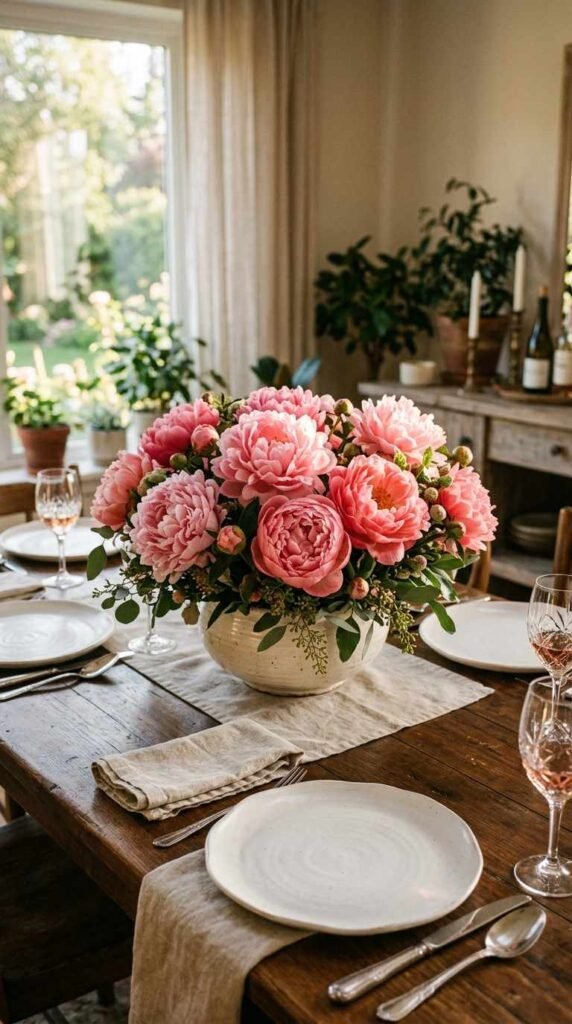
A pink peony centerpiece brings a lush, full-bodied floral moment to the dining table that few other flowers can match. The layered, ruffled petals create natural texture and volume, making even a single vase feel like a complete, styled arrangement. This idea works especially well because peonies have a naturally romantic quality, instantly softening the overall feel of the dining room without needing any additional decor. In my experience, placing peonies in a simple clear glass vase keeps the focus entirely on the flowers themselves, letting their color and shape take center stage.
This centerpiece idea also suits a wide range of occasions, from everyday meals to more formal gatherings, since peonies feel elevated without appearing overly fussy. Their seasonal availability makes them a popular choice for spring and summer table styling, though similar pink blooms can be used year-round for the same effect. I’ve seen this work well in many homes, particularly when paired with soft candlelight in the evening, since the combination enhances the flowers’ delicate color. This idea remains one of the most consistently popular florals for pink-themed dining spaces.
21. Pink Accent Pillows on a Bench
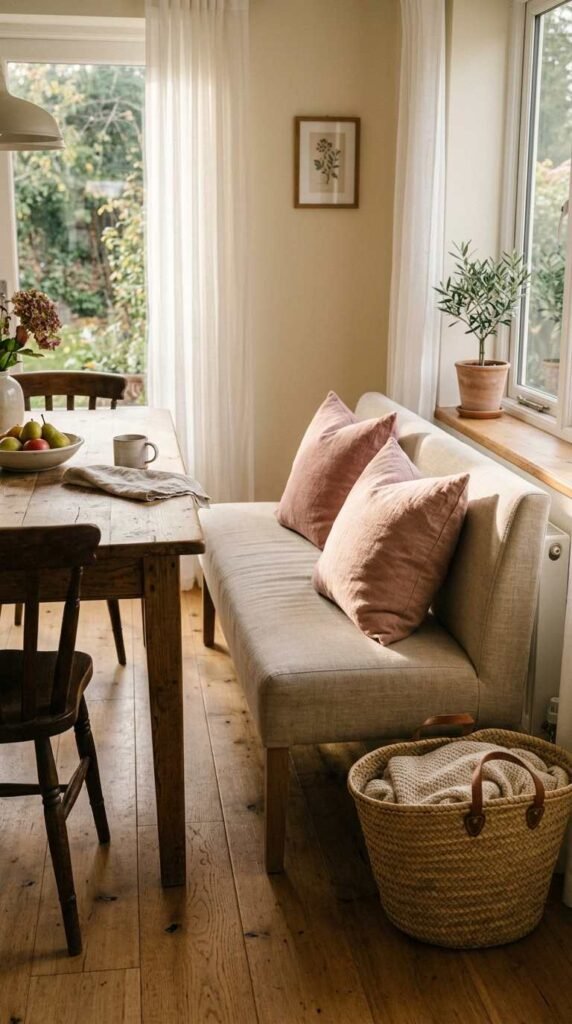
Pink accent pillows on a bench are a simple, low-cost way to add both comfort and color to dining room seating. Rather than committing to a fully upholstered piece, pillows allow you to introduce pink tones gradually, layering different shades and textures for a more collected, styled look. This idea works particularly well for benches, since their flat surface provides the perfect base for arranging multiple pillows without looking cluttered. In my experience, mixing solid and textured pillows in varying pink tones creates more visual interest than using matching pairs alone.
This idea also offers seasonal flexibility, since pillow covers can be swapped easily to refresh the room’s look without any major styling effort. Soft pink pillows make a wood or upholstered bench feel more inviting, encouraging longer, more comfortable meals with family or guests. I’ve noticed that this detail works especially well in casual dining rooms, where comfort and style need to work together rather than compete. It’s a small addition that consistently makes a bench feel like an intentional, styled part of the room rather than an afterthought.
FAQs
1. Is pink a good color for a dining room?
Yes, pink works beautifully in a dining room. Soft shades like blush or dusty rose create a warm, welcoming feel that suits both everyday meals and special dinners. In my experience, lighter pinks feel calming, while deeper tones like rose or mauve add a cozy, elegant touch without overwhelming the space.
2. Should I paint the whole room pink or just one wall?
It depends on the mood you want. A single accent wall gives a soft pop of color without feeling too bold, which is great for smaller rooms. Painting the whole room works well if you’re going for a fully immersive, romantic look. I’ve noticed most homeowners start with one wall first, then decide if they want more.
3. What furniture pairs well with a pink dining room?
Wood tones, rattan, and white furniture all pair beautifully with pink walls or decor. Natural wood tables ground the space, while white chairs keep things light and airy. Gold or brass accents also add a touch of glam. The key is balancing pink with neutral pieces so the room feels styled, not overly sweet.
4. What shade of pink works best for dining rooms?
Muted shades like blush, dusty rose, and terracotta-pink tend to work best. These tones feel warm and sophisticated rather than childish. Brighter pinks can work too, but usually as small accents like pillows or florals rather than covering large surfaces. Soft, dusty pinks are easiest to style around different furniture and lighting.
5. How do I add pink without repainting the room?
Small touches make a big difference. Try pink table linens, a floral centerpiece, cushions, or a vase collection. These are simple, low-commitment ways to bring in color and can easily be switched out later. I’ve seen this work well in rental homes where painting isn’t an option.
6. What metals pair best with pink dining room decor?
Gold and brass are the most popular choices, giving pink a warm, elegant finish. Silver and chrome can also work for a cooler, more modern look. Matte black is another option if you want a bolder, more dramatic contrast against soft pink tones.
7. Can pink dining room decor still feel elegant?
Absolutely. The trick is choosing muted, dusty pink tones instead of bright or neon shades, and pairing them with rich textures like velvet, marble, or brass. That’s why many designers recommend keeping pink as an accent rather than the dominant color, so the space feels refined rather than overly playful.
8. What wall decor suits a pink dining room?
Framed art, mirrors, and gallery walls all work well. Soft botanical prints or abstract art in pink and neutral tones complement the space without clashing. Mirrors also help bounce natural light around the room, making it feel brighter and more open.
9. How do I balance pink so it does not feel too sweet?
Mixing in neutrals like white, beige, or grey keeps things balanced. Adding natural textures such as wood, rattan, or linen also softens the sweetness of pink. In my experience, one or two pink elements per space, paired with neutral furniture, usually gives the best result.
10. Does pink work in a small dining room?
Yes, especially in lighter shades like blush or pale pink, which help a small space feel open and airy. Using pink in small doses, like on chair cushions or a table runner, is an easy way to add color without making a compact room feel closed in.
Conclusion
Pink dining room decor proves that soft colors can feel just as elegant as bold, dramatic ones. From a simple blush accent wall to a full pink and gold chandelier moment, there are endless ways to bring warmth and personality into your dining space. I’ve seen this style work beautifully in both small apartments and larger family homes, which shows just how flexible pink really is.
The best part is that you don’t need a full renovation to try it. Small changes, like swapping in pink linens, a floral centerpiece, or a few cushions, can completely shift the feel of your dining room. Start with one idea from this list, see how it feels in your space, and build from there. Pretty pink dining room decor isn’t just a trend, it’s a timeless way to make your dining room feel warmer, softer, and more inviting.