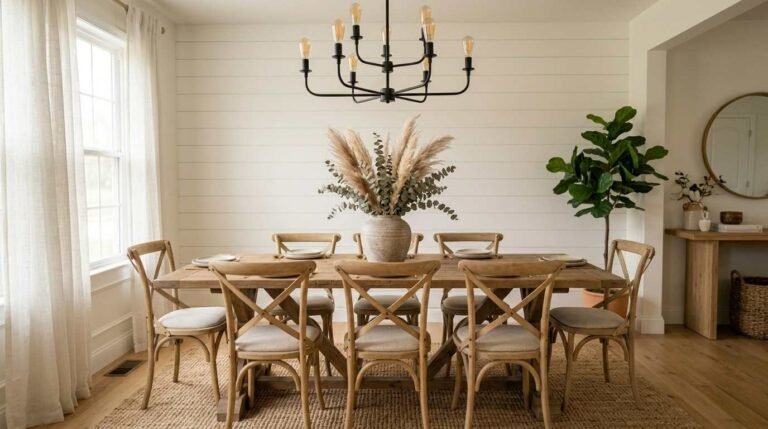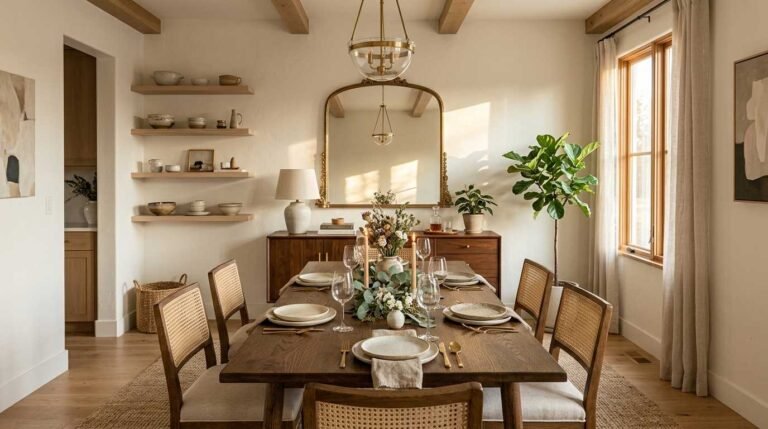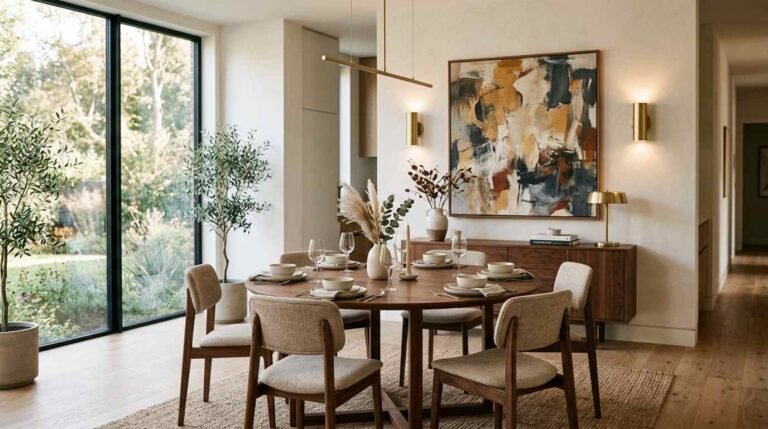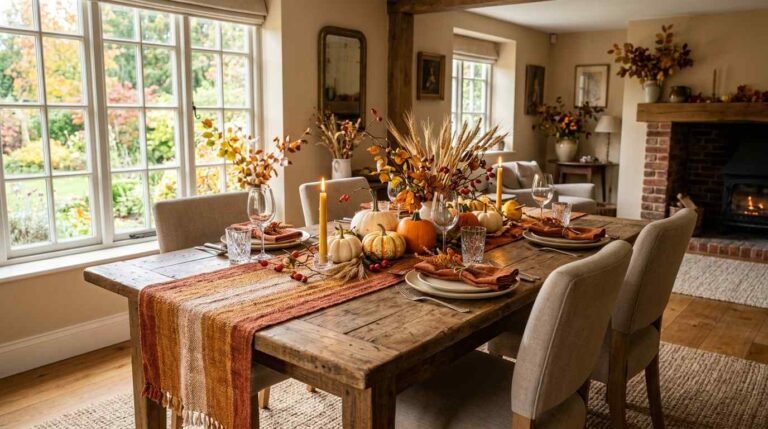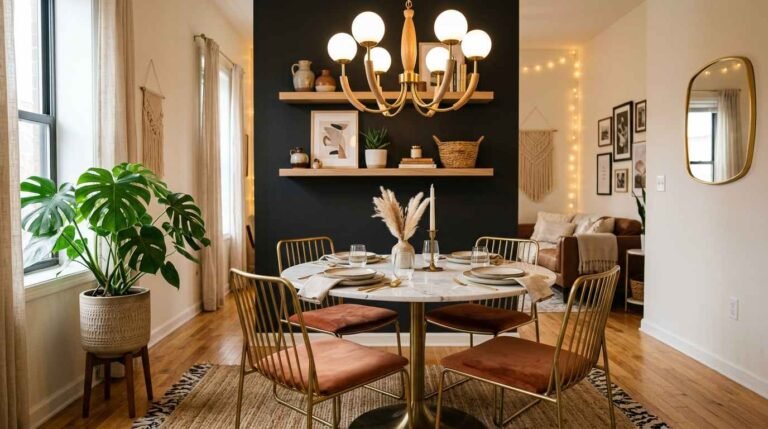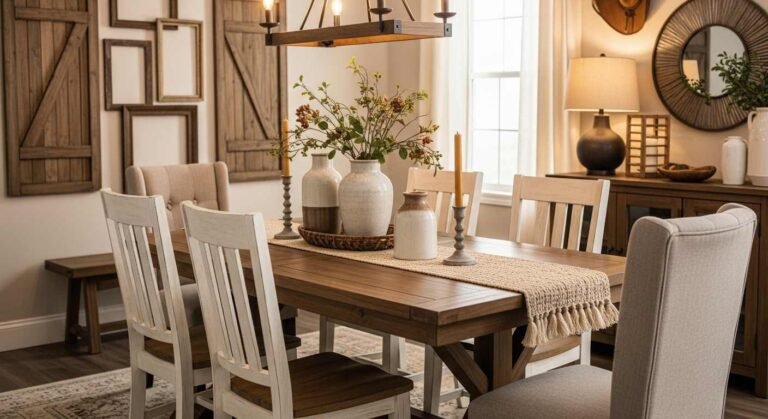
Dining room decor ideas don’t have to be complicated or expensive to make a real difference. If your dining space feels flat, forgotten, or just a little bland, these 20 practical ideas will help you change that fast. In my experience, the biggest transformations come from small, smart choices: better lighting, a well-sized rug, a fresh centerpiece, and a wall that finally has something to say. I’ve seen one statement fixture and a set of mismatched chairs turn a boring room into the favorite spot in the house. Keep scrolling, save the looks you love, and get ready to give your dining room a fresh start.
1. Statement Lighting Fixture

- Creates an instant focal point overhead
- Sets the mood for every meal
- Draws the eye upward and adds height
- Works with modern, rustic, or classic styles
- Changes the room without moving furniture
A statement light is the fastest way to make a dining room feel designed. Whether it’s a woven pendant, a sculptural chandelier, or a cluster of glass globes, one fixture pulls the whole room together. In my experience, lighting changes the mood more than new furniture does. Choose a size around one half to two thirds the width of your table so it looks proportionate. Warm bulbs make wood tones and faces glow, which turns even a simple weeknight dinner into something that feels a little more special and inviting.
Height matters as much as style. I’ve noticed that hanging a fixture about thirty to thirty-six inches above the tabletop lights the table without blocking anyone’s view across it. Add a dimmer switch and one fixture can serve bright breakfasts, homework time, and candlelit dinners. If you rent, plug-in pendants with a ceiling hook give the same effect without any wiring. Pick a finish that echoes other metals in the room, like brass hardware or black chair legs, so the look feels connected and intentional from every angle.
2. Layered Area Rug

- Anchors the table and defines the dining zone
- Adds warmth and texture underfoot
- Softens the sound of scraping chairs
- Introduces pattern without touching the walls
- Hides everyday crumbs and wear
A rug turns a table and chairs into a real dining room. Layering a smaller patterned rug over a larger natural fiber one, like jute, adds depth and a collected look that a single rug can’t match. In my experience, the base layer does the practical work while the top layer supplies the personality. Choose colors already in your room so the mix feels intentional. The texture underfoot also makes the room feel cozier, and it softens the echo that hard floors create during busy family meals and conversation.
Size is where most people go wrong. I’ve noticed that a rug too small leaves chair legs catching on the edge, which looks messy and feels awkward. Aim for at least two feet of rug beyond the table on every side, so chairs stay on it when pulled out. A non-slip pad underneath keeps everything safe and in place. Flat weaves are easiest to clean and slide under chairs smoothly. When you want a fresh look, simply swap the top layer and the whole room feels new.
3. Mix-and-Match Dining Chairs

- Adds personality and a collected feel
- Lets you use thrifted or inherited chairs
- Breaks up a matchy, showroom look
- Works with almost any table style
- Budget-friendly and easy to build slowly
Matching chair sets are lovely, but mismatched chairs have more character. Mixing shapes, finishes, or upholstery around one table makes a dining room feel layered and lived-in rather than staged. In my experience, the secret is a common thread, such as the same wood tone, the same color family, or similar leg height. That keeps the variety looking deliberate. Two upholstered chairs at the ends with four wooden ones along the sides is a classic combination that always looks polished and thoughtful without feeling too rigid or repeated.
I’ve seen this idea work wonderfully for people building a dining room slowly. Flea markets, secondhand shops, and online listings offer solid chairs at friendly prices, and a coat of paint can unify very different pieces. Keep seat heights within an inch or two of each other so everyone sits comfortably. Add cushions in a shared fabric to tie the group together. Because no set needs to match, you can add or swap a chair whenever you find something you love, and the table keeps evolving over time.
4. Fresh Floral Centerpiece

- Adds color, fragrance, and life to the table
- Works with grocery-store stems
- Easy to change with the season
- Creates a natural focal point
- Costs very little to refresh
Fresh flowers are the simplest luxury you can put on a table. A jar of grocery-store tulips, a bunch of eucalyptus, or a few garden stems in a ceramic pitcher adds color and fragrance that no decorative object can copy. In my experience, arrangements look best when they feel relaxed rather than perfect. Choose one or two types of flower and add a little greenery. Keep the height below about twelve inches so guests can see and talk across the table without leaning around a tall arrangement that blocks the conversation.
I’ve noticed that the vase matters nearly as much as the flowers. A clear glass bottle, a stoneware jug, or a small brass vase each changes the mood, so use what suits your room. Trim the stems on an angle and change the water every couple of days to extend freshness. When flowers are out of budget, a few branches from the yard look wonderful too. This small weekly ritual makes the dining room feel cared for and ready for company at any moment.
5. Curated Wall Art Accent

- Gives the walls personality
- Reflects your taste and travels
- Works with prints, paintings, or photography
- Easy to update over time
- Ties the room’s colors together
A dining room wall is the view everyone shares at every meal, so it deserves something you love. Curated art, whether a large painting, a set of prints, or travel photography, makes the room feel personal rather than generic. In my experience, choosing pieces that echo two or three colors already in the room makes everything feel connected. Hang the center of the artwork at about fifty-seven inches from the floor, roughly eye level. Placing it above a sideboard or behind the table gives the wall a purpose and helps the whole room feel finished.
I’ve noticed that people often hang art too high or too small. Aim for a piece or group covering about two thirds of the width of the furniture below it. Frames in one finish, like black or natural wood, keep mixed images looking cohesive. Buy slowly and only what you love, since a curated wall feels more authentic than one filled quickly. Local art fairs and online print shops offer affordable options, and you can rotate pieces every season to keep the room feeling fresh.
6. Warm Neutral Paint Palette

- Creates a calm, flexible foundation
- Makes wood and metal tones look richer
- Reflects light and opens up small rooms
- Works with any accent color later
- Ages well without feeling dated
Paint is the least expensive way to change a whole room. Warm neutrals like creamy white, soft greige, or pale sand create a welcoming backdrop that flatters wood furniture, brass accents, and food itself. In my experience, warm undertones feel far more inviting than stark white, which can look cold in evening light. A neutral base also makes every other decision easier, because rugs, art, and textiles all sit comfortably against it. Choose a finish like eggshell or satin so the walls reflect a little light without highlighting every small flaw in the surface.
Testing is the step people skip. I’ve noticed that the same paint looks completely different in morning and evening light, so brush large swatches on two walls and live with them for a few days. Consider painting trim and ceiling in a slightly lighter tone for a soft, airy finish. When you want a change later, swapping a rug or napkins is enough, with no repainting needed. Neutral walls give a dining room room to grow, and they always look calm, clean, and quietly elegant.
7. Functional Buffet or Sideboard

- Adds hidden storage for linens and serving pieces
- Creates a surface for lamps and decor
- Doubles as a serving station for gatherings
- Helps the room look finished
- Keeps the table free of clutter
A sideboard is the hardest-working piece in a dining room. Closed doors hide linens, candles, and serving dishes, while the top becomes a stage for a lamp, a plant, and a tray. In my experience, this one piece makes a room feel complete, because it gives the eye a second place to land besides the table. When guests come, it turns into a serving station, keeping food within reach without crowding the table. Choose a finish that complements your table, or go slightly lighter or darker for a curated look.
Measure before you buy. I’ve noticed that people forget to allow room for chairs to slide out and doors to open, so keep about thirty-six inches of clearance in front. Slim styles around twelve to sixteen inches deep suit narrow rooms well. Legs that lift the piece off the floor make it look lighter. Style the top in a loose triangle, with a tall lamp, a medium plant, and a low bowl, and the whole wall looks intentional and beautifully finished.
8. Layered Table Linens

- Adds texture and softness to the table
- Protects the surface from scratches
- Easy to swap for a new look
- Works for casual or formal meals
- Uses inexpensive, washable fabrics
Linens are the quickest way to dress a table. A simple runner, cloth napkins, and a set of placemats add texture, softness, and a sense of care that bare wood cannot give. In my experience, natural fabrics like linen and cotton look better with age, since gentle wrinkles feel relaxed rather than untidy. Layering a runner over a tablecloth, or placemats over a runner, adds depth without much effort. Neutral tones work with everything, while a muted color like sage, rust, or dusty blue brings a quiet accent to the setting.
Practical details make the difference. I’ve noticed that a runner should extend about six to twelve inches past each end of the table, and placemats look best when they sit a thumb’s width from the edge. Wash on a gentle cycle and air dry so fabrics keep their drape. Keep a few sets in different colors, and swap them with the seasons. It costs very little, takes seconds to change, and instantly makes an ordinary meal feel more thoughtful and welcoming.
9. Textured Window Treatments

- Softens windows and adds height
- Diffuses daylight beautifully
- Adds texture and gentle movement
- Improves privacy without blocking light
- Frames the room like a finishing touch
Curtains do far more than cover windows. Linen, cotton, or woven-look panels add softness, absorb echo, and give the room a finished, layered feeling. In my experience, textured fabrics like linen or slub cotton look richer than flat, shiny ones, and they filter light into a gentle glow. Hang the rod close to the ceiling, or several inches above the window frame, and the room feels taller instantly. Let the panels graze the floor for a clean, elegant line that suits both modern and traditional dining rooms.
Width and fullness are the details that matter. I’ve noticed that curtains look best when the rod extends about six to twelve inches beyond each side of the window, so the glass stays fully visible and the window appears larger. Choose panels that are about two times the width of the window for graceful folds. Steam them before hanging so they fall smoothly. Sheer layers work well for light and privacy, while heavier drapes add warmth in winter. It is a simple upgrade with a big visual payoff.
10. Dining Room Wall Decor Ideas Pairing

- Connects wall pieces with table and furniture
- Creates a cohesive, designed look
- Balances scale, color, and texture
- Prevents the walls from feeling random
- Works with any budget or style
Great walls work best when they talk to the rest of the room. Pairing a wall piece with a nearby element, such as a mirror above a sideboard with matching brass accents, or botanical prints beside a wooden table, makes everything feel connected. In my experience, repeating one color, shape, or material between the wall and the furniture is the easiest way to make a room feel designed. A round mirror over a round table, for example, creates a quiet echo that the eye finds calming and pleasing.
Scale and spacing keep the pairing balanced. I’ve noticed that wall decor should cover roughly two thirds of the width of the furniture beneath it, and hang about six to eight inches above it. Balance a heavy piece on one side with a plant or lamp on the other. Avoid filling every inch, since empty wall space gives the eye a place to rest. With one or two repeated details, even a simple wall and a modest budget can look thoughtful and beautifully coordinated.
11. Cozy Bench Seating

- Seats more people in less space
- Adds a relaxed, family-style feel
- Can hide storage under the seat
- Pairs well with chairs at the ends
- Tucks neatly under the table
A bench turns a dining table into a gathering spot. It squeezes an extra guest or two into each side, tucks fully under the table when not in use, and adds a relaxed, family-style feel that a row of chairs cannot. In my experience, a bench with a cushioned seat is comfortable enough for long dinners, especially with a linen or wool pad. Pair it with two chairs at the ends for a balanced look. Some benches even include hidden storage, which is a real bonus for small dining rooms and apartments.
Comfort and proportion are the key details. I’ve noticed that a bench should sit about the same height as the chairs, and be slightly shorter than the table so it slides underneath easily. A back cushion or a couple of pillows against the wall turns a banquette-style bench into a cozy corner. Choose a durable, wipeable fabric if children use the table daily. Wood, upholstered, or woven styles all work, so pick one that matches your room and let the seating do its quiet, practical job.
12. Open Shelving Display

- Turns dishes and decor into a display
- Adds storage without bulky cabinets
- Draws the eye upward
- Easy to restyle with the seasons
- Keeps everyday items within reach
Open shelves make storage part of the design. Instead of hiding plates and glasses behind doors, you display them, and the wall becomes both practical and pretty. In my experience, white or neutral dishware looks calm and cohesive on open shelves, while a few colorful pieces add personality. Two or three shelves above a sideboard or beside the table are enough to make a difference. Anchor the brackets into studs or use proper wall anchors, since dishes are heavier than most people expect.
Styling is what keeps shelves from feeling cluttered. I’ve noticed that mixing heights works best: stacked bowls, a taller vase, and a small plant leaning beside a framed print. Leave about a third of each shelf empty so the display can breathe. Group items in odd numbers and repeat a color or two along the wall. Place the heaviest pieces on the lowest shelf for balance and safety. Swapping just a few items each season keeps the wall looking new without extra shopping.
13. Soft Candlelight Ambiance

- Creates instant warmth and intimacy
- Costs very little to set up
- Flatters food, faces, and table settings
- Works for everyday and special dinners
- Pairs well with dimmed overhead lights
Candlelight is the easiest way to make a meal feel special. A few candles in varied heights, grouped on a tray or scattered along a runner, add a soft, flickering glow that no bulb can copy. In my experience, dimming the overhead light and lighting three or four candles changes the mood in seconds. Warm white or ivory candles look most natural. Taper candles in simple holders take up almost no table space, while pillar candles in glass hurricanes add a sturdier, cozier look for relaxed everyday dinners.
Safety and practicality keep the ritual enjoyable. I’ve noticed that keeping candles slightly lower than eye level, and away from napkins and greenery, makes the table feel calm and worry-free. Battery-operated candles are a great option for homes with children or pets, and modern versions have a surprisingly realistic flicker. Choose unscented candles at the table so they don’t compete with the food. This small habit turns ordinary weeknights into little occasions, and it costs far less than dining out.
14. Seasonal Tablescape Rotation

- Keeps the room feeling fresh all year
- Uses a few small swappable pieces
- Easy to store and reuse
- Adds seasonal color without redecorating
- Encourages creativity with minimal cost
A seasonal rotation keeps a dining room from ever feeling stale. Swap the centerpiece, napkins, and a few accents as the year turns, and the same table feels new. In my experience, a simple base of neutral linens and one large bowl or tray gives you a canvas to work with. Think pinecones and candles in winter, tulips in spring, lemons and herbs in summer, and small pumpkins with dried wheat in autumn. Each change takes only minutes and brings a fresh mood to the whole room.
A little organization makes this habit easy. I’ve noticed that storing seasonal pieces in one labeled box per season saves time and prevents impulse buying. Keep the palette limited, perhaps two or three colors per season, so the table looks curated rather than crowded. Use natural items where possible, such as branches, fruit, or dried flowers, since they cost little and look beautiful. Rotating a few things four times a year keeps the room feeling cared for without any major effort or big expense.
15. Statement Mirror for Space

- Reflects light and brightens the room
- Makes the dining area feel larger
- Adds elegance with one piece
- Doubles the glow of candles and lamps
- Works leaning or hanging
A large mirror can change how big a dining room feels. Hung opposite a window, it catches daylight and sends it deep into the room, making the space feel brighter and wider. In my experience, one oversized mirror looks calmer and more expensive than several small ones. Round, arched, and rectangular shapes all work, so choose one that suits your style. Frames in brass, black metal, or carved wood add character. Placed above a sideboard, it also gives the wall a strong focal point that feels effortlessly elegant.
Placement is what makes the effect work. I’ve noticed that a mirror hung with its center around eye level reflects the table, candles, and greenery beautifully, doubling their glow after dark. Avoid pointing it at clutter, since messy areas get reflected too. A leaning floor mirror needs no drilling and gives a relaxed, modern look. Clean it regularly, since smudges dull the effect. It is one of the simplest changes you can make, and it works in any size of dining room.
16. Trailing Greenery Accents

- Brings life and softness to the room
- Uses shelves and sideboards as planters
- Works in low-light rooms with hardy plants
- Adds natural color without commitment
- Softens hard lines of furniture
Plants make a dining room feel alive. A trailing pothos on a shelf, a philodendron spilling over a sideboard, or ivy draping from a hanging planter softens hard edges and adds a natural, relaxed feel. In my experience, trailing varieties do especially well in dining rooms because they use vertical space and add movement without taking up floor area. Pothos and philodendron handle low light well, which suits rooms far from the window. Place them where they can drape gently, and the whole room feels fresher.
Care is easier than most people fear. I’ve noticed that watering when the top inch of soil feels dry, and rotating the pot every couple of weeks, keeps plants healthy with little effort. Choose planters in a consistent color or material, such as white ceramic or woven baskets, so the display looks tidy. Faux trailing vines work well in very dark corners, and a quick dusting keeps them looking fresh. A little greenery gives a dining room a calm, welcoming feel.
17. Small Bar Cart Nook

- Creates a mini entertaining station
- Uses a small corner efficiently
- Keeps glasses and drinks organized
- Adds a stylish focal point
- Makes hosting feel effortless
A bar cart tucked into a corner gives a dining room a touch of hospitality. It holds glasses, bottles, and a few decorative pieces in one neat, movable spot. In my experience, a slim cart with two shelves suits most rooms, since it takes up only a small footprint. Brass, black metal, or wood finishes all look attractive, and wheels let you roll it toward the table when guests arrive. Even if you rarely serve cocktails, a cart works for coffee, tea, or sparkling water.
Stocking the Nook
Stocking the cart with care makes it look styled rather than crowded. I’ve noticed that the best arrangements follow a simple pattern: heavier bottles on the bottom shelf, glasses and a tray on top, and one decorative object like a small plant or candle for personality, while incorporating eco friendly home decor touches such as reusable glassware or natural materials. Keep to two or three matching glass types, and add a small ice bucket or bowl of citrus. Wipe surfaces regularly, and keep only items you actually use. A tidy, well-edited cart becomes a charming corner that makes every gathering feel easy and inviting.
18. Vintage China Display

- Turns family dishes into decor
- Adds history and character
- Works on shelves, in cabinets, or on walls
- Uses inherited or thrifted pieces
- Creates a warm, collected feeling
Old china is too pretty to hide in a cupboard. Displaying floral teacups, blue-and-white plates, or gold-rimmed dishes on a shelf or in a glass-front cabinet turns forgotten pieces into charming decor. In my experience, a collection looks best when it shares a color or pattern, even if the pieces come from different sets. Wedding china, family heirlooms, and flea market finds all belong. Grouping them together makes them look intentional, and it lets you enjoy them every day instead of once a year.
Arrangement is where the magic happens. I’ve noticed that stacking plates, leaning a few against the back wall, and placing teacups in front creates depth and rhythm. Mix heights, and leave a little space between groups so each piece can be admired. If you plan to use the dishes, check care instructions first, since some vintage glazes should not go in the dishwasher. Thrift stores and estate sales are wonderful places to add pieces slowly, and every item comes with a story worth sharing.
19. Symmetrical Furniture Layout

- Creates order and visual balance
- Makes the room feel calm and polished
- Works with matching pairs of lamps or chairs
- Suits formal and casual rooms
- Requires no new purchases, only rearranging
Symmetry is one of the oldest tricks in design, and it still works. Centering the table under a light fixture, placing matching chairs at each end, and flanking a sideboard with a pair of lamps gives the room a sense of calm order. In my experience, balanced layouts feel restful because the eye knows where to go. Start by finding the room’s center line, often the window or fireplace, and arrange furniture around it. Even simple rearranging, without buying anything new, can make the room look more considered and put together.
Balance does not have to be perfect to work. I’ve noticed that pairing two matching items, such as sconces or framed prints, on either side of a central piece is enough to create the effect and works beautifully for dining room wall decor ideas. Keep at least thirty-six inches around the table so chairs move freely. Add a little asymmetry through a plant or a stack of books to keep the room from feeling stiff. The result is a dining room that feels calm, orderly, and quietly elegant.
20. Personal Family Photo Touches

- Fills the room with personal meaning
- Turns memories into decor
- Sparks conversation at the table
- Works with mixed or matching frames
- Easy to update as the family grows
Photos make a dining room feel like home. Framed portraits, candid snapshots, and travel memories tell your story and give guests something to talk about. In my experience, the display looks most polished when the frames share a color or material, even if the photos differ. Hang a cluster above the sideboard, lean a few on a shelf, or place a small framed photo on the table. Mixing black-and-white and color images adds variety, while converting them all to black and white creates a tidy, cohesive look.
Thoughtful arrangement keeps the display charming instead of crowded. I’ve noticed that keeping the spacing even, about two inches between frames, and hanging the center at eye level gives a gallery feel. Leave room for new photos, since families keep growing and creating memories. Print on matte paper to reduce glare from lighting, and use lightweight frames with adhesive strips if you rent. Rotating a few pictures each year keeps the wall feeling fresh and meaningful, and the room becomes a true reflection of the people who gather there.
FAQs
1. What are the easiest dining room decor ideas to start with?
A fresh centerpiece, layered table linens, and candles are the simplest places to begin. They cost little and take minutes to set up. In my experience, starting with the table gives quick results and helps you decide what the rest of the room needs.
2. How do I make a small dining room feel bigger?
Hang a large mirror opposite a window, paint the walls a light warm neutral, and choose furniture with visible legs. That’s why many designers suggest layering these tricks together, since reflected light and clear floor space work best combined.
3. Do dining chairs need to match?
No. Mixed chairs add personality, as long as something ties them together, like the same wood tone, color family, or seat height. I’ve seen mismatched chairs with shared cushions look far more interesting than a matching set.
4. What’s a good rug size for a dining table?
Choose a rug that extends at least 24 inches beyond the table on every side, so chairs stay on the rug when pulled out. A non-slip pad underneath keeps it secure, and a flat weave slides easily under chairs.
5. How can I add storage without losing style?
A sideboard, open shelving, or a bench with hidden storage all add function while looking attractive. Slim styles around 12 to 16 inches deep suit narrow rooms, and legs that lift the piece off the floor keep it looking light.
6. What paint colors work best for a dining room?
Warm neutrals like creamy white, soft greige, and pale sand are reliable, since they flatter wood and metal finishes. I’ve noticed that testing large swatches in morning and evening light prevents costly mistakes, because color changes throughout the day.
7. How do I make a dining room feel cozier in the evening?
Dim the overhead lights, add candles, and use warm bulbs around 2700K. Textured curtains, a soft rug, and linen napkins also help. That’s why many designers recommend layering several soft light sources rather than relying on one bright fixture.
8. Can I add greenery to a dining room with low light?
Yes. Pothos, snake plants, and ZZ plants tolerate low light well. Faux plants work in very dark corners too. I’ve seen trailing pothos on a shelf brighten rooms that seemed too dim for any greenery at all.
9. How often should I update my dining room decor?
Small accents, like the centerpiece and napkins, can change with the seasons, while larger pieces stay for years. I’ve noticed that rotating a few items four times a year keeps a room feeling fresh without much cost.
10. What makes a dining room feel personal?
Family photos, thrifted pieces, handmade ceramics, and art you truly love make the room feel like yours. That’s why many designers recommend building the space slowly, adding items with meaning instead of buying a full matching set at once.
Conclusion
A dining room that feels truly yours doesn’t need a full renovation, just a few thoughtful changes. From statement lighting and layered rugs to cozy candlelight and personal photos, these dining room decor ideas show how small updates can shift the entire mood of a space. I’ve seen how one new centerpiece or a warmer paint color can make a room feel finished and welcoming. Pick one idea to try this week, save this post to your Pinterest board for later, and share it with someone who’s ready to give their dining room a stylish, comfortable refresh.