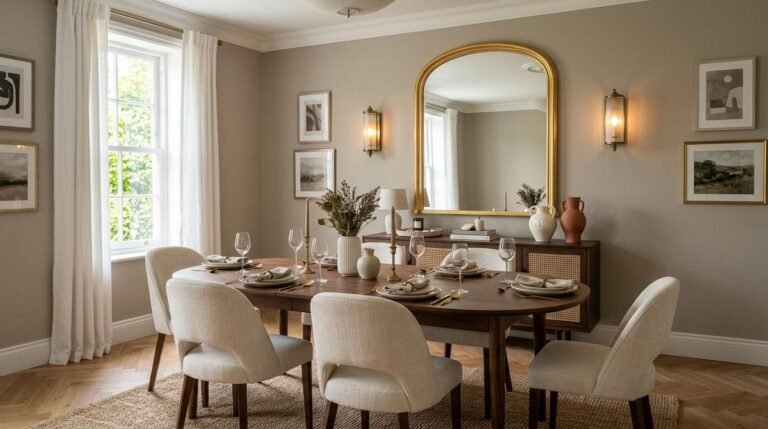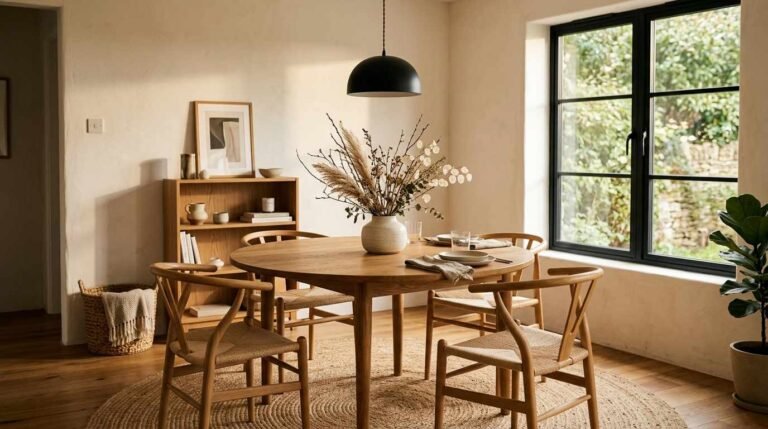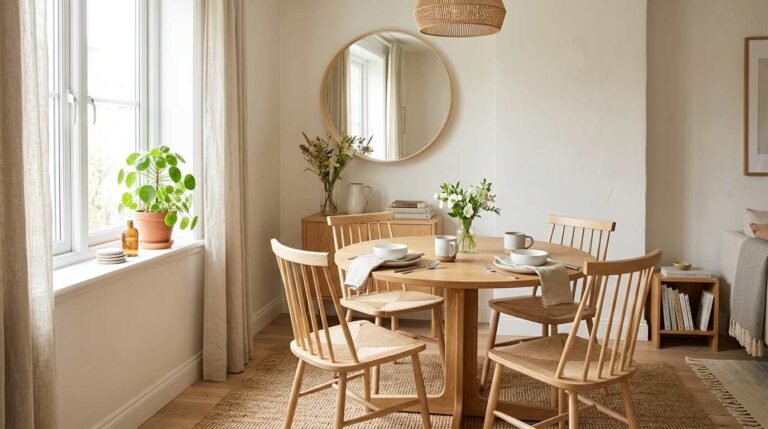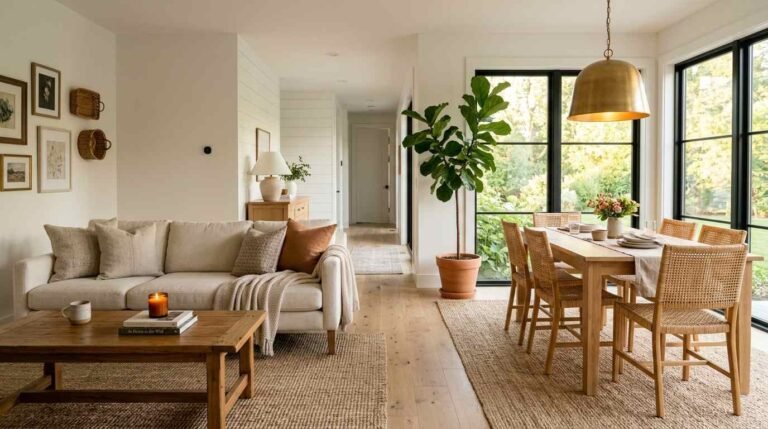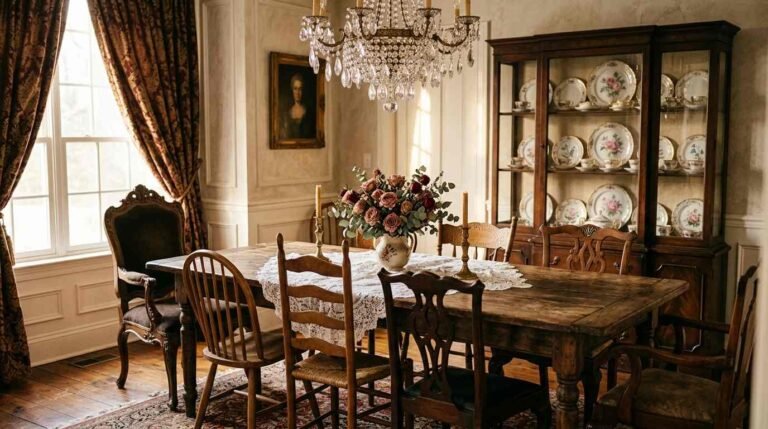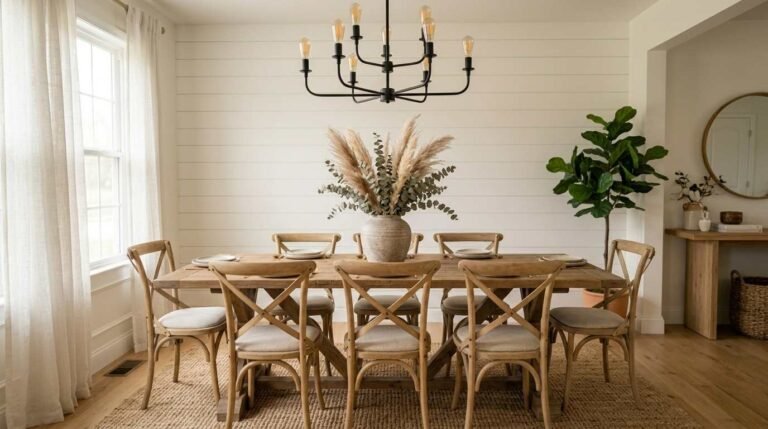
What if your dining room could feel like it’s been passed down through generations, even if you just moved in? These dining room decor traditional ideas show you exactly how to bring that warm, timeless elegance into your own home. In my experience, this style works so well because it leans on genuine craftsmanship, rich wood, classic detailing, and formal lighting, rather than trends that fade quickly. This guide walks you through 40 practical, achievable ways to style your dining space, from a statement chandelier to layered textiles and antique touches. I’ve seen how these thoughtful details transform ordinary dining rooms into spaces that feel genuinely elegant and enduring. Keep scrolling, save your favorites, and get ready to bring lasting style into your home.
1. Classic Wooden Dining Table Elegance
- Anchors the room with timeless craftsmanship
- Adds elegance through classic design details
- Creates a strong, formal focal point
- Works well with matching or complementary chairs
- Suits both large and moderately sized dining spaces
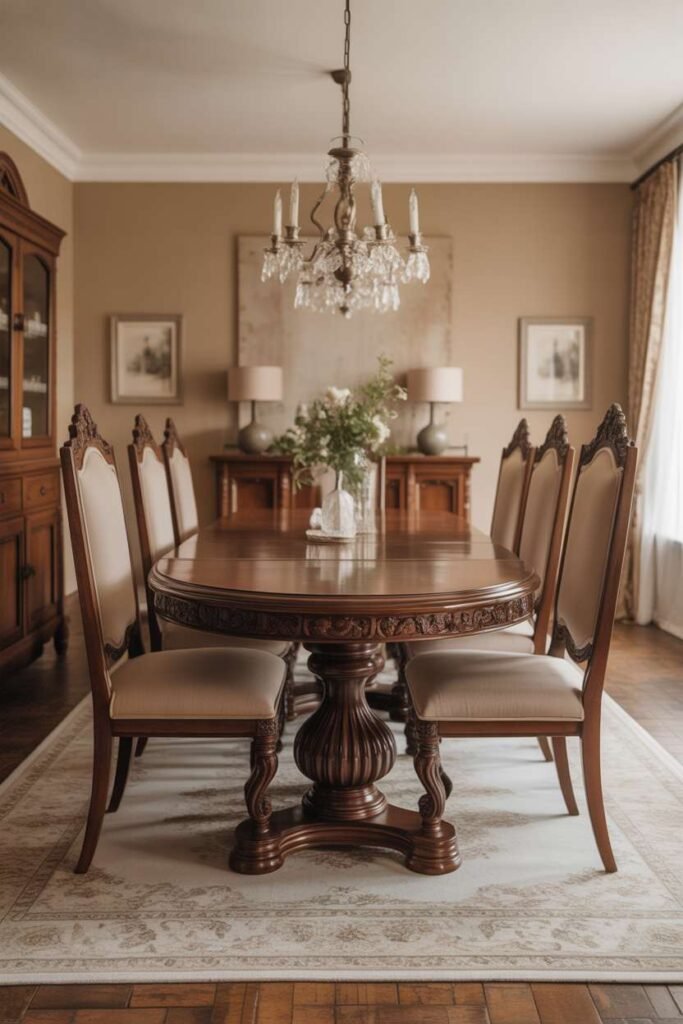
A classic wooden dining table with detailed legs and a rich, polished finish forms the foundation of nearly every successful example of dining room decor traditional style. Unlike sleek, minimalist tables, this piece embraces craftsmanship, turned legs, subtle carvings, and a deep wood tone that signals permanence and quality. In my experience, choosing a table with these classic details instantly sets a formal, timeless tone for the entire room, even before adding any other decor elements around it.
The beauty of a classic wooden table lies in how well it ages, often becoming more valuable and characterful with each passing year. I’ve seen this work well in family homes where the same table has hosted decades of gatherings, developing a natural patina that feels earned rather than manufactured. Pairing this table with upholstered or wood chairs keeps the focus on its craftsmanship, proving that traditional furniture often outlasts trend-driven alternatives entirely.
2. Elegant Chandelier Dining Room Setup
- Creates a bold, elegant focal point overhead
- Adds sophistication through classic detailing
- Draws the eye upward, elevating the room
- Works well with both large and small tables
- Combines function with striking visual style
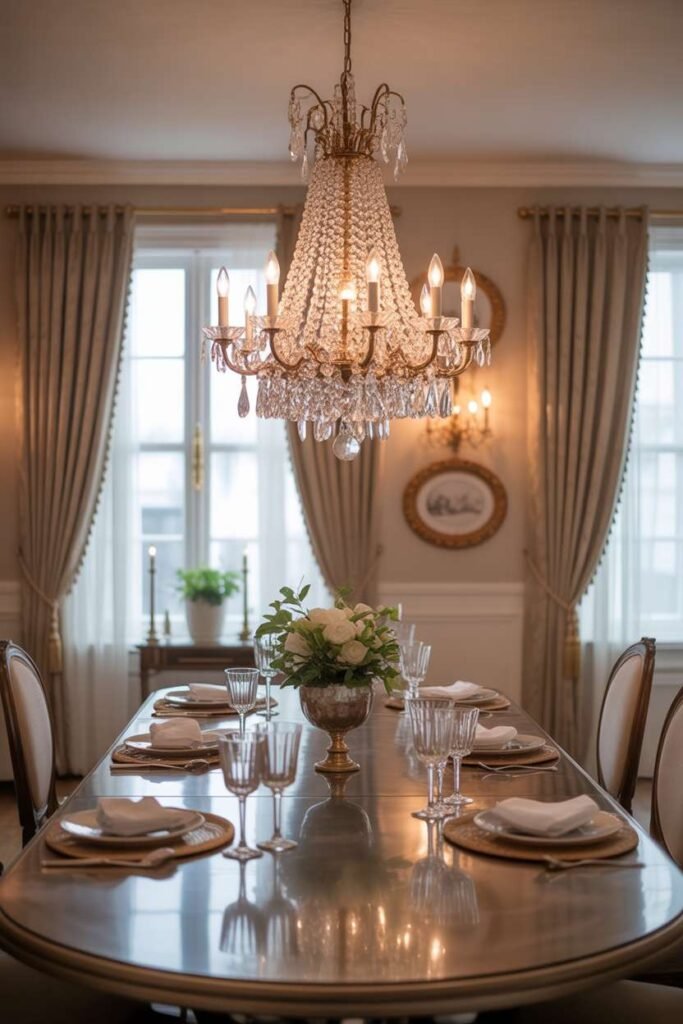
A crystal or ornate metal chandelier instantly signals formality and elegance the moment guests enter a dining room styled around dining room decor traditional principles. The warm, sparkling light cast by a chandelier adds a sense of occasion to every meal, whether it’s an everyday dinner or a special gathering. This fixture becomes the room’s natural centerpiece, drawing attention upward and reinforcing the classic, refined character central to traditional design throughout the space.
I’ve noticed that lighting often gets overlooked in dining room planning, yet it dramatically shapes the room’s overall mood and formality. A chandelier paired with dimmable bulbs allows flexibility between bright, functional lighting and a softer, more intimate glow for evening gatherings. This idea works particularly well above polished wooden tables, where the warm light enhances the wood’s natural richness and depth throughout the room.
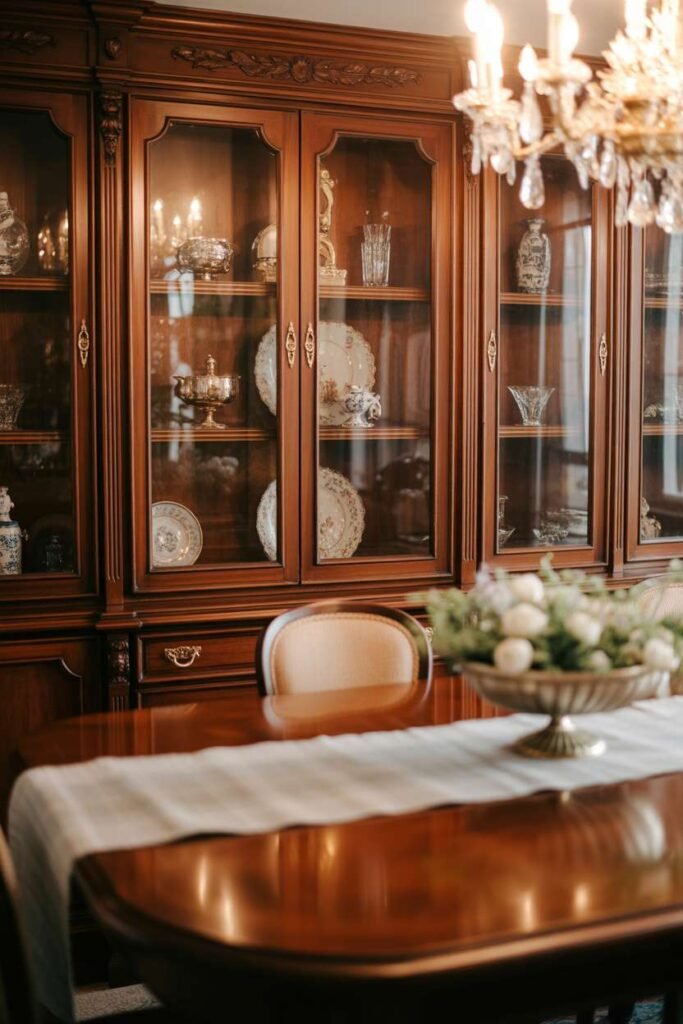
3. Vintage China Cabinet Display Style
- Combines storage with elegant display
- Draws attention to cherished dishware
- Works well as a formal focal point
- Creates a functional, curated look
- Suits both small and large dining rooms
A vintage china cabinet, featuring glass doors and often intricate wood detailing, offers a dedicated space to display fine china and collected dishware central to dining room decor traditional style. This piece serves as both practical storage and a formal focal point, showcasing pieces that might otherwise remain hidden in drawers or cabinets throughout the home. Among traditional design elements, a china cabinet stands out for combining genuine function with visual appeal.
I’ve seen this work well in dining rooms where cherished dishware, wedding china, or family heirlooms deserved a proper display rather than staying tucked away. Styling the cabinet with a mix of china, glassware, and small decorative items creates a curated, personal look that complements the room’s traditional character beautifully, proving that storage furniture can also serve as genuine, meaningful decor.
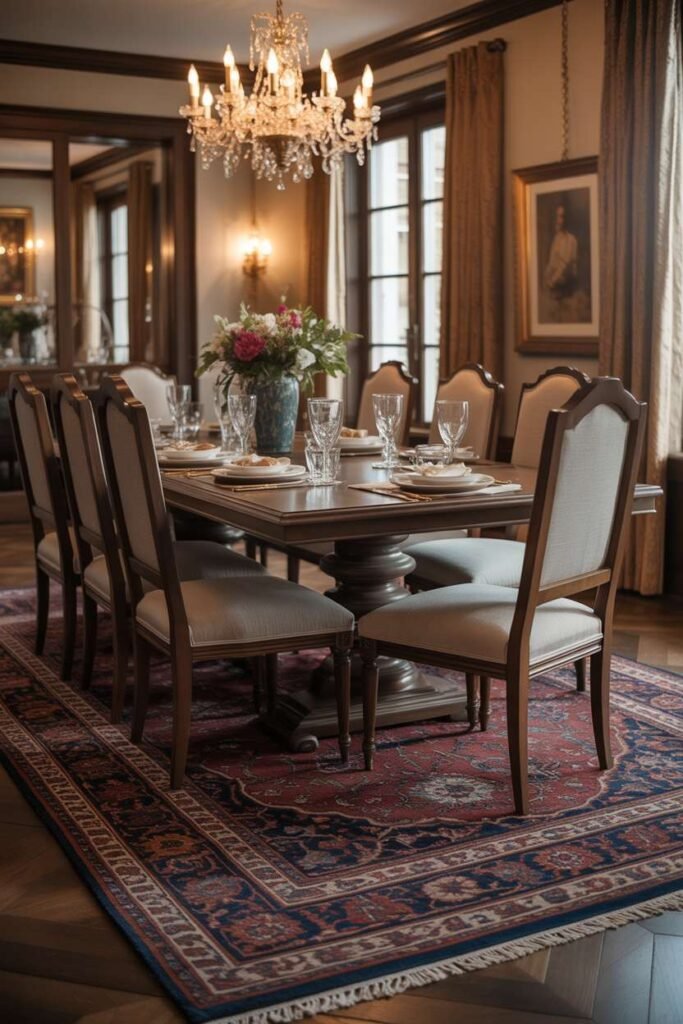
4. Traditional Dining with Ornate Rug Setting
- Anchors the room with classic pattern and color
- Adds warmth and softness underfoot
- Creates a defined, formal dining zone
- Works well on hardwood or tile flooring
- Elevates the overall sophistication of the space
An ornate area rug, often featuring an intricate pattern in deep reds, blues, or golds, adds warmth and definition central to dining room decor traditional style. Rich, patterned rugs have long signaled formality and craftsmanship in dining spaces, tying together furniture and wall colors already in place. Choosing a rug slightly larger than the table ensures chairs remain on the rug even when pulled out for seating during meals.
That’s why many designers recommend rugs as one of the final touches when styling a traditional dining room, since the right pattern and color can unify the entire space. A richly patterned rug works particularly well beneath a formal wooden table, adding texture and visual interest without overwhelming the room’s overall balance and refined sense of sophistication throughout the day.
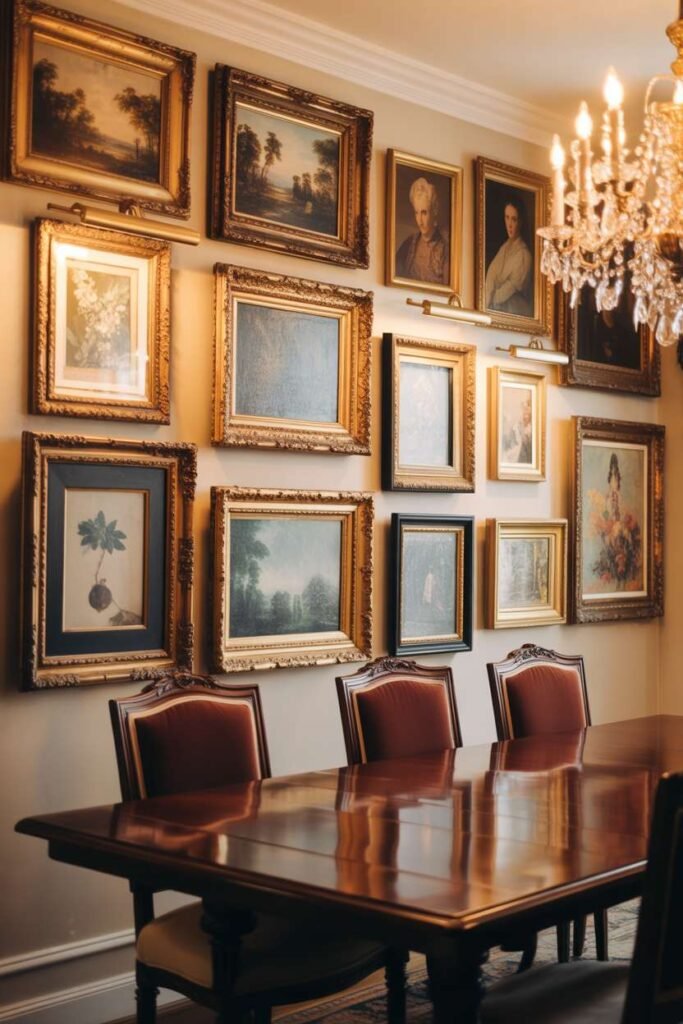
5. Antique Wall Frame Dining Decor
- Adds authentic character through aged pieces
- Introduces personal history and story
- Works well above sideboards or buffets
- Creates a collected, non-staged appearance
- Encourages thoughtful, gradual styling
Antique-framed wall art, whether oil paintings, aged prints, or ornately framed pieces, brings genuine character to dining room decor traditional spaces that new, mass-produced art often lacks. These pieces add a sense of history and story, making the room feel collected over time rather than purchased all at once. This idea rewards those who enjoy seeking out unique finds at estate sales and antique shops throughout the years.
I’ve noticed that antique art works best when displayed thoughtfully rather than cluttered together, allowing each piece room to be appreciated individually. Placing a few pieces above a sideboard or buffet creates visual interest without overwhelming the space, making it especially effective for dining room decor small space ideas. This approach is particularly rewarding for homeowners who enjoy hunting for unique pieces, since no two traditionally styled dining rooms ever look exactly alike.
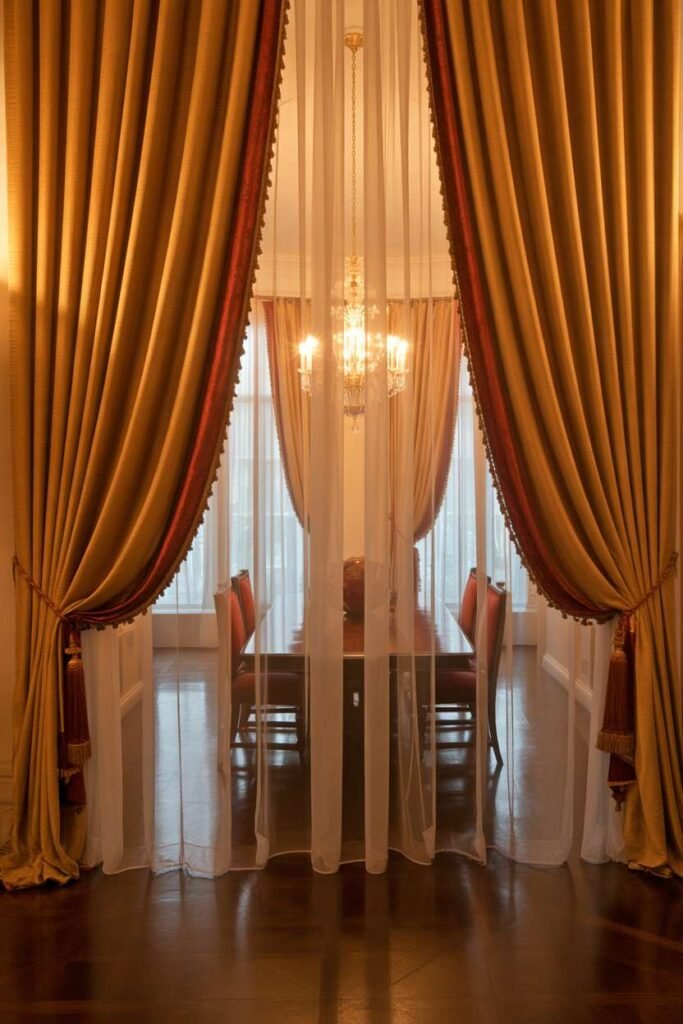
6. Traditional Curtain & Drapery Dining Style
- Adds formal elegance through fabric layers
- Creates height and sophistication at windows
- Works well with tiebacks and valances
- Elevates the room’s overall polish
- Suits rooms with ample natural light
Classic drapery, featuring rich fabrics with tiebacks or decorative valances, brings formal elegance to windows within dining room decor traditional design. This treatment goes beyond simple curtains, incorporating additional layers and details that signal genuine formality throughout the space. Drapery represents one of the more elevated window treatment options, adding polish that simpler curtains alone might not achieve in a formal dining setting.
I’ve noticed that drapery works particularly well in dining rooms with tall windows, where the additional fabric and layered details create a sense of grandeur. Choosing a rich fabric like velvet or a subtle jacquard pattern reinforces the room’s overall formal character. This idea works particularly well for special occasion dining rooms, where the extra investment in drapery pays off through consistently elegant results.
7. Classic Wooden Sideboard Styling
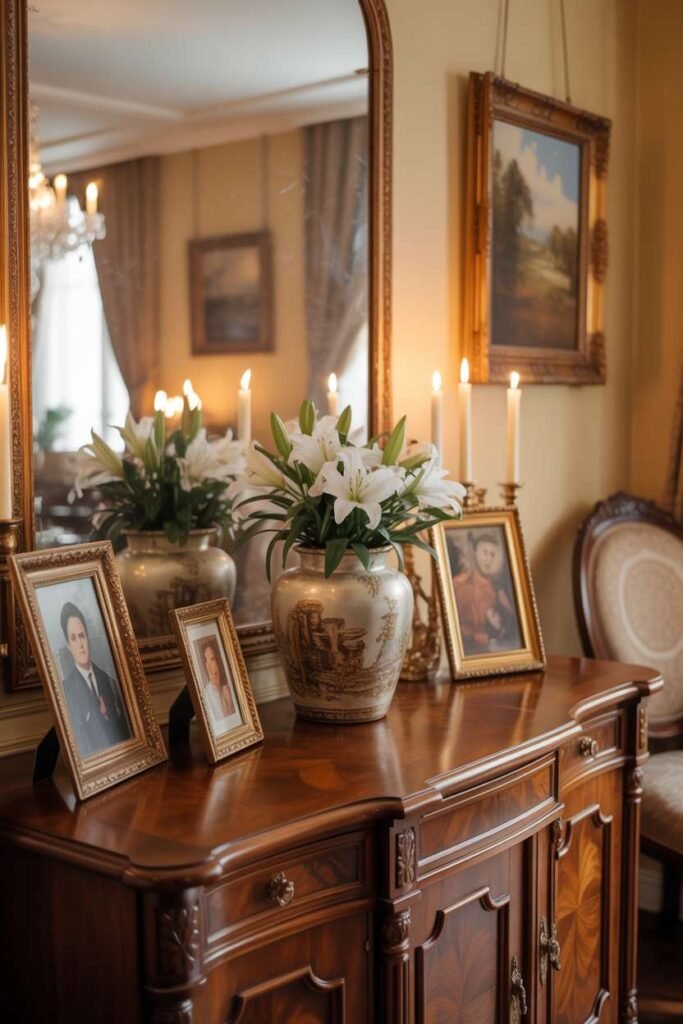
- Adds functional storage and display space
- Creates a secondary focal point in the room
- Works well for serving during gatherings
- Introduces additional surface for styling
- Reinforces the room’s cohesive, formal theme
A classic wooden sideboard, often featuring carved details and brass hardware, provides essential storage while doubling as a secondary focal point within dining room decor. This timeless piece offers practical space for serving dishes during gatherings while also serving as a stylish surface for displaying decorative objects, lamps, or seasonal accents throughout the year. A well-chosen sideboard addresses genuine functional needs while contributing meaningfully to the room’s overall aesthetic and traditional charm.
I’ve seen this work well in dining rooms lacking adequate storage for linens, china, or serving pieces. A sideboard with classic detailing ties naturally into the room’s broader traditional theme while solving practical organization challenges. This idea is particularly valuable for households that frequently host formal gatherings, since the extra surface space proves useful for serving food and drinks without cluttering the main dining table.
8. Formal Dining Table Setting Style
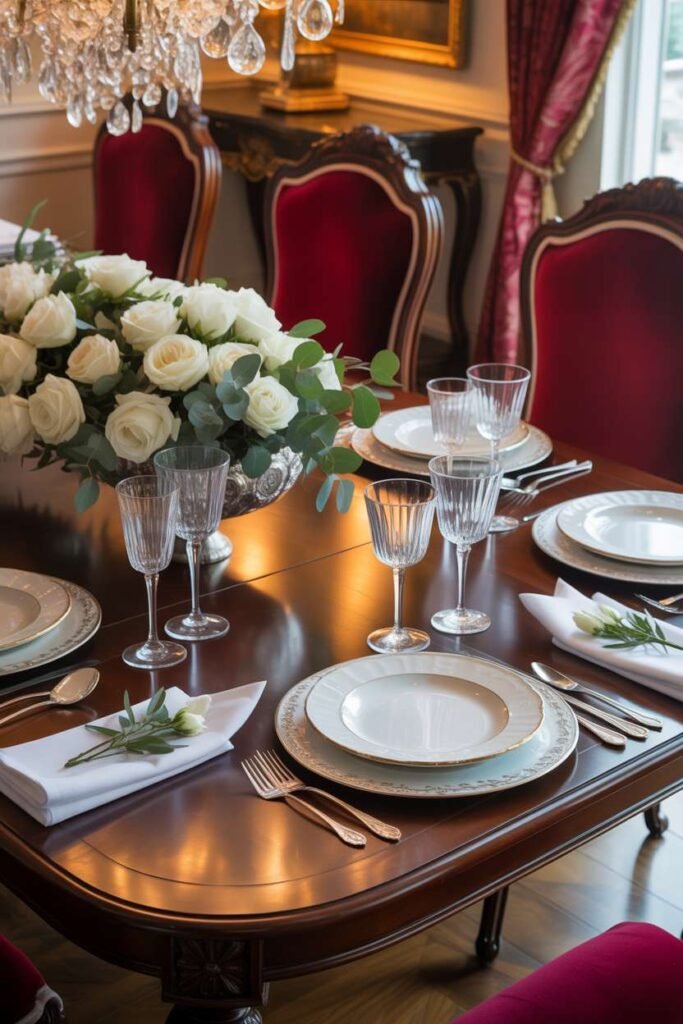
- Creates depth through varied table elements
- Adds visual interest to formal occasions
- Works well with fine china and linens
- Elevates the dining experience thoughtfully
- Easy to adjust for different occasions
Layering multiple styling elements on a formal dining table, a tablecloth, charger plates, fine china, and cloth napkins, creates depth and sophistication that a simple table setting can’t achieve. This approach works particularly well for those wanting their dining room decor traditional style to feel considered and complete, especially during special occasions and formal gatherings that call for an elevated presentation.
In my experience, layered table settings work best when elements vary in height and texture, taller glassware paired with lower charger plates and folded napkins, for example. This creates visual rhythm without cluttering the table’s functional space. This idea is easy to adjust for different occasions, simply swapping the tablecloth or centerpiece while keeping the underlying table and chairs consistent.
9. Traditional Wall Paneling Dining Design
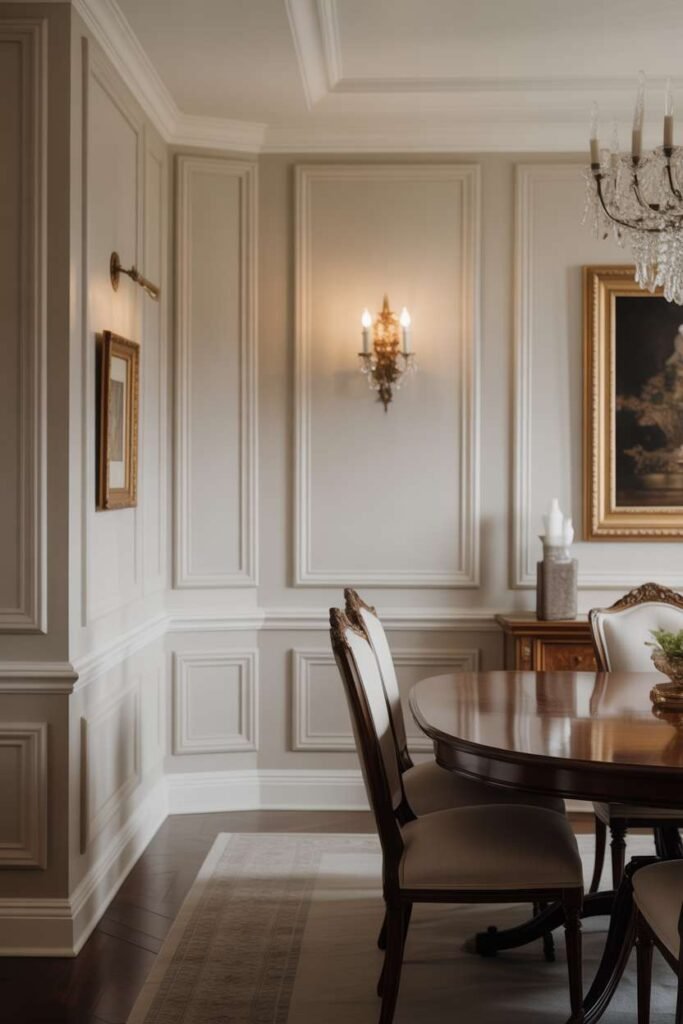
- Adds architectural elegance and depth
- Creates a sophisticated, tactile backdrop
- Works well behind sideboards or dining tables
- Elevates plain walls with classic detail
- Suits formal and semi-formal dining spaces
Traditional wall paneling, whether raised panel wainscoting or classic molding details, adds architectural depth to a room that flat drywall simply can’t achieve. This feature is one of the more design-forward elements within dining room decor traditional style, appealing to homeowners who want their space to feel genuinely custom and considered. Paneling introduces texture and formality that instantly elevates the room’s overall character.
I’ve seen this work well in older homes where existing paneling had been painted over or covered, revealing character once it was refreshed. For newer homes, pre-fabricated panel kits offer a similar effect at a lower cost. This idea requires more investment and effort than smaller decor changes, but the payoff is a genuinely elevated, architecturally interesting dining room.
10. Traditional Floral Centerpiece Dining Style
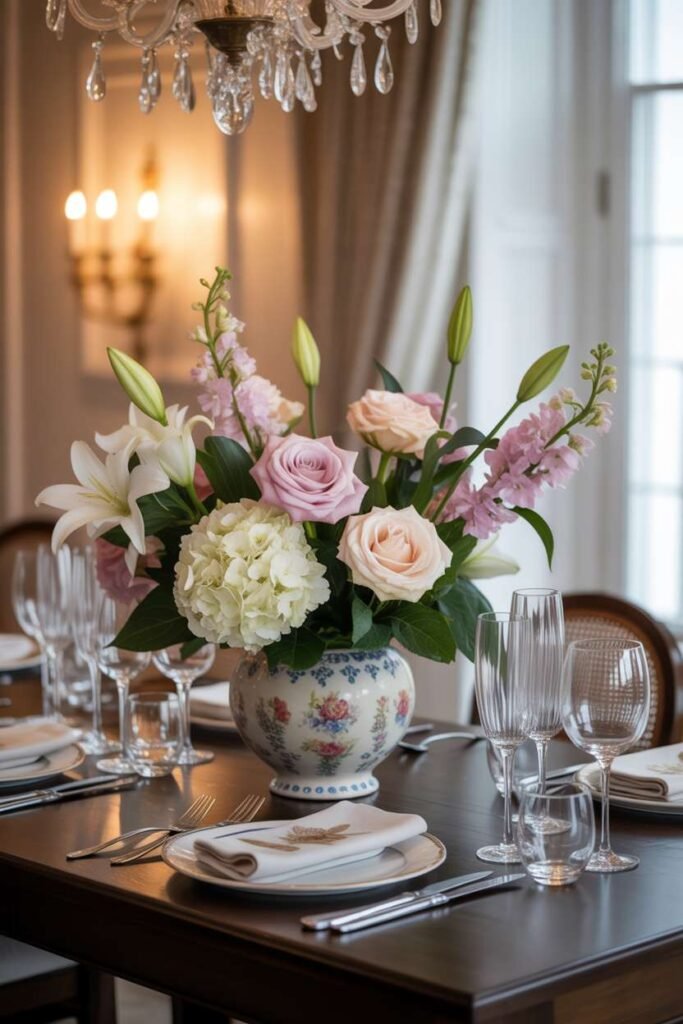
- Adds elegance through classic floral arrangements
- Creates ambiance for formal gatherings
- Works well with fresh or silk flowers
- Introduces color without overwhelming decor
- Easy to update seasonally
A traditional floral centerpiece, often featuring roses, hydrangeas, or seasonal blooms in a classic vase, adds instant elegance to a formal dining table. This styling choice is one of the most timeless elements within dining room decor traditional design, since floral arrangements have long signaled formality and occasion in dining spaces. Choosing flowers in colors that complement the room’s existing palette ties the centerpiece into the overall design beautifully.
In my experience, floral centerpieces work best when kept proportionate to the table size, tall enough to add elegance but not so tall that they block conversation across the table. A few fresh blooms alongside greenery creates a sophisticated, inviting centerpiece that works for both everyday meals and special occasions. This idea is particularly valuable for formal gatherings.
11. Traditional Dining Room with Wooden Ceiling Beams
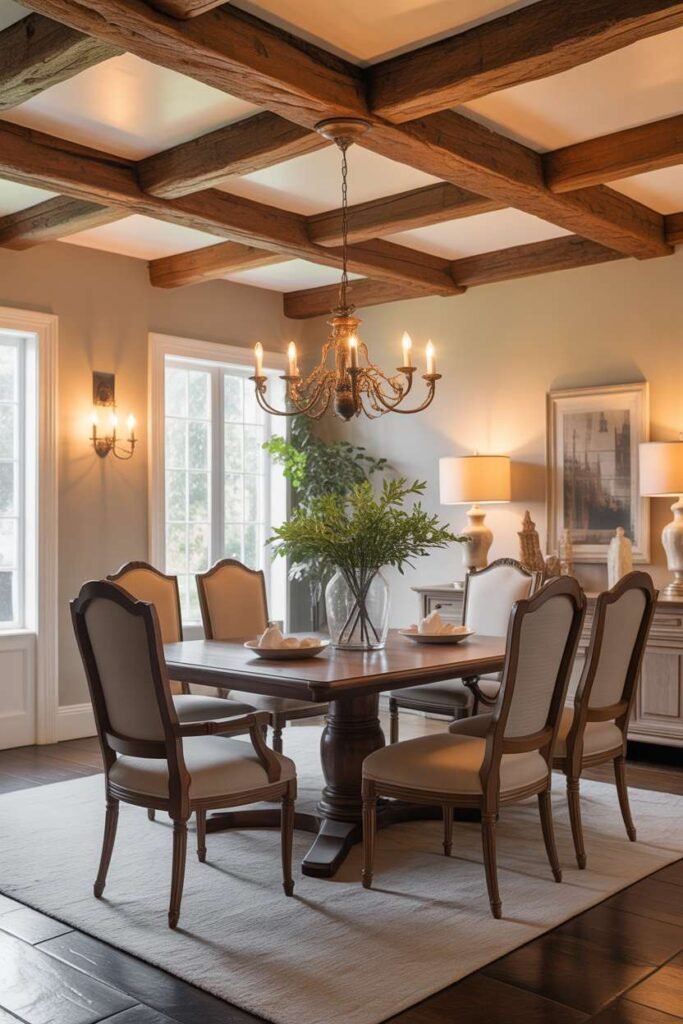
- Adds architectural interest overhead
- Creates a formal, stately atmosphere
- Draws the eye upward, adding drama
- Works well with exposed or faux beams
- Elevates ceilings that feel plain or flat
Exposed or faux wooden beams across the ceiling introduce architectural drama that instantly transforms a plain dining room into something more distinguished. This feature draws the eye upward, adding visual interest to a part of the room often overlooked in design planning. Among the many elements within dining room decor traditional style, ceiling beams represent a significant investment, but the transformative effect makes it worthwhile.
I’ve seen this work well in dining rooms with higher ceilings that previously felt empty or undefined overhead. Wooden beams add warmth and texture, especially when paired with a matching chandelier hanging between them. This idea works particularly well in homes already featuring wood flooring or furniture, since the beams tie the entire room together vertically, creating a cohesive, immersive atmosphere.
12. Traditional Dining Room with Fireplace Focal Point
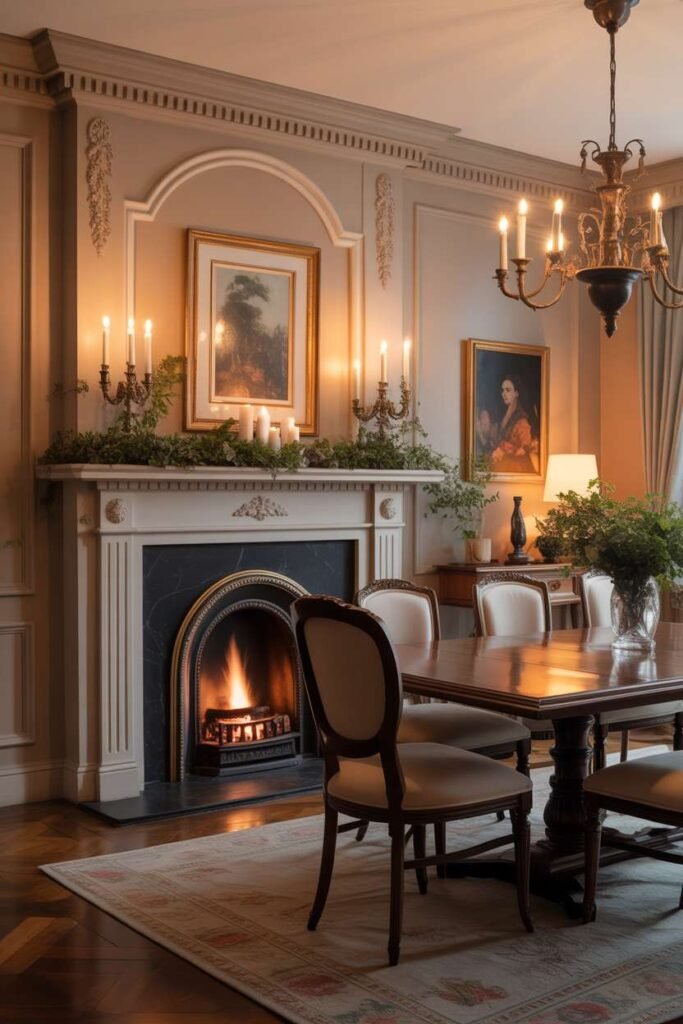
- Creates a warm, elegant focal point
- Adds architectural significance to the room
- Works well with classic mantel styling
- Elevates the room’s overall formality
- Suits larger, more traditional dining spaces
A fireplace, whether functional or decorative, adds warmth and architectural significance to a dining room, creating a natural focal point beyond the table itself. Styling the mantel with classic decor, candlesticks, framed art, or a mirror, reinforces the room’s overall formal character central to dining room decor traditional style. A fireplace feature elevates the space significantly, adding a sense of occasion that few other design elements can match.
I’ve seen this work well in older homes where an existing fireplace had been underutilized or poorly styled. Refreshing the mantel with cohesive, classic decor instantly ties the feature into the room’s broader design. This idea is especially rewarding during colder months, when the fireplace naturally becomes the room’s central gathering point for formal dinners.
13. Traditional Dining Room with Wainscoting Walls
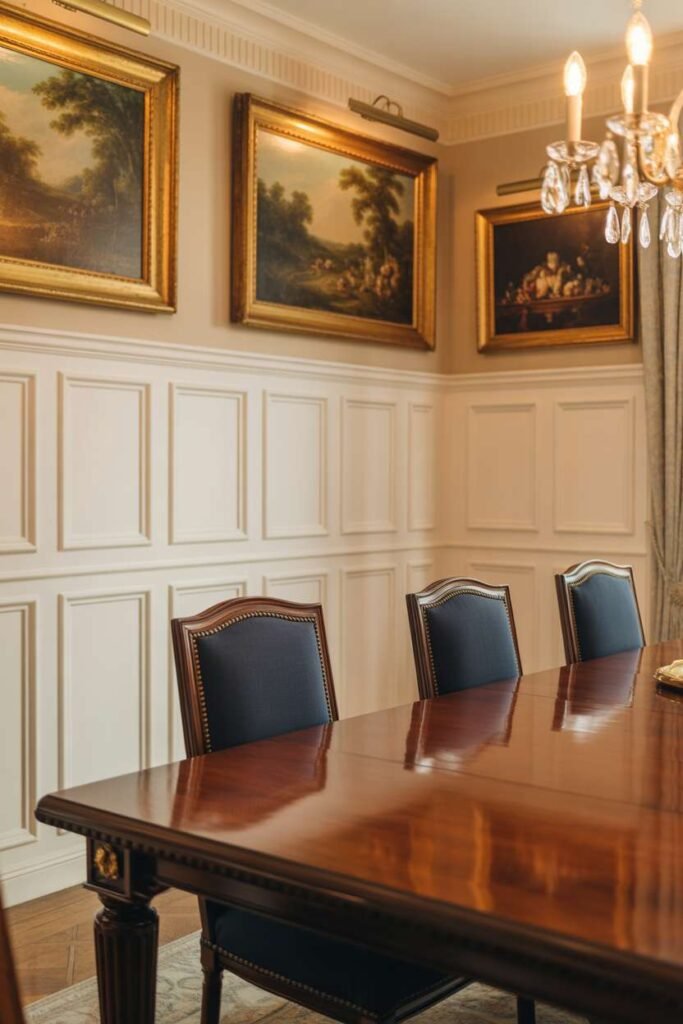
- Adds architectural texture and elegance
- Creates a classic, formal backdrop
- Works well painted in soft, neutral tones
- Introduces depth without bold color
- Elevates the room’s overall sophistication
Wainscoting, a classic wall treatment featuring wood paneling along the lower portion of the wall, is one of the most defining architectural features within dining room decor traditional style. This detail adds texture and elegance without requiring bold paint colors, since the paneling itself creates enough visual interest on its own. Painted in soft white or cream tones, wainscoting brings formality and depth to walls that might otherwise feel plain.
I’ve seen this work well in older homes with existing architectural details that simply needed refreshing, as well as in newer homes where wainscoting was added specifically to introduce classic character. This idea requires moderate investment and installation effort, but delivers a genuinely elevated, architecturally interesting dining room that feels considerably more traditional.
14. Traditional Dining Room with Decorative Mirror Accent
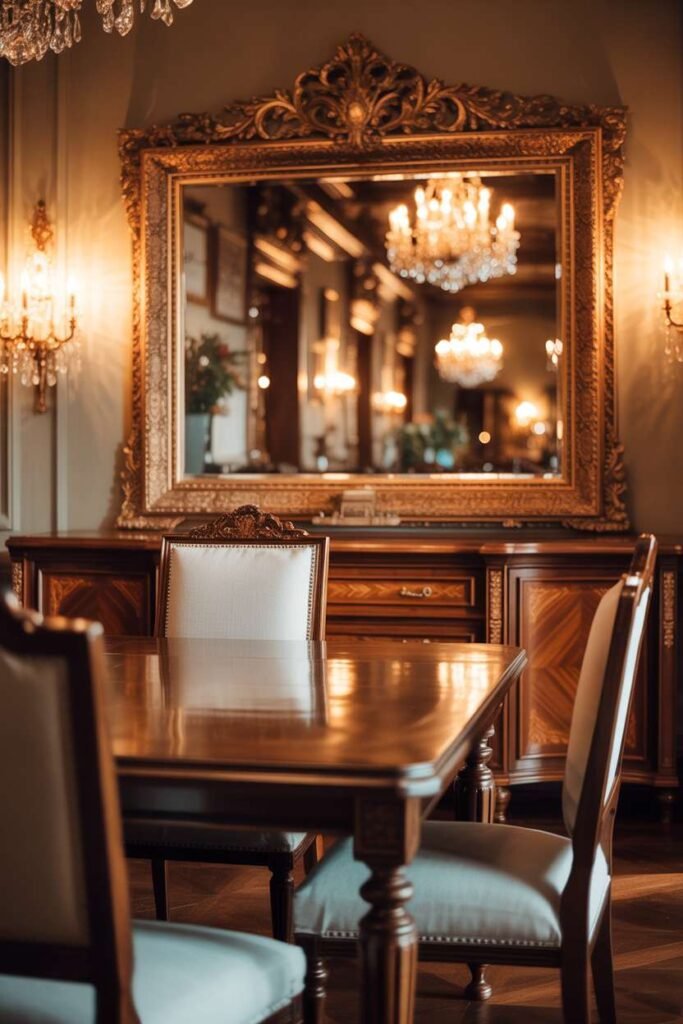
- Adds light-reflecting visual interest
- Creates the illusion of more space
- Works well in gold or carved wood frames
- Introduces function alongside classic style
- Elevates walls without heavy decor
An ornate mirror, framed in gold, silver, or intricately carved wood, adds both function and elegance central to dining room decor traditional style. Reflecting light throughout the space, the mirror makes the room feel brighter and larger while also serving as a genuine decorative statement. Mirrors offer a practical dual purpose, combining classic style with real space-enhancing benefits throughout the room.
I’ve noticed that ornate mirrors are often overlooked when planning dining room decor, yet they significantly impact how bright and open a formal space feels. A large mirror above a sideboard or fireplace mantel bounces available light around the room effectively. This idea works particularly well paired with a frame that matches other gold or wood tones found throughout the space.
15. Traditional Dining Room with Classic Table Runner Styling
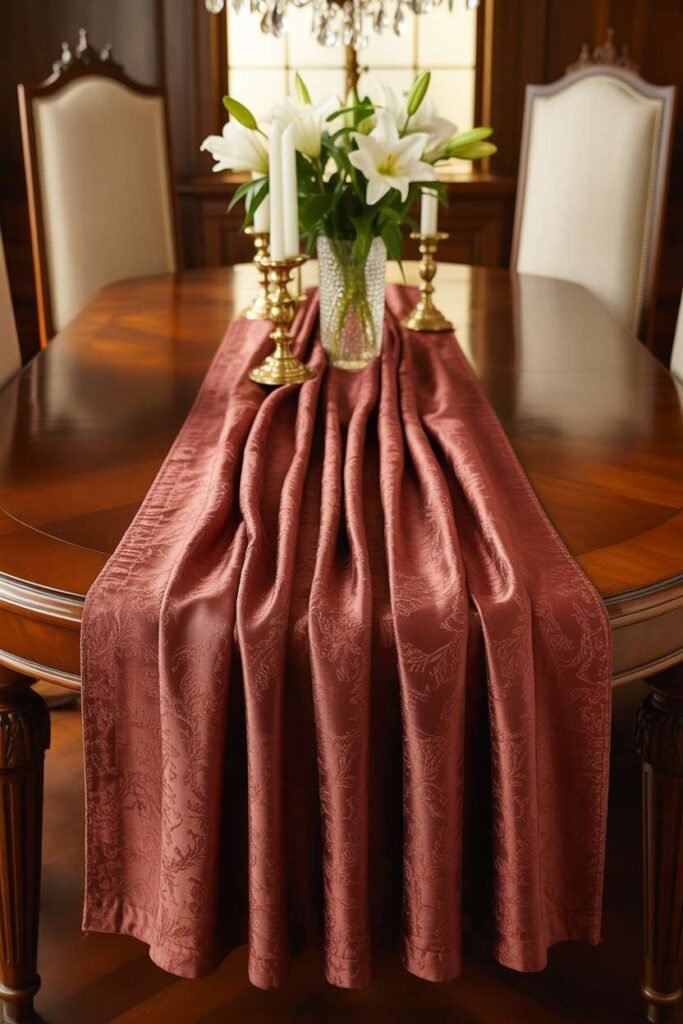
- Adds elegance through simple table styling
- Protects the table while adding formality
- Introduces pattern in a controlled way
- Easy to swap for seasonal updates
- Works well with formal place settings
A classic table runner, often featuring embroidered details or a subtle damask pattern, adds elegance to a dining table without overwhelming the overall setting. This affordable addition instantly signals formality while also serving the practical purpose of protecting the tabletop from spills and scratches. Among dining room decor traditional elements, a table runner offers an easy entry point for adding pattern and texture.
That’s why many designers recommend table runners for adding seasonal variety without permanent changes, since they’re inexpensive and simple to swap. A runner in rich, classic tones works particularly well against a polished wooden table. This idea also allows for seasonal flexibility, swapping in warmer tones for holiday gatherings or lighter patterns for spring, keeping the room feeling fresh.
16. Traditional Dining Room with Elegant China Cabinet
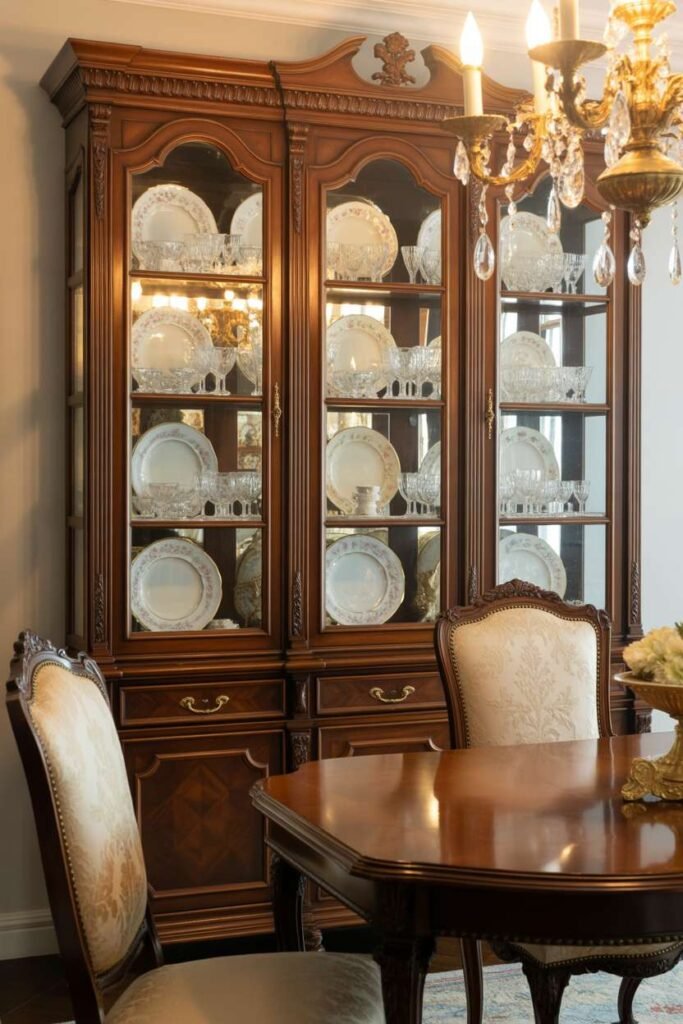
- Adds substantial storage in a formal style
- Creates a display opportunity for fine china
- Works well in both tiny and larger dining rooms
- Combines function with elegant craftsmanship
- Reinforces the room’s cohesive theme
An elegant china cabinet, often featuring glass-front doors and detailed woodwork, provides substantial storage while showcasing fine china and collected treasures central to dining room decor traditional style. This piece maximizes storage capacity while adding a genuine display opportunity, allowing homeowners to show off cherished dishware or heirloom pieces without keeping them hidden away in drawers.
I’ve seen this work well in dining rooms where a plain wall felt underutilized despite having nice furniture elsewhere. The glass-front design uses the space efficiently while adding personality alongside genuinely useful storage capacity. This idea also doubles as a way to personalize the dining area, showing off collected items with pride rather than hiding them away in cabinets.
17. Traditional Dining Room with Heavy Patterned Wallpaper
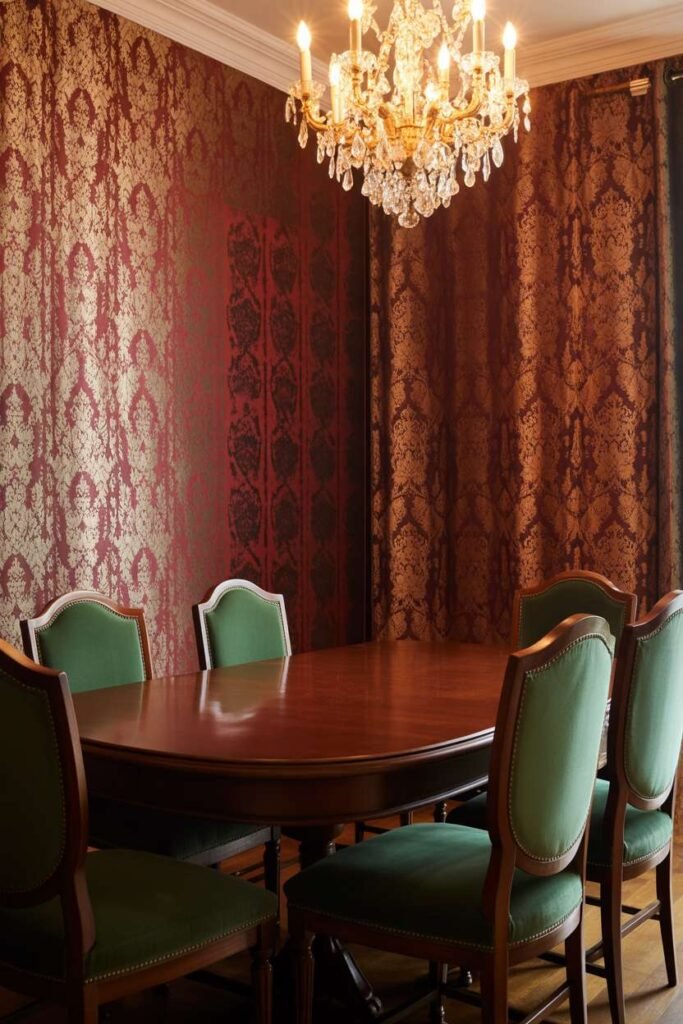
- Adds depth and elegance through pattern
- Creates a sophisticated, formal backdrop
- Works well in damask or floral designs
- Elevates plain walls with classic detail
- Suits both accent walls and full rooms
Patterned wallpaper, often featuring damask, toile, or subtle floral motifs, adds depth and formality central to dining room decor traditional style. Unlike solid paint, wallpaper introduces texture and visual interest that instantly signals a classic, considered design approach. This idea works particularly well as either a full-room treatment or a single accent wall, depending on how bold homeowners want the overall effect.
That’s why many designers recommend choosing wallpaper in muted, sophisticated tones rather than overly bright or busy patterns, since subtlety often reads as more elegant in formal dining spaces. A damask pattern in soft gold or cream tones adds richness without overwhelming the room. This idea requires moderate investment and installation effort, but delivers a genuinely elevated, formal atmosphere.
18. Traditional Dining Room with Candlelight Ambience
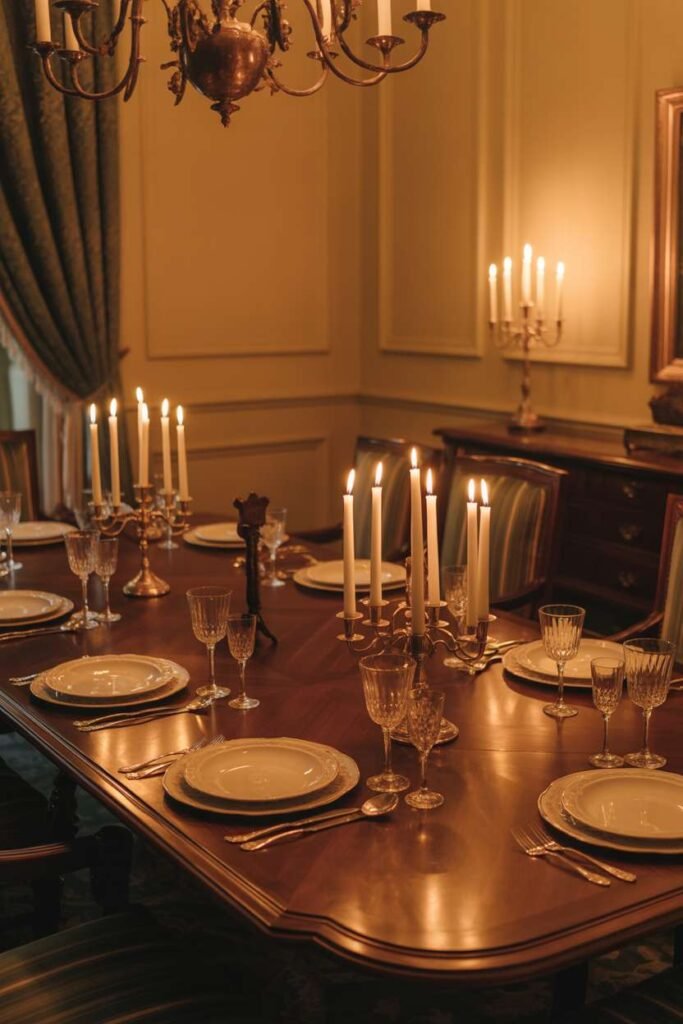
- Adds warmth through simple table styling
- Creates ambiance for evening meals
- Works well with minimal additional decor
- Easy to update seasonally
- Introduces a formal, intimate mood
Classic candle holders, whether ornate candelabras or simple brass holders, add instant warmth and formality central to dining room decor traditional style, without requiring significant investment. This simple styling choice is one of the easiest ideas to implement immediately, using items that are widely available and elegant for nearly any occasion or gathering throughout the year.
In my experience, candle holders work best when paired with a complementary centerpiece rather than standing alone, avoiding an overly sparse table setting. A few tall candles alongside a floral arrangement creates enough visual interest without cluttering the table. This idea is particularly valuable for evening gatherings, since candlelight enhances the warm, formal atmosphere that defines successful traditional spaces.
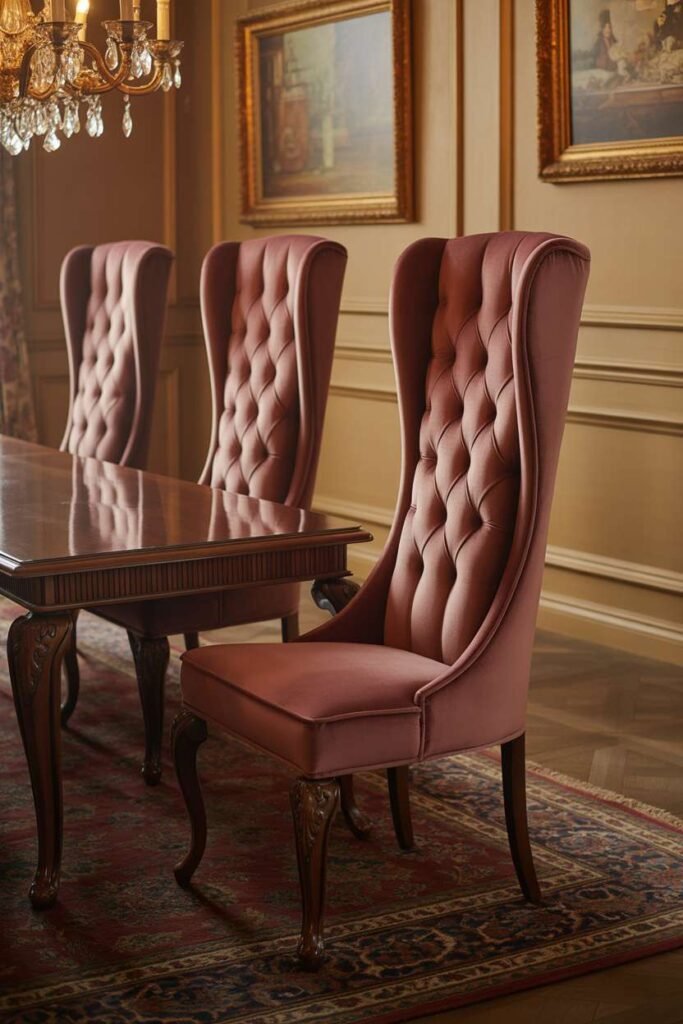
19. Traditional Dining Room with Upholstered Luxury Chairs
- Adds comfort alongside formal elegance
- Introduces texture through classic fabric choices
- Creates a softer contrast to wood furniture
- Works well with patterned or solid upholstery
- Elevates the seating experience thoughtfully
Upholstered dining chairs in classic fabrics like damask, velvet, or subtle stripes add both comfort and elegance central to dining room decor traditional design. Unlike bare wood seating, upholstery softens the room’s overall look while introducing texture that complements a polished wooden table beautifully. This choice balances formality with genuine comfort, making the dining room inviting for long conversations.
That’s why many designers recommend choosing a durable, classic fabric pattern for dining chairs, since the seating experiences the most wear in the entire room. A subtle damask or striped fabric adds sophistication without feeling overly bold or trend-driven. This idea works particularly well when paired with a solid wood table, creating a balanced contrast between hard and soft materials.
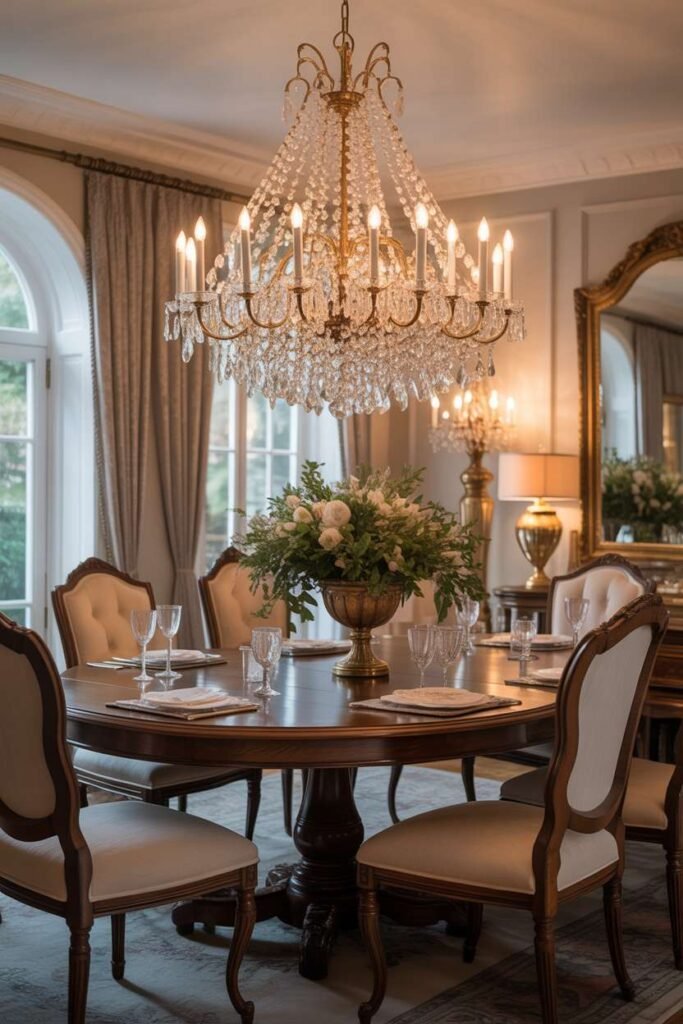
20. Traditional Dining Room with Statement Chandelier Lighting
- Creates a dramatic, luxurious overhead feature
- Adds grandeur beyond standard fixtures
- Draws the eye upward dramatically
- Works well in rooms with higher ceilings
- Elevates the entire room’s formal presence
A truly statement chandelier, larger and more ornate than a standard fixture, creates dramatic grandeur central to dining room decor traditional style. This piece becomes the undeniable focal point of the entire room, signaling genuine formality and occasion the moment guests walk in. A larger fixture works particularly well in rooms with higher ceilings, where there’s enough vertical space for the piece to make its full visual impact.
I’ve seen this work well in formal dining rooms designed specifically for entertaining, where the chandelier’s scale matches the room’s overall sense of occasion. Choosing a fixture with crystal or ornate metal detailing reinforces the room’s classic character throughout. This idea requires a larger investment than standard lighting, but the visual payoff makes it worthwhile for those seeking genuine grandeur.
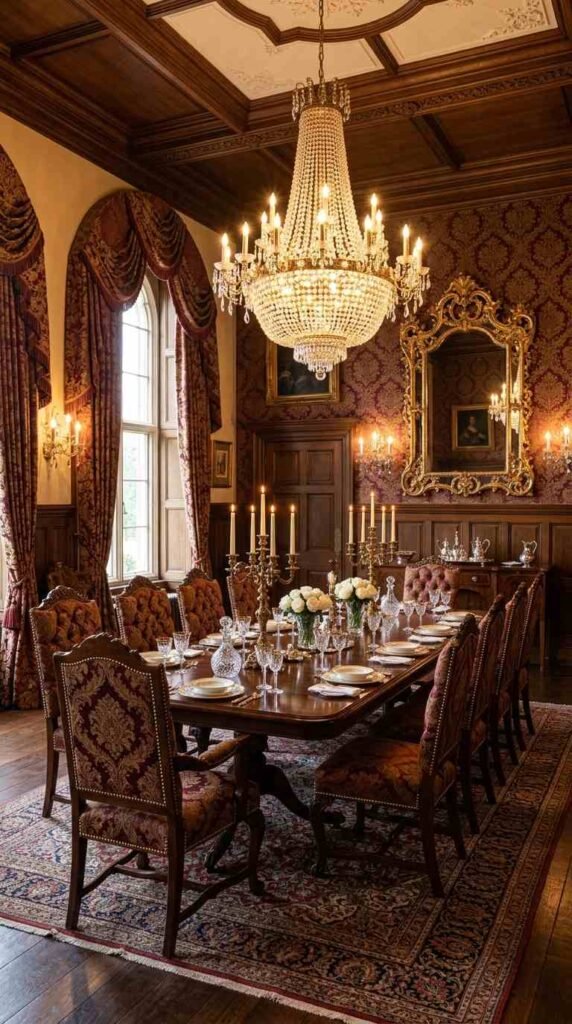
21. Ultra Traditional Dining Room with Grand Heritage Design
- Combines multiple formal elements cohesively
- Creates a museum-quality, heritage feel
- Works well with antique furniture pieces
- Elevates the room to a truly grand style
- Suits larger, formal homes and estates
An ultra-traditional approach combines several grand elements, antique furniture, rich drapery, and ornate lighting, to create a heritage-inspired dining room within dining room decor traditional style. This look draws from historic estate dining rooms, embracing formality and grandeur without hesitation. Every element, from the table to the wall decor, works together to create a genuinely museum-quality, heirloom atmosphere throughout the space.
I’ve seen this work well in larger, formal homes where the dining room serves as a genuine showcase space for entertaining and special occasions. Combining antique pieces with coordinated drapery and lighting creates a cohesive, grand aesthetic that feels intentional rather than mismatched. This idea suits homeowners who want their dining room to feel like a genuine heritage space.
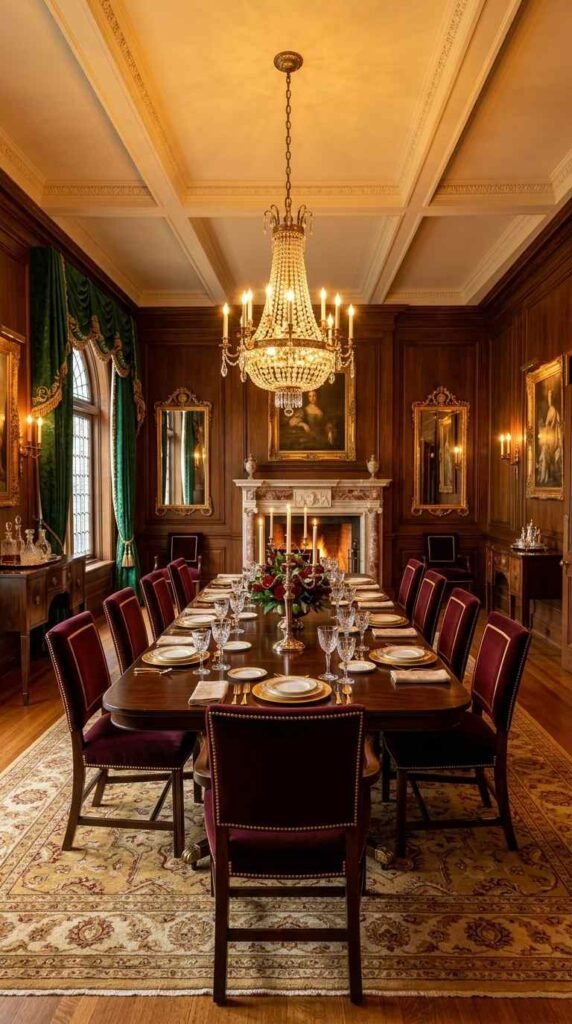
22. Ultra Traditional Dining Room with Luxurious Gold Accents
- Introduces subtle shine and warmth
- Elevates the room’s overall sense of luxury
- Balances wood tones with reflective accents
- Adds visual interest through metallic details
- Works well in formal, elegant interiors
Gold accents bring warmth and a touch of luxury central to dining room decor traditional style without requiring major changes to the room. A gold-framed mirror, brass candlesticks, or decorative hardware catches the light beautifully, adding a subtle glow that complements rich wood furniture rather than competing with it. This pairing is especially popular in traditional design because gold has warm undertones.
That’s why many designers recommend adding gold in small, intentional doses rather than overwhelming the room with too many metallic finishes at once. A single striking piece, like an oversized gold mirror or chandelier, often creates more impact than several smaller accents combined. This idea works particularly well in formal dining rooms meant for entertaining, where a touch of shine feels appropriate.
23. Ultra Traditional Dining Room with Layered Lighting Design
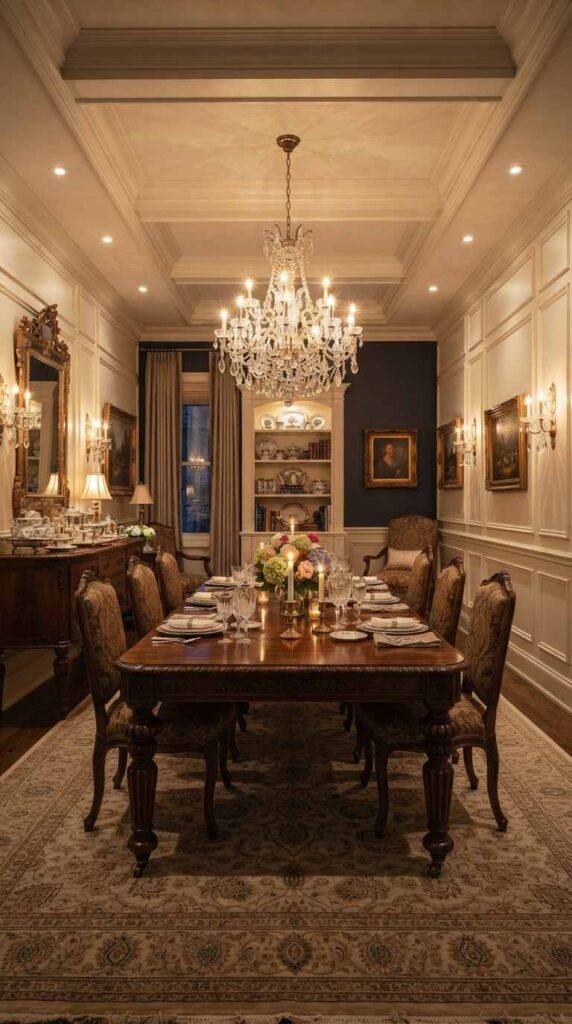
- Creates depth through multiple light sources
- Adds warmth and evening ambiance
- Reduces harshness from a single fixture
- Works well with dimmable bulb options
- Enhances wood and fabric textures beautifully
Layering lighting throughout a dining room, combining a chandelier with wall sconces or a sideboard lamp, creates depth and ambiance that a single overhead fixture can’t achieve alone. This approach is especially important within dining room decor traditional style, since warm, layered light enhances the richness of wood furniture and fine fabrics found throughout most formal spaces. Multiple light sources allow for genuine flexibility.
I’ve noticed that many dining rooms rely solely on a single chandelier, missing the opportunity to add warmth through supplementary lighting. A sideboard lamp or wall sconces near the dining area create additional layers of soft light that flatter wood grain and fabric texture beautifully. This idea is relatively inexpensive to implement, yet it significantly enhances the room’s overall evening atmosphere.
24. Ultra Traditional Dining Room with Handcrafted Furniture Elegance
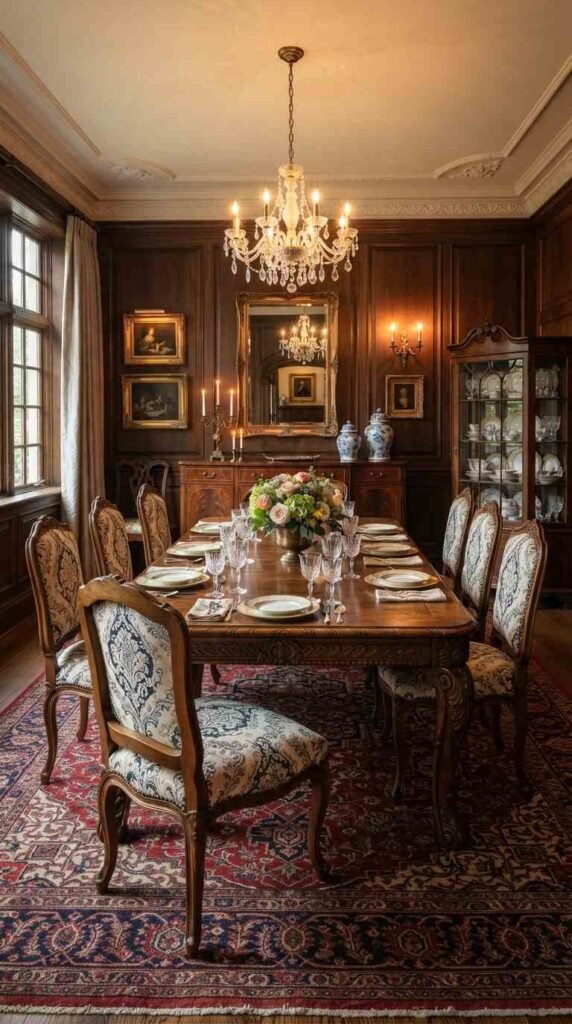
- Adds intricate craftsmanship throughout furniture
- Creates visual texture through detailed carving
- Works well on chairs, tables, and cabinets
- Suits both antique and reproduction pieces
- Reinforces genuine traditional character
Handcrafted furniture featuring carved wood details, whether on chair backs, table legs, or cabinet doors, adds intricate craftsmanship that defines authentic dining room decor traditional style. These details showcase skilled woodworking that mass-produced, minimalist furniture simply can’t replicate. Choosing furniture with visible carving instantly signals a commitment to traditional design, adding texture and visual interest throughout the entire space.
That’s why many designers recommend carved details as a signature element for those wanting a genuinely traditional look, since the craftsmanship itself tells a story of quality and permanence. This technique also has aesthetic benefits, since the play of light and shadow across carved surfaces adds depth that flat, smooth furniture lacks. This idea suits both genuine antiques and well-made reproduction pieces.
25. Ultra Traditional Dining Room with Regal Statement Styling
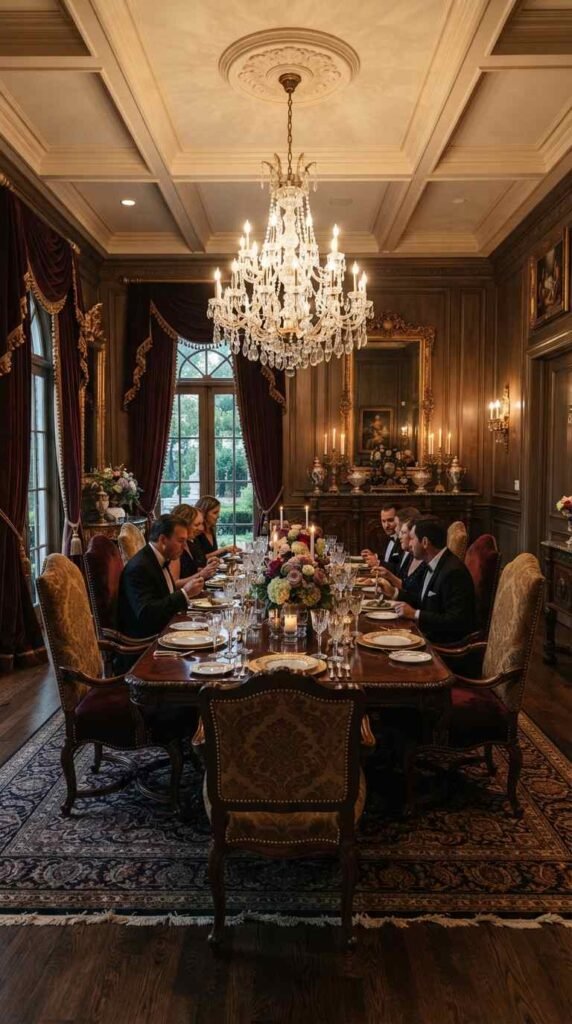
- Combines opulent elements for maximum impact
- Creates a truly regal, palace-inspired feel
- Works well with rich colors and gold detailing
- Elevates the room to its most formal expression
- Suits homeowners wanting maximum grandeur
A regal styling approach combines rich jewel tones, gold detailing, and opulent textiles to create the most formal expression of dining room decor traditional design. This look draws inspiration from palace and estate dining rooms, embracing bold color and luxurious materials without restraint. Every element works together to create a genuinely dramatic, statement-making space that feels fit for the most special occasions imaginable.
I’ve seen this work well in homes where the dining room serves as the ultimate showcase for entertaining, with deep emerald or burgundy walls paired with gold accents and rich velvet upholstery. This combination creates a truly memorable, luxurious atmosphere. This idea suits homeowners who want their dining room to make an unforgettable, opulent impression on every guest who visits.
26. Traditional Dining Room with Neutral Color Harmony
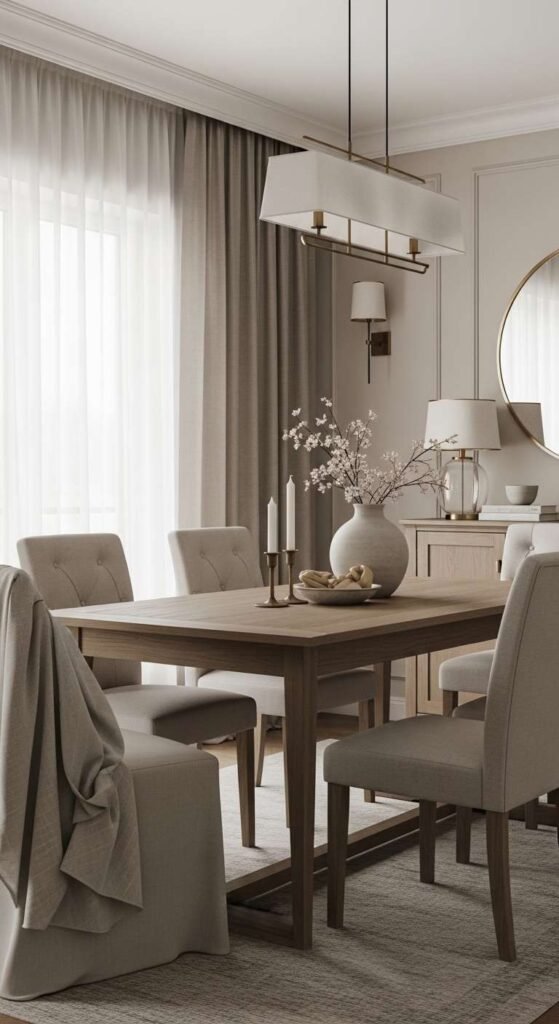
- Creates a timeless, versatile foundation
- Keeps the room feeling calm and cohesive
- Works well with rich wood tones and gold accents
- Makes formal rooms feel warm rather than stiff
- Ages well without feeling dated
A warm, neutral color palette provides the ideal foundation central to dining room decor traditional style, since it complements rich wood furniture and gold or brass accents without competing for attention. Soft creams, warm beiges, and gentle taupes create a sophisticated backdrop that feels elegant and inviting rather than cold or overly formal throughout the entire dining space.
I’ve noticed that traditional dining rooms with warm neutral walls tend to feel more welcoming than those with stark white or overly bold colors. The soft, warm tones enhance the richness of wood furniture while allowing decorative details like chandeliers or artwork to stand out. This approach also offers long-term flexibility, allowing homeowners to update smaller accents without major renovation.
27. Traditional Dining Room with Symmetrical Layout Design
- Creates visual balance and order
- Adds a sense of formality and intention
- Works well with matching furniture pairs
- Elevates the room’s overall composition
- Suits both large and moderate dining spaces
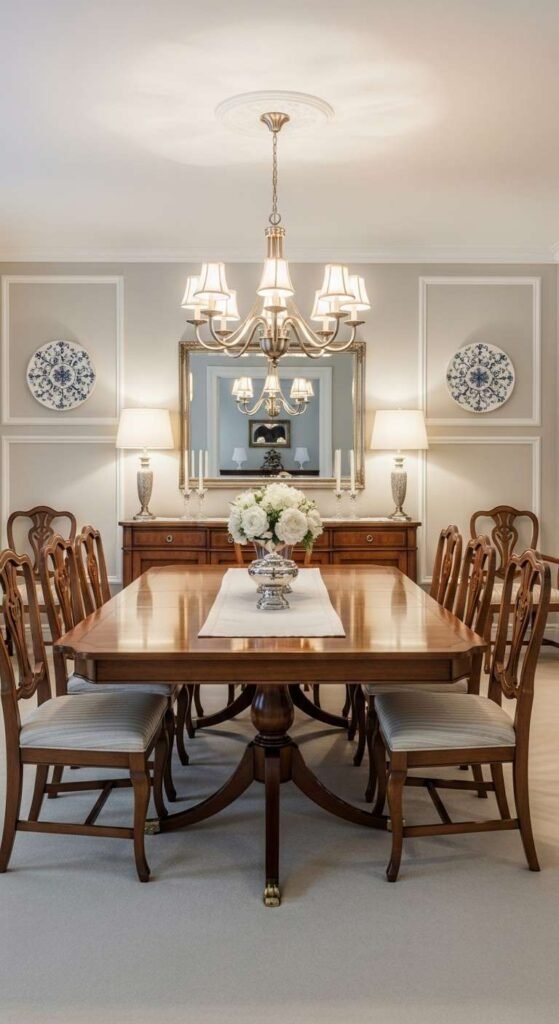
A symmetrical layout, with matching chairs on either side of the table, coordinated lighting, and balanced wall decor, creates a sense of order central to dining room decor traditional style. This approach relies on visual balance rather than eclectic mixing, ensuring every element has a mirrored counterpart that reinforces the room’s overall formality and intentional design throughout the entire space.
That’s why many designers recommend symmetrical layouts for formal dining rooms, since matching furniture and balanced decor create a sense of visual calm and sophistication. Placing identical lamps on either end of a sideboard or matching artwork on opposite walls reinforces this balance. This idea suits homeowners who appreciate order and formality, offering a timeless approach that rarely feels dated.
28. Traditional Dining Room with Warm Lighting Ambience
- Adds warmth through soft, ambient lighting
- Creates a relaxing evening atmosphere
- Works well with dimmable bulb options
- Highlights wood and fabric textures beautifully
- Enhances the room’s cozy, formal character
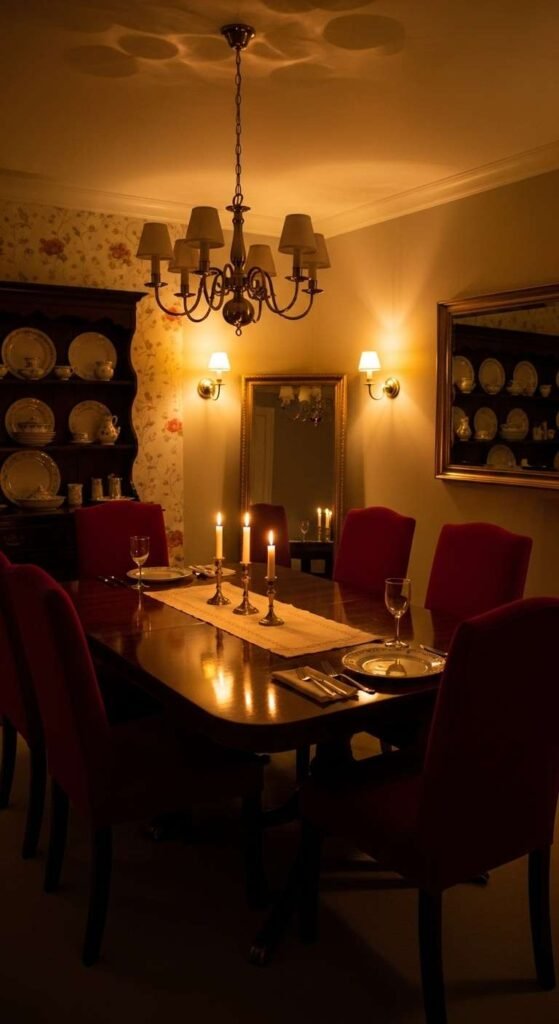
Warm, ambient lighting enhances the cozy, formal character central to dining room decor traditional style, casting a soft, golden glow that flatters wood furniture and fabrics throughout the room. Choosing warm-toned bulbs paired with dimmable fixtures allows flexibility between bright, functional lighting and a softer, more intimate glow during evening meals and special gatherings alike.
I’ve noticed that many traditional dining rooms rely on natural materials and rich furniture alone to create warmth, missing the opportunity to enhance that feeling further through thoughtful lighting choices. A warm-toned bulb in a classic fixture significantly enhances the room’s cozy character, especially during evening gatherings. This idea is relatively simple to implement, yet it meaningfully improves the room’s ambiance.
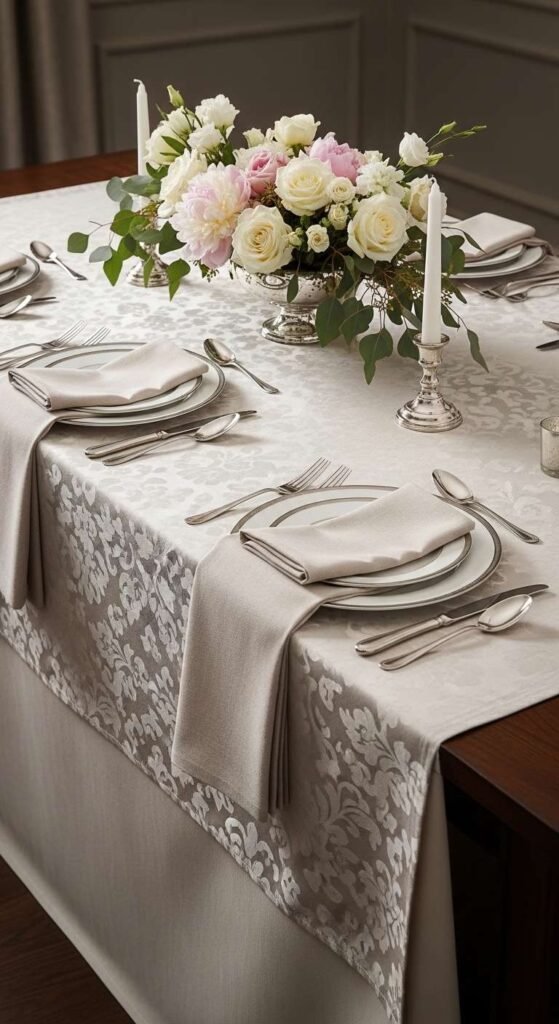
29. Traditional Dining Room with Classic Tablecloth Styling
- Adds formality through classic table styling
- Protects the table while enhancing elegance
- Introduces texture and refined detail
- Easy to swap for different occasions
- Works well with formal place settings
An elegant tablecloth, often in linen or a subtle damask pattern, adds instant formality to a dining table, elevating even simple meals into something special within dining room decor traditional style. This classic element has long been a hallmark of formal dining, signaling occasion and care in table presentation. Choosing a tablecloth in a color that complements the room’s overall palette ties the setting into the broader design.
That’s why many designers recommend keeping a few tablecloths on hand for different occasions, since the fabric can instantly shift a table’s formality up or down as needed. A crisp white or cream tablecloth works particularly well for special gatherings, while richer tones suit everyday formal dining. This idea offers genuine flexibility, allowing the same table to serve multiple purposes.
30. Traditional Dining Room with Decorative Plate Wall Display
- Creates a unique, curated focal point
- Adds color and pattern through dishware
- Works well on larger, empty walls
- Allows gradual collection over time
- Reinforces the room’s classic theme
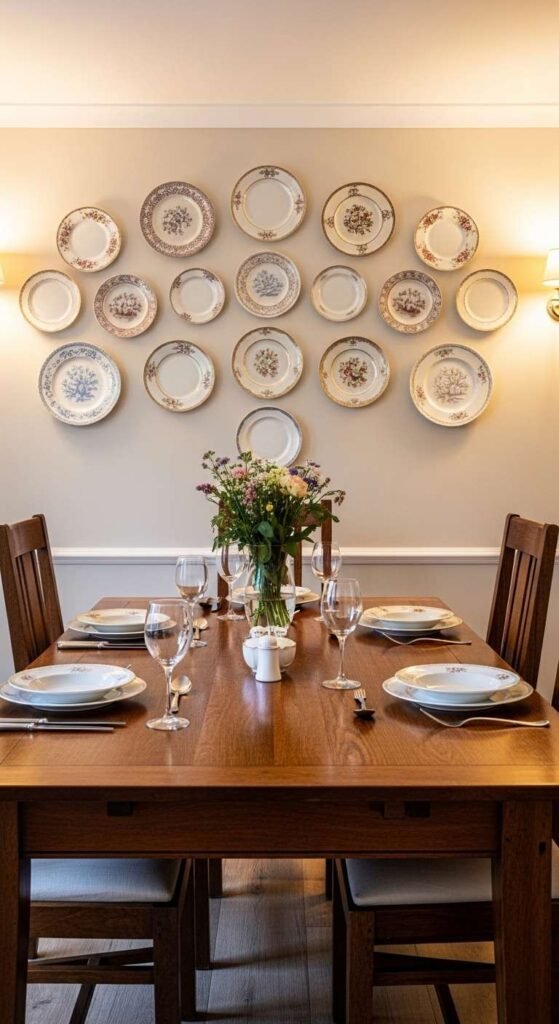
A decorative plate wall, featuring collected china or patterned plates arranged artfully, transforms empty wall space into a curated, personal display central to dining room decor traditional style. This idea works particularly well for larger walls that feel bare with just a single piece of art, allowing several plates to collectively create visual impact throughout the entire room.
I’ve seen this work well in dining rooms where a single small frame felt lost against a large, empty wall. Arranging several plates together, in varying sizes and complementary patterns, creates balance and visual weight appropriate to the room’s scale. This idea also allows for personal expression, since the specific plates chosen often reflect individual taste and collected history.
31. Traditional Dining Room with Cozy Corner Seating
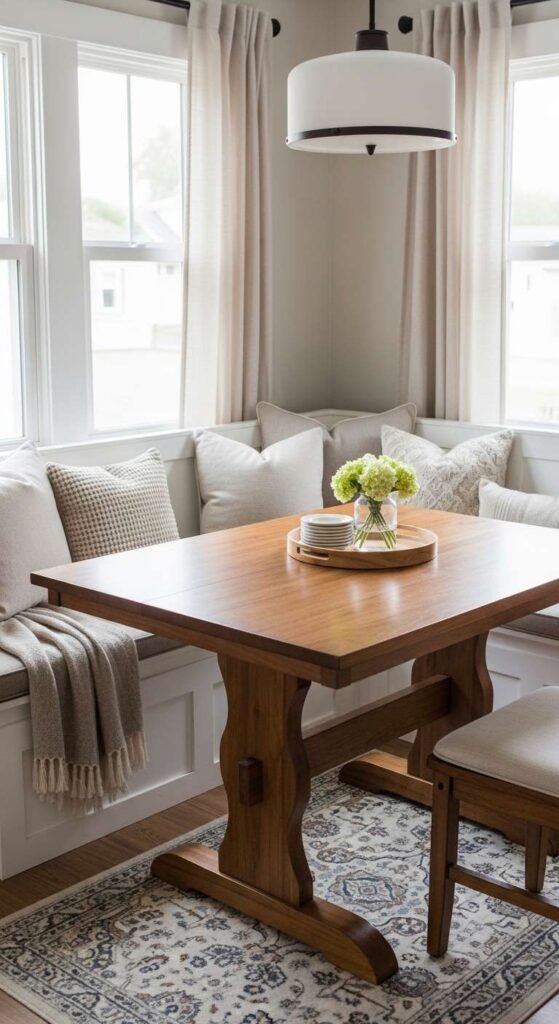
- Adds intimate, comfortable seating options
- Creates a softer corner within a formal room
- Works well with a small accent chair or bench
- Balances formality with genuine comfort
- Suits larger dining rooms with extra space
A cozy corner seating area, featuring a small accent chair or upholstered bench, adds a softer, more comfortable dimension to dining room decor traditional style. This addition works particularly well in larger dining rooms with extra space, offering a place to sit before or after meals rather than reserving all seating strictly for the table itself throughout gatherings.
I’ve seen this work well in formal dining rooms that otherwise felt stiff or purely functional. Adding a small reading chair or bench near a window softens the room’s overall formality without detracting from its classic character. This idea suits homeowners who want their dining room to feel genuinely livable, not just reserved for formal occasions and special gatherings.
32. Traditional Dining Room with Glass Display Accents
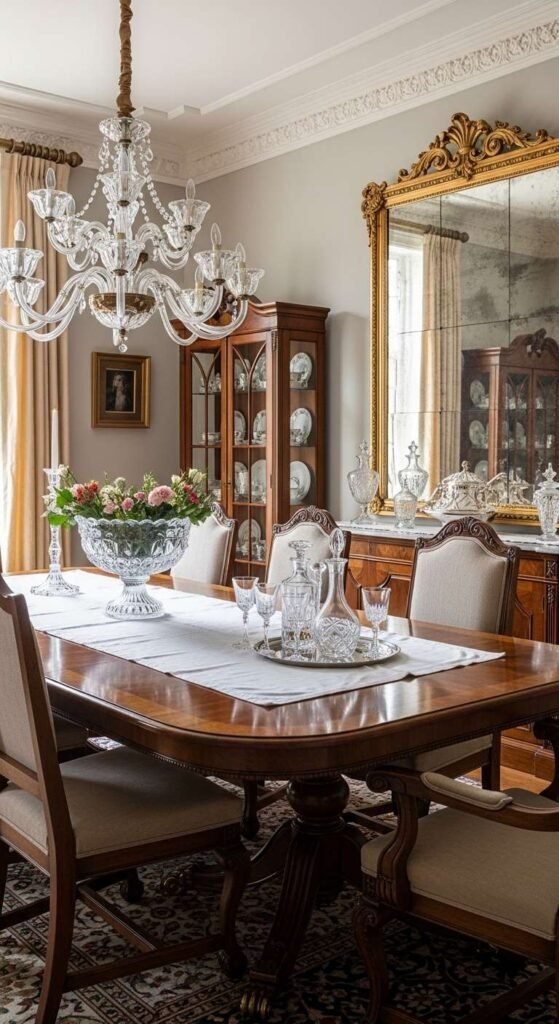
- Adds light-reflecting visual interest
- Creates a sophisticated display opportunity
- Works well for showcasing glassware or crystal
- Introduces subtle shine without excess shimmer
- Elevates the room’s overall elegance
Glass display accents, whether a curio cabinet or glass shelving showcasing crystal and fine glassware, add subtle shine central to dining room decor traditional style. Unlike solid materials, glass allows light to pass through, creating gentle reflections that enhance the room’s overall elegance without overwhelming the space with excessive shimmer or visual weight throughout the dining area.
I’ve noticed that glass displays work particularly well for showcasing crystal glassware or collected treasures that deserve to be seen rather than hidden in closed cabinets. Positioning this display near a window or light source enhances the way light interacts with the glass. This idea suits homeowners who enjoy collecting fine glassware and want a genuine way to display it.
33. Traditional Dining Room with Layered Textiles
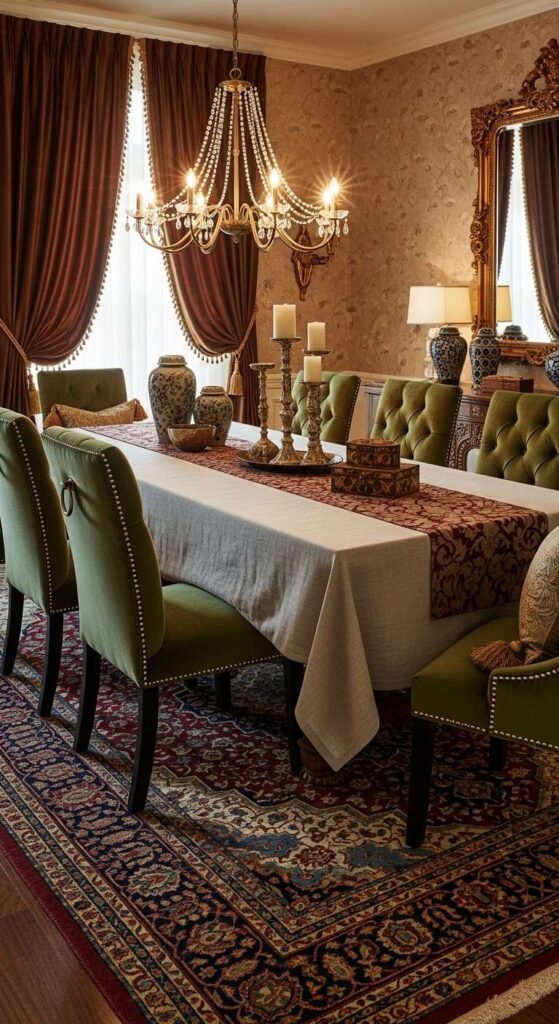
- Creates depth through varied fabric textures
- Adds richness without requiring new furniture
- Works well with curtains, cushions, and runners
- Elevates the room’s overall sense of comfort
- Easy to update seasonally
Layering textiles throughout a dining room, curtains, chair cushions, and a table runner, creates richness and depth central to dining room decor traditional style. Combining complementary fabrics and patterns adds visual interest without requiring any new furniture, simply building on what’s already in place throughout the space. This approach works particularly well for those wanting their formal dining room to feel warm rather than stiff.
In my experience, layering textiles works best when one dominant pattern anchors the room while complementary solids or subtle patterns support it elsewhere. A patterned rug paired with solid curtains and a textured table runner creates this balance beautifully. This idea is particularly rewarding for those who enjoy gradually building their dining room’s textile collection over time.
34. Traditional Dining Room with Statement Wall Art
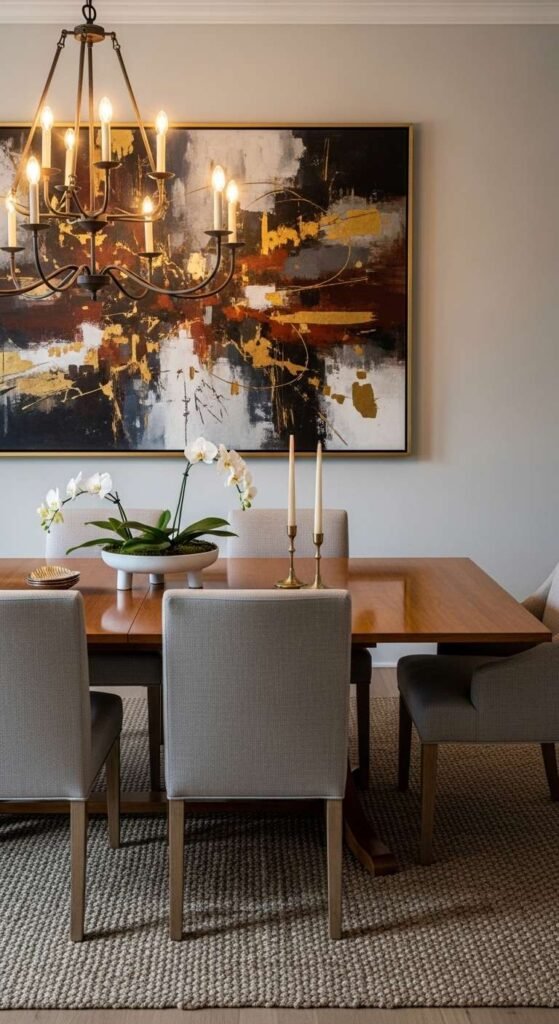
- Creates a strong visual focal point
- Adds personality without changing furniture
- Works well above sideboards or buffets
- Elevates the room with minimal effort
- Reinforces the room’s overall style
A large piece of statement wall art transforms empty space into a bold, eye-catching focal point within dining room decor traditional style. Whether it’s a classic landscape or a portrait, this single addition draws attention and adds personality to the space. This idea works particularly well for walls that feel bare or unfinished, offering one of the most impactful updates without requiring any furniture changes.
I’ve seen this work well in dining rooms where a small or mismatched frame felt lost above a larger sideboard or buffet. Choosing artwork that’s proportionate to the wall’s size creates better visual balance, avoiding a piece that looks too small or disconnected. This idea also allows for personal expression, since art choice often reflects individual taste more than any other decor element.
35. Traditional Dining Room with Rustic Wood Touch
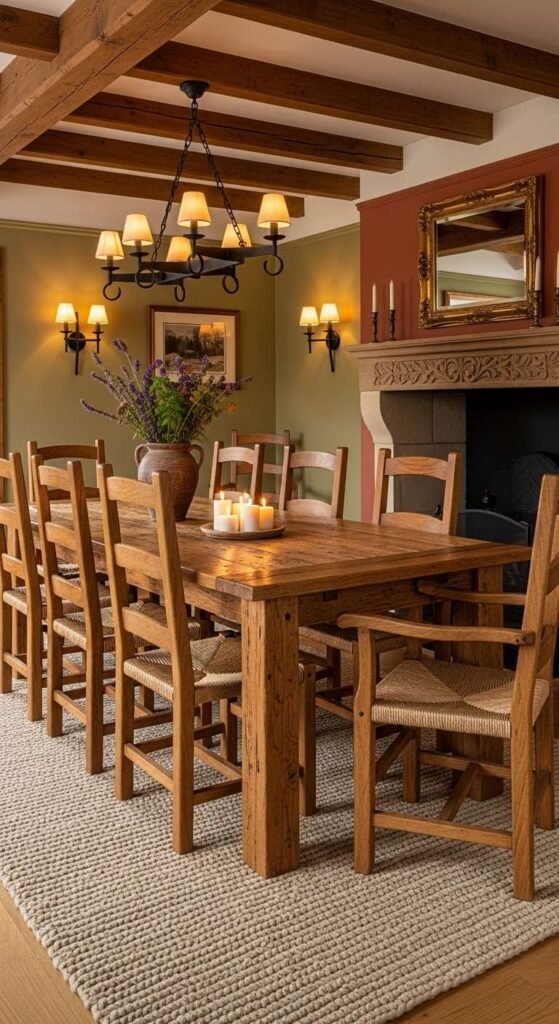
- Adds warmth through natural wood texture
- Balances formality with genuine coziness
- Works well as a subtle contrast element
- Introduces character without disrupting elegance
- Suits homes wanting a softer traditional feel
A touch of rustic wood, whether a reclaimed accent piece or a distressed wood detail, adds warmth that balances the formality central to dining room decor traditional style. This subtle contrast prevents the room from feeling overly polished or stiff, introducing character that feels grounded and genuine alongside more formal elements like a chandelier or upholstered chairs throughout the space.
I’ve seen this work well in traditional dining rooms that felt slightly too formal or museum-like without any grounding element. A single rustic wood piece, like a reclaimed console or a distressed picture frame, softens the overall look. This idea suits homeowners who want their traditional dining room to feel warm and lived-in rather than purely formal and untouchable.
36. Traditional Dining Room with Elegant Candle Holders
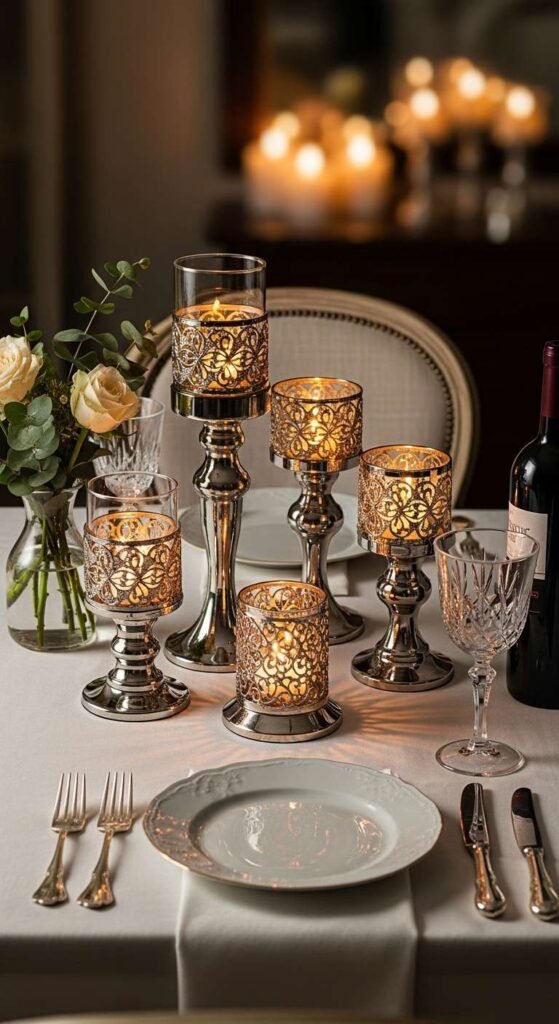
- Adds refined warmth through classic accents
- Creates ambiance for both everyday and formal use
- Works well as candelabras or simple brass holders
- Introduces a timeless, sophisticated touch
- Easy to incorporate without major changes
Elegant candle holders, whether ornate candelabras or simple brass pieces, add refined warmth central to dining room decor traditional style without requiring significant investment. Grouping candle holders of varying heights creates a sophisticated, layered look on the dining table or sideboard, working equally well for everyday meals and special formal occasions throughout the year.
That’s why many designers recommend keeping a mix of candle holder styles on hand, since varying the height and material adds visual interest without cluttering the table. A few tall brass holders alongside shorter glass ones creates balance. This idea is particularly valuable for evening gatherings, since candlelight enhances the timeless, sophisticated atmosphere central to traditional dining spaces.
37. Traditional Dining Room with Classic Flooring Style
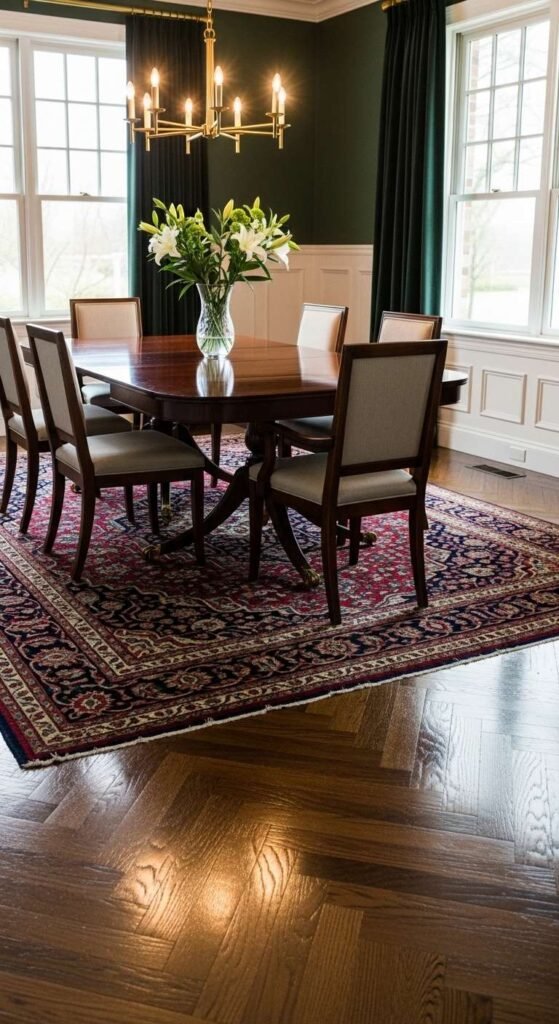
- Adds warmth and richness underfoot
- Creates a timeless, elegant foundation
- Works well with both light and dark finishes
- Pairs beautifully with classic furniture
- Elevates the room’s overall sophistication
Rich wooden flooring, whether hardwood planks or a classic parquet pattern, provides the elegant foundation central to dining room decor traditional style. This flooring choice adds warmth and richness that complements traditional furniture beautifully, creating a cohesive, timeless look throughout the entire room. Choosing a finish that complements the dining table’s wood tone ties the entire space together seamlessly and elegantly.
That’s why many designers recommend wood flooring as a foundational choice for traditional dining rooms, since it pairs naturally with nearly any furniture style layered on top. A parquet pattern adds additional visual interest and formality for those wanting an extra layer of classic detail. This idea works particularly well when paired with an area rug, which adds softness while showcasing the wood’s natural beauty.
38. Traditional Dining Room with Soft Pastel Accents
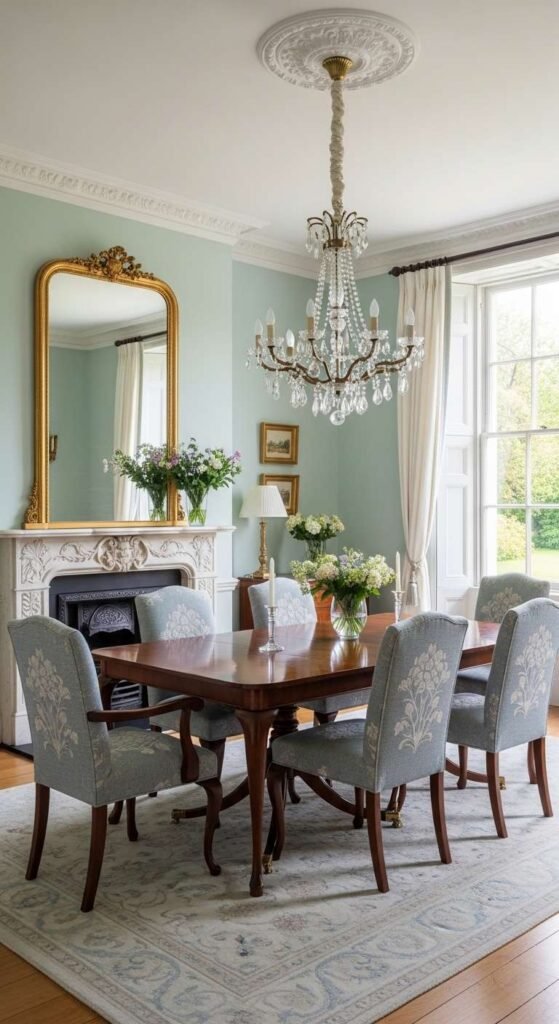
- Adds gentle color without overwhelming formality
- Creates a softer, more approachable traditional look
- Works well as cushions, florals, or small decor
- Balances classic elements with lighter tones
- Suits homes wanting a less heavy aesthetic
Soft pastel accents, whether in cushions, floral arrangements, or small decorative pieces, introduce gentle color central to dining room decor traditional style without disrupting its overall formality. This approach softens the sometimes heavy, dark-toned nature of traditional design, creating a lighter, more approachable version of the style that still respects its classic roots and detailing throughout the space.
I’ve seen this work well in traditional dining rooms that felt slightly too dark or heavy overall. Adding blush pink or soft blue accents through cushions or a floral centerpiece lightens the mood considerably. This idea suits homeowners who love traditional design’s craftsmanship and formality but want their dining room to feel airier and less visually weighty than classic versions of the style.
39. Traditional Dining Room with Balanced Decor Styling
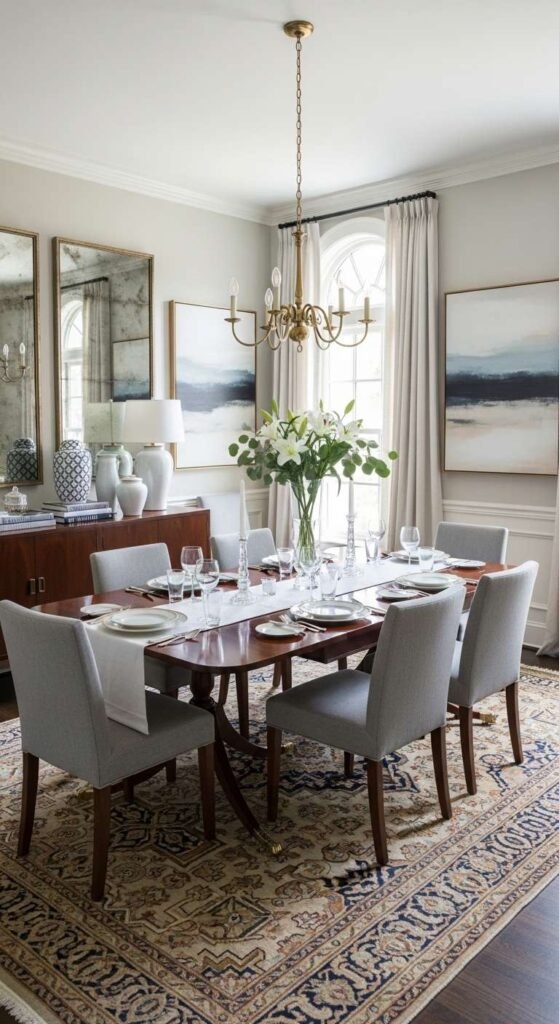
- Combines multiple elements thoughtfully
- Creates a well-considered, cohesive look
- Works well as a mid-point checkpoint
- Reinforces earlier design choices
- Elevates the room through careful editing
A balanced approach to decor styling, reviewing how furniture, lighting, textiles, and wall decor work together, ensures dining room decor traditional elements don’t compete or overwhelm one another. This idea encourages stepping back from individual pieces to evaluate the room as a whole, checking that no single element, whether a bold rug or an ornate chandelier, dominates the space unintentionally.
In my experience, the most successful traditional dining rooms achieve balance through careful editing rather than simply adding more decor over time. Removing one competing element often does more good than adding another statement piece. This idea serves as a helpful mid-point checkpoint, ensuring every choice made so far genuinely contributes to one intentional, cohesive design rather than a cluttered collection.
40. Traditional Dining Room with Timeless Elegant Finish
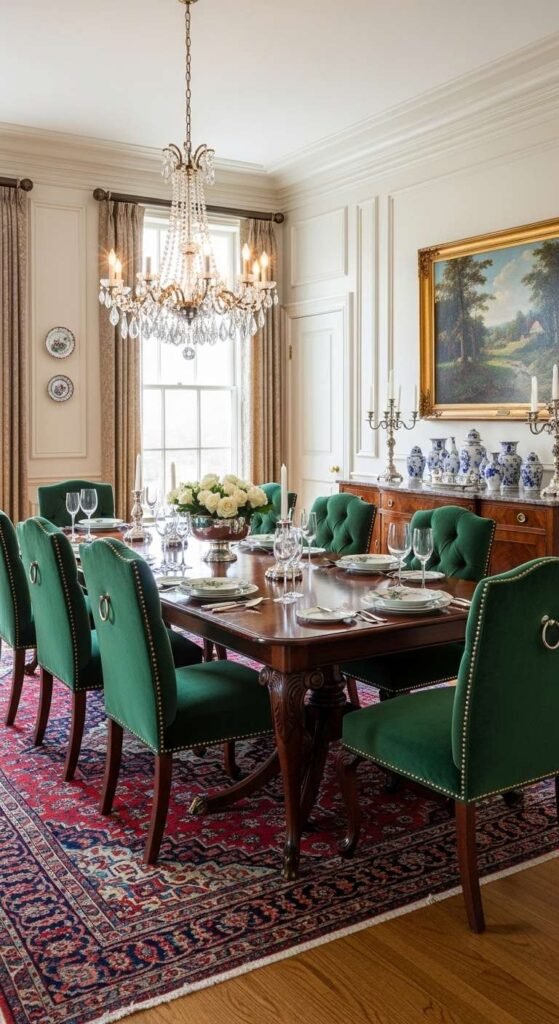
- Combines multiple elements into one cohesive room
- Creates a fully realized, immersive style
- Works well as the culmination of smaller changes
- Reinforces every previous design choice
- Delivers a genuinely complete, styled space
Bringing together several of the strongest elements discussed throughout this guide, a classic wooden table, an elegant chandelier, rich textiles, and thoughtful wall decor, creates a fully realized, well-balanced dining room reflecting the best of dining room decor traditional style. This final idea represents the culmination of smaller, individual changes into one cohesive, immersive space that feels genuinely complete.
In my experience, the most successful traditional dining rooms rarely rely on just one or two standout pieces, instead layering multiple elements thoughtfully over time. Reviewing the room as a whole, rather than focusing on individual pieces alone, often reveals small adjustments that tie everything together more cohesively. This idea serves as a helpful final checkpoint for a truly timeless dining space.
Frequently Asked Questions
1. What defines a traditional dining room style?
Traditional dining room style draws on classic design principles, rich wood furniture, formal lighting, and symmetrical layouts. It emphasizes craftsmanship, timeless patterns, and elegant details over trend-driven styles, creating a space that feels formal, warm, and enduring rather than fleeting.
2. What wood finish works best for a traditional dining table?
Rich, polished finishes like mahogany, cherry, or dark walnut work best, since they add depth and formality. In my experience, a deeper wood tone also hides everyday scratches and wear better than lighter, more delicate finishes.
3. How do I make a small dining room feel traditional without overcrowding it?
Focus on one or two statement pieces, like a classic table and a chandelier, rather than filling the space with heavy furniture. Choosing a lighter wood tone and a smaller rug also helps the room feel traditional without feeling cramped.
4. What colors work best in a traditional dining room?
Warm neutrals like cream, beige, and soft taupe work best as a base, complemented by rich wood tones and gold or brass accents. That’s why many designers recommend starting neutral before layering in bolder jewel tones for special accents.
5. Do I need a chandelier for a traditional dining room look?
While not strictly required, a chandelier is one of the most defining elements of the style. I’ve seen this work well even with a smaller or simpler fixture, since the key is choosing something with classic detailing rather than a purely modern design.
6. How can I add traditional style without a full renovation?
Start with smaller elements like a table runner, candle holders, or antique wall art. That’s why many designers recommend building the look gradually, adding one meaningful piece at a time rather than committing to major structural changes right away.
7. What kind of rug works best under a traditional dining table?
A richly patterned rug in deep reds, blues, or golds works particularly well, adding warmth and formality underfoot. Choosing a rug slightly larger than the table ensures chairs remain on the rug even when pulled out for seating.
8. How do I keep a traditional dining room from feeling too formal or stiff?
Adding soft pastel accents, a cozy corner chair, or a touch of rustic wood can soften the overall look. I’ve noticed that mixing in one or two relaxed elements keeps the room feeling warm and lived-in rather than purely formal.
9. What lighting works best for a traditional dining room ambiance?
A crystal or ornate metal chandelier is the classic choice, often paired with wall sconces for supplementary warmth. Dimmable bulbs add flexibility, allowing the room to shift from bright and functional to soft and intimate depending on the occasion.
10. How often should traditional dining room decor be updated?
Traditional style rarely needs frequent updates, since it relies on timeless pieces rather than trends. I’ve noticed that swapping smaller accents seasonally, like table runners or floral centerpieces, keeps the room feeling fresh without major overhauls.
Conclusion
A dining room full of timeless character doesn’t come from chasing trends, and these dining room decor traditional ideas prove exactly that. From a classic wooden table to layered lighting and rich textiles, small, thoughtful choices come together to create a space that feels both formal and genuinely warm. I’ve seen how these classic design elements bring lasting elegance into a home. Pick one idea to try this week, save this post to your Pinterest board for later, and share it with someone ready to give their dining room a timeless, sophisticated refresh they’ll love for years.