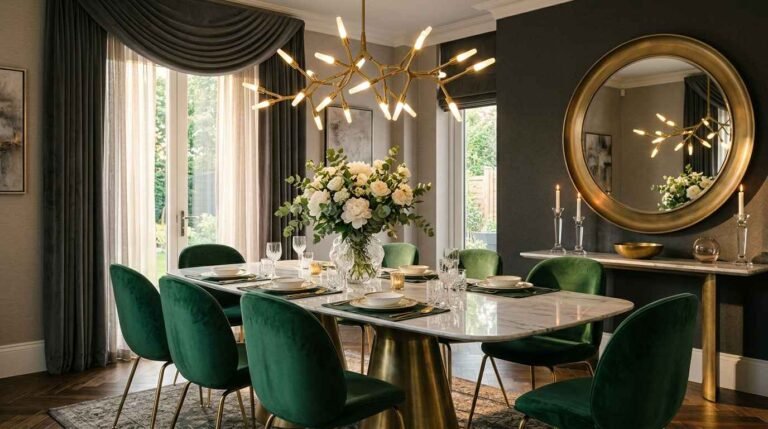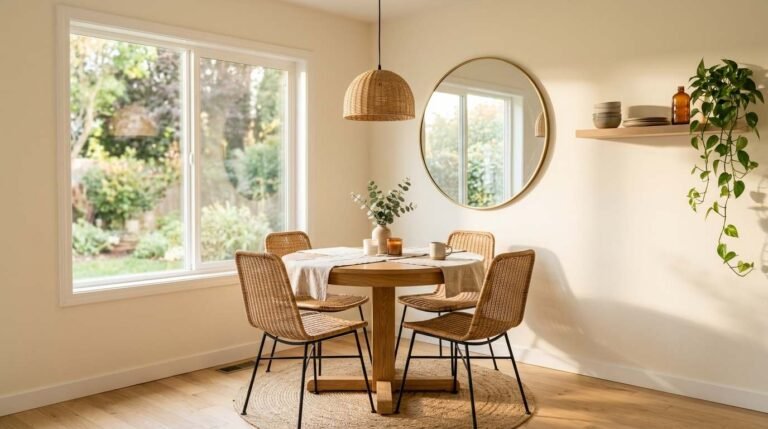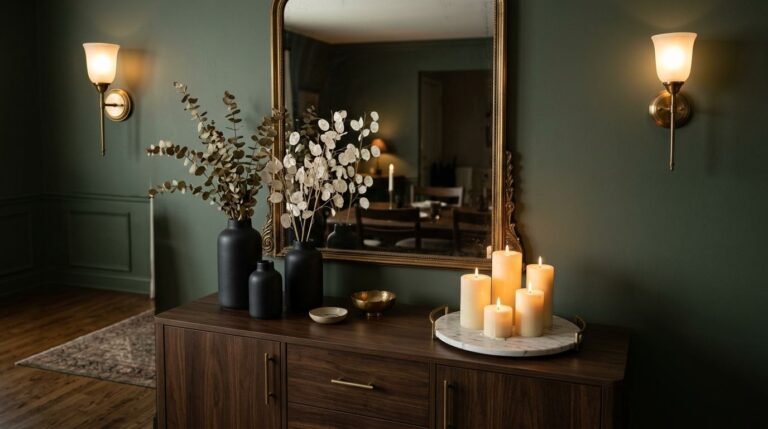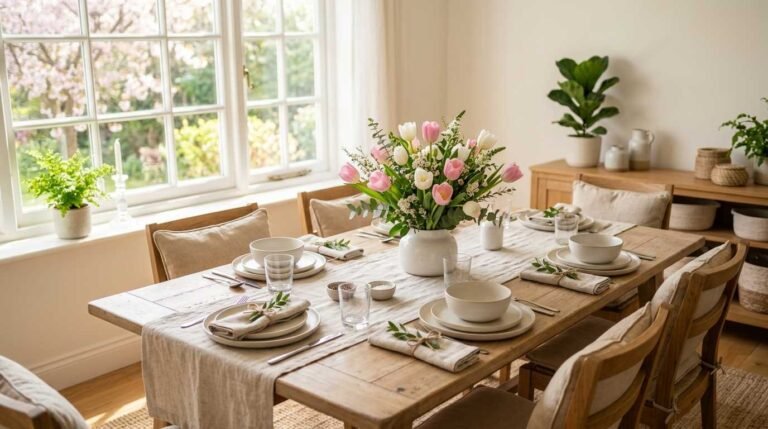
A dining room sideboard often becomes a catchall for mail and clutter long before anyone thinks to style it properly, and these dining room sideboard decor ideas are here to change that. From farmhouse warmth to glam metallics, this guide walks through 22 practical approaches that turn an overlooked surface into one of the most admired spots in the room. In my experience, a sideboard rewards attention more than almost any other dining room furniture piece, since it sits in constant view yet rarely gets the same decorating focus as the table itself. Whether you’re working with an inherited antique or a sleek modern piece, there’s an idea here that fits. Keep scrolling, save your favorites, and get ready to give your sideboard the styling it deserves.
1. Farmhouse-Style Sideboard Decor
- Adds rustic warmth through natural wood
- Suits families using the space daily
- Works well with distressed or reclaimed finishes
- Pairs easily with woven and ceramic accents
- Creates a welcoming, lived-in feel
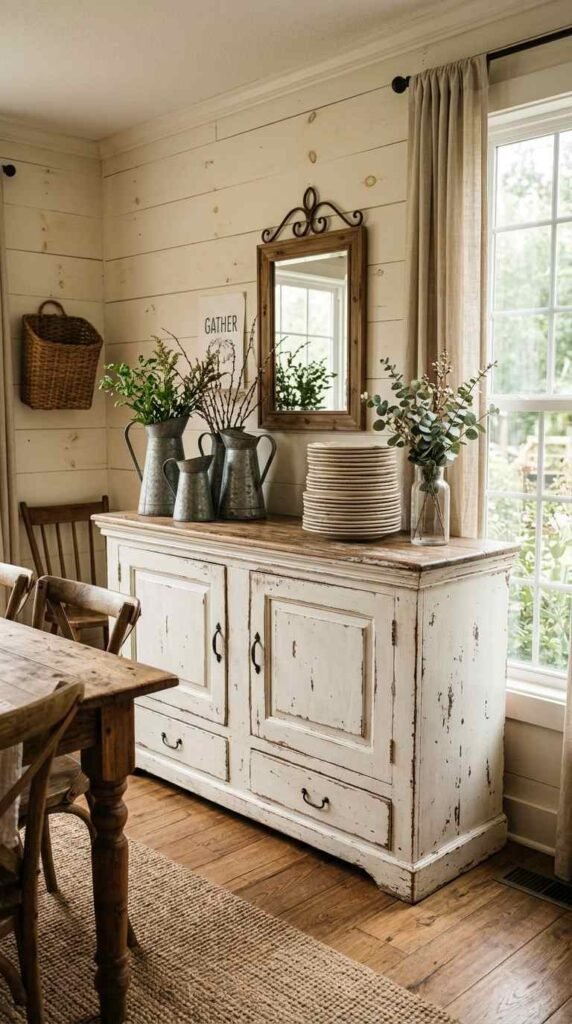
A farmhouse sideboard, typically built from solid or reclaimed wood with simple hardware, anchors dining room sideboard decor in warmth rather than formality. The visible grain and slightly imperfect finish carry genuine character that newer, more polished furniture often lacks, making this style especially suited to households wanting their dining room to feel welcoming rather than precious.
Styling the top with a mix of ceramic pitchers, a woven basket, and a stack of linens keeps the display functional as well as decorative. A distressed or whitewashed finish reinforces the farmhouse feel further, while simple black iron pulls tie the hardware into the overall rustic theme. This approach suits dining rooms that double as genuine gathering spaces, where the sideboard needs to hold up to daily use as much as it needs to look good doing it.
2. Coastal-Inspired Sideboard Styling
- Brings a light, breezy feel to the room
- Works with whitewashed or driftwood finishes
- Pairs naturally with blue and white accents
- Suits sunny rooms with ample natural light
- Adds texture through rattan and linen
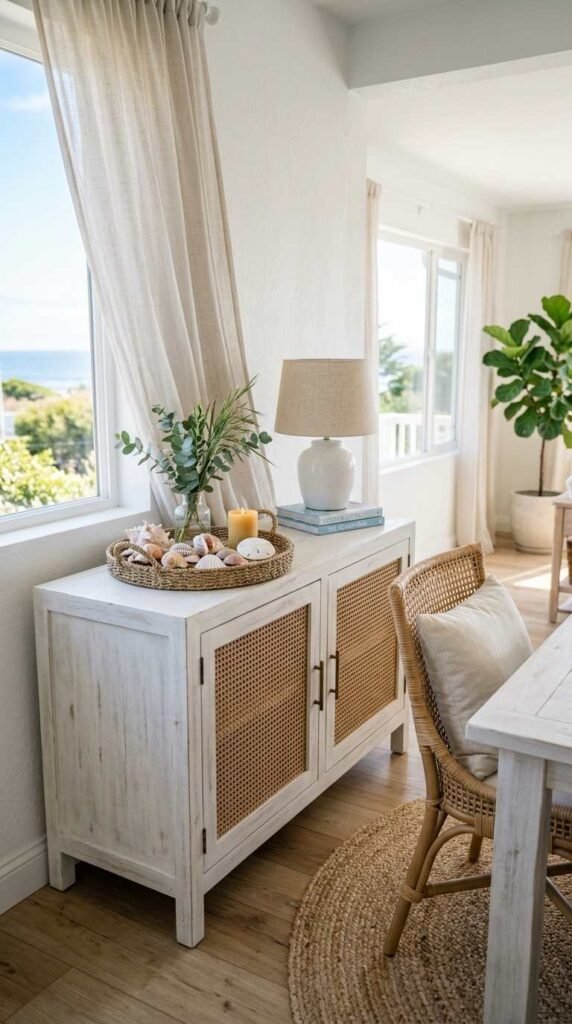
A coastal sideboard, finished in whitewashed wood or a pale driftwood tone, brings an airy, vacation-inspired quality to dining room sideboard decor. Styling the top with a few blue and white ceramic pieces, a woven seagrass tray, and a glass jar filled with shells or dried coral evokes a seaside mood without requiring an actual ocean view to pull off convincingly.
This look performs best in rooms with generous natural light, since the pale finishes and soft color palette rely on brightness to feel genuinely breezy rather than simply washed out. Rattan baskets tucked beneath or beside the sideboard add texture and extra storage, while linen table runners draped loosely across the top reinforce the relaxed, easygoing character central to this particular styling direction.
3. Modern Minimalist Sideboard Look
- Keeps the surface calm and uncluttered
- Highlights a few meaningful objects
- Suits contemporary and transitional dining rooms
- Reduces visual noise in smaller spaces
- Ages well without feeling dated
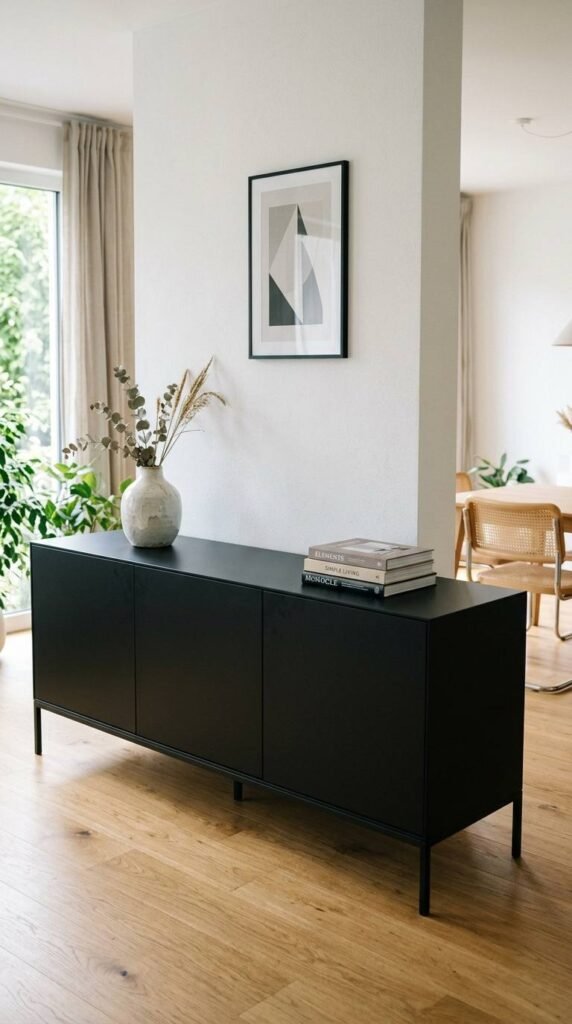
A minimalist approach to dining room sideboard decor relies on restraint rather than abundance, letting just a lamp, a single sculptural object, and perhaps one small plant occupy the entire surface. This pared-back styling suits sleek, contemporary sideboards particularly well, since the clean lines of the furniture itself deserve space to be appreciated rather than being buried beneath layers of competing decor.
Choosing objects with genuine visual interest, a ceramic vase with an unusual shape, a piece of abstract sculpture, matters more here than quantity ever could. Leaving generous negative space between each item lets the eye rest, which paradoxically makes the few chosen pieces feel more considered and valuable than a crowded surface ever would. This look also ages well, since fewer trend-driven accessories means less need for frequent updating.
4. Boho Sideboard with Natural Textures
- Layers texture through natural materials
- Creates a relaxed, collected atmosphere
- Works well with mismatched vintage finds
- Suits households that collect decor gradually
- Adds warmth without requiring bold color
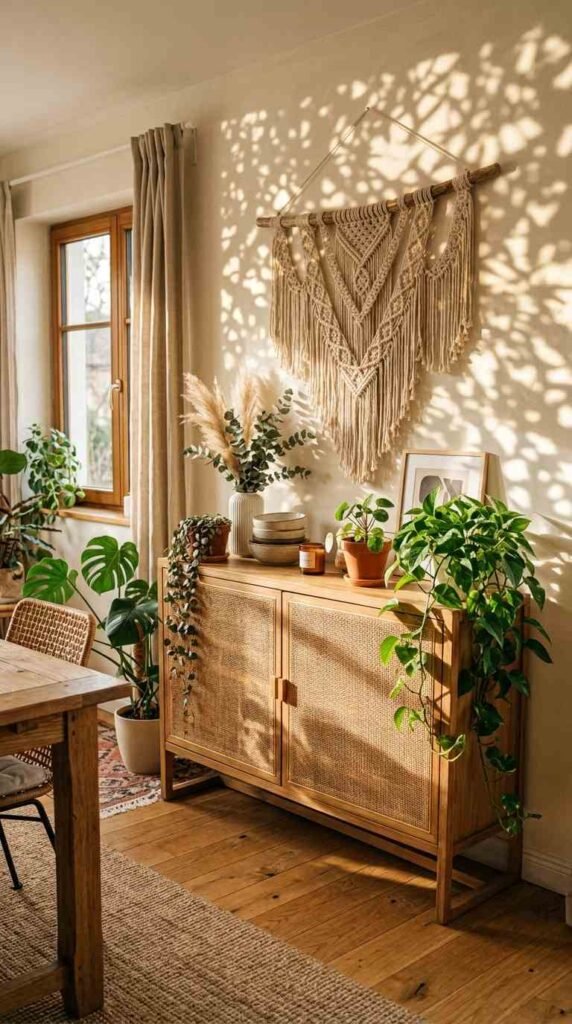
A boho approach to dining room sideboard decor leans on texture rather than symmetry, layering a macrame runner, a woven basket, and a scattering of dried pampas grass across the surface. Nothing needs to match precisely here; the style thrives on a collected, gathered-over-time quality that feels personal rather than purchased as a single matching set.
Mixing materials, rattan, wood, ceramic, and a bit of brass, adds depth without requiring bold color to carry the look. A trailing plant draped over one edge softens the furniture’s hard lines, while a cluster of candles in varying heights adds warmth for evening use. This styling direction rewards patience, since the best boho sideboards are typically built gradually rather than assembled all at once from a single shopping trip.
5. Glam Sideboard with Metallic Accents
- Introduces shine and a sense of occasion
- Elevates everyday styling into something special
- Works well with mirrored or lacquered finishes
- Pairs beautifully with crystal and brass
- Suits dining rooms meant for entertaining
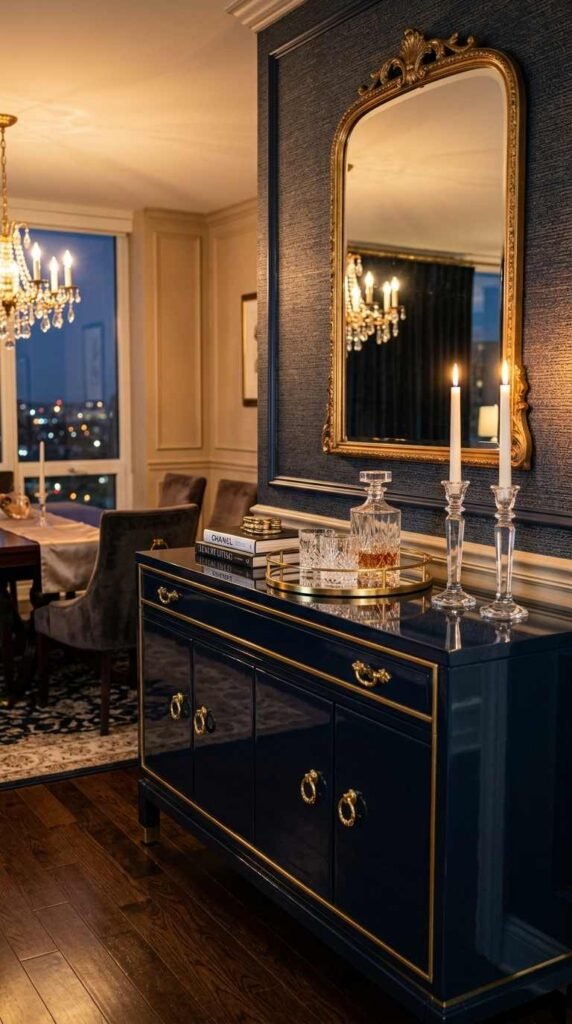
A glam sideboard, whether finished in mirrored glass or glossy lacquer, brings genuine sparkle to dining room sideboard decor. Styling the top with a pair of brass candlesticks, a crystal vase, and a mirrored tray grouping smaller items together creates a cohesive, reflective display that catches light beautifully once candles are lit for an evening meal.
Keeping the metallic tones consistent, choosing brass over mixing it with silver, for instance, helps the display read as intentional rather than randomly assembled. A single oversized mirror hung above the sideboard doubles the effect, bouncing light and shine across an even larger portion of the room. This styling direction suits households that entertain often, since the inherent drama photographs well and sets an elevated tone from the moment guests arrive.
6. Vintage Sideboard Character
- Adds genuine history and story
- Creates a collected, non-staged appearance
- Works well with inherited or thrifted pieces
- Suits traditional and eclectic dining rooms
- Rewards patient, gradual collecting
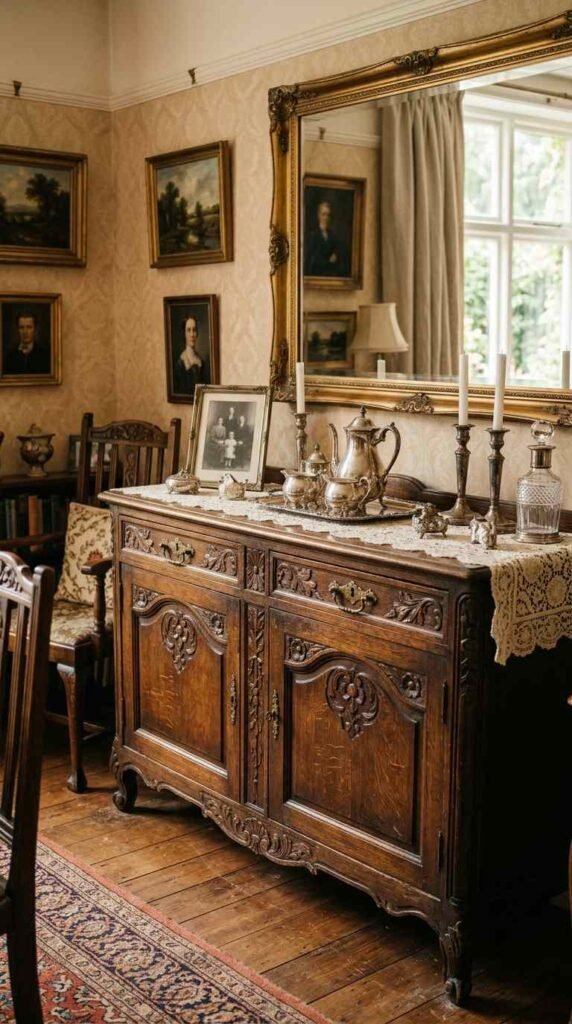
A genuinely vintage sideboard, whether inherited or found at an estate sale, brings a sense of history to dining room sideboard decor that new furniture simply cannot replicate. The slight wear, original hardware, and often superior craftsmanship of older pieces carry a story that makes the furniture itself the most interesting object in the room, long before anything gets placed on top of it.
Styling this kind of piece benefits from restraint, since the sideboard’s own character often outshines whatever decor sits above it. A single lamp, a small stack of books, and perhaps one meaningful object inherited alongside the furniture itself keep the styling simple enough to let the piece’s age and craftsmanship remain the clear focal point throughout the dining room.
7. Two-Tone Painted Sideboard Finish
- Adds visual interest through contrast
- Updates an older piece affordably
- Works well pairing a dark base with a light top
- Suits transitional and eclectic interiors
- Creates a custom, considered look
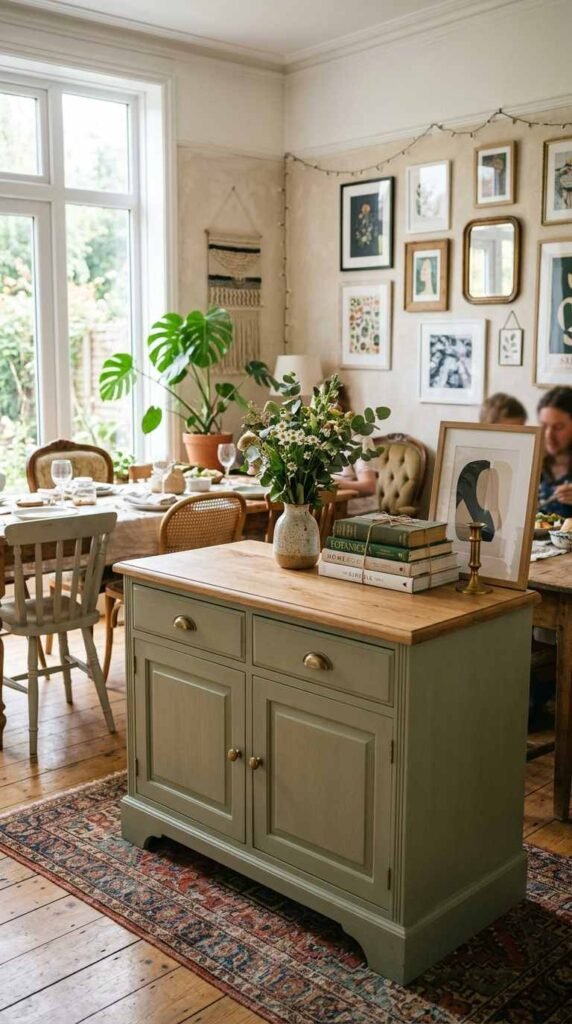
Painting a sideboard in two complementary tones, a deep navy or black base paired with a lighter wood or painted top, introduces contrast that a single uniform color cannot achieve. This approach to dining room sideboard decor works particularly well for updating an older or inherited piece, since the two-tone treatment often costs little more than a weekend and a few cans of paint.
Sanding and priming properly before painting ensures the finish holds up to daily use, especially on the top surface where items get set down and moved regularly. Choosing a lighter top in natural wood, rather than painting the entire piece, also lets the furniture’s grain show through, adding texture alongside the color contrast. New hardware in brass or matte black completes the refreshed, custom look.
8. Choosing the Right Sideboard Size
- Prevents a cramped or oversized dining room
- Ensures comfortable clearance for chairs and doors
- Balances proportion with the dining table
- Suits careful planning before any purchase
- Avoids costly return or resale situations
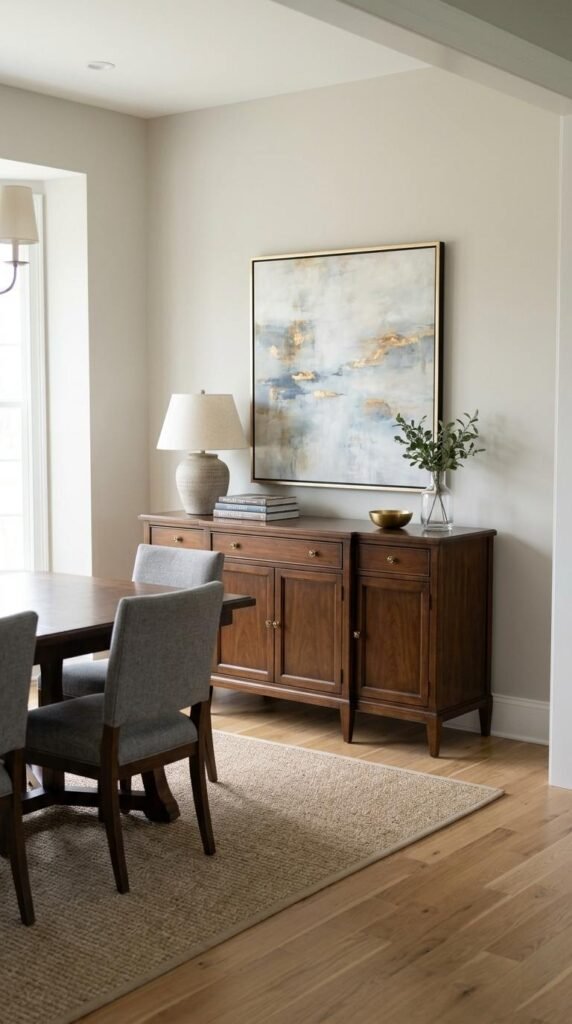
Getting the scale right matters more than any styling decision that follows, since a sideboard too large overwhelms a room while one too small looks lost against a substantial dining table. As a general guide, the sideboard should measure roughly half to two-thirds the width of the table, with at least thirty-six inches of clearance left in front for chairs to slide out and doors to open fully.
Measuring the available wall space before shopping, including nearby doorways or windows that might limit placement, prevents the disappointment of falling in love with a piece that simply won’t fit. In smaller dining rooms, a slimmer depth of twelve to sixteen inches often works better than a standard eighteen-to-twenty-inch sideboard, preserving walkway space without sacrificing storage capacity entirely.
9. Sideboard as a Coffee and Tea Station
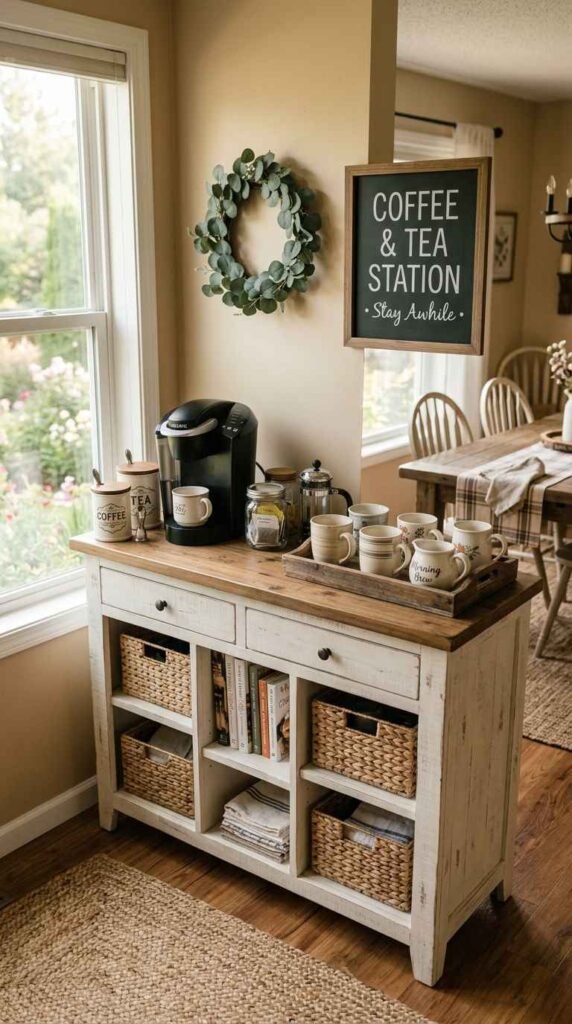
- Turns the surface into a genuine daily function
- Keeps morning routines organized and accessible
- Works well with a tray to contain supplies
- Suits households that entertain for breakfast or brunch
- Adds purpose beyond purely decorative styling
Dedicating one end of the sideboard to coffee and tea service gives dining room sideboard decor genuine daily function rather than purely decorative purpose. A small coffee maker or electric kettle, a few mugs, and a container for sugar or tea bags, all grouped on a tray, keeps the morning routine organized without cluttering the rest of the surface reserved for decor.
This setup works particularly well for households that host brunch or morning gatherings, since guests can serve themselves without crowding the kitchen. Choosing a tray in a material that complements the sideboard’s finish, wood for a farmhouse piece, brass for something more glam, ties the practical station into the room’s overall aesthetic rather than looking like an afterthought bolted onto an otherwise styled surface.
10. Sideboard as a Dessert and Serving Station
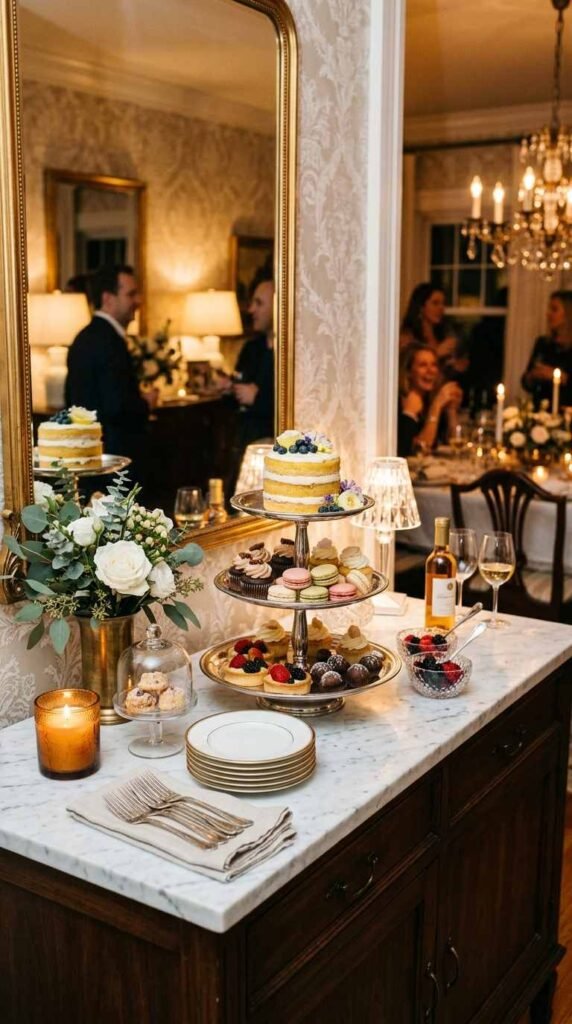
- Creates a dedicated spot for food during gatherings
- Keeps the main dining table free for place settings
- Works well with tiered stands and platters
- Suits households that host regularly
- Adds genuine entertaining function
Clearing the sideboard entirely for use as a dessert or serving station during gatherings solves the common problem of an overcrowded dining table once multiple dishes need a place to sit. A tiered stand for cupcakes or pastries, a few serving platters, and small stacks of dessert plates turn the surface into a self-serve station that keeps the main table focused purely on place settings.
This approach to dining room sideboard decor requires shifting everyday decor items elsewhere temporarily, but the payoff during holidays or larger gatherings makes the extra effort worthwhile. Positioning the sideboard near enough to the dining table for easy access, without crowding the walkway, ensures guests can serve themselves comfortably without disrupting conversation happening at the table itself.
11. Sideboard Placement for Small Dining Rooms
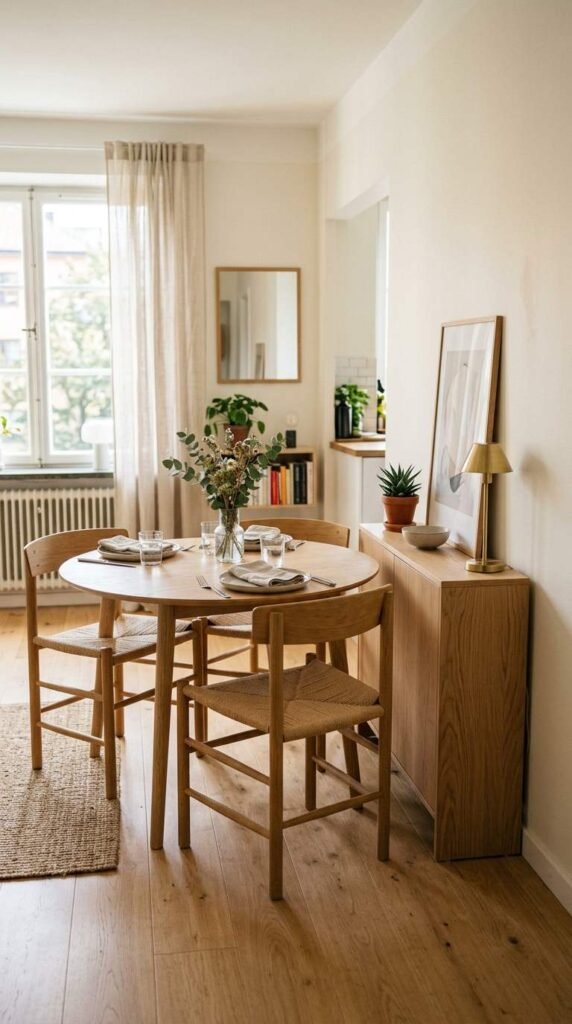
- Maximizes storage without crowding the room
- Suits narrow or oddly shaped spaces
- Works well with slim, wall-hugging designs
- Preserves comfortable walkways
- Avoids a cramped, overstuffed feeling
In a small dining room, where to place the sideboard matters just as much as which one you choose. Positioning it along the shortest wall, or in a corner at a slight angle, often preserves more usable floor space than pushing it against the longest wall where it might block a natural walkway between the kitchen and the rest of the home.
A slim profile, generally twelve to sixteen inches deep, becomes especially important in tight dining room sideboard decor situations, since even a few extra inches of depth can mean the difference between a comfortable walkway and a cramped one. Choosing a piece with legs that lift it slightly off the floor also helps a small room feel more open, since visible floor space beneath the furniture reduces its visual weight considerably.
12. Open-Front Sideboard Styling
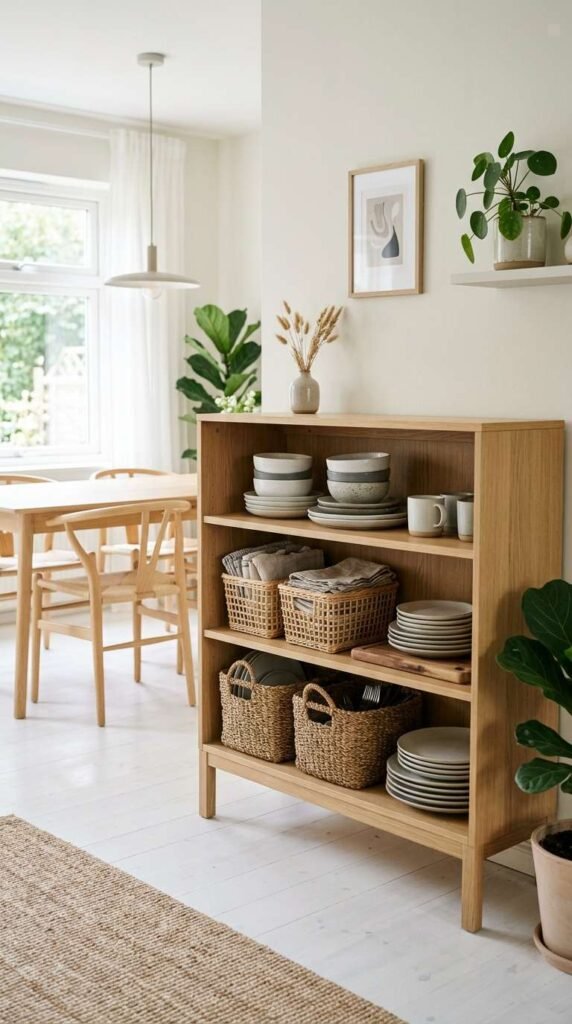
- Turns storage into visible display
- Works well for showing off dishware collections
- Suits open shelving or glass-front cabinets
- Requires more careful, consistent organization
- Adds personality through curated contents
An open-front sideboard, whether genuinely open shelving or glass cabinet doors, turns what’s normally hidden storage into part of the dining room sideboard decor itself. Collected china, glassware, or serving pieces become visible decor rather than items tucked away behind solid doors, which rewards households with dishware worth showing off in the first place.
This styling approach demands more consistent organization than closed storage, since everything inside remains on display at all times rather than hidden when things get a bit messy. Grouping similar colors or patterns together, and leaving a little breathing room between stacks rather than packing shelves tightly, keeps the open display looking curated and intentional rather than simply like storage that happens to be visible.
13. Marble-Top Sideboard Styling
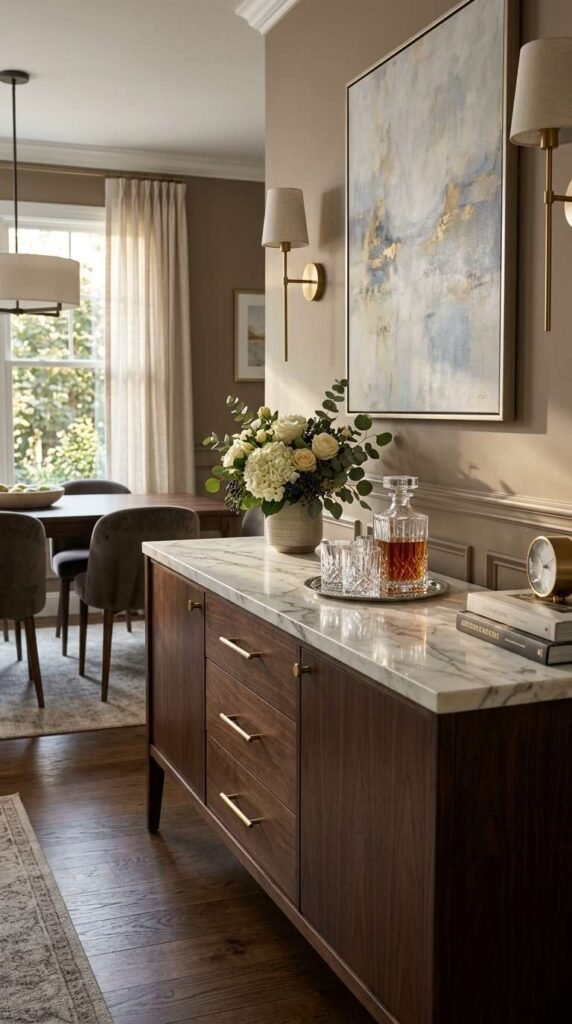
- Introduces a cool, elevated surface material
- Adds unique natural veining to the room
- Pairs beautifully with brass or wood bases
- Elevates the entire dining room’s feel
- Requires some care to maintain properly
A marble-top sideboard brings genuine luxury to dining room sideboard decor through natural veining that no two slabs share exactly. Pairing the cool stone surface with a warm wood or brass base balances the material’s inherent formality, keeping the overall piece from feeling too cold or sterile within an otherwise lived-in dining space.
Marble requires a bit more care than engineered alternatives, since it etches and stains more readily, particularly from acidic spills left sitting too long. Wiping the surface promptly and using coasters or trays beneath anything liquid protects the stone’s finish over time. For those wanting the look without quite the same maintenance concerns, a quartz composite convincingly mimics marble’s veining while resisting stains considerably better.
14. Rattan and Cane-Front Sideboard
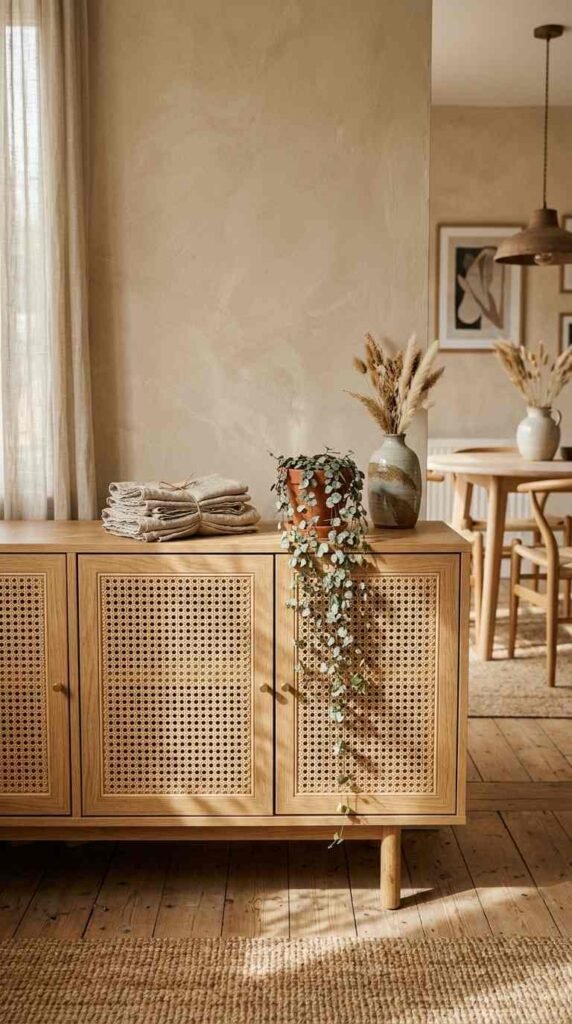
- Introduces natural texture through woven fronts
- Adds warmth without heavy visual weight
- Suits boho, coastal, and transitional styles
- Works beautifully with brass hardware accents
- Creates a lighter, airier furniture silhouette
A sideboard featuring woven rattan or cane door fronts brings natural texture to dining room sideboard decor while keeping the overall piece visually lighter than solid wood paneling would. The open weave pattern adds dimension and shadow, particularly when backlit slightly by a nearby window, giving the furniture genuine character even before any decor gets placed on top of it.
This style pairs particularly well with brass hardware, since the warm metal tone complements the natural rattan beautifully. Because woven fronts show less wear than painted surfaces, this furniture style also tends to age gracefully in households with frequent daily use. The airy, textured quality suits boho, coastal, and relaxed transitional dining rooms especially well, softening rooms that might otherwise feel overly formal.
15. Curved and Rounded Sideboard Silhouettes
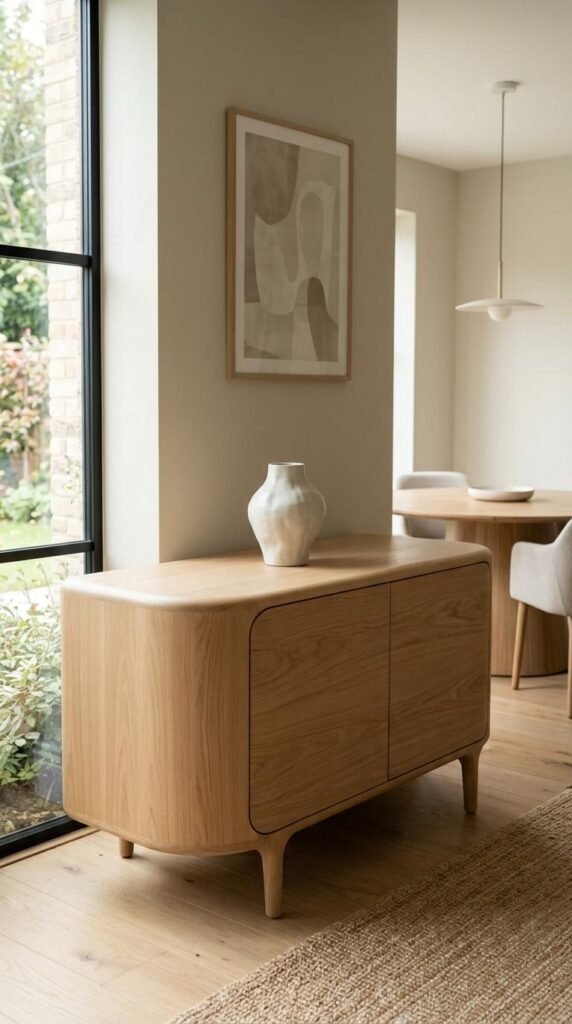
- Softens a room dominated by angular furniture
- Adds a contemporary, sculptural quality
- Works beautifully as a genuine statement piece
- Suits modern and transitional dining rooms
- Creates visual interest through form alone
A sideboard built around a curved or rounded silhouette, rather than the standard rectangular box, introduces sculptural softness to dining room sideboard decor that straight-lined furniture cannot achieve. This shape works particularly well in rooms already dominated by angular tables and chairs, providing a visual counterpoint that keeps the overall space from feeling too rigid or uniform.
Because the furniture’s shape alone carries so much visual interest, styling the top can stay relatively simple, a single lamp or vase often suffices without needing additional decor competing for attention. This approach suits contemporary and transitional dining rooms especially well, where a curved silhouette reads as deliberately current rather than simply different for its own sake.
16. Brass Hardware Upgrade
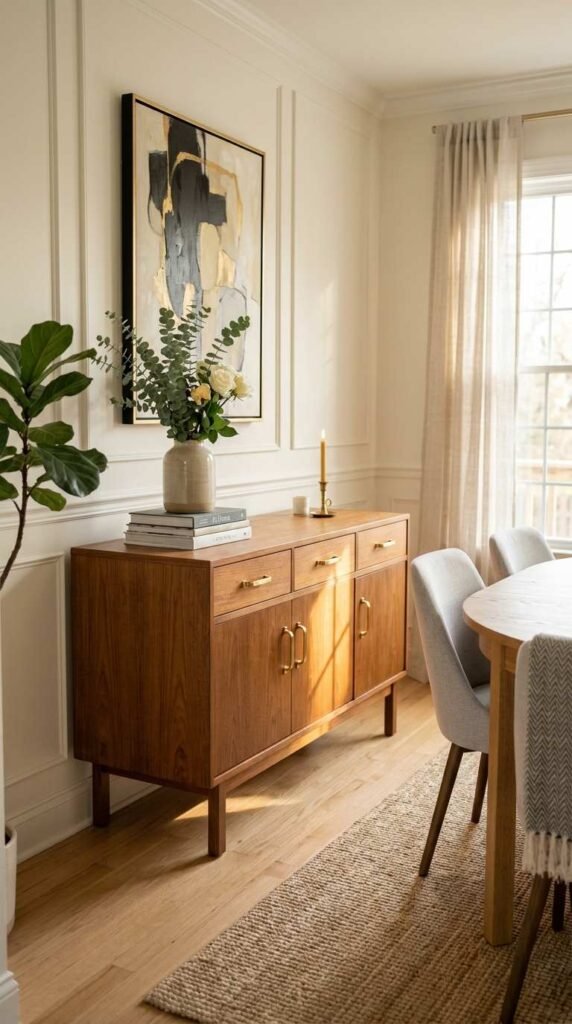
- Elevates an existing piece affordably
- Adds warm shine without major investment
- Works with nearly any sideboard finish
- Requires only basic tools to install
- Delivers noticeable impact for minimal cost
Swapping plain or dated knobs and pulls for brass hardware remains one of the most affordable ways to elevate dining room sideboard decor without replacing the furniture itself. This small change often makes a bigger visible difference than people expect, particularly on an older piece where the original hardware has dulled or simply fallen out of style over the years.
Measuring the spacing of existing holes before ordering replacements prevents a frustrating mismatch once the new hardware arrives. A screwdriver and perhaps an hour of time typically completes this project for a standard-sized sideboard. Brass warms up darker wood finishes particularly well, adding a subtle shine that catches available light throughout the day without requiring any other changes to the piece. These small finishing details can also complement dining room wall decor ideas modern by creating a cohesive look with metallic accents, warm wood tones, and thoughtfully styled walls.
17. Holiday and Seasonal Sideboard Setup
- Keeps the surface feeling current throughout the year
- Uses swappable accents rather than permanent changes
- Works well with a consistent neutral base
- Encourages creativity with minimal investment
- Suits households that enjoy seasonal decorating
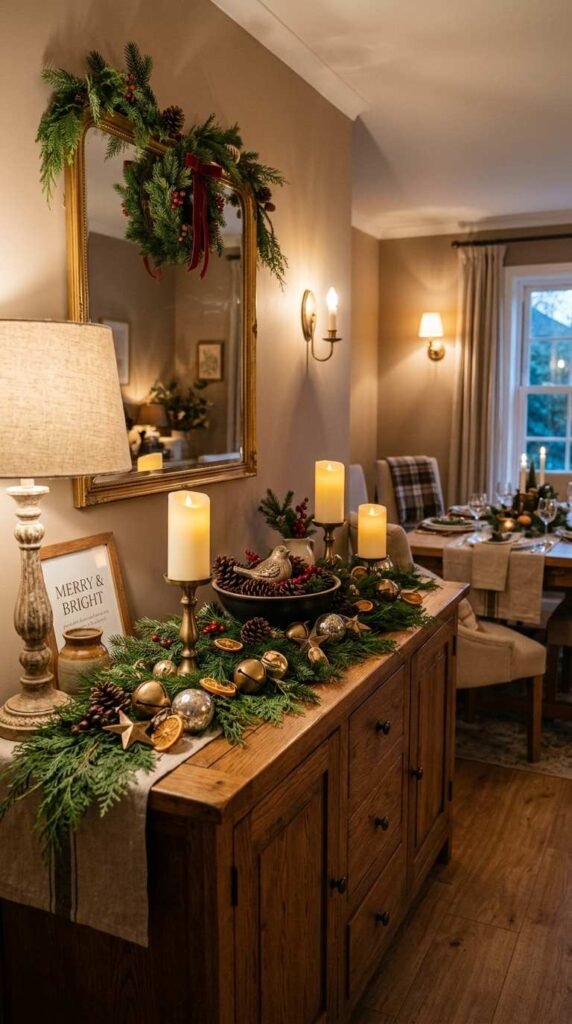
Rotating a handful of seasonal accents across the sideboard keeps dining room sideboard decor feeling fresh throughout the year without requiring any permanent changes to the furniture itself. A neutral base, a simple tray, a consistent lamp, stays in place year-round while smaller elements shift: dried wheat and pumpkins in autumn, evergreen sprigs for winter holidays, fresh blooms once spring arrives.
Storing each season’s decor in a labeled bin makes the transition quick and prevents impulse purchases every time the calendar shifts. This habit costs relatively little over the course of a year, yet it consistently keeps the sideboard looking intentional and cared for rather than static and forgotten between major decorating projects.
18. Sideboard as a Home Bar Alternative
- Turns unused surface into an entertaining spot
- Keeps glassware and bottles organized
- Works even without a dedicated bar cart
- Adds a stylish focal point for gatherings
- Suits smaller homes lacking extra furniture space
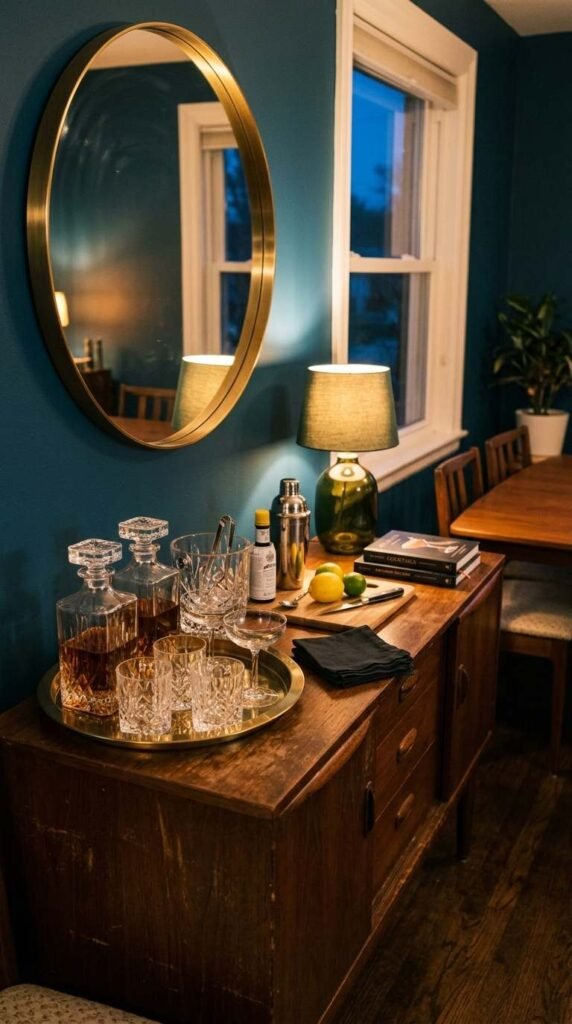
For households without room for a separate bar cart, dedicating one section of the sideboard to glassware, a few bottles, and a small ice bucket accomplishes much the same thing without requiring additional furniture. This approach to dining room sideboard decor makes efficient use of existing storage, letting the sideboard serve double duty as both everyday furniture and an entertaining station when guests arrive.
A small tray contains the setup neatly, making it simple to shift aside when the full surface is needed for serving food instead. Sticking to two or three matching glass types, rather than a mismatched assortment, keeps the display looking curated. Even households that rarely serve cocktails find the same arrangement works beautifully for coffee or sparkling water service.
19. Layering a Runner and Centerpiece Duo
- Adds texture beneath other decor items
- Creates a cohesive, finished base for styling
- Protects the surface from scratches and spills
- Easy to swap seasonally for a quick refresh
- Works with casual or more formal arrangements
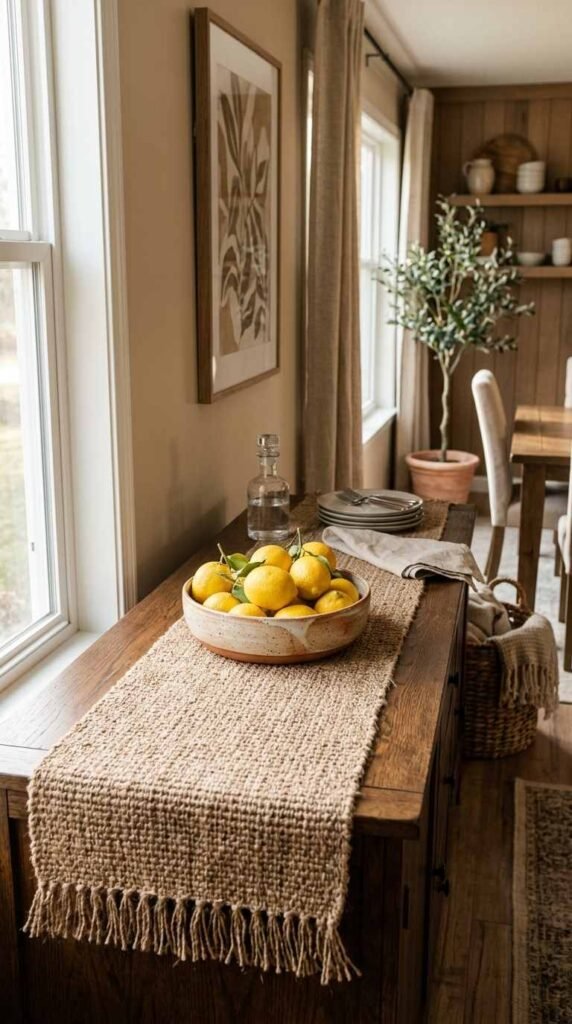
A table runner laid along the length of the sideboard, topped with a simple centerpiece like a vase or a small collection of candles, gives dining room sideboard decor a cohesive foundation that ties everything else sitting on the surface together. Natural fabrics like linen or cotton add texture, and a slight wrinkle in the fabric reads as relaxed rather than untidy once it’s been used a few times. These simple styling touches also complement modern living room decor, especially in open-plan homes where coordinated textures and neutral colors help connect the living and dining areas.
This layering also protects the furniture’s top from scratches and water rings, particularly useful beneath vases or lamps that might otherwise mark the wood directly. Washing the runner on a gentle cycle keeps it looking fresh, and swapping it seasonally refreshes the entire display with minimal effort, since the centerpiece and runner together often set the tone for everything else on the sideboard.
20. Sideboard Paired with a Statement Light Fixture
- Draws the eye upward above the furniture
- Elevates the sideboard into a genuine focal point
- Works well with pendant lights or sconces
- Suits both formal and casual dining rooms
- Adds warmth through flattering, layered light
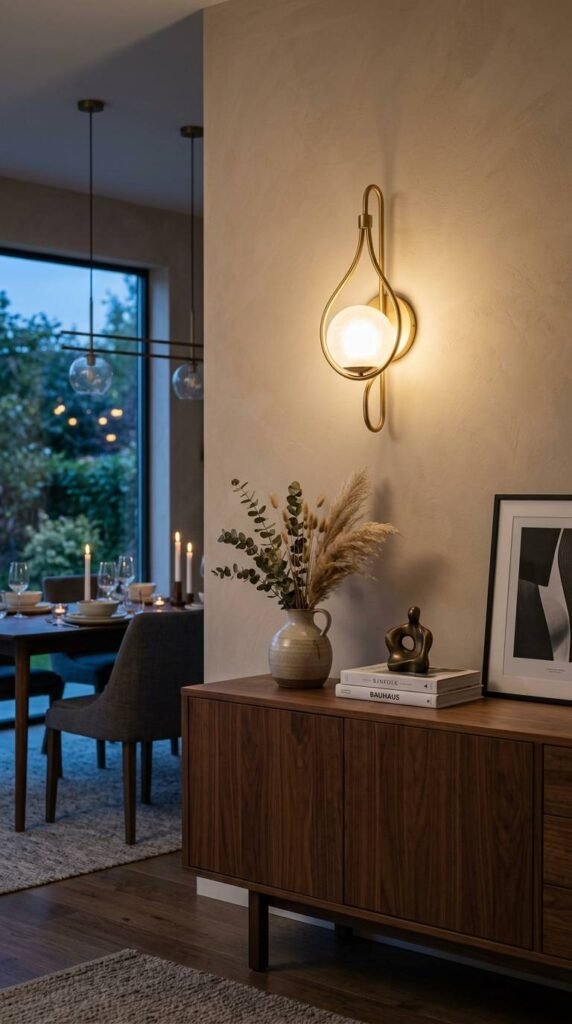
Hanging a statement pendant light or a pair of sconces directly above the sideboard elevates dining room sideboard decor from a simple storage piece into a genuine focal point within the room. The fixture draws the eye upward, creating a vertical anchor that makes the entire wall feel more considered and complete than the sideboard alone could achieve on its own.
A single oversized pendant works well centered above the piece, while a symmetrical pair of sconces suits a sideboard already featuring a mirror or art centered above it. Warm bulbs enhance whatever’s styled on the surface below, whether that’s a lamp, flowers, or a collection of ceramics, adding a layer of flattering light that overhead room lighting alone typically cannot provide.
21. Sideboard with Hidden Cord Management
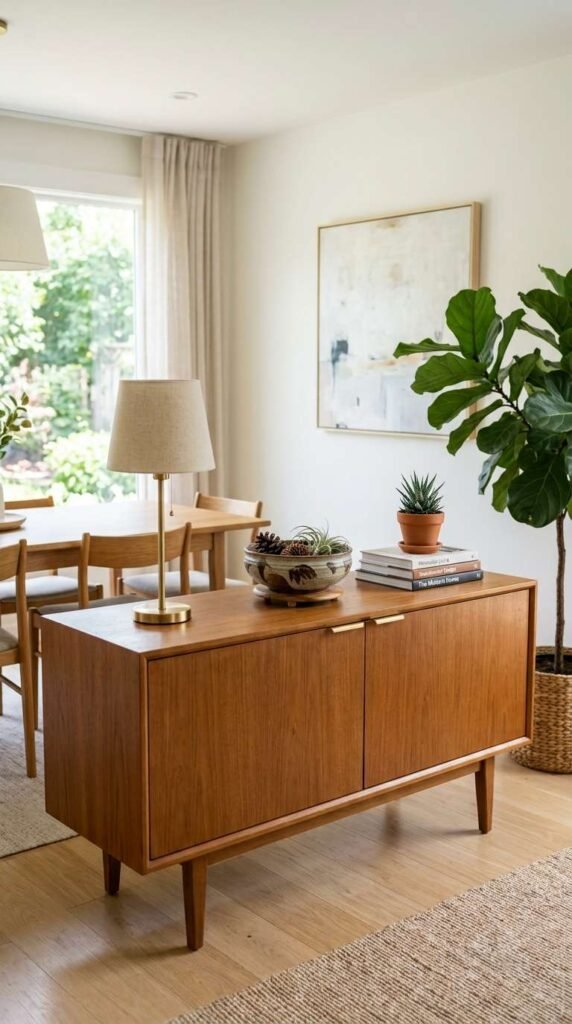
- Keeps practical items looking tidy
- Solves a common styling frustration
- Works well with drilled cable ports or baskets
- Suits sideboards doubling as media or charging stations
- Maintains a clean, uncluttered appearance
Dining room sideboard decor often gets undermined by one practical problem: visible cords trailing from lamps or small appliances across an otherwise beautifully styled surface. Choosing or modifying a sideboard with a small drilled port at the back, through which cords can run down and out of sight, solves this frustration without sacrificing any of the furniture’s function.
For pieces without a built-in option, routing cords through a small decorative basket positioned behind the sideboard, or using cord clips along the back edge, achieves a similarly tidy result without permanent modification. This small detail matters more than it might initially seem, since even the most carefully curated styling loses its polish the moment a visible cord interrupts the clean lines of the display.
22. Everyday Function vs Entertaining Setup
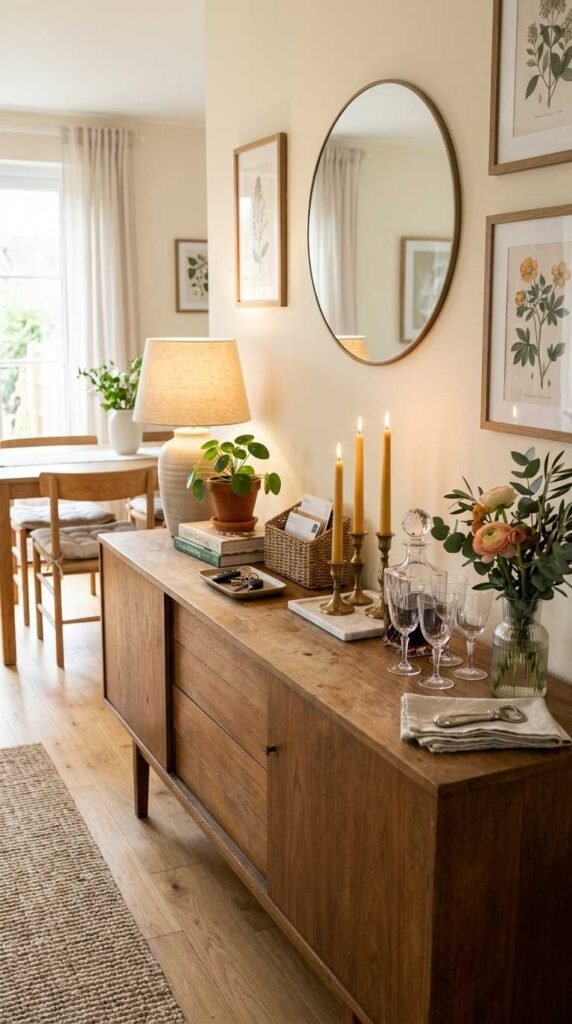
- Combines multiple earlier ideas into one flexible system
- Creates two distinct looks from one piece of furniture
- Works well with removable trays and modular decor
- Reinforces every previous styling choice
- Delivers genuine versatility for daily life
Bringing together several ideas already covered, a tray that lifts away easily, a seasonal rotation system, and a clear plan for serving during gatherings, creates a sideboard that functions beautifully both for ordinary daily use and for entertaining without needing to be completely restyled each time. This final approach to dining room sideboard decor treats the furniture as genuinely flexible rather than fixed into a single, static arrangement.
In practice, this might mean a simple lamp and vase sit on the surface most days, while a pre-planned swap, clearing the tray and adding a few serving platters, transforms the same piece in minutes once guests arrive. Thinking through this dual function ahead of time, rather than scrambling before every gathering, makes the sideboard a genuinely practical centerpiece of the dining room rather than purely decorative furniture.
FAQs
1. What size sideboard should I get for my dining room?
Aim for roughly half to two-thirds the width of your dining table, with at least thirty-six inches of clearance in front for chairs and doors. Measuring your available wall space before shopping prevents the disappointment of a piece that doesn’t quite fit once it arrives home.
2. What is the best sideboard style for a farmhouse dining room?
Solid or reclaimed wood with simple black iron hardware suits farmhouse spaces particularly well. A distressed or whitewashed finish adds even more rustic character, especially when paired with woven baskets and ceramic pitchers on top.
3. Can I use my sideboard for more than just storage?
Yes, a sideboard works beautifully as a coffee station, a home bar alternative, or a dessert and serving spot during gatherings. I’ve seen households get far more use from the piece once they stop treating it purely as decorative furniture.
4. How do I make an old sideboard feel new again?
Swapping the hardware for brass or matte black pulls, or applying a two-tone paint treatment, both refresh an older piece affordably. These updates typically take a weekend and cost considerably less than replacing the furniture entirely.
5. What sideboard material feels the most luxurious?
Marble tops and mirrored or lacquered finishes both read as genuinely elevated. That said, a well-chosen vintage wood piece with original brass hardware can feel equally special, particularly once styled thoughtfully with the right decor on top.
6. Should I hang art or a mirror above my sideboard?
Either works well, though a mirror adds the bonus of reflecting light back into the room. I’ve noticed that sizing the piece to roughly two-thirds the width of the sideboard below it keeps the proportions feeling balanced and intentional.
7. What sideboard works best for a small dining room?
A slim profile, generally twelve to sixteen inches deep, preserves walkway space without sacrificing much storage capacity. Positioning it along the shortest wall, rather than the main walkway, also helps a small room feel less cramped.
8. How can I keep my sideboard looking tidy with a lamp or appliance?
Routing cords through a drilled port at the back, or hiding them behind a small decorative basket, keeps the surface looking clean. That’s why many designers recommend planning for cord management before finalizing any sideboard styling.
9. What is a simple way to start styling my sideboard?
Begin with just a lamp, a small tray, and one meaningful object, then build gradually from there. I’ve found that starting simple and adding slowly over time usually produces a more considered result than filling the surface all at once.
10. How do I style my sideboard differently for entertaining?
Clear everyday decor aside and bring out serving platters, a tiered dessert stand, or a small bar setup instead. Having a plan in place ahead of time makes this transition quick rather than something to figure out at the last minute.
Conclusion
A well-styled sideboard brings warmth, function, and personality to a dining room without demanding a major renovation. These dining room sideboard decor ideas prove that the right combination, a thoughtful centerpiece, a touch of brass, a seasonal swap here and there, can transform a plain surface into the most talked-about corner of the room. Pick one or two ideas that suit your own style, save this post to your Pinterest board for future reference, and share it with someone ready to finally give their sideboard the attention it’s been waiting for.