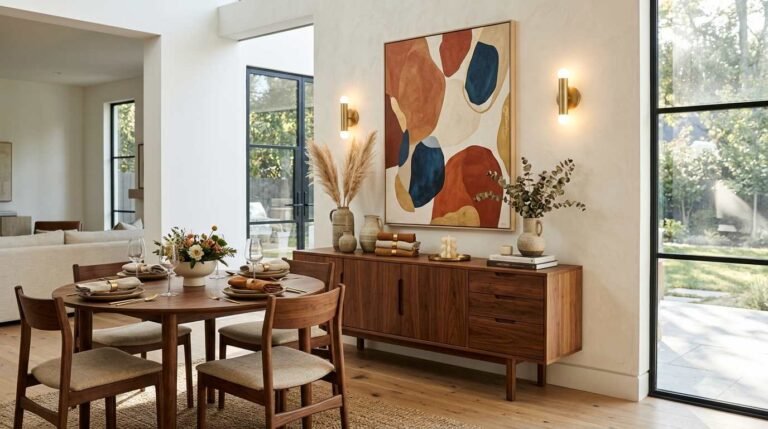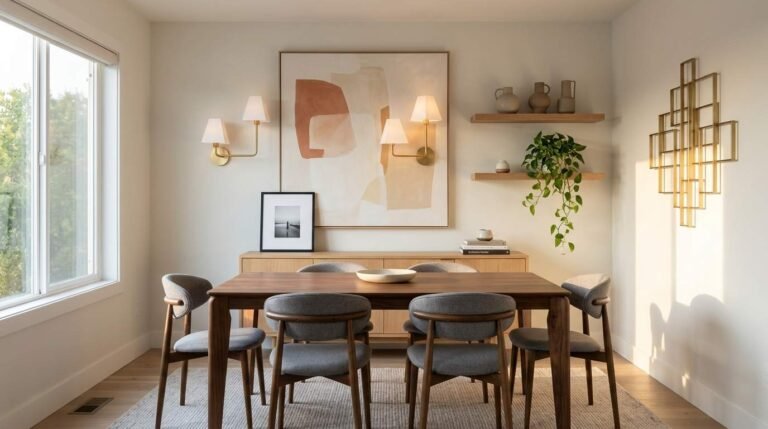
Small dining room decor doesn’t have to feel like a compromise. If your table sits in a tight corner or a narrow room, these 22 practical ideas will show you how to make it feel open, cozy, and stylish. In my experience, small rooms rarely need more space. They need smarter choices, like a round table, a large mirror, slim chairs, and clever storage that keeps the floor clear. I’ve seen one change, such as a warm pendant or a bench with hidden storage, completely transform a cramped nook. Keep scrolling, save your favorites, and get ready to make every inch count.
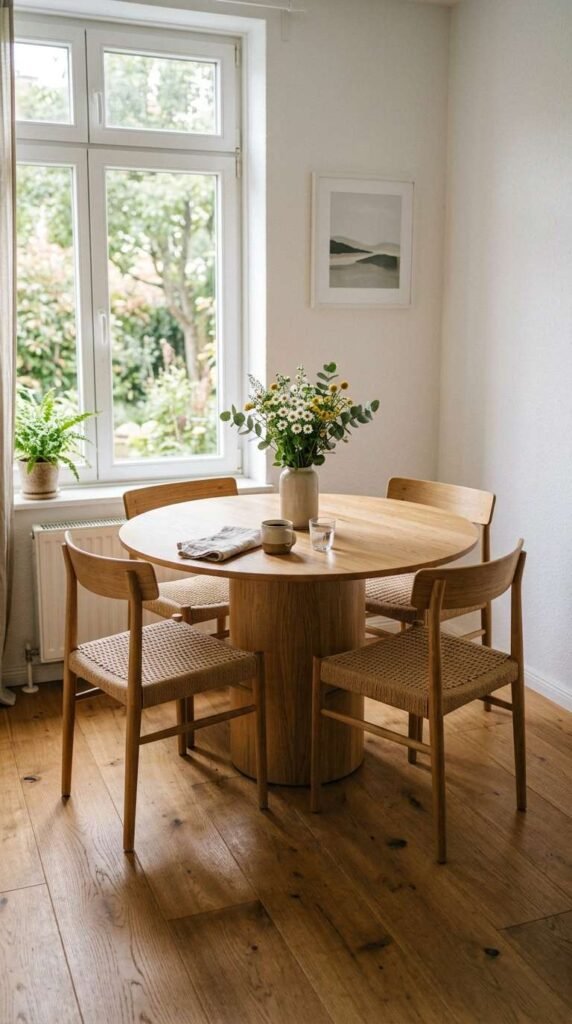
1. Round Pedestal Table to Save Space
- Removes sharp corners from tight walkways
- Frees up legroom with a single center base
- Seats an extra guest more easily
- Makes conversation feel closer and warmer
- Fits awkward or narrow corners
A round pedestal table is the smartest first move in a small dining room. With no corners to bump and no legs in the way, you can walk around it freely and tuck chairs in from any side. In my experience, people are surprised by how much larger a room feels after swapping a square table for a round one. A table about thirty-six inches wide seats two comfortably and squeezes in four for special dinners. The soft curve also makes the whole corner feel friendlier and more inviting.
The single center base is the real hero here. I’ve noticed that guests never argue over who gets the awkward seat next to a table leg. Choose a light finish like white, pale oak, or a thin marble look to keep the table visually airy. Keep about thirty-six inches between the table edge and the wall so chairs slide out easily. If you host often, look for a pedestal table with a hidden extension leaf. It stays compact daily and grows when the guest list does.
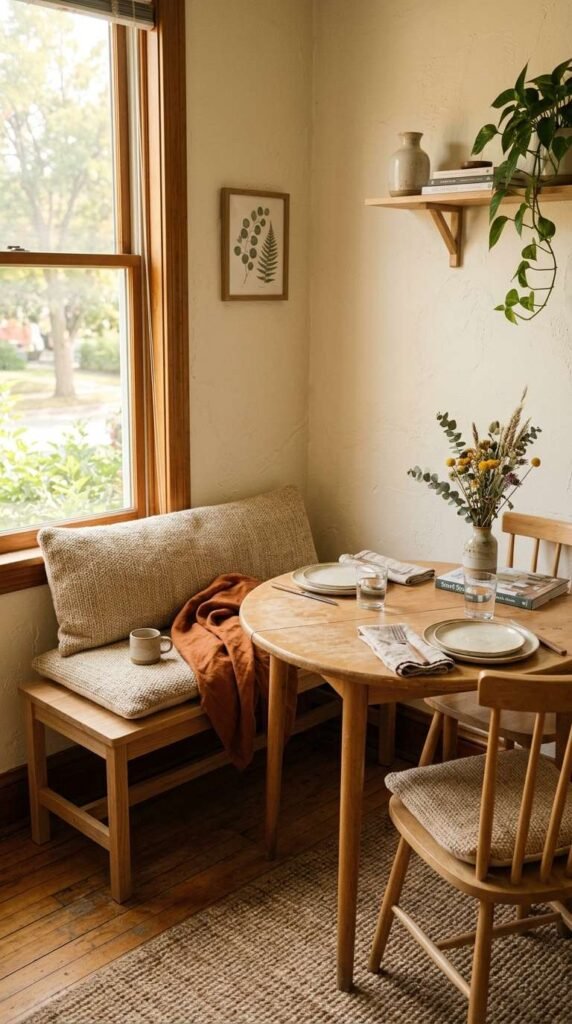
2. Bench Seating Along One Side
- Seats more people in less space
- Tucks fully under the table
- Adds a relaxed, family-style mood
- Can hide storage under the seat
- Keeps one side of the room open
A bench along one side of the table is a small-room secret weapon. It slides completely under the tabletop, so the floor stays open when nobody is sitting. In my experience, a bench also seats more people than the same length of chairs, because there are no armrests or gaps to work around. Push the table against the wall, place the bench along it, and add chairs on the open side. That layout saves a surprising amount of walking room and makes even a narrow space feel organized and intentional.
Comfort turns a bench from practical into lovely. I’ve seen a simple linen cushion and a couple of throw pillows turn a plain bench into the coziest seat in the house. Choose a height close to your chairs, and keep the bench slightly shorter than the table so it tucks in cleanly. A style with a lift-up seat gives you hidden storage for table linens and candles. Wipeable fabric is a smart choice for families, since spills happen. It is a simple upgrade with a big everyday payoff.
3. Large Mirror to Expand the Room
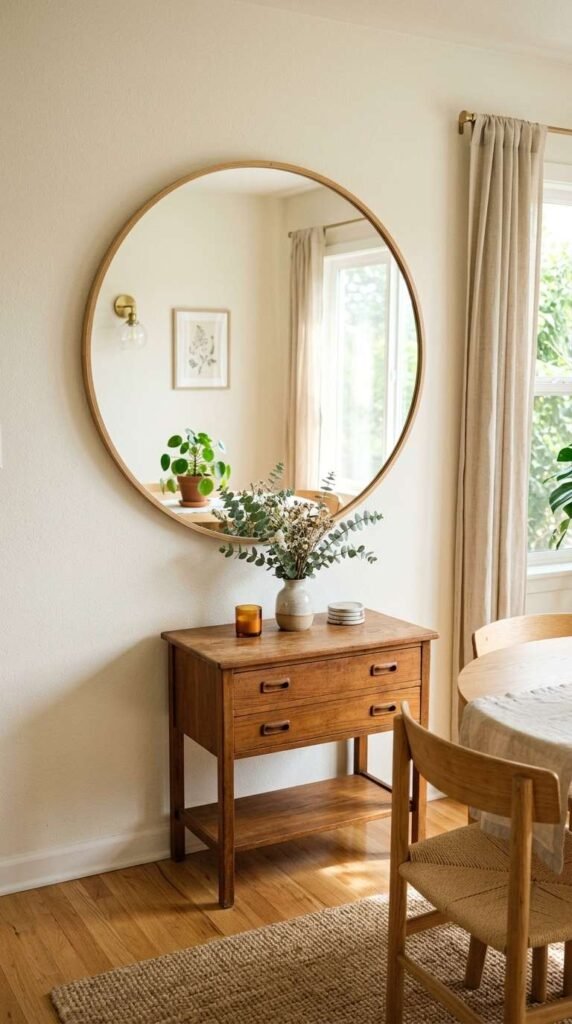
- Bounces daylight deeper into the room
- Creates the feeling of extra depth
- Adds style without using floor space
- Doubles the glow of candles and lamps
- Works leaning or hanging
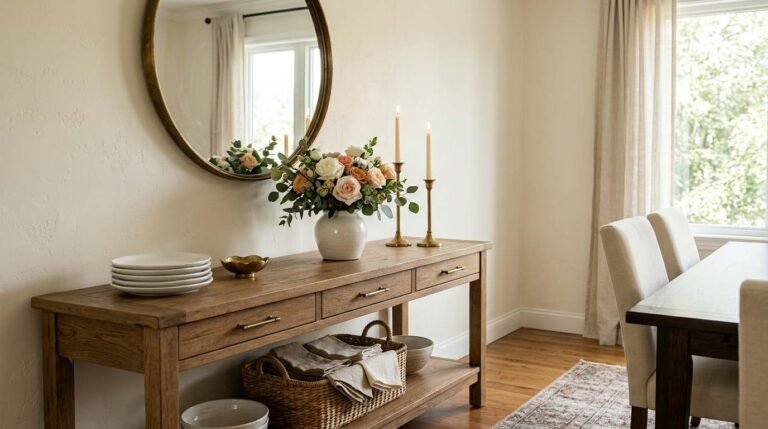
A large mirror is the closest thing to adding a window without any construction. Hung opposite natural light, it sends daylight across the room, so the dining area looks brighter and deeper right away. In my experience, one oversized mirror works far better than a cluster of small ones, because a single big reflection reads like a second room. Round, arched, or rectangular shapes all work, so choose what suits your style. A frame in wood, brass, or thin black metal keeps attention on the reflection rather than the frame.
Placement is what makes the trick work. I’ve noticed that hanging the mirror so its center sits near eye level captures the table, greenery, and candles, which adds a warm, layered look. Avoid facing it toward clutter, since messy corners get doubled too. A floor mirror leaning against the wall needs no drilling, so it suits renters well. Add a pendant light or a pair of sconces nearby, and the evening glow multiplies. Few changes make such a visible difference for so little money.
4. Wall-Mounted Drop-Leaf Table
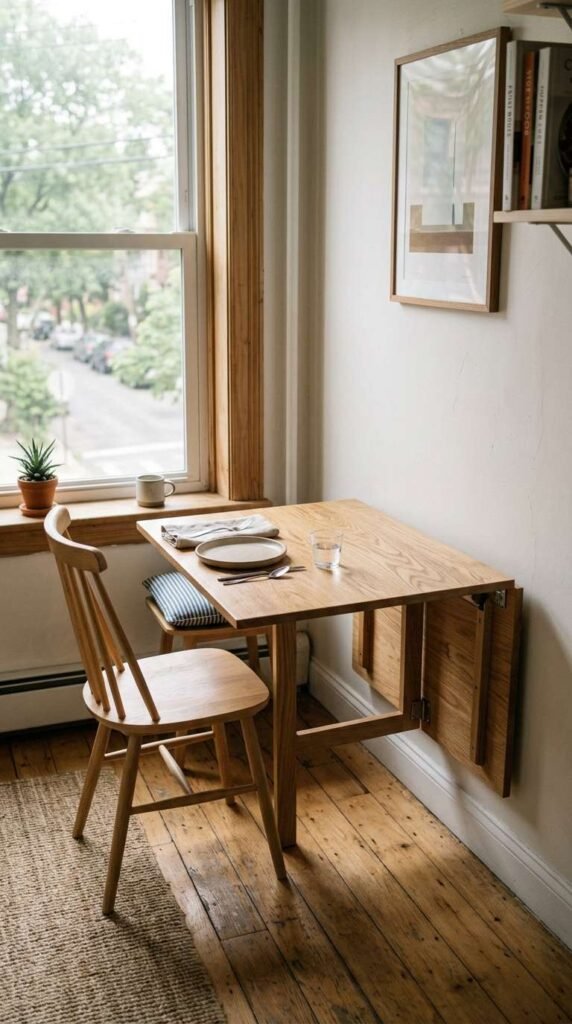
- Folds flat against the wall when unused
- Opens to seat two to four people
- Frees the floor for daily activities
- Suits studios and tiny kitchens
- Costs less than a full dining set
A wall-mounted drop-leaf table gives you a dining spot only when you need one. Folded flat, it looks like a slim shelf or a piece of wall decor, and the floor stays clear. Lift the leaf, and you have a proper surface for two people to eat comfortably. In my experience, this idea changes how a tiny room can be used, since the same corner can be a dining area at dinner and a walkway or workspace the rest of the day. It is ideal for studios where every square foot counts.
Installation is easier than most people expect. I’ve noticed that mounting the table into wall studs, with sturdy brackets rated for the weight, keeps it safe and stable. Choose a table height around thirty inches so standard chairs fit underneath. Pair it with two folding or stackable chairs that hang on wall hooks when not in use. A small shelf or mirror above the folded table keeps the wall looking styled. It is a clever, flexible solution for anyone who wants dining function without giving up open floor space.
5. Light, Airy Color Palette
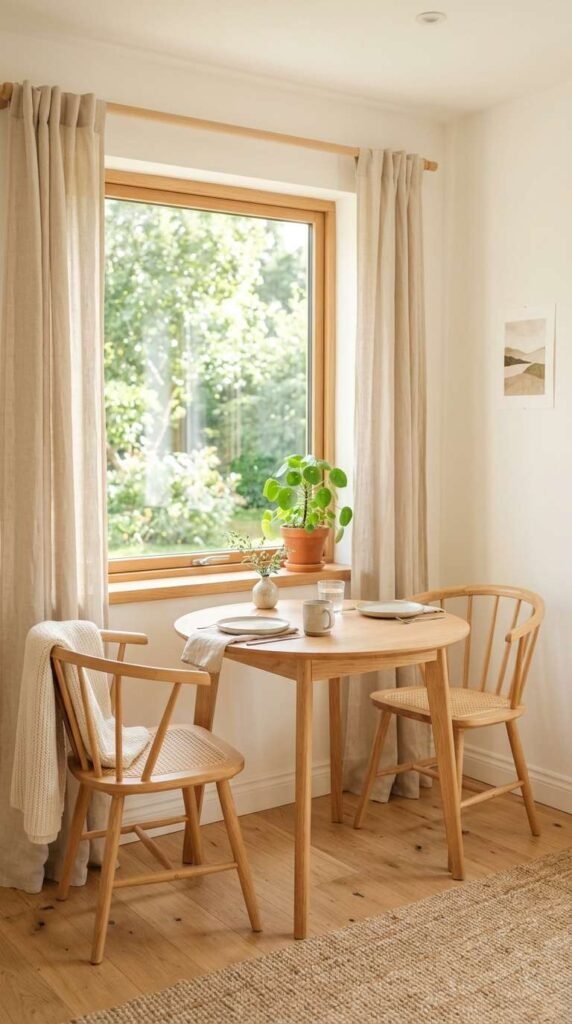
- Reflects light and opens up the walls
- Creates a calm, uncluttered feeling
- Works with any accent color later
- Costs little compared to new furniture
- Makes tight rooms feel less closed in
Color changes how big a room feels faster than furniture ever could. Soft whites, warm creams, and pale sage green bounce daylight around and make the walls seem to step back. In my experience, painting the ceiling the same shade as the walls, or a touch lighter, removes hard lines and makes the room look taller. Satin or eggshell finishes reflect a little extra light without showing every imperfection. A pale palette also gives you a calm base, so texture and accessories can add personality without making the room feel busy.
Testing is the step that saves money. I’ve noticed that the same paint looks completely different in morning and evening light, so brush a large swatch on two walls and watch it for a few days. Keep furniture in light tones too, such as pale wood or white, so nothing visually blocks the room. Add depth through a few deeper touches, like a dark vase or a rust-colored napkin. Light color makes small rooms feel fresh, open, and welcoming without adding a single square foot.
6. Slim Profile Chairs
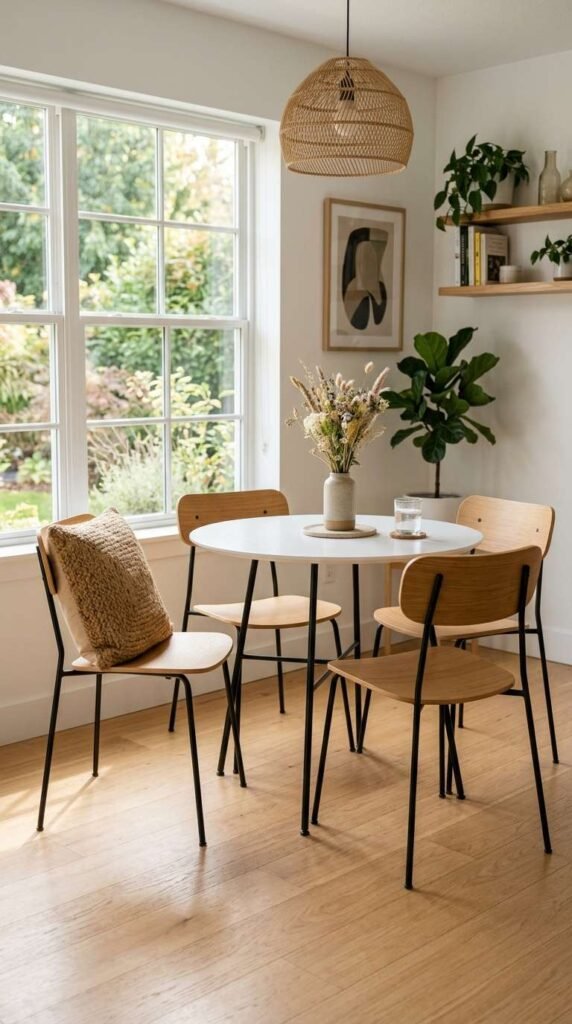
- Keeps walkways clear and comfortable
- Tucks fully under the table
- Looks lighter than bulky upholstered chairs
- Saves visual and physical space
- Comes in styles for every budget
Chairs take up more room than most people realize, so choosing slim ones helps a small dining room breathe. Look for narrow frames, open backs, and slender legs that let you see the floor beneath. In my experience, a chair with an open back looks far lighter than a solid upholstered one, even though both take the same floor space. Bentwood, ladder-back, and thin metal styles all work well. Make sure the seat slides fully under the table, so the chairs disappear from view when the meal is over.
Comfort still matters, so do not sacrifice it completely. I’ve seen a small seat cushion in linen or wool make a slim wooden chair perfectly comfortable for long dinners. Keep chair heights consistent with the table, with about ten to twelve inches between seat and tabletop. If you like a mixed look, pair two upholstered chairs at the ends with slim ones along the sides. Light finishes help too, since white or pale wood adds almost no visual weight. Small changes like these keep the room open and easy to move through.
7. Vertical Wall Shelving for Storage
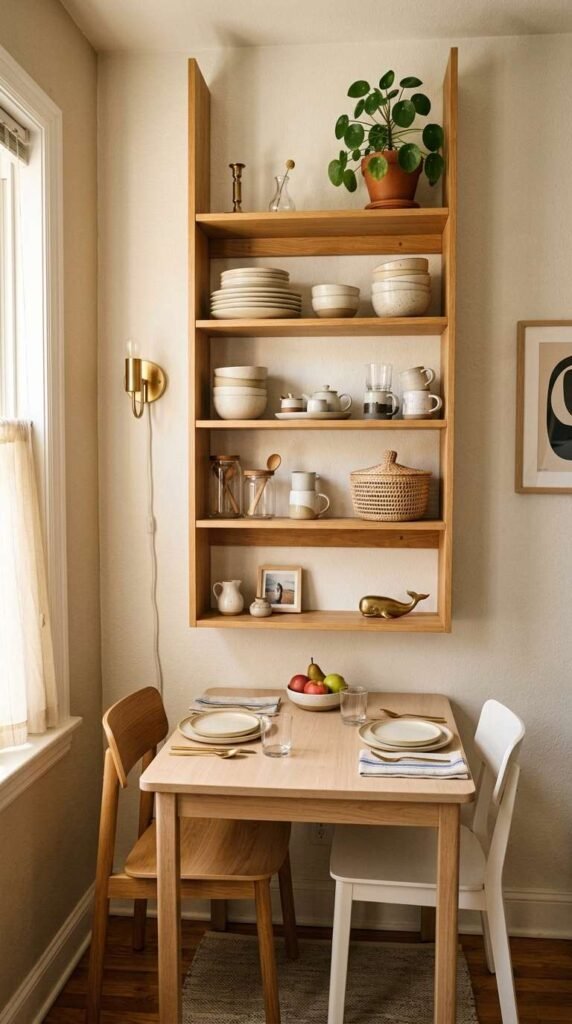
- Adds storage without using floor space
- Keeps dishes and linens within reach
- Draws the eye upward for a taller feel
- Doubles as a display for plants and art
- Installs with simple wall brackets
When floor space runs out, the walls become your best storage. Two or three floating shelves above or beside the table hold plates, glasses, and serving bowls without a single inch of floor lost. In my experience, this is the difference between a cluttered small dining room and a calm one. Slim shelves around eight inches deep are enough for everyday dishware. Use sturdy brackets and anchor them into studs or proper wall anchors, since dishes are heavier than they look and safety matters over a table.
Styling turns storage into decoration. I’ve noticed that mixing heights works best: a stack of bowls, a small plant, and one framed print leaning at the back. Leave about a third of each shelf empty so the display can breathe. Put the heaviest items on the lowest shelf for balance. A row of hooks under the bottom shelf can hold mugs or a tea towel. Because the shelves go up rather than out, the room keeps its open feeling while gaining serious function.
8. Small Pendant Light Instead of a Chandelier
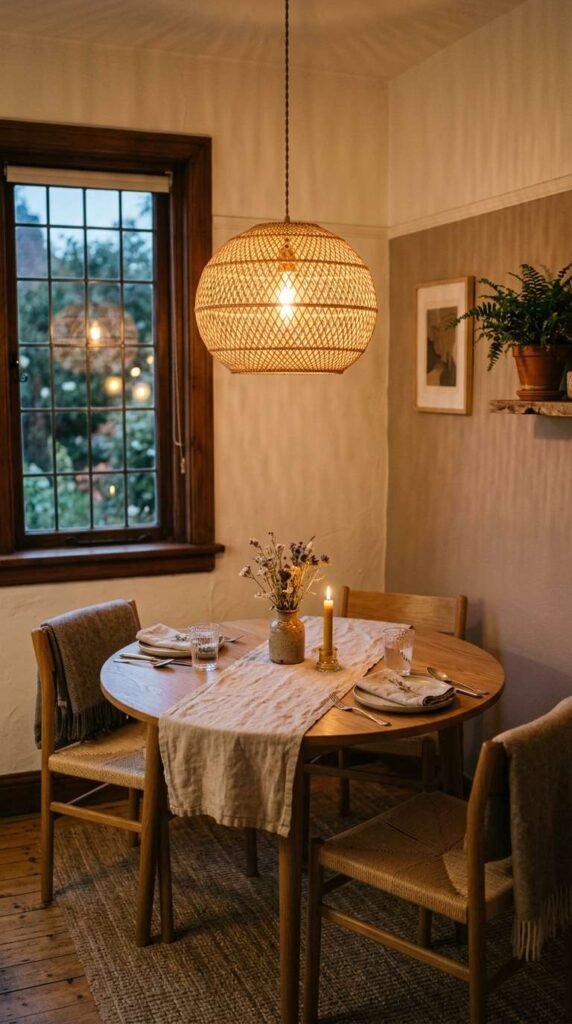
- Adds a focal point without visual bulk
- Keeps headroom and sightlines open
- Creates warm, flattering evening light
- Works with plug-in options for renters
- Pairs with dimmers for flexible moods
Big chandeliers can overwhelm a small dining room, but a slim pendant gives you the drama without the bulk. A woven dome, a glass globe, or a simple linear fixture hangs above the table and pulls the eye upward. In my experience, a pendant about one third to one half the width of the table looks perfectly balanced. Warm bulbs around 2700K make wood tones and faces glow. The fixture becomes the room’s jewelry, adding personality while leaving floor space and sightlines completely open for the rest of the room.
Height is the detail to get right. I’ve noticed that hanging the bottom of the fixture about thirty to thirty-six inches above the tabletop lights the table without blocking anyone’s view. A dimmer switch or smart bulb lets one fixture handle bright breakfasts and quiet dinners. Renters can choose plug-in pendants with a ceiling hook and no rewiring. For very narrow tables, a long linear fixture or a small cluster of two or three mini pendants can look especially polished. It is a small purchase that changes the whole mood.
9. Stackable or Nesting Chairs
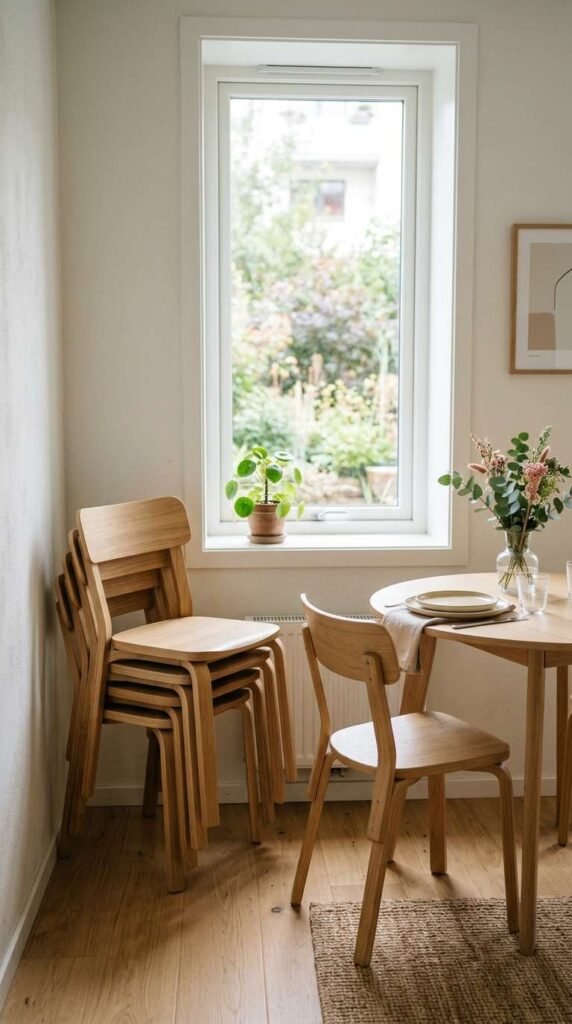
- Stores away when guests leave
- Keeps floor space open day to day
- Adds seating only when needed
- Suits studios and multipurpose rooms
- Available in stylish, modern finishes
If your dining room hosts guests only sometimes, stackable chairs are a clever answer. Keep two chairs at the table for daily meals, and store the extras in a closet or stacked in a corner until company arrives. In my experience, modern stackable chairs in wood, molded plastic, or metal look surprisingly stylish, so they do not have to feel temporary. Nesting styles slide into each other and take up almost no room. This approach lets a small space handle a big dinner party without permanently filling the floor.
Smart storage keeps it all tidy. I’ve noticed that a wall hook or a simple rack can hang folding chairs against the wall so they look almost like decor. Choose a neutral color, like white, black, or natural wood, so they blend with any room. Check the weight limit and sturdiness before buying, since these chairs get moved often. If you like, add matching seat cushions that store in a basket nearby. It is a flexible solution that gives you seating on demand and open floor the rest of the time.
10. Multi-Functional Console Table
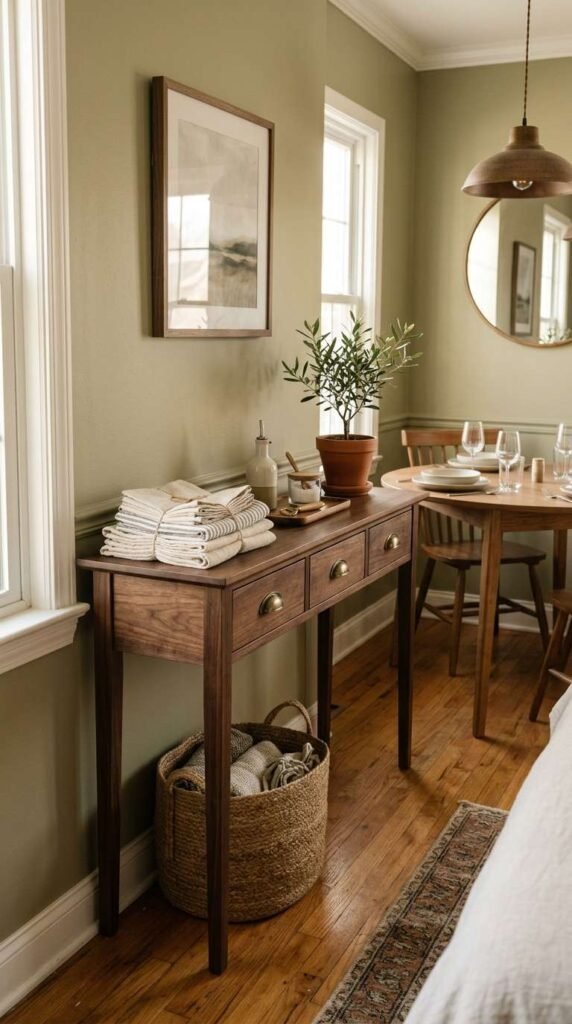
- Works as a dining surface, desk, or buffet
- Fits flush against a narrow wall
- Adds storage with drawers or shelves
- Keeps the floor clear
- Suits hallways and tiny apartments
A console table can do the work of three pieces in a small dining room. Against the wall, it holds lamps, plants, and serving dishes. Pulled out and paired with stools, it becomes a compact dining table for two. In my experience, a console about twelve to sixteen inches deep suits narrow rooms best, though a deeper one about twenty inches works better for meals. Choose a style with a shelf or drawer underneath for hidden storage. Legs that show the floor beneath keep it looking light instead of heavy.
Versatility is the real advantage. I’ve noticed that the same console can serve as a laptop desk in the afternoon and a buffet in the evening. Pair it with two stools that tuck fully underneath, and the setup disappears when you do not need it. Style the top with a lamp, a small plant, and a tray, so it looks polished even when unused. Wood, metal, and glass all work, so pick a finish that suits your room. It is a practical, good-looking answer for tight layouts.
11. Built-In Banquette Seating
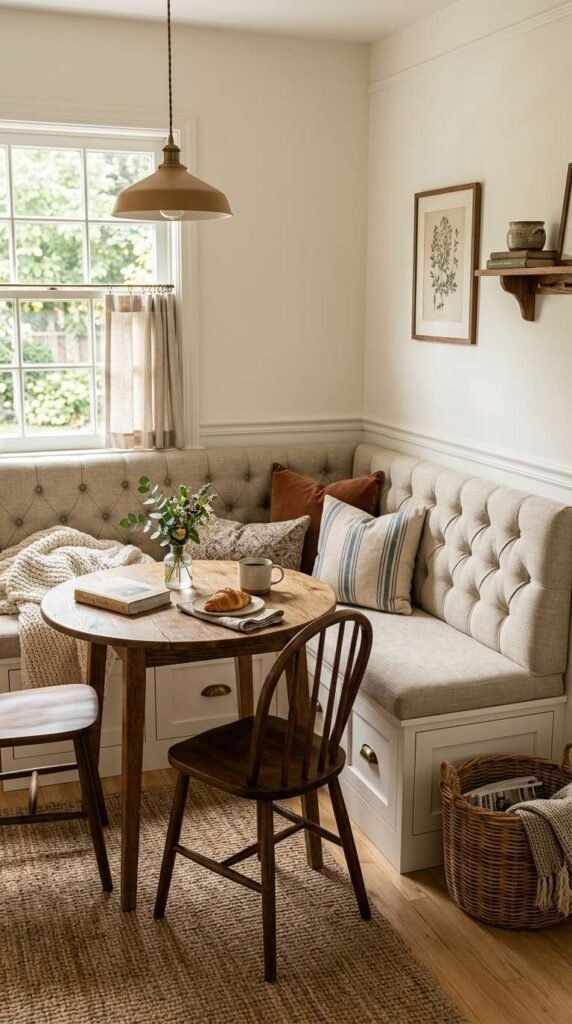
- Uses corners and walls efficiently
- Adds cozy, restaurant-style seating
- Provides hidden storage beneath the seat
- Seats more people than freestanding chairs
- Makes a small nook feel custom
A banquette turns a tight corner into the coziest spot in the house. Built along one or two walls, it seats several people with no wasted space between chairs. In my experience, this is one of the best uses of an awkward L-shaped corner. The seat can include lift-up storage, which is a huge bonus in a small home. Add a round or oval table in front, and the whole nook looks custom, warm, and thoughtfully designed, more like a small cafe booth than a leftover corner.
Comfort and proportion decide how well it works. I’ve noticed that a seat depth around sixteen to eighteen inches, with a slightly angled back cushion, makes long meals comfortable. Choose a wipeable fabric, such as performance linen or faux leather, if children use the space daily. A few pillows in coordinating patterns add personality. If building one is not possible, freestanding corner benches or a simple bench against a wall can create a similar effect. Either way, the result feels cozy and complete.
12. Sheer Curtains for Softer Light
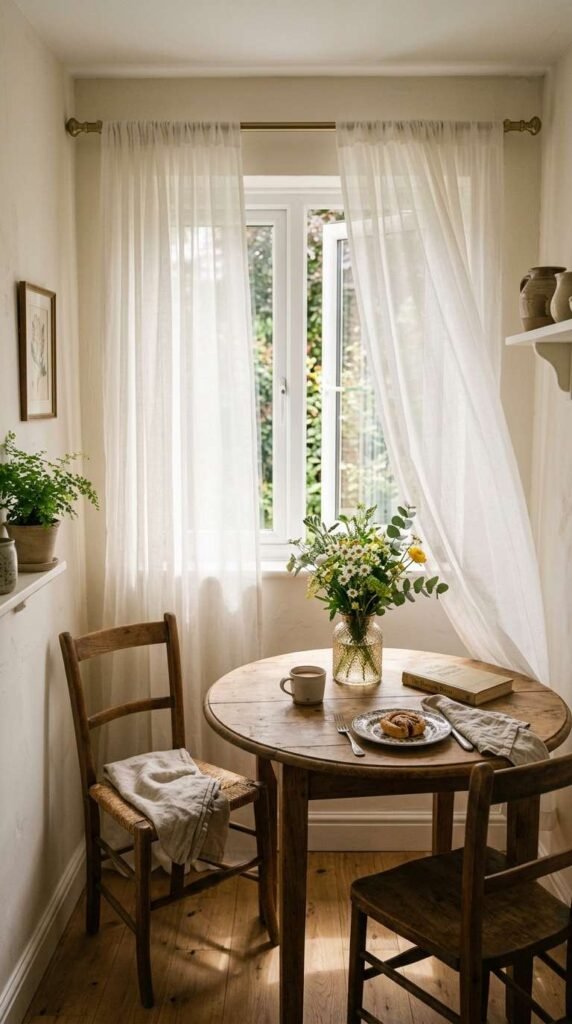
- Diffuses daylight without blocking it
- Adds privacy while keeping the room bright
- Makes windows look taller when hung high
- Adds soft movement and texture
- Works with tension rods for renters
Sheer curtains soften a window without stealing the light a small dining room needs. Their airy fabric turns harsh sunlight into a gentle glow, and they give privacy without making the room feel closed in. In my experience, white or ivory linen-look sheers blend into the walls and keep the space open. Heavy drapes can visually shrink a window, but lightweight panels do the opposite. They move gently with a breeze, adding a small touch of life and softness that makes a compact dining space feel relaxed and welcoming.
How you hang them changes everything. I’ve noticed that mounting the rod near the ceiling, or a few inches above the window frame, makes the room look taller. Extending the rod a few inches beyond each side of the window makes it appear larger. Let the panels graze the floor for a clean line. Steam them before hanging so they fall smoothly. Tension rods and adhesive hooks make this idea friendly for renters, and the difference is visible right away.
13. Small-Scale Area Rug
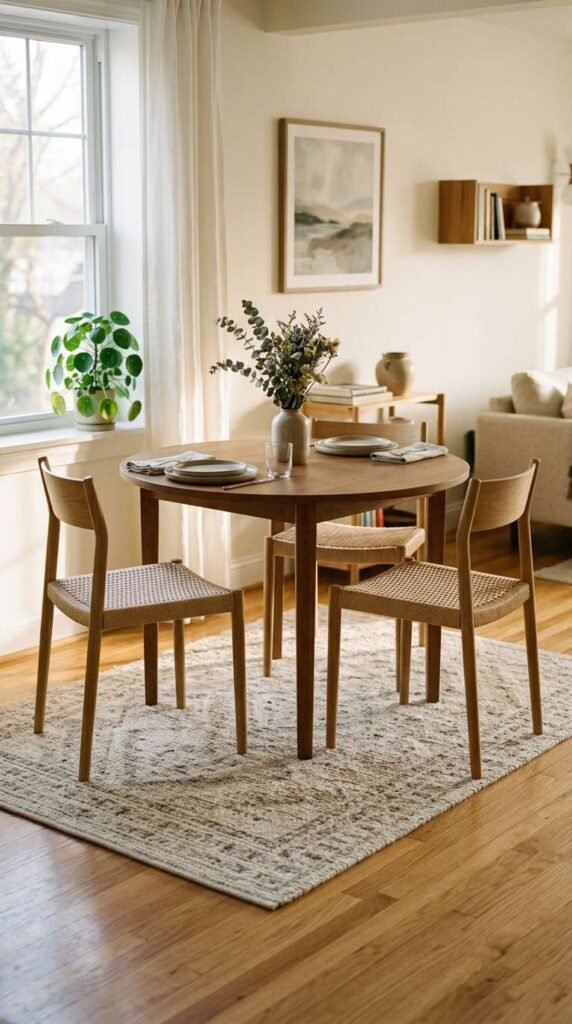
- Defines the dining zone clearly
- Adds warmth and texture underfoot
- Keeps chairs from scratching the floor
- Introduces pattern without wall changes
- Hides crumbs and everyday wear
A rug helps a small dining area feel like its own room, especially in open-plan spaces. The trick is choosing the right size, since an oversized rug can swallow a small room, while a tiny one looks awkward. In my experience, aim for about two feet of rug beyond the table on all sides, so chair legs stay on the rug even when pulled out. A flat weave or low pile slides easily under chairs and cleans up quickly, which matters in a room where everything is close together.
Pattern and color deserve some thought. I’ve noticed that a subtle pattern, like a soft stripe or a muted geometric, hides crumbs better than a plain rug. Light neutrals keep the room airy, while a gentle color, such as sage or dusty blue, can set the palette for the whole corner. A round rug under a round table looks especially neat. Add a non-slip pad for safety and comfort. When you move, the rug rolls up and comes along, making it a smart investment.
14. Corner Dining Nook Setup
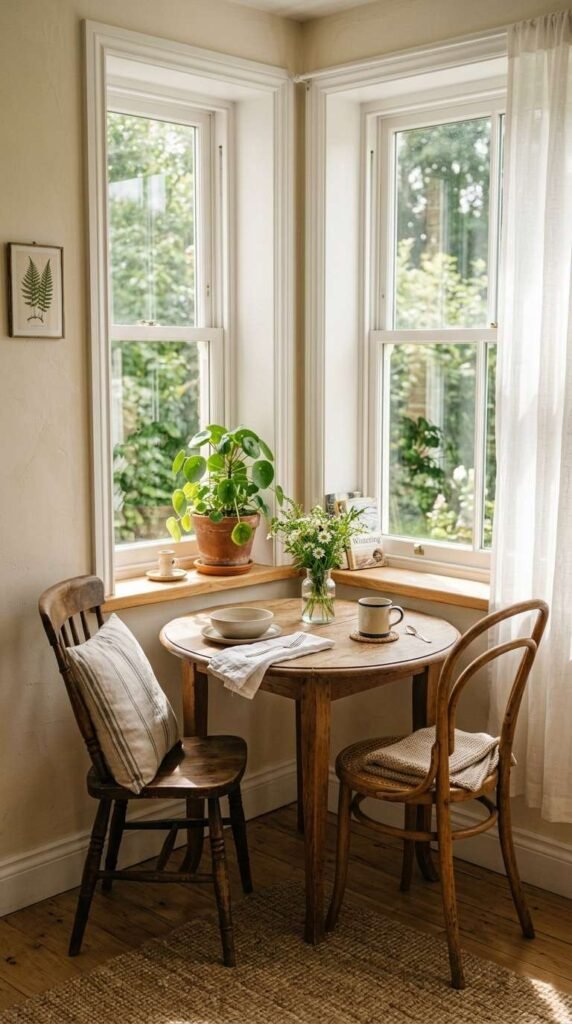
- Uses a forgotten corner well
- Creates a defined, cozy dining spot
- Leaves the rest of the room open
- Works with a bench and small table
- Suits apartments and irregular layouts
An unused corner is often the best place for a dining spot. Tuck a small table and bench into the angle where two walls meet, and you gain seating without losing the middle of the room. In my experience, corner setups make a small space feel organized, because everything sits along the edges and the center stays open. A round table works especially well here, since it avoids sharp corners in tight quarters. Add a light overhead and one piece of art, and the corner instantly becomes a destination.
Details make the nook feel finished. I’ve noticed that a pendant light hung low over the table, and a small shelf on the wall behind it, gives the corner a dedicated, styled look. Choose a bench with a cushion for comfort, and add two or three pillows in the same color family. If space allows, a slim plant in the corner adds softness. This layout is ideal for studios, since the nook can be tucked behind a sofa or beside a window.
15. Foldable or Extendable Table
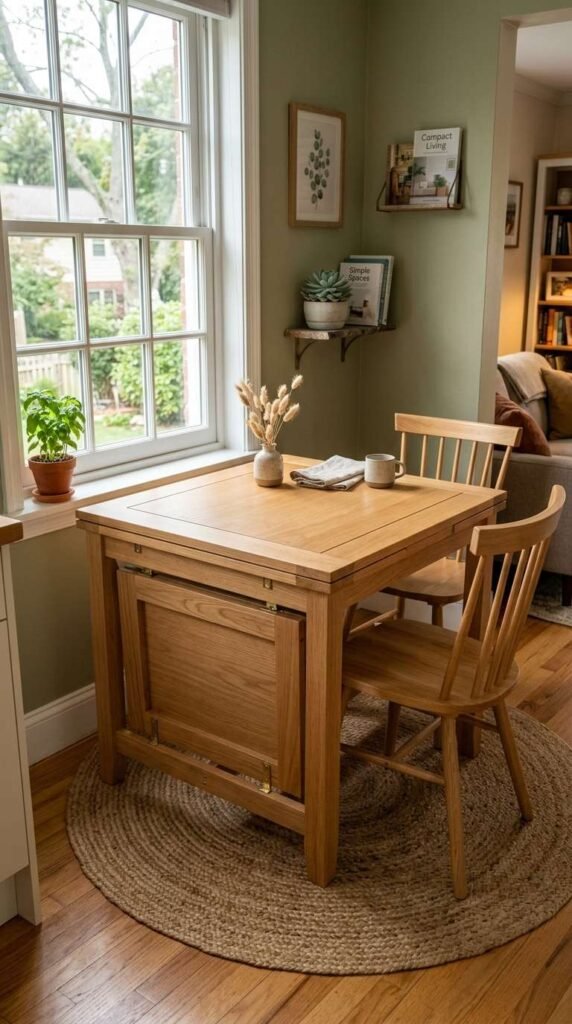
- Adapts to daily and party needs
- Saves floor space in everyday use
- Seats more when guests arrive
- Avoids a bulky permanent table
- Suits households with changing needs
A foldable or extendable table lets a small room grow only when it has to, making it a practical choice for dining room decor ideas. Everyday meals use the compact size, and the extra leaves come out for holidays and dinner parties. In my experience, this is the best answer to the classic dilemma of needing to host but lacking space. Drop-leaf, butterfly-leaf, and pull-apart extension tables all work well. Choose a style with a smooth mechanism and sturdy legs, since it will be used often. A light finish keeps the table from feeling heavy when it is in its smaller form.
Practical planning avoids surprises. I’ve noticed that measuring the room with the table fully extended tells you whether guests can still walk around it. Leave about thirty-six inches around the table when open, or at least thirty inches in very tight rooms. Store extra leaves flat behind a sofa or under a bed. Pair the table with stackable chairs for extra seating on demand. It is a flexible solution that makes a small dining room feel far bigger than its actual footprint.
16. Open Shelving Instead of Bulky Cabinets
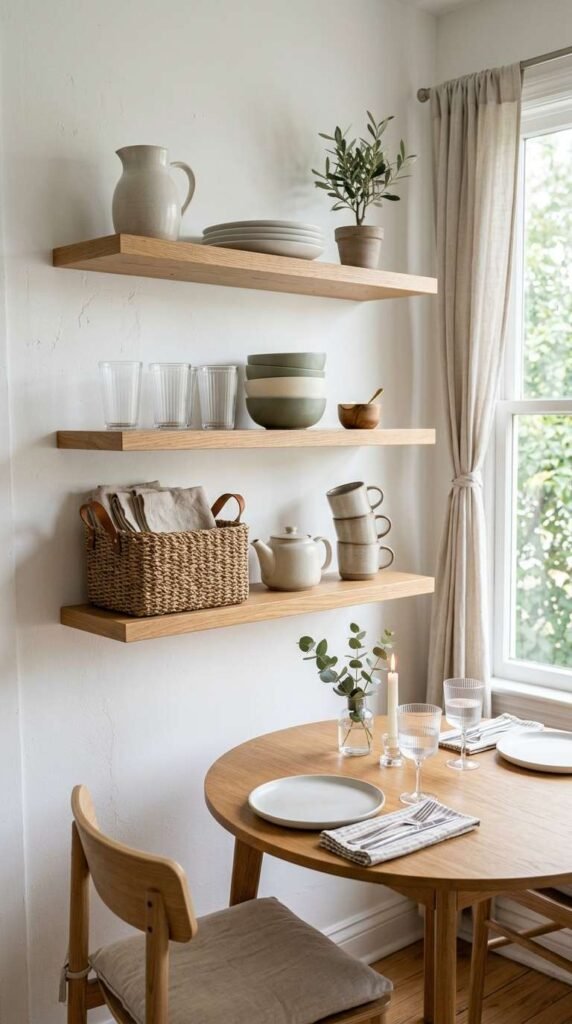
- Removes visual weight from the walls
- Keeps everyday dishes within reach
- Turns dishes into simple decor
- Draws the eye upward
- Costs less than built-in cabinetry
Bulky cabinets can make a small dining room feel closed in, while open shelves keep the walls light. Instead of hiding plates and glasses behind doors, you display them, and the storage becomes part of the decor. In my experience, white or neutral dishware looks calm and cohesive on open shelves. Two or three shelves are usually enough. Mount them at a height where you can reach the items easily. The lack of doors also means less visual clutter, which suits tight spaces and makes the whole room feel breezier.
Editing is important with open storage, especially when trying DIY home decor ideas easy enough to refresh a dining space without major changes. I’ve noticed that shelves look best when you display only what you use and love, and keep the rest tucked in a closed cabinet elsewhere. Leave gaps between items so the display can breathe. Baskets on the lower shelf can hide napkins and small items. Group things by color or type for a tidy look. When you want a change, swap out a plant or a few pieces, and the whole wall feels refreshed.
17. Monochromatic Color Scheme
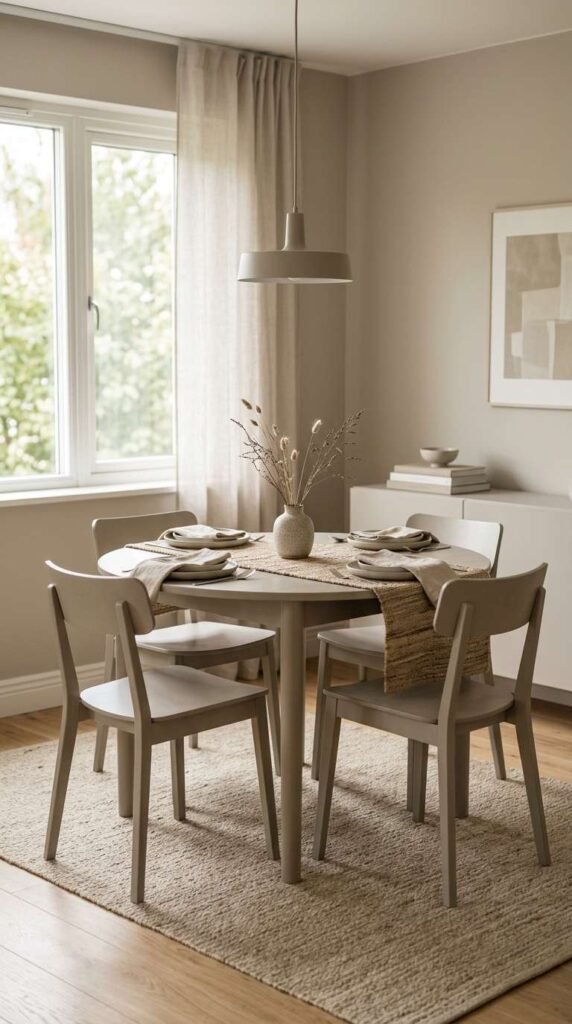
- Reduces visual noise in small rooms
- Makes walls and furniture feel unified
- Creates a calm, sophisticated mood
- Lets texture do the decorating
- Easy to refresh with one accent
Using one color family throughout a small dining room makes everything feel connected and calm. Layer different shades of cream, greige, or soft sage on the walls, furniture, and textiles, and the eye moves smoothly without stopping at contrasts. In my experience, monochrome rooms often feel bigger, since nothing chops the space into sections. The key is adding variety through texture, such as linen, wood, ceramic, and wool. Without texture, a single color can feel flat, but with it, the room looks rich, layered, and considered.
Small shifts in shade give the room depth. I’ve noticed that pairing a slightly darker chair with lighter walls, or a deeper rug with pale curtains, adds interest without breaking the calm. Keep metals consistent, choosing brass or black but not both. One accent item, such as a bright vase or a colorful napkin, can become the focal point. When you want something new, swap that single accent. It is a simple, sophisticated way to make a compact space feel intentional.
18. Glass-Top Table for Visual Lightness
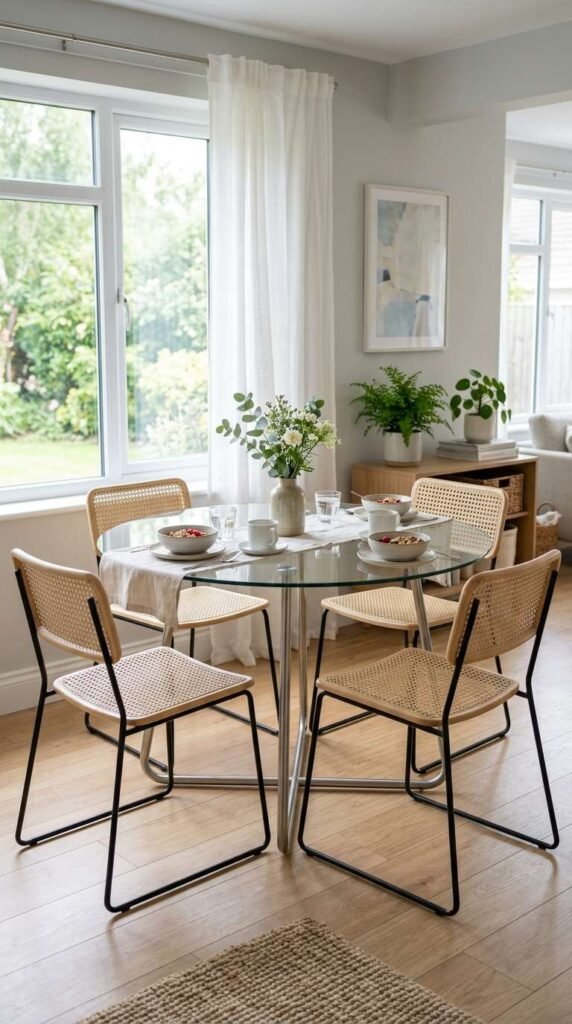
- Lets you see through the table
- Reflects light around the room
- Keeps the space feeling open
- Pairs with any chair style
- Shows off a beautiful rug or floor
A glass-top table is nearly invisible, which is exactly what a small dining room needs. Since you can see through it, the eye continues across the room, so the space feels bigger than it is. In my experience, glass also reflects light from windows and fixtures, adding a subtle brightness. Pair it with a wood, metal, or pedestal base for warmth. Because the top does not block the view of the rug or floor, it lets your flooring and textiles stay part of the design instead of being hidden.
Practical care makes glass easy to live with. I’ve noticed that tempered glass with rounded or polished edges is safe for families, and a microfiber cloth keeps it streak-free. Use placemats or a runner if you dislike the clatter of dishes on glass. Choose chairs with visual interest, such as upholstered or woven ones, so the setting looks warm rather than cold. Fresh flowers or a small vase on a glass surface look especially pretty. It is an elegant, low-effort choice.
19. Wall-Mounted Sconces Instead of Floor Lamps
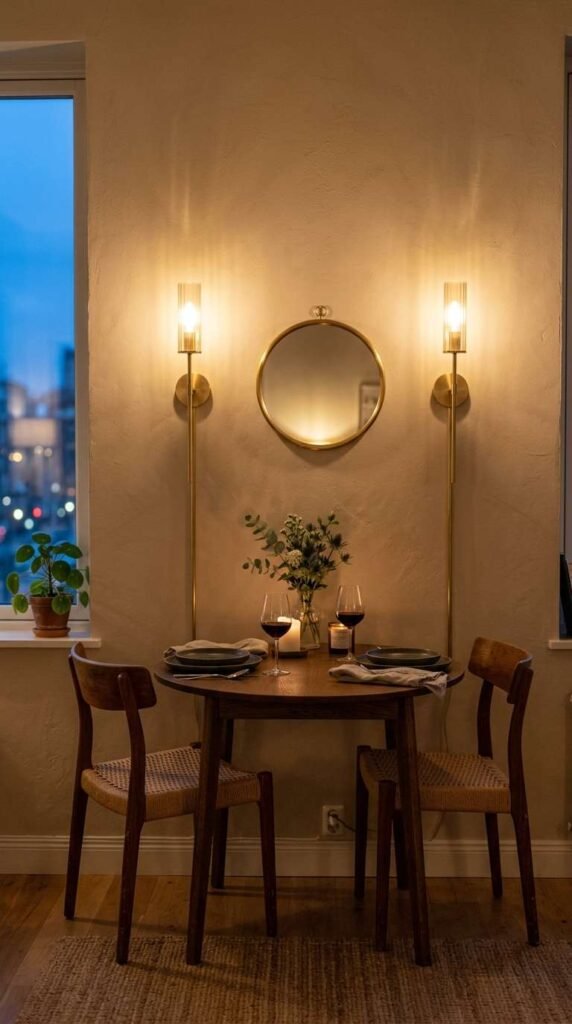
- Frees floor and surface space
- Adds warm, flattering ambient light
- Creates a boutique, restaurant-style feel
- Works with plug-in cords for renters
- Softens harsh overhead lighting
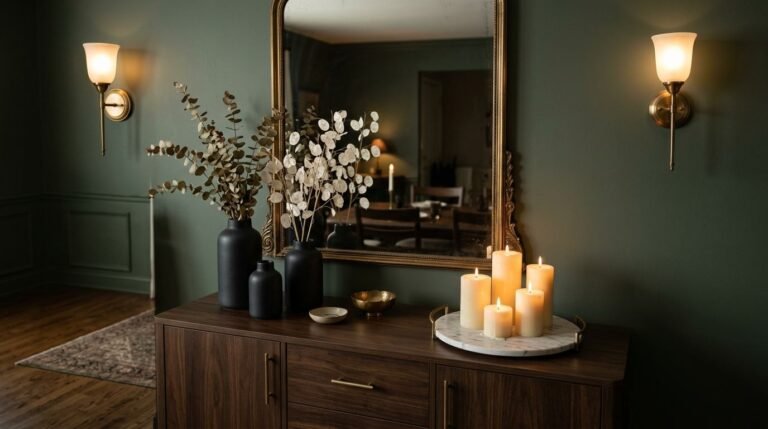
In a small dining room, floor lamps often become obstacles. Wall sconces solve that by lifting the light onto the wall, where it takes no floor space at all. In my experience, a pair of sconces beside a mirror or artwork adds a polished, hotel-like touch. Plug-in versions with a neat cord cover work well for renters, with no electrician needed. Choose warm bulbs around 2700K and fabric or frosted shades to diffuse the light softly, so the room glows at night rather than glares.
Placement affects both look and function. I’ve noticed that mounting sconces about sixty to sixty-six inches from the floor puts the light near eye level when standing. A symmetrical pair on either side of a mirror gives a balanced look. In a narrow room, a single sconce near the table can be enough. Because the sconces free up the sideboard, you can use that surface for a plant or tray. Paired with a dimmable pendant, they give you flexible lighting for any meal.
20. Compact Bar Cart for Extra Storage
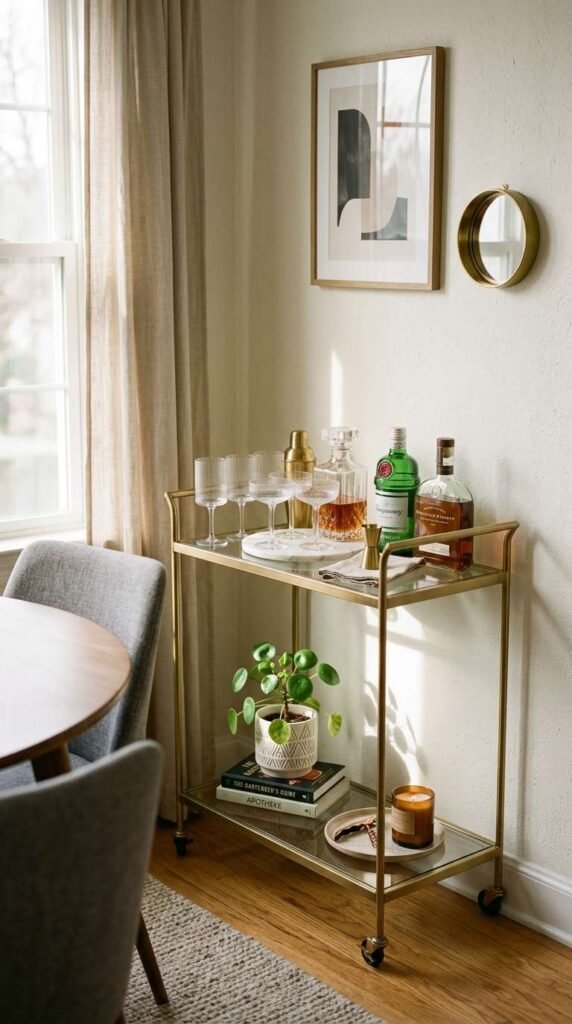
- Adds mobile storage in a small footprint
- Doubles as a serving station
- Holds glasses, bottles, or coffee supplies
- Rolls out of the way when not needed
- Adds a stylish focal point
A slim bar cart is a portable storage solution that suits a small dining room well. It rolls against a wall when not in use and moves next to the table during meals. In my experience, a two-shelf cart holds glasses, a few bottles, and a small tray without taking much space. Even if you rarely serve drinks, a cart works beautifully as a coffee or tea station. Brass, black metal, and wood finishes all look great, so choose one that matches your other hardware.
Styling keeps the cart looking intentional. I’ve noticed that heavier items belong on the lower shelf, with glasses and a tray on top, plus one decorative object like a small plant. Stick to two or three glass types and keep only what you actually use. A small lamp or a framed print above the cart turns the corner into a mini vignette. When guests come, roll it to the table for easy serving. It is a simple, versatile addition that adds function and charm.
21. Vertical Paneling for a Taller Feel
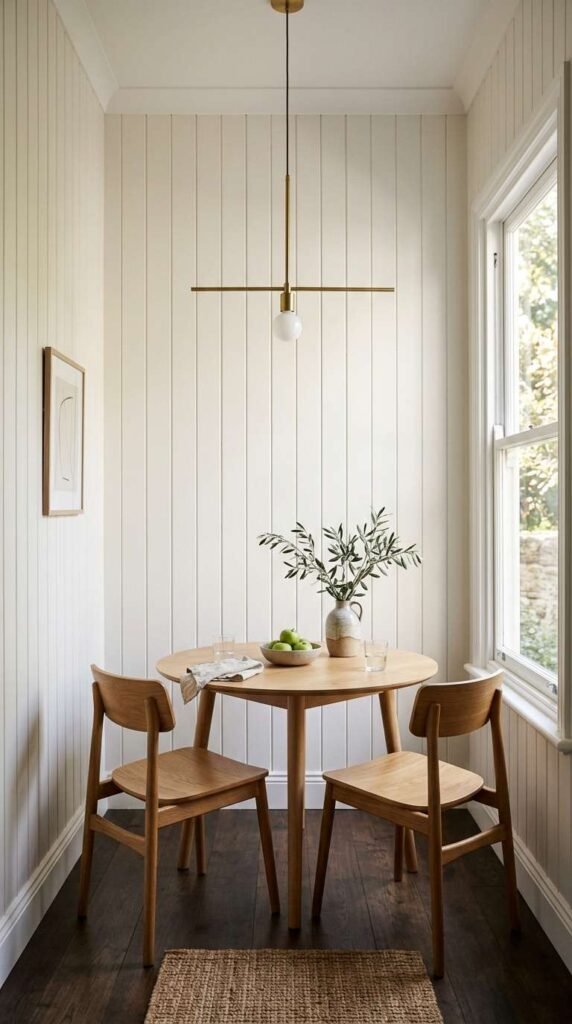
- Draws the eye upward
- Adds texture and architectural detail
- Makes low ceilings feel higher
- Works with paint or wood slats
- Creates a rich backdrop behind the table
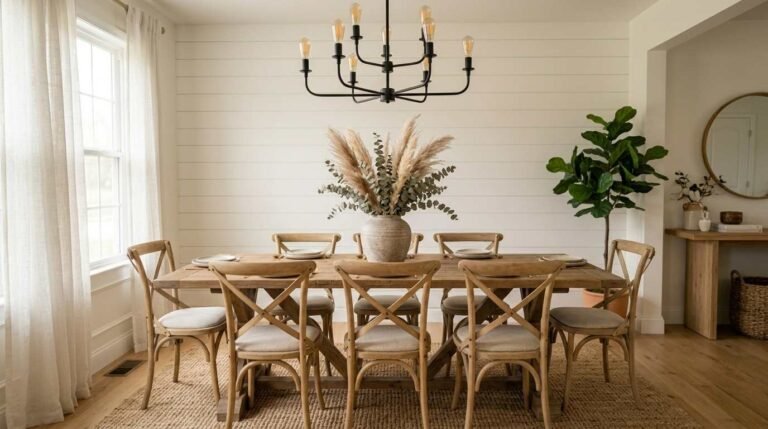
Vertical lines lead the eye up, which is a gentle way to make a small dining room feel taller. Board-and-batten, slim wood slats, or simple vertical paneling on one wall add architectural interest and depth. In my experience, painting the paneling the same color as the wall gives a subtle, sophisticated effect, while a deeper shade makes a bolder statement. The wall behind the table is usually the best place, because it is the view everyone shares at every meal. It gives the room a custom look without shrinking it.
Installation can be simpler than expected. I’ve noticed that ready-made slat panels and peel-and-stick wood strips make this a weekend project, and they suit renters well. Keep the spacing even and use a level so the lines stay crisp. Pair the wall with a mirror or a single piece of art, and keep the rest of the room simple. Warm lighting, like a sconce or pendant, highlights the texture and shadows. The result feels tailored, calm, and taller than the room really is.
22. Layered Textiles for a Cozy Small Space
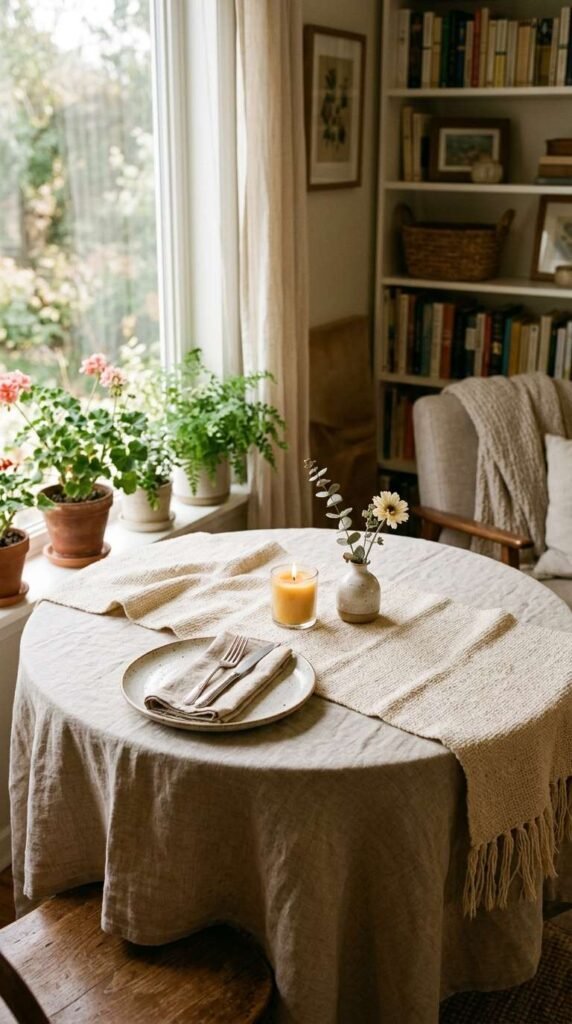
- Adds warmth and softness
- Brings pattern and color without clutter
- Absorbs echo in hard-surfaced rooms
- Easy to swap with the seasons
- Makes small rooms feel intimate, not cramped
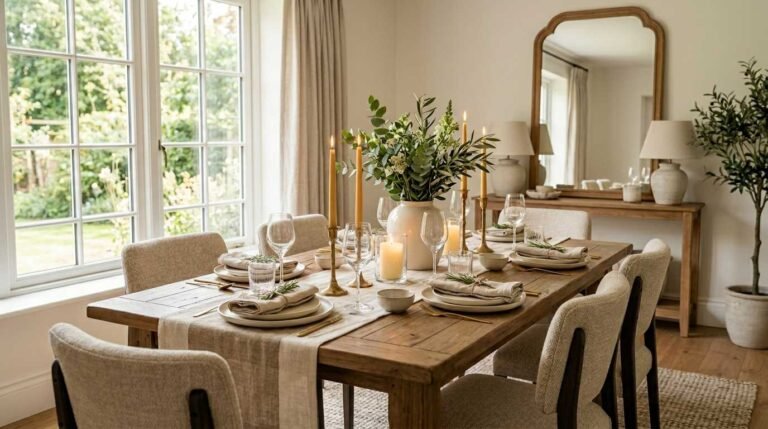
Texture is what turns a small dining room from tidy into cozy. Layer a linen runner, cloth napkins, seat cushions, and soft curtains, and the room feels warm and lived in. In my experience, three or four textiles in a shared color family are enough. Mix materials such as linen, wool, cotton, and jute, so the layers look rich rather than repetitive. Soft fabrics also absorb sound, which helps a compact room feel calmer and quieter during busy meals with family or guests.
Restraint keeps textiles from crowding the space. I’ve noticed that repeating one or two colors, such as oatmeal and sage, ties everything together, and a single patterned piece adds personality without noise. Choose washable fabrics, especially for cushions and napkins. Swap items with the seasons, using lighter linens in summer and heavier wool touches in winter. Store the extras in a basket nearby, so changes take minutes. It is an affordable, flexible way to give a small dining room warmth and character.
FAQs
1. What’s the best dining table shape for a small room?
Round tables usually work best, since they have no corners and let you move around them easily. In my experience, a pedestal base adds extra legroom. If the room is long and narrow, a slim rectangular table against a wall is also a smart choice.
2. How do I make a small dining room feel bigger?
Use a large mirror opposite a window, choose a light color palette, and pick furniture with visible legs. That’s why many designers suggest combining these tricks, since reflected light and open floor space work best together.
3. Do small dining rooms need a rug?
A rug is optional, but it helps define the dining zone, especially in open-plan spaces. Choose one that extends about two feet beyond the table on every side, so chairs stay on it when pulled out.
4. What chairs work best in a small dining space?
Slim chairs with open backs and slender legs look lightest. Stackable or folding chairs are excellent for occasional guests, and benches tuck fully under the table. I’ve noticed that chairs which slide completely under the table make the biggest difference.
5. Can I still add a chandelier in a small dining room?
Yes, but choose a smaller one, or a pendant, about one third to one half the width of your table. Hang it roughly thirty to thirty-six inches above the tabletop, so it lights the table without blocking anyone’s view.
6. How do I add storage in a small dining room?
Go vertical with floating shelves, use a bench with a lift-up seat, or add a slim console or bar cart. These options add function without eating into your walkways or crowding the floor.
7. What colors make a small dining room feel larger?
Soft whites, warm creams, and pale sage green reflect light and push the walls outward. I’ve seen painting the ceiling the same shade as the walls make a room look taller, since it removes hard lines.
8. Is a bench a good seating option for small spaces?
Yes. A bench tucks completely under the table, seats more people than chairs in the same length, and can hide storage. Add a cushion and a few pillows, and it becomes one of the coziest seats in the room.
9. How can I add personality without cluttering a small room?
Choose a few meaningful pieces, such as a large print, a textured runner, or a vase of fresh stems. That’s why many designers recommend the one-in, one-out rule, so new items replace old ones instead of piling up.
10. What’s the easiest small dining room decor idea to try first?
A large mirror or a simple lighting swap is the easiest starting point. Both change the room in an afternoon with little cost. In my experience, warm bulbs and a pendant instantly make a small dining space feel more special.
Conclusion
A tight space can still feel welcoming, bright, and beautifully put together. From round tables and large mirrors to slim chairs and layered textiles, these small dining room decor ideas show how a few smart choices can change everything. I’ve seen how the right layout and a little warm lighting make compact rooms feel intentional instead of crowded. Pick one idea to try this week, save this post to your Pinterest board for later, and share it with someone who is ready to make their own dining corner feel bigger and cozier.