Does your small dining room feel more cramped than cozy? You’re not alone — fitting style and function into a tight space can feel like a real challenge. Small dining room decor modern ideas are all about making the most of limited square footage, without the room ever feeling crowded or unfinished. In my experience, the smartest small dining rooms rely on smart furniture choices and light, open styling rather than trying to fit in more decor. A round table, a well-placed mirror, or the right lighting can completely change how spacious a room feels.
1. Minimal Neutral Setup

- Keeps a tiny dining space feeling open rather than cramped
- Works best with light furniture and soft neutral walls
- Reduces visual clutter so the room feels larger
- Pairs well with simple, low-profile decor pieces
A minimal neutral setup is one of the smartest choices for small dining room decor modern homes rely on. Soft whites, warm beiges, and light wood tones reflect available light instead of absorbing it, which naturally makes a tight space feel more open. In my experience, removing anything unnecessary from the table and surrounding walls does more for a small room than adding new furniture ever could. A single vase or a small stack of books is often enough to finish the look without crowding the space.
2. Compact Round Table Style

- Removes sharp corners that make small rooms feel tighter
- Seats guests comfortably without needing extra floor space
- Works well tucked into corners or against a single wall
- Creates a softer, more welcoming shape for tight layouts
Round tables solve one of the biggest challenges in small dining rooms: sharp corners that eat up usable space. Without hard edges to navigate around, chairs can sit closer to the table and closer to the walls, which frees up walking room throughout the rest of the space. This shape also makes conversation feel more natural, since everyone seated is equally close to the center. It’s a small design choice, but one that consistently makes compact rooms function better on a daily basis.
That’s why many designers recommend round tables specifically for apartments and smaller homes. I’ve seen this swap alone transform an awkward, cramped dining corner into a space that actually feels comfortable to sit in. A round table paired with slim, armless chairs maximizes flow even further, since there’s nothing bulky blocking movement around the perimeter. This idea works especially well in open-concept homes where the dining area shares space with a kitchen or living room.
3. Wall-Mounted Dining Setup

- Frees up floor space when the table isn’t in use
- Works well in apartments or very tight dining corners
- Keeps the room feeling open during everyday activities
- Offers full dining functionality without a permanent footprint
A wall-mounted table is one of the most practical solutions for genuinely tiny dining spaces. Folding flat against the wall when not needed, it gives the room back its floor space instantly, which matters most in studio apartments or narrow hallways repurposed as dining areas. When it’s time to eat, the table folds down and functions just like any standard dining surface. This flexibility makes it one of the more functional ideas within small dining room decor modern renters and homeowners both turn to.
I’ve seen this setup work particularly well paired with stackable or foldable chairs, since the entire dining area can essentially disappear when guests aren’t over. It’s a smart option for anyone hosting infrequently but still wanting a proper place to sit down for meals. The key is choosing a table with a sturdy folding mechanism, since a wobbly hinge undermines the otherwise clean, functional look this styling idea is meant to achieve.
4. Scandinavian Style Look

- Creates a bright, calm, and uncluttered atmosphere
- Works well with pale wood and soft neutral tones
- Suits homes wanting a light, functional aesthetic
- Keeps styling simple without feeling empty
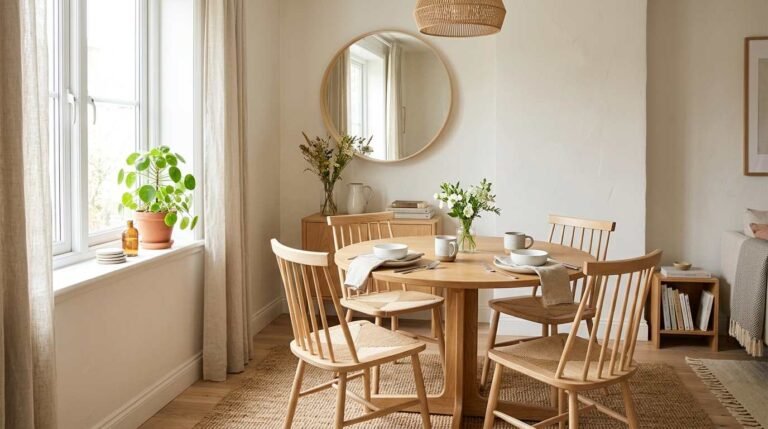
Scandinavian styling favors light, function, and simplicity above all else, which makes it a natural fit for compact dining spaces. Pale wood furniture paired with white or soft gray walls keeps the room feeling airy rather than boxed in. In my experience, this style works especially well when paired with a single textured element, like a woven seat cushion, to keep the space from feeling too sterile. It’s a dependable, low-maintenance look that never feels dated season after season.
Adding one warm accent, like a small candle or a linen table runner, keeps the Scandinavian look from feeling too cold or clinical. I’ve noticed that smaller dining rooms benefit the most from this style, since the light palette bounces available light around the room more effectively. This approach pairs beautifully with large windows or skylights, making the most of any natural light already present in the space throughout the day.
5. Black Accent Dining Theme

- Adds contrast and depth to lighter dining rooms
- Works through chairs, frames, or a single black light fixture
- Grounds the space without making it feel heavier
- Prevents an all-neutral room from feeling flat
Black accents bring instant definition to a small dining room without requiring much furniture at all. A single black pendant light or a set of black-framed chairs creates contrast against lighter walls and flooring, giving the eye something to focus on. That’s why many designers recommend using black sparingly in tight spaces — one strong element does more than several small ones scattered throughout the room. This approach works particularly well in rooms with plenty of natural light to balance the darker tones.
The trick is restraint, since too much black can make a small room feel closed in rather than defined. I’ve tried this with just black chair legs against a white table, and the result still felt light and open. This styling choice suits modern homes wanting a slightly bolder look without committing to a full color overhaul of the dining space.
6. Plant-Filled Dining Corner
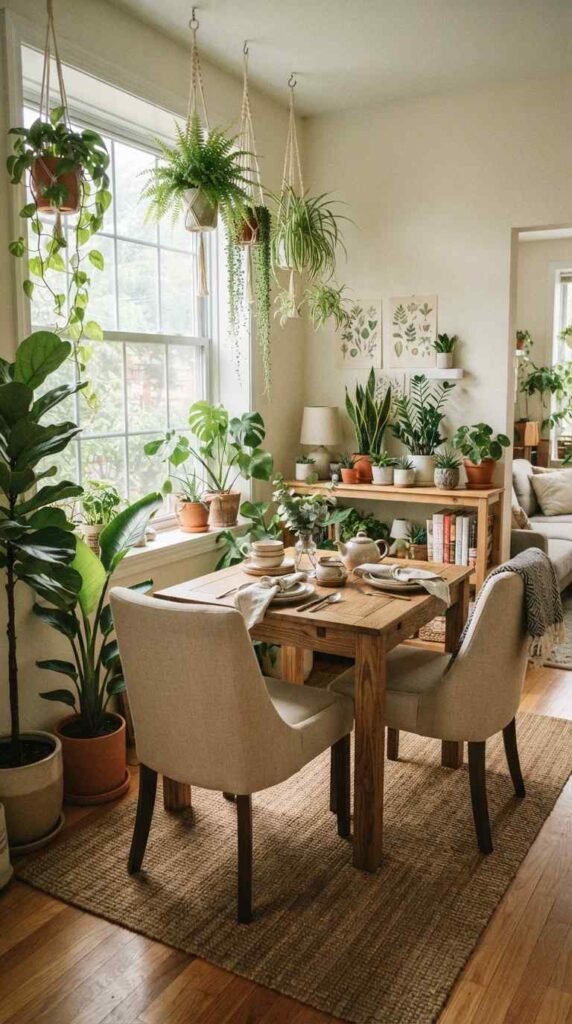
- Brings life and softness into a tight, structured space
- Works with both real plants and quality faux options
- Balances hard furniture lines with organic movement
- Requires minimal floor space when placed correctly
Plants make even the smallest dining corner feel warmer and more inviting. A trailing vine on a shelf or a small potted plant on the windowsill adds color and life without taking up valuable floor space. This idea works particularly well in small dining room decor modern apartments favor, since greenery softens the clean lines typical of modern furniture. I’ve noticed that even one well-placed plant can make an entire dining nook feel more finished and less sparse.
Hanging planters or wall-mounted shelves are especially useful in tight spaces, since they add greenery vertically instead of competing for table or floor room. Low-maintenance varieties like pothos or snake plants work well for anyone without much natural light. This small addition consistently makes a compact dining area feel more welcoming, especially when paired with warm wood tones or soft neutral walls nearby.
7. Mirror Illusion Design

- Instantly expands the visual size of a small dining room
- Reflects natural light to brighten darker corners
- Acts as a focal point without needing extra floor space
- Works especially well positioned across from a window
A well-placed mirror is one of the highest-impact tricks for making a small dining room feel bigger than it is. Positioned across from a window, it reflects natural light and doubles the sense of openness in the room. This idea requires no floor space at all, which makes it ideal for tight dining nooks where every inch matters. A single large mirror often does more visual work than several smaller decor pieces combined throughout the space.
I’ve seen this trick transform cramped, dim dining corners into spaces that feel genuinely bright and open. Choosing a mirror roughly the width of the table or a nearby console keeps the proportions looking intentional rather than random. This is one of the easiest, lowest-cost updates available for anyone working with a genuinely small dining footprint at home.
8. Farmhouse Cozy Setup

- Brings warmth through natural, textured materials
- Works well with wood, woven, and linen elements together
- Suits small dining rooms wanting a lived-in feel
- Balances rustic charm with a clean modern base
Farmhouse styling brings comfort into small dining rooms without overwhelming the space. A simple wood table paired with woven seat cushions and a linen runner creates a cozy, welcoming feel that still stays functional in a tight footprint. This combination works because it softens the sometimes stark feel of a small modern room, adding texture rather than clutter. It’s a look that feels warm immediately, even in dining areas with limited natural light or square footage.
I’ve tried this style in narrow dining nooks, and the natural textures consistently made the space feel more inviting rather than cramped. Sticking to a light or neutral wood tone keeps the farmhouse feel from becoming visually heavy in a small room. This approach suits homeowners wanting their compact dining space to feel comfortable and lived-in rather than sparse or purely functional.
9. Glass Table Modern Look

- Creates a sense of visual openness in tight spaces
- Reflects light rather than blocking sightlines across the room
- Pairs well with metal or slim wood chair frames
- Keeps a small dining area from feeling visually heavy
A glass-top table is one of the most effective furniture choices for a small dining room. Because it’s see-through, it doesn’t visually block the floor or walls behind it, which makes the entire room feel more open than a solid wood table of the same size would. This idea works especially well in small dining room decor modern apartments often need, where every visual trick toward openness genuinely matters in daily living.
I’ve noticed that pairing a glass table with slim metal chair legs enhances this open feeling even further, since there’s very little visual bulk anywhere in the seating area. Adding a simple centerpiece keeps the surface from feeling too stark or clinical. This styling choice suits modern homes wanting a sleek, contemporary dining area that doesn’t visually shrink the room.
10. Pendant Lighting Focus

- Adds a stylish focal point without using any floor space
- Works well hung low and centered above the table
- Creates ambiance beyond what overhead lighting alone provides
- Suits nearly every small dining room style
A single well-chosen pendant light does a lot of visual work in a small dining room. Hung low and centered above the table, it draws the eye upward and creates a natural focal point without taking up any floor or wall space. This idea is one of the easiest upgrades available, since it often only requires swapping an existing fixture rather than adding new furniture. It also adds warmth and mood that standard overhead lighting rarely achieves on its own.
That’s why many designers recommend pendant lighting as one of the first updates for a small dining space. I’ve seen a single statement pendant completely change the feel of an otherwise plain dining corner. Choosing a fixture with an interesting shape or warm-toned bulb adds personality to the room without requiring any additional decor elsewhere.
11. Vertical Storage Styling

- Maximizes storage without using valuable floor space
- Works well with tall, narrow shelving units
- Keeps small dining rooms functional and organized
- Suits apartments or homes with limited square footage
Vertical storage solves one of the biggest challenges in small dining rooms: where to keep everything without cluttering the floor. Tall, narrow shelving units make use of unused wall height, holding dishware, linens, or decor while leaving the actual floor space open for movement. This approach keeps the room feeling functional and organized, even in homes without a dedicated pantry or extra storage room nearby.
I’ve noticed that floating shelves work especially well for this purpose, since they add storage without the visual bulk of a full cabinet. Styling the shelves with a mix of practical items and a few decorative pieces keeps the look intentional rather than purely utilitarian. This idea suits small apartments and starter homes where every inch of storage needs to earn its place.
12. Window Side Dining Setup

- Makes the most of natural light throughout the day
- Creates a bright, cheerful spot for everyday meals
- Works well with a small table and two chairs
- Adds visual interest without needing extra decor
Positioning a small dining table beside a window takes advantage of natural light that might otherwise go unused. This setup creates a bright, cheerful spot for meals, often eliminating the need for much additional lighting during the day. It’s a smart choice for small dining room decor modern homes benefit from most, since the window itself becomes part of the room’s visual appeal without adding any furniture or decor.
I’ve seen this arrangement work particularly well in apartments where the dining area doubles as a workspace, since natural light benefits both uses throughout the day. Adding simple curtains or a café-style shade keeps the space feeling finished without blocking the light. This idea is one of the easiest to implement, since it usually just requires rearranging furniture already in the home.
13. Built-In Bench Seating

- Saves significant floor space compared to individual chairs
- Works well tucked against a wall or in a corner
- Adds built-in storage potential underneath the seat
- Suits narrow or oddly shaped small dining areas
Built-in bench seating is one of the most space-efficient solutions for a small dining room. Tucked against a wall, a bench eliminates the need for chairs on that side of the table, freeing up walking room throughout the rest of the space. Many benches also include storage underneath, which adds practical function without requiring any extra furniture pieces elsewhere in the home.
That’s why many designers recommend this setup for narrow or awkwardly shaped dining nooks. I’ve seen this solution work particularly well in corner spaces that would otherwise be difficult to furnish with standard chairs. Adding a few cushions to the bench keeps the look soft and inviting rather than purely functional.
14. Hidden Storage Solutions

- Keeps small dining rooms tidy without visible clutter
- Works through ottomans, storage benches, or slim cabinets
- Maximizes function without sacrificing style
- Suits busy households needing extra organization
Hidden storage solves the everyday clutter problem that small dining rooms often face. A storage ottoman doubling as extra seating, or a slim cabinet tucked against a wall, keeps items like table linens or extra chairs out of sight while still being easily accessible when needed. This approach proves that a small space can stay both organized and visually calm at the same time.
I’ve noticed that families with children benefit the most from this idea, since it gives them somewhere to quickly stash items before guests arrive. Choosing furniture that serves double duty, like a bench with a lift-up seat, is one of the smartest moves for anyone working with limited square footage in their dining area.
15. Statement Wall Art

- Adds personality without using any floor space
- Works well as a single large piece rather than several small ones
- Creates a genuine focal point for the room
- Suits nearly every small dining room style
A single piece of statement wall art gives a small dining room personality without crowding the space. One large piece, rather than a cluttered gallery wall, creates a clear focal point that draws the eye immediately upon entering the room. This idea works especially well when floor and table space are already limited, since all the visual interest happens on the wall instead.
I’ve seen this approach work beautifully in narrow dining rooms where a bulky gallery wall would feel overwhelming. Choosing artwork with colors that complement the existing palette keeps the room feeling cohesive rather than busy. This is a simple way to make a small dining area feel intentional and finished.
16. Layered Lighting Design

- Adds warmth and ambiance beyond a single overhead fixture
- Works through a mix of pendant, wall, and accent lighting
- Creates a cozy focal point for evening meals
- Enhances mood without requiring major electrical changes
Layered lighting brings depth to a small dining room that a single overhead fixture simply can’t achieve on its own, making it a practical feature in casual dining room decor ideas. Combining a pendant light with a wall sconce or small table lamp creates a warmer, more dimensional glow, especially during evening meals. This approach also gives more control over the room’s mood, since different combinations of lights can suit both bright daytime use and cozy dinners.
I’ve noticed that even small dining rooms benefit significantly from this layered approach, since the added light sources make the space feel larger and more inviting after dark. A dimmable pendant paired with a simple wall sconce is often enough to achieve this effect without any major rewiring involved.
17. Minimalist Clean Look

- Keeps the dining area feeling open and uncluttered
- Works best with just a few carefully chosen pieces
- Reduces visual noise in an already tight space
- Suits modern homes wanting a calm, simple aesthetic
A minimalist approach removes anything unnecessary from a small dining room, leaving only what genuinely serves a purpose. A simple table, a few chairs, and one decorative accent are often all that’s needed to create a finished, intentional look. This style works especially well in compact spaces, since less clutter means more visual breathing room throughout the area.
In my experience, homeowners who commit fully to this pared-back approach tend to feel more satisfied with their small dining room long-term, since there’s simply less to maintain or reorganize. Choosing furniture with clean, simple lines while incorporating subtle glam home decor accents supports this minimalist feel even further, keeping the whole space looking calm, polished, and uncluttered.
18. Soft Color Palette Design

- Creates a calm, cohesive backdrop for the dining space
- Makes a small room feel larger and airier
- Works well with pastel or muted neutral tones
- Allows decor accents to stand out more clearly
A soft color palette does wonders for making a small dining room feel more spacious. Muted tones like blush, sage, or pale gray don’t visually compete with each other, which keeps the eye moving smoothly across the room instead of stopping at jarring contrasts. This approach is especially useful for small dining room decor modern homeowners choose when trying to make a tight space feel calmer and more open.
I’ve seen this soft palette work particularly well when paired with one slightly bolder accent, like a colorful vase or patterned cushion. That single pop of color stands out more clearly against the muted background than it would in a busier color scheme, giving the room personality without sacrificing its sense of calm.
19. Mixed Material Styling

- Adds depth without relying on extra color or pattern
- Combines materials like wood, metal, and glass together
- Keeps a neutral palette from feeling flat or boring
- Works in nearly every small dining room style
Mixing materials keeps a small dining room visually interesting even when working with a limited color palette. Pairing a wood table with metal chair frames, or adding a glass pendant above, creates natural contrast and depth without needing bold colors anywhere in the room. Each material reflects light differently, which adds a subtle sense of richness to an otherwise simple space.
I’ve tried combining three distinct materials in one small dining area, and the result consistently looked more curated than a single-material setup would have. The key is choosing one dominant material and letting the others act as smaller accents throughout the room.
20. Dining Area Rug Styling

- Defines the dining space within an open floor plan
- Adds warmth and texture underfoot
- Works well in low-pile styles for easy cleaning
- Helps anchor furniture visually in a small room
A rug placed under a small dining table helps define the space, especially in open-concept homes where the dining area isn’t separated by walls. It visually anchors the furniture, signaling where the dining zone begins and ends, which makes the room feel more intentional rather than just an extension of the kitchen or living room.
I’ve noticed that low-pile rugs work best in dining areas, since they’re easier to clean after spills and don’t interfere with chair movement. Choosing a rug slightly larger than the table, so chairs stay on it even when pulled out, keeps the whole setup looking polished and complete.
21. Warm Wood Accents

- Brings natural warmth into a small, structured space
- Pairs well with linen, rattan, and stone textures
- Softens sharp modern lines without losing a contemporary feel
- Works in almost any color palette
Wood accents bring a natural warmth that balances the sometimes sharp, clean lines of modern dining furniture. A wood table paired with woven chair seats or a simple wood shelf softens the room, making it feel more comfortable and lived-in rather than sterile or overly polished.
I’ve tried this pairing in small dining rooms with white walls, sage walls, and even charcoal walls, and it consistently looks balanced regardless of the surrounding palette. This flexibility makes warm wood accents one of the safest, most reliable choices for anyone decorating a compact dining space.
22. Modular Furniture Design

- Adapts easily to different dining needs and group sizes
- Works well with extendable tables or stackable chairs
- Maximizes flexibility in a limited footprint
- Suits homes that host occasionally but need daily function
Modular furniture solves the common challenge of needing more seating occasionally while living with limited space daily. An extendable table that expands for guests, paired with stackable or foldable chairs, gives small dining rooms the flexibility to handle both everyday meals and larger gatherings without permanently sacrificing floor space.
That’s why many designers recommend modular pieces specifically for apartments and starter homes. I’ve seen this approach work particularly well for hosts who entertain only a few times a year but still want a functional, comfortable dining setup for daily use in between.
23. Floating Cabinet Storage

- Adds storage without taking up floor space
- Works well mounted at counter height along a wall
- Keeps small dining rooms feeling open underneath
- Suits modern homes wanting a streamlined look
A floating cabinet mounted on the wall provides valuable storage without touching the floor, which keeps a small dining room feeling more open underneath. This solution works especially well for holding dishware, linens, or serving pieces that would otherwise clutter a standard sideboard or console table.
I’ve noticed that floating cabinets also make cleaning easier, since there’s nothing blocking the floor space beneath them. Choosing a cabinet with a slim profile and matching the wall color helps it blend seamlessly into the room rather than becoming a bulky visual interruption.
24. Cozy Corner Seating

- Makes use of otherwise wasted corner space
- Works well with an L-shaped bench or banquette
- Creates a cozy, tucked-away dining spot
- Maximizes seating without crowding the room
Corner seating turns an often-overlooked part of a small dining room into functional space. An L-shaped bench or banquette tucked into a corner seats several people without requiring the floor space that individual chairs would need on multiple sides of the table.
I’ve seen this setup work particularly well in kitchen-adjacent dining nooks, where every inch of space matters. Adding soft cushions and a few throw pillows makes the corner feel cozy and inviting rather than purely functional, turning an awkward space into one of the most comfortable spots in the home.
25. Layered Texture Styling

- Adds depth without relying on extra color or pattern
- Combines materials like linen, ceramic, and wood together
- Keeps a small, neutral space from feeling flat
- Works with nearly every small dining room style
Texture does much of the visual work in a small dining room where color and pattern are kept minimal. A linen table runner, a ceramic centerpiece, and wood chair seats together create richness without needing bold colors anywhere in the room. This approach adds interest to an otherwise simple setup.
I’ve noticed that mixing more than three textures at once can start to feel busy rather than intentional in a small space. Sticking to a few complementary materials tends to look the most balanced and considered, especially in tight dining areas with limited square footage to work with.
26. Sleek Black Dining Elements

- Adds a modern, polished touch through small details
- Works well via chair frames, hardware, or light fixtures
- Grounds a light, neutral room without adding bulk
- Suits homes wanting a slightly bold, contemporary look
Sleek black elements bring a modern edge to a small dining room without requiring much space at all. Black chair frames, drawer pulls, or a single light fixture add contrast and polish, grounding an otherwise light and neutral room with just a few small details.
I’ve tried this approach in a mostly white dining nook, and the black accents added just enough definition without making the space feel heavier. This styling choice suits homeowners wanting their small dining area to feel current and slightly bold without a full redesign.
27. Simple Tableware Styling

- Adds personality to everyday meals without extra furniture
- Works well with a cohesive color palette
- Creates a styled look with minimal effort
- Suits small dining rooms wanting an easy refresh
Simple tableware styling is one of the easiest ways to refresh a small dining room without buying new furniture. A cohesive set of plates, glasses, and a simple centerpiece adds visual interest to the table itself, which matters more in small rooms where the table is often the room’s main feature.
I’ve noticed that choosing a limited color palette for tableware, rather than mismatched or overly patterned pieces, keeps the whole table looking intentional. This small, low-cost update consistently makes a compact dining area feel more finished for everyday meals.
28. Storage Bench Integration

- Combines seating with practical storage in one piece
- Works especially well against a wall or in a nook
- Keeps small dining rooms organized without extra furniture
- Suits busy households needing multi-functional pieces
A storage bench solves two problems at once in a small dining room: seating and organization. Placed against a wall, it provides a place to sit while also holding items like table linens, extra place settings, or seasonal decor underneath the seat itself.
I’ve seen this multi-functional piece work particularly well in homes without a separate dining storage area, since it eliminates the need for an additional cabinet or sideboard. This idea proves that small spaces can stay both functional and visually simple at the same time.
29. Metallic Accent Touches

- Adds subtle shine without overwhelming a small space
- Works through hardware, frames, or small decor objects
- Pairs well with both warm and cool color palettes
- Elevates the room without requiring new furniture
A touch of metallic finish can lift a small dining room without any major changes. Brass drawer pulls, a gold-rimmed vase, or a single bronze light fixture catch available light just enough to add a subtle sense of polish to the space.
I’ve tried pairing brass hardware with a silver-toned mirror frame in the same small room, and the contrast actually added interest rather than clashing. Keeping metallic elements to small accents, rather than large surfaces, ensures they highlight the room instead of overwhelming a limited space.
30. Layered Finishing Touches

- Pulls the whole small dining room together cohesively
- Works through small additions like candles, books, or trays
- Adds a final sense of polish to the space
- Suits any style once the basics are already in place
Layered finishing touches are what separate a functional small dining room from one that feels genuinely styled. Small additions like a stack of books, a candle, or a decorative tray pull the whole space together once the larger furniture pieces are already in place.
I’ve seen this final layer of styling make the biggest difference in how finished a small dining room feels overall. This idea works best as a last step, adding personality and polish after the table, chairs, and lighting are already settled into the space.
FAQs
1. What are the best modern small dining room decor ideas?
The best ideas focus on light colors, multi-functional furniture, and smart use of vertical space. Round tables, mirrors, and pendant lighting all help a small room feel larger while still looking current. Combining just a few of these ideas, rather than all at once, usually creates the most balanced result.
2. How can I decorate a small dining room in a modern style?
Start with a simple furniture base in light wood, glass, or matte black, then add one or two decor accents like a mirror or a statement light fixture. In my experience, keeping the color palette limited makes a modern small dining room feel far more intentional and put together.
3. What colors work best for a modern small dining room?
Soft neutrals like white, beige, and light gray work best, since they reflect light and make the room feel more open. A single accent color or a black detail adds contrast without overwhelming the space. Most small dining rooms look best with one dominant tone tying everything together.
4. How do I make a tiny dining room look bigger?
A large mirror, a glass-top table, and light-colored walls are the fastest ways to visually expand a tiny dining room. Keeping furniture slim and choosing pieces that don’t block sightlines also helps the space feel more open. I’ve seen these small changes make a real difference quickly.
5. Are round tables good for small modern dining rooms?
Yes, round tables are one of the best choices for tight spaces. Without sharp corners, chairs can sit closer to the table and walls, freeing up walking room throughout the rest of the area. This shape also makes the seating feel more comfortable for everyday meals.
6. What type of lighting is best for a modern dining area?
A single pendant light hung low above the table works well in most small dining rooms, adding style without using any floor space. Layering in a wall sconce or dimmable option adds extra warmth for evening meals. Either choice improves the mood beyond standard overhead lighting alone.
7. How can I style a modern apartment dining room?
Focus on furniture that serves double duty, like a bench with storage or a drop-leaf table that folds away. That’s why many designers recommend modular pieces for apartments specifically, since they offer flexibility without permanently taking up space in an already limited footprint.
8. What wall decor works in a small dining room?
One large piece of art or a single statement mirror works better than a cluttered gallery wall in a small space. This keeps the visual focus clear without competing for attention. I’ve noticed that simpler wall decor consistently makes tight dining rooms feel calmer and more finished.
9. Can a small dining room feel luxurious?
Yes, through details rather than size. Metallic accents, a marble-effect surface, or soft layered lighting can make even a compact dining room feel elevated. It’s less about square footage and more about how intentionally the space is styled and finished.
10. What is the easiest way to update a small dining space?
Swapping a light fixture, adding a mirror, or refreshing the tableware are all low-cost, high-impact updates. These changes require no major furniture purchases and can be done in an afternoon. Small, layered touches consistently make the biggest difference in how finished a space feels.
Conclusion
A small dining room doesn’t need more space to feel bigger — it just needs the right choices. From round tables and mirrors to layered lighting and smart storage, these small dining room decor modern ideas show how thoughtful styling can transform even the tightest spaces. I’ve seen how something as simple as a new light fixture or a well-placed mirror can make a dining room feel completely different.