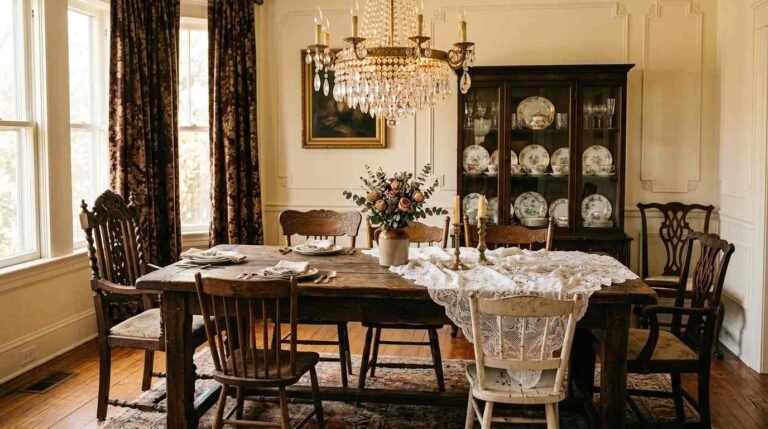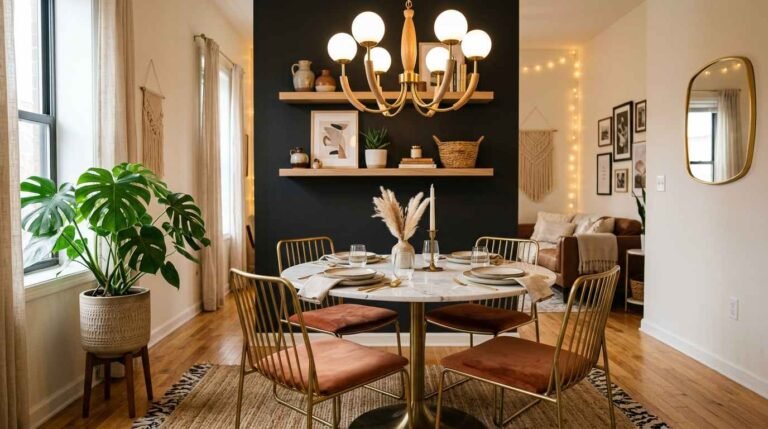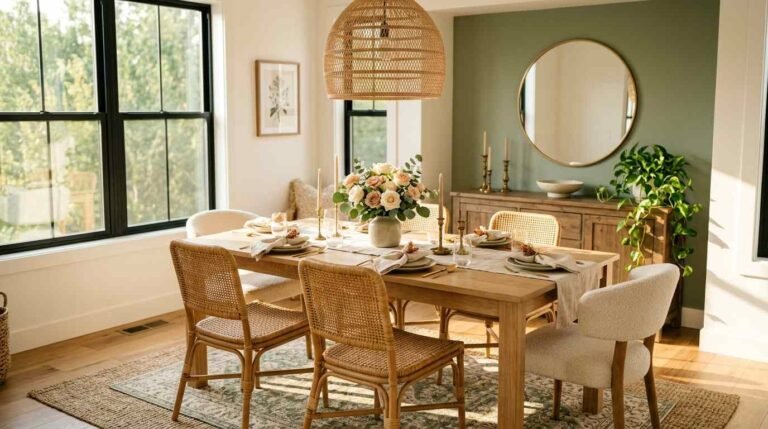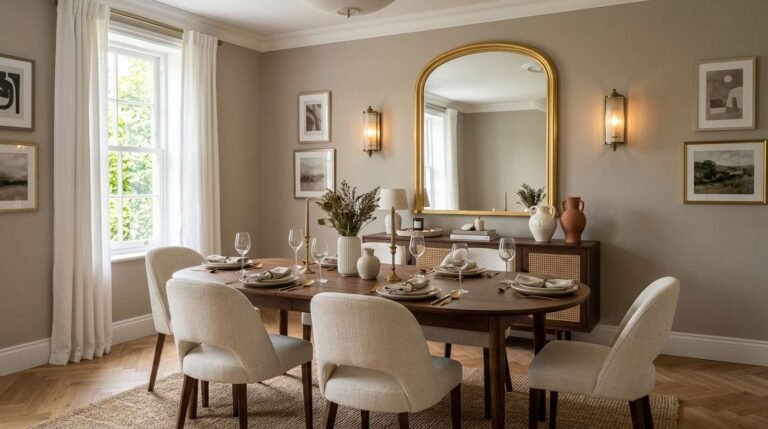
Bare walls can hold a dining room back, and these dining room wall decor ideas show how to change that fast. Whether you love bold art, cozy textures, or classic mirrors, this guide shares 24 practical ways to make your walls the star of the room. In my experience, the wall behind the table does more for a dining space than almost any other surface, because it is the view everyone shares at every meal. I’ve seen a single mirror or gallery wall transform a plain room in one afternoon. Keep scrolling, save your favorites, and get ready to give your walls the attention they deserve.
1. Gallery Wall Art Display

- Turns a blank wall into a focal point
- Builds a personal, collected look
- Works with mixed frame sizes
- Can be planned on the floor first
- Easy to expand over time
A gallery wall turns a blank dining room wall into the first thing guests notice. Start by laying frames on the floor and arranging them until the mix of sizes feels balanced. In my experience, a shared element, like black frames or a soft color palette, ties different images together so the wall reads as one piece. Keep the gaps between frames even, around two inches, and hang the group about eight inches above a sideboard or the table. Personal photos, prints, and small objects all belong, as long as the arrangement feels planned.
The real joy of a gallery wall is that it can grow. I’ve noticed that people who start with five or six pieces usually add more within a few months, and the wall becomes more personal each time. Anchor the layout with one larger piece, then build around it with smaller frames. Trace each frame onto paper and tape the shapes to the wall before hammering a single nail. That quick step saves holes and frustration, and it helps you see the finished look before committing to it.
2. Statement Mirror Wall

- Bounces light across the room
- Makes the dining area feel larger
- Adds shine and elegance
- Works with one big mirror or several
- Doubles the glow of candles and lamps
A large mirror is the closest thing to a magic trick in interior design. Hung across from a window, it catches daylight and sends it deep into the room, so the dining area feels brighter and wider. In my experience, one oversized mirror looks calmer and more expensive than several small ones scattered around. Choose a frame that suits your style, whether brass, black metal, or carved wood. Hang it so the center sits near eye level when seated, and the table, candles, and greenery reflect beautifully.
Placement matters as much as size. I’ve seen mirrors turn a dull, dim corner into the brightest part of the room simply by facing the right source of light. Avoid pointing the mirror at clutter, since messy spots get doubled too. Pair it with a pendant light or a pair of sconces, and the evening glow multiplies. A leaning floor mirror works well when you want a relaxed look, and it needs no drilling. Either way, the effect is instant, elegant, and surprisingly easy to achieve.
3. Woven Wall Basket Display

- Adds natural texture to plain walls
- Creates a handmade, collected feel
- Works in varied sizes and shapes
- Budget-friendly and easy to hang
- Pairs with wood, linen, and plants
Woven baskets make wonderful wall art, and they bring a warmth that flat prints cannot match. A cluster of rattan, seagrass, or jute pieces in different sizes creates a relaxed, layered display that feels handmade. In my experience, an odd number works best, such as three, five, or seven, arranged in a loose circle or a gentle cascade. The natural tones sit beautifully against white, cream, or soft sage walls. They are lightweight, so a few small adhesive hooks or nails hold them securely without any fuss.
I’ve noticed that this idea suits dining rooms that feel a little too polished or stark. The organic shapes soften hard edges and add depth without adding color. Try mixing flat plate-style baskets with deeper bowl shapes so the group has visual rhythm. Thrift stores and craft markets are great sources for unique pieces, and prices stay low. If your table is wooden, the textures will echo each other nicely. It is a simple, affordable way to make an empty wall feel warm and welcoming.
4. Oversized Single Art Piece

- Creates a bold, uncluttered focal point
- Makes a strong statement with one piece
- Suits modern and minimalist rooms
- Saves time compared to gallery walls
- Draws the eye and anchors the table
Sometimes one big piece says more than twenty small ones. An oversized canvas or print above the sideboard fills the wall with confidence and gives the eye a single place to rest. In my experience, this approach feels calmer and more intentional than a crowded arrangement, especially in smaller rooms where too many frames can feel busy. Choose an abstract painting, a landscape, or a bold graphic print that echoes your color palette. The artwork should cover roughly two thirds of the width of the furniture beneath it for proper balance.
I’ve seen this idea work best when the surrounding wall is kept simple. Let the art breathe, with clear space on each side, and it looks like it belongs in a gallery. If a large original is out of budget, many affordable printers can enlarge a favorite image onto canvas. Hang the center of the piece around fifty-seven inches from the floor, close to eye level. A picture light above it adds drama in the evenings. One decision, one hook, and the whole room feels finished.
5. Wallpaper Accent Wall

- Adds pattern and color instantly
- Creates a dramatic backdrop behind the table
- Peel-and-stick options suit renters
- Costs less than full room makeovers
- Sets the mood for the whole room
A single wallpapered wall can change the entire personality of a dining room. Whether you choose a soft botanical, a bold geometric, or a textured grasscloth, the wall behind the table becomes the star. In my experience, the accent wall works best when it is the one with the fewest windows or doors, so the pattern stays uninterrupted. Peel-and-stick wallpaper is a great choice for renters, and it removes cleanly. Choose a pattern with colors already found in your room so everything feels connected.
Scale is the secret to getting this right. I’ve noticed that larger patterns feel more dramatic and modern, while small repeating prints look softer and more traditional. Keep the other walls plain and light, so the pattern doesn’t overwhelm the space. Add a mirror or a couple of simple frames only if the pattern is quiet, since a busy design needs room to shine. Sample a small piece first and look at it in morning and evening light before committing to the full roll.
6. Floating Wood Shelves

- Adds storage without using floor space
- Displays dishware, plants, and decor
- Draws the eye upward
- Brings warmth through natural wood
- Easy to restyle with the seasons
Floating shelves turn a plain wall into useful, good-looking storage. Two or three wooden shelves stacked with white plates, a few glasses, and a small plant keep everyday items within reach and add warmth to the room while complementing luxury dining room decor. In my experience, the best spot is beside or above the table, where things are easy to grab at mealtime. Choose a solid wood shelf with a finish that matches your table or chairs. Anchor the brackets into studs, or use proper wall anchors, because dishes are heavier than they look.
Styling makes the difference between neat and cluttered. I’ve noticed that mixing heights works best, such as a stack of bowls, a taller vase, and a small framed print leaning at the back. Leave about a third of each shelf empty so the display can breathe. Group items in odd numbers and repeat one or two colors across the shelves. Swapping just a couple of pieces each season keeps the wall feeling fresh without extra shopping, and the practical function never goes away.
7. Vintage Plate Wall Display

- Turns collected dishes into art
- Adds color, pattern, and history
- Works with mismatched or matching sets
- Uses thrifted or inherited pieces
- Creates a cozy, cottage-style mood
Old plates make surprisingly beautiful wall art. A cluster of blue-and-white china, floral dessert plates, or mismatched thrifted finds turns forgotten dishes into a conversation piece. In my experience, arranging them on the floor first is the easiest way to find a pattern you like, whether that is a tidy grid or a loose, organic cloud. Use invisible plate hangers or adhesive discs that grip the back of each piece safely. Keep the spacing even, about two inches apart, so the display reads as one cohesive group.
I’ve seen this idea work especially well for people who have inherited family china but never use it. Hanging it on the wall lets everyone enjoy it every day. Stick to a limited color palette, like blue and white or soft florals, so the wall feels curated rather than chaotic. Mix sizes for interest, placing a larger platter in the center. Flea markets and estate sales are wonderful sources, and no two walls ever look alike. It adds warmth, history, and a lot of personality.
8. Textured Fabric Wall Hanging

- Adds soft texture and warmth
- Helps absorb echo in hard-surfaced rooms
- Introduces color without paint
- Works as a tapestry or woven piece
- Easy to hang and change
Fabric on the wall adds a softness that paint and frames rarely deliver. A woven tapestry, a linen hanging, or a chunky textile piece brings texture and gentle color to the dining room. In my experience, this idea is particularly welcome in rooms with hard floors and bare walls, where echo can make conversation feel sharp. The fabric absorbs some of that sound, so meals feel calmer. Hang it from a simple wooden dowel with a cord, or clip it along the top edge.
I’ve noticed that the best pieces echo colors already in the room, like a rust tone from a vase or a muted green from a plant. Size matters here, so choose something wide enough to balance the furniture below it. Neutral weaves suit modern spaces, while bold patterned textiles suit eclectic or bohemian ones. Vintage rugs and blankets can also be hung, and they often cost little. A single textile can warm a whole wall and make the room feel more inviting.
9. Wall Sconces for Ambient Light

- Adds warm light without using table space
- Creates a restaurant-style evening glow
- Frees up sideboards from lamps
- Plug-in versions suit renters
- Softens harsh overhead lighting
Wall sconces bring a soft, flattering glow that overhead lights simply cannot match. Mounted beside a mirror, a piece of art, or a sideboard, they give the dining room a warm, boutique-hotel feeling after dark while complementing wedding home decor ideas with their elegant, ambient glow. In my experience, plug-in versions with a neat cord cover are ideal for renters, since no electrician is needed. Choose warm bulbs, around 2700K, and shades in fabric or frosted glass to diffuse the light gently. Hang them roughly sixty to sixty-six inches from the floor for a balanced look.
Symmetry helps the arrangement feel polished. I’ve seen a matching pair placed on either side of a large mirror instantly elevate an ordinary wall. In a narrow room, one sconce next to the table can be enough. Because they sit on the wall, they keep the sideboard free for decor, plants, or serving dishes. Pair them with a dimmable pendant, and you get a flexible lighting setup that works for quick breakfasts and long, candlelit dinners alike. Good lighting quietly improves everything else in the room.
10. Framed Botanical Prints

- Adds a fresh, natural feel
- Works in matching frames for a calm look
- Fits traditional and modern styles
- Affordable and easy to source
- Pairs well with plants and wood
Botanical prints bring the calm of a garden into the dining room without a single watering can. Ferns, leaves, wildflowers, and vintage plant studies look elegant in simple frames, and they suit almost any color scheme. In my experience, a set of three or four matching prints in identical frames feels cohesive and effortless. Choose black, white, or natural wood frames for a clean finish. Hang them in a neat row or a small grid above a sideboard, and the wall instantly looks considered. Among all dining room wall decor ideas, this is one of the easiest to start with.
I’ve noticed that botanical art works well because it is quiet but not boring. The soft greens and creams calm a busy room, while the fine detail rewards a closer look. Printable botanical art is inexpensive, and you can print at home or at a local shop. Use a wide white mat inside each frame for a gallery-style look. Pair the prints with a real plant nearby, and the theme feels natural and fresh. It is a timeless idea that never really goes out of style.
11. Wall-Mounted Wine Rack Display

- Saves counter and floor space
- Turns storage into a decorative feature
- Offers a spot for glasses and small decor
- Suits entertaining and everyday use
- Adds a cafe-style character
A wall-mounted wine rack is a smart way to store bottles while adding character to the room. Mounted above a sideboard or beside the table, it keeps bottles at hand and frees up valuable surface space. In my experience, racks in dark metal or warm wood look best, and they work in both modern and traditional dining rooms. Choose one with a small shelf or glass holder so the piece serves several needs at once. Even with only a few bottles, the arrangement looks intentional and adds a relaxed, welcoming feel.
The shelf on top is a lovely place to style. I’ve noticed that a small plant, a candle, or a framed print leaning on the shelf makes the whole unit look more like decor than storage. Keep bottles that look good, with attractive labels, at eye level. Store bottles on their sides to keep corks moist, and avoid placing the rack in direct sunlight or near heat. A neat row of glasses underneath adds function and charm, and it turns a corner of the wall into a mini bar.
12. Luxury Dining Room Decor Pairing

- Combines wall pieces with rich materials
- Creates a polished, high-end look
- Balances metallics with soft textures
- Works with velvet, brass, and marble
- Keeps the room elegant without overcrowding
Luxury on the walls looks best when it is paired with equally rich details in the rest of the room. A gilded mirror hung above a marble-topped console, brass sconces beside velvet chairs, or a large painting behind a polished table all create a cohesive, high-end feel. In my experience, the key is choosing two or three luxe materials and repeating them, rather than adding everything at once. Brass, velvet, and marble make a classic trio. Repetition helps the room feel curated, so each piece looks like it belongs.
I’ve seen this pairing approach transform rooms that felt plain despite having good furniture. The wall piece becomes part of a bigger picture rather than an afterthought. Keep the backdrop calm, with cream, soft gray, or deep green walls, so the decor stands out. Add warm lighting to make metallic surfaces glow rather than glare. Avoid crowding the wall, since space around a piece is part of what makes it feel expensive. A little restraint goes a long way in creating that polished, elegant atmosphere.
13. Molding and Trim Wall Detail

- Adds architectural detail without full paneling
- Creates a classic, framed wall effect
- Works painted in one color or two
- Budget-friendly compared to wainscoting
- Elevates plain drywall instantly
Applied molding is one of the best-kept secrets for making a plain wall look custom. Thin strips of trim arranged in rectangles or squares create a framed effect that mimics expensive paneling at a fraction of the cost. In my experience, painting the molding and the wall the same color gives a subtle, sophisticated look, while a contrasting shade adds more drama. Measure carefully, use a level, and attach the pieces with construction adhesive and small finishing nails. Caulk the seams before painting so the finish looks seamless and professional.
I’ve noticed that this idea works well in dining rooms because the wall behind the table is usually a large, flat, empty space. The shapes catch light and create soft shadows throughout the day, adding depth without color or pattern. Traditional homes benefit from classic rectangles, while modern spaces look great with simple vertical lines. Keep decor minimal, since the trim already provides interest. It is a weekend project that can dramatically change how a room feels, and the result lasts for many years.
14. Black and White Photo Wall

- Creates a timeless, cohesive display
- Ties together photos of different colors
- Works in matching black or white frames
- Feels sophisticated and personal
- Suits modern and classic interiors
Black and white photography looks graceful on a dining room wall. Converting family photos, travel shots, or architectural images to black and white unifies them, so they look like a collection even when taken years apart. In my experience, matching frames in black or white make the display feel polished, and wide white mats add a gallery-style touch. Arrange the photos in a grid for a modern feel, or in a looser cluster for a relaxed one. Hang them at eye level so guests can enjoy the details.
I’ve noticed that this idea also protects the room’s color palette. Instead of competing with your furniture and textiles, the monochrome images stay neutral and let other pieces shine. Mix portraits, landscapes, and close-up details for variety. Print at a local shop on matte paper to reduce glare from lighting. Add a small caption or date on the back of each frame if you want to preserve the story. It is a personal, timeless way to decorate that never looks dated.
15. Metallic Wall Art Accents

- Adds shimmer and light-catching shine
- Works in brass, gold, or silver
- Elevates simple rooms with little effort
- Pairs well with candlelight
- Suits glam and modern styles
Metallic wall art adds a touch of sparkle that makes a dining room feel special. Sculptural brass wall pieces, a gold leaf print, or a set of metallic geometric shapes catch the light and change with the time of day. In my experience, one strong piece often has more impact than many small ones. Choose a metal that matches other finishes in the room, such as light fixtures or table accessories. Warm lighting makes brass and gold glow, while cool white light suits silver and chrome.
I’ve seen metallic accents work best when balanced with matte surfaces. A brass wall sculpture looks stunning above a wooden sideboard with a linen runner and simple ceramics. That contrast keeps the shine from feeling overwhelming. Avoid mixing too many metals in one room, and pick one dominant tone. Position the piece where it can reflect light from a window or lamp for maximum effect. Even a small metallic touch can lift a neutral room, adding polish and personality without needing a larger renovation.
16. Statement Wall Clock

- Combines function with decoration
- Fills empty wall space meaningfully
- Suits vintage, farmhouse, and modern styles
- Creates a clear focal point
- Easy to install with one hook
An oversized wall clock does two jobs at once. It tells the time, and it acts as a bold piece of art on a plain dining room wall. In my experience, clocks between twenty-four and thirty-six inches across make a real statement without overpowering a room. Wooden faces suit farmhouse styles, black metal suits modern spaces, and brass with Roman numerals feels classic. Hang it above a sideboard or centered on the wall opposite the door, so it is visible from the table.
I’ve noticed that a big clock is especially useful on awkward walls that are hard to style. One large round shape needs no supporting pieces, which makes decorating quick and simple. Choose a quiet movement, since a loud ticking can distract during meals. Surround it with a little breathing space, and avoid crowding it with frames. If you prefer subtlety, a slim minimalist design still adds character. It is a practical, good-looking choice that makes the whole wall feel complete with only a single hook.
17. Macrame Wall Hanging

- Adds soft, handmade texture
- Brings a relaxed boho feeling
- Works in natural cream and beige tones
- Affordable and easy to hang
- Warms up plain white walls
Macrame brings a soft, handmade charm to a dining room wall. Knotted cotton cord in cream or natural tones adds texture that flat art cannot, and it instantly warms plain walls. In my experience, a single medium or large piece works better than several tiny ones, since it creates one clear focal point. Hang it above a sideboard, a bench, or centered behind the table. Choose a piece with a wooden dowel for an earthy feel, or a brass ring for a slightly more modern look.
I’ve seen macrame work beautifully alongside rattan chairs, jute rugs, and trailing plants. The natural materials share the same relaxed spirit. Keep the wall behind it plain so the knots and fringe stay visible. If you enjoy crafts, making your own is surprisingly easy, and beginner kits are inexpensive. Trim the fringe evenly and brush it gently with a comb for a neat finish. It is a light, airy way to add warmth to a room without adding any color.
18. Large-Scale Abstract Painting

- Adds color and movement without a theme
- Creates a gallery-style feel
- Works with almost any decor style
- Can be a personal DIY project
- Anchors the room with a strong focal point
An oversized abstract painting adds energy and personality that suits almost any dining room. Without a specific subject, it lets color and texture speak, which means it pairs easily with different styles. In my experience, choosing a palette that echoes two or three colors already in the room makes the piece feel connected. Hang it above a sideboard or centered behind the table, with the middle at eye level. Bigger tends to be better, as small abstract pieces can look lost on a wide wall.
I’ve noticed that many people worry about choosing abstract art, but the best guide is simply how it makes you feel. If a piece looks calm, bold, or joyful to you, it belongs in your home. Local artists, art fairs, and online marketplaces offer affordable original works. You can even paint your own with a canvas and a few acrylic colors, which is a fun weekend project. A large abstract piece gives the room a modern, confident, gallery-like presence.
19. Wall-Mounted Greenery Display

- Adds living color without floor space
- Softens hard walls with natural texture
- Works with real or preserved plants
- Suits small dining rooms
- Creates a fresh, calming atmosphere
Greenery on the wall is a clever way to add life without using an inch of floor space. Wall-mounted planters, a hanging shelf of trailing pothos, or a framed moss panel all bring freshness to the dining room. In my experience, trailing plants like pothos and philodendron thrive on walls with bright, indirect light. Preserved moss and faux vines are great alternatives for darker rooms, since they need no care at all. Group several small planters at different heights for a layered, garden-like effect.
I’ve seen this idea work especially well in small rooms where floor plants would crowd the walkway. Choose planters in a consistent material and color, such as white ceramic or woven baskets, so the display stays tidy. Place them near a window for the best growth, and water lightly to avoid drips on the wall. A small tray or hidden liner protects the surface beneath. Living greenery lifts the mood of the whole room, and it makes every meal feel a little more refreshing.
20. Antique Frame Collection

- Adds vintage character and history
- Turns empty frames into sculptural decor
- Works with or without artwork inside
- Budget-friendly through thrift finds
- Creates a collected, layered look
A group of antique frames can make a wall look like it has been curated for years. Ornate gilded frames, carved wooden ones, and aged metal styles carry the patina of time that new frames rarely match. In my experience, you do not even need artwork inside them. Empty frames hung together become sculpture, and the wall behind shows through as part of the design. Gather pieces from flea markets, estate sales, and secondhand shops, and let each one keep its imperfections for extra character.
Mixing Frame Finishes
Combining finishes is where the collection comes alive. I’ve noticed that pairing gold, dark wood, and weathered white frames creates depth, as long as the shapes and sizes vary in a thoughtful way. Repeat each finish at least twice across the wall so the mix feels balanced rather than random. Hang the largest piece slightly off-center and build outward with smaller ones. Keep the spacing consistent, about two inches, and step back often to check the overall silhouette. The result feels layered, personal, and full of history.
21. Textured Plaster Wall Finish

- Adds depth and soft shadow to walls
- Creates a calm, organic mood
- Works in warm neutral tones
- Suits Japandi and modern styles
- Needs little extra decor
Textured plaster brings a gentle, tactile quality to a wall that flat paint cannot match. The subtle variations in the surface catch light throughout the day, casting soft shadows and giving the dining room a calm, organic character. In my experience, warm neutrals like sand, clay, and soft white work best, since they highlight the texture without overwhelming the space. This finish suits modern, Japandi, and Mediterranean styles equally well. Because the wall itself becomes the decor, the room needs very little else to feel finished.
I’ve noticed that limewash and Roman clay paints offer the same look as traditional plaster at an easier price and effort level. Many products come with brushes and step-by-step guidance for beginners. Start on the wall behind the table, and consider practicing on a spare board first. Pair the finish with simple wooden furniture, linen textiles, and a single ceramic vase. The result feels quiet, warm, and timeless, and it makes a room feel like it has been there foreve
22. Hand-Painted Mural Accent

- Adds one-of-a-kind artistry
- Creates an immersive, dramatic backdrop
- Can be done as a DIY or commissioned project
- Works with florals, landscapes, or abstract shapes
- Makes the room feel unique
A hand-painted mural turns a dining room wall into a genuine work of art. Soft watercolor florals, a misty landscape, or bold abstract arches can create a backdrop that no store-bought piece could match. In my experience, simple designs make the best DIY murals, such as large arches, organic shapes, or a single sweeping branch. Sketch lightly with chalk first, then use painter’s tape for crisp edges. If you would rather hire help, local artists often welcome commissions and can tailor the design to your color palette.
I’ve seen murals work well behind the dining table, where the art frames the meal like a stage. Keep the rest of the room calm so the design stays the focus. Choose colors already in your decor to keep it cohesive. Use matte paint for a softer finish and easier touch-ups. If you rent, a large painted panel on plywood or a removable mural wallpaper offers a similar effect without permanent change. It is the most personal way to decorate a wall.
23. Patterned Tile Accent Wall

- Adds bold pattern and lasting durability
- Works well behind a sideboard or bar area
- Easy to wipe clean
- Brings Mediterranean or retro charm
- Creates a striking feature wall
Patterned tile isn’t just for kitchens and bathrooms. A section of decorative tile behind a sideboard or serving area brings striking color and pattern to the dining room, and it is easy to wipe clean after meals. In my experience, Moroccan-inspired designs, Spanish-style blues, and classic black-and-white geometrics all look stunning. A tiled panel about the width of the furniture beneath it looks intentional without covering an entire wall. Peel-and-stick tile options are affordable and renter-friendly, and they can be applied in an afternoon.
I’ve noticed that pairing bold tile with simple furniture keeps the room balanced. A plain wooden console or a white sideboard lets the pattern shine. Choose colors that already appear in your room, such as the blue in a rug or the terracotta in a vase, to make the tile feel connected. Add a shelf above with a plant and a few ceramics, and the corner becomes a focal point. It is a lively, long-lasting way to bring personality to a dining space.
24. Personalized Family Photo Display

- Fills the room with personal meaning
- Turns memories into decor
- Works with mixed frames or matching ones
- Creates warmth and conversation
- Easy to update as the family grows
Family photos give a dining room the warmth of a real home. Framed portraits, candid moments, wedding photos, and childhood snapshots turn a wall into a living story. In my experience, the display feels most polished when the frames share a color or material, even if the photos themselves are very different. Arrange them in a loose grid or around a central piece, and keep the spacing consistent. Hang them at eye level so people can enjoy the details during long, relaxed meals together.
I’ve noticed that guests love looking at family walls, and they often spark the best conversations around the table. Mix black-and-white and color photos for variety, or convert everything to one style for a tidier look. Leave space for new additions, since families keep growing and making memories. Use lightweight frames with adhesive strips if you rent. Rotating a few photos each year keeps the wall feeling fresh, and it turns the dining room into a place that truly reflects the people who gather there.
FAQs
1. What are the best dining room wall decor ideas for a small space?
Mirrors, floating shelves, and one oversized print work best in small rooms, since they add style without crowding the space. In my experience, a large mirror opposite a window makes the biggest difference by reflecting light and adding depth. Keep the palette light and the arrangement simple.
2. How do I arrange a gallery wall in a dining room?
Lay the frames on the floor first and arrange them until the mix feels balanced. Keep the gaps around two inches and hang the group about eight inches above the furniture. Tracing each frame onto paper and taping it to the wall lets you adjust before making holes.
3. What wall decor pairs well with a wood dining table?
Woven baskets, botanical prints, macrame, and black-framed mirrors all pair nicely with wood. That’s why many designers recommend repeating one natural texture on the wall, since it echoes the table and makes the room feel cohesive and warm.
4. Do I need matching frames for a photo wall?
No, but a shared element helps. Matching frame colors, or a consistent mat style, make different photos look like one collection. I’ve seen mixed frames work well too, as long as one finish, such as black or gold, repeats several times across the wall.
5. What’s an easy way to add texture to a dining room wall?
Try a woven wall hanging, a cluster of baskets, or a limewash finish. Textiles and natural fibers add depth without paint or construction. I’ve noticed that even one textured piece can make a plain wall feel far warmer and more inviting.
6. How high should I hang wall sconces in a dining room?
Sixty to sixty-six inches from the floor is a good starting point, roughly eye level when standing. Adjust slightly depending on your ceiling height and the size of the fixture, and use warm bulbs to keep the light flattering.
7. Can wallpaper work on just one dining room wall?
Yes, an accent wall is one of the most popular ways to use wallpaper. Choose the wall behind the table, keep the other walls plain, and pick colors already in your room. Peel-and-stick options are ideal for renters.
8. What’s a good alternative to traditional framed art?
Woven baskets, fabric hangings, decorative plates, sconces, and greenery all work beautifully. These pieces add texture and personality that flat prints sometimes lack. I’ve seen mixed-material walls feel more layered and collected than a wall of frames alone.
9. How do I make a dining room wall feel more personal?
Use family photos, a hand-painted mural, thrifted plates, or art from your travels. That’s why many designers recommend building the wall slowly over time, adding pieces you love, so the display reflects your story rather than a showroom.
10. What’s the easiest dining room wall decor idea to start with?
A large mirror or a simple set of botanical prints is the easiest place to begin. Both need only a few hooks and instantly improve the wall. In my experience, starting with one piece you love makes it easier to build the rest.
Conclusion
Great walls turn a simple dining room into a space people remember. From gallery displays and mirrors to woven textures and family photos, these dining room wall decor ideas prove that one thoughtful change can transform the whole mood. I’ve seen how a single well-chosen piece can make a room feel finished, warm, and personal. Pick one idea to try this weekend, save this post to your Pinterest board for later, and share it with someone who’s ready to give their dining room walls a stylish new look.