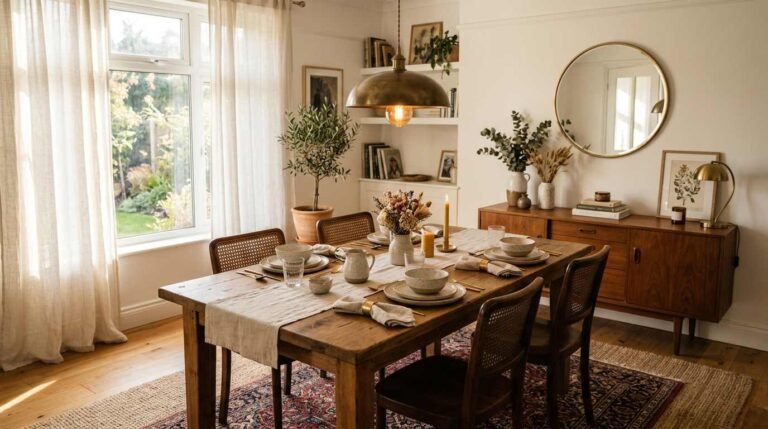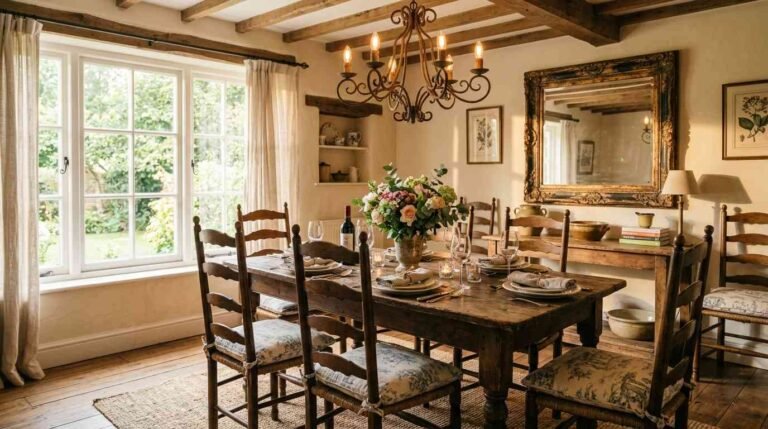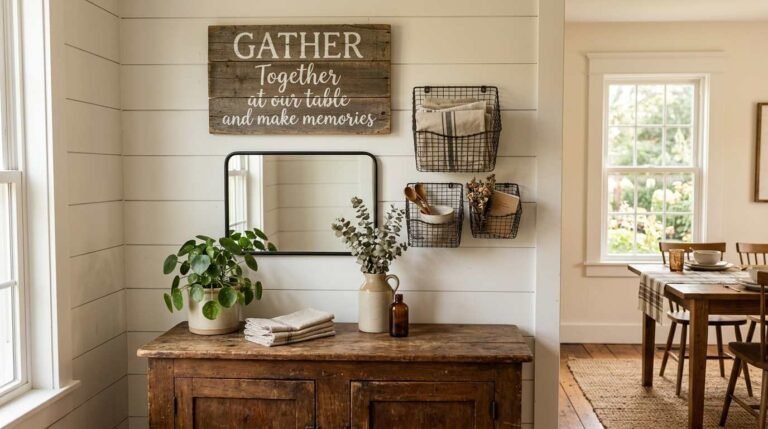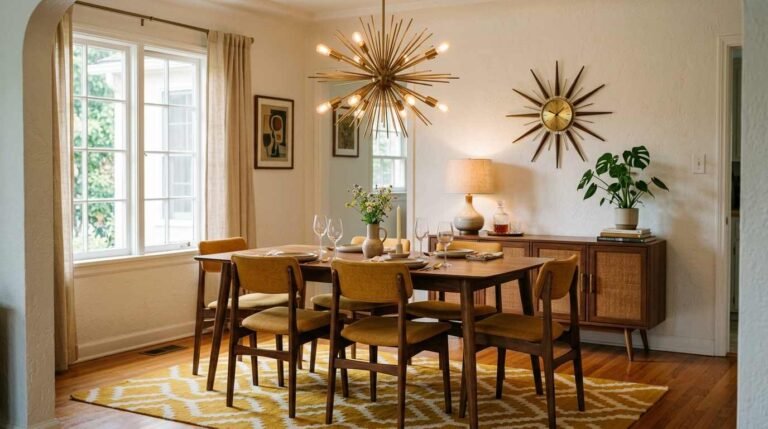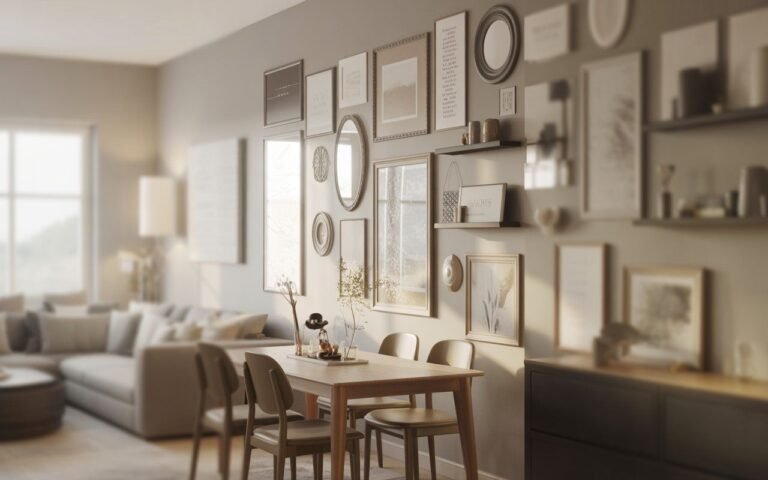
A sideboard pushed against the wall with nothing on top is one of the easiest things in a dining room to overlook. Sideboard decor dining room styling changes that completely, turning a flat, empty surface into one of the first things people notice when they walk into the room. Most sideboards sit underused simply because nobody’s taken ten minutes to actually style the top of them. I’ve tried rearranging one using only what was already sitting around the house, and the shift in how the whole room felt afterward surprised me more than I expected. This guide walks through 20 ways to style a sideboard, from layered trays and greenery to lighting, symmetry, and seasonal swaps. Save your favorites to Pinterest, and get ready to see that quiet piece of furniture in a whole new light.
1. Layered Tray Styling
- Groups small items into one tidy, intentional vignette
- Adds a defined base that anchors the whole display
- Makes cleaning and dusting considerably faster
- Works in wood, marble, or metal depending on the room’s style
- Keeps candles, bowls, or bottles from sliding around
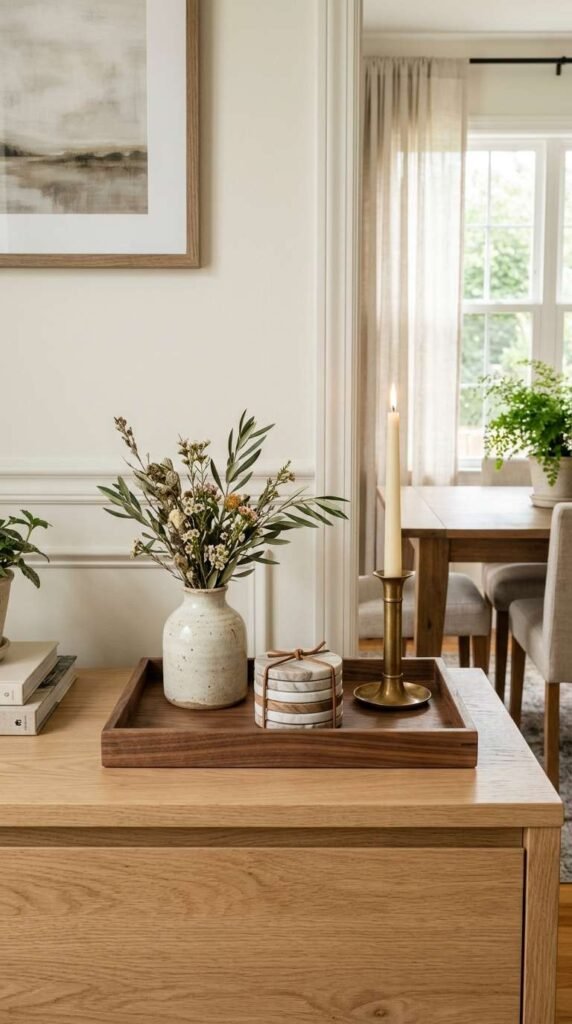
A tray does more organizational work on a sideboard than almost any other single item. Placing one beneath a cluster of candles, a small vase, or a stack of coasters groups everything into a single, intentional unit rather than letting objects scatter loosely across the surface. This is one of the simplest starting points for sideboard decor dining room styling, since a tray instantly makes a display look more deliberate, even before anything else gets added on top of it. Wood trays lean warm and casual, while marble or brass versions feel more polished and formal.
Layering a smaller tray on top of a larger one adds a bit of extra height and dimension without requiring any additional shopping. I’ve noticed that trays with a slight raised edge keep items from sliding when the sideboard gets bumped or when a drawer underneath is opened and closed. Lifting the whole grouping at once also makes dusting far quicker, since everything moves together rather than needing to be handled piece by piece every time the surface needs a wipe down.
2. Statement Mirror Above the Sideboard
- Bounces light across the room from a low, practical height
- Reflects whatever gets styled on the sideboard below
- Doubles the visual size of the display beneath it
- Suits nearly every dining room style and era
- Works especially well across from a window
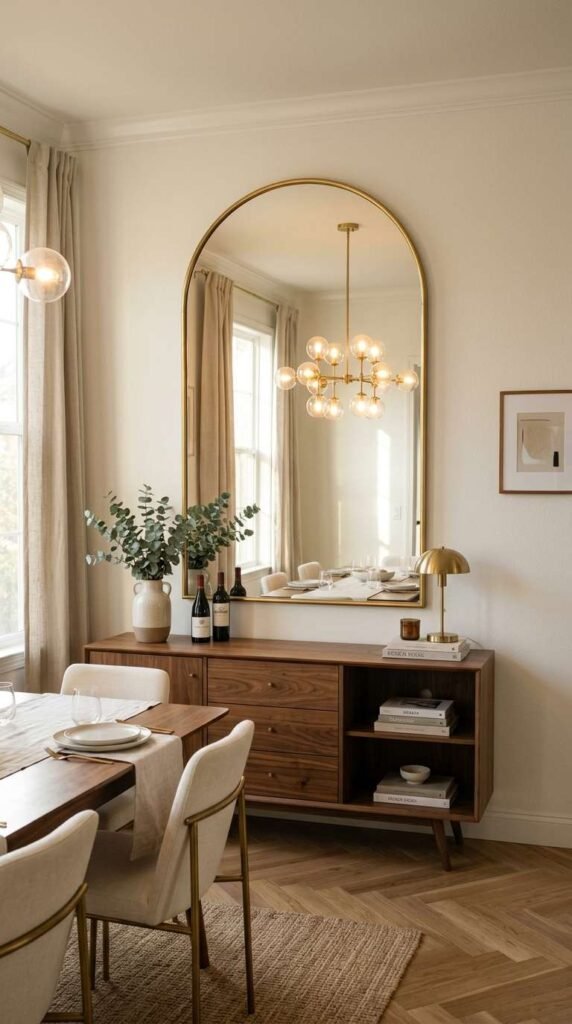
Hanging a large mirror directly above a sideboard accomplishes two things at once: it brightens the room and multiplies whatever decor sits on the surface below. A vase of flowers, a pair of candlesticks, or a simple lamp all appear doubled in the reflection, making even a modest arrangement look fuller and more considered. This pairing ranks among the more effective sideboard decor dining room ideas for exactly that reason, since one well-placed mirror does the visual work of adding an entire second layer of decor without requiring any extra purchases.
Sizing the mirror to roughly two-thirds the width of the sideboard keeps the two pieces feeling proportional rather than mismatched. I’ve found that positioning the mirror to reflect a window or a light fixture, rather than a blank wall, produces a noticeably brighter result throughout the day. Hanging the bottom edge about four to six inches above the sideboard’s surface keeps the whole arrangement feeling connected, like one cohesive vignette rather than two separate, unrelated elements sharing a wall.
3. Coffee Table Books as Height Anchors
- Adds instant height variation without buying new decor
- Uses books you likely already own
- Creates a sturdy base for smaller objects on top
- Works in nearly any color or style of binding
- Easy to swap out whenever the display needs refreshing
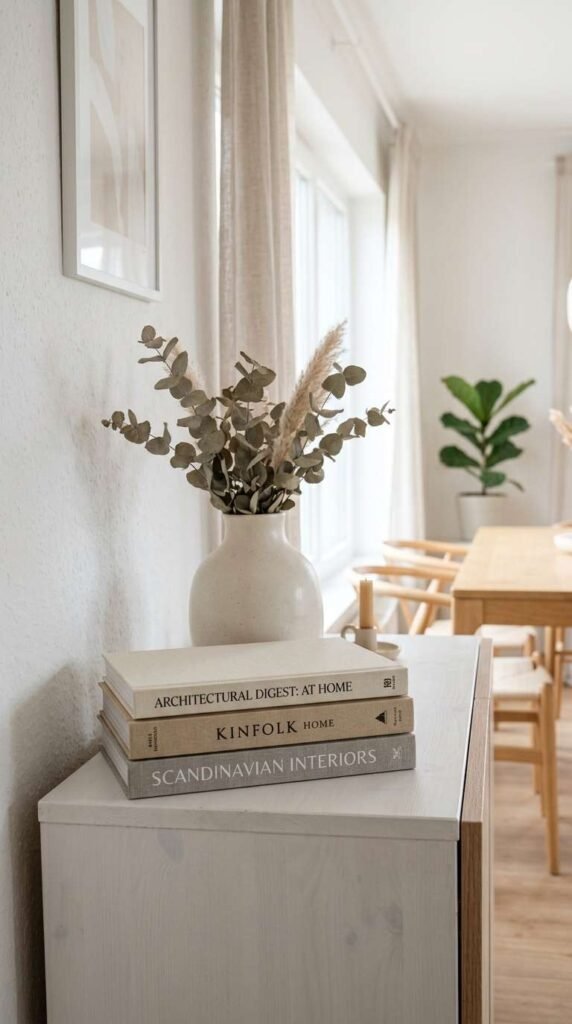
A stack of two or three coffee table books does more for a sideboard’s visual rhythm than people tend to expect. Placed flat with a small object resting on top, a candle, a vase, or a small sculpture, the books add height exactly where it’s needed, breaking up what might otherwise be a flat, uniform row of items across the surface. This trick works particularly well in sideboard decor dining room arrangements where nothing else on hand quite reaches the height needed to balance a taller lamp or mirror nearby.
Choosing books with a shared color palette, even if the subjects vary widely, keeps the stack looking intentional rather than like a random pile grabbed off a shelf. I’ve noticed that neutral-toned spines, cream, black, or muted earth tones, tend to blend more smoothly into a styled vignette than anything with a busy, colorful cover. Stacking from largest to smallest, bottom to top, also keeps the arrangement feeling stable and visually balanced rather than top-heavy or precarious.
4. Fresh Greenery for a Natural Touch
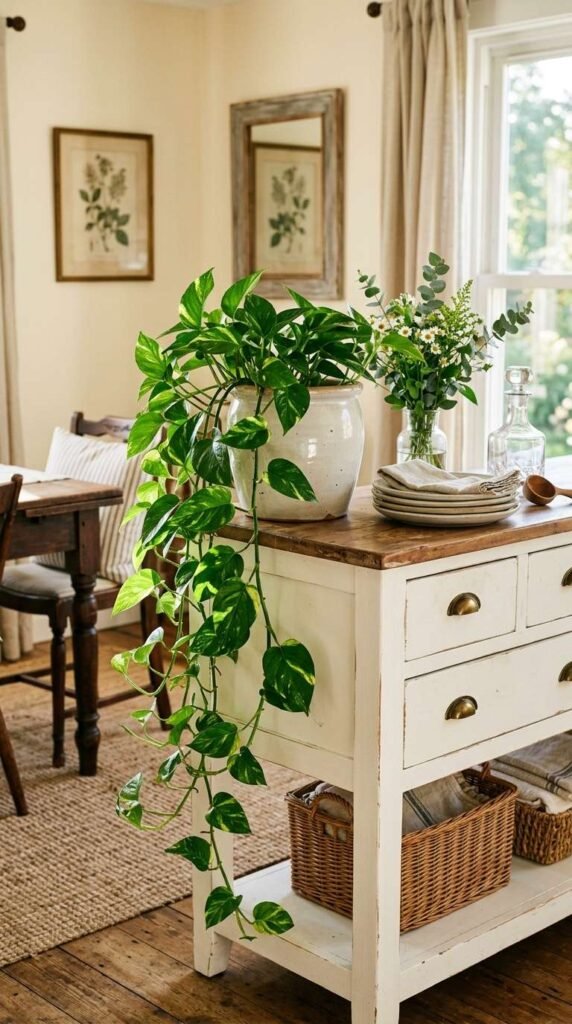
- Softens the hard surfaces of wood, glass, and metal nearby
- Adds color and life without much ongoing effort
- Works well in a simple vase or a low, wide bowl
- Brings a fresh, garden-inspired feel to the room
- Faux versions offer a nearly identical look with zero upkeep
A simple stem of greenery, whether a single eucalyptus branch or a small bunch of seasonal flowers, breaks up a sideboard that might otherwise feel entirely made of hard surfaces. The natural color and gentle movement of real stems add a softness that ceramic, glass, and polished wood alone can’t provide. This detail shows up often in sideboard decor dining room styling precisely because it’s such a small addition with a noticeably large visual payoff, bringing the whole display to life with very little effort or cost involved.
Trimming stems at an angle and changing the water every couple of days extends how long fresh greenery stays looking its best. I’ve found that a single oversized stem in a tall, narrow vase often looks more intentional than a full, busy arrangement crowding the rest of the sideboard. For anyone short on time or dealing with a room that gets little natural light, a well-made faux branch holds up visually just as well without requiring any ongoing care at all.
5. Cluster of Ceramic Vases
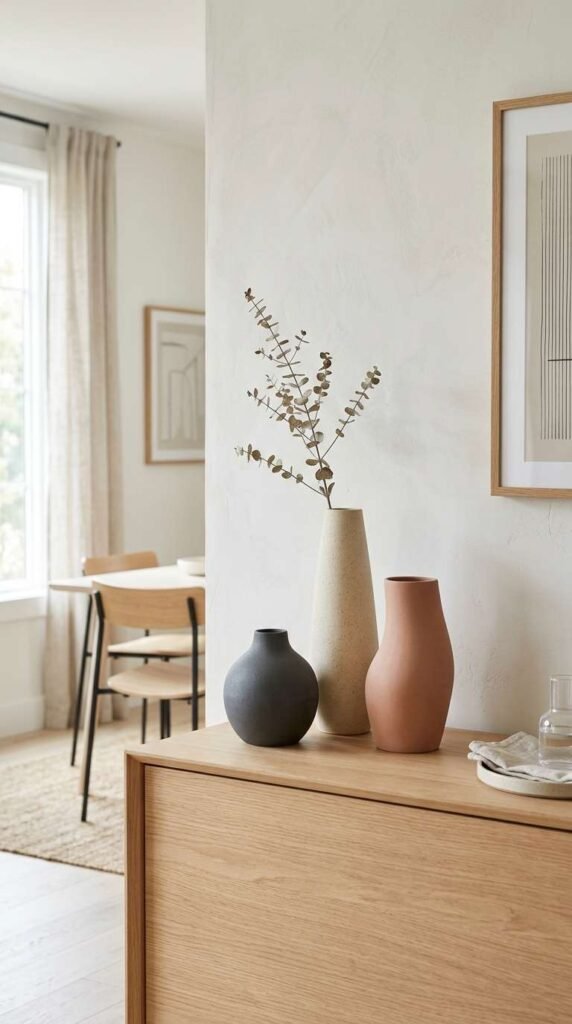
- Adds shape and texture without needing fresh flowers
- Works beautifully empty or lightly filled with stems
- Neutral tones suit nearly any sideboard color scheme
- Easy to rearrange for different occasions or seasons
- Affordable way to add visual interest to a bare surface
A small grouping of ceramic vases, varying slightly in height and shape, brings sculptural interest to a sideboard even when left completely empty. Matte finishes in white, cream, or soft terracotta tend to suit the widest range of dining room styles, letting the vases’ simple silhouettes do the visual work rather than relying on bold color or pattern. This idea works as one of the more flexible sideboard decor dining room options, since the same cluster can be restyled in minutes simply by adding or swapping out a single stem.
Grouping vases in odd numbers, three tends to work particularly well, creates a more natural, visually balanced arrangement than an even pairing. I’ve noticed that leaving at least one vase empty, rather than filling every single one with greenery, keeps the grouping feeling relaxed rather than overly staged. Varying the heights slightly within the cluster also adds a sense of movement across the sideboard’s surface that a row of identical vases wouldn’t achieve on its own.
6. Task Lighting with a Table Lamp
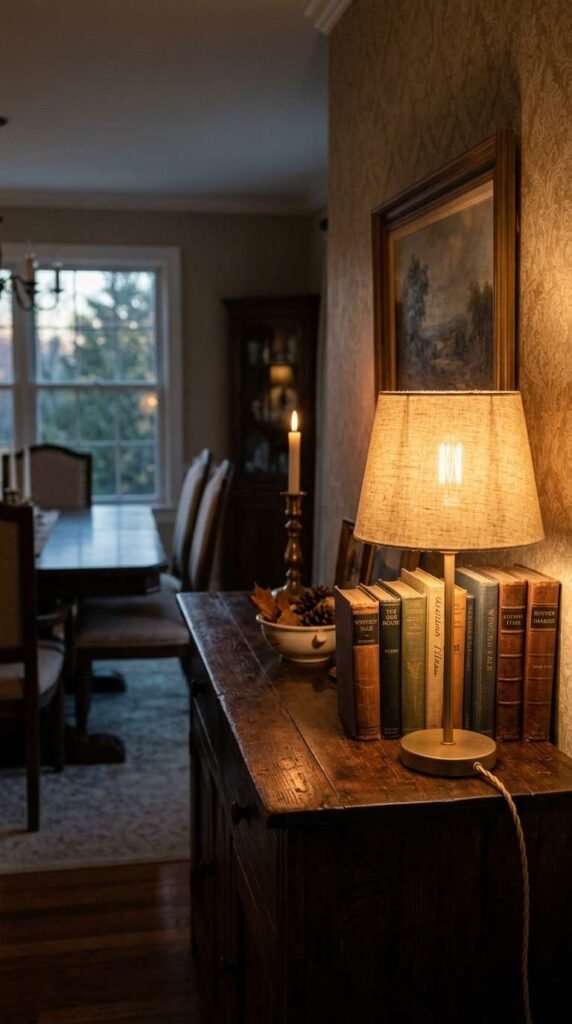
- Adds warm, functional light without overhead glare
- Doubles as a decorative object even when switched off
- Works well paired with a lampshade that softens the glow
- Brings ambiance to evening meals and gatherings
- A practical addition in rooms lacking sufficient overhead lighting
A small table lamp placed on one end of a sideboard adds both function and warmth that overhead lighting alone often can’t provide. In rooms where the main light source sits far from the sideboard itself, a lamp fills in that gap, casting a softer, more flattering glow across the surface during evening meals. This addition rounds out many sideboard decor dining room ideas nicely, since the lamp serves a genuine practical purpose while still contributing to the overall styled look of the display, even when it’s switched off during the day.
Choosing a lampshade in linen, rattan, or a simple fabric filters the light into something gentler than a bare bulb would produce. I’ve tried placing a lamp slightly off-center, toward one end of the sideboard, which tends to look more natural than centering it directly in the middle of the surface. Pairing the lamp with a dimmer-compatible bulb allows the light to shift from brighter daily use to a softer glow suited to dinner parties or quiet evenings at home.
7. Symmetrical Styling for Balance
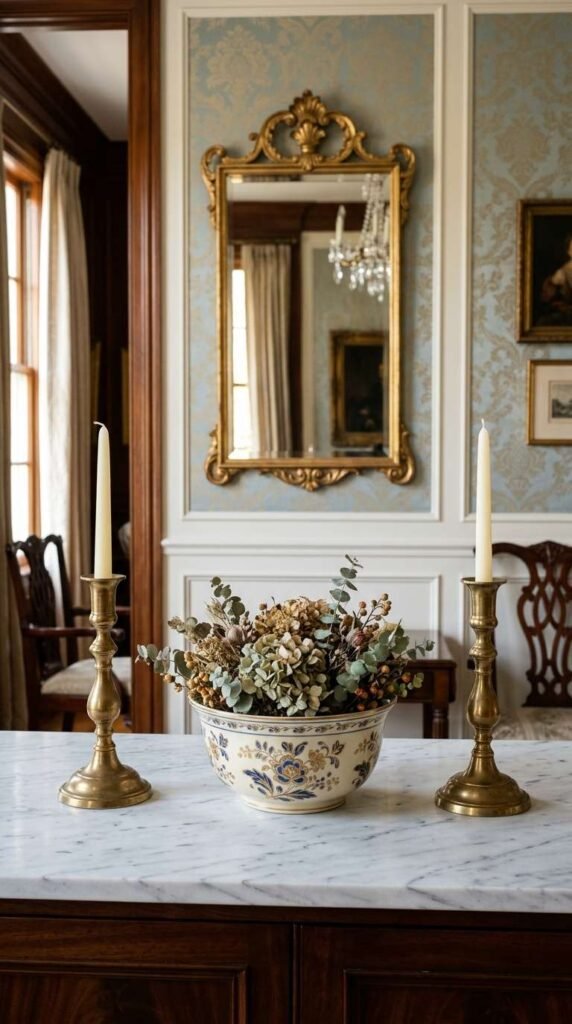
- Creates instant visual calm and order
- Easy formula that works without any design background
- Suits more traditional and formal dining rooms especially well
- Works for both the sideboard top and the wall above it
- Feels polished from nearly every angle in the room
Placing matching lamps, candlesticks, or vases on either side of a central object, a mirror, a piece of art, or simply a taller vase, creates an arrangement that feels instantly calm and deliberate. This symmetrical approach suits sideboard decor dining room styling particularly well in more traditional spaces, where a sense of order and balance tends to feel most at home. The formula itself requires no special design training, just a willingness to measure carefully and mirror one side onto the other.
Finding the sideboard’s actual center point with a tape measure, rather than estimating by eye, helps avoid a subtly off-center arrangement that can be surprisingly noticeable once everything is in place. I’ve found that varying the texture or material slightly between the matched pairs, say, one ceramic vase style on each side rather than two identical porcelain ones, keeps the symmetry from feeling too rigid or sterile. A single centered object anchoring the whole arrangement ties the two matching sides together into one cohesive display.
8. Seasonal Decor Rotation
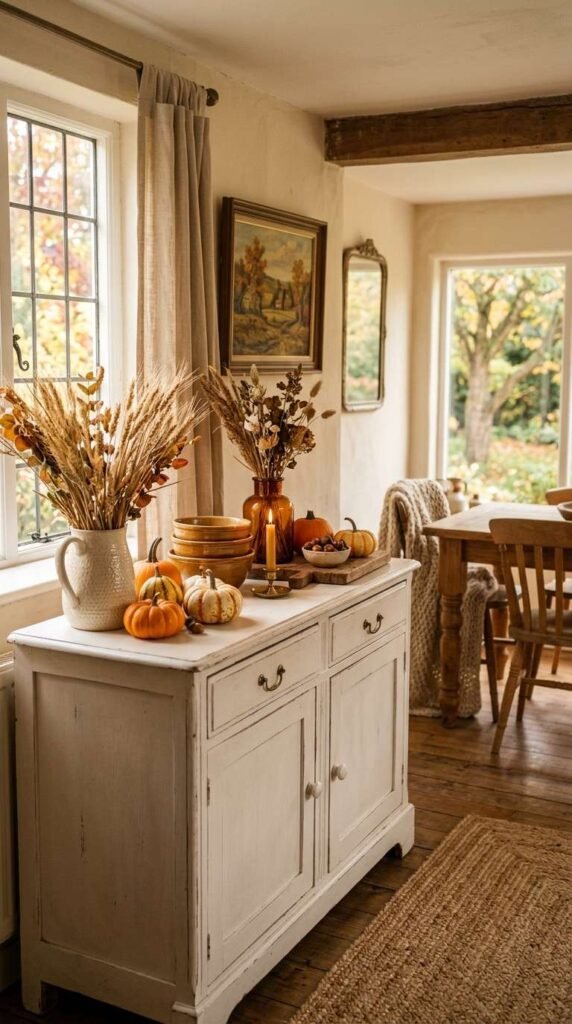
- Keeps the sideboard feeling fresh throughout the year
- Requires only small, low-cost swaps
- Uses the same base pieces with rotating seasonal accents
- Makes the display feel like an active part of the home
- Simple enough to complete in under an hour
A sideboard doesn’t need an entirely new look every few months, just a handful of small, seasonal swaps layered on top of the same foundational pieces. A few dried wheat stems in fall, a sprig of greenery around the holidays, or a simple vase of fresh tulips in spring keeps the display feeling current without requiring a full restyle each time. This approach to sideboard decor dining room styling keeps the effort minimal while still giving the surface a reason to feel new throughout the year rather than fading into the background.
Storing seasonal pieces in a single labeled bin makes the actual swap take only a few minutes rather than becoming its own weekend project. I’ve found that changing just one or two items, rather than overhauling the entire display, is usually enough to make the shift genuinely noticeable. A single seasonal candle scent or a small themed object tucked among the everyday pieces does more work than people tend to expect from such a minor addition, making it easy to refresh luxury modern dining room decor ideas to try now without losing the room’s elegant, polished appearance.
9. Vintage Object Display
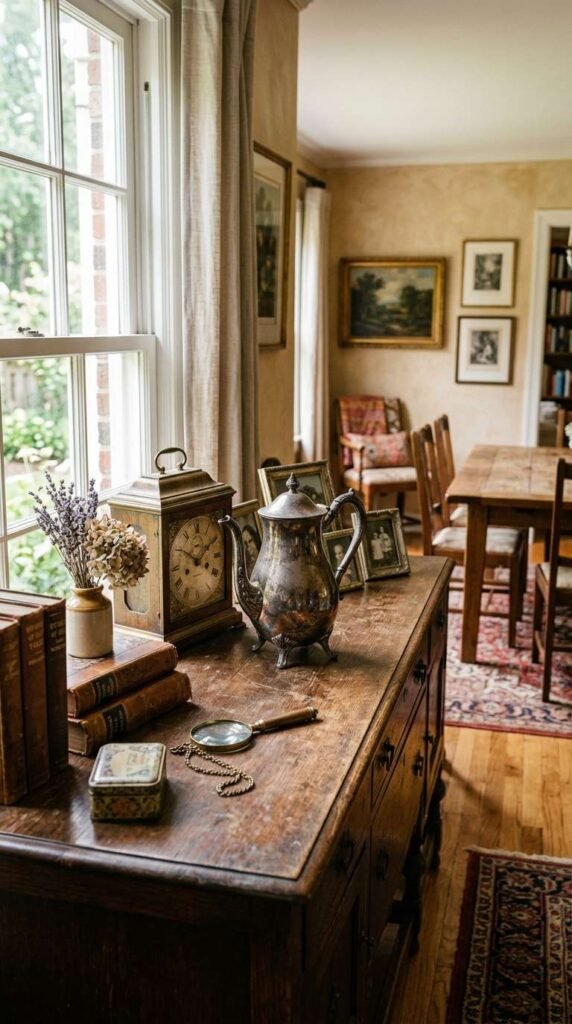
- Adds genuine character and a sense of collected history
- Works beautifully mixed with newer, more modern pieces
- Sources affordably from thrift stores and estate sales
- Gives sentimental or inherited items a place to be seen
- Sparks conversation among guests during gatherings
A few vintage finds, an old brass candlestick, a small antique box, a chipped but charming ceramic dish, bring genuine character to a sideboard that newer, store-bought decor often lacks. Mixing these pieces alongside more contemporary items keeps the display from feeling like a themed antique shop while still adding the kind of depth and story that makes a room feel personal. This blend works particularly well within sideboard decor dining room styling, since the sideboard itself is often one of the more traditional pieces in a dining room already.
Thrift stores, estate sales, and flea markets remain reliable, affordable sources for this kind of gradual collection. I’ve noticed that keeping roughly half the display modern and half vintage or inherited prevents either style from completely taking over the arrangement. Placing a particularly meaningful piece somewhere it can stand out on its own, rather than crowding it among several other objects, gives it the visual weight and attention it genuinely deserves.
10. Woven Basket for Hidden Storage
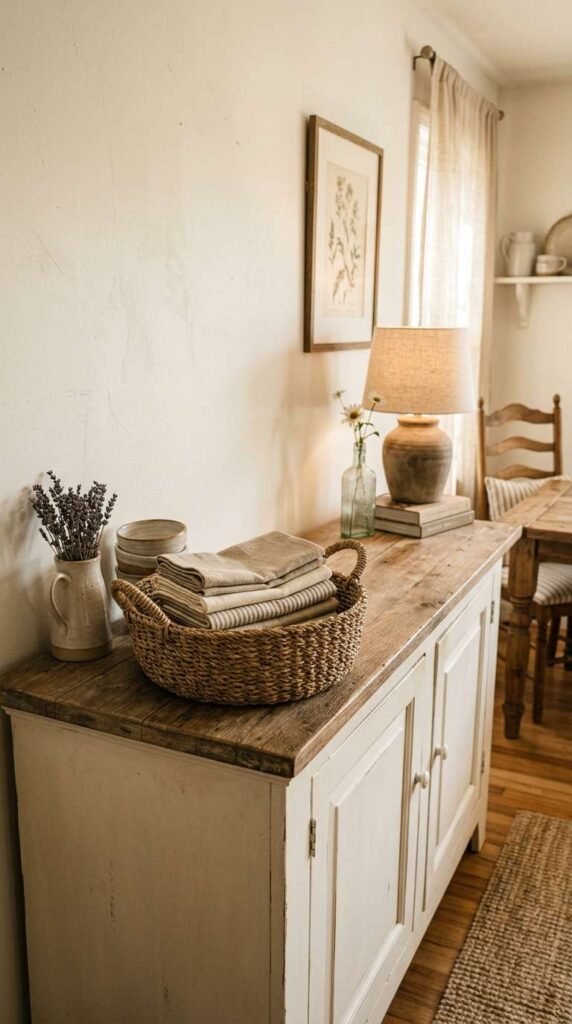
- Hides less attractive items without sacrificing style
- Adds warm, natural texture to a sideboard full of hard surfaces
- Keeps linens or small items organized and out of sight
- Works with nearly any decor style or color palette
- Simple and inexpensive to source
Not everything that lives on or near a sideboard needs to be on full display, and a woven basket offers a place to tuck away table linens, extra candles, or small clutter without disrupting the overall look. The natural texture of seagrass or rattan also softens a surface that might otherwise be entirely made up of hard ceramic, glass, and polished wood. This small addition to sideboard decor dining room ideas solves a genuine organizational problem while still contributing a warm, intentional detail that complements eclectic home decor through its mix of natural textures, practical storage, and decorative charm.
Measuring the sideboard’s depth before buying a basket helps avoid choosing one that juts out awkwardly past the furniture’s edge. I’ve seen this idea work particularly well when a basket sits toward one end of the sideboard, balanced visually by a taller lamp or vase arrangement on the opposite side. A simple fabric tag or label on the basket makes sorting straightforward, keeping the hidden storage genuinely functional rather than just another catch-all for random items.
11. Layered Rug Beneath the Sideboard
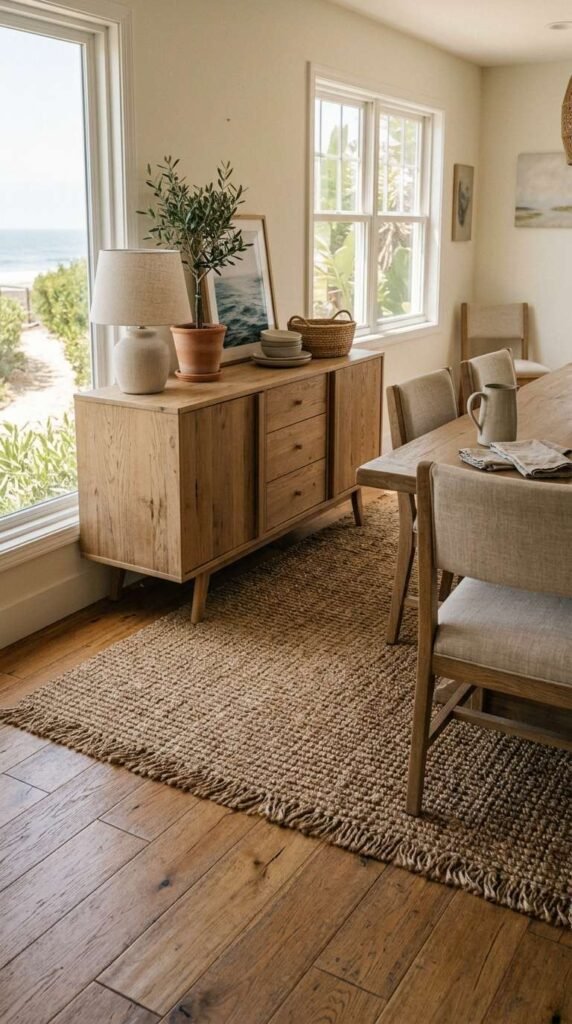
- Grounds the furniture with added warmth and texture
- Defines the sideboard area within an open dining space
- Softens hard flooring underfoot nearby
- Adds pattern and color at floor level
- Works especially well in rooms with hardwood or tile floors
A small rug placed beneath or just in front of a sideboard adds a layer of warmth and texture that often gets overlooked in favor of focusing purely on the furniture’s surface. This detail helps define the sideboard’s area as its own distinct zone, particularly useful in open-concept dining rooms where furniture groupings can otherwise blend together without clear boundaries. Within sideboard decor dining room planning, this floor-level addition rounds out the display from top to bottom rather than stopping attention purely at tabletop height.
Choosing a rug with a flatter pile keeps furniture from sinking unevenly into a thicker, plusher weave over time. I’ve noticed that a patterned rug in this spot tends to hide scuffs and foot traffic marks better than a solid, pale color would in a high-use area of the room. Sizing the rug so it extends a few inches beyond the sideboard’s width on each side creates a more intentional, finished look than a rug that stops exactly at the furniture’s edges.
12. Gallery Wall Above the Sideboard
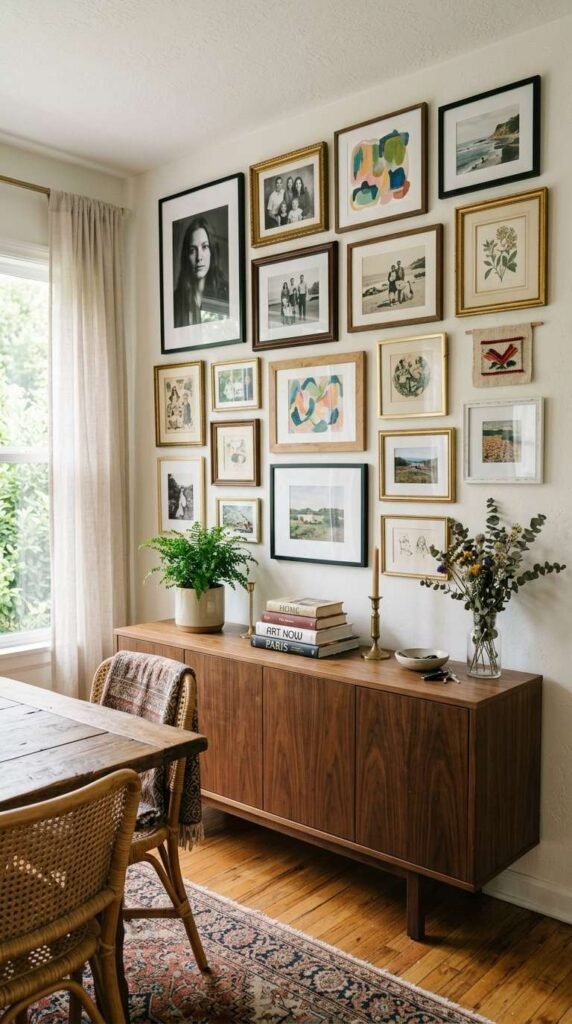
- Fills the wall with personality rather than one single piece
- Mixes frames, mirrors, and small objects for variety
- Draws the eye upward, balancing the sideboard’s horizontal weight
- Builds gradually from thrifted or personal finds
- Adds color and texture without a large single purchase
A cluster of framed art, mirrors, and the occasional small object arranged above a sideboard fills the wall with far more personality than a single piece typically manages alone. The mix of frame styles and sizes adds visual interest while also balancing the sideboard’s horizontal weight with some genuine height and verticality above it. This approach to sideboard decor dining room styling tends to feel especially personal, since a gallery wall usually comes together slowly, piece by piece, rather than arriving as one coordinated purchase.
Laying every piece out on the floor first, then adjusting the arrangement until it feels balanced, saves considerable time and unnecessary wall damage from repositioning. I’ve found that keeping about two to three inches of space between each frame creates the cleanest, most intentional spacing across the whole grouping. Centering the arrangement loosely above the sideboard, rather than strictly above the wall’s center, keeps the gallery feeling connected to the furniture beneath it.
13. Sculptural Bookends
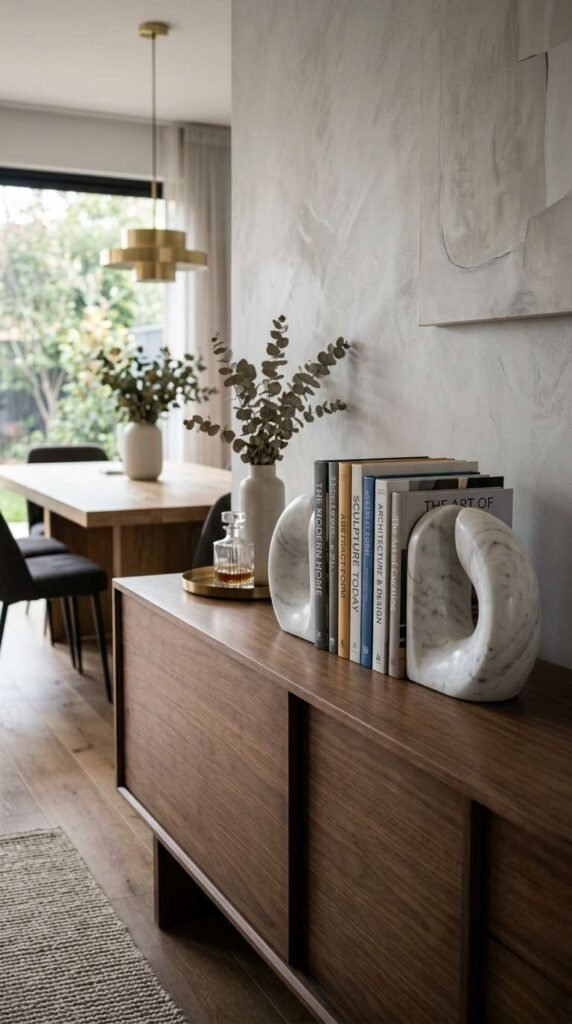
- Adds structure and function to a stack of books
- Works as a decorative object even without any books in place
- Available in brass, marble, wood, or ceramic finishes
- Suits both minimalist and more traditional sideboard styles
- Doubles as a subtle focal point on the surface
A pair of sculptural bookends does double duty on a sideboard, holding a small stack of books upright while also functioning as a genuine decorative object in its own right. Marble, brass, or carved wood bookends in an interesting shape, geometric, animal-inspired, or simply abstract, add a bit of artistic flair that a plain stack of flat books alone wouldn’t achieve. This detail fits naturally into sideboard decor dining room styling for anyone who already keeps a small reading collection nearby but wants it to look more intentional than functional alone.
Choosing bookends in a material that echoes another metal or finish already present in the room ties the piece visually into the rest of the space. I’ve noticed that bookends with an interesting silhouette can actually stand alone as sculpture, even without any books sandwiched between them, making this a flexible piece that works whether or not a reading collection happens to be nearby. Pairing them with just two or three books keeps the whole grouping feeling curated rather than like an overflowing shelf relocated to the sideboard.
14. Candlestick Pairing
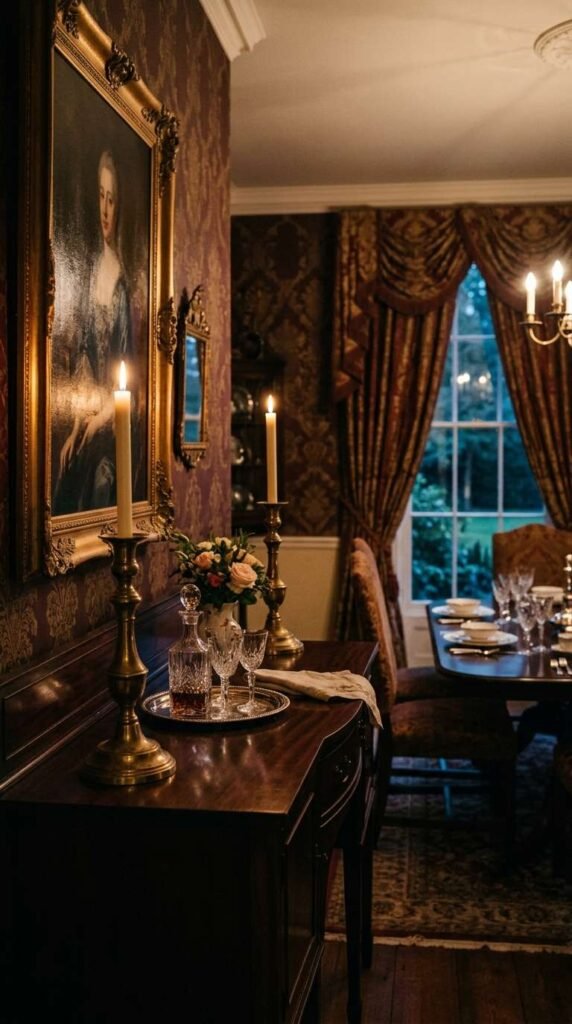
- Adds warm, flickering light and classic elegance
- Works beautifully in matched pairs or varied odd groupings
- Suits both formal and casually styled dining rooms
- Brass, silver, and ceramic all suit different overall looks
- An affordable way to add height and atmosphere
A pair of candlesticks, placed on either side of a centered object or grouped together in odd numbers, brings both height and a warm, flickering ambiance to a sideboard’s surface. Brass and silver finishes lean more formal and traditional, while a simple ceramic or wood candlestick suits a more relaxed, casual dining room. This detail consistently ranks among the more affordable sideboard decor dining room additions, since even a secondhand pair found at a thrift store can deliver genuine elegance once lit during an evening meal or gathering.
Varying the heights slightly when grouping several candlesticks together adds visual rhythm rather than a flat, uniform row. I’ve found that unscented candles work best in a dining area, since scented versions can occasionally compete with the aromas of an actual meal being served nearby. Keeping candles away from anything flammable, like nearby curtains or stacked linens, remains an important safety consideration whenever real flame is involved in a styled display.
15. Personal Photo Display
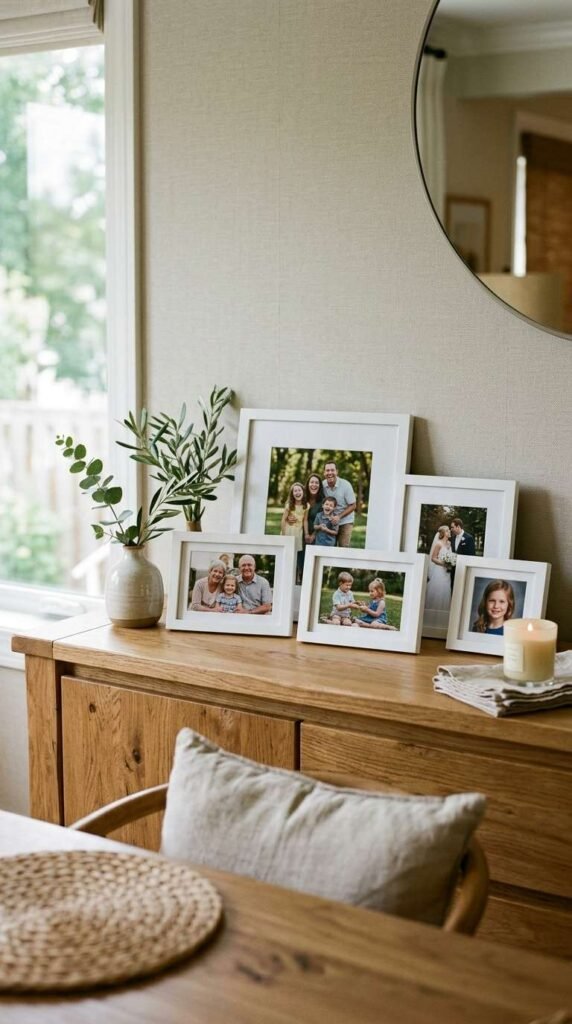
- Adds genuine warmth and personality to the surface
- Works well in a small cluster of varied frame sizes
- Brings meaningful memories into the dining room’s daily view
- Suits both formal and casual sideboard styling
- Easy to update as new photos and memories accumulate
A small cluster of framed photographs, family portraits, travel snapshots, or a candid moment from a memorable gathering, brings a layer of genuine personality to a sideboard that purely decorative objects can’t replicate. This detail works particularly well within sideboard decor dining room styling for anyone wanting the space to feel distinctly personal rather than like it was styled entirely from a catalog. Mixing a few different frame sizes and finishes keeps the display from feeling too matched or sterile.
I’ve noticed that black and white photography tends to blend more seamlessly into a varied styled arrangement than color photos, since the absence of competing colors keeps the overall look calmer and more cohesive. Leaning a few frames against the wall, rather than standing every single one upright, adds a relaxed, layered quality to the display. Updating even just one photo every so often keeps the arrangement feeling current and genuinely reflective of ongoing family life rather than frozen at a single point in time.
16. Glassware and Barware Styling
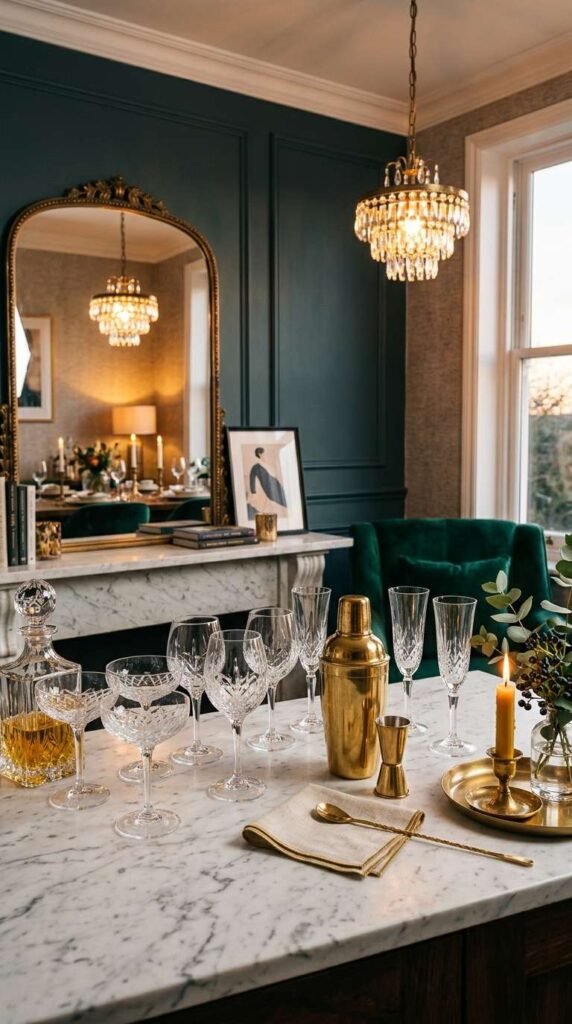
- Turns everyday glassware into part of the decor
- Adds sparkle and shine, especially near natural light
- Works well arranged on a tray for easy serving
- Suits sideboards doubling as a casual entertaining station
- Makes hosting feel more organized and effortless
Arranging a small collection of glassware, wine glasses, a decanter, a few interesting tumblers, turns a sideboard into both a decorative display and a functional entertaining station. The reflective quality of glass catches available light beautifully, adding a bit of sparkle to the surface that solid objects alone don’t provide. This styling approach suits sideboard decor dining room ideas especially well in smaller homes without room for a separate bar cart, letting the sideboard take on that secondary function without requiring any additional furniture.
Keeping the glassware contained on its own tray prevents the collection from spreading across the entire surface and crowding out other decorative elements. I’ve tried this setup for casual gatherings, and having everything already arranged and ready genuinely speeds up the process of serving drinks to guests. A small dish of citrus or cocktail garnishes placed nearby adds a finishing touch without requiring much additional space on an already styled surface.
17. Textured Table Runner
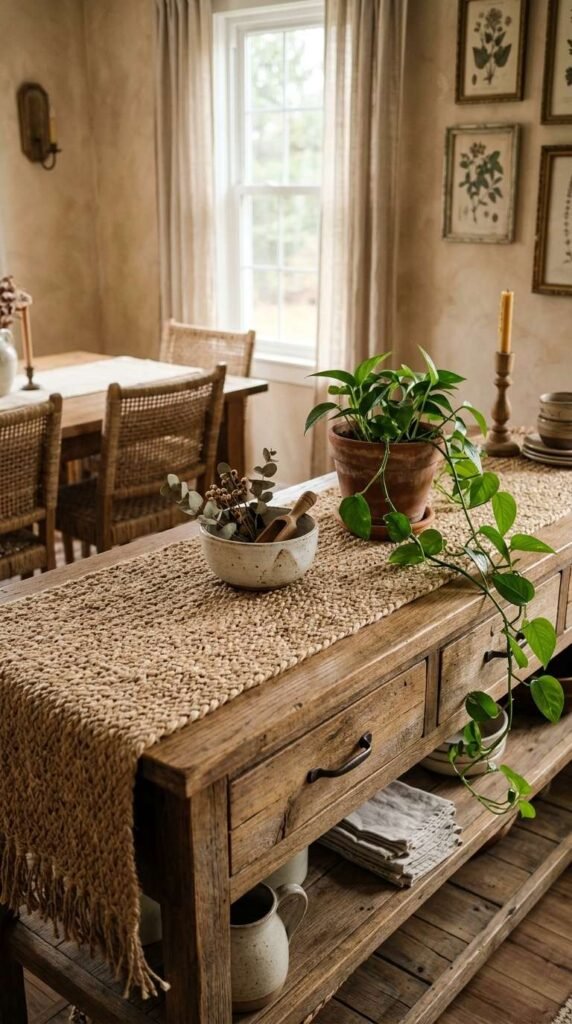
- Adds a soft layer of texture beneath other decor
- Protects the sideboard’s surface from scratches and spills
- Works in linen, woven, or embroidered styles
- Easy to swap seasonally for a quick refresh
- Ties the whole display together visually
A runner laid across the length of a sideboard adds a soft textural base that other decor pieces can be arranged on top of, much like a tray does on a smaller scale. Linen, woven jute, or a lightly embroidered fabric all suit different overall styles, and the runner itself protects the surface beneath from scratches or the occasional water ring left by a vase. This foundational layer rounds out many sideboard decor dining room arrangements nicely, giving the display a sense of cohesion that objects placed directly on bare wood sometimes lack.
Choosing a runner slightly shorter than the sideboard’s total width, rather than one that hangs significantly past the edges, tends to look more intentional and tailored to the piece. I’ve found that a neutral runner works best as a flexible base, since it doesn’t compete with whatever colors or patterns appear in the vases, candlesticks, or art displayed on top. Swapping the runner seasonally, heavier texture for winter, lighter linen for summer, offers an easy way to refresh the whole display without touching any other element.
18. Asymmetrical Vignette Styling
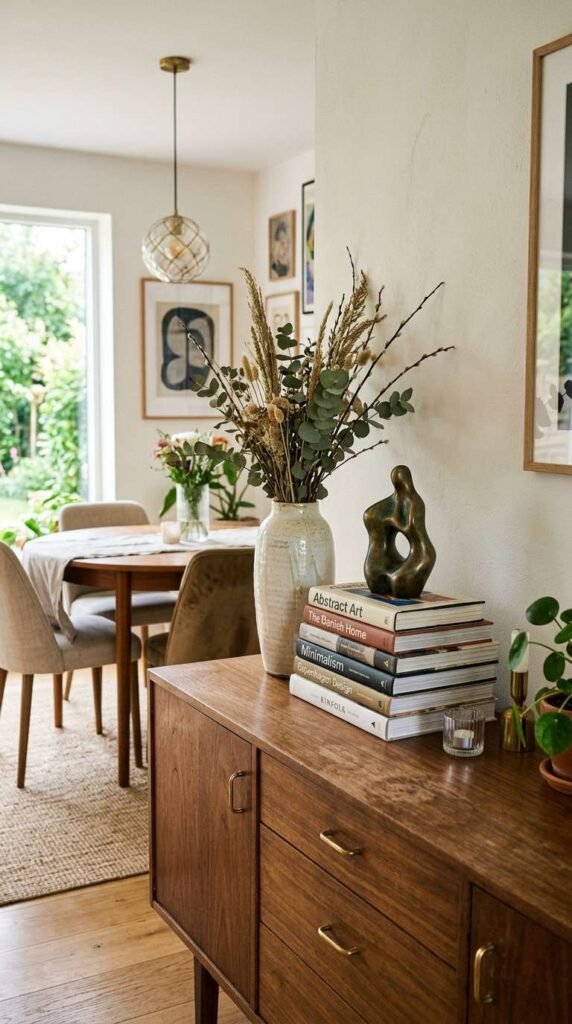
- Creates a relaxed, collected feel rather than strict order
- Works well with objects of varying heights and shapes
- Suits more casual or eclectic dining room styles
- Adds visual movement across the sideboard’s surface
- Easier to achieve than it might initially appear
Rather than mirroring objects perfectly on either side, an asymmetrical arrangement groups items of varying height and shape in a loose, organic cluster that feels relaxed rather than formally structured. A tall vase positioned slightly off to one side, balanced by a shorter stack of books and a small sculptural object nearby, creates visual movement across the sideboard’s surface. This looser approach suits sideboard decor dining room styling for anyone drawn to a more casual, collected feel rather than the formality that strict symmetry often conveys.
Building the arrangement in a loose triangle, tallest item anchoring one side with shorter pieces stepping down toward the other, tends to look more natural than scattering objects without any underlying structure at all. I’ve noticed that odd numbers, particularly groups of three or five, read as more intentional than pairs within this kind of asymmetrical setup. Leaving a bit of open space on one end of the sideboard also lets the eye rest, preventing the entire surface from feeling equally busy from end to end.
19. Color-Coordinated Accessories
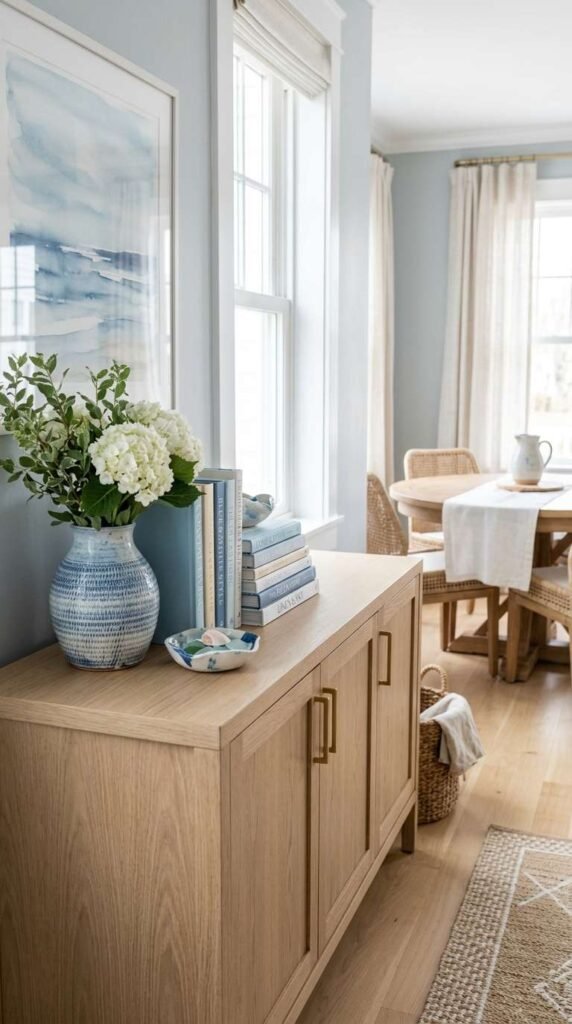
- Creates instant visual calm across the sideboard’s surface
- Uses decor you likely already own
- Makes even mismatched objects feel cohesive
- Suits rooms with an established color scheme nearby
- Costs nothing extra to try
Sorting a sideboard’s decorative objects by color, rather than by type or origin, is one of the fastest ways to make an otherwise mismatched collection feel considerably more polished. Grouping every cream-toned item together, or every piece with a touch of gold, lets the eye move smoothly across the surface instead of jumping between clashing tones. This approach works well as a starting point for sideboard decor dining room styling, since it requires no new purchases, just a willingness to rearrange what’s already on hand throughout the house.
A limited palette, generally two main colors plus one accent, tends to read as more deliberate than an arrangement pulling from every color available. I’ve noticed that repeating a single accent color, say, a touch of brass in a candlestick, a frame, and a small dish, ties an otherwise varied collection together even when the individual pieces come from entirely different sources and styles. This small bit of planning makes a noticeable difference in how finished the final display actually looks.
20. Layering Height with Varying Object Sizes
- Creates visual rhythm rather than a flat, uniform row
- Prevents the display from feeling monotonous
- Works with objects you likely already own
- Suits nearly any style of sideboard arrangement
- A simple principle that elevates nearly any styling choice
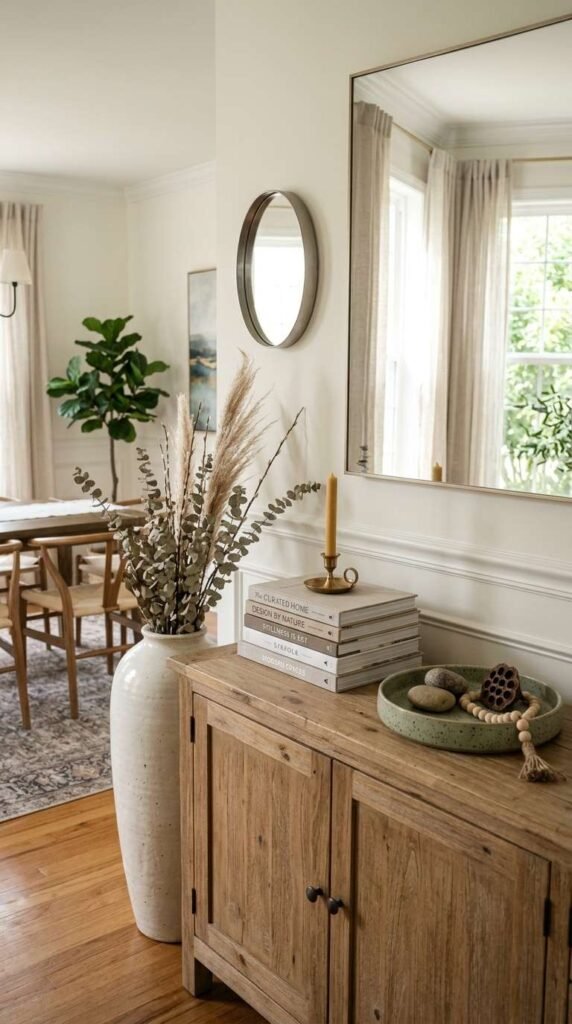
Perhaps the single most useful principle in sideboard decor dining room styling is simply varying the height of whatever gets placed on the surface. A row of objects all roughly the same size reads as flat and monotonous, no matter how beautiful each individual piece might be on its own. Mixing a tall lamp, a mid-height stack of books, and a low, wide bowl creates a sense of rhythm and visual interest that a uniform lineup simply can’t achieve, regardless of how carefully color and material are otherwise coordinated.
I’ve found that arranging items in a loose zigzag of heights, rather than organizing strictly from tallest to shortest in one direction, tends to feel more natural and less rigidly staged. Stepping back periodically while arranging a display helps catch any awkward gaps or overly even spacing that’s harder to notice up close. This single habit, simply paying attention to height variation, elevates nearly every other styling idea covered throughout this list, regardless of which specific objects end up on the sideboard.
FAQs
1. How do I style a sideboard in my dining room?
Start with a base layer like a tray or runner, then build height using a mix of taller and shorter objects, a lamp, a vase, a stack of books. Keep the overall grouping to two or three main items plus a few smaller accents for balance.
2. What should I put above my sideboard?
A large mirror, a gallery wall, or a single piece of art all work well. Choose something sized to roughly two-thirds the width of the sideboard for the most proportional, balanced look above the furniture.
3. How do I keep my sideboard from looking cluttered?
Edit down to a few meaningful pieces rather than displaying everything at once. Leave some open space on the surface, and group smaller items on a tray to keep the overall arrangement feeling intentional rather than scattered.
4. What is the best way to add height to a sideboard display?
Stack coffee table books beneath a smaller object, or pair a taller lamp or vase with shorter items nearby. Varying the heights across the display creates visual rhythm rather than a flat, uniform row.
5. Should I use symmetrical or asymmetrical styling on my sideboard?
Symmetrical styling suits more formal, traditional dining rooms, while asymmetrical arrangements feel more relaxed and collected. Either approach works well, so choose based on the overall mood you want the room to convey.
6. How can I add storage to my sideboard display?
A woven basket tucked onto the surface or inside an open shelf hides linens or small clutter without disrupting the styled look. This keeps the display both functional and visually tidy at the same time.
7. What lighting works best for a sideboard?
A small table lamp adds warm, functional light, especially in rooms where overhead lighting doesn’t reach the sideboard area well. Pairing it with a dimmer-compatible bulb allows the glow to shift for different occasions.
8. How often should I update my sideboard decor?
Small seasonal swaps every few months keep the display feeling fresh without requiring a full restyle. Changing just one or two items, like a candle or a vase of seasonal stems, is usually enough to make a noticeable difference.
9. Can I display personal items on my sideboard?
Yes, framed photos, inherited objects, or travel finds add genuine warmth and personality. Mixing a few personal pieces with more neutral decor keeps the display feeling both styled and authentically personal.
10. What is the easiest sideboard styling trick for beginners?
Varying the height of displayed objects is the simplest, most effective trick available. Even without any other styling knowledge, mixing tall, medium, and short items instantly makes a sideboard look more considered and complete.
Conclusion
A sideboard holds far more styling potential than its quiet, often-overlooked presence suggests. From a simple layered tray to a full gallery wall above it, these sideboard decor dining room ideas show that a little intention transforms a flat, empty surface into one of the room’s most noticeable features. I’ve seen how something as small as adding a lamp or grouping a few vases by height can completely shift how a sideboard feels within minutes. Save this list on Pinterest, pick one idea to try this week, and share it with anyone else whose sideboard has been quietly waiting for a little attention.