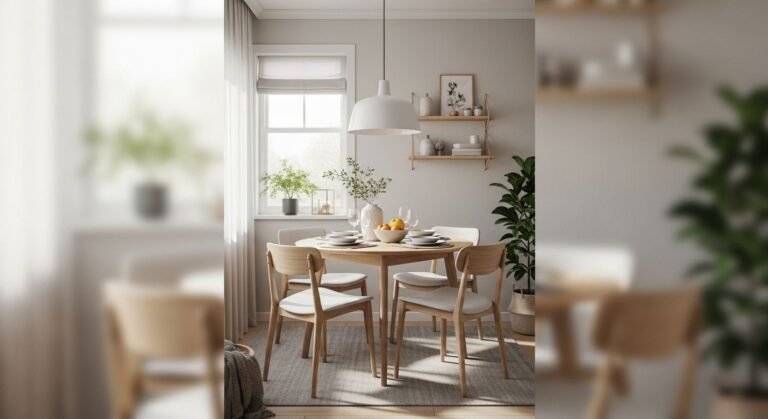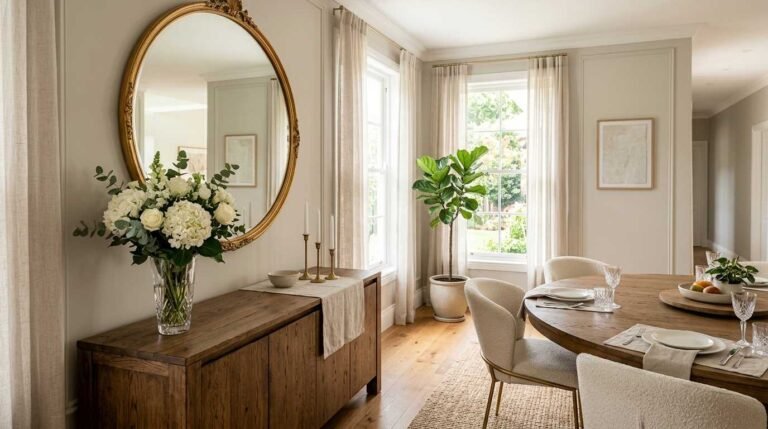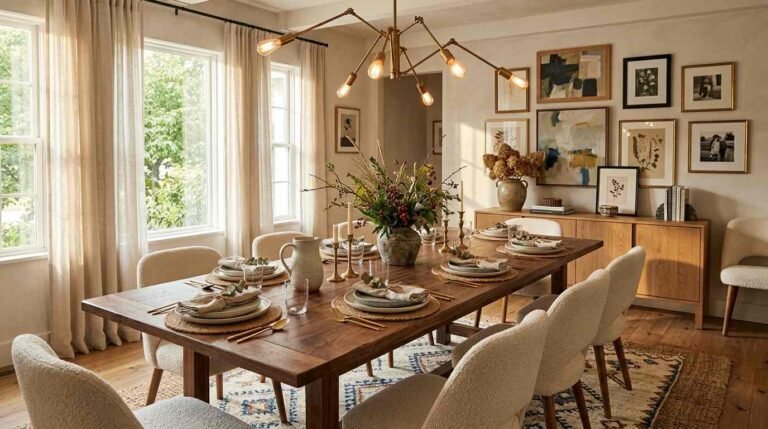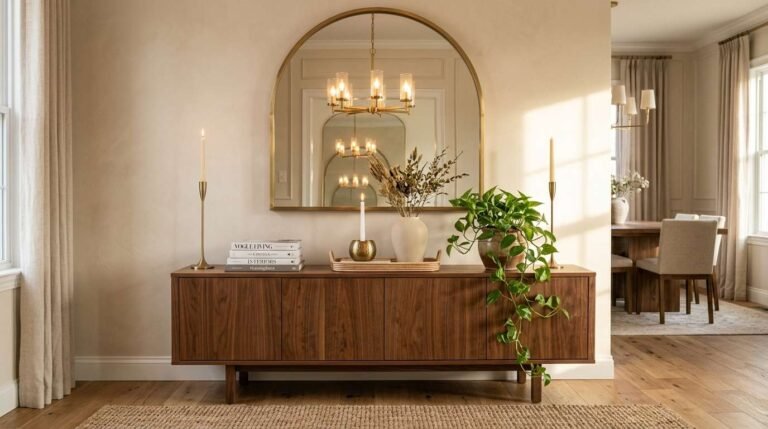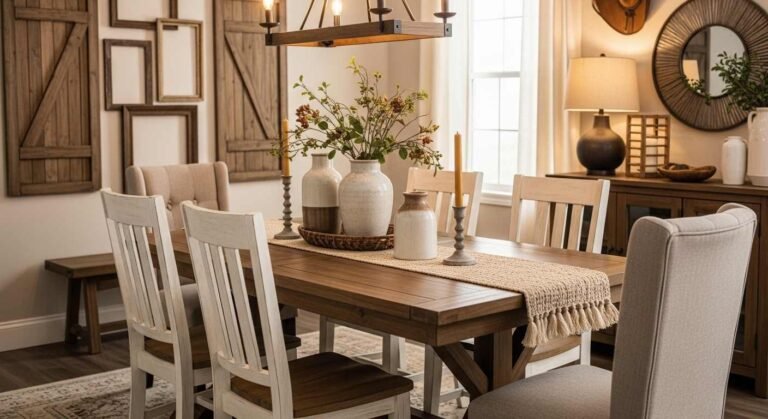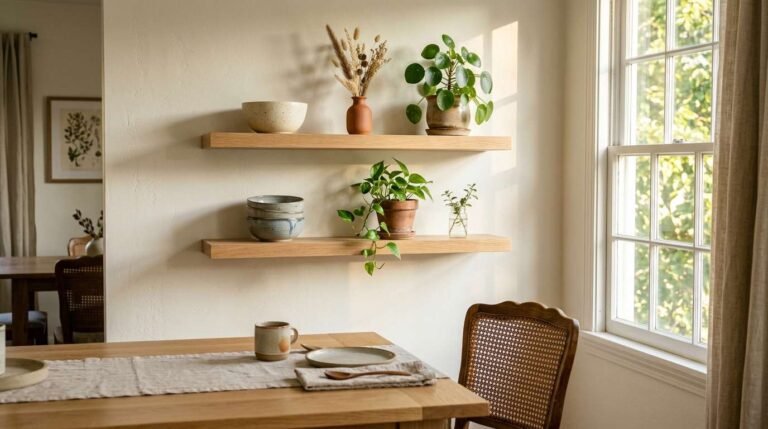
There’s a reason mid century style never really fades, it just feels right, decade after decade. Mid century dining room decor leans on warm wood tones, sculptural shapes, and a confident touch of color to create a space that feels both nostalgic and genuinely current. Many dining rooms miss the mark on this style simply because they lean too far into either strict vintage reproduction or scattered, mismatched pieces that don’t share a common thread. In my experience, the rooms that pull this look off best usually start with one strong anchor piece, a teak table or a sculptural light fixture, and build outward from there. This guide covers 24 ideas, from tapered leg chairs to a gallery wall of retro prints, that bring genuine mid century character into everyday use. Save your favorites to Pinterest and start building a dining room with timeless, confident style.
1. Teak Wood Dining Table
- Anchors the room with warm, honey-toned wood
- Carries the clean, tapered lines central to the style
- Works beautifully with both vintage and newer chairs
- Durable enough to last for decades with proper care
- A true investment piece that defines the whole room
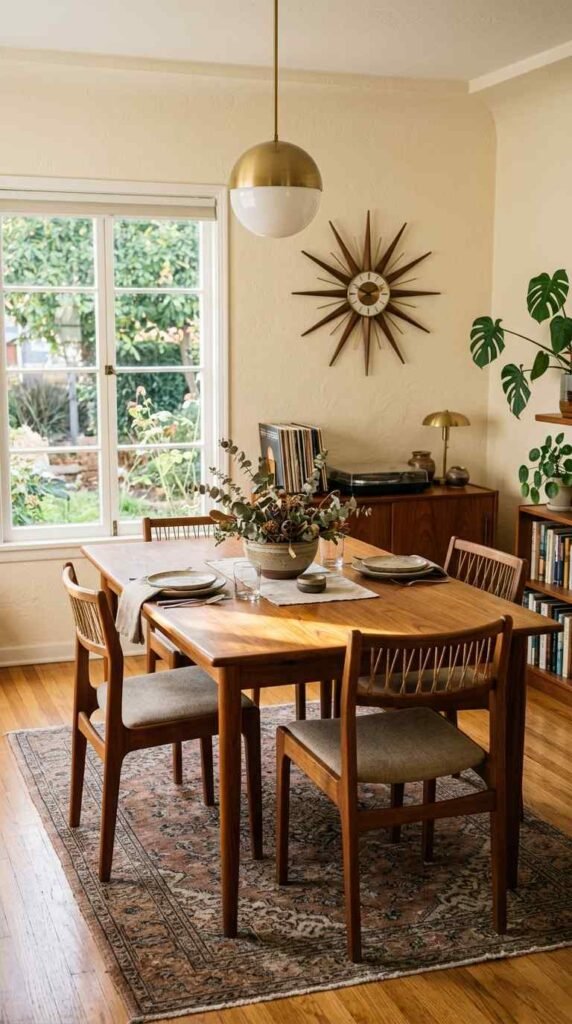
A teak table sits at the heart of nearly every mid century dining room decor plan, and for good reason. The wood’s warm, golden tone and naturally straight grain give the piece a clean, confident presence without needing any additional ornamentation. Teak also holds up remarkably well over time, developing a deeper patina the longer it’s used, which only adds to its character. This single piece often sets the tone for every other decision made in the room, from the chair style to the lighting hung above it.
Checking the table’s finish before buying secondhand matters, since older teak sometimes needs a light sanding and oiling to bring back its original warmth. A simple application of teak oil once or twice a year keeps the wood looking rich rather than dry or faded. Choosing a table with simple, tapered legs, rather than anything heavily carved, keeps the piece feeling authentic to the era it’s drawing inspiration from.
2. Tapered Leg Chairs
- Adds the signature silhouette of the era
- Works beautifully in wood, molded plastic, or upholstered seats
- Pairs naturally with a teak or walnut table
- Lightweight enough to move easily around the room
- Suits both authentic vintage and reproduction pieces
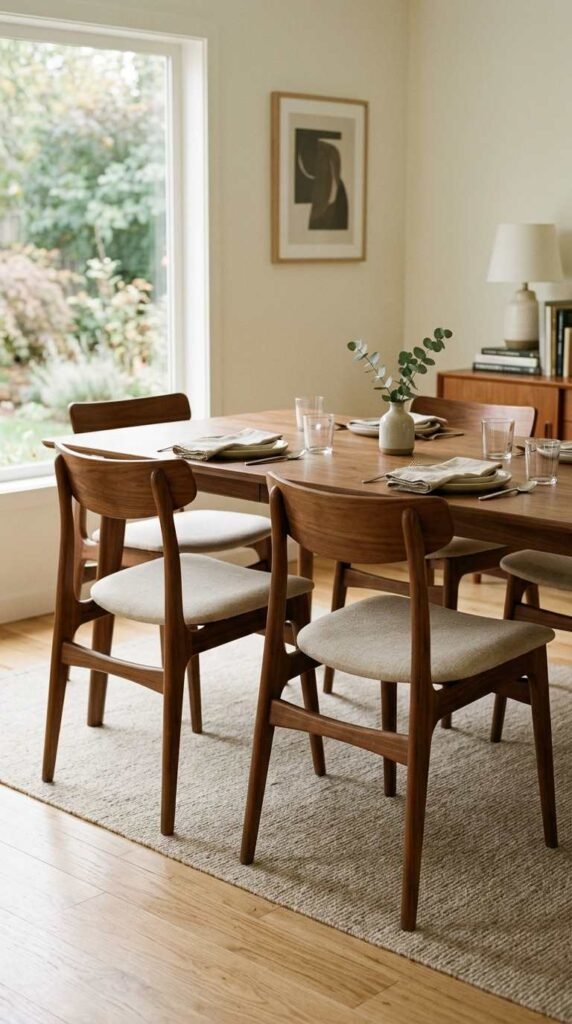
Tapered legs, angled slightly outward from a slim seat, remain one of the most recognizable details in mid century dining room decor. This silhouette appears across nearly every chair style from the era, whether a simple wood dining chair or a molded plastic shell seat. The slim profile keeps the chairs from feeling bulky, which matters considerably around a table meant to showcase clean lines rather than heavy, traditional furniture forms typical of earlier decades.
Mixing two slightly different tapered-leg chair styles, rather than a perfectly matched set, often looks more authentic than a uniform row. Reproduction pieces have become widely available and considerably more affordable than genuine vintage finds, making this detail accessible regardless of budget. Choosing seats in a complementary fabric or wood tone ties the varied chairs together without sacrificing the slight individuality that makes the style feel collected rather than purchased all at once.
3. Sunburst Wall Clock
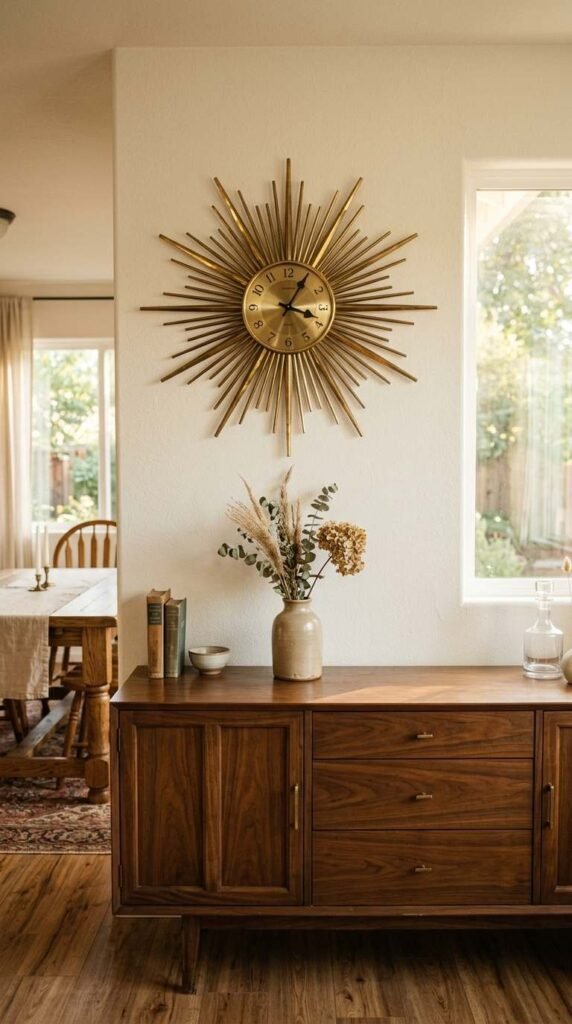
- Combines genuine function with retro character
- Fills wall space without needing multiple pieces
- Works beautifully above a credenza or dining table
- Suits both wood and brass finishes
- Available in sizes for large or small walls
A sunburst wall clock brings both usefulness and unmistakable mid century charm into a dining room. The radiating spokes, whether in wood, brass, or a mix of both, echo the same atomic-era optimism found throughout furniture and lighting from the period. Mounted above a credenza or centered on a plain wall, the clock fills the space confidently, working almost like a piece of sculpture that also happens to keep everyone on schedule for dinner, making it a stylish choice for small dining room wall decor.
Sizing the clock appropriately determines whether it reads as a genuine statement or an easily overlooked accessory. A face roughly 20 to 28 inches in diameter, including the radiating spokes, tends to suit most dining room walls without overwhelming nearby furniture. Choosing a warm wood tone or brushed brass finish ties the clock into other mid century dining room decor elements already present throughout the room’s furniture and lighting choices.
4. Starburst Chandelier
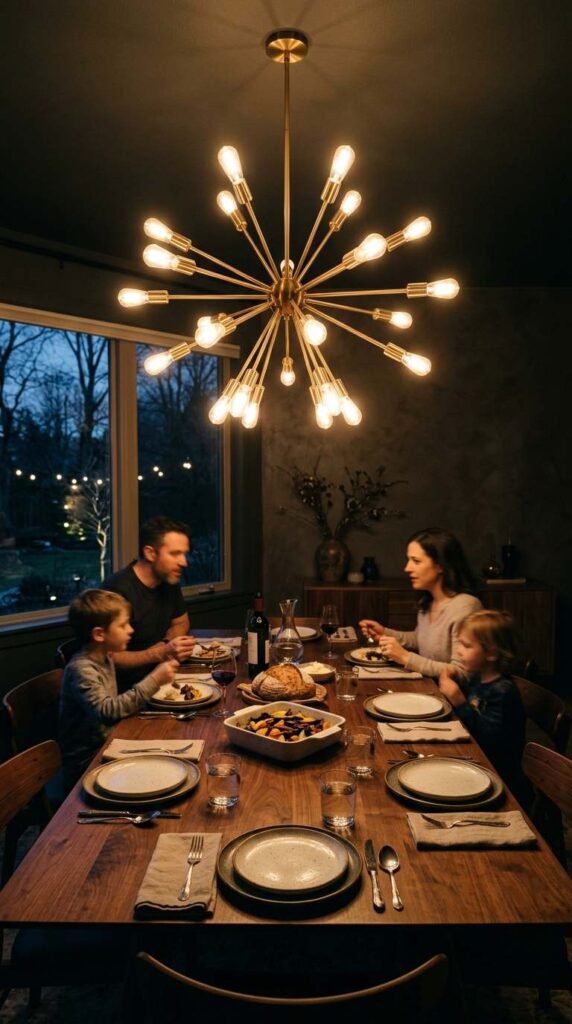
- Adds a sculptural, atomic-era focal point overhead
- Works as both a light source and genuine art
- Suits rooms with ceilings at least eight feet high
- Pairs beautifully with brass or warm gold finishes
- Often found affordably at vintage and estate sales
A starburst chandelier brings genuine sculptural presence to the ceiling, its radiating arms echoing the same atomic optimism found in sunburst clocks and mirrors from the same era. This fixture does double duty, providing real light while also functioning as the room’s most eye-catching piece of art. Among mid century dining room decor ideas, lighting choices like this one tend to set the tone for the entire space, since the fixture is usually the first thing anyone notices upon entering the room.
Vintage starburst fixtures can often be found at estate sales for considerably less than a comparable new reproduction. Rewiring an older fixture is usually necessary for safety, so budgeting for a licensed electrician to inspect it first is worth the investment. Hanging the piece roughly 30 to 36 inches above the tabletop keeps it feeling connected to the meal without blocking anyone’s view across the table during conversation.
5. Walnut Credenza Styling
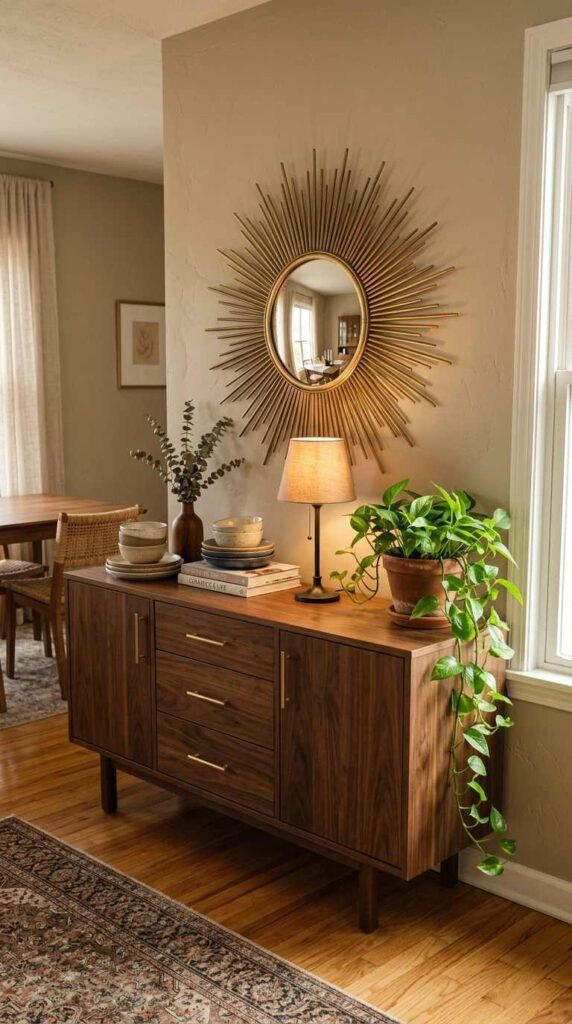
- Adds genuine storage with real mid century character
- Doubles as display space for ceramics or glassware
- Suits the clean, low-profile lines of the era
- Works beautifully paired with art or a mirror above it
- Often more solidly built than comparable new furniture
A walnut credenza brings both function and unmistakable style into a mid century dining room. The rich, dark wood grain and clean, low-slung silhouette suit the era’s preference for furniture that feels substantial without appearing heavy or ornate. Many original credenzas were built using solid wood and genuine dovetail joinery, meaning a well-cared-for vintage piece often outlasts anything available new today, making secondhand sourcing a genuinely practical choice rather than just a stylistic one.
Checking for structural stability matters more with older case furniture than with newer pieces, so testing drawers and doors before purchasing secondhand helps avoid unexpected repairs later. Styling the top with just two or three items, perhaps a ceramic vase and a small sculpture, lets the credenza’s own warm wood tone remain the main visual interest rather than getting buried under too much additional decor competing for attention.
6. Bold Geometric Rug
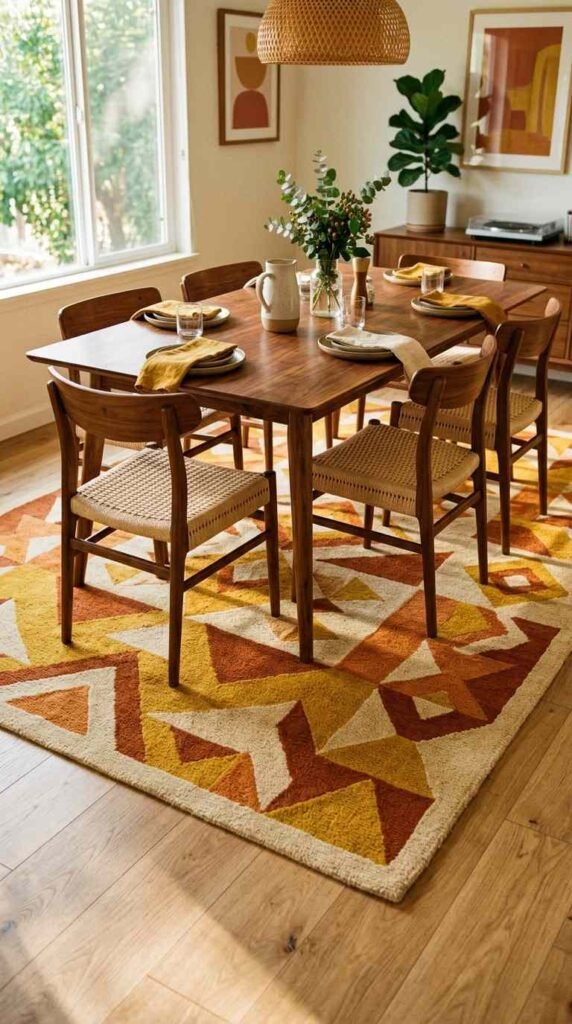
- Grounds the dining set with graphic pattern
- Adds personality without needing busy wall decor
- Works well in both warm and cool color palettes
- Defines the dining zone in open-concept layouts
- Echoes the era’s love of bold, confident shapes
A rug featuring bold geometric shapes, diamonds, interlocking circles, or angular lines, grounds a mid century dining room with exactly the kind of confident pattern the style is known for. Unlike a busy floral print, geometric designs stay graphic and architectural, pairing beautifully with the clean furniture lines already established by the table and chairs. This detail fills the floor with personality, reducing the need for busy wall decor elsewhere in the room, which suits the era’s generally pared-back approach to layered decorating and works beautifully with fall home decor ideas for adding seasonal warmth through rich patterns and textures.
Sizing the rug correctly changes how polished the room looks once furniture is in place. Every chair leg should remain on the rug even when pulled fully out from the table, which generally means sizing up more than feels intuitive. Choosing a rug in warm rust, mustard, or deep teal tones ties the floor directly into the broader mid century dining room decor color palette found throughout the rest of the space.
7. Atomic-Era Wall Art
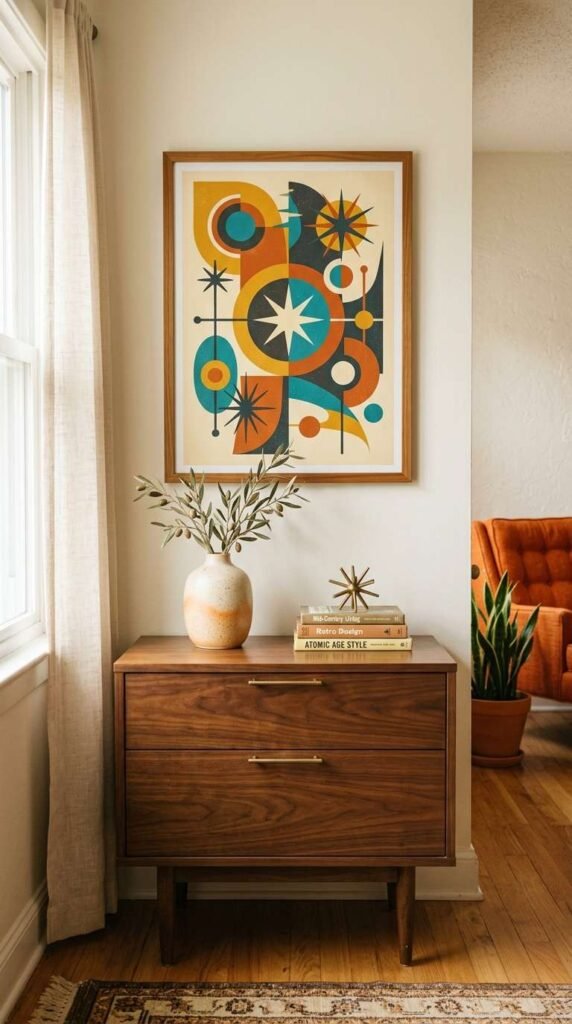
- Adds playful, period-accurate personality to the wall
- Works well in bold, graphic shapes and patterns
- Suits both original vintage prints and reproductions
- Brings color without needing a full accent wall
- Easy to source affordably through online marketplaces
Atomic-era wall art, featuring boomerang shapes, starbursts, or abstract geometric patterns, brings genuine period personality to a mid century dining room without requiring a full furniture overhaul. These prints capture the same playful optimism found throughout the era’s design language, adding color and movement to an otherwise simple wall. This detail rounds out mid century dining room decor nicely for anyone wanting the walls to participate in the overall styling rather than staying purely neutral.
Reproduction prints based on genuine vintage patterns are widely available now, offering the look without needing to track down increasingly rare originals. Choosing a single bold piece, rather than a cluttered gallery, tends to suit the era’s preference for clean, uncomplicated walls. A simple wood or brass frame keeps the focus on the artwork’s color and shape rather than competing with an overly ornate border.
8. Warm Mustard Accent Color
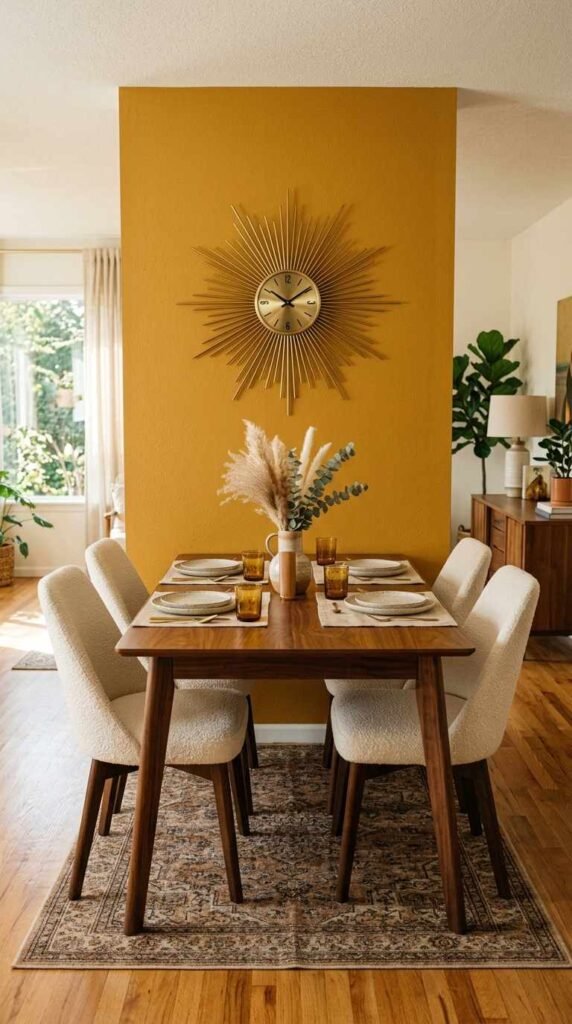
- Adds a signature mid century hue without overwhelming the room
- Works beautifully in textiles, walls, or a single furniture piece
- Pairs naturally with warm wood tones throughout the space
- Suits both bold and more subdued color schemes
- A relatively low-cost way to add period character
Mustard yellow remains one of the most recognizable colors associated with mid century design, and introducing it through a single element, a chair cushion, a wall, or a ceramic vase, instantly signals the era without overwhelming the room. This warm, slightly muted gold pairs beautifully with the wood tones already present in a teak table or walnut credenza, tying the whole space together through one consistent, confident color choice running throughout the furniture and accents.
Testing the color on a small swatch before committing to a full wall helps confirm how it reads against existing wood tones and natural light. Limiting mustard to just one or two spots, rather than layering it everywhere, keeps mid century dining room decor feeling intentional rather than overly themed. Pairing it with deep teal or burnt orange accents nearby rounds out the era’s typical warm, earthy color palette.
9. Molded Shell Chairs
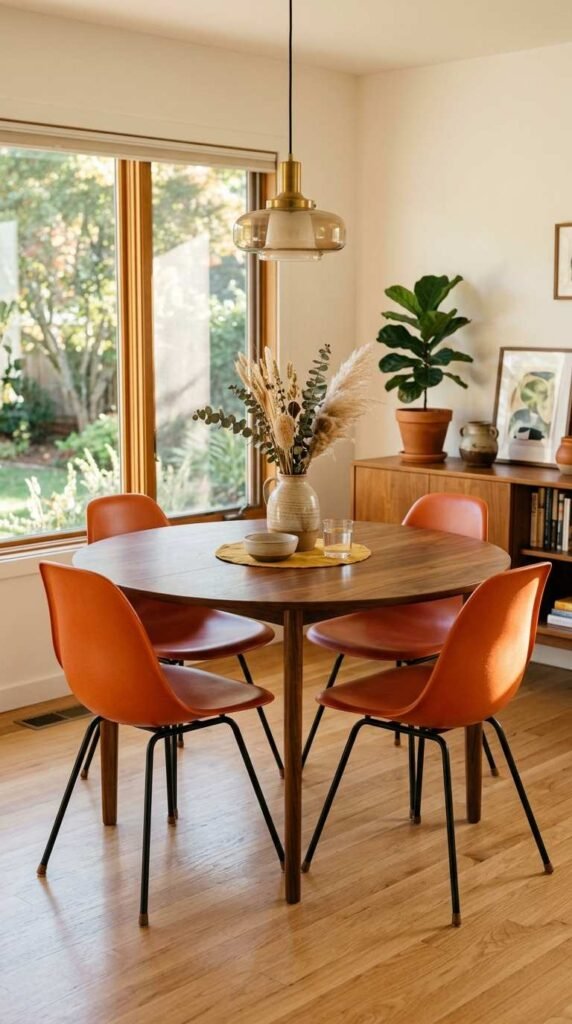
- Adds the iconic curved silhouette of the era
- Works beautifully in fiberglass, plastic, or wood
- Lightweight and easy to move around the table
- Suits both authentic vintage and modern reproductions
- Available in a wide range of period-appropriate colors
Molded shell chairs, with their smooth, curved seat and tapered wood or metal legs, remain one of the most instantly recognizable pieces in mid century dining room decor. The organic, scooped shape offers genuine comfort while still keeping the overall silhouette light and uncluttered around the table. Available in colors ranging from classic white to bold mustard or avocado green, these chairs add both shape and color in a single furniture choice without needing any additional styling.
Reproduction shell chairs have become widely accessible and considerably more affordable than genuine vintage originals, making this detail approachable regardless of budget. Mixing two or three colors within the same chair style, rather than a single uniform set, often looks more playful and authentic to the era’s typically eclectic approach to furnishing a room with pieces gathered over time.
10. Brass Accent Lighting
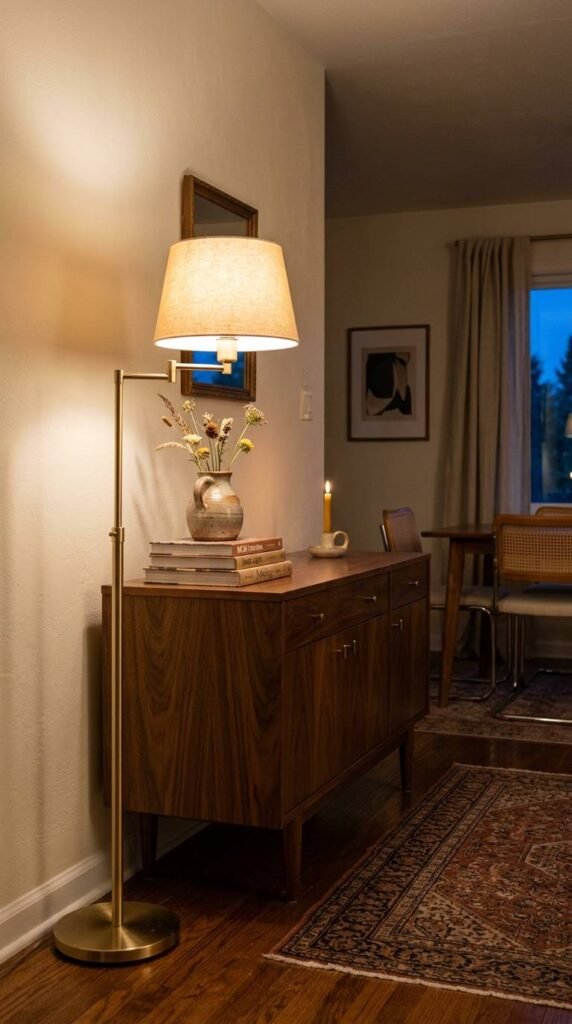
- Adds warm metallic shine throughout the room
- Works across pendants, sconces, and small lamp bases
- Ties lighting, hardware, and tabletop details together
- Suits both bold and more understated mid century rooms
- A relatively small detail with substantial visual impact
Brass accents throughout a dining room’s lighting, whether a pendant fixture, a pair of wall sconces, or a small table lamp, add the warm metallic glow so closely associated with mid century design. Repeating this one finish across two or three different fixtures creates a cohesive thread running through the room, tying lighting choices to any other brass or gold details found in hardware or small decor pieces nearby.
Choosing a slightly aged or unlacquered brass finish, rather than anything overly polished, suits the era’s tendency toward warm, lived-in materials rather than anything too shiny or new-looking. Thrift stores and vintage lighting shops often carry genuine period pieces at reasonable prices, making this an accessible way to add authentic character to mid century dining room decor without committing to an entirely new fixture.
11. Organic Curved Furniture Shapes
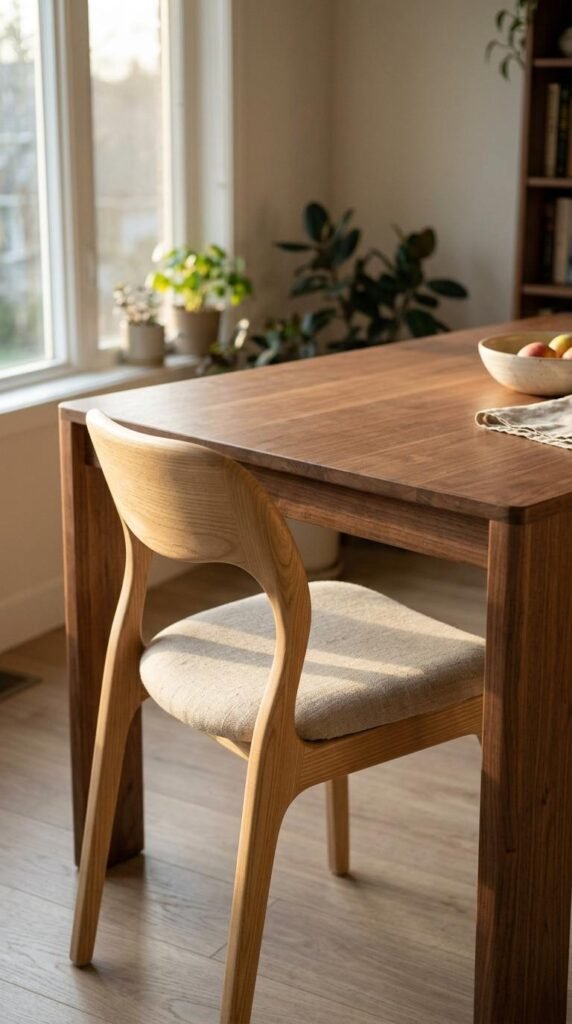
- Softens a room full of straight architectural lines
- Suits both tables and seating throughout the space
- Adds visual interest without needing bold color
- Works beautifully alongside more angular pieces
- A defining trait of the era’s furniture design language
Curved, organic shapes run throughout mid century furniture design, from kidney-shaped side tables to gently rounded dining chairs. These soft silhouettes break up a room that might otherwise feel boxy or rigid, especially when paired with the era’s typically straight architectural lines found in walls and windows. This softness makes curved furniture a defining trait of mid century dining room decor, since rounded edges naturally feel more inviting and comfortable to move around during a meal.
Pairing a curved table with slightly more angular chairs, rather than doubling up on curves everywhere, keeps the room feeling balanced instead of overly soft or shapeless. This mix of curved and straight elements is exactly what gives a mid century dining room its layered, considered look that feels authentic to the era rather than following just one single design trend throughout every piece in the space.
12. Statement Pendant Light
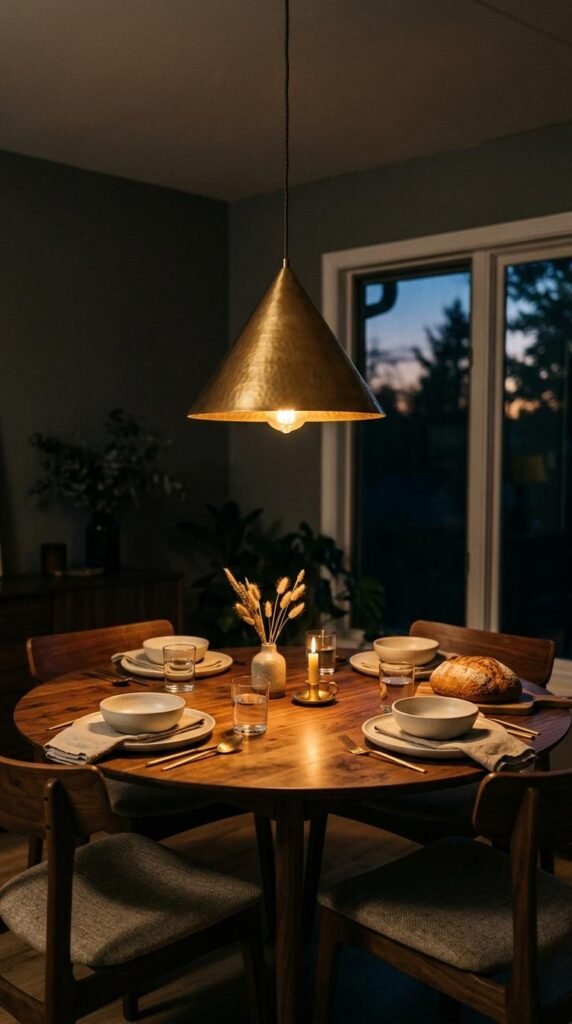
- Casts warm, sculptural light directly above the table
- Doubles as genuine art even when switched off
- Works well as a single fixture or a clustered arrangement
- Suits rooms with lower ceilings better than a chandelier
- Available in glass, paper, or metal designs
A sculptural pendant light, whether a simple globe, a paper lantern-style shade, or an angular metal design, brings genuine mid century character directly above the dining table. Unlike a traditional chandelier, a pendant’s slim profile suits rooms with lower ceilings particularly well, avoiding the visual bulk a larger fixture might bring to a more modest-sized space while still delivering real sculptural presence overhead.
Clustering two or three smaller pendants at slightly varied heights can create more visual interest than relying on one large central fixture alone. Choosing warm-toned bulbs, rather than cool white ones, suits the era’s overall warm, golden lighting aesthetic far better. This detail rounds out mid century dining room decor nicely, since lighting changes the entire mood of a meal more than most people initially expect.
13. Vintage Bar Cart
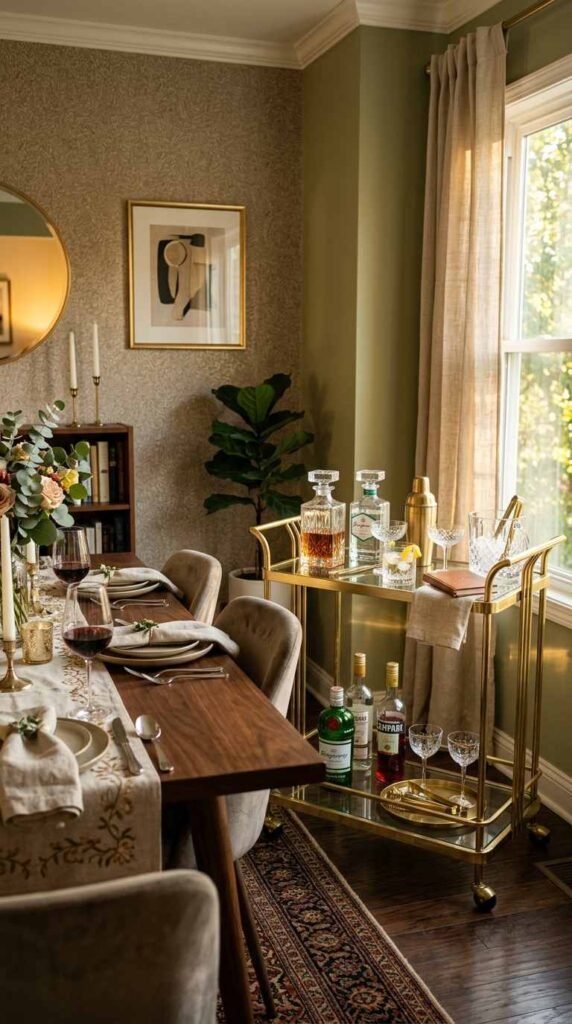
- Adds function and genuine period style together
- Turns unused corner space into an entertaining feature
- Works beautifully in brass, wood, or glass materials
- Suits rooms hosting regular dinner parties or gatherings
- Often found affordably at estate sales and thrift stores
A vintage-style bar cart brings both genuine function and unmistakable mid century charm into a dining room. Tucked into a corner or positioned beside a credenza, it turns previously unused space into a styled, functional feature ready for entertaining. Brass and glass materials echo the shine already present in other lighting and hardware throughout the room, tying this final touch into the rest of the space’s established mid century dining room decor.
Styling the cart with a few well-chosen bottles, matching glasses, and a small dish of garnish keeps the display looking edited rather than cluttered. Thrift stores and estate sales remain reliable, affordable sources for finding genuine vintage carts, since the wheeled, two-tiered design was especially popular throughout the era and remains widely available secondhand today.
14. Textured Wood Paneling
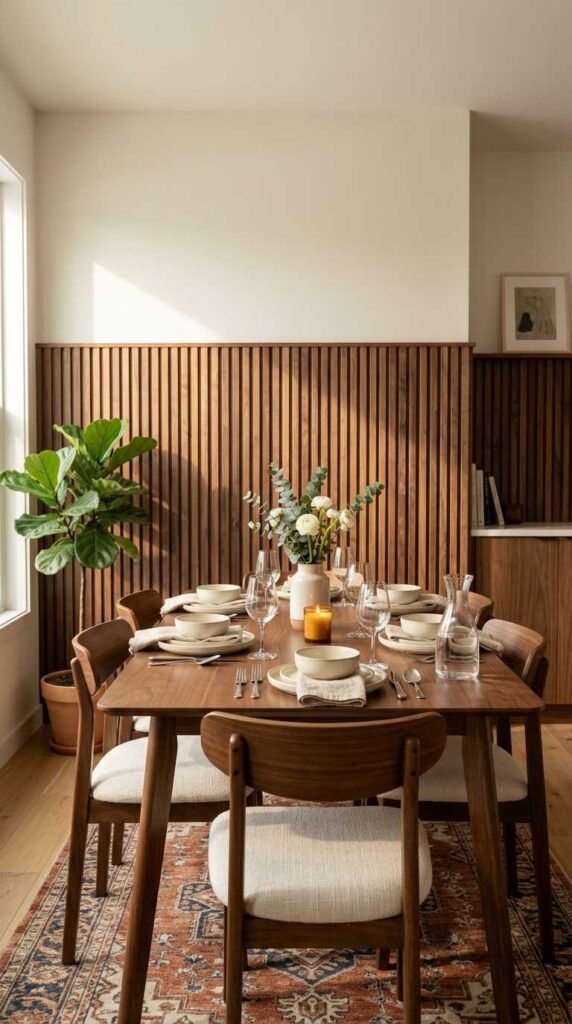
- Adds architectural warmth to a plain wall
- Suits both full walls and smaller accent sections
- Works well in walnut, teak, or oak finishes
- Brings genuine period character without much ongoing effort
- A manageable weekend project for many homeowners
Wood paneling, run horizontally or in simple vertical slats, brings genuine architectural texture into a mid century dining room. This detail echoes the wood-paneled dens and dining rooms so common throughout homes built during the era, giving a plain wall real warmth and depth that flat drywall alone can’t achieve. Choosing a warm walnut or teak tone ties the paneling directly into the wood furniture already anchoring the rest of the room’s mid century dining room decor.
Lightweight slat panels, rather than solid wood boards, make this a considerably more approachable DIY project over a single weekend. Covering just one accent wall, rather than the entire room, keeps the project manageable while still delivering genuine period character. Sealing the wood with a simple matte finish protects it from daily wear without covering up its natural grain and texture.
15. Retro Ceramic Vase Display
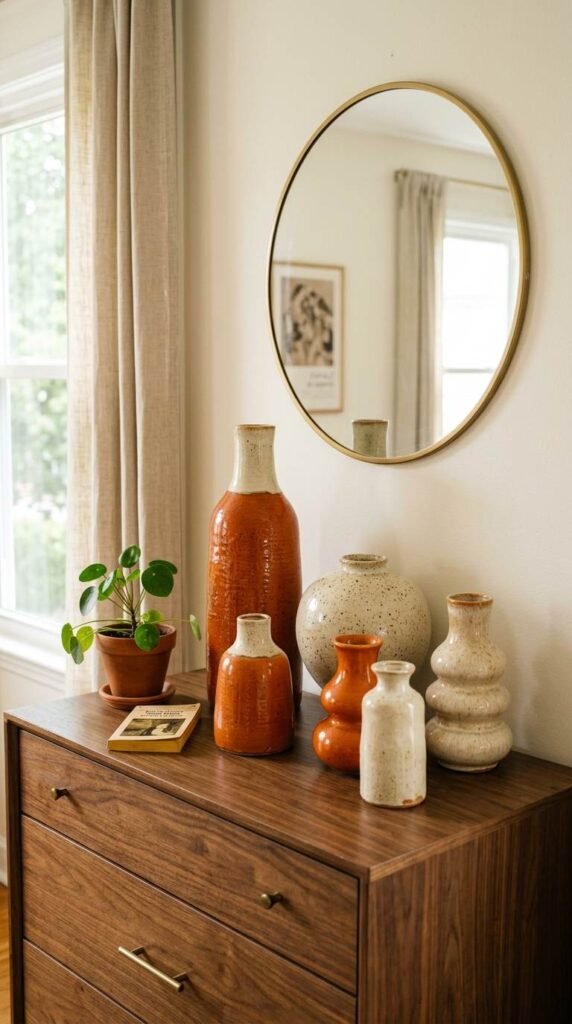
- Adds sculptural shape without needing fresh flowers
- Works beautifully empty or lightly filled with stems
- Suits the era’s love of organic, earthy pottery
- Easy to source affordably at thrift stores and flea markets
- Pairs naturally with warm wood tones throughout the room
A small grouping of retro ceramic vases, in earthy glazes like burnt orange, olive green, or warm brown, brings sculptural interest to a credenza or table even when left completely empty. These pieces echo the era’s love of organic, handmade pottery, adding texture and color that feels authentic rather than purchased all at once from a single matching set found in a modern home store.
Grouping vases in odd numbers, three tends to work particularly well, creates a more natural, balanced arrangement than an even pairing. Thrift stores and flea markets remain excellent, affordable sources for genuine vintage ceramics from the era. Leaving at least one vase empty, rather than filling every single one, keeps the grouping feeling relaxed rather than overly staged within the room’s broader styling.
16. Mixed Wood Tones
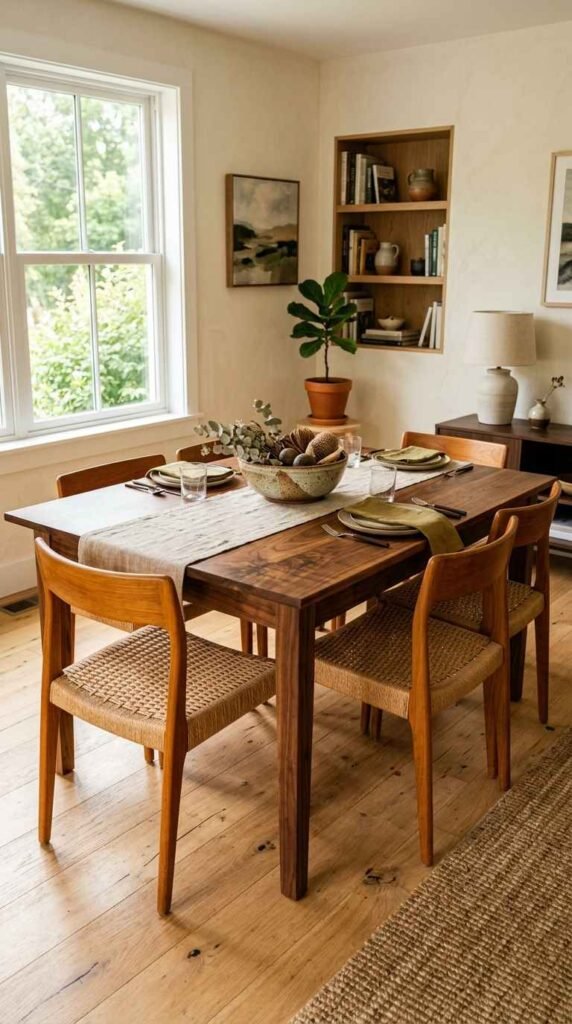
- Creates depth without adding color
- Feels collected instead of matched
- Hides scratches and wear better than a uniform finish
- Works with almost any chair style
- Easy to build from furniture you already own
Matching wood tones perfectly across every piece of furniture isn’t actually true to how mid century homes were originally furnished. A walnut table paired with teak chairs, or a mix of oak and cherry accents throughout the room, gives a dining space genuine depth that a fully matched set never could. The trick is keeping one shared undertone, either warm or cool, so the pieces still feel related despite coming from different wood species entirely.
Limiting the room to two or three wood tones keeps the mix feeling intentional rather than chaotic. The easiest approach is picking one dominant tone for the table and repeating a secondary tone in smaller pieces, like a credenza or picture frames. A woven rug or textile runner helps bridge the gap between different finishes if the woods ever start to visually clash with one another.
Balancing Different Wood Finishes
Choosing furniture pieces where the wood grain itself varies, like a smooth walnut table against a more visibly grained oak chair, adds textural contrast even within the same general color family. Avoid placing two very different woods directly side by side without something softer, like a rug or tablecloth, between them. A little thoughtful layering makes the contrast feel deliberate rather than accidental within the overall mid century dining room decor.
17. Sculptural Wall Art
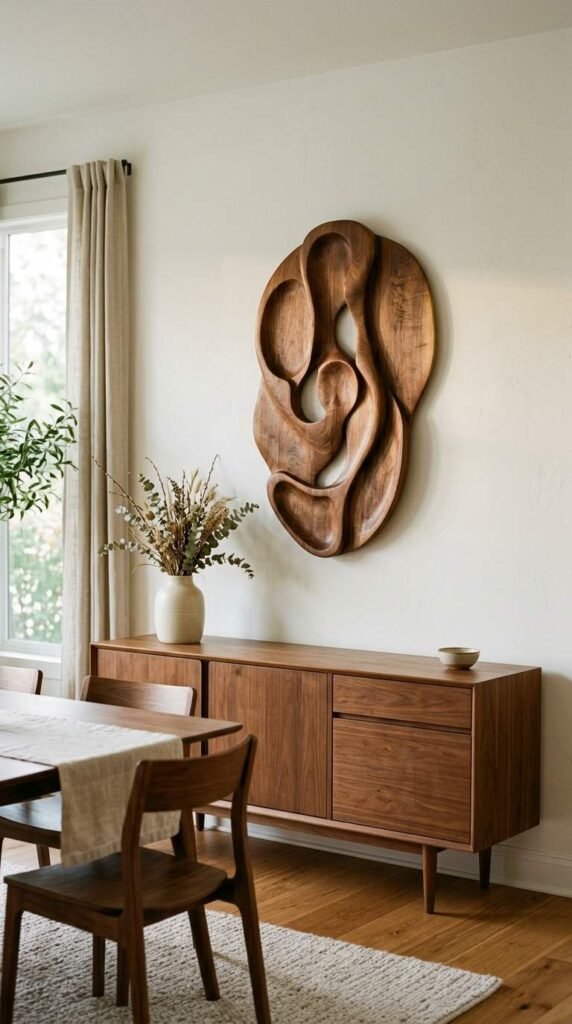
- Adds a dramatic, three-dimensional focal point
- Works beautifully as a single oversized statement
- Suits the era’s love of abstract, organic shapes
- Casts interesting shadow play throughout the day
- Available in wood, metal, or mixed-material designs
A large sculptural piece, whether carved wood, woven fiber, or a mixed-material composition, brings genuine dimension to a mid century dining room wall that flat art rarely achieves. The dimensional quality catches light and shadow differently throughout the day, adding movement to an otherwise static wall. This option suits mid century dining room decor particularly well for anyone wanting a bold, gallery-worthy centerpiece that echoes the era’s embrace of abstract, organic forms.
Sculptural art works best when given plenty of breathing room, with little competing decor nearby. This restraint lets the piece’s shape and shadow truly become the wall’s focal point. Choosing a piece in a neutral or natural material tends to suit the widest range of existing dining room color schemes and wood furniture finishes already established throughout the space.
18. Wool Area Rug in Earth Tones
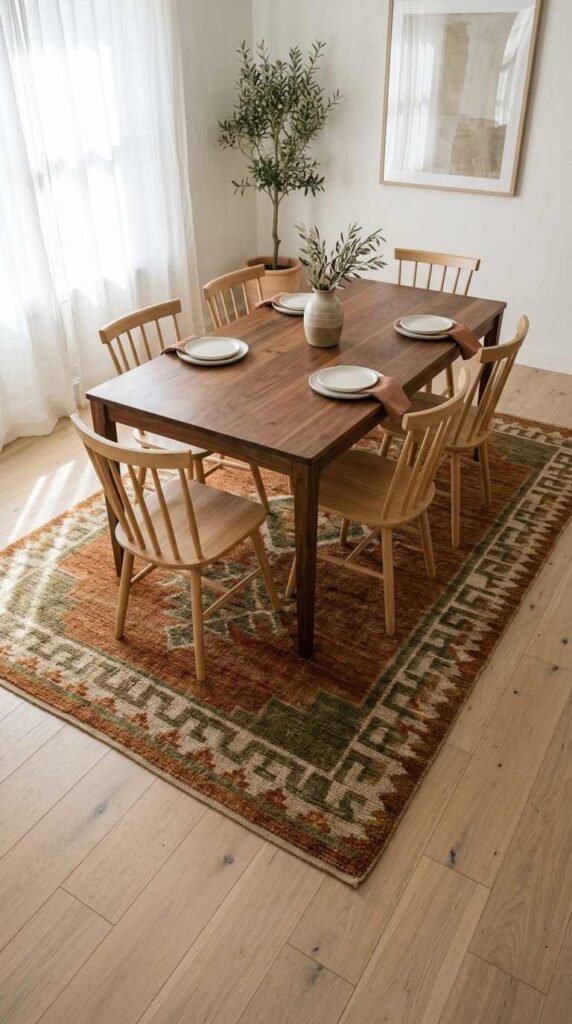
- Adds warmth and texture underfoot
- Suits the era’s typical rust, olive, and mustard palette
- Durable enough for daily dining room use
- Works well in both solid and subtly patterned designs
- Grounds the furniture with natural material and color
A wool rug in warm earth tones, rust, olive green, or soft mustard, grounds a mid century dining room with both texture and color that suits the era’s overall palette particularly well. Wool holds up considerably better than many synthetic alternatives under daily dining room use, resisting stains and crushing better over years of chairs sliding in and out during regular meals and gatherings.
Choosing a subtle, low-contrast pattern, rather than anything too busy, keeps the rug feeling period-appropriate without competing against the room’s other geometric or sculptural elements. Sizing the rug so every chair leg remains on it, even when pulled fully out, keeps the whole arrangement looking intentional rather than unfinished within the broader mid century dining room decor scheme.
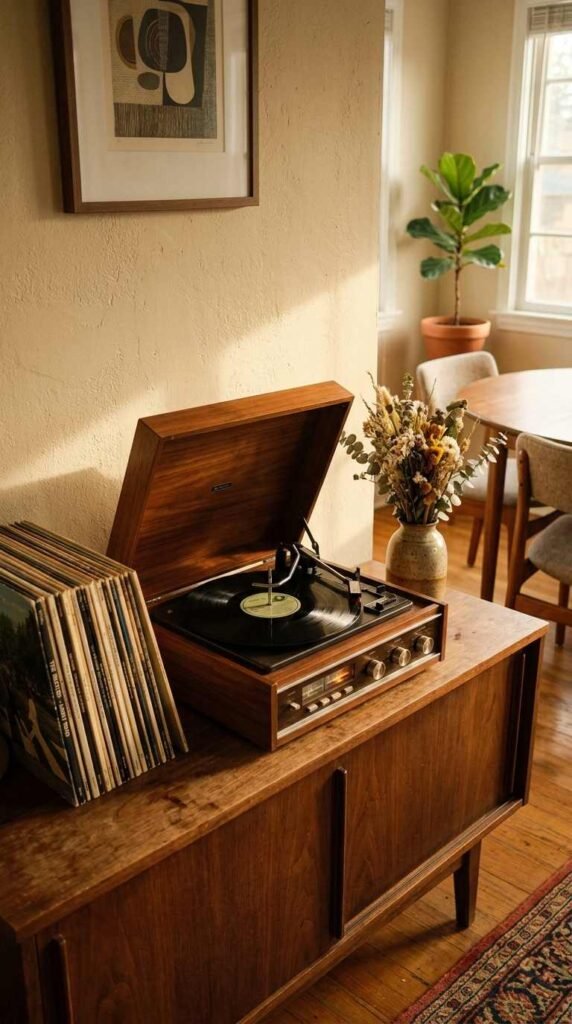
19. Vintage Record Player Display
- Adds genuine function alongside nostalgic charm
- Works beautifully on a credenza or low console
- Suits rooms hosting casual dinners and gatherings
- Brings an authentic conversation piece into the space
- Often found affordably at thrift stores and online marketplaces
A vintage-style record player, displayed openly on a credenza or low console, brings genuine nostalgic charm into a mid century dining room while still serving a real function. Playing music during a dinner party adds atmosphere no streaming speaker quite replicates, and the turntable itself becomes a natural conversation piece for curious guests browsing a small collection of vinyl records nearby.
Reproduction turntables with modern internals but vintage-inspired cabinets offer reliable function without the maintenance concerns genuine antique players sometimes carry. Pairing the display with a small stack of records in a simple wood crate rounds out the vignette nicely, adding both function and genuine period character to mid century dining room decor without requiring much additional space.
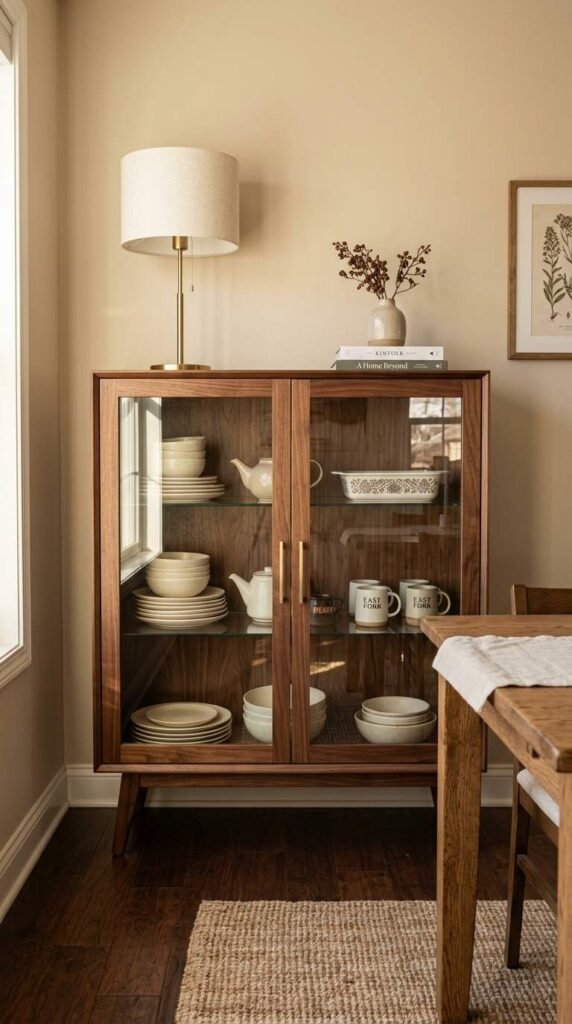
20. Low-Profile China Cabinet
- Adds storage with the era’s signature clean lines
- Suits the horizontal, low-slung furniture style
- Works beautifully paired with ceramics or glassware
- Doubles as a styled display alongside practical storage
- Often more solidly built than comparable new furniture
A low-profile china cabinet, with its clean horizontal lines and tapered legs, suits mid century dining room decor far better than a tall, traditional hutch. The reduced height keeps the room feeling open rather than boxed in, while glass-front doors let dishware and glassware remain visible without collecting dust. This furniture style echoes the era’s overall preference for pieces that feel grounded and understated rather than ornate or towering.
Checking the cabinet’s structural stability matters more with older case furniture, so testing doors and interior shelving before purchasing secondhand helps avoid unexpected repairs. Styling the interior with a few well-chosen ceramic or glass pieces, rather than crowding every shelf, keeps the display feeling curated and intentional within the room’s broader mid century styling.
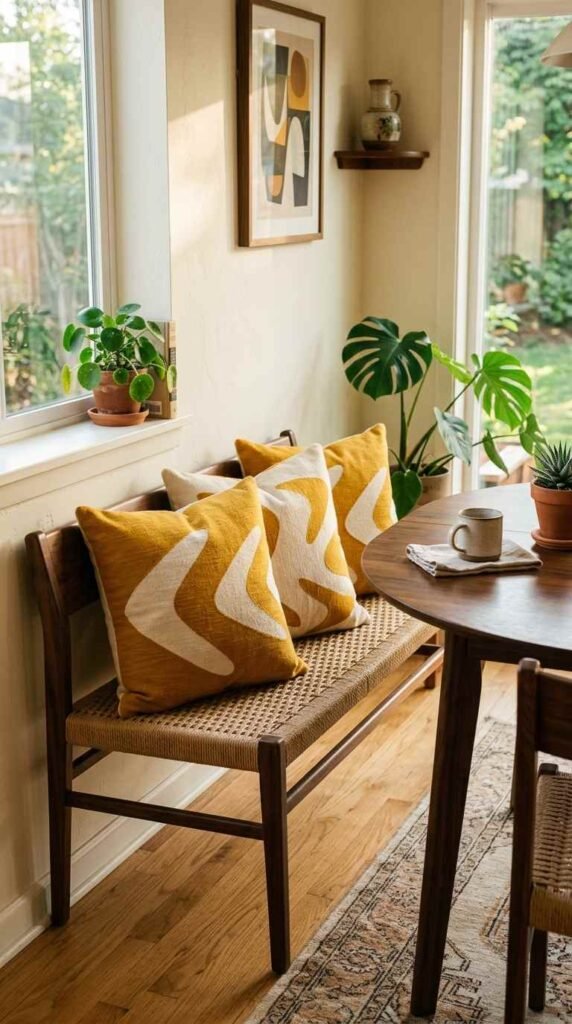
21. Boomerang Pattern Accents
- Adds a playful, instantly recognizable period motif
- Works well on textiles, laminate, or small decor pieces
- Suits both bold and subtle applications throughout the room
- Brings genuine atomic-era personality to the space
- Easy to find through vintage and reproduction sources
The boomerang shape, curved and asymmetrical, remains one of the most playful and recognizable patterns associated with mid century design. Introduced through a tablecloth, a set of cushions, or even a laminate countertop on a credenza, this motif brings genuine atomic-era personality into a dining room without requiring a full furniture overhaul. The shape pairs naturally with other geometric patterns already present throughout the room’s rug or wall art.
Limiting the boomerang pattern to just one or two spots keeps mid century dining room decor feeling intentional rather than overly themed or costume-like. Vintage textiles featuring this print are widely available through online marketplaces, and reproduction versions have also grown increasingly common as the style has returned to popularity in recent years.
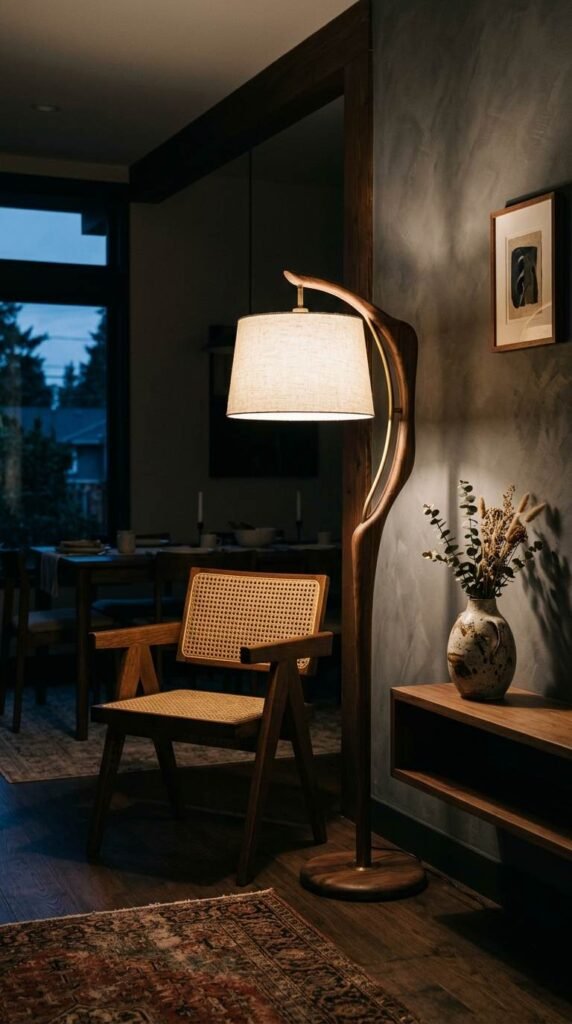
22. Statement Floor Lamp
- Adds sculptural lighting beyond the table itself
- Works well in a corner or beside a credenza
- Suits the era’s love of organic, tripod-leg designs
- Brings warm, ambient light to the room’s edges
- Doubles as genuine art even when switched off
A sculptural floor lamp, often featuring a tripod wood base and a simple drum or cone-shaped shade, adds warm ambient lighting to the edges of a mid century dining room beyond just the fixture hanging above the table. This piece suits a corner or the space beside a credenza particularly well, filling an otherwise empty area with both function and genuine sculptural interest even when the lamp itself is switched off during the day.
Choosing a warm wood tone that complements the table and chairs ties the lamp into the room’s broader material story. Pairing it with a warm-toned bulb keeps the light feeling golden and inviting rather than harsh, suiting the overall atmosphere mid century dining room decor tends to favor throughout the space during evening meals and gatherings.
23. Retro Table Linens
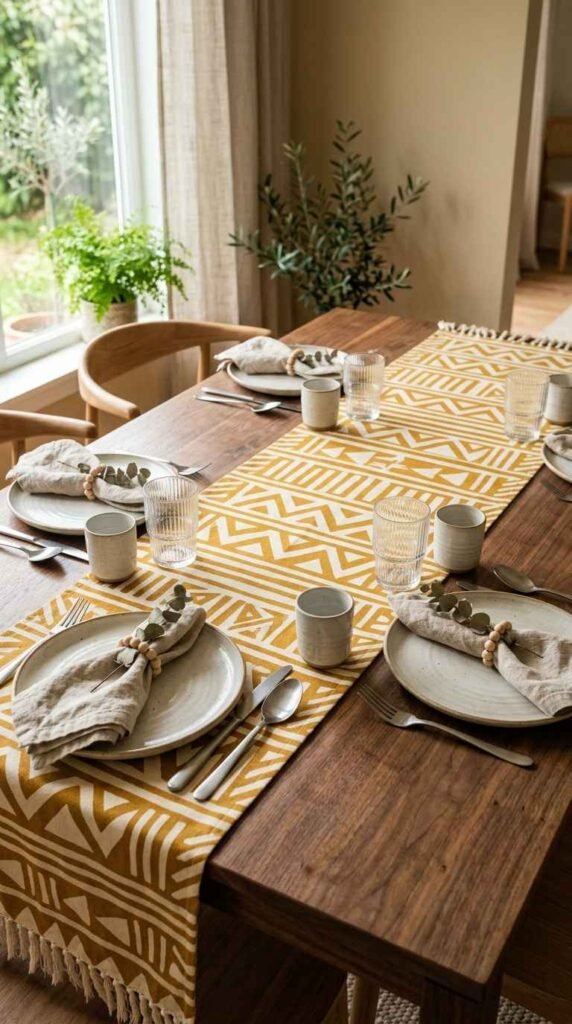
- Adds period-appropriate color and pattern to the table
- Works beautifully in geometric or atomic-inspired prints
- Suits both everyday use and special occasion styling
- Easy and inexpensive to swap for a quick refresh
- Pairs naturally with ceramic dinnerware from the era
Table linens featuring geometric prints or warm, earthy solid colors bring genuine period character directly to the table surface. A tablecloth or runner in mustard, rust, or a bold atomic-inspired pattern ties the table styling into the rest of the room’s mid century dining room decor without requiring any furniture changes at all, making this one of the more affordable ways to reinforce the style.
Choosing a linen or cotton-blend fabric, rather than anything synthetic, suits the era’s preference for natural materials throughout the home. Pairing the linens with simple ceramic dinnerware in complementary earth tones rounds out the table setting nicely, creating a cohesive look that feels genuinely considered rather than randomly assembled from mismatched pieces.
24. Gallery Wall of Mid-Century Prints
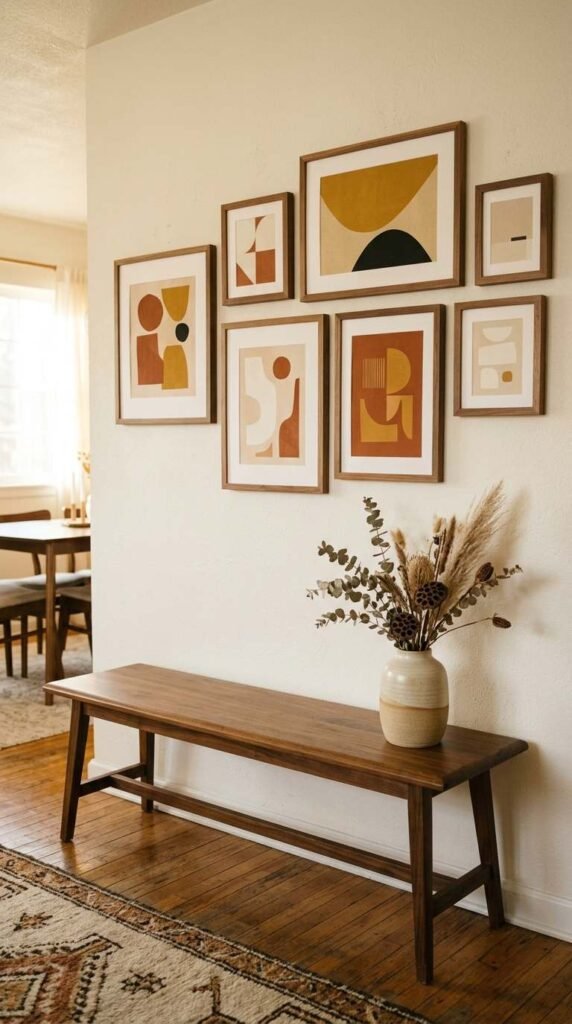
- Fills a wall with personality rather than one single piece
- Mixes abstract, botanical, and geometric prints together
- Builds gradually from thrifted or reproduction finds
- Adds color and texture without a large single purchase
- Suits both bold and more restrained mid century rooms
A gallery wall combining abstract shapes, botanical illustrations, and geometric patterns from the era brings genuine depth and personality to a mid century dining room wall. Unlike a single matching set, this varied collection feels gathered over time, echoing how many original mid century homes were actually furnished and decorated gradually rather than through one single coordinated purchase or store visit.
Laying every piece out on the floor first, then adjusting the arrangement until it feels balanced, saves considerable time and unnecessary wall damage. Keeping a loose color thread running through the collection, warm oranges, deep teals, and natural wood frames, helps an otherwise varied grouping feel cohesive within the room’s broader mid century dining room decor.
FAQS
1. What defines mid century dining room style?
Clean lines, tapered legs, organic curves, and warm wood tones like teak and walnut define the style. Bold but limited color accents, like mustard or burnt orange, add personality without overwhelming the overall simplicity of the furniture.
2. What type of table works best for this style?
A solid wood table, ideally teak or walnut, with simple tapered legs suits the style best. Avoid heavily carved or ornate details, since these clash with the clean, minimal aesthetic central to mid century design.
3. How do I add color without overdoing it?
Introduce color through one or two elements, like a rug or chair cushions, rather than painting an entire wall. Mustard, burnt orange, and deep teal all suit the era well in small, concentrated doses.
4. What kind of lighting fits this style?
Sculptural pendants, starburst chandeliers, and tripod floor lamps all suit mid century dining rooms well. Warm brass finishes and golden-toned bulbs echo the era’s overall warm, inviting lighting aesthetic throughout the space.
5. Can I mix different wood tones in my dining room?
Yes, mixing two or three wood tones often looks more authentic than a perfectly matched set. Keeping a shared warm or cool undertone across the different woods helps the pieces still feel visually related.
6. What chairs work best with a mid century table?
Tapered-leg wood chairs or molded shell chairs both suit the style well. Mixing two slightly different chair styles, rather than a uniform set, often looks more authentic to how the era was originally furnished.
7. Is this style budget-friendly to recreate?
Yes, reproduction furniture and lighting have made the look considerably more accessible, and thrift stores or estate sales often carry genuine vintage pieces at reasonable prices for anyone willing to search.
8. What wall decor suits this style best?
Sunburst clocks, sculptural art, and gallery walls featuring abstract or geometric prints all suit mid century dining rooms well. Choosing pieces with warm wood or brass frames ties the walls into the room’s broader furniture palette.
9. Should I add a bar cart to my dining room?
A vintage-style bar cart adds genuine function and period character, especially for anyone who hosts regularly. It also fills corner space nicely without requiring a larger, more permanent piece of furniture.
10. How do I keep the style from feeling dated?
Balancing bold mid century pieces with simpler, more neutral elements elsewhere in the room keeps the look feeling current rather than like a period reproduction. Mixing in one or two modern accents also helps the space feel fresh.
Conclusion
A mid century dining room comes together through confident, well-chosen pieces rather than a strict reproduction of the era. From a teak table to a sculptural pendant overhead, these mid century dining room decor ideas prove that warm wood, clean lines, and a touch of bold color create a timeless space that never feels trendy or dated. I’ve seen how a single standout piece, a credenza, a starburst clock, can anchor an entire room’s style on its own. Save this list on Pinterest, try one idea in your own dining room this week, and share it with anyone else ready to bring a little retro warmth into their home.