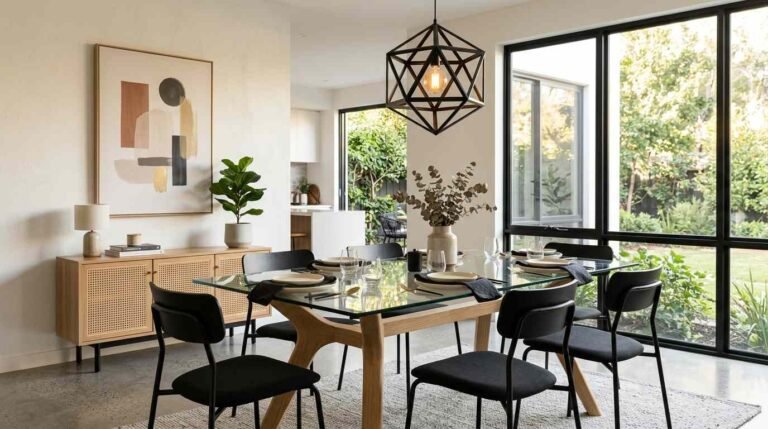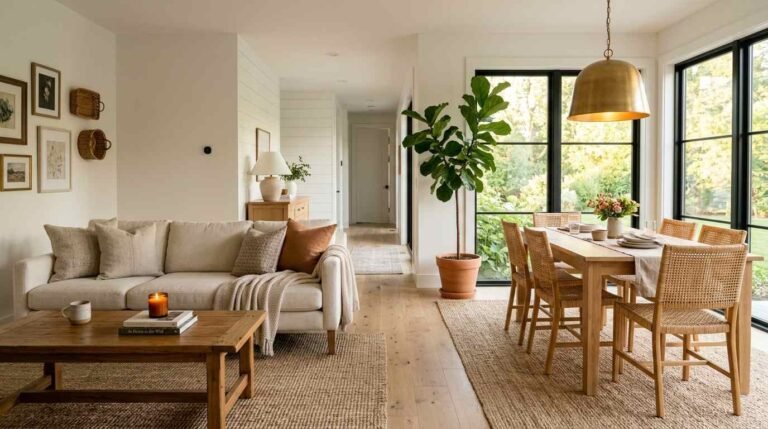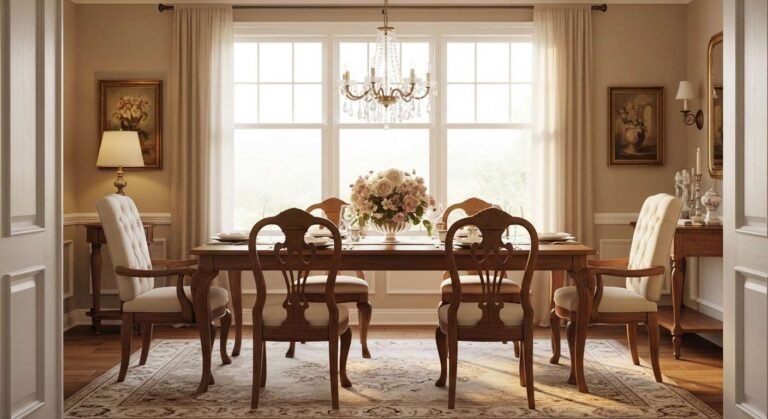
A dining room is one of the few spaces in a home built entirely around gathering, yet it’s often the last room to get any real design attention. Home decor ideas for your dining room can change that quickly, turning a space used only on holidays into one the whole family actually wants to sit in. Most dining rooms feel unfinished simply because the furniture arrived first and the styling never followed. In my experience, the rooms that feel the most put-together rarely rely on one expensive purchase, they’re built from a handful of smaller, thoughtful choices working together. This guide covers 22 ideas, from statement lighting to layered rugs and curated gallery walls, that bring genuine character into a room many people overlook. Save your favorites to Pinterest and start building a dining room that finally matches how often it deserves to be used.
1. Statement Chandelier Lighting
- Sets the tone for the entire room before anything else is styled
- Works as both a light source and a piece of art
- Suits rooms with ceilings at least nine feet high
- Pairs beautifully with a dimmer for evening dinners
- Available in styles ranging from crystal to sculptural metal
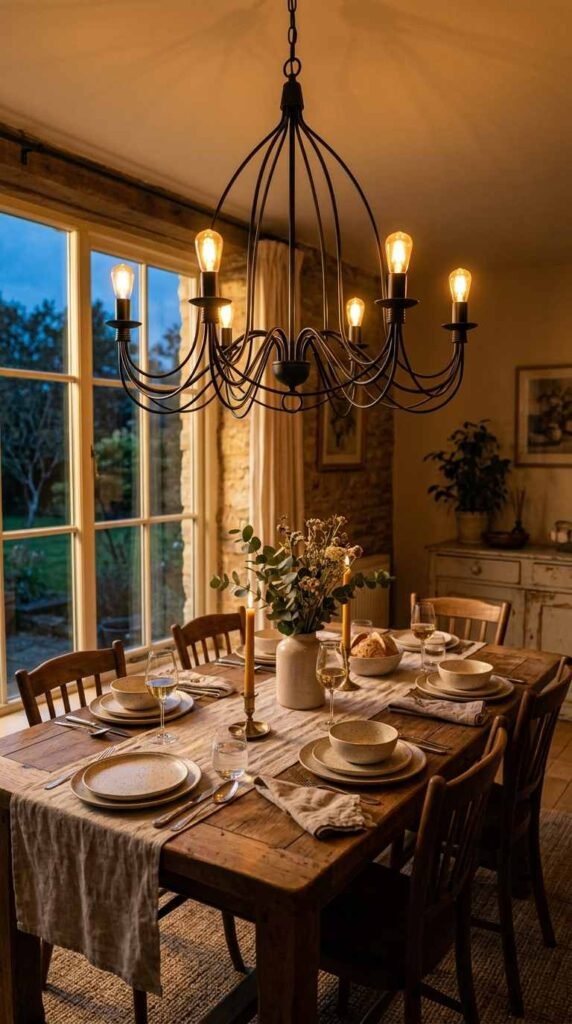
Nothing announces a dining room’s personality quite like the fixture hanging above the table. Whether crystal, wrought iron, or a sculptural modern design, a chandelier becomes the room’s first visual cue before a single chair gets pulled out. Among home decor ideas for your dining room, lighting consistently ranks as one of the highest-impact choices, since the fixture sets the tone for everything styled beneath it, from the table’s finish to the color of the walls themselves.
Sizing the fixture correctly matters more than people often expect. A rough guide is adding the room’s length and width in feet, then using that number in inches as the chandelier’s diameter. Hanging height should sit roughly 30 to 36 inches above the tabletop, low enough to feel connected to the meal without blocking anyone’s view across the table during conversation.
2. Layered Area Rug
- Softens hard flooring beneath the dining table
- Defines the dining zone in open floor plans
- Adds pattern and color without touching the walls
- Works well layered over a larger neutral base rug
- Grounds the room with visual warmth
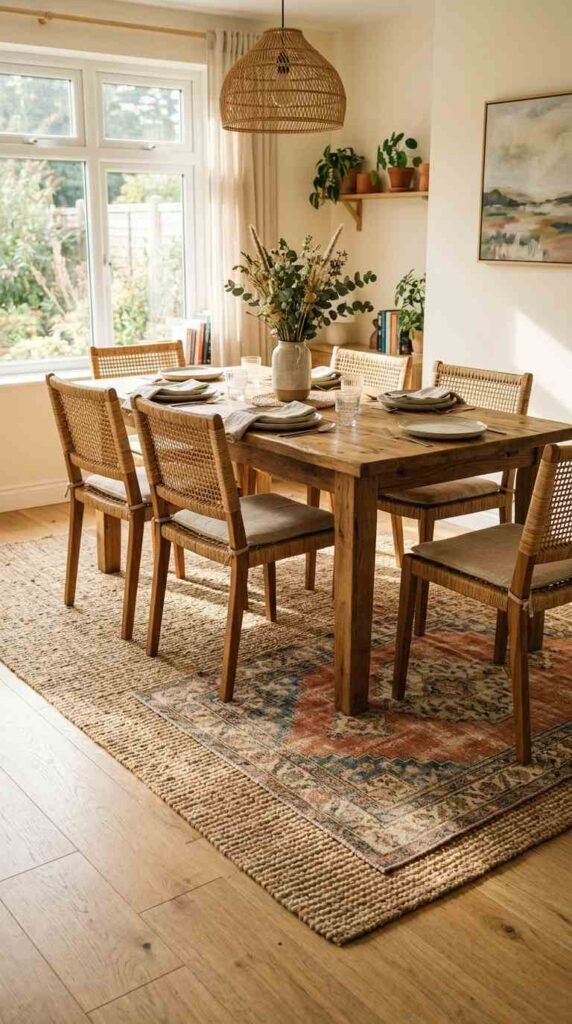
A rug beneath the dining table does more than add comfort underfoot, it defines the entire dining zone, particularly important in open-concept homes where the space might otherwise blend into an adjacent living area. Layering a patterned rug over a larger neutral base adds depth and texture, a combination that shows up often among home decor ideas for your dining room because it delivers visual richness without requiring any changes to the furniture itself.
Sizing the rug correctly changes how polished the entire room looks once furniture is in place. Every chair leg should remain on the rug even when pulled fully out from the table, which generally means sizing up more than feels intuitive at first glance. A rug pad underneath prevents slipping and adds cushioning, both of which matter considerably during a long, lingering meal.
3. Curated Gallery Wall
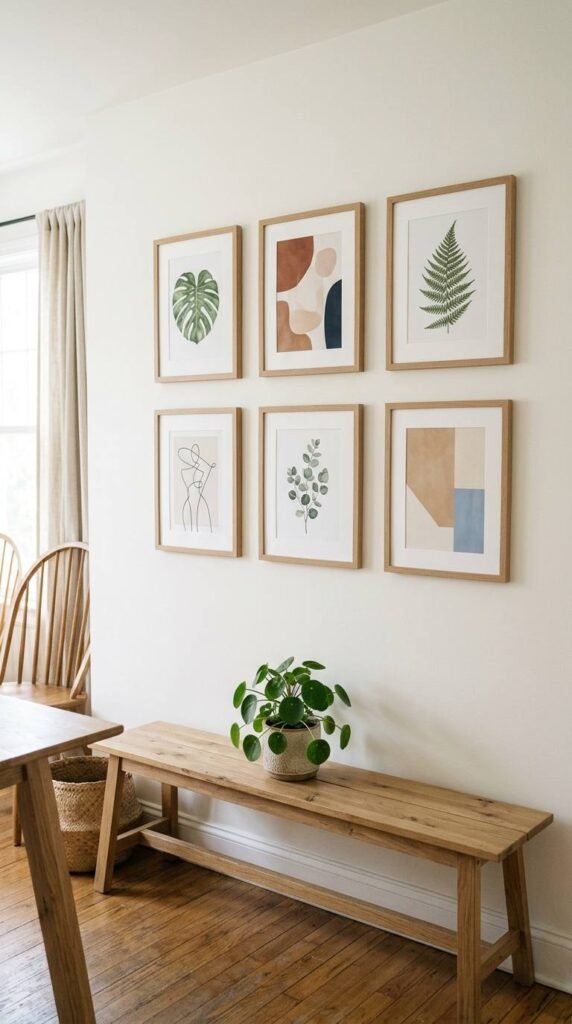
- Fills a large wall with personality rather than one single piece
- Mixes frames, art styles, and sizes for genuine depth
- Draws the eye across the wall rather than to one fixed point
- Builds gradually from thrifted or personal finds
- Adds texture and color without a large single purchase
A cluster of framed art, arranged thoughtfully rather than scattered randomly, fills a wall with far more personality than a single piece typically manages on its own. Mixing frame styles and sizes adds visual interest while keeping the overall arrangement feeling intentional. Among home decor ideas for your dining room, a gallery wall remains one of the most flexible options, since it can grow slowly over months or years rather than requiring one large purchase to feel complete.
Laying every piece out on the floor first, then adjusting the arrangement until it feels balanced, saves considerable time and unnecessary wall damage from repositioning later. Keeping about two to three inches of space between each frame creates the cleanest spacing across the whole grouping, and centering the arrangement around 57 inches from the floor keeps it at a comfortable eye level for guests.
4. Upholstered Dining Chairs
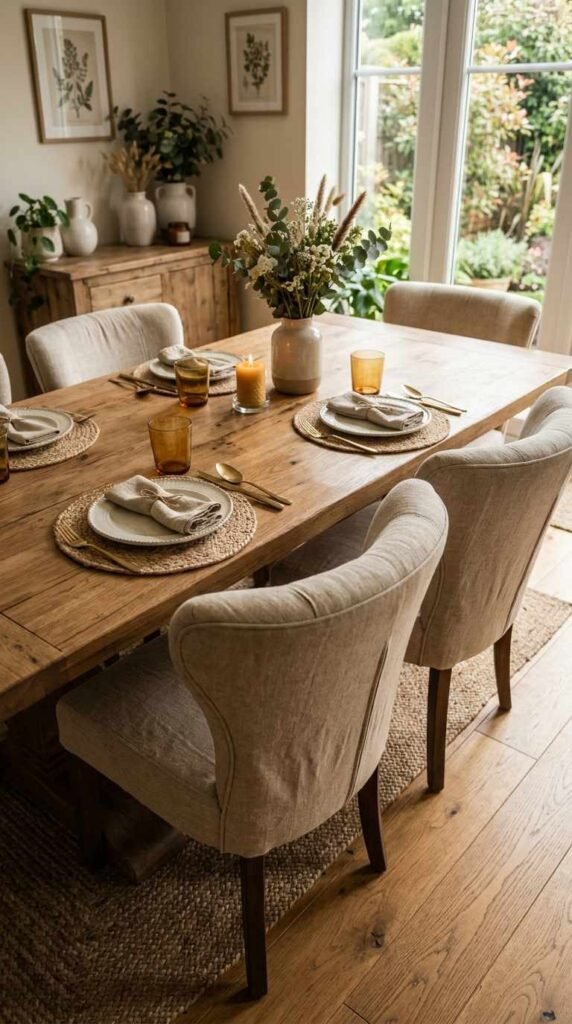
- Adds comfort for guests seated through a long meal
- Softens a room otherwise full of wood and glass
- Available in fabrics ranging from subtle linen to bold velvet
- Elevates a plain table instantly, even without other changes
- Suits both traditional and transitional dining rooms
A plain wood chair works fine for a quick weeknight dinner, but upholstered seats add both comfort and visual weight that bare wood simply can’t offer. Whether in a subtle linen or a richer velvet, the fabric becomes part of the room’s overall color story, which is why upholstered seating appears so often in lists of home decor ideas for your dining room. Guests notice the difference the moment they sit down, especially during a longer meal or gathering.
Choosing a durable, tightly woven fabric matters more than most people expect, given how often a dining chair gets touched and occasionally spilled on. A performance fabric that mimics the look of natural linen or velvet resists staining far better than the real thing while barely sacrificing appearance, making it a practical choice for a room used regularly.
5. Soft Neutral Color Palette
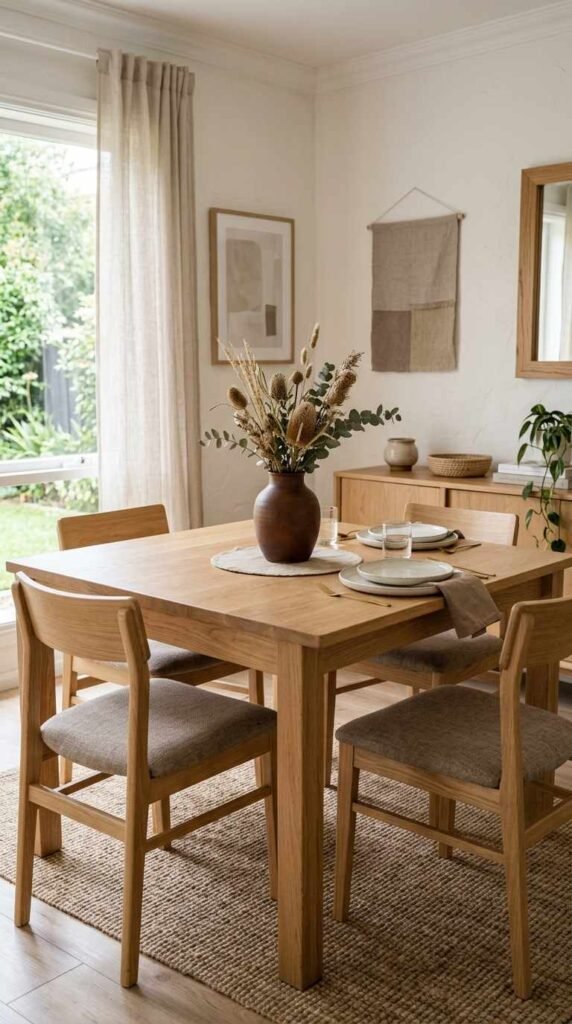
- Creates a calm, cohesive backdrop for furniture and decor
- Makes a room feel larger by reducing visual contrast
- Lets texture, rather than color, carry visual interest
- Easy to accessorize since almost anything matches
- Works well as a foundation for bolder accent pieces
A soft neutral palette, built from shades of white, warm beige, or pale gray, strips away decision fatigue and replaces it with calm, effortless cohesion. Sticking to tones within one family lets the room’s textures, like wood grain or woven linen, become the real source of visual interest rather than competing colors fighting for attention. Among home decor ideas for your dining room, this approach works particularly well as a foundation, since nearly any accent piece added later automatically feels like it belongs.
Testing paint swatches at different times of day helps confirm how a neutral shade will actually read in the room, since even subtle tones can shift considerably between morning and evening light.
Building Depth with Layered Tones
A single flat neutral can read as sterile without some variation layered on top of it. Mixing a warm cream wall with a slightly deeper taupe on the trim, or pairing pale furniture with a darker wood table, adds dimension without introducing an actual new color. Varying the finishes too, matte, glossy, and textured, matters just as much as varying the shades themselves, since this subtle layering is what separates a neutral room that feels intentional from one that simply looks unfinished.
6. Textured Table Linens
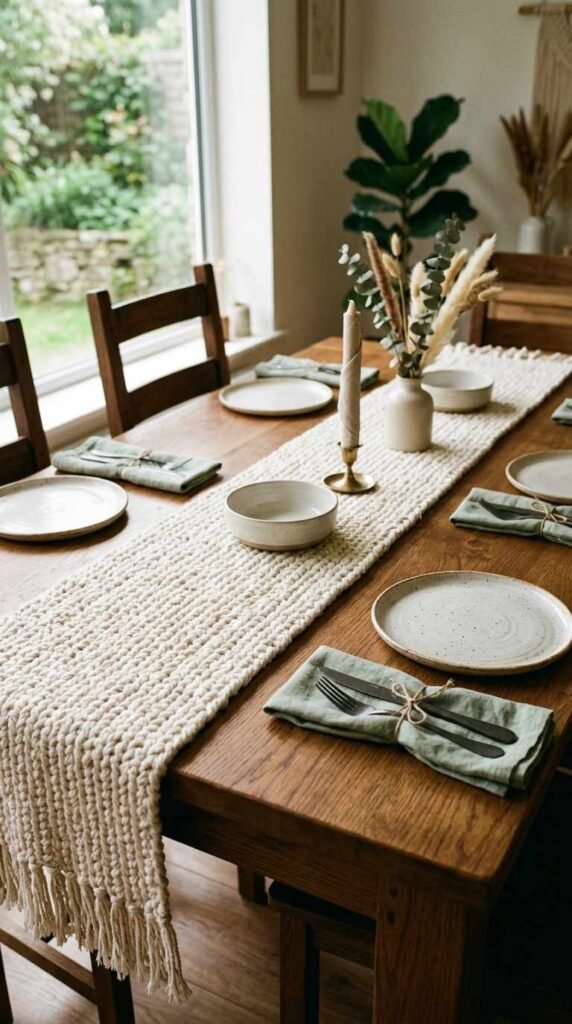
- Adds softness and polish before a single dish is set out
- Protects the table surface during meals
- Works in crisp white, natural linen, or a subtle woven pattern
- Suits both everyday elegance and special occasion use
- Easy to swap seasonally for a refreshed look
A table runner or cloth does more than protect the wood beneath it, it signals that the meal ahead is worth dressing the table for. Natural linen remains a reliable choice among home decor ideas for your dining room, since the slightly wrinkled, organic texture adds visual interest that a flawless synthetic fabric simply doesn’t achieve. It also gives you an easy way to refresh the table’s look without touching any larger furniture piece.
Choosing quality fabric over a synthetic blend makes a noticeable difference in how the material drapes and feels at the table. A properly sized cloth should hang 8 to 12 inches over each edge, long enough to look intentional without dragging into laps during a meal.
7. Open Shelving Display
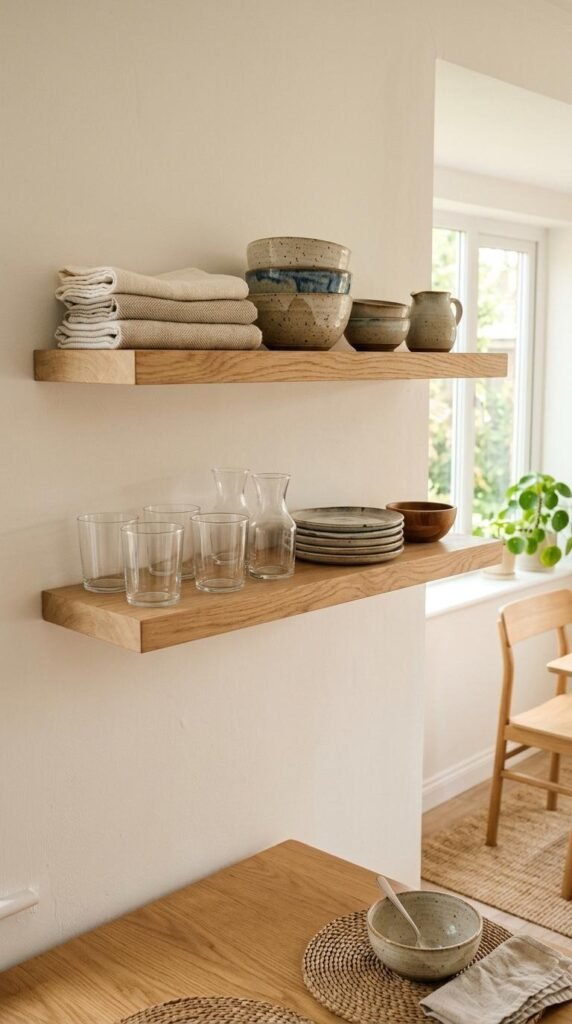
- Shows off dishware instead of hiding it behind doors
- Keeps everyday items within easy reach
- Costs less than most built-in cabinetry
- Encourages a more curated, thoughtful arrangement
- Works well on narrow or wide dining room walls
Open shelves let dishware and decor become part of the room’s visual interest rather than something tucked behind closed cabinet doors. A few wood planks, mounted on simple brackets, hold everything from stacked plates to small vases, turning unused wall space into genuine display. This approach appears frequently among home decor ideas for your dining room, since the arrangement can be restyled seasonally without purchasing new furniture at all.
Leaving roughly a third of each shelf empty keeps the display feeling curated rather than overcrowded. Grouping items in odd numbers creates natural visual rhythm across the shelving, while heavier pieces belong on lower shelves for both stability and ease of access during everyday use.
8. Ceramic Centerpiece Styling
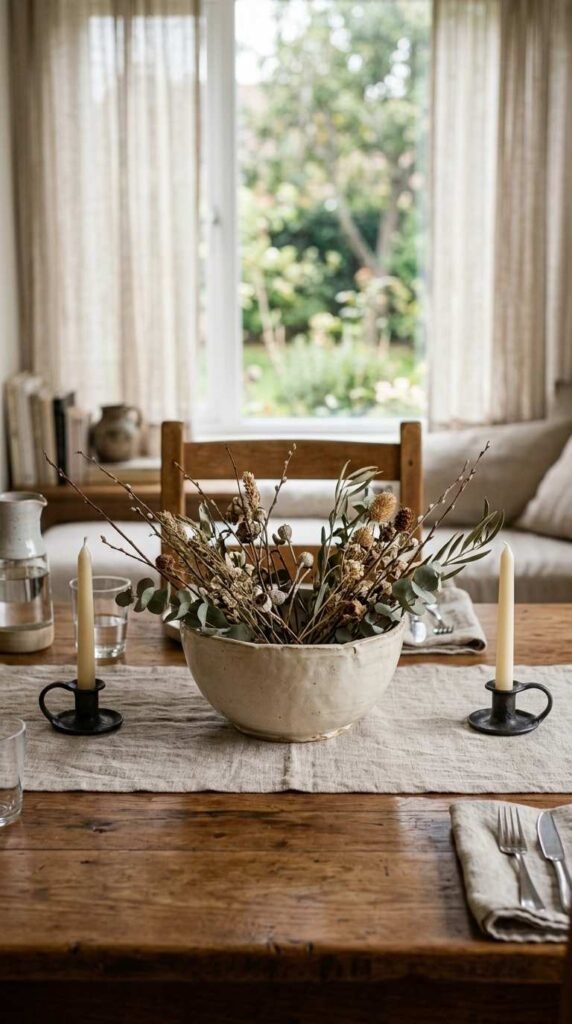
- Adds sculptural shape without needing fresh flowers
- Works beautifully empty or lightly filled with stems
- Neutral tones suit nearly any dining room color scheme
- Easy to rearrange for different occasions or seasons
- Affordable way to add visual interest to a bare table
A small grouping of ceramic vases, varying slightly in height and shape, brings sculptural interest to a table even when left completely empty. Matte finishes in white, cream, or soft terracotta suit the widest range of styles, letting the vases’ simple silhouettes do the visual work. Among home decor ideas for your dining room, this is one of the more flexible options, since the same cluster can be restyled in minutes by swapping in a single stem or seasonal accent.
Grouping vases in odd numbers, three tends to work particularly well, creates a more natural, balanced arrangement than an even pairing. Leaving at least one vase empty, rather than filling every single one, keeps the grouping feeling relaxed rather than overly staged.
9. Wallpaper Accent Wall
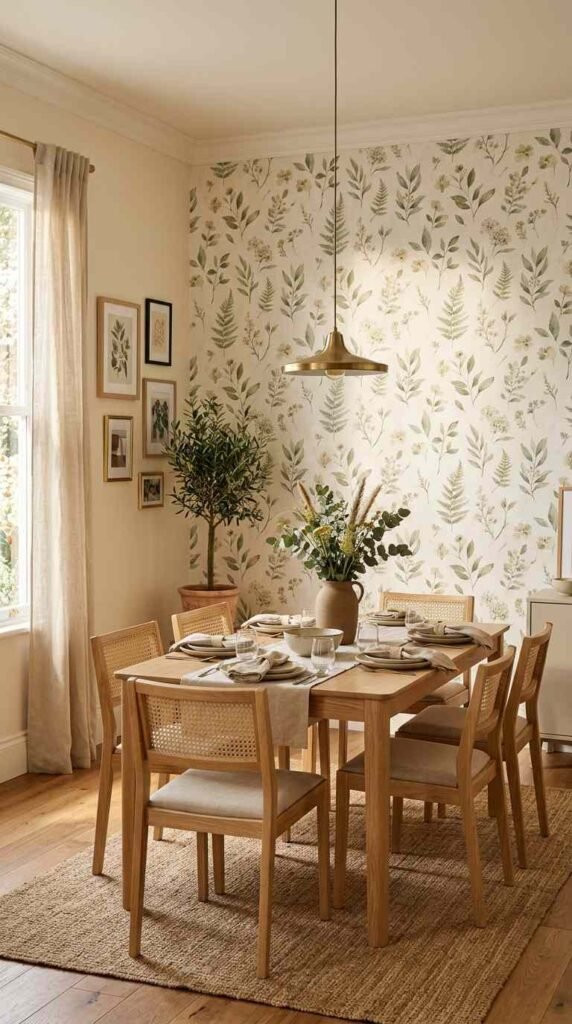
- Adds pattern and color reminiscent of a fully designed room
- Brings genuine character to a plain wall
- Works as a full room treatment or a single accent wall
- Available in both bold prints and subtle textures
- Peel-and-stick versions offer a renter-friendly alternative
A statement wallpaper, whether a bold botanical print or a subtle grasscloth texture, brings an unmistakable sense of intention to a dining room. Covering just the wall behind a sideboard, rather than the whole room, keeps the project manageable while still delivering real impact. This detail rounds out many home decor ideas for your dining room nicely, since wallpaper covers considerable visual real estate for a relatively modest cost compared to furniture changes.
Choosing a smaller-scale print for a compact room keeps the pattern from feeling overwhelming, while a larger, bolder design suits a more spacious dining area comfortably without crowding the furniture beneath it.
10. Statement Sideboard Styling
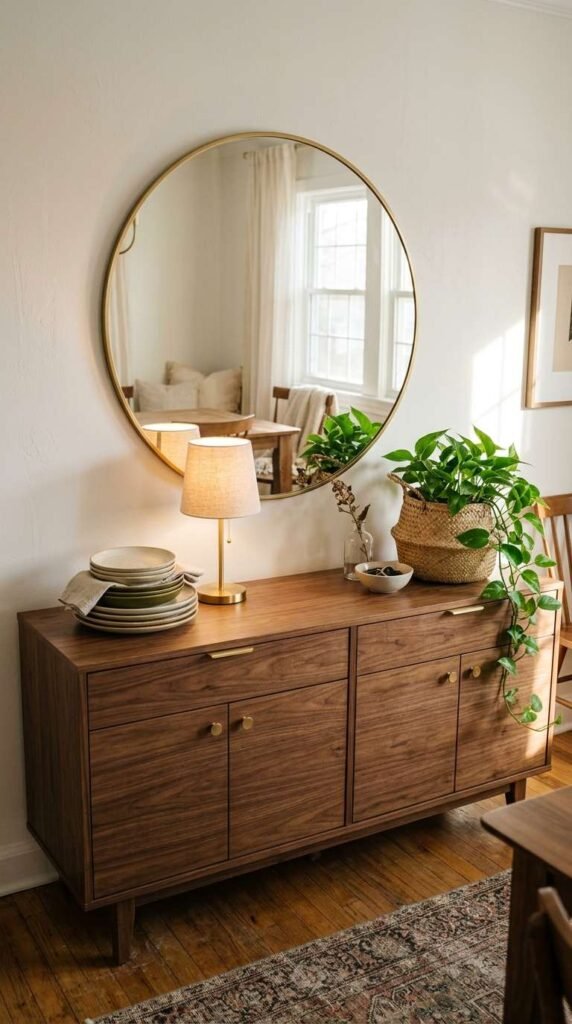
- Adds essential storage with genuine visual presence
- Doubles as extra serving surface during gatherings
- Anchors one wall with real furniture-level style
- Suits both formal and relaxed dining room approaches
- Works beautifully paired with art or a mirror above it
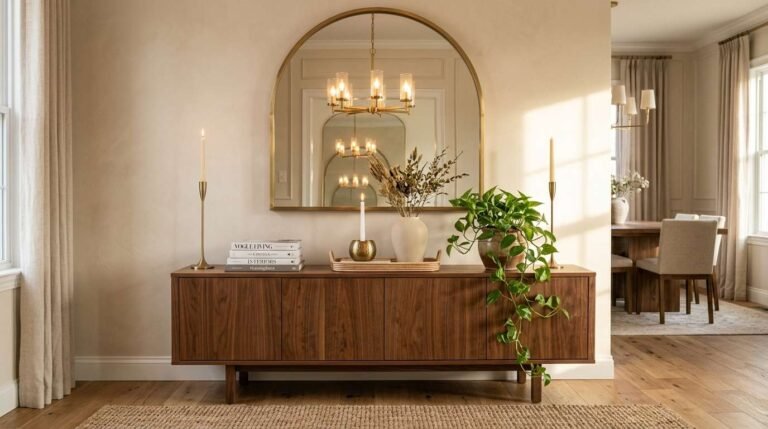
A sideboard earns its place in nearly every well-styled dining room, offering storage for linens and serving pieces while anchoring one wall with genuine presence. Choosing a piece with an interesting finish, whether a bold painted color or a distinctive wood grain, turns function into a real design statement. Among home decor ideas for your dining room, this piece tends to carry more visual weight than almost any other single furniture choice outside the table itself.
Styling the top with just two or three items, rather than a crowded arrangement, lets the sideboard’s own character remain the main visual interest. Pairing it with a mirror or art above it creates a natural focal point along one wall, balancing the dining table on the opposite side of the room.
11. Oversized Wall Mirror
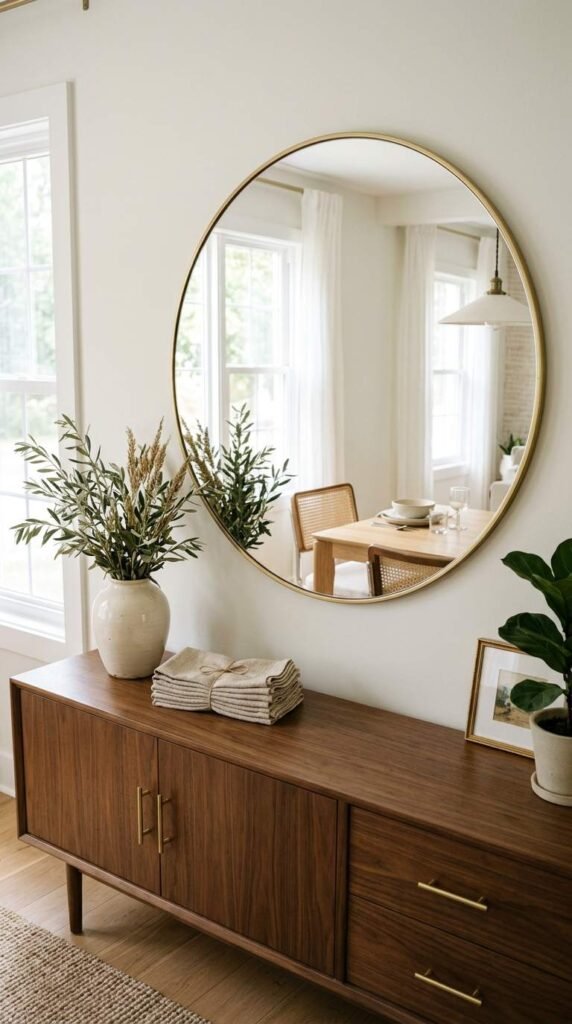
- Bounces light across the entire room
- Makes a dining space feel noticeably larger and brighter
- Works as a single, uncomplicated focal point
- Suits nearly every dining room style and era
- Reflects table settings and candlelight for added shine
An oversized mirror positioned across from a window multiplies whatever brightness already exists in the room, making even a modest dining space feel considerably more open. Unlike framed art, a mirror never competes for attention, it simply reflects and amplifies whatever is already working elsewhere in the room. This idea consistently ranks among the most effective home decor ideas for your dining room, since the reflected light does more for a space than nearly any other single wall choice available.
Sizing the mirror to roughly two-thirds the width of the furniture beneath it keeps the piece feeling proportional. Positioning it to reflect a chandelier or window, rather than a blank wall, maximizes its brightening effect throughout both day and evening hours.
12. Warm Pendant Lighting
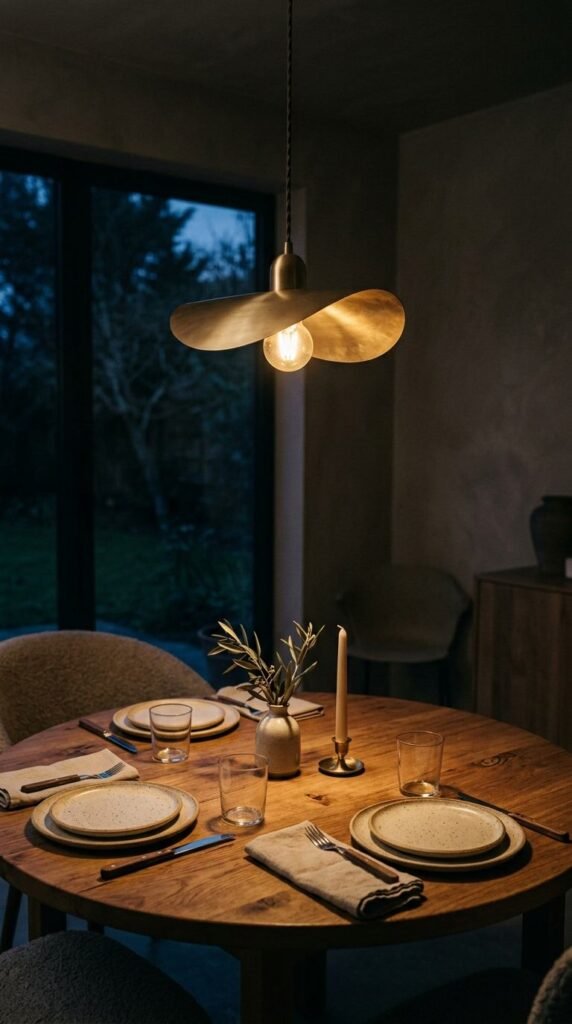
- Casts flattering, golden-toned light across the table
- Works well as a single statement or a clustered arrangement
- Frees up table and floor space entirely
- Suits rooms where the ceiling sits lower than average
- Pairs beautifully with a dimmer switch for ambiance
Pendant lighting, especially in warm amber glass or softened frosted finishes, casts light that flatters both food and faces far better than a stark white bulb ever could. Hung at the right height, roughly 30 to 36 inches above the table, a pendant becomes a genuine focal point among home decor ideas for your dining room while also solving a practical lighting need that overhead flush fixtures often fail to address well.
Clustering two or three smaller pendants at slightly varied heights can create more visual interest than relying on one large central fixture. Choosing warm-toned bulbs, rather than cool white ones, suits most dining rooms considerably better, echoing the softer light associated with candlelight and evening gatherings while complementing practical home decor organization ideas that keep the dining space feeling balanced and uncluttered.
13. Botanical Greenery Accents
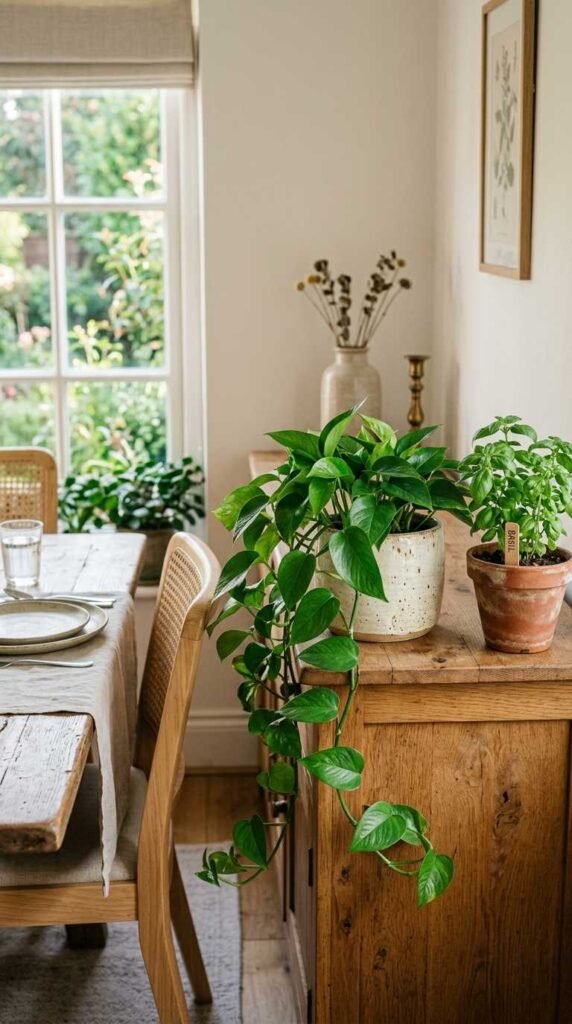
- Adds life and color without needing a full floral arrangement
- Softens hard surfaces like wood, glass, and metal
- Works well in a simple vase or trailing from a shelf
- Brings a fresh, garden-inspired feel indoors
- Faux versions offer a nearly identical look with zero upkeep
A simple stem of greenery, whether a single eucalyptus branch or a trailing pothos tucked onto a shelf, breaks up a dining room that might otherwise feel entirely made of hard surfaces. The natural color and gentle movement add softness that ceramic, glass, and polished wood alone can’t provide. This detail shows up constantly among home decor ideas for your dining room precisely because it’s such a small addition with a noticeably large visual payoff.
For anyone short on time or dealing with a room that gets little natural light, a well-made faux branch holds up visually just as well without requiring any ongoing care at all, making it a practical option for a room not used daily.
14. Mixed Metal Finishes
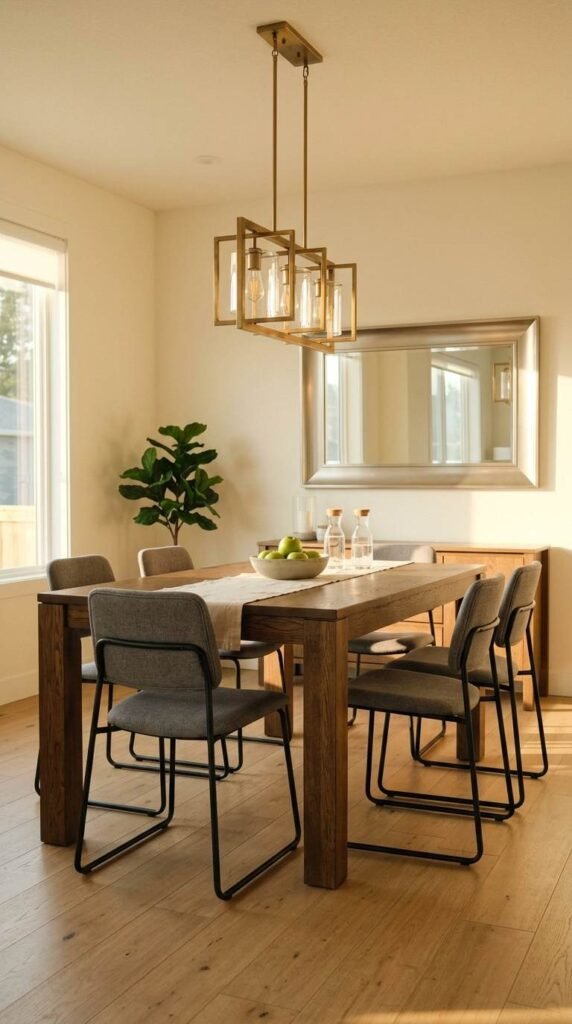
- Adds depth without needing extra color or pattern
- Prevents the room from feeling too matched or predictable
- Works across lighting, hardware, and furniture legs
- Creates a layered, collected look rather than a matching set
- Suits both warm and cool overall color schemes
Mixing metal finishes, brushed brass alongside matte black, or chrome against aged bronze, adds depth to a dining room without introducing a single new color into the space. This layered approach feels more collected than a room where every metal element matches perfectly, which can occasionally read as overly coordinated. Among home decor ideas for your dining room, mixed metals stand out as a subtle but effective way to add sophistication to an otherwise simple palette.
Choosing one dominant finish and treating the others as accents keeps the mix from feeling accidental. Rooms with roughly 60 percent one metal, paired with smaller accent tones elsewhere, tend to feel the most balanced rather than evenly split between finishes.
15. Linen Window Curtains
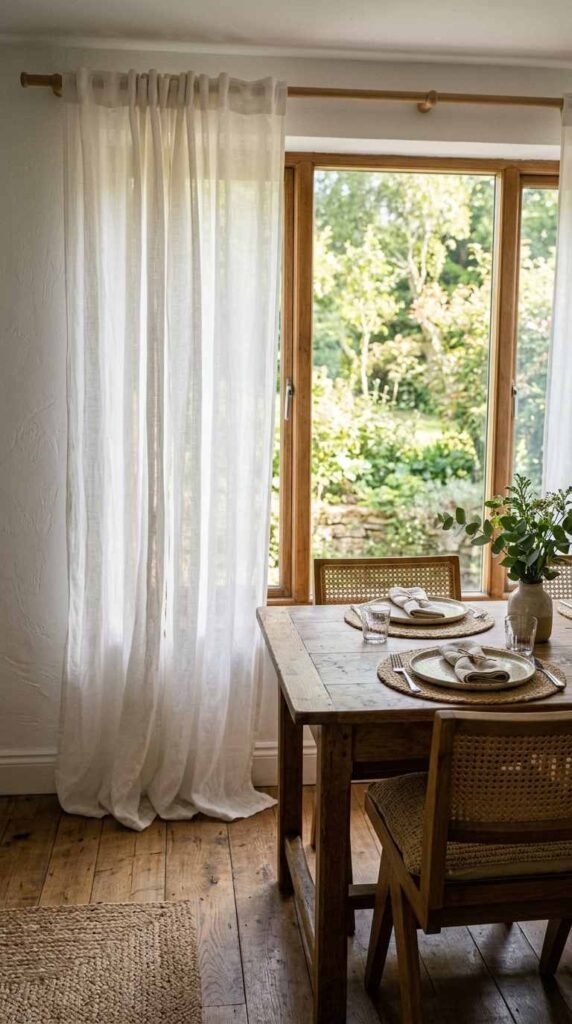
- Adds softness and height to the windows
- Filters daylight into a warm, natural glow
- Suits both casual and slightly more formal dining rooms
- Machine washable, unlike many heavier drapery fabrics
- Works in cream, oatmeal, or soft gray tones
Simple linen curtains bring softness to a dining room’s windows without the stiffness that heavier drapery fabrics sometimes carry. The naturally slubby, slightly wrinkled texture suits a wide range of styles, since the fabric’s relaxed quality works equally well in both farmhouse and more contemporary dining rooms. Among home decor ideas for your dining room, linen remains a dependable choice precisely because it adapts so easily to whatever furniture surrounds it.
Hanging the curtain rod slightly above the window frame, rather than directly on it, makes the window appear taller and lets more light in when the panels are pulled back to the sides.
16. Built-In Banquette Seating
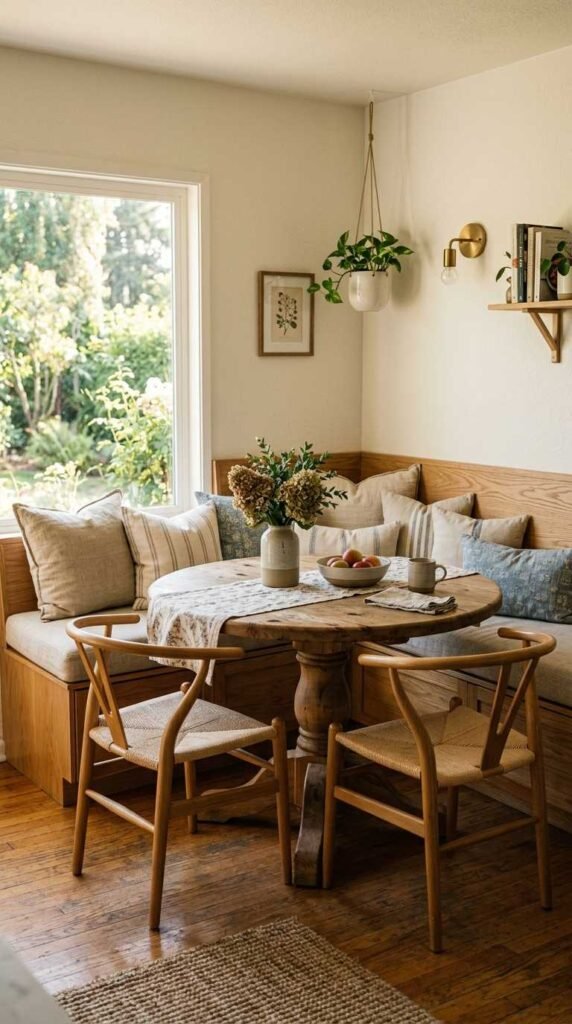
- Maximizes seating in a corner or against a wall
- Adds hidden storage potential beneath the bench seat
- Removes the need for chairs on one or two sides
- Creates a cozy, restaurant-style dining experience
- Works well with a round or square table nearby
A built-in banquette wraps bench seating around a corner or along a wall, turning previously unused space into genuine seating capacity. This setup removes the need for individual chairs on that side of the table entirely, which can save more floor space than almost any other single change. Among home decor ideas for your dining room, banquette seating works particularly well in smaller spaces, since the built-in nature gives the room a restaurant-booth coziness that standard chairs rarely achieve, while spring dining room table decor can add fresh seasonal accents to the surrounding space.
A lift-up seat or drawers built into the base turn wasted under-bench space into storage for table linens or seasonal decor. Cushioning the seat in a durable, wipeable fabric matters considerably, since banquettes see more consistent daily use than individual chairs typically do.
17. Seasonal Table Styling
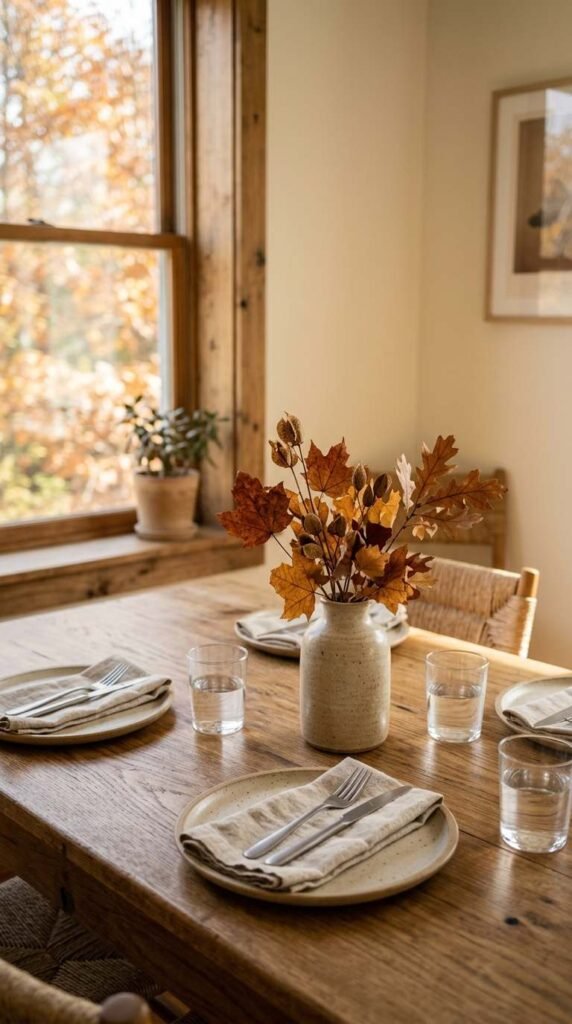
- Keeps the room feeling fresh throughout the year
- Requires only small, low-cost swaps
- Uses the same base pieces with rotating accents
- Makes the dining room feel like an active part of the home
- Simple enough to do in under an hour
A dining room doesn’t need a full overhaul every few months to feel current, just a handful of small, seasonal swaps layered onto the same foundational pieces. A few dried stems in fall, a bowl of lemons in summer, or simple greenery in spring keeps the table feeling alive without requiring a complete restyle each time. This approach to home decor ideas for your dining room keeps the effort minimal while still giving the space a reason to feel new throughout the year.
Rotating Décor Through the Year
Storing seasonal pieces in labeled bins makes each swap take only a few minutes rather than becoming its own project. Changing just one or two items, rather than overhauling the entire table, is usually enough to make the shift genuinely noticeable. A single seasonal candle scent or a small themed object tucked among the everyday pieces does more work than people tend to expect from such a minor addition to the room.
18. Wall Sconce Lighting
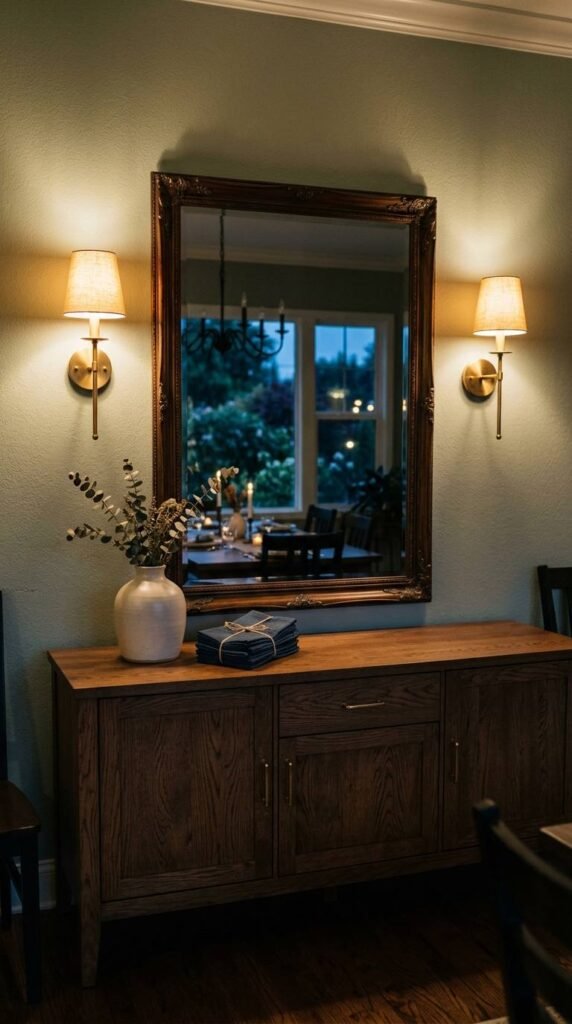
- Adds warm, flattering light without using table space
- Frees up the table entirely for dishes and centerpieces
- Creates symmetry when installed in matching pairs
- Works well flanking a mirror or piece of art
- Dimmable versions add flexibility for different occasions
Wall-mounted sconces solve a lighting problem that table lamps and floor lamps both create: they take up space that a dining room genuinely needs for other things. Installed in a pair flanking a mirror or piece of art, sconces create instant symmetry while adding warm, flattering light directly where it’s needed during an evening meal. Among home decor ideas for your dining room, this fixture style delivers genuine function without sacrificing an inch of usable surface space.
Mounting sconces around 60 to 66 inches from the floor keeps the light at a comfortable eye level without glaring into anyone’s face while seated. Choosing a warm bulb, rather than a cooler white tone, suits most dining rooms considerably better for evening gatherings.
19. Bold Accent Wall Color
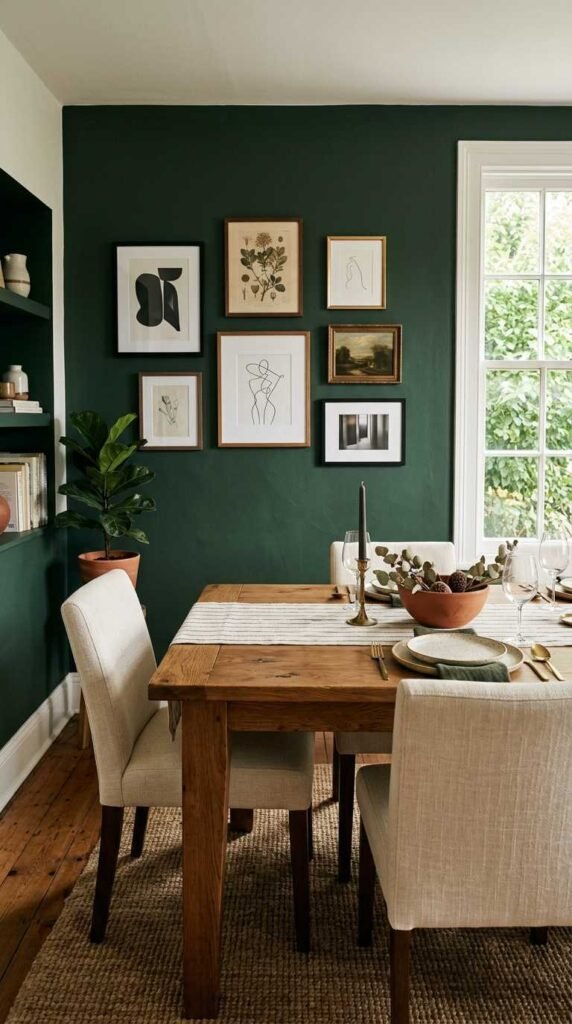
- Adds drama and depth without committing the entire room
- Works beautifully behind a sideboard or dining table
- Pairs well with gold or brass accents nearby
- Suits rooms wanting a bolder evening atmosphere
- A relatively low-cost way to transform the space
A single wall painted in a deep, saturated color, navy, forest green, or burgundy, adds genuine drama without requiring the commitment of painting the entire room. Positioned behind the dining table or a sideboard, this accent wall becomes the room’s natural focal point, since the darker tone absorbs light in a way that makes evening candlelight or chandelier glow look considerably richer. Among home decor ideas for your dining room, this approach delivers outsized visual impact for the cost of just a single wall’s worth of paint.
Testing the color at different times of day helps confirm how it will actually read in the room, since deep tones shift noticeably between morning and evening light.
20. Vintage Furniture Pieces
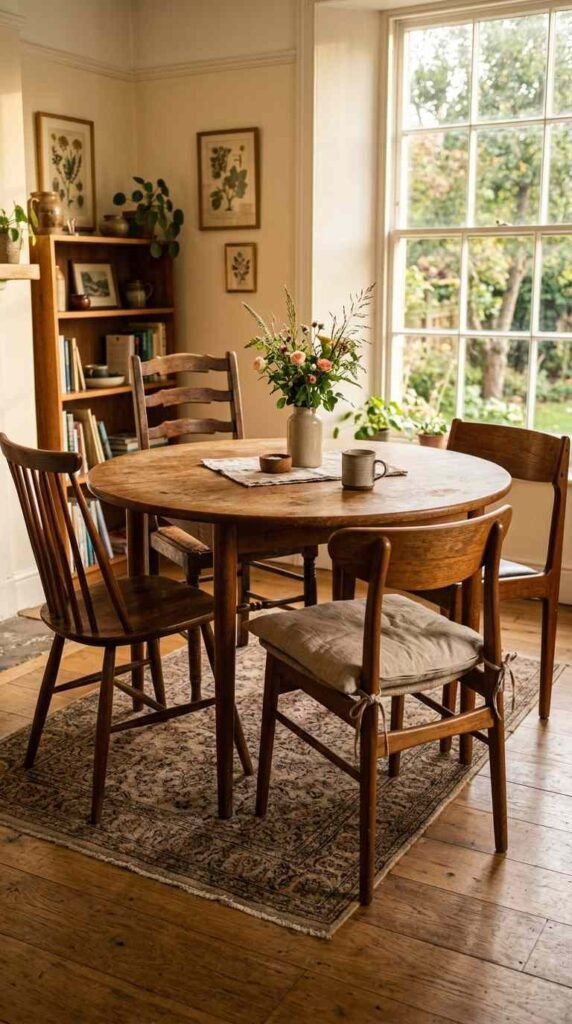
- Adds genuine character that new furniture can’t replicate
- Carries real history through wear and patina
- Works beautifully mixed with newer, more modern pieces
- Often more affordable than comparable new furniture
- Turns the room into a reflection of personal taste
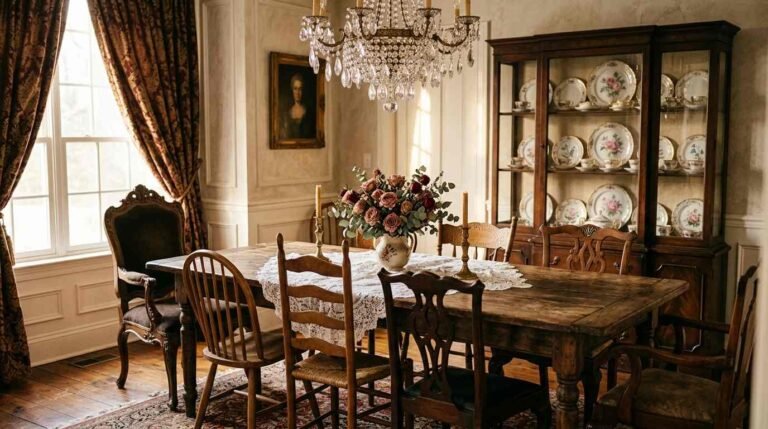
A single antique piece, a vintage sideboard, a set of mismatched chairs, or an old mirror with aged patina, brings genuine character to a dining room that brand-new furniture simply can’t replicate. Mixing these finds with more contemporary pieces keeps the room from feeling like a period showroom while still adding real depth and story. Among home decor ideas for your dining room, vintage furniture remains one of the more personal choices, since each piece typically comes with its own history.
Thrift stores, estate sales, and online marketplaces all serve as reliable, affordable sources for this kind of gradual collection. Keeping roughly half the room modern and half vintage tends to prevent either style from completely dominating the overall look.
21. Woven Textural Baskets
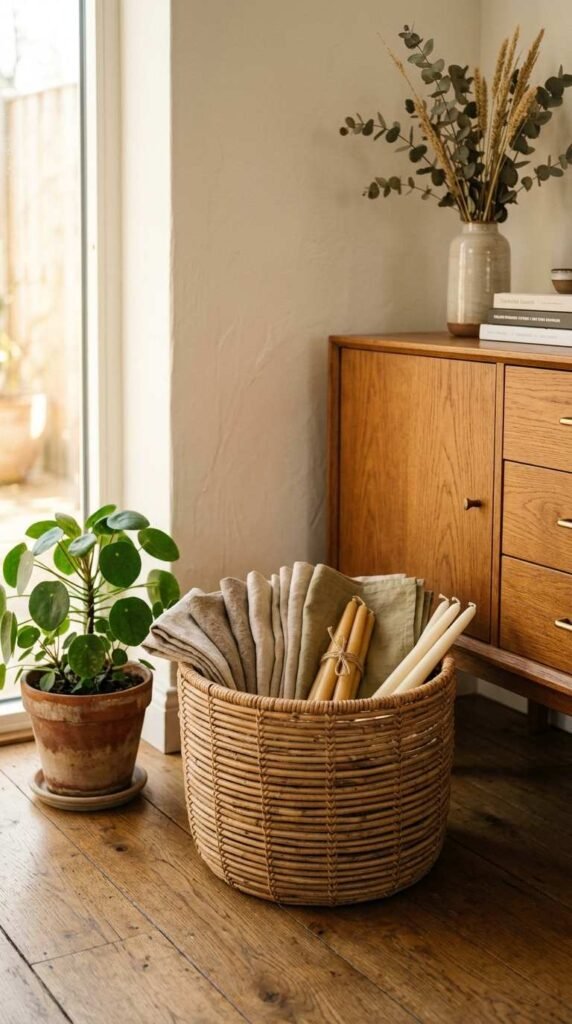
- Adds natural texture without needing frames or furniture
- Budget-friendly compared to most decor options
- Works well in odd-numbered groupings on a wall or shelf
- Brings dimension with very little space used
- Lightweight and simple to incorporate anywhere in the room
Woven baskets bring natural texture into a dining room in a way flat surfaces simply cannot replicate. Whether hung in a cluster on the wall or stacked on an open shelf, their rustic weave adds warmth that balances out the harder materials, like glass and polished wood, typically found throughout the rest of the furniture. This detail appears often among home decor ideas for your dining room because it delivers genuine texture for very little cost.
Mixing two or three basket shapes, round, oval, and slightly flattened, keeps a grouping from feeling too uniform. Thrift stores and flea markets remain reliable, affordable sources for finding these pieces.
22. Personal Family Photo Display
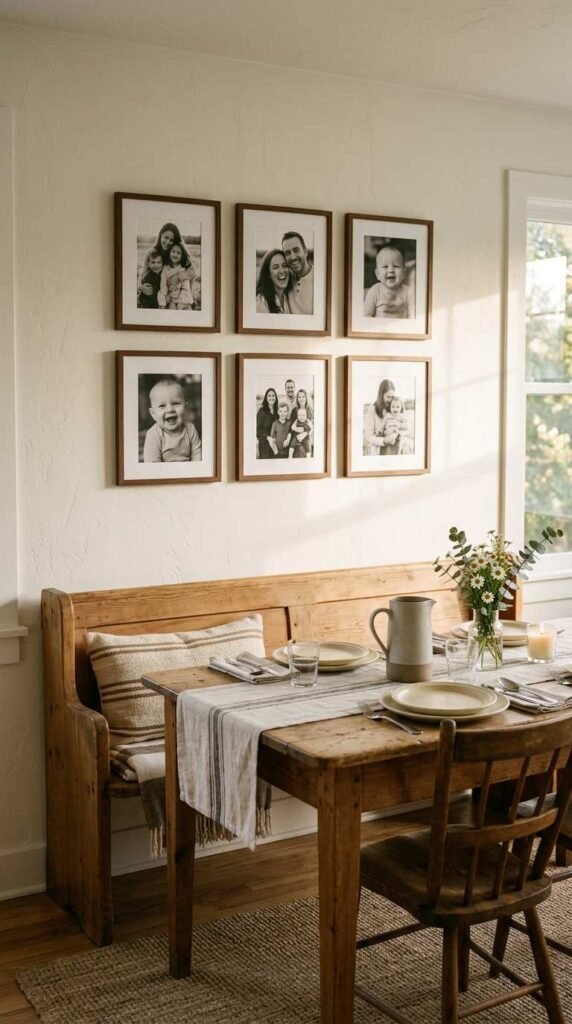
- Adds genuine warmth and personality to the room
- Works well in a small cluster of varied frame sizes
- Brings meaningful memories into daily view
- Suits both formal and casual dining room styling
- Easy to update as new photos accumulate
A thoughtfully arranged cluster of family photographs brings a layer of genuine personality to a dining room that purely decorative objects can’t replicate. Black and white photography in particular tends to blend more seamlessly into a varied arrangement than color photos, since the absence of competing colors keeps the overall look calmer. This final detail rounds out home decor ideas for your dining room especially well, since it’s the one choice that makes the space feel unmistakably personal.
Mixing a few different frame sizes and finishes, while keeping a consistent color palette, prevents the display from feeling too casual or scattered. Updating even just one photo every so often keeps the arrangement feeling current and genuinely reflective of ongoing family life.
FAQS
1. What is the easiest way to update a dining room?
Swapping lighting fixtures or hardware finishes delivers a noticeable change for relatively little cost. A new chandelier, updated bulbs, or fresh drawer pulls on a sideboard often make the biggest visible difference for the lowest effort.
2. How do I choose the right dining room lighting?
Size the fixture using the room’s length and width in feet, converted to inches for the diameter. Hang it 30 to 36 inches above the table, and choose warm-toned bulbs that flatter both food and faces during meals.
3. What colors work best for a dining room?
Soft neutrals create a calm, flexible backdrop, while deep jewel tones like navy or forest green add drama for evening use. Either approach works well, depending on whether the room is used mostly during the day or at night.
4. Do I need matching furniture in my dining room?
No, mismatched chairs or a sideboard in a different wood tone than the table often look more collected than a perfectly matched set. What matters most is that the pieces share a similar warmth or finish quality.
5. How can I add texture without adding clutter?
Choose a few key pieces, like woven baskets, linen curtains, or a textured rug, rather than layering many small items at once. Texture works best when it’s noticeable but not competing with too many other details.
6. What is the best way to style a dining room sideboard?
Keep the top to two or three items, pair it with a mirror or art above it, and leave some open space rather than filling every inch. This restraint keeps the piece looking intentional rather than cluttered.
7. Should I add art or a mirror to my dining room?
Both work well, though a mirror offers the added benefit of reflecting and amplifying light throughout the room. Choosing based on whether the room needs more brightness or more color usually points to the right answer.
8. How do I make a small dining room feel bigger?
An oversized mirror across from a window, a light color palette, and furniture with a slim profile all help. These choices work by reflecting light and reducing visual weight rather than adding actual square footage.
9. What is a simple way to add seasonal charm?
Swap just one or two small items, like a centerpiece or a table runner, rather than restyling the entire room. Storing seasonal pieces in a labeled bin makes each swap quick and genuinely manageable.
10. How often should I update my dining room decor?
Larger pieces, like furniture and lighting, can stay the same for years, while smaller details, like a centerpiece or linens, benefit from refreshing every season or two to keep the room feeling current.
Conclusion
A dining room doesn’t need a full renovation to feel genuinely finished. From a statement chandelier to a cluster of family photos, these home decor ideas for your dining room prove that real style comes from layering a handful of thoughtful choices rather than one single expensive purchase. I’ve seen how something as simple as swapping in warm lighting or adding a vintage sideboard can completely change how a room feels the moment guests walk in. Save this list on Pinterest, try one idea in your own dining room this week, and share it with anyone else ready to give their space the attention it’s been waiting for.