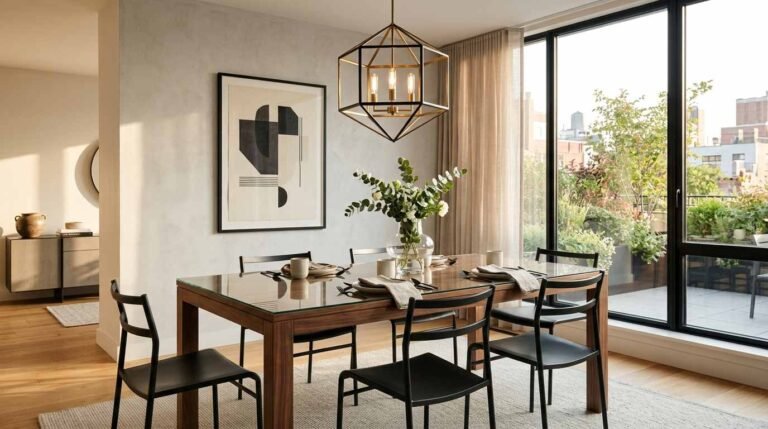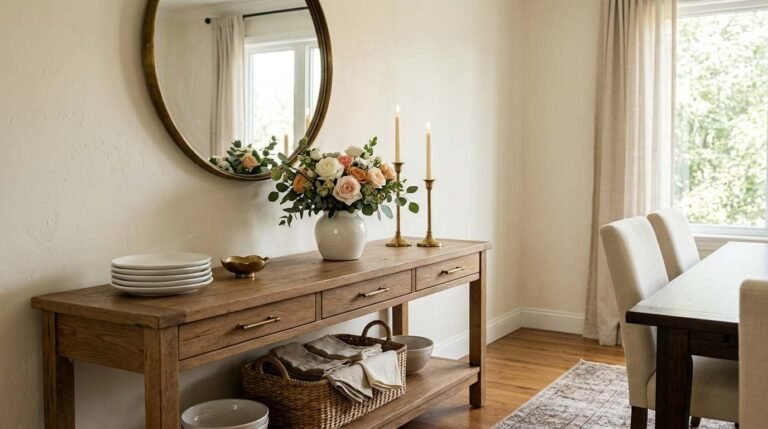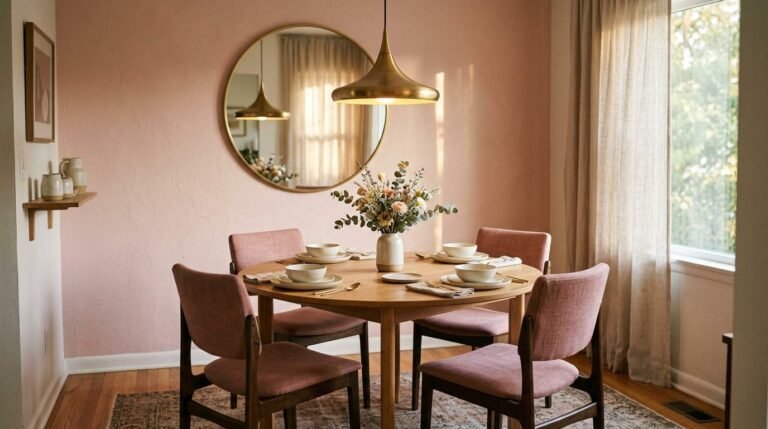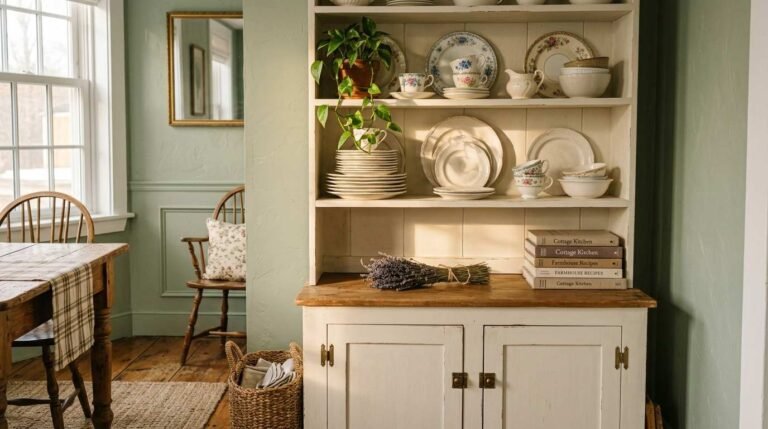
There’s a reason farmhouse style never really goes out of fashion, it just feels like home the moment you walk in. Farmhouse dining room decor leans on worn wood, soft textiles, and natural imperfection to create exactly that feeling, even in a house built last year. Many dining rooms feel a little flat simply because everything in them is too new, too matched, or too polished to feel lived in. I’ve noticed that the fix rarely requires a full renovation, it’s usually one reclaimed wood piece, a few mason jars, or a woven rug that changes the whole mood of the room. In this guide, you’ll find 25 ideas, from a distressed white hutch to a cotton stem centerpiece, that bring genuine warmth into everyday use. Save your favorites to Pinterest and start building a dining room that feels cozy from the very first visit.
1. Reclaimed Wood Farmhouse Table
- Carries real history in every knot and nail hole
- Anchors the room with substantial, grounded presence
- Hides everyday scratches and wear better than new wood
- Works with nearly any chair style around it
- A sustainable choice using salvaged material
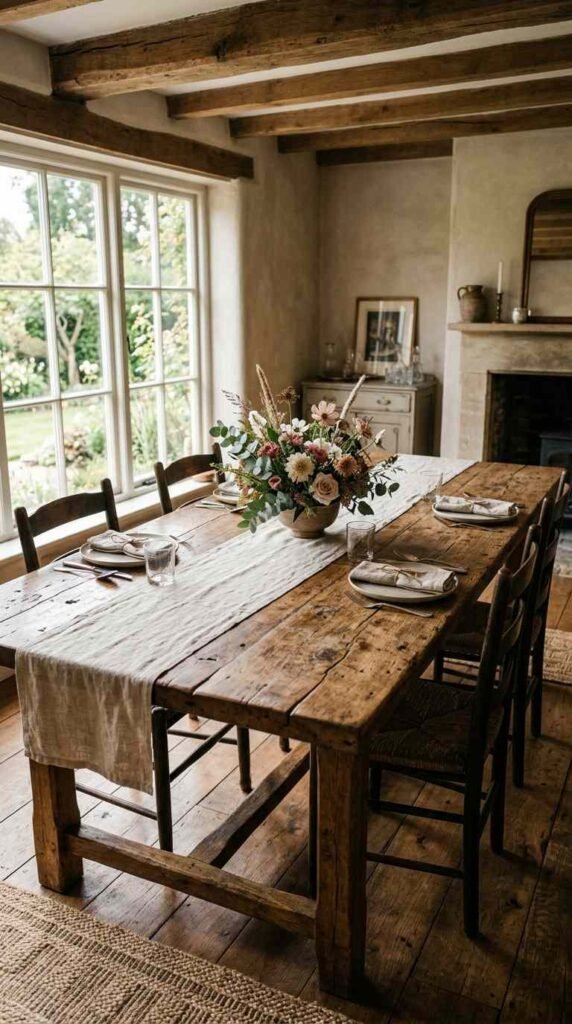
A reclaimed wood table sits at the heart of nearly every farmhouse dining room decor plan, and for good reason. Old barn boards and salvaged beams carry marks new lumber simply can’t fake, knots, nail holes, and weathered graining that give the piece real character before a single other item gets added to the room. Because the wood is already aged, everyday scratches and water rings blend right into the existing texture instead of standing out as damage, which matters considerably in a room used for daily meals.
Check the finish before buying, since a sealed surface handles spills far better than raw, unsealed wood. I’ve noticed that thick, solid tables can be surprisingly heavy, so measuring doorways before delivery saves a frustrating afternoon of maneuvering. A yearly coat of food-safe wax or oil keeps the surface healthy and brings out the grain’s natural variation, which only improves with a bit of regular care over the years.
2. Ladder-Back Farmhouse Chairs
- Adds classic, simple silhouettes around the table
- Works beautifully with or without cushions
- Suits both authentic antique and reproduction pieces
- Lightweight enough to move easily for cleaning or gatherings
- Pairs naturally with mismatched or painted finishes
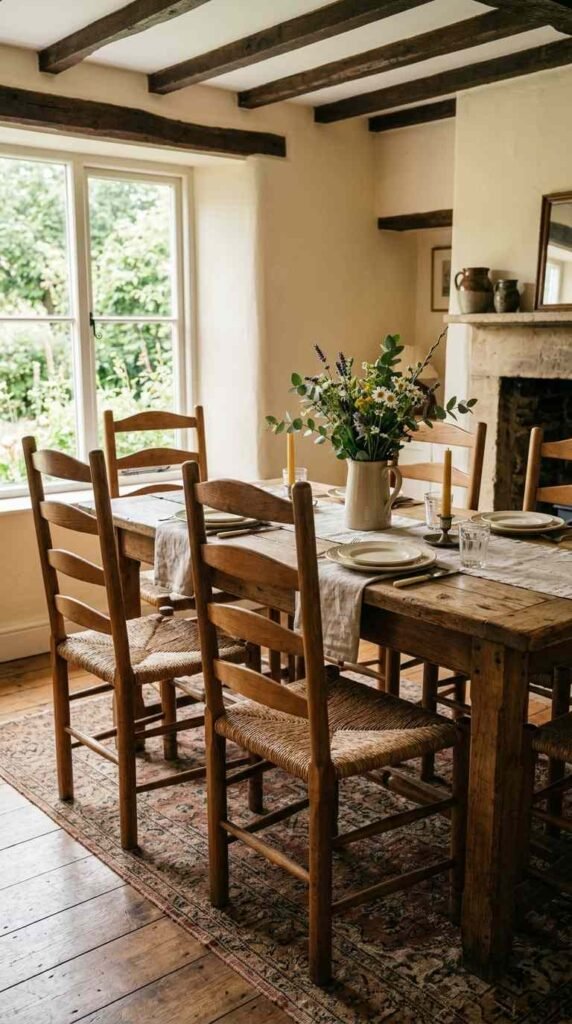
Ladder-back chairs, with their simple horizontal slats and spindle legs, remain one of the most recognizable pieces in farmhouse dining room decor. Their understated shape never competes with a bold table or a busy centerpiece, letting the chairs quietly do their job without drawing too much attention away from the rest of the room. Whether left in a natural wood tone or painted a soft white, these chairs suit nearly any farmhouse palette without much additional styling needed.
I’ve found that mixing two slightly different ladder-back styles, varying the spindle count or seat shape, actually looks more authentic than a perfectly matched set of six. Adding a simple cushion in buffalo check or plain linen softens the seat for longer meals without covering up the chair’s classic silhouette. Because these chairs are relatively lightweight, they’re also easy to pull out for extra seating whenever a crowd shows up unannounced.
3. Shiplap Accent Wall
- Adds texture and architectural interest to a plain wall
- Brings classic farmhouse character instantly
- Works well painted white or left in a natural wood tone
- Suits both full walls and smaller accent sections
- Achievable as a manageable weekend project
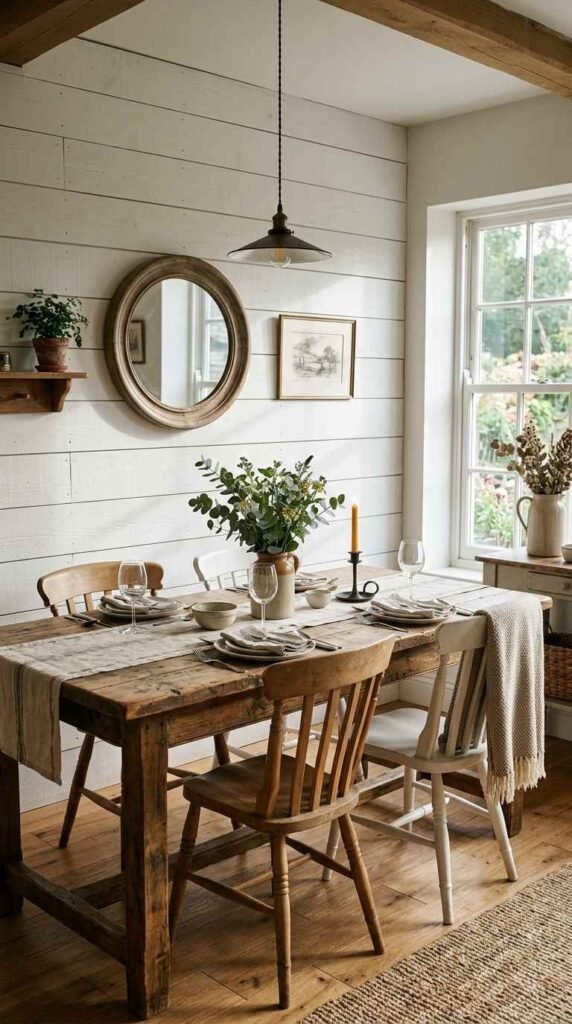
Few details signal farmhouse style as instantly as shiplap, the horizontal wood planks with their slightly recessed seams, running across a wall. Painted a crisp white, the texture catches shadow in a subtle, grooved pattern that flat drywall never achieves on its own. This detail anchors a huge portion of farmhouse dining room decor, since the wall itself becomes part of the room’s character rather than just a backdrop for furniture and art hung on top of it.
Lightweight shiplap panels, rather than solid reclaimed boards, make this a genuinely approachable DIY project over a single weekend. I’ve seen homeowners complete an entire accent wall using pre-primed MDF planks, nailed directly over existing drywall with a simple spacer to keep the gaps even. Leaving the wood in a natural, unpainted tone offers a slightly warmer alternative for anyone wanting the texture without the classic crisp white finish.
4. Galvanized Metal Accents
- Adds cool, weathered texture against warm wood tones
- Works well in buckets, trays, and small decor pieces
- Suits farmhouse rooms at nearly any price point
- Inexpensive and widely available secondhand
- Develops an authentic patina over time
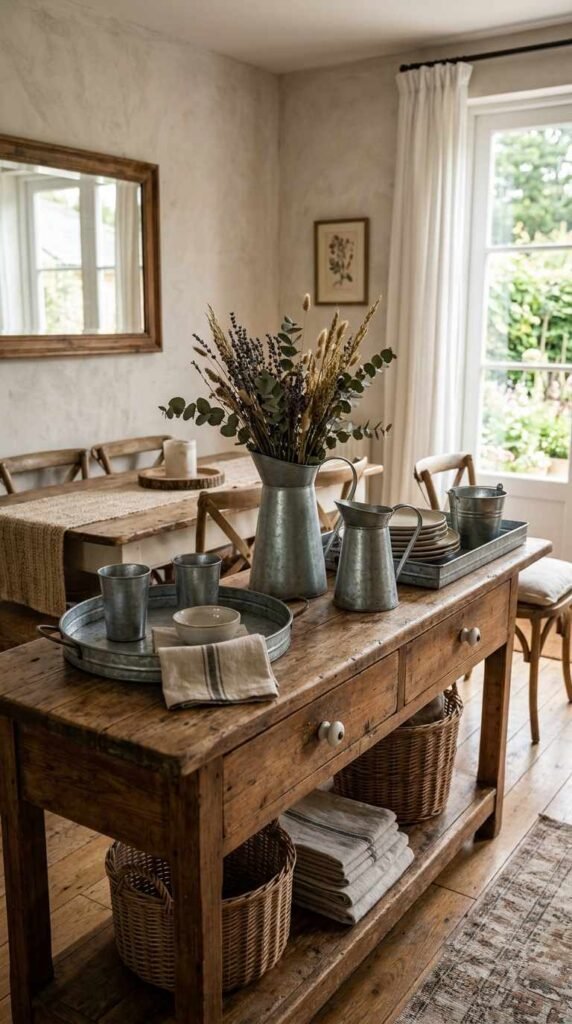
The slightly dull, silvery-gray finish of galvanized metal pairs beautifully against the warm wood tones found throughout most farmhouse dining rooms. A galvanized bucket holding fresh flowers, a metal tray beneath a centerpiece, or a few small decorative containers scattered around the room all add this cool textural contrast without introducing an entirely new color into the space. This material fits naturally into farmhouse dining room decor, since it carries genuine agricultural roots, echoing the containers once used for everyday, practical purposes on actual working farms.
Authentic vintage galvanized pieces often show real dents and worn patches, and I’ve noticed that many people actually prefer this aged look over a smooth, brand-new finish. Thrift stores and flea markets typically carry these pieces at very reasonable prices. Grouping two or three pieces of varying sizes together, rather than scattering single items around the room, creates a more intentional, considered vignette on a shelf or sideboard.
5. Mason Jar Centerpieces
- Adds charming, low-cost styling to the table
- Works for flowers, candles, or simple greenery
- Suits both everyday use and special occasions
- Easy to customize with twine, paint, or ribbon
- Inexpensive and widely available almost everywhere
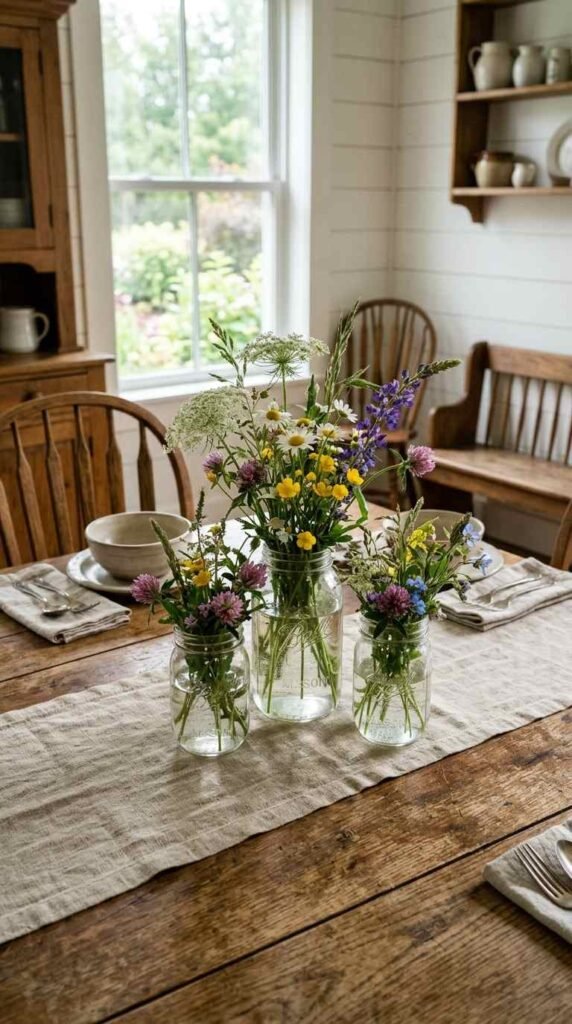
A simple mason jar filled with fresh or dried flowers brings instant farmhouse charm to a dining table without requiring any real investment. Clustered in groups of three or five at varying heights, jars add a casual, homemade quality that feels distinctly different from a formal vase arrangement. This idea remains one of the most accessible entries into farmhouse dining room decor, since mason jars are inexpensive, widely available, and simple enough to customize with a bit of twine or a quick coat of paint.
I’ve noticed that wrapping the jar necks in burlap or twine adds another layer of natural texture that ties the centerpiece visually into the rest of the room’s material palette. Keeping the arrangement relatively low allows guests seated around the table to see and speak with one another easily during a meal. Swapping the greenery or flowers seasonally keeps this simple centerpiece feeling fresh throughout the year without much ongoing effort.
6. Vintage-Inspired Pendant Lighting
- Adds warm, period-appropriate light above the table
- Works well in glass, metal, or frosted milk glass styles
- Suits both single statement fixtures and clustered arrangements
- Pairs beautifully with dimmer switches for ambiance
- Available in both genuine antique and reproduction versions
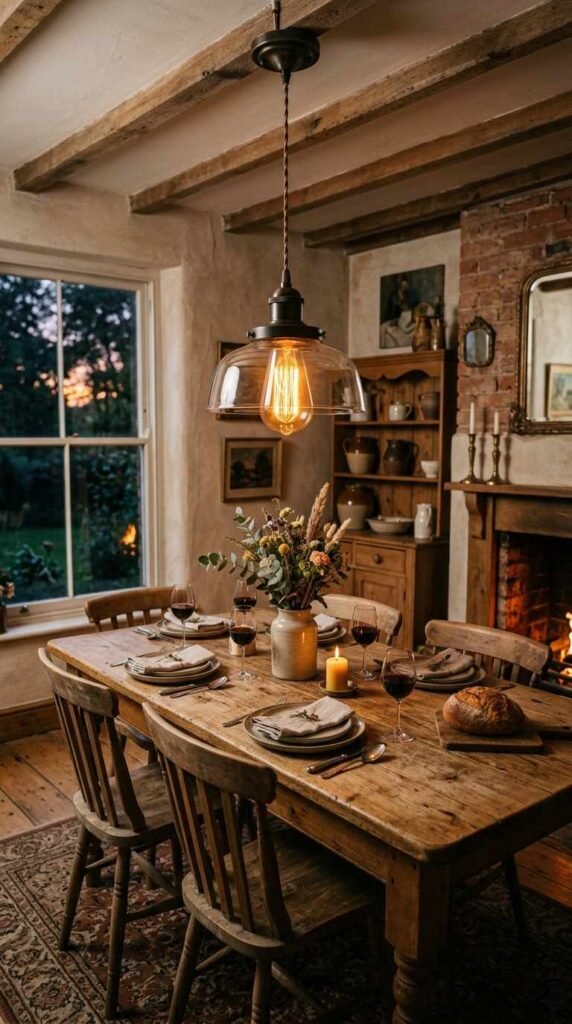
A pendant light styled after earlier decades, whether hammered metal, simple frosted glass, or an exposed bulb design, brings warm, period-appropriate character directly above the dining table. Unlike a stark modern fixture, these styles diffuse light more softly, creating the gentle glow associated with farmhouse kitchens and dining rooms from several generations back. This detail rounds out farmhouse dining room decor nicely, since lighting changes the entire mood of a meal far more than most people initially expect from a single fixture.
Clustering two or three smaller pendants at slightly varied heights can create more visual interest than relying on one large central fixture alone. I’ve noticed that warm-toned bulbs, rather than cool white ones, suit this style particularly well, echoing the softer, more golden light older incandescent bulbs originally provided. Adding a dimmer switch allows the room to shift easily between brighter daily use and a softer glow for evening meals, creating an inviting atmosphere that complements cozy living room ideas in open-plan homes.
7. Open Farmhouse Shelving
- Shows off dishware instead of hiding it behind doors
- Keeps everyday items within easy reach
- Costs less than most built-in cabinetry
- Encourages a more curated, thoughtful arrangement
- Works well on narrow or wide dining room walls
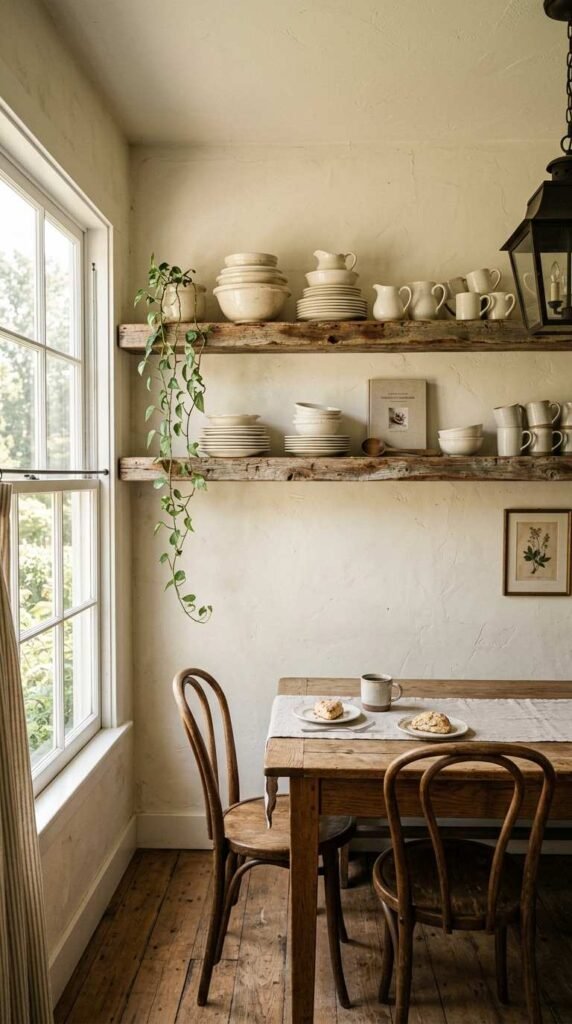
Open shelves, built from simple reclaimed boards on black iron brackets, let everyday dishware become part of the decor rather than something stored away. Stoneware, mason jars, and a few woven baskets all find a natural home here, turning function into something genuinely decorative. This is one of the more defining features of farmhouse dining room decor, since the open display encourages a more considered, intentional arrangement than a closed cabinet ever demands from the person styling it.
I’ve noticed that leaving roughly a third of each shelf empty keeps the display feeling curated rather than overcrowded. Grouping items in odd numbers, like three ceramic bowls or a stack of two cookbooks beside a small plant, creates natural visual rhythm across the shelving. Heavier items belong on lower shelves for stability, while lighter decorative pieces work well higher up where they’re mainly meant to be seen rather than reached daily.
8. Distressed White Hutch
- Adds genuine storage with real farmhouse character
- Worn, weathered finish hides everyday wear naturally
- Doubles as display space for china or glassware
- Suits both authentic antique and newly distressed pieces
- Pairs well with iron or brass hardware accents
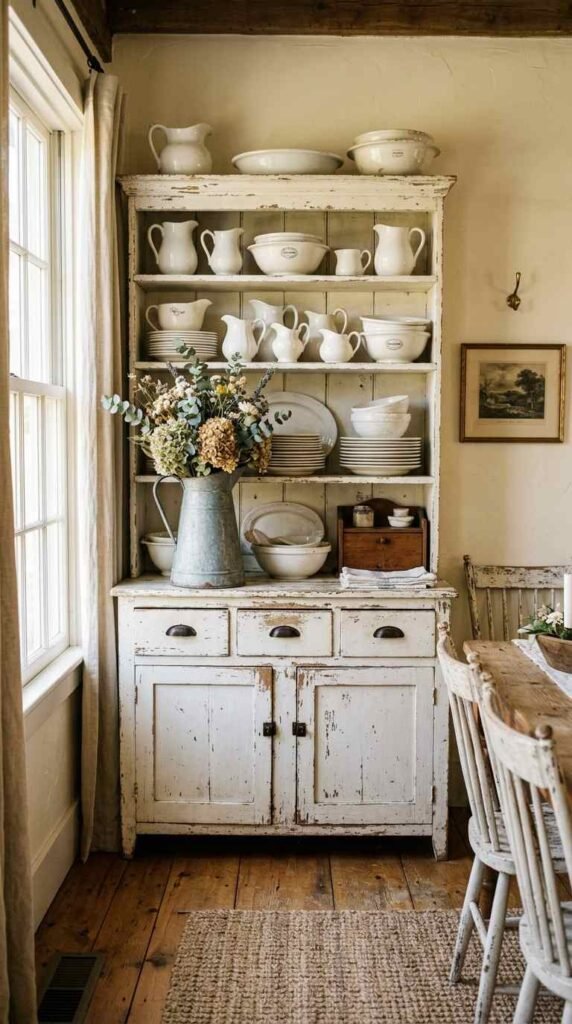
A hutch finished with a deliberately distressed, chipped white paint brings both function and classic farmhouse charm into a dining room. Unlike a smooth, factory-new finish, the worn texture actually hides everyday scuffs rather than showing every mark clearly, making it a genuinely practical choice for a piece that sees regular daily use. This furniture style anchors a significant portion of farmhouse dining room decor, since the intentional wear echoes the same aged, collected quality found throughout reclaimed tables and vintage accents elsewhere in the room.
Choosing hardware in aged iron or unlacquered brass ties the hutch visually into other metal accents already present throughout the space. I’ve noticed that a hutch with simple, straightforward lines lets the distressed finish itself become the main visual interest, rather than competing with overly ornate carving. Styling the interior shelves with just a few pieces of stoneware or ironstone, rather than a crowded arrangement, keeps the piece looking intentional and creates inspiration for dining room sideboard decor that feels timeless, balanced, and inviting.
9. Woven Jute Rug
- Adds natural texture underfoot without heavy pattern
- Grounds the table and chairs in a neutral base
- Affordable and sturdy for daily household use
- Works with nearly any color scheme above it
- Pairs beautifully with wood, iron, and woven accents
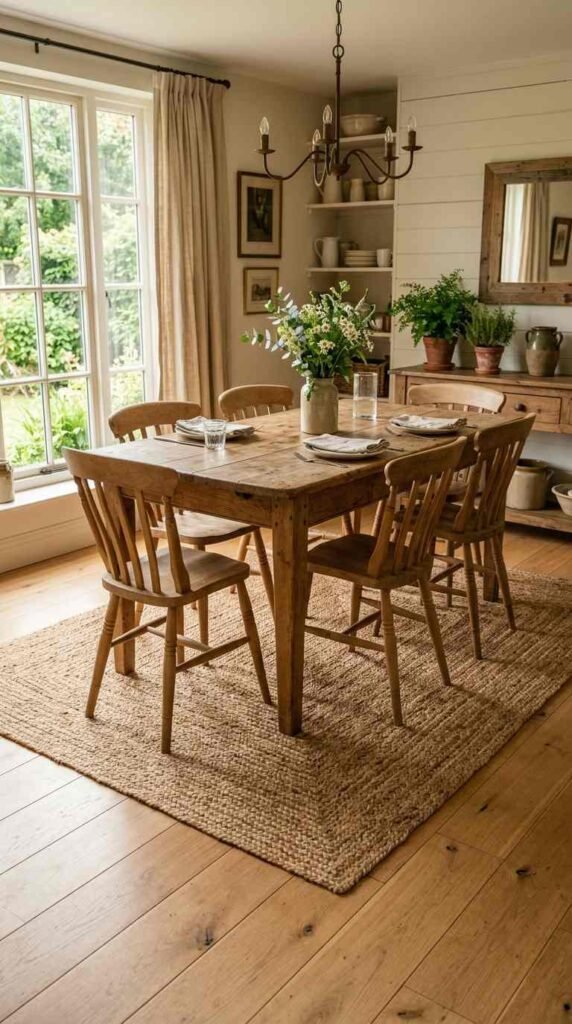
A jute rug’s golden, woven texture grounds a farmhouse dining room without competing against the other natural materials already present throughout the space. Its neutral tone works as a flexible base, letting bolder furniture choices, like a reclaimed wood table or a distressed hutch, take center stage instead. This rug style suits farmhouse dining room decor particularly well, since jute itself is a genuinely natural fiber, reinforcing the room’s overall commitment to raw, unprocessed materials.
Sizing the rug correctly keeps the whole seating arrangement looking intentional, so measure to ensure every chair leg stays on the rug even when pulled fully out from the table. I’ve noticed that jute does shed somewhat when new and doesn’t tolerate ongoing moisture particularly well, so vacuuming regularly without a beater bar and blotting spills immediately helps the rug last considerably longer throughout years of daily use.
10. Farmhouse Sign Wall Art
- Adds instant character with very little effort
- Weathered texture brings warmth to plain walls
- Works as a single focal point above the table or sideboard
- Pairs beautifully with simple, uncluttered styling nearby
- Affordable compared to framed art or canvas pieces
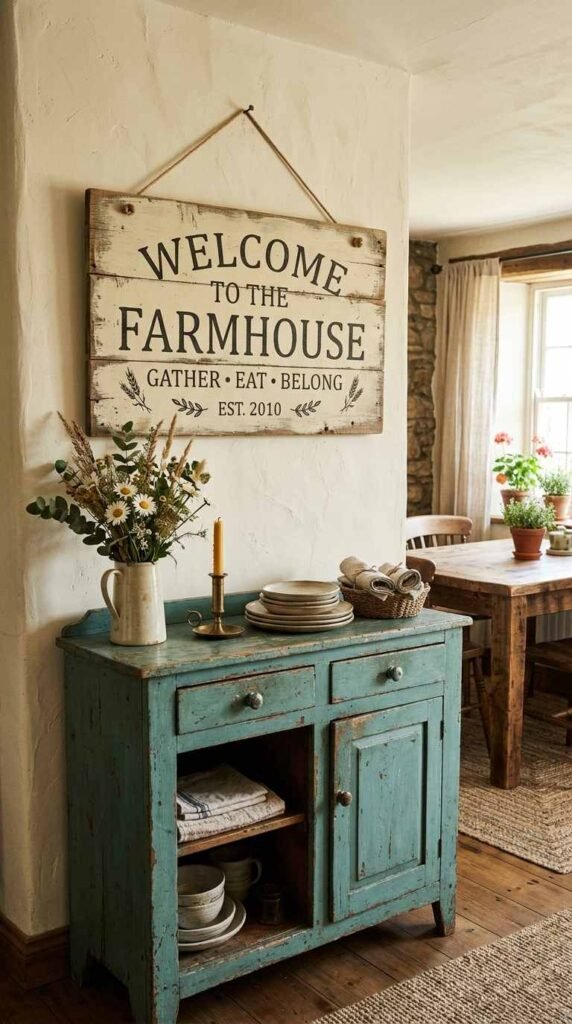
A vintage or vintage-style wood sign remains one of the simplest ways to bring instant charm into a farmhouse dining room. The weathered paint and worn edges add history to a plain wall, even when the sign itself was made recently. This piece sits comfortably among the most popular farmhouse dining room decor choices, since the imperfect finish reads as collected rather than store-bought. A short, meaningful phrase works best, keeping the sign easy to read from across the table without needing to squint at smaller text.
Choosing the right size keeps the sign feeling intentional rather than lost on a large wall. A sign roughly two-thirds the width of the table or sideboard below tends to look proportional. I’ve noticed that distressed white or soft gray finishes suit farmhouse rooms better than bright, glossy paint, since the muted tone feels more authentic to the overall style and material palette throughout the room.
11. Buffalo Check Textiles
- Adds classic pattern without overwhelming the room
- Works on cushions, runners, and window treatments
- Suits farmhouse and cabin-inspired spaces alike
- Easy and inexpensive to swap seasonally
- Pairs naturally with wood, iron, and leather materials
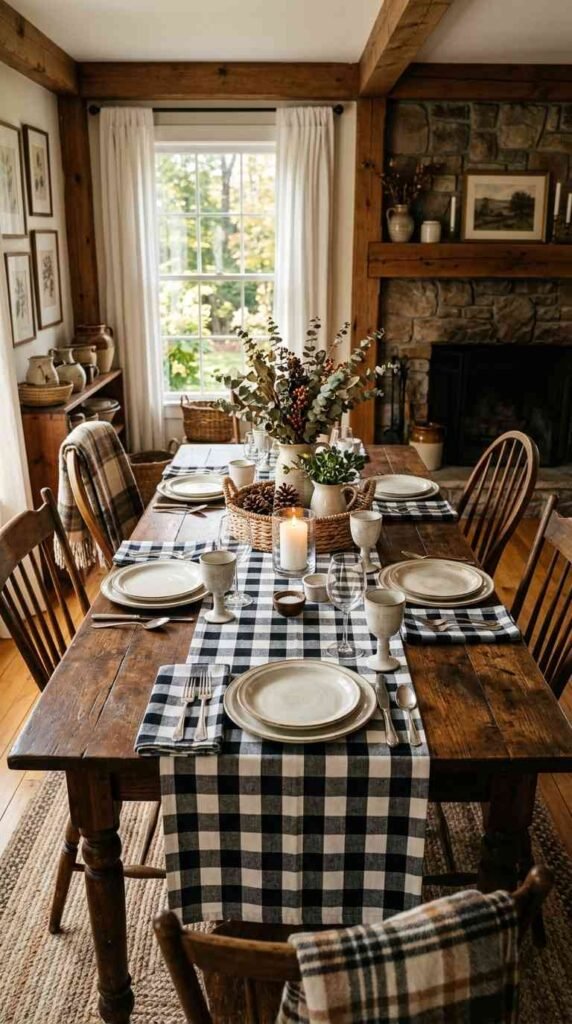
A buffalo check pattern brings a cozy, instantly recognizable quality into a farmhouse dining room without requiring any major furniture changes. Used sparingly, on a table runner, a few chair cushions, or simple curtain panels, the pattern adds visual interest while staying grounded in the same rustic sensibility found throughout the rest of the room. Black and cream or red and cream combinations remain the most classic choices for farmhouse dining room decor, though a softer gray and white version suits a slightly more updated take on the same basic pattern.
Because these textiles are relatively inexpensive, swapping them seasonally, heavier flannel in winter, lighter cotton in warmer months, keeps the room feeling current without much cost or effort. I’ve found that limiting the pattern to just one or two spots in the room, rather than layering it everywhere, keeps the overall look feeling intentional rather than overwhelming the rest of the space.
12. Wire Basket Storage
- Adds industrial-meets-farmhouse texture
- Keeps linens or small items organized and visible
- Lightweight and simple to move around as needed
- Works on open shelving or tucked beneath a console
- Budget-friendly and widely available secondhand
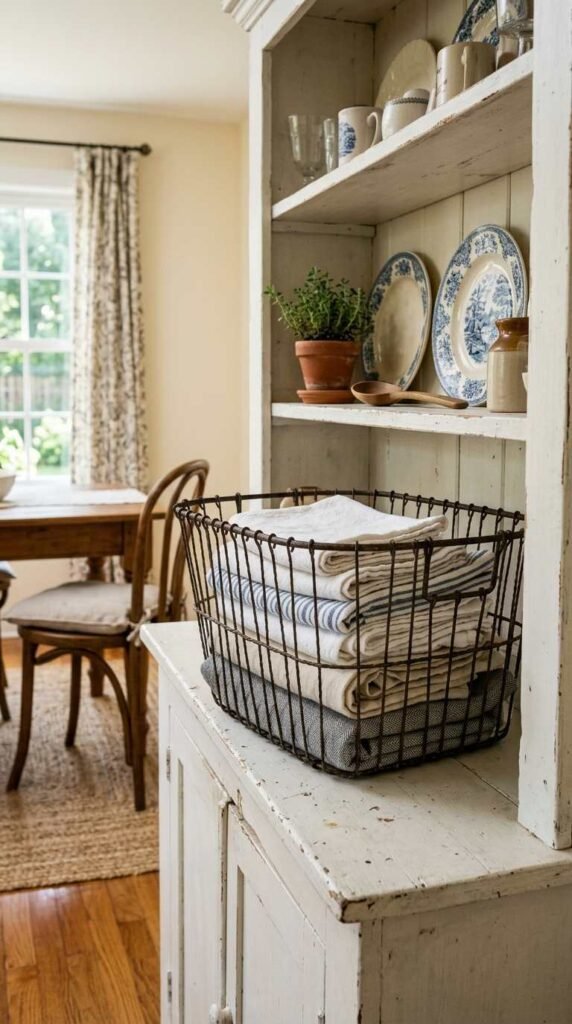
Wire baskets bring a slightly different texture than woven rattan or seagrass, adding an industrial edge that still fits comfortably within farmhouse dining room decor. Used on open shelving or tucked beneath a sideboard, they hold table linens, extra silverware, or seasonal decor while keeping everything visible rather than entirely hidden away. The open metal weave also lets a bit of light pass through, keeping the storage from feeling heavy or closed off the way a solid box might.
I’ve noticed that pairing wire baskets with warmer wood tones nearby balances out their cooler, more industrial material. Thrift stores and farm supply stores both carry these baskets at reasonable prices, making them one of the more affordable storage solutions on this entire list. Labeling each basket with a simple fabric tag keeps the contents organized and easy to find without needing to dig through every container.
13. Neutral Linen Curtains
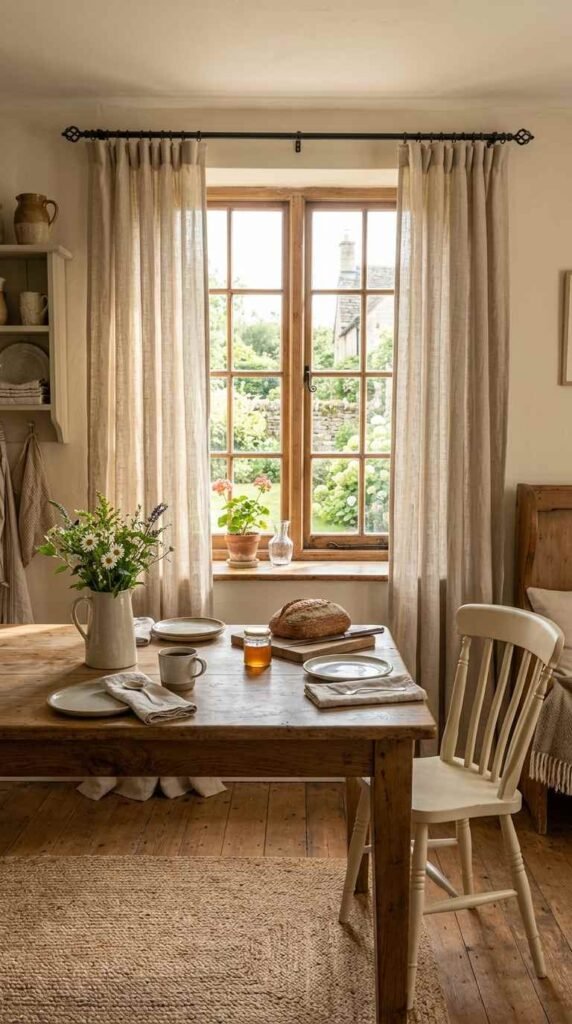
- Adds soft texture without a stiff, formal feel
- Filters daylight into a warm, natural glow
- Suits both farmhouse and relaxed cottage dining rooms
- Machine washable, unlike many heavier drapery fabrics
- Works in cream, oatmeal, or soft gray tones
Simple linen curtains bring softness to a dining room’s windows without the stiffness that heavier drapery fabrics sometimes carry. The naturally slubby, slightly wrinkled texture of linen suits farmhouse dining room decor particularly well, since the fabric’s imperfect, relaxed quality echoes the same worn, natural materials found throughout the rest of the room. Cream, oatmeal, and soft gray tones all work well, filtering daylight into a warm, diffused glow rather than blocking it out entirely.
Unlike silk or velvet, linen is generally machine washable, making it a genuinely practical choice for a room used daily and prone to occasional spills nearby. I’ve noticed that hanging the curtain rod slightly above the window frame makes the window appear taller and lets more light in when the panels are pulled back to the sides. A relaxed, slightly wrinkled look actually suits this material better than a stiffly pressed, formal drape would.
14. Wood Bead Garland Accents
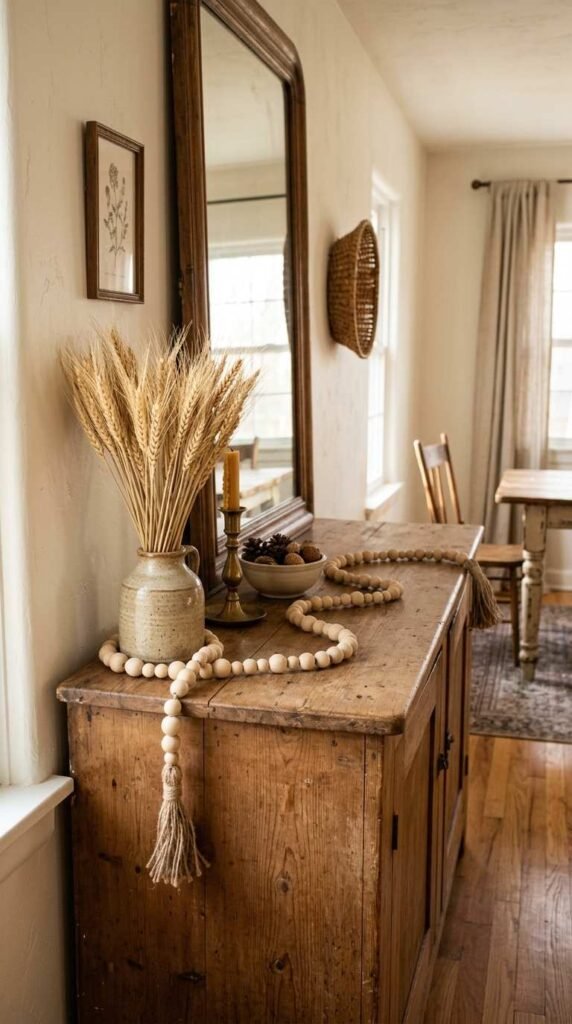
- Adds subtle texture without taking up much space
- Works draped on a shelf, mirror, or centerpiece
- Suits both neutral and colorful farmhouse palettes
- Inexpensive and simple to make or buy
- Easy to swap or restyle for different seasons
A simple wood bead garland, draped across a shelf edge, wrapped around a centerpiece, or hung loosely over a mirror frame, adds subtle texture that takes up very little actual space. The natural wood tone suits nearly any farmhouse dining room decor palette, blending easily with existing furniture rather than competing for attention. This small detail has become increasingly popular precisely because it delivers noticeable texture for very little cost or effort involved.
I’ve found that draping the garland loosely, rather than pulling it taut, creates a more relaxed, natural look that suits the farmhouse aesthetic better than anything too precise or rigid. These garlands are simple enough to make at home with wood beads and twine, or widely available ready-made at most home decor retailers. Swapping the garland for a seasonal tassel version, adding small pom-poms or colored beads, offers an easy way to refresh the detail throughout the year.
15. Stoneware and Ironstone Dishware
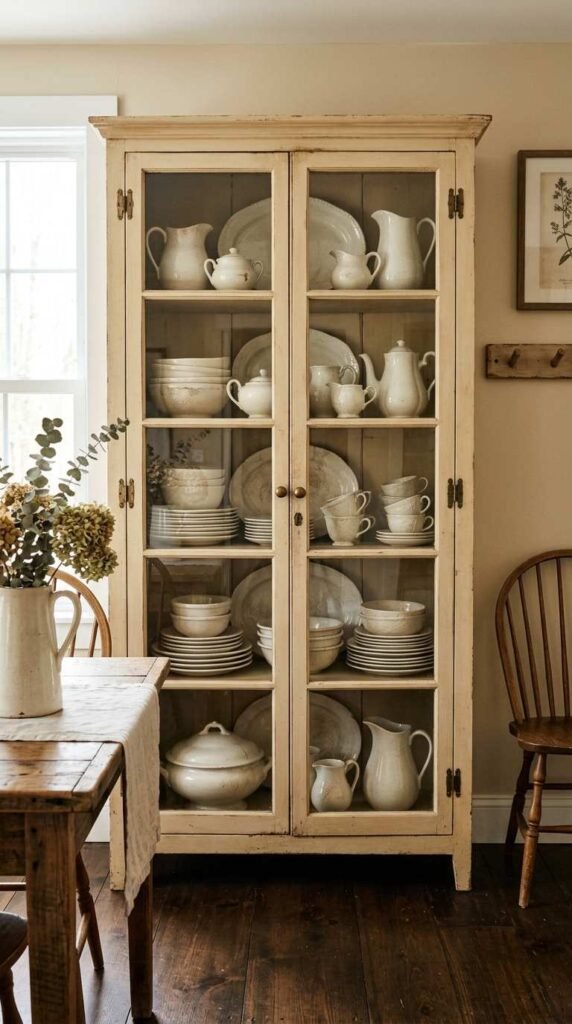
- Adds genuine vintage character through aged, crackled glaze
- Turns everyday dishware into decorative display
- Frees up cabinet space when shown on open shelving
- Suits farmhouse, cottage, and traditional styles
- Doubles as everyday, usable dishware
Ironstone and stoneware, with their slightly aged, crackled glaze, bring real character to a farmhouse dining room whether displayed on open shelving or used directly at the table. This dishware style has deep historical roots in simple, practical kitchens from generations past, which is exactly what makes it feel so at home within farmhouse dining room decor built around worn, collected materials rather than anything perfectly polished or brand new.
Sourcing authentic ironstone takes a little searching, though antique shops, estate sales, and online marketplaces often carry affordable pieces. I’ve noticed that slightly mismatched plates, varying subtly in size or glaze tone, actually look more authentic than a perfectly matched set purchased all at once. Displaying a few pieces on open shelves while keeping the rest in daily rotation lets the collection serve both decorative and genuinely practical purposes throughout the week.
16. Farmhouse Bench Seating
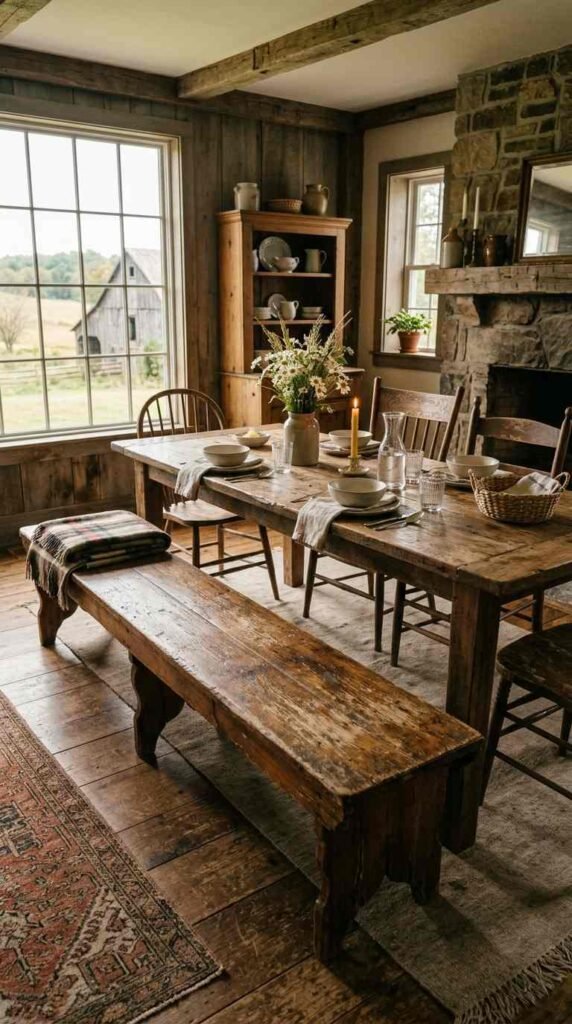
- Seats more people in less linear space than chairs
- Adds worn, collected character to one side of the table
- Doubles as extra seating during larger gatherings
- Tucks fully under the table when not in use
- Pairs naturally with mismatched chairs on the opposite side
A long wooden bench along one side of the table brings both practicality and genuine farmhouse charm into the room. Because a bench seats more people per linear foot than individual chairs, it handles unexpected guests without anyone needing to squeeze in awkwardly. The worn, slightly uneven surface typical of a reclaimed or distressed bench adds texture that new furniture can’t match, fitting naturally into farmhouse dining room decor built around age and imperfection throughout the whole room.
Comfort matters for a piece without a back support, so keeping the bench cushioned with a simple cotton or canvas pad makes a noticeable difference during longer meals. I’ve seen this piece used well against a window wall specifically, since its lower profile doesn’t block the light the way a row of taller chairs would in that same spot. When not needed for extra guests, the bench slides fully beneath the table, keeping the walking path around the room clear.
17. Antique Scale or Clock Display
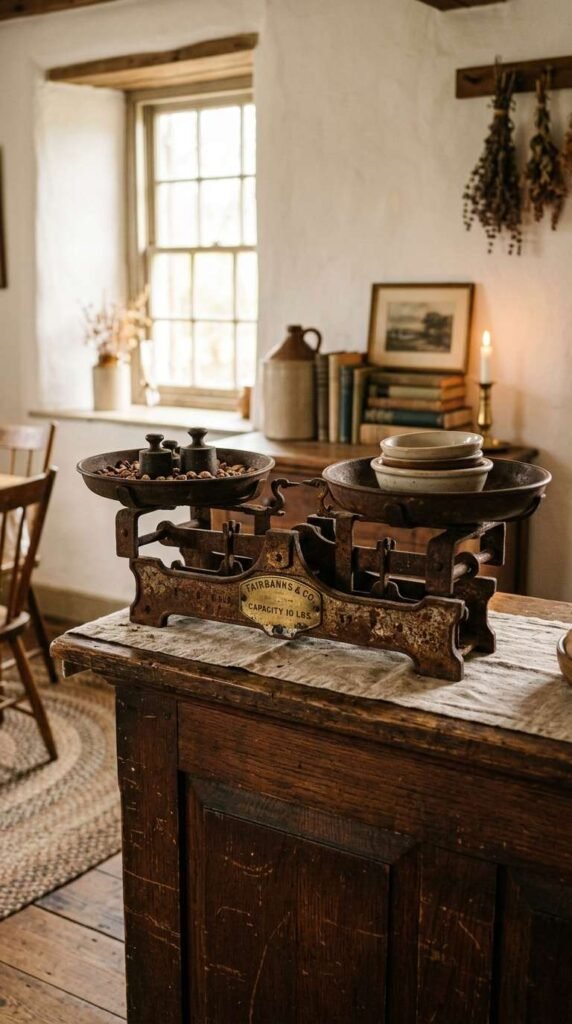
- Adds genuine farmhouse history to a shelf or wall
- Combines function with decorative, aged character
- Works well on a sideboard, hutch, or table
- Suits both authentic antique and reproduction pieces
- A conversation piece for curious guests
An old farm scale or a vintage-style wall clock brings both genuine history and function into a farmhouse dining room. These pieces carry real roots in older farmhouses, where practical tools often doubled as the only decoration a busy household had time to display. Placed on a sideboard, hutch shelf, or centered on a plain wall, either piece adds a distinctive touch that most farmhouse dining room decor benefits from, since the slightly aged, worn metal or wood finish ties naturally into the room’s broader material palette.
I’ve seen antique scales used particularly well holding a small plant or stack of linens inside the weighing tray, giving the piece a bit of genuine function alongside its decorative role. Sizing a clock face around 18 to 24 inches tends to suit most dining room walls without overwhelming nearby furniture. Either piece often becomes a genuine conversation starter, since guests frequently ask about its origin and history.
18. Dried Wheat and Grain Accents
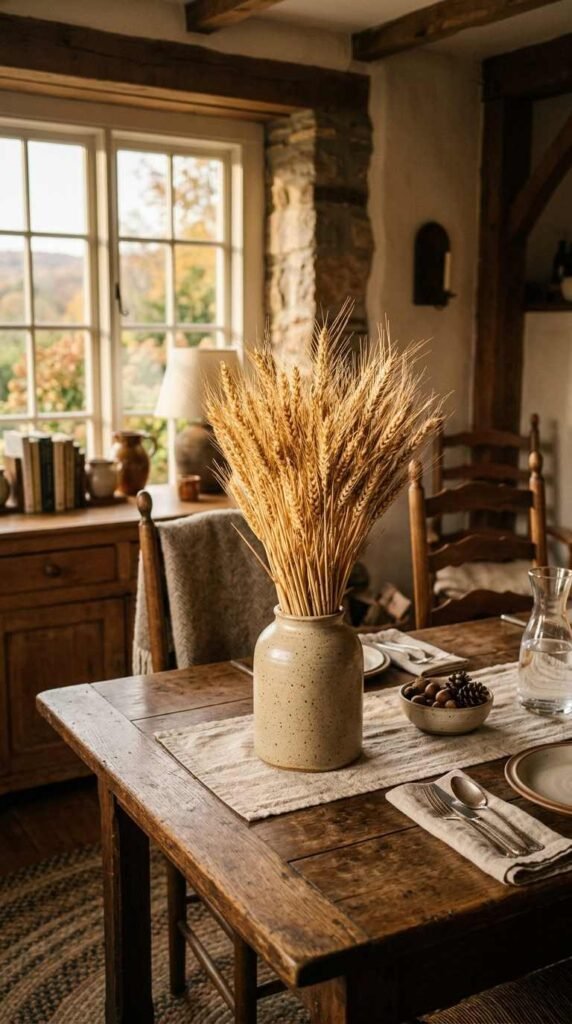
- Adds natural texture with zero ongoing maintenance
- Brings a warm, harvest-inspired feel to the table or shelf
- Lasts for months without wilting or needing water
- Inexpensive compared to most centerpiece options
- Pairs beautifully with wood and iron accents nearby
A simple bundle of dried wheat stalks, tied with twine and displayed in a tall vase or laid flat across a shelf, brings genuine harvest-inspired warmth into a farmhouse dining room. Unlike fresh flowers, dried wheat requires no water or ongoing care, yet still delivers the same organic charm that defines much of farmhouse dining room decor throughout the space. The golden tone pairs particularly well with wood furniture and iron accents already present in the room.
Because dried wheat holds its shape and color for months, this remains one of the lowest-maintenance additions on this entire list. I’ve noticed that hanging or displaying the bundle slightly asymmetrically, rather than dead center, gives the arrangement a more relaxed, collected feel. A simple galvanized bucket or plain ceramic vase both work well as a container, keeping the overall look understated rather than overly styled.
19. Whitewashed Wood Beams
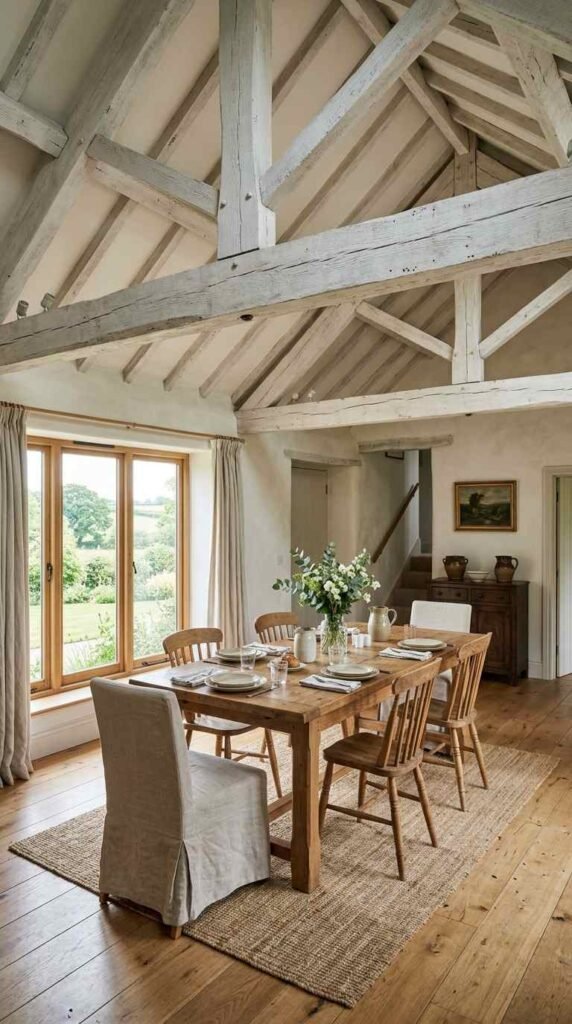
- Adds architectural texture to a plain ceiling
- Draws the eye upward, adding a sense of height
- Suits rooms with vaulted or slightly higher ceilings
- Softer, lighter look than dark stained beams
- Achievable with lightweight faux beams if needed
A ceiling left completely flat often gets overlooked entirely, but whitewashed beams give it genuine farmhouse presence. The lighter, slightly weathered wood tone adds texture without the heaviness dark stained beams can sometimes bring to a room, fitting naturally into farmhouse dining room decor that leans toward a softer, brighter overall palette. This detail works especially well in rooms with slightly higher or vaulted ceilings, where the beams have enough visual room to feel proportional.
Structural beams require more involved installation, but lightweight faux versions achieve a nearly identical look without the same cost or labor. I’ve noticed that spacing beams evenly across the ceiling, roughly 24 to 36 inches apart depending on room size, creates the most balanced pattern. Pairing this detail with a vintage-inspired pendant hung directly between two beams ties the whole ceiling together into one cohesive feature.
20. Farmhouse Chandelier with Candle-Style Bulbs
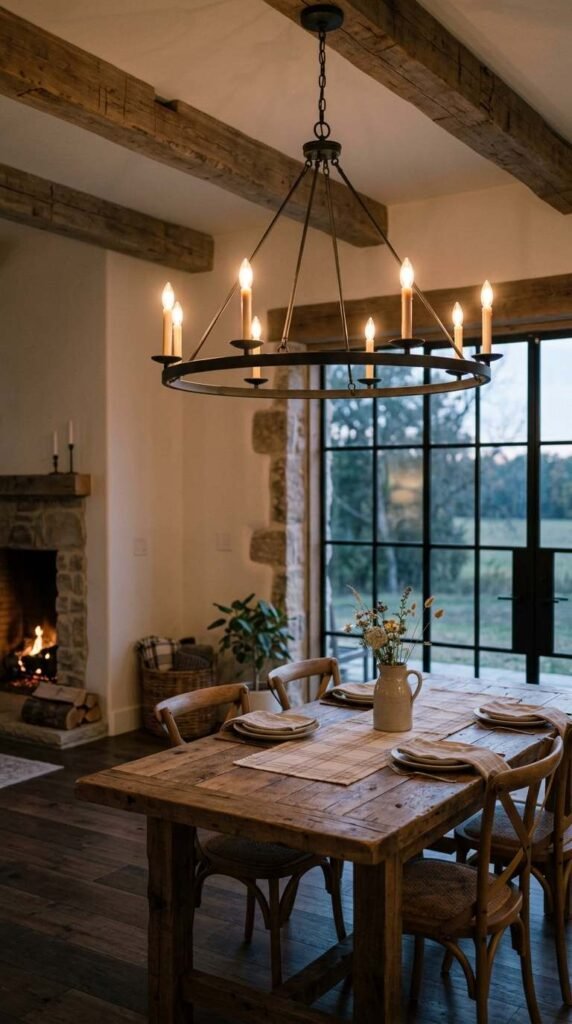
- Combines genuine function with rustic, aged charm
- Candle-style bulbs echo historic farmhouse lighting
- Suits both iron and wood fixture styles
- Works beautifully with warm, dimmable light
- A clear focal point above the table
A chandelier fitted with candle-style bulbs brings a particular kind of nostalgic warmth into a farmhouse dining room, echoing the look of genuine candlelight long before electricity reached most rural homes. Black iron or distressed wood frames suit this fixture style especially well, fitting naturally into farmhouse dining room decor built around raw, natural materials throughout the rest of the space. The slightly flickering, warm glow these bulbs produce adds genuine atmosphere during evening meals.
Sizing the fixture to the table matters here just as much as with any other chandelier style, with a rough guide being roughly half the table’s width, hung 30 to 36 inches above the surface. I’ve found that pairing this fixture with a dimmer switch allows the room to shift from bright daily use to a softer, more intimate glow for dinner parties and quiet evenings at home.
21. Cotton Stem Centerpiece
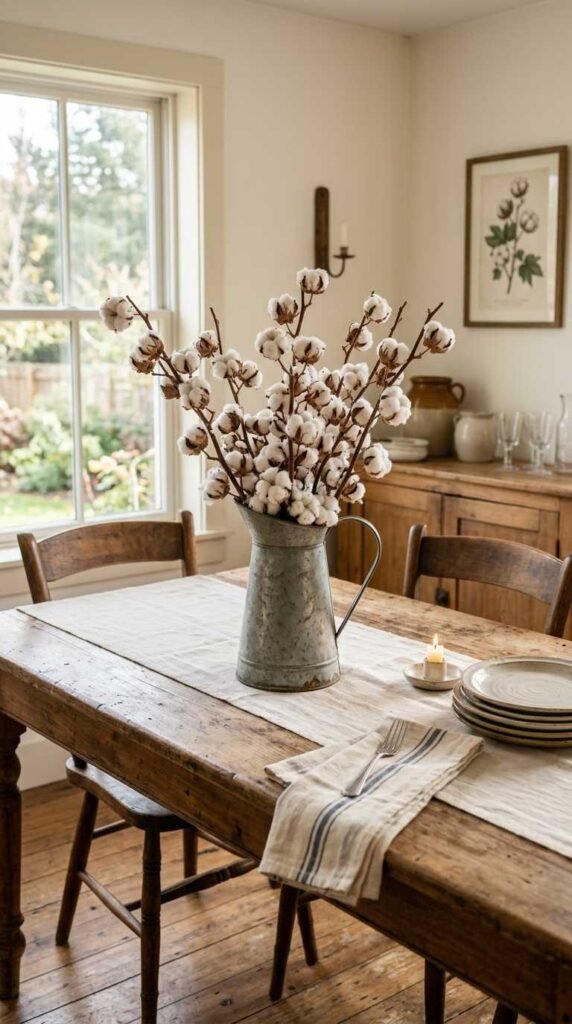
- Adds a distinctly Southern farmhouse touch
- Lasts indefinitely without any care required
- Works beautifully in a simple vase or laid flat
- Pairs naturally with galvanized or ceramic containers
- Inexpensive and widely available online
Cotton stems, with their soft, textured bolls, bring an instantly recognizable farmhouse touch to a dining table centerpiece. Displayed in a simple vase or laid loosely across the table’s center, they require absolutely no water or ongoing care, lasting indefinitely once purchased. This centerpiece style has become a genuine staple within farmhouse dining room decor, since the soft white texture pairs beautifully with nearly any surrounding color palette without clashing or competing for attention.
I’ve noticed that a tall, narrow vase tends to showcase cotton stems better than a wide, low one, letting their natural height and slight curve be fully appreciated. Pairing the stems with a galvanized bucket or a simple ceramic pitcher keeps the overall look understated and in line with the rest of the room’s material choices. Because the stems never wilt or fade, this remains one of the truly lowest-maintenance centerpiece options on this entire list.
22. Rustic Wood Corbels
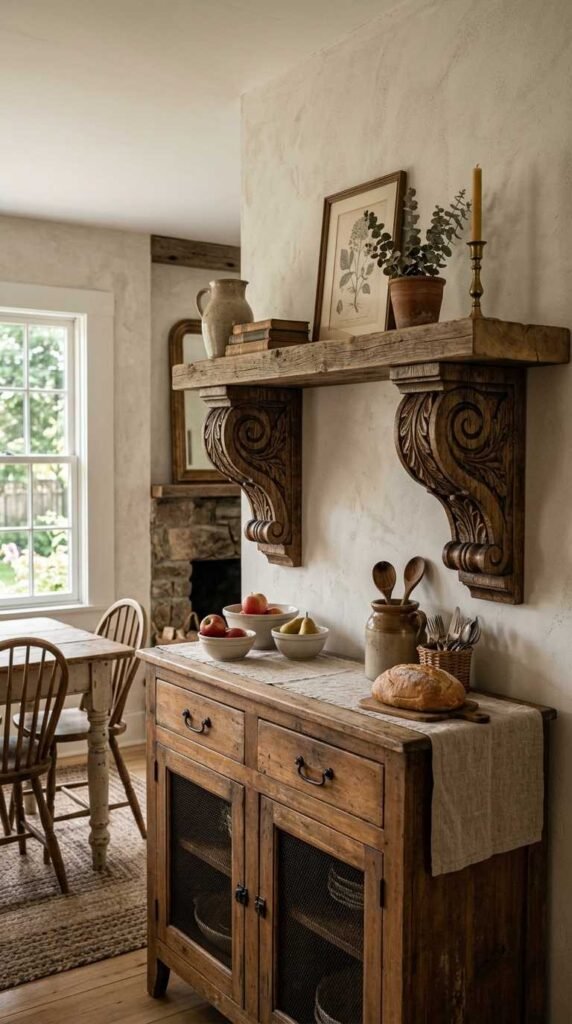
- Adds architectural detail through decorative brackets
- Brings genuine handcrafted character to furniture or shelving
- Suits farmhouse and cottage-style dining rooms
- Works well with a distressed or natural wood finish
- Pairs beautifully with iron or wrought metal hardware
Corbels, the decorative brackets often found supporting shelves or the underside of a hutch’s upper section, add architectural detail that plain, straight-edged furniture simply doesn’t have. This handcrafted touch suits farmhouse dining room decor particularly well, since the carved or shaped wood echoes the same kind of craftsmanship found in older, built-in cabinetry from decades past. Even newer furniture fitted with a few corbels can take on a noticeably more custom, established feel.
Choosing a natural or lightly distressed wood finish lets the corbels’ shape and detail stand out more clearly than a heavily painted surface would. I’ve noticed that pairing this detail with black iron hardware, rather than anything brass or polished, keeps the overall look consistent with the rustic character the corbels themselves suggest. Adding smaller decorative brackets beneath open shelving offers a relatively simple weekend upgrade for existing furniture.
23. Farmhouse-Style Window Shutters
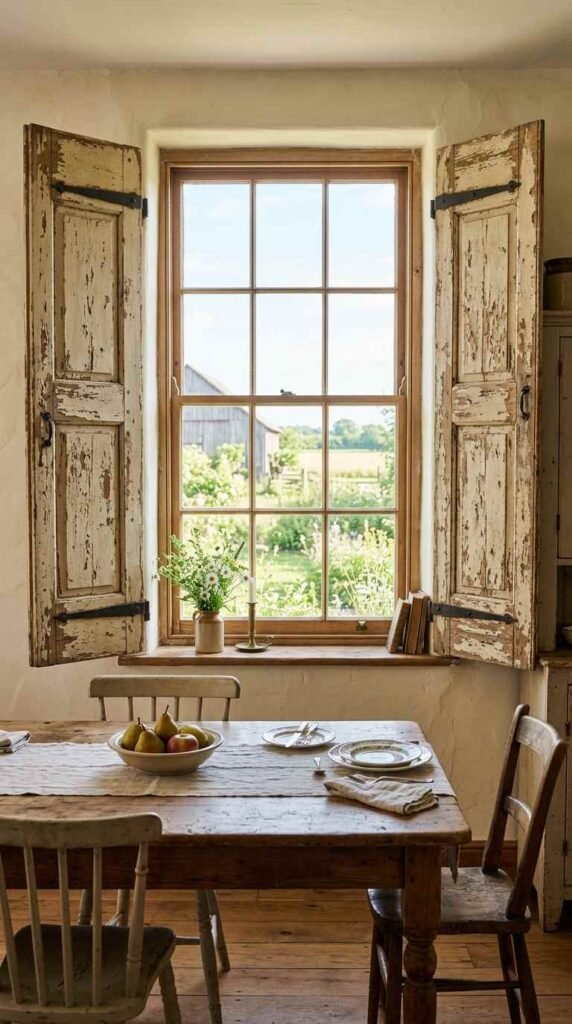
- Adds architectural charm to plain window trim
- Works as interior accents or functional shutters
- Suits farmhouse and cottage dining rooms especially well
- Pairs naturally with simple linen curtains nearby
- Achievable as a manageable weekend project
Interior wood shutters, whether fully functional or purely decorative, bring a classic architectural detail into a farmhouse dining room that plain window trim simply doesn’t offer. Painted white or left in a natural wood tone, shutters add texture and charm directly around the window itself, fitting naturally into farmhouse dining room decor built around genuine architectural character rather than purely surface-level styling choices.
I’ve seen plantation-style shutters installed as a relatively approachable weekend project using pre-made panels from a home improvement store, requiring only basic measuring and simple hardware. Pairing shutters with simple linen curtains, rather than heavier drapery, keeps the overall window treatment feeling light and in line with the rest of the room’s relaxed, natural material palette. This combination works particularly well in dining rooms with smaller windows that benefit from the shutters’ added visual presence.
24. Layered Vintage Textiles
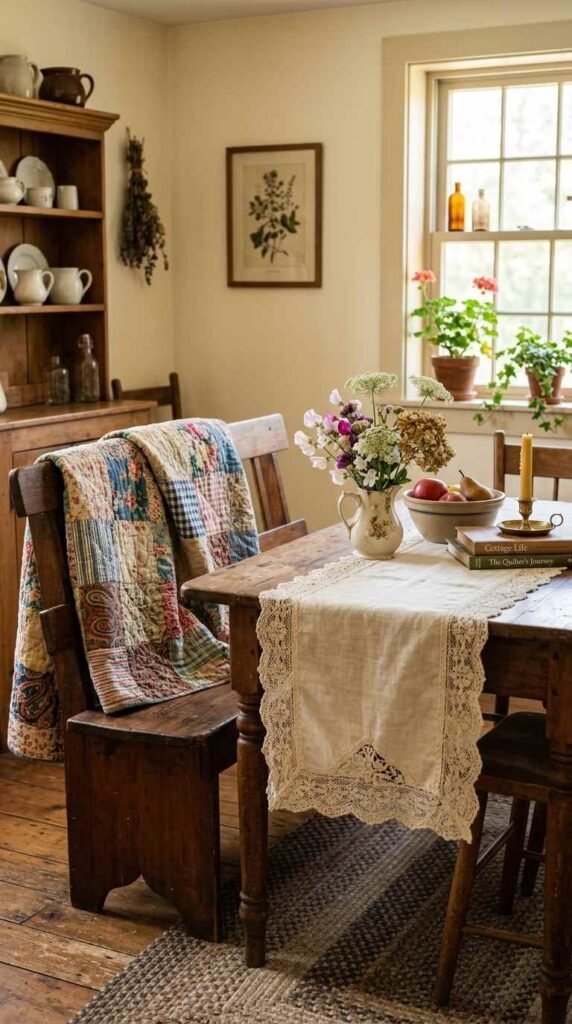
- Adds cozy comfort to seating and tabletop styling
- Mixes patterns and textures for genuine depth
- Easy to swap with the seasons
- Uses throws, cushions, and runners together
- Softens hard surfaces throughout the room
Layering vintage or vintage-style textiles, a woven throw over a bench, a linen runner down the table, a few embroidered cushions, is what makes a farmhouse dining room feel like a hug rather than just a furnished space. Mixing textures like wool, cotton, and linen gives the room depth and comfort, while keeping a common color thread, warm cream or soft rust, keeps the layers feeling calm rather than chaotic throughout the whole space.
Choosing washable fabrics for spaces that see spills makes upkeep considerably easier over time. I’ve seen this work well in family homes, where a few cozy layers stay in daily use instead of being saved for special occasions that happen only once or twice a year. Swap lighter linens for summer and heavier wool or flannel for winter, so the room follows the seasons rather than staying static year-round.
25. Farmhouse-Style Coffee Station
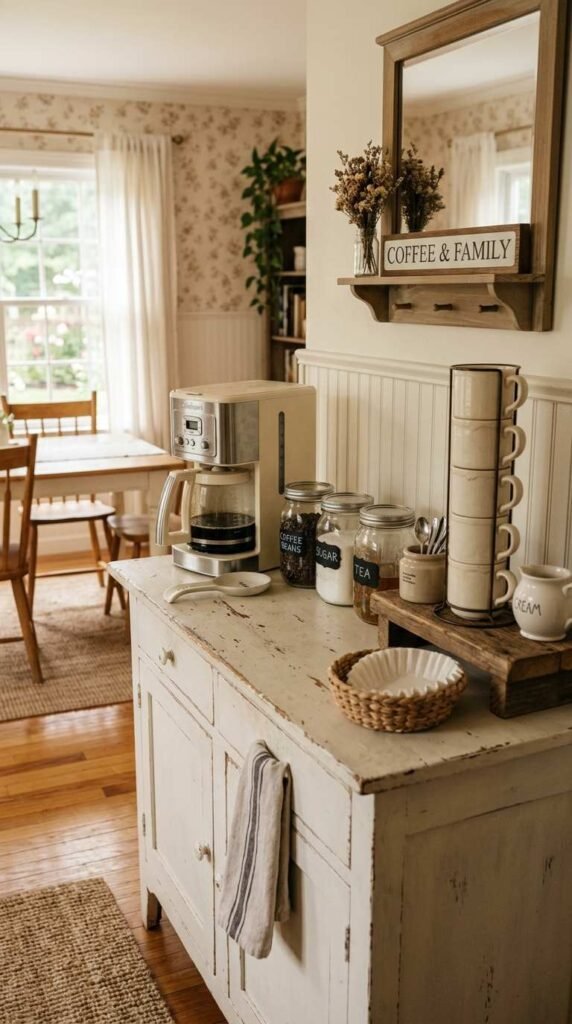
- Adds genuine daily function to the dining room
- Turns a sideboard or shelf into a styled feature
- Works well with mugs, a carafe, and simple decor
- Suits farmhouse rooms that double as a gathering spot
- Easy to personalize with favorite mugs or accessories
A small coffee station, set up on a sideboard or dedicated shelf, brings genuine daily function into a farmhouse dining room while also serving as a naturally styled vignette. A simple carafe, a stack of mismatched mugs, and a small tray keep everything organized and within easy reach for busy mornings. This idea rounds out farmhouse dining room decor nicely, since it turns a corner of the room into something used constantly rather than just admired occasionally.
I’ve found that grouping mugs by color or a shared pattern keeps the display looking intentional rather than like clutter accumulated over time. Adding a small chalkboard sign nearby, listing a favorite coffee order or a simple welcome message, brings a bit of personality to the station. This practical addition works especially well in dining rooms that double as the household’s main morning gathering spot before everyone heads out for the day.
FAQs
1. What makes a dining room feel like farmhouse style?
Farmhouse style relies on natural, often reclaimed materials like wood and iron, paired with a warm, neutral color palette. The look favors imperfection and age over polish, with mismatched or worn pieces that feel collected rather than purchased all at once.
2. What table works best for a farmhouse dining room?
A solid wood table, ideally reclaimed or distressed, anchors the room best. Farmhouse tables typically feature simple, sturdy legs and a substantial tabletop that can handle daily wear while only improving with age and use.
3. What wall treatment is classic for farmhouse dining rooms?
Shiplap remains the most recognizable farmhouse wall treatment, usually painted white for a crisp, textured look. A simple wood sign or a cluster of vintage frames also suits the style well as a smaller accent choice.
4. How do I add storage in a farmhouse dining room?
Open shelving, a distressed hutch, or wire baskets all add storage while staying true to the farmhouse aesthetic. These options display items openly rather than hiding everything behind closed, solid cabinet doors.
5. What centerpiece ideas fit a farmhouse dining table?
Mason jars with fresh or dried flowers, cotton stems, or dried wheat bundles all suit the style beautifully. These options require little to no maintenance while still bringing genuine natural texture to the table.
6. What lighting fits a farmhouse dining room best?
A chandelier with candle-style bulbs or a vintage-inspired pendant both suit the aesthetic well. Warm-toned bulbs around 2700K keep the light feeling cozy, matching the room’s overall relaxed, gathering-focused atmosphere.
7. What seating works well with a farmhouse table?
Ladder-back chairs, a wooden bench, or a mix of mismatched wooden chairs all suit farmhouse dining rooms. Pairing a bench on one side with chairs on the other adds visual variety without sacrificing comfort.
8. What textiles are classic for farmhouse dining rooms?
Buffalo check, natural linen, and simple cotton textiles all fit the style well. Layering a few different textures, like a woven throw with a linen runner, adds warmth without overwhelming the room’s overall palette.
9. Can I add vintage pieces to a farmhouse dining room?
Yes, vintage scales, clocks, ironstone dishware, and thrifted furniture all enhance the farmhouse look. These pieces bring genuine history and character that new, mass-produced decor simply can’t replicate on its own.
10. How can I make my farmhouse dining room more functional?
Adding a coffee station, open shelving for everyday dishware, or a bench for flexible seating all improve daily function. Choosing furniture that serves a genuine purpose, rather than purely decorative pieces, keeps the room practical as well as charming.
Conclusion
A farmhouse dining room doesn’t require a full renovation to feel warm and inviting. From a reclaimed wood table to a simple cotton stem centerpiece, these farmhouse dining room decor ideas prove that genuine character comes from natural materials and a few collected, meaningful pieces rather than anything perfectly matched. I’ve seen how small additions, a mason jar centerpiece, an iron accent, a thrifted bench, can transform an ordinary room into one that feels genuinely welcoming the moment guests walk in. Save this list on Pinterest, try one idea in your own dining room this week, and share it with someone else ready to bring a little more warmth and charm into their home.