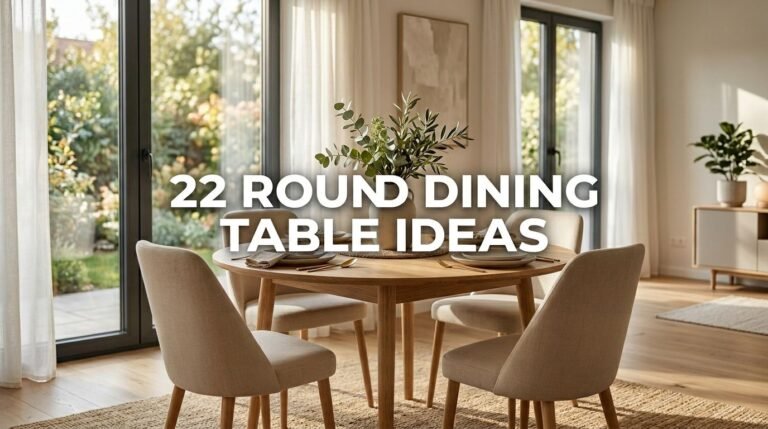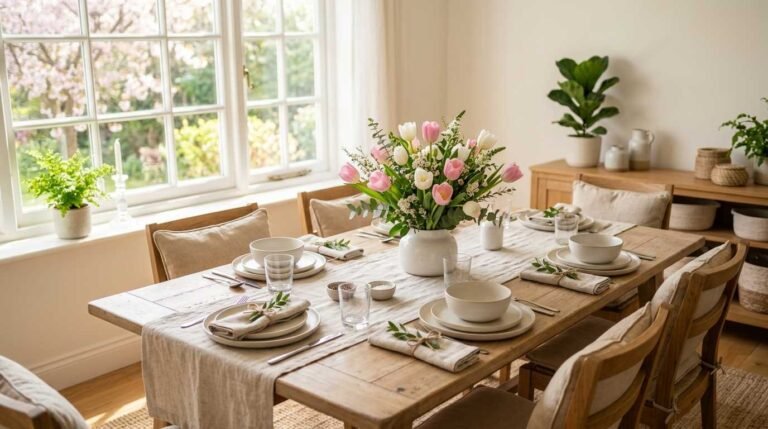
Ever notice how a bare wall can make even a beautifully set table feel unfinished? The walls around your dining space do just as much work as the furniture itself, and dining room decor round table setups especially benefit from the right wall styling to feel complete. In my experience, a single striking piece, like an oversized print or a curved mirror, often transforms a room faster than new furniture ever could.
1. Oversized Abstract Art Panel
- Fills a large wall with one confident piece
- Adds color and movement without needing multiple frames
- Works as the room’s instant focal point
- Suits modern, minimalist, and transitional spaces alike
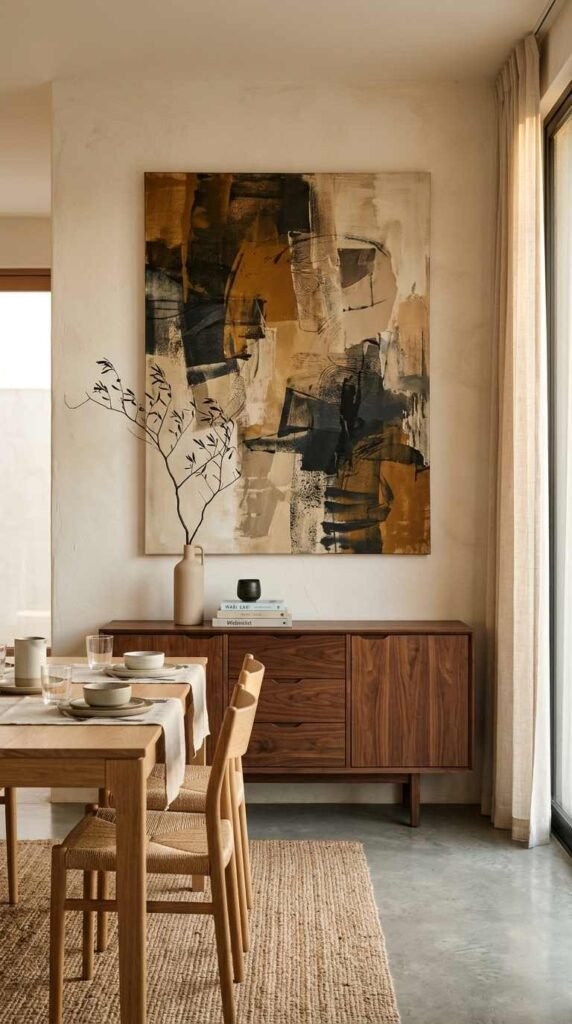
One big piece of abstract art solves the problem of a bare wall faster than anything else. A single oversized canvas, full of movement and color, becomes the first thing anyone notices when they walk into the room. In my experience, going bigger than feels comfortable is usually the right call, since a piece that’s too small gets lost above a dining table. Choose a canvas roughly two-thirds the width of the table for the most balanced look. It anchors the space and gives the eye one clear place to rest.
Color choice shapes the whole mood of the room. A piece with warm tones, like rust or ochre, adds energy to a neutral dining room, while cool blues and grays feel calm and contemporary. I’ve noticed that abstract art pairs especially well with simple, unfussy furniture, since the painting carries most of the visual interest. Hang it so the center sits around 57 to 60 inches from the floor, roughly eye level while seated. Skip a frame for a sleek, gallery feel, or choose a thin black frame for a bit more structure.
2. Round Convex Mirror Cluster
- Adds depth and light without feeling heavy
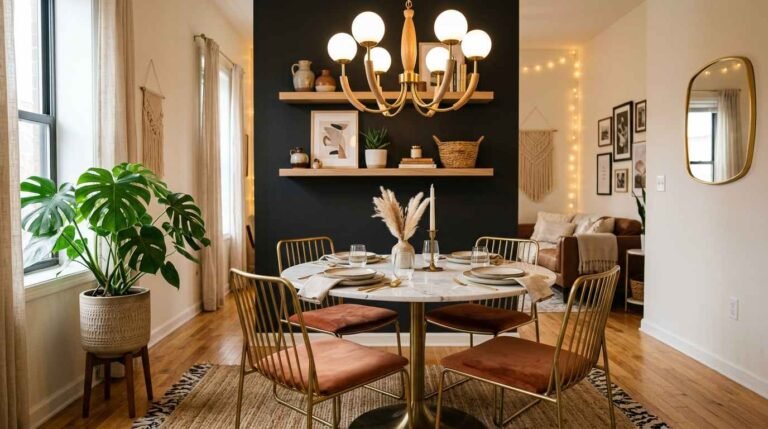
- Works beautifully above a sideboard or feature wall
- Mixes well with other wall decor
- Brings a subtle vintage charm to modern rooms
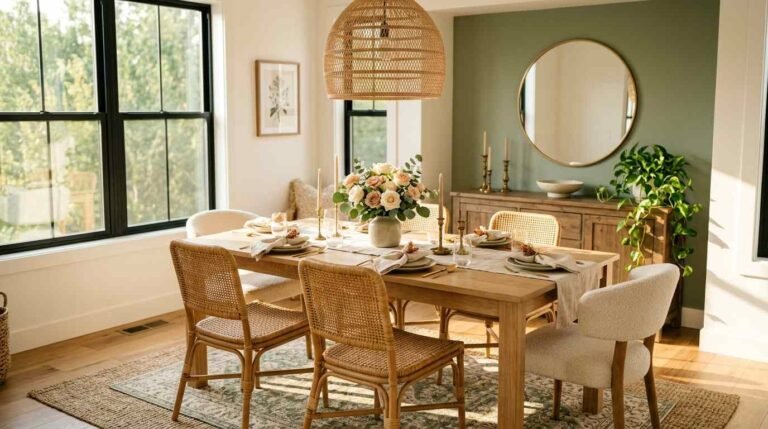
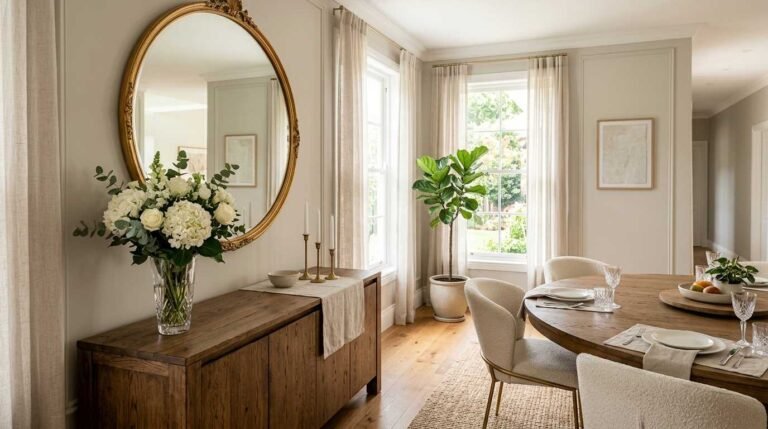
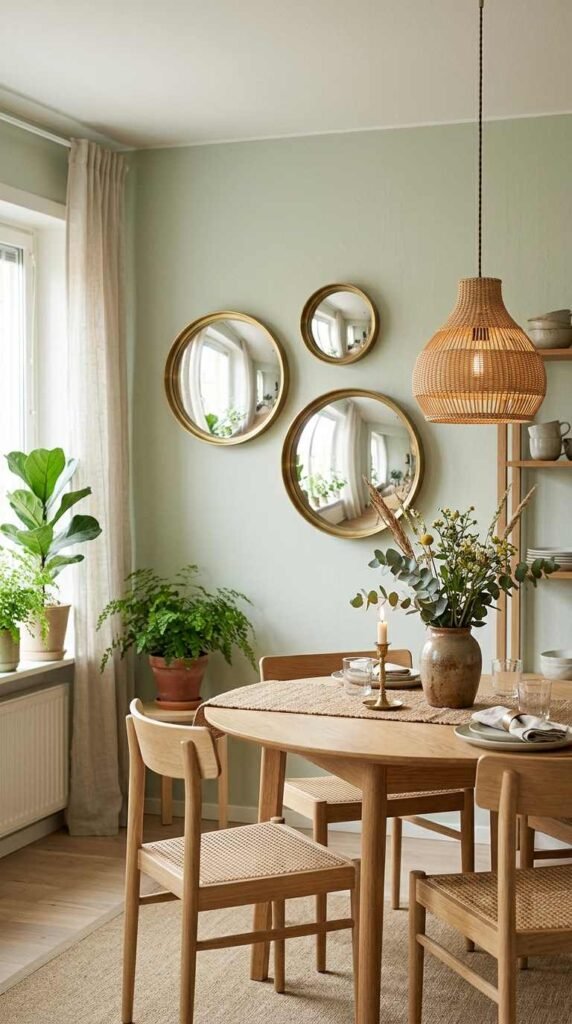
Convex mirrors bring old-world character into a modern dining room. Their curved glass slightly distorts the reflection, creating a soft, almost dreamy effect that flat mirrors can’t achieve. Clustering three or four in varying sizes adds depth to a wall without the visual weight of one large mirror. This idea for dining room decor round table setups works especially well, since the curved reflections pick up the whole shape of the table and scatter light gently around the room. It feels collected, intentional, and a little unexpected.
Finish and spacing matter here. Black or antique brass frames feel current, while natural wood frames lean more organic. I’ve tried clustering mirrors of different sizes around a central large one, and the arrangement reads as effortless rather than fussy. Keep two to three inches between each mirror so the grouping feels cohesive. Position the cluster where it reflects the chandelier or a window, since that’s where the sparkle does the most work. This look suits smaller dining rooms particularly well, making the space feel brighter and larger.
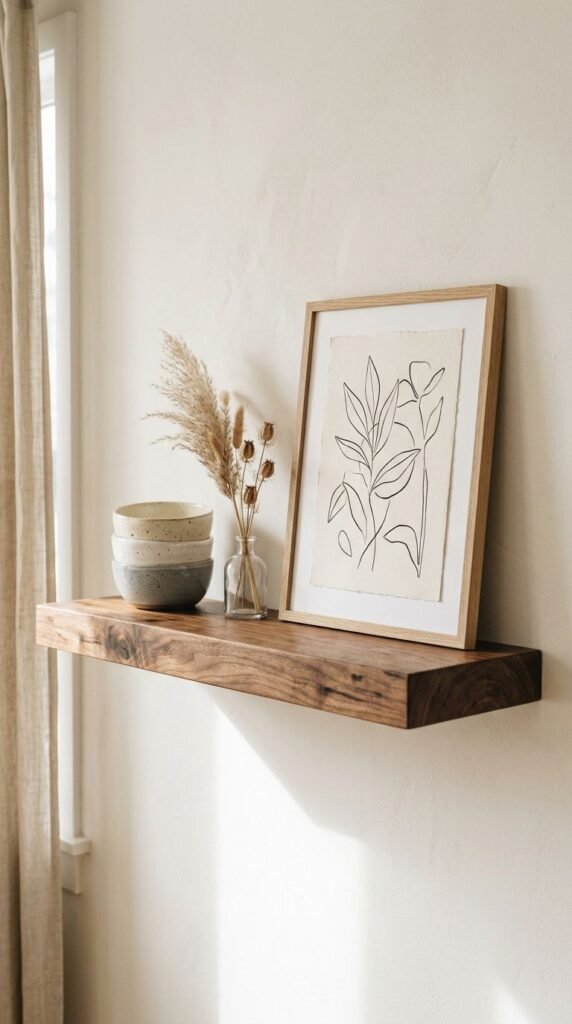
3. Minimalist Floating Shelf Display
- Adds storage and styling without visual bulk
- Keeps the wall looking light and open
- Works well for rotating small decor pieces
- Suits modern and Scandinavian-style dining rooms
A floating shelf gives a wall function and personality at once. Without visible brackets, the shelf appears to hang in midair, which keeps the look light even when it’s holding a few styled objects. A single ceramic vase, a small framed print leaned against the wall, and one stack of books are often enough. In my experience, this idea works best when restraint rules the display, since floating shelves look most modern with open space around each item rather than a crowded arrangement.
Placement and styling make the difference between a shelf that looks intentional and one that looks like an afterthought. Mount it at a height that complements the table, usually with the shelf surface around 60 to 66 inches from the floor. Leave visible wall space above and below so the shelf doesn’t feel cramped. I’ve noticed that swapping just one or two items seasonally keeps the display feeling fresh without much effort. Choose a shelf finish, like matte black or light oak, that echoes another material already in the room.
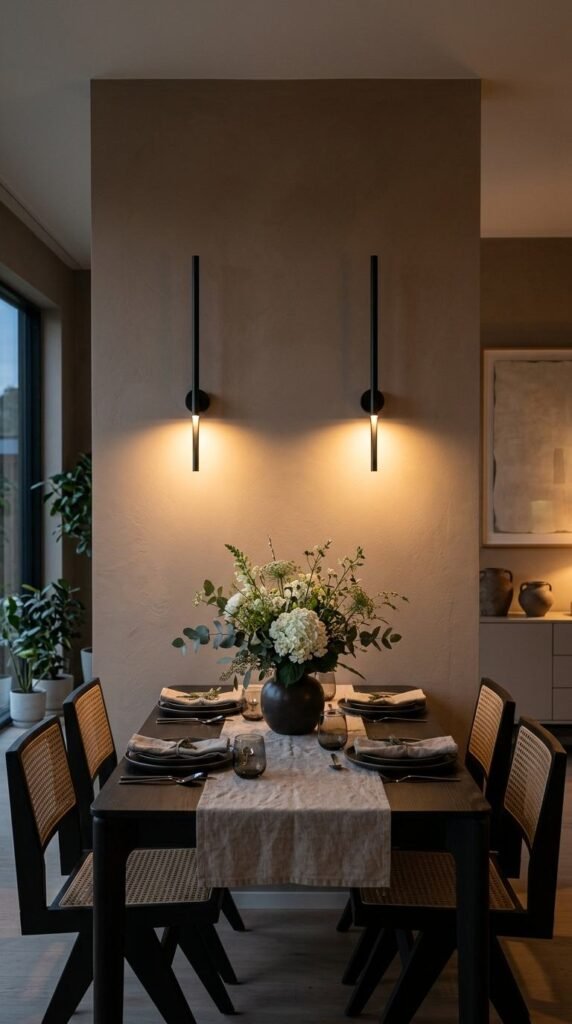
4. Black Metal Wall Sconces
- Adds ambient light without using table or floor space
- Creates a warm glow for evening dinners
- Works in pairs for a balanced, symmetrical look
- Suits modern, industrial, and transitional dining rooms
Wall sconces solve two problems at once: they add light and they add style, all without taking up any surface space. A pair of black metal sconces flanking a piece of art or a mirror brings symmetry and warmth to the room, especially once the sun goes down. That’s why many designers recommend sconces as one of the easiest upgrades for a dining room that feels a little flat or underlit. The sleek black finish reads as modern, while the soft glow keeps the mood relaxed rather than harsh.
Placement is what makes sconces feel designed rather than accidental. Mount them about 60 to 66 inches from the floor, spaced evenly on either side of a central piece, like artwork or a mirror. I’ve seen this pairing work particularly well above a sideboard, where the light highlights whatever is styled on top. Choose a warm-toned bulb for the coziest effect, and consider a dimmable option so the sconces can shift from bright daytime light to a softer evening glow during dinner parties.
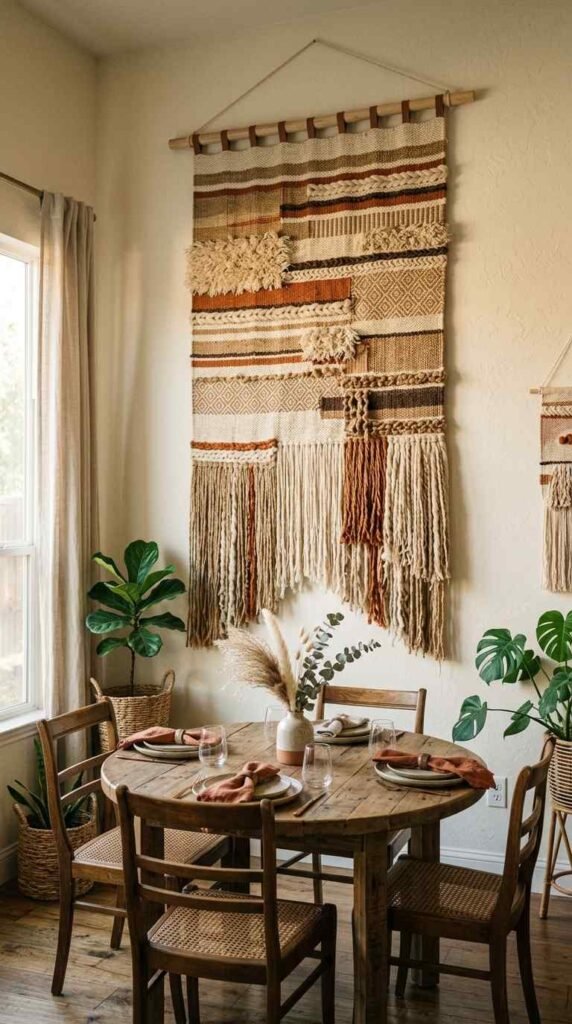
5. Woven Wall Hanging Textile
- Adds texture and warmth to a plain wall
- Softens the hard lines of modern furniture
- Works in natural fibers like jute, cotton, or wool
- Brings handmade character into the room
A woven wall hanging brings texture to a dining room in a way that flat art simply can’t. Made from jute, cotton, or wool, these pieces add warmth and a handmade quality that softens the sharper lines of modern tables and chairs. In my experience, one generously sized textile often does more for a room than several smaller decor pieces combined, since the texture alone creates visual interest from across the room. Choose a neutral palette, like cream, oatmeal, or soft rust, to keep the look current rather than overly bohemian.
Scale and placement are key to making this idea feel intentional. A hanging that spans about one-third to one-half the width of the wall tends to look the most balanced above a sideboard or dining table. I’ve noticed that pairing a woven piece with simple, uncluttered furniture keeps the overall look feeling modern instead of busy. Hang it using a wooden dowel for a clean, finished edge, and let a little fringe show at the bottom for natural, relaxed movement.
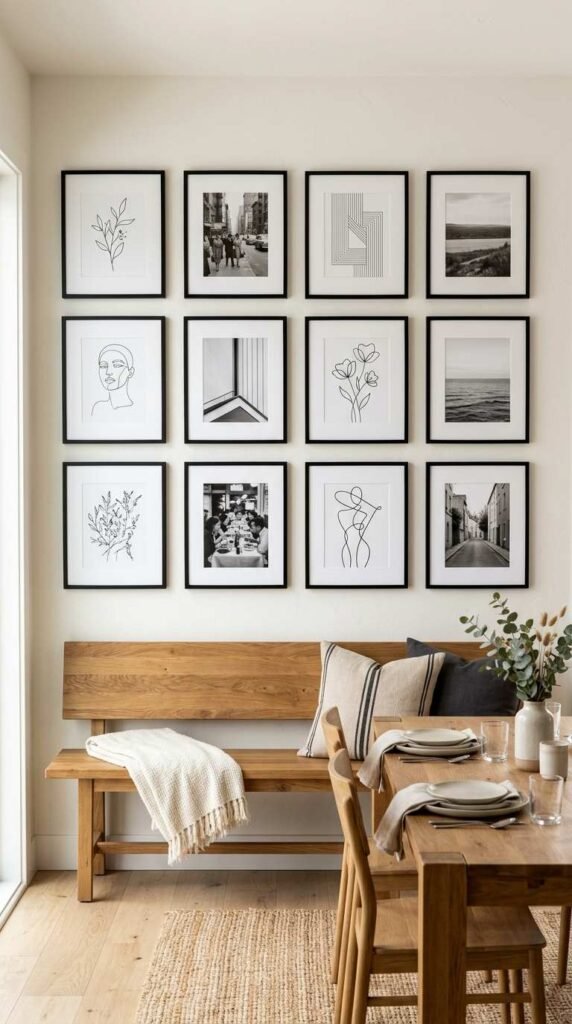
6. Gallery Wall of Black Frames
- Adds personality and visual height to a wall
- Creates a curated, collected look over time
- Black frames feel cohesive even with mismatched art
- Easy to update by swapping individual pieces
A gallery wall gives a dining room genuine personality, and keeping every frame black makes even a mismatched collection of art feel pulled together. Mixing photography, line drawings, and small abstract prints inside a consistent black frame set creates depth without the visual noise a fully mismatched gallery can bring. I’ve seen this approach work particularly well for dining rooms, since guests naturally spend time studying the wall during a meal, and a well-planned gallery gives them something interesting to notice and discuss.
Planning the layout first saves a lot of frustration and extra nail holes. Lay the frames out on the floor, or trace them on paper and tape the shapes to the wall, before committing to final placement. In my experience, leaving two to three inches of breathing room between frames keeps the grouping from feeling crowded. Start with four or five pieces and add more gradually, so the wall grows naturally over time rather than looking like it was bought and hung all at once.
7. Sculptural Plaster Wall Art
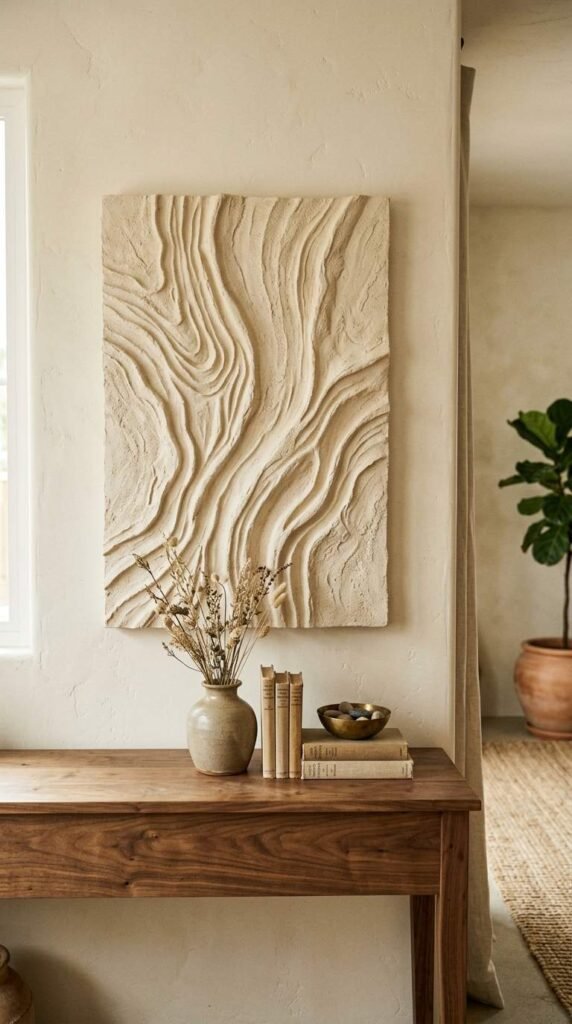
- Adds dimension and shadow play to a flat wall
- Creates an artistic, gallery-like moment
- Works beautifully in neutral, monochrome palettes
- Suits minimalist and organic modern dining rooms
Plaster wall art brings sculpture into two dimensions. Its raised texture catches light differently throughout the day, creating soft shadows that shift as the sun moves across the room. A single large plaster piece, in an abstract or organic shape, adds a quiet sense of artistry that flat prints can’t replicate. In my experience, this idea suits dining rooms with plenty of natural light especially well, since the changing shadows keep the piece feeling alive rather than static, even without any additional decor nearby.
Keeping the surrounding wall simple lets the texture do the talking. A plain white or soft neutral wall provides the best backdrop, since busy wallpaper competes with the plaster’s natural shadow play. I’ve tried pairing a textured plaster piece with simple black sconces on either side, and the warm evening light made the texture even more striking. This idea works especially well as a single statement piece rather than several smaller ones, so choose one substantial work rather than filling the wall with multiple pieces.
8. Statement Wall Clock
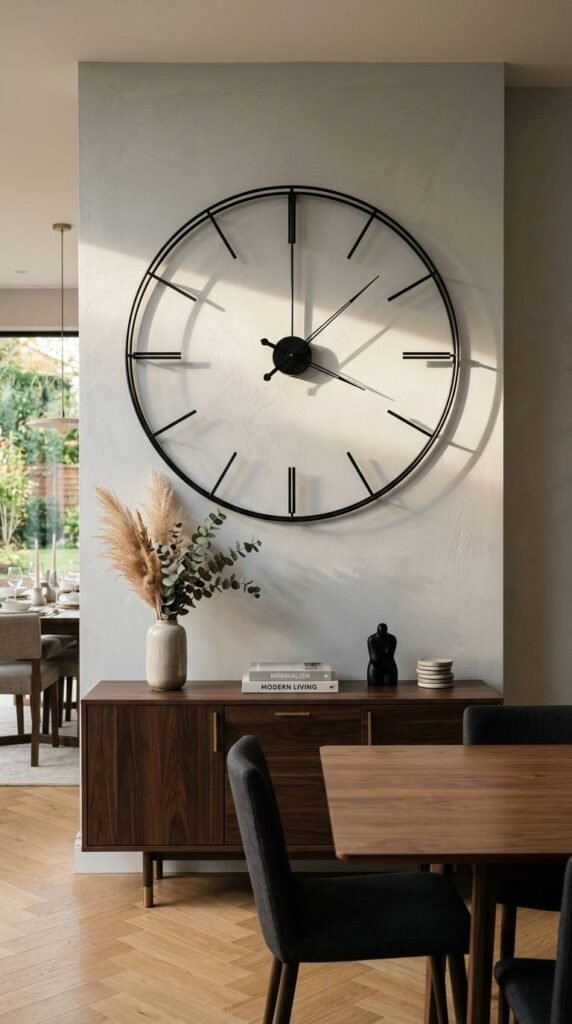
- Adds both function and style to a blank wall
- Works as a bold focal point on its own
- Suits modern, industrial, and minimalist dining rooms
- Available in countless shapes and finishes
A statement clock gives a dining room wall purpose along with style. An oversized round clock in matte black or brushed brass becomes the room’s natural focal point, doing the job of art while also keeping everyone on schedule for dinner. That’s why many designers recommend a large clock for dining rooms that need one strong piece rather than several smaller decor items. The scale matters here, since a clock that’s too small gets lost, while one sized generously for the wall reads as intentional and confident.
Choosing the right finish ties the clock to the rest of the room. Black or dark bronze suits a modern, moody dining room, while a lighter wood-rimmed clock feels warmer and more relaxed. I’ve noticed that an oversized clock works particularly well on a long, otherwise empty wall, since it fills the space without needing additional support pieces. Center it at a height similar to where a piece of art would hang, roughly 60 inches from the floor, so it functions beautifully in the overall layout.
9. Line Art Botanical Prints
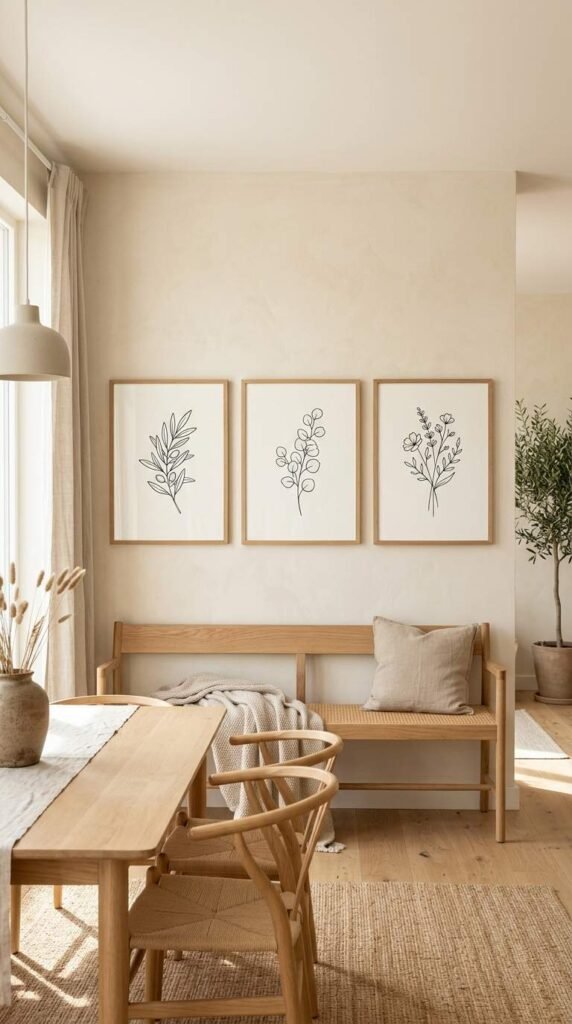
- Adds a soft, modern touch without bold color
- Works beautifully in sets of two or three
- Suits minimalist and Scandinavian-inspired dining rooms
- Easy to find affordably or print at home
Line art botanical prints bring a quiet, modern elegance to a dining room wall. Simple black-line drawings of leaves, branches, or florals add just enough detail to feel finished without introducing bold color or pattern. In my experience, this idea works especially well in rooms that already have a lot going on through furniture or flooring, since the prints add interest without competing for attention. A set of two or three, hung in a simple row, creates a clean and cohesive look that suits almost any dining room style.
Framing choice makes a real difference here. Thin black or brass frames keep the look sleek and modern, while white mats add breathing room around each print. I’ve seen this idea work beautifully above a sideboard or on the main dining wall, especially when the prints are spaced evenly with consistent gaps between each frame. This is also one of the more budget-friendly options on this list, since quality botanical line art is widely available at an affordable price point online.
10. Wood Slat Accent Wall
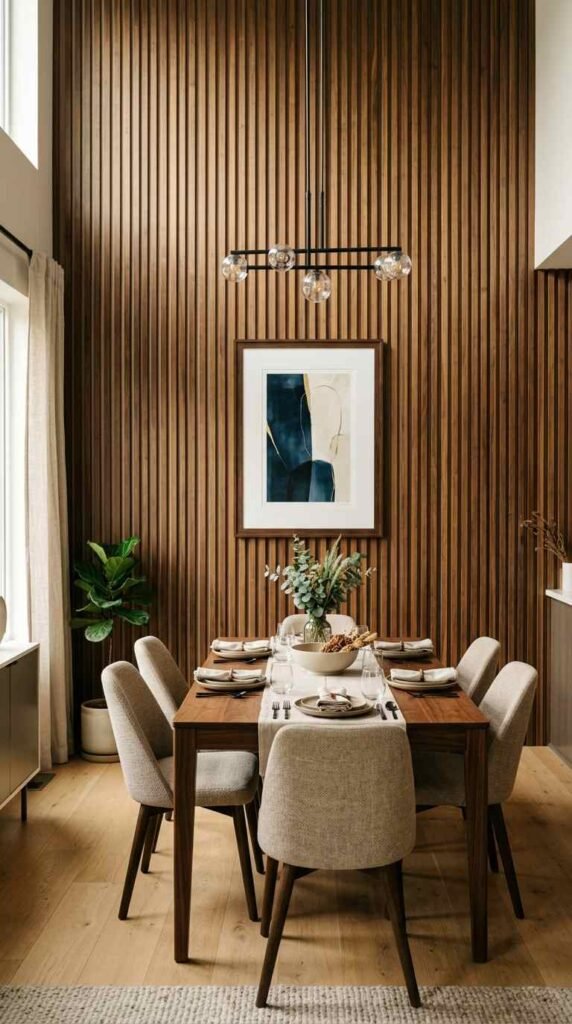
- Adds warmth and architectural texture to a plain wall
- Works beautifully behind a table or sideboard
- Softens the coolness of an all-white or gray room
- A manageable weekend project for many homeowners
A wood slat accent wall turns a flat surface into a textured architectural feature. Vertical wood strips, evenly spaced and mounted directly to the wall, add depth, warmth, and a subtle rhythm that plain paint simply can’t achieve. In my experience, this idea works especially well behind a dining table or sideboard, where it frames the furniture below like a built-in headboard. Light oak tones feel Scandinavian and airy, while darker walnut tones add a richer, more dramatic backdrop for the room.
Spacing and finish decide how the final wall reads. Even, consistent gaps between each slat give the most polished, professional look, while slightly uneven spacing feels more relaxed and organic. I’ve seen this project completed in a single weekend using pre-cut wood strips and basic adhesive or nails. Pairing the wood wall with black metal sconces or a simple round mirror adds just enough contrast. This idea gives modern dining room wall decor a genuinely custom, architectural feel without a full renovation.
11. Asymmetrical Shelf Ledge
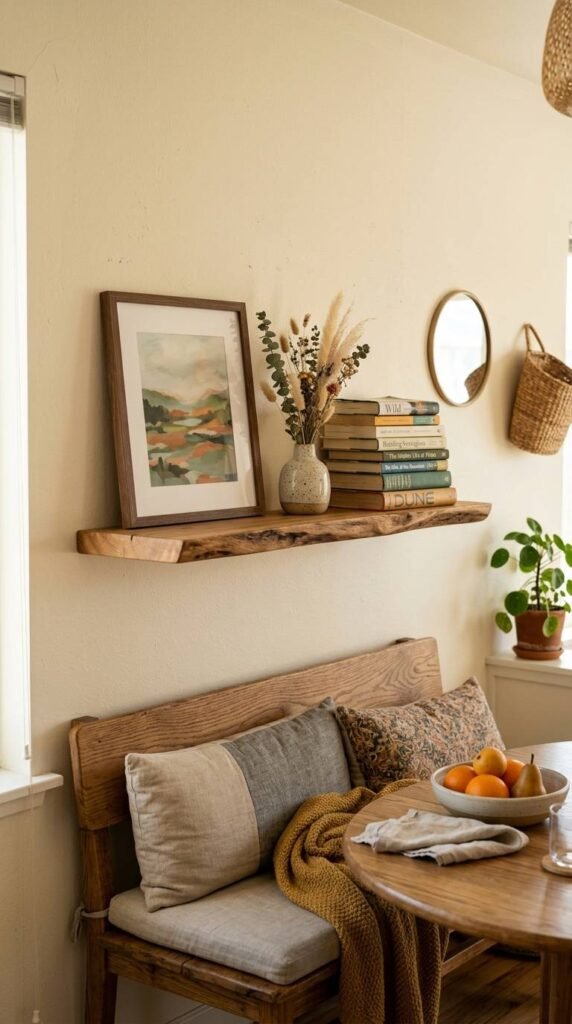
- Adds visual interest through intentional imbalance
- Works well for displaying art, books, and small objects
- Creates an easy, ever-changing display
- Suits modern and eclectic dining rooms alike
An asymmetrical shelf ledge breaks away from the predictable, centered look most dining room walls default to. Mounted slightly off-center or at varying heights, these shelves hold leaning art, a stack of books, or a small vase, creating a display that feels relaxed and collected rather than formally arranged. In my experience, this idea works particularly well for people who like to change their decor often, since nothing needs to be permanently hung. The ledge itself becomes a simple frame for whatever you choose to style on it.
The key to making asymmetry look intentional is variation in height and object size. I’ve noticed that pairing one tall leaning frame with a shorter stack of books and a small sculptural object creates a natural sense of balance, even though nothing is centered. This idea suits dining rooms with a slightly eclectic or gallery-inspired style, where the display can evolve over time. Keep the overall color palette simple so the varied shapes and heights don’t compete with too many colors at once.
12. Large-Scale Photography Print
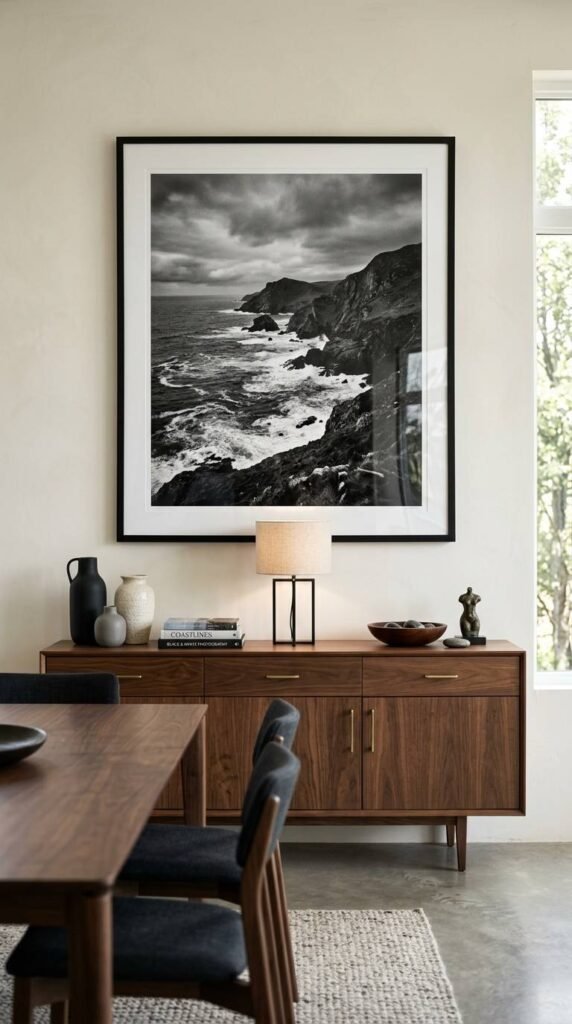
- Creates a dramatic focal point with one striking image
- Works beautifully in black and white or muted tones
- Adds personality through a meaningful or evocative scene
- Suits modern, minimalist, and transitional dining rooms
A single large-scale photograph can carry an entire dining room wall. A striking black-and-white landscape, an architectural shot, or a close-up nature image adds drama and personality without needing any additional decor around it. In my experience, choosing one powerful image is almost always more effective than filling the wall with several smaller prints, since the eye has one clear place to focus. Black-and-white photography in particular suits modern dining rooms well, since it adds depth and interest without introducing competing color.
Sizing the print correctly makes all the difference. Aim for a piece roughly two-thirds the width of the table or sideboard beneath it, so the proportions feel balanced rather than awkward. I’ve seen this idea work beautifully framed in a simple black metal frame with a generous white mat, which gives the photograph room to breathe. This is also a meaningful way to personalize a dining room, whether the photo is a favorite travel memory or a piece from a local artist you admire.
13. Geometric Metal Wall Art
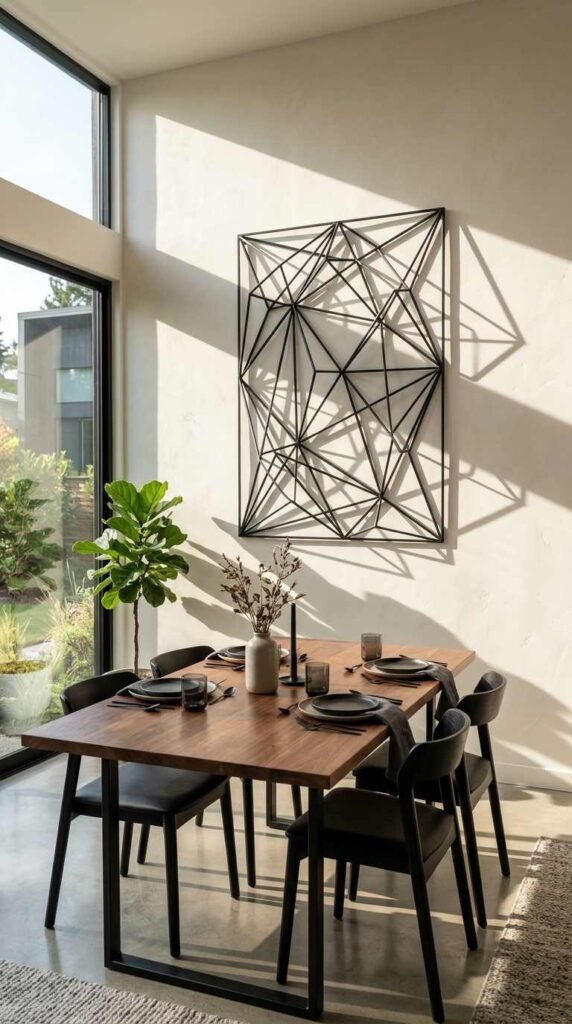
- Adds a sculptural, architectural element to the wall
- Works beautifully in black, brass, or mixed metal finishes
- Creates shadow and dimension as light shifts
- Suits modern and contemporary dining rooms
Geometric metal wall art brings a sculptural quality that flat prints can’t match. Circles, interlocking shapes, or angular patterns cut from metal add dimension to the wall, and their shadows shift subtly as the light changes throughout the day. In my experience, this idea suits dining rooms with a more contemporary or architectural style particularly well, since the clean geometric lines echo modern furniture and lighting fixtures already in the room. A single large piece tends to make more of a statement than several smaller geometric pieces grouped together.
Finish choice changes the whole feel of the piece. Matte black feels sleek and modern, while brushed brass or gold adds warmth and a touch of glamour. I’ve noticed that these pieces catch candlelight beautifully during evening dinners, adding subtle movement to an otherwise still wall. Center the piece above the table or sideboard at a similar height to where traditional art would hang, and keep the surrounding wall simple so the sculptural shape remains the clear focal point of the room.
14. Textured Plaster Wall Finish
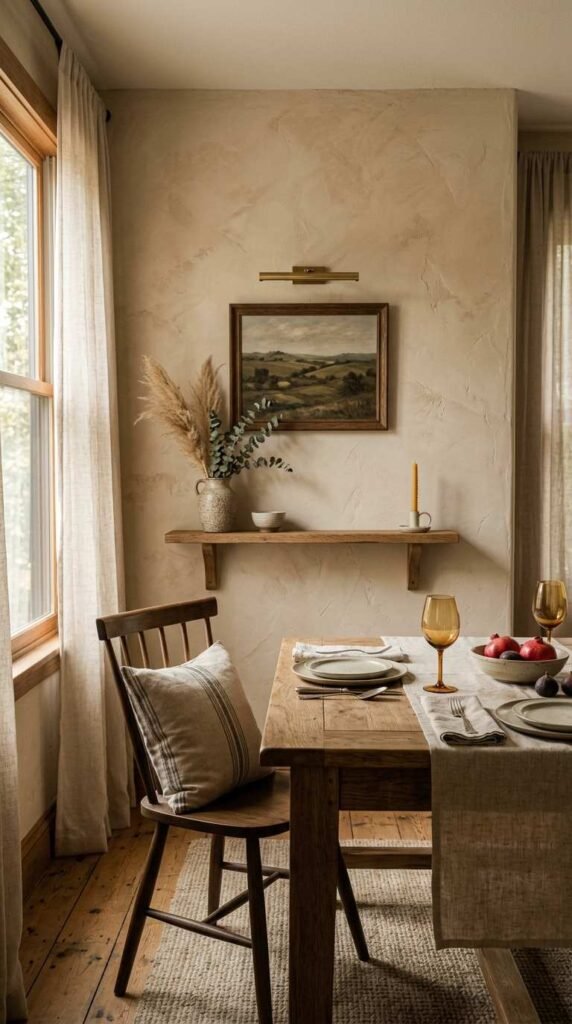
- Transforms the entire wall into a decorative feature
- Adds organic texture without needing additional art
- Works beautifully with warm, earthy color palettes
- Suits modern organic and Mediterranean-inspired dining rooms
A textured plaster finish turns the wall itself into the decor, eliminating the need for much additional art at all. Applied in soft, hand-troweled strokes, limewash or Venetian plaster creates a subtly uneven surface that catches light in a way flat paint never could. In my experience, this finish suits dining rooms aiming for a warm, organic modern look, since the texture adds richness without introducing pattern or bold color. A single accent wall, rather than the whole room, keeps the look intentional and manageable.
Color choice shapes how dramatic the finish feels. Soft terracotta, warm beige, or muted sage all read as earthy and current, while a deeper charcoal plaster adds drama for evening dining. I’ve seen this technique applied by both professionals and confident DIYers, though it does take some practice to get the texture right. Pair the textured wall with simple black sconces or one small piece of art, since the wall finish itself already provides plenty of visual interest for the room.
15. Hanging Ceramic Plate Display
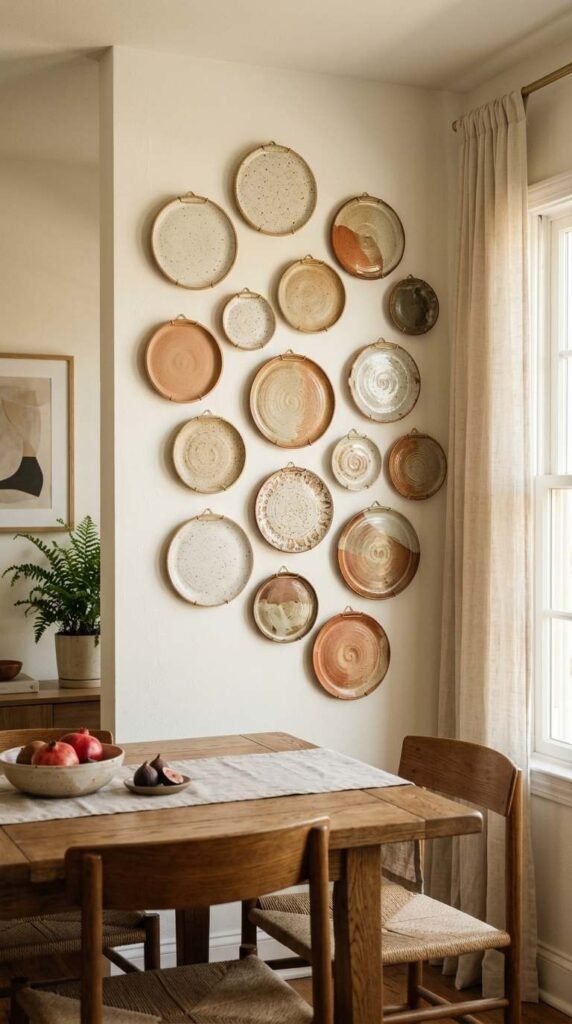
- Adds color, pattern, and dimension to a plain wall
- Works beautifully with vintage or handmade plates
- Creates a collected, personal display over time
- Suits eclectic and modern farmhouse dining rooms
A wall of hanging ceramic plates brings unexpected charm to a dining room. Mixing vintage finds with handmade pieces creates a display that feels collected and personal, rather than purchased as a matching set. In my experience, this idea works particularly well for dining rooms, since the plates echo the tableware already used for meals, creating a subtle, thoughtful connection between the wall and the table below. Choosing plates with a shared color palette, even if the patterns vary, keeps the arrangement feeling cohesive rather than chaotic.
Spacing and arrangement determine how polished the final display looks. I’ve noticed that grouping plates in a loose, organic cluster feels more relaxed than a strict grid, though a symmetrical grid suits more formal dining rooms beautifully. Use plate hangers designed to protect the ceramic, and start with five or six plates before adding more over time. This idea is also a wonderful way to display inherited or thrifted pieces that might otherwise sit unused in a cabinet.
16. Vertical Garden Wall Panel
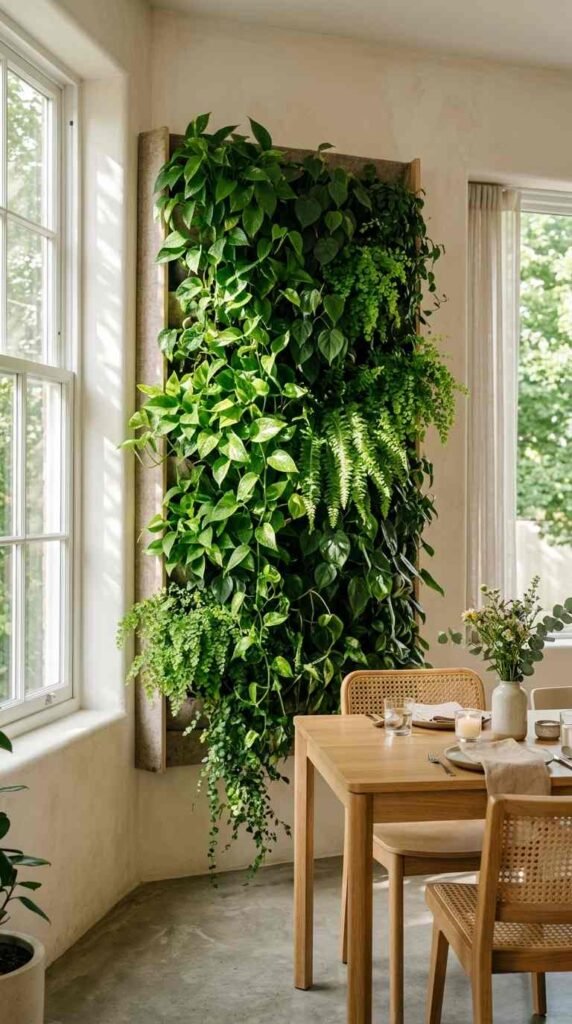
- Brings living greenery into the dining room wall
- Adds color and texture without using floor space
- Works with real plants or quality preserved greenery
- Suits modern, biophilic, and nature-inspired dining rooms
A vertical garden wall panel brings the outdoors directly onto a dining room wall. Mounted planters or a modular green wall system hold a mix of trailing and upright plants, creating a living piece of art that changes and grows over time. In my experience, this idea works beautifully for dining rooms that get decent natural light, since healthy plants need it to thrive on a vertical surface. For rooms without much sun, high-quality preserved or faux greenery achieves a similar lush effect without the maintenance concerns.
Watering and upkeep are the main considerations with a living wall. I’ve seen simpler versions built with just a few mounted planters rather than a full modular system, which still delivers the greenery without the complexity. A drip irrigation system makes maintenance easier for larger installations, though smaller panels can be watered by hand weekly. This idea adds a genuinely unique focal point to modern dining room wall decor, bringing life and color that static art simply cannot replicate.
17. Mixed-Media Wall Collage
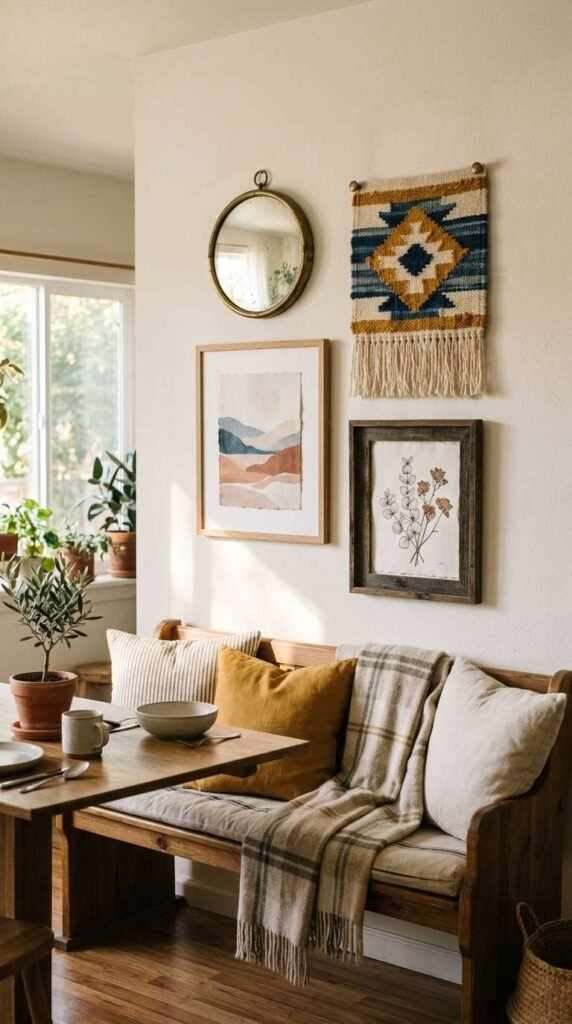
- Combines different textures and materials in one display
- Creates a rich, layered look full of personal character
- Works well mixing art, textiles, and small objects
- Suits eclectic and maximalist-leaning modern dining rooms
A mixed-media wall collage layers different materials, like framed art, a small woven piece, and a sculptural object, into one cohesive display. Unlike a traditional gallery wall of matching frames, this approach embraces variety in texture and dimension, creating a wall that feels layered and personal. In my experience, this idea suits homeowners who enjoy a slightly more eclectic, collected style, where the wall tells a story built over time rather than purchased all at once from a single source.
Balance is what keeps a mixed-media wall from feeling chaotic. I’ve noticed that choosing a consistent color palette across the different materials, even when the textures vary widely, helps the whole display feel intentional. Start with one anchor piece, like a larger framed print, then build outward with smaller textural elements around it. This idea works particularly well above a sideboard, where the varied heights and depths create a dynamic, three-dimensional display that flat art alone could never achieve, making it one of the most appealing unique home decor ideas for a stylish dining space.
18. Modern Tapestry in Neutral Tones
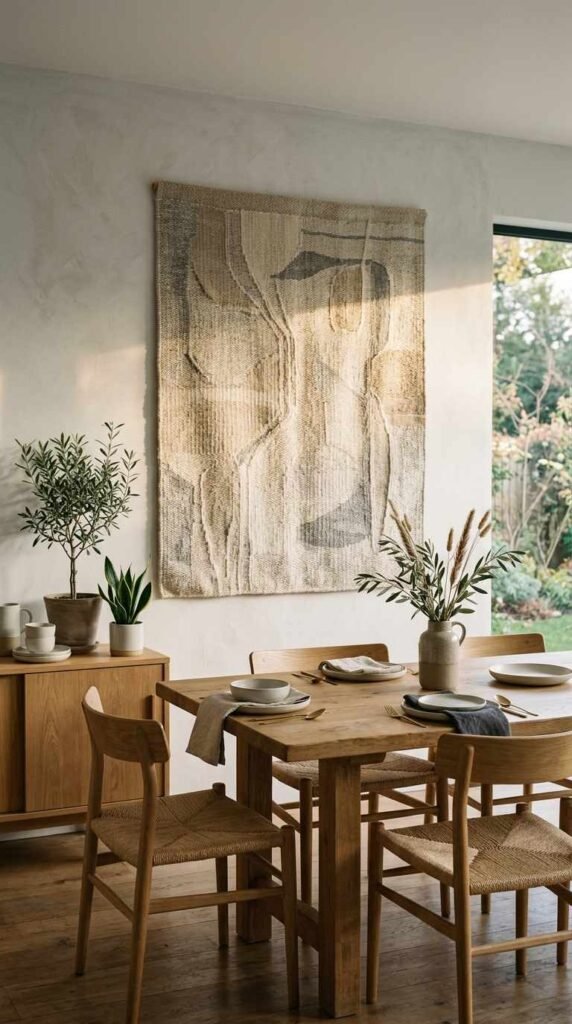
- Adds softness and texture to a large wall
- Works beautifully in cream, taupe, or soft gray tones
- Creates a cozy, layered feel without heavy pattern
- Suits modern, minimalist, and transitional dining rooms
A modern tapestry brings soft texture to a dining room without relying on bold pattern or color. Woven in neutral tones like cream, taupe, or soft gray, these large-format textiles add warmth and dimension to an otherwise plain wall. In my experience, a tapestry works particularly well on a long wall that feels too large for a single piece of art, since the generous scale fills the space while keeping the overall look calm and soft rather than busy or overwhelming.
Hanging the tapestry properly makes a real difference in how finished it looks. I’ve seen these pieces hung with a simple wooden dowel at the top, which keeps the edge clean and allows the fabric to hang naturally. Choose a tapestry with subtle texture or a faint woven pattern rather than anything too graphic, so it complements modern furniture instead of competing with it. This idea pairs beautifully with simple black or wood furniture, letting the tapestry’s texture become the room’s quiet focal point.
19. Backlit Wall Art Panel
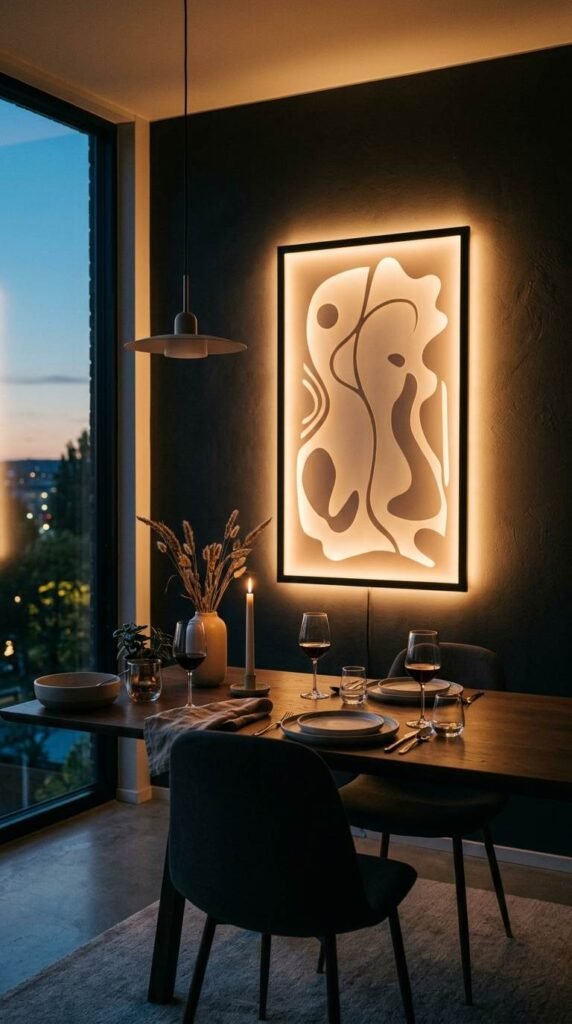
- Adds a soft, glowing focal point to the dining room
- Creates dramatic ambiance for evening dinners
- Works with LED strips behind art or acrylic panels
- Suits modern and contemporary dining room styles
Backlit wall art brings a soft glow that transforms how a dining room feels after dark. A piece of art or an acrylic panel mounted slightly off the wall, with LED strips hidden behind it, creates a gentle halo of light around the edges. In my experience, this idea suits dining rooms aiming for a more dramatic, contemporary feel, since the glowing effect adds genuine ambiance beyond what a standard light fixture provides. It works especially well as a focal point above a sideboard or on the main dining wall, making it a striking choice for dining room wall decor modern styles.
Installation is more approachable than it might seem. I’ve seen battery-powered LED strip kits make this idea accessible even without professional electrical work, simply by mounting the art on small spacers to create a gap behind it. Choose warm-toned LED lighting rather than cool white, since warm light flatters the room and feels more inviting during dinner. This idea gives modern dining room wall decor a genuinely unique, almost gallery-like quality that few other options can match.
20. Minimalist Wall-Mounted Vase Shelf
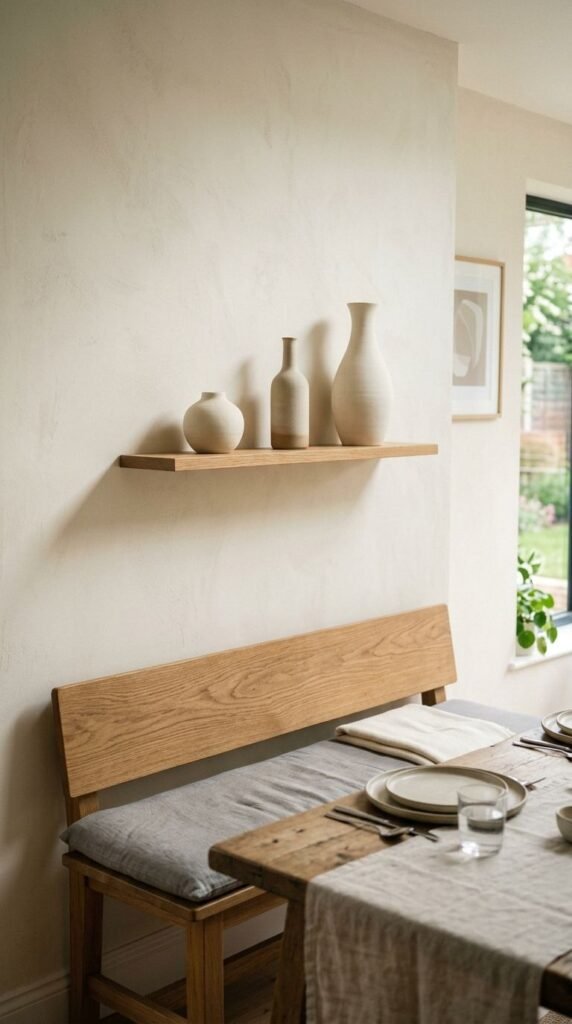
- Combines greenery with sculptural wall storage
- Keeps the look light, airy, and uncluttered
- Works well with a single stem or small plant
- Suits minimalist and Scandinavian-style dining rooms
A wall-mounted vase shelf brings a single touch of greenery to the wall without using any table or floor space. A small ceramic or glass vase, holding one dried stem or a trailing plant, sits on a slim floating shelf designed specifically to hold it. In my experience, this idea suits small dining rooms particularly well, since it adds a living element to the room without competing for the limited surface space a smaller table already requires. The look stays light, airy, and genuinely minimal.
Keeping the styling restrained is what makes this idea work. I’ve noticed that a single stem, rather than a full arrangement, suits the minimalist spirit of this display best. Choose a shelf finish, like matte black or natural wood, that complements the vase itself. This idea pairs beautifully with other simple wall decor nearby, like a small piece of line art or a thin mirror, creating a quiet, considered corner of the dining room that feels intentional rather than sparse.
21. Curved Wall Niche with Decor
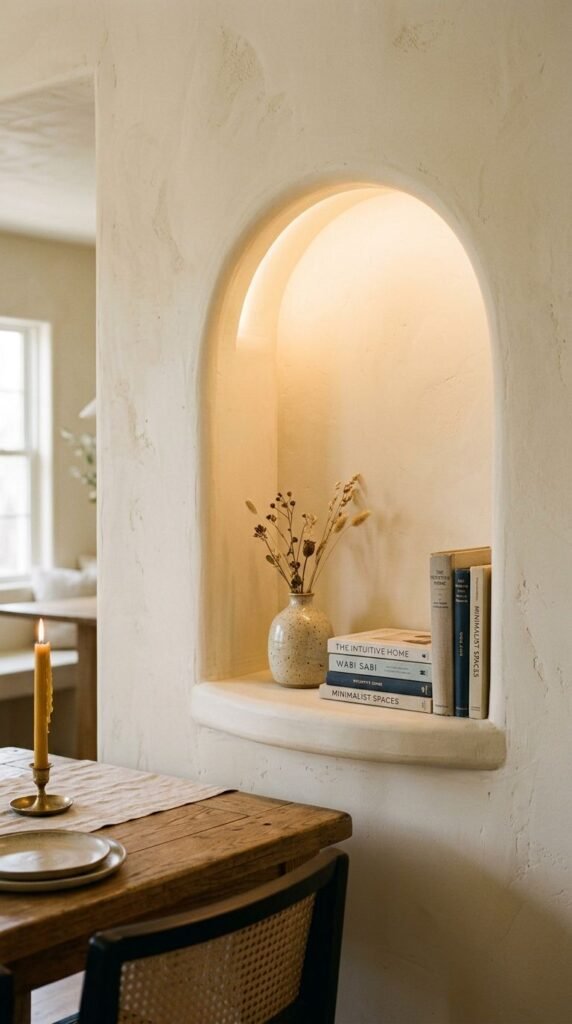
- Adds architectural softness to a modern dining room
- Creates a built-in display spot for art or objects
- Works beautifully with arched or rounded design elements
- Suits modern organic and contemporary dining rooms
A curved wall niche brings a soft, architectural moment to an otherwise flat dining room wall. Recessed into the wall itself, the arched shape creates a built-in spot to display a small vase, a piece of art, or a candle, framed by the niche’s gentle curve. In my experience, this idea suits dining rooms leaning toward a modern organic style, where curved furniture and soft edges are already part of the design language. It adds dimension without requiring any additional furniture or hanging pieces.
Lighting the niche properly brings out its architectural charm. I’ve seen small recessed lights installed inside the niche to highlight whatever is displayed, creating a soft glow that doubles as ambient lighting for the whole room. Keep the styling inside simple, since the curved shape itself already provides plenty of visual interest. A single sculptural object or a small plant is often enough. This idea works particularly well in newer builds or during a renovation, where the niche can be built directly into the drywall.
FAQs
1. What is the best wall decor for a modern dining room?
Oversized art, convex mirrors, and black metal sconces are among the most popular choices, since they add style without crowding the room. In my experience, choosing one strong focal point rather than several small pieces tends to look more polished in a modern dining room.
2. How high should I hang art above a dining table?
Center the piece so it sits around 57 to 60 inches from the floor, which is roughly eye level for someone seated at the table. This height applies to most art, mirrors, and clocks, and it keeps the proportions feeling balanced with the furniture below.
3. Should I choose a mirror or artwork for my dining room wall?
It depends on the room’s lighting and layout. A mirror reflects light and makes a smaller or darker dining room feel more open, while artwork adds color and personality. I’ve noticed that dining room decor round table setups often benefit from a mirror, since the round reflection echoes the table shape nicely.
4. What color frames work best for modern dining rooms?
Black frames are the most versatile choice, since they add contrast and tie mismatched art together easily. Brass or gold frames bring warmth, while natural wood feels more organic. Sticking to one frame color throughout a gallery wall keeps the display looking cohesive.
5. Can I mix different types of wall decor together?
Yes, mixing textures like a woven hanging, a small shelf, and a framed print creates a layered, collected look. That’s why many designers recommend combining two or three different types of decor rather than relying on just one, as long as the color palette stays consistent.
6. How do I decorate a large empty dining room wall?
An oversized art panel, a wood slat accent wall, or a large-scale photograph are all effective ways to fill a big wall without clutter. I’ve seen one generously sized piece work better than several small ones, since it gives the eye a clear focal point.
7. What wall decor works well with a round dining table?
Round or curved elements, like a convex mirror cluster or a curved wall niche, echo the shape of a round table beautifully. This repetition of curves creates a cohesive, intentional feel throughout dining room decor round table layouts, rather than clashing with sharp, angular decor.
8. Is textured wall art still trending for dining rooms?
Yes, textured finishes like plaster art and sculptural pieces remain popular, since they add depth and shadow without relying on bold color. I’ve noticed these pieces age well, because the interest comes from texture and light rather than a trend-driven pattern or color choice.
9. How do I light my dining room wall decor properly?
Wall sconces, picture lights, or hidden LED strips all help highlight wall decor, especially in the evening. Warm-toned bulbs flatter both art and the room overall. Positioning a light source near a mirror or glass piece also helps scatter light further across the space.
10. Do I need to hire a professional to install wall decor?
Lightweight pieces like framed art, shelves, and tapestries are usually simple enough for most homeowners to hang themselves with basic tools. More involved projects, like a wood slat wall, a plaster finish, or a built-in niche, often benefit from professional help for the best, longest-lasting result.
Conclusion
A dining room wall doesn’t need to stay empty to feel finished. From oversized art and curved mirrors to woven textiles and sculptural plaster, these wall decor ideas show how a few intentional touches can transform the whole room. I’ve seen how something as simple as a new mirror or a well-placed shelf can make a dining room feel completely refreshed.