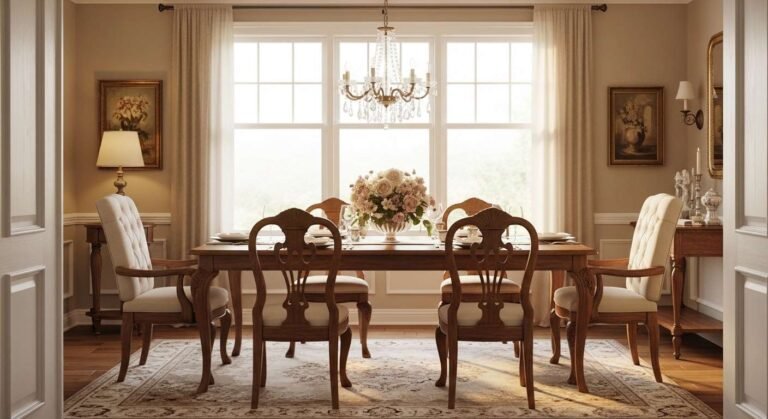
A tight dining nook does not have to feel cramped once the right pieces land on the wall instead of the floor. That is the secret behind good small dining room wall decor ideas — using vertical space cleverly so a compact room still feels full of personality. From a vertical gallery wall to a slim floating shelf, these ideas add style without eating into precious floor space, the same efficient thinking behind a good modern dining room decor approach that favors fewer, well-chosen pieces. Every idea here works even in the tightest dining nook. Get ready to fall for twenty-five gorgeous ways to dress up a small dining room wall.
1. A Vertical Gallery Wall
Choosing Frame Sizes for a Narrow Wall
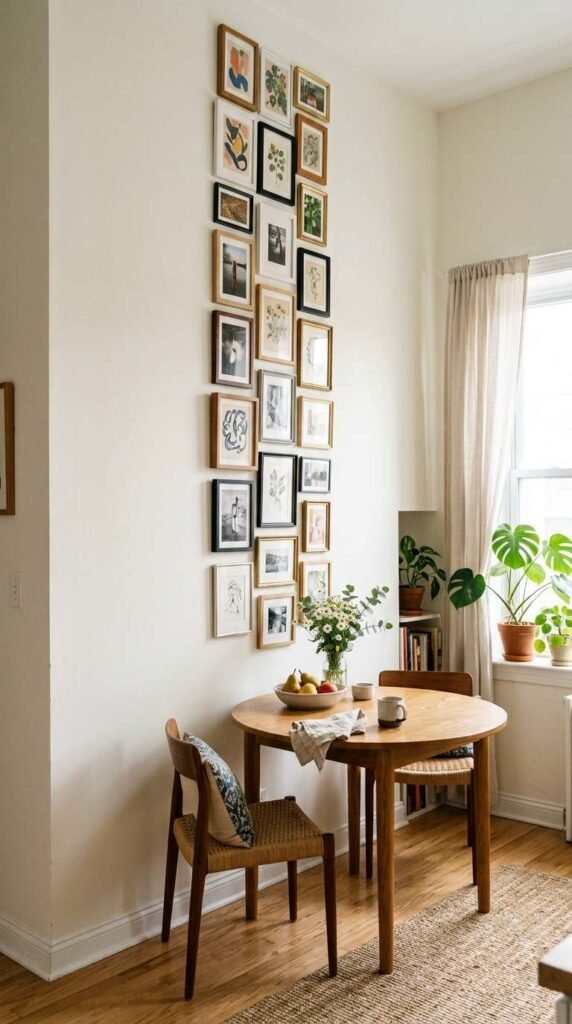
A blank wall next to your dining table is wasted potential. A vertical gallery wall turns that narrow strip into the room’s focal point, stretching the eye upward instead of sideways. This trick works especially well in small dining room wall decor projects where floor space is tight but wall height is not. Instead of one flat piece of art, you layer three, five, or seven smaller frames in a single column. The result feels curated, not cluttered. In my experience, this single change makes even a tiny dining nook feel like it was designed by someone who actually cared.
Gallery walls also solve a real problem: matching furniture to art can feel impossible in small spaces. This layout removes that pressure completely. You do not need one large, expensive piece. Instead, thrift store finds, family photos, and simple prints all sit together beautifully when grouped with consistent spacing. The vertical format keeps the arrangement narrow enough to avoid touching your table or chairs, which matters most in tight rooms. I’ve seen this work well in apartments where the dining area shares space with a hallway, since it defines the zone without needing a physical divider or extra furniture.
On a narrow wall, frame width matters more than height. Keep individual frames between 8 and 12 inches wide so the column never feels heavy or crowds nearby furniture. Mix two or three sizes for rhythm, but keep the widest frame near the center for balance. I’ve noticed that keeping at least 2 inches of space between frames stops the wall from feeling cramped, which is especially important in small dining rooms where every inch of breathing room counts.
2. An Oversized Mirror to Expand Space
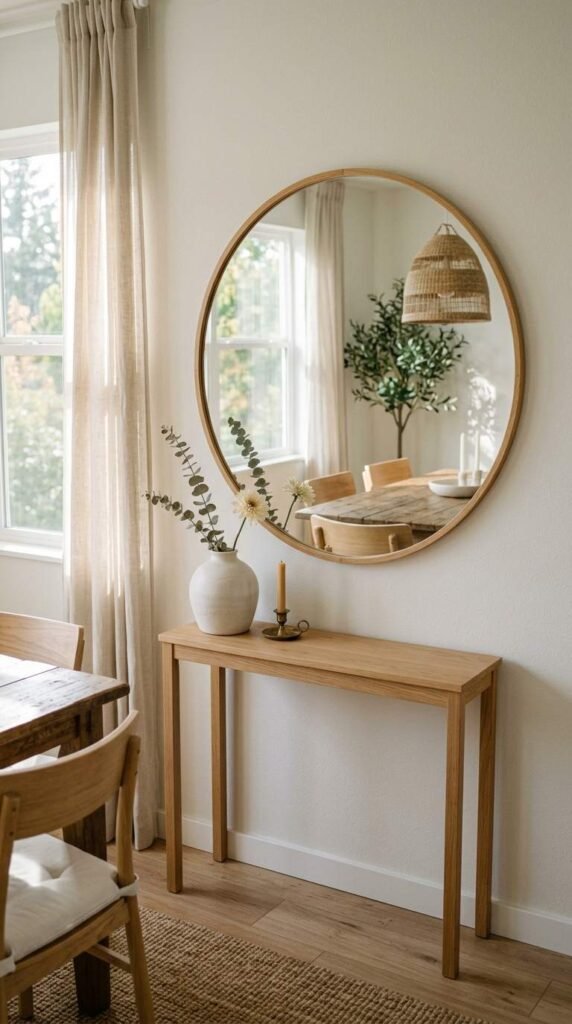
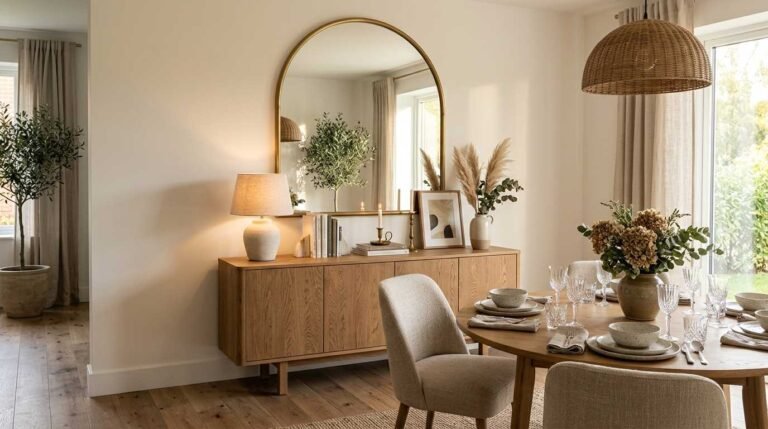
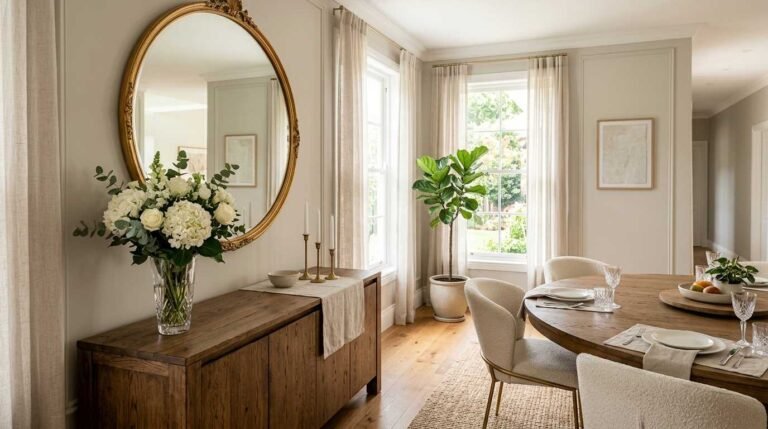
Nothing tricks the eye like glass and reflection. An oversized mirror placed directly across from a window pulls daylight deeper into the room, brightening corners that usually stay dim. In a compact dining area, this single piece can visually double the perceived width of the space. Unlike art, a mirror never competes for attention. It simply multiplies whatever is already working in the room, from pendant lighting to wall color. That’s why many designers recommend hanging one slightly larger than feels comfortable at first. A bigger mirror reads as intentional, while a small one can look like an afterthought.
Placement changes everything with mirrors, so think carefully before you hang one. Position it across from your main light source, whether that is a window or a bright pendant fixture, so it reflects light rather than a blank wall. In small dining room wall decor plans, this is often the single most effective upgrade because it costs less than knocking down a wall yet delivers a similar sense of openness. I’ve tried this in a narrow apartment dining nook, and guests genuinely thought the room had been renovated, when only one mirror had actually changed.
3. A Floating Corner Shelf
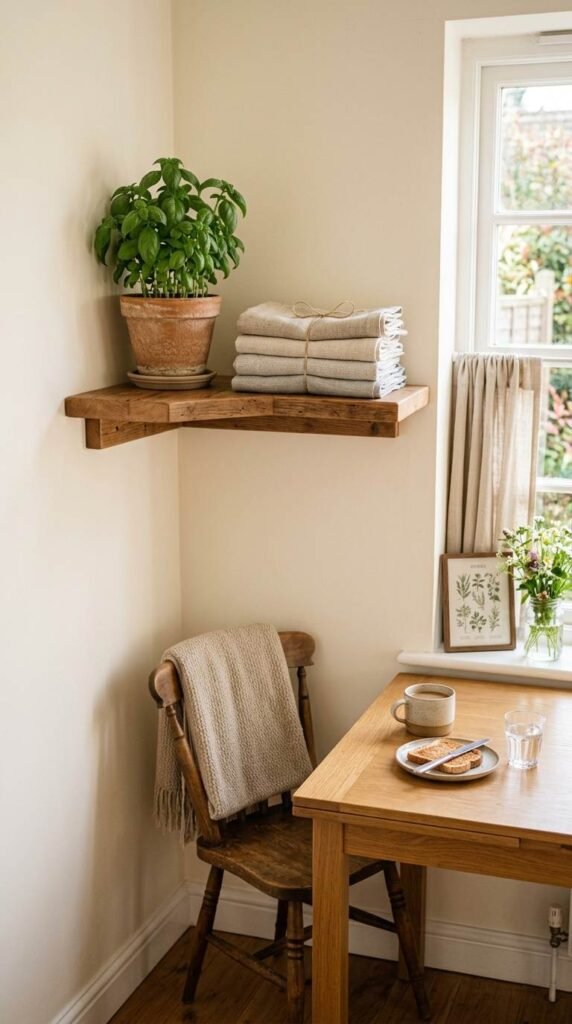
Corners are the most overlooked real estate in any small dining room. A floating shelf tucked into that awkward angle turns dead space into something useful and pretty. Unlike a bulky cabinet, it adds zero floor footprint, which matters when chairs need room to slide back comfortably. You can style it with a small plant, a stack of bowls, or a single candle for warmth. This idea works particularly well when paired with other small dining room wall decor ideas, since the shelf balances heavier pieces like mirrors or art without competing for the same wall.
Choosing the right depth matters more than people expect. A shelf between four and six inches deep gives enough surface for decor without jutting out where someone might bump it while pulling out a chair. I’ve noticed thin brackets, rather than bulky ones, keep the whole feature looking light and modern rather than heavy. Paint the shelf the same color as your wall for a seamless, built-in look, or choose a contrasting wood tone to make it pop. Either way, this small addition adds function and visual interest exactly where most rooms have nothing but bare, wasted wall space.
4. Slim Wall Sconces
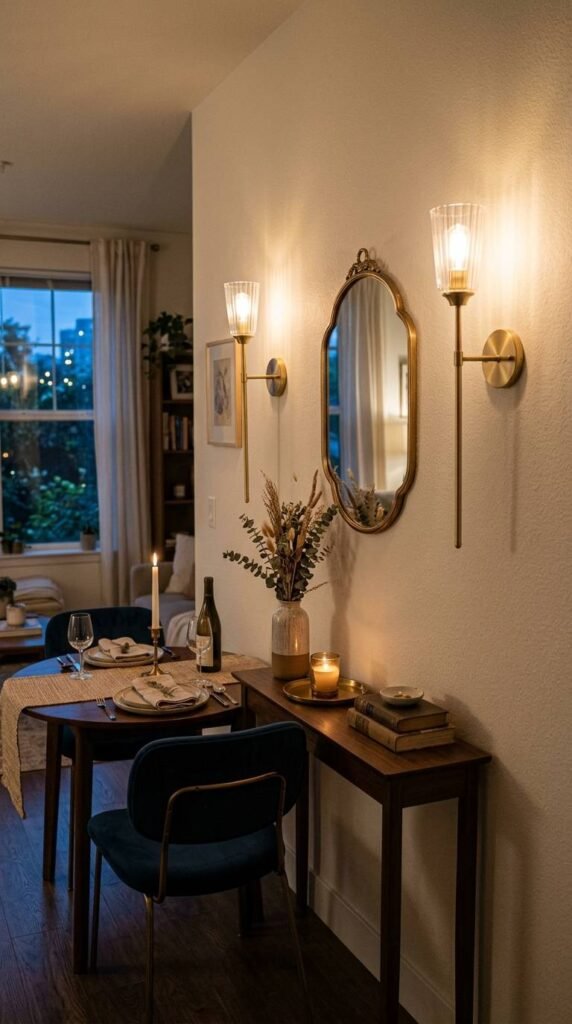
Table space is precious in a small dining room, and lamps eat into it fast. Slim wall sconces solve that problem by moving your light source straight onto the wall, where it takes up zero table room. Mounted on either side of a mirror or art piece, they create a balanced, almost gallery-like glow that instantly elevates the whole setup. In my experience, warm-toned bulbs make the biggest difference here, since cool white light can make a small space feel clinical rather than inviting. Sconces also double as decor, so you get lighting and style in one fixture.
Placement height matters more than most people realize when installing sconces near a dining table. Mounting them roughly 60 to 66 inches from the floor keeps the light at eye level without glaring into anyone’s face during dinner. This idea pairs beautifully with slim frames or a mirror sitting between the two fixtures, creating a symmetrical focal point that feels custom-built. I’ve seen this work well in rented apartments too, since plug-in sconce versions need no wiring at all, making it one of the easiest upgrades for anyone hesitant to drill into walls.
5. A Narrow Console with Art Above
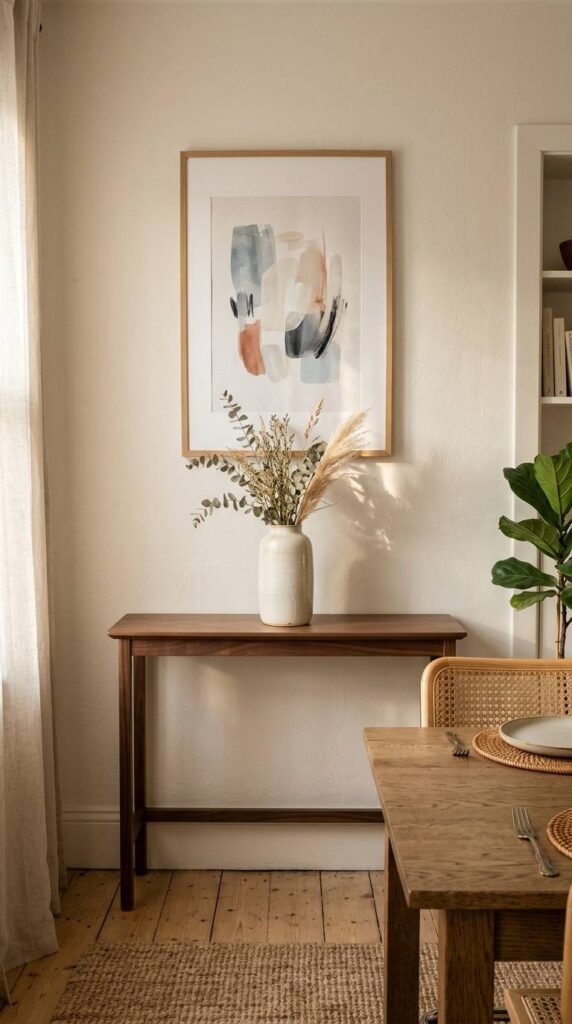
A narrow console paired with art above it gives a small dining room something most spaces lack: a proper focal wall. The console grounds the composition, so the artwork above does not feel like it is floating in empty space. Because the table is shallow, usually 10 to 14 inches deep, it fits against a wall without narrowing the walkway or bumping into chairs. This setup is one of the more versatile small dining room wall decor ideas since it works whether your style is modern, traditional, or somewhere in between. It simply needs the right proportions to feel balanced.
Function matters just as much as looks with this combination. The console becomes extra serving space during dinner parties, holding dishes or drinks without cramming the main table. That’s why many designers recommend choosing a console roughly two-thirds the width of the art above it, since this ratio keeps the eye moving naturally between the two elements. I’ve tried this layout in rooms as narrow as seven feet wide, and it never once made the space feel tighter. Instead, it added storage and style exactly where the room needed both the most.
6. Petite Framed Prints
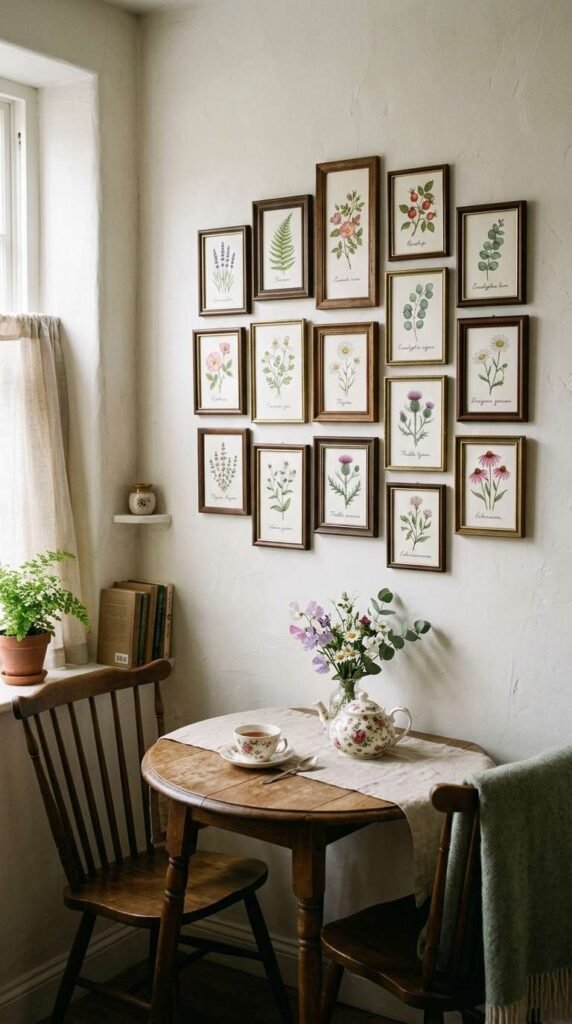
Small frames get overlooked, but they are one of the smartest choices for a compact dining wall. Instead of hunting for one large piece that fits an awkward space, petite prints let you build a composition that adapts to whatever wall you have. A tight grid of four or six small frames reads as one cohesive unit, filling the wall with detail rather than one heavy, dominant image. This approach also keeps costs down significantly, since small prints and thin frames cost far less than a single oversized art piece, without sacrificing visual impact in the finished room.
Consistency is the secret to making petite prints look intentional rather than random. Sticking to one frame color and one general theme, whether that is botanical, abstract, or black and white photography, keeps the wall feeling curated. I’ve noticed spacing them two to three inches apart, both vertically and horizontally, creates the cleanest grid effect. This idea works especially well for renters or anyone who likes refreshing their space seasonally, since swapping small prints costs little and takes only minutes, unlike replacing one large, expensive statement piece every time your style changes.
7. A Single Statement Piece
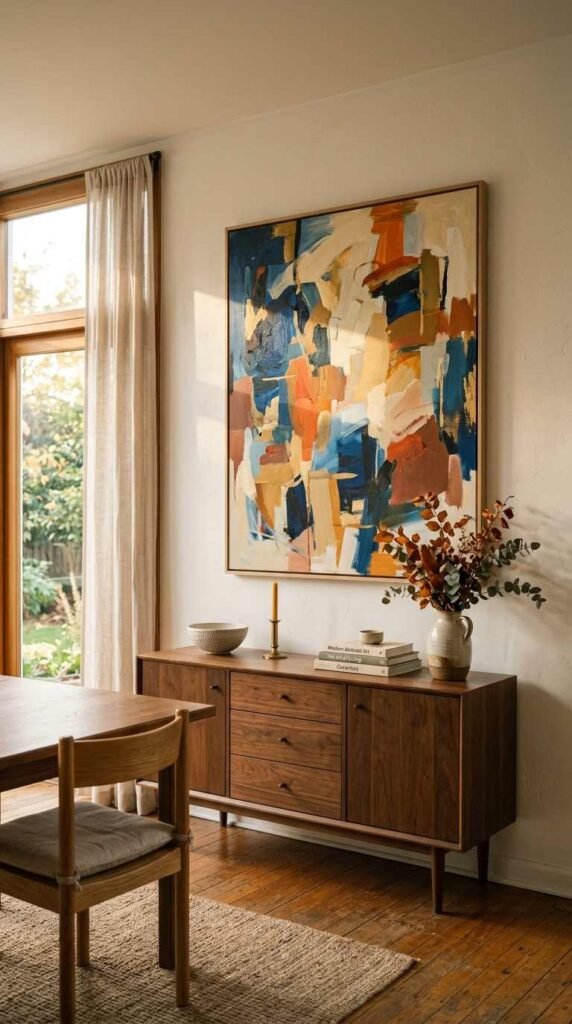
Sometimes less really is more, especially in a small dining room. One bold, well-chosen piece of art can do the work of an entire gallery wall, giving the room a clear focal point without any visual clutter. This approach works particularly well when the rest of the room stays simple, letting the single piece stand out rather than compete with other decor. Choosing artwork with colors that echo something else in the room, like a rug or chair cushion, ties the whole space together. In my experience, one striking piece often gets more compliments than five smaller ones combined.
Scale is everything when you commit to a single statement piece. The artwork should span roughly two-thirds the width of your table below it, so it feels proportional rather than lost or overwhelming on the wall. Hanging it so the center sits around 57 to 60 inches from the floor keeps it at natural eye level for anyone seated or standing nearby. This idea suits small dining room wall decor plans where simplicity matters, especially in rooms already busy with patterned chairs, rugs, or a textured tablecloth competing for attention.
8. A Wall-Mounted Plate Rack
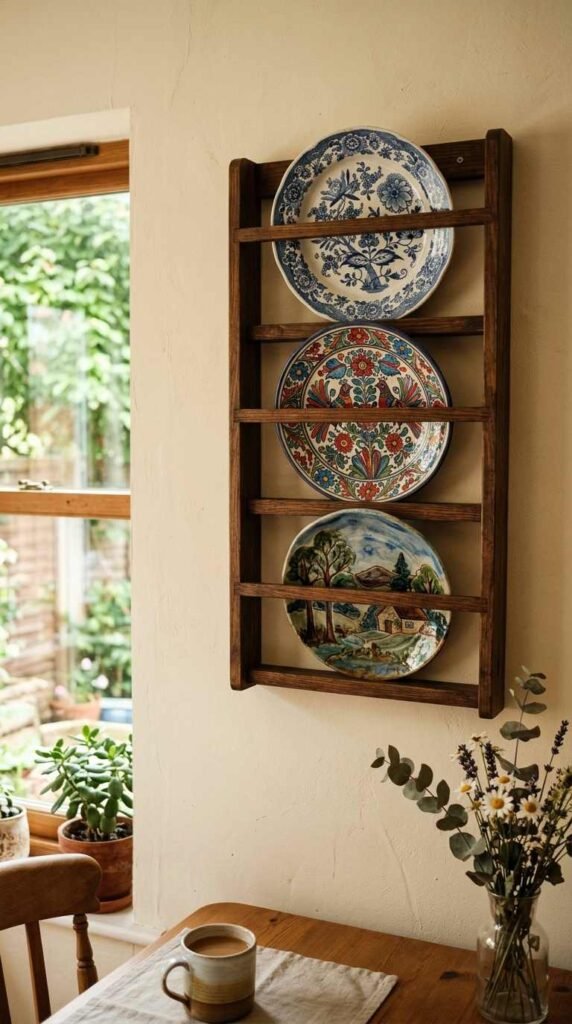
A plate rack sounds old-fashioned, but it has quietly become one of the most charming small dining room wall decor ideas around. Instead of hiding pretty dishware in a cabinet, this setup puts it on display, turning function into decoration. Patterned or colorful plates add personality to a wall instantly, without needing a single frame or canvas. This works especially well in cottage, farmhouse, or vintage-inspired dining rooms, though a simple rack with plain white plates fits modern spaces just as easily. Either way, it solves two problems with one simple addition to the room.
Spacing and plate size determine whether this idea looks curated or cluttered. Choosing plates within a similar color family, even if patterns vary slightly, keeps the display feeling unified rather than mismatched. I’ve seen this work well with three to five plates staggered at slightly different heights, which adds visual rhythm without looking chaotic. Because the rack sits flush against the wall, it never intrudes on table or chair space, making it ideal for narrow rooms. It also gives guests something to admire before the food even arrives at the table.
9. A Mirror Cluster for Extra Light
Placing Mirrors for Maximum Reflection
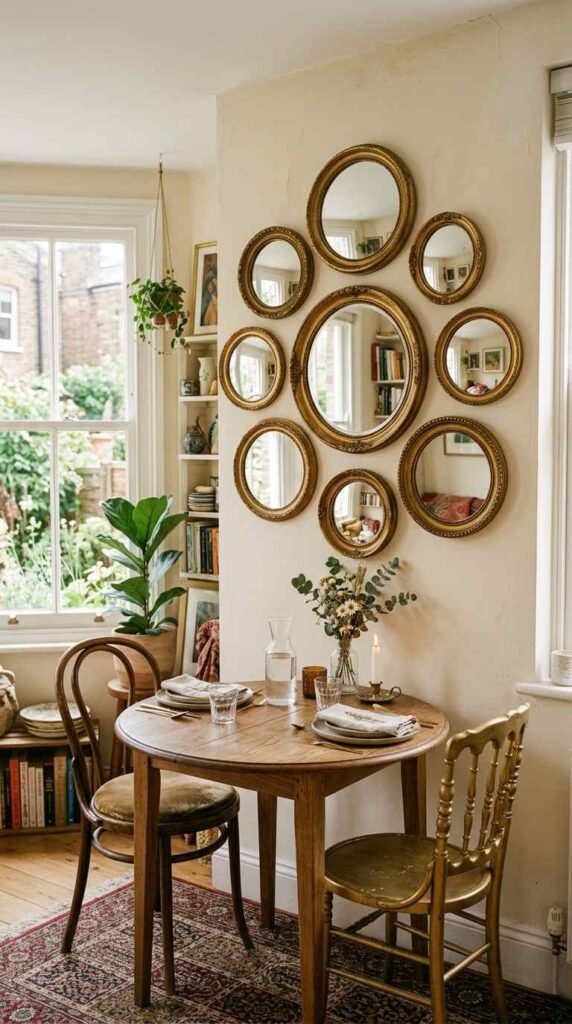
Where one large mirror feels formal, a cluster of smaller mirrors feels playful and layered. Grouping five to seven round mirrors of varying sizes creates movement across the wall, each one catching and bouncing light slightly differently throughout the day. This approach works beautifully in small dining room wall decor plans where a single oversized mirror might feel too heavy or serious for the space. Because each mirror is lightweight, hanging them requires no special tools or reinforced wall anchors, making this one of the more approachable projects for anyone new to wall styling.
The real magic happens with natural light. As sunlight shifts across the room during the day, a mirror cluster reflects it in small, shifting bursts rather than one static beam. That’s why many designers recommend placing this arrangement on a wall that receives at least some direct or indirect daylight, since the effect falls flat in a completely windowless room. I’ve noticed clustering mirrors asymmetrically, rather than in a strict grid, gives the wall a more organic, collected-over-time feel that suits small, cozy dining spaces far better than a rigid, formal layout ever could.
Hang your largest mirror slightly off-center as the anchor, then build smaller ones around it in a loose, uneven pattern. Position the whole cluster directly across from or adjacent to your main light source, whether that’s a window or a pendant fixture, so reflections actually multiply the light rather than bouncing into a dark corner. Leave at least three inches between each mirror to keep the grouping from feeling cramped or difficult to read at a glance.
10. Vertical Stripe Wallpaper Accent
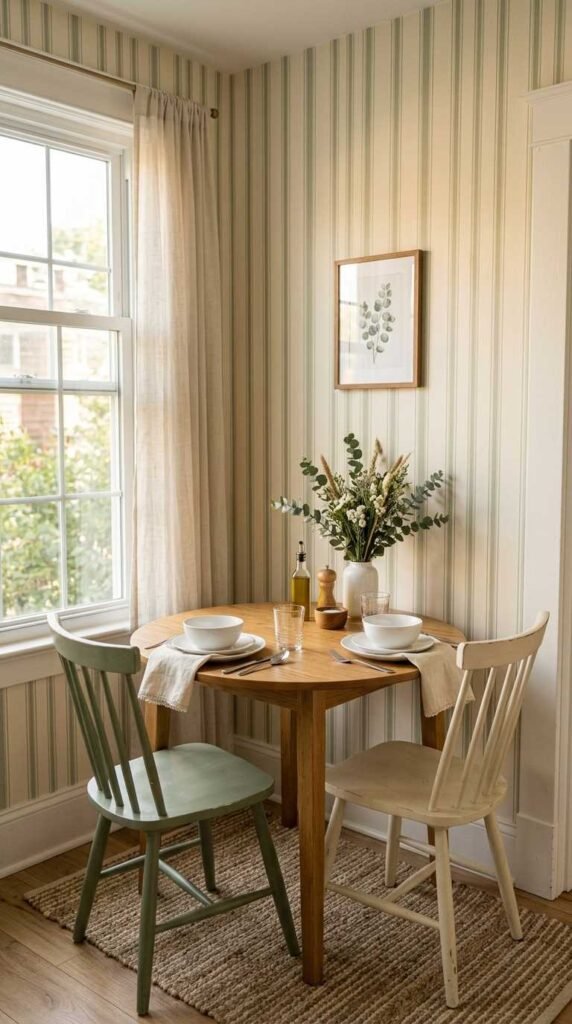
Wallpaper gets a bad reputation for being permanent and risky, but vertical stripes flip that idea completely. The upward lines trick the eye into reading the ceiling as taller than it actually is, which matters enormously in small dining rooms with limited height. Unlike a busy floral or geometric print, stripes stay timeless and pair easily with almost any furniture style already in the room. This is one of the few small dining room wall decor ideas that changes the entire feel of a space without needing a single extra accessory once the wallpaper itself is installed and finished.
Choosing the right stripe width changes the effect significantly. Thinner stripes, around one to two inches wide, create a subtle texture rather than a bold pattern, which suits rooms where you still want other decor to stand out. I’ve tried wider stripes in a narrow dining nook, and while dramatic, they worked best paired with very simple furniture and no additional wall art. Removable, peel-and-stick versions have improved dramatically in recent years, making this a low-risk project for renters who want the visual impact without the long-term commitment of traditional paste wallpaper.
11. Thin Ledge Shelves
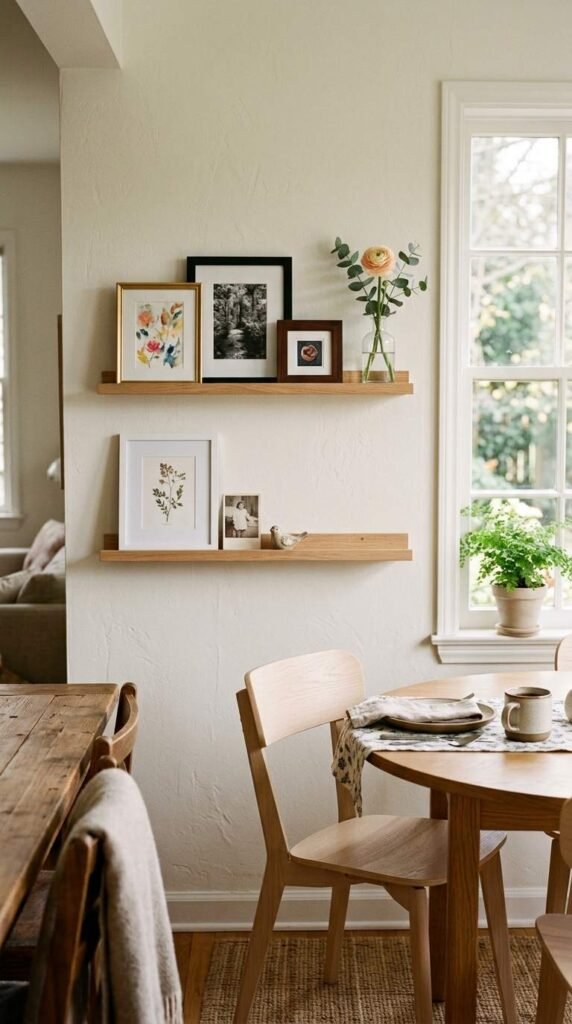
Ledge shelves solve a very specific small-space problem: the need to change decor often without damaging the wall. Because art and objects simply lean against the shelf rather than hang individually, you can swap pieces in seconds whenever the mood strikes. This creates a layered, collected look that feels more personal than a single fixed piece of art ever could. In small dining room wall decor projects, this flexibility matters, since tastes and seasons change faster than most people want to keep drilling new holes. One shelf, endless combinations, all with the same simple hardware.
Depth and spacing determine how well this idea works in practice. A ledge between three and five inches deep holds most small frames and decor items securely without looking bulky against the wall. I’ve noticed stacking two shelves at slightly different heights, roughly eight to ten inches apart, creates a more dynamic display than a single long shelf alone. Leaning items at gentle angles, rather than standing them perfectly straight, also adds a relaxed, natural feel that suits casual dining spaces far better than an overly rigid, symmetrical arrangement ever really could.
12. A Small Scale Tapestry
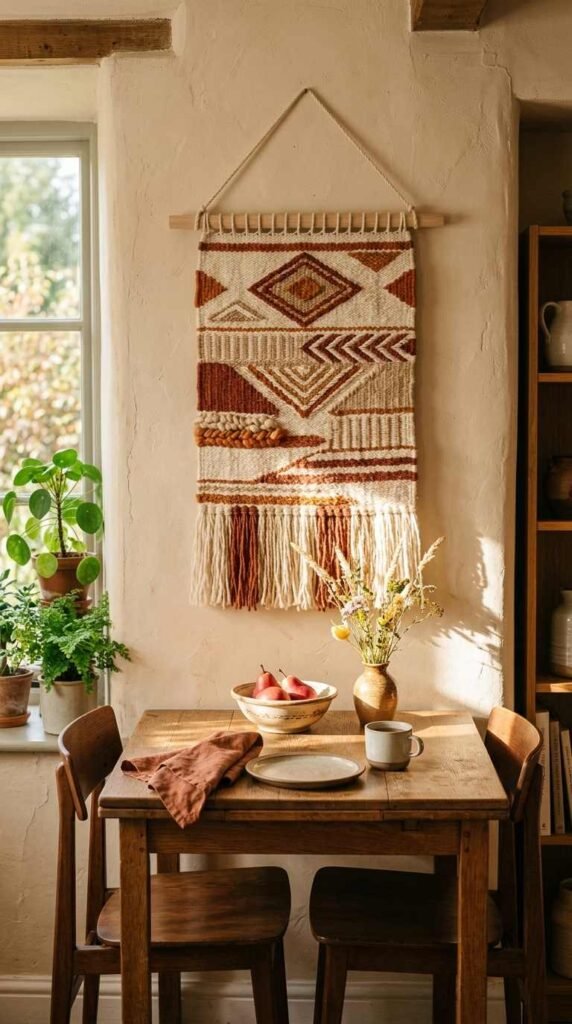
A tapestry brings something frames and mirrors simply cannot: texture. In a small dining room full of hard surfaces, like wood tables, glass, and tile, a woven textile softens the whole space instantly. Because tapestries are lightweight, hanging one requires nothing more than a small nail or hook, making it one of the easiest projects on this entire list. Choosing a smaller scale version, rather than an oversized one, keeps the proportions right for a compact wall without overwhelming the room. It’s a small addition that changes how the whole space feels to sit in.
Color and texture work together here more than in almost any other idea on this list. A tapestry in warm, earthy tones tends to suit small dining rooms particularly well, since these shades feel grounding rather than overpowering in a tight space. I’ve seen this work well paired with a plain wood table and simple chairs, letting the tapestry’s pattern become the room’s main personality. Because it’s fabric, it also absorbs a small amount of sound, which subtly softens the acoustics in dining rooms that otherwise feel a little too echoey and bare.
13. A Mini Gallery Above a Bench
Keeping the Gallery Low Enough to See
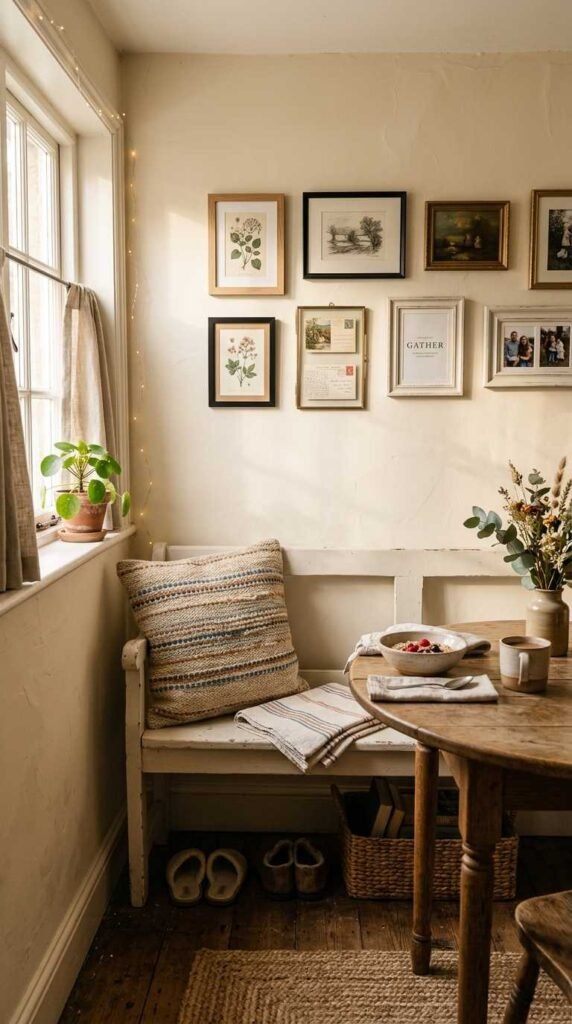
Bench seating creates a wall gap that a single chair back never leaves behind, and a mini gallery fills it perfectly. Because the bench sits lower and often against the wall, the space above it becomes prime real estate for a small cluster of framed pieces. This layout works especially well in family dining spaces, where mismatched frames holding kids’ art, photos, or simple prints feel warm rather than messy. It’s one of the more forgiving small dining room wall decor ideas, since perfect symmetry matters far less here than in a formal, adult-only dining setting.
Practicality matters just as much as style with bench seating, since people will be leaning back against or near this wall constantly. Choosing frames with sturdy hanging hardware, rather than delicate wire hooks, prevents accidental shifting over time from everyday bumps. I’ve noticed keeping the arrangement slightly higher than eye level, roughly six to eight inches above where heads typically rest, protects the frames while still keeping them visually connected to the bench below. This small adjustment makes the whole gallery feel intentional rather than like an afterthought squeezed above a busy family seating spot.
While frames should sit high enough to avoid contact with heads, they should not float too far up the wall either. Aim to keep the bottom edge of the lowest frame around 12 to 16 inches above the bench seat, close enough to feel connected to the furniture below. I’ve tried hanging galleries too high above a bench before, and the disconnect between seating and art made the whole wall feel oddly separated rather than styled as one cohesive area.
14. A Removable Wallpaper Accent Wall
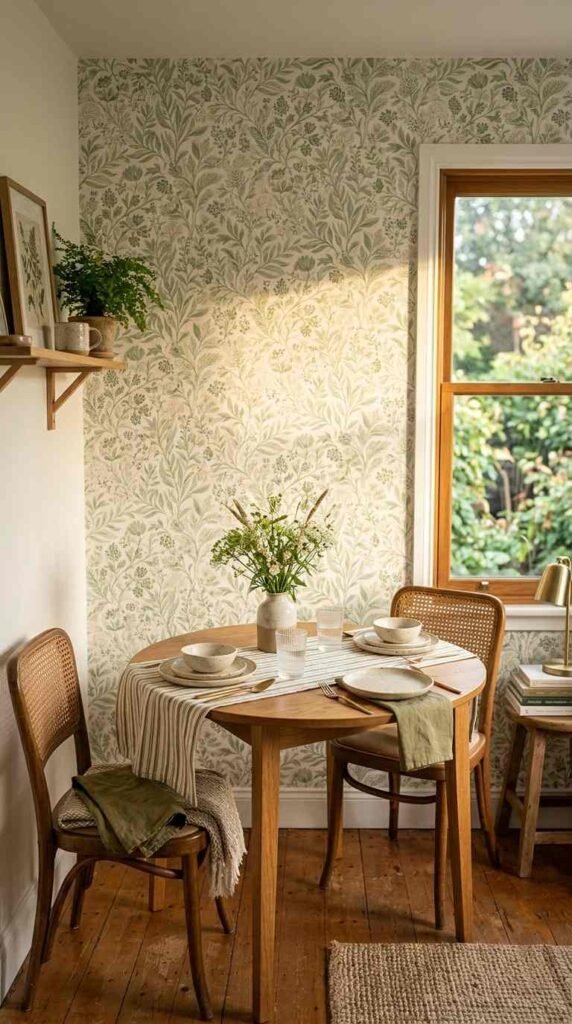
Committing to permanent wallpaper feels risky, but removable versions eliminate that hesitation entirely. A peel-and-stick accent wall lets you experiment with bold botanical prints, soft textures, or subtle patterns without worrying about resale value or landlord approval. This makes it one of the more accessible small dining room wall decor ideas for renters specifically, since traditional wallpaper often feels off-limits in a space you do not own long-term. Application typically takes just an afternoon, and because it removes cleanly, testing a pattern you are unsure about carries far less risk than it once did.
Choosing which wall to cover matters more than people initially expect. The wall directly behind the table, rather than a side wall, usually creates the strongest visual impact since it becomes the backdrop guests see throughout the entire meal. I’ve noticed muted, smaller-scale patterns work best in truly tiny dining rooms, while bold, large-scale prints suit rooms with a bit more breathing room around the table. Either way, this accent wall approach delivers dramatic visual change for relatively low cost, effort, and long-term commitment compared to almost any other decor option available.
15. A Compact Floating Cabinet
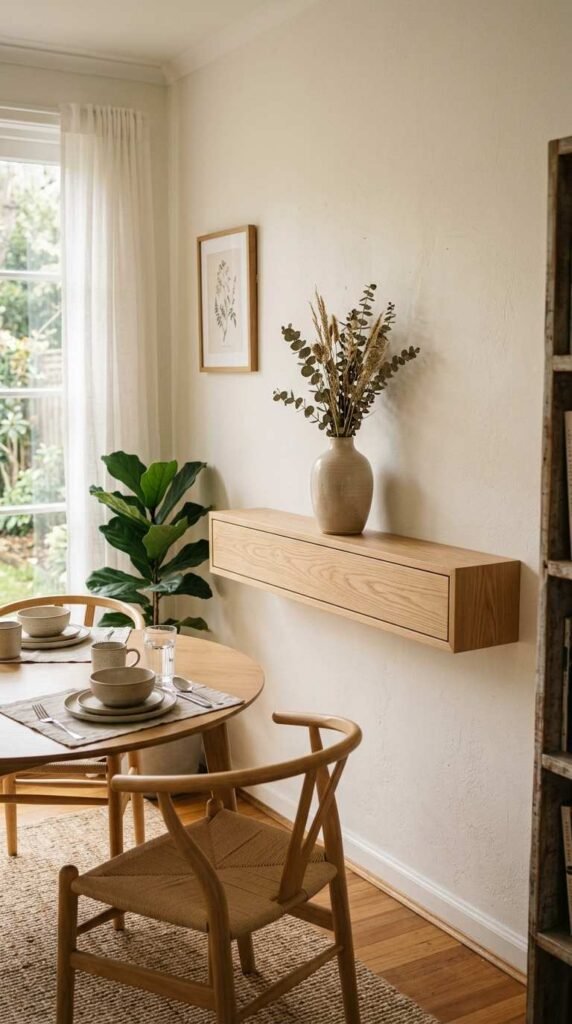
Storage in a small dining room usually means sacrificing floor space, but a floating cabinet solves that trade-off entirely. Mounted directly on the wall, it holds table linens, extra dishware, or serving pieces while leaving the floor completely clear beneath it. This creates a visual lightness that a traditional buffet or sideboard simply cannot match in a tight room. Pairing it with a piece of art or a mirror above turns practical storage into a genuine design feature, rather than a purely functional addition tucked awkwardly into the corner of the room.
Choosing the right height keeps this idea feeling intentional rather than floating randomly on the wall. Mounting the cabinet around 30 to 34 inches from the floor mirrors the height of a typical console table, keeping proportions familiar and comfortable to the eye. I’ve seen this work well in dining rooms under 100 square feet, where every inch of floor space genuinely matters for moving chairs in and out. That’s why many designers recommend this option specifically for apartments and smaller homes where a full-sized sideboard would simply overwhelm the room.
16. A Round Mirror Trio
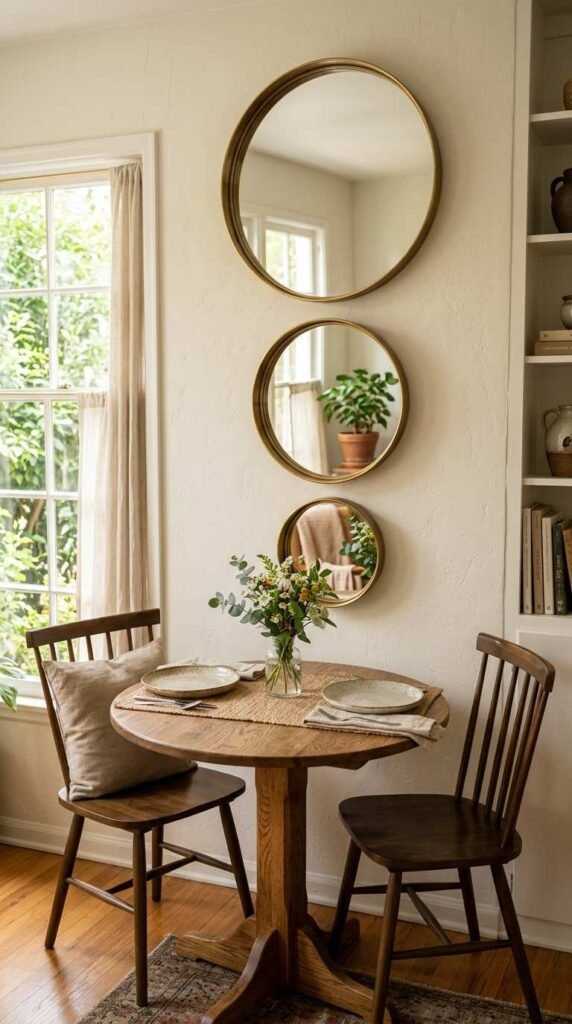
A trio of matching round mirrors offers something a single large mirror cannot: rhythm. Spaced evenly in a horizontal row, three identical mirrors create a clean, modern statement that still delivers all the light-bouncing benefits of a bigger piece. Because each mirror is smaller and lighter, hanging three is often easier than wrestling one oversized mirror into position, especially for anyone working alone. This idea fits neatly into small dining room wall decor plans where symmetry and simplicity matter more than an elaborate, eclectic arrangement of mismatched shapes and sizes scattered across the wall.
Even spacing is what makes this look feel deliberate rather than random. Leaving equal gaps, typically four to six inches between each mirror, keeps the trio reading as one unified piece rather than three separate accidents. I’ve noticed centering the row directly above the table, rather than the whole wall, creates a stronger visual connection to the furniture below. This small measuring step matters more than people expect, since even a slight misalignment becomes obvious in a symmetrical layout like this one, where every eye is naturally drawn to matching, evenly spaced shapes.
17. Narrow Vertical Art
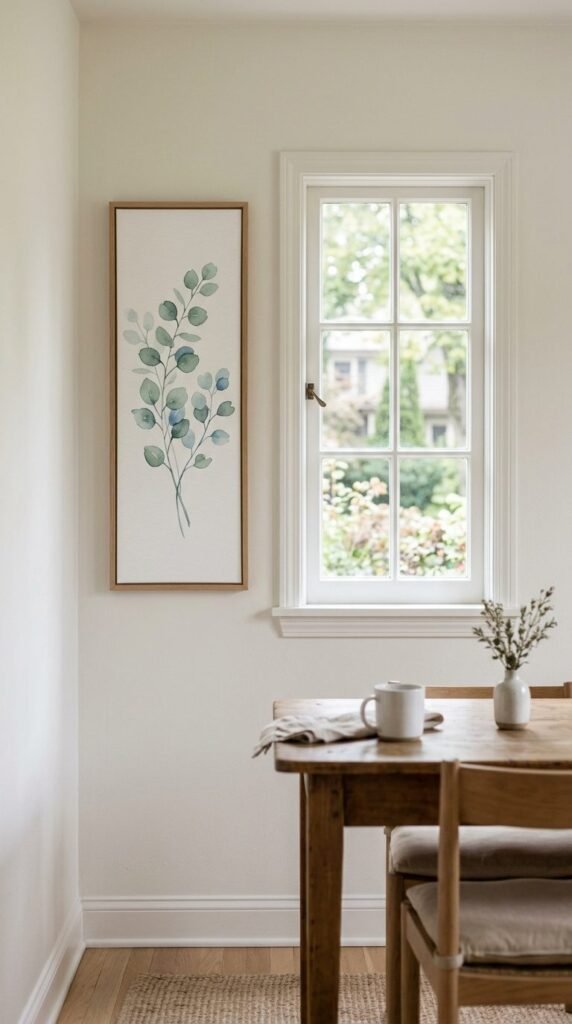
Every small dining room seems to have one: a narrow strip of wall too skinny for most furniture or standard-sized art. Narrow vertical art was practically made for this exact problem. A tall, slim print fills that awkward gap beautifully, using height to make a statement where width simply is not available. This is one of the most practical small dining room wall decor ideas for oddly shaped rooms, since it turns a space most people ignore or leave completely bare into something intentional and visually interesting instead.
Proportion is everything with narrow art, since a piece too short will look lost, while one too wide will not fit the space at all. Aim for a print roughly one-third the width of the available wall strip, with enough height to feel substantial rather than like an afterthought. I’ve tried this beside a doorway in a particularly cramped dining nook, and it completely changed how balanced the entryway felt. Because the piece is narrow, it also avoids visually competing with a nearby mirror or window, letting each element hold its own space.
18. A Wall-Mounted Vase Shelf
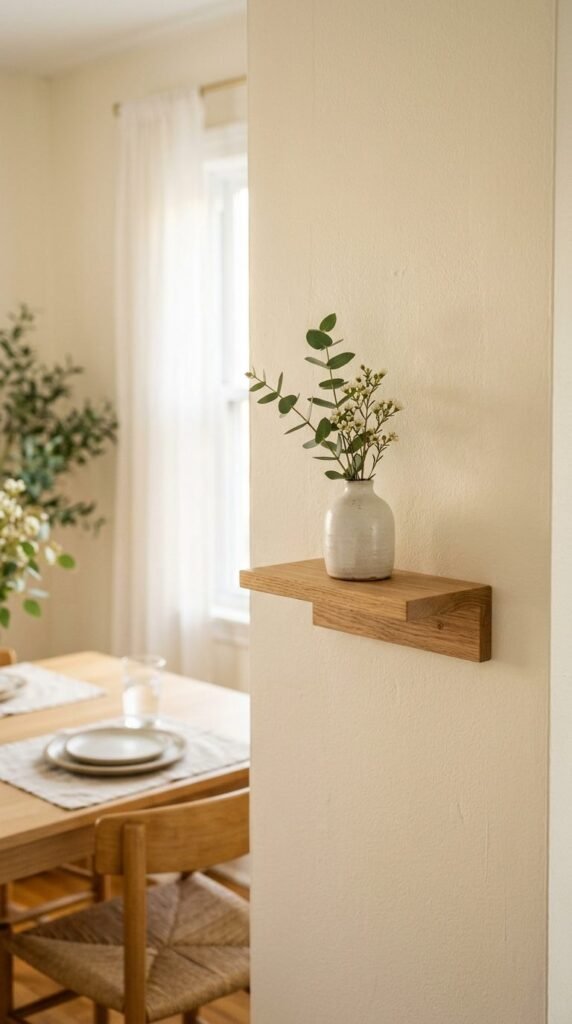
Fresh greenery usually means giving up table space, but a wall-mounted vase shelf solves that completely. Mounting a slim shelf at eye level lets you display small glass vases with simple stems or flowers without crowding plates, glasses, or serving dishes below. This idea brings life and softness into a small dining room wall decor scheme without needing a large plant or floral centerpiece competing for room on an already tight table surface. It’s a subtle detail, but one that guests tend to notice and comment on almost immediately upon sitting down.
Simplicity works best with this idea, so resist the urge to overfill each vase. Single stems or small clusters of three to five stems keep the display looking effortless rather than fussy or overdone. I’ve noticed rotating seasonal greenery, like eucalyptus in winter or fresh herbs in summer, keeps the wall feeling current without any real extra cost or effort involved. Because the shelf sits above typical sightlines, it also stays out of the way during meals, adding beauty to the room without ever becoming a practical obstacle at the table.
19. A Small Woven Wall Hanging
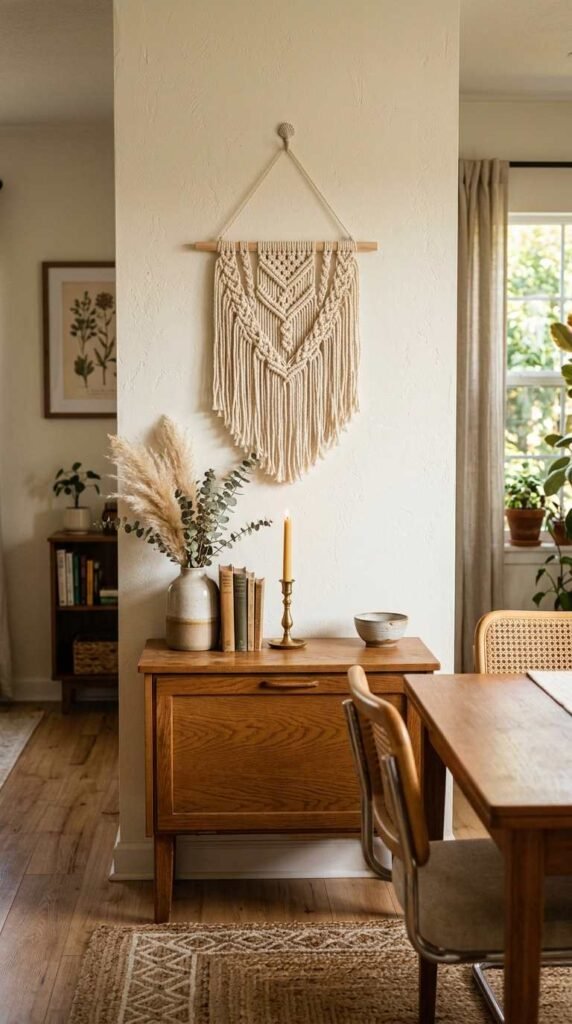
A small woven hanging offers texture in the gentlest way possible, without demanding much wall space or commitment. Unlike a full tapestry, this piece stays compact, making it ideal for a narrow gap beside a window or between two other decor elements. The natural fibers and soft fringe bring a handmade warmth that framed art or mirrors simply cannot replicate on their own. This is one of those small dining room wall decor ideas that feels personal rather than purchased, especially when chosen from a local maker or a small, independent shop online.
Placement should feel casual rather than perfectly centered for this piece to shine. I’ve noticed hanging it slightly off-center, near a corner or beside a window frame, gives the room a more collected, lived-in feeling than placing it dead center on a large blank wall. Natural cream, beige, and soft white tones tend to suit most small dining rooms, since they add texture without introducing a bold new color into the space. This subtle addition works especially well in rooms that already feel busy, since it softens without shouting for attention.
20. Framed Botanical Cutouts
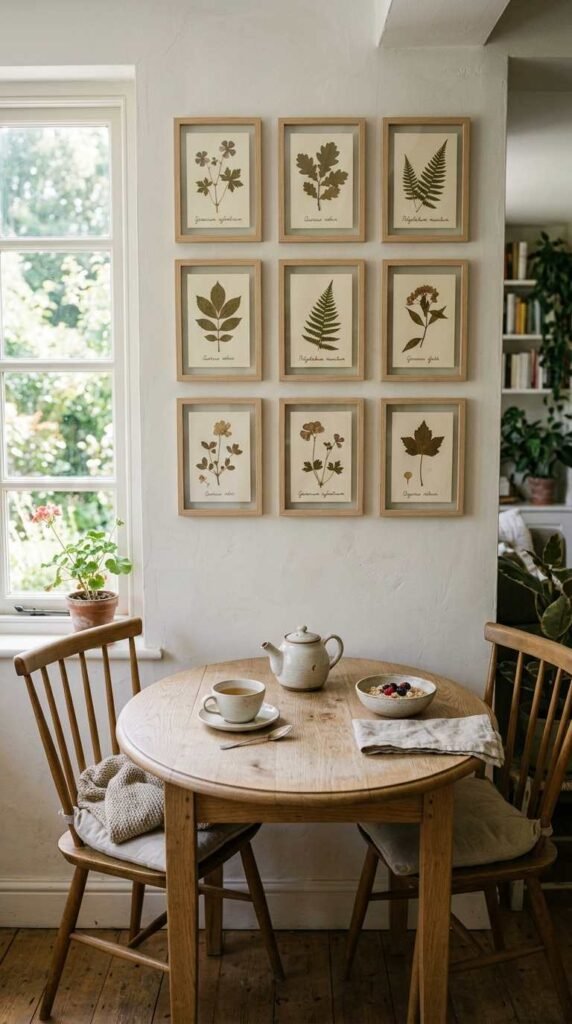
Not every small dining room gets enough light to keep real plants thriving, and framed botanical cutouts solve that problem beautifully. These simple pressed leaf or printed botanical designs bring the same fresh, organic feeling as greenery, minus any watering schedule or worry about wilting stems. Arranged in a clean row of three, they add a subtle pop of green that feels calming rather than overwhelming. This idea works particularly well for small dining room wall decor plans in apartments or rooms with only a small window, where live plants often struggle regardless of effort.
Consistency in frame style keeps this idea looking polished rather than thrown together. Choosing identical thin frames in white or natural wood tones lets the botanical prints themselves stand out as the main visual interest. I’ve seen this work well even with printable designs found online, since the finished result looks far more expensive than the actual cost of creating it. Spacing the three frames evenly, with roughly four inches between each, keeps the arrangement feeling balanced and intentional rather than randomly placed across the available wall space.
21. A Slimline Pendant Paired with Wall Art
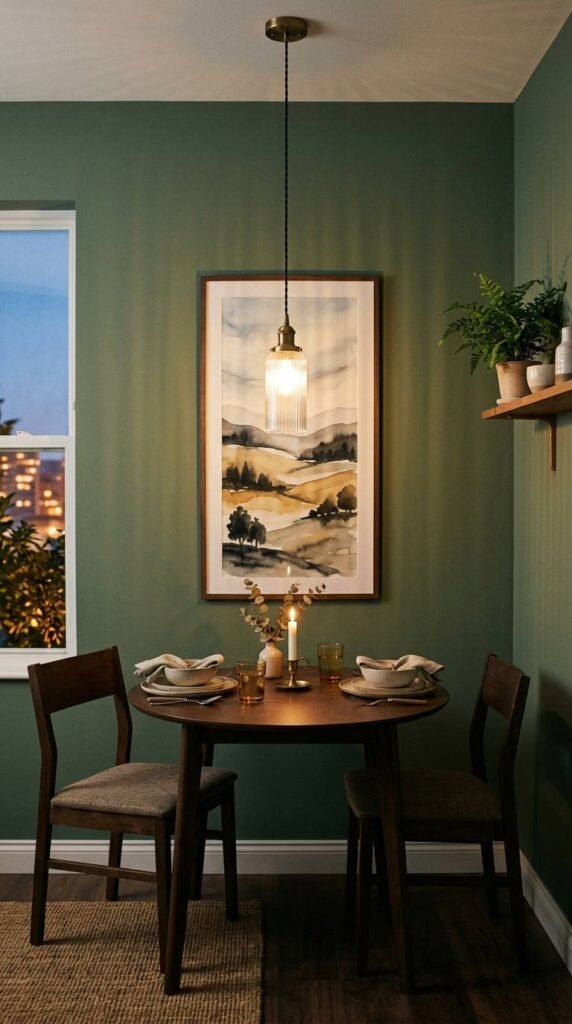
Pairing a slimline pendant with a piece of wall art creates a combined visual moment that feels more intentional than either element alone. Rather than treating lighting and decor as separate decisions, this approach layers them together, so the pendant’s warm glow highlights the artwork beside it during evening meals. In small dining room wall decor plans, this pairing works especially well in rooms with lower ceilings, since a slim, narrow pendant avoids the bulk of a larger chandelier while still adding a clear focal point above or beside the table.
Balance between the two elements matters most here. The pendant should sit close enough to the art to feel connected, typically within 12 to 18 inches, without overlapping or crowding the frame itself. I’ve tried this pairing in a dining nook with barely seven feet of ceiling height, and the slim profile made the whole area feel taller rather than cramped. This combination also reduces the need for additional overhead lighting, since the pendant already provides a warm, focused glow exactly where the room needs it most during dinner.
22. A Corner Mirror Nook
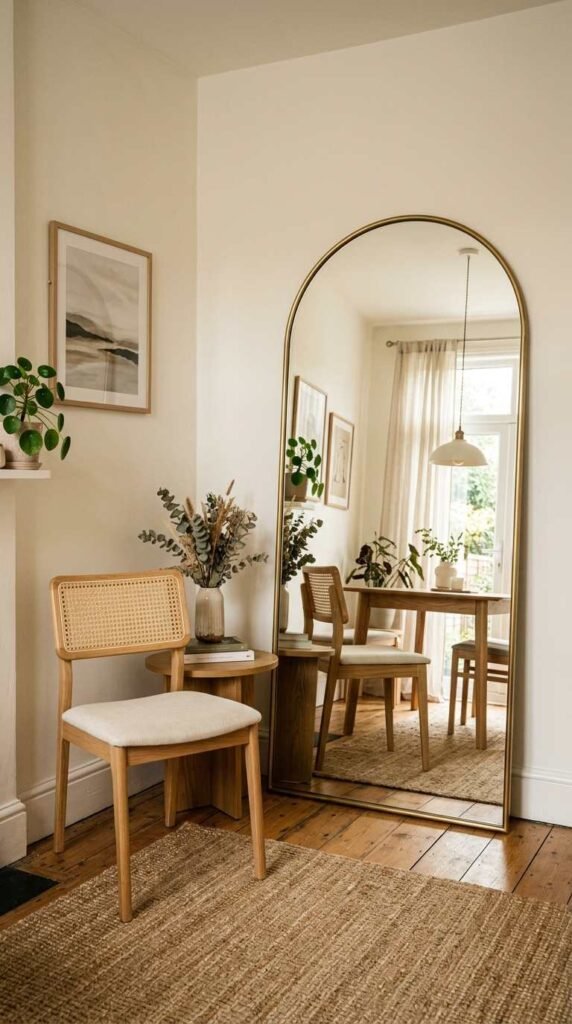
Corners tend to be the last place anyone thinks to decorate, yet they often need it most. A mirror placed diagonally in a dining room corner catches light that would otherwise stay trapped in that dim, overlooked angle. Paired with a small shelf or a trailing plant, the nook becomes a genuine styled moment rather than empty, forgotten space. This idea suits small dining room wall decor plans especially well in rooms shaped awkwardly, where standard rectangular walls are hard to come by and every corner needs to earn its place in the layout.
Mounting angle matters more here than with a standard flat wall mirror. Positioning it at a slight diagonal, rather than flush against one wall, helps it catch light from multiple directions throughout the day. I’ve noticed pairing the mirror with something soft, like a plant or woven basket beneath it, keeps the corner from feeling too stark or purely functional. This small combination of reflection and greenery turns a previously wasted, awkward space into one of the more interesting details guests actually notice when they sit down at the table.
23. A Mini Chalkboard or Menu Board
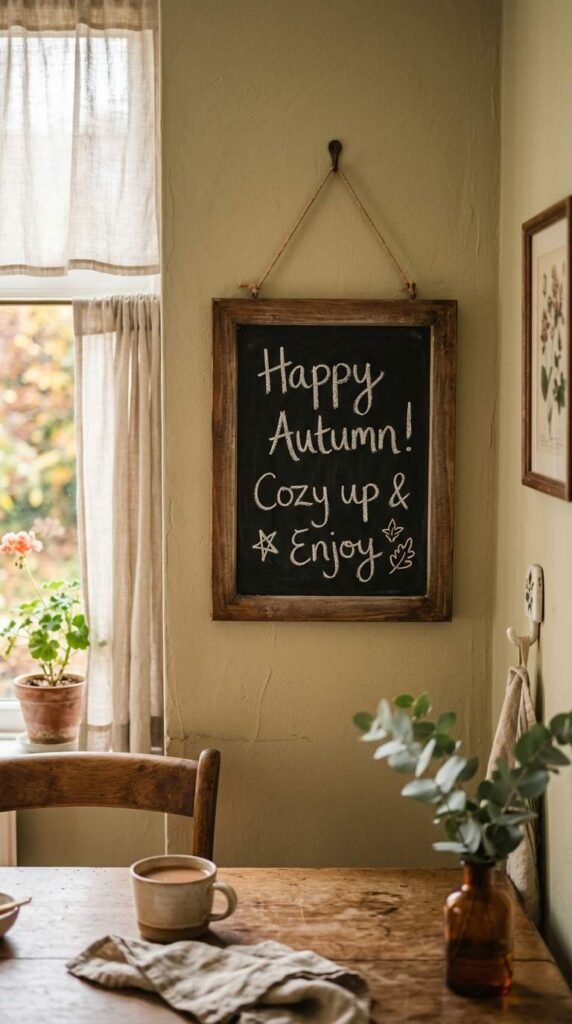
A mini chalkboard brings unexpected personality into a small dining room, doubling as both decor and a genuinely useful tool. Whether it displays tonight’s menu, a favorite quote, or a simple reminder, this small addition feels playful in a way that framed art rarely achieves on its own. It works particularly well in casual, family-friendly dining spaces, though even a more formal room can pull off a chalkboard when paired with a simple, elegant frame. This is one of those small dining room wall decor ideas that costs very little but consistently makes guests smile and comment.
Because chalkboards update so easily, they stay interesting far longer than fixed art ever could. I’ve seen this work well in family homes where kids take turns writing on it, turning the wall into something that changes weekly rather than staying static for years. Keeping the frame simple, whether black metal or plain wood, prevents the chalkboard from feeling too casual for the rest of the room’s design. It’s a small, low-cost detail, but one that adds genuine warmth and a sense of humor to an otherwise straightforward dining wall.
24. Wall-Mounted Bud Vases
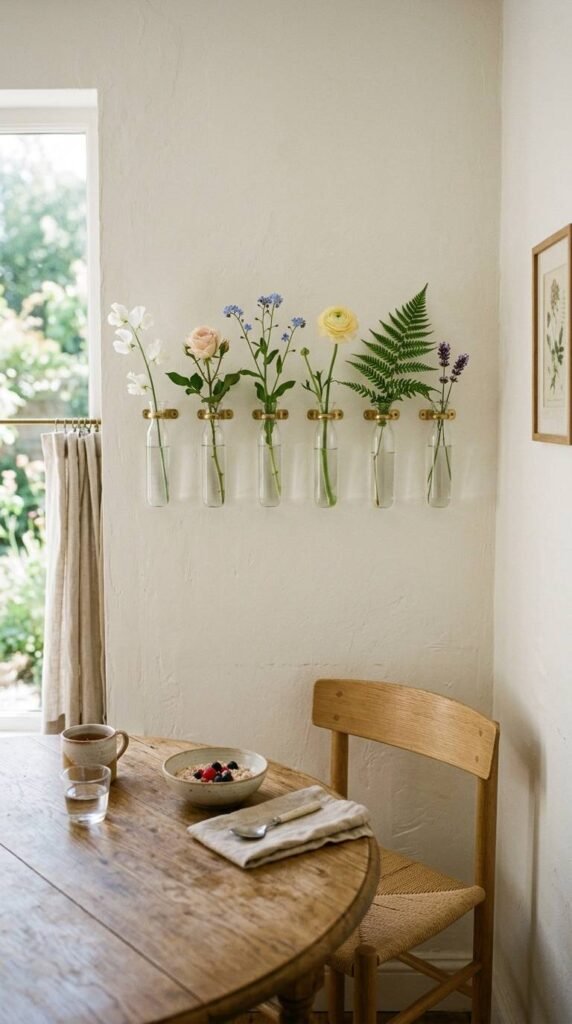
Wall-mounted bud vases solve a problem anyone who loves fresh flowers understands: there is rarely enough table space for a full centerpiece once plates and glasses are set out. Mounting a row of small glass vases directly onto the wall keeps florals in view without ever crowding the table below. Each vase typically holds just a single stem, keeping the look delicate rather than heavy. This idea fits beautifully into small dining room wall decor plans where every inch of table surface matters for actual dining rather than decorative arrangements competing for space.
Spacing and height create the romantic, intentional feel this idea is known for. Mounting the vases at slightly staggered heights, rather than in a perfectly straight line, adds a soft, organic rhythm to the display. I’ve tried swapping stems seasonally, from simple greenery in winter to fresh garden flowers in summer, and the wall never once felt boring or repetitive throughout the year. Because each vase holds so little, this idea also works on a tight budget, needing just a few stems rather than a full, expensive floral arrangement each time you refresh it.
25. A Petite Clock Above the Buffet
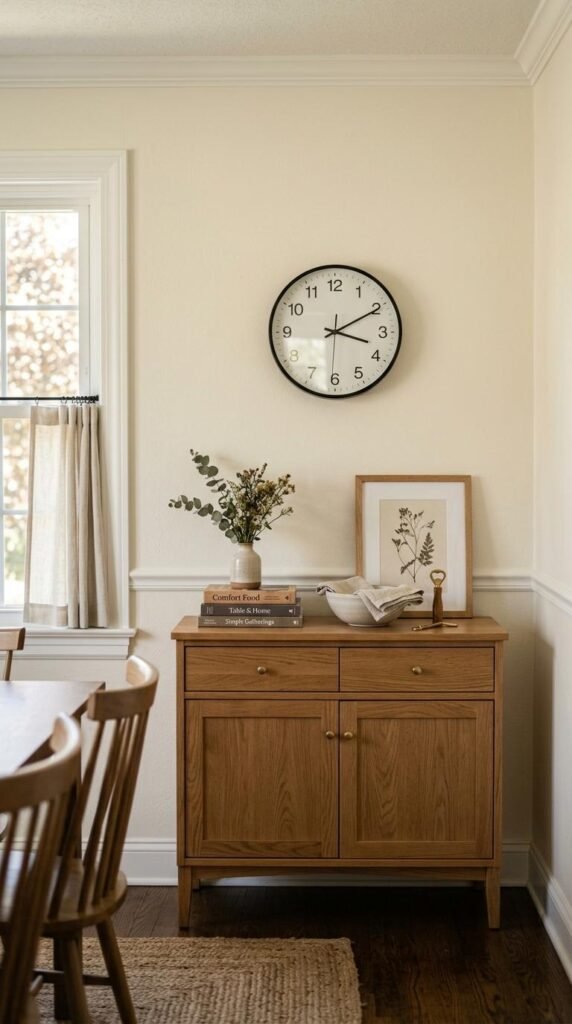
A petite clock might seem like an unusual choice for wall decor, but above a buffet or console, it becomes a natural finishing touch. It fills the empty space that often gets left bare after furniture styling, while adding genuine function most other decor cannot offer. A simple round clock in wood or brushed metal suits nearly any style, from farmhouse to modern minimalist. This idea rounds out a compact dining space nicely, especially when paired with a smaller item like a vase or a stack of books beside it on the surface below.
Sizing the clock correctly keeps this detail from looking like an afterthought. A clock roughly one-third the width of the buffet beneath it creates the right proportion, neither too small to notice nor too large to overwhelm the furniture. I’ve noticed a warm wood tone tends to soften the look compared to stark black or metal, especially in cozier dining rooms with plenty of natural materials already present. This final touch brings a quiet sense of completion to the room, closing out a wall that might otherwise have felt unfinished once the buffet styling was done.
FAQS
1. What is the best wall decor trick for a small dining room?
The single most effective trick is using mirrors or reflective surfaces near a light source. They instantly bounce light around the room, making it feel larger without any construction or major expense. In my experience, even one well-placed mirror does more to open up a small space than several smaller decor pieces combined.
2. Should I choose one large art piece or several small ones?
It depends on your wall shape and personal style. A single large piece creates a clean, simple focal point with less decision-making involved. Several smaller pieces, grouped as a gallery, add texture and personality but require more planning around spacing. Neither choice is wrong, though a single piece often feels less cluttered in very tight rooms.
3. Do floating shelves work well in a small dining room?
Yes, especially in corners or narrow wall strips where furniture will not fit. Floating shelves add storage and display space without taking up any floor area, which matters most when chairs need room to slide back comfortably during meals.
4. How do I add lighting without using up table space?
Wall sconces and slim pendants are the best solution. Mounted directly on the wall or ceiling near the wall, they free up the entire table surface for dishes and centerpieces while still providing warm, functional light during meals.
5. Is wallpaper a good option for a small dining room?
Yes, particularly vertical stripe or removable peel-and-stick versions. Vertical patterns make ceilings feel taller, while removable options let renters experiment with bold designs without any long-term commitment or wall damage.
6. How can I add greenery without cluttering the table?
Wall-mounted vase shelves or bud vases are ideal. They hold small stems or flowers directly on the wall, keeping the table completely clear for actual dining while still bringing a fresh, organic touch to the room.
7. What frame size works best for a small gallery wall?
Frames between 8 and 12 inches wide tend to work best on narrow walls. This size feels substantial without overwhelming the space, and mixing two or three sizes within that range adds visual rhythm without looking heavy or cramped.
8. Can corner spaces be used for wall decor?
Absolutely. Corners are often the most overlooked spot in a dining room. A diagonal mirror, a floating shelf, or a small plant tucked into that angle turns dead space into a genuinely styled feature.
9. Should all my frames match in a small dining room?
Not necessarily. Mismatched frames often look more collected and intentional than a perfectly matched set, as long as you keep a consistent color palette or theme running through the arrangement. I’ve noticed slight variation actually makes a gallery feel more personal.
10. How do I keep small dining room wall decor feeling fresh?
Rotate small, low-cost elements seasonally, like greenery, prints, or a chalkboard message, rather than replacing larger anchor pieces like mirrors or art. This keeps the room feeling current without requiring a full redesign every few months.
Conclusion
A small dining room does not need more space to feel special. It needs the right choices on the walls around it. From a single oversized mirror to a soft cluster of bud vases, every idea on this list proves that scale has very little to do with impact. What actually matters is choosing decor that respects the room’s proportions while still giving it personality and warmth.
In my experience, the small dining rooms that feel the most inviting are rarely the ones packed with expensive furniture. They are the ones where a few thoughtful details, a mirror catching afternoon light, a narrow gallery filling an awkward gap, do all the work. Small dining room wall decor is really about noticing what a space is missing and filling it with intention rather than clutter.
Start with just one idea from this list. See how it changes the way the room feels before adding another. A dining space built this way, one considered choice at a time, ends up feeling far more finished than a room styled all at once.