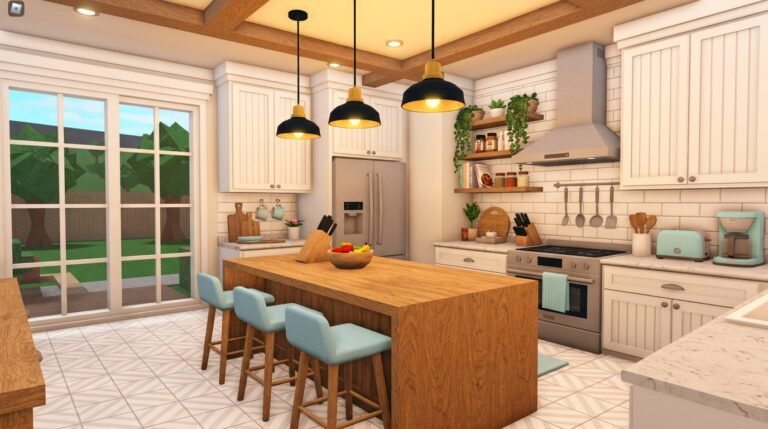
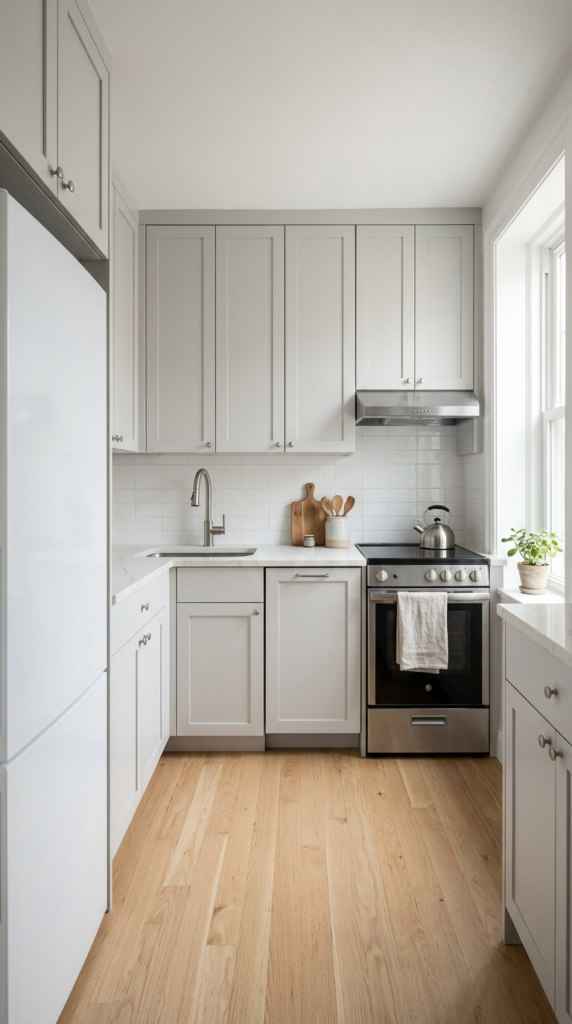
A tiny kitchen doesn’t have to feel tiny. With the right small kitchen ideas, even a narrow galley or a cramped apartment corner can feel bright, organized, and surprisingly roomy. In this guide, you’ll find 18 simple, visual ideas, from light paint colors and floating shelves to pull-out pantries, corner lazy Susans, and warm under-cabinet lighting. Many of them cost very little and take just a weekend. I’ve noticed that the biggest changes often come from small upgrades, not big renovations. Scroll through, save your favorites, and pick the ideas that fit your space, your budget, and the way you really cook.
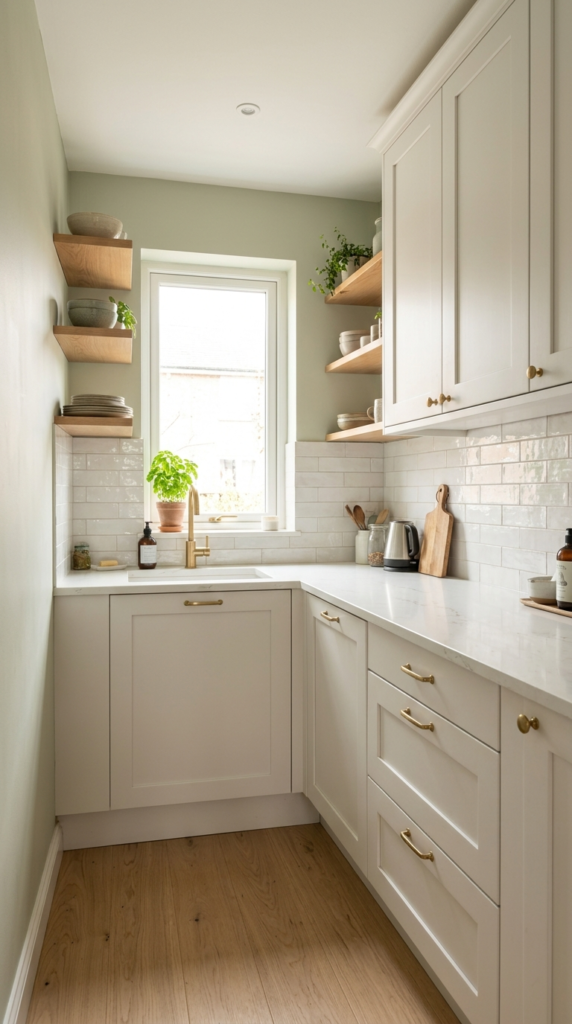
Light Color Palette
- Light shades bounce daylight around and make walls feel farther away
- Painting cabinets and walls in one color family blurs harsh edges
- One small accent, like brass pulls, adds warmth without clutter
- A fresh coat of paint is one of the cheapest upgrades
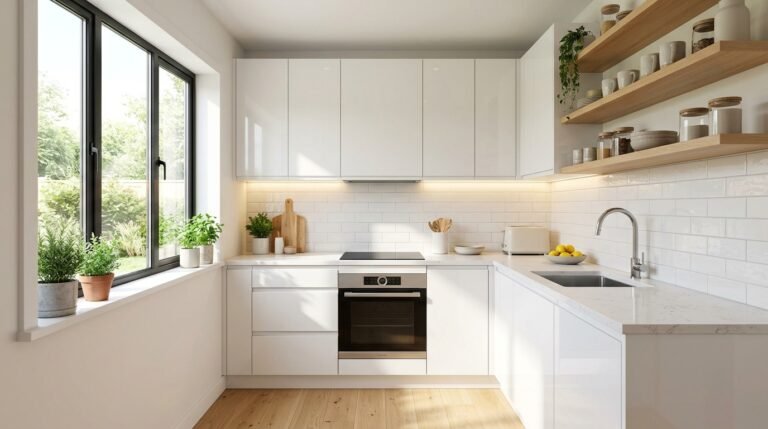
Color can make a tiny room feel twice as big. Light shades like soft white, pale sage, and warm cream bounce daylight around the room instead of swallowing it. That is why small kitchen ideas almost always begin with a lighter palette. Painting walls and cabinets in the same family blurs edges, so the space feels calm and open rather than boxed in. Add one gentle accent, like brass pulls or a wood shelf, and the room gains warmth without clutter. The result is a bright, welcoming kitchen that feels larger the moment you walk in.
Test your colors before committing. In my experience, paint swatches look different at morning and evening, so tape samples to the wall and watch them for a full day. Choose a satin or semi-gloss finish on cabinets, since a slight sheen reflects more light and wipes clean easily. Keep ceilings white or a shade lighter than the walls to lift the room visually. Limit the palette to three colors so nothing competes. Once it is done, you will notice brighter corners, softer shadows, and a kitchen that feels open, fresh, and far less cramped.
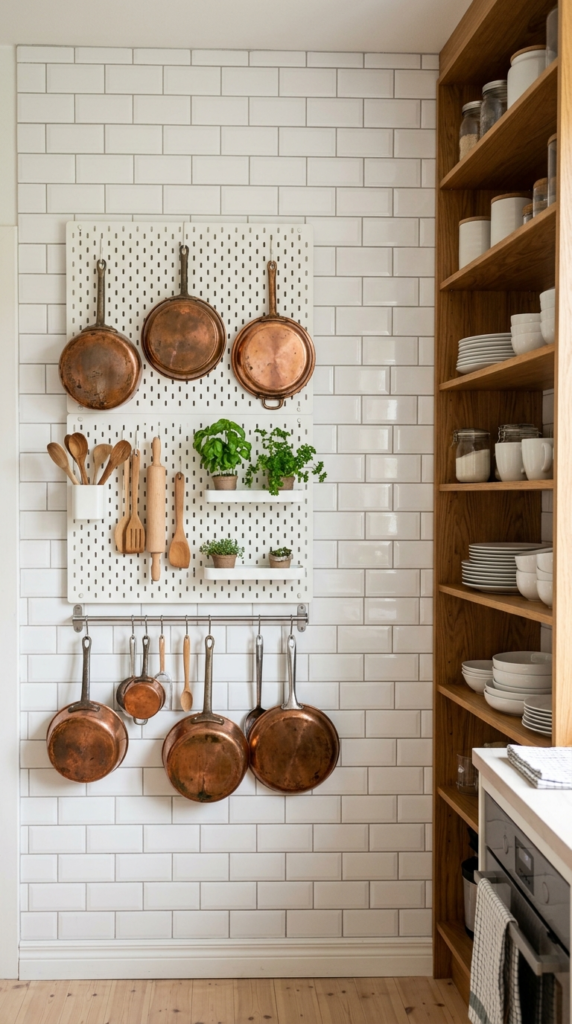
Vertical Storage Wall
- Uses wall height instead of precious counter space
- Keeps everyday tools within easy reach
- Rails and hooks need no major renovation
- Frees up drawers for things you rarely use
Look up, because your walls are free storage. In a tiny kitchen, floor and counter space disappear fast, but the wall above stays mostly empty. A simple rail with hooks holds pots, utensils, and mugs, while tall shelves carry plates and jars. Everything stays visible and within arm’s reach, so cooking feels faster. Choose one material, such as wood or matte black metal, to keep the wall looking intentional instead of busy. The result is a clear counter, a more organized room, and a kitchen that looks styled and personal while still working hard every day.
Hang with care and a plan. I’ve noticed that people overload rails and end up with a noisy, crowded wall, so keep only what you use weekly. Anchor every rail into studs or use proper wall anchors, since cast iron pans are heavier than they look. Hang items at a comfortable reach, ideally between waist and shoulder height. Leave a few inches of empty space around each group so the wall can breathe. Once it’s finished, you’ll notice faster meal prep, fewer cluttered drawers, and a calm, organized wall that makes the whole kitchen feel taller and more spacious.
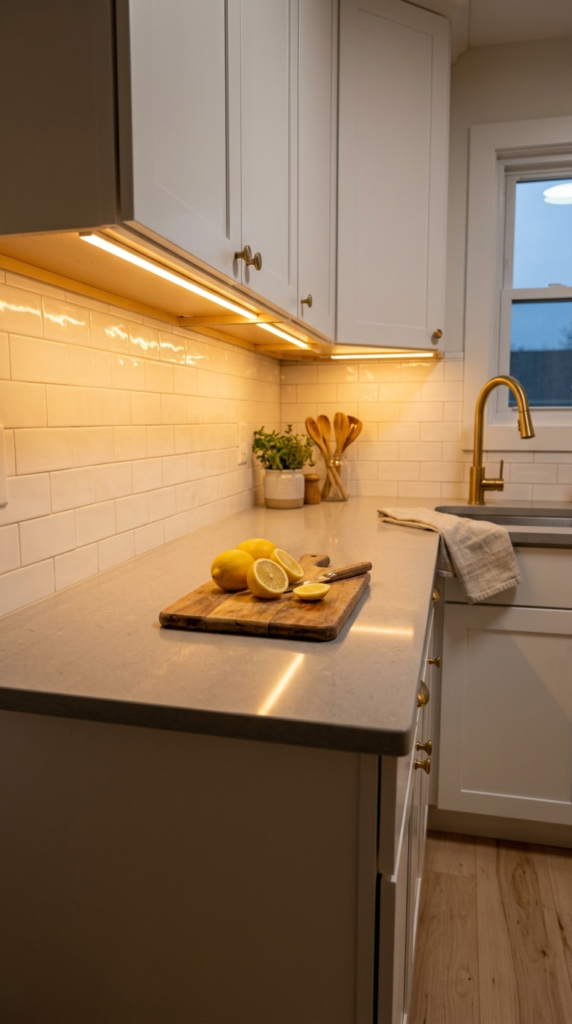
Under Cabinet Lighting
- Removes the shadows that upper cabinets throw onto the counter
- Makes chopping and reading recipes safer and easier
- Adds a soft glow that feels cozy at night
- Plug-in strips need no electrician
Shadows make a small kitchen feel smaller. Under-cabinet lighting wipes them away by putting light exactly where you work. A slim LED strip beneath the upper cabinets brightens the counter, highlights the backsplash, and adds depth to the whole wall. Warm white tones create a cozy glow, while cooler ones feel crisp and clean. In the evening, the soft light can replace the harsh ceiling fixture entirely. The result is a kitchen that looks richer, feels safer for chopping, and shows off every tile and surface you chose, even on dark winter nights.
Installation is easier than most people expect. I’ve seen this work well with plug-in or battery strips that stick under the cabinet edge, so no electrician is needed. Choose a color temperature between 2700K and 3000K for a warm, flattering glow. Pick a dimmable strip with a diffuser cover, because bare LED dots can look spotty on glossy counters. Mount the strip near the front edge of the cabinet so light reaches the whole counter. Hide the wire with a small clip. Afterward, you’ll notice a brighter work zone, calmer evenings, and a kitchen that finally feels finished and inviting.
plese also read: 16 how much should a 10×10 kitchen remodel cost
Floating Open Shelves
- Removes the visual weight of bulky upper cabinets
- Turns everyday dishes into easy-to-reach decor
- Costs far less than new cabinetry
- Works well for renters and light cooks
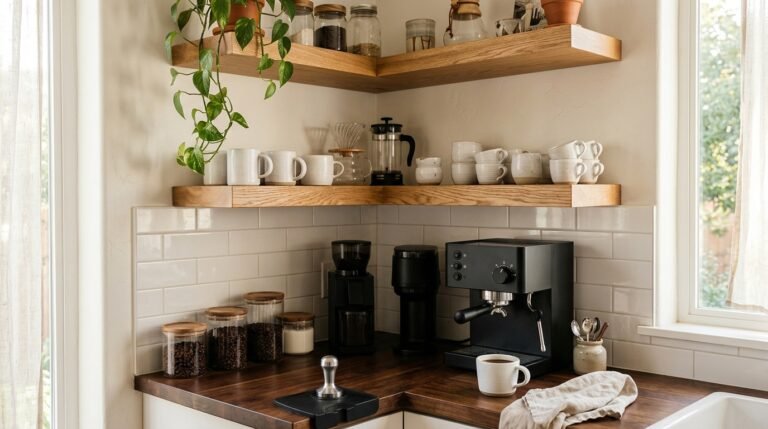
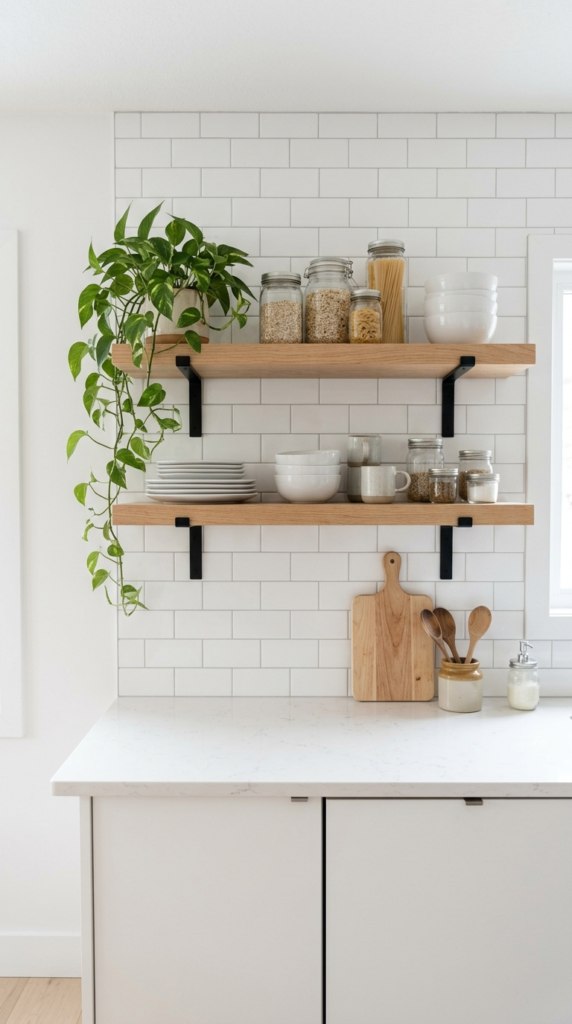
Open shelves can make a closed-in kitchen breathe. Replacing one or two upper cabinets with floating wood shelves removes visual bulk and lets the eye travel straight to the wall behind. Everyday plates, glass jars, and mugs turn into decor you can reach in one move. Choose light oak or painted white shelves so they blend softly with the wall. The result is a room that feels wider, brighter, and more personal. It also costs far less than new cabinetry, which makes it a smart upgrade for renters and homeowners who want a big change on a small budget.
Styling is where open shelves succeed or fail. In my experience, the best shelves hold only matching white or neutral dishes, a few glass jars, and one plant, because mixed clutter looks messy. Keep shelves about 12 inches deep at most, so they stay light and never crowd the counter. Mount brackets into wall studs, since stacked ceramics are heavy. Wipe the shelves weekly, especially near the stove, where grease settles. Leave one closed cabinet for odd items. Afterward, you will notice an airier wall, quicker access to daily dishes, and a kitchen that feels styled instead of packed.
Slim Rolling Cart
- Fills an awkward gap with useful storage
- Doubles as an extra work surface during prep
- Rolls away when dinner is over
- Needs no tools or installation
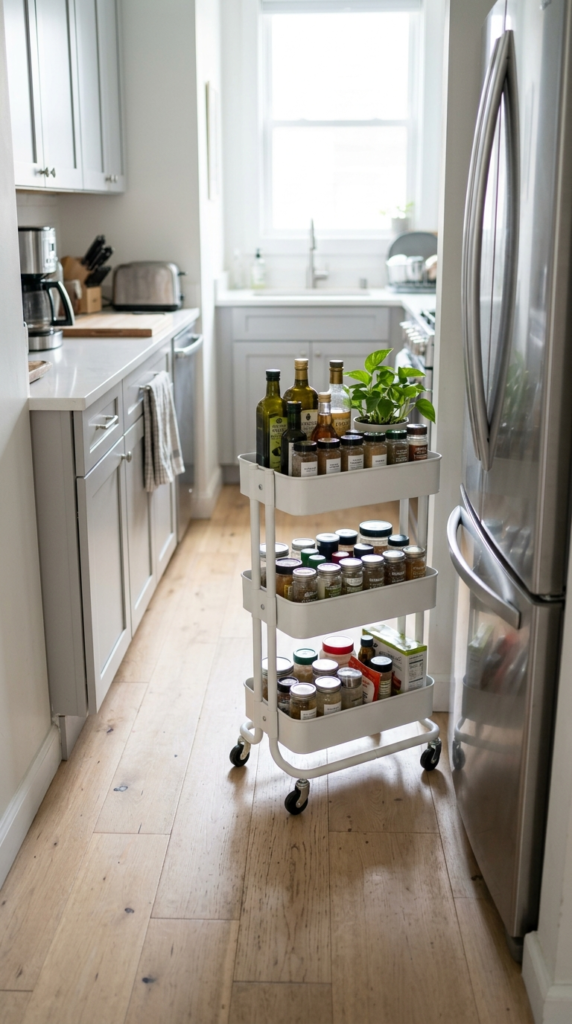
Sometimes the smartest storage has wheels. A slim rolling cart, about 12 to 16 inches wide, tucks into a gap beside the fridge or stove and slides out when you need it. Use it for oils, spices, and baking tools, then roll it to the counter during prep. When dinner ends, it disappears back into its nook. Choose a cart in white, black metal, or wood to match your kitchen. The result is extra storage and extra work surface without building anything, which makes it ideal for rentals and tight galley layouts where every inch matters.
Details decide whether a cart helps or annoys. I’ve noticed that locking wheels matter most, because a cart that drifts while you chop gets old quickly. Measure the gap twice and leave about half an inch on each side for smooth rolling. Pick a cart with a solid top shelf, since that becomes your extra counter. Keep heavy items on the bottom so it stays steady. Avoid parking it directly beside a hot stove, where oils can warm up. Once it fits well, you will notice a clearer counter, faster prep, and a corner that finally works.
Reflective Tile Backsplash
- Bounces light around the room to make it feel deeper
- Protects the wall and wipes clean in seconds
- Light grout keeps the wall looking calm
- Peel-and-stick versions suit renters
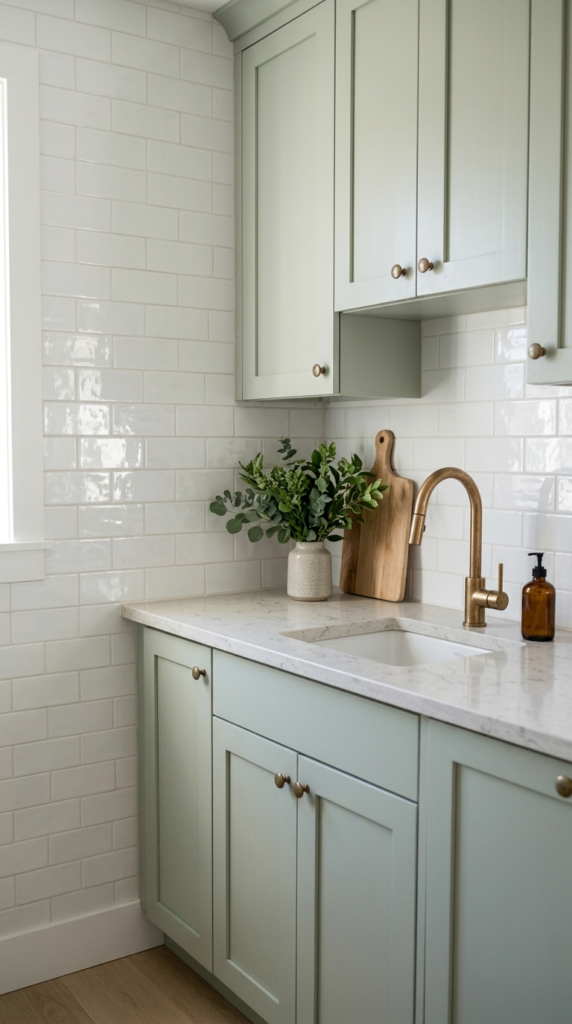
A shiny wall can double your light. Glossy ceramic tile, glass tile, or a mirrored panel bounces daylight and lamp glow back into the room, so a small kitchen feels deeper and brighter. Light colors like white, pale blue, and soft green reflect the most. Tile also protects walls from splashes and wipes clean in seconds. Even a simple subway pattern looks polished when the finish is glossy. The result is a backsplash that works as both decoration and light source, adding sparkle behind the counter without taking up a single inch of floor or counter space.
Choose the finish with your habits in mind. In my experience, glossy tile shows water spots near the sink, so a quick wipe with a microfiber cloth keeps it sparkling. Pick light grout, such as soft gray or white, to avoid a busy grid that makes walls feel smaller. Run the tile to the bottom of the upper cabinets for a clean line. Peel-and-stick options work well for renters and install in an afternoon. Once it’s in place, you will notice brighter evenings, a cleaner wall, and a kitchen that reflects more light than before.
Pull Out Pantry
- Turns a skinny gap into storage you can see at a glance
- Nothing gets lost behind the front row
- Fits beside the fridge or between cabinets
- Keeps counters clear of jars and boxes
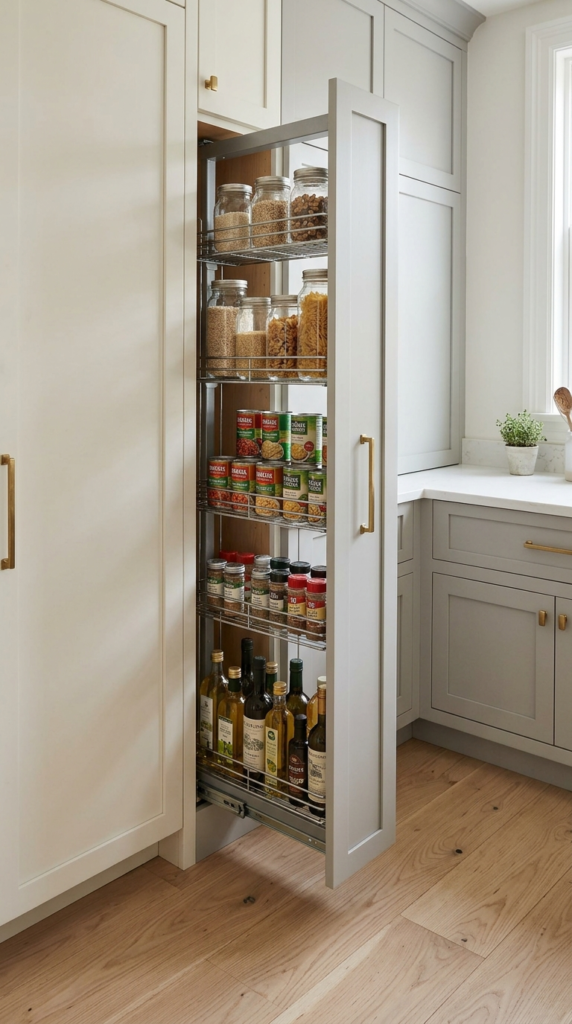
A skinny gap can hide a whole pantry. A pull-out pantry cabinet, often only six to nine inches wide, slides out on rails and shows every shelf at once. Nothing gets lost behind the front row, so you stop buying duplicate jars of paprika. It fits beside the fridge or between cabinets where nothing else would work. Choose sturdy shelves with raised edges to keep cans from rolling. The result is a calm, organized storage spot that holds a surprising amount, keeps the counters clear, and makes weeknight cooking quicker because every ingredient sits where you can see it.
Measure before ordering, because widths vary. In my experience, the biggest mistake is ignoring the hinge and door clearance, so check that the cabinet opens past neighboring handles. Look for full-extension, soft-close slides rated for at least 75 pounds, since full jars are heavier than they look. Group items by use, such as baking, breakfast, and snacks, so each shelf has one job. Label the front edges with small tags. Add a narrow basket for loose packets. Afterward, you will notice less digging, fewer expired items, and a pantry that feels smooth to use every single day.
Fold Down Table
- Folds flat when you need the floor space
- Works as a breakfast spot, prep surface, or laptop desk
- Stools tuck underneath and nearly disappear
- Suits studios, galley kitchens, and tight corners
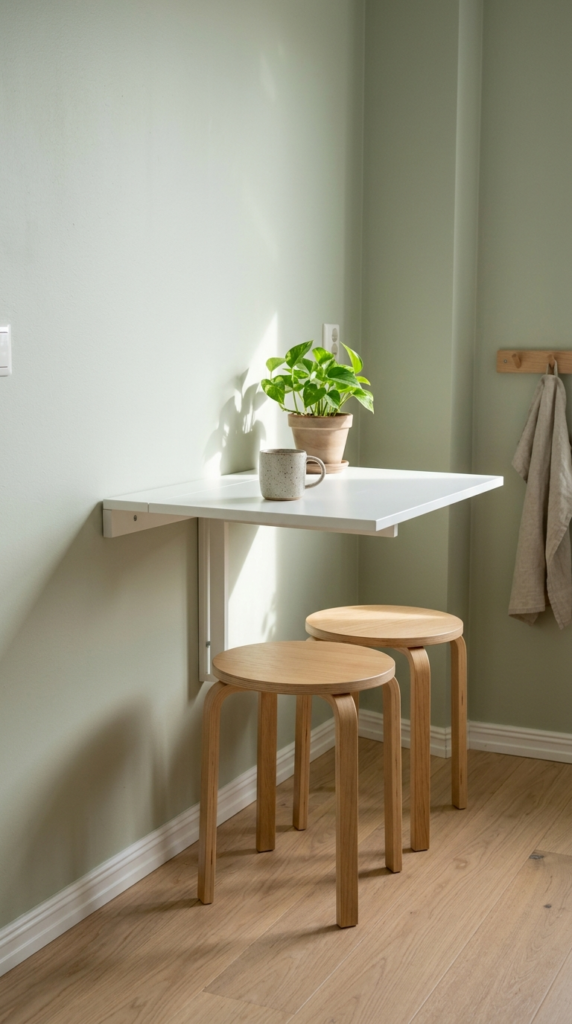
Why give up floor space for a table you use twice a day? A drop-leaf or wall-mounted fold-down table gives you a breakfast nook, a prep surface, and a laptop desk that vanishes in seconds. Most models open to about 24 by 36 inches and fold flat to just a few inches deep. Pair it with two slim stools that tuck underneath. The result is a flexible corner that changes with your day, keeps walkways clear, and makes a cramped kitchen feel generous because the space works hard only when you actually need it.
Installation decides how long it lasts. I’ve seen this work well when the table is screwed into wall studs with heavy-duty brackets, because a loose mount sags under a full breakfast. Check the stud location with a finder and choose a hinge rated for at least 50 pounds. Leave about 30 inches of clearance in front so the table opens without blocking doors. Pick a rounded corner, since small kitchens mean bumped hips. Afterward, you will notice a flexible eating spot, more open floor, and a corner that feels useful, tidy, and far friendlier for everyday living.
Glass Cabinet Doors
- Lightens heavy cabinet walls without losing closed storage
- Fluted or frosted glass hides small messes
- Only the doors need replacing, not the whole cabinet
- Adds depth and a boutique feel
Solid cabinet doors can feel like a wall pressing in. Swapping a few for glass lets light and depth travel through, so the room feels less boxed in. Clear glass shows off pretty dishes, while fluted or frosted glass softens the view and hides small messes. Only replace doors above the counter, where lightness matters most. The result is a kitchen with a boutique feel, a gentle sense of depth, and all the protection of closed storage. It is a quiet upgrade that makes tight walls feel open without sacrificing a single shelf.
Style the inside as carefully as the outside. In my experience, glass doors work best when you keep the shelves tidy and limited to matching white dishes, glasses, and a few bowls. Add a small LED puck light inside for a soft evening glow. Order replacement doors cut to your exact cabinet size, or ask a carpenter to insert glass panels into existing frames. Choose tempered glass for safety. Skip clear glass for junk cabinets and use frosted instead. Afterward, you will notice more light, a refined wall, and a kitchen that feels carefully curated, bright, and surprisingly spacious.

Compact Appliance Swap
- Gives back precious inches of floor and walkway space
- Counter-depth models sit flush with the cabinets
- Smaller units often use less energy
- Most households rarely need full-size capacity
Big appliances quietly eat small kitchens. Swapping to compact versions can give back precious inches without losing function. A 24-inch range, a slim dishwasher, and an apartment-size fridge fit tight layouts and often cost less to run. Counter-depth models sit flush with cabinets, so walkways stay open and lines look clean. Choose matching stainless or white finishes for a cohesive row. The result is a kitchen that feels bigger, moves easier, and still handles everyday cooking, because most households actually use far less capacity than a full-size set offers every week.
Measure before you shop, because small appliances come in specific widths. I’ve noticed that people forget door swing, so check that the fridge opens fully beside a wall or cabinet. Compare the cooking power of a 24-inch range with your habits, since most handle daily meals easily. Look for energy ratings, which lower bills over time. Choose a drawer-style dishwasher if floor space is truly tight. Ask about installation and haul-away fees. Once everything fits, you will notice open walkways, easier cleaning, and a kitchen that feels calm, organized, and sized for the way you really cook.
Over Sink Cutting Board
- Turns the sink into extra prep space in seconds
- Lifts off easily when it’s time to wash dishes
- Costs far less than any counter extension
- Needs no tools or construction
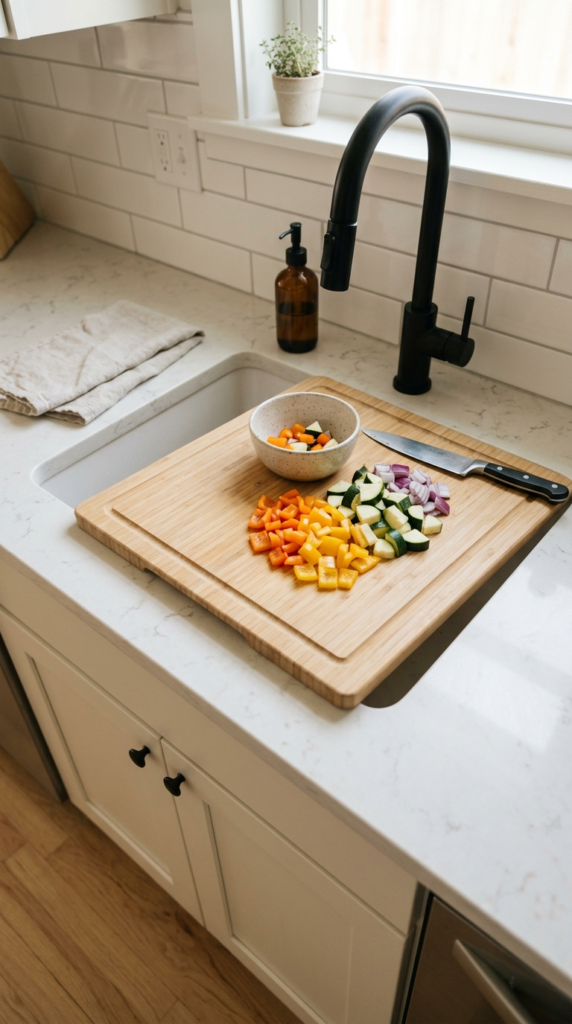
Your sink can double as a counter. A fitted cutting board or sink cover bridges the basin and gives you extra prep space exactly when you need it. Most boards slide into place in seconds and lift off when it’s time to wash dishes. Choose bamboo, walnut, or a sturdy composite that matches your counter tone. The result is a larger work surface in a kitchen with almost none, plus a tidy look when you stack a small bowl or colander on top. It is a simple trick that adds function without any construction.
Fit is everything, so measure your sink opening and the ledge around it. In my experience, a board that rests on the sink rim works better than one that sits loose, because it will not slide while you chop. Look for rubber feet and a juice groove to catch drips. Rinse and dry the board after each use to prevent warping. Oil wood boards monthly. Keep a second small board for raw meat. Afterward, you will notice more elbow room, faster dinner prep, and a sink area that works as hard as the rest of the kitchen.
Corner Lazy Susan
- Turns a dark dead corner into easy-reach storage
- Everything rotates into view with one gentle spin
- Kits cost far less than new cabinets
- Saves you from kneeling to dig out a lid
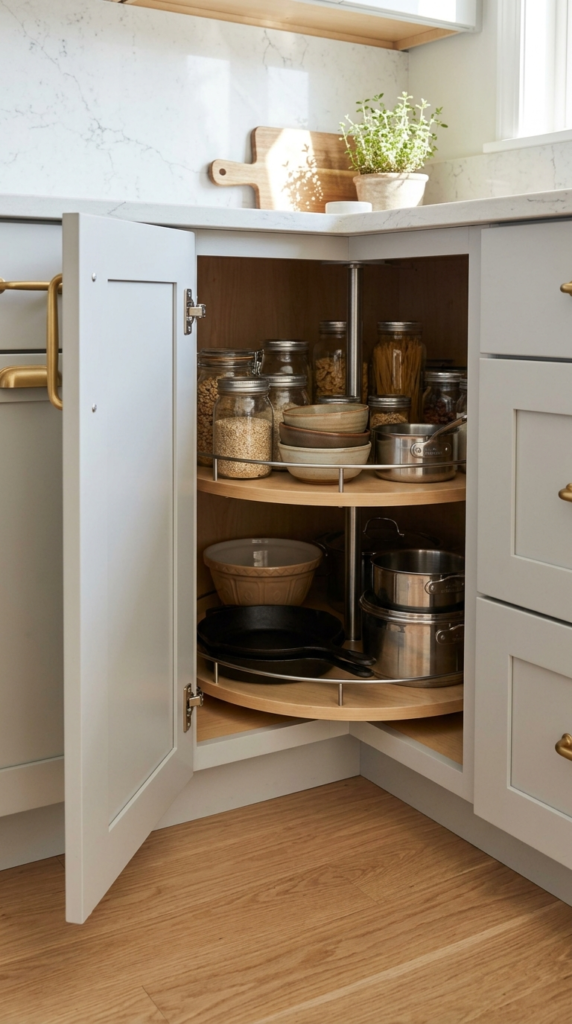
Corner cabinets swallow things whole. A lazy Susan or swing-out shelf spins dead space into storage you can reach in one move. Pots, bowls, and pantry jars rotate into view instead of hiding in the dark. Most kits fit standard corner cabinets and cost far less than new cabinetry. Choose a kidney-shaped or full-round tray with raised edges. The result is storage that feels bigger than the cabinet looks, with everything visible and reachable, and no more kneeling on the floor to dig out a lid. It is a small upgrade with a surprisingly big daily payoff.
Check your cabinet before buying. I’ve seen this work well when the door opening is at least 15 inches wide, since narrower gaps block a full-round tray. Measure the inside depth and height as well, and leave room for the door to close. Place heavy pots on the bottom shelf and light items above. Pick trays with a non-slip lining so jars do not slide as they spin. Spin it gently at first. Once it is installed, you will notice faster cooking, less clutter on the counter, and a corner that finally earns its space every single day.
Statement Pendant Light
- Draws the eye upward, so the ceiling feels higher
- Adds personality without using any floor space
- Gives a plain work zone a warm evening glow
- One fixture is a fast swap for most ceilings
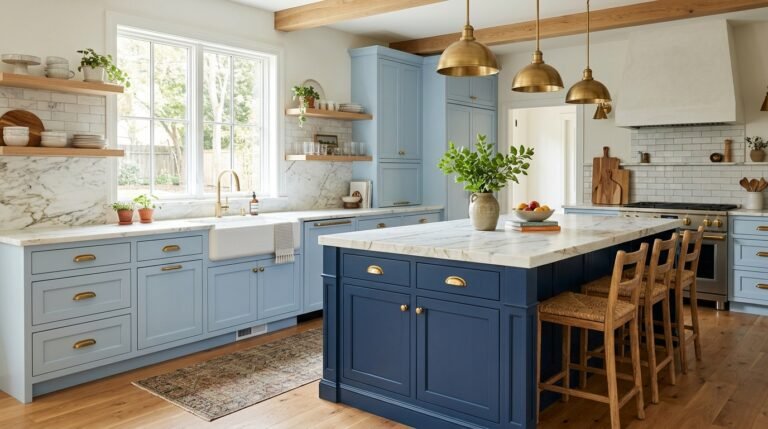
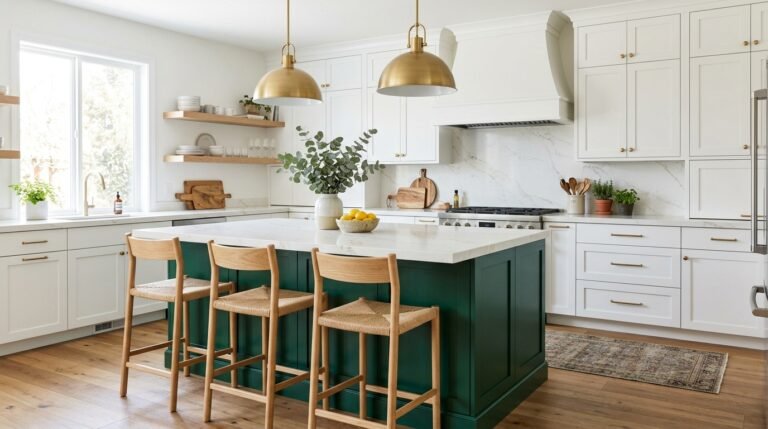
One bold light can give a tiny kitchen a personality. A single pendant above the counter or peninsula draws the eye upward, which makes the ceiling feel higher and the room feel styled. Choose a dome, globe, or woven shade in a size that suits the space, usually about a third of the counter length. Matte black, brass, and white glass all work well. The result is a warm focal point that adds character without taking any floor space. At night, the soft glow turns a plain work zone into a cozy spot for coffee and conversation.
Placement and height matter more than the fixture itself. In my experience, hanging the bottom of the shade about 30 to 34 inches above the counter keeps it out of sightlines while lighting the surface evenly. Check that your ceiling box can carry the weight, and ask an electrician if you need to add wiring. Choose a warm bulb around 2700K and add a dimmer for evenings. Avoid hanging it where you might bump your head. Afterward, you will notice softer light, a more finished look, and a kitchen that feels designed rather than simply equipped.

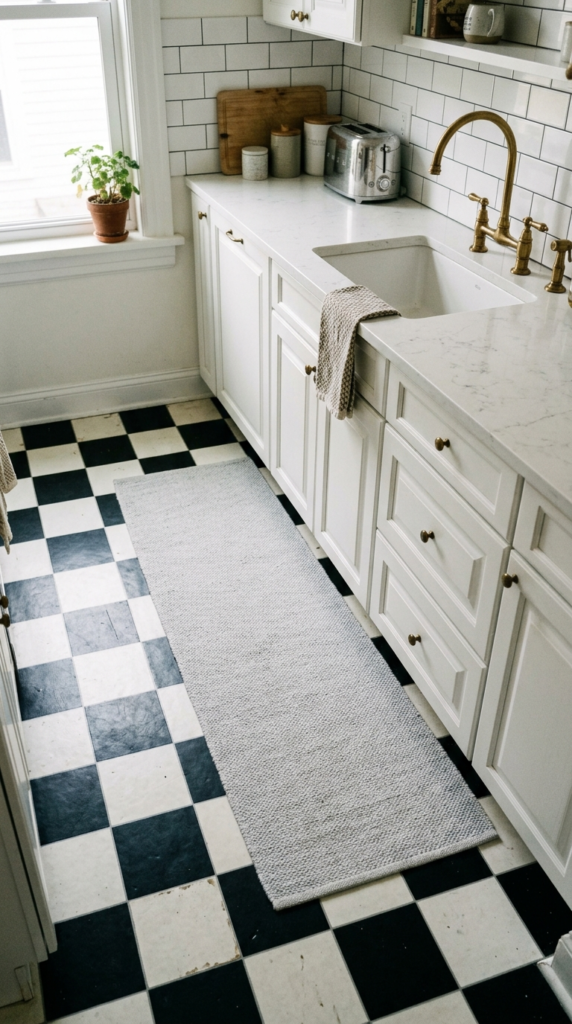
Peel and Stick Floor
- Refreshes the whole room in a single weekend
- Needs no grout, mess, or heavy tools
- Patterns and light tones change how big the room feels
- A budget-friendly choice for renters
Your floor is the biggest surface in the room, so make it count. Peel-and-stick vinyl tiles give a tired kitchen a fresh start in a single weekend, with no grout and no heavy tools. Patterns like checkerboard, herringbone, or soft wood grain can add instant style. Light tones make a tiny room feel wider, while bold patterns bring personality. Most tiles cost only a few dollars per square foot. The result is a clean, cohesive floor that ties cabinets and walls together, and it is gentle enough on the budget for renters and first-time homeowners alike.
Prep decides whether the tiles last. I’ve seen peel-and-stick floors lift at the edges because the surface was dusty, greasy, or uneven, so clean it with degreaser and fill any dips first. Start from the center of the room, not the wall, so the pattern stays balanced. Press each tile firmly with a roller, and keep the room warm so the adhesive grips. Leave a few spare tiles for future repairs. Afterward, you will notice a brighter room, easier cleaning, and a floor that looks far more expensive than the effort and money you put in.
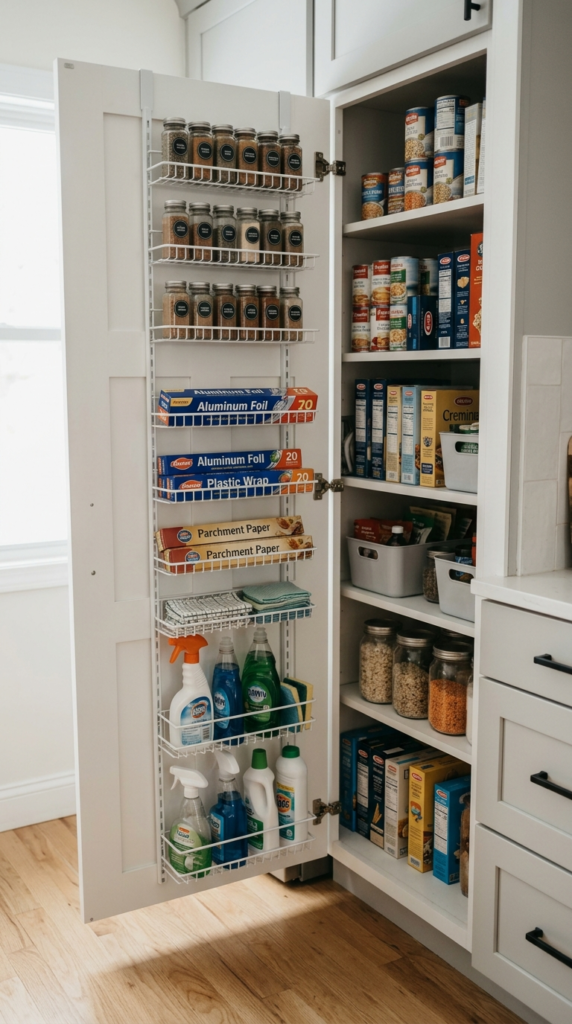
Door Back Storage
- Uses space on the back of doors that usually sits empty
- Keeps small items visible the moment the door opens
- Frees up shelves and counters for daily essentials
- Racks cost little and need almost no tools
The back of a cabinet door is storage nobody is using. A slim rack, hook rail, or set of shallow bins turns it into a handy spot for spices, foil rolls, cleaning bottles, and lids. Everything stays visible the moment the door opens, so you stop hunting through deep shelves. It costs very little and needs almost no tools. The result is a cabinet that holds more without adding a single inch to the room. Small kitchens gain the most, because every hidden pocket frees space on shelves and counters for the things you use daily.
Clearance is the detail most people miss. In my experience, a rack that is too deep stops the door from closing or knocks into the shelves inside, so measure the gap first. Look for racks about two to three inches deep and choose ones that hook over the door or attach with adhesive strips. Keep heavy items low and light ones high. Group things by task, like baking or cleaning, so every row has a purpose. Afterward, you will notice faster access, tidier shelves, and a cabinet that works harder without ever looking crowded from the outside.
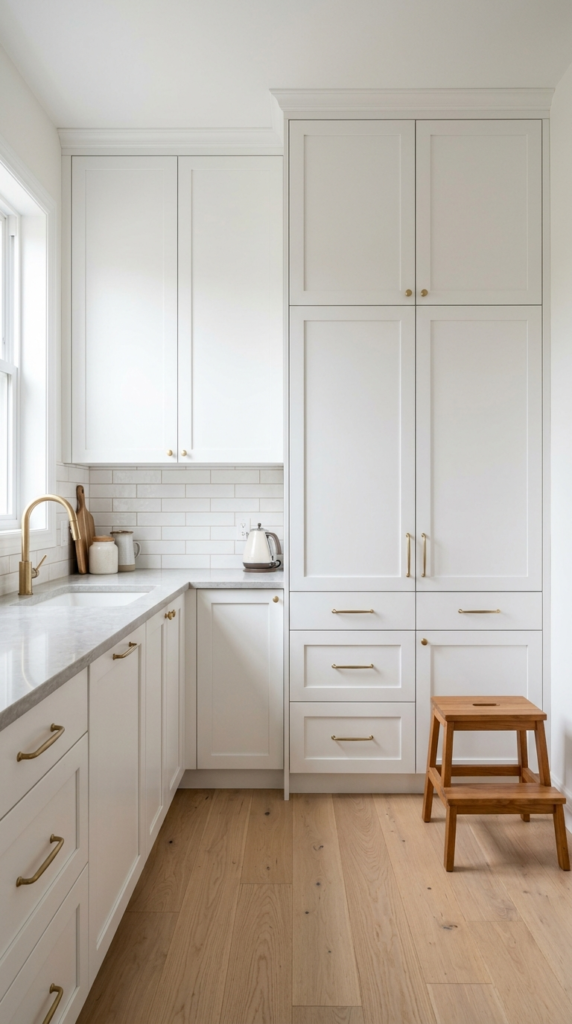
Tall Ceiling Cabinets
- Adds a full extra shelf of storage without using floor space
- Removes the dusty gap above standard cabinets
- Makes walls look taller and the room feel more finished
- Perfect for holiday platters and rarely used pans
Your ceiling is unused storage waiting for a job. Extending cabinets all the way up gives you an extra shelf or two for items you rarely use, like holiday platters and big roasting pans. It also removes the dusty gap above standard cabinets, which makes the wall look taller and cleaner. Many small kitchen ideas rely on this trick because it adds storage without taking any floor space. Choose a matching color and simple doors so the cabinets blend with the wall. The result is a sleek, built-in look that feels more expensive, with fewer dust traps.
Safety and reach need a plan. I’ve seen this work well when a sturdy step stool lives nearby, since the top shelf sits high above the counter. Keep only light, rarely used items up there, such as serving trays and seasonal dishes. Measure from the counter to the ceiling and ask a carpenter about crown molding or filler panels to close any gap. Choose doors that match the lower cabinets for a calm, continuous look. Once installed, you will notice cleaner lines, easier cleaning on top, and a kitchen that feels taller, tidier, and thoughtfully built for every inch.
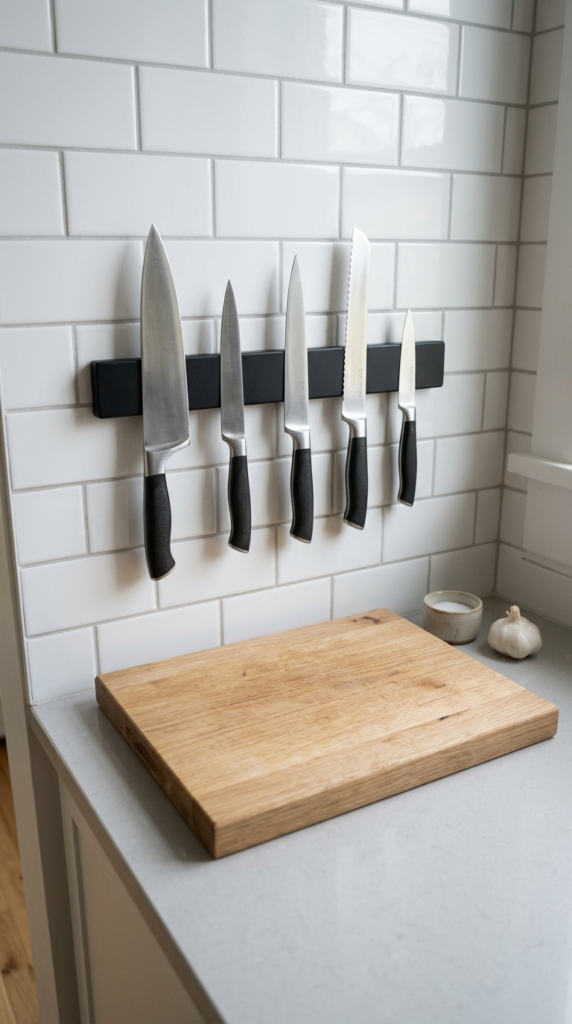
Magnetic Knife Strip
- Frees up the counter space a bulky knife block takes
- Keeps blades visible and easy to grab
- Adds a clean, chef-style look to the wall
- Needs only a few screws to install
Knife blocks take up more counter than they deserve. A wall-mounted magnetic strip frees that space instantly and keeps blades within easy reach. Mount it near the prep area, ideally at eye level, so knives are visible and quick to grab. Choose a wood-faced or matte black strip that matches your shelves or hardware. The result is a tidy, chef-style wall that looks intentional, keeps blades sharper because they are not rubbing against slots, and gives you back a full stretch of counter for chopping, mixing, and setting down hot pans.
Safety comes first with this one. In my experience, the strip should be screwed into studs or secured with strong wall anchors, since a row of knives is heavier than it looks. Mount it high enough to stay out of reach of small children, and keep it away from the stove, where grease can coat the blades. Place each knife spine first and roll it down gently. Wipe the strip weekly with a dry cloth. Afterward, you will notice a calmer counter, faster prep, and a wall that feels organized, practical, and quietly stylish in a compact kitchen.
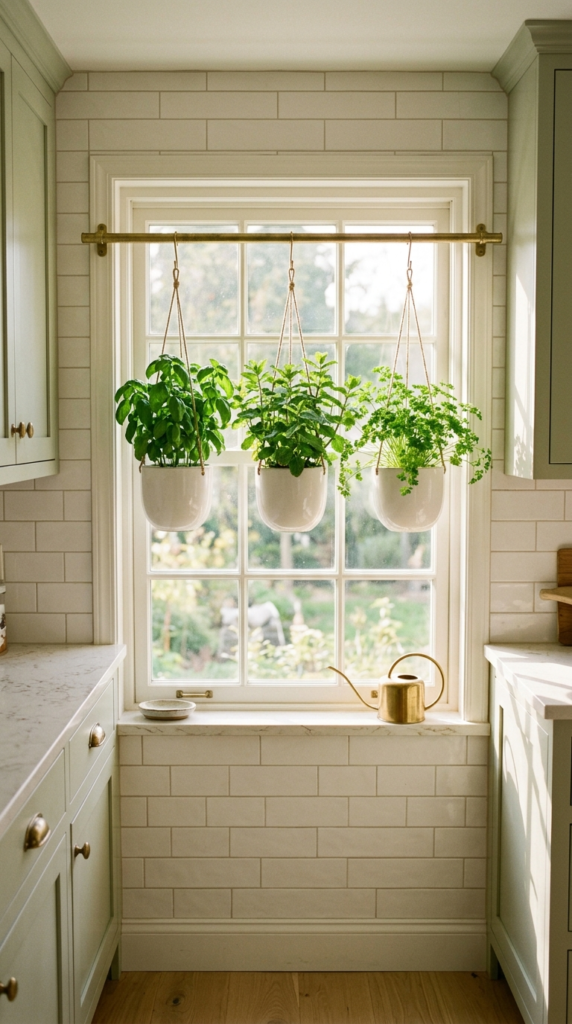
Hanging Herb Garden
- Uses a window or wall instead of counter space
- Keeps fresh herbs within arm’s reach while cooking
- Adds a splash of green and a fresh scent
- Matching pots make the corner look styled
Fresh herbs make any kitchen feel alive, even a tiny one. A hanging herb garden uses a window, a rail, or a wall instead of precious counter space. Small pots of basil, mint, and parsley sit within arm’s reach, so a quick snip adds flavor to dinner. Choose matching white or terracotta planters for a cohesive look. The result is a splash of green that softens hard edges, adds a fresh scent, and turns a plain wall or window into a living feature, all without losing a single inch of working surface.
Light and water decide whether herbs survive. I’ve noticed that a bright, sunny window keeps basil and parsley healthy, while a dim wall needs a small grow light. Choose pots with drainage holes and a saucer to catch drips, and water only when the top inch of soil feels dry. Mint grows fast, so give it its own pot. Trim often to encourage fresh leaves. Once the routine settles, you will notice a greener kitchen, better-tasting meals, and a small, living detail that makes the whole room feel warmer and more welcoming.
Conclusion
A small kitchen can be one of the most charming rooms in your home. With smart small kitchen ideas, you can add storage, bring in light, and make every inch work harder, without a major renovation. I’ve seen how small changes like these can completely transform a space. Start with one idea this week, whether it’s a new paint color or a simple shelf. Save this post on Pinterest so you can come back anytime, and share it with a friend who’s wrestling with a tight kitchen. Your bright, beautiful space is closer than you think.