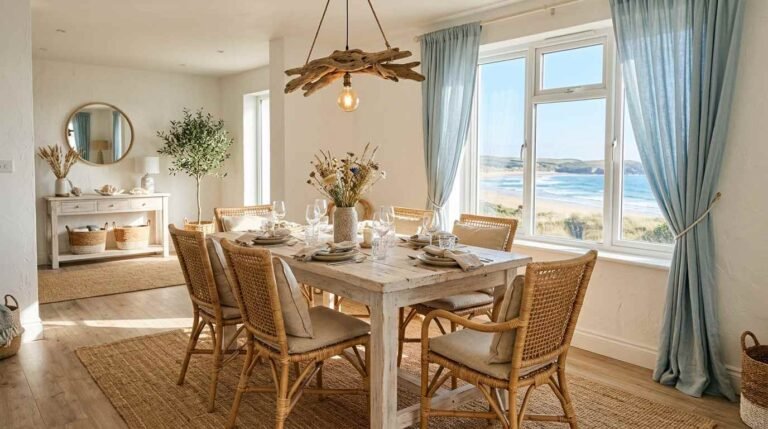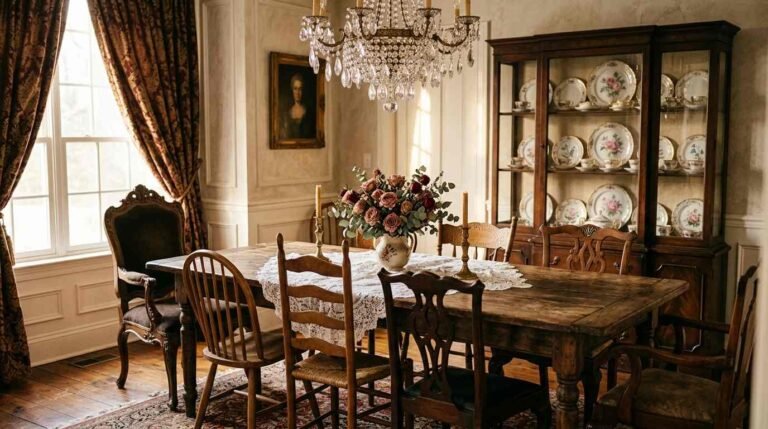
Ever notice how a bare dining room wall can make even a beautifully set table feel unfinished? Wall decor for dining room spaces does more than fill empty space, it sets the entire mood for every meal and gathering that happens there. In my experience, a single striking piece, like a statement mirror or an oversized print, often transforms a room faster than new furniture ever could. Whether your dining room leans modern, traditional, or somewhere in between, this list of 25 ideas is built to work with the space you already have. I’ve seen how a few thoughtful choices, like a gallery wall or a woven hanging, can completely change how a dining room feels.
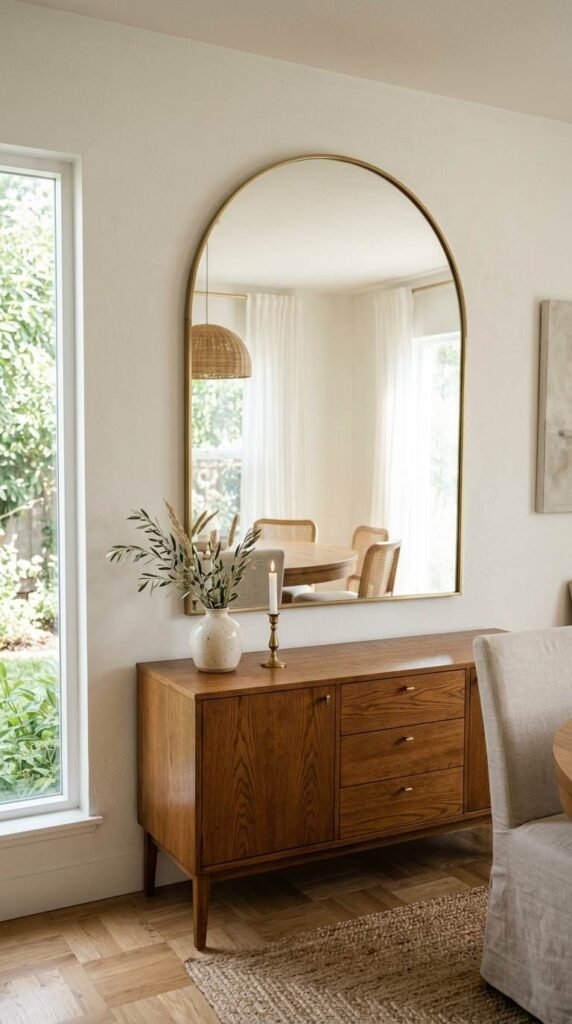
1. Statement Mirror
- Instantly expands the visual size of the room
- Reflects natural light to brighten darker corners
- Acts as a focal point without extra wall decor
- Available in countless shapes to suit any style
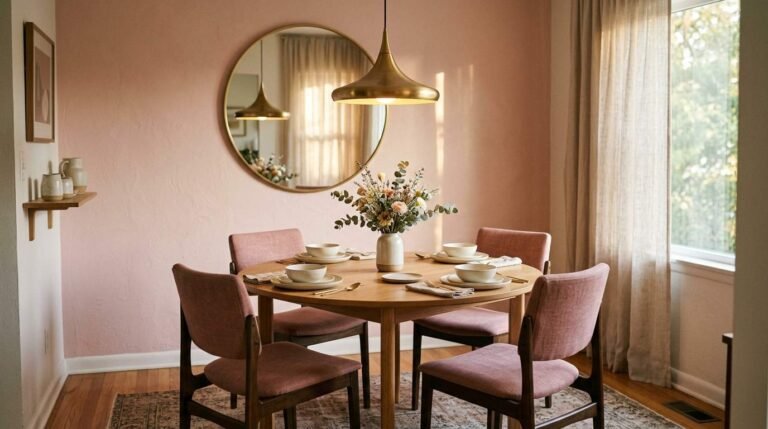
A large mirror is one of the fastest ways to transform a dining room wall. Hung above a sideboard or centered on a feature wall, it reflects light around the room and makes the whole space feel brighter and more open. This is one of the simplest forms of wall decor for dining room spaces that feel dim or boxed in. In my experience, choosing a mirror roughly two-thirds the width of the furniture beneath it creates the most balanced, intentional look, rather than something that feels randomly placed or too small for the wall.
Shape and frame finish change the whole personality of the room. A round mirror softens sharp furniture lines, while an arched or irregular shape feels more organic and current. Gold and brass frames add warmth, while black feels sleek and modern. I’ve seen this trick work particularly well in smaller dining rooms, where the reflected light genuinely makes the space feel larger. Hanging it a few inches above the furniture, rather than too high, keeps the proportions looking considered and well planned.
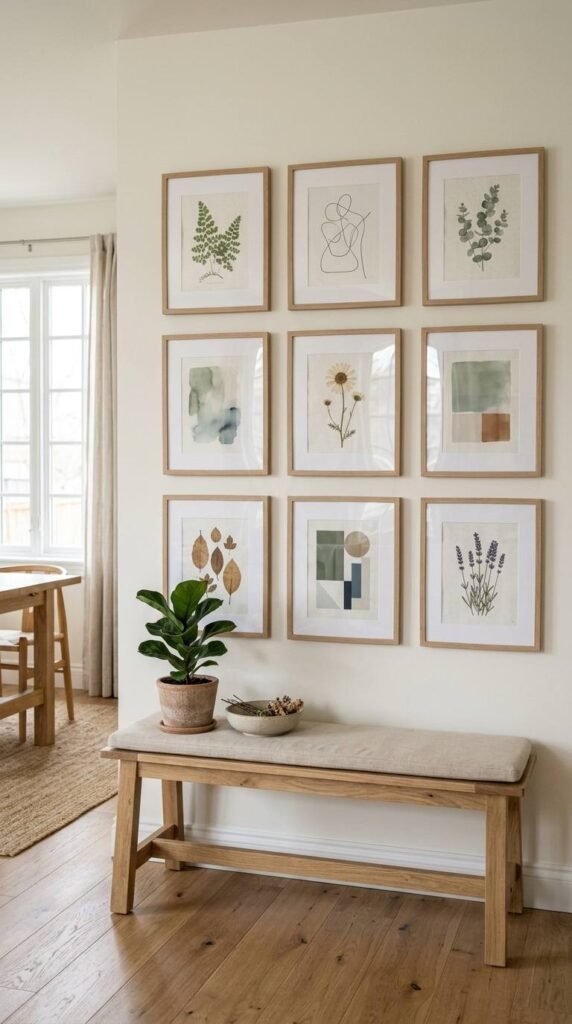
2. Gallery Wall of Framed Art
- Adds personality and visual height to a dining wall
- Works well with three to eight frames of varying sizes
- Creates a collected, curated feel over time
- Easy to update by swapping individual pieces
A gallery wall turns a blank dining room wall into its own design feature. Mixing frame sizes and finishes creates depth and interest that a single piece of art can’t replicate on its own. In my experience, leaving small gaps of breathing room between frames keeps the arrangement from feeling crowded or overwhelming. Starting with just three or four frames and adding more gradually also makes the wall feel genuinely collected, rather than purchased as a matching set all at once from a single store.
Planning the layout before hammering in nails saves a lot of frustration. Tracing each frame on paper and taping the shapes to the wall lets you adjust the spacing until it feels right. I’ve noticed that keeping two to three inches of consistent space between frames gives the most polished, professional result. This idea works beautifully above nearly any dining table, and it’s one of the easiest ways to personalize a space using photos, prints, or art that genuinely means something to you.
3. Oversized Single Art Piece
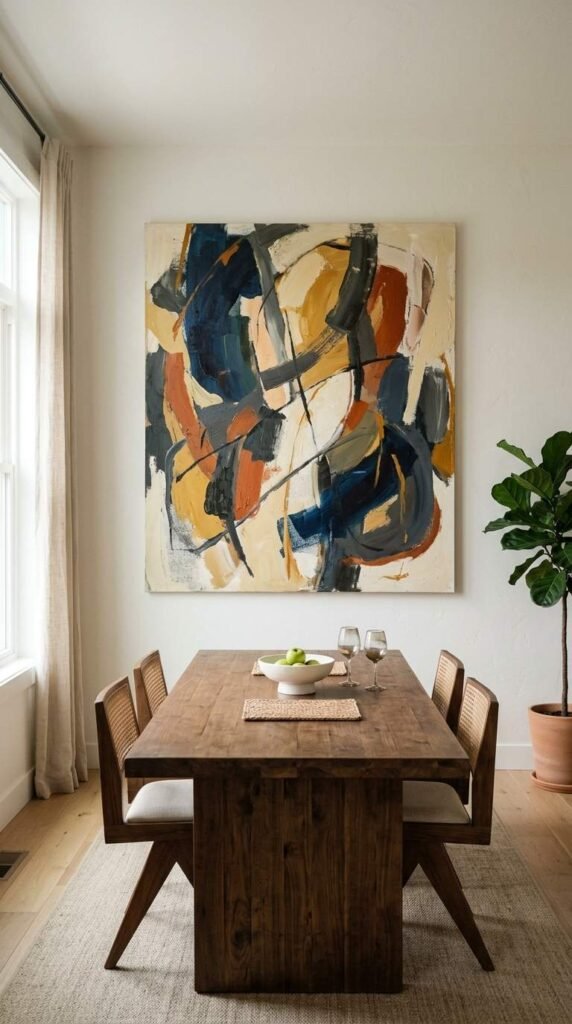
- Fills a large wall with one confident, bold piece
- Creates an instant focal point without extra decor
- Works beautifully in modern and minimalist dining rooms
- Simplifies styling since nothing else is needed
One big piece of art solves the problem of a bare dining room wall faster than almost anything else. A single oversized canvas, full of color or movement, becomes the first thing anyone notices upon entering the room. That’s why many designers recommend going slightly larger than feels comfortable, since a piece that’s too small often gets lost above a dining table. Choosing a canvas roughly two-thirds the width of the table creates the most balanced, visually grounded look for the space.
Color and subject matter set the tone for the whole room. A piece with warm tones adds energy to a neutral dining room, while cooler blues and grays feel calm and contemporary. I’ve tried pairing oversized abstract art with simple, uncluttered furniture, and the painting naturally became the room’s clear focal point. Hang it so the center sits around 57 to 60 inches from the floor, which is roughly eye level while seated, so the piece feels properly integrated into the dining experience.
4. Wallpaper Accent Wall
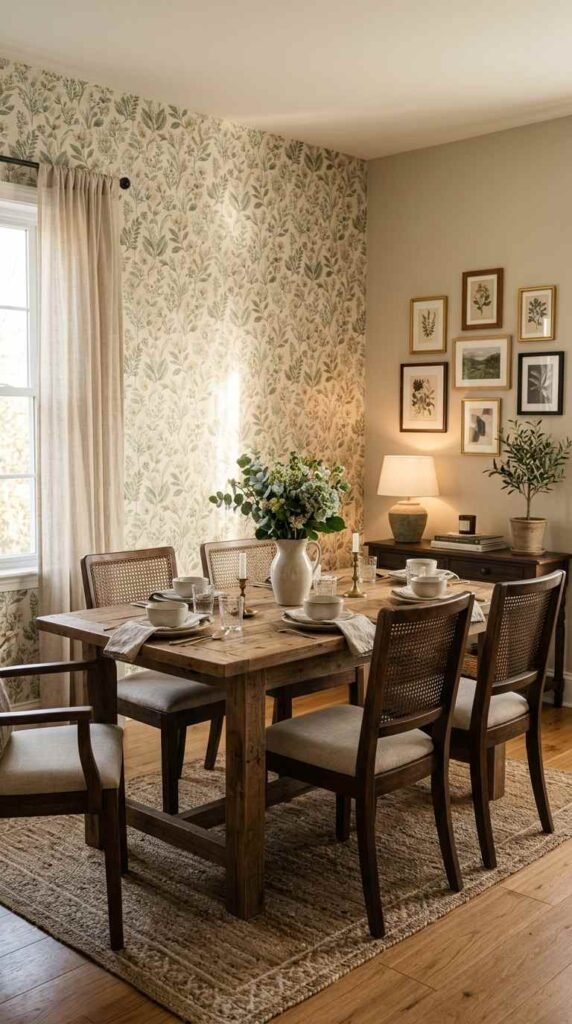
- Adds pattern, color, and depth to a plain wall
- Works well as a single accent wall rather than all four
- Makes a strong style statement without a full remodel
- Peel-and-stick options are renter-friendly
Wallpaper brings instant character to a dining room that paint alone can’t match. A bold botanical print, a subtle stripe, or a textured grasscloth pattern on just one wall creates a focal point without overwhelming the whole room. In my experience, choosing the wall behind the table, rather than a side wall, makes the biggest visual impact, since it becomes the backdrop for every meal and gathering in the space. This is one of the easiest ways to add wall decor for dining room spaces that feel a little flat.
Pattern scale matters more than people expect. A larger-scale print tends to look more intentional on a big wall, while a tiny, busy pattern can feel chaotic in a small dining room. I’ve seen peel-and-stick wallpaper work beautifully for renters wanting to try the look without commitment. Pairing wallpaper with simple, solid-colored furniture keeps the room from feeling too busy. This idea works especially well behind a sideboard or as the backdrop for a gallery wall.
5. Wood Paneling and Wainscoting
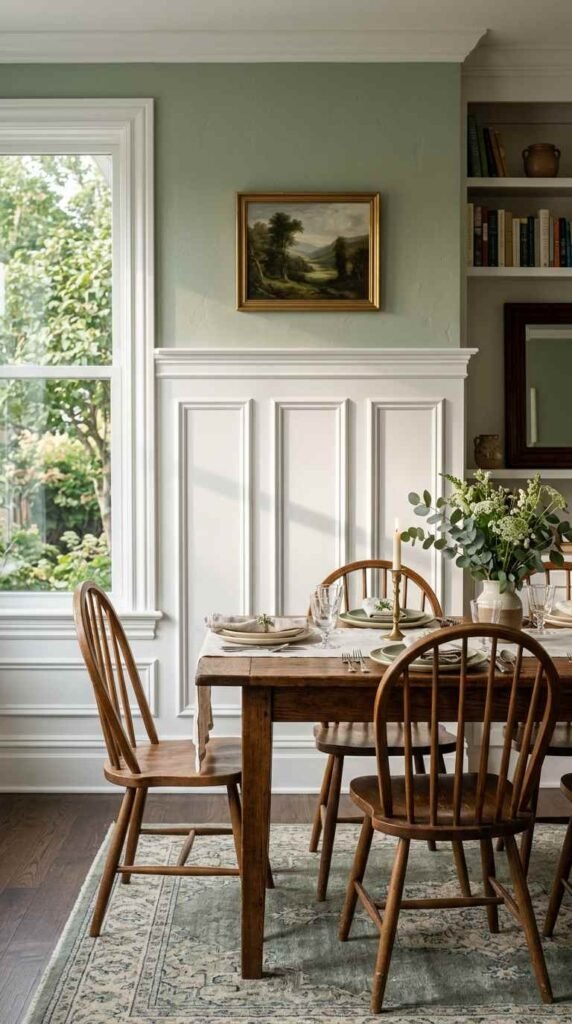
- Adds architectural texture to plain, flat walls
- Protects walls from chair scuffs and everyday wear
- Creates a timeless, tailored look
- Works painted in white, gray, or deeper tones
Wainscoting gives a dining room genuine architectural bones. Panels along the lower third of the wall add shadow lines and dimension that flat paint simply cannot achieve. It feels tailored and classic, and in my experience, this is one of the few upgrades that makes a room look finished before any additional decor goes up. It also does real work, protecting walls from chair backs and daily scuffs, which matters in a room used often for family meals and gatherings.
Paint choice changes the entire mood. Crisp white feels fresh and traditional, while a deep charcoal or navy on both the panels and wall above creates real drama. I’ve noticed that a semi-gloss finish on the panels paired with a matte finish above adds subtle contrast without looking mismatched. Top the panels with a simple chair rail, then hang art or a mirror above it. The result feels custom-built and adds real value to the overall look of the room.
6. Floating Shelf Display
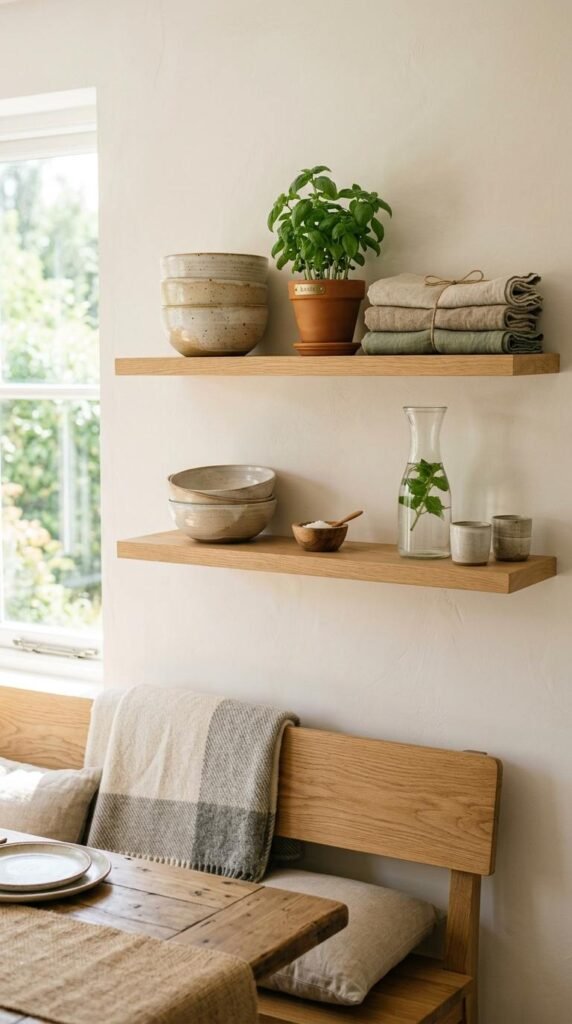
- Adds storage and styling without visual bulk
- Keeps the wall looking light and open
- Works well for rotating small decor pieces
- Suits modern and minimalist dining rooms
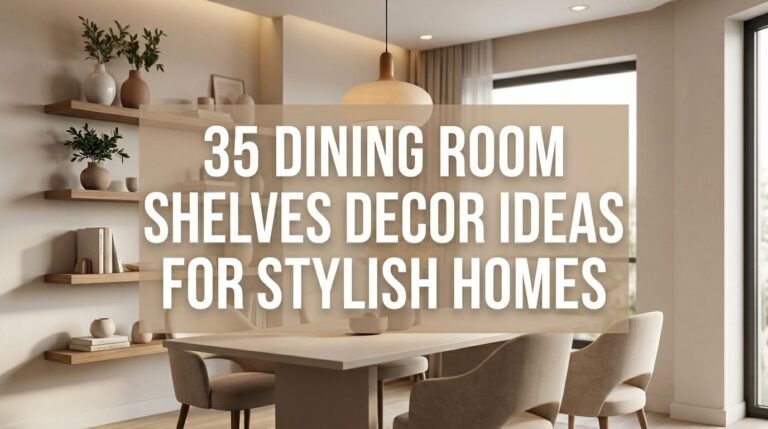
A floating shelf gives a dining room wall both function and personality. Without visible brackets, it appears to hang in midair, which keeps the look light even while holding a few styled objects. A ceramic vase, a small leaning print, and a short stack of books are often enough to finish the display. In my experience, floating shelves work best when restraint rules the arrangement, since they look most polished with open space around each item rather than a crowded, cluttered surface.
Height and styling details make the difference between a shelf that looks intentional and one that feels like an afterthought. Mounting it so the surface sits around 60 to 66 inches from the floor usually complements the dining table well. I’ve noticed that swapping just one or two items seasonally keeps the display feeling fresh without much effort. Choosing a shelf finish that echoes another material already in the room, like matte black or light oak, ties the whole space together and complements mid century dining room decor beautifully.
7. Wall Sconce Lighting
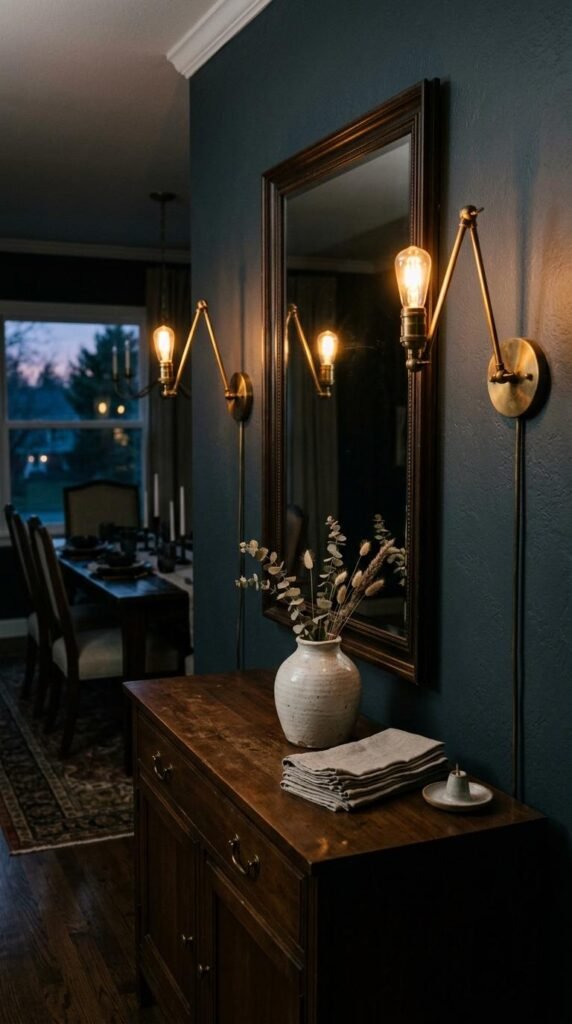
- Adds ambient light without using table or floor space
- Creates a warm glow for evening dinners
- Works well in pairs for a symmetrical, balanced look
- Suits traditional, modern, and transitional dining rooms alike
Wall sconces solve two problems at once: they add light and they add style, all without using any surface space. A pair flanking a mirror or piece of art brings symmetry and warmth to the room, especially once the sun goes down. That’s why many designers recommend sconces as one of the easiest upgrades for a dining room that feels a little flat or underlit during evening meals. The soft glow keeps the mood relaxed rather than harsh or overly bright.
Placement is what makes sconces feel designed rather than accidental. Mounting them about 60 to 66 inches from the floor, spaced evenly on either side of a central piece, creates the most balanced result. I’ve seen this pairing work particularly well above a sideboard, where the light highlights whatever is styled on top. Choosing a warm-toned bulb, and ideally a dimmable option, lets the sconces shift from bright daytime light to a softer evening glow for dinner parties.
8. Decorative Plate Wall
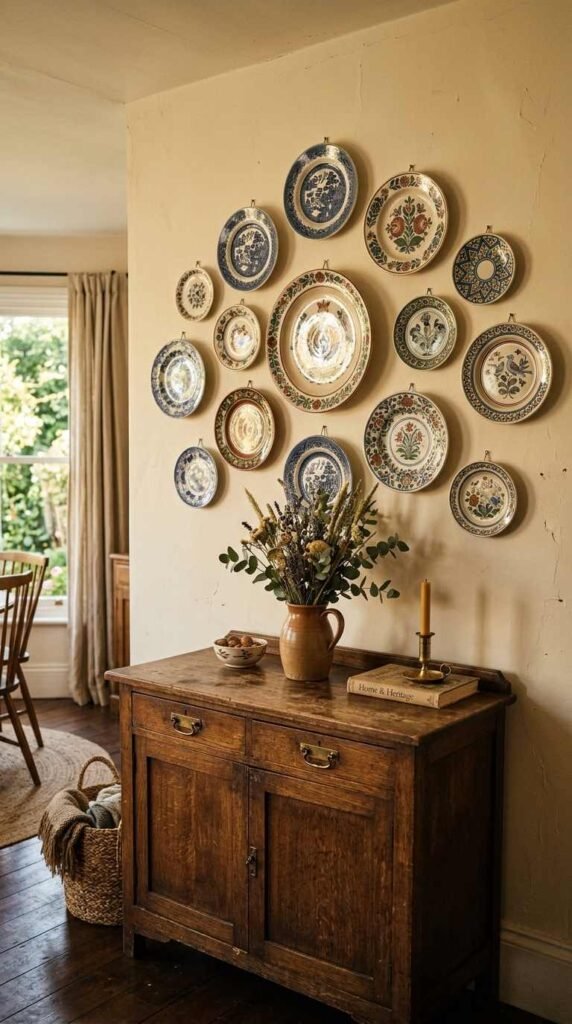
- Adds color, pattern, and dimension to a plain wall
- Works beautifully with vintage or handmade plates
- Creates a collected, personal display over time
- Suits eclectic and modern farmhouse dining rooms
A wall of decorative plates brings unexpected charm to a dining room. Mixing vintage finds with handmade pieces creates a display that feels collected and personal, rather than purchased as a matching set from a single store. In my experience, this idea for wall decor for dining room spaces works particularly well, since the plates echo the tableware already used for meals, creating a subtle, thoughtful connection between the wall and the table below. A shared color palette keeps mismatched patterns from feeling chaotic.
Spacing and arrangement determine how polished the final display looks. I’ve noticed that grouping plates in a loose, organic cluster feels more relaxed than a strict grid, though a symmetrical grid suits more formal dining rooms beautifully. Use plate hangers designed to protect the ceramic, and start with five or six plates before adding more gradually over time. This idea is also a wonderful way to display inherited or thrifted pieces that might otherwise sit unused.
9. Woven Wall Hanging
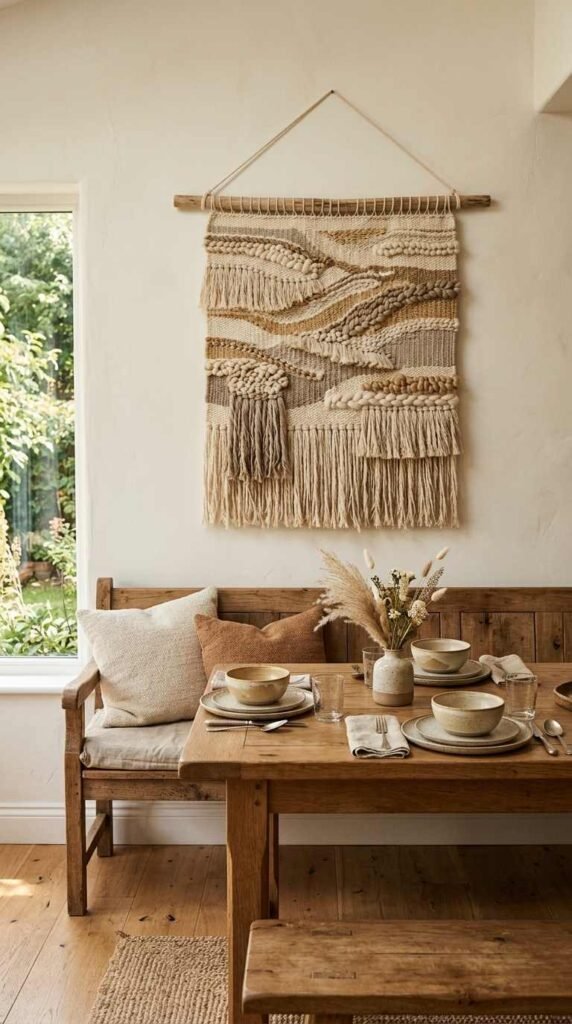
- Adds texture and warmth to a plain wall
- Softens the hard lines of modern furniture
- Works in natural fibers like jute, cotton, or wool
- Brings handmade character into the room
A woven wall hanging brings texture to a dining room in a way that flat art simply can’t. Made from jute, cotton, or wool, these pieces add warmth and a handmade quality that softens the sharper lines of modern tables and chairs. In my experience, one generously sized textile often does more for a room than several smaller decor pieces combined, since the texture alone creates visual interest from across the room. A neutral palette, like cream or soft rust, keeps the look current rather than overly themed.
Scale and placement are key to making this idea feel intentional. A hanging that spans about one-third to one-half the width of the wall tends to look the most balanced above a sideboard or dining table. I’ve noticed that pairing a woven piece with simple, uncluttered furniture keeps the overall look feeling modern instead of busy. Hanging it with a wooden dowel gives a clean, finished edge, and a little fringe at the bottom adds natural movement, making it a lovely addition to spring home decor ideas.
10. Framed Botanical Prints
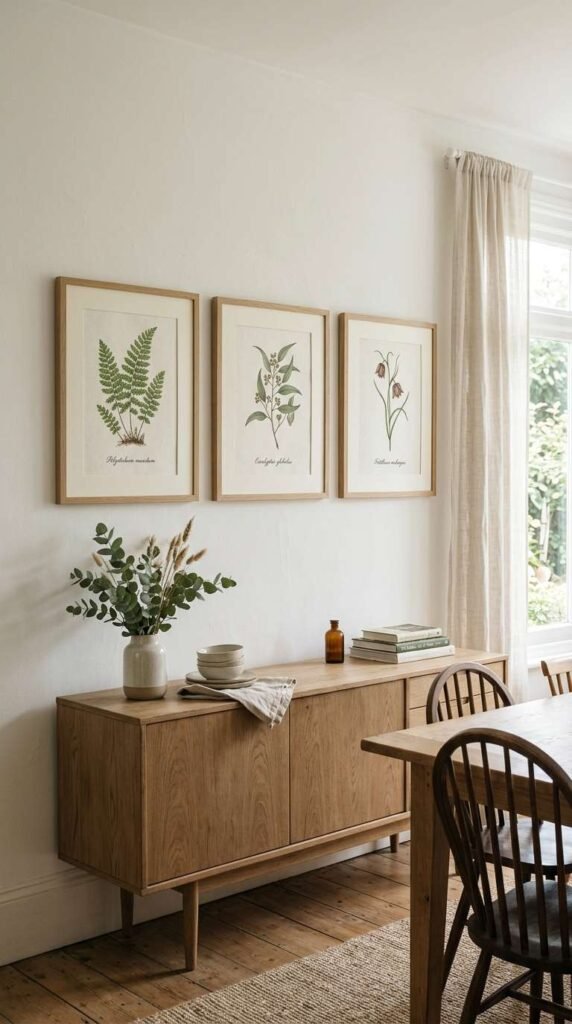
- Adds a soft, timeless touch without bold color
- Works beautifully in sets of two or three
- Suits traditional and transitional dining rooms
- Easy to find affordably or print at home
Framed botanical prints bring a quiet, classic elegance to a dining room wall. Detailed illustrations of leaves, flowers, or branches add just enough interest without introducing bold color or busy pattern. In my experience, this idea works especially well in rooms that already have a lot going on through furniture or flooring, since the prints add refinement without competing for attention. A set of two or three, hung in a simple row, creates a clean and cohesive look that suits nearly any dining room.
Framing choice makes a genuine difference here. Thin gold or black frames keep the look elegant, while white mats add breathing room around each print. I’ve seen this idea work beautifully above a sideboard or on the main dining wall, especially when the prints are spaced evenly with consistent gaps between each frame. This is also one of the more budget-friendly options on this list, since quality botanical prints are widely available at an affordable price point.
11. Black and White Photography
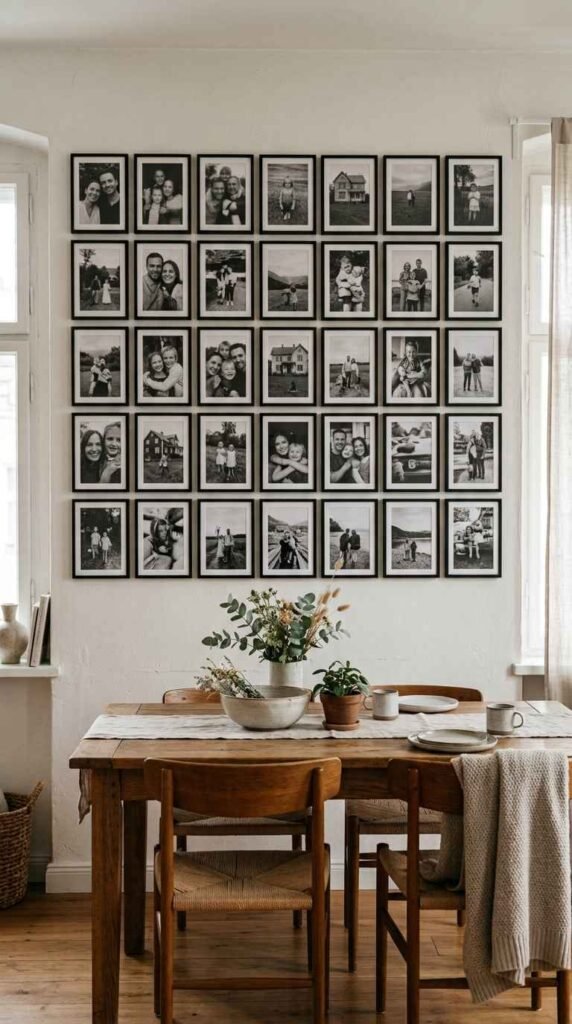
- Creates a dramatic focal point with a single striking image
- Works beautifully in large or small-scale formats
- Adds personality through a meaningful or evocative scene
- Suits modern, minimalist, and transitional dining rooms
A striking black-and-white photograph can carry an entire dining room wall on its own. A landscape, an architectural shot, or a close-up portrait adds drama and personality without needing additional decor around it. In my experience, choosing one powerful image is almost always more effective than filling the wall with several smaller prints, since the eye has one clear place to focus. Black-and-white photography suits nearly any dining room style, since it adds depth without introducing competing color.
Sizing the print correctly makes all the difference. Aim for a piece roughly two-thirds the width of the table or sideboard beneath it, so the proportions feel balanced. I’ve seen this idea work beautifully framed in a simple black metal frame with a generous white mat, which gives the photograph room to breathe. This is also a meaningful way to personalize a dining room, whether the photo is a favorite travel memory or a piece from a local artist you admire.
12. Statement Wall Clock
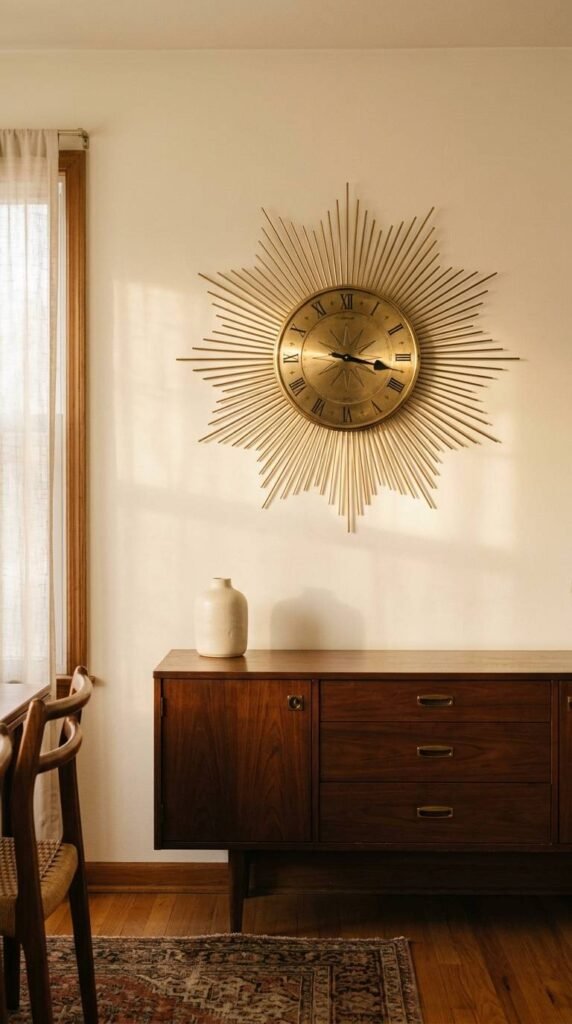
- Adds both function and style to a blank wall
- Works as a bold focal point on its own
- Suits modern, farmhouse, and traditional dining rooms
- Available in countless shapes and finishes
A statement clock gives a dining room wall purpose along with style. An oversized round clock in matte black or brushed brass becomes the room’s natural focal point, doing the job of art while also keeping everyone on schedule for dinner. That’s why many designers recommend a large clock for dining rooms that need one strong piece rather than several smaller decor items. The scale matters, since a clock that’s too small gets lost, while one sized generously for the wall reads as confident and intentional.
Choosing the right finish ties the clock to the rest of the room. Black or dark bronze suits a modern, moody dining room, while a lighter wood-rimmed clock feels warmer and more farmhouse-inspired. I’ve noticed that an oversized clock works particularly well on a long, otherwise empty wall, since it fills the space without needing additional support pieces nearby. Centering it at a height similar to where art would hang keeps it functioning beautifully within the room.
13. Metallic Wall Accents
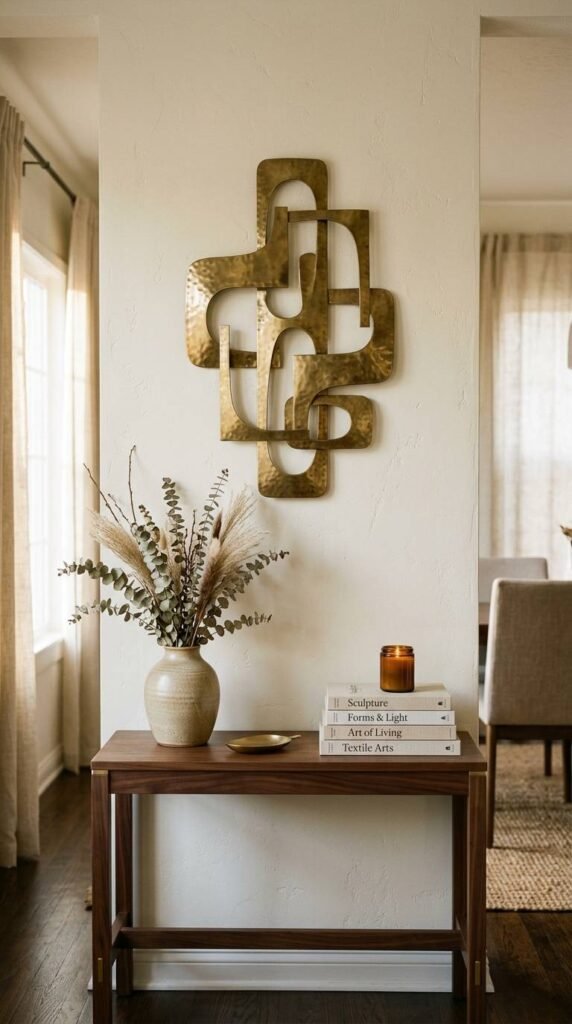
- Adds subtle shine without overwhelming the space
- Works through frames, sculptural pieces, or small objects
- Pairs well with both warm and cool color palettes
- Elevates the room without requiring new furniture
A touch of metallic finish can lift an entire dining room wall without any major changes. Brass-framed art, a gold sculptural piece, or a bronze wall object catch available light just enough to add a subtle sense of polish to the space. In my experience, this kind of wall decor for dining room settings works best when used sparingly, since too much metallic shine can feel overwhelming rather than elegant. One or two well-placed pieces usually do more than filling the wall with multiple shiny objects.
Mixing metal tones is more forgiving than most people expect. I’ve tried pairing brass picture frames with a silver-toned mirror in the same dining room, and the contrast actually added interest rather than clashing. Keeping metallic elements as accents, rather than covering a large surface, ensures they highlight the room instead of overwhelming it. This small styling choice consistently makes a dining room feel more considered and a little more special for everyday meals.
14. Textured Wall Panels
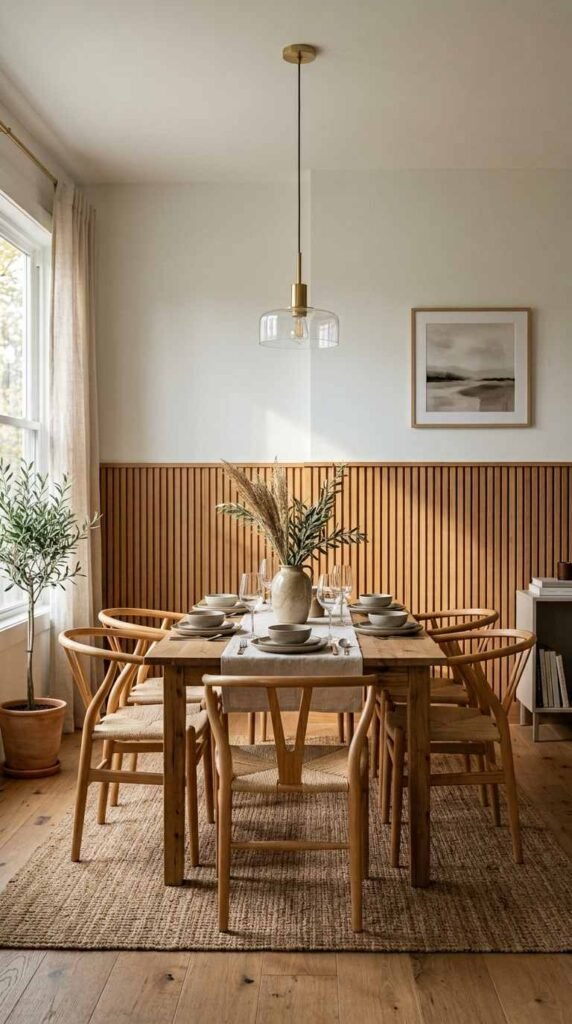
- Adds dimension and shadow play to a flat wall
- Creates an artistic, gallery-like moment
- Works beautifully in neutral, monochrome palettes
- Suits modern organic and minimalist dining rooms
Textured wall panels bring sculptural interest to a space that flat paint can’t achieve. Raised geometric or organic shapes catch light differently throughout the day, creating soft shadows that shift as the sun moves across the room. In my experience, this idea suits dining rooms with plenty of natural light especially well, since the changing shadows keep the wall feeling alive rather than static. A single accent wall, rather than the whole room, keeps the overall look intentional and easy to manage.
Keeping the surrounding wall simple lets the texture do the talking. A plain white or soft neutral wall provides the best backdrop, since busy wallpaper or heavy decor competes with the panel’s natural shadow play. I’ve seen textured panels paired with simple black sconces on either side, and the warm evening light made the texture even more striking. This idea works especially well as a single statement feature rather than filling the entire wall with multiple panel types.
15. Vintage Tapestry
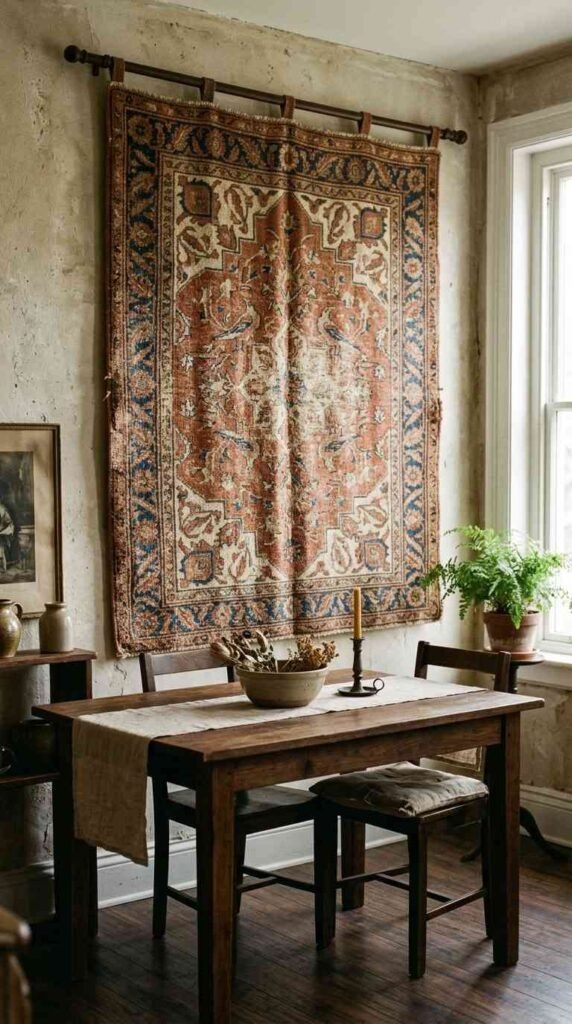
- Adds history and softness to a dining room wall
- Works beautifully in muted, aged color palettes
- Creates a layered, collected look over time
- Suits eclectic, traditional, and boho-inspired dining rooms
A vintage tapestry brings depth and story to a dining room that new decor simply can’t replicate. Woven scenes in faded florals, muted landscapes, or classic patterns add a sense of history the moment they’re hung. In my experience, this piece works particularly well as the room’s main focal point, since the rich detail and aged coloring naturally draw attention without needing much else on the wall around it. Thrifted or inherited tapestries add even more authenticity and personal meaning to the space.
Hanging a tapestry properly keeps it looking intentional rather than worn out. I’ve noticed that mounting it with a wooden dowel or a simple rod gives a clean, finished edge, while letting the bottom hang naturally adds softness. Pairing the tapestry with plain, uncluttered furniture keeps the busy pattern from feeling overwhelming. This idea suits dining rooms wanting a slightly more eclectic or collected feel, where the wall becomes a genuine conversation piece for guests.
16. Framed Mirror Cluster
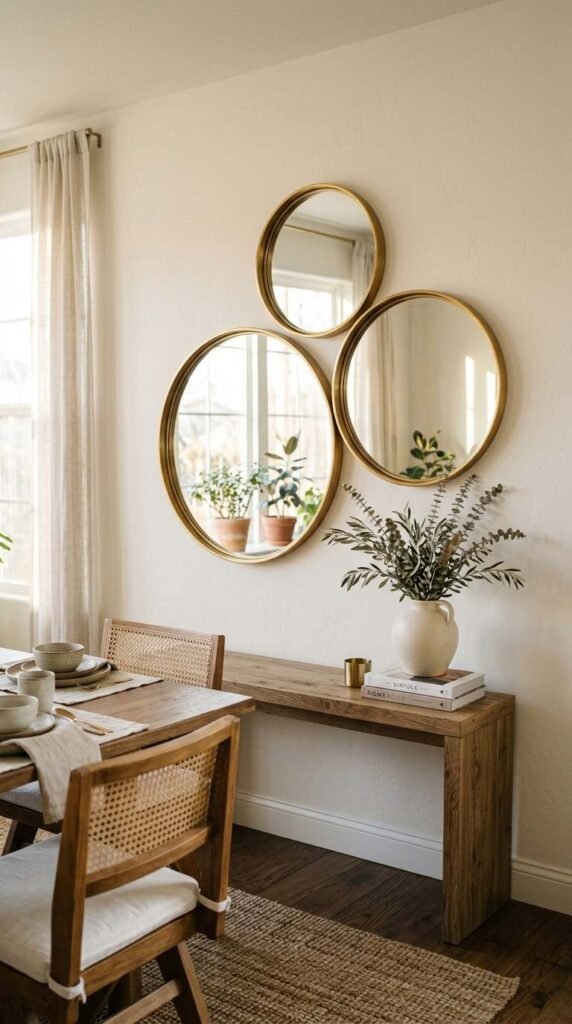
- Adds depth and light without feeling heavy
- Works beautifully above a sideboard or feature wall
- Mixes well with other wall decor nearby
- Brings a layered, collected charm to the room
A cluster of framed mirrors brings character and brightness to a dining room wall all at once. Grouping three or four mirrors in varying sizes and frame finishes adds depth without the visual weight of one large piece. In my experience, this idea works especially well in dining rooms that want extra light without committing to a single oversized mirror. The varied reflections scatter light gently around the room, making even a modest-sized space feel noticeably brighter and more open.
Spacing and finish consistency matter here. I’ve tried clustering mirrors of different sizes around one central larger piece, and the arrangement reads as effortless rather than fussy or overdone. Keeping two to three inches between each mirror helps the grouping feel cohesive rather than scattered. Sticking to one frame finish, like black or brass, throughout the cluster ties the whole display together, even when the individual mirror shapes and sizes vary quite a bit.
17. Ceramic Wall Art
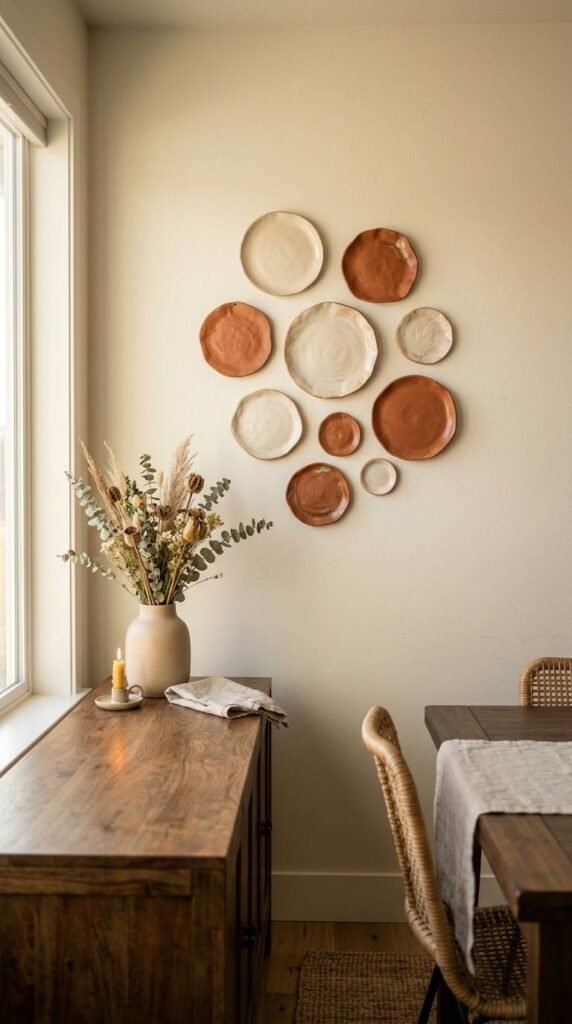
- Adds sculptural texture without needing a large investment
- Works beautifully in organic or geometric shapes
- Suits modern, coastal, and minimalist dining rooms
- Creates a handmade, artisanal feel
Ceramic wall art brings a tactile, handmade quality that flat prints simply cannot match. Sculptural pieces in organic shapes or glazed geometric forms add dimension and visual interest to a dining room wall. In my experience, one or two substantial ceramic pieces often make more of a statement than several small ones scattered across the wall. The subtle variations in glaze and texture catch light beautifully, especially in a room with warm, ambient evening lighting from sconces or a nearby chandelier.
Choosing Handmade vs Molded Pieces
Handmade ceramic pieces carry small imperfections that give them genuine character, since no two are ever exactly alike. Molded or mass-produced ceramic decor, on the other hand, offers a more uniform, budget-friendly option that still adds texture to the wall. I’ve noticed that handmade pieces tend to suit eclectic or artisanal dining rooms best, while molded options work well in more streamlined, modern spaces. Either choice adds genuine dimension that flat wall decor alone cannot achieve.
18. Wall-Mounted Planters
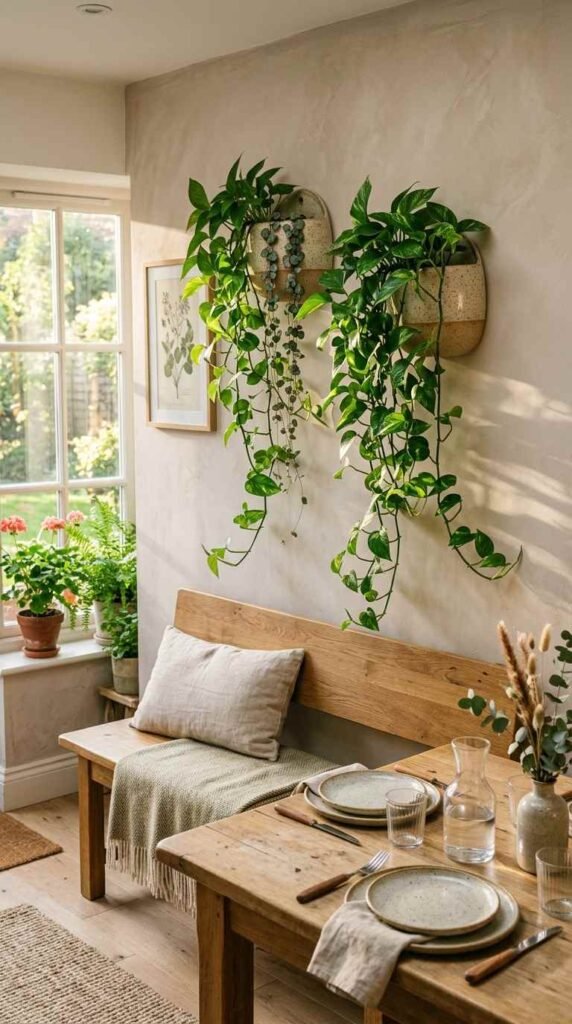
- Brings greenery into the room without using floor space
- Adds color and life to an otherwise static wall
- Works with real plants or quality faux greenery
- Suits modern, boho, and nature-inspired dining rooms
Wall-mounted planters bring living greenery directly onto a dining room wall. A cluster of small pots or a single trailing plant adds color and softness without taking up any table or floor space. In my experience, this idea works beautifully for dining rooms that want a natural element but don’t have much room for traditional floor plants. Low-maintenance varieties like pothos or succulents handle indoor conditions well, making this an approachable option even for those without a particularly green thumb.
Arrangement and care are worth considering before installing. I’ve seen a simple row of three matching planters look just as striking as an asymmetrical cluster of varying sizes, so either approach works depending on your style. Choosing planters with drainage, or simply checking them regularly, keeps the display looking healthy rather than neglected. This idea adds a genuinely fresh, lively touch to wall decor for dining room spaces that might otherwise feel a little too formal or static.
19. Abstract Canvas Art
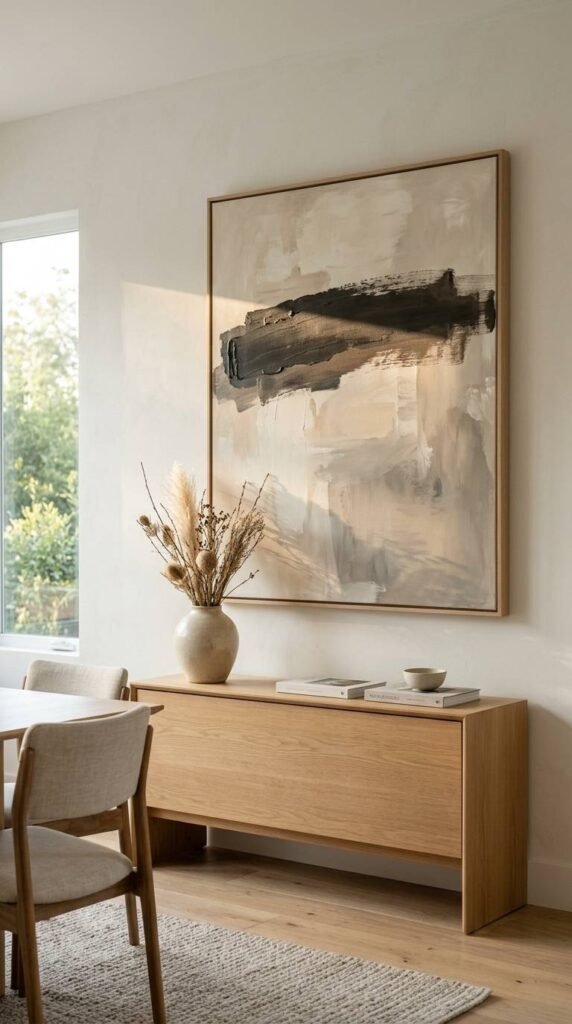
- Adds color and movement without a specific subject
- Works beautifully as one piece or a small set
- Suits modern, contemporary, and eclectic dining rooms
- Easy to coordinate with existing color schemes
Abstract canvas art brings energy and color to a dining room without the need for a recognizable subject. Bold brushstrokes, soft color washes, or geometric shapes add visual interest while remaining open to interpretation, which suits almost any decorating style. In my experience, abstract pieces work particularly well for dining rooms that need color but don’t have a strong existing palette to match, since the art itself can set the tone for everything else added to the room afterward.
Choosing the right piece comes down to color and scale. I’ve noticed that selecting a canvas with at least one color already present in the room, like a rug or dining chairs, helps the art feel integrated rather than randomly placed. A single large piece typically reads as more sophisticated than a cluttered set of small abstract prints. This idea works well whether your dining room leans minimalist, maximalist, or somewhere comfortably in between those two styles.
20. Wall-Mounted Wine Rack
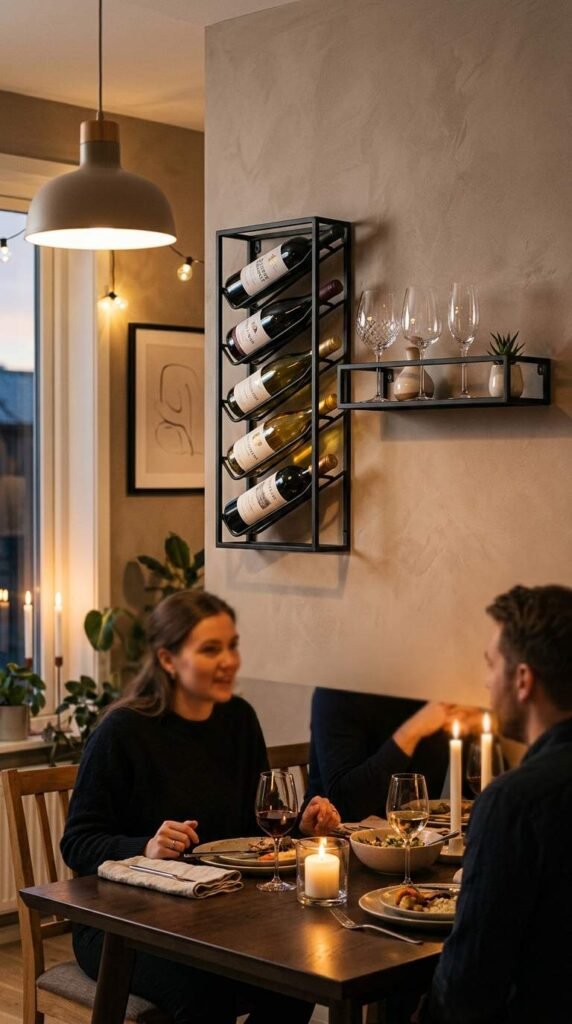
- Combines storage with genuine decorative appeal
- Works well in small or larger dining rooms
- Adds a collected, hosting-ready feel to the space
- Keeps bottles displayed rather than hidden away
A wall-mounted wine rack turns practical storage into a genuine decorative feature. Rows of bottles add color, texture, and a subtle sense of hospitality to a dining room wall, suggesting the space is ready for entertaining at a moment’s notice. In my experience, this idea suits dining rooms that double as a hosting space particularly well, since guests naturally notice and appreciate the display. A simple metal or wood rack keeps the look clean without requiring a large built-in installation.
Placement and styling make this idea feel intentional rather than purely functional. I’ve seen wine racks mounted near a sideboard or buffet work especially well, since the bottles complement other entertaining essentials already in the room. Choosing a rack finish that matches existing metal accents, like black or brass, ties the piece into the rest of the wall decor. This idea adds both function and visual interest, which makes it a practical choice for smaller dining rooms.
21. Corner Shelf Display
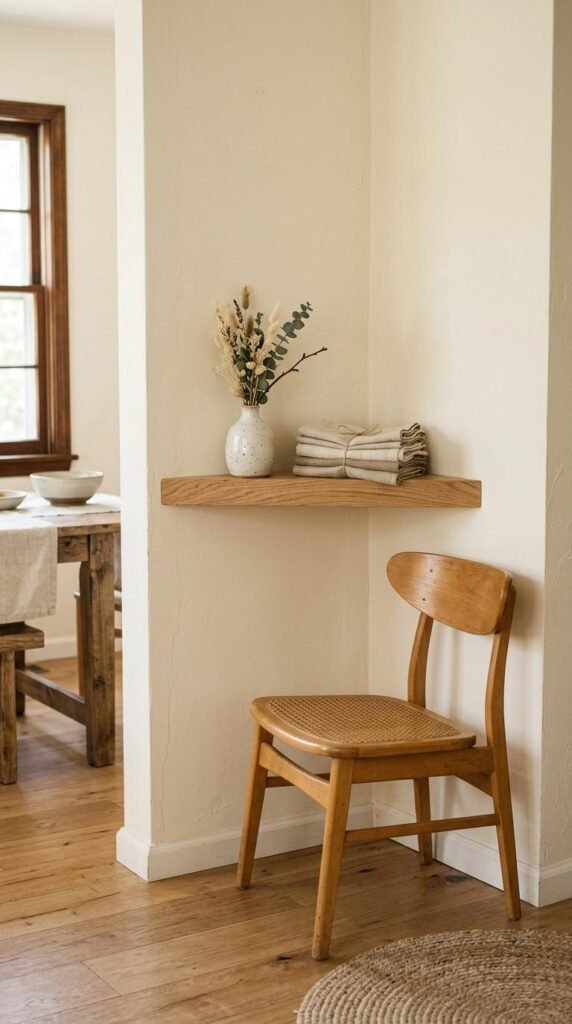
- Makes use of an often-overlooked part of the room
- Adds storage and styling without crowding the main wall
- Works well with small decor pieces or plants
- Suits dining rooms with limited wall space
A corner shelf turns an often-wasted part of the dining room into a styled display. Mounted diagonally across a corner, it holds small decor pieces, books, or a trailing plant without competing for space on the main dining wall. In my experience, this idea works particularly well in smaller dining rooms where every available wall is already accounted for, giving homeowners one more spot to add personality without crowding the room’s main focal points, like the table or sideboard.
Styling a corner shelf benefits from the same restraint as a floating shelf elsewhere in the room. I’ve noticed that two or three items, varied in height and texture, look more intentional than a crowded display. A small plant, a short stack of books, and a single candle often strike the right balance. This idea is also a smart way to add wall decor for dining room spaces that feel tight on usable square footage without any additional decor elsewhere.
22. Picture Ledge Styling
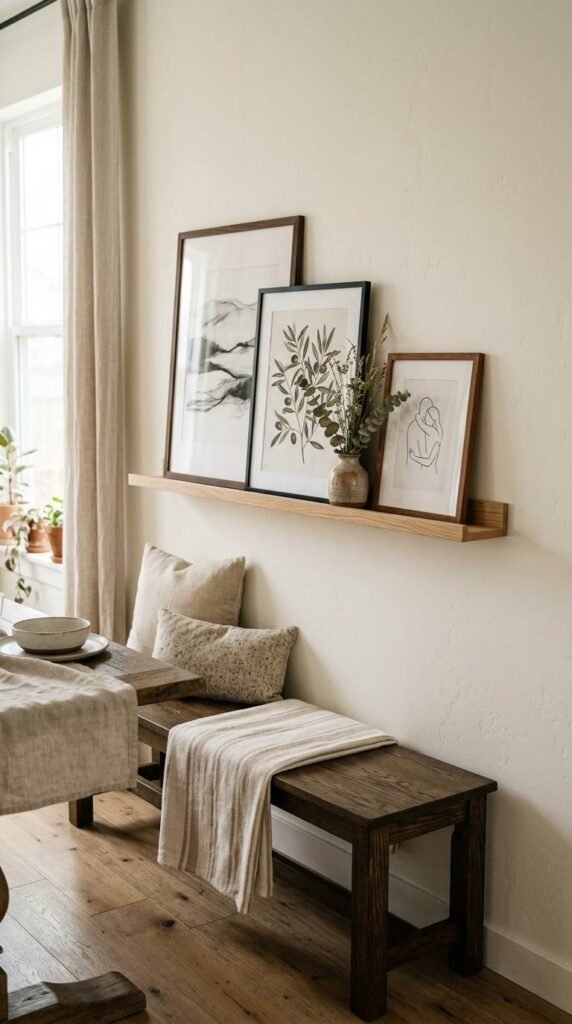
- Allows art to be layered and easily rearranged
- Works beautifully with leaning frames of varying sizes
- Creates a relaxed, gallery-like display
- Easy to update without new nail holes
A picture ledge offers more flexibility than traditional hung art, since frames simply lean against the wall rather than being permanently mounted. Layering two or three frames of different sizes on a single ledge creates a relaxed, curated look that’s easy to rearrange whenever the mood strikes. In my experience, this idea suits dining rooms where the homeowner likes to swap decor seasonally, since nothing requires new nail holes or measuring each time something changes on the wall.
Layering technique is what makes a picture ledge look intentional rather than messy. I’ve seen the best results come from placing the largest frame at the back, then layering smaller frames slightly overlapping in front. Mixing a photograph with a piece of art or a small mirror adds variety without feeling cluttered. This idea works beautifully above a sideboard, where the ledge itself becomes a functional display for pieces the homeowner genuinely enjoys rotating.
23. Seasonal Wreath Display
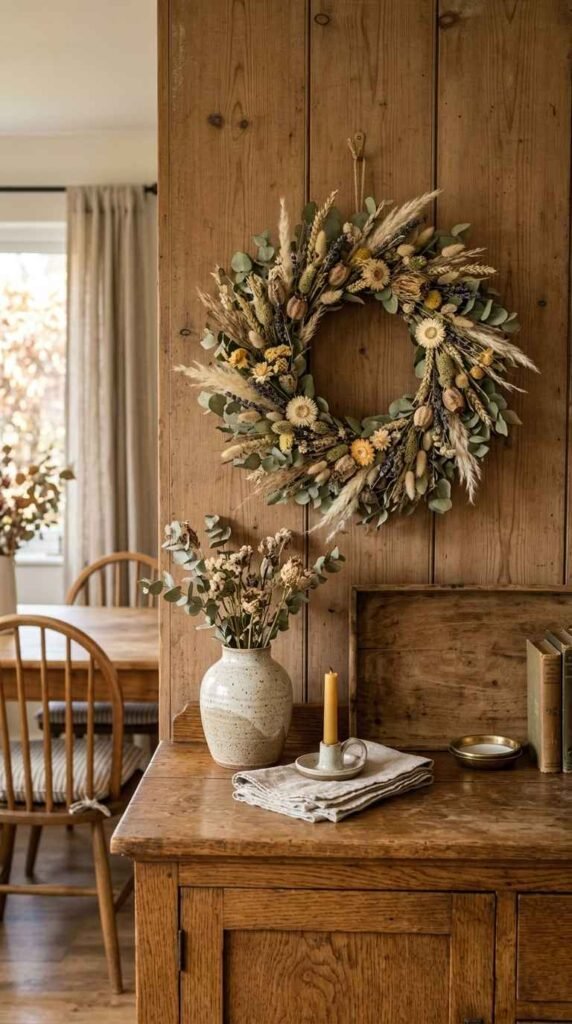
- Adds color and texture that changes throughout the year
- Works well on its own or layered with other decor
- Creates an easy, affordable seasonal refresh
- Suits farmhouse, traditional, and eclectic dining rooms
A seasonal wreath brings an easy, affordable way to refresh a dining room wall throughout the year. Hung on its own or paired with a mirror behind it, a wreath made from dried florals, greenery, or seasonal accents adds texture and color without a permanent commitment. In my experience, this idea works particularly well for dining rooms that double as a gathering space for holidays, since a seasonal wreath signals the occasion the moment guests walk into the room.
Rotating wreaths seasonally keeps the look feeling fresh without much effort. I’ve noticed that a simple hook or adhesive mount makes swapping wreaths quick and damage-free, which matters for renters or anyone who likes to change decor often. Pairing a wreath with a plain mirror or a neutral-colored wall lets the seasonal piece stand out clearly. This idea is also budget-friendly, since many wreaths can be made at home using affordable or foraged materials.
24. Vintage Map or Print
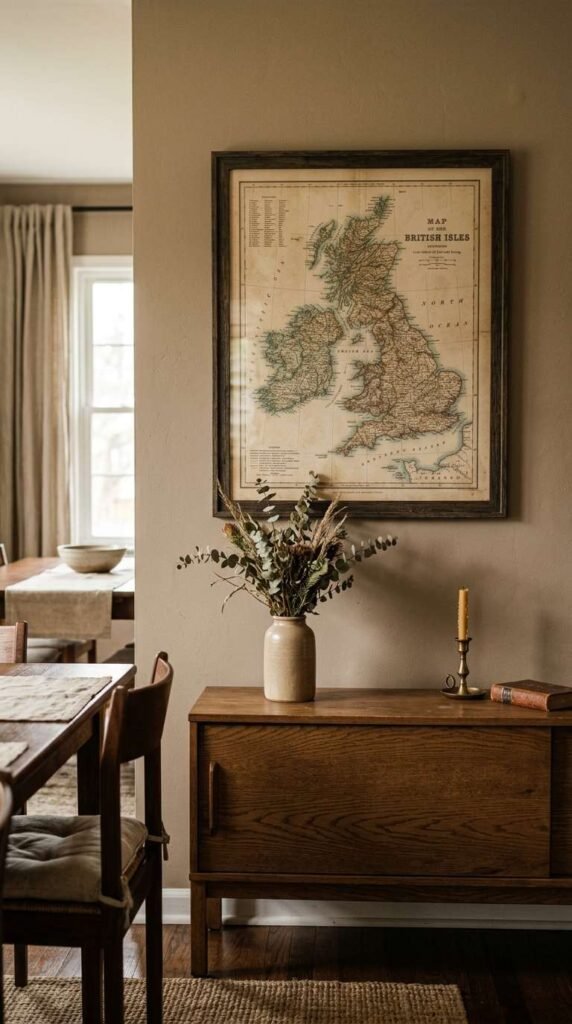
- Adds a unique, conversation-starting focal point
- Works beautifully in eclectic and traditional dining rooms
- Brings personal meaning through travel or history
- Easy to source from flea markets or online shops
A vintage map or print adds character that typical decor simply can’t replicate. Whether it’s an old city map, a botanical chart, or a historic illustration, these pieces bring a sense of story and personal meaning to a dining room wall. In my experience, this idea suits homeowners who enjoy travel or history, since a map of a meaningful location often becomes a genuine conversation starter during dinner parties and family gatherings alike, adding depth beyond typical decorative art.
Framing and placement help a vintage piece feel intentional rather than dated. I’ve seen a simple black or gold frame modernize an older map beautifully, keeping the focus on the print itself rather than an overly ornate frame. Pairing it with simpler surrounding decor, like a plain mirror or minimal shelf, keeps the vintage piece as the clear focal point. This idea works especially well for dining rooms wanting a thoughtful, collected feel over time.
25. Personal Photo Display
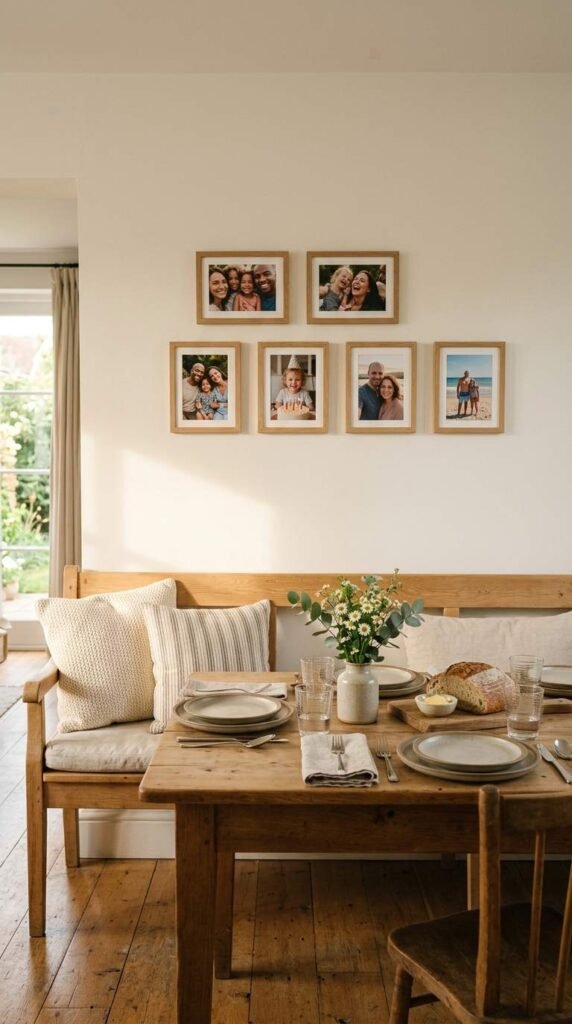
- Adds genuine warmth and personality to the dining room
- Works beautifully as a gallery wall or simple row
- Creates meaningful conversation starters for guests
- Easy to update as new memories are made
A personal photo display brings real warmth into a dining room that store-bought art can’t fully replicate. Family photos, travel snapshots, or candid moments arranged on the wall turn the space into something genuinely personal, reminding everyone gathered at the table of shared memories. In my experience, this is one of the most meaningful forms of wall decor for dining room spaces, since guests naturally gravitate toward personal photos during conversation, making the room feel warmer and more welcoming immediately.
Consistency in framing keeps a photo display from feeling cluttered. I’ve noticed that choosing one frame color and a mix of black-and-white and color photos creates a cohesive, polished look rather than a random assortment. Arranging photos in a simple grid suits more formal dining rooms, while a relaxed, organic cluster feels casual and lived-in. This idea is easy to update as new memories are made, keeping the dining room wall feeling personal for years to come.
FAQs
1. What is the easiest wall decor upgrade for a dining room?
A statement mirror is one of the simplest upgrades, since it instantly reflects light and adds a finished look without much effort. In my experience, hanging one above a sideboard or on a feature wall makes a noticeable difference in just a few minutes.
2. Should I choose one large art piece or several small ones?
Both work, but it depends on the wall size and your style. A single oversized piece creates a bold, clear focal point, while a gallery wall adds a collected, personal feel. I’ve noticed that larger walls often suit one statement piece better, while smaller walls can feel cramped with anything too big.
3. Is wallpaper a good choice for a dining room wall?
Yes, especially as a single accent wall rather than covering the whole room. It adds pattern and depth without a full remodel, and peel-and-stick options make it renter-friendly. Choosing a larger-scale print usually looks more intentional than a busy, small pattern.
4. What lighting works best alongside wall decor?
Wall sconces are a great choice, since they add warm, ambient light without using any table or floor space. That’s why many designers recommend pairing sconces with a mirror or artwork, so the light highlights the decor while softening the room in the evening.
5. How do I make a plain wall feel more finished?
Adding texture, like wainscoting, textured panels, or a woven hanging, brings dimension that paint alone can’t achieve. I’ve seen even one textured accent wall completely change how finished a dining room feels, especially when paired with simple, uncluttered furniture.
6. Can I mix mirrors with framed art on the same wall?
Yes, mixing mirrors and art creates a layered, dynamic look as long as the frame finishes stay somewhat consistent. I’ve tried combining a mirror with a few framed prints, and the reflections actually added extra depth to the overall arrangement rather than competing with it.
7. What wall decor adds warmth without much effort?
Woven wall hangings, wood paneling, and warm-toned art all add instant coziness. In my experience, natural materials like jute or wood bring warmth faster than anything else, since they soften the harder lines of typical dining furniture.
8. Is a wall clock a practical decor choice?
Yes, a statement wall clock adds both function and style, which makes it a practical choice for a dining room. Choosing one sized generously for the wall, rather than something too small, helps it double as both a useful piece and a genuine focal point.
9. How can I personalize my dining room walls?
Personal photo displays, vintage finds, or a decorative plate wall all add genuine character that store-bought decor can’t replicate. I’ve seen family photos and travel pieces become real conversation starters, making the dining room feel much more personal and welcoming to guests.
10. How often should I update dining room wall decor?
There’s no strict rule, but swapping smaller elements, like a wreath, a few frames, or plants, every season keeps the space feeling fresh. Larger pieces like mirrors or statement art can stay in place for years without needing any change at all.
Conclusion
A dining room wall doesn’t need to stay empty to feel complete. From statement mirrors and gallery walls to woven textiles and personal photo displays, these wall decor ideas show how a few intentional touches can transform the whole room. I’ve seen how something as simple as a new mirror or a well-placed shelf can make a dining room feel completely refreshed. Pick one idea that speaks to you and try it this week. Save this post for later, and share it with anyone ready to give their dining room walls a stylish, inspired update.