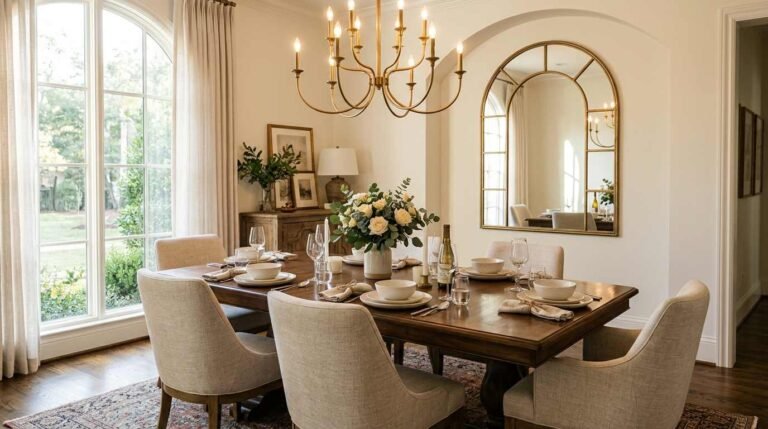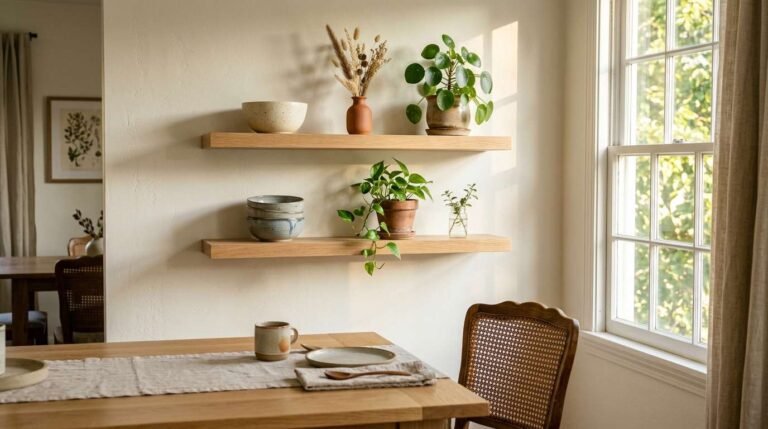
Picture candlelight catching crystal glasses while a chandelier casts a warm glow across a beautifully set table. Formal dining room decor ideas make that scene achievable in almost any home, no full renovation required. Many dining rooms feel more like storage for the “good” dishes than a space actually used for gathering, and it’s usually a few missing layers, lighting, texture, or a proper table setting, that hold the room back. I’ve noticed that the rooms guests remember most rarely rely on one expensive piece. It’s usually a rich wall color, a well-placed mirror, or real linens on the table. This guide walks through 21 practical ideas, from a statement chandelier to a curated bar cart, that bring genuine elegance into everyday use. Save your favorites to Pinterest and start turning your dining room into somewhere worth dressing up for.
1. Crystal Chandelier as the Centerpiece
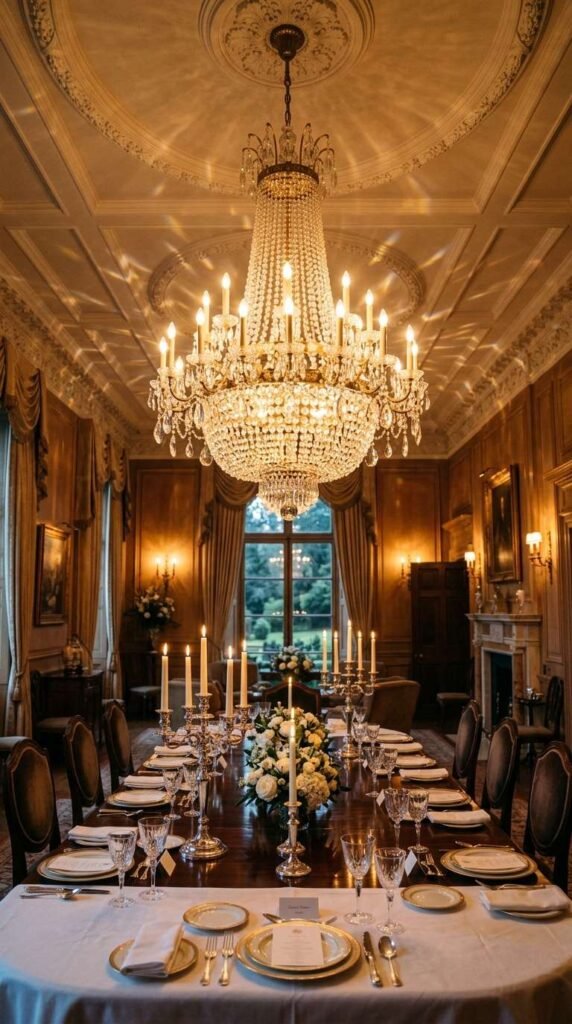
- Sets the tone for the entire room before anything else is styled
- Multiplies candlelight and table settings through cut glass
- Works as both a light source and a piece of art
- Suits rooms with ceilings at least nine feet high
- Pairs beautifully with a dimmer for evening dinners
Nothing announces a formal dining room quite like a chandelier hanging directly over the table. The cut crystal catches whatever light hits it, scattering small prisms across the ceiling and walls that no flush-mount fixture could replicate. Among formal dining room decor ideas, this one usually comes first, since the fixture sets the entire tone of the room before a single chair or tablecloth gets chosen. A round chandelier suits a round or square table, while a linear or oval design fits a long rectangular one better, so matching the shape to the table shape matters more than people initially expect.
Sizing the fixture correctly keeps it from looking either lost or overwhelming above the table. A rough guide is adding the room’s length and width in feet, then converting that number to inches for the chandelier’s diameter, though visually checking proportions against the table always helps confirm the math. Hanging height should sit roughly 30 to 36 inches above the tabletop, low enough to feel warm and connected to the meal without blocking anyone’s view across the table during conversation.
2. Rich Jewel-Tone Wall Color
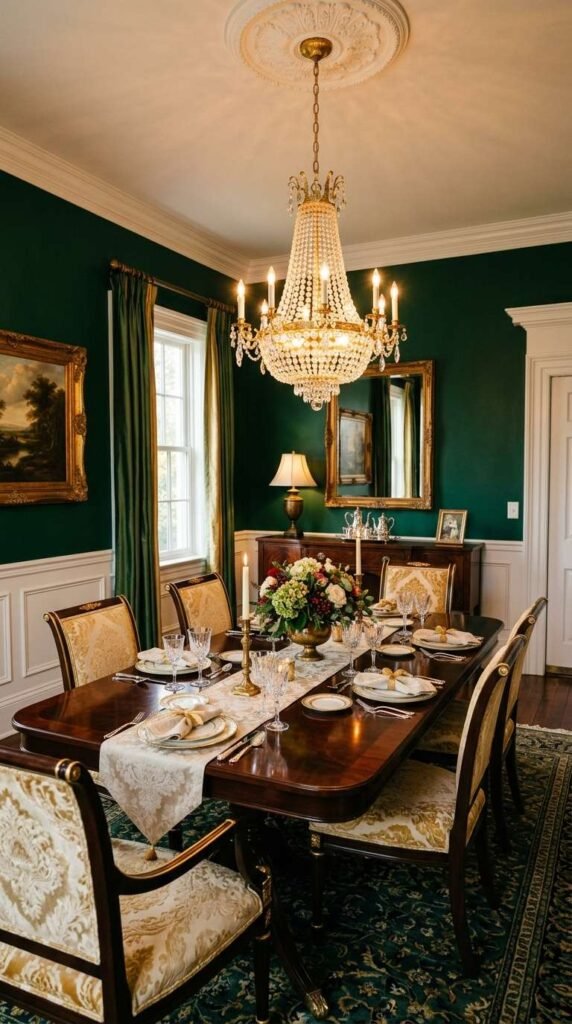
- Wraps the room in depth rather than flat, plain color
- Makes evening lighting look richer against dark walls
- Works especially well with gold or brass accents nearby
- Suits rooms used mostly for dinner rather than daytime tasks
- A relatively low-cost way to add drama
Deep emerald, sapphire, or aubergine walls turn an ordinary dining room into something that feels considerably more special the moment the lights go down. Because these colors absorb rather than reflect light, candlelight and chandelier glow both look warmer and more concentrated against them than they would against a pale, neutral backdrop. This choice suits formal dining room decor ideas particularly well, since a dining room typically gets used most in the evening, exactly when a rich wall color shows off its best qualities. Gold-framed art or brass hardware nearby practically glows against a backdrop this saturated.
Test the color at different times of day before committing to a full room, since deep tones shift dramatically depending on available light. A north-facing room often benefits from a warmer jewel tone, like a deep burgundy, while a south-facing room can handle a cooler sapphire or forest green without feeling too heavy. Keep trim and ceiling in a lighter, contrasting shade unless you’re aiming for a fully enveloped, cocoon-like effect throughout the entire room.
3. Upholstered Dining Chairs
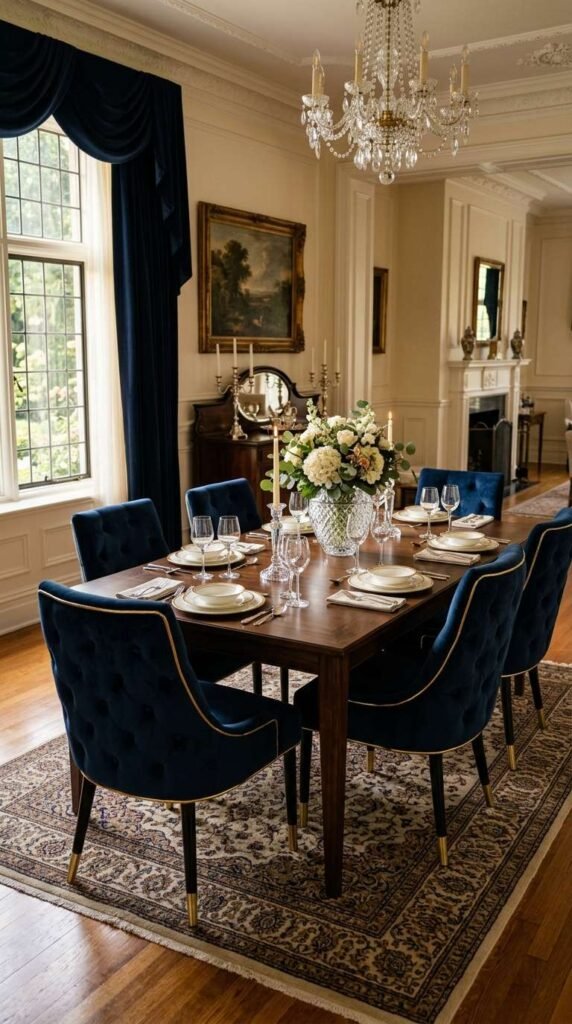
- Adds comfort for guests seated through a long meal
- Softens a room otherwise full of wood and glass
- Available in fabrics ranging from subtle linen to bold velvet
- Elevates a plain table instantly, even without other changes
- Suits both traditional and transitional formal dining rooms
A plain wood chair works fine for a quick weeknight dinner, but a formal dining room benefits from something with more comfort and presence. Upholstered seats and backs, whether in a subtle linen or a rich velvet, add both softness and visual weight that bare wood simply can’t provide. This detail ranks among the more noticeable formal dining room decor ideas, since guests physically feel the difference the moment they sit down for an extended meal, and the fabric itself becomes part of the room’s overall color story in a way a plain wooden seat never could.
Choosing a durable, tightly woven fabric matters more than most people expect, given how often a dining chair gets touched, leaned on, and occasionally spilled on during a meal. A performance fabric that mimics the look of natural linen or velvet resists staining far better than the real thing while barely sacrificing appearance. I’ve noticed that pairing upholstered chairs with a wood or glass table creates a pleasing contrast of textures, keeping the room from feeling either too hard or too soft overall.
4. Polished Wood Dining Table
- Anchors the entire room with substantial, lasting presence
- Reflects chandelier light across its polished surface
- Available in finishes ranging from dark mahogany to pale oak
- Suits both traditional and modern formal dining rooms
- A long-term investment piece that rarely goes out of style
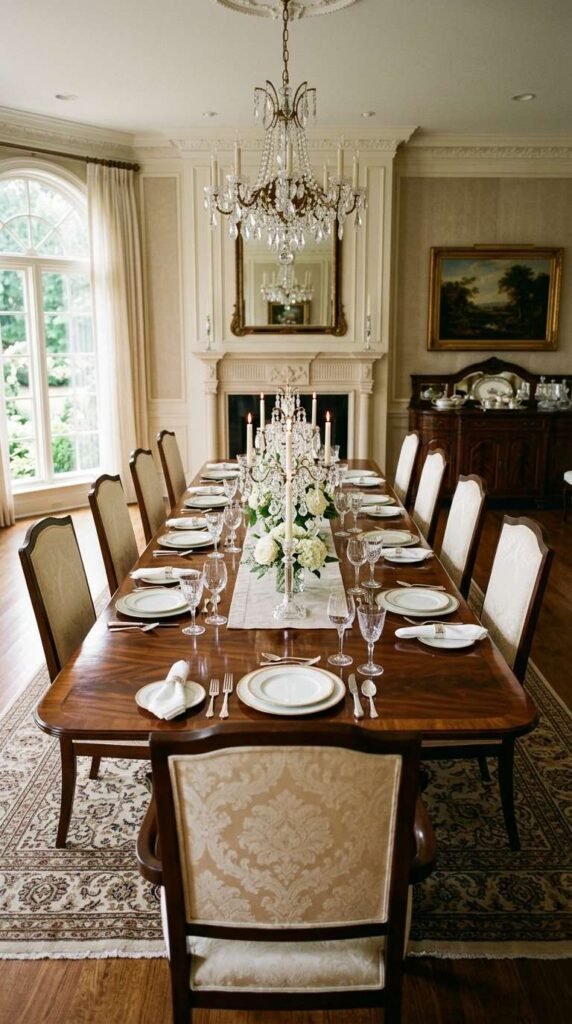
A well-made wood table remains the classic centerpiece of a formal dining room for good reason. Its solid presence and polished surface reflect light from the chandelier above, adding a subtle shine that a matte or unfinished tabletop simply cannot achieve. Mahogany and cherry lean traditional, while a lighter oak or walnut suits a more transitional, updated formal look. Because a quality wood table can last decades with proper care, it’s often the single largest investment in the room, and one that continues to look appropriate even as trends around it shift over the years.
Protecting the finish matters just as much as choosing it in the first place. Use coasters, trivets, and a table pad during large gatherings to prevent heat and moisture damage to the polished surface. I’ve seen beautiful tables ruined within a year by skipped protection, so this small habit genuinely extends the table’s life. A light coat of furniture wax once or twice a year keeps the wood’s shine consistent and helps hide minor scuffs that accumulate through regular use.
5. Formal Table Linens
- Adds texture and polish before a single dish is set out
- Protects the table surface during meals
- Works in crisp white, ivory, or a subtle pattern
- Suits both everyday elegance and special occasion use
- Easy to swap seasonally for a refreshed look
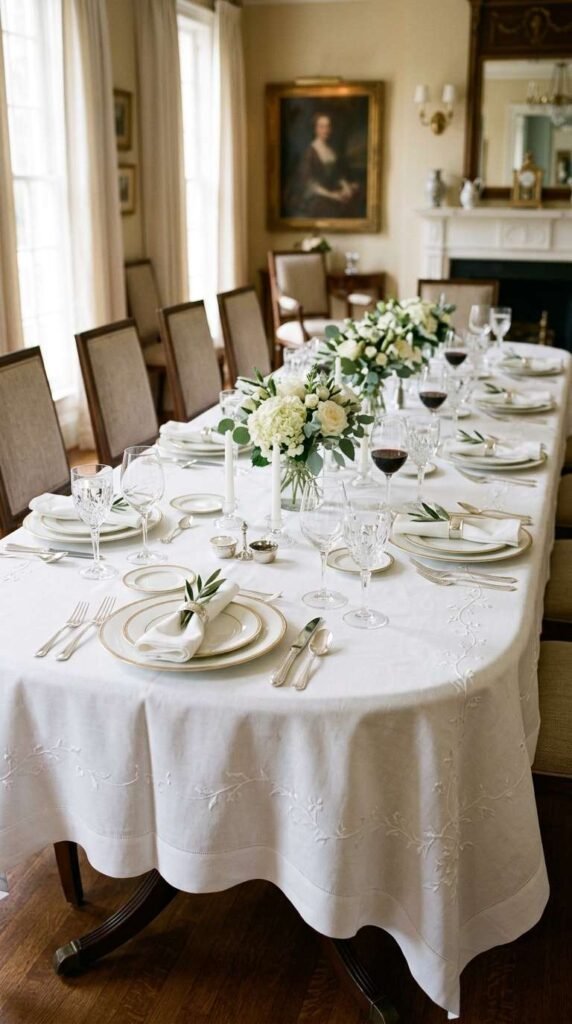
A tablecloth or runner does more than protect the wood beneath it; it signals that the meal ahead is something worth dressing for. Crisp white linen remains the classic choice for the most formal occasions, while ivory or a subtle damask pattern works well for regular elegant dinners that don’t require full formality. This detail rounds out formal dining room decor ideas nicely, since fabric adds a layer of texture and softness that a bare wood or glass table lacks on its own, and it also gives you an easy way to update the table’s look without touching any larger furniture piece.
Choosing quality linen over a synthetic blend makes a noticeable difference in how the fabric drapes and feels at the table. A properly sized cloth should hang 8 to 12 inches over each edge of the table, long enough to look intentional without dragging into laps. I’ve noticed that a table runner layered over a solid cloth adds dimension without the fuss of a full pattern change, and it’s simple to swap for different seasons or occasions throughout the year.
6. Fine China Display
- Turns special dishware into a decorative feature
- Adds pattern and shine to a sideboard or cabinet
- Keeps delicate pieces protected while still visible
- Signals genuine occasion and care to guests
- Works beautifully paired with silver serving pieces
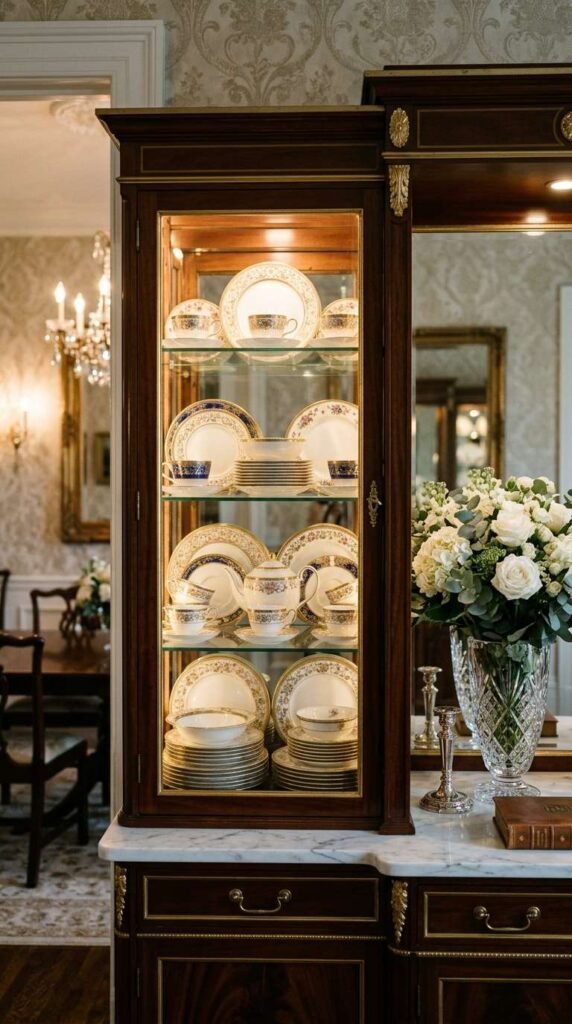
Displaying fine china, rather than keeping it boxed away for the rare holiday meal, gives a formal dining room another layer of polish and personality. Gold-rimmed plates, hand-painted florals, or classic blue-and-white patterns become quiet decoration when arranged on a sideboard or inside a glass cabinet, visible even between actual meals. This idea suits formal dining room decor ideas especially well, since the china itself often carries real sentimental or inherited value, and putting it on display lets that history become part of the room’s everyday atmosphere rather than something reserved for a single dinner each year.
Stand a few plates upright using small stands, and stack others flat with a decorative object placed on top for variety. I’ve seen this work particularly well when paired with silver serving pieces nearby, since the two materials reflect light similarly and read as a cohesive, considered collection. Keep pieces away from direct sunlight, which can fade delicate gilding over time, and hand wash rather than using a dishwasher to preserve painted details and gold trim for future generations.
7. Crystal Stemware Collection
- Adds sparkle to every place setting at the table
- Catches candlelight in a way ordinary glass cannot
- Available in sets for wine, water, and champagne
- Elevates even simple meals into something special
- A worthwhile investment for regular formal entertaining
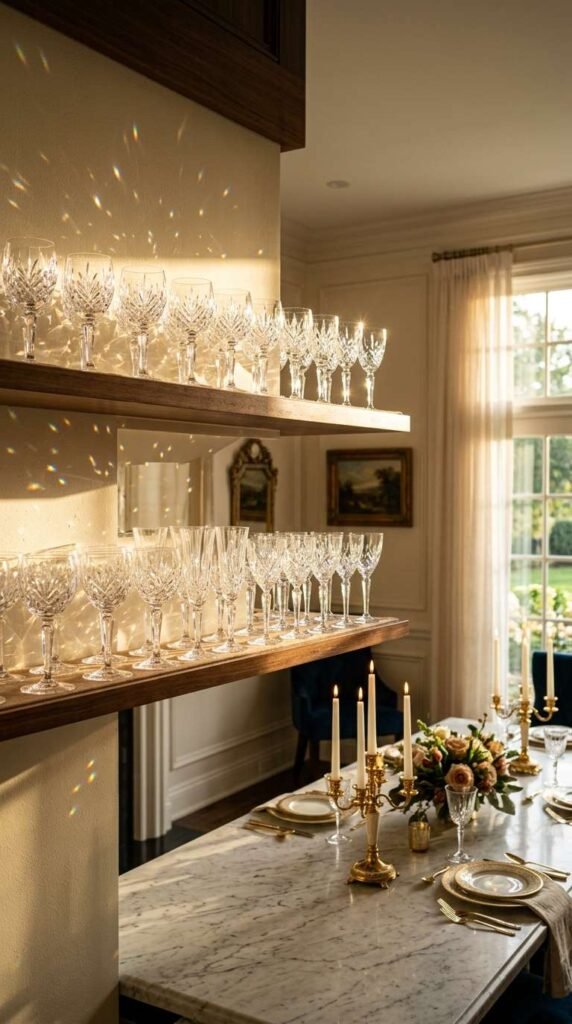
Crystal glassware brings a level of sparkle to the table that standard glass simply doesn’t achieve, thanks to the precise cuts that catch and refract light from every angle. A full set, including wine glasses, water goblets, and champagne flutes, signals attention to detail before a single course arrives at the table. This addition rounds out formal dining room decor ideas nicely, since the stemware works in tandem with the chandelier and any candlelight on the table, multiplying the room’s overall glow rather than adding just one more static object among many.
Genuine crystal contains lead oxide, which gives it that particular weight and brilliance, though lead-free crystalline alternatives offer similar sparkle with the added benefit of being dishwasher safe in many cases. Store stemware upright rather than resting on the delicate rim, which can chip or wear unevenly over repeated use. I’ve noticed that thinner rims feel noticeably more elegant when drinking from them, so it’s worth prioritizing that detail over sheer decorative pattern when shopping for a new set.
8. Statement Mirror Wall Feature
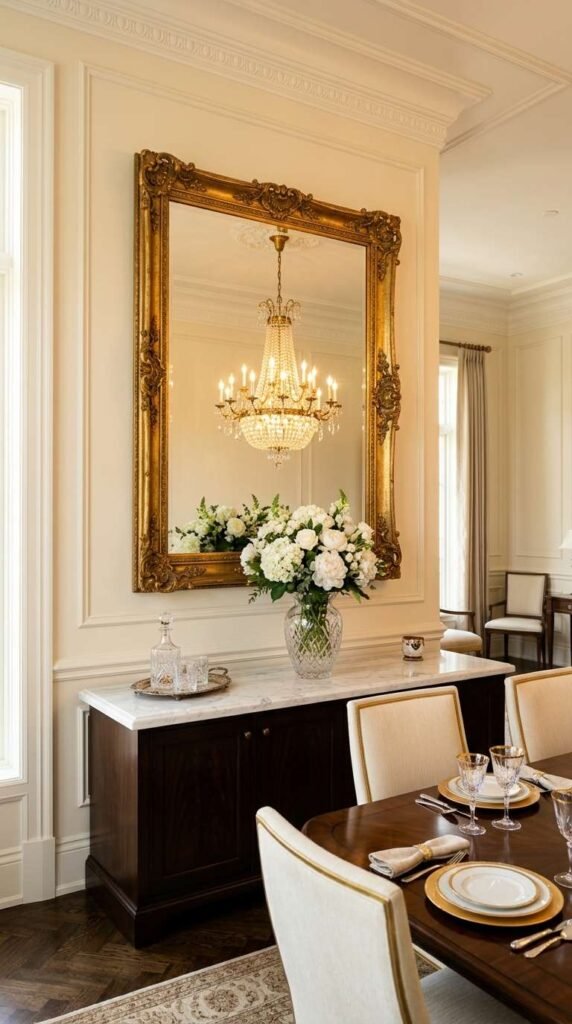
- Bounces chandelier light across the entire room
- Doubles the visual size of a smaller formal dining space
- Works beautifully above a buffet or sideboard
- Available in gilded, arched, or sunburst styles
- Reflects table settings and centerpieces for added shine
A large mirror positioned across from a window or beneath the chandelier multiplies whatever light already exists in the room, making even a modest formal dining space feel noticeably larger and brighter. Gilded frames and arched or sunburst shapes add sculptural interest on their own, functioning almost like oversized art rather than a purely practical fixture. This idea consistently ranks among the most effective formal dining room decor ideas for smaller rooms specifically, since the reflected light and doubled visual depth do more for a cramped space than nearly any other single change available.
Positioning matters considerably more than most people initially realize. A mirror facing a blank wall accomplishes very little, while one angled toward the chandelier or a window actively brightens the room throughout the day and evening alike. Hang it so the center sits around 57 to 60 inches from the floor, and choose a width roughly two-thirds that of the furniture positioned beneath it for the most proportional, considered look above a buffet or console table.
9. Wainscoting or Picture Frame Molding
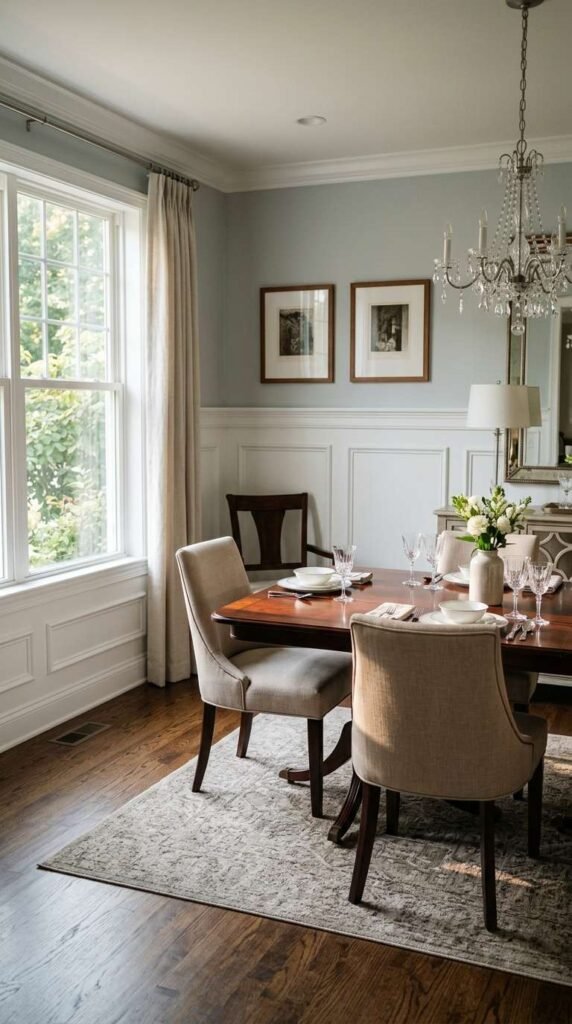
- Adds architectural detail without requiring a full renovation
- Suits both traditional and transitional formal dining rooms
- Creates a tailored, custom-built appearance
- Pairs beautifully with a painted or wallpapered upper wall
- A manageable weekend project for many homeowners
Wainscoting or simpler picture-frame molding gives a plain wall genuine architectural weight, the kind typically found in older, more established homes. Running the panels partway up the wall and painting them a slightly different tone than the space above creates depth and division that flat drywall alone never achieves. This detail suits formal dining room decor ideas particularly well, since architectural detailing signals the kind of permanence and craftsmanship associated with a truly formal, considered space rather than a room furnished as an afterthought.
Picture-frame molding, using simple rectangular strips of trim, offers a considerably more approachable DIY project than full wainscoting paneling. Measure and mark the wall first, keeping proportions even across each panel, then attach the trim with construction adhesive and finishing nails before caulking and painting. I’ve seen homeowners complete an entire dining room’s molding in a single weekend, and the finished result reads as far more custom and expensive than the modest material cost actually required to achieve it.
10. Layered Area Rug
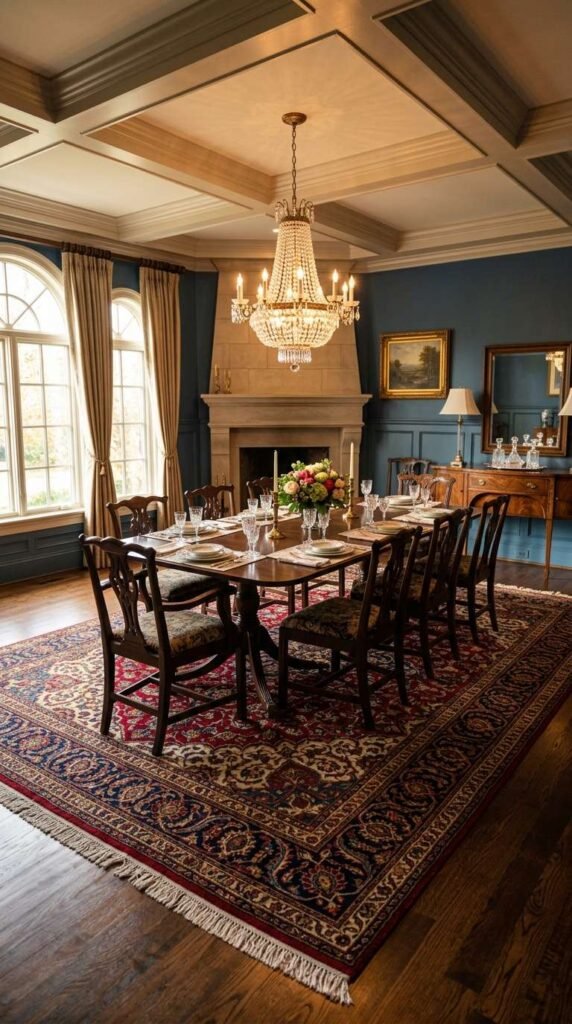
- Softens hard flooring beneath the dining table
- Defines the dining zone in open floor plans
- Adds pattern and color without touching the walls
- Works well layered over a larger neutral base rug
- Muffles sound in rooms with hard, echoey surfaces
A rug beneath the dining table does more than add comfort underfoot; it defines the entire dining zone, particularly important in open-concept homes where the space might otherwise blend into an adjacent living or kitchen area. Layering a patterned rug, like a traditional Persian or Oriental design, over a larger neutral base adds depth and a sense of history to the room. This combination suits formal dining room decor ideas especially well, since traditional rug patterns carry the same sense of established elegance that fine china and crystal stemware bring to the table itself.
Sizing the rug correctly changes how polished the entire room looks once furniture is in place. Every chair leg should remain on the rug even when pulled fully out from the table, which generally means sizing up more than feels intuitive at first glance. I’ve seen rooms where an undersized rug made an otherwise beautifully furnished space look unfinished, so it’s worth measuring carefully and erring toward a slightly larger size rather than a smaller one.
11. Symmetrical Furniture Arrangement
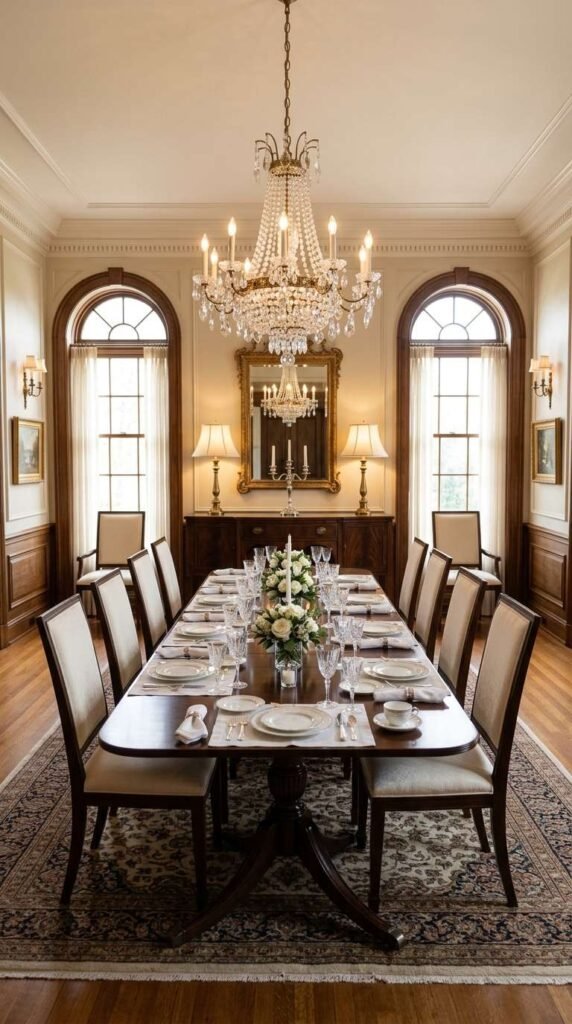
- Creates instant visual calm and balance
- Suits the formal, orderly nature of the room’s purpose
- Works for both furniture placement and decor styling
- Easy formula that doesn’t require design expertise
- Feels intentional from every seat at the table
Symmetry runs through nearly every truly formal dining room, and for good reason: matched pairs on either side of a central point create an immediate sense of order and calm. Identical chairs on each side of the table, matching lamps flanking a mirror, or paired candlesticks on a sideboard all rely on this same principle. Among formal dining room decor ideas, symmetrical arrangement remains one of the easiest to execute without any specialized design training, since the underlying formula, mirror one side onto the other, applies consistently across nearly every element in the room.
Measuring carefully makes the difference between symmetry that reads as effortless and an arrangement that looks slightly, noticeably off. Find the room’s actual center point using a tape measure before placing the main furniture pieces, then build matching elements outward from that point at equal distances. I’ve noticed that even a half-inch discrepancy becomes surprisingly obvious in a symmetrical layout, so taking the extra few minutes to measure precisely pays off in the finished result.
12. Gold or Brass Accents
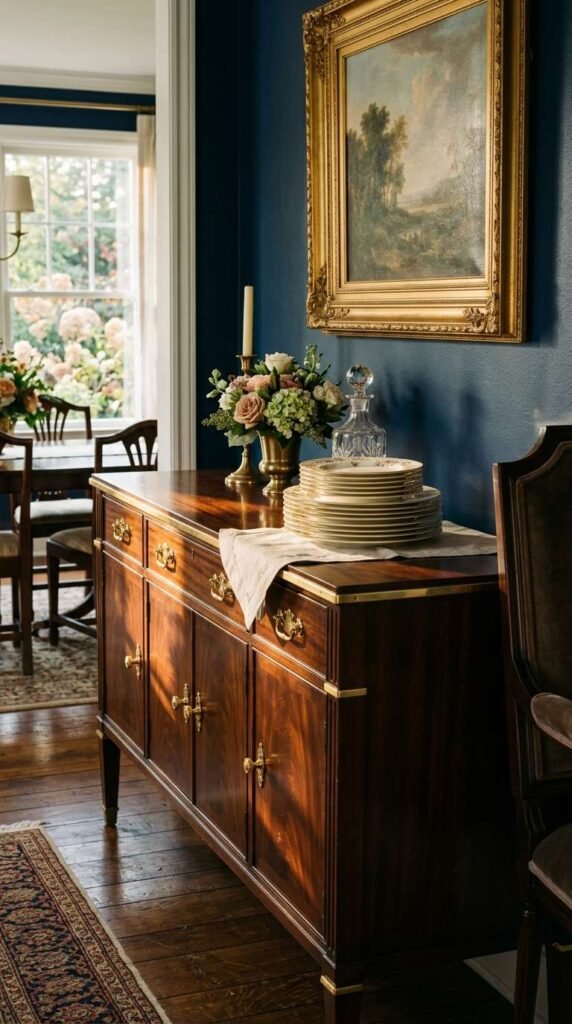
- Adds warmth against dark walls or wood furniture
- Ties lighting, hardware, and decor together visually
- Available in both polished and brushed finishes
- Works across chandeliers, frames, and drawer pulls alike
- A relatively small detail with substantial visual impact
Small metallic touches throughout a formal dining room, whether on drawer pulls, picture frames, or the chandelier itself, tie the entire space together with a consistent, warm thread. Gold and brass in particular suit formal dining room decor ideas well, since these tones have long been associated with traditional elegance and read as considerably warmer than cooler metals like chrome or brushed nickel. Repeating the same metal finish across three or four different elements in the room, rather than using it in just one spot, creates a cohesive look that feels planned rather than accidental.
Polished brass leans more traditional and formal, while a brushed or satin finish feels slightly softer and more contemporary without sacrificing warmth. I’ve noticed that mixing a shiny and matte version of the same metal in one room can look unintentional, so choosing one finish and staying consistent with it throughout usually produces the most polished result, especially when creating mirror wall decor ideas for a stunning dining room. Clean gently with a soft cloth, since harsh chemical cleaners can strip lacquer coatings and leave a dull, uneven finish behind.
13. Silk or Velvet Drapery
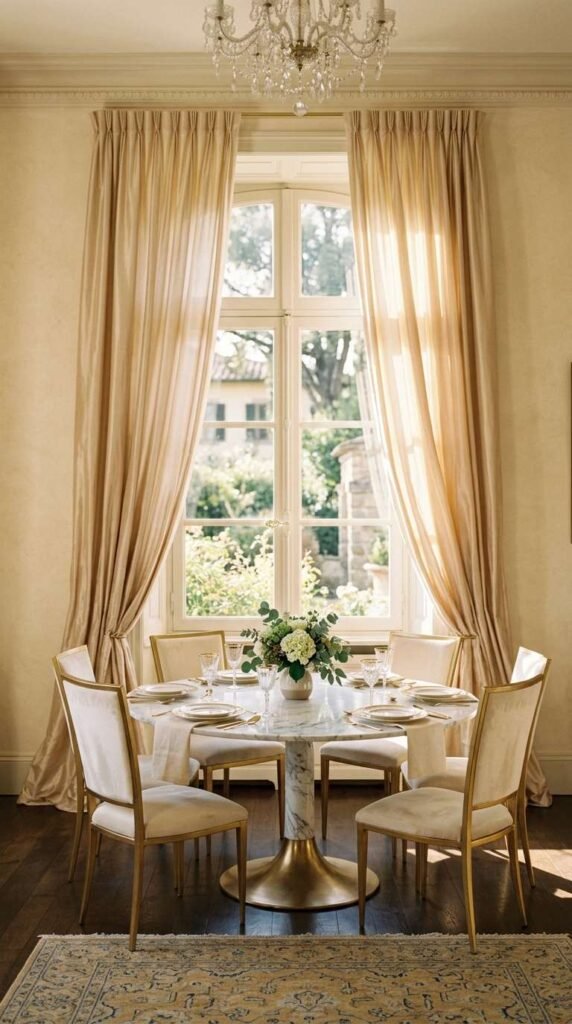
- Adds height and softness to the window and room
- Filters daylight into a warmer, more flattering glow
- Frames the window like a finishing architectural detail
- Available in floor-length panels for maximum impact
- Suits deep, jewel-toned walls particularly well
Full-length drapery in silk or velvet brings both softness and a sense of luxury to a formal dining room’s windows. Unlike shorter curtains, floor-length panels stretch the wall visually taller, adding height to the entire room in the process. Silk catches light with a subtle sheen, while velvet adds a plush, tactile quality that pairs beautifully with the deep jewel-toned walls often found in formal dining room decor ideas. Even a single window, properly dressed with generous, floor-skimming panels, can noticeably elevate how finished and considered the entire room feels.
Hang the curtain rod close to the ceiling rather than directly above the window frame, since this placement stretches the visual height of the wall even further. Aim for fabric fullness of roughly two to two-and-a-half times the window’s width, so the folds fall in rich, generous waves rather than looking stretched and thin. Check the fabric’s care instructions before purchasing, since true silk often requires professional cleaning, while many velvet blends can be spot cleaned or gently laundered at home.
14. Fresh Floral Centerpiece
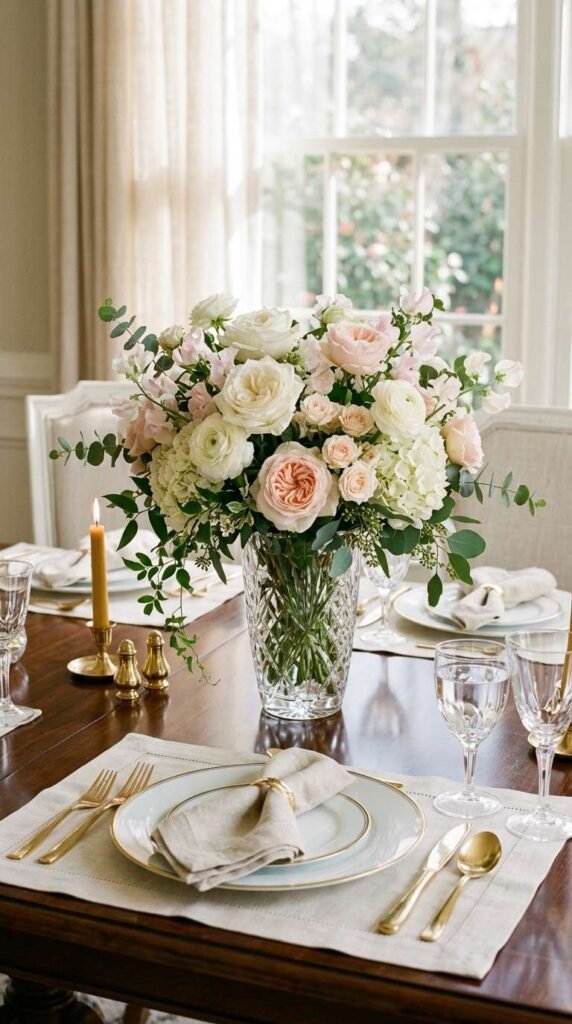
- Brings life and fragrance to an otherwise formal table
- Softens structured furniture with organic shape and color
- Seasonal blooms keep the display feeling current
- Low, full arrangements maintain clear sightlines across the table
- Adds color without requiring any permanent commitment
A lush floral arrangement finishes a formal table in a way that no permanent decor piece quite manages on its own. Fresh flowers add color, fragrance, and organic softness that balance out the straighter lines and harder surfaces found throughout the rest of the room’s furniture. This idea remains one of the most flexible formal dining room decor ideas available, since the arrangement can shift with the seasons, the occasion, or simply personal preference, providing home decor inspiration without requiring any permanent change to the room’s larger furniture or finishes.
Keep the arrangement relatively low and full so that seated guests can still see and speak with one another across the table without craning around tall stems. Trimming stems at an angle and changing the water every two days extends the arrangement’s life considerably longer than most people expect. I’ve found that monochromatic arrangements, using multiple varieties of flowers in a single color family, tend to look more sophisticated and intentional than a rainbow mix of unrelated colors and textures.
15. Candlelight Ambiance
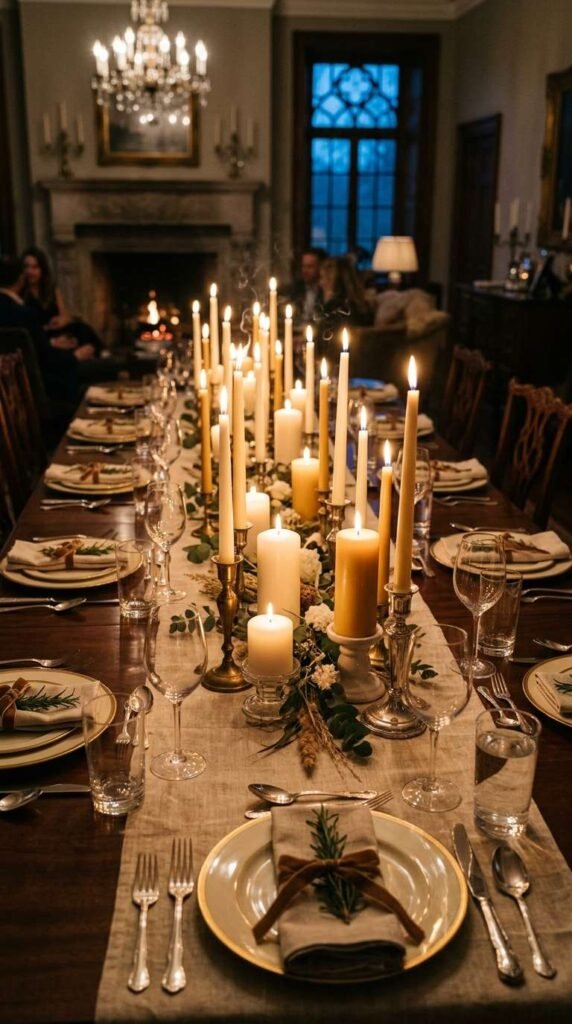
- Adds warm, flickering light that no bulb quite replicates
- Works alongside the chandelier rather than replacing it
- Creates intimacy for evening dinners and special occasions
- Available in tapers, pillars, or votives depending on the mood
- An inexpensive way to elevate any formal meal
Candlelight brings a quality of warmth that even the most beautifully dimmed chandelier bulb can’t fully replicate. Grouped tapers down the center of the table, or a cluster of pillar candles at varying heights, add movement and glow that shifts subtly throughout the meal. This detail pairs particularly well with other formal dining room decor ideas already covered, since the flickering light reflects beautifully off crystal stemware, polished silver, and any nearby mirrored surfaces, multiplying the overall sense of warmth and occasion throughout the room.
Safety deserves real attention here, particularly around tablecloths, centerpieces, and anything else flammable nearby. Keep candles away from window drafts that might cause uneven burning or tipping, and never leave an open flame unattended in a room where guests are moving around freely. I’ve found that flameless LED tapers offer a surprisingly convincing alternative for households with young children or pets, delivering much of the same warm glow without the ongoing safety concerns real flame introduces to the table.
16. Built-In China Cabinet
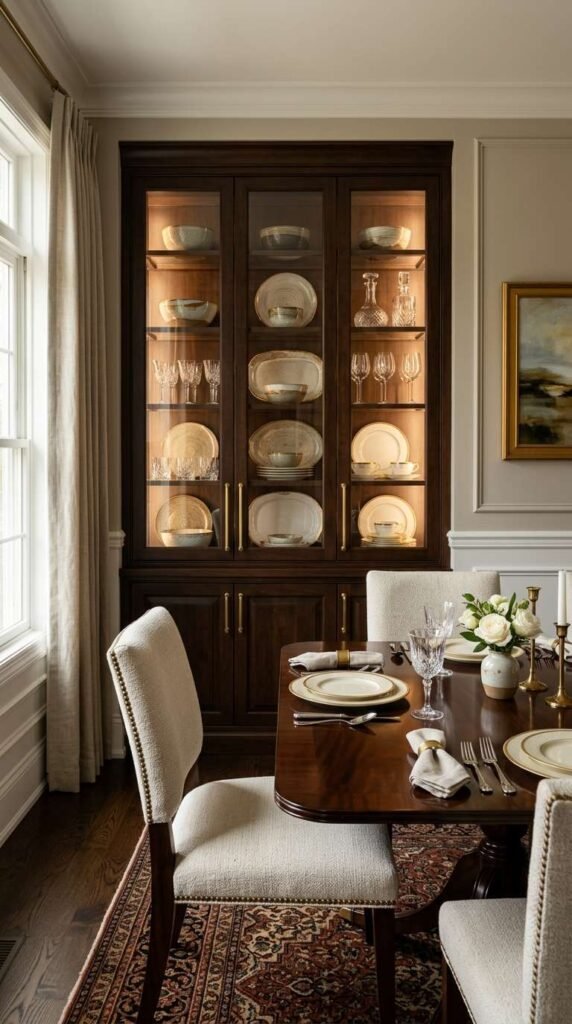
- Adds genuine architectural presence to the room
- Frames dishware and collections like a small gallery
- Increases both storage and display capacity
- Interior lighting makes glassware and china glow
- Feels custom and permanent rather than purely functional
A built-in cabinet, set into an alcove or running along an entire wall, gives a formal dining room a sense of permanence that freestanding furniture rarely achieves on its own. Glass doors keep china and crystal free from dust while still fully visible, and interior lighting makes each piece glow softly even when the room’s main lights stay off. This addition ranks among the more substantial formal dining room decor ideas, since it requires real planning and often professional installation, but the payoff is a wall that looks intentionally designed rather than simply furnished after the fact.
Combining ready-made cabinetry with added crown molding and trim offers a more budget-friendly path to a similar built-in look, without the full cost of custom carpentry. Plan shelf spacing around your tallest pieces first, then work backward from there, keeping some shelves adjustable for future flexibility. I’ve noticed that painting the cabinet’s interior back panel a slightly deeper shade than the walls makes white china practically glow against the contrast, adding another layer of visual interest to the display.
17. Tufted Bench or Wingback Chairs
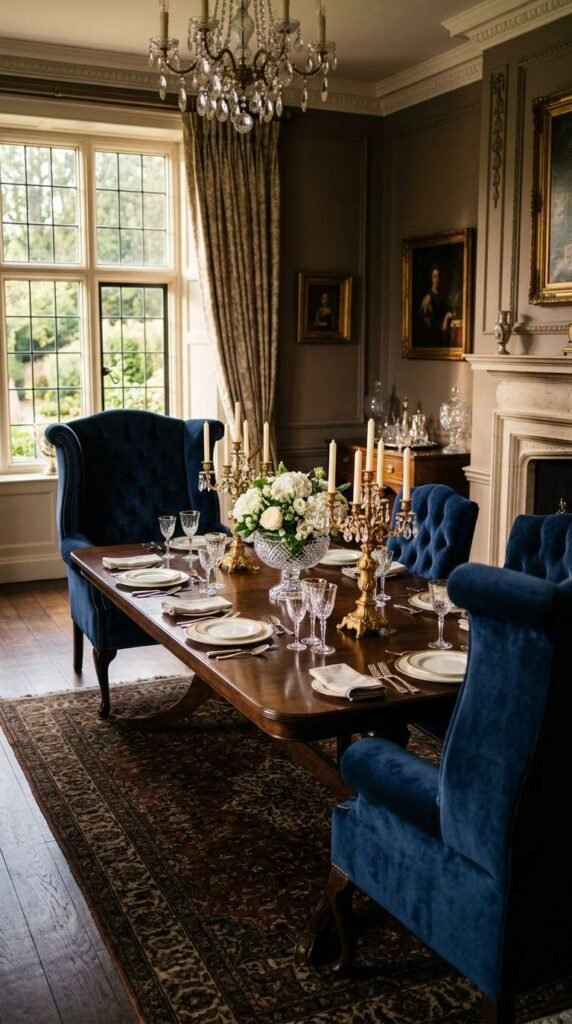
- Adds variety and visual interest to standard seating
- Wingback chairs bring height and drama to the table’s head
- Tufted benches seat more guests in less linear space
- Creates a tailored, hotel-lounge quality to the room
- Breaks up a row of otherwise identical chairs
Introducing one or two different seating styles into an otherwise matched set adds visual interest that a room full of identical chairs sometimes lacks. Wingback chairs positioned at each end of the table bring height, drama, and a distinctly formal, almost library-like presence to the room’s overall silhouette. A tufted bench along one side, meanwhile, seats more people in less linear space while adding a soft, tailored texture through its buttoned upholstery. Either choice, or both together, suits formal dining room decor ideas aiming for a layered, considered look rather than a perfectly matched furniture set.
Measuring carefully before committing to either piece prevents awkward proportions once everything is arranged around the table. Wingback chairs typically require more clearance than standard dining chairs, so leave at least 36 inches between the table edge and the nearest wall for comfortable movement. I’ve seen benches used successfully along a window wall specifically, where their lower profile doesn’t block the natural light coming through, unlike a row of taller upholstered chairs positioned in that same spot.
18. Coffered Ceiling Detail
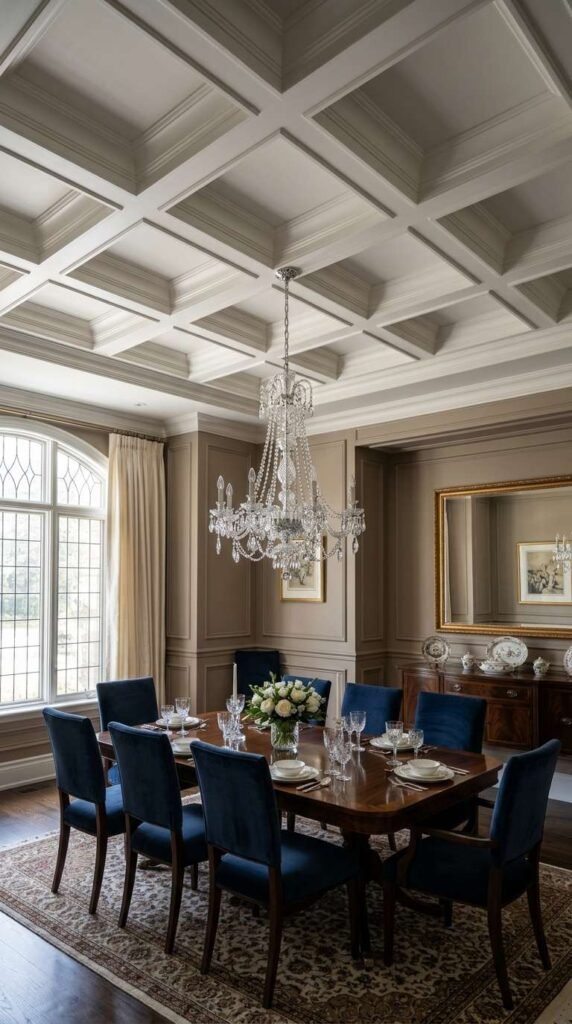
- Adds depth and architectural interest overhead
- Frames the chandelier like a picture within the ceiling
- Suits traditional and transitional formal dining rooms
- Achievable with lightweight trim rather than a full rebuild
- Rewards the upward glance guests naturally make
A coffered ceiling transforms the often-overlooked fifth wall of a room into a genuine architectural feature. The recessed grid pattern adds shadow and depth overhead, framing the chandelier the way a picture frame highlights a piece of art. This detail suits formal dining room decor ideas particularly well, since the craftsmanship suggested by a coffered ceiling communicates permanence and intention, qualities central to what makes a dining room feel genuinely formal rather than simply furnished for occasional use throughout the year.
Building a full structural coffered ceiling requires significant carpentry work, but many homeowners achieve a similar visual effect using lightweight faux beams or trim strips attached to an existing flat ceiling. Plan the grid so that panels stay evenly sized, and center the overall pattern directly around wherever the chandelier will hang. Rooms need at least nine feet of ceiling height for this detail to work comfortably, since a lower ceiling combined with coffering can start to feel oppressive rather than elegant.
19. Ornate Picture Frame Gallery
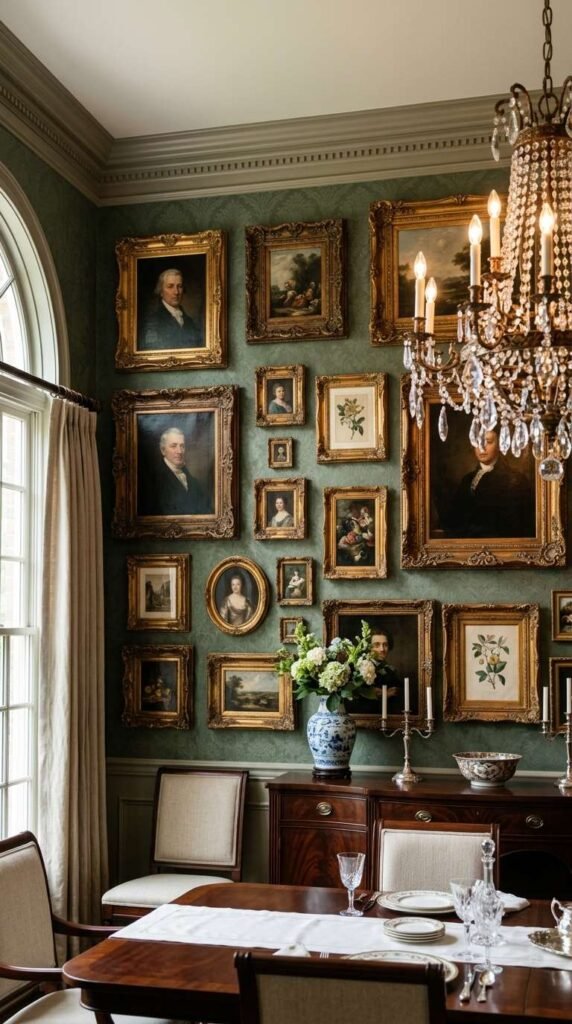
- Adds old-world character to an otherwise plain wall
- Gilded frames catch and reflect ambient light
- Mixes portraits, landscapes, and still life pieces together
- Builds gradually from vintage and estate sale finds
- Turns a single wall into a genuine focal point
A cluster of ornate, gilded frames arranged together brings a sense of old-world grandeur to a formal dining room wall. Mixing portraits, landscapes, and still life paintings within a shared frame style or color creates a cohesive gallery rather than a scattered, unrelated collection of individual pieces. This idea fits naturally among formal dining room decor ideas that lean traditional, since the layered, collected quality of a gallery wall suggests a room and a family history built up gradually over time, rather than furnished all at once from a single showroom floor.
Planning the layout before hanging anything saves considerable time and unnecessary wall damage. Lay the frames out on the floor first, adjusting the arrangement until it feels balanced, then trace each shape onto paper and tape the templates to the wall for a final check. I’ve noticed that keeping roughly two inches of space between frames creates the cleanest, most gallery-appropriate spacing, and centering the entire arrangement around 57 inches from the floor keeps it at a comfortable, natural eye level for seated and standing guests alike.
20. Formal Table Setting with Chargers
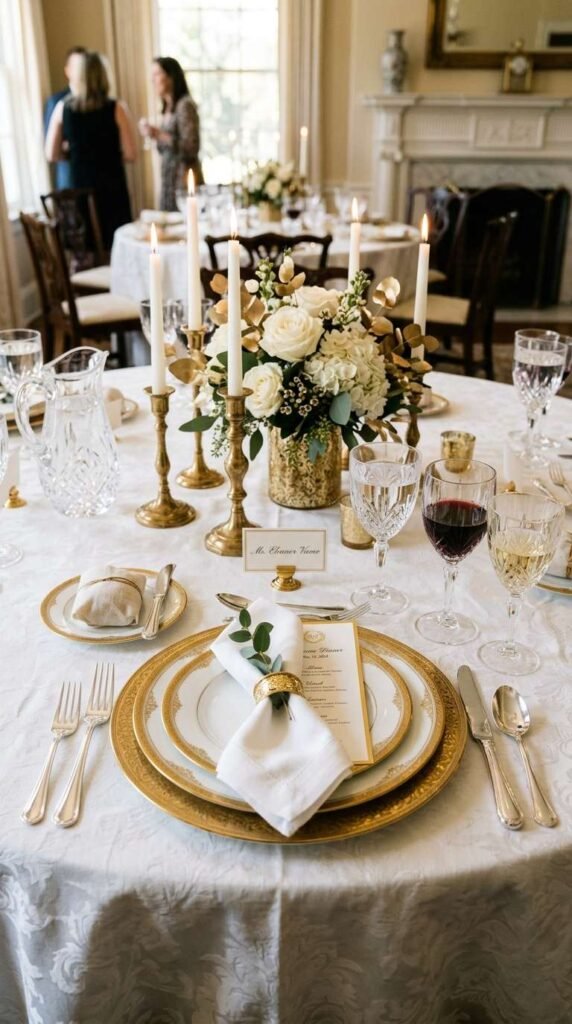
- Adds a foundational layer beneath each place setting
- Signals genuine occasion before the first course arrives
- Available in gold, silver, or simple matte finishes
- Protects the tablecloth from spills and dish transfers
- Elevates even a simple meal into something more considered
Charger plates sit beneath the dinner plate itself, acting as a decorative foundation for the entire place setting rather than serving any direct eating purpose. A gold or silver rim catches candlelight and chandelier glow, tying the table setting visually to any metallic accents already present elsewhere in the room. This detail rounds out formal dining room decor ideas focused specifically on the table itself, since chargers add a layer of intentional styling that a plate set directly on a tablecloth or placemat simply doesn’t achieve on its own.
Removing the charger before the actual meal is served, once appetizer or salad courses have concluded, remains standard formal dining etiquette worth knowing if you’re hosting a more traditional dinner. I’ve found that a simple matte charger in white or cream suits more contemporary formal settings, while a metallic gold or silver rim leans more traditional and ornate. Either way, chargers offer one of the easiest ways to add polish to a table setting without requiring any new dinnerware purchase at all.
21. Curated Bar Cart Nook
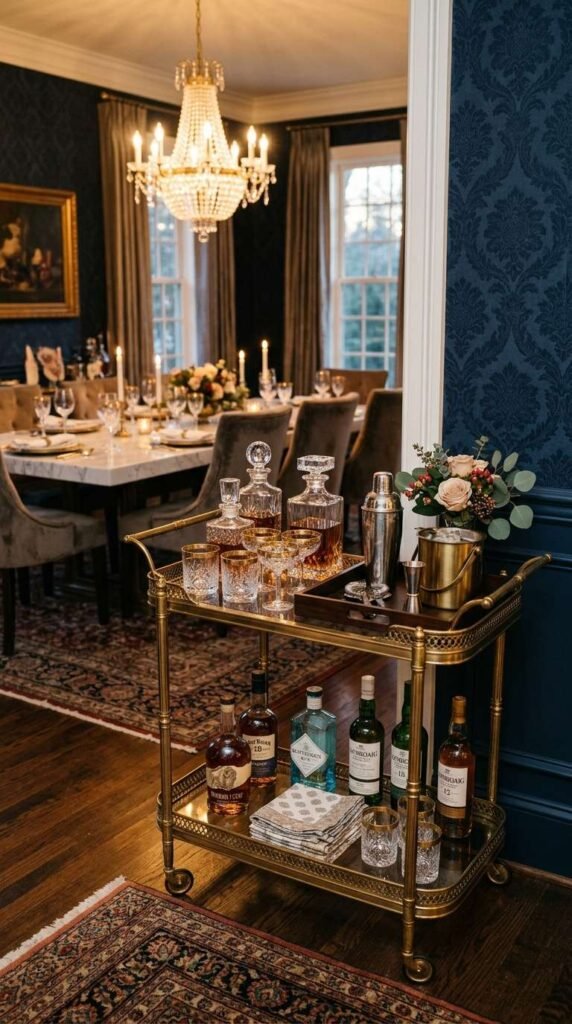
- Makes hosting feel effortless and prepared in advance
- Turns unused corner space into a styled, functional feature
- Glass and metal materials echo the room’s existing shine
- Keeps drinks and glassware close to the table
- Easy to restyle for different seasons or occasions
A thoughtfully arranged bar cart signals that a formal dining room is built for genuine entertaining, not just occasional use. Tucked into a corner or positioned beside a sideboard, it turns previously unused space into a functional, attractive feature. Brass and glass materials echo the shine already present in the chandelier and any crystal stemware nearby, tying this final touch into the rest of the room’s established formal dining room decor ideas. Keeping the cart edited, a few decanters, matching glasses, and a small dish of garnish, maintains an intentional, generous look rather than a cluttered one.
Practical organization matters as much as visual styling when it comes to a functional bar cart. Place heavier bottles on the lower shelf for stability, keeping lighter glassware within easy reach on top. I’ve noticed that adding a small lamp or a single candle nearby extends the room’s warm lighting scheme even into this smaller, secondary vignette, making the whole corner feel like a natural extension of the room’s more formal styling choices rather than an afterthought.
FAQs
1. What colors work best for a formal dining room?
Deep jewel tones like emerald, navy, and burgundy create the richest, most formal atmosphere, especially under evening lighting. Softer neutrals like cream and warm gray also work well for a lighter, more traditional take, particularly when paired with gold or brass accents throughout the room.
2. How do I choose the right size chandelier for my dining table?
Add the room’s length and width in feet, then use that number in inches as a rough guide for the chandelier’s diameter. Hang the fixture 30 to 36 inches above the tabletop, and confirm the proportions look balanced in person before finalizing the choice.
3. Should dining chairs match, or can I mix styles?
Both approaches work well in a formal setting. A fully matched set creates a traditional, cohesive look, while mixing in wingback chairs at the ends or a tufted bench on one side adds variety and visual interest without sacrificing the room’s overall formality.
4. Do I need a rug under my dining table?
A rug isn’t strictly required, but it adds warmth, defines the dining area, and softens hard flooring underfoot. If you choose one, size it so every chair leg stays on the rug even when pulled fully out from the table.
5. What’s the difference between a formal and casual dining room?
Formal dining rooms typically feature richer materials, more structured furniture arrangements, and detailed finishing touches like chandeliers, fine china, and architectural millwork. Casual dining spaces lean toward simpler furniture, lighter colors, and a more relaxed, everyday approach to styling and use.
6. How can I make a small dining room feel formal?
A statement mirror multiplies light and visual space, while a smaller-scale chandelier and a well-chosen rug still deliver formal details without overwhelming a compact room. Keeping the color palette slightly lighter than a larger room can also help prevent a small formal space from feeling too heavy.
7. What kind of lighting is best beyond the chandelier?
Wall sconces or a buffet lamp add layered lighting that complements the chandelier rather than competing with it. Placing each light source on its own dimmer allows the room to shift easily between bright daily use and a softer, more intimate evening atmosphere.
8. Is a buffet or sideboard necessary in a formal dining room?
While not strictly required, a buffet or sideboard adds valuable storage and serving space, particularly useful during larger gatherings. It also provides another surface for styled decor, like a mirror or lamp, that helps round out the room’s overall design.
9. How do I style a formal dining table when it’s not in use?
A simple centerpiece, like a low floral arrangement or a grouped set of candlesticks, keeps the table looking finished between meals. Adding a runner or a few chargers can also maintain a sense of readiness without requiring a full table setting at all times.
10. What materials should I prioritize for a timeless, elegant look?
Solid wood, crystal, and metals like gold or brass tend to age well and rarely feel dated compared to more trend-driven materials. Investing in quality pieces made from these materials generally pays off over time, since they hold up better and remain stylistically relevant for years.
Conclusion
A dining room doesn’t need a full remodel to feel elegant, it needs a few layers done with intention. These formal dining room decor ideas, from rich wall color to real crystal stemware, show how small, considered choices add up to a genuinely refined space. I’ve seen how something as simple as swapping in upholstered chairs or hanging a proper mirror can completely change how a room feels the moment guests walk in. Save this list on Pinterest, try one idea in your own dining room this week, and share it with someone else ready to bring a little more polish into their home.