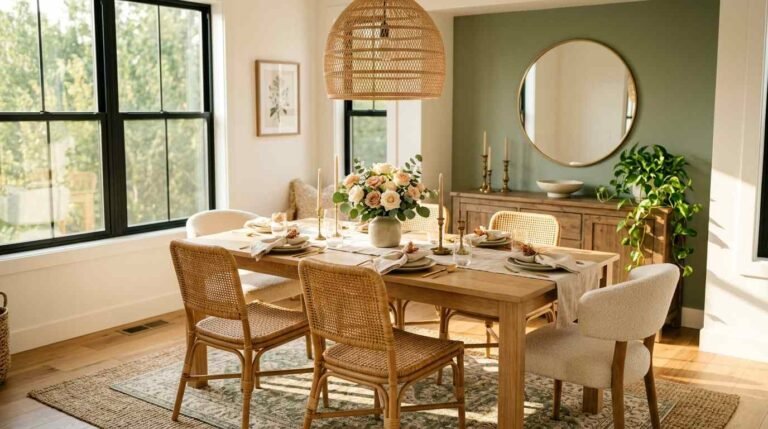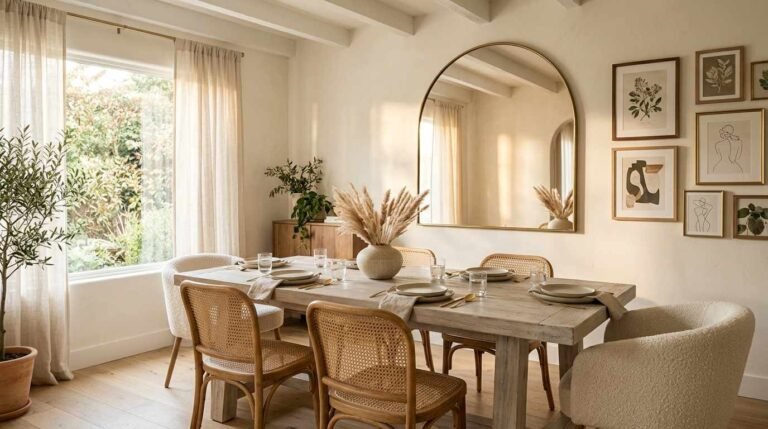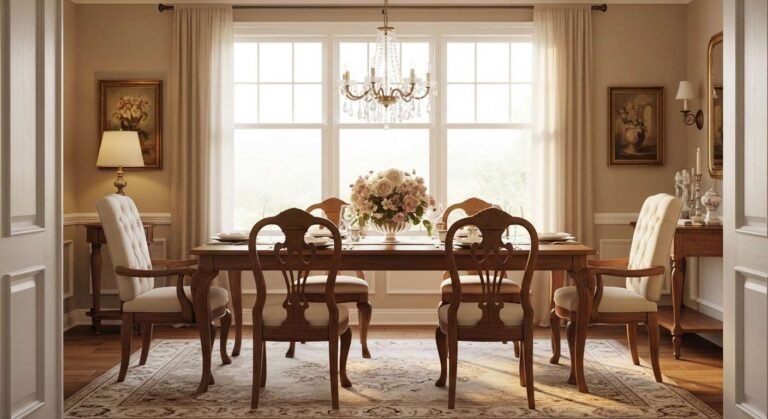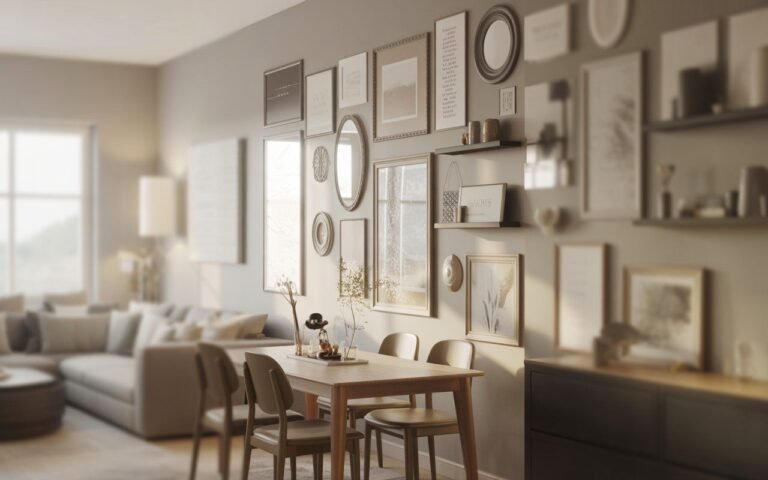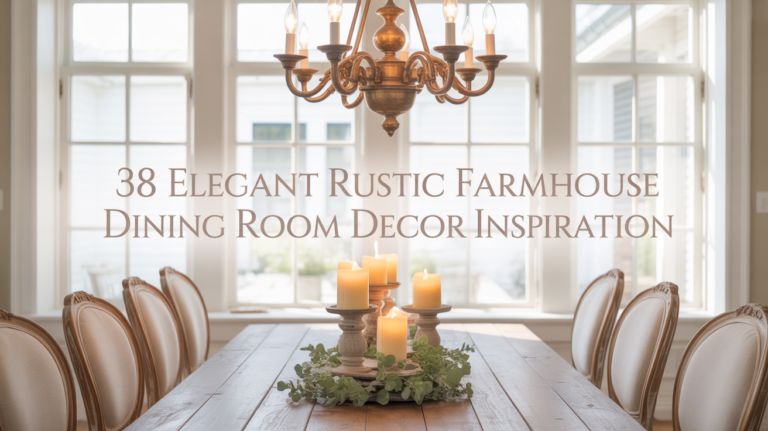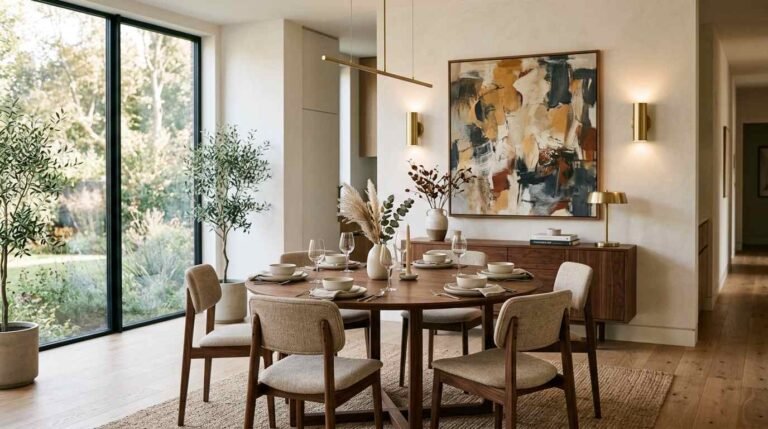
Ever look at an empty dining room shelf and wonder where to even begin? Shelf decor dining room ideas are one of the easiest ways to add both storage and style to a space, without needing a full renovation or new furniture. In my experience, a few well-chosen pieces, like books, vases, or woven baskets, do far more for a shelf than trying to fill every inch with decor. Whether your dining room is big or small, formal or casual, this list of 22 ideas is built to work with what you already have. I’ve seen how a few thoughtful touches can completely transform how a dining room feels.
1. Floating Wood Shelves Keep Things Simple
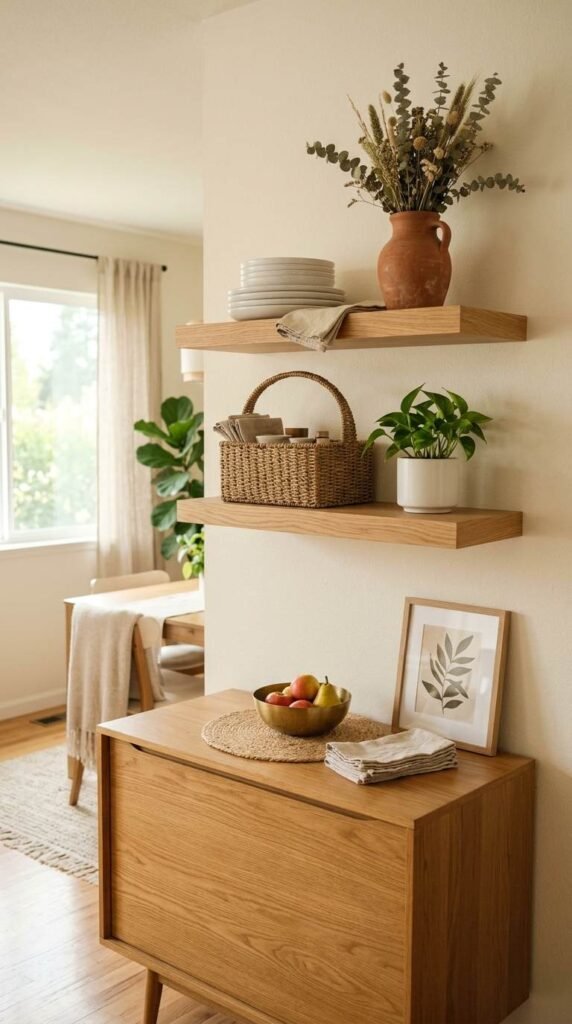
- Adds storage and style without visible brackets
- Keeps the wall looking light and uncluttered
- Works well for rotating small decor pieces
- Suits modern and minimalist dining rooms
Floating wood shelves give a dining room wall both function and personality in one simple move. Without visible brackets, they appear to hang in midair, which keeps the look light even while holding a few styled objects. A ceramic vase, a small leaning print, and a short stack of books are often enough to finish the display. In my experience, this kind of shelf decor dining room spaces benefit from most, since it adds storage without the visual bulk of a full cabinet or sideboard taking up floor space.
Height and spacing make the difference between a shelf that looks intentional and one that feels like an afterthought. Mounting the shelf so its surface sits around 60 to 66 inches from the floor usually complements the dining table well. I’ve noticed that swapping just one or two items seasonally keeps the display feeling fresh without much effort. Choosing a wood finish that echoes another material already in the room, like the table or flooring, ties the whole space together.
2. Open Shelving with Glassware Display
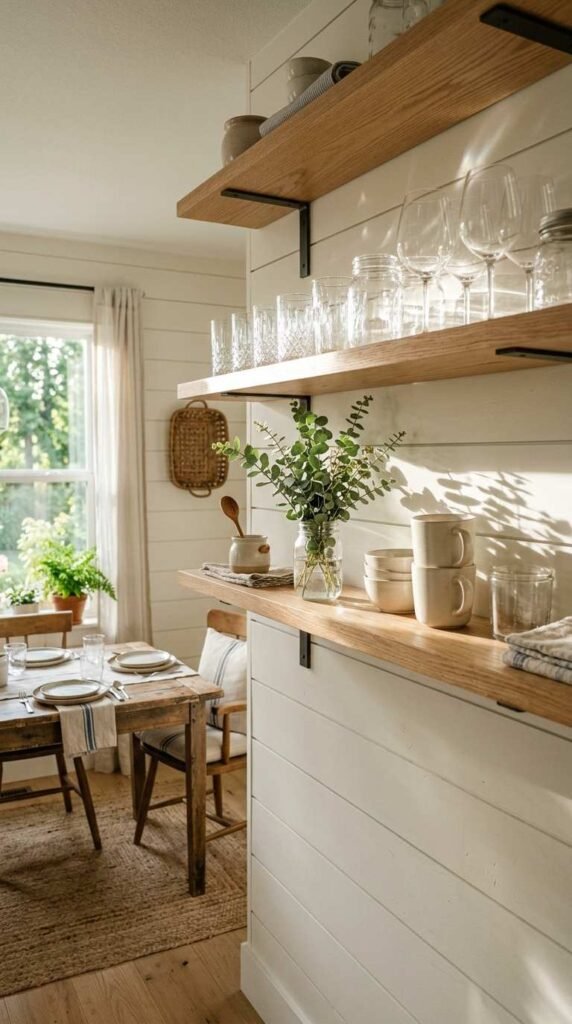
- Turns everyday glassware into part of the decor
- Adds sparkle and visual interest to a plain wall
- Keeps frequently used items within easy reach
- Works beautifully with warm backlighting
Open shelving lined with glassware brings both function and shimmer to a dining room. Wine glasses, tumblers, and pitchers catch the light beautifully when displayed openly, turning practical storage into a genuine design feature. In my experience, grouping glassware by type, rather than mixing everything together, creates a more polished, intentional look. It also makes entertaining easier, since everything needed for a dinner party sits in plain view, ready to grab without digging through closed cabinets.
Lighting enhances this display more than almost anything else. I’ve seen small LED strips tucked beneath each shelf make the glassware sparkle, especially in the evening when overhead lights are dimmed. Spacing the shelves generously, rather than cramming them close together, keeps the display looking curated instead of crowded. This idea works particularly well in dining rooms that double as an entertaining space, since the glassware itself signals that the room is always ready for guests.
3. A Ladder Shelf Corner Display
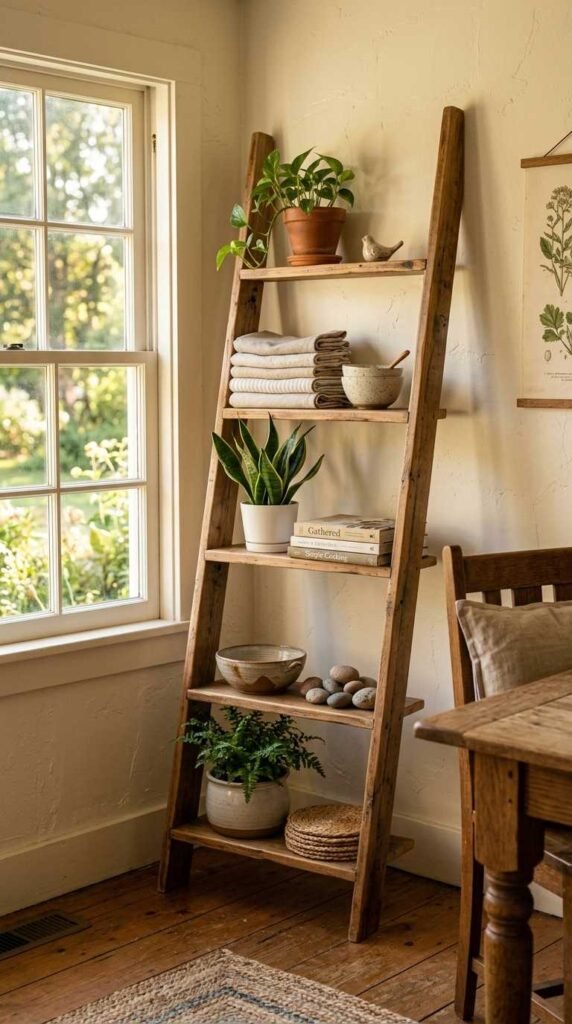
- Makes use of an often-overlooked part of the room
- Adds vertical storage without crowding the floor
- Works well with small decor pieces or plants
- Suits dining rooms with limited wall space
A ladder shelf turns an unused corner into a genuine styling opportunity. Leaning against the wall rather than requiring installation, it offers several tiers of display space without the commitment of mounted shelving. In my experience, this idea works particularly well in smaller dining rooms where every available wall is already accounted for, giving homeowners one more spot to add personality without crowding the room’s main focal points, like the table or a sideboard already in place.
Styling a ladder shelf benefits from varying the display across each tier. I’ve noticed that placing a trailing plant on top, books in the middle, and a small basket on the bottom creates natural visual rhythm from top to bottom. Choosing a ladder shelf finish that matches existing furniture, like black metal or natural wood, keeps the piece feeling intentional rather than like an afterthought squeezed into a leftover corner of the dining room.
4. Woven Basket Storage on Shelves
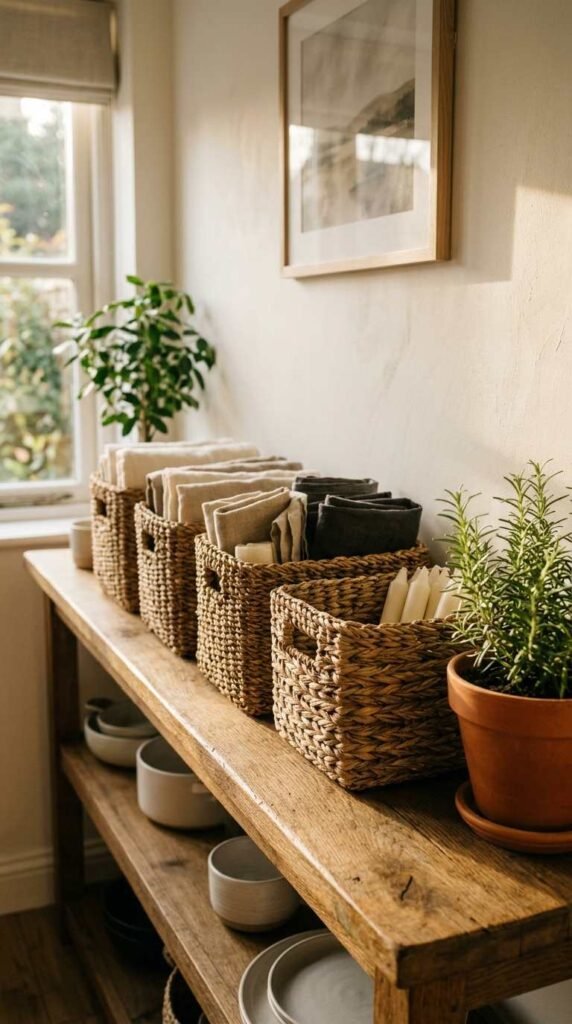
- Hides everyday clutter while adding natural texture
- Works beautifully on open shelving units
- Keeps items organized without looking messy
- Suits farmhouse, coastal, and modern dining rooms
Woven baskets solve the age-old problem of open shelving: where to put the less attractive, everyday items. Tucked onto a shelf, a basket hides linens, extra candles, or placemats while adding natural texture that an empty shelf space often lacks. In my experience, this is one of the most practical forms of shelf decor dining room storage, since it keeps the room functional without sacrificing the open, airy look that floating or built-in shelving provides throughout the space.
Choosing the right basket size keeps the display balanced. I’ve seen a mix of one larger basket and one or two smaller ones work particularly well, creating visual variety rather than a uniform row of identical containers. Woven rattan or seagrass baskets suit nearly any dining room style, from coastal to farmhouse to modern. Labeling baskets with a small tag also helps keep contents organized, especially in households where several people share the space.
5. Layered Books and Stacked Plates
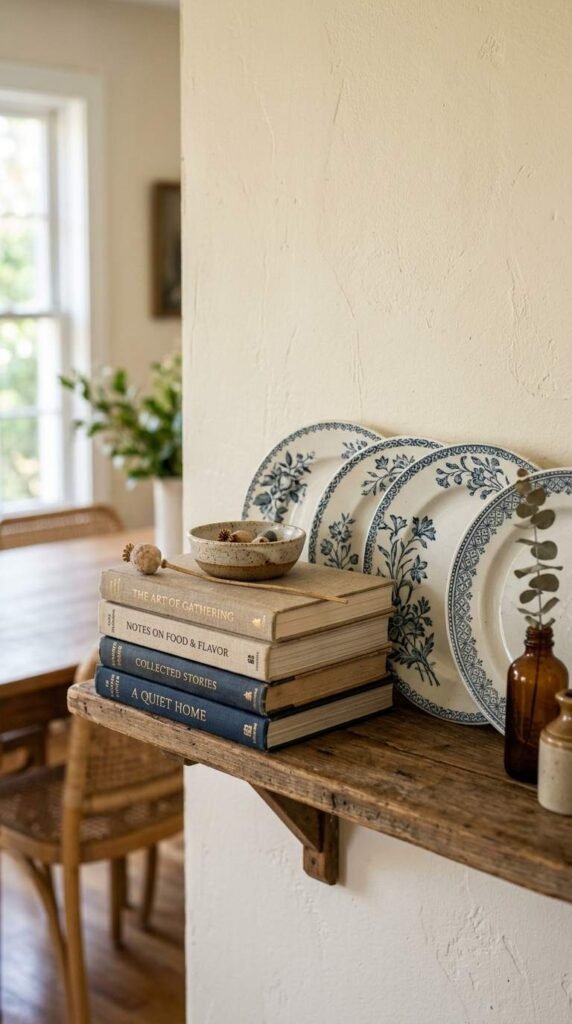
- Adds height and personality to shelf styling
- Creates a natural base for other decor pieces
- Reflects genuine personal taste and interests
- Easy to update as collections grow
Stacking books and plates together brings both height and personality to dining room shelves. A few hardcover books in neutral tones, topped with a small stack of decorative plates, creates a layered look that feels collected rather than purchased as a set. In my experience, this combination works particularly well because it reflects genuine personal taste, whether that’s travel books, cookbooks, or vintage china passed down through family, making the shelf feel like it belongs to real people rather than a showroom display and complementing coastal dining room decor with a relaxed, collected feel.
Balancing Height with Books
Books are a wonderfully flexible tool for balancing shelf height. I’ve noticed that placing taller stacks on one side and shorter, flatter stacks on the other creates a natural visual rhythm across the shelf. Topping a book stack with a small object, like a candle or miniature vase, adds the finishing touch. This approach also makes it easy to swap in new titles or plates over time, keeping the display feeling fresh without starting over completely.
6. Trailing Greenery from Shelves
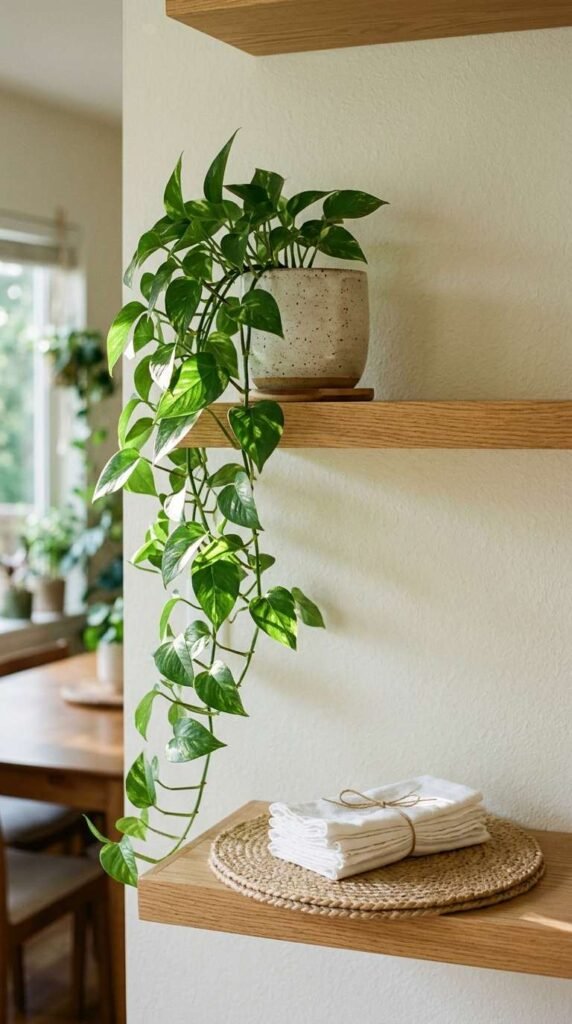
- Brings life and movement to an otherwise static display
- Works with both real plants and quality faux greenery
- Softens the hard lines of wood and metal shelving
- Requires minimal upkeep when low-maintenance varieties are chosen
Trailing greenery brings a sense of movement that structured shelf decor alone can’t achieve. A pothos or ivy plant draped over the edge of a shelf softens the straight lines of the wood or metal beneath it, adding a natural, organic contrast to an otherwise rigid display. In my experience, even one trailing plant can make an entire shelf arrangement feel more finished and alive, especially when paired with simpler objects like books or a candle sitting nearby on the same surface.
Low-maintenance varieties make this idea accessible even for those without much of a green thumb. I’ve seen pothos and philodendron thrive on shelves with only indirect light, tolerating occasional missed waterings without much issue. Letting the vines cascade naturally, rather than trimming them too neatly, adds to the relaxed, organic feel. This idea works beautifully on any shelf height, though higher shelves let the trailing vines create even more dramatic visual movement.
7. A Ceramic Vase Grouping Adds Softness
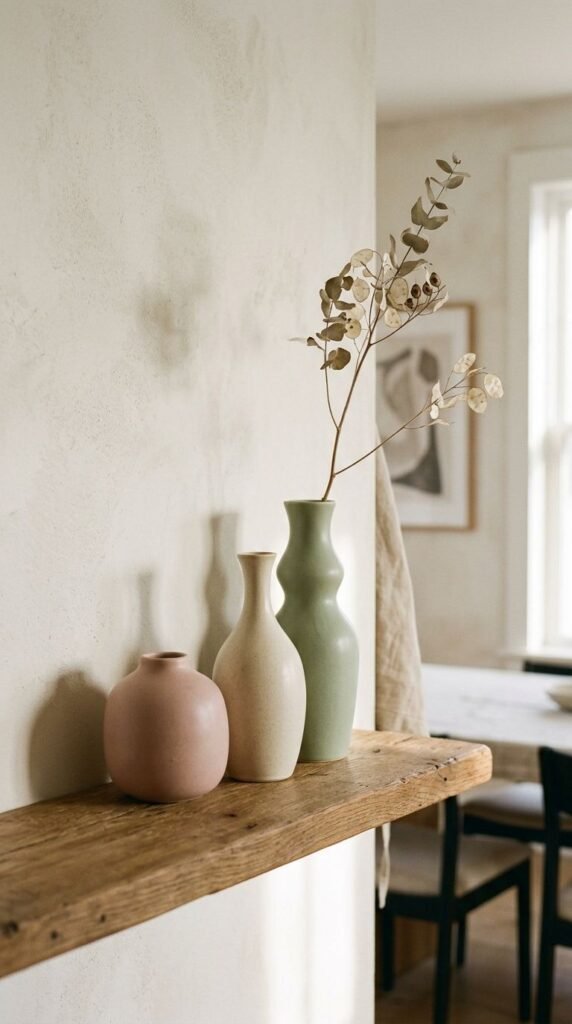
- Brings organic shape and softness to shelf styling
- Works beautifully in varying heights and finishes
- Suits modern, coastal, and minimalist dining rooms
- Easy to style empty or filled with stems
A grouping of ceramic vases adds organic softness to otherwise straight-lined shelving. Varying heights and glaze finishes, from matte to glossy, create visual interest even when the vases sit empty. In my experience, grouping three vases of different heights, rather than a single matching set, looks far more curated and intentional, since the variation mimics how collections naturally come together over time rather than being purchased all at once from a single store, while also offering stylish home decor storage ideas for displaying treasured pieces.
Filling one or two vases with simple stems adds just enough color without overwhelming the arrangement. I’ve noticed that leaving at least one vase empty as a sculptural piece on its own keeps the grouping from feeling too busy or styled. Sticking to a cohesive color family, like earthy neutrals or soft blues, helps the vases feel like a unified collection rather than a random assortment. This idea suits nearly any dining room shelf, regardless of overall room style.
8. A Floating Shelf Above a Buffet
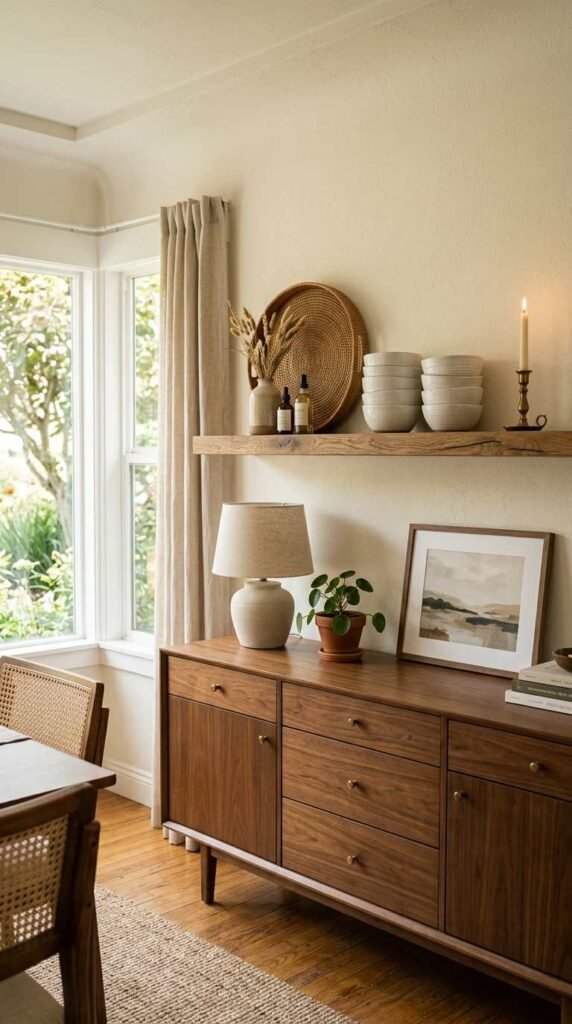
- Adds extra display space above existing furniture
- Creates a layered look between shelf and buffet surface
- Works well for art, mirrors, or small objects
- Suits dining rooms wanting more vertical storage
A floating shelf mounted above a buffet or sideboard adds an extra layer of display space without requiring any additional floor furniture. This combination creates a natural, layered look, with the buffet surface holding larger items and the shelf above offering a spot for smaller decor pieces, art, or a leaning mirror. In my experience, this pairing works particularly well in dining rooms wanting more storage and styling opportunities without needing to add bulky furniture that eats into the room’s walking space.
Spacing between the buffet and shelf matters for both function and visual balance. I’ve seen a gap of about 18 to 24 inches work well, giving enough clearance for items on the buffet surface while keeping the shelf within easy reach. Styling the shelf with a leaning piece of art, flanked by a small plant or candle, ties the two levels together visually. This idea maximizes vertical space in dining rooms with limited wall area elsewhere.
9. Mixed Metal Shelf Brackets Add Detail
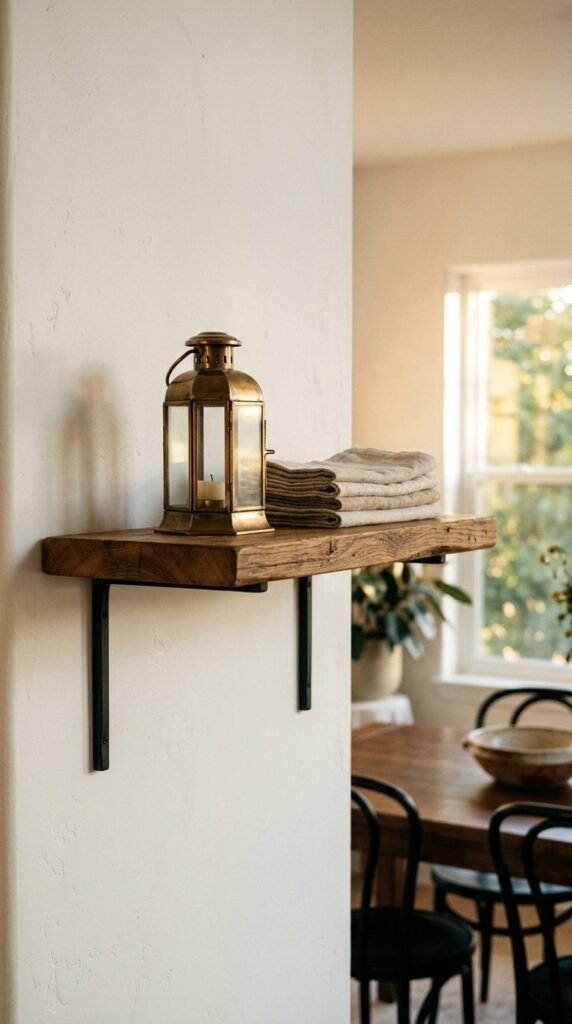
- Adds subtle visual interest through hardware alone
- Works well combining black, brass, or brushed nickel
- Elevates simple wood shelves without extra decor
- Suits transitional and eclectic dining rooms
Shelf brackets are often overlooked, but mixing metal finishes adds a small, intentional detail that elevates even the simplest wood shelf. Black iron brackets paired with a brass accent elsewhere in the room, or vice versa, create subtle visual interest without needing any additional decor on the shelf itself. In my experience, this detail works particularly well for dining rooms already mixing metal tones through light fixtures or hardware, since the shelf brackets become one more consistent thread tying the room together.
Choosing a bracket style that complements the shelf’s purpose matters too. I’ve noticed that simple, slim brackets keep the focus on whatever is displayed above, while more decorative, scrolled brackets can become part of the visual interest themselves. This small styling choice consistently makes a plain shelf feel more considered and finished, especially in dining rooms where the shelf brackets remain visible beneath open shelving throughout the space.
10. A Corner Shelf Unit Uses Every Inch
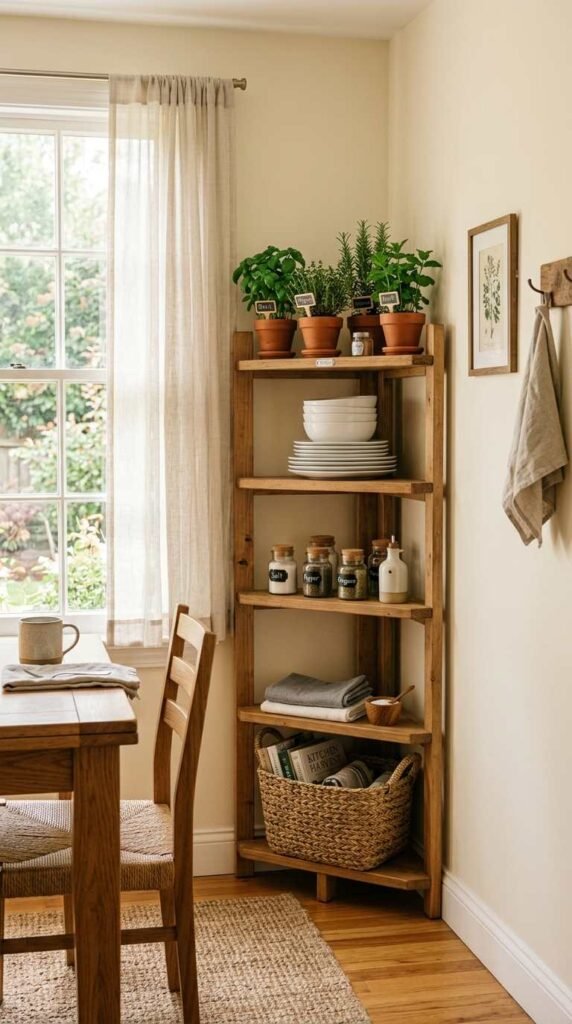
- Maximizes storage in an often-wasted part of the room
- Works well in small or oddly shaped dining rooms
- Adds vertical display without crowding the main wall
- Suits both modern and traditional dining room styles
A corner shelf unit turns an often-wasted part of the dining room into genuinely useful storage and display space. Stacked vertically, several small shelves fit neatly into a corner, holding books, dishware, or decorative objects without requiring any of the room’s main wall space. In my experience, this idea for shelf decor dining room corners works especially well in smaller or oddly shaped rooms, where traditional furniture placement can feel awkward or leave certain areas completely unused.
Styling each tier with a slightly different focus keeps the unit from feeling repetitive. I’ve seen one tier dedicated to books, another to a small plant, and a third to decorative objects work beautifully together, creating variety from top to bottom. Choosing a unit finish that matches existing furniture helps it blend seamlessly into the room, rather than standing out as a separate, mismatched piece squeezed into an unused corner.
11. Leaning Artwork on Shelves
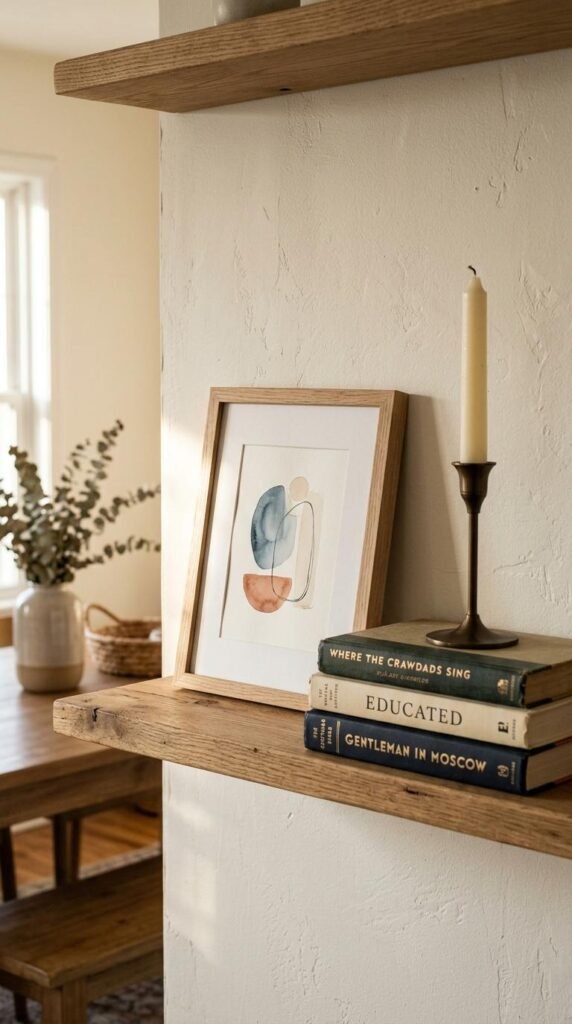
- Allows art to be layered and easily rearranged
- Works beautifully with frames of varying sizes
- Creates a relaxed, gallery-like display
- Easy to update without new nail holes
Leaning artwork against the wall on a shelf offers more flexibility than traditional hung pieces, since frames simply rest in place rather than being permanently mounted. Layering two or three frames of different sizes creates a relaxed, curated look that’s easy to rearrange whenever the mood strikes. In my experience, this idea suits dining rooms where the homeowner likes to swap decor seasonally, since nothing requires new nail holes or careful measuring each time something changes on the shelf.
Layering technique is what makes leaning art look intentional rather than messy. I’ve seen the best results come from placing the largest frame at the back, then layering smaller frames slightly overlapping in front. Mixing a photograph with a piece of art or a small mirror adds variety without feeling cluttered. This idea works beautifully on a shelf above a buffet, where it becomes a functional display for pieces the homeowner genuinely enjoys rotating.
12. Glass Shelves for an Airy Feel
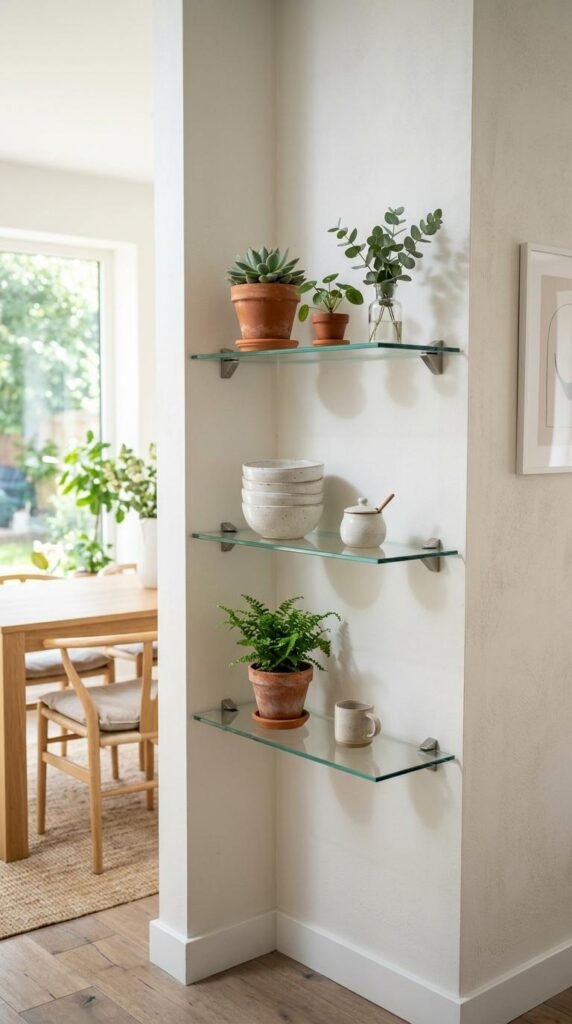
- Keeps the wall feeling open and uncluttered
- Works beautifully in modern, minimalist dining rooms
- Allows light to pass through the display
- Suits smaller rooms needing a lighter visual touch
Glass shelves bring an airy, almost invisible quality to dining room storage. Because light passes through rather than being blocked, glass shelving keeps a wall feeling open even while holding a full display of decor. In my experience, this idea works particularly well in smaller dining rooms, where solid wood shelving can sometimes feel visually heavy. Glass allows the wall color or wallpaper behind it to remain visible, creating a lighter, more spacious feeling throughout the room.
Styling glass shelves benefits from choosing items with interesting shapes, since the transparency means every angle is visible. I’ve noticed that sculptural vases or uniquely shaped objects look especially striking on glass, since their silhouette becomes part of the display. Keeping the number of items moderate, rather than crowding the shelf, maintains that light, airy quality glass shelving is known for. This idea suits modern and minimalist dining rooms especially well.
13. Wicker Storage Baskets for Everyday Items
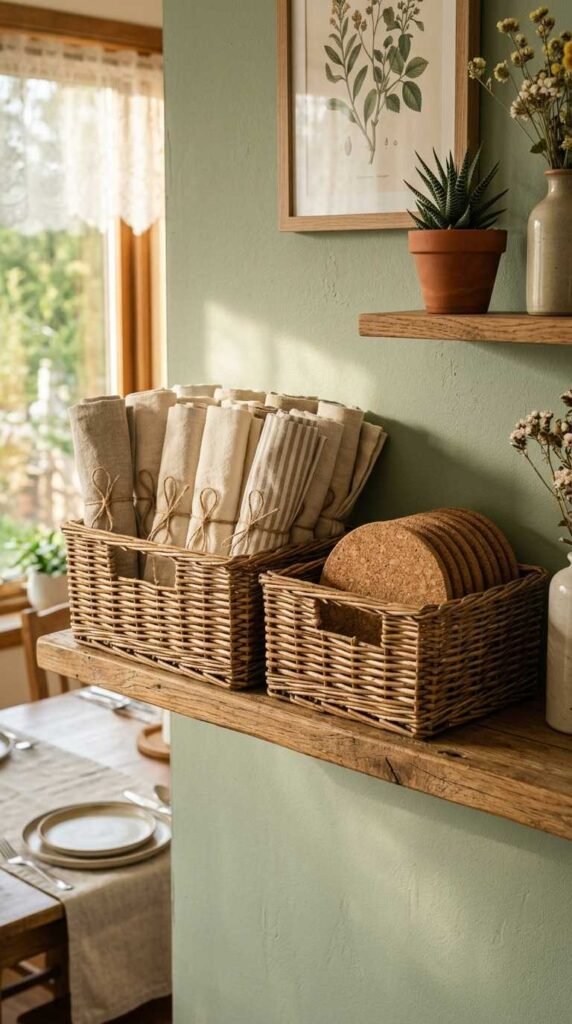
- Hides practical items while adding natural texture
- Works beautifully on both open and built-in shelving
- Keeps the room functional without looking cluttered
- Suits farmhouse, coastal, and transitional dining rooms
Wicker storage baskets bring practicality and warmth to dining room shelving at the same time. Tucked onto a shelf, a basket holds extra linens, candles, or serving pieces while adding natural texture that plain storage containers often lack. In my experience, this approach to shelf decor dining room spaces benefit from keeps the room functional for everyday use without sacrificing the styled, intentional look that open shelving requires to feel finished rather than cluttered or disorganized.
Choosing baskets in a consistent material and tone keeps the display cohesive. I’ve seen two or three baskets of varying sizes, all in the same wicker finish, work beautifully together on a single shelf. Adding a small label or tag to each basket also helps with organization, especially in busy households. This idea suits nearly any dining room style, since wicker’s natural, neutral tone complements both traditional and more modern surrounding decor.
14. Stacked Bowls on Display
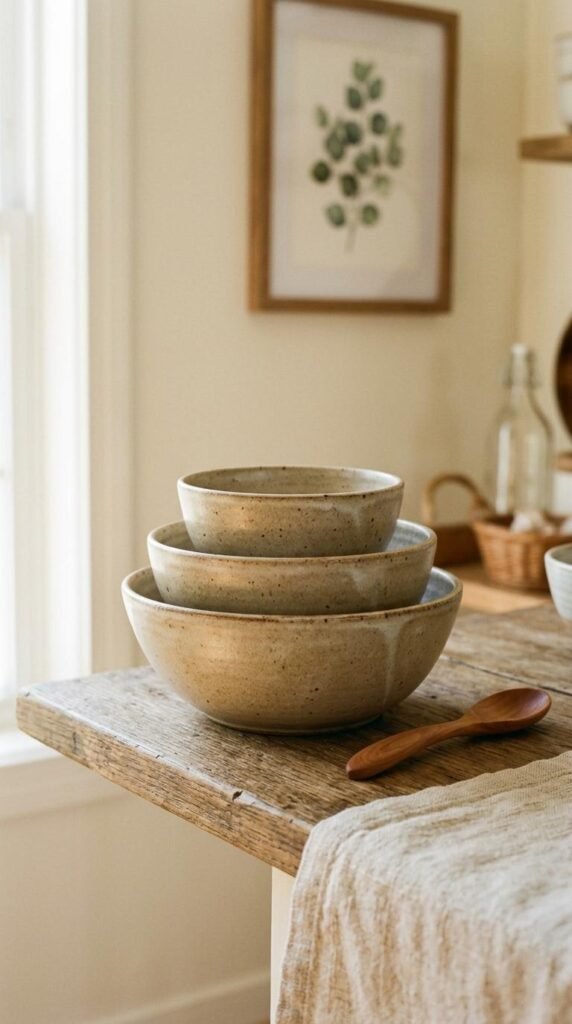
- Turns everyday dishware into part of the decor
- Adds color and pattern through functional pieces
- Keeps frequently used items within easy reach
- Works beautifully in varying sizes and finishes
Stacking bowls on open shelving turns practical dishware into a genuine styling moment. A set of ceramic bowls, varying slightly in size or glaze, creates natural visual interest while keeping everyday items easily accessible for meals. In my experience, this idea works particularly well for dining rooms that frequently host family-style dinners, since the bowls stay within reach while also contributing color and texture to the overall shelf display throughout the week.
Grouping bowls by color family, rather than mixing too many patterns together, keeps the stack looking intentional. I’ve noticed that three to five bowls stacked together, largest at the bottom, creates the most stable and visually pleasing arrangement. Leaving one bowl slightly askew, rather than perfectly aligned, adds a relaxed, lived-in quality to the display. This idea suits farmhouse and transitional dining rooms especially well, where functional decor is often preferred.
15. Shelf Styling Near a Pendant Light
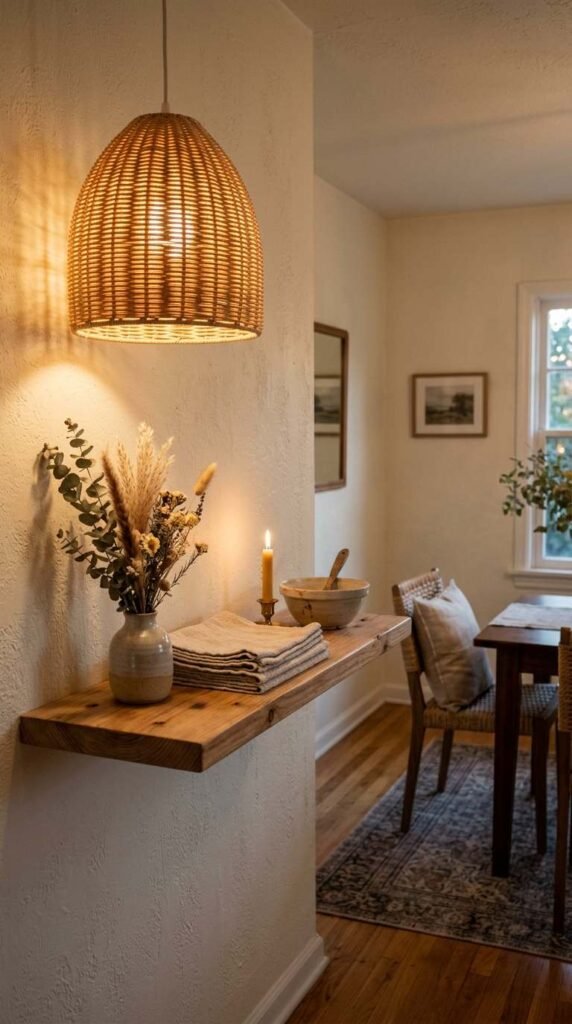
- Creates a cohesive lighting and display moment
- Works beautifully when shelf and fixture finishes match
- Adds warmth through combined ambient and natural light
- Suits dining rooms with nearby pendant fixtures
Positioning a styled shelf near a pendant light fixture creates a cohesive visual moment where lighting and decor work together. When the pendant hangs close to the shelf, its warm glow highlights whatever is displayed below, adding depth and atmosphere that a plain shelf alone can’t achieve. In my experience, this pairing works particularly well when the shelf brackets and pendant fixture share a similar metal finish, like matte black or brass, tying the two elements together.
Choosing a warm-toned bulb for the pendant enhances the shelf display significantly during evening meals. I’ve seen this combination work beautifully above a sideboard, where the light catches glassware, ceramic vases, or metallic accents sitting on the shelf, making them shimmer softly. This idea adds a layered, intentional feel to the dining room, since the lighting and shelf decor read as one cohesive design choice rather than two separate elements.
16. Neutral Linen and Textile Display
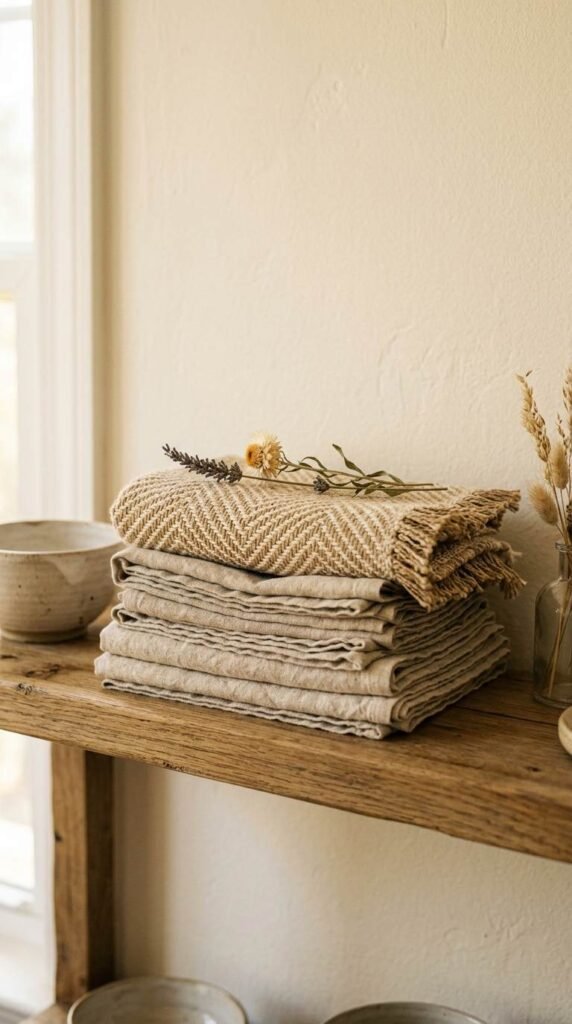
- Adds softness to otherwise hard shelf materials
- Works beautifully with folded napkins or small textiles
- Brings warmth without introducing bold color
- Suits minimalist and Scandinavian-style dining rooms
Folded linens bring unexpected softness to dining room shelving. A neatly folded stack of cloth napkins or a small textile, like a woven table runner, adds texture and warmth that ceramic or glass pieces alone can’t provide. In my experience, this idea works particularly well on shelves that feel a little too hard-edged, since the soft fabric breaks up the visual repetition of wood, metal, and glass objects that typically dominate most shelf displays throughout a dining room.
Choosing neutral tones, like cream, oat, or soft gray, keeps the linens feeling intentional rather than like forgotten laundry. I’ve noticed that folding the fabric with crisp, clean lines, rather than loosely bunching it, makes a real difference in how polished the display looks. Pairing the linen stack with a small decorative object on top, like a candle or small vase, finishes the look. This idea suits minimalist and Scandinavian-style dining rooms especially well.
17. Bookend Styling Tricks
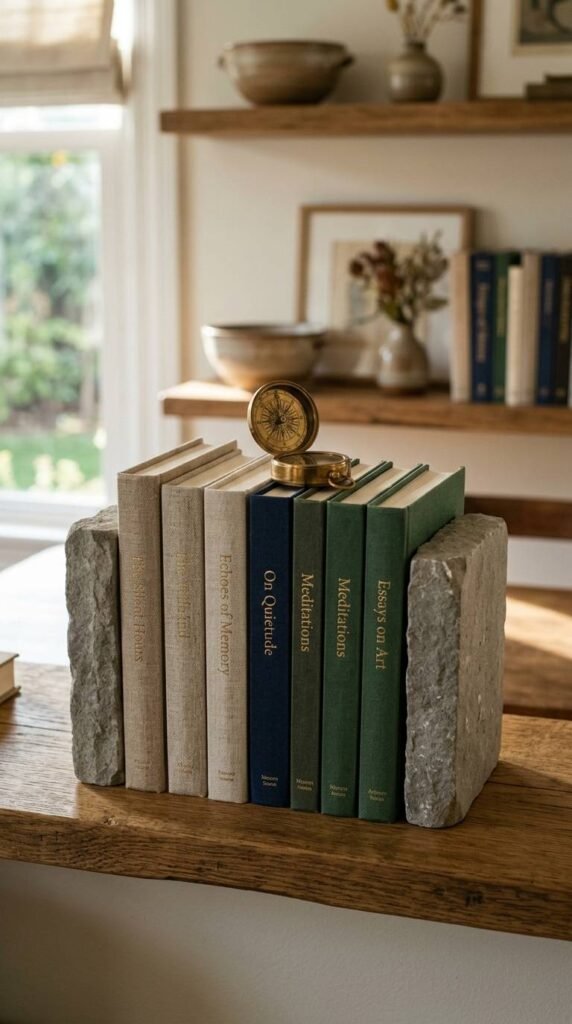
- Adds structure and visual interest to book displays
- Works beautifully in decorative or sculptural shapes
- Keeps shelves looking tidy rather than messy
- Suits nearly every dining room style
Decorative bookends do more than hold books upright, they add genuine visual interest to a shelf. Choosing bookends in an interesting shape, material, or finish turns a practical necessity into part of the overall styling. In my experience, this detail works particularly well when the bookends themselves become a small sculptural element, like a pair in brass, marble, or a simple geometric shape that complements the room’s existing metal or stone accents elsewhere.
Positioning books at varying heights between a pair of bookends adds extra visual rhythm to the display. I’ve seen a mix of standing and stacked books, anchored by bookends on either end, create a shelf that looks collected and genuinely lived-in rather than staged. Choosing bookends in a material that echoes another element in the room, like the table legs or light fixture, helps this small detail feel like part of a cohesive design throughout the space.
18. A Rustic Wood Crate Shelf
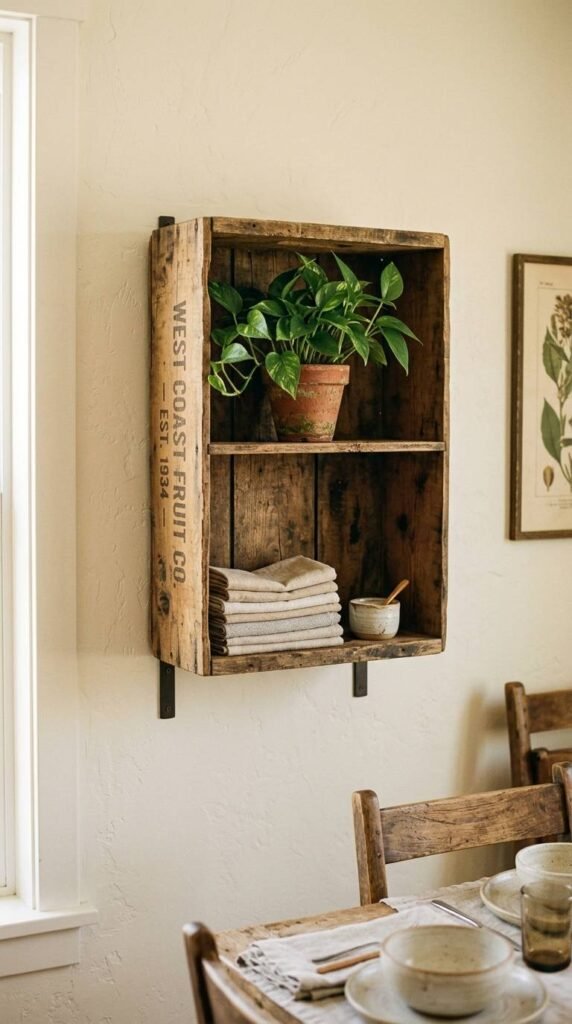
- Adds farmhouse character through repurposed materials
- Works beautifully mounted individually or in a grid
- Brings warmth and texture to a plain wall
- Budget-friendly and easy to source or build
A wood crate shelf brings genuine farmhouse character to a dining room wall. Mounted individually or arranged in a grid, these rustic, slightly imperfect boxes add warmth and texture that polished, manufactured shelving often lacks. In my experience, this idea works particularly well for dining rooms leaning into a farmhouse or rustic aesthetic, since the slightly rough wood grain and visible joinery add an authentic, handmade quality that feels collected rather than store-bought and uniform.
Building or sourcing crate shelves is more accessible than most people expect. I’ve seen simple wooden crates, either purchased secondhand or built from basic lumber, mounted directly to the wall with just a few screws. Arranging several crates in an offset grid pattern adds visual interest, while a single row keeps the look simpler and more streamlined. This idea remains one of the most budget-friendly options for anyone wanting genuine rustic character.
19. A Built-In Shelving Nook
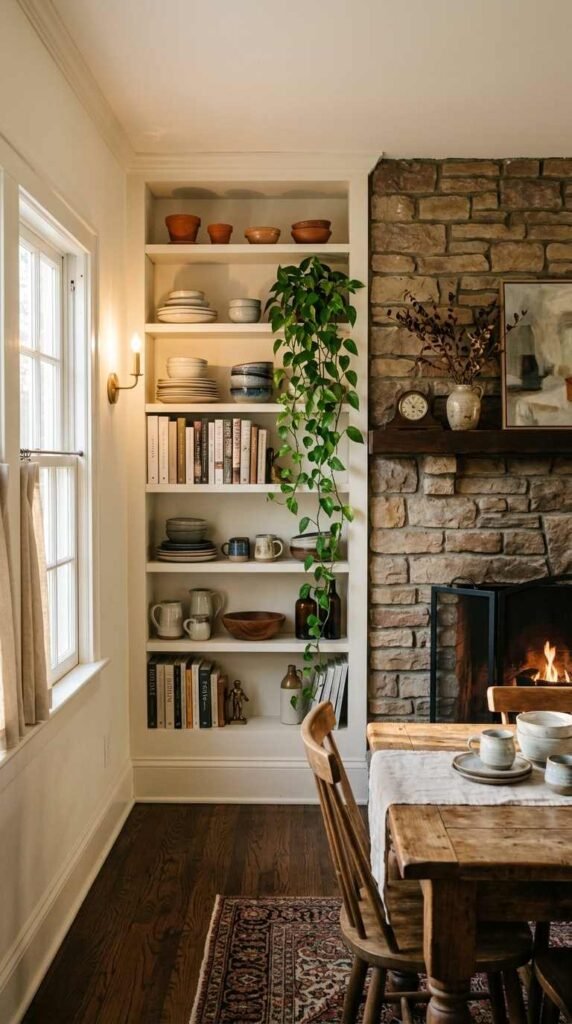
- Adds substantial, permanent storage and display space
- Works beautifully flanking a window or fireplace
- Creates a custom, architectural feature
- Suits larger dining rooms with available wall space
A built-in shelving nook transforms an entire section of wall into a genuine architectural feature. Unlike floating or freestanding shelves, a built-in unit feels like a permanent part of the room’s structure, offering substantial storage and display space all at once. In my experience, this idea works particularly well flanking a window or an existing fireplace, since the built-in shelving frames the architectural element while adding function that most dining rooms genuinely need for dishware and serving pieces.
Adding Interior Lighting
Interior lighting elevates a built-in nook significantly. I’ve seen small LED strips installed along the underside of each shelf make the entire display glow softly, especially at night when the overhead lights are dimmed for dinner. This lighting detail highlights ceramics, glassware, or art displayed within the nook, turning practical storage into a genuine focal point. Painting the interior of the nook a slightly different tone than the surrounding wall adds even more depth and contrast.
20. Candle Display on Open Shelves
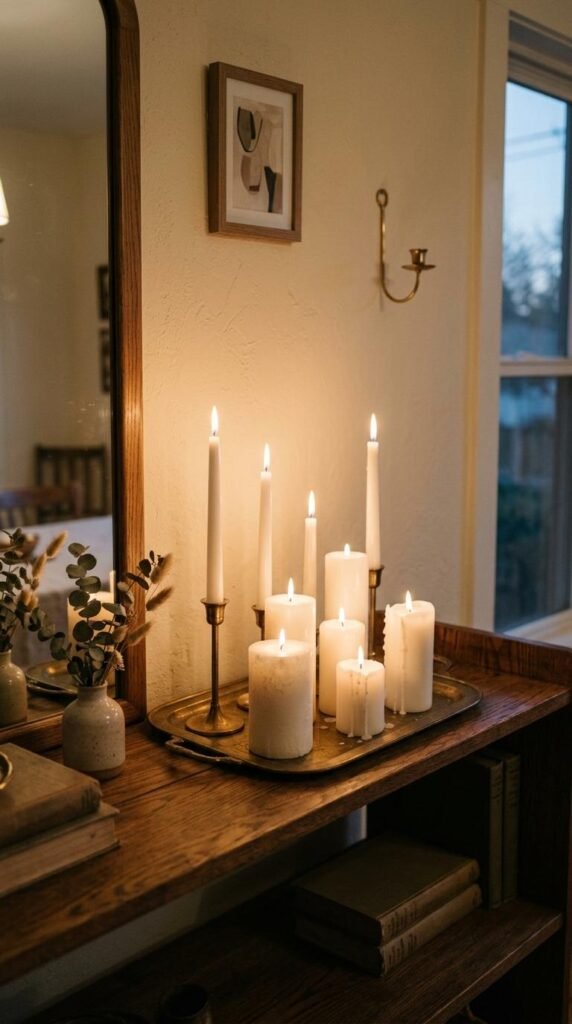
- Adds warm, flickering ambiance to shelf styling
- Works beautifully in clusters of varying heights
- Creates a cozy focal point for evening dinners
- Easy and affordable to update regularly
A cluster of candles on open shelving brings warmth and ambiance that static decor alone can’t achieve. Grouped in varying heights, pillar and taper candles create a soft, layered glow once lit, making the shelf feel like an intentional, cozy focal point rather than just a storage surface. In my experience, this idea works particularly well on shelves positioned where the candlelight can be seen from the dining table, adding atmosphere during evening meals without requiring any additional lighting fixtures.
Safety and placement matter when styling candles on a shelf. I’ve noticed that keeping candles toward the back of the shelf, away from any nearby fabric or paper decor, prevents accidental fire risk while still allowing the glow to be visible. Choosing a consistent candle color, like cream or white, keeps the display looking cohesive even when the holders themselves vary in height, material, or finish throughout the arrangement.
21. Seasonal Rotating Shelf Decor
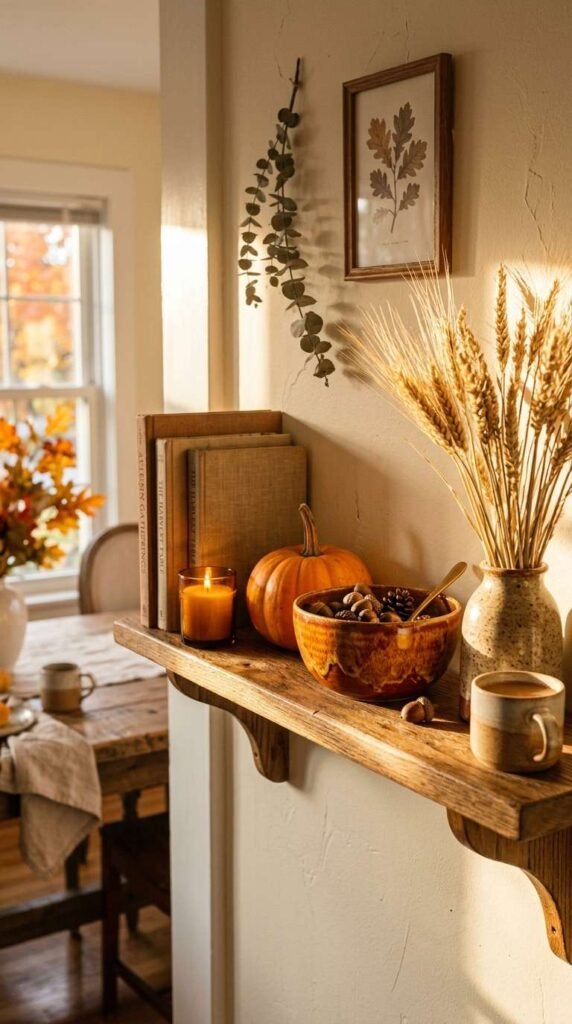
- Keeps shelves feeling fresh throughout the year
- Easy to update with small, affordable swaps
- Builds on a neutral base rather than replacing everything
- Adds relevance for holidays and seasonal gatherings
Rotating a few key pieces on dining room shelves keeps the display from ever feeling static or outdated. Swapping in seasonal items, like a small pumpkin in autumn or fresh greenery in winter, refreshes the whole shelf without requiring a complete restyling each time. In my experience, this approach to shelf decor dining room spaces benefit from works best when built on a consistent neutral base, so only a couple of accents need changing as the seasons shift throughout the year.
I’ve noticed that the most successful seasonal shelves rotate just two or three items rather than the entire display. Keeping larger pieces, like a vase or a stack of books, constant gives the shelf a sense of continuity, while smaller swaps do the rest of the seasonal work. This approach also makes holiday hosting easier, since the dining room already feels appropriately dressed for the occasion without any last-minute scrambling.
22. A Mirror and Shelf Combo
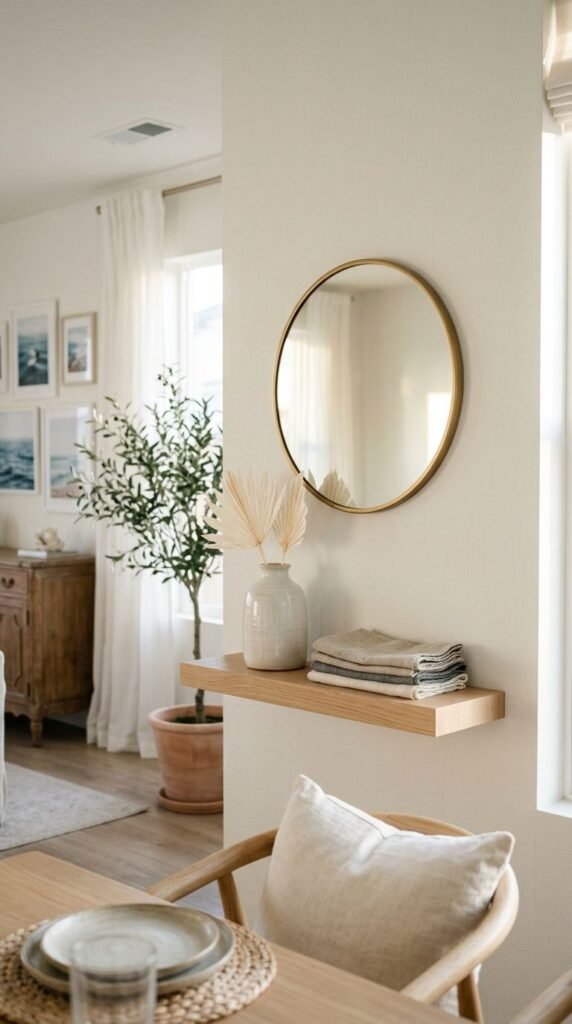
- Combines reflective light with functional storage
- Works beautifully as a single cohesive wall feature
- Adds brightness while still offering display space
- Suits smaller dining rooms especially well
Combining a mirror with a shelf creates one cohesive wall feature that does double duty. The mirror reflects light and makes the room feel larger, while the shelf beneath or beside it offers a practical spot for small decor or everyday items. In my experience, this pairing works particularly well in smaller dining rooms, where wall space is limited and every element needs to serve more than one purpose to keep the room from feeling overly decorated or cluttered.
Placement determines how well this combination functions visually. I’ve seen a shelf mounted directly beneath a mirror work beautifully, since items placed on the shelf appear doubled in the reflection, adding depth to the display. Choosing frame and bracket finishes that match ties the whole feature together. This idea suits dining rooms wanting both brightness and storage from a single, well-planned wall arrangement.
FAQs
1. What is the best type of shelf for a dining room?
Floating wood shelves are one of the most versatile choices, since they add storage without visual bulk. In my experience, the best type really depends on the room’s style, as built-in nooks suit larger formal rooms while simple floating shelves work beautifully in smaller or more casual spaces.
2. How many items should I put on a dining room shelf?
Three to five items per shelf usually looks the most balanced, leaving enough open space so the display doesn’t feel crowded. I’ve noticed that varying the heights and shapes of those few items matters more than the total number placed on the shelf.
3. What should I style on open dining room shelves?
Books, ceramic vases, glassware, and woven baskets all work beautifully together. That’s why many designers recommend mixing functional items, like dishware, with purely decorative pieces, so the shelf feels both useful and genuinely styled rather than purely ornamental.
4. How high should I hang dining room shelves?
Mounting shelves so the surface sits around 60 to 66 inches from the floor usually complements a standard dining table well. I’ve seen this height work particularly well above a buffet or sideboard, keeping the shelf in easy view without feeling too high overhead.
5. Can shelves work in a small dining room?
Yes, shelves are especially useful in small dining rooms, since they add storage and display space without taking up any floor area. In my experience, a corner shelf unit or a single floating shelf makes the biggest difference in rooms where furniture space is already limited.
6. Should dining room shelves match the table’s wood tone?
They don’t need to match exactly, but a similar undertone helps the room feel cohesive. I’ve noticed that mixing two complementary wood tones, rather than forcing an exact match, often looks more natural and collected than a perfectly matched set.
7. What is the best way to style a corner shelf?
Varying the display across each tier works best, such as a plant on top, books in the middle, and a basket on the bottom. This creates natural visual rhythm and keeps the corner from feeling repetitive or like an afterthought squeezed into unused space.
8. Can I use shelves instead of a full sideboard?
Yes, especially in smaller dining rooms where a full sideboard might feel too bulky. Open shelving paired with a few woven baskets can handle much of the same storage and display function. I’ve seen this combination work particularly well for apartments and compact dining spaces.
9. How do I keep dining room shelves from looking cluttered?
Leave visible open space between items, and stick to three to five pieces per shelf rather than filling every inch. I’ve found that grouping items by color or material also helps a shelf feel curated instead of randomly accumulated over time.
10. Should I change my shelf styling by season?
Rotating just a few small pieces, like candles or a seasonal accent, keeps shelves feeling fresh without much effort. Larger pieces, like vases or books, can stay in place year-round, which makes seasonal updates quick and genuinely low effort.
Conclusion
A dining room shelf doesn’t need to stay empty or cluttered to feel finished. From floating wood shelves and woven baskets to candle displays and built-in nooks, these shelf decor dining room ideas show how small, intentional changes can completely elevate the space. I’ve seen how something as simple as a new vase grouping or a stack of books can make a dining room feel brand new again. Pick one idea that speaks to you and try it this week. Save this post for later, and share it with anyone ready to give their dining room shelves a fresh, inspired look.