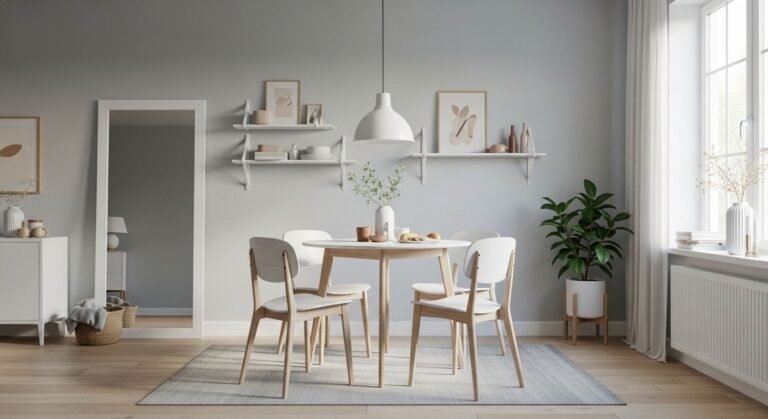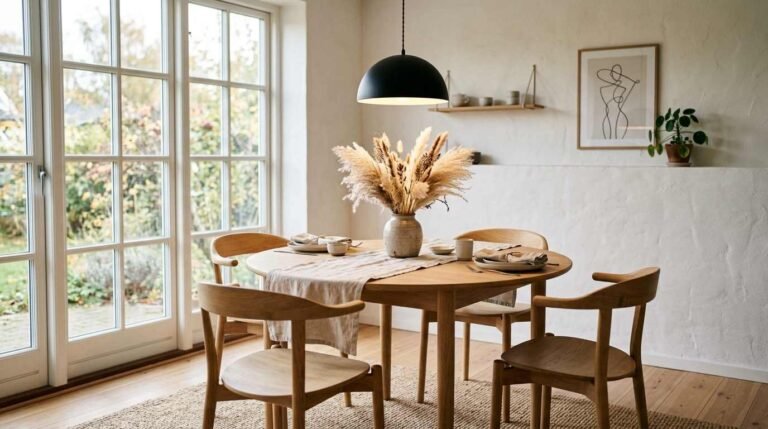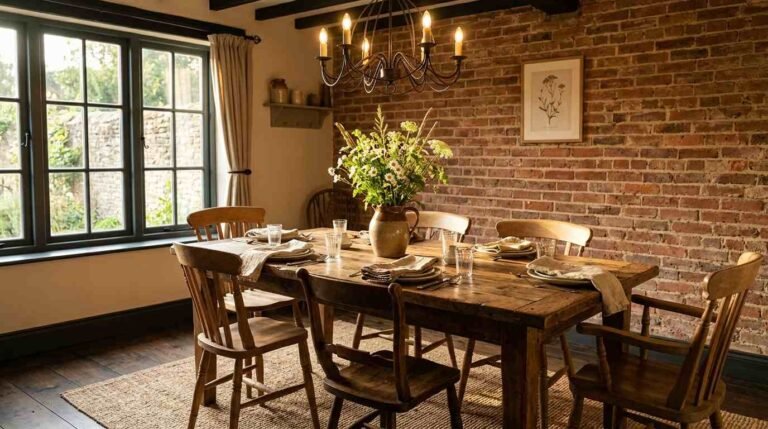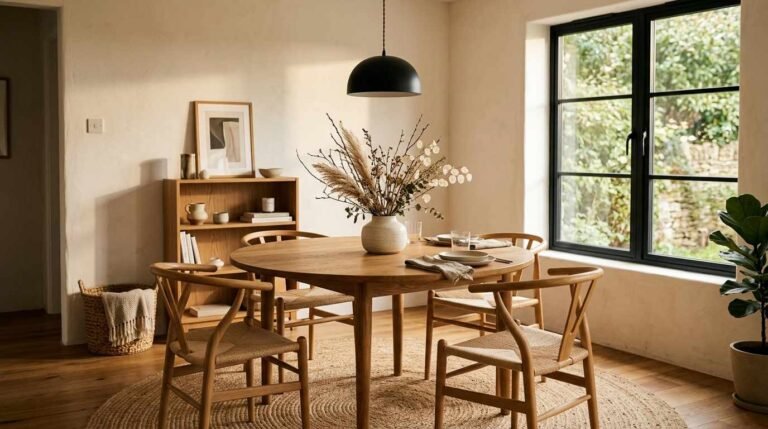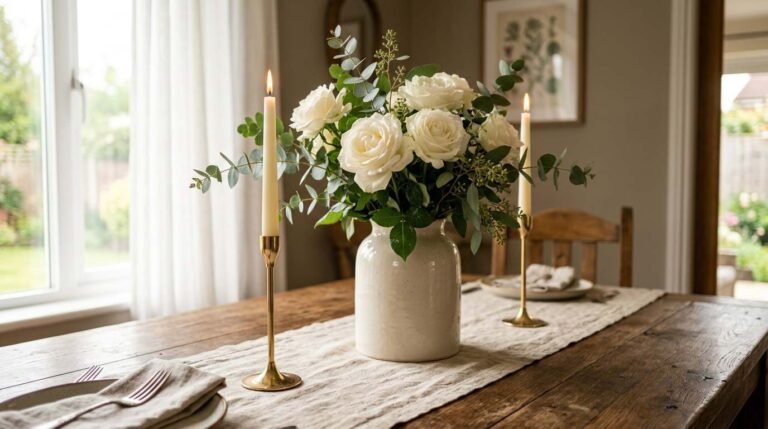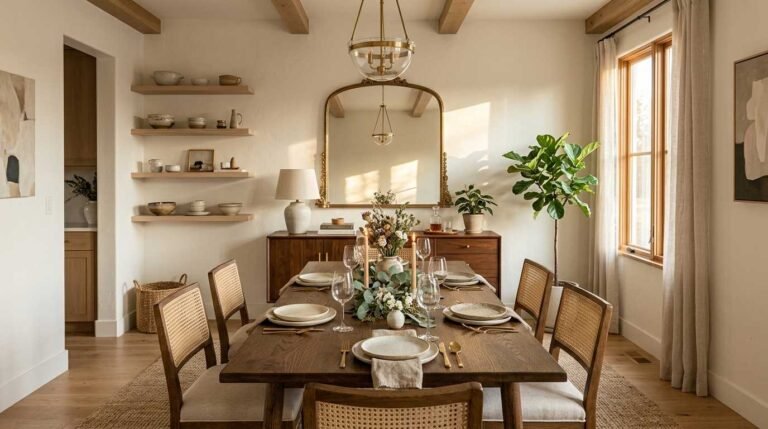
A dining room has three jobs: everyday meals, hosting guests, and fitting the space you have. This guide is organized by those jobs, not by a style. Ideas 1 to 8 help you plan the room, ideas 9 to 16 cover everyday meals, ideas 17 to 24 cover hosting, ideas 25 to 32 cover small spaces and shared rooms, and ideas 33 to 40 cover budget, upkeep, and a simple refresh. If you want formal rules for a classic room, read our guide to traditional dining room decor. If you want a relaxed country look, read our modern farmhouse dining room decor ideas. Use this guide when you want a dining room that works every day, not just on special occasions.
1. Measure the Room Before You Buy the Table
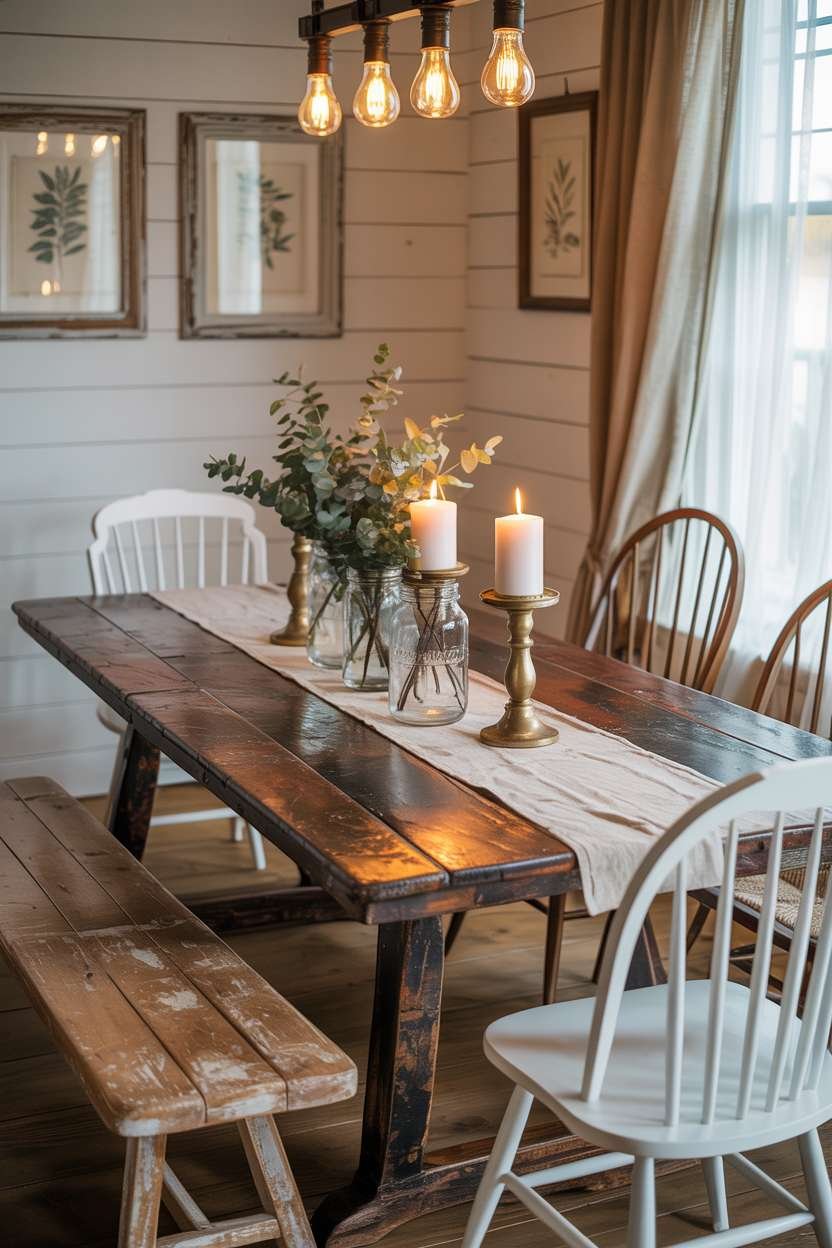
Measure the length and width of the room, then subtract the space chairs need behind them before you shop. A table that fits the room on paper can still block a door or a walkway once chairs are pulled out. Write the two room measurements and the table size you need on a card and take it with you when you shop.
Check: measure the doorway the table must pass through. A table that is wider than the door will not reach the room. Mistake to avoid: buying a table first and measuring the room after it arrives.
2. Size the Table to the People Who Eat There Every Day
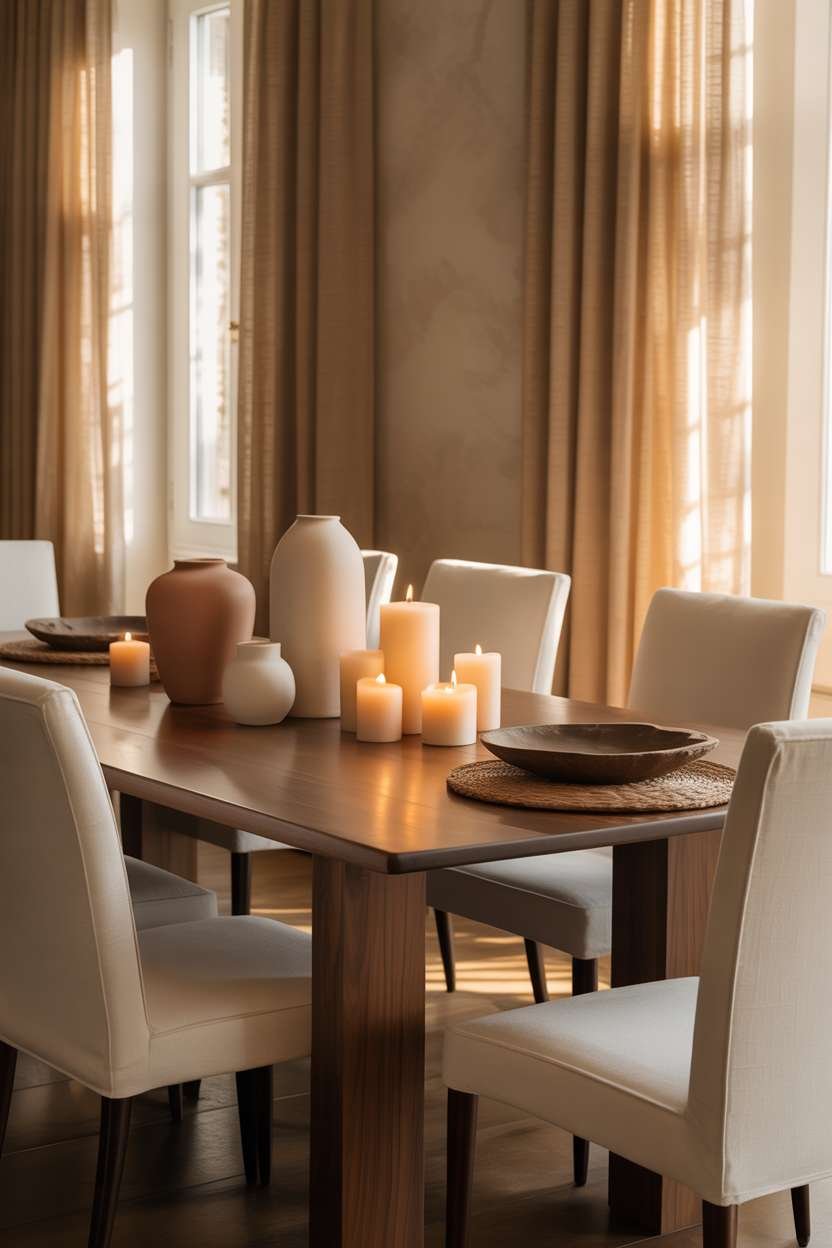
Choose a table for the number of people who eat there on a normal weekday, not for the largest party you might host once a year. A table for four that seats six with a leaf is more useful than a table for eight that crowds the room every day. Count the daily eaters first, then plan how guests will fit.
Check: a rectangular table 48 inches long seats four people, two on each side. A table 60 inches long seats six. Mistake to avoid: choosing a table for a holiday meal and living with the extra size for the rest of the year.
3. Leave Room to Pull Out Every Chair
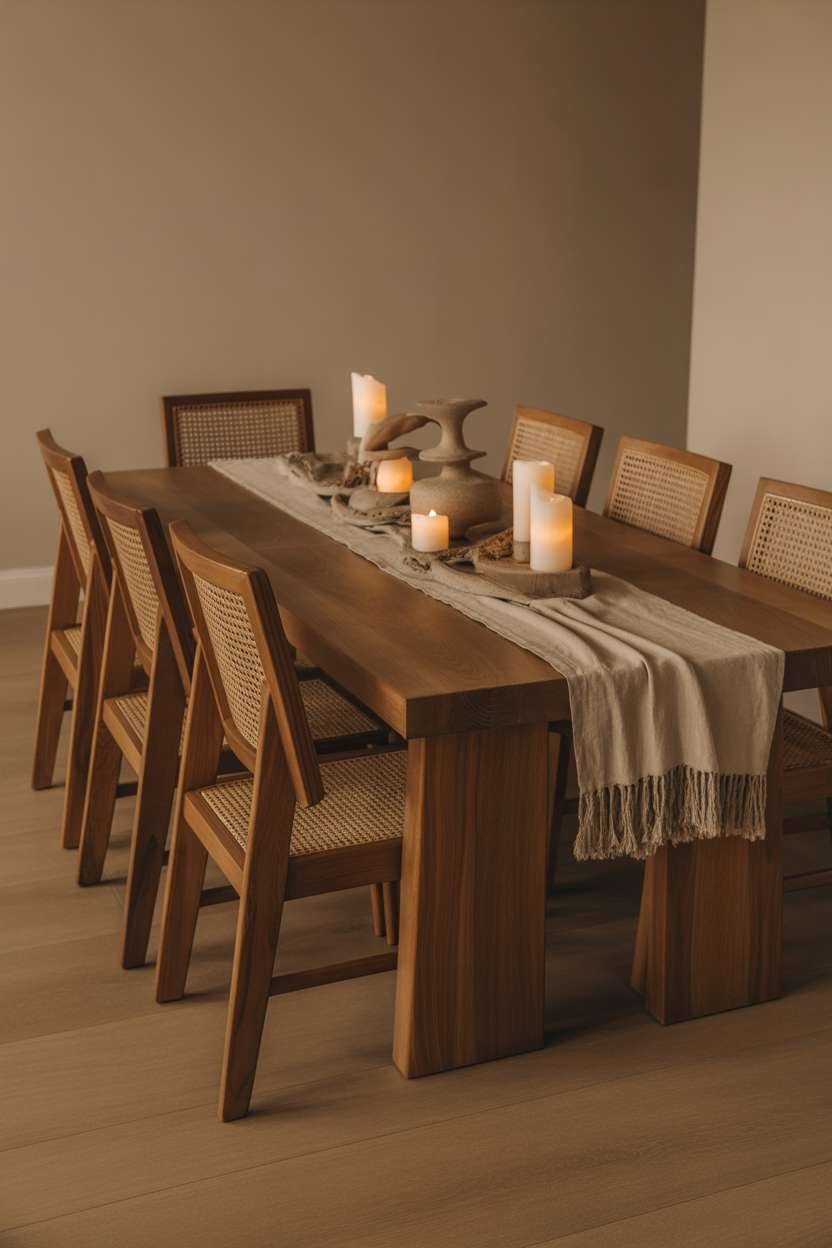
Sit in each chair and pull it out as far as you need to stand up, then check what is behind you. A chair that hits a wall, a sideboard, or a door makes every meal awkward. This check matters most on the sides of the table that face a wall, because those chairs have nowhere to go.
Check: allow 36 inches of clear space behind a chair for pulling out and standing up. Mistake to avoid: placing a sideboard so close to the table that the chairs on that side cannot move back.
4. Match the Table Shape to the Room Shape
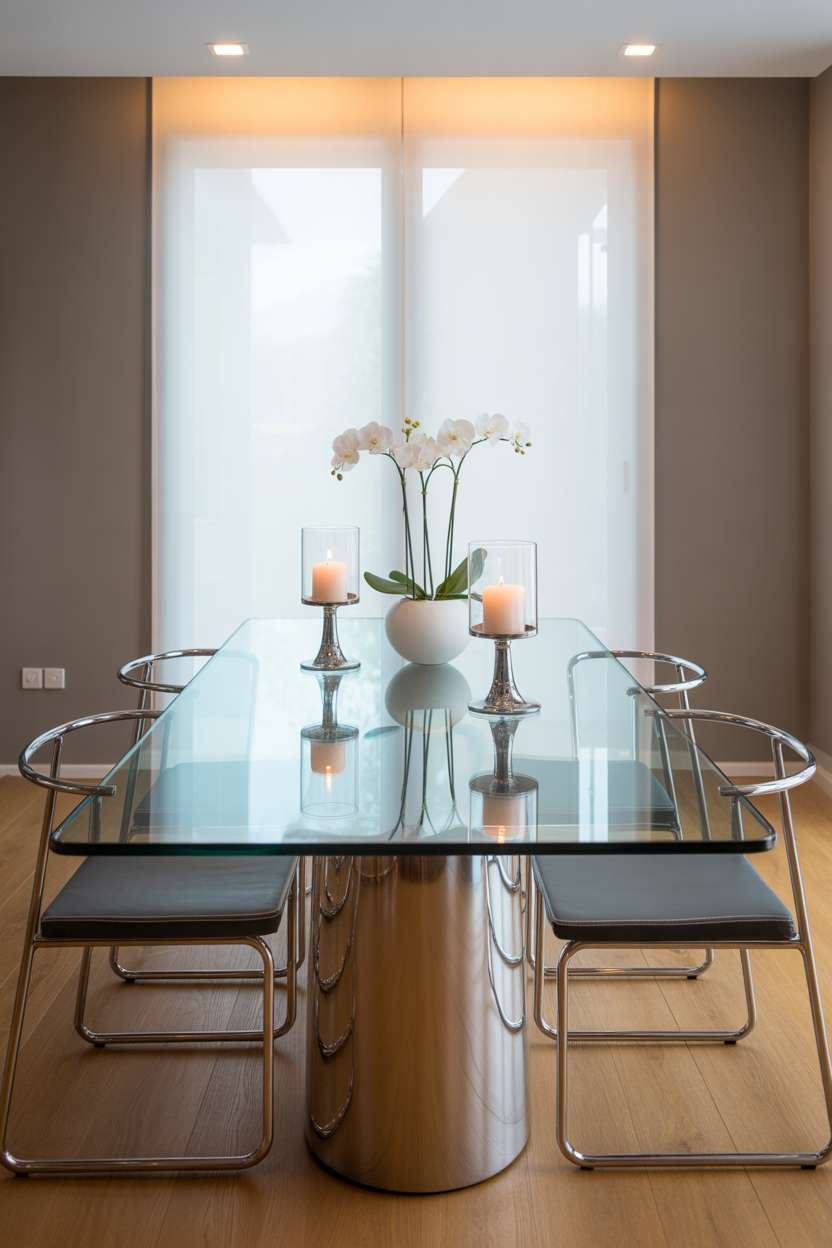
A rectangular table suits a long room, and a round table suits a square room or a corner. A round table also lets people talk across it without raising their voices, because no one sits far from the center. A square table works when the room is square and the table seats four.
Check: a round table 48 inches across seats four people and leaves room for serving dishes in the center. Mistake to avoid: putting a long rectangular table in a square room, which leaves dead corners on both ends.
5. Put the Table Where the Light and the Walkway Already Are
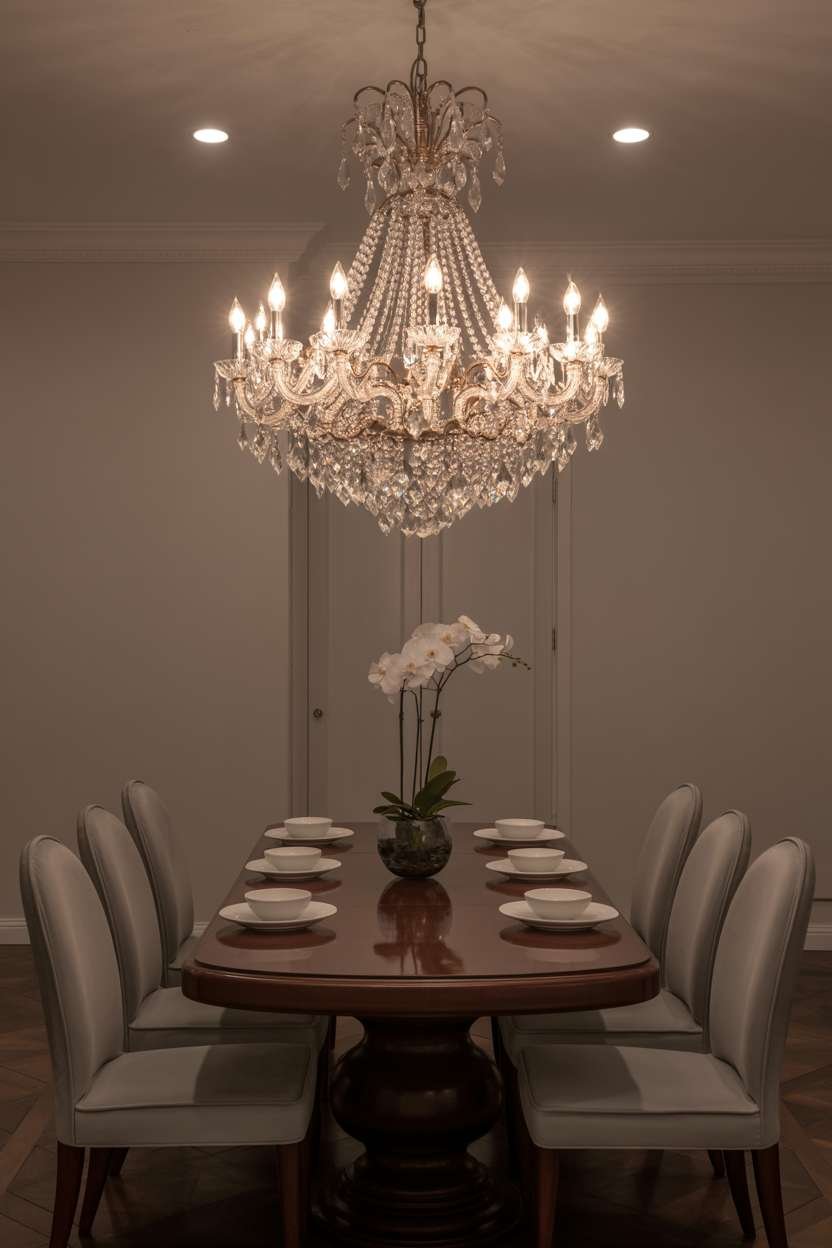
Place the table under the ceiling light you already have, near a window, and clear of the main path through the room. Moving a table to a light is cheaper than moving a light to a table. If the only light is off center, center the table on the light, not on the room, because the light is what people notice at night.
Check: the center of the table should sit directly below the center of the ceiling light. For the formal height rules for a chandelier, see our guide to traditional dining room decor. Mistake to avoid: centering the table on a rug or a wall and leaving the light hanging over an empty corner.
6. Split the Budget: Table First, Seating Second, Decor Last
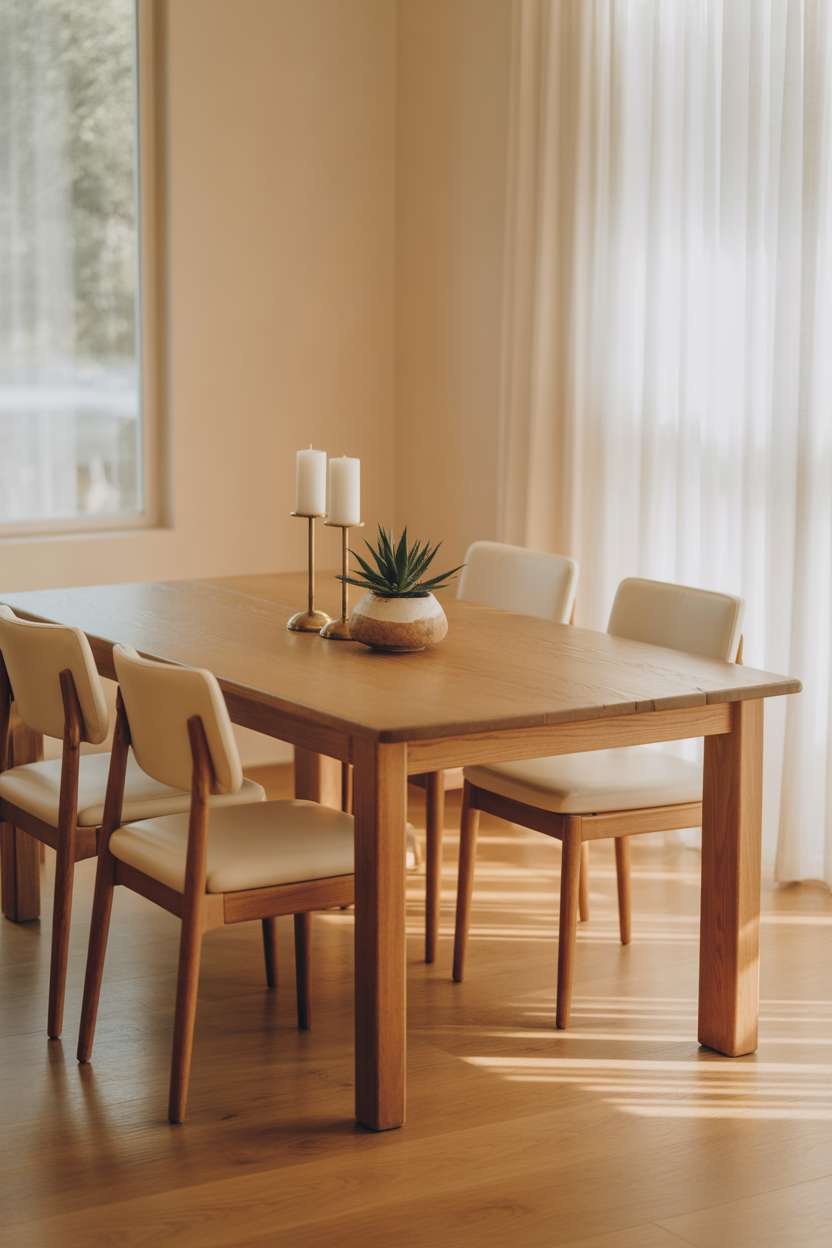
Spend the largest share of your budget on the table, the next share on chairs, and the smallest share on decor. A solid table and comfortable chairs will be used every day, while a centerpiece can wait. This order also stops you from buying decor for a table you have not chosen yet.
Check: plan three amounts before you shop: one for the table, one for seating, and one for lighting and decor. Mistake to avoid: spending half the budget on a light fixture and then buying the cheapest chairs you can find.
7. Count the Storage You Already Have Before You Buy More
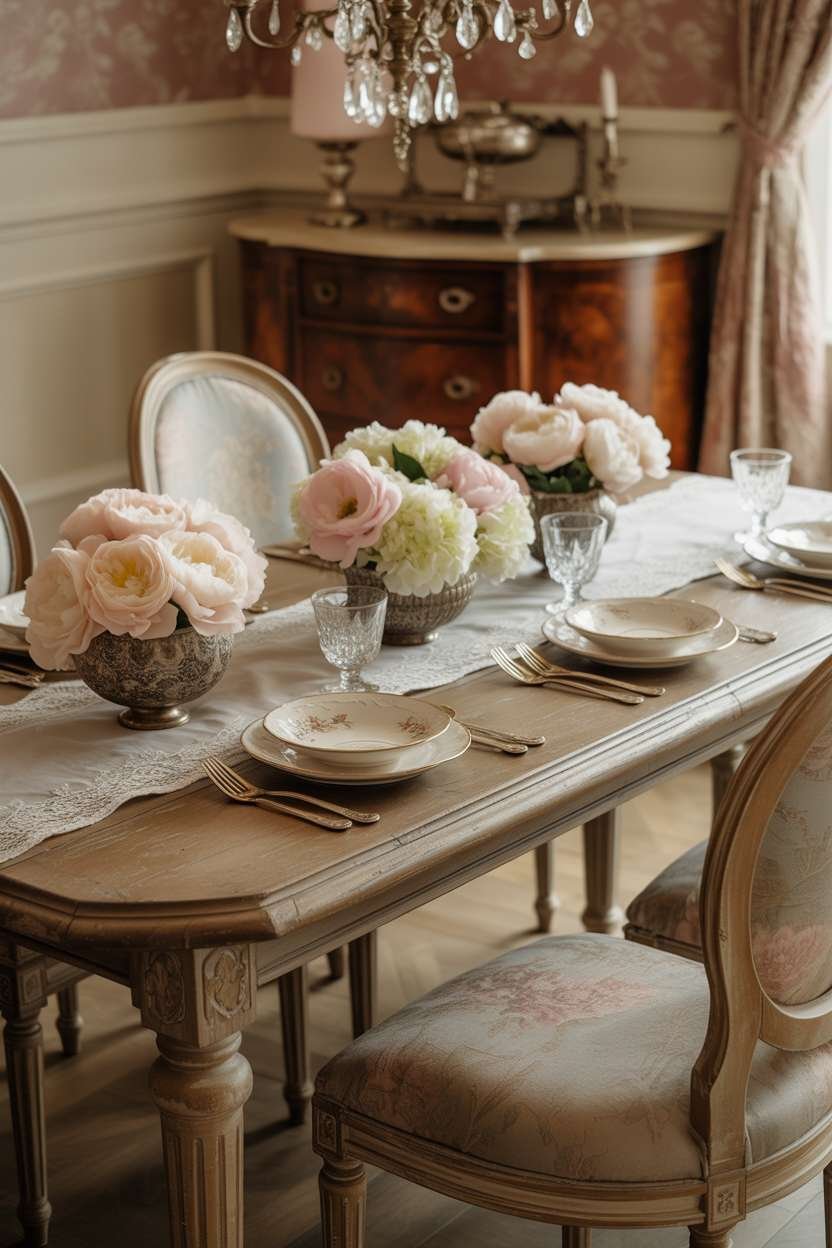
Open every drawer, shelf, and cupboard near the dining room and list what already holds placemats, napkins, candles, and serving dishes. Many dining rooms need a place to put things away, not another piece of furniture. If the list shows a gap, that gap tells you what to buy: a sideboard, a shelf, or a basket.
Check: keep everyday table items within 10 steps of the table, so setting and clearing the table takes minutes. Mistake to avoid: buying a sideboard before checking whether a kitchen cupboard already holds the same items.
8. Test the Layout With Tape Before You Move Furniture

Mark the table size on the floor with painter tape, then put chairs inside the tape outline and sit in them. Tape is cheap, and moving it takes a minute, while moving a heavy table twice takes an afternoon. Walk around the taped outline as you would during a meal, with a plate in your hand if you can.
Check: tape a rectangle the same size as the table you plan to buy, then add 36 inches on each side where chairs will sit. Mistake to avoid: trusting a floor plan on a phone screen instead of marking the real floor.
9. Choose a Table Top You Can Wipe Clean in a Minute
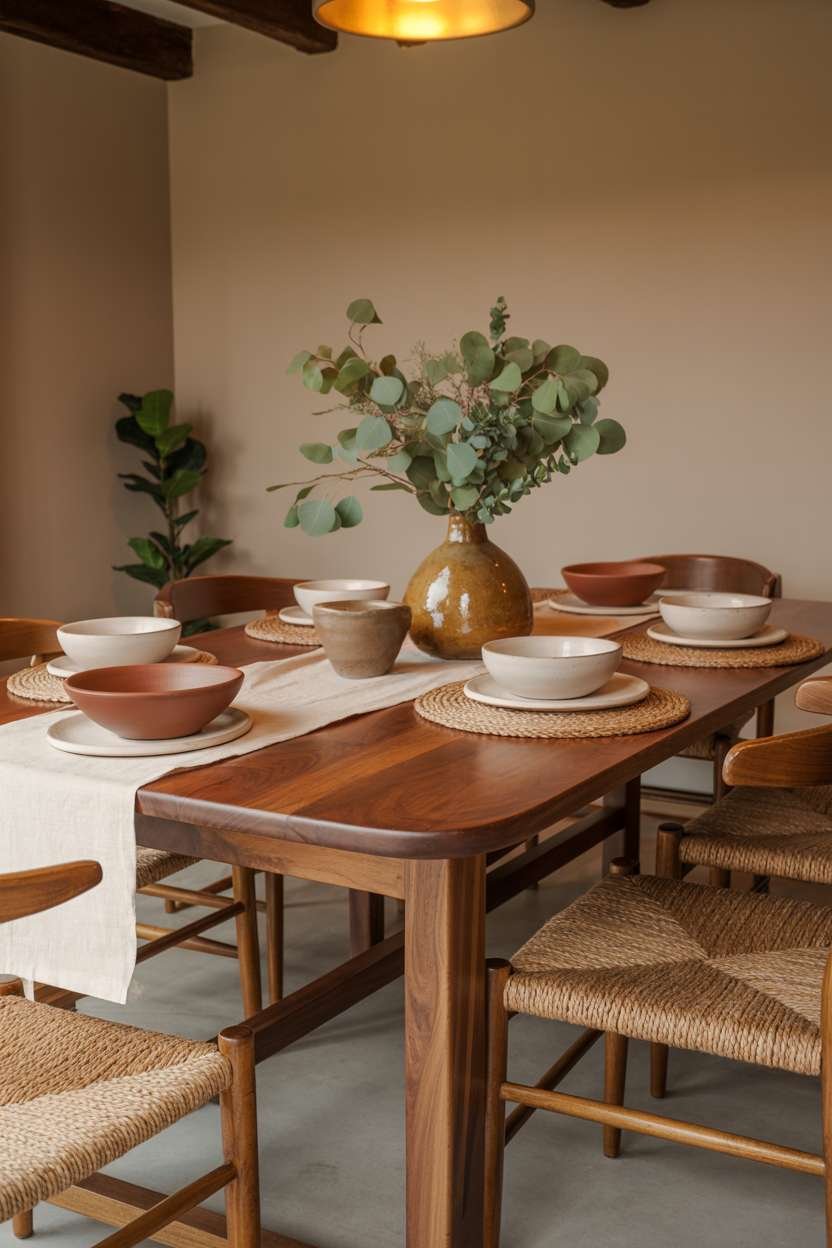
Everyday meals spill. Choose a table top that wipes clean with a damp cloth: sealed wood, laminate, glass, or a stone top with a sealed surface. Test a small hidden spot with water before you buy, and ask how the surface handles hot plates. A top that needs special cleaner will be a chore after every meal.
Check: a sealed wood or laminate top should dry clean with no ring after a glass of water sits on it for five minutes. Mistake to avoid: choosing a raw wood top for a family table and finding rings and stains in the first month.
10. Give Every Place Its Own 24 Inches at the Table
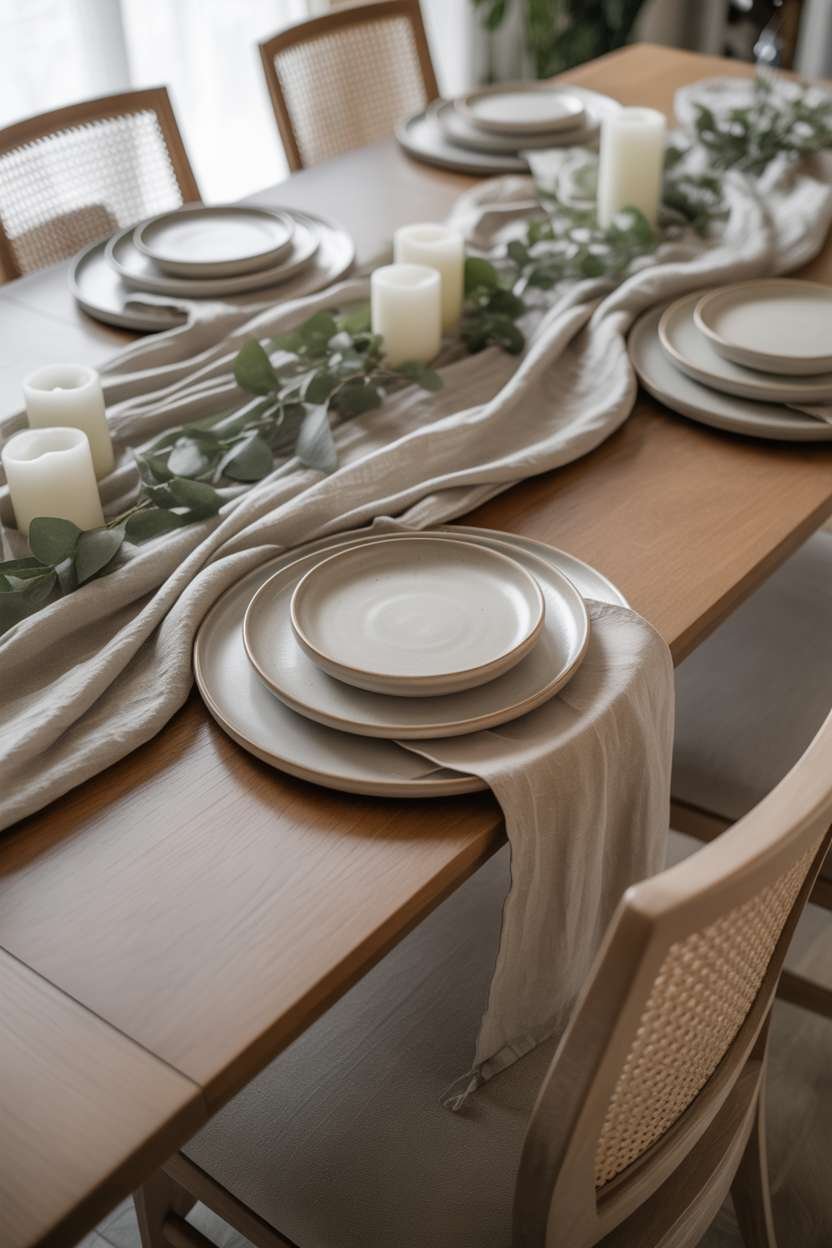
Each person needs elbow room to eat without bumping the person next to them. Measure the table edge and divide it by the number of places on that side. If the number is under 24 inches, the table is too small for that many people, or the places are too close together.
Check: allow 24 inches of table edge per person, and 15 inches of depth for a plate, glass, and cutlery. Mistake to avoid: squeezing five places along a 60 inch side, which gives each person only 12 inches.
11. Pick Chairs You Can Sit In for a Full Meal
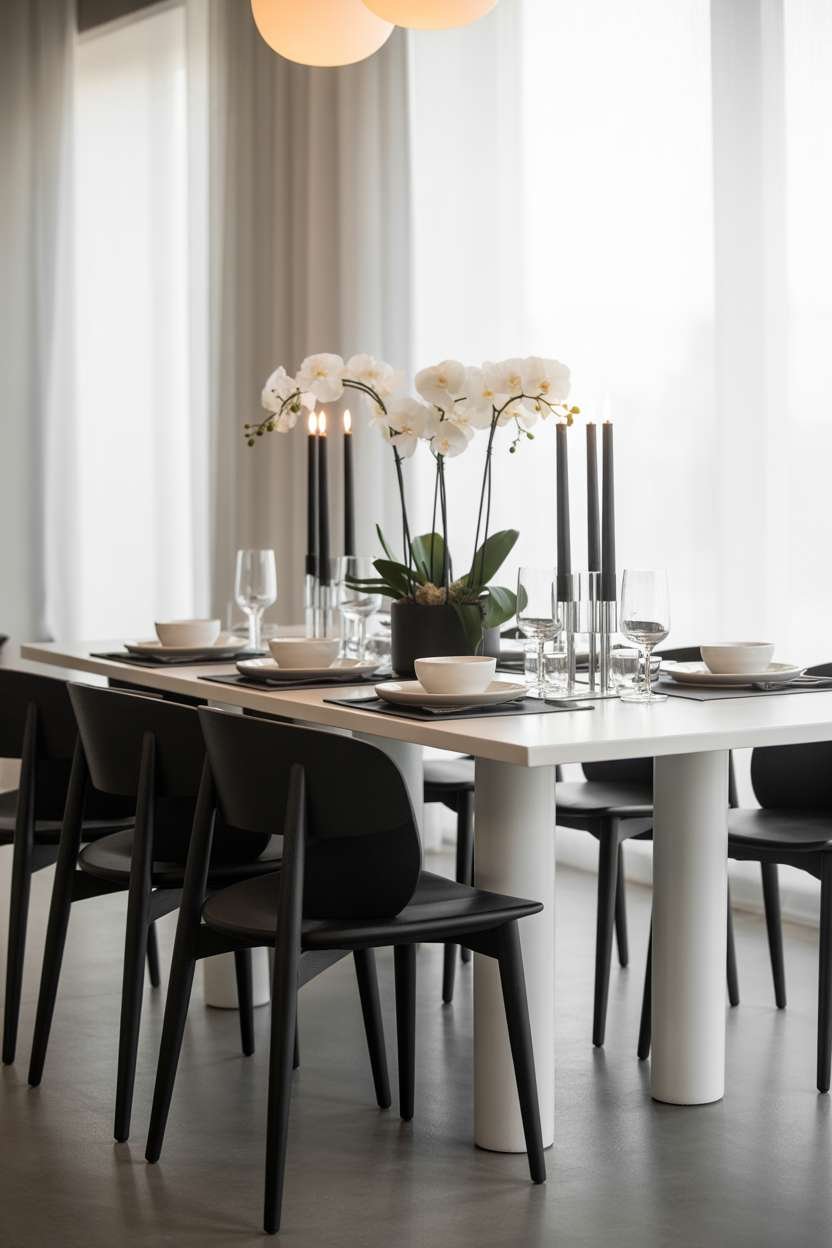
Sit in a chair for at least 10 minutes before you buy it, with your feet flat on the floor and your back against the chair back. A chair that feels fine for a minute can feel hard after a full meal. Check the seat height against your table: your thighs should fit under the table with room to spare.
Check: a dining seat 18 inches high pairs with a table 29 to 30 inches high. Mistake to avoid: buying chairs by looks alone and finding that your knees hit the table apron.
12. Keep One Low Centerpiece on the Table All Week
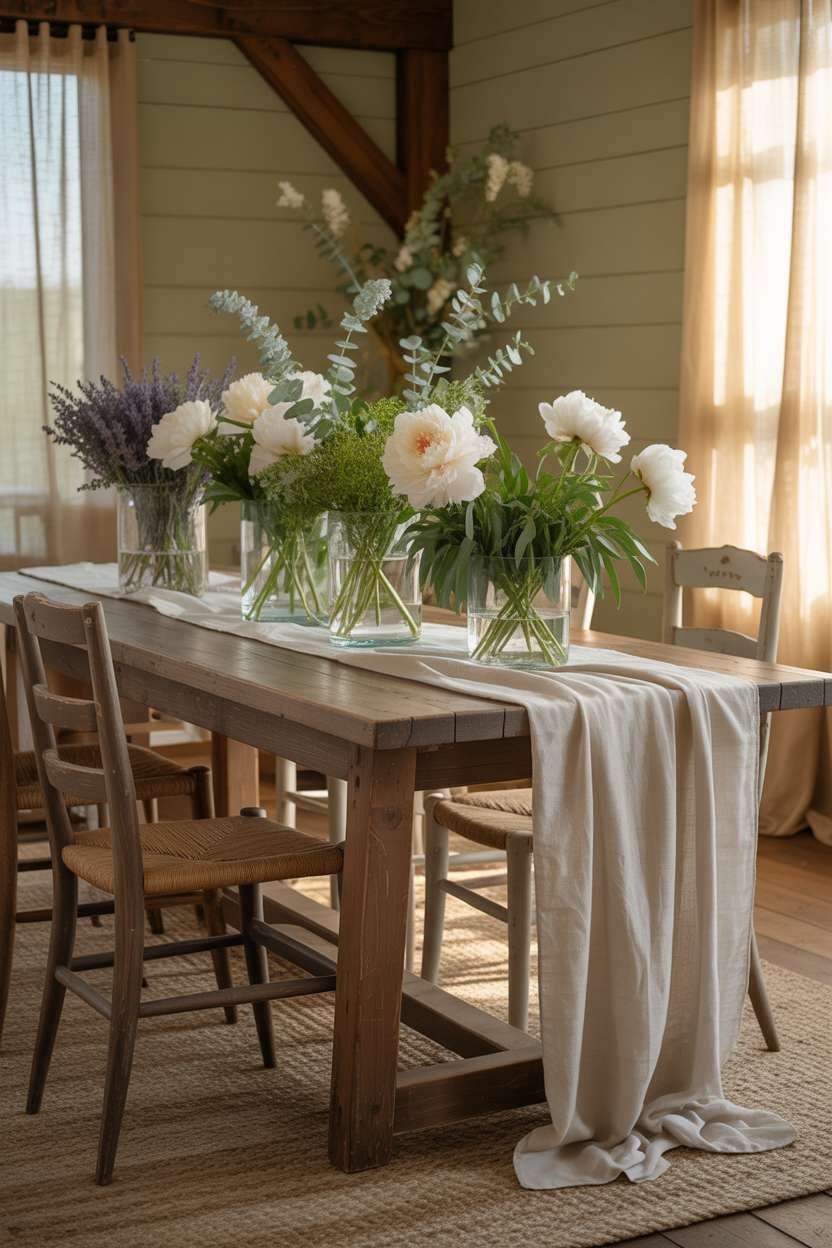
An everyday centerpiece should stay on the table while you eat, so keep it low and narrow. A tray, a low bowl of fruit, or a small vase with three stems is enough. It should not block the view across the table or take the space where serving dishes go.
Check: keep the centerpiece under 10 inches tall and under 18 inches long, so it fits between places. Mistake to avoid: using a tall vase as a daily centerpiece and moving it to the floor at every meal.
13. Put Serving Dishes Where the Cook Can Reach Them
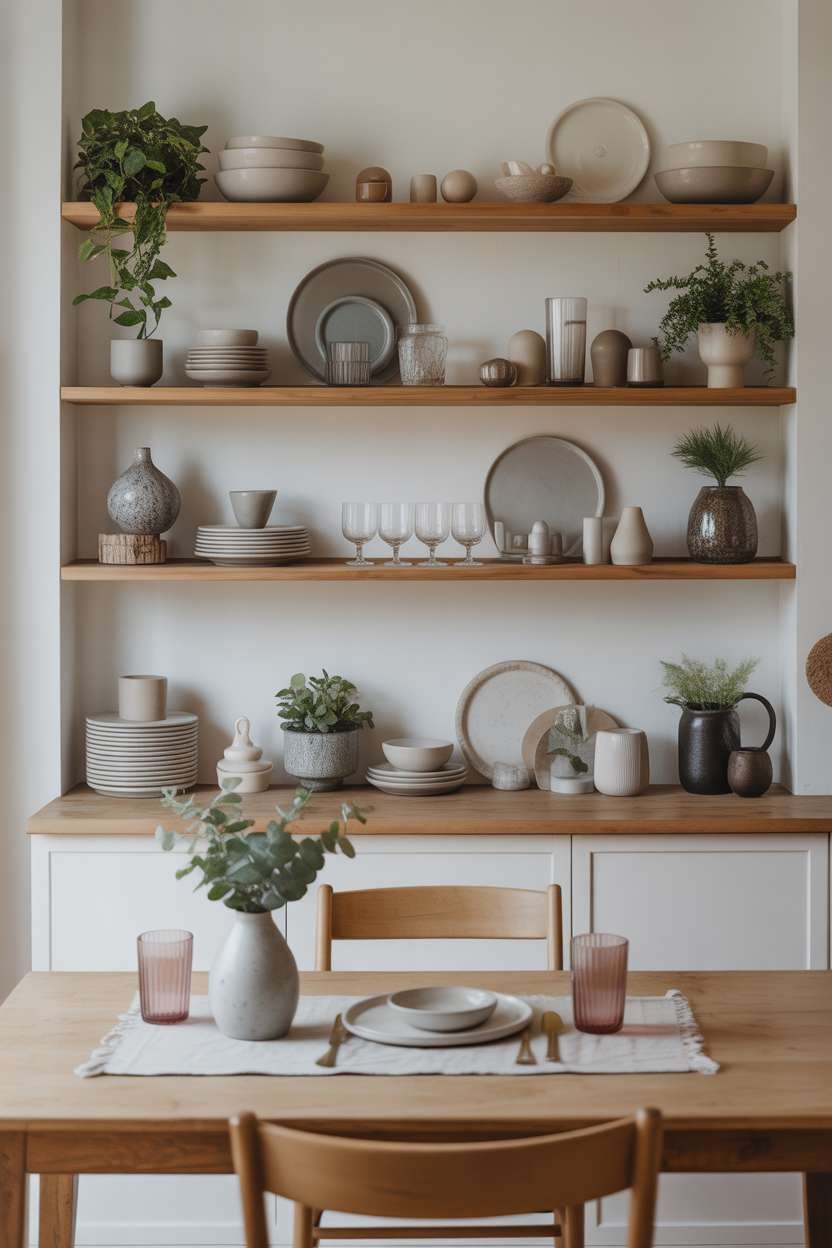
The person who serves the food should not have to walk around the table with a hot dish. Keep a clear spot on the table, a sideboard, or a trolley within arm’s reach of the cook’s seat. Put the dishes you use most in that spot, and keep the rest in the kitchen until they are needed.
Check: a sideboard or trolley placed within 36 inches of the table end works as a serving station. Mistake to avoid: putting the serving dishes on the far end of the table, where no one can reach them without standing up.
14. Add a Dimmer So One Light Works for Meals and Homework
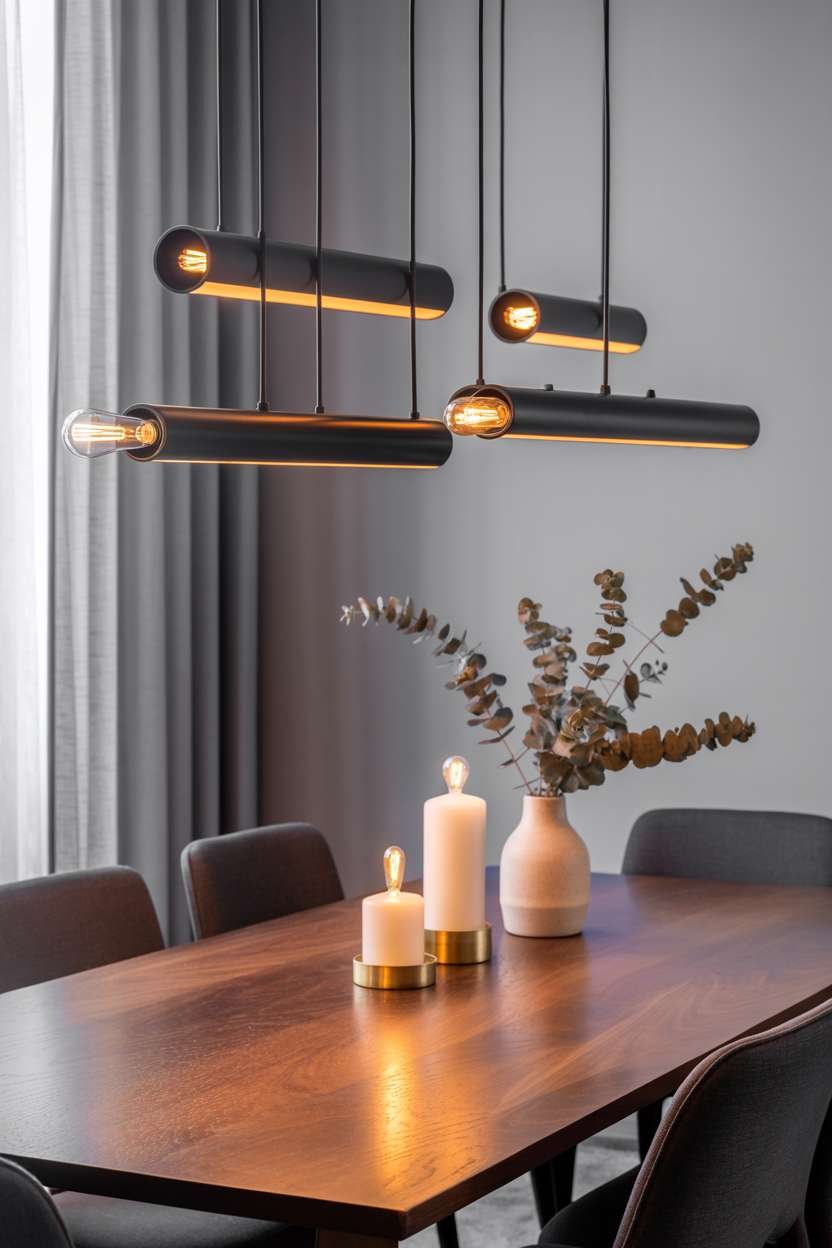
A dining room is used for meals, homework, and work, and each job needs different light. A dimmer switch lets one ceiling light do all three jobs: bright for homework, medium for dinner, and low for a late evening meal. If you cannot fit a dimmer, use two light sources, such as a ceiling light and a lamp on the sideboard.
Check: choose a dimmer that matches the bulb type in the fitting, and test it at the lowest setting before you finish. Mistake to avoid: fitting a dimmer to bulbs that are not dimmable, which makes the light flicker.
15. Choose a Rug You Can Clean, or Skip the Rug
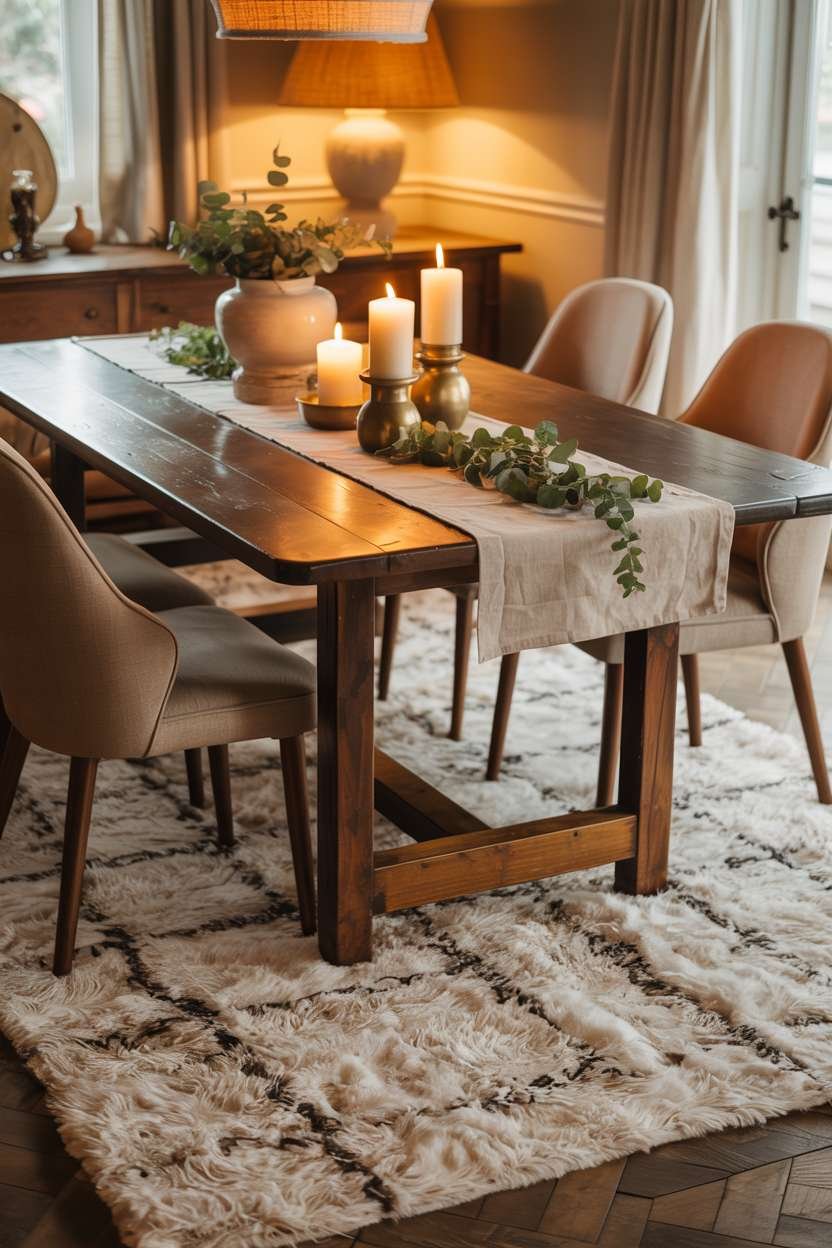
A rug under a dining table catches food, so choose one you can clean: a low pile rug, a washable rug, or an indoor outdoor rug in a dining room that gets heavy use. If the rug cannot be cleaned, skip it and let the floor show. A dirty rug looks worse than no rug.
Check: choose a low pile rug with a backing that does not slip, and wash a washable rug on a cold cycle before you put it under the table. Mistake to avoid: using a high pile rug that traps crumbs and stops chairs from sliding.
16. Make One Seat the Easy Clean Seat for Kids and Spills
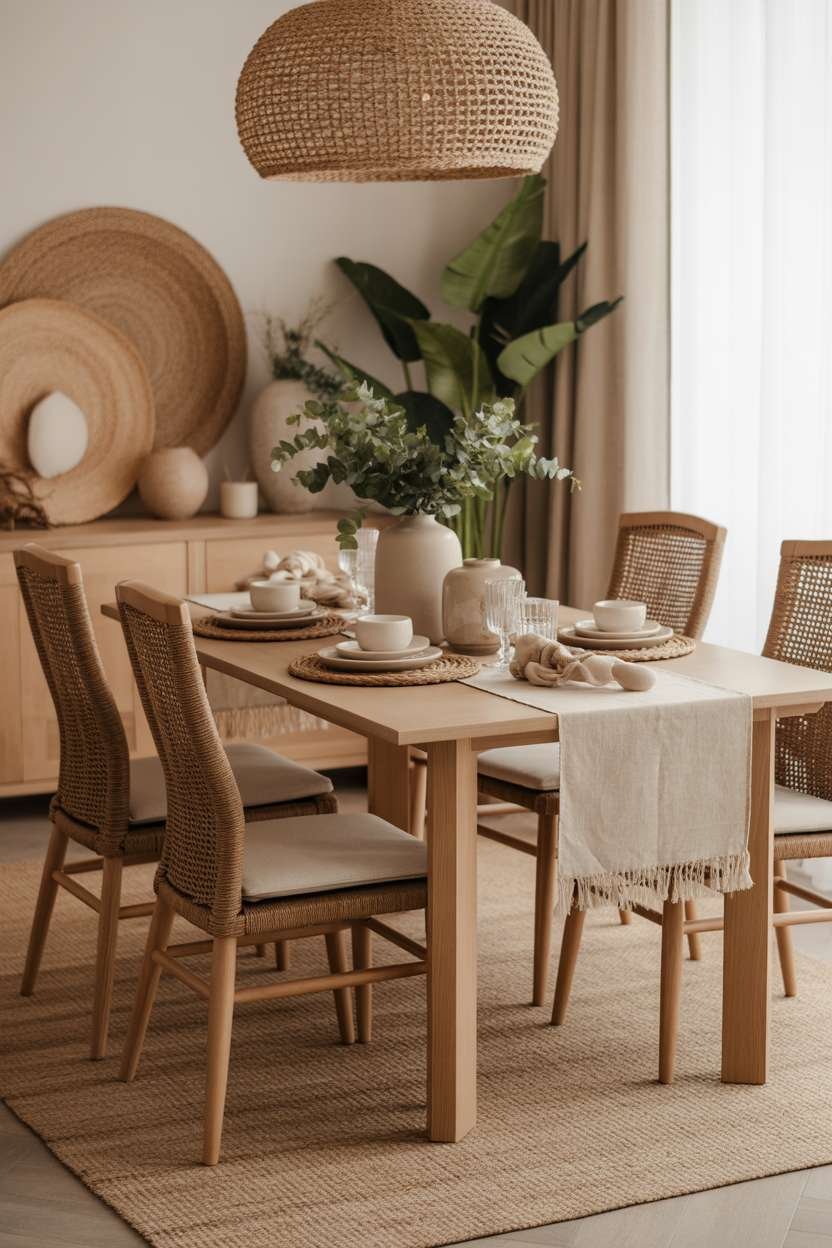
If children eat at the table, give the youngest child the seat that is easiest to clean and closest to the kitchen. Use a washable seat cover or a wipe clean chair for that seat, and keep a cloth nearby. This one seat takes most of the spills, so it should be the easiest to wipe, not the prettiest chair in the set.
Check: a seat cover that comes off and washes in a normal cycle is worth more than a matching set that stains. Mistake to avoid: putting a child in a fabric chair that cannot be cleaned and then banning food at the table.
17. Use a Table That Grows for Guests
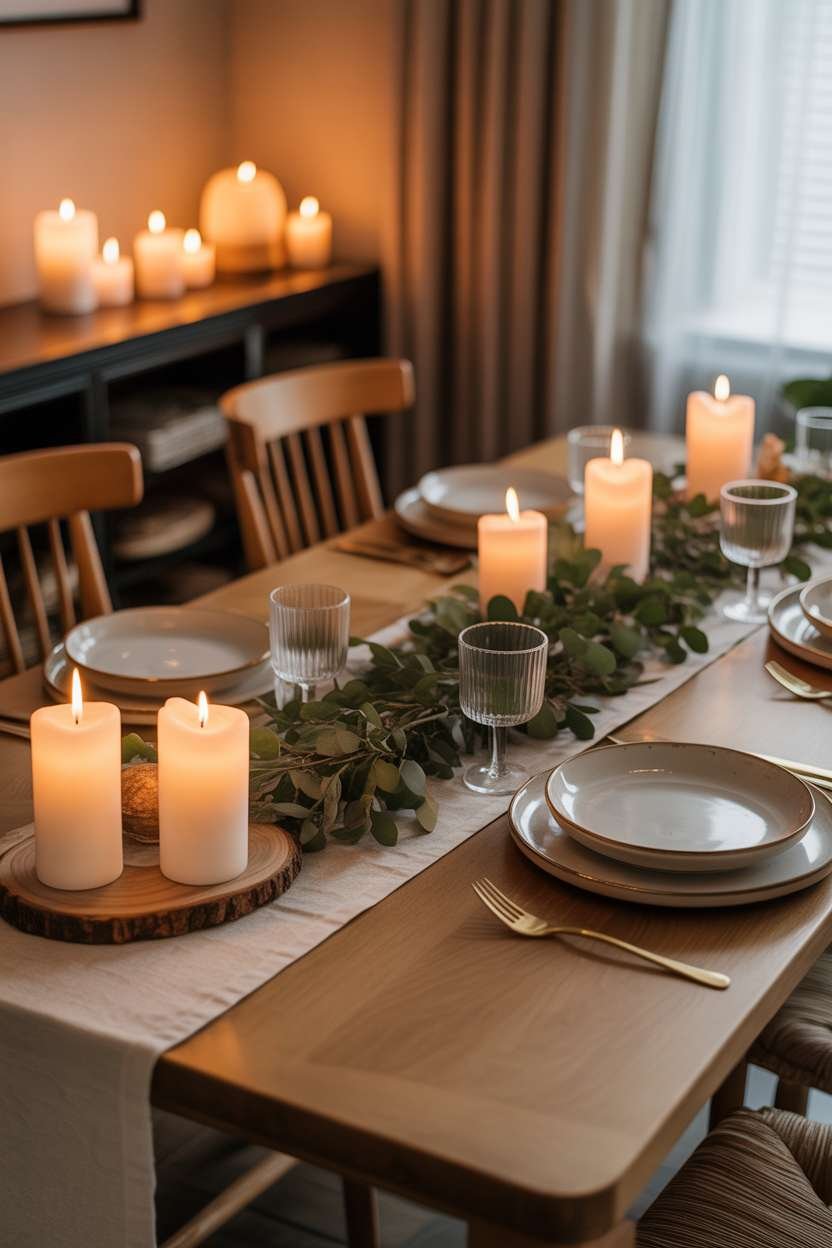
An extendable table, a table with leaves, or a table that takes a separate leaf lets a daily table for four become a hosting table for eight. Store the leaves where you can reach them, and test the extension before guests arrive. A table that grows only works if you can open it in under five minutes.
Check: a table that extends from 60 inches to 84 inches adds room for one extra person on each side. Mistake to avoid: buying an extendable table and storing the leaves in a place you cannot reach on the day guests come.
18. Keep Spare Chairs That Fold Away Flat
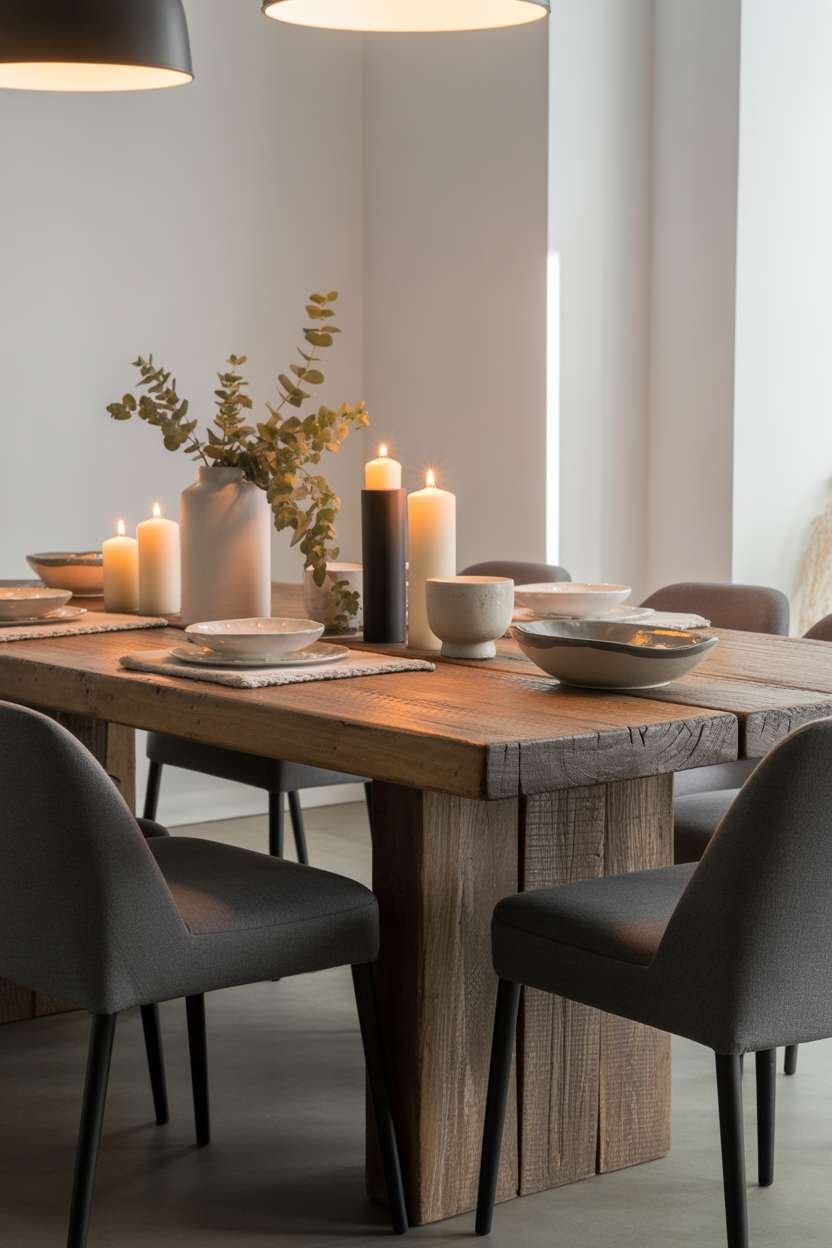
Spare chairs should fold flat or stack, and fit in a cupboard, under a bed, or behind a door. Keep two spares, not six, unless you host large groups often. Test a spare chair by sitting in it for a full meal, because a chair that hurts after 10 minutes will not be used again.
Check: a folding chair that is 17 to 18 inches high at the seat matches a standard dining table. Mistake to avoid: buying spare chairs that do not fold and then storing them in the dining room all year.
19. Set the Table the Night Before a Big Meal
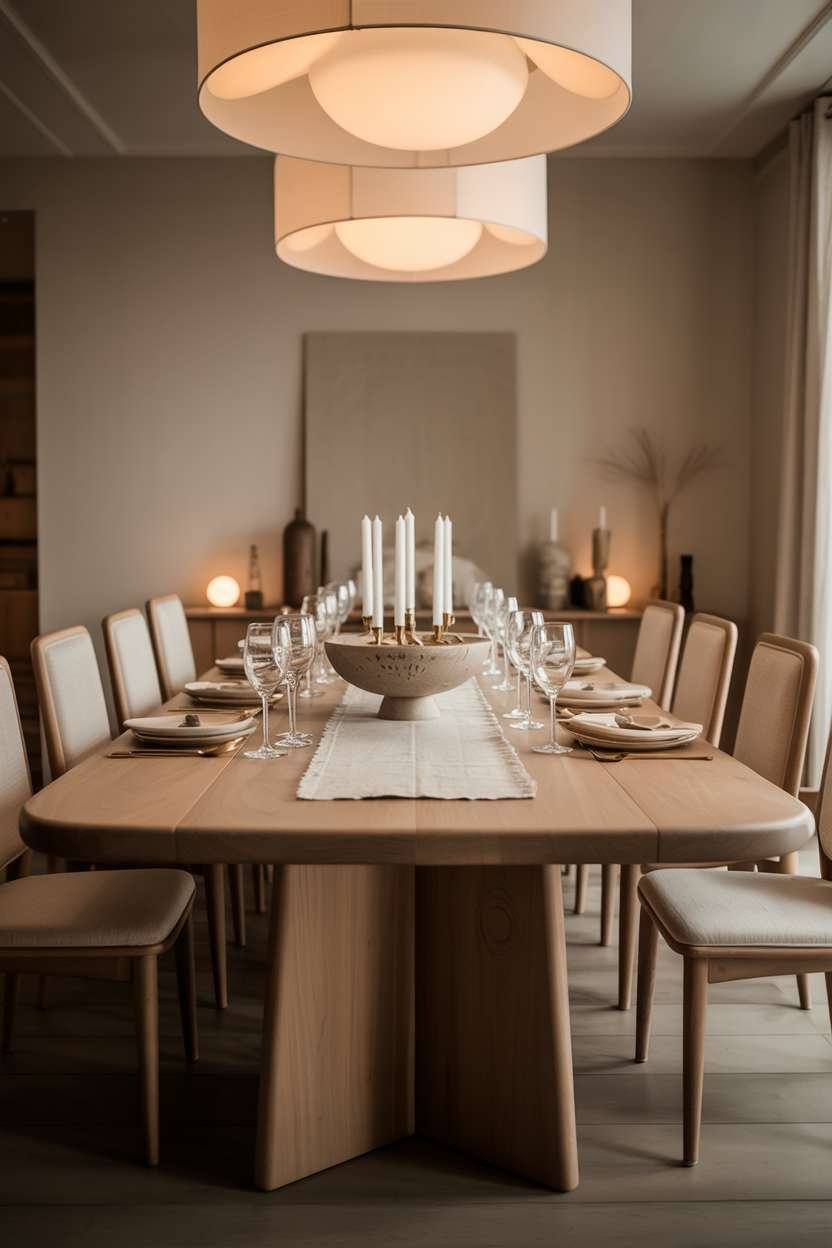
Set the table the night before a big meal, with plates, glasses, cutlery, and napkins for every guest. This turns a busy morning into a calm one, and it lets you count places before guests arrive. Put a card or a small mark at each place if guests need to find a seat.
Check: count places twice: once when you set the table, and once when the food is ready. Mistake to avoid: setting the table an hour before guests arrive and finding you are one plate short.
20. Move Drinks and Desserts Off the Table to a Side Table
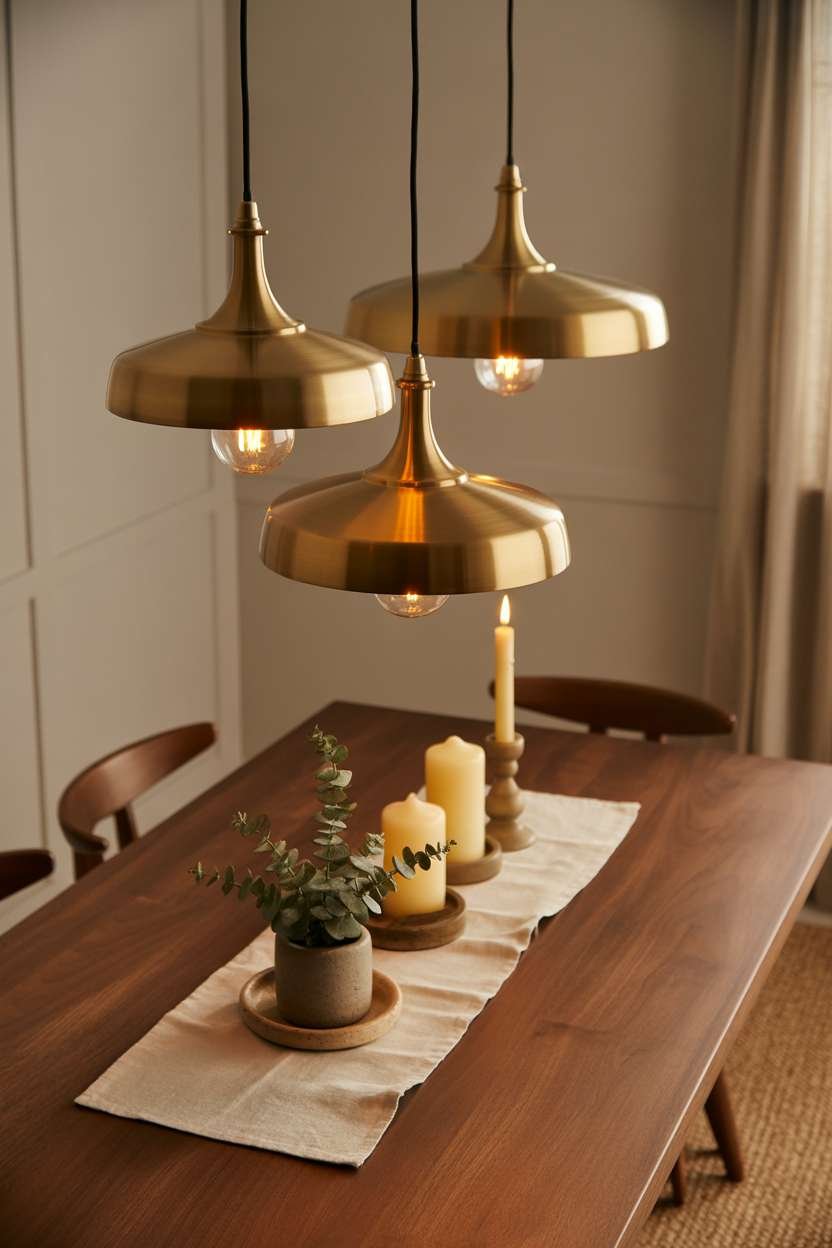
A table full of food has no room for drinks, so move drinks, desserts, and extra plates to a sideboard, a trolley, or a small table nearby. Guests can help themselves without reaching across the food, and the main table stays clear for plates. Keep water on the main table, and move the rest off it.
Check: keep the drinks station within 6 feet of the table, so guests do not have to leave the room. Mistake to avoid: putting drinks in the kitchen, where guests have to walk through a busy cooking area to reach them.
21. Light the Table in Two Layers for Evening Guests
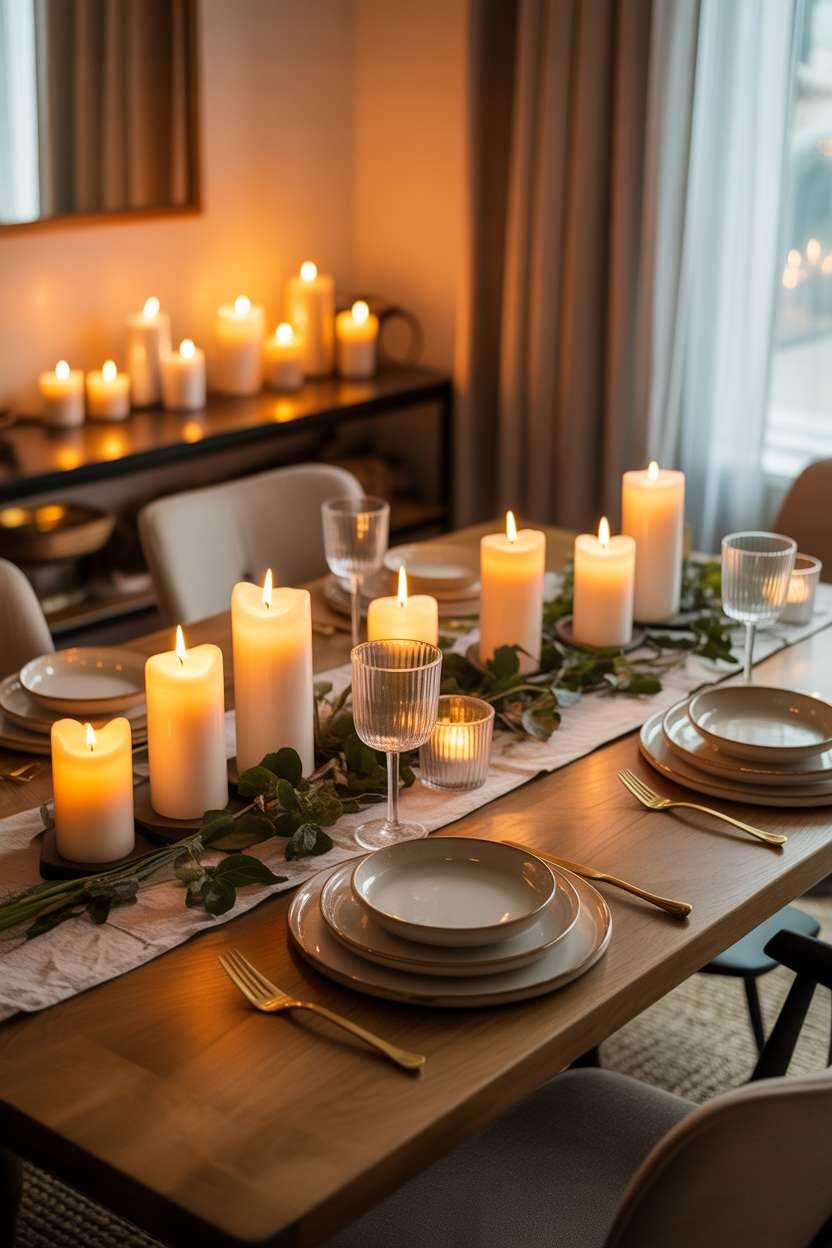
Evening hosting needs two layers of light: a ceiling light over the table and a second, lower light, such as candles in safe holders or a lamp on the sideboard. The second layer softens the room and stops the ceiling light from feeling harsh. Turn the ceiling light down and let the second layer do the work once food is served.
Check: keep candle flames at least 12 inches from curtains, paper, and anything that can catch fire, and never leave them burning in an empty room. Mistake to avoid: relying on a single bright ceiling light, which makes an evening meal feel like a meeting room.
22. Use a Centerpiece You Can Lift Off in One Move
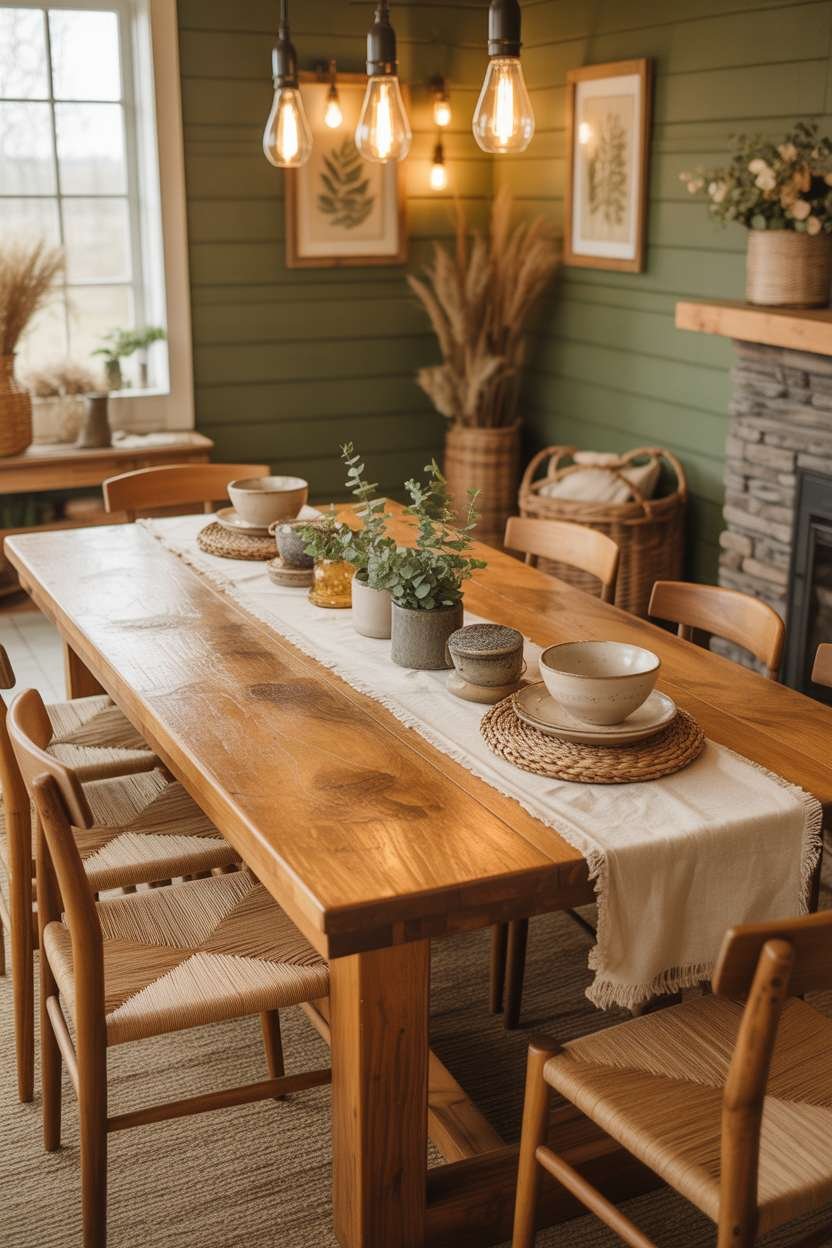
A hosting centerpiece should look good when guests arrive and come off the table in one move when food arrives. Put it on a tray, a board, or a cloth, so you can lift the whole thing and set it on the sideboard. A centerpiece that takes five minutes to move will be left in the way.
Check: the centerpiece and its tray should weigh less than you can lift with two hands, and fit on the sideboard. Mistake to avoid: building a centerpiece from separate heavy pieces that cannot be moved as one.
23. Give Guests a Clear Place to Put Coats and Bags
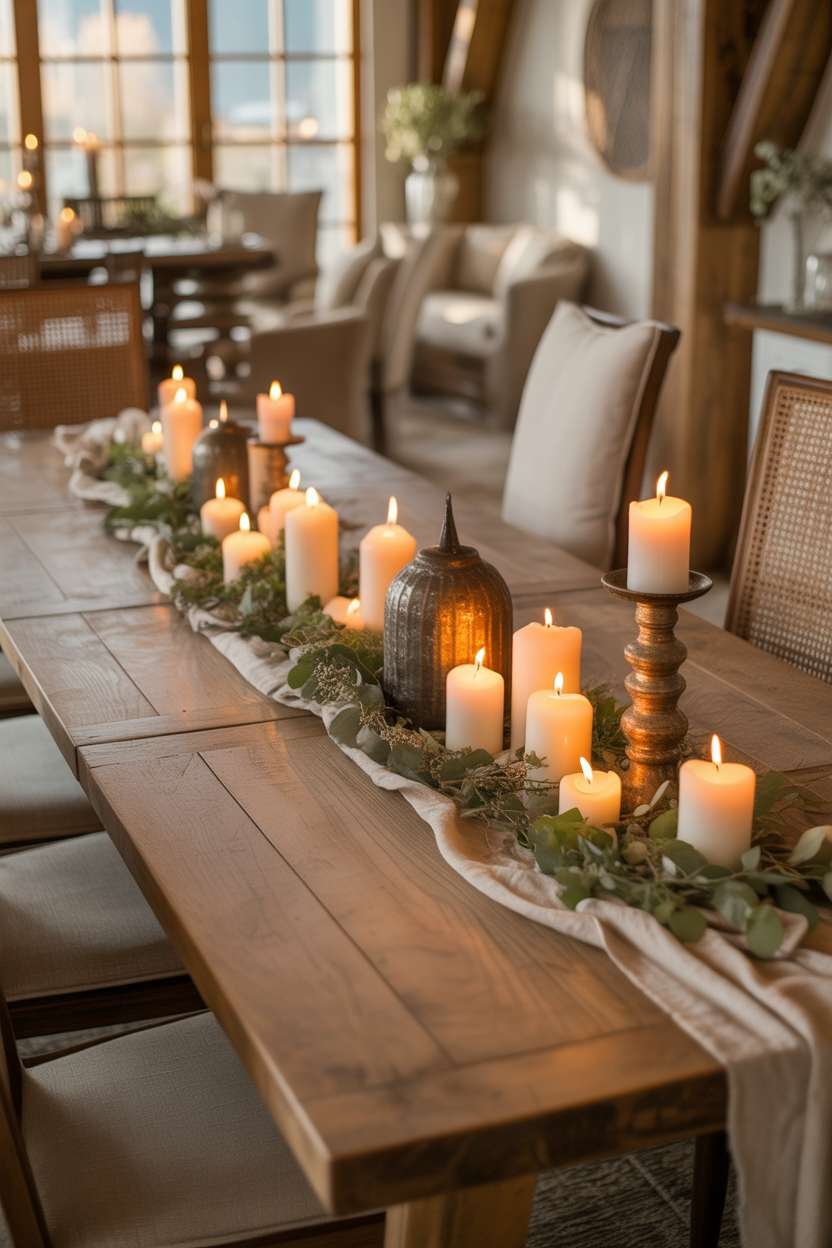
Guests need a place for coats and bags that is not the dining table or a chair back. Use hooks by the door, a chair in the hall, or a bench near the entrance. Tell guests where to put things when they arrive, so coats do not end up on the table or on the floor.
Check: allow one hook or one seat per guest for coats, and a clear spot on the floor for bags. Mistake to avoid: leaving coats on dining chairs, which makes those chairs unusable for eating.
24. Plan the Clear Up Before Guests Arrive
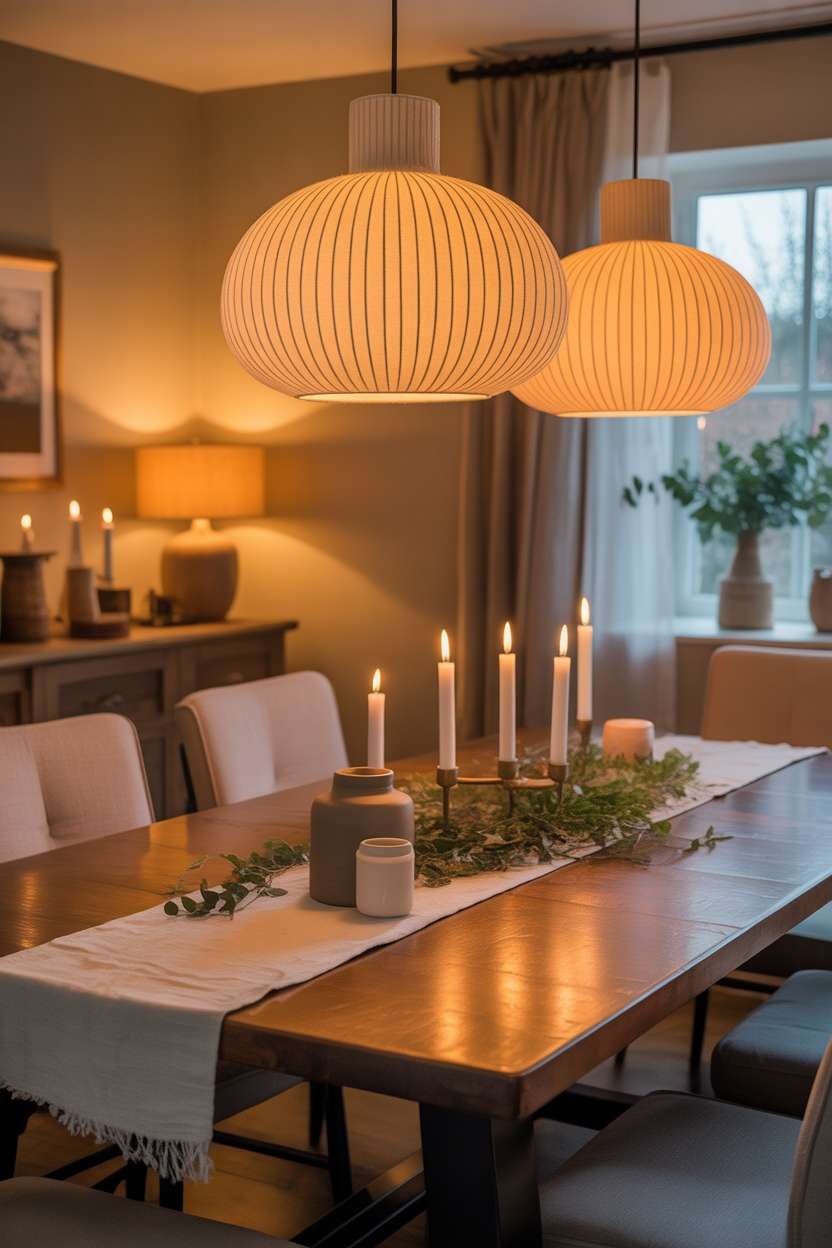
Decide before guests arrive where dirty plates will go, where the bin is, and who will help clear the table. Put an empty tray or a clear counter space ready in the kitchen. A clear up plan lets you enjoy the end of the meal instead of facing a full table and a full sink at the same time.
Check: clear the kitchen counter before guests arrive, so there is space for dirty plates when the meal ends. Mistake to avoid: starting to clear the table while guests are still eating, which ends the meal early.
25. Put a Round Table in a Square Corner
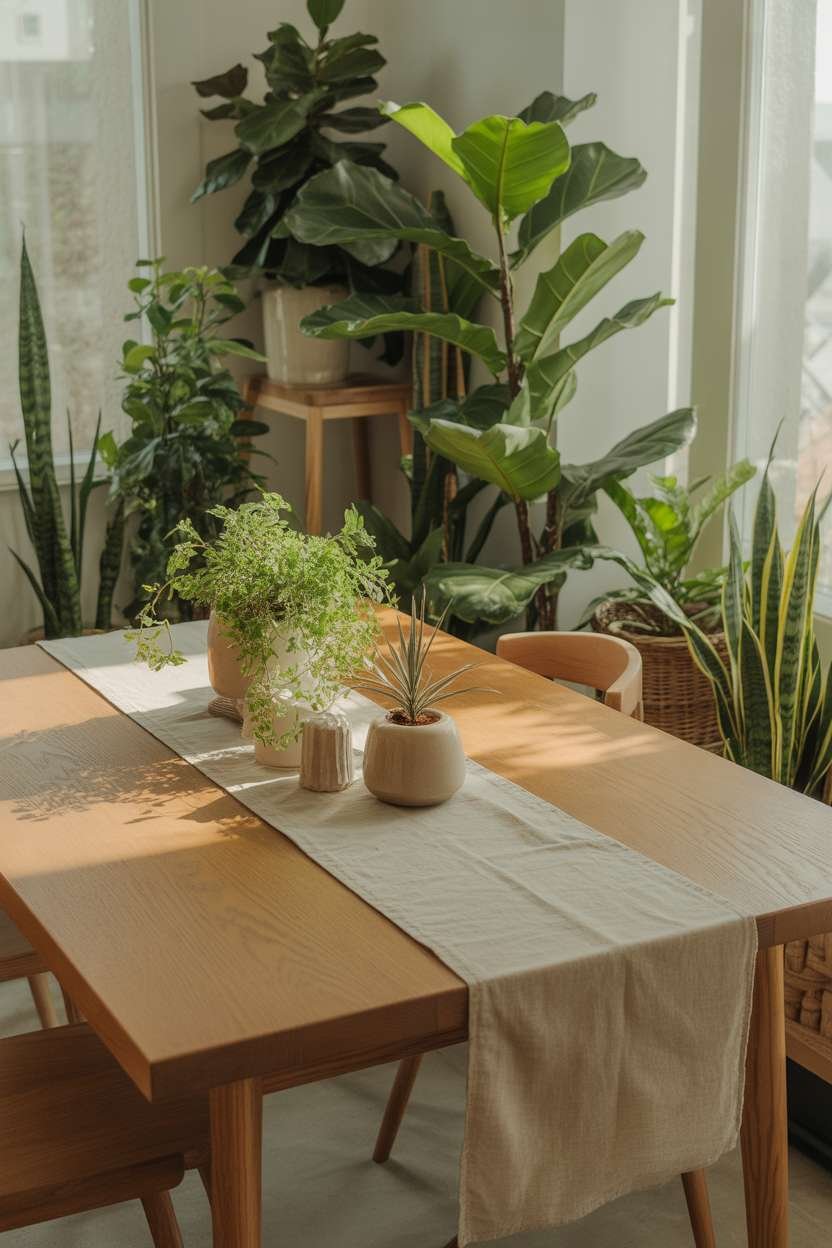
A round table fits a square corner better than a rectangular table, because it leaves no sharp corner to walk into and no dead space behind it. It also seats one extra person more easily, because there are no corners to work around. Choose a pedestal base, so chairs can slide in from any side.
Check: a round table 42 inches across fits a corner nook for four people and leaves room to pull chairs out. Mistake to avoid: putting a rectangular table in a small square corner, which blocks one side completely.
26. Push a Bench Against the Wall to Save Floor Space
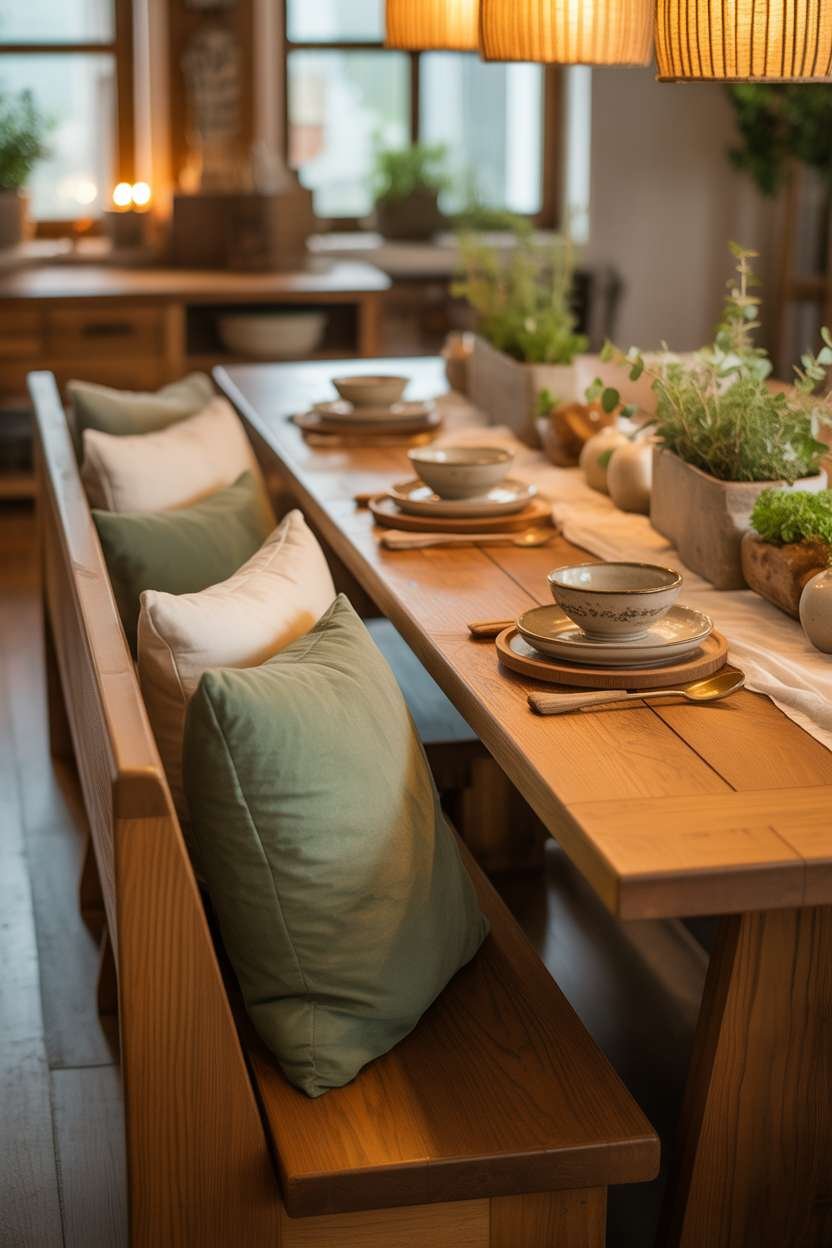
A bench on one side of the table, pushed against the wall, saves the space that chairs need behind them. It also seats more people in the same length, because there is no gap between seats. Use a bench with a flat top and a cushion that can be wiped clean, and keep the other side for chairs.
Check: a bench 14 to 16 inches deep gives enough seat room without taking the space of a chair. For bench seating in a farmhouse style, see our modern farmhouse dining room decor ideas. Mistake to avoid: using a bench that is too deep, which pushes the table away from the wall and wastes the space you saved.
27. Use a Drop Leaf Table on a Wall That Has No Other Job
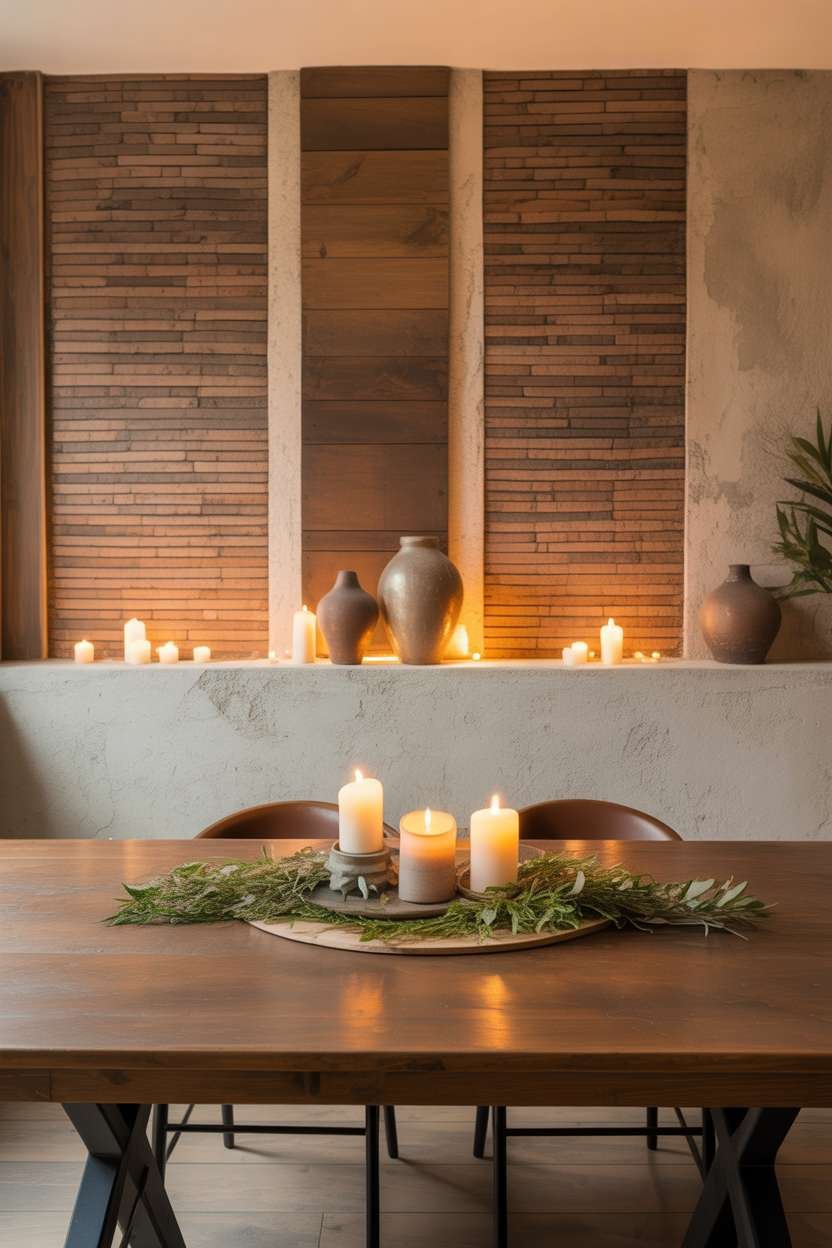
A drop leaf table folds down to the size of a shelf when it is not in use, and opens to seat two or four when it is needed. Put it on a wall that has no door, no radiator, and no other furniture. Keep two folding chairs nearby, so the table can be used in a minute.
Check: a drop leaf table 24 inches wide when folded and 48 inches wide when open works for a one wall dining spot. Mistake to avoid: putting a drop leaf table on a wall with a radiator, where the heat damages the wood and the chairs cannot fit.
28. Hang a Mirror Across From the Window to Double the Light
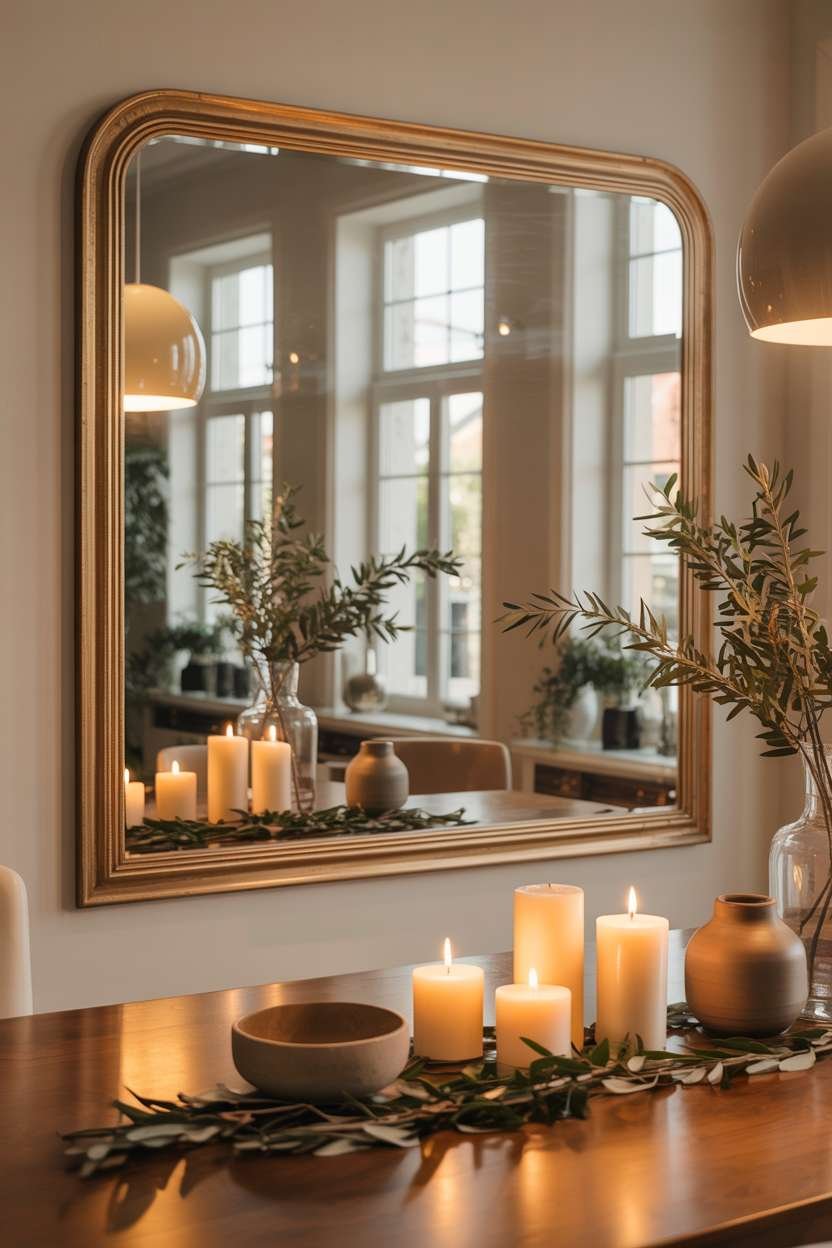
A mirror across from a window reflects daylight into the room and makes a small dining space feel larger. Hang it at eye level when seated, so it reflects the window, not the ceiling. A mirror with a simple frame works, and it should be fixed to the wall with proper fixings, not leaned against it.
Check: a mirror 24 inches wide by 36 inches tall, hung with its center 60 inches from the floor, reflects a window across the room. Mistake to avoid: hanging a mirror where it reflects a cluttered corner, which doubles the clutter instead of the light.
29. Use a Glass Top So a Small Room Still Looks Open
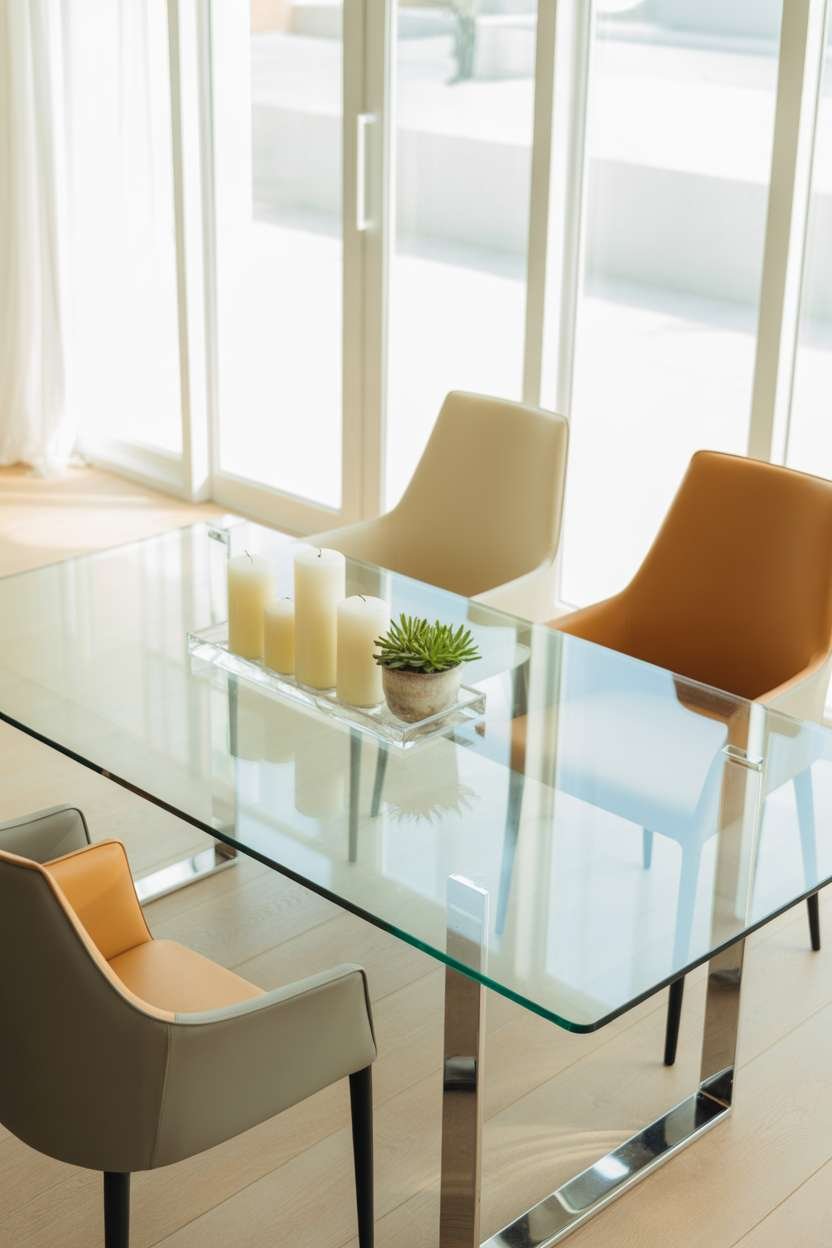
A glass table top lets you see the floor through the table, so a small room looks less crowded. It also reflects light, which helps a dark corner. Use tempered glass, and keep a cloth nearby, because fingerprints show on glass after every meal.
Check: tempered glass at least 10 millimeters thick is the right choice for a dining table top. Mistake to avoid: using a glass top on a table with a busy base, which looks cluttered through the glass.
30. Give One Wall One Job: Art or Shelves, Not Both
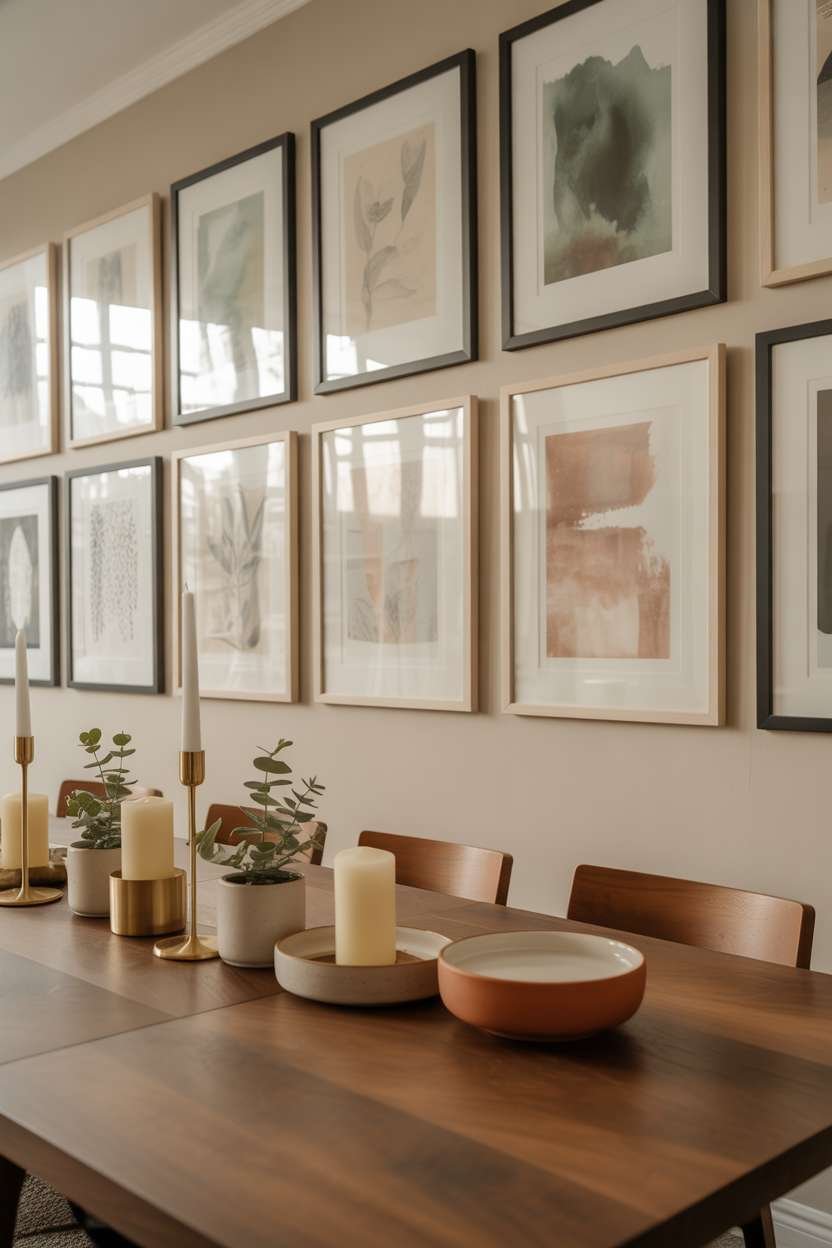
A small dining room wall should do one job: hold art, or hold shelves, not both. Art gives the room a focus, and shelves give it storage. Putting both on the same wall makes the wall look crowded and the room feel smaller. Choose the job that the room needs more, and leave the other wall plain.
Check: a single piece of art two thirds as wide as the table below it looks balanced on a dining wall. Mistake to avoid: hanging a gallery wall above a shelf, which fills the only clear wall in the room.
31. Mark a Dining Zone in a Shared Living Room With a Rug
In a room shared with a living area, a rug marks where dining starts and living ends. Put the rug under the table and chairs, and keep the living room rug separate, with a gap of floor between them. The two rugs should be different in color or pattern, so the zones are clear.
Check: leave at least 12 inches of bare floor between the dining rug and the living room rug, so the zones do not run together. Mistake to avoid: using one large rug for both zones, which makes the room look like one big space with no dining area.
32. Turn an Unused Corner Into a Two Person Nook
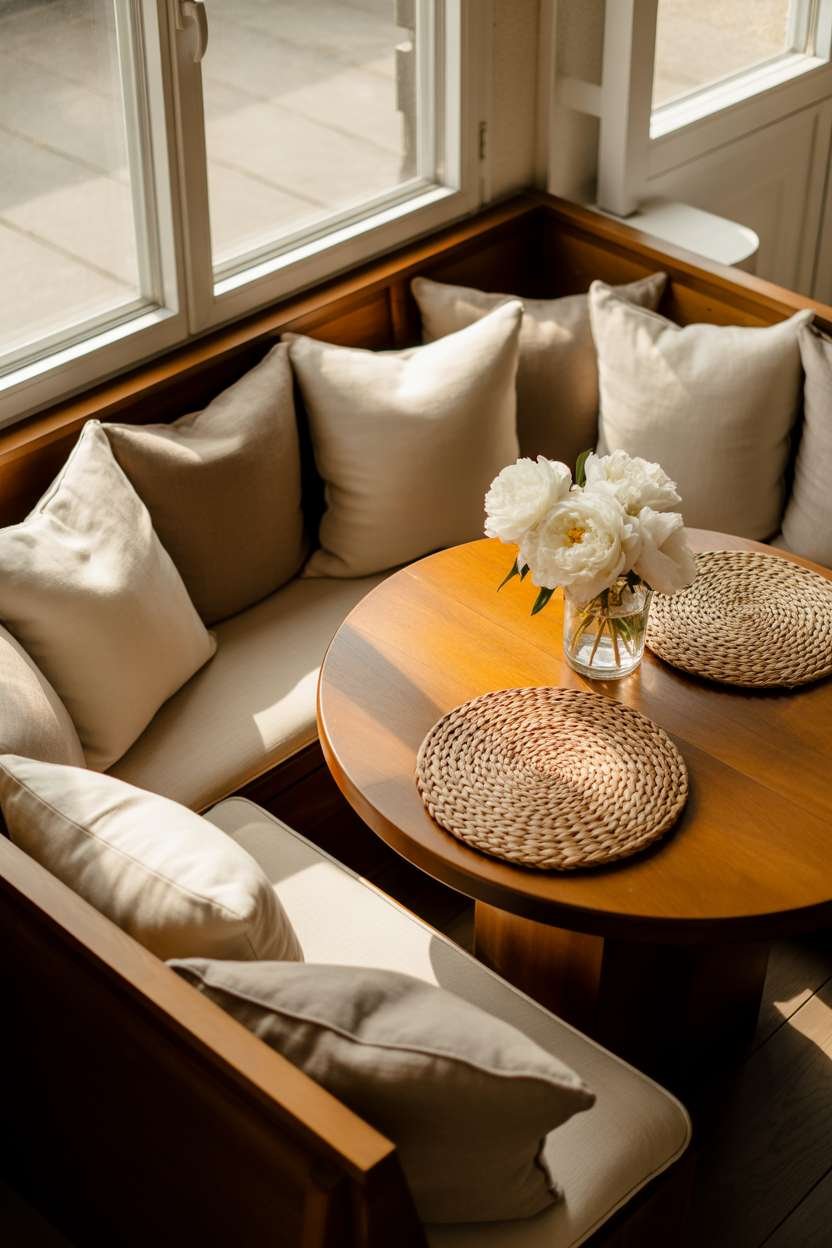
A corner that holds nothing can become a dining nook for two, with a small table and two chairs, or a bench on one side. It is enough for breakfast and for a quiet meal, and it uses space that would otherwise be wasted. Keep the table small, and keep the chairs light enough to move.
Check: a table 30 inches wide and 30 inches deep seats two people in a corner nook. Mistake to avoid: putting a four person table in a corner nook, which blocks the walkway on both sides.
33. Buy the Best Table You Can, Then Add Decor Slowly
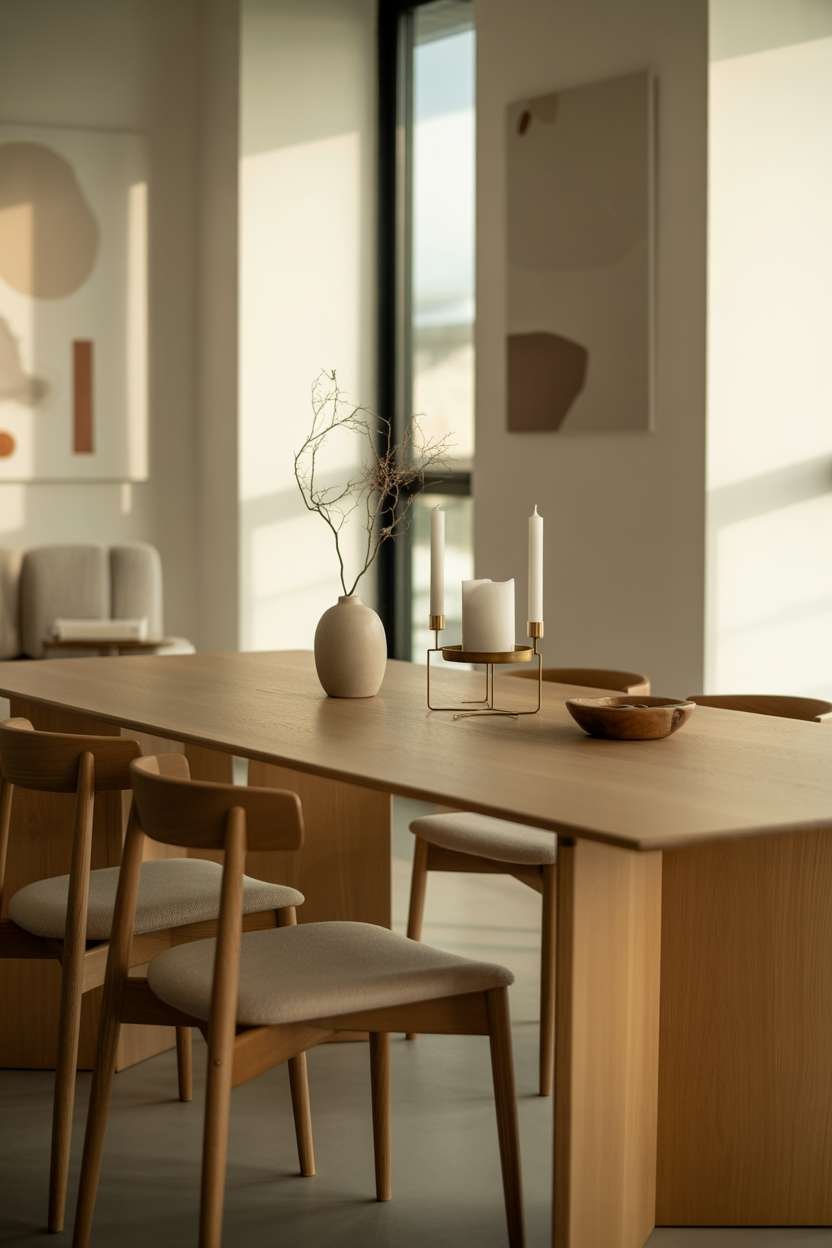
A table is the most used piece in a dining room, so buy the best one you can afford and add decor over time. A solid wood or well made table will last for years, while decor can be changed in a day. Start with the table and chairs, live with them for a month, and then decide what decor the room still needs.
Check: sit at the table, eat a meal, and work at it for a week before you buy any decor for it. Mistake to avoid: buying a full set of decor with the table and finding that half of it gets in the way.
34. Change the Runner and Napkins, Not the Furniture
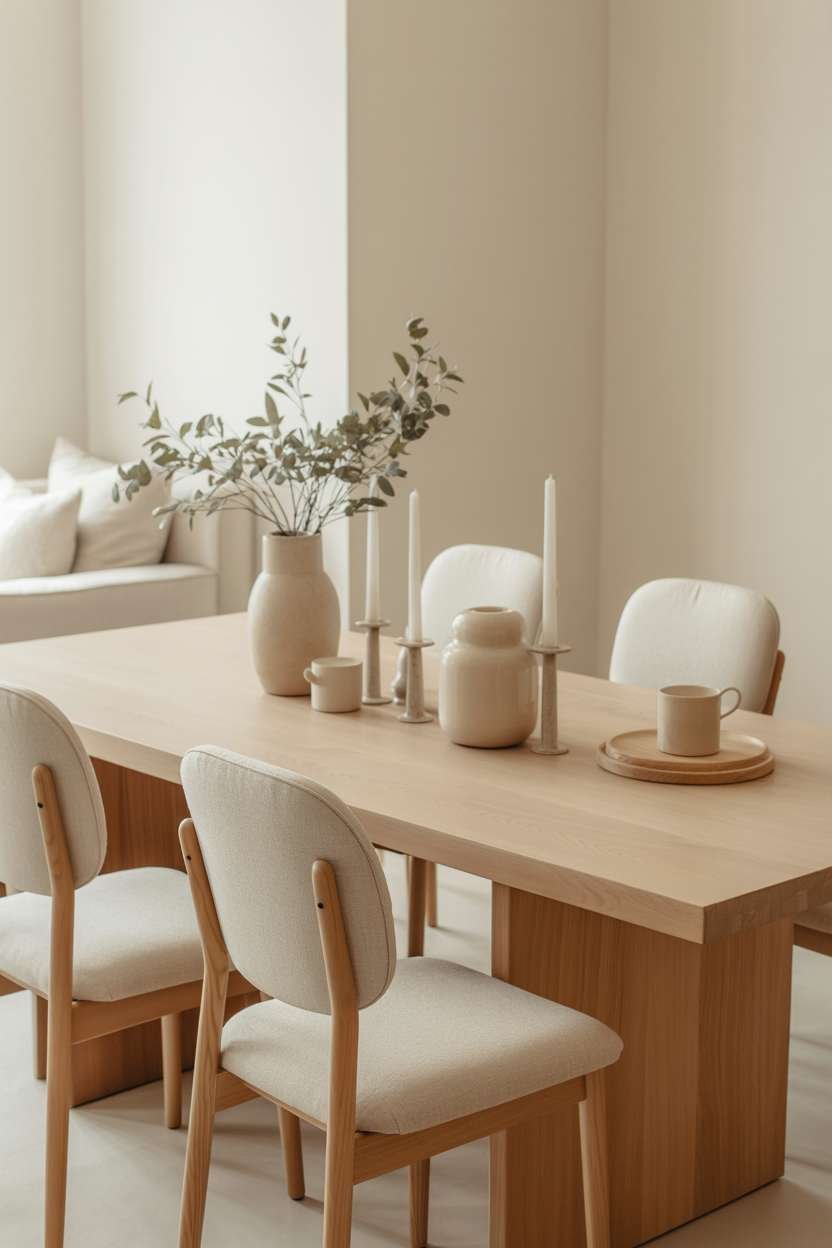
A new table runner and a set of napkins change the look of a dining room for the cost of a meal out. Choose a runner that is washable and a color that works with the table, then change the napkins with the season. This is the cheapest way to refresh a room without buying furniture.
Check: a runner 12 inches wide, with 12 inches hanging over each end of the table, fits most dining tables. Mistake to avoid: buying a runner that is the same length as the table, which looks short and unfinished.
35. Add One Bold Color in One Place You Can Swap
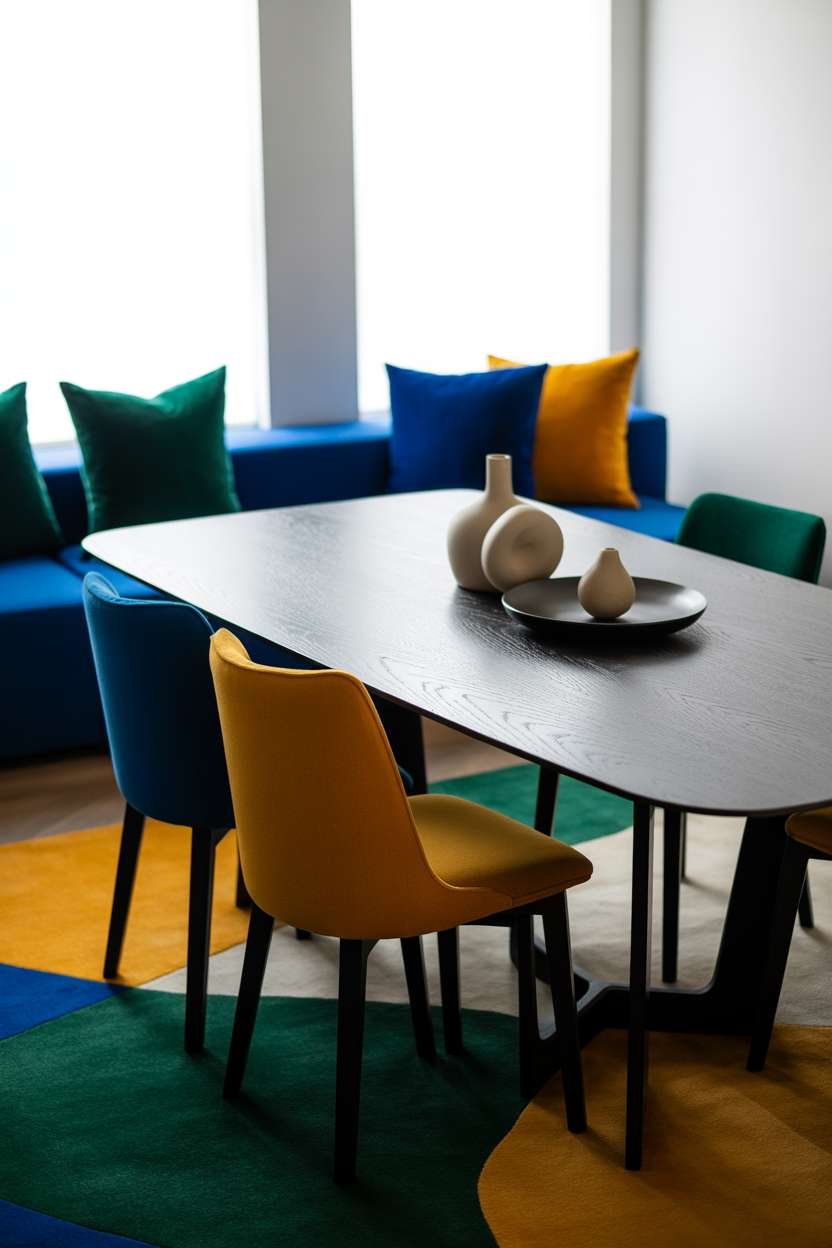
One bold color, in one place, gives a dining room energy without making it hard to live with. Use it on chair cushions, a runner, or a piece of art, and keep the rest of the room neutral. When you tire of the color, you can swap that one item and the room changes.
Check: use the bold color on no more than one in five items you can see from the table, so it stays an accent. Mistake to avoid: using a bold color on the table, the chairs, and the walls, which leaves no calm place for the eye to rest.
36. Put One Hardy Plant Where It Will Not Block the Table
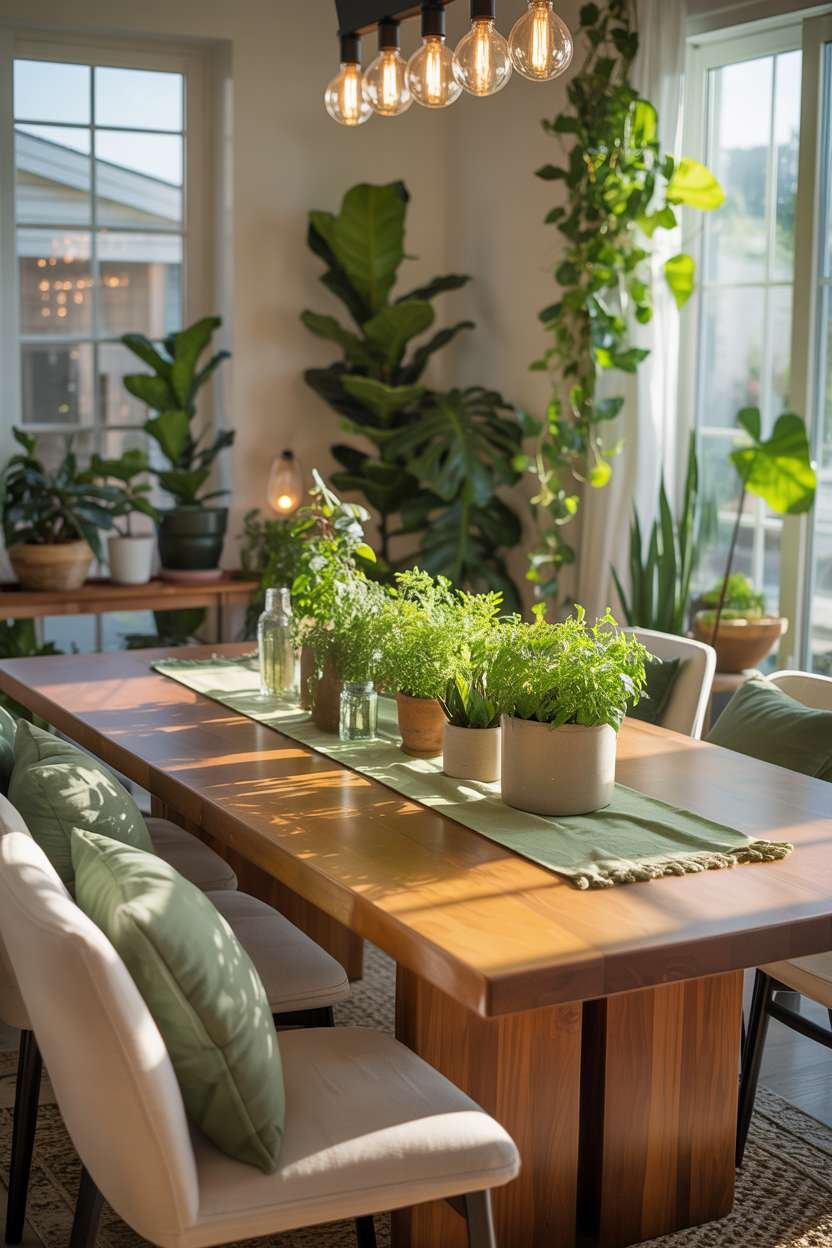
One hardy plant, such as a snake plant or a pothos in a pot, adds life to a dining room without taking table space. Put it on the floor in a corner, or on a sideboard, where it will not block a chair or a serving dish. Water it on the same day each week, so it does not get forgotten.
Check: a plant in a 6 inch pot on a sideboard, or a plant in a 10 inch pot on the floor, fits a dining room without crowding it. Mistake to avoid: putting a large plant on the dining table, where it blocks the view and takes the place of food.
37. Hang Curtains That Clear the Table and Wash Easily
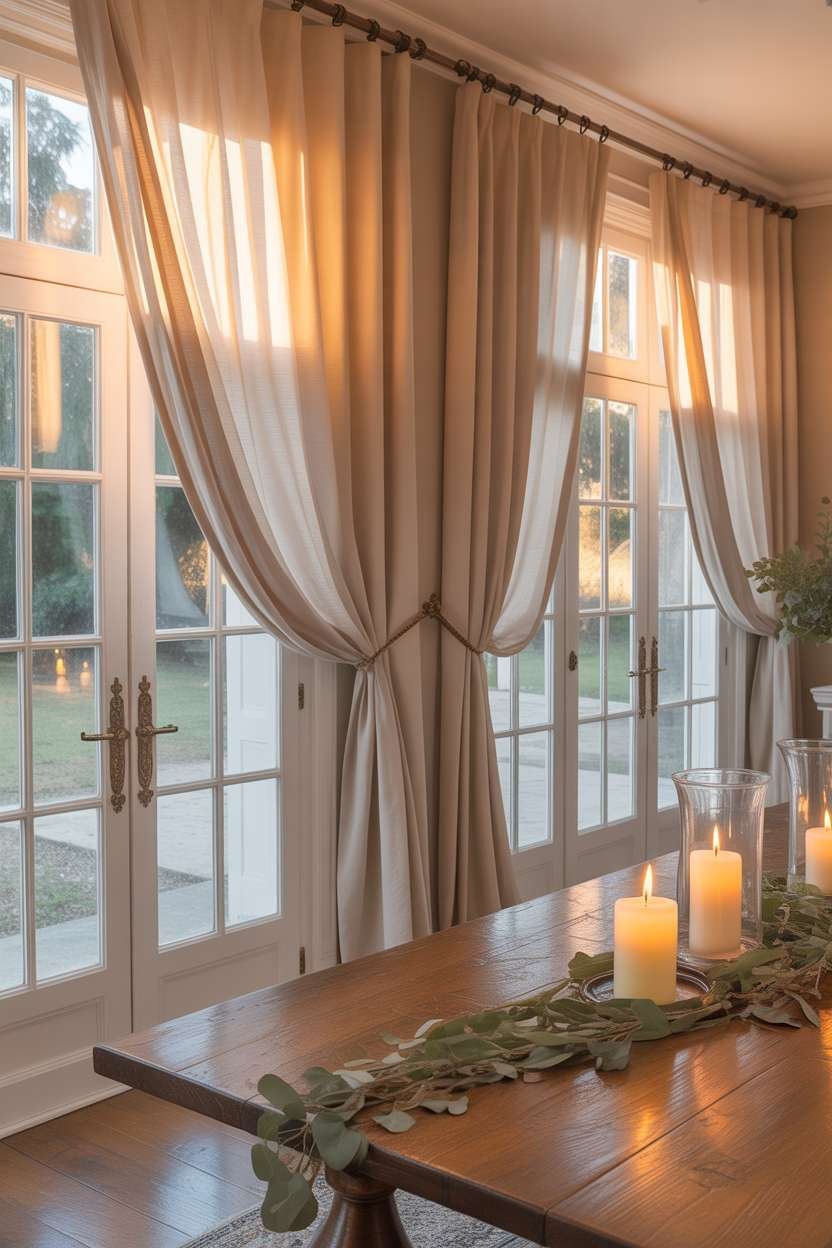
Curtains in a dining room should clear the table and the chairs, and wash easily, because food and steam reach them. Choose a washable fabric, such as cotton or linen, and hang the curtains so they do not touch the table or the floor. A simple rod and a pair of curtains is enough.
Check: hang curtains so the bottom sits 2 inches above the floor, and the rod sits 4 inches above the window frame. Mistake to avoid: using long curtains that pool on the floor behind a dining chair, where they collect crumbs and get pulled.
38. Keep the Table Clear With One Tray for Everyday Clutter
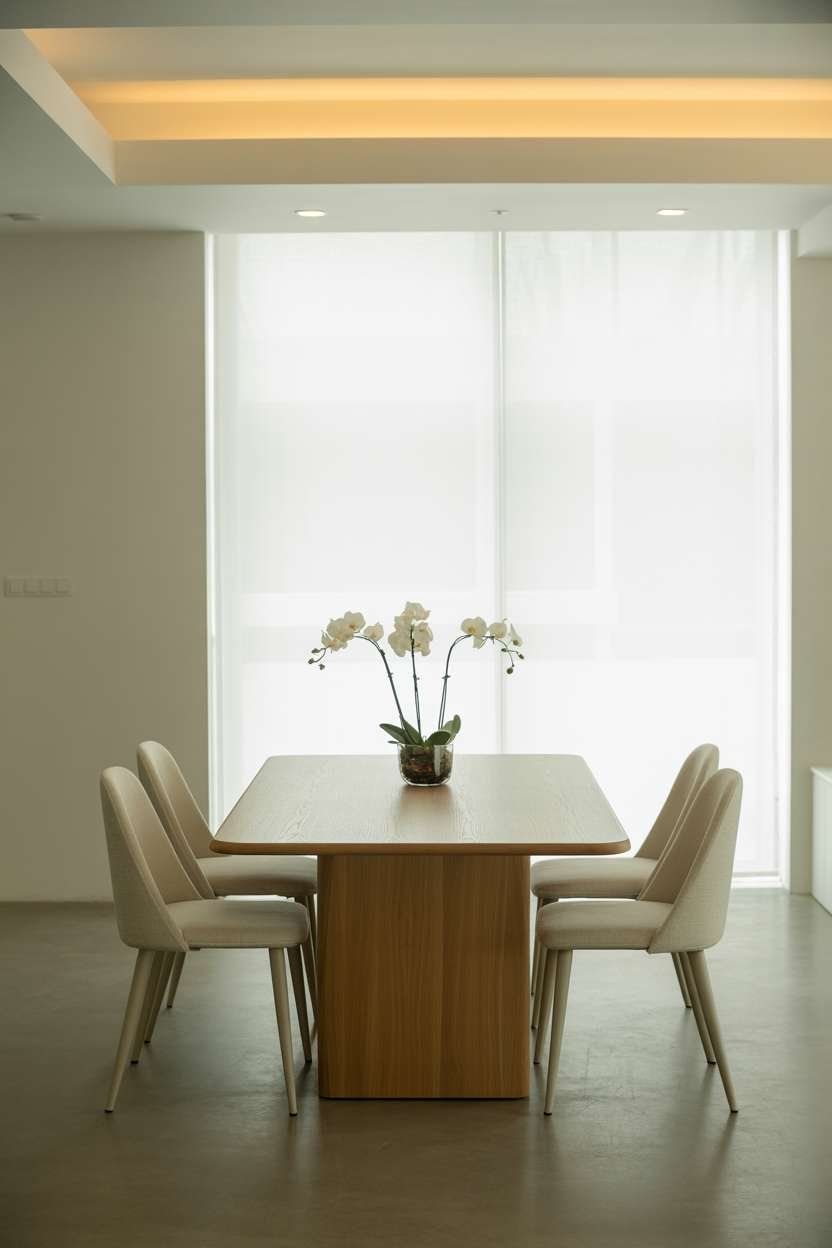
Keys, mail, and homework end up on the dining table because there is nowhere else to put them. Give them a tray, a basket, or a box on the sideboard, and make a rule: the table is for eating, the tray is for everything else. Empty the tray once a day, so it does not become a second table.
Check: a tray 12 inches by 18 inches holds keys, mail, and a phone without taking over the sideboard. Mistake to avoid: using the dining table as a storage shelf, which means you have to clear it before every meal.
39. Refresh the Room in 30 Minutes With Three Swaps Only
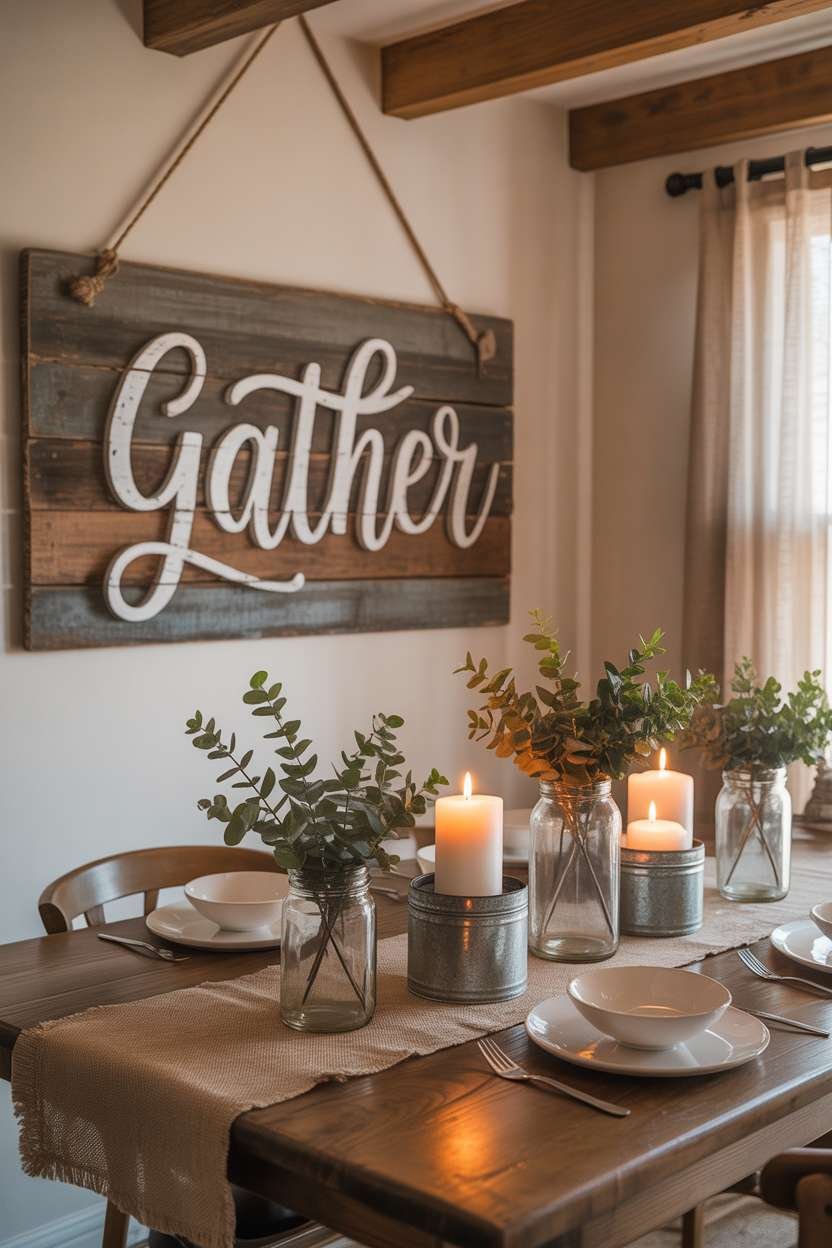
A dining room refresh does not need a weekend. Change three things in 30 minutes: the runner, the centerpiece, and one item on the sideboard. Put the old items away before you bring the new ones out, so the room does not end up with six items where three should be.
Check: set a timer for 30 minutes and stop when it rings, so the refresh stays a refresh and does not become a redecoration project. Mistake to avoid: changing ten things at once, which costs a day and makes the room look unfinished.
40. Do the Five Minute Sit Down Check Before You Call It Done

Before you call a dining room finished, sit in every chair, pull it out, eat a pretend meal, and look around the room. Check that you can see the people across the table, reach the serving dishes, and stand up without hitting anything. This five minute check finds the problems that a photo of the room will not show.
Check: sit, pull out the chair, stand up, walk to the kitchen, and walk back, in every seat. If one seat fails the check, move the table or the furniture behind it. Mistake to avoid: judging a dining room by how it looks in a photo, instead of how it works when you sit in it.
FAQs
What is the best way to plan a dining room?
Start with the jobs the room must do: everyday meals, hosting, and the space you have. Measure the room, size the table for daily eaters, and leave 36 inches behind chairs. Style comes after the plan works.
How big should a dining table be for four people?
A rectangular table 48 inches long seats four, two on each side, with 24 inches of table edge per person. A round table 48 inches across also seats four.
How much space do I need behind dining chairs?
Allow 36 inches of clear space behind a chair, so it can be pulled out and a person can stand up without hitting a wall or a sideboard.
How can I make a small dining room work for everyday meals?
Use a round or drop leaf table, a bench against the wall, and a rug you can clean or no rug at all. Keep serving dishes on a sideboard within reach of the table.
What is the best dining table for hosting guests?
An extendable table that grows from 60 inches to 84 inches, with spare folding chairs stored flat. Set the table the night before, and move drinks to a side table.
How do I decorate a dining room on a budget?
Buy the table first, then add decor slowly. Change a runner and napkins for a new look, and add one bold color in one place you can swap.
Should I put a rug under the dining table?
Only if you can clean it. Choose a low pile or washable rug, and skip the rug if it cannot be cleaned. A dirty rug looks worse than a bare floor.
How do I light a dining room for meals and hosting?
Use a dimmer on the ceiling light for everyday use, and add a second layer, such as candles in safe holders or a lamp, for evening hosting.
How is this guide different from a traditional dining room guide?
This guide is organized by the jobs a dining room must do: everyday meals, hosting, and small spaces. Our guide to traditional dining room decor covers formal rules, matching pairs, and classic materials, while our modern farmhouse dining room decor ideas cover a relaxed country look.
How do I keep a dining room tidy every day?
Keep one tray on the sideboard for keys and mail, clear the table after every meal, and do a five minute sit down check when you change anything.
Conclusion
A dining room works when the plan comes first. Measure the room, size the table for the people who eat there every day, and leave room to pull out every chair. Make everyday meals easy with a wipe clean top, a low centerpiece, and a rug you can clean. Plan hosting with a table that grows, spare chairs that fold away, and a clear up plan made before guests arrive.
Small spaces work when the table fits the corner and the wall does one job at a time. A budget works when the table comes first and decor comes slowly, one swap at a time. Start with idea 1, do the five minute sit down check in idea 40, and keep the room you have, not the room in a photo.