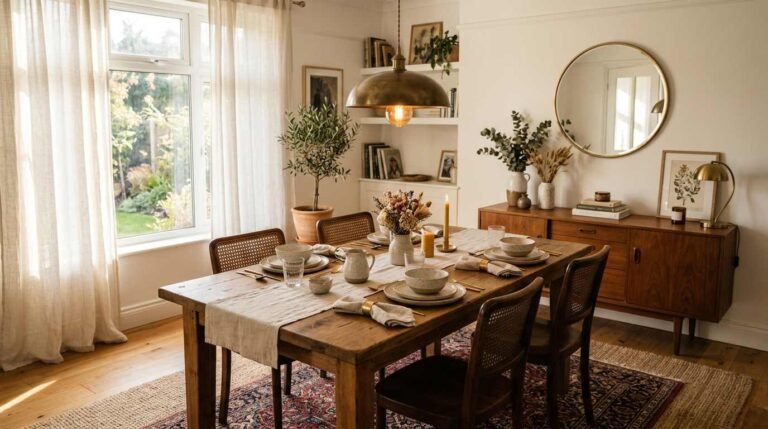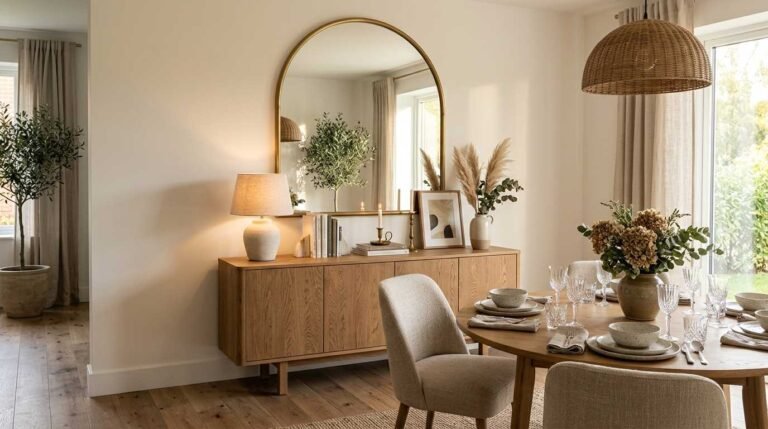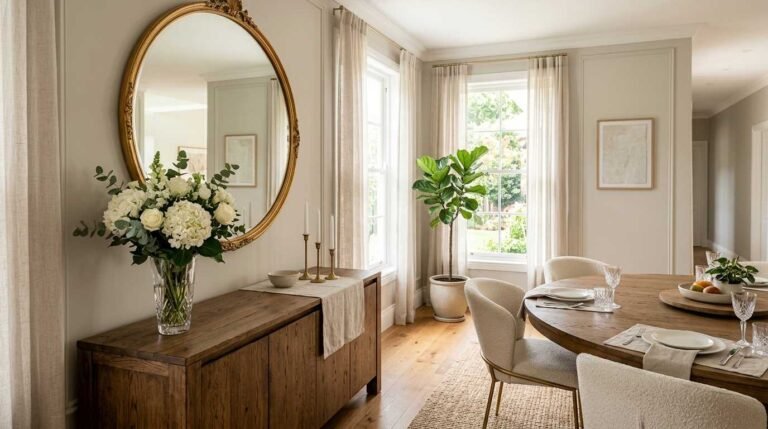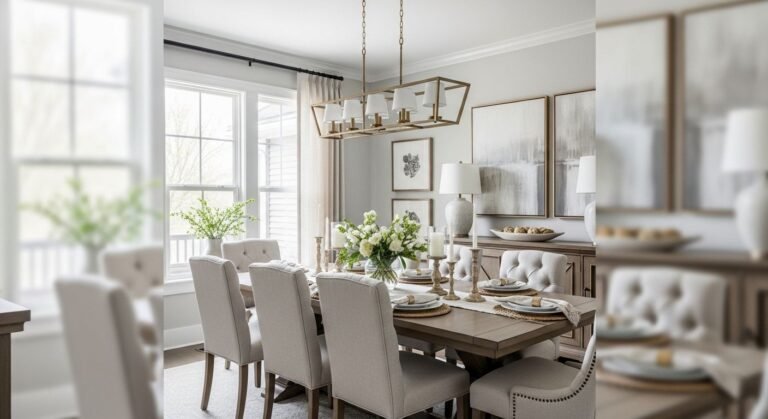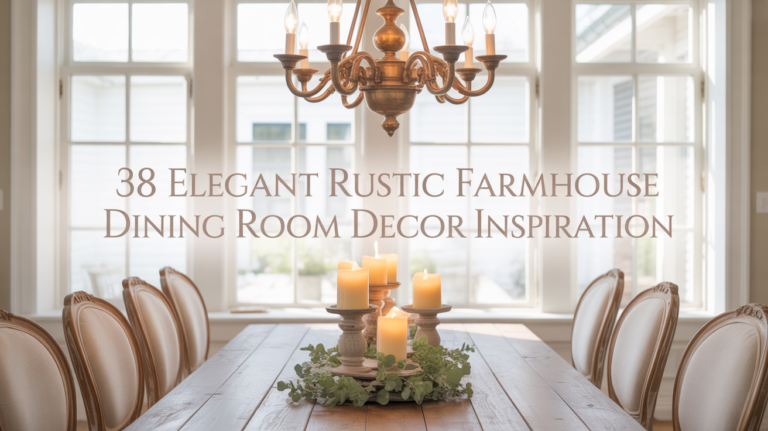
Corner dining room decor starts with a simple question: what will this corner do for you every day? A corner can hold a breakfast nook for two, a reading chair with a small table, a bar cart for weekend guests, or a plant shelf that softens a blank wall. This guide gives you 22 corner dining room decor ideas, grouped by use, with a size, a material, and a clear next step for each one.
1. Built-In Banquette Seating for a Corner Dining Room Decor Breakfast Nook

A banquette 60 inches long and 18 inches deep seats three adults along one wall.
A 3 inch foam cushion in wipe clean vinyl keeps the seat comfortable for long breakfasts.
A hinged seat lid opens to a 12 inch deep storage box for placemats and board games.
A 30 inch round pedestal table in front leaves 24 inches of leg room for each sitter.
Two small throw pillows in washable cotton add color without taking up seat space.
A built in banquette turns a dead corner into the most used seat in the house. Build the base from plywood in a warm white or light oak finish, and set the seat height at 18 inches so standard dining chairs match it. Measure the corner first, then build the banquette to fit both walls, leaving a 2 inch gap at the back for a cushion to tuck in.
Use this corner as your breakfast nook: a small round table, two chairs on the open side, and the banquette along the wall give you seating for five in a corner that once held nothing. Add a wall shelf above the banquette at 60 inches for mugs and a small plant, and keep the table clear so the nook works for homework, coffee, and dinner alike.
2. Foldable Drop-Leaf Table for Flexible Dining

- A 36 inch oak drop leaf folds to 18 inches wide against the wall for one diner.
- Two hinged leaves lift on brass hinges rated for 20 pounds on each side.
- A 29 inch table height matches standard 18 inch dining chairs without a step up.
- A white laminate top wipes clean after meals with a damp cloth and mild soap.
- Two folding chairs stored behind the door give you seating for four on demand.
A drop leaf table fits a breakfast nook that must change size during the day. Fold one leaf down for a single cup of coffee, then lift both leaves for dinner with friends. Measure a 36 inch square in the corner first, and leave 30 inches of clear floor in front so chairs pull out without hitting the wall.
Place the table against the window wall if you can, because morning light makes a small corner feel open. Choose a solid oak or pine top in a light stain, and check the hinge screws every six months so the leaves stay level. A drop leaf table is the best choice when your corner must serve as a desk, a breakfast spot, and a dinner table in one day.
3. Floating Shelves to Free Up Floor Space

- Two pine shelves 24 inches long and 8 inches deep sit 18 inches apart on the wall.
- Black iron brackets screwed into studs hold 15 pounds on each shelf.
- Three white mugs, two small plates, and one 6 inch plant fit the lower shelf.
- A 12 inch gap above the table keeps plates within easy reach at meals.
- A matte white finish matches the wall so the shelves look built in, not added on.
Floating shelves give a dining corner storage without taking a single inch of floor. Mount the lower shelf 52 inches from the floor, so you can reach a mug while seated, and set the upper shelf at 70 inches for plants and books. Use a stud finder first, because a shelf in drywall alone will sag under plates.
Use the shelves as the storage corner of your dining area: plates and mugs on the lower shelf, a small plant and a cookbook on the upper shelf. Keep the total load under 15 pounds per shelf, and leave one third of each shelf empty so the display looks calm. This setup suits a breakfast nook where a cabinet would block the walkway.
4. Strategic Mirrors to Increase Light and Space

- A 24 inch round mirror in a thin oak frame hangs opposite the window at 57 inches to the center.
- A second 12 by 16 inch mirror sits 6 inches to the side, tilted 2 degrees to catch the table.
- Wall anchors rated for 15 pounds hold each mirror, because glass is heavy for its size.
- A clear glass surface with no frame pattern keeps the reflection sharp and bright.
- A dry microfiber cloth once a week stops dust from dulling the reflected light.
A mirror is the cheapest way to add light to a corner that has only one window. Hang a 24 inch round mirror opposite that window, and the room gains a second light source that costs nothing to run. Choose a thin oak or black frame, and keep the mirror at eye level, about 57 inches to the center, so it reflects the table and not the ceiling.
Use mirrors to make a reading corner feel open: a mirror behind a small chair reflects the page light and the plant beside it, so a dark corner becomes a place you want to sit. Wipe the glass before you hang it, and avoid a mirror that faces a cluttered shelf, because it will double the clutter.
5. Hanging Plants and Greenery for Natural Vibes

- Three hanging planters in 6 inch ceramic pots hang from ceiling hooks at 72, 78, and 84 inches.
- Trailing pothos with stems 18 inches long spill over the pot edge toward the table.
- A macrame holder in natural cotton rope holds each pot 12 inches below the ceiling hook.
- A small watering can with a narrow spout reaches the pots without a step stool.
- A saucer under each pot catches water, so drips never reach the dining table.
Hanging plants turn a dining corner into a plant corner without using floor space for pots. Pothos, spider plants, and philodendron all grow well in the bright indirect light of a dining room, and they need water only once a week. Hang the planters at different heights, 72, 78, and 84 inches, so the leaves form a green stair down the wall.
Place a small stool under the lowest planter for watering, and choose pots in white or terracotta so the green leaves stand out. Keep the plants 12 inches from the table edge, so leaves do not brush against plates. A plant corner suits a breakfast nook best, because morning light keeps the leaves bright and full.
6. Slimline Bistro Set for Elegant Simplicity

- A 24 inch round bistro table in black metal fits a corner 30 inches wide.
- Two slim chairs with 16 inch seats tuck under the table when not in use.
- A marble top 1 inch thick wipes clean, and a 28 inch height suits a coffee cup and a book.
- A woven rattan seat in natural tan adds texture without adding bulk.
- A small vase with one green stem on the table keeps the set from looking bare.
A slimline bistro set gives a corner a cafe feel in the space a single armchair would take. The 24 inch round table and two slim chairs seat two people for breakfast, coffee, or a card game, and the chairs tuck fully under the table when the corner is not in use. Choose a black metal base with a white marble top, because the light top keeps a small corner bright.
Use the bistro set as the coffee corner of your dining room: place it by a window, add a small tray for sugar and cups, and keep a book on the table so guests know the corner is for slowing down. This set suits a couple or a single person best, and it works in a corner as narrow as 30 inches.
7. Window Seat Transformation into Dining Nook

- A window seat 48 inches long and 18 inches deep gives seating for three in a bay.
- A 4 inch foam cushion in washable navy cotton covers the seat from wall to wall.
- A 30 inch round table on a pedestal base sits 12 inches from the seat edge.
- Two linen pillows 16 inches square and a folded wool throw warm the corner.
- A hinged lid under the cushion opens to a storage box 10 inches deep for books.
A window seat turns a bay window into a dining nook and a reading corner in one piece. The seat is already built into the wall, so you only need a cushion, a small table, and a light. Measure the bay first, then order a foam cushion cut to fit, with a washable cover so crumbs and coffee do not stain it.
Use the seat for breakfast in the morning light, then as a reading corner in the afternoon with a pillow and a book. Add a wall lamp or a small pendant 30 inches above the table, so the corner works after dark too. This idea suits homes with a bay window best, and it costs less than building a new banquette.
8. Storage Ottomans as Extra Seating and Tables

- Two cube ottomans 18 inches square and 16 inches high seat one adult each.
- A hinged lid opens to a box 14 inches deep for table linens and placemats.
- A flat top 18 inches wide acts as a side table for a coffee cup or a book.
- A wipe clean vinyl cover in warm gray survives spills from dinner guests.
- Small wheels under the base let one person slide a 20 pound ottoman across the floor.
Storage ottomans give a dining corner seating that moves. Pull one out when a friend drops in for dinner, then push it back into the corner to hold table linens when the meal ends. Choose cube ottomans 18 inches square, with a firm foam seat and a lid that stays open on its own hinge, so you can reach inside without holding it up.
Use ottomans as the flexible seating for a breakfast nook: two cubes work as chairs at the table, and one works as a side table for a plant after the meal. Keep the total weight under 20 pounds per ottoman so one person can move it, and choose a color that matches your chairs so the pair looks planned.
9. Dramatic Pendant Lighting to Set the Mood

- A pendant shade 12 inches wide hangs 30 inches above the table surface.
- A 2700 kelvin warm white LED bulb at 800 lumens lights a 36 inch table evenly.
- A black metal cord 48 inches long connects the shade to a ceiling hook.
- A dimmer switch on the wall lets you lower the light to 25 percent for dinner.
- A glass shade with a 10 inch opening spreads light without glare at eye level.
A pendant light marks the dining corner as a place to sit, even in an open room with no walls. Hang one shade 30 inches above the table, centered over the middle, and choose a warm white bulb at 2700 kelvin so food and skin look warm under it. A shade 12 inches wide suits a 36 inch table, while a larger table needs two shades 24 inches apart.
Use the pendant to set the mood for a bar corner in the evening: dim the light to 25 percent, set a small tray of glasses on the sideboard, and the corner feels like a cafe. Fit a dimmer switch first, because a single bright bulb will make a small corner feel harsh at night.
10. Open Shelving for Displaying Pretty Dishes

- Two open shelves 30 inches long and 10 inches deep sit 16 inches apart at 54 and 70 inches.
- White ceramic plates 10 inches across stand on end, three to a shelf.
- A small green plant in a 5 inch pot adds color at the end of the top shelf.
- Iron brackets in matte black hold 12 pounds per shelf when screwed into studs.
- A 3 inch gap between plates stops the dishes from knocking together.
Open shelving turns your plates into the decor of a dining corner, and it keeps them within reach at meals. Mount two shelves 30 inches long, one at 54 inches for daily plates and one at 70 inches for glasses and a plant. Use white or cream dishes so the shelf reads as calm, and leave one third of each shelf empty.
Use open shelves as the display corner beside a breakfast nook, where guests can see the dishes you use every day. Wipe the shelves once a week, because open shelves show dust faster than a closed cabinet. This setup suits a small corner where a hutch would block the door.
11. Minimalist Design with Neutral Color Palette

- A table 36 inches round in light oak, with two chairs in warm white, fills a corner without clutter.
- Walls in warm white, a floor in pale wood, and one gray cushion give the corner three quiet tones.
- A single 8 inch vase with green stems is the only decor on the table surface.
- A 5 by 7 foot rug in a flat weave, in a light gray, marks the dining zone.
- One wall hook holds a linen apron, and nothing else hangs on the walls.
A minimalist corner uses few pieces, and each piece must earn its place. Choose a light oak table, two warm white chairs, and one color for cushions, in gray or sage green. Keep the walls warm white, and add texture only through wood, linen, and one green plant, so the corner feels calm rather than bare.
Use a minimalist corner as a reading corner after meals: clear the table, set a book and a cup on it, and sit in the afternoon light. This style suits a small dining corner best, because fewer pieces make the room look larger, and cleaning takes only a few minutes a day.
12. Bohemian Layers of Textiles and Cushions

- Four cushions 18 inches square in cotton, in rust, cream, mustard, and teal, cover the bench.
- A woven rug 5 by 7 feet in jute and cotton sits under the table and chairs.
- Macrame hangings 24 inches long hang on the wall, with wood beads at the bottom.
- Mismatched wood chairs, one oak and one pine, sit at the table for a collected look.
- A folded wool throw 50 by 60 inches drapes over the bench back for cold mornings.
A bohemian corner layers textiles until a plain corner feels warm and lived in. Start with a jute rug, add four cotton cushions in rust, cream, mustard, and teal, then hang a macrame piece on the wall. Keep the furniture wood, in oak and pine, so the many colors have a calm base to sit on.
Use this style for a reading corner off the dining table: a cushioned bench, a throw, and a small lamp make the corner a place to sit with a book after lunch. Wash cushion covers every two weeks, because light cotton shows crumbs fast, and rotate the cushions so the colors wear evenly.
13. Defining Rug to Anchor Your Dining Area

- A rug 5 by 7 feet in a flat weave fits under a 36 inch table and two chairs.
- A 4 inch rug pad in felt keeps the rug flat and stops chairs from sliding.
- A light gray or natural jute color keeps the corner bright, even in a small room.
- Chair legs stay 6 inches inside the rug edge, so chairs do not tip off the border.
- A washable cotton rug survives food spills with a cold wash and a low spin.
A rug marks a dining corner in an open room where no wall separates it from the living area. Choose a rug 5 by 7 feet, so a 36 inch table and its chairs sit fully on it, with chair legs 6 inches inside the edge. A flat weave in light gray or jute cleans easily, and a felt pad underneath stops the rug from bunching when you push a chair back.
Use the rug to define a bar corner too: set a small bar cart on the rug beside the table, and the rug ties the cart and the table into one zone. Vacuum the rug twice a week in a dining area, and blot spills at once so food does not set into the fibers.
14. Corner Hutch for Organized Storage Solutions

- A corner hutch 36 inches wide and 72 inches tall fits a 90 degree wall angle.
- Two glass doors on the top hold 12 plates and 8 glasses in full view.
- A closed cabinet below, 24 inches deep, holds tablecloths and serving dishes.
- A white painted pine frame matches the wall, so the hutch looks built in.
- Adjustable shelves inside move in 2 inch steps to fit tall vases or short bowls.
A corner hutch uses the angle where two walls meet, a spot where a flat cabinet would waste space. Choose a hutch 36 inches wide and 72 inches tall, with glass doors on top for plates and a closed cabinet below for tablecloths. Screw it to both walls with two brackets, so it cannot tip when a child pulls a door.
Use the hutch as the storage corner for a breakfast nook: keep daily plates at eye level, glasses on the top shelf, and serving dishes in the cabinet below. Keep the top shelves free of heavy items, and place a small plant on the hutch top for a soft green finish.
15. Vertical Stripe Wallpaper for Height Illusion

- Vertical stripes 2 inches wide in cream and light gray run from floor to ceiling.
- A peel and stick wallpaper roll 20 inches wide covers a 9 foot wall in three strips.
- A white ceiling and a pale wood floor keep the stripe pattern from feeling busy.
- One striped wall, not four, gives height without closing in the room.
- A smooth wall, sanded with 120 grit paper, helps the paper stick for years.
Vertical stripe wallpaper makes a low dining corner feel taller, because the eye follows the lines up to the ceiling. Choose stripes 2 inches wide in cream and light gray, and paper only the corner wall behind the table. Measure the wall height first, then cut each strip 2 inches longer than the wall so you can trim it at the top.
Use stripe wallpaper behind a reading corner chair, where the tall lines frame the seat like a backdrop. Keep the rest of the room plain, with a white table and a single plant, so the stripes are the main pattern. Peel and stick paper works best in a rental, because you can remove it without damage.
16. Smart LED Lighting for Festive Ambiance

- A 6 foot LED strip at 2700 kelvin tucks under a shelf, with a remote for dimming.
- A 12 volt power supply plugs into a wall outlet behind the hutch.
- A warm white setting at 50 percent brightness lights a 36 inch table for dinner.
- A color setting in soft amber, not blue, keeps food looking natural at night.
- A 3M adhesive backing holds the strip flat, and a 2 inch gap at the ends stops peeling.
Smart LED strip lighting, tucked under a floating shelf or along the top of a corner hutch, adds light where a lamp would not fit. Stick a 6 foot strip to the underside of the shelf, plug it into a wall outlet, and set it to warm white at 2700 kelvin for dinner. A remote or a phone app changes the brightness without you standing up from the table.
Use LED strips to light a bar corner after dark: set the strip to a soft amber at 25 percent, place a small tray of glasses on the shelf, and the corner glows like a cafe. Keep the strip hidden behind a 1 inch lip so you see the light, not the strip itself, and clean the shelf top once a month so dust does not dim it.
17. Round Pedestal Table for Smooth Flow

- A 36 inch round pedestal table in oak seats four, with a single center leg.
- A 30 inch table height and 18 inch chairs let diners slide in from any side.
- A 24 inch round base keeps the table steady on a rug and stops wobble.
- A 2 inch thick table top in a light oak stain wipes clean with a damp cloth.
- Four chairs at 90 degrees to each other leave 24 inches of elbow room per person.
A round pedestal table fits a corner because it has no sharp corners for a walker to bump, and no four legs to trap feet. A 36 inch table seats four people with 24 inches of elbow room each, and the single center leg lets chairs slide in from any side. Choose a light oak top with a white or black pedestal base, and check the base bolts once a year.
Use the round table as the main breakfast nook table: it holds plates, a small vase, and a book without a corner sticking into the walkway. Place it 36 inches from each wall, so chairs pull out freely, and pair it with a rug 5 feet across so the base sits flat. This table suits a small apartment corner where a rectangular table would block the door.
18. DIY Pallet Furniture for Rustic Appeal

- Two heat treated pallets, 48 by 40 inches, stack to a bench seat 18 inches high.
- A 4 inch foam cushion in washable gray cotton covers the pallet seat.
- Sand all boards with 80 grit, then 120 grit, so no splinters catch clothes.
- A clear matte sealant stops grease from staining the pine during meals.
- Small caster wheels under the bench let you roll it 12 inches from the wall to clean.
DIY pallet furniture gives you a bench that fits an odd corner for the cost of two pallets and a cushion. Choose heat treated pallets marked HT, never chemically treated ones, and sand every board with 80 grit, then 120 grit, until the surface feels smooth. Stack two pallets to reach an 18 inch seat height, then add a 4 inch foam cushion in washable cotton.
Use the pallet bench as the seating for a breakfast nook, with a small round table in front and a cushion that washes after spills. Seal the wood with a clear matte coat, so food and coffee do not stain it, and check the pallet stamps before you buy. This idea suits a hands on homeowner with a weekend to build.
19. Functional Herb Garden in the Corner

- Six small pots 4 inches across hold basil, mint, rosemary, thyme, parsley, and chives.
- A 24 inch pine shelf at 60 inches from the floor sits by the brightest window.
- A watering can with a 12 ounce tank waters all six pots in one trip.
- Wood labels 3 inches long, written in pencil, name each herb for guests.
- A saucer under each pot keeps water off the shelf and the wall paint.
A herb garden turns a dining corner into a plant corner that feeds your cooking at the same time. Grow basil, mint, rosemary, thyme, parsley, and chives in 4 inch pots on a 24 inch pine shelf, set 60 inches from the floor beside the brightest window. Water the pots once a week, and snip leaves from the top so the plants grow bushy instead of tall.
Use the herb shelf as the green corner of a breakfast nook: guests can smell fresh basil while they eat, and you can snip mint for tea at the table. Label each pot with a small wood marker, and rotate the pots every two weeks so each side gets light. This idea suits a corner near the kitchen, where herbs are only a step from the stove.
20. Glass Top Table for Airy Feel

- A tempered glass top 36 inches across and half an inch thick seats four diners.
- A black metal base with four legs holds 100 pounds without wobble.
- A 29 inch table height and a clear surface make a small corner look wider.
- A microfiber cloth and glass spray clean the top in 30 seconds after meals.
- Two white wood chairs with 18 inch seats contrast with the clear top.
A glass top table adds a light, airy quality that makes a tight dining corner feel more open, since you can see the floor and the rug through the top. Choose tempered glass half an inch thick, 36 inches across, on a black metal base, and check that the glass edges are polished smooth. A glass top suits a corner with a rug underneath, because the pattern shows through instead of hiding.
Use a glass table as the main table for a breakfast nook in a small apartment, where a solid wood top would make the corner feel heavy. Wipe the top after each meal with glass spray and a microfiber cloth, because fingerprints show on glass from across the room. Pair it with white chairs so the clear top is the lightest piece in the room.
21. Gallery Wall Art to Personalize the Space

- Six frames in black wood, four 8 by 10 inch and two 11 by 14 inch, hang in a row.
- A 2 inch gap between frames and a center line at 57 inches keep the row level.
- Black and white prints on matte paper give the wall one calm color story.
- One small wood sign, 12 inches wide, fills a gap at the end of the row.
- Picture hooks rated for 10 pounds hold each frame, and a level checks the row.
A gallery wall featuring small framed prints or photographs personalizes a corner dining area without taking any floor space. Hang six frames in a row above a bench or a small table, with 2 inches between frames and the center at 57 inches. Use black and white prints in matching black wood frames, so the different photos read as one set.
Use the gallery wall to mark a reading corner: hang the frames above the chair where you sit with a book, and choose photos that mean something to your family. Leave a 4 inch gap at the end of the row for one small wood sign, and update the prints once a year so the wall stays fresh.
22. Festive Pillows and Throws for Warmth

- Three pillows 16 inches square in cotton, in cream, mustard, and rust, sit on the bench.
- A wool throw 50 by 60 inches folds over the bench back for cold evenings.
- Washable covers in a zip close let you swap colors in 5 minutes for a new season.
- A small basket 12 inches wide under the bench holds spare throws out of sight.
- A mix of one solid color and two patterns keeps the bench lively without clutter.
Festive pillows and soft throws add warmth and seasonal personality to a corner dining area without changing any furniture. Choose three pillows 16 inches square in washable cotton, in cream, mustard, and rust, and drape a wool throw 50 by 60 inches over the bench back. Swap the covers in 5 minutes when the season changes, and keep spare throws in a basket under the bench.
Use pillows to make a breakfast nook feel like a reading corner on winter afternoons: add a throw, a book, and a cup of tea, and the same bench serves two uses in one day. Wash the covers every two weeks, because food and drink reach them fast, and keep one solid color among the patterns so the bench looks calm.
Corner Dining Room Decor FAQs
1. How do you decorate a corner dining room?
Start with furniture that fits the angle, such as a banquette or a 36 inch round table, then add vertical pieces like floating shelves or a gallery wall. Add a rug to mark the zone, a pendant light over the table, and one plant. Measure the corner first, and keep a 30 inch walkway clear in front of the chairs.
2. What type of table works best for a corner dining space?
Round pedestal tables and drop leaf tables work best, because they have no sharp corners and no four legs to trap feet. A 36 inch round table seats four people, while a drop leaf table folds to 18 inches wide when you need the floor back. Both leave room for chairs to pull out.
3. How can I make a small corner dining area look bigger?
Use a mirror opposite the window, a glass top table, and vertical stripe wallpaper on one wall. A mirror adds reflected light, a glass top shows the floor through it, and vertical stripes draw the eye up. Keep the colors pale, and avoid a large dark cabinet that blocks the light.
4. Can I create a dining area in a small corner of the living room?
Yes, and it is one of the most common fixes for open plan homes. A 5 by 7 foot rug defines the dining zone, a pendant light marks the table, and a small round table with two chairs fits a corner as narrow as 36 inches. Keep the walkway to the sofa clear by 30 inches.
5. What decor items make a corner dining room look stylish?
A pendant light, a few plants, and layered textiles make the corner look finished. Hang one shade 30 inches above the table, set a plant on a shelf or in a hanging planter, and add cushions in cotton or linen. One rug under the table ties the pieces together.
6. How do I set up a bar corner in a dining room?
Use a small bar cart 30 inches wide, with two shelves for glasses and bottles, and set it 12 inches from the table. Add a pendant light 30 inches above the cart, stock 6 glasses and 4 bottles, and keep a tray 12 inches wide on top for pouring. Keep the cart near a wall outlet for a small LED strip.
7. What plants work best in a dining room corner?
Pothos, spider plants, and philodendron work best, because they grow in bright indirect light and need water only once a week. Use 6 inch pots on a shelf at 60 inches, or hanging planters at 72 inches, and wipe the leaves once a month. Avoid plants that drop a lot of leaves over the table.
8. How do I decorate a dining room corner on a budget?
Start with a rug, a plant, and a mirror, which cost less than new furniture. A 5 by 7 foot flat weave rug, one 6 inch pothos plant, and a 24 inch round mirror can change a corner for under the cost of a chair. Add cushions one at a time, and use a drop leaf table you already own.
9. What color should I paint a dining room corner?
Warm white, light gray, or soft sage green work best in a corner, because they keep the space bright and let wood and plants stand out. Paint only the corner wall in sage green, and keep the other walls warm white. Use a matte finish, so the paint does not shine under the pendant light.
10. How much space do I need for a corner dining nook?
A corner 48 inches by 48 inches fits a 36 inch round table and two chairs, with 30 inches of clear space in front for pulling out a chair. Leave 24 inches between the table edge and the wall for legs, and 36 inches on the open side for a walkway. Measure the corner before you buy any table.
Conclusion
A tiny corner does not have to mean a compromised dining space. Pick the use that fits your day, a breakfast nook, a reading corner, a bar corner, or a plant corner, then choose one idea from this list and measure your corner before you buy.
Save this post to Pinterest so you can find your favorite corner dining room decor idea again when you are ready to start.