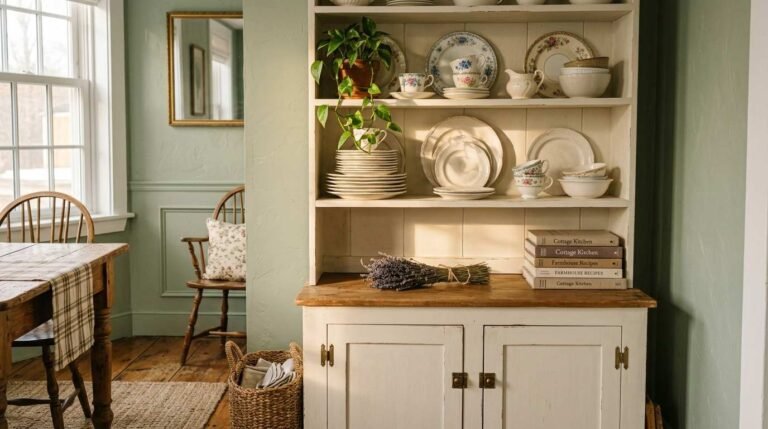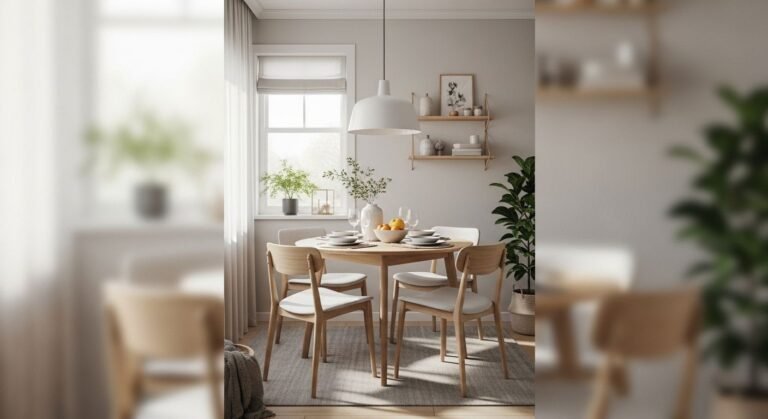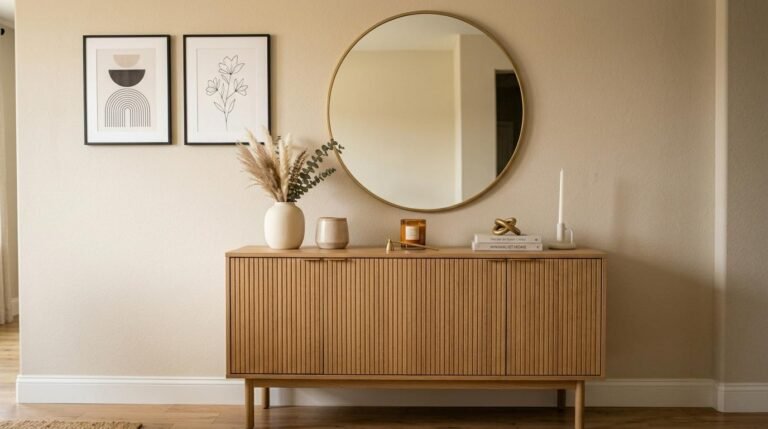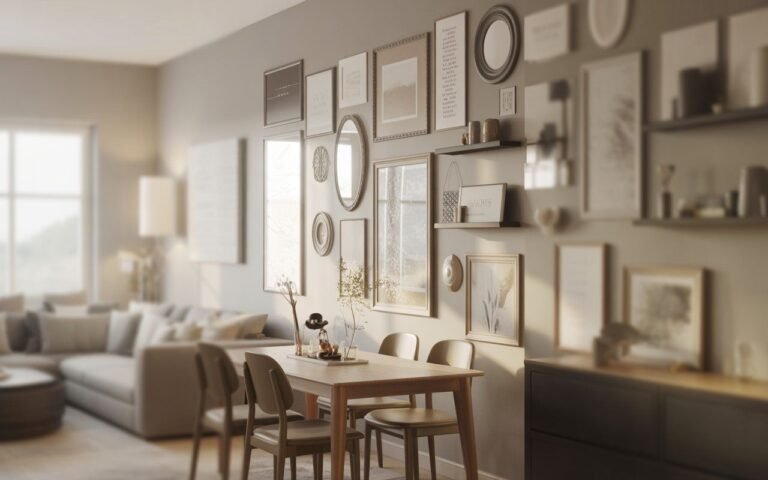
Ever wish your dining room felt like a permanent vacation? Coastal dining room decor brings that relaxed, sun-washed feeling into everyday life, turning ordinary meals into something a little more breezy and special. In my experience, this style works because it leans on natural materials and soft color, rather than anything overly themed or costume-like. Whether your space is big or small, formal or casual, this list of 23 ideas is built to work with what you already have. I’ve seen how a few thoughtful touches, like a rattan mirror or a woven rug, can completely transform how a dining room feels.
1. A Whitewashed Wood Dining Table Sets the Tone
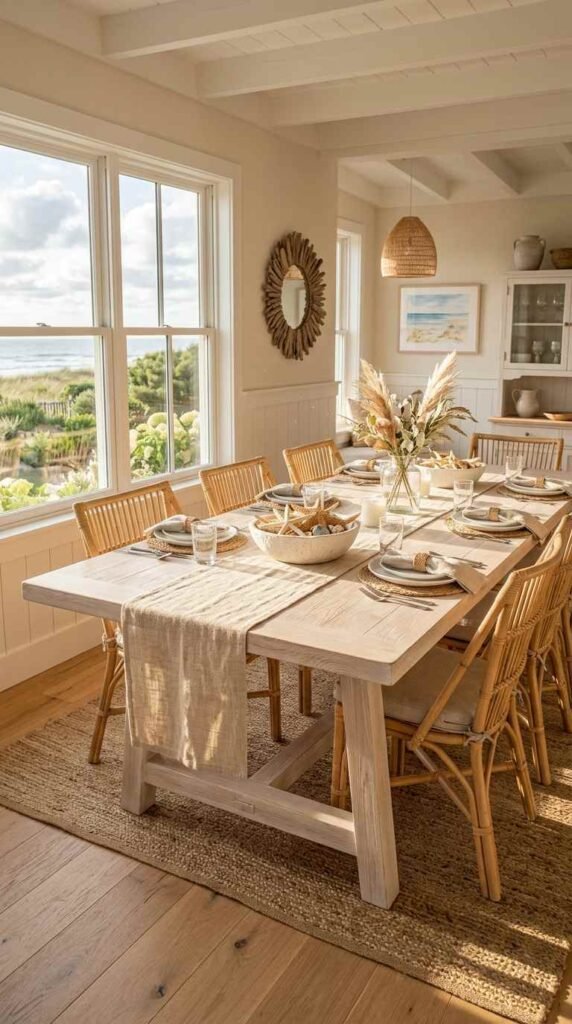
- Brightens the room with a soft, sun-bleached finish
- Works beautifully with both casual and formal settings
- Adds texture without introducing heavy color
- Pairs well with nearly any chair style
A whitewashed table is the foundation of any coastal dining room decor scheme. The pale, weathered finish mimics driftwood that’s been softened by sun and salt air, instantly bringing a relaxed, breezy feeling to the space. In my experience, this finish works especially well in rooms with lots of natural light, since the pale wood reflects daylight and keeps the whole area feeling open and airy. It also hides minor scratches and water rings far better than a glossy finish, which matters for a table used daily.
Choosing the right wood grain adds authenticity to the look. Oak and pine both take whitewashing beautifully, letting the natural grain show through the pale finish rather than disappearing under it. I’ve seen homeowners achieve this effect themselves with a simple whitewash stain over a weekend, making it an accessible upgrade for an existing table. Pairing it with simple, unfussy chairs keeps the table as the visual anchor, letting its texture and tone set the relaxed, sun-washed mood for the entire room.
2. Rattan Dining Chairs Add Instant Texture
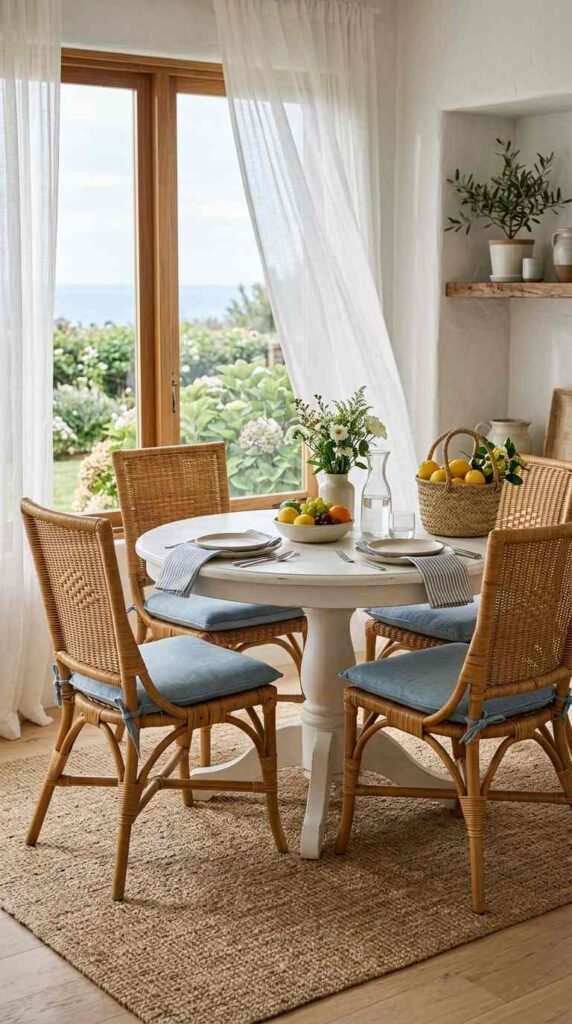
- Brings natural texture without adding visual weight
- Suits both formal and casual coastal dining rooms
- Pairs beautifully with wood, glass, or painted tables
- Adds warmth that solid upholstery can’t replicate
Rattan chairs bring the kind of natural texture that makes a dining room feel effortlessly coastal. The open weave adds visual lightness, so even a full set of chairs around the table never feels bulky or heavy. That’s why many designers recommend rattan for smaller dining rooms, since the chairs practically disappear visually while still adding real texture and interest. The warm, honey tones also pair beautifully with both pale whitewashed tables and darker wood finishes, making them a flexible choice for nearly any room.
Comfort is easy to add without losing the coastal look. A simple cushion in a solid linen or a subtle stripe softens the seat without hiding the chair’s natural shape. I’ve noticed that mixing rattan dining chairs with one or two upholstered captain’s chairs at the ends of the table adds variety without feeling mismatched. This combination suits both everyday family meals and more relaxed dinner parties, giving the room a lived-in, sun-soaked character guests immediately notice.
3. A Shell Accent Centerpiece Feels Effortless
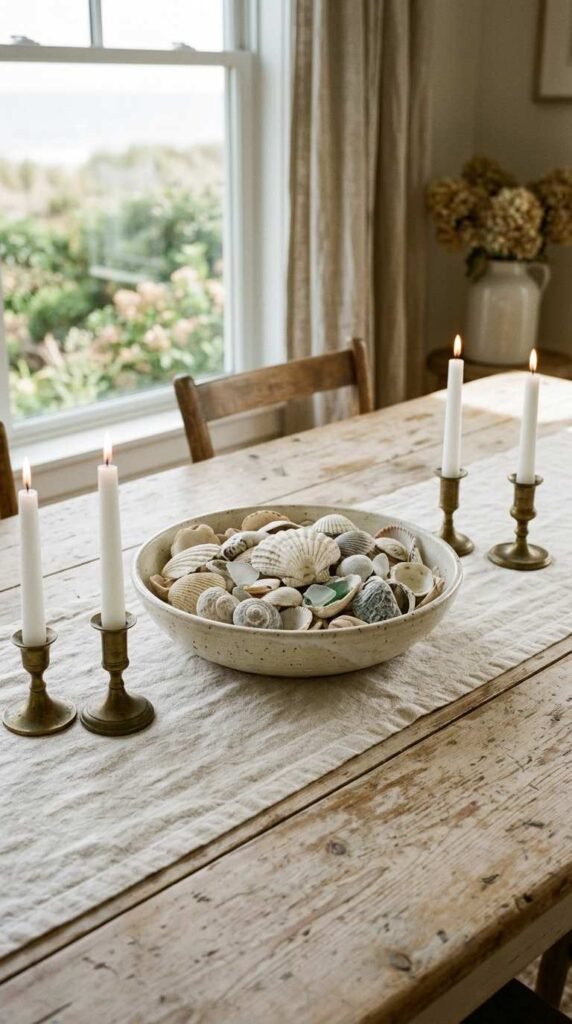
- Adds natural texture and color to the table
- Works in a bowl, tray, or scattered arrangement
- Requires no watering or ongoing maintenance
- Easy to source from the beach or a craft store
A bowl of shells brings the beach directly to the dining table with almost no effort. Piled into a simple glass or wooden bowl, a mix of white, cream, and pale pink shells adds natural texture and color without needing any upkeep. In my experience, this is one of the easiest ways to bring coastal charm into a room that already has most of its furniture in place, since it requires no renovation or big purchase, just a bowl and a handful of shells collected or bought.
Variety in shape and size keeps the display from feeling flat. Mixing larger conch shells with smaller scallop and clam shells creates natural visual interest, much like how nature arranges them along a shoreline. I’ve seen this centerpiece work beautifully year-round, not just during summer months, since the pale, neutral tones fit coastal dining room decor in any season. Adding a few pieces of dried coral or a small starfish rounds out the display without making it feel overly themed or costume-like.
4. Blue and White Striped Textiles Bring Classic Charm
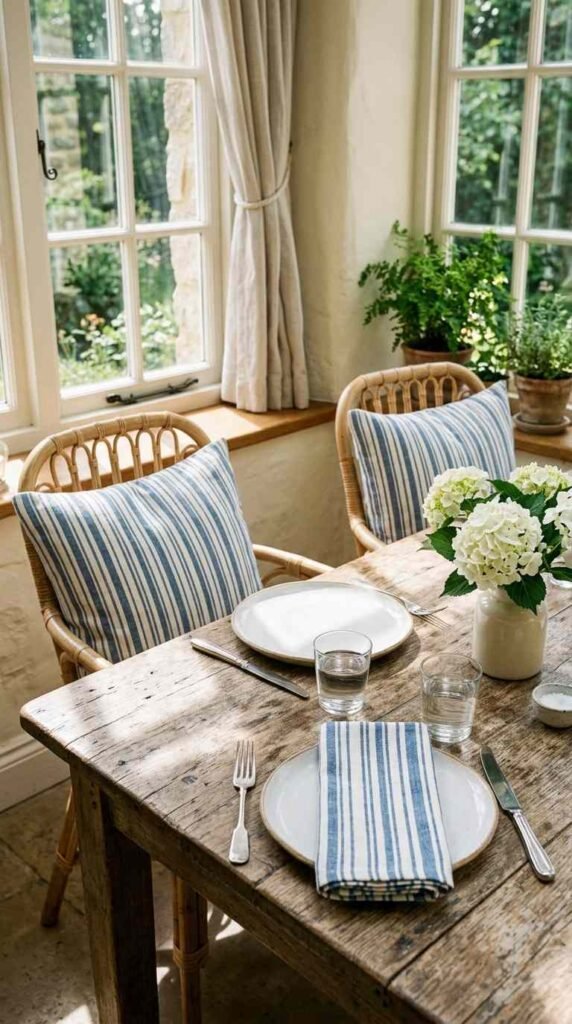
- Adds timeless pattern without feeling overly trendy
- Works beautifully in napkins, runners, and cushions
- Suits both casual and more polished coastal rooms
- Easy to mix with solid linens for balance
Blue and white stripes are the most enduring pattern in coastal design, and for good reason. Whether on napkins, a table runner, or seat cushions, the classic combination adds a crisp, nautical charm that never feels dated. In my experience, this pattern works especially well because it pairs so easily with nearly every other coastal element, from rattan furniture to whitewashed wood, without ever clashing or competing for attention. It’s a dependable choice for anyone unsure where to start with coastal styling.
Varying the stripe width keeps the pattern from feeling too uniform or predictable. A wide stripe on a table runner paired with a narrow stripe on napkins adds subtle contrast while staying within the same color family. I’ve noticed that mixing striped textiles with solid linen or cotton pieces, rather than using stripes everywhere, keeps the overall look balanced and current. This combination suits both casual family dinners and slightly more polished coastal gatherings equally well.
5. Driftwood Wall Art Adds Organic Sculpture
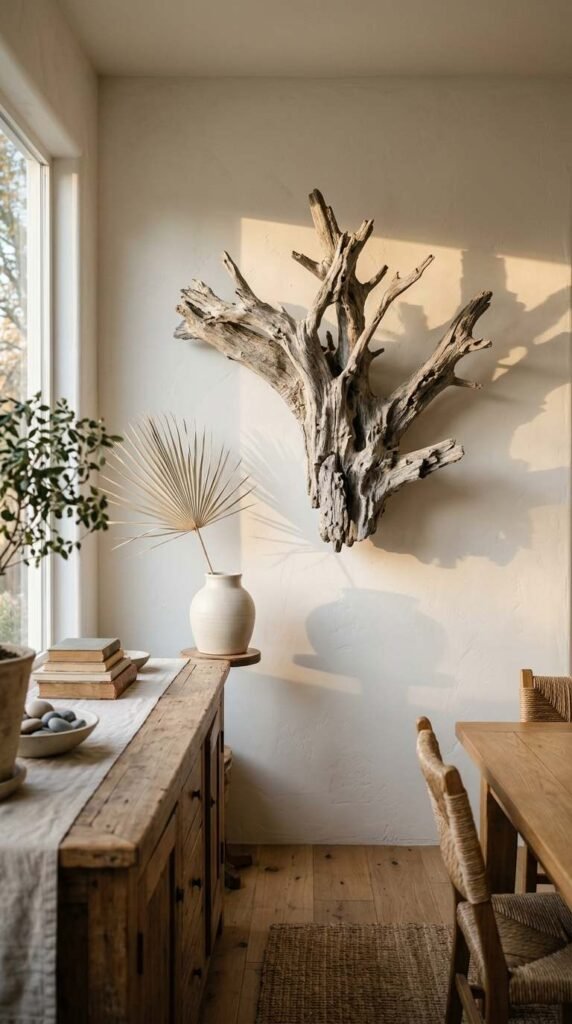
- Brings genuine texture and a sculptural element to the wall
- Works beautifully as a single piece or layered display
- Adds warmth without introducing bold color
- Suits modern, rustic, and traditional coastal dining rooms
Driftwood wall art brings genuine, organic texture into a dining room in a way no printed decor can match. Each piece carries its own natural shape, shaped by years of water and weather, making every arrangement completely unique. In my experience, this idea works particularly well above a sideboard or as the dining room’s main focal point, since the irregular, sculptural quality draws the eye without needing bright color or busy pattern to make an impact on the overall room.
Layering Driftwood Pieces
Layering several pieces of driftwood, rather than hanging just one, creates a more dimensional, gallery-like display. I’ve seen homeowners arrange three or four pieces of varying sizes in a loose cluster, mimicking how driftwood naturally washes ashore. Mounting each piece with simple wire hangers keeps the installation straightforward, even for a large arrangement. This layered approach suits dining rooms wanting a more artistic, collected coastal look rather than a single, predictable focal point on the wall.
6. A Woven Jute Rug Grounds the Space
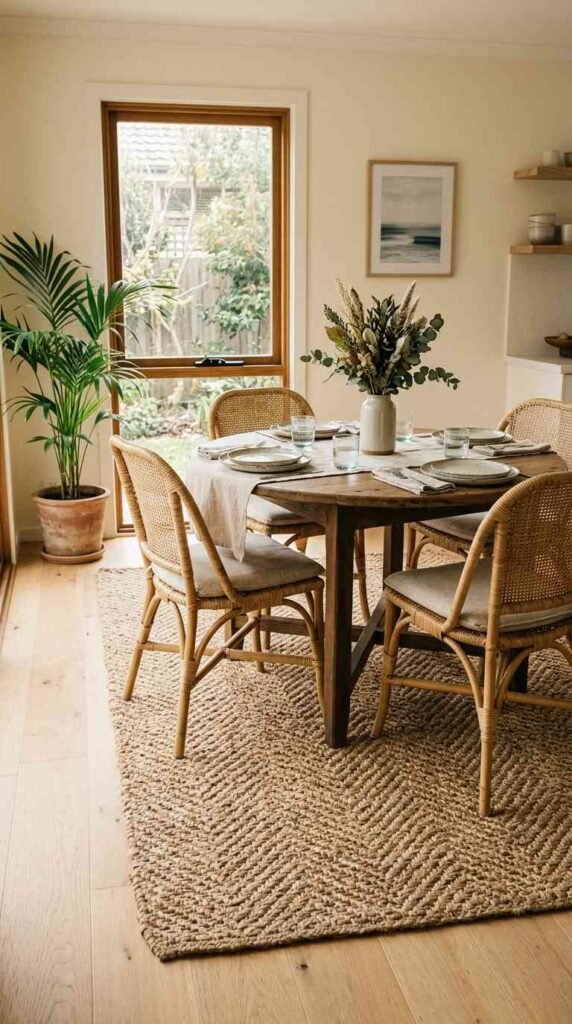
- Adds natural texture underfoot
- Works well beneath both round and rectangular tables
- Helps define the dining area in open floor plans
- Durable enough for daily use and easy cleanup
A woven jute rug brings warmth and texture to the floor beneath a coastal dining table. Its natural fiber and neutral tone ground the space without competing with lighter furniture or pale walls. In my experience, jute works particularly well in coastal dining room decor because it echoes the natural, slightly imperfect materials already present throughout the space, like rattan chairs or a whitewashed table, tying the whole room together visually from floor to ceiling without needing to match anything exactly. It also creates a natural foundation for wall decor for dining room, helping the entire space feel balanced and cohesive.
Sizing the rug correctly keeps the arrangement looking intentional. I’ve noticed that choosing a rug large enough for chairs to stay on it, even when pulled out, usually extending about 24 inches past the table on each side, gives the space a polished, finished feel. Jute handles daily wear reasonably well, though a sisal blend adds extra durability for households with kids or pets. This rug works beautifully in open-concept homes, helping visually define the dining area.
7. Sea Glass Pendant Lighting Sets a Dreamy Mood
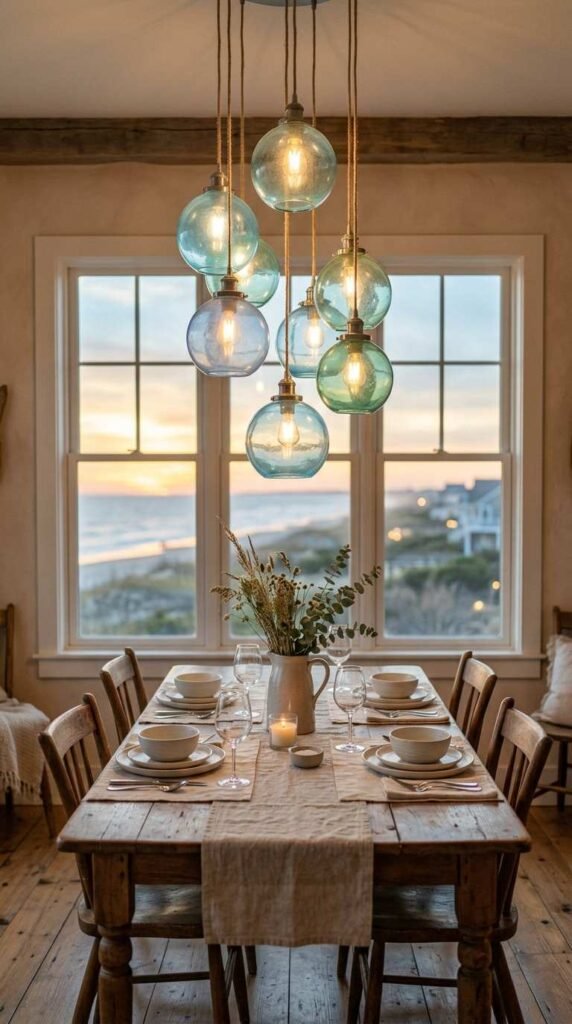
- Adds a soft, colored glow above the table
- Works beautifully as a single fixture or a cluster
- Brings subtle color without overwhelming the room
- Suits both modern and traditional coastal dining rooms
Sea glass pendant lighting brings a dreamy, underwater quality to a coastal dining room. The frosted, slightly textured glass in soft blues and greens filters light in a way that feels genuinely different from clear or white fixtures. In my experience, hanging a cluster of three or five pendants at varying heights above the table creates more visual interest than a single fixture alone, while still keeping the overall look cohesive and intentional rather than randomly arranged across the ceiling.
Choosing the right bulb temperature makes a real difference here. I’ve noticed that warm-toned bulbs soften the cool blue and green glass tones, preventing the room from feeling too cold or clinical in the evening. Centering the cluster above the table, roughly 30 to 34 inches above the surface, keeps the light functional as well as beautiful. This fixture becomes a genuine focal point, doing double duty as both lighting and sculptural art for the room.
8. Linen Curtains in Sandy Tones Soften the Room
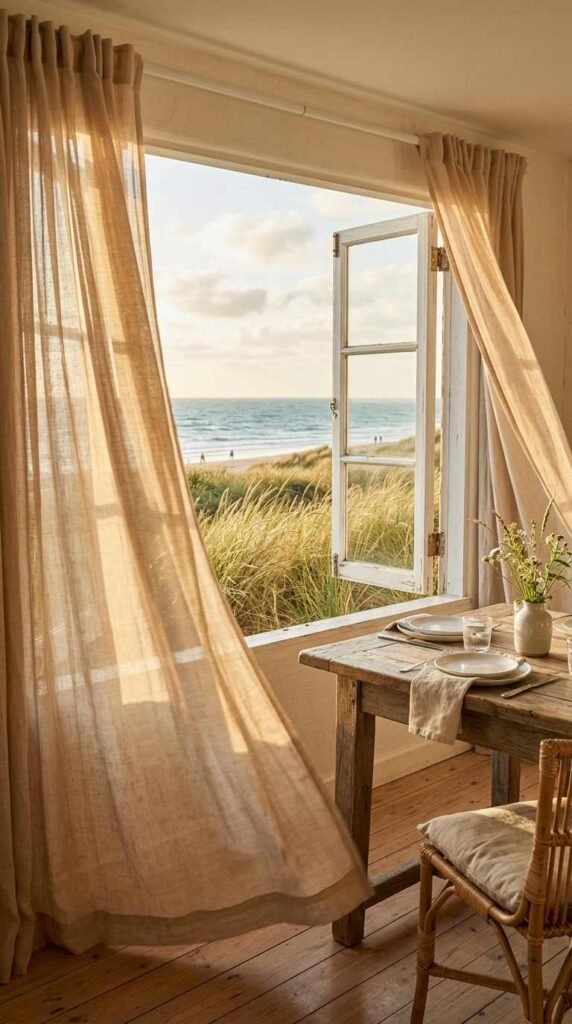
- Adds softness and filters natural light beautifully
- Works well in warm neutral and sandy color tones
- Brings a relaxed, breezy feel to the windows
- Suits nearly every coastal dining room layout
Linen curtains in warm, sandy tones bring a soft, breezy quality to coastal dining room decor. The slightly rumpled texture of linen naturally filters sunlight, creating a gentle glow rather than harsh, direct light during daytime meals. In my experience, choosing a sandy beige or soft oatmeal tone, rather than stark white, adds warmth and keeps the room from feeling too cool or sterile, which can happen easily with an all-blue-and-white coastal palette throughout the space.
Hanging the curtains properly enhances the relaxed, airy feeling this style is known for. I’ve seen panels hung closer to the ceiling, rather than directly above the window frame, make the whole room feel taller and more open. Letting the fabric puddle slightly at the floor, rather than hovering precisely above it, adds to the casual, lived-in coastal mood. Lightweight linen also moves gently with any breeze, reinforcing that effortless, seaside atmosphere throughout the dining space while supporting practical home decor organization ideas that keep the room feeling open and uncluttered.
9. A Coral and Starfish Display Adds Playful Detail
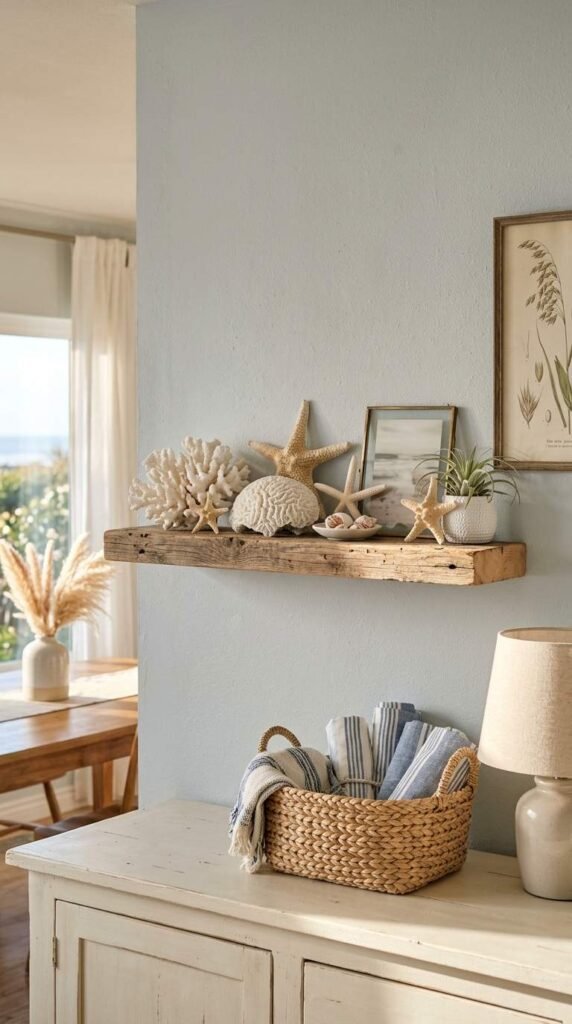
- Brings a lighthearted, beachy touch to any surface
- Works on shelves, tables, or within a glass container
- Adds texture and natural shape variation
- Easy to find in both real and faux versions
A small display of coral and starfish adds a playful, genuine beach detail to a coastal dining room. Arranged on a shelf, inside a glass cloche, or scattered across a tray, these natural shapes bring texture and a lighthearted touch without taking up much space. In my experience, this idea works best as a smaller accent rather than the room’s main focal point, since too much coral and starfish together can start to feel more like a themed display than genuine, collected decor.
Choosing quality faux pieces works just as well as real ones for anyone concerned about sourcing sustainably. I’ve noticed that pairing a piece of coral with one or two starfish, rather than filling an entire shelf, keeps the look restrained and tasteful. This small styling detail pairs beautifully with a sideboard or bookshelf nearby, adding just enough personality to remind guests of the ocean without turning the entire room into a literal beach scene.
10. Natural Fiber Placemats Elevate Every Meal
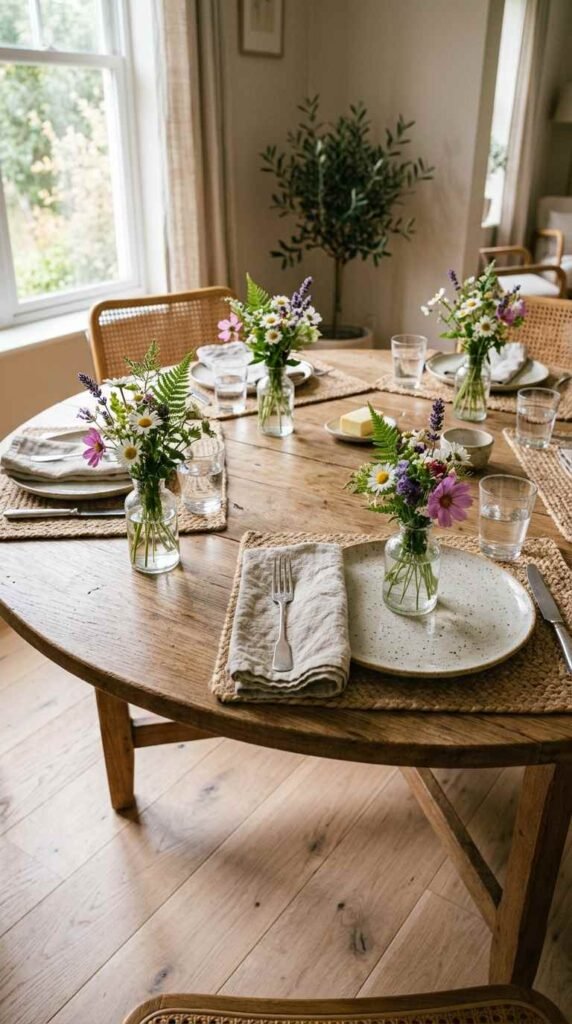
- Adds texture directly to the table setting
- Works beautifully with both casual and formal dinnerware
- Protects the table while adding visual interest
- Easy and affordable to update seasonally
Natural fiber placemats bring texture right to where meals happen most. Woven from seagrass, rattan, or jute, these mats add a tactile element beneath each plate, grounding the table setting in the same natural materials used elsewhere in the room. In my experience, this small detail does a lot of visual work for very little cost, since placemats are one of the most affordable ways to reinforce a coastal theme without committing to larger furniture or permanent decor changes throughout the space.
Pairing natural fiber mats with simple white or pale blue dinnerware keeps the overall table setting feeling cohesive rather than busy. I’ve seen round placemats suit round tables particularly well, while rectangular mats complement longer, more traditional dining tables. These mats also protect the table surface from heat and moisture, making them practical as well as decorative. Swapping them seasonally, or simply washing them regularly, keeps this detail looking fresh for years of everyday meals.
11. Nautical Rope Details Add Subtle Character
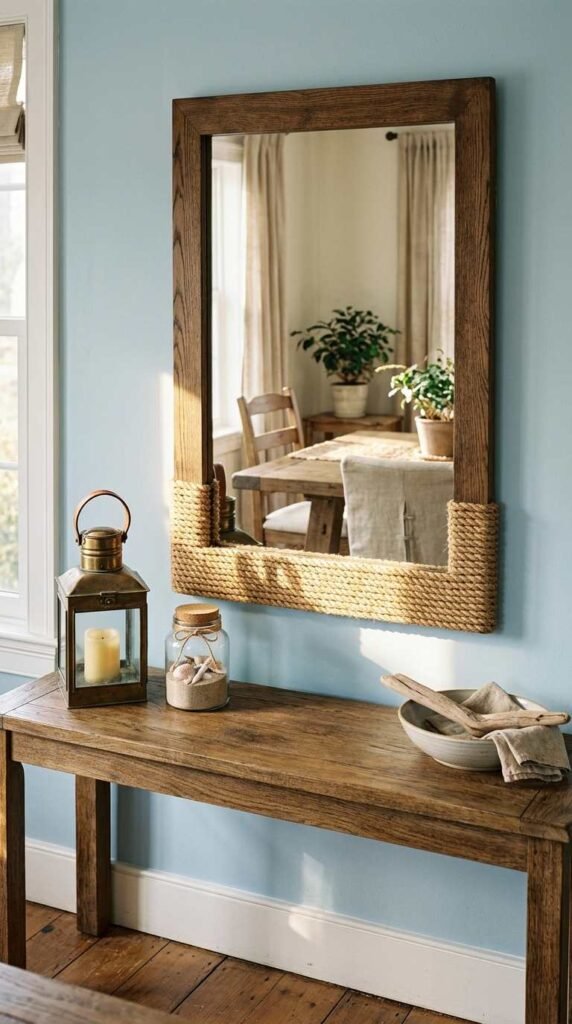
- Brings a tactile, seafaring touch to furniture or decor
- Works well on mirror frames, lamp bases, or curtain tiebacks
- Adds texture without introducing bold color
- Suits both casual and slightly more refined coastal rooms
Nautical rope details add a subtle, tactile touch that immediately calls to mind the seaside. Wrapped around a mirror frame, used as curtain tiebacks, or coiled as a lamp base accent, rope brings texture and a hint of maritime character without shouting the theme. In my experience, this detail works best in small doses, since too much rope throughout a room can tip coastal dining room decor into costume territory rather than genuine, lived-in style that feels authentic and well considered.
Choosing a natural, undyed rope keeps the look more sophisticated than a bright white nautical rope might. I’ve noticed that pairing one rope-wrapped piece, like a mirror or lamp, with simpler surrounding decor lets the texture stand out without competing with other busy elements in the room. This detail suits dining rooms wanting a gentle nod to nautical style without leaning too heavily into an overtly themed, beach-cottage aesthetic throughout the space.
12. An Ocean-Inspired Wall Color Changes Everything
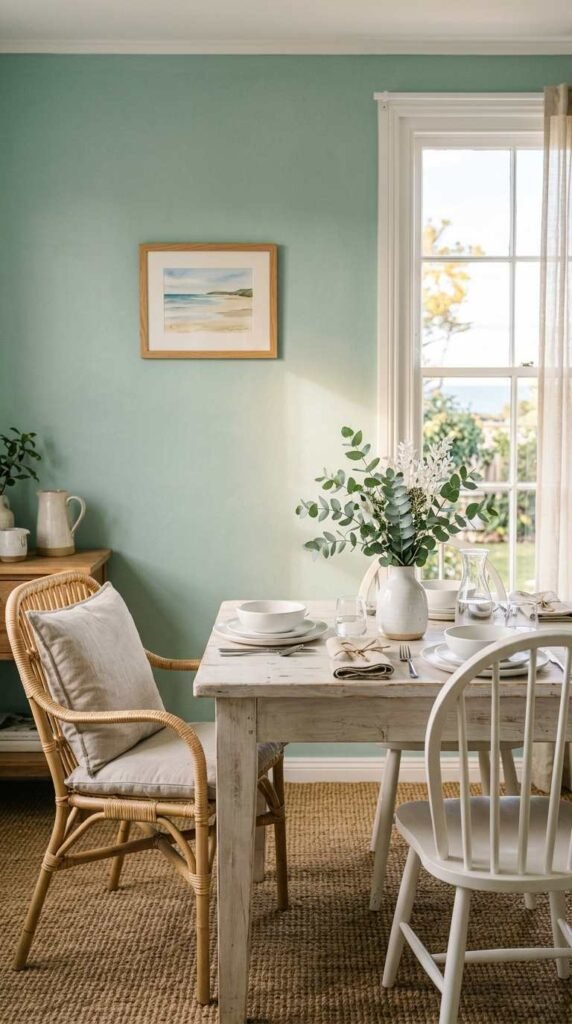
- Sets the entire tone and mood of the room
- Works beautifully in soft blues, seafoam, and sandy neutrals
- Enhances natural light throughout the day
- Pairs with nearly any coastal furniture style
Wall color does more to establish coastal dining room decor than almost any other single choice. A soft, muted blue, a pale seafoam green, or a warm sandy neutral instantly sets the tone for the entire room before any furniture or decor goes up. In my experience, choosing a color with gray undertones, rather than something overly saturated or bright, keeps the look sophisticated and calming rather than loud or overly literal in its reference to the ocean and beach.
Testing paint samples directly on the wall matters more than most people expect. I’ve seen the same blue look completely different in morning versus evening light, so viewing large swatches throughout the day helps avoid a color that feels off once fully painted. Pairing a soft blue or seafoam wall with white trim and natural wood furniture creates a timeless, breezy look that suits coastal dining rooms in any climate, not just homes near the actual coast.
13. A Wicker Pendant Chandelier Becomes a Focal Point
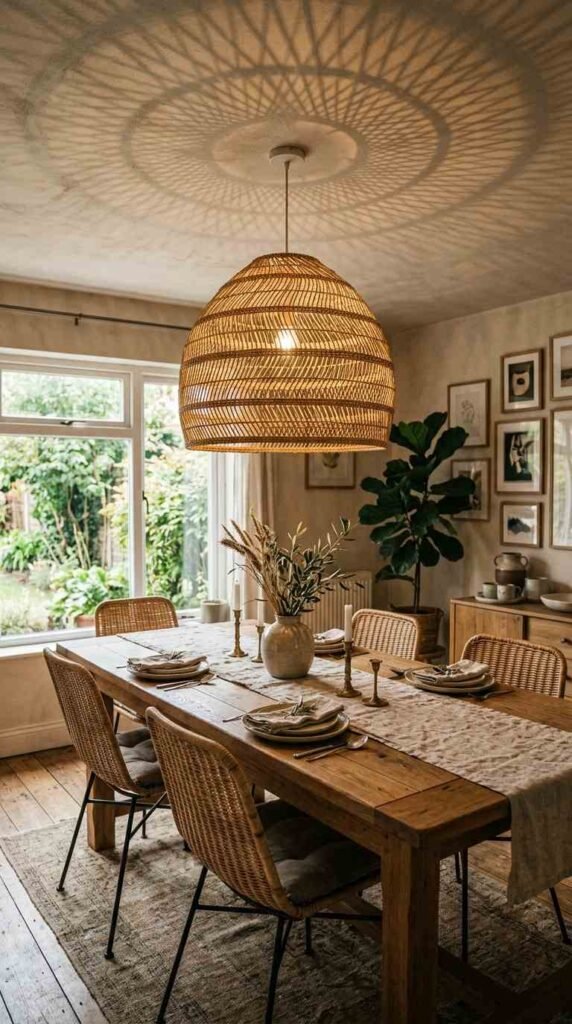
- Adds natural texture as the room’s main light fixture
- Works beautifully above both round and rectangular tables
- Creates interesting shadow patterns when lit
- Suits modern coastal and bohemian-leaning dining rooms
A wicker pendant chandelier turns a functional necessity into the dining room’s main focal point. The woven texture adds warmth and natural character overhead, replacing a typical metal or glass fixture with something that feels distinctly coastal. In my experience, this fixture works especially well centered above the table, since its organic shape and texture draw the eye upward, giving the room a sense of height while still reinforcing the relaxed, natural materials used throughout the rest of the space.
Lighting quality is worth considering carefully with a wicker fixture. I’ve noticed that the woven material casts soft, dappled shadows when lit from within, adding atmosphere during evening meals that a plain fixture simply can’t replicate. Choosing a wicker chandelier with a warm-toned bulb enhances this effect even further. This piece suits dining rooms wanting a bold, textural statement overhead without introducing any additional color to the existing coastal palette.
14. A Weathered Coastal Sideboard Adds Storage and Style
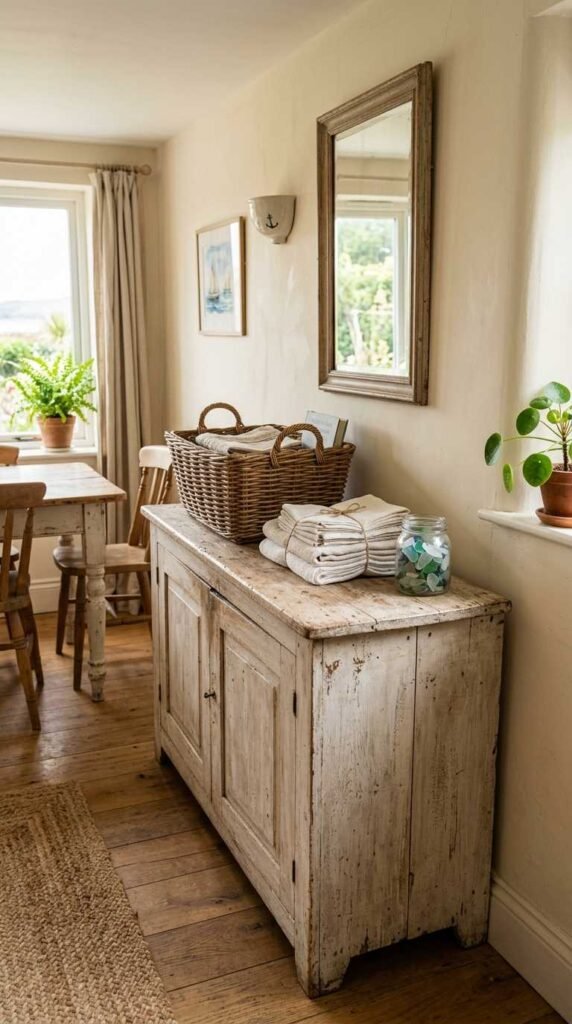
- Provides essential storage while reinforcing the coastal theme
- Works beautifully in whitewashed or weathered wood finishes
- Creates a styling surface for additional coastal decor
- Suits both small and larger dining rooms
A weathered sideboard anchors a coastal dining room while solving real storage needs. Finished in whitewashed or naturally weathered wood, it holds linens, dishware, and serving pieces while visually reinforcing the relaxed, sun-bleached aesthetic found throughout the rest of the room. In my experience, choosing a sideboard with simple, unfussy hardware, like woven rope pulls or brushed nickel, keeps the piece feeling coastal rather than overly formal or traditional, which can clash with the room’s otherwise casual tone.
Styling the top surface completes the look. I’ve seen a simple arrangement of a lamp, a shell bowl, and a small piece of driftwood work beautifully without overcrowding the sideboard’s surface. That’s why many designers recommend keeping sideboard styling minimal when the piece itself already carries strong visual texture through its weathered finish. This furniture piece works especially well in dining rooms that double as a hosting space for larger gatherings.
15. An Ocean Wall Art Gallery Tells a Story
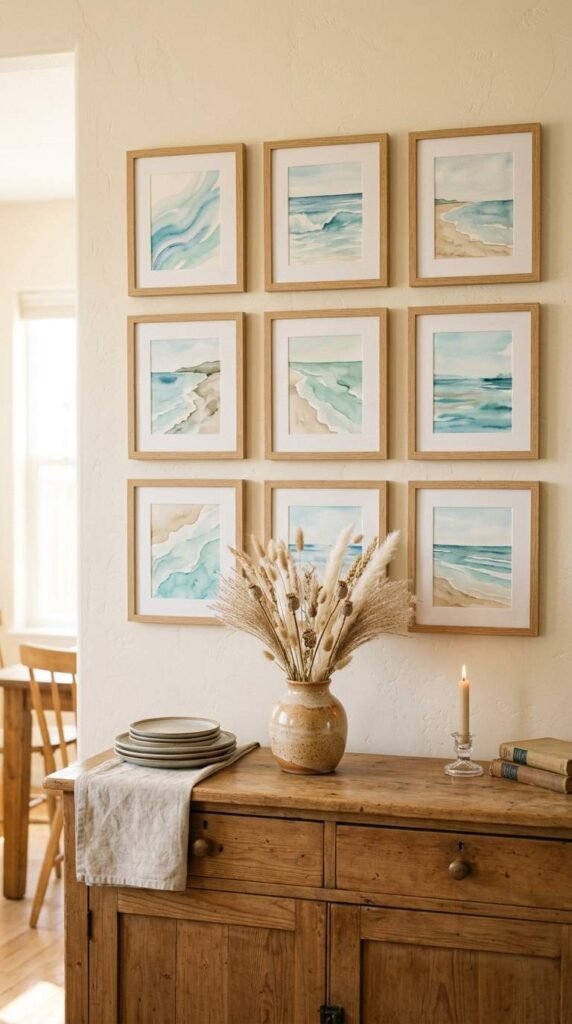
- Adds personality and visual interest to a larger wall
- Works beautifully with a mix of prints, photos, and textures
- Creates a collected, curated coastal narrative
- Easy to update by swapping individual pieces
An ocean-themed wall art gallery turns a blank dining room wall into a genuine coastal story. Mixing framed photographs of the sea, botanical prints of coastal plants, and small sculptural pieces creates a layered display that feels collected over time rather than purchased all at once. In my experience, this approach works particularly well for larger walls that feel too empty with just one piece of art, since the gallery format fills the space while still maintaining a cohesive, intentional coastal narrative throughout.
Choosing a Focal Piece
Every gallery wall benefits from one slightly larger piece to anchor the arrangement. I’ve noticed that a bigger ocean photograph or painting, surrounded by smaller complementary prints, gives the eye a clear starting point before exploring the rest of the display. Keeping the frame finishes consistent, even when the art itself varies, helps the whole gallery feel unified. This idea suits dining rooms wanting genuine personality and visual storytelling on their walls.
16. Ceramic Coral Vases Bring Sculptural Softness
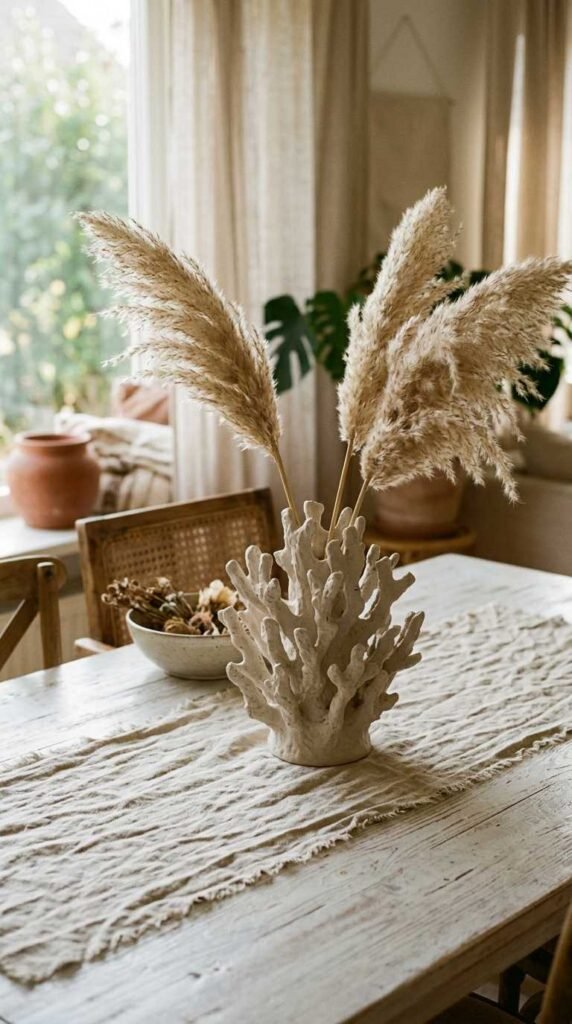
- Adds organic shape without the fragility of real coral
- Works beautifully as a standalone piece or filled with stems
- Suits modern and traditional coastal dining rooms alike
- Durable and easy to style year-round
Ceramic coral vases bring the organic, branching shape of real coral without any of the fragility or sourcing concerns. Glazed in soft white, pale blue, or sandy neutral tones, these sculptural pieces add genuine visual interest to a table or sideboard. In my experience, a ceramic coral vase works beautifully on its own as a sculptural accent, or filled with a few simple stems for added softness, making it a flexible piece that adapts easily to different styling needs throughout the year.
Placement matters more than people might expect with a piece this sculptural. I’ve seen a single coral vase centered on a dining table work beautifully as an everyday centerpiece, needing no additional styling around it. Pairing it with a sideboard display alongside other coastal textures, like woven baskets or driftwood, creates a cohesive visual story. This piece suits homeowners wanting a coastal element that feels more like genuine art than literal beach memorabilia.
17. Sheer White Window Treatments Keep the Room Airy
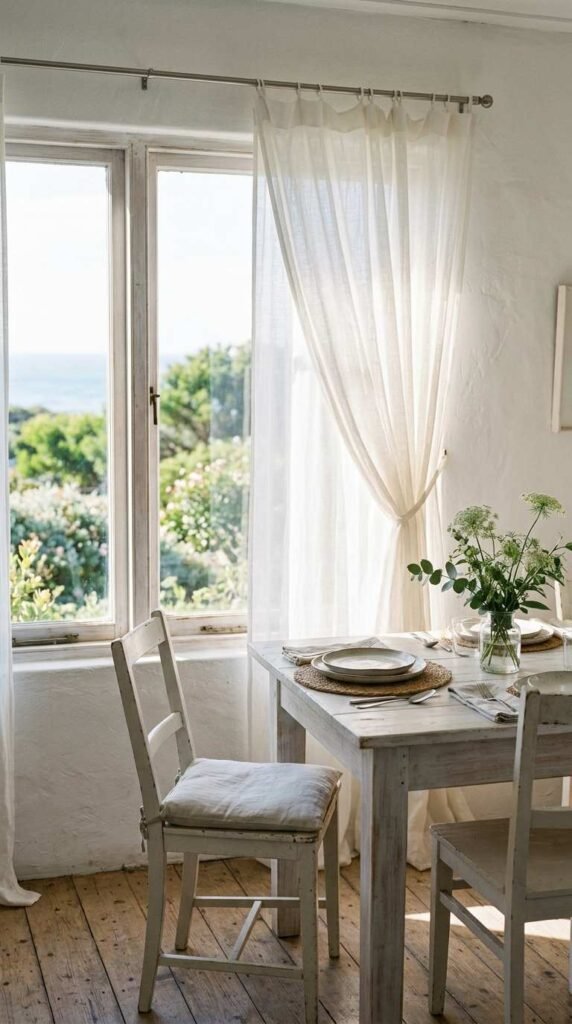
- Filters natural light softly throughout the day
- Adds a light, breezy quality to the windows
- Works beautifully layered with heavier curtains
- Suits nearly every coastal dining room style
Sheer white window treatments bring an airy, breezy quality that feels essential to coastal dining room decor. The lightweight fabric filters sunlight gently, creating a soft glow throughout the day rather than harsh, direct light during meals. In my experience, sheers work particularly well in dining rooms that get a lot of natural sun, since they maintain privacy and comfort without blocking the light that makes coastal spaces feel so bright and open in the first place.
Layering sheers with a heavier linen curtain adds both function and visual depth. I’ve noticed that hanging sheers closer to the glass, with a heavier panel layered in front, gives homeowners flexibility to adjust light and privacy throughout the day while still keeping that soft, billowy coastal look. This combination suits dining rooms with large windows especially well, since the layered fabric softens the architecture without covering up a beautiful outdoor view.
18. A Sea Glass Table Runner Adds Subtle Shimmer
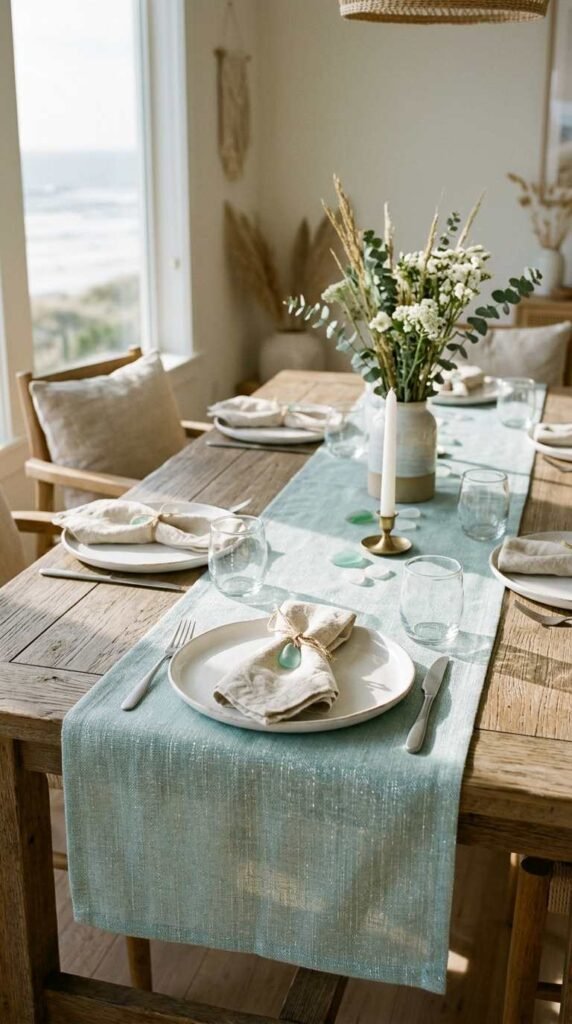
- Brings gentle color and texture to the table
- Works beautifully with both casual and formal settings
- Adds subtle shimmer without overwhelming the setting
- Easy to pair with simple white or neutral dinnerware
A sea glass-toned table runner adds a gentle wash of color across the table without overwhelming the overall coastal palette. Woven in soft aqua, seafoam, or pale turquoise tones, this piece brings subtle shimmer and texture that complements both everyday meals and more special occasions. In my experience, choosing a runner with a slight textural weave, rather than a flat, smooth fabric, adds more visual interest and catches light beautifully, especially when paired with the room’s natural lighting throughout the day.
Pairing the runner with simple white or cream dinnerware lets its soft color stand out clearly. I’ve seen this runner work particularly well layered beneath a centerpiece of shells or coral, since the color ties the whole tablescape together cohesively. This piece is also one of the easiest and most affordable ways to introduce coastal color to a table setting without needing to repaint walls or purchase new furniture for the room.
19. A Rattan Mirror Accent Reflects Natural Light
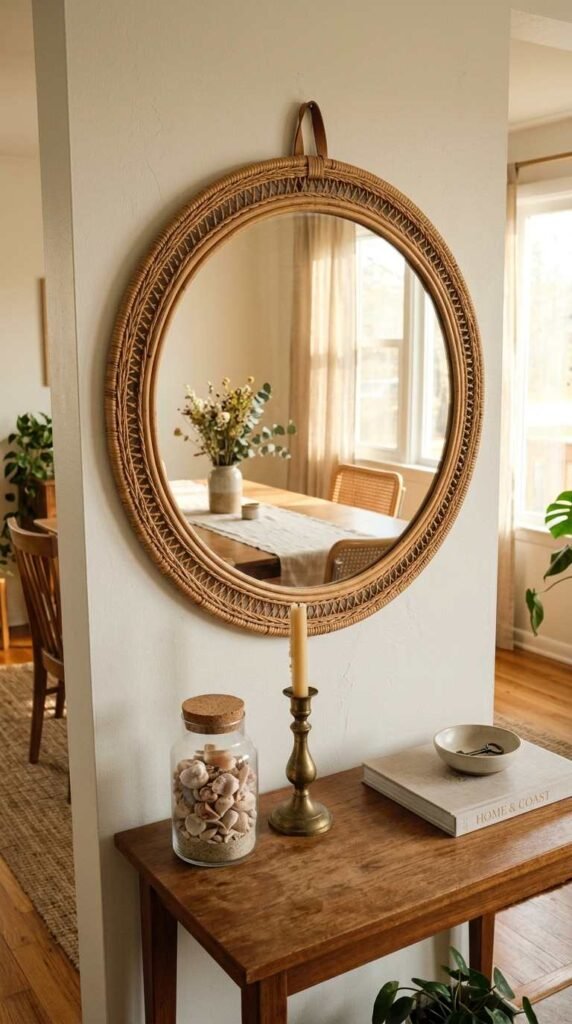
- Adds texture and brightness to the dining room wall
- Works beautifully above a sideboard or as a standalone piece
- Reflects natural light to make the room feel larger
- Suits nearly every coastal dining room layout
A rattan-framed mirror combines two coastal essentials in one piece: natural texture and reflected light. The woven frame adds warmth and organic shape, while the mirror itself bounces natural light around the room, making even a smaller coastal dining room feel brighter and more open. In my experience, this piece works beautifully above a sideboard, where it reflects whatever is happening at the table while reinforcing the natural materials already present throughout the rest of the space.
Shape choice changes the overall feel of this piece significantly. I’ve noticed that a round rattan mirror feels softer and more relaxed, while an arched or rectangular shape leans slightly more traditional. Hanging it a few inches above the sideboard, rather than too high on the wall, keeps the proportions looking intentional. This mirror works especially well paired with simple surrounding decor, letting its natural texture remain the clear visual focus of the wall.
20. Layered Coastal Rugs Add Depth Underfoot
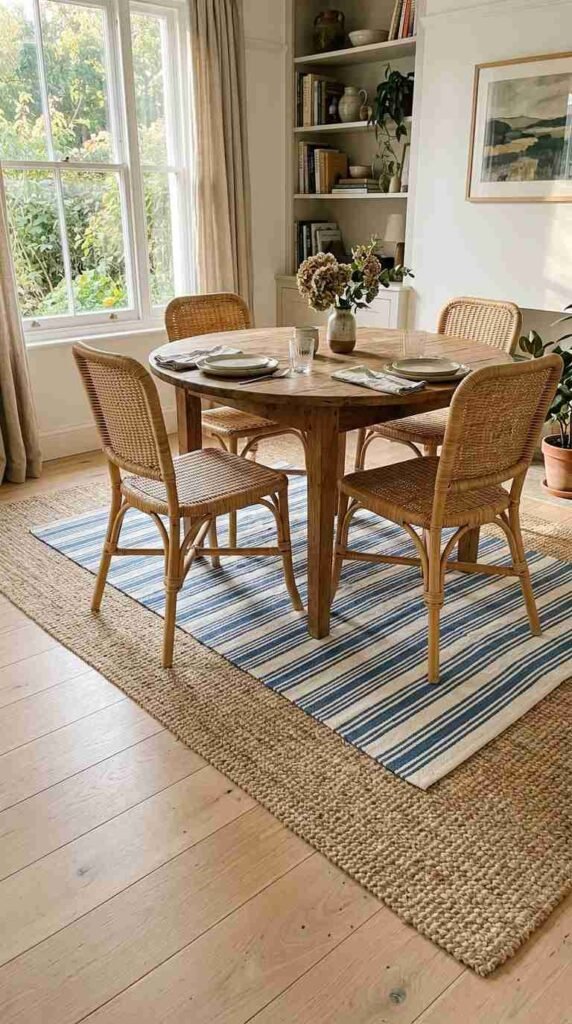
- Creates visual depth and texture on the floor
- Works beautifully combining a jute base with a smaller accent rug
- Adds warmth without overwhelming the room
- Suits larger dining rooms especially well
Layering two rugs beneath the dining table adds genuine depth and texture that a single rug alone can’t achieve. A large jute or sisal base rug, topped with a smaller patterned or textured accent rug, creates visual interest underfoot while still grounding the space naturally. In my experience, this layered approach works particularly well in larger coastal dining rooms, where a single rug might otherwise feel lost or insufficient for the scale of the room and surrounding furniture.
Choosing complementary textures, rather than matching patterns, keeps the layered look feeling intentional. I’ve seen a woven jute base paired with a smaller striped or faded Persian-style rug work beautifully together, since the contrast in texture adds interest without clashing. Keeping the top rug smaller, so a border of the jute base remains visible around the edges, helps the layered effect read as deliberate rather than like two mismatched rugs placed by accident.
21. Botanical Palm Leaf Accents Bring the Outdoors In
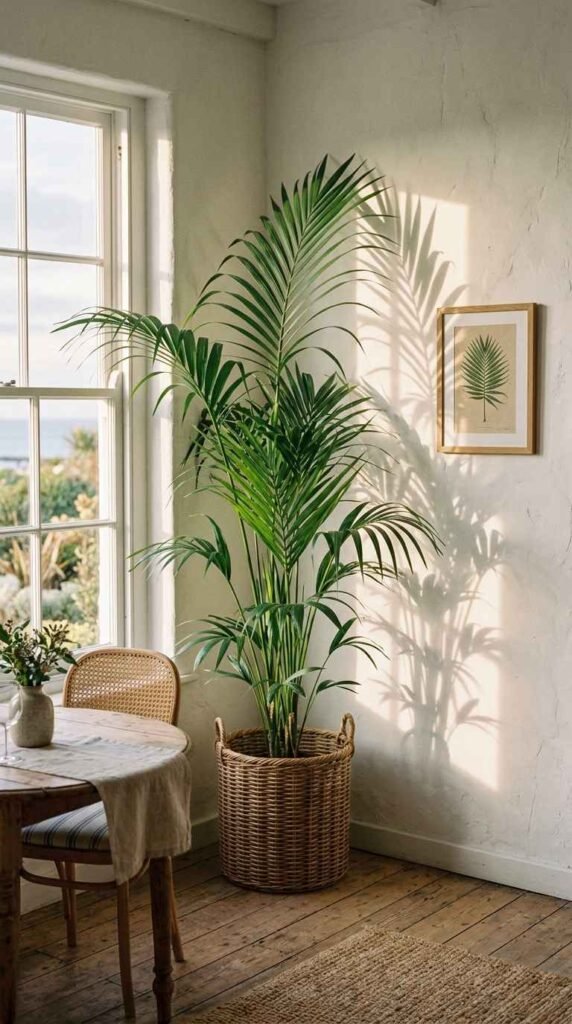
- Adds greenery and movement to the dining room
- Works beautifully in vases, wall art, or printed textiles
- Softens hard furniture lines with organic shape
- Suits both tropical-leaning and classic coastal styles
Palm leaf accents bring a lush, botanical quality that pairs beautifully with coastal dining room decor. Whether through a vase of fresh or faux palm fronds, printed artwork, or patterned textiles, this natural element adds movement and life to a room that might otherwise rely heavily on neutral, static textures like wood and rattan throughout the space.
Mixing Real and Faux Greenery
Combining real and faux palm greenery offers the best of both worlds for many households. I’ve noticed that a real potted palm near a window benefits from natural light, while faux palm stems in a vase on the table require no maintenance at all. This mix keeps the room feeling genuinely green and alive without demanding constant care. Pairing palm accents with simple, neutral surrounding decor keeps the botanical element from feeling overly tropical or theme-heavy throughout the dining space.
22. A Weathered Blue Buffet Cabinet Anchors the Room
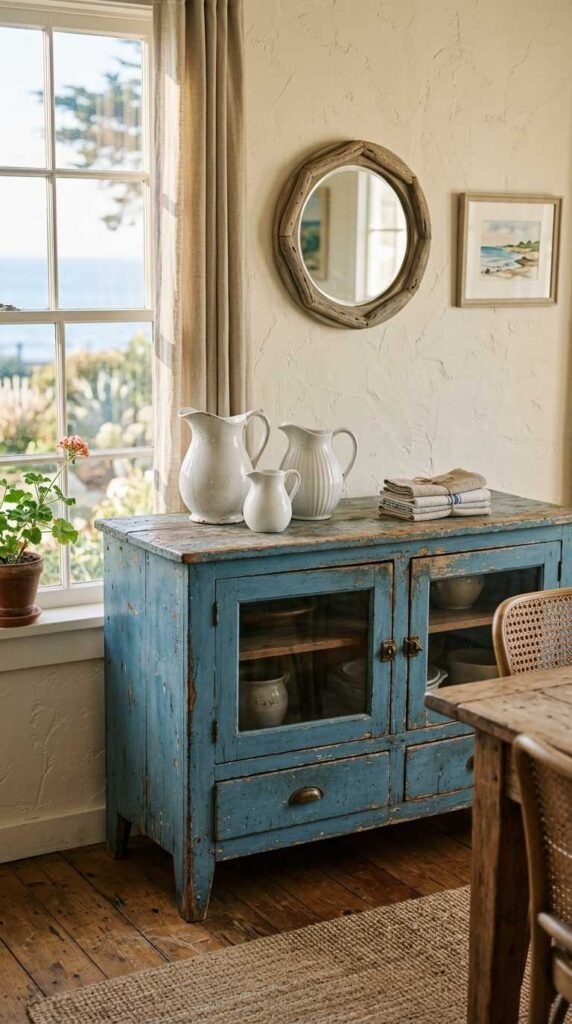
- Adds a bold color anchor without overwhelming the space
- Works beautifully as a storage and styling piece
- Suits larger dining rooms needing a strong focal point
- Pairs well with white, cream, and natural wood tones
A weathered blue buffet cabinet brings a confident pop of color that anchors an entire coastal dining room. Finished in a muted, slightly distressed blue, this piece reads as coastal rather than simply decorative, echoing the color of the sea without feeling overly literal or themed. In my experience, this piece works particularly well as the room’s main storage solution, holding dishware and linens while doubling as a genuine style statement that pulls the whole room’s color palette together.
Styling the top surface completes the anchor effect. I’ve seen a simple lamp, a ceramic coral vase, and a small stack of books work beautifully without crowding the cabinet’s surface. That’s why many designers recommend choosing just a few styling pieces when the furniture itself already carries strong visual weight through its bold color. This cabinet suits larger dining rooms especially well, where its scale and color genuinely anchor the entire space.
23. Seashell Napkin Rings Finish the Table Perfectly
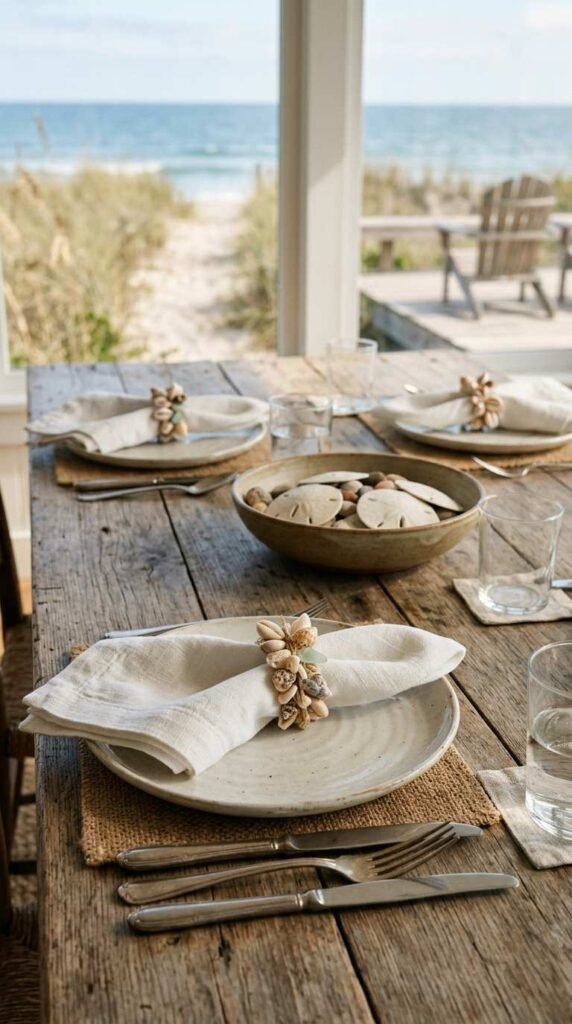
- Adds a small, personal coastal detail to each place setting
- Works beautifully with both casual and formal linens
- Easy to find, make, or collect from the beach
- Completes the table setting without overwhelming it
Seashell napkin rings bring the final coastal touch to a fully set table. Slipped around simple linen napkins, these small details add genuine personality to each place setting without requiring any major decor investment. In my experience, this is one of the easiest ways to complete a coastal dining room decor theme at the table itself, since the napkin rings tie directly into other natural elements already present, like a shell centerpiece or woven placemats throughout the room.
Making your own napkin rings is simpler than it might seem. I’ve seen homeowners glue small shells onto plain wooden or metal rings for an affordable, personal touch that store-bought versions can’t quite match. Choosing rings in a consistent shell type, rather than a random mix, keeps the table setting looking cohesive rather than cluttered. This small detail completes the overall table setting beautifully, finishing off the coastal theme from the sideboard all the way to each individual place.
FAQs
1. What defines coastal dining room style?
Coastal dining room style blends natural materials like rattan and jute with a soft, ocean-inspired color palette of blues, whites, and sandy neutrals. In my experience, the key is keeping things relaxed and airy rather than overly polished, since the style draws its charm from a lived-in, sun-washed feeling.
2. What kind of table works best for a coastal dining room?
A whitewashed or naturally weathered wood table works best, since the pale finish mimics driftwood and reflects light beautifully. I’ve seen both round and rectangular tables suit this style equally well, as long as the finish feels soft and slightly imperfect rather than glossy or formal.
3. What colors work well for coastal decor?
Soft blues, seafoam green, sandy beige, and crisp white form the core of most coastal palettes. Adding warm wood tones keeps the room from feeling too cool. I’ve noticed that muted, gray-toned versions of these colors look more sophisticated than overly bright, saturated shades.
4. Can I use rattan furniture in a coastal dining room?
Yes, rattan is one of the most essential materials in coastal design. Chairs, mirrors, and light fixtures in woven rattan add natural texture without feeling heavy. That’s why many designers recommend rattan as a starting point for anyone new to decorating in this style.
5. What kind of rug suits a coastal dining room?
Jute and sisal rugs are ideal, since their natural fiber and neutral tone ground the space without competing with lighter furniture. I’ve seen layered rugs, combining a jute base with a smaller patterned accent, add even more depth in larger dining rooms.
6. How do I add coastal charm without overdoing the beach theme?
Focus on texture and color rather than literal beach objects like anchors or large shell collections. In my experience, a few well-placed natural elements, like a shell bowl or driftwood art, feel more sophisticated than filling the room with obvious nautical props.
7. What lighting fits a coastal dining room?
Sea glass pendants, wicker chandeliers, and fixtures in natural materials all suit this style beautifully. I’ve noticed that warm-toned bulbs soften any cool blue or green glass tones, keeping the room feeling inviting rather than cold, especially during evening meals.
8. Is coastal decor budget-friendly?
Yes, many coastal elements, like shells, driftwood, and linen textiles, are naturally affordable or even free if sourced locally. I’ve seen homeowners achieve this look gradually, adding one or two pieces at a time rather than redecorating the entire room all at once.
9. What table linens work best for this style?
Linen in sandy or white tones, paired with blue and white striped napkins or runners, suits coastal dining rooms well. Natural fiber placemats in jute or seagrass add texture directly to the table setting, completing the look without much extra effort.
10. Can I mix coastal decor with other styles?
Absolutely. Coastal elements pair especially well with modern, farmhouse, and bohemian styles, since they all share an appreciation for natural materials and relaxed textures. I’ve seen this blend work beautifully by keeping the coastal palette as the base and layering in just a few style-specific pieces.
Conclusion
A dining room doesn’t need to sit by the water to feel coastal. From whitewashed tables and rattan chairs to sea glass lighting and natural textiles, these coastal dining room decor ideas show how a few intentional choices can bring that relaxed, breezy charm into any home. I’ve seen how something as simple as a new rug or a shell centerpiece can completely shift the mood of a space. Pick one idea that speaks to you and try it this week. Save this post for later, and share it with anyone ready to bring a little coastal calm into their dining room.