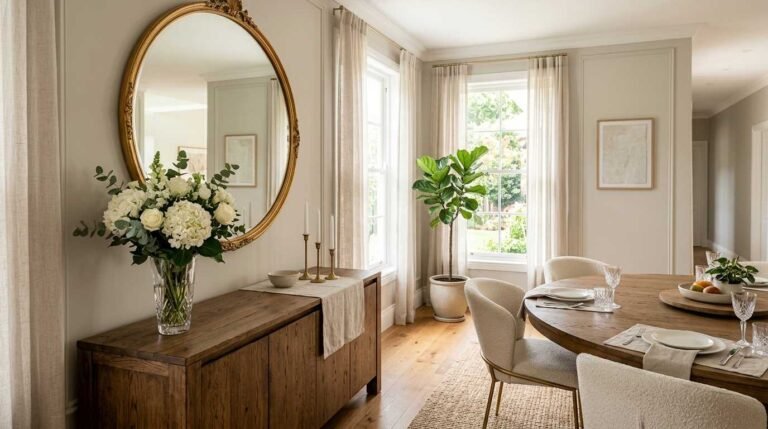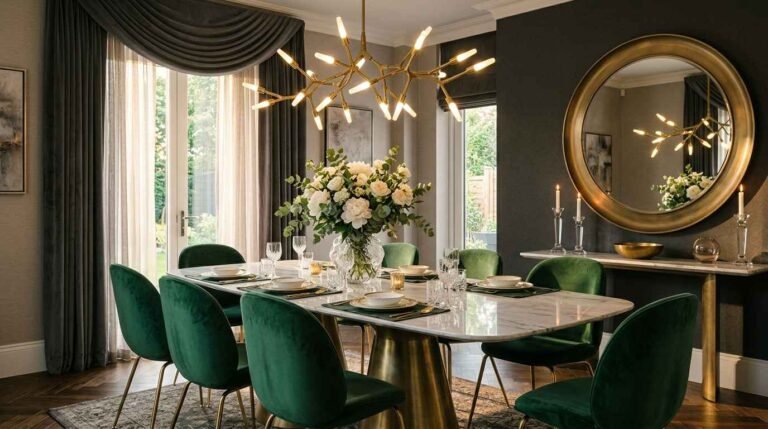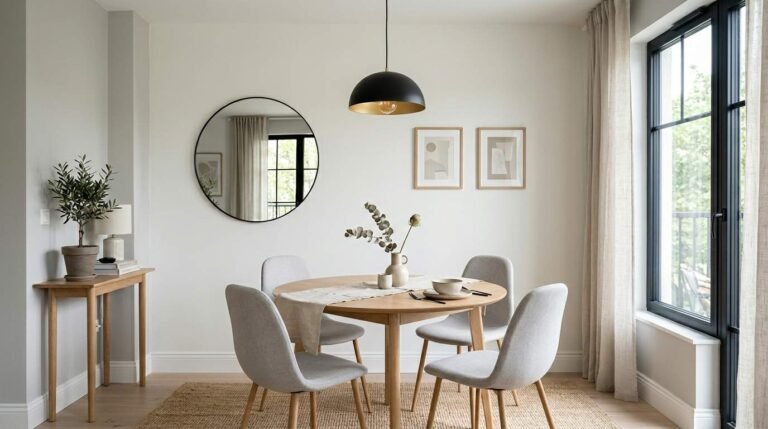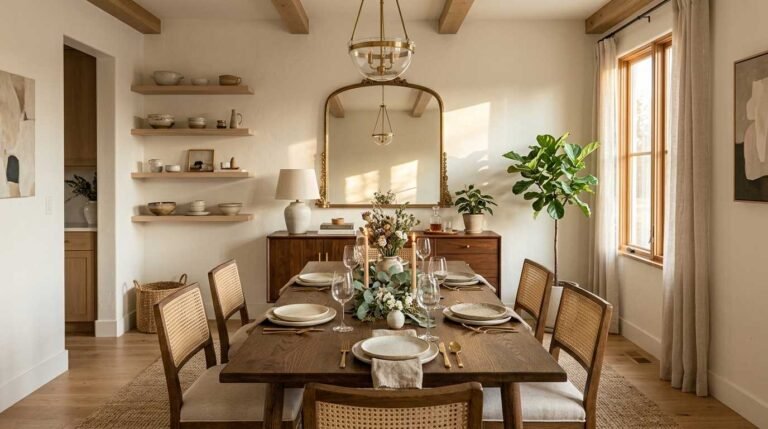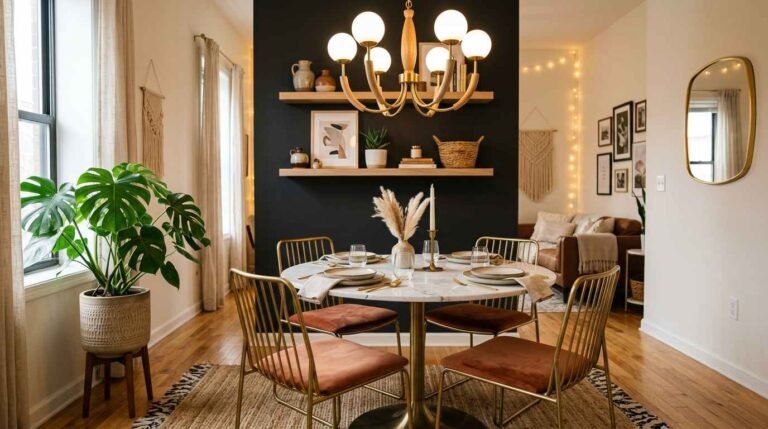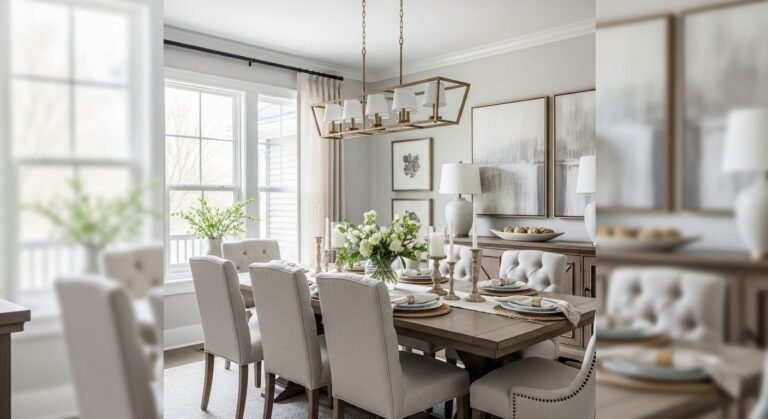
What if your dining room could feel both beautifully simple and genuinely warm at the same time? These Scandinavian dining room decor ideas show you exactly how to achieve that balance, blending light wood, soft textiles, and natural materials into a space that feels calm rather than cold. In my experience, this style works so well because it prioritizes function and comfort just as much as appearance, rather than choosing one over the other. This guide walks through 24 practical, achievable ways to style your dining space, from a pale wood table to cozy sheepskin throws and hygge-inspired candlelight. Keep scrolling, save your favorites, and get ready to bring that signature Scandinavian warmth into your own home.
1. Light Wood Dining Table for Scandinavian Dining Room Decor
- Anchors the room in natural, pale material
- Reflects light rather than absorbing it
- Suits both formal and everyday use
- Pairs easily with nearly any chair style
- Ages gracefully with visible grain
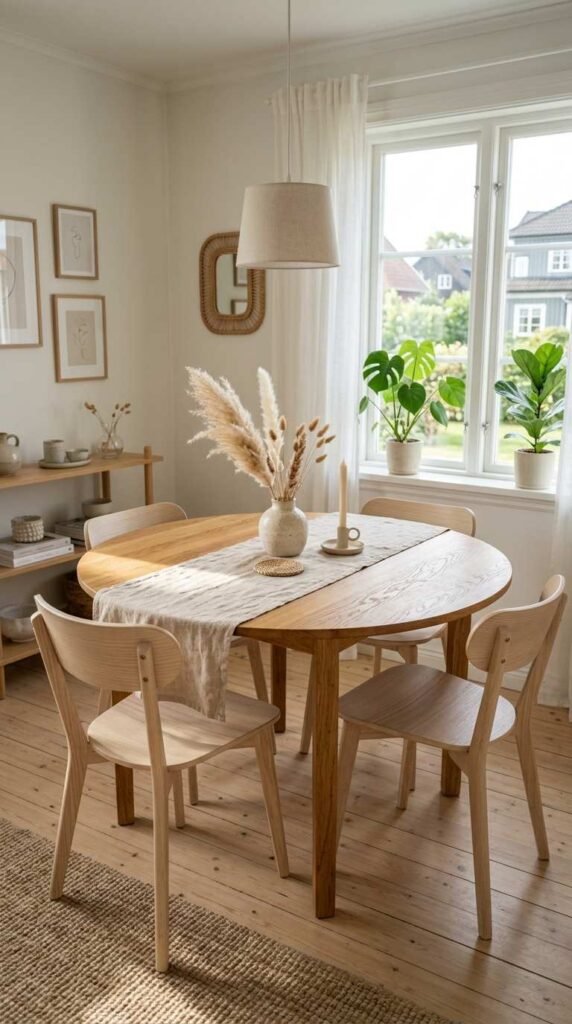
A pale wood dining table, typically oak, birch, or ash, forms the foundation of nearly every successful example of Scandinavian dining room decor. The light, natural tone reflects available daylight rather than absorbing it the way darker wood might, keeping the room feeling bright even during the shorter, gray days this design style originally evolved to brighten. Tapered legs, a hallmark of mid-century Scandinavian furniture, add a subtle sense of lightness beneath the tabletop itself.
The visible grain running through a genuinely solid wood table carries more character than a veneer or painted surface ever could, and that grain only grows more interesting as the piece ages through years of family meals. Pairing this table with simple, unfussy chairs keeps the attention on the wood’s natural beauty rather than competing with ornate detailing elsewhere in the room.
2. Whitewashed Wall Finishes
- Maximizes brightness throughout the room
- Creates a calm, neutral backdrop
- Works well with both paint and limewash
- Suits rooms with limited natural light
- Ages softly without feeling stark
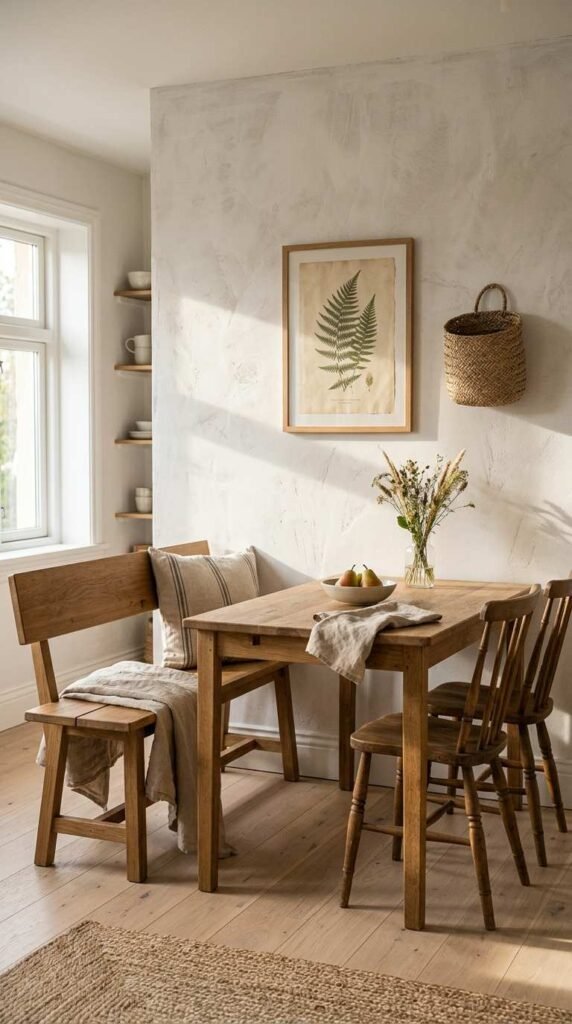
Whitewashed walls, whether achieved through soft white paint or a traditional limewash technique, maximize brightness within Scandinavian dining room decor, a priority rooted in the long, dark winters common to the region this style originated in. Unlike stark, bright white, a whitewash finish carries subtle warmth and slight variation, preventing the walls from feeling clinical or cold despite their pale tone.
This treatment suits rooms with limited natural light especially well, since the reflective quality bounces whatever daylight does enter across the entire space. Limewash in particular develops a soft, slightly chalky texture that reads as considerably more organic than flat modern paint, adding quiet depth to walls that might otherwise feel like an afterthought within the room’s overall design.
3. Cozy Textile Layering
Best Fabrics for Layering
- Adds warmth without visual clutter
- Introduces texture across multiple surfaces
- Works well with wool, linen, and cotton
- Suits chairs, tables, and windows alike
- Creates the tactile comfort central to hygge
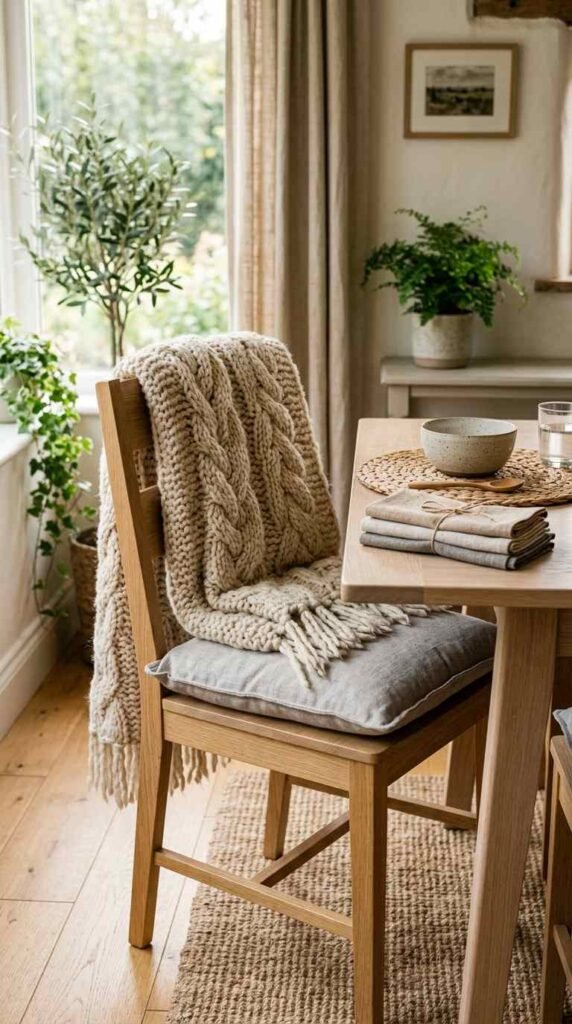
Layering soft textiles throughout the dining room, a wool throw over one chair, linen napkins at each place setting, simple cotton curtains at the window, builds the tactile warmth central to Scandinavian dining room decor without introducing visual clutter. Because the style relies on restraint elsewhere, these fabric layers become one of the primary ways genuine coziness enters the room.
Wool and chunky knit textiles suit colder months particularly well, while lighter linen and cotton keep things feeling fresh once warmer weather arrives. Choosing fabrics in a consistent, muted color family, oatmeal, soft gray, pale blue, allows the layering to feel cohesive even when multiple different materials and weights appear throughout the same space, reinforcing the calm, unified mood this style depends on.
4. Statement Pendant Lighting
- Creates a clear overhead focal point
- Combats dim winter daylight effectively
- Works well in paper, glass, or woven materials
- Elevates the room without cluttering the table
- Suits both minimalist and slightly bolder interiors
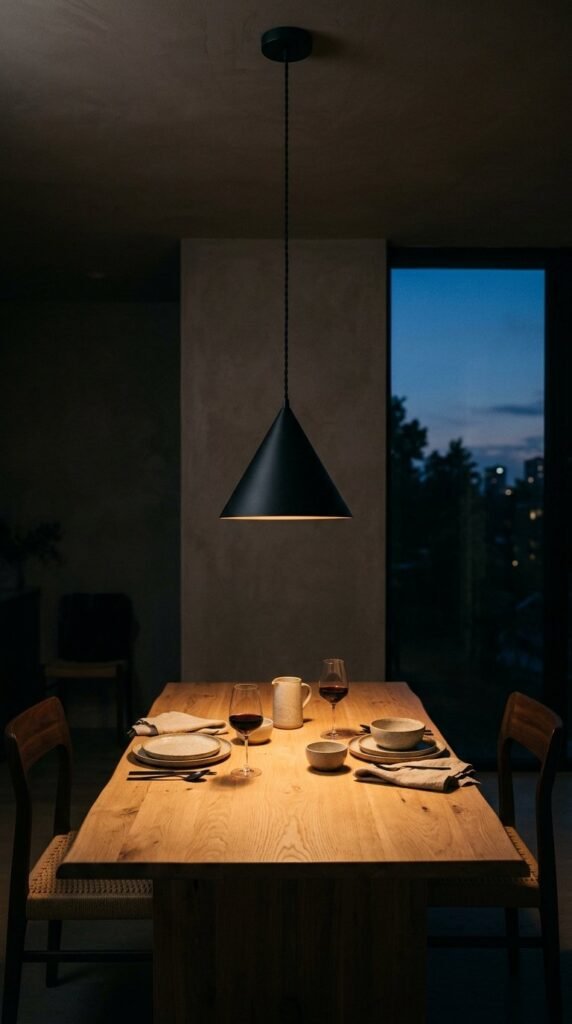
A statement pendant light, whether a classic paper globe, a sculptural glass form, or a woven rattan shade, becomes one of the few bold design choices within otherwise restrained Scandinavian dining room decor. Because lighting carries such practical importance in a style born from long winters with limited daylight, the fixture chosen above the table deserves real consideration rather than an afterthought purchase.
Iconic Scandinavian lighting designs, often featuring organic, layered shapes, cast a soft, diffused glow rather than harsh direct light, flattering both food and faces during evening meals. Hanging the fixture at the standard thirty to thirty-six inches above the tabletop keeps the light functional while still allowing the pendant’s shape to serve as the room’s primary visual statement.
5. Minimalist Wall Art
- Adds personality without visual noise
- Suits simple black and white or muted tones
- Works well as a single piece or small grouping
- Keeps walls feeling calm and uncluttered
- Reinforces the style’s overall restraint
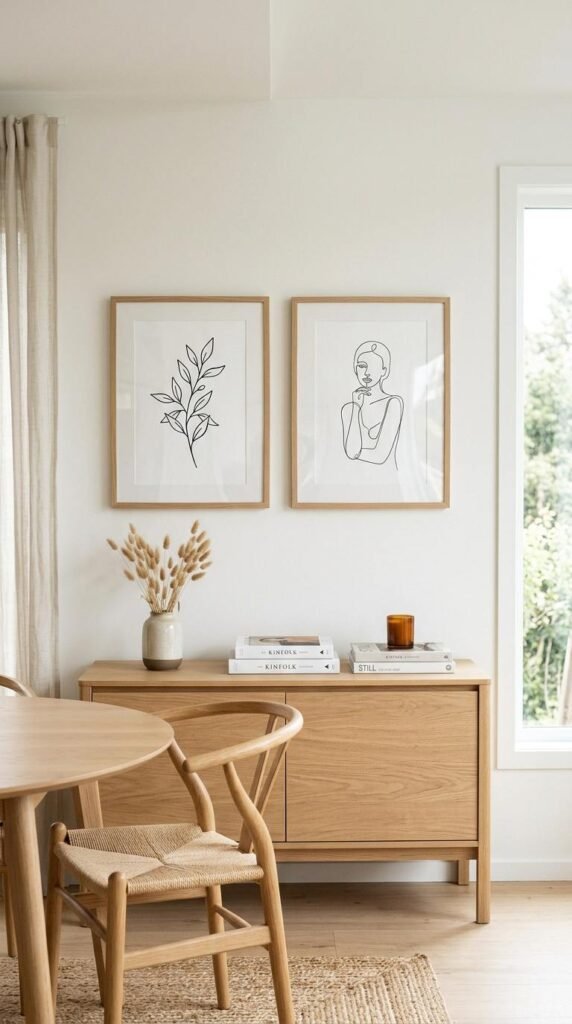
A single piece of minimalist wall art, often a simple line drawing, an abstract shape in muted tone, or a quiet black and white photograph, introduces personality to Scandinavian dining room decor without disrupting the style’s inherent calm. Unlike maximalist approaches favoring dense gallery walls, this style typically relies on one or two carefully chosen pieces given plenty of breathing room around them, making it a refined choice for dining room wall decor ideas elegant.
Choosing art with a restrained color palette, often just black against white or soft, muted tones, keeps the piece feeling integrated into the room’s overall quiet mood rather than competing for attention. A thin black or natural wood frame suits this aesthetic better than anything ornate, letting the simplicity of both the art and its frame work together toward the same understated effect.
6. Woven Rattan Dining Chairs
- Introduces natural texture alongside wood
- Adds visual lightness through open weave
- Suits both vintage and modern Scandinavian looks
- Pairs beautifully with a pale wood table
- Brings warmth without heavy upholstery
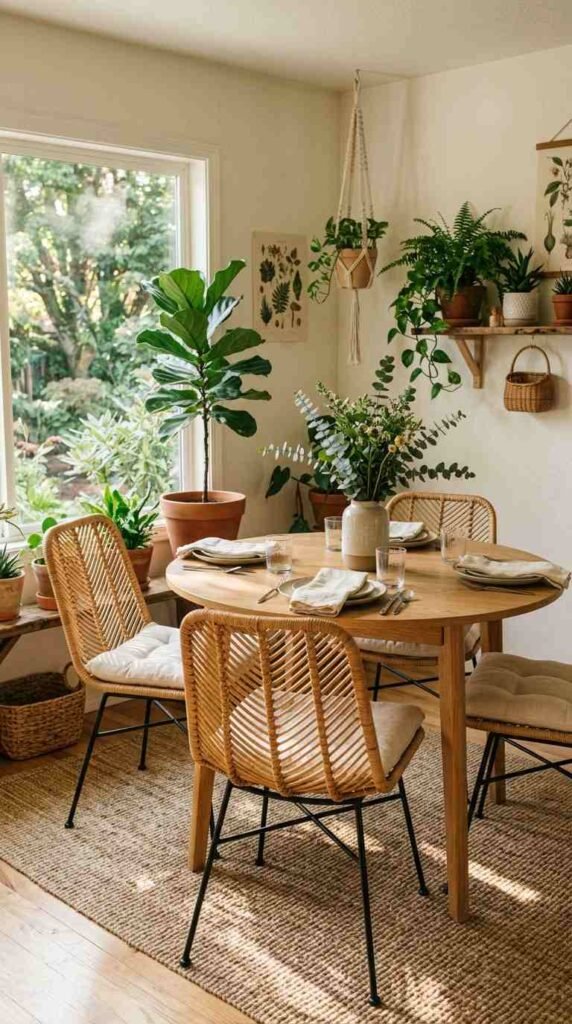
Rattan dining chairs, whether featuring a fully woven seat and back or simply woven accents on an otherwise wood frame, bring natural texture into Scandinavian dining room decor that smooth, solid materials cannot replicate. The open weave also keeps the chairs feeling visually light, letting you see through the backrest rather than facing a solid, heavier silhouette at every seat around the table.
This chair style pairs particularly well with a pale wood table, since the two natural materials share an organic quality that feels cohesive without requiring an exact color match. Rattan has also remained a genuinely iconic element of mid-century Scandinavian design, meaning vintage pieces sourced secondhand often integrate just as beautifully as newly manufactured versions into the same room.
7. Layered Neutral Color Palette
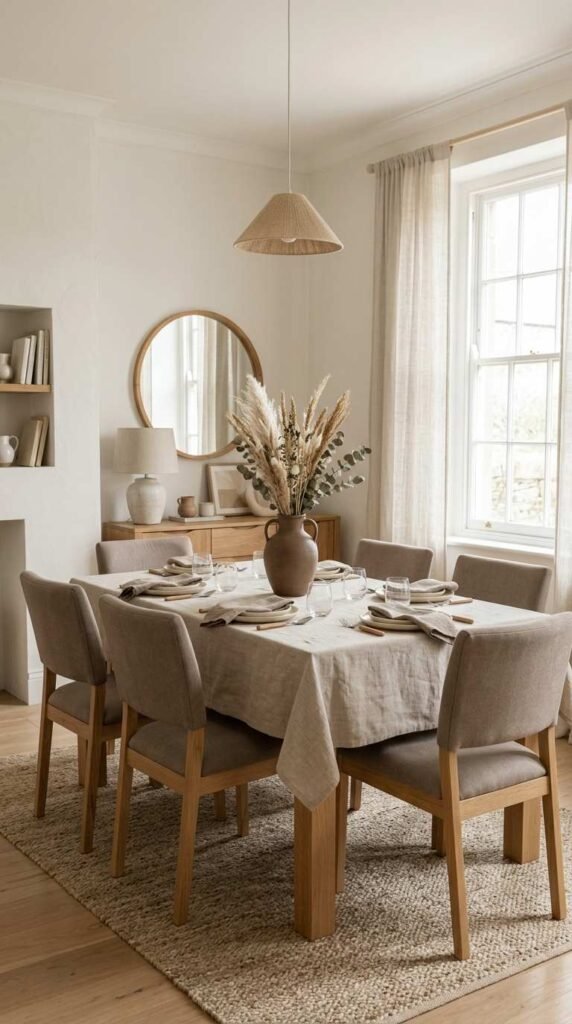
Adding Depth with Layered Neutrals
- Creates sophistication without requiring bold color
- Builds depth through tonal variation
- Works across walls, furniture, and textiles
- Suits nearly any furniture style already owned
- Ages well without feeling dated
Building a dining room entirely around varying shades within the neutral family, soft white, warm beige, pale gray, creates the sophisticated, cohesive foundation central to Scandinavian dining room decor. Because the palette avoids bold, saturated color almost entirely, every element in the room works together naturally regardless of when or where each individual piece was purchased, making this approach especially useful for home decor styling ideas that feel timeless and effortlessly coordinated.
The key to keeping a neutral room from feeling flat lies in genuine tonal variation rather than a single repeated shade throughout. A warm cream wall, paired with a cooler gray rug and a pale oak table, introduces enough difference between the neutrals to create real depth. Adding one slightly darker accent, perhaps in black chair legs or a charcoal cushion, grounds the otherwise light palette and prevents the room from feeling washed out.
8. Natural Wood Flooring
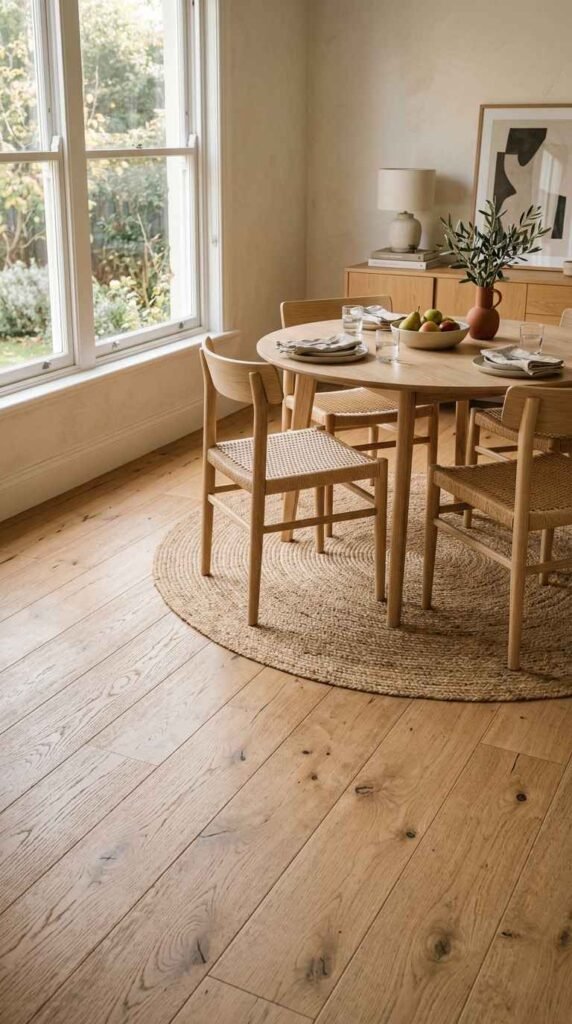
- Provides a warm, cohesive foundation
- Reflects light better than darker alternatives
- Suits both wide-plank and narrower styles
- Works beautifully with pale rugs layered on top
- Ties the entire room together visually
Light natural wood flooring, whether genuine hardwood or a convincing engineered alternative, provides the literal foundation beneath Scandinavian dining room decor. The pale tone reflects available light far more effectively than darker flooring options, reinforcing the brightness this style consistently prioritizes throughout every element of the room, from walls to furniture to the floor itself.
Wide-plank flooring suits a more contemporary interpretation of the style, while narrower, traditional planks lean slightly more toward the classic mid-century Scandinavian aesthetic many people associate with this look. Layering a pale, natural fiber rug on top of the wood flooring adds texture underfoot without disrupting the overall light, cohesive foundation the flooring establishes throughout the entire room.
9. Sheepskin Chair Throws
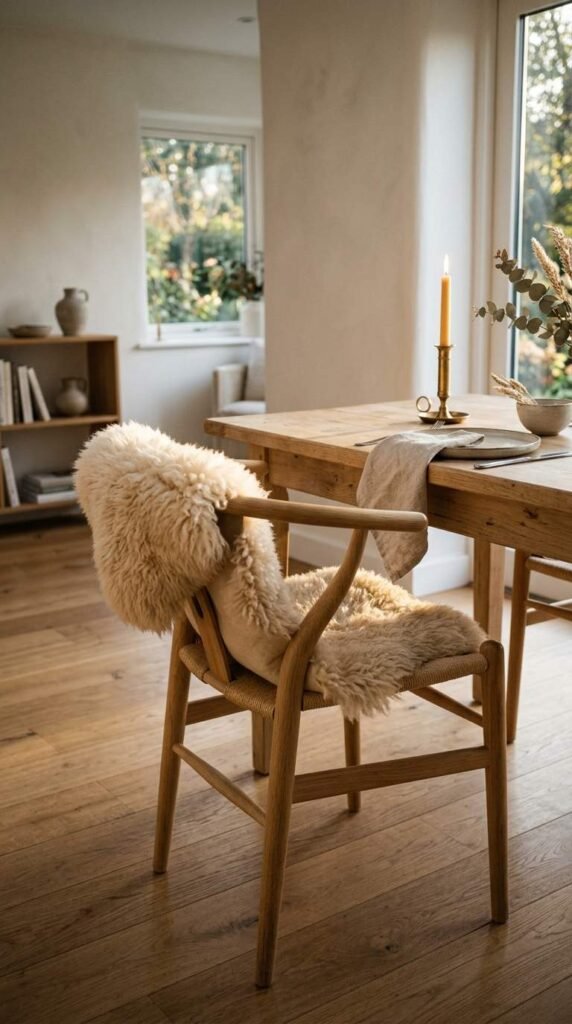
- Adds genuine tactile warmth to seating
- Introduces natural texture at the chair level
- Works beautifully draped casually over backs
- Suits colder months especially well
- Reinforces the cozy, hygge-inspired mood
A sheepskin throw, draped casually over the back of a dining chair rather than arranged with perfect symmetry, brings genuine tactile warmth to Scandinavian dining room decor in one of its most recognizable and beloved details. The soft, natural texture invites touch in a way that flat fabric cushions simply cannot replicate, reinforcing the cozy, hygge-inspired comfort this style consistently prioritizes.
A single sheepskin on just one or two chairs, rather than every seat around the table, tends to look more natural and less staged than a perfectly matched set draped identically throughout the room. This detail particularly shines during colder months, when the soft wool genuinely improves the comfort of sitting through a longer, lingering meal at the table.
10. Open Shelving Display
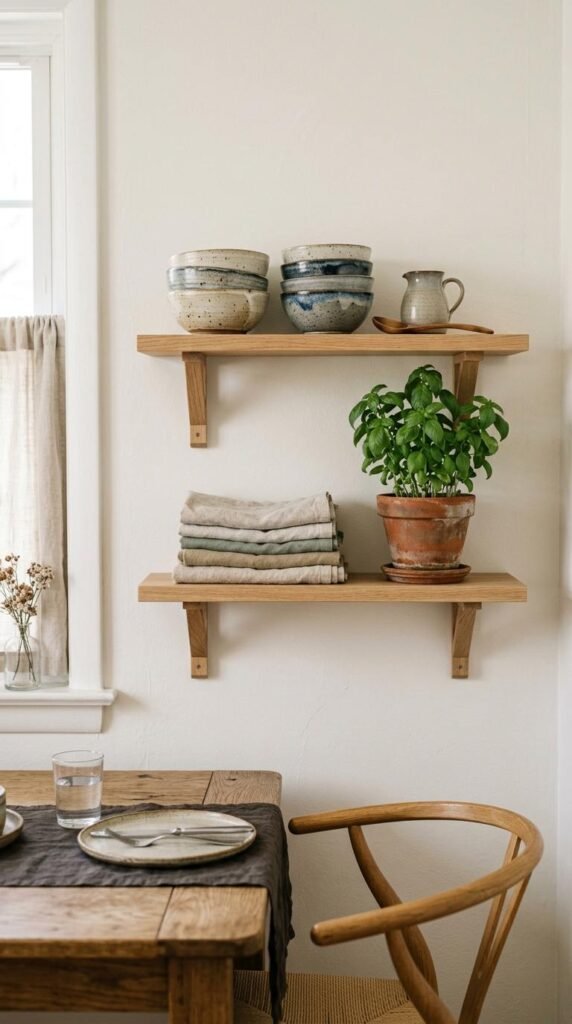
- Combines storage with simple, visible styling
- Draws the eye upward, adding height
- Works well with a restrained number of objects
- Creates a functional, uncluttered look
- Suits both small and larger dining rooms
Open wooden shelving offers a practical way to display dishware and a few decorative objects while reinforcing the understated functionality central to Scandinavian dining room decor. Unlike closed cabinetry, the shelves keep everyday items visible and accessible, while also contributing genuine visual interest to a wall that might otherwise remain entirely bare.
Styling restraint matters considerably here, since this design style consistently favors fewer, more meaningful objects over an abundance of decor. A few ceramic pieces, a single plant, and perhaps one small stack of linens, spaced with generous gaps between each grouping, keeps the display feeling calm and intentional rather than cluttered or overly busy.
11. Ceramic Tableware Styling
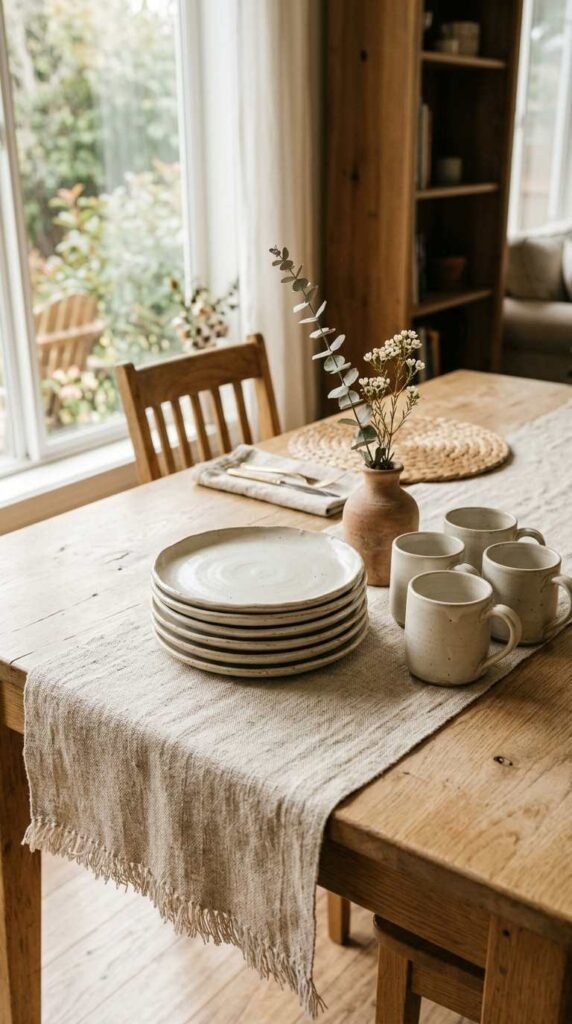
- Adds handcrafted texture to everyday meals
- Introduces subtle color through glaze variation
- Works well mixed with simple white dishware
- Elevates ordinary place settings thoughtfully
- Suits both display and daily use
Handcrafted ceramic tableware, often featuring a slightly uneven glaze or an organic, imperfect shape, extends Scandinavian dining room decor into the most intimate, functional level of the room: the actual dishes used at every meal. This attention to craft reflects a broader design philosophy within the style, one that values quality, considered objects over anything mass-produced or purely decorative.
Mixing a few handcrafted pieces with simpler, more neutral everyday dishware creates a curated table setting without requiring an entirely matching set purchased all at once. Displaying a few favorite ceramic pieces on open shelving, even when the table isn’t actively set for a meal, reinforces the room’s overall aesthetic and rewards the investment in genuinely well-made tableware.
12. Hygge Candle Styling
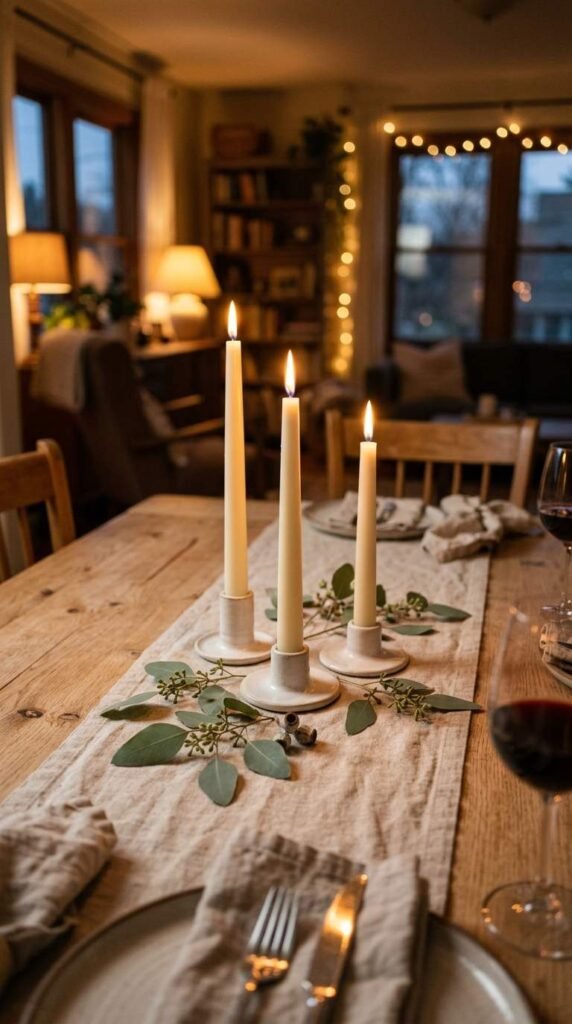
- Introduces warmth through soft, flickering light
- Reinforces the cozy hygge concept central to the style
- Works well grouped in varying heights
- Easy and affordable to implement immediately
- Enhances evening meals significantly
Candles, grouped at varying heights on a simple wooden tray or scattered individually down the length of the table, bring the warm, flickering light central to hygge, the Danish concept of cozy contentment deeply tied to Scandinavian dining room decor. This simple, affordable styling choice does more to establish genuine atmosphere during evening meals than almost any other single addition to the room.
Unscented candles work best near the dining table, so the scent never competes with the meal itself. In my experience, keeping the arrangement relatively simple, three or four candles rather than an elaborate, crowded display, feels more authentic to the restrained spirit of this design style than an overly decorated centerpiece ever would.
13. Botanical Greenery Accents
- Brings natural life into a pale, neutral room
- Adds color without disrupting the calm palette
- Works well with a single well-placed plant
- Suits both real and dried botanical options
- Softens hard furniture lines naturally
A single well-chosen plant, whether a trailing pothos on an open shelf or a simple potted fiddle leaf fig in the corner, introduces natural life and subtle color into the otherwise pale, neutral foundation of Scandinavian dining room decor. The greenery’s organic shape softens the clean, simple lines typically found throughout the furniture and architecture within this style.
Dried botanical elements, a bundle of eucalyptus or a few stems of pampas grass in a simple ceramic vase, offer a lower-maintenance alternative that still introduces genuine natural texture. Whichever option you choose, keeping the greenery to just one or two thoughtful placements, rather than filling every surface with plants, maintains the restraint this design style depends on throughout the room.
14. Simple Linen Curtains
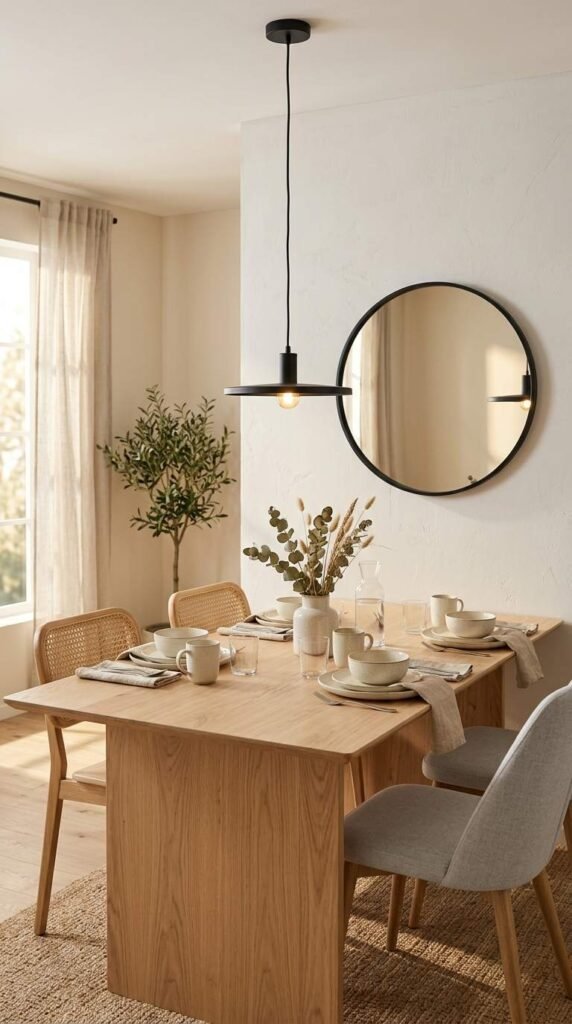
- Softens windows without blocking natural light
- Adds gentle texture through natural fabric
- Works beautifully in pale, neutral tones
- Suits the style’s overall emphasis on brightness
- Elevates windows beyond simple blinds alone
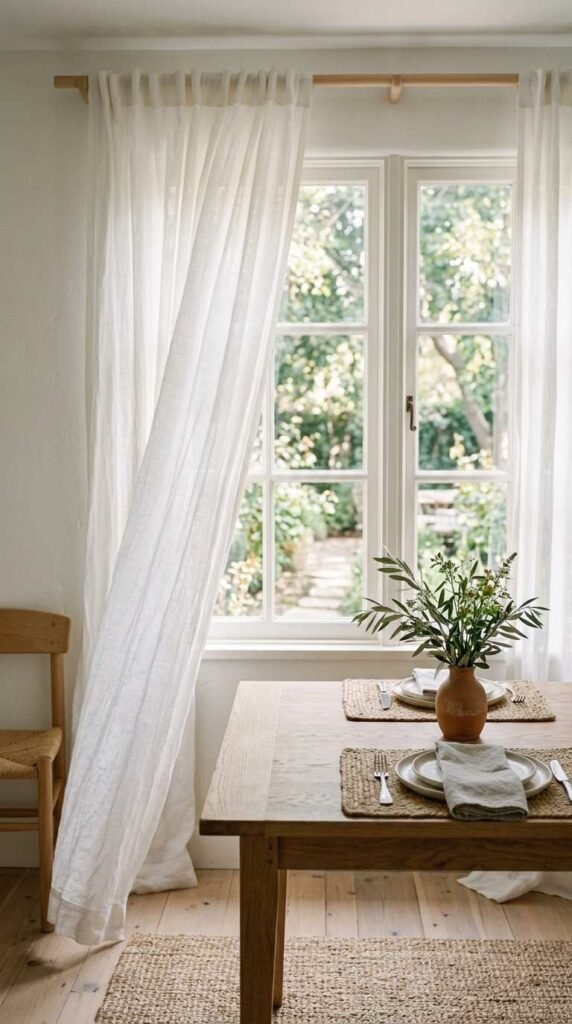
Simple linen curtains, hung in a pale neutral tone, soften windows within Scandinavian dining room decor without sacrificing the natural light this style consistently prioritizes throughout every design decision. The slightly textured, relaxed drape of linen suits the overall aesthetic far better than heavier, more formal drapery would, keeping the window treatment feeling appropriately understated.
Hanging the curtain rod close to the ceiling, rather than directly above the window frame, makes the room feel taller while still allowing daylight to pour through unobstructed once the panels are pulled back. This small installation detail matters considerably more to the finished look than most people initially expect, particularly within a style so dependent on maximizing whatever natural brightness the room receives.
15. Black Accent Details
- Adds sharp contrast against pale surroundings
- Grounds an otherwise entirely light palette
- Works well in chair legs, hardware, or frames
- Prevents the room from feeling washed out
- Suits both subtle and slightly bolder applications
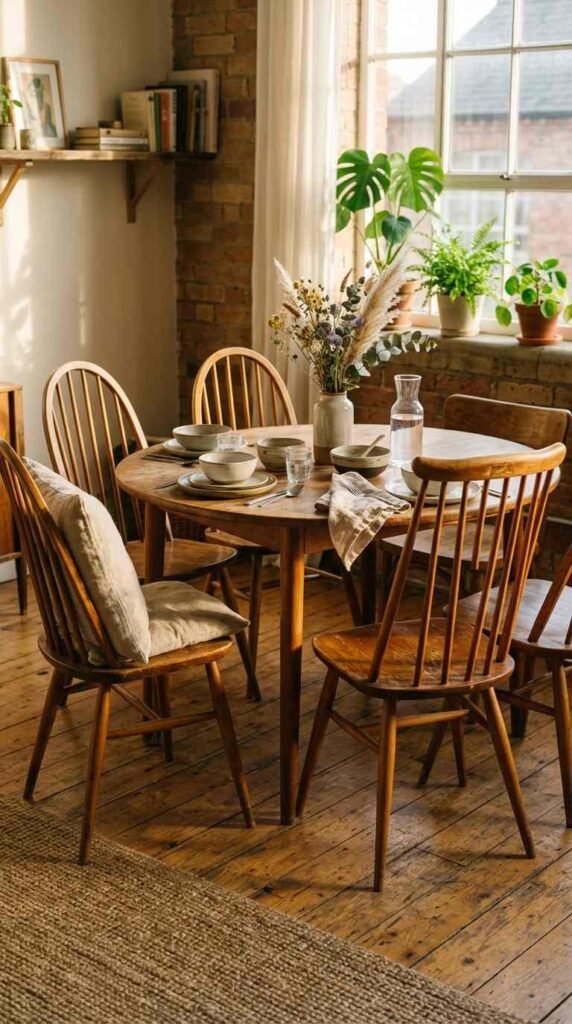
A few carefully placed black accents, whether chair legs, a pendant light fixture, or simple picture frames, add necessary contrast within Scandinavian dining room decor that might otherwise feel entirely washed out across so much pale wood and white wall space. This small dose of darker tone grounds the room, giving the eye a point of focus against the otherwise soft, light-filled backdrop.
In my experience, black accents work best in small, deliberate doses rather than scattered too liberally throughout the room. A single black light fixture or a set of black-legged chairs is often enough to create balance without disrupting the overall sense of lightness and calm this design style depends on for its signature mood.
16. Vintage Scandinavian Chairs
- Adds genuine mid-century design history
- Introduces authentic character through age
- Works beautifully mixed with newer pieces
- Suits households that enjoy sourcing unique finds
- Rewards patient secondhand shopping
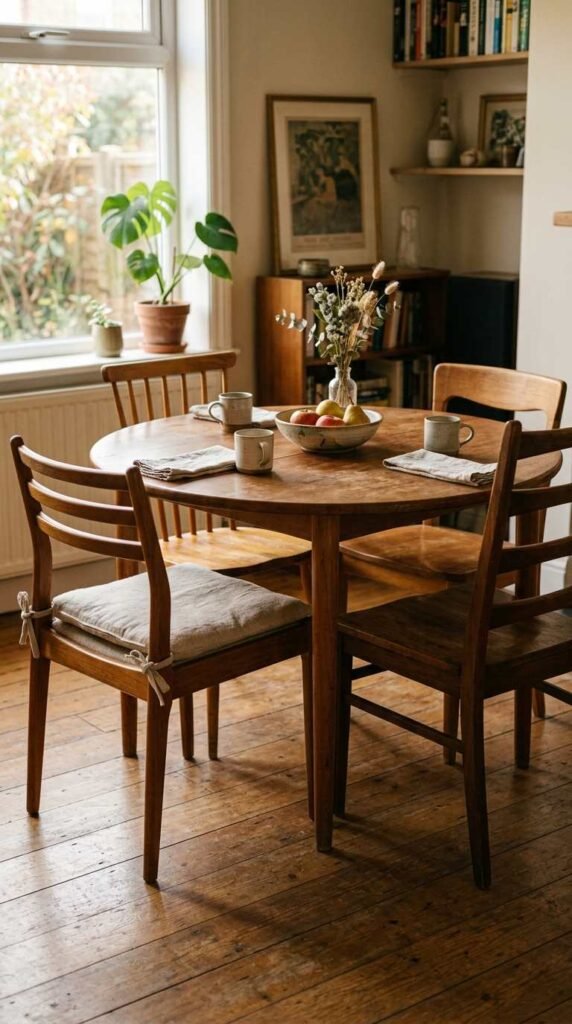
Genuine vintage Scandinavian chairs, sourced from the mid-century period when this design movement first reached international prominence, bring authentic history and considered craftsmanship to Scandinavian dining room decor that reproductions sometimes struggle to replicate fully. The teak or oak frames, often featuring the era’s signature tapered legs, carry decades of genuine character that only improves with continued use.
Mixing a few vintage finds with newer, simpler furniture keeps the room from feeling like an overly curated museum piece while still honoring the style’s genuine design roots. Secondhand shops, estate sales, and specialized vintage furniture dealers all offer paths toward finding these pieces, and the hunt itself often becomes part of the appeal for those genuinely drawn to this design tradition.
17. Woven Jute Rug
- Adds natural texture underfoot
- Grounds the dining area within the room
- Works beautifully with pale wood flooring
- Suits both open-plan and defined dining spaces
- Hides everyday wear better than smoother rugs
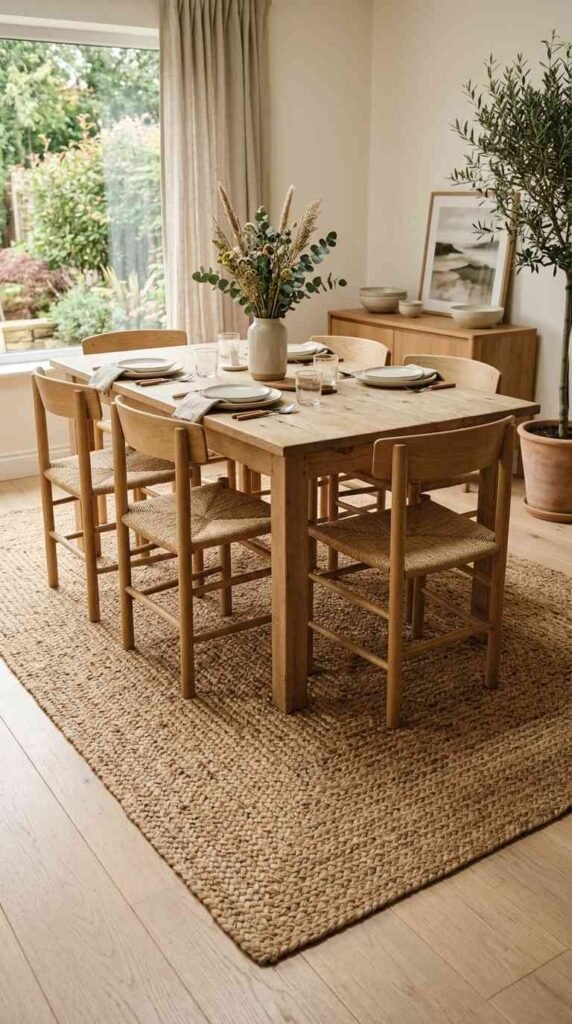
A woven jute rug, placed beneath the dining table, adds natural texture that complements Scandinavian dining room decor’s overall emphasis on organic materials throughout the space. The slightly rough, textural weave grounds the table within a larger room, particularly useful in open-plan homes where the dining area isn’t separated from adjacent spaces by any actual walls.
Choosing a rug slightly larger than the table and chairs ensures everyone’s seat remains fully on the rug even when pulled out for a meal. Jute’s natural, woven texture also tends to hide everyday wear and minor spills considerably better than a smoother, flatter rug material would, a genuine practical advantage in a space used for messy family meals on a regular basis.
18. Minimalist Gallery Wall
Choosing Frame Styles for a Cohesive Look
- Adds personal character without visual clutter
- Creates a curated display through consistent framing
- Works well on larger, otherwise empty walls
- Allows gradual collection over time
- Reinforces the style’s overall restraint
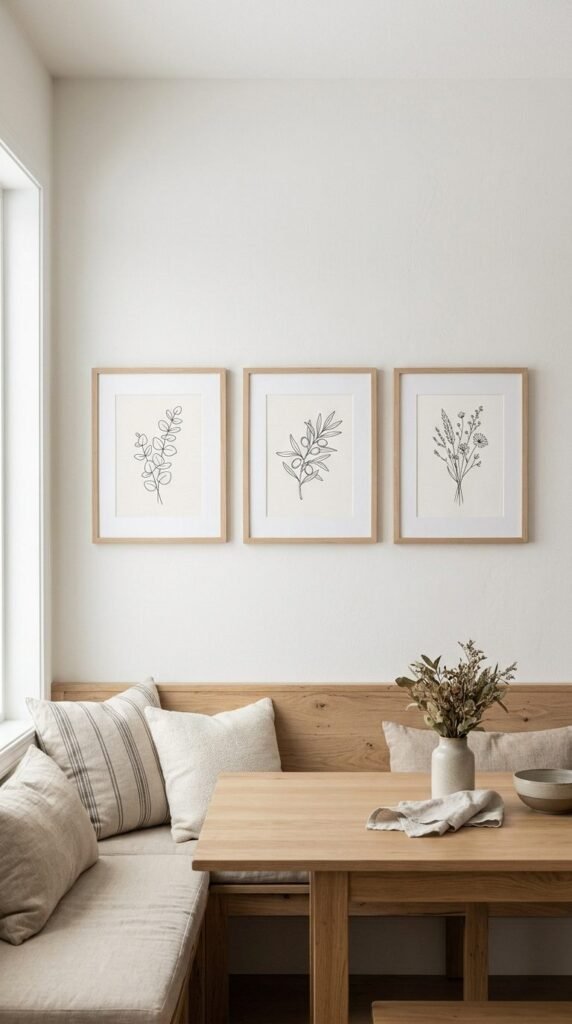
A minimalist gallery wall, featuring just four or five pieces rather than an abundance of densely packed frames, introduces personal character to Scandinavian dining room decor while still respecting the style’s inherent preference for restraint. Generous spacing between each piece, considerably more than a typical maximalist gallery wall would allow, keeps the overall arrangement feeling calm rather than busy or overwhelming.
Choosing frames consistently, all in natural wood or all in simple black, helps unify a collection of images that might otherwise vary considerably in subject matter. I’ve found that limiting the color palette within the actual art itself, favoring black and white or muted tones, further reinforces the cohesive, quiet quality this style depends on throughout every element of the room.
19. Functional Storage Bench
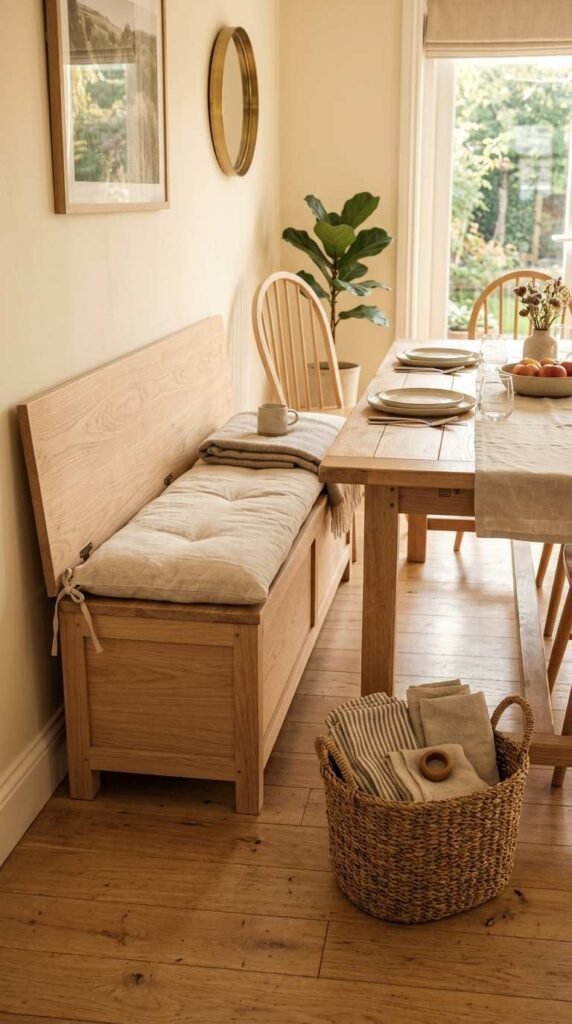
- Combines seating with practical storage
- Maximizes function within a simple footprint
- Works well along one side of the table
- Suits smaller dining rooms especially well
- Reinforces the style’s emphasis on functionality
A wooden storage bench, featuring a lift-up seat concealing space for linens or extra dishware, embodies the practical functionality central to Scandinavian dining room decor particularly well. Rather than treating seating purely as a decorative choice, this piece solves two genuine problems simultaneously, seating and storage, within a single simple, unassuming footprint along one side of the table.
This approach suits smaller dining rooms especially well, since a bench along one side seats more people in less space than individual chairs would require in the same area. The hidden storage beneath also addresses a genuine practical need many dining rooms face, finding somewhere to keep table linens or extra place settings without requiring a separate piece of furniture entirely.
20. Scandinavian Chandelier Lighting
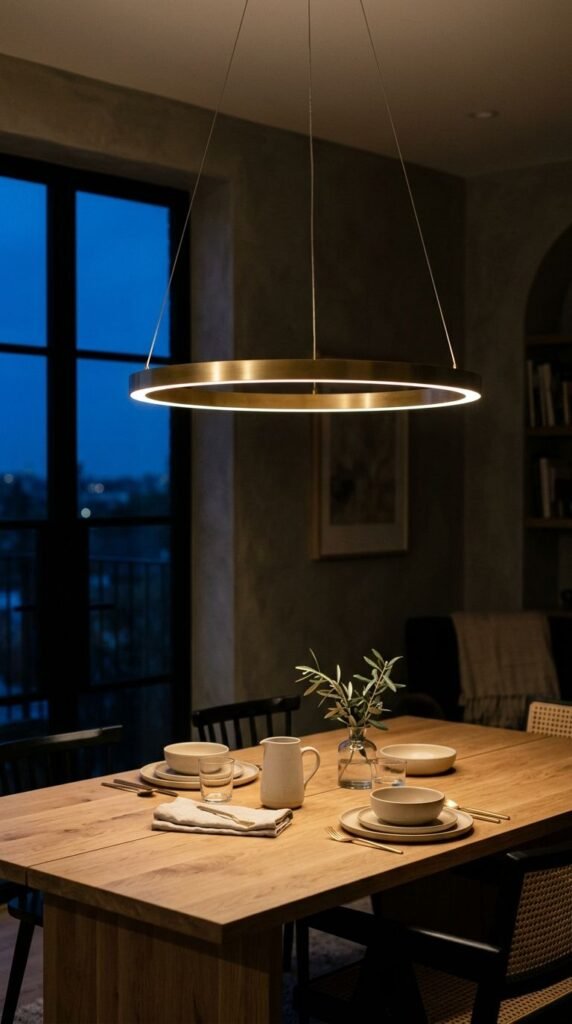
- Adds a bolder lighting statement than a simple pendant
- Introduces sculptural form without ornate detail
- Works well in paper, wood, or metal materials
- Elevates the room’s overall sense of design intention
- Suits dining rooms wanting slightly more drama
A Scandinavian-style chandelier, typically built from simple geometric shapes in wood, paper, or matte metal rather than traditional crystal, introduces a bolder lighting statement than a single pendant while still respecting the style’s overall preference against excessive ornamentation. These fixtures often feature a cluster of small shades or a tiered, sculptural form that reads as artistic rather than purely decorative.
Choosing a fixture crafted from natural materials, like wood or paper, ties the lighting into the room’s broader material palette more cohesively than a metallic chandelier might. This approach suits dining rooms wanting slightly more visual drama overhead than a simple pendant provides, without sacrificing the restrained, considered design philosophy underlying the entire Scandinavian aesthetic.
21. Textured Table Runner
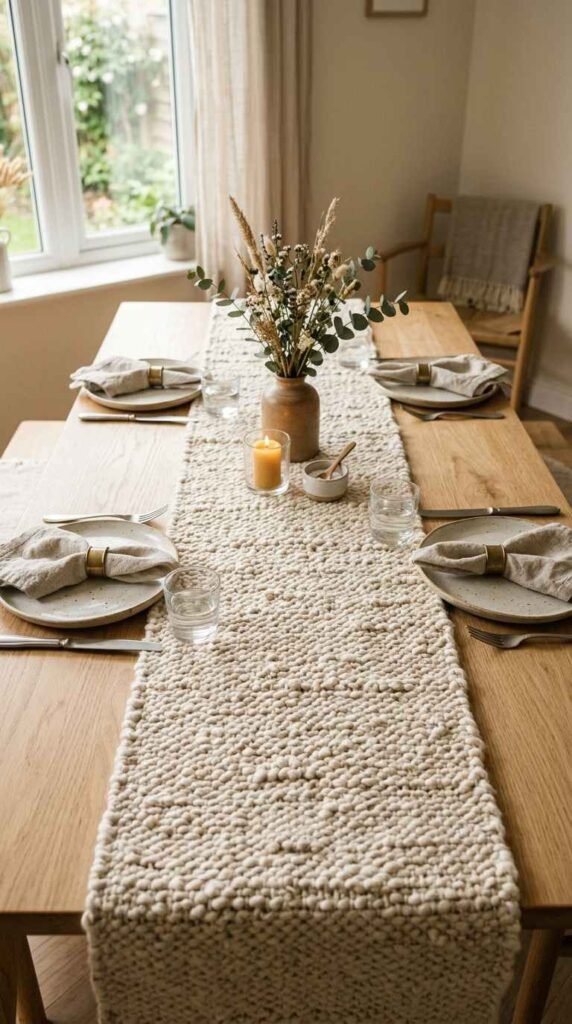
- Adds subtle texture beneath table settings
- Introduces pattern without bold color
- Protects the table while enhancing style
- Easy to swap for seasonal variation
- Works with both formal and everyday settings
A textured table runner, perhaps a simple waffle-weave linen or a subtle basket-weave cotton, adds quiet pattern beneath place settings within Scandinavian dining room decor without introducing the bold color this style generally avoids. The runner’s texture alone provides enough visual interest, letting the surrounding neutral palette remain undisturbed while still giving the table a sense of considered styling.
Choosing a runner in a tone close to the table’s natural wood color keeps the addition feeling integrated rather than like a separate decorative statement competing for attention. This small addition also protects the table surface from everyday wear, and because it’s relatively inexpensive, swapping runners seasonally offers an easy way to introduce subtle variation throughout the year.
22. Cozy Reading Nook Corner
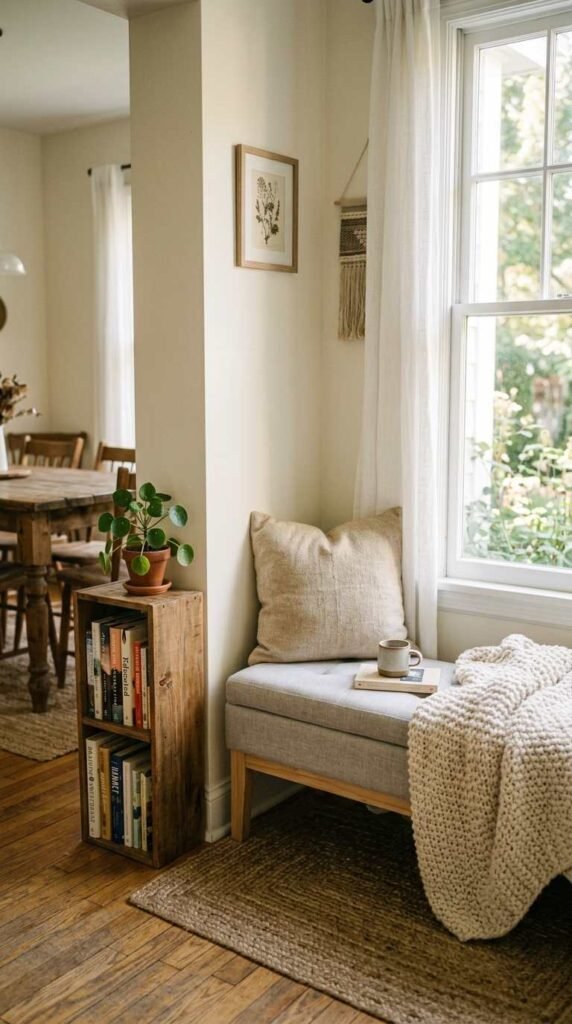
- Extends the dining room’s function beyond meals
- Adds a quiet, restful corner within the space
- Works well with a simple chair and soft lighting
- Suits larger dining rooms with extra space
- Reinforces the overall hygge-inspired atmosphere
A small reading nook, tucked into an unused corner of a larger dining room, extends Scandinavian dining room decor’s hygge-inspired comfort beyond mealtimes alone. A single upholstered chair, a small side table, and a floor lamp casting warm, soft light create a quiet retreat for a morning coffee or an evening spent reading, without requiring the entire room to feel purely utilitarian.
This idea suits larger dining rooms with genuine extra square footage better than smaller, more compact spaces where every inch typically needs to serve the dining function directly. Adding a soft throw blanket and perhaps a small stack of books nearby reinforces the cozy, restful mood this corner is meant to provide within the broader dining room.
23. Statement Round Mirror
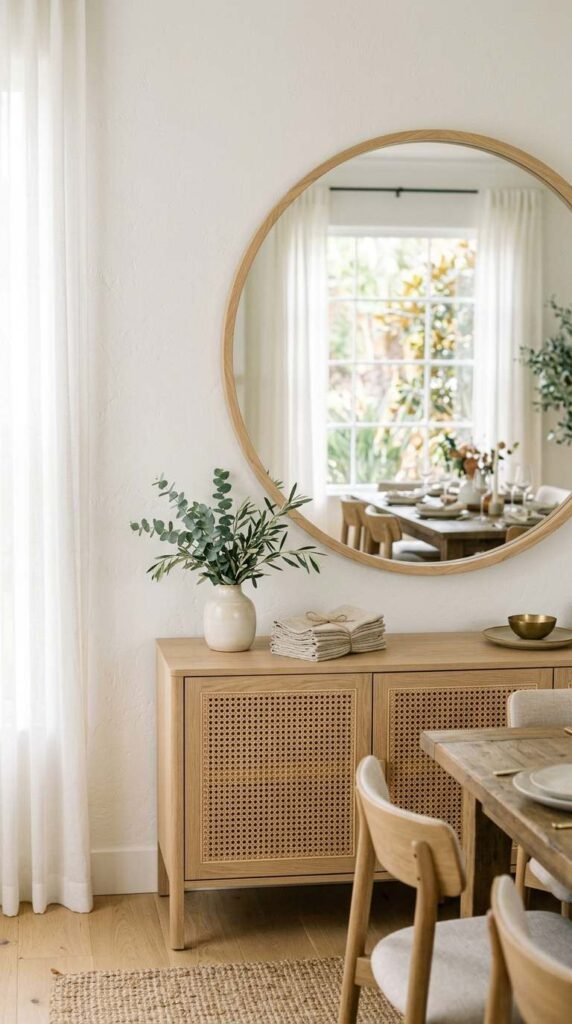
- Reflects light to brighten the entire room
- Adds a soft, circular counterpoint to straight lines
- Works beautifully above a sideboard or console
- Suits the style’s overall emphasis on brightness
- Elevates the room with minimal visual clutter
A large round mirror, hung above a sideboard or along a wall opposite a window, reflects available daylight throughout the room, reinforcing the emphasis on brightness central to Scandinavian dining room decor. The circular shape also introduces a soft, organic counterpoint to the straight lines typically found in both the table and surrounding architecture.
A thin wood or simple black frame suits this style better than anything ornate, keeping the focus on the mirror’s reflective quality rather than decorative detailing around its edge. Positioned thoughtfully to capture and redirect natural light from a nearby window, this single addition often makes a noticeable, immediate difference in how bright and open the entire room feels.
24. Seasonal Styling Accents
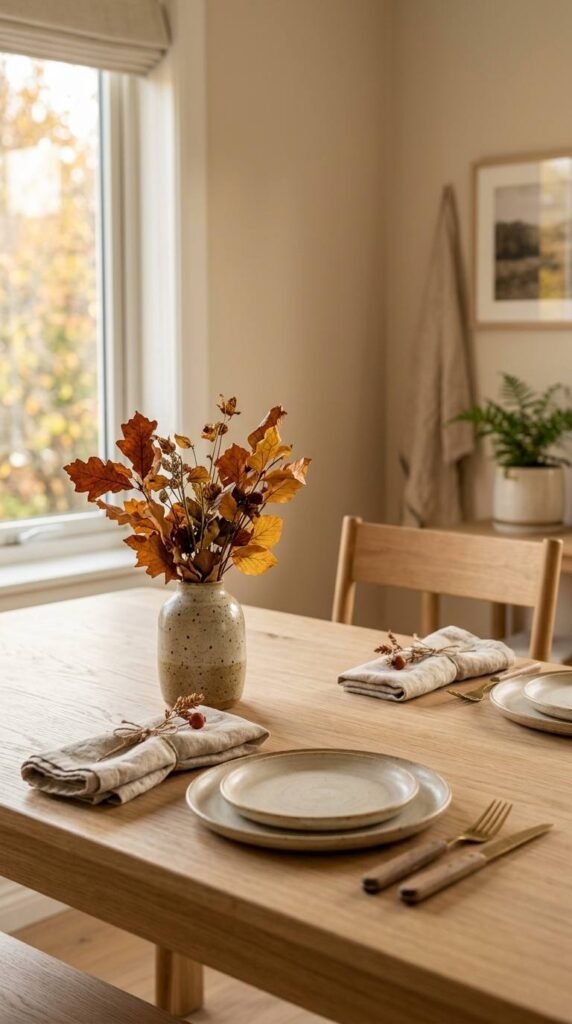
Switching Styling Between Seasons
- Keeps the room feeling current throughout the year
- Uses small, swappable elements rather than overhauls
- Reinforces the hygge concept through seasonal coziness
- Works with items already owned or easily sourced
- Combines earlier ideas into one cohesive, evolving system
Rotating a handful of small accents, candles, a seasonal centerpiece, a different textile layer, as the year progresses keeps Scandinavian dining room decor feeling genuinely lived-in and current without requiring any permanent changes to the room’s core furniture or palette. This final idea brings together much of what’s already been covered, relying on the same neutral foundation while only the smallest details shift with the seasons.
Switching styling between seasons might mean swapping a lighter linen table runner for a chunkier wool one once winter arrives, or adding more candles and sheepskin throws during the darkest months when hygge comfort matters most. Storing seasonal accents in a labeled bin makes these small transitions quick and keeps the overall room feeling intentionally cared for throughout every part of the year.
FAQs
1. What makes a dining room feel Scandinavian?
Light wood furniture, a neutral color palette, natural textures, and functional, uncluttered design all define this style. In my experience, the combination of brightness and genuine coziness, rather than either alone, is what separates authentic Scandinavian decor from simply a minimalist room.
2. Do I need a light wood table for this style?
A light wood table is the most traditional choice, though it isn’t strictly required. A white or pale painted table can achieve a similar effect, as long as the surrounding chairs and decor still lean toward natural materials and a restrained color palette.
3. How do I make my dining room feel cozy, not cold?
Layering soft textiles, adding candles, and including at least one sheepskin or wool accent all introduce genuine warmth. I’ve noticed that rooms relying purely on light colors without any textural layering often end up feeling sparse rather than cozy.
4. What colors work best for this style?
Soft white, warm beige, pale gray, and muted earth tones form the foundation, with black used sparingly as an accent. That’s why many designers recommend building the palette around tonal variation within neutrals, rather than introducing much bold color at all.
5. Is Scandinavian decor budget-friendly?
Yes, especially since the style favors fewer, well-chosen pieces over abundant decor. I’ve seen this work well for budget-conscious households, since a few quality textiles and one good light fixture often accomplish more than filling a room with many smaller purchases.
6. What kind of lighting fits a Scandinavian dining room?
Paper pendants, simple glass globes, and wood or matte metal chandeliers all suit this style well. Warm, diffused light matters more than any specific fixture shape, since harsh or overly bright lighting works against the style’s cozy intentions.
7. Can I mix vintage furniture into this style?
Yes, genuine vintage Scandinavian pieces, particularly from the mid-century period, integrate beautifully. I’ve noticed that mixing a few authentic vintage finds with newer furniture often feels more genuine than relying entirely on modern reproductions throughout the room.
8. Do I need a lot of decor to achieve this look?
No, and in fact, less decor usually serves this style better. That’s why many designers recommend choosing a handful of meaningful objects, rather than filling every surface, since restraint is central to the overall Scandinavian design philosophy.
9. What rug works best under a Scandinavian dining table?
A natural fiber rug, like jute or a simple wool flatweave in a neutral tone, suits this style particularly well. The texture adds warmth without introducing bold pattern or color that would disrupt the room’s overall calm, cohesive palette.
10. How do I add plants without disrupting the minimal look?
Choose just one or two well-placed plants, rather than filling the room with greenery. A single trailing pothos on a shelf or one potted fiddle leaf fig in the corner adds life without overwhelming the style’s inherently restrained aesthetic.
Conclusion
A dining room doesn’t need excess to feel genuinely inviting, and these Scandinavian dining room decor ideas prove exactly that. From a light wood table to layered textiles and warm, flickering candlelight, small, thoughtful choices come together to create a space that feels both simple and deeply comfortable. I’ve seen how this restrained, natural approach brings lasting warmth into a home without ever feeling cluttered. Pick one idea to try this week, save this post to your Pinterest board for later, and share it with someone ready to give their dining room a cozy, Scandinavian-inspired refresh.