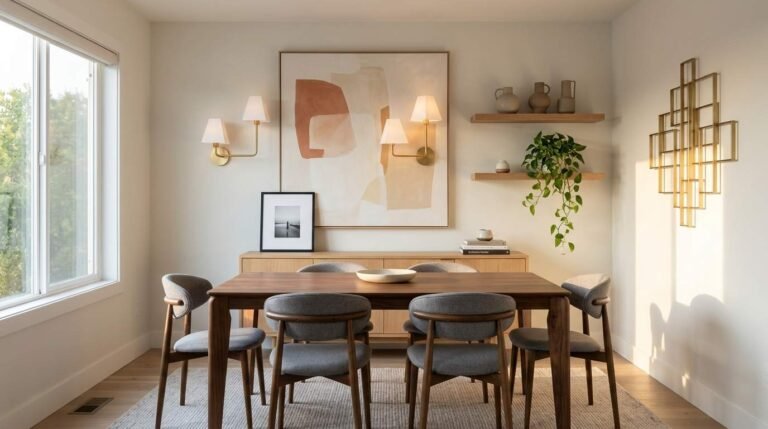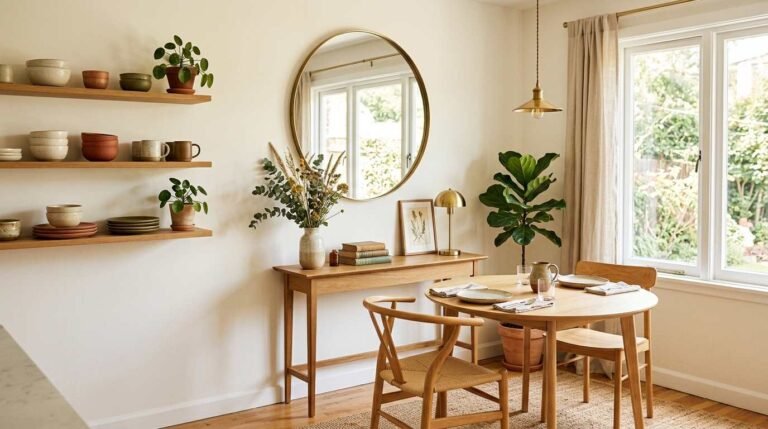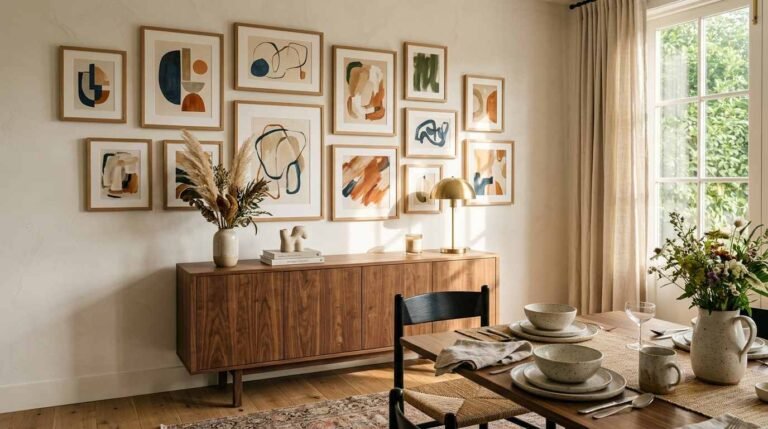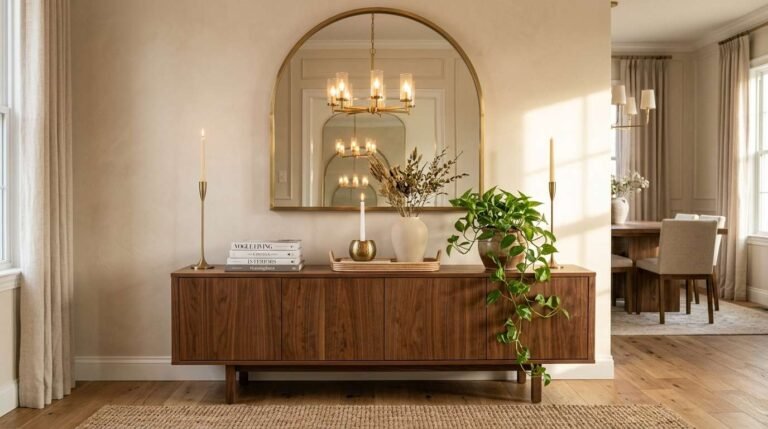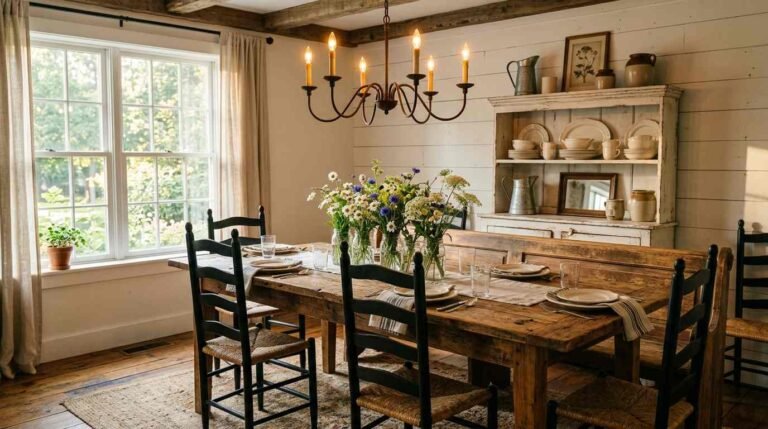
Start with a picture, not a shopping list. These dining room decor inspiration ideas are built the way a Pinterest board is built, one striking image at a time, and each one is then broken down into the exact colour, material, and statement piece that make that image work. Save the looks you love as you read, and for each one, read the recreation notes that follow it. They give you the measurements, the finishes, and the order to copy, so the room in your home ends up looking like the room in the photograph, not like a loose version of it. The ideas suit a small dining nook, an open plan dining space, and a formal dining room, and each one can be copied with pieces you already own plus one or two deliberate changes.
Every idea below follows the same inspiration first pattern, but the picture is different every time. One idea is built around a single colour, deep forest green washed over an entire wall. The next is built around a single material, rattan under a palm plant, or linen falling to the floor. Another is built around a single statement piece, a sculptural chandelier, a curved table, or a gallery wall that covers a whole side of the room. Look for the one colour, the one material, and the one piece in each section, and the recreation will make sense. The focus keyword for this guide is dining room decor inspiration, and the goal is simple: a dining room that people photograph, save, and want to sit in.
1. Layered Table Setting Inspiration
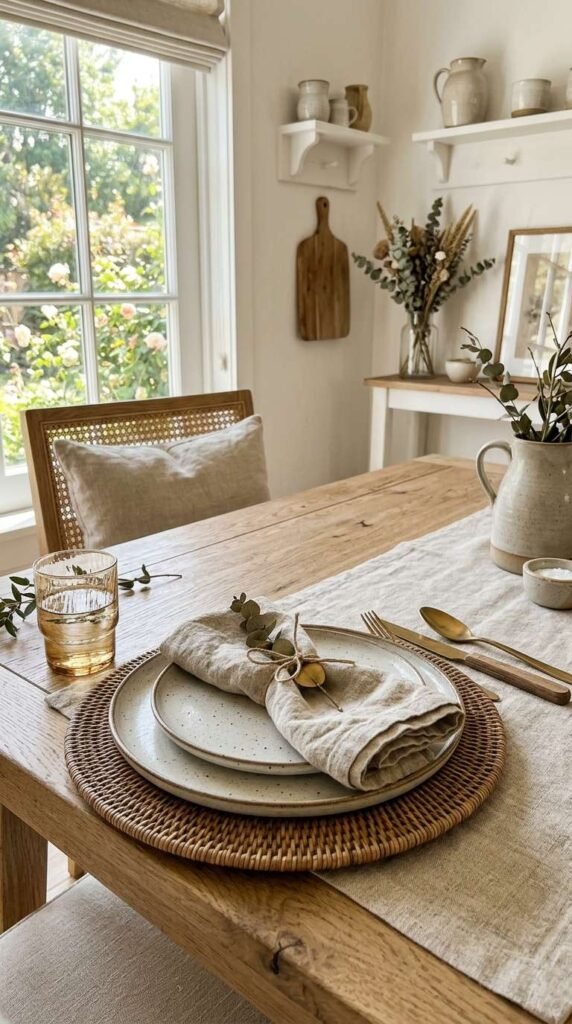
Picture a table in warm white linen, with a runner in soft sage, a charger in matte cream ceramic, and a single deep green eucalyptus stem lying across a folded napkin. The colour that carries the picture is sage. The material that makes it feel soft is washed linen. The statement piece is the oversized charger, 13 inches across, wider than the plate by 2 inches on each side, so the place setting has a frame. Nothing in the image is tall, and nothing is shiny, which is why the table looks calm in a photograph and easy to sit at in real life.
Copy it by laying the runner down first, 12 to 18 inches wide and hanging 6 inches over each end of the table, then place the chargers 24 inches apart. Put a plate 10 to 11 inches across on each charger, fold a linen napkin into a rectangle under the fork, and lay one eucalyptus stem, 10 to 12 inches long, across the napkin. Keep the total height of the setting under 2 inches, so the table looks layered from the doorway and flat enough to serve from. Photograph it from above before dinner, because that top down view is the one people save.
2. Statement Chandelier Inspiration
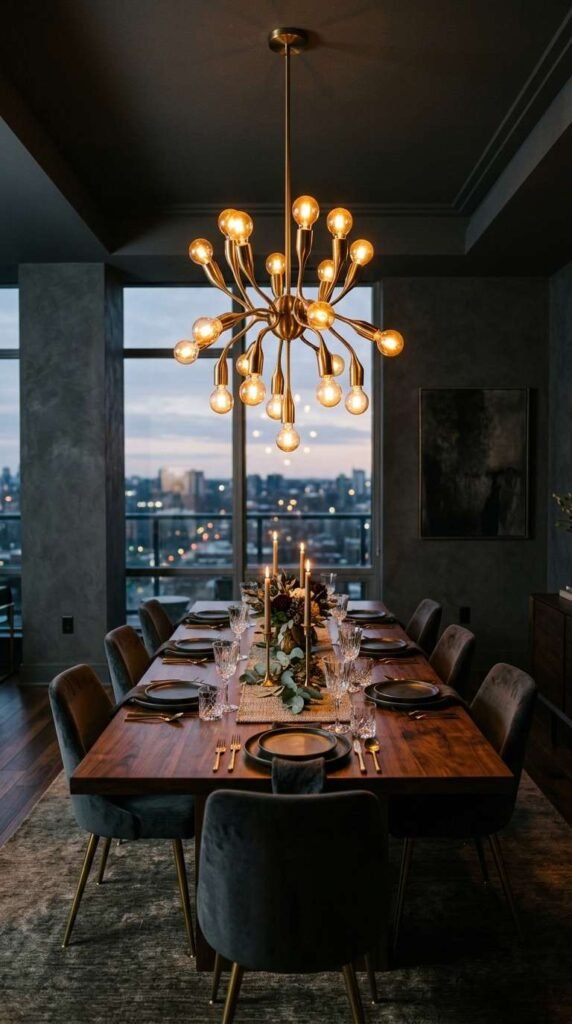
The image to hold in mind here is a brass ring chandelier, hung low over a bare oak table, with warm light pooling on the wood and nothing else competing for attention. The colour is warm brass, the material is brushed metal with clear glass, and the statement piece is the ring itself, 26 inches across in a 12 by 14 foot room. It works because the table below is plain, the walls are a warm white, and the light is the only ornate thing in the room, which makes it read as a focal point rather than as clutter.
Recreate that exact look by sizing the fitting to the room: add the room length and width in feet and use that number in inches for the diameter. Hang the bottom of the ring 30 to 36 inches above the tabletop, centre it on the middle of the table, and fit warm 2700K bulbs on a dimmer. Clear the table to just a linen runner and a low vase before you switch the light on for the first time, and check the view from the doorway, because a chandelier that looks centred from inside the room often sits off centre when seen from the hall.
3. Neutral and Textural Dining Room Inspiration
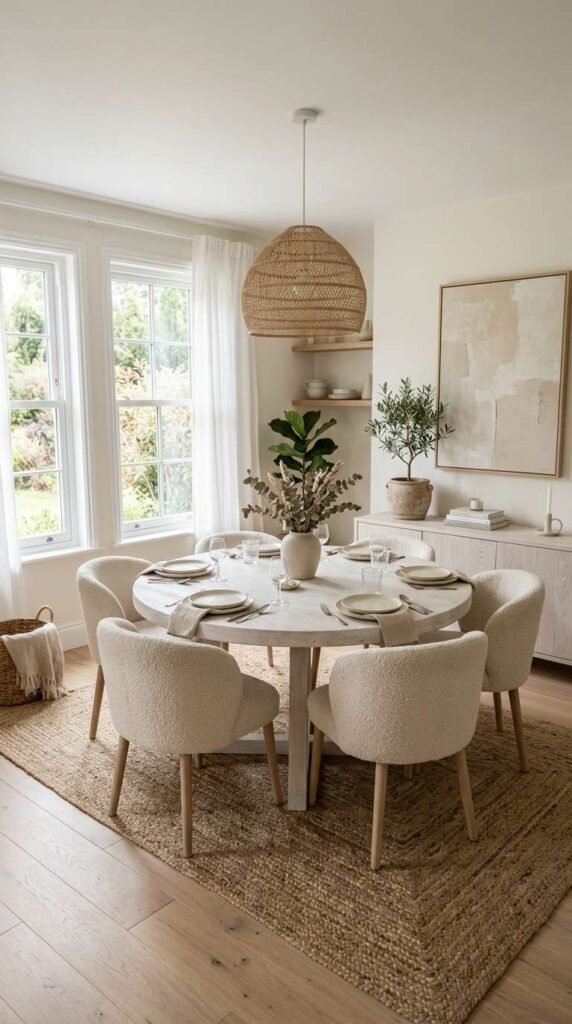
Imagine a room with no strong colour at all, and yet it does not feel blank. The walls are creamy white, the rug is natural jute, the chairs are pale oak with woven rush seats, and the table holds a matte ceramic vase in soft grey. The one colour is warm off white. The materials do the work instead: linen, wool, rattan, and raw ceramic, each with a different surface, so the eye moves from the softness of a cushion to the grain in the wood to the weave in the rug. That mix is the whole look, and it suits a Scandinavian or Japandi dining room better than any single colour could.
To get it, paint the walls a warm white, use a flatweave wool rug in natural tan, and add three textures, not three colours. Put a linen tablecloth on the table, a wool cushion 18 inches square on each end chair, and a rattan basket 14 inches wide on the floor beside the sideboard. Keep the largest surfaces pale and the smallest objects, the vase and the candle holders, in a slightly deeper tone, such as sage or charcoal, so the room has depth without a new colour. Add one green stem to the vase, and the neutral room will photograph like a calm, finished space.
4. Bold Color Drenching Inspiration
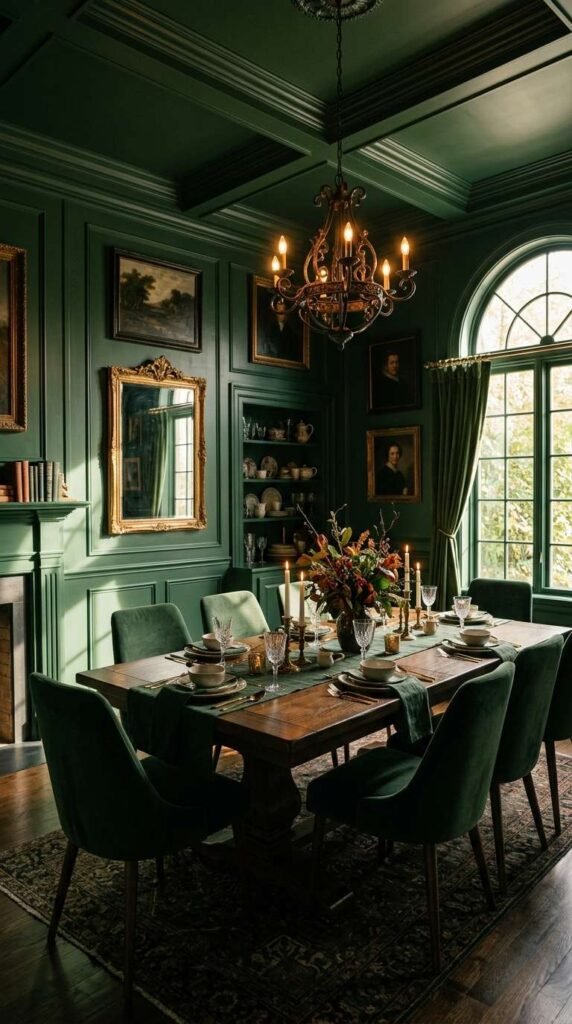
Here the picture is one colour, everywhere. Deep forest green covers the walls, the trim, the door, and the ceiling, and the room feels like a cocoon rather than a box. The furniture is simple, a walnut table and oak chairs, and the light is a brass ring that glows against the green. The single colour does the decorating, which is why the room needs almost nothing else, and why the brass and the wood look richer than they would against a white wall. This is colour drenching, and it suits a small or oddly shaped dining room, because removing the contrast lines between wall, trim, and ceiling softens the awkward proportions.
Recreate it by painting a 12 inch test patch on two walls and checking it at 10 in the morning and again under the evening light, because a green that looks rich at noon can turn blue at night. Use an eggshell finish on the walls, satin on the trim, and the same colour on the ceiling, cut with 10 percent white, so the ceiling does not look heavier than the walls. Put the table, 72 inches long, in the centre with 36 inches of walkway around it, and hang a brass fitting 30 to 36 inches above it, so the warm light is the only contrast in the room.
5. Open-Concept Dining Inspiration
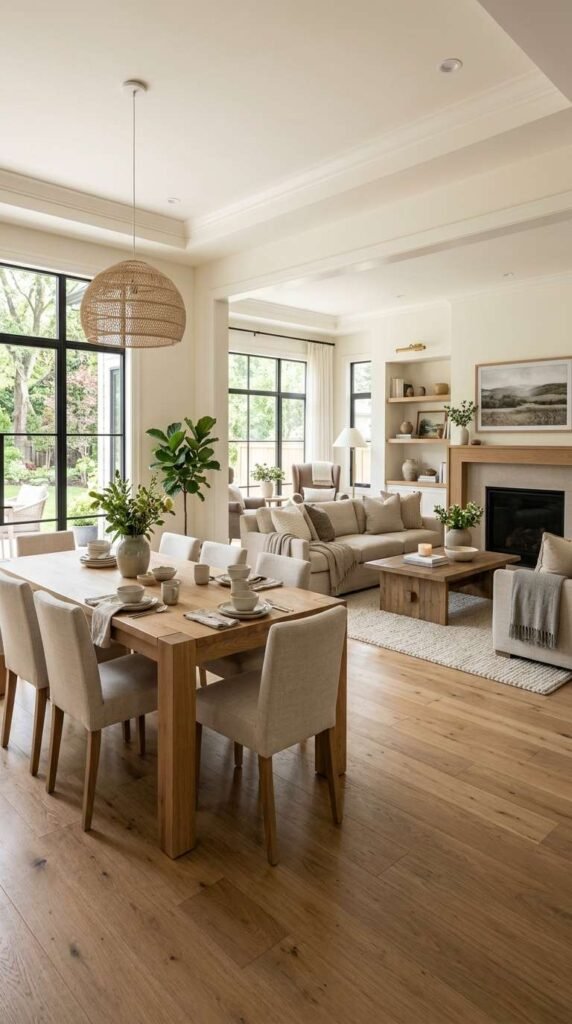
See a dining table in a large open room, with no wall to mark where the dining area ends and the living area begins, and yet the table clearly belongs to its own zone. The trick in the picture is a rug, 8 by 10 feet, under a 72 inch table, and a pendant light hung low over it, so the rug and the light make a room inside a room. The colour is natural tan, from the jute rug. The material is woven fibre, soft underfoot against a hard floor. The statement piece is the pendant, a linen drum 18 inches wide, that tells anyone walking in that this is where meals happen.
To copy that look, lay the rug first, centre it on the room, and put the table in the middle of the rug, with 24 inches of rug showing on each side. Hang the pendant 30 to 36 inches above the tabletop and centre it on the table, not on the ceiling, because the ceiling in an open plan room is rarely centred on the dining area. Use the same wood tone on the table as on the kitchen cabinets nearby, so the dining zone ties to the kitchen, and save the look to Pinterest from the doorway, where the rug and pendant read as one zone. For a version with older furniture, these vintage dining room decor ideas that’ll wow you show how the same rug and light can work with inherited pieces.
6. Small Dining Nook Inspiration
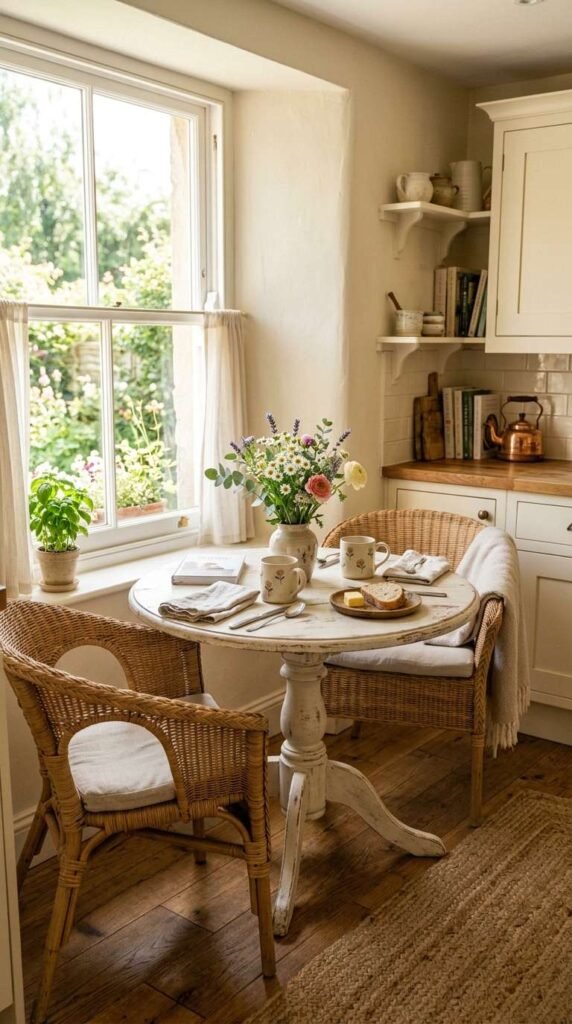
Look at a corner that once held nothing, and now holds a round table, two slim chairs, and a single pendant, and you can see why a nook photograph gets saved so often. The colour is soft white, on the table and the walls, so the corner feels larger. The material is pale oak, light enough not to weigh the corner down. The statement piece is the round pedestal table, 36 inches across, with no legs in the corners, so two chairs can slide under it and the floor stays clear. A small rug, 5 feet round, under the table marks the nook without a wall.
Build it by pushing a bench, 14 inches deep, against the longest wall of the corner, if the corner is large enough, or by using two chairs with a seat height of 18 inches if it is not. Hang one pendant, a linen shade 12 inches wide, in the centre of the table, 30 inches above the tabletop. Keep the bench cushion 2 inches thick in a wipeable fabric, put a small vase with three stems in the centre of the table, and leave 24 inches clear in front of the bench for getting in and out. Photograph the nook from the doorway, so the round table and the round rug read as one shape.
7. Outdoor-Inspired Dining Room Decor
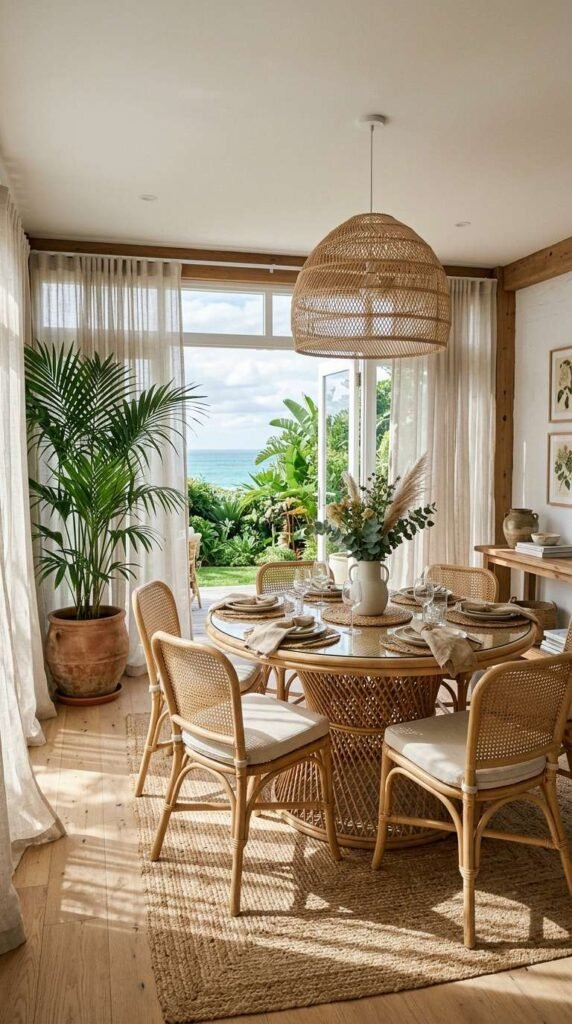
The picture here is a garden brought indoors: rattan chairs with woven seats, a white linen cloth that moves a little in a breeze from the window, and a palm plant, 36 inches tall, in a terracotta pot beside the table. Green is the colour that carries the image, from the palm leaves to a bowl of limes in the centre of the table. The material is rattan, warm and woven, used for the chairs and for the pendant light above them. The statement piece is the palm itself, taller than the table and wider than a chair, so the room feels like a sunroom even on a dull day.
Recreate it by putting the largest plant you can manage in the brightest corner, in a pot 12 inches wide, and choosing rattan chairs with a seat height of 18 inches and a seat depth of 16 inches. Use a white or oatmeal linen cloth, hang a rattan pendant 30 to 36 inches above the table, and put a bowl of green apples or limes, 12 inches across, in the centre. The look works with colorful home decor in small doses, a vase of bright flowers on the sideboard, or cushions in a soft coral, because the green and the rattan already give the room its colour, and the bright accent only needs to echo it, not compete with it.
8. Art-Filled Dining Room Inspiration
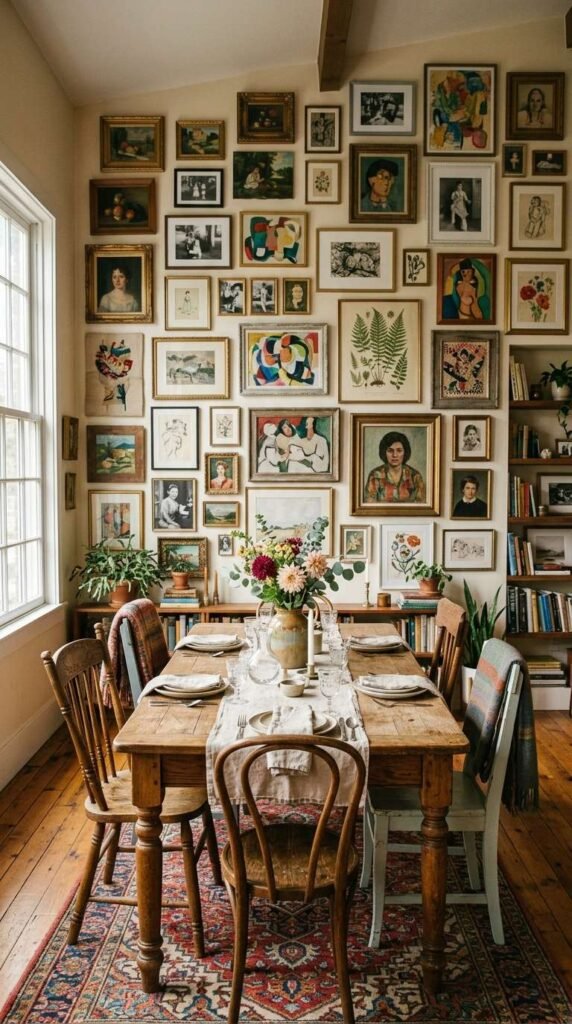
Envision a dining room where the furniture is plain and quiet, and the wall does all the talking. One painting, 36 by 48 inches, in blues and ochres, hangs above a simple oak sideboard, and the rest of the room, white walls, a plain table, and linen chairs, lets that painting be the single thing you remember. The colour is ochre, picked up in one cushion and in the frame. The material is canvas, framed in pale oak 2 inches wide. The statement piece is the painting itself, large enough to fill two thirds of the wall above the sideboard.
Copy it by choosing the art first, then the furniture, which is the opposite of the usual order, and the reason this look works. Hang the painting with its centre 57 inches from the floor, and put only two objects on the sideboard below it, a ceramic vase 10 inches tall and a stack of two books. If the art is wide, keep the sideboard the same width as the painting, 60 inches, so the two align. Keep the table plain, a white or oatmeal cloth with no pattern, so the art remains the one patterned thing in the room, and photograph the wall straight on, not at an angle, so the painting fills the frame.
9. Textured Rug Layering Inspiration
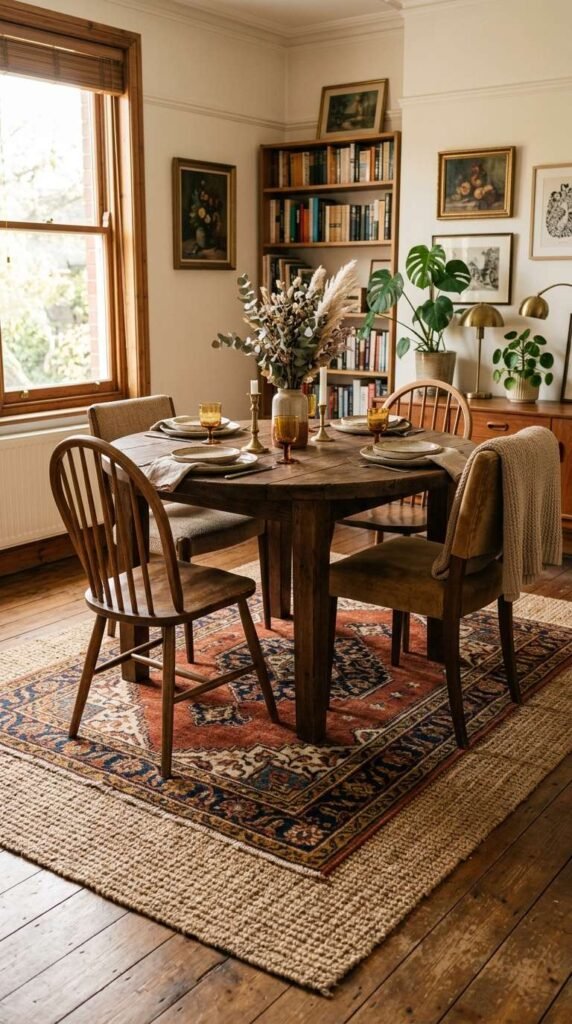
Look down, not up, for this one. A large jute rug in natural tan lies flat on the floor, and a smaller wool rug in a muted pattern, rust and cream, sits on top of it, with 12 inches of jute showing as a border on all four sides. The colour is rust, used only in the top rug. The material is jute, rough and natural under the soft wool, and that contrast in texture is the point. The statement piece is the layered rug itself, an 8 by 10 foot base with a 6 by 9 foot top layer, big enough that every chair leg stays on it when the chairs are pulled out.
Recreate it by measuring the table first: the base rug must extend 24 inches beyond the table on each side, which for a 72 inch table means an 8 by 10 foot rug. Lay a felt pad under the base rug, cut 1 inch smaller on each side, then centre the top rug on it, leaving at least 12 inches of base showing. Choose a top rug in a colour already used on a cushion or in the wall art, so the layers look planned, and keep both rugs in a low pile, no more than a quarter inch thick, so chairs do not rock. Vacuum the top rug before you photograph it, because a layered rug shows footprints more clearly than a single one.
10. Mixed Seating Inspiration
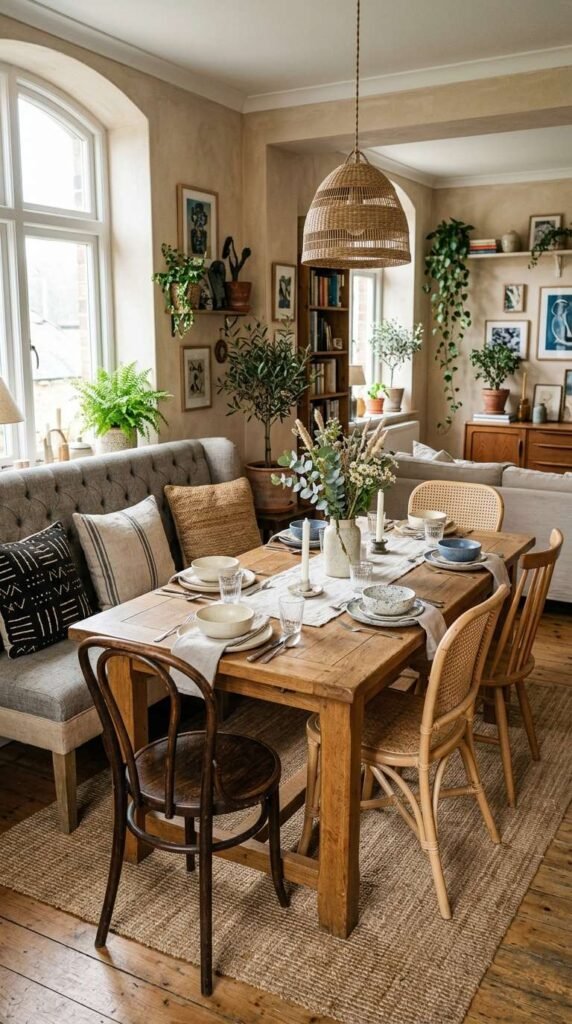
Picture a table with two deep green velvet chairs at the ends, four pale oak chairs along the sides, and a bench in natural linen on one side, and yet the table looks planned, not random. The thread is the wood, the same walnut tone on the table and on the chair legs, and the seat height, 18 inches on every seat. Green is the colour that stands out, used only on the two end chairs. Velvet is the material that makes those chairs look special. The statement pieces are the end chairs, taller, 40 inches high, and wider, 22 inches, than the side chairs, so the table has a head and a foot.
To create it, buy or keep two matching end chairs and four matching side chairs, and check that all six have the same 18 inch seat height and the same wood tone. Put the velvet chairs at the ends, where they are seen first, and the oak chairs along the sides, where they are used most. Add a cushion in the same green velvet to the bench, if you use one, so the colour repeats once more. Put felt pads on every leg, and sit in each chair with your feet flat to check that the table height, 30 inches, still leaves 12 inches between the seat and the tabletop.
11. Statement Ceiling Inspiration
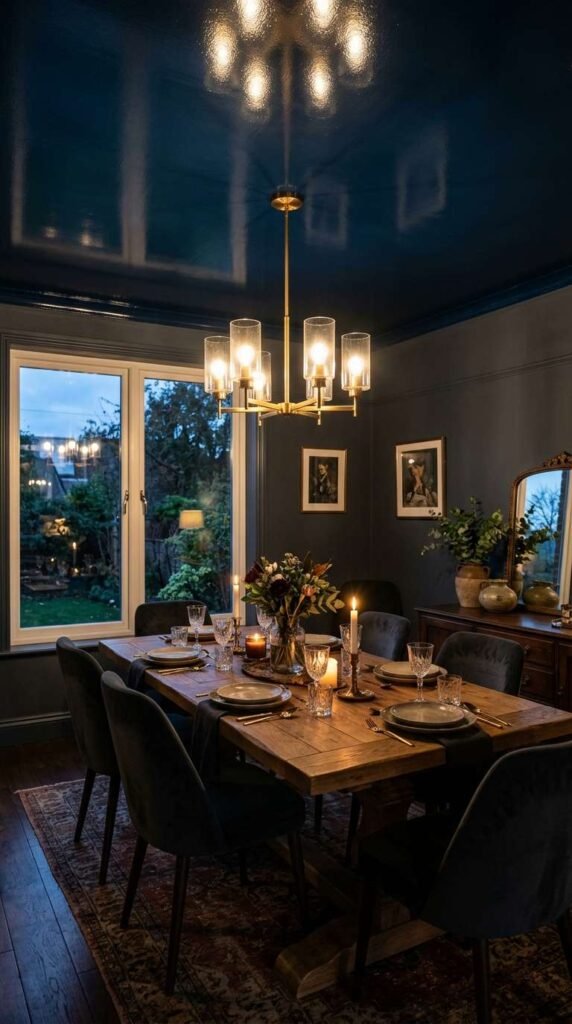
Raise your eyes for this one, because the picture is overhead. A ceiling painted in deep navy, or papered in a large botanical print, with white beams or a simple brass chandelier hanging from it, turns the fifth wall into the feature of the room. The colour is navy. The material is painted wood or wallpaper, smooth against the plaster. The statement piece is the ceiling itself, a flat surface that most people ignore, made into the first thing guests notice when they sit down. The walls below stay plain, a warm white, and the table stays simple, so the ceiling can carry the drama.
Recreate it by painting the ceiling a colour 2 shades deeper than the walls, in a matte finish, and keeping the walls a warm white with white trim. If you use wallpaper, choose a large scale pattern, with motifs at least 12 inches apart, so the print reads from the table, not just from a ladder. Hang a slim chandelier, no more than 12 inches tall, so it does not compete with the ceiling, and hang it 30 to 36 inches above the table. Check the ceiling from the doorway at dinner time, with the light on, because that is when the colour will look at its deepest and most inviting.
12. Curated Bar Cart Inspiration
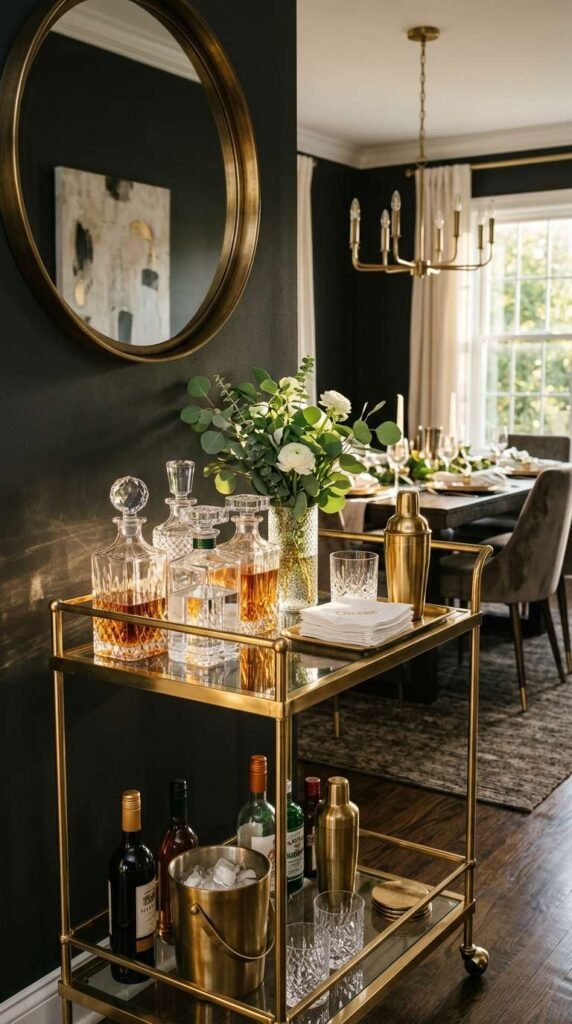
Think of a corner that was empty, and now holds a brass bar cart, two shelves of glass, and a trailing plant spilling over the top shelf, lit by the light from the table. Brass is the colour, warm and bright against a pale wall. Glass and metal are the materials, light and reflective. The statement piece is the cart, 24 to 30 inches wide and 32 inches high, small enough for a corner and tall enough to be seen from the table. The cart makes the corner look like it was always meant for something, and it gives guests a place to gather before dinner.
Build the look by placing the cart in a corner with at least 24 inches clear in front of it, so you can stand beside it without blocking the walkway. Stock the bottom shelf with three or four bottles and a small ice bucket, and the top shelf with four glasses, a small tray 12 inches wide, and a trailing plant in a ceramic pot 6 inches wide. Keep the top shelf to five items, so it looks styled rather than crowded. Lock the wheels once it is in place, and use the cart for tea and coffee in the morning as well as for drinks at night, so it earns its corner every day.
13. Window Treatment Inspiration
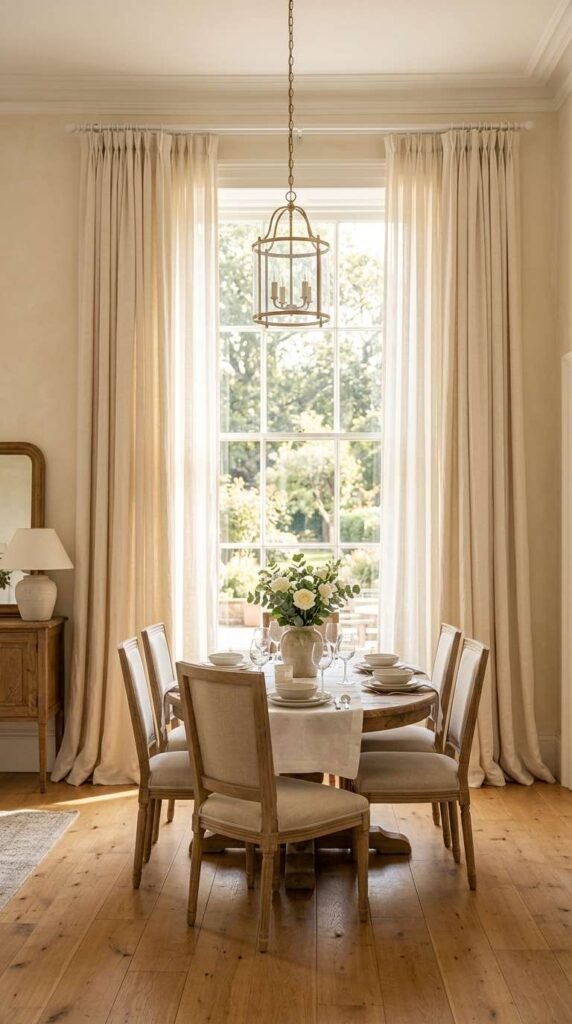
Imagine linen curtains, in soft oatmeal, hanging from a rod near the ceiling to the floor, framing a window and turning a plain wall into a soft backdrop for the table. Oatmeal is the colour, close to the wall colour so the room feels taller. Linen is the material, with a weave you can see in the photograph. The statement piece is the curtain itself, two panels, each 1.5 to 2 times the width of the window, so the fabric folds in deep, even pleats. A sheer panel behind the main curtain diffuses daylight into a soft glow, so the room photographs like a morning, even at noon.
To create it, hang the rod 4 to 6 inches above the window frame and 3 to 6 inches wider on each side, and let the hem just touch the floor, with no more than half an inch of break. Iron the panels before you hang them, and steam out the fold lines once they are up. Choose a matte black or brushed brass rod that matches the light fitting, and keep the curtain colour within one shade of the wall, so the window reads as a frame for daylight rather than as a block of colour. Photograph the room with the curtains drawn to the sides, so the window and the table are both in the picture.
14. Seasonal Tablescape Inspiration
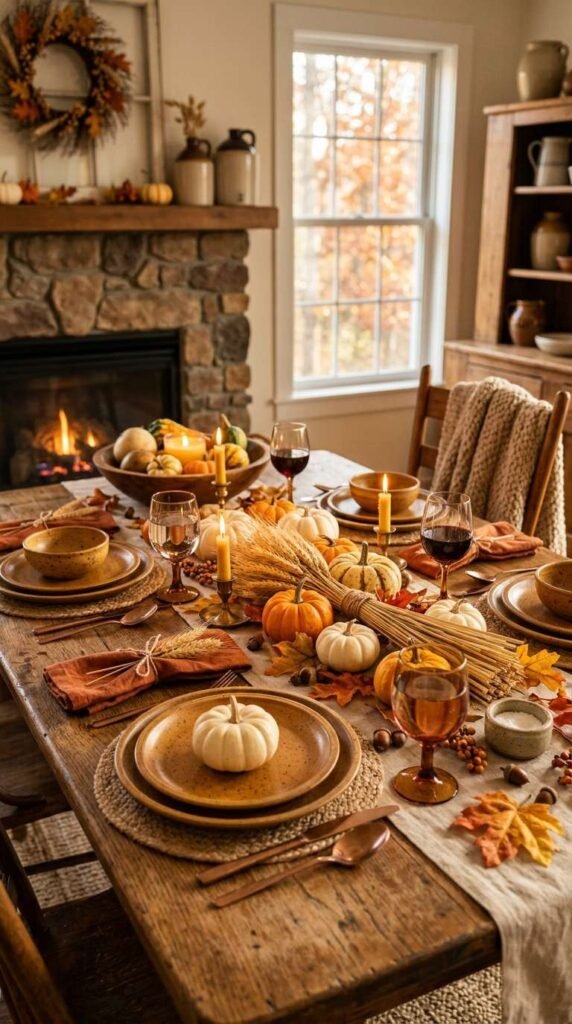
Picture an autumn table, with a rust coloured runner down the centre, three small pumpkins, each 3 to 4 inches across, in a line, and dried wheat in a low vase, 8 inches tall. Rust is the colour, warm against the white cloth underneath. Dried wheat and ceramic are the materials, rough against smooth, and that contrast is what makes the photograph work. The statement piece is the line of pumpkins, not one large centrepiece, because a line of three small objects reads as a tablescape, while one large pumpkin reads as a decoration. The rest of the table stays neutral, so the autumn colours can be the whole story.
Recreate it by keeping the same linen cloth and ceramic vase all year, and changing only the runner, the fruit, and the stems each season. In spring, use a pale green runner and white tulips. In summer, use lemons in a bowl and a soft blue napkin. In autumn, use the rust runner, the three pumpkins, and dried wheat. In winter, use evergreen sprigs and white candles. Store each season in a labelled box, 12 by 18 inches, and change the table on the first weekend of that season, photographing it from the doorway before you put the box away, so you remember the arrangement next year.
15. Built-In Banquette Inspiration
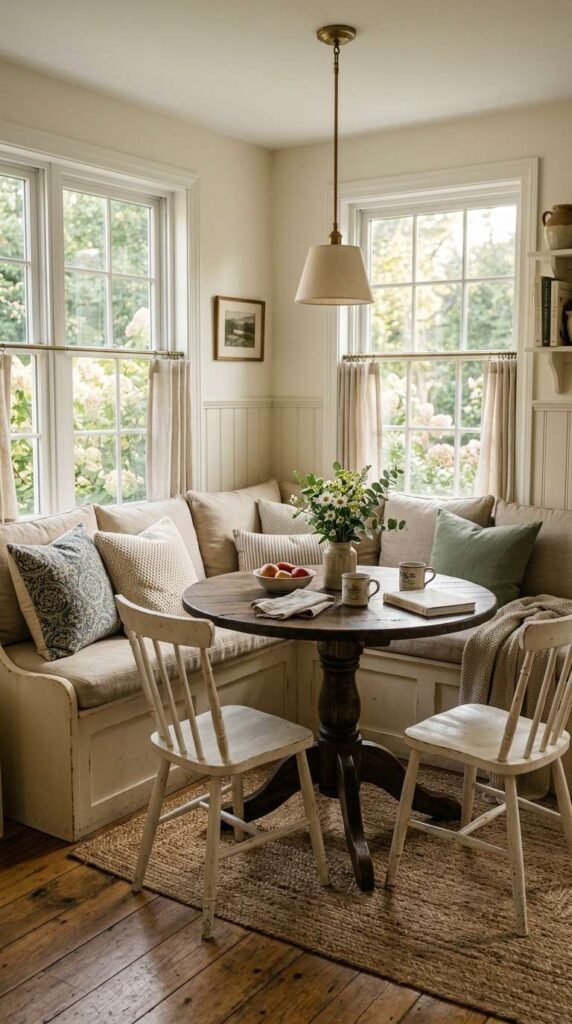
See a dining nook that feels like a cafe, with a bench built into the corner, cushions in a soft blue linen, a pedestal table in front of it, and a single wall light above the bench. The colour is soft blue, used on the cushions and on one framed print above the bench. The material is linen, washable and soft, on a cushion 3 inches thick. The statement piece is the banquette itself, a bench 18 inches high and 16 inches deep, built along two walls, so three people can sit where two chairs would have fitted, and the corner feels like a place, not a leftover space.
Build it by fitting the bench to the corner, with a seat cushion in a wipeable fabric, and a pedestal table, 36 to 48 inches across, in front of it, leaving 24 inches between the bench back and the table edge. Add two cushions, one striped and one plain in the same blue, and hang a small sconce, 12 inches wide, above the bench, 60 inches from the floor. Choose a lift up seat if you can, because the space underneath, 14 inches deep, holds tablecloths and placemats that would otherwise need a cupboard. Photograph the nook at a slight angle, so the bench, the table, and the light in the corner all appear in one shot.
16. Sculptural Furniture Inspiration
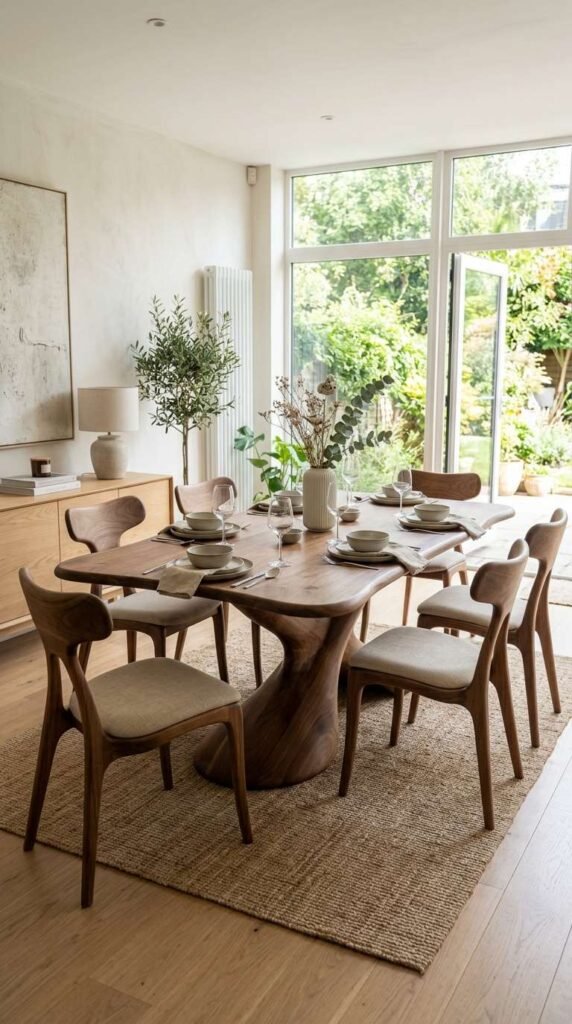
Consider a table with a curved base, like a sculpture, and chairs so plain they almost disappear, in a room with white walls and a single pendant. The table is the picture, and everything else is quiet. The colour is pale oak, used for the tabletop and for the chairs. The material is solid wood, with a curved edge you can see and feel. The statement piece is the table base, a single curved form, 30 inches high, that holds a tabletop 72 inches long, and it is the first thing people touch when they sit down, because the shape invites it.
Recreate it by choosing the table first and keeping everything else plain, which is the opposite of how most dining rooms are bought. Pick a table with a base that is visible from the doorway, so it reads as a sculpture, not as a leg. Pair it with simple chairs, 18 inches high, in the same wood tone, and a linen runner, 12 inches wide, so the tabletop has one soft line. Keep the wall behind it blank, or hang one small frame, 11 by 14 inches, so the table remains the main object. Photograph the table from the side, at seat height, so the curve of the base fills the picture.
17. Layered Lighting Inspiration
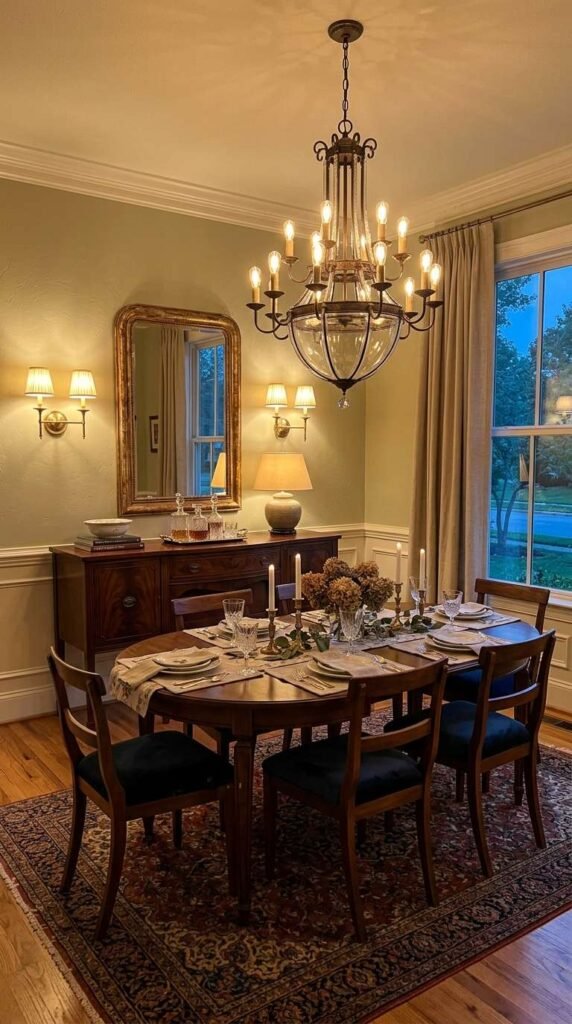
Think of a dining room at dusk, with a chandelier over the table, two sconces on the wall beside a mirror, a small lamp on the sideboard, and three candles on the table, all glowing at the same warm level. Warm amber is the colour. Light itself is the material. The statement piece is not one fitting, but the layering, a ceiling light at 2700K, sconces at the same warmth, and candles at 2200K, so the room has no dark corner and no harsh shadow. This is the look that makes a dining room feel like a restaurant at home, and it photographs best when all four layers are on and the main light is dimmed to half.
Build it by starting with the main fitting, hung 30 to 36 inches above the table, then adding a pair of sconces 60 to 66 inches from the floor, one on each side of the mirror. Put a lamp, no taller than 24 inches, on the sideboard, and three taper candles in brass holders 8 to 10 inches high down the centre of the table. Put each layer on its own dimmer or switch, so you can turn the sconces on for dinner and the sideboard lamp on for a late coffee. Use warm bulbs in all four, because one cool bulb in the mix will make the whole room look blue.
18. Personal Gallery Wall Inspiration
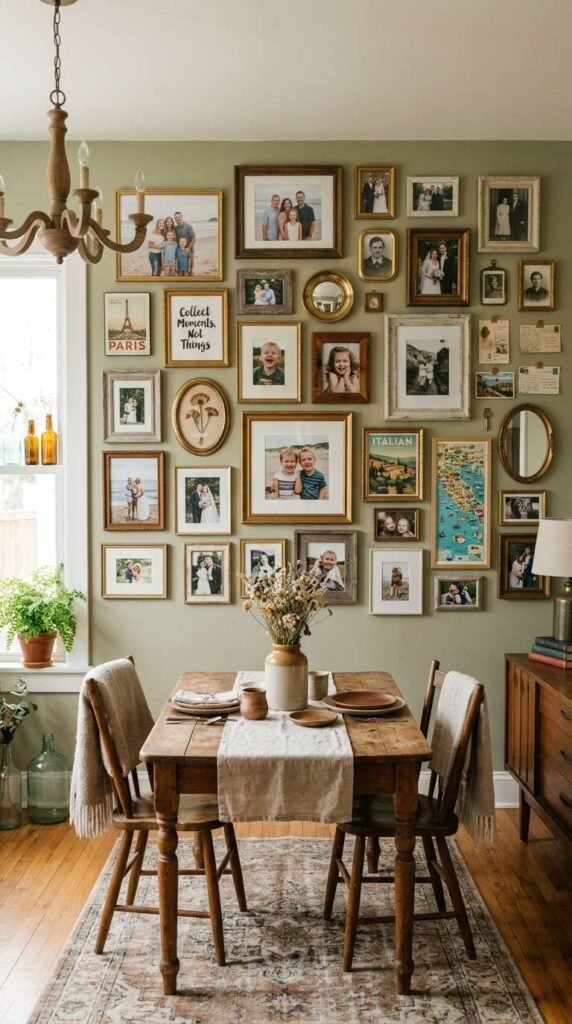
Visualise a wall covered in family photographs, all in black and white, all in the same matte black frame, with no two frames the same size, and yet the wall looks like one picture. The colour is black and white, which lets every photo, from a holiday to a Tuesday dinner, sit together without clashing. The material is framed paper, with glass that catches the light. The statement piece is the wall itself, five to seven frames, grouped 48 inches wide and 36 inches tall, centred at 57 inches from the floor, above a sideboard or a console. That wall is the reason the room feels personal, not purchased.
Recreate it by printing the photos in black and white, even if the originals are in colour, and using frames in one finish, matte black or oak, in three sizes, 8 by 10 inches, 11 by 14 inches, and 5 by 7 inches. Lay the frames out on the floor first, with 2 to 3 inches between them, and tape paper templates to the wall before you drill. Hang the largest frame near the centre and the smaller ones around it. Change one photo each season, when you change the table, so the wall stays current without a full rehang, and photograph the wall straight on, so the group reads as one gallery.
19. Nature-Inspired Centerpiece Inspiration
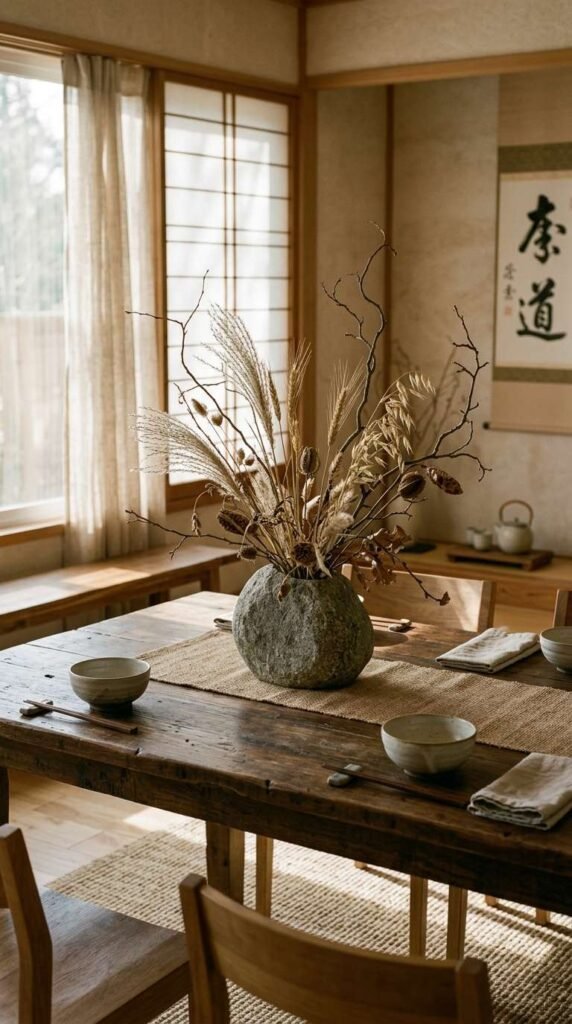
See a table with a simple ceramic bowl in the centre, filled with lemons, and a few branches in a glass vase beside it, and the whole room feels fresh, as if a window had been opened. Yellow is the colour, from the lemons, bright against a white cloth. The materials are ceramic and glass and fruit, all natural, all with a surface you can see in a photograph. The statement piece is the bowl, 12 to 14 inches across, low enough to talk over, and full enough to be the one thing on the table that is not flat.
Recreate it by putting the bowl in the centre of a linen runner, 12 to 18 inches wide, and filling it with fruit in one colour, lemons in summer, pine cones in autumn, or evergreen sprigs in winter. Add a vase, 6 inches tall, with three branches, 12 to 15 inches long, on one side, and a small ceramic dish, 6 inches across, with salt and herbs on the other. Keep the total height under 12 inches, so conversation can flow across the table, and change the fruit each week, so the centrepiece always looks as fresh as the day you photographed it. A small potted herb plant, 6 inches tall, in the centre, works just as well, and will last longer than a cut stem.
20. Monochrome Dining Room Inspiration
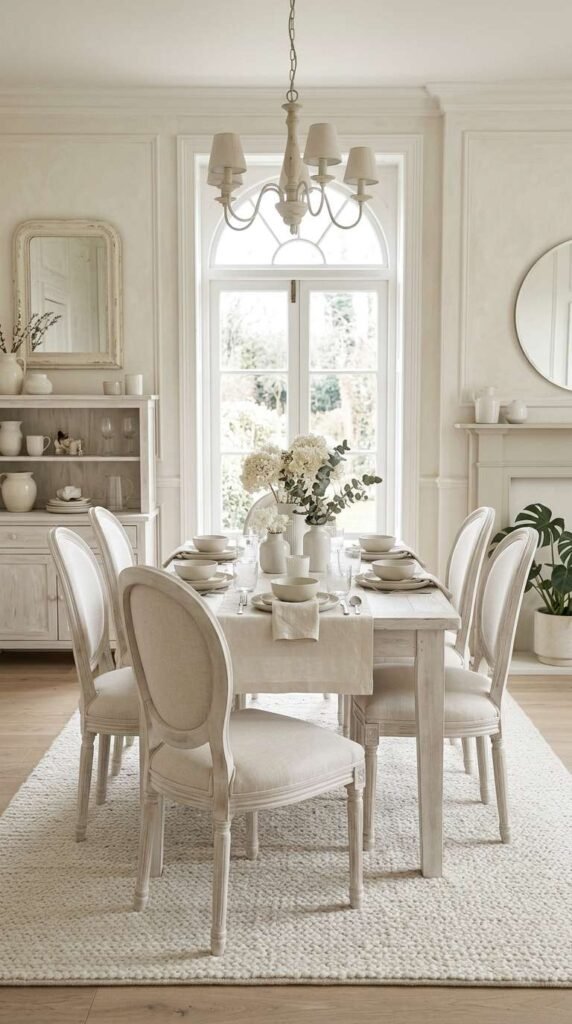
Close with a room in a single colour, sage, carried from the walls to the curtains to the chairs, and yet it is not flat, because every surface has a different texture. The walls are matte sage, the curtains are linen sage, the chairs are velvet sage, and the table is a pale oak that lets the sage be the whole story. Sage is the colour. Texture is the material, matte against gloss, wool against linen, ceramic against wood. The statement piece is the room itself, a single colour used in at least five shades, from the palest wall to the deepest chair, so the eye moves around the room looking for the differences.
To create it, paint the walls a muted sage, use the same sage, cut with 10 percent white, on the ceiling, and choose curtains, cushions, and a table runner in three different shades of sage, from pale to deep. Add a matte ceramic vase in a deeper sage, and a glossy painted sideboard in the same colour, so the light catches one surface and not the other. Keep the wood pale, and keep the metal brass, so the room has warmth. When you want a change, swap just the runner or the napkins for a deeper shade, and the whole monochrome room will look new without a single new piece of furniture.
FAQs
1. Where can I find the best dining room decor inspiration?
Save images from Pinterest and from interior design blogs that share one thread, a colour, a material, or a piece of furniture. When five saved images share the same thread, that thread is your style, and you can build a room around it.
2. How do I copy a dining room look from a photo?
Name the one colour, the one material, and the one statement piece in the photo, then find those three things in your room. Measure the light height, the rug size, and the table size in the photo, and use the same numbers at home, because size is what makes a copy look like the original.
3. How do I style a dining table for Pinterest?
Use a linen runner, a low centrepiece under 12 inches high, and one colour repeated in the napkins and the vase. Photograph the table from above, in daylight, with the chairs pushed in, because that top down view shows the layers clearly.
4. How do I make a small dining room look gorgeous?
Use a round table 36 inches across, a mirror across from a window, and a single pendant hung 30 inches above the table. A rug that defines the nook, in a light colour, makes the corner look like a designed space rather than a leftover one.
5. What colour should I use in a dining room with little light?
Use a warm white or a pale sage on the walls, with a mirror across from the window and warm 2700K bulbs in the light fitting. Avoid a dark colour on all four walls, because it will make a dim room feel smaller at night.
6. How do I make a dining room feel bigger with colour?
Keep the walls and the curtains within one shade of each other, use a rug in a light colour, and hang one tall mirror, 36 by 60 inches, across from a window. The mirror doubles the daylight, and the close colours stop the wall from being cut in two.
7. What is colour drenching in a dining room?
Colour drenching means painting the walls, trim, and ceiling in the same shade, so the room reads as one continuous space. A deep forest green or a soft terracotta works well, especially in a small or oddly shaped room, because it softens the lines between surfaces.
8. How do I create a monochrome dining room?
Pick one colour, such as sage, and use it in at least five shades, from the palest wall to the deepest chair, with different textures on each surface. Matte paint, linen curtains, velvet chairs, and ceramic vases in the same colour family give the room depth without a second colour.
9. What lighting makes a dining room look best in photos?
Layer warm light: a main fitting on a dimmer at half brightness, two sconces on the wall, and three candles on the table, all at 2700K or warmer. Photograph the room at dusk, with all four layers on, because that is when the light looks softest.
10. How do I add personality to a plain dining room?
Add one personal wall, a gallery of black and white family photos in matching frames, or one large painting in a colour you love, above the sideboard. Keep the furniture plain, so the wall carries the personality, and the room will feel like yours, not like a showroom.
Conclusion
Every gorgeous dining room in a photo started with one clear picture: one colour, one material, and one statement piece. The 20 dining room decor inspiration ideas in this guide give you that picture for every kind of room, from a layered table setting to a monochrome room in sage, and the exact steps to recreate it, with the measurements, the finishes, and the order to follow. Save the looks you adore to Pinterest, pick the one that matches the light and the size of your own room, and start with its one colour, its one material, and its one piece. The rest of the room will follow that picture, and the next photograph of your dining room could be the one someone else saves.