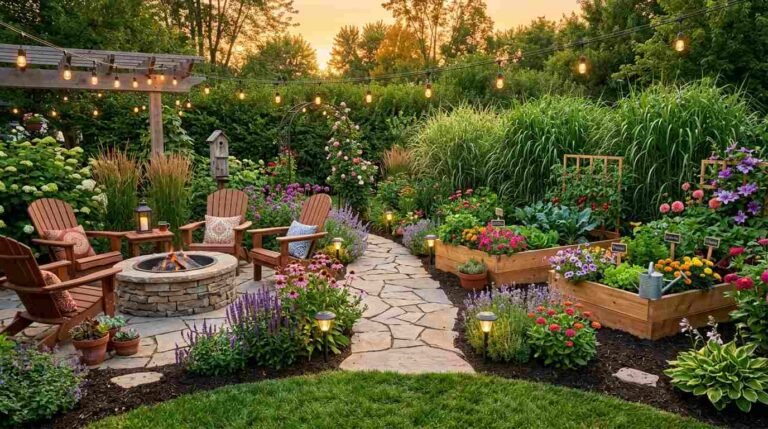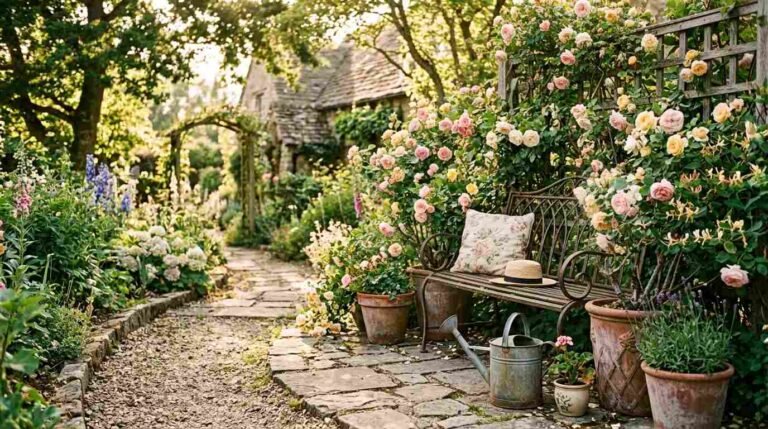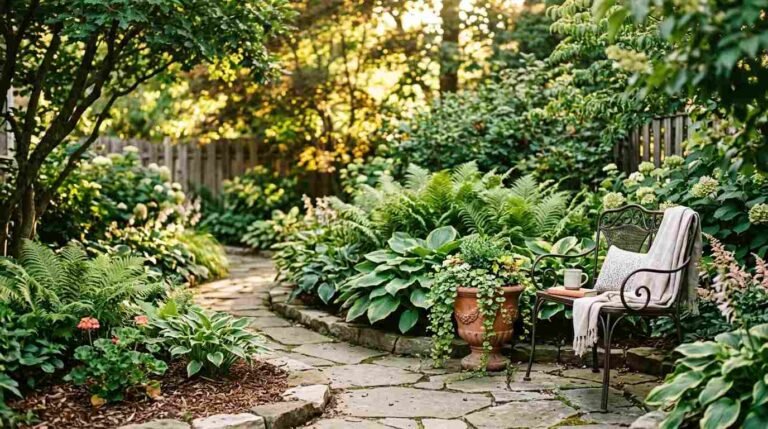
If you’re looking for the best rustic garden decor ideas to make your outdoor space feel warm, charming, and inviting, you’re in the right place. In this collection of 29 rustic garden decor ideas, you’ll discover easy, budget-friendly ways to decorate your backyard, patio, porch, or garden using vintage accents, farmhouse-inspired pieces, DIY projects, and natural materials. Whether you’re refreshing a small garden corner or transforming a large backyard, these ideas will help you create a cozy outdoor retreat with timeless rustic charm.
1. Weathered Wood Planter Boxes Farmhouse garden feel
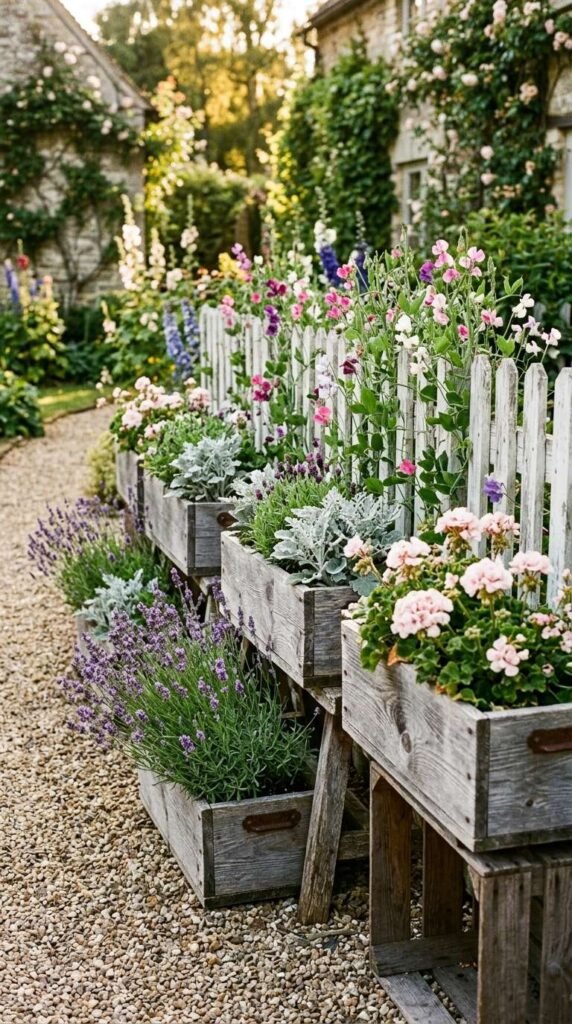
Weathered wood planter boxes are one of the most beloved staples of rustic outdoor decor because they bring that beautifully imperfect, lived-in look that no new product can replicate.
The natural texture of aged timber, with its silver-grey tones and visible grain, adds instant depth and warmth to any garden bed or porch edge, making your plants look like they have always belonged exactly where you placed them.
There is something genuinely soul-satisfying about a row of wooden planter boxes spilling over with color against a backdrop of green lawn or a softly weathered fence.
To get the best look, choose untreated cedar or pine boards and let them age naturally outdoors, or speed up the process by brushing on a diluted grey wood stain and wiping it back quickly.
Plant in layers tall ornamental grasses or spiky salvia at the back, bushy petunias in the middle, and trailing sweet potato vine or lobelia draping over the front edge.
This three-tier planting trick makes every farmhouse planter look professionally styled, and it works beautifully whether you line them along a driveway, tuck them beside a shed, or cluster them on a timber deck.
2. Galvanized Metal Watering Cans as Vintage Flower Vases
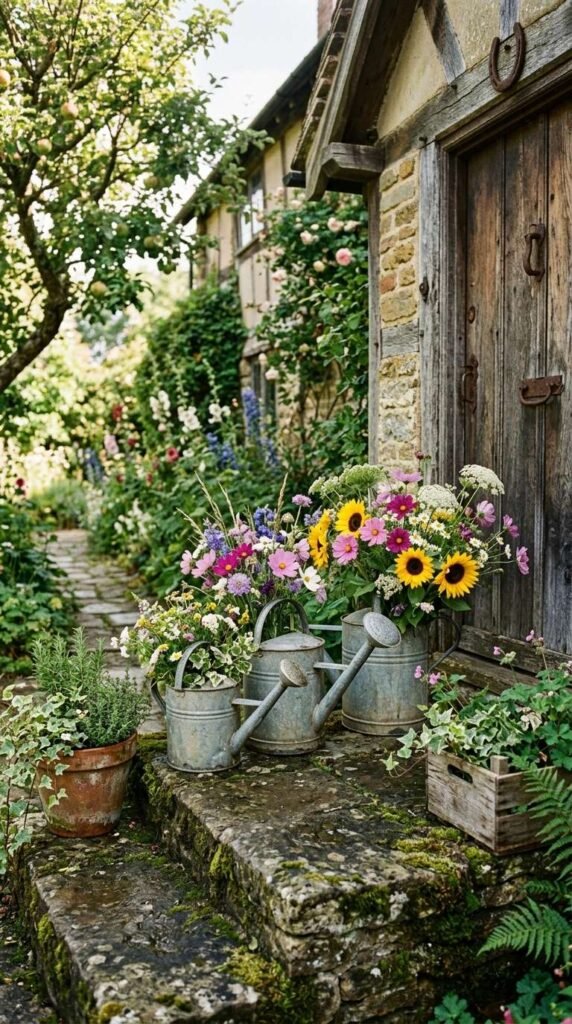
Few objects carry as much rustic garden charm as an old galvanized metal watering can repurposed as a planter or flower vase, and the reason is simple: that dull silver finish works harmoniously with almost every plant color and garden style, from muted cottage garden pastels to bold sunflowers and dahlias.
The beautiful patina that develops on aged metal with its subtle rust blooms and surface texture adds a layer of authenticity that even the most lovingly painted ceramic pot cannot quite match. Group three cans of different heights together for an instantly eye-catching vintage garden vignette.
For the prettiest display, look for old watering cans at flea markets, estate sales, or thrift stores, and leave any surface patina intact rather than polishing it away.
Fill the cans with water and fresh-cut stems from your garden for a seasonal display that changes week to week, or drill drainage holes in the bottom and plant them up permanently with trailing nasturtiums or cheerful marigolds for a longer-lasting look.
Either way, these charming metal garden accents bring warmth and personality to any doorstep, garden bench, or outdoor table arrangement.
3. A Vintage Wooden Ladder Plant Display That Steals the Show
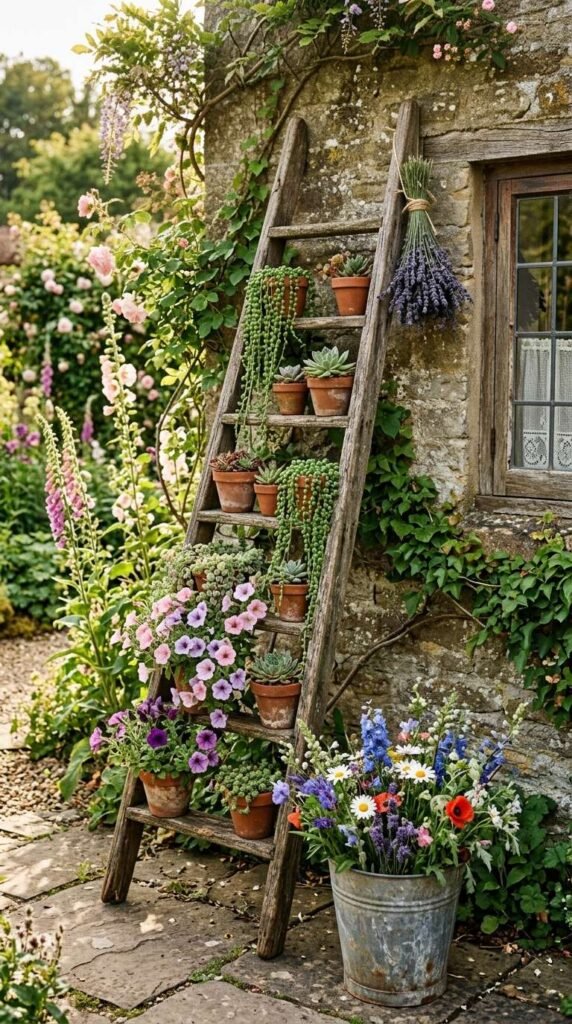
A vintage wooden ladder repurposed as a tiered plant stand is one of those ideas that looks expensive and complex but is actually effortless to pull off, which is exactly why it shows up on so many of the most-saved rustic garden decor pins. The beauty of this display is in the height — a ladder naturally creates vertical interest in any garden corner, drawing the eye upward and making small outdoor spaces feel much larger and more considered. The worn wood, with its chipped paint and scuffed rungs, adds character that ties the whole display together.
Look for old wooden stepladders at garage sales or antique markets — paint chipping is a feature, not a flaw. Arrange your plants from tallest to smallest going up the rungs, using terracotta pots, old tin cans, or even small galvanized buckets for variety. For the best visual effect, choose plants with different textures: spiky rosemary next to soft trailing ivy next to round echeveria succulents creates a layered, lush look that photographs beautifully. Lean the ladder against a fence, stone wall, or shed for stability and the perfect backdrop.
4. A Reclaimed Wood Garden Sign That Tells Your Story
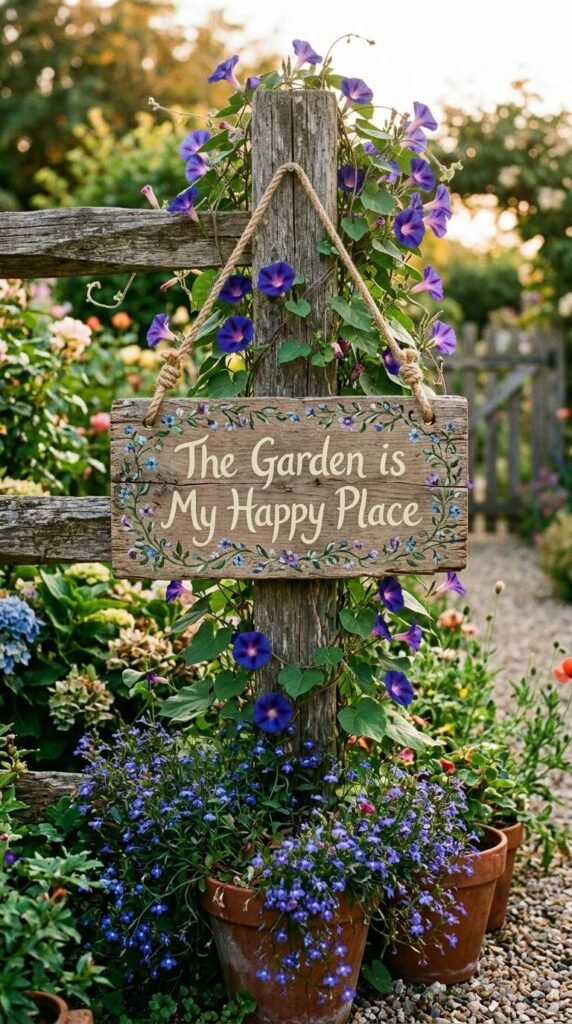
A reclaimed wood garden sign adds the kind of personal storytelling to your outdoor space that no store-bought ornament can replicate, and it is this sense of genuine personality that makes these signs among the most shared pieces of rustic outdoor wall decor on Pinterest.
The rough-sawn texture of salvaged timber, combined with hand-painted or wood-burned lettering, gives your garden a voice and whether you go for something sweet like “Grow where you are planted” or something playful like “Bee Happy Here,” the message becomes part of your garden’s whole character and charm.
For the most authentic look, source your sign wood from old pallets, fence boards, or reclaimed timber merchants, and leave the natural imperfections intact rather than sanding them smooth. Use a chalk paint or exterior acrylic in a muted, earthy tone for lettering cream, sage green, or dusty white all work beautifully against natural wood grain.
Hang your sign with jute twine, leather strips, or old chain for an extra layer of farmhouse garden detail, and position it at eye level near a garden gate, potting shed door, or beside a flower bed where it can be easily admired.
5. A Stone Pathway with Moss Accents for Cottage Garden Character
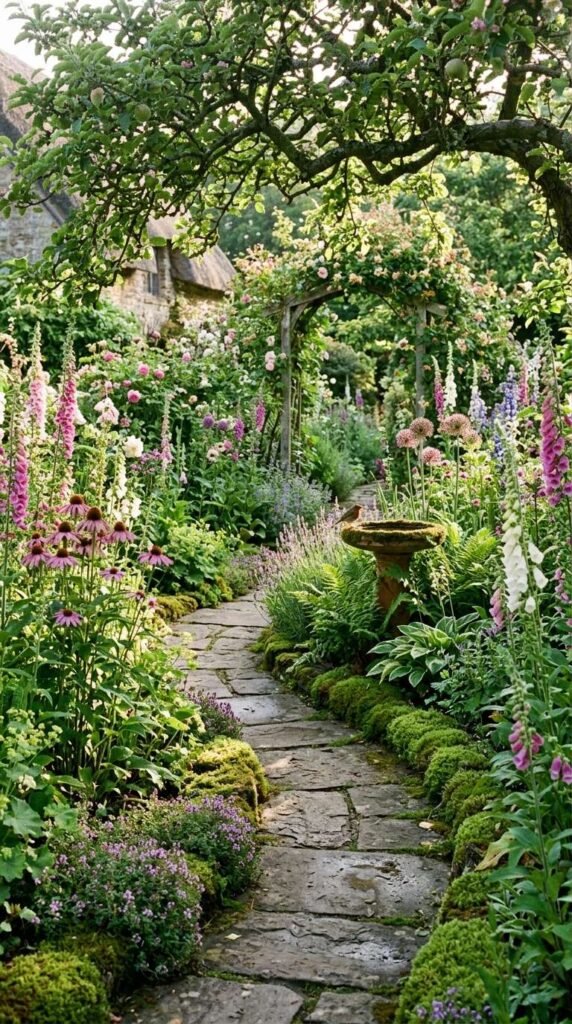
A flagstone garden path edged with moss is one of the most quietly beautiful features you can add to a rustic garden, and the reason it works so well is that it looks as though the garden itself created it over time rather than any deliberate human intervention.
The organic irregularity of natural stone, combined with the soft green cushioning of creeping moss and thyme, gives a path that effortlessly blends into the surrounding planting rather than cutting through it like a hard, formal edge. Every bare foot or wellied step along this kind of path feels like a small, lovely experience.
To create this look, lay irregular flagstones or stepping stones with deliberate gaps of two to three inches between them, then fill those gaps with creeping thyme, Irish moss, or Corsican mint — all of which tolerate light foot traffic and release a beautiful scent when brushed.
Allow true mosses to colonize naturally by keeping the stones slightly damp, or encourage them by painting stones with a blended mix of natural yogurt and water to speed up moss growth. A gently curving path always feels more inviting and naturalistic than a straight one, especially when cottage garden perennials like foxgloves and salvia are allowed to lean in from the borders.
6. Terra Cotta Pot Clusters for an Earthy Mediterranean Garden Vibe
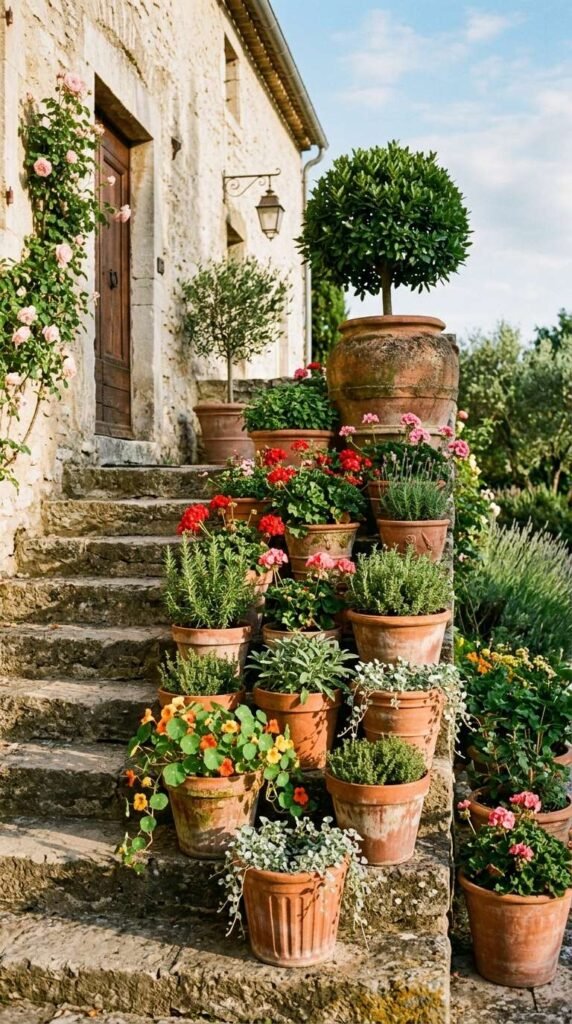
There is a reason terra cotta pots have been used in gardens for thousands of years — they are simply the most honest, most organic container material available, and their earthy warm tone makes every single plant you put in them look more beautiful.
When clustered in groups of five or more, mixing sizes from small thumb pots to large statement planters, terracotta container gardens create a layered, curated look that feels both collected over time and deeply intentional at once.
The beautiful aged patina that develops on old terracotta those white mineral streaks and patches of grey-green moss — only improves with the years.
The most important trick for styling a terracotta pot cluster is to vary the heights as much as the sizes: use upturned pots, brick stacks, or wooden box crates to lift some containers higher and create a genuinely tiered display rather than a flat row. Group plants by theme — an all-herb cluster near the kitchen door, a pastel cottage flower grouping by a garden bench, or a bold succulent and cactus collection for a sunny sheltered corner. Always leave some pots unplanted or with simple trailing ivy to give the eye a place to rest between more elaborate displays.
7. A Wagon Wheel as a Stunning Rustic Garden Focal Point
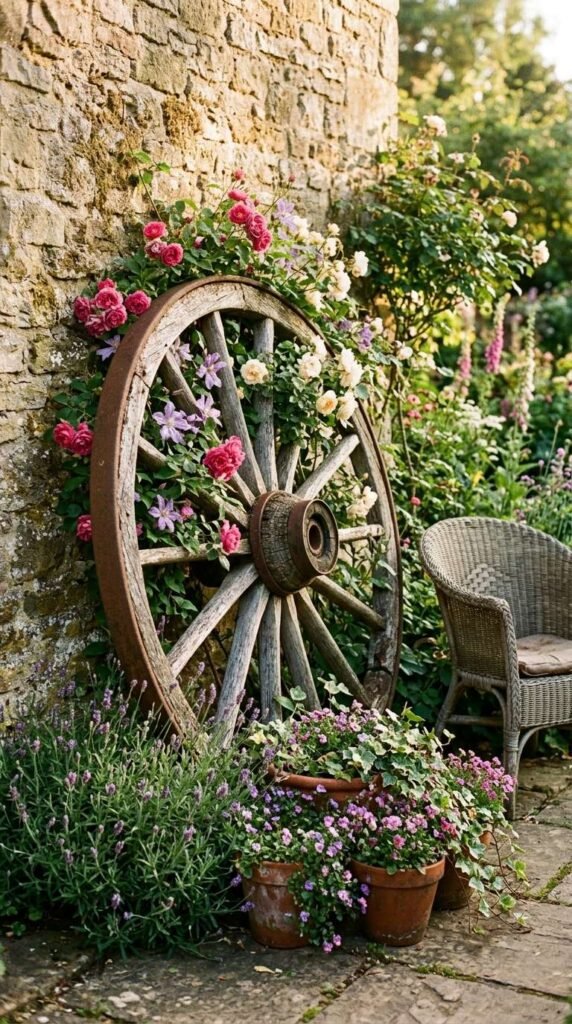
A vintage wooden wagon wheel is one of the most dramatic rustic garden ornaments you can introduce to an outdoor space, and it earns that drama purely through scale, age, and the sheer poetry of its form — there is something deeply evocative about an old wheel, weathered by decades of use, now standing still in a garden surrounded by flowers. Used as a trellis for climbing roses or clematis, or simply leaned against a wall or hedge as a sculptural statement piece, a wagon wheel immediately establishes the whole character of a farmhouse garden in a single glance.
Source genuine antique wagon wheels from farm clearances, salvage yards, or specialist rural antique dealers for the most authentic aged look — reproductions exist but rarely carry the same presence. If your wheel is particularly old and fragile, preserve it by applying a coat of exterior linseed oil to the wood and sealing any deep cracks before placing it in your garden. For the most stunning display, plant Rosa ‘New Dawn’ or Rosa ‘Compassion’ at the base and train the stems gently through the spokes as they grow, creating a living sculpture that improves every single year.
8. Hanging Mason Jar Lanterns for Dreamy Outdoor Ambiance
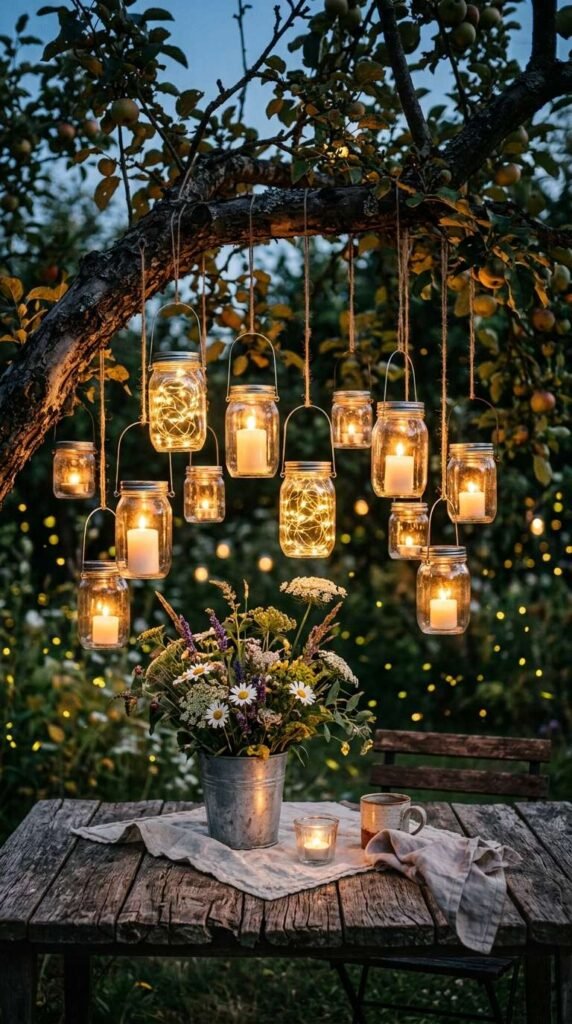
Mason jar lanterns are endlessly popular in rustic garden decor for the very simple reason that they turn an ordinary evening in the garden into something that feels genuinely magical, and they do it at almost zero cost using materials most people already have at home. The soft amber glow of candlelight filtered through thick glass, dappling across garden foliage and wooden surfaces, creates a warmth and intimacy that no harsh outdoor spotlight could ever replicate. Hung at varying heights from tree branches, pergola beams, or shepherd’s hooks, they transform any outdoor space after dark.
Fill your jars with tea light candles, small pillar candles, or battery-powered fairy light strings for a no-flame option that is both safer and more weather-resistant. Wrap the jar necks with jute twine, copper wire, or strips of burlap before threading through the hanging wire for a more polished, layered look. For an extra touch of boho garden charm, add a sprig of dried lavender or eucalyptus tucked under the twine wrap — these small details are exactly the kind of thing that makes a photo genuinely memorable and pin-worthy on a rustic outdoor entertaining board.
9. An Old Barrel Planter as a Bold Farmhouse Garden Statement
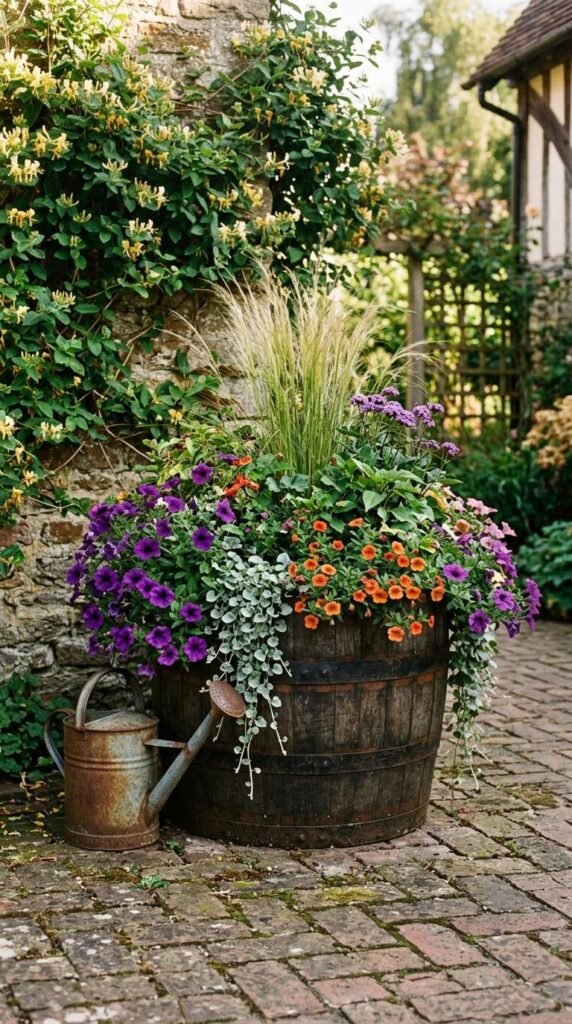
A traditional oak barrel planter carries a presence that few other garden containers can match — the combination of genuine scale, authentic aged material, and that classic farmhouse aesthetic makes it a natural focal point in any outdoor space, whether positioned on a driveway, patio, courtyard, or beside a front door. Half-barrels are particularly effective because they provide enough soil volume to sustain a genuinely lush, mixed planting all season long without drying out rapidly in hot weather the way smaller containers tend to do.
For the most impressive barrel planting, always use a thriller, filler, spiller formula: one tall dramatic centerpiece plant like ornamental grass, salvia, or a standard fuschsia creates the vertical element, several mid-height bushy plants like petunias or geraniums fill the body of the barrel, and long trailing plants like trailing lobelia, bacopa, or sweet potato vine cascade over the edges to soften the barrel’s profile. Drill several drainage holes in the base if not already present, and add a layer of horticultural gravel before filling with peat-free compost for the healthiest, most resilient planting all summer.
10. A Wicker and Rattan Outdoor Furniture Vignette with Vintage Soul
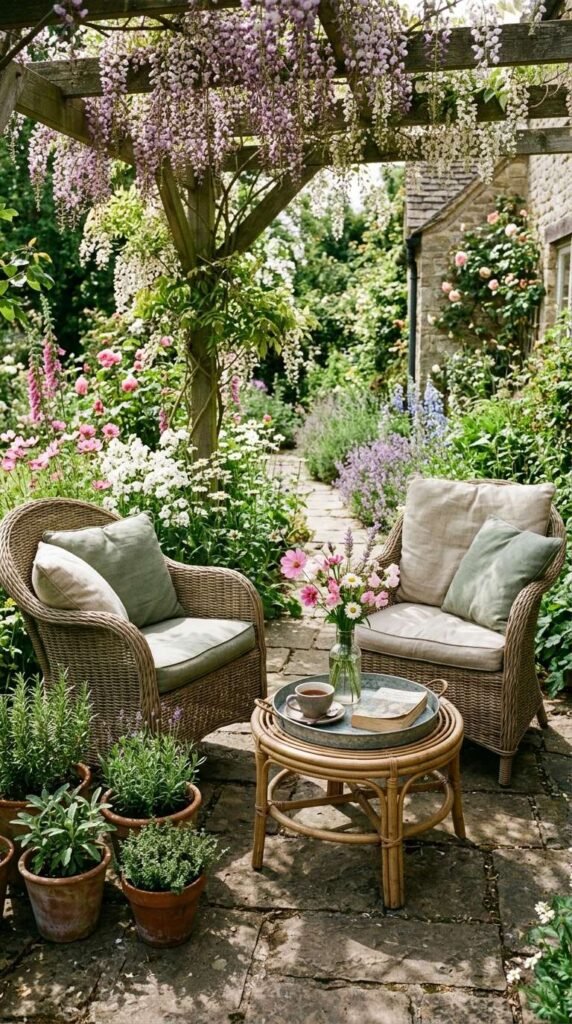
Wicker and rattan outdoor furniture brings a warmth and natural texture to a garden seating area that metal or plastic furniture simply cannot offer, and when paired with the lush planting of a rustic cottage garden, the effect is one of pure, unhurried comfort and beauty. The organic weave of natural materials like rattan, willow, or seagrass echoes the textures of the garden itself — the twisting stems of climbing roses, the woven structure of a willow hurdle fence, the criss-cross of plant supports and bamboo canes — creating a seamless visual connection between the furniture and the space around it.
To make a wicker garden vignette feel genuinely curated rather than simply placed, layer your textiles thoughtfully: thick linen cushion covers in natural tones, a vintage quilt draped over one chair arm, and a coarse jute rug underfoot all add softness and depth. Style the table with items that suggest actual garden life — a terracotta pot of fresh basil, a pair of gardening gloves, a small bunch of sweet peas in a recycled jam jar — rather than overly perfect props that look staged. These lived-in details are what make a garden vignette feel genuinely inviting rather than like a catalog photo.
11. A Rustic Birdhouse Village That Brings Life and Charm to Your Garden
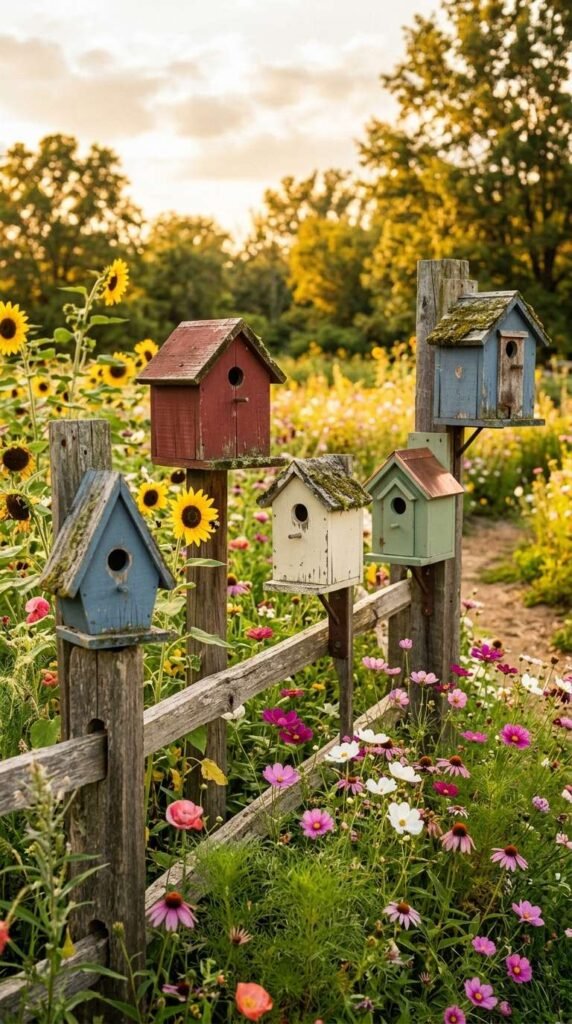
A rustic birdhouse village does something that very few garden features can claim to do — it simultaneously looks beautiful, attracts real wildlife, and adds a sense of story and playfulness to an outdoor space that delights every single person who sees it. Grouping multiple birdhouses together on posts or a fence, rather than placing a single one in isolation, creates a genuine sense of a miniature community within your garden, and the charming visual of little wooden houses surrounded by flowers and buzzing with natural garden life is one that photographs magnificently in all kinds of light.
Paint or stain your birdhouses in muted farmhouse palette colors — dusty sage, chalky barn red, old weathered blue, or natural wood with a linseed oil finish — and allow them to develop a gentle patina over time rather than repainting every season. Position them at varying heights between three and six feet from the ground, facing away from prevailing winds and in a spot that receives morning sun but some afternoon shade. Plant sunflowers, echinacea, and black-eyed Susans around the base of your birdhouse posts to attract both birds and pollinator insects to the area throughout the growing season.
12. A Weathered Fence with Climbing Roses for Pure Romantic Drama
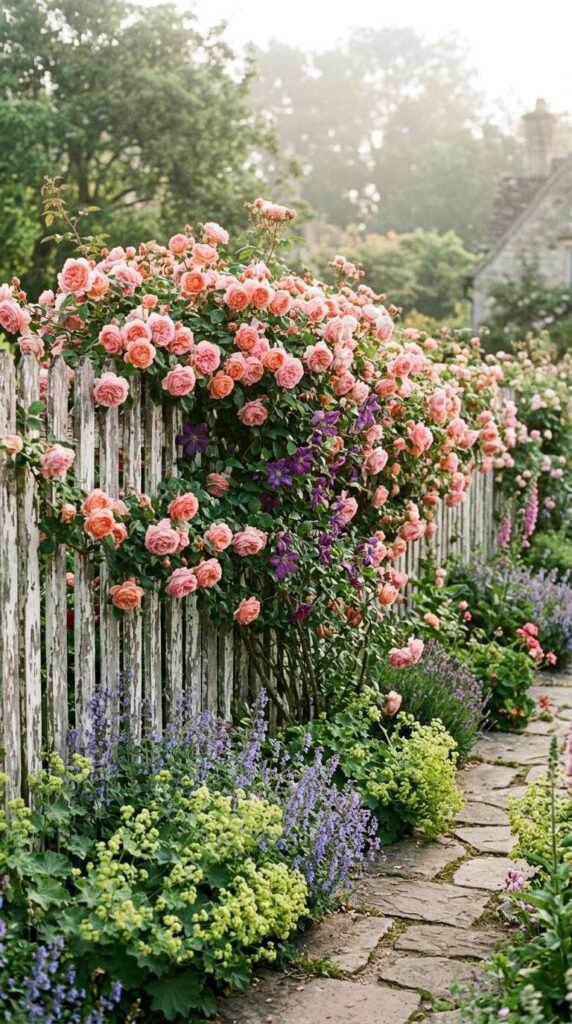
There is a long and deeply beloved tradition in cottage garden design of letting climbing roses colonize a fence, and the reason it endures is that very few garden scenes are as purely beautiful as old roses billowing over weathered timber in the warm light of a June morning. The combination of the rose’s abundant blooms with the honest, imperfect character of a peeling or silvered fence creates a visual tension between control and wildness that is the very essence of the rustic garden aesthetic — it looks effortless precisely because it takes just the right amount of effort and trust to achieve.
For the best fence-and-rose combination, choose repeat-flowering climbers like ‘Generous Gardener’, ‘Malvern Hills’, or ‘Mortimer Sackler’ for blooms from early June through to autumn rather than a single spectacular June flush. Plant your rose at least eighteen inches away from the fence base to avoid the dry soil that often sits directly against fence posts, and train the main stems horizontally along wires or through the fence gaps from the start — horizontal training encourages far more flowering shoots than simply letting stems grow vertically upward. Underplant with nepeta, geraniums, or foxgloves at the fence base to complete the cottage border picture.13. Log Slice Stepping Stones for a Woodland Garden Fairy-Tale Feel
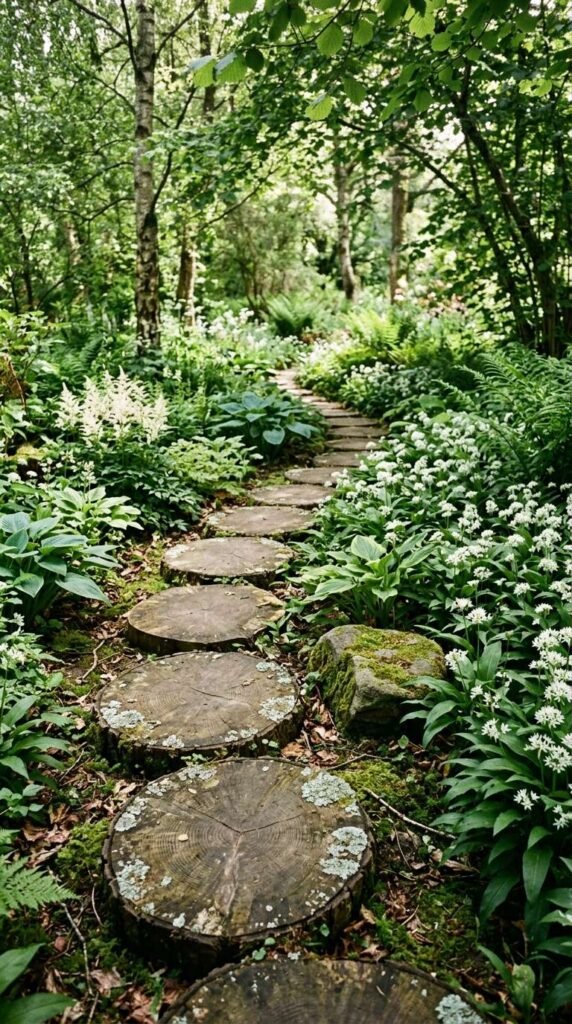
Log slice stepping stones transform a simple garden path into something that feels genuinely like a scene from a fairy-tale garden, and they are one of those rare design ideas that requires almost no skill to execute and almost no budget to achieve — just a chainsaw, some thick timber sections, and the confidence to let nature add the finishing touches over time. The cross-section of a log reveals the natural rings and grain of the wood in extraordinary detail, and when laid flat in a garden path, these rings create a warm, organic stepping surface that fits seamlessly into any woodland, cottage, or natural garden scheme.
Source your timber sections from fallen trees in your own garden, from a local tree surgeon who may give them away free, or from a firewood merchant willing to cut thick rounds on request. Treat the cut surfaces with exterior wood preservative to slow decay, but do not use pressure-treated timber in a garden where children or pets play. Lay your slices directly on compacted soil or a thin sand bed, leaving gaps of two to three inches between each slice to allow ground cover plants like ajuga, creeping jenny, or wild violets to grow between them and bind the whole path together naturally.
14. An Antique Garden Gate Entrance That Sets the Whole Scene
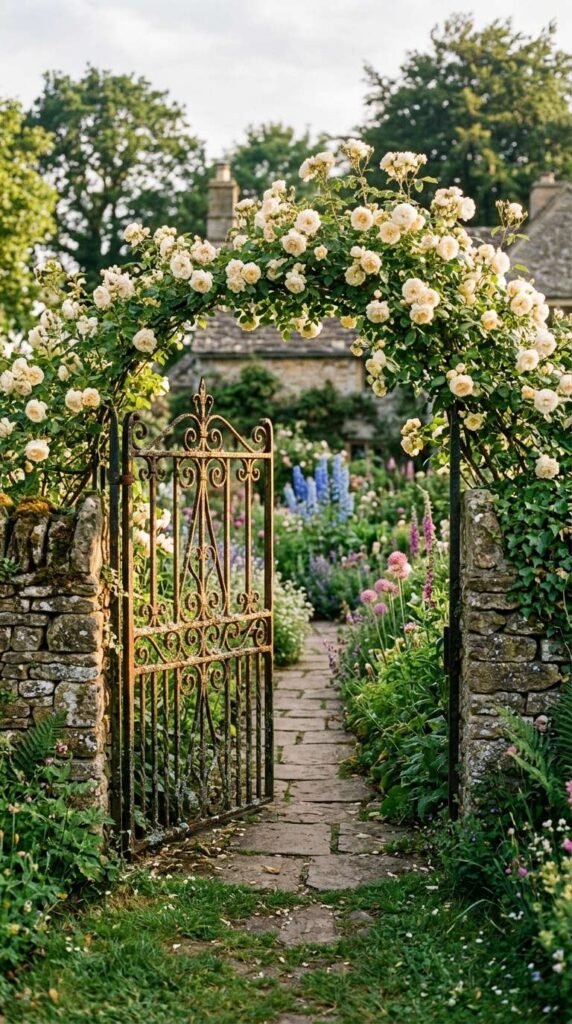
An antique garden gate is one of the most transformative elements you can add to an outdoor space because it does something no plant or ornament can do alone — it creates a threshold, a sense of arrival, a moment of transition between the everyday world outside and the carefully tended beauty within. Whether you frame it in a drystone wall, a clipped yew hedge, a wooden arch, or a woven willow screen, a vintage gate with a beautiful aged character announces that what lies beyond it is worth entering slowly and with appreciation.
Look for genuine cast or wrought iron gates at architectural salvage yards, reclamation centers, or specialist antique dealers, and embrace any surface rust as part of the charm rather than a problem to fix. If structural rust is present, treat with a rust converter before sealing, but leave surface patina intact. Frame your gate with a timber or metal archway draped in climbing roses, honeysuckle, or wisteria for the ultimate English cottage garden entrance moment, and underplant the archway base with lavender, alliums, or catmint to soften the transition between path and planting.
15. A Tin Can Herb Garden for Clever Small Space Garden Decor
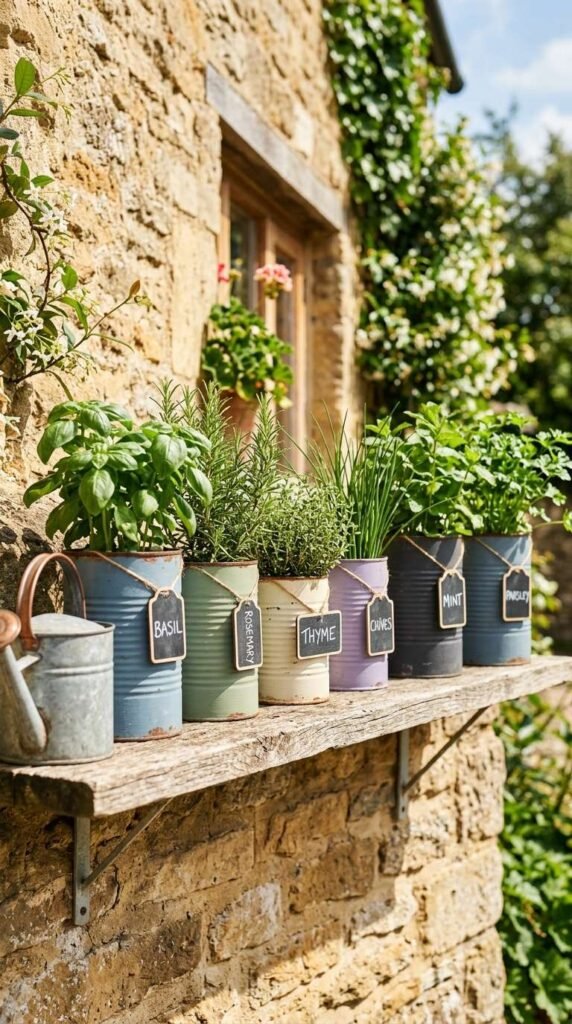
A tin can herb garden is one of the most ingeniously practical and visually charming ideas in all of rustic garden decor, and its genius lies in how it combines genuine usefulness — fresh culinary herbs steps from your kitchen door — with a display that is beautiful enough to function as outdoor wall art at the same time. The mix of recycled tin cans in different sizes, painted in chalky farmhouse tones or left in their natural steel finish, creates an organic, collected aesthetic that feels genuinely personal rather than store-bought, and the handwritten herb labels add a touch of old-fashioned kitchen garden character that is irresistibly charming.
Mount a reclaimed wood shelf or a simple piece of scaffold board on a sunny, south-facing wall using heavy-duty brackets, and drill drainage holes in the base of every can before filling with a 50/50 mix of multi-purpose compost and horticultural grit for excellent drainage. Herbs that thrive in this kind of display include thyme, rosemary, oregano, chives, basil, and flat-leaf parsley — choose varieties you actually cook with for the most satisfying garden-to-table experience. Water regularly in warm weather and feed with a liquid seaweed fertilizer every two weeks through the growing season to keep your tin can garden lush and productive.
16. A Wooden Barrel Water Feature for Soothing Garden Ambiance
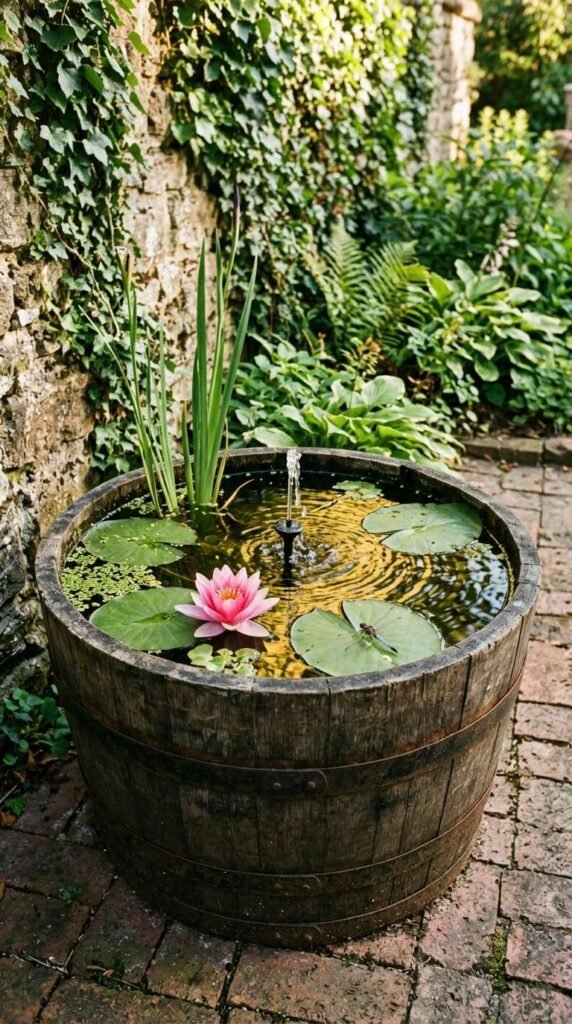
A barrel water feature brings the gentle, meditative quality of moving water into even the smallest garden or courtyard space, and this is why the half-barrel water garden is one of the most consistently popular rustic outdoor projects pinned and shared by gardening enthusiasts worldwide. The sound of even a small trickle of water — created by an inexpensive solar-powered pump — has a remarkable ability to mask urban noise, attract birds and beneficial insects, and create a sense of peaceful, natural abundance that transforms a simple patio corner into a genuine sanctuary.
To create your own barrel pond, seal the inside of your half-barrel with pond liner or a food-grade sealant if it is not already watertight, then fill with fresh tap water and allow it to stand for 48 hours before planting. Choose compact, miniature aquatic plants suited to container ponds: a miniature water lily like ‘Pygmaea Helvola’, water forget-me-not, and a small water iris will give you flowers, texture, and surface coverage. Add a small solar fountain pump for gentle movement, and introduce a handful of freshwater aquatic snails from a garden center to help keep algae levels naturally in check.
17. A Twine-Wrapped Lantern as a Simple and Stunning Garden Centrepiece
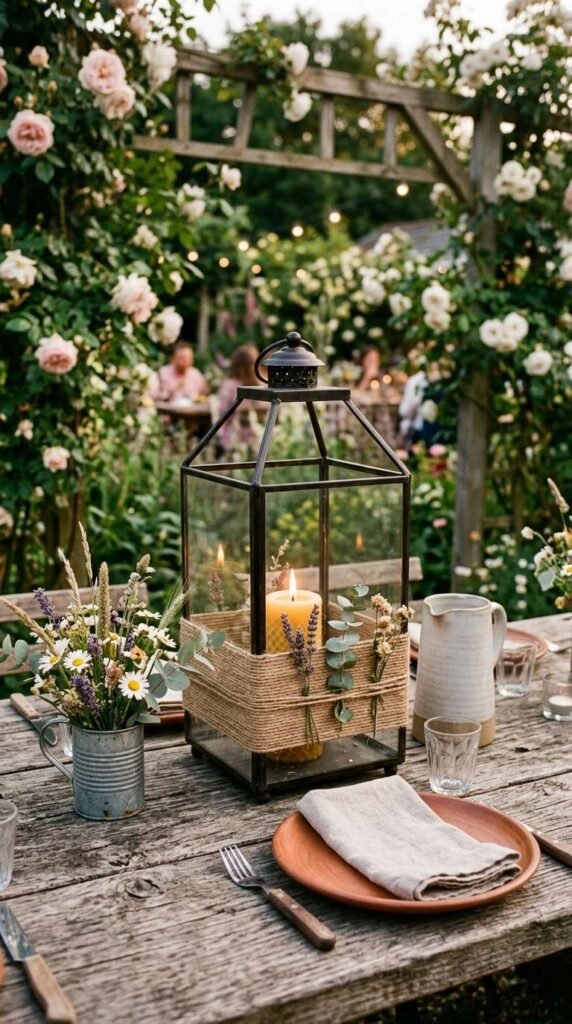
The beauty of a twine-wrapped lantern as a garden table centrepiece is that it transforms an ordinary piece of glass and iron into something that feels genuinely handmade and considered, and the effort involved is so minimal that anyone can create it in under fifteen minutes with materials costing almost nothing. The combination of rough natural jute twine, cool glass, and warm candlelight hits every sensory note of the rustic outdoor aesthetic simultaneously — tactile, warm, organic, and unpretentious — which is precisely why this kind of simple styling detail photographs so beautifully and earns so many saves on garden decor inspiration boards.
Choose a lantern with clean lines and a simple silhouette so the twine wrapping remains the focus rather than competing with ornate ironwork. Wrap the twine in neat, close rows starting from the base, knotting at the start and finish and securing any loose ends with a small dot of craft glue. Tuck in dried botanicals — lavender wands, rosemary sprigs, baby’s breath, or dried rose buds — at the start of the wrapping before you finish the final rows so they are held securely in place. A cluster of three lanterns in different sizes grouped together on a garden table or outdoor shelf always looks more styled and intentional than a single lantern placed alone.
18. A Vintage Crate Planter Stack for Effortless Layered Garden Style
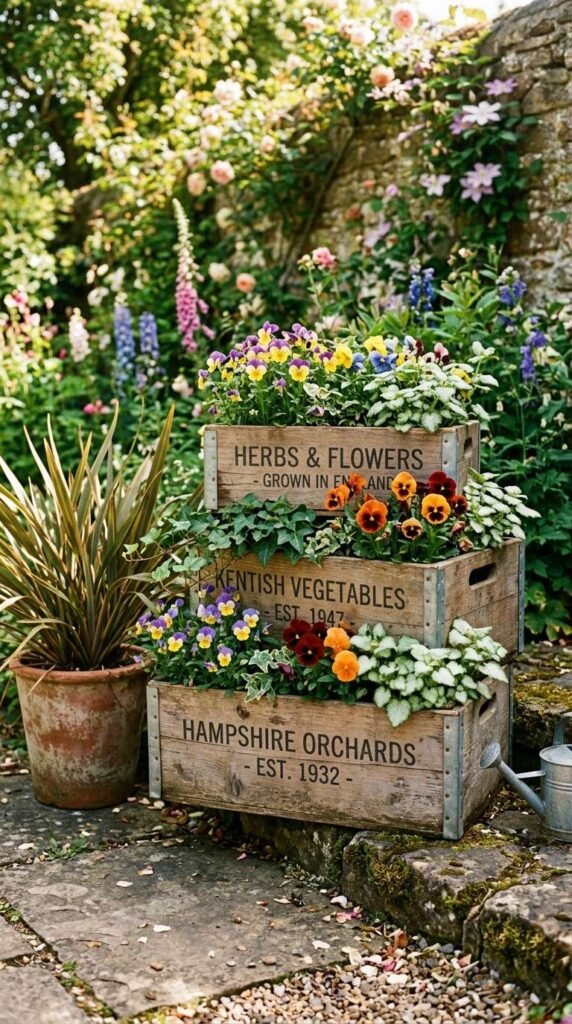
Vintage wooden crates repurposed as stacked planters are a staple of rustic garden decorating for very good reason — they bring genuine, irreplaceable character from their past lives as fruit, vegetable, or wine containers, and that history is visible in every faded stencil, every scuff mark, and every gap between the aged timber slats through which trailing plants eventually drape themselves beautifully. A stack of three crates in different sizes, planted and arranged at slight angles to each other, creates a genuinely dynamic display that draws the eye in multiple directions at once.
Line each crate with hessian burlap before filling with compost to prevent soil escaping through the slats while still allowing drainage. For the prettiest all-season display, plant the largest bottom crate with taller spring bulbs or ornamental kale for winter and early spring interest, the middle crate with mid-season annuals like pansies or violas, and the top smallest crate with a compact trailing plant that will cascade downward over the sides as the season progresses. Rotate the whole stack a quarter turn every two weeks so all sides receive equal light and the planting develops evenly and fully around every visible face.
19. Corrugated Metal Garden Bed Borders for an Industrial Rustic Twist
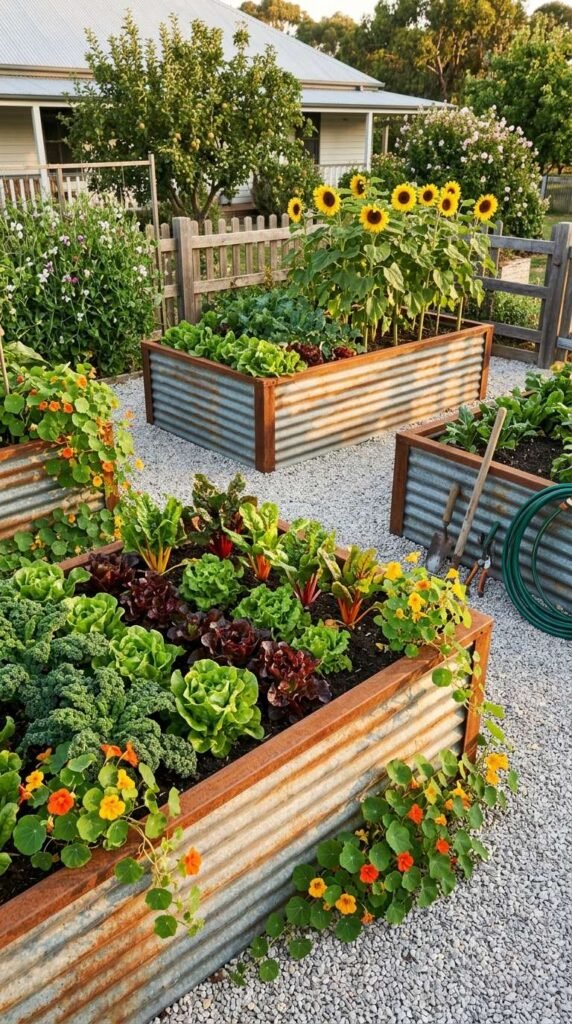
Corrugated metal raised garden beds represent one of the most exciting recent trends in rustic outdoor gardening because they combine the raw, industrial character of galvanized or weathering steel with the timeless appeal of the kitchen garden aesthetic, creating something that feels both contemporary and deeply traditional at the same time. The corrugated surface catches light in a way that smooth metal or painted wood cannot, creating shifting bands of highlight and shadow that make even the simplest rectangular bed look visually interesting from every angle and in every season.
For the best and longest-lasting result, choose galvanized corrugated steel sheet with a minimum thickness of 0.5mm, which will resist denting and deforming even when filled with the weight of damp compost. Line the inside with heavy-duty pond liner or cardboard before filling to slow the transfer of any zinc leaching into the soil — this matters most if you are growing edible crops rather than purely ornamental plants. The weathering process that turns galvanized metal from bright silver through gold to deep rust-brown over two to three years is genuinely beautiful, and many gardeners choose to leave their beds entirely uncoated to embrace this natural patination process fully.
20. A Tree Stump Side Table for the Most Natural Garden Seating Nook
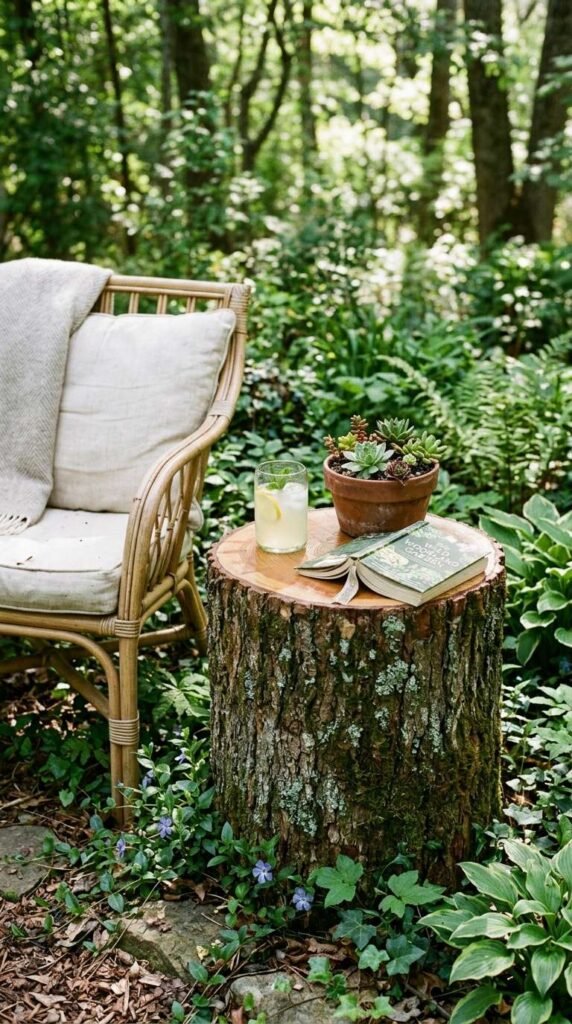
A tree stump side table is the most genuine expression of the rustic garden philosophy — finding beauty and function in something the natural world has already created, without the need to buy anything new or create anything artificial. When a tree in your garden comes down, its stump can become one of the most characterful and talked-about features of your outdoor space rather than a problem to be removed, and the cost is precisely zero beyond the time it takes to sand and seal the top surface. Every knot, ring, crack, and patch of lichen makes it entirely unique.
Sand the cut top surface to a smooth finish using progressively finer grits of sandpaper — starting with 60 grit and finishing with 120 — then seal with two coats of exterior decking oil or hard wax oil to protect it from rain and prevent cracking. Leave the bark on the sides intact and allow moss, lichen, and ivy to colonize naturally over time, creating a living sculpture that changes and becomes more beautiful with every passing season. Position your stump beside a garden chair or bench with a direct sightline to your most beautiful garden view for the most satisfying and regularly enjoyed outdoor living spot in your whole garden.
21. A Driftwood Garden Sculpture for Coastal Rustic Outdoor Decor
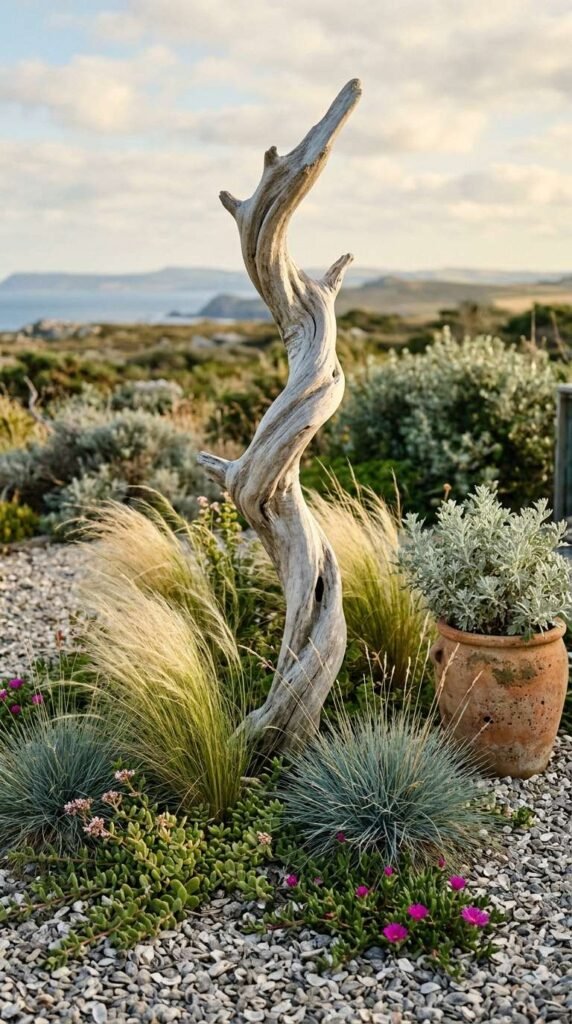
Driftwood sculptures bring a sense of the wider natural world — of shorelines, tides, forests, and time — into a garden space, and this is what gives them their unusual ability to make any outdoor area feel both more grounded and more mysterious at the same time. The bleached, silver-grey tones of weathered driftwood are an almost perfect neutral that harmonizes with every plant color and garden style, from bold-leaved tropical schemes to delicate cottage garden pastel plantings, and the organic, unpredictable shapes of natural driftwood pieces create visual interest that no manufactured sculpture can truly replicate.
Collect driftwood from beaches (always check local bylaws, as some protected beaches prohibit removal of natural materials) or from riverbanks and woodland floors where fallen timber has weathered naturally. For use as a garden sculpture, choose pieces that have already achieved their characteristic bleached silver tone and have no soft or rotting sections — tap the wood and listen for a hollow sound that indicates internal decay. Arrange pieces either as a single dramatic statement piece, buried six to eight inches into the ground for stability, or grouped as a driftwood cluster installation surrounded by coastal plants like sea holly, grasses, and thrift.
22. A Rope and Wood Swing Bench for Timeless Garden Charm
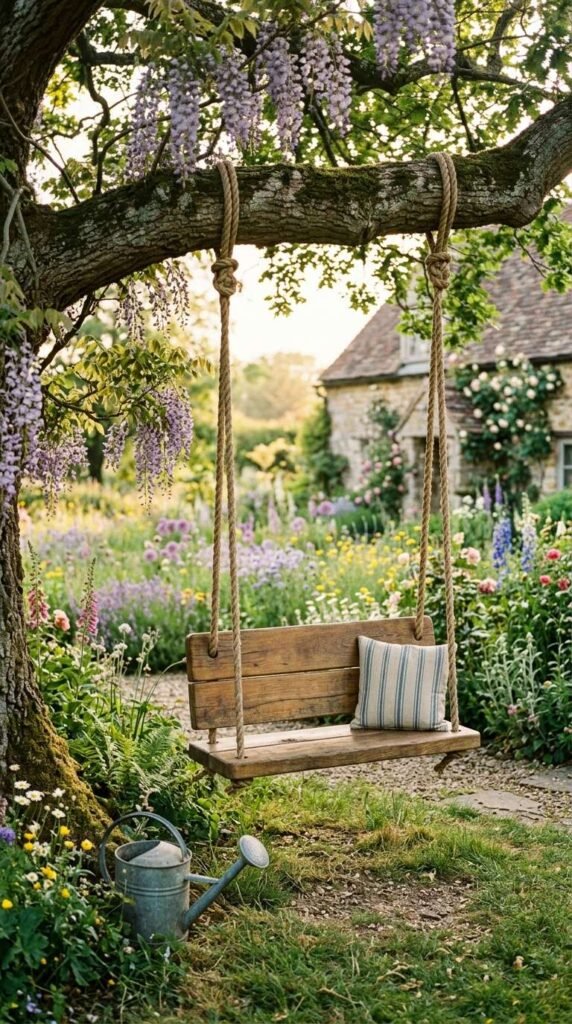
A garden swing bench is one of the most emotionally resonant features you can add to an outdoor space — there is something about the gentle back-and-forth motion, the sensation of being suspended between earth and sky, surrounded by the sounds and scents of a garden in full season, that triggers a deep sense of peace and happiness that is almost impossible to replicate with any other garden element. And when that swing is made from natural rope and reclaimed timber rather than bright painted metal, it becomes a feature that improves beautifully with age and belongs completely to the character of its garden.
Build a rope swing bench using a thick, smooth hardwood plank of at least 40mm thickness — oak, ash, or sweet chestnut are all excellent choices for outdoor use — drilled with two holes at each end through which thick natural manila rope or sisal rope of at least 24mm diameter is threaded and knotted securely below. Hang from a branch with a diameter of at least 200mm using proper tree swing eye bolts rated for dynamic loads, and inspect both the branch and all knots every spring before the season’s first use. Sand the seat smooth and treat annually with exterior decking oil to keep the timber from cracking or checking in extreme weather.
23. Chimney Pot Planters for Bold Period Garden Character
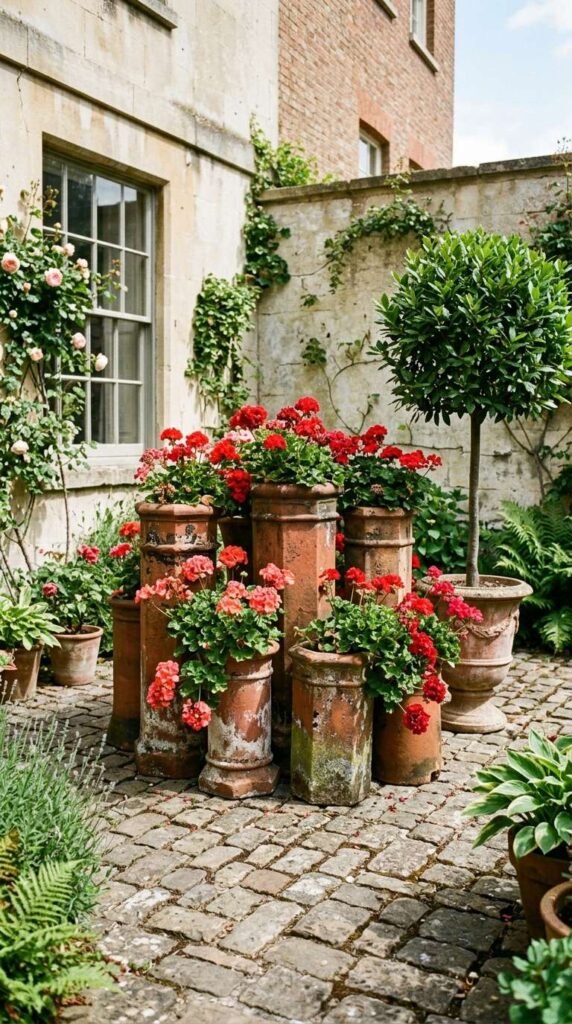
Chimney pot planters are among the most dramatic and architecturally distinctive containers in the world of rustic garden decor, and their appeal is inseparable from their history — each pot has spent decades or centuries on a rooftop, absorbing soot, rain, and decades of weathering into its terracotta body, and that accumulated character is irreplaceable. Grouped in threes or fives of different heights on a paved courtyard, they create a sense of genuine period gravitas that immediately elevates the character of any outdoor space from merely pleasant to genuinely special and distinctive.
Source Victorian or Edwardian chimney pots from architectural salvage yards, reclamation centers, or specialist demolition companies where houses are being refurbished — genuine antique pots are far more characterful than modern reproductions and often similarly priced. The narrow interior dimension of most chimney pots suits trailing plants particularly well, as the restricted root run suits geraniums, trailing petunias, fuchsias, and trailing nasturtiums that perform well in container conditions. Always place chimney pots on a perfectly level surface and check stability before planting, as their tall, narrow profile can make them susceptible to toppling in strong wind conditions.
24. A Wheelbarrow Flower Display — a Classic Rustic Garden Decor Favourite
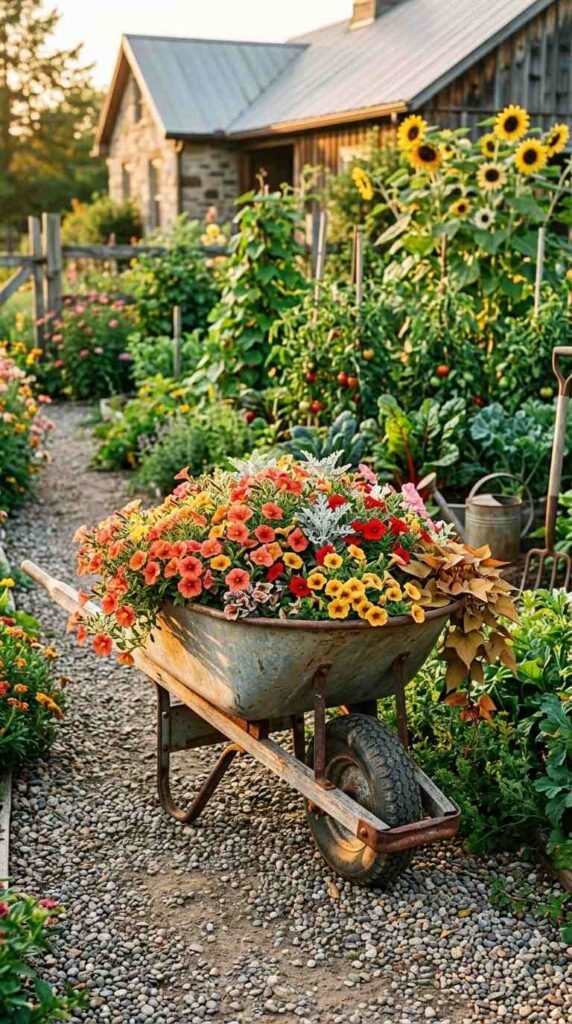
A wheelbarrow flower planter occupies a very special place in the rustic garden decorating canon because it is one of those ideas that perfectly combines the working character of a real garden — tools, toil, seasons, and harvests — with genuine visual beauty, creating a display that feels like it belongs in the garden rather than being imported from a garden center. The charm of a vintage galvanized wheelbarrow overflowing with billowing summer flowers is almost irresistible, and the fact that it can be wheeled to a different position whenever you want to change the garden’s look makes it endlessly flexible.
If using a genuine old wheelbarrow, check that the wheel is stable and the body is sound enough to hold compost weight before filling — patch any significant holes with exterior epoxy before planting. Line the base with horticultural fleece to retain compost while allowing drainage, then fill with a high-quality peat-free compost mixed with slow-release fertilizer granules for a season-long feed. For the most impactful and Pinterest-worthy flower display, choose a hot color scheme — all-orange, all-pink, or a mix of sunset shades — rather than a random mix, as a cohesive palette always photographs more dramatically and makes a stronger visual statement in the garden.
25. A Copper Pipe Trellis for a Warm, Stylish Modern Rustic Garden
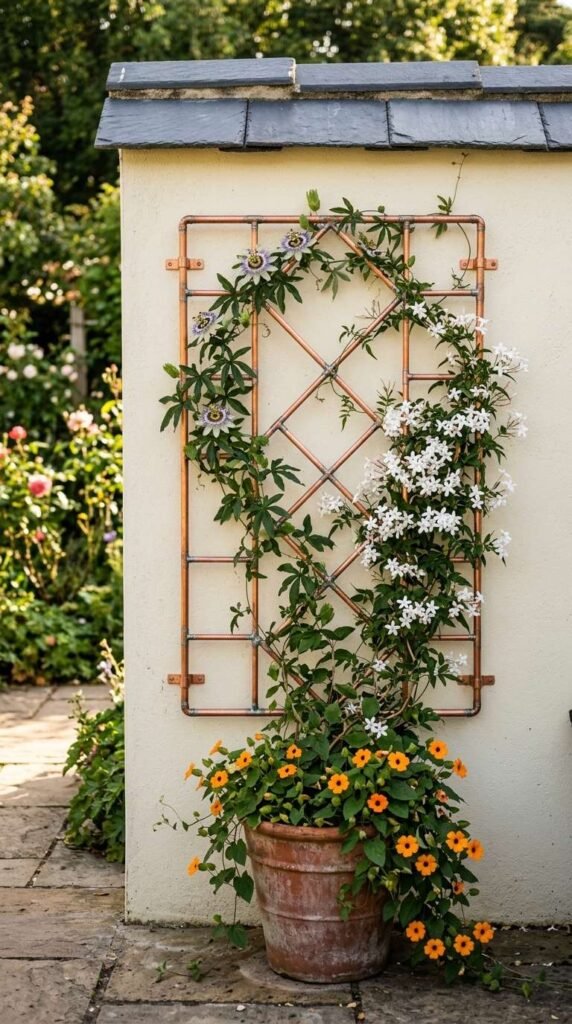
A copper pipe trellis represents one of the most sophisticated takes on rustic garden structure, sitting perfectly at the intersection between the artisan handmade aesthetic and the warmth of natural metal materials — and its beauty is compounded by the fact that it changes continuously over time, from the bright warm orange of new copper, through deeper reddish-brown tones, to the extraordinary verdigris green patina of fully weathered copper that looks as though it has been in place for a century. Few garden structures reward patience quite so richly or become more beautiful with pure neglect.
Build a simple copper pipe trellis using 15mm or 22mm diameter plumbing copper tube and compression fittings or a simple soldering iron and plumbing solder — no professional plumbing skills are required for a basic grid structure. Fix to a wall using copper pipe clips at regular intervals, or create a freestanding structure by setting the base pipes into steel ground anchors driven into a bed border. Train climbing plants through the grid using soft garden twine or thin strips of hessian rather than wire ties that can cut into stems as they thicken, and the combination of copper and climbing green will grow more beautiful together every single year.26. Pressed Flower Stepping Stones as the Most Personal Garden Path Decor
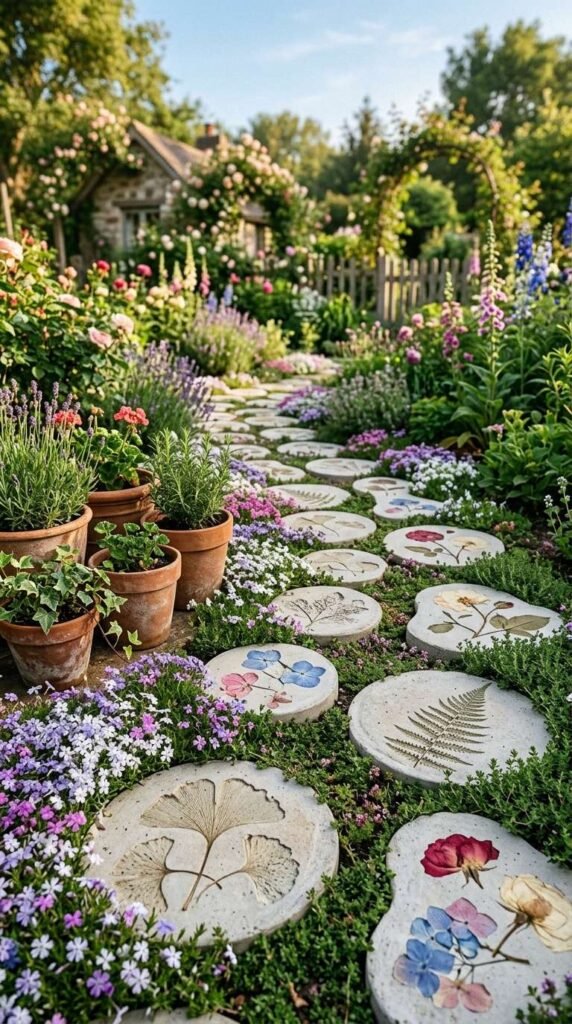
Pressed flower stepping stones are one of the most genuinely personal things you can add to a rustic garden, because unlike any purchased item, they are made by your own hands using flowers grown in your own garden — and this layering of personal meaning is what elevates them from a simple craft project into a genuine piece of garden art that has real emotional resonance every time you walk along the path they create. The botanical impressions pressed into concrete retain extraordinary detail, capturing the delicate lace of a fern frond or the perfect symmetry of a ginkgo leaf in permanent, beautiful form.
To make your own, mix concrete or hypertufa to a stiff consistency and press into a simple mould such as a cake tin or purpose-made stepping stone mould to a depth of at least 50mm. While the concrete is still soft but beginning to firm — usually between one and two hours after pouring — carefully press fresh or semi-dried botanical specimens flat into the surface and gently remove them once pressed, leaving their perfect impression behind. Allow the stones to cure fully for a minimum of 28 days before laying, and seal the surface with a concrete sealant if you want to protect the botanical impressions from weathering and extend their legibility for many years.
27. A Lantern-Lit Garden Nook for the Most Magical Outdoor Living Decor
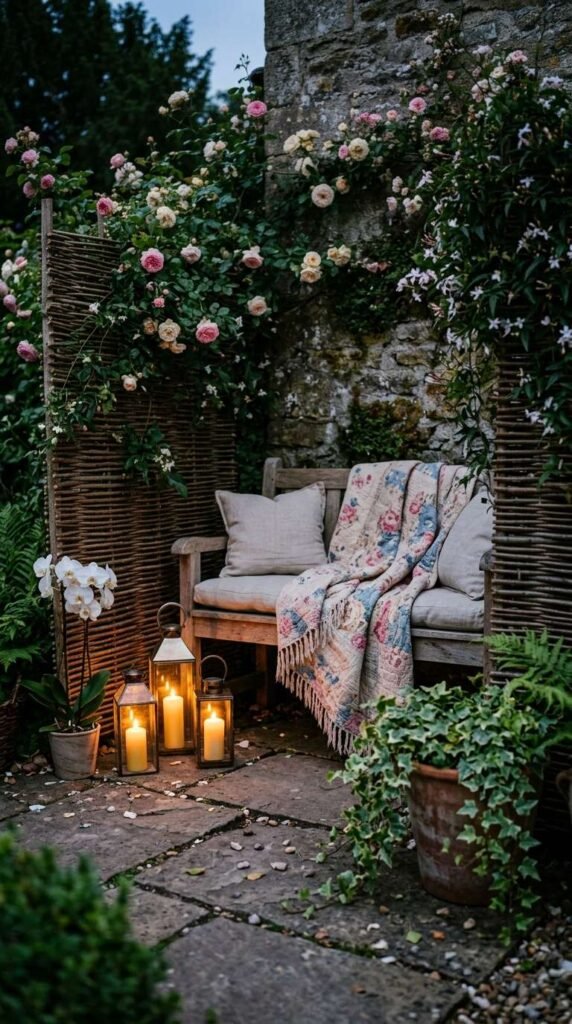
A lantern-lit garden nook fulfils the most fundamental human desire in outdoor living — to create a small, sheltered, beautifully lit space within a larger garden where you feel genuinely held and protected by your surroundings rather than simply sitting outdoors in the open air. The psychological comfort of enclosure, combined with warm candlelight and the scent of climbing jasmine or roses drifting on the evening air, creates an experience that no indoor room — however beautifully decorated — can fully replicate. This is why the garden retreat nook is consistently one of the highest-saving categories across all outdoor decor platforms.
Create the structure of your nook using natural, rustic materials — woven willow hurdles, rustic timber posts, bamboo screens, or simply the natural enclosure provided by a hedge on three sides — and keep the interior decoration deliberately simple so that the lighting and planting carry the atmosphere. Use a mix of floor lanterns, hanging lanterns, and pillar candles in a single warm tone for depth and character rather than uniform overhead lighting. String a few additional warm white fairy lights through any overhead climbing plants for a final layer of light that makes the nook feel genuinely enchanted after dark and completely unmissable as a garden evening retreat.
28. Burlap and Twine Wrapped Planters for the Simplest Rustic Garden Upgrade
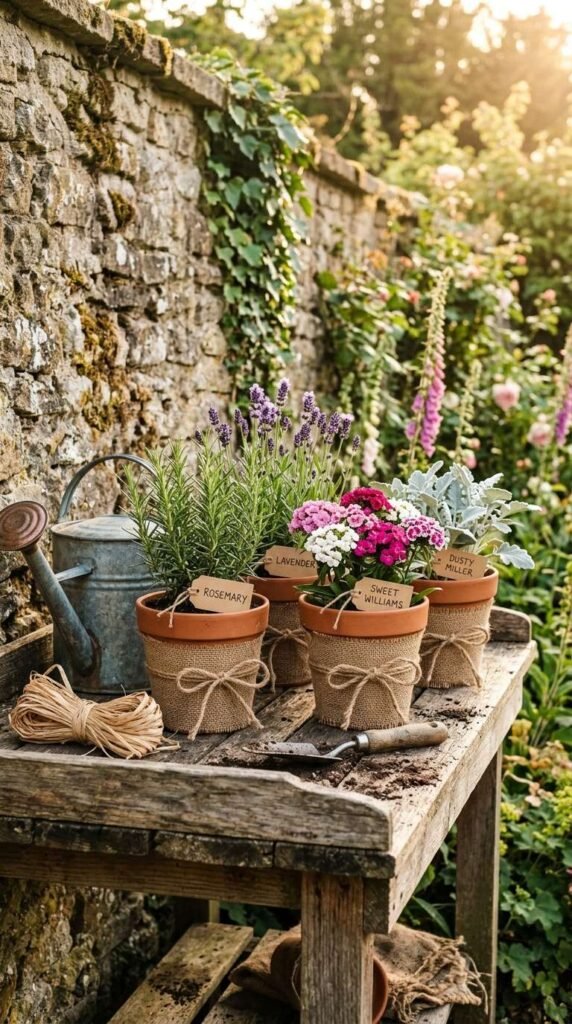
Burlap-wrapped planters are one of the most immediately effective, zero-skill upgrades in the entire toolkit of rustic garden decor because they transform the plainest, cheapest plastic or terracotta container into something that looks genuinely styled and considered in literally two minutes and with materials costing almost nothing. The rough texture and warm earthy colour of natural hessian burlap is one of those materials that seems to make everything around it look better — more organic, more curated, more warmly imperfect — and it pairs beautifully with everything from galvanized metal watering cans to painted wooden potting benches and weathered stone walls.
Cut your burlap into rectangles approximately twice the height of the pot you are wrapping and long enough to overlap by four to five inches when wrapped around the circumference, fold the top edge down by an inch to create a clean rim, then secure the whole wrap with two or three rounds of jute twine tied in a simple bow at the front. For extra detail, tuck a small sprig of dried lavender or a rosemary sprig under the twine before tying. For outdoor use in wet climates, choose waxed burlap or a synthetic hessian weave that resists rotting, which will extend the life of your wrapping significantly through the full outdoor season.
29. A Pallet Wood Vertical Garden Wall for the Ultimate Small Space Garden Decor
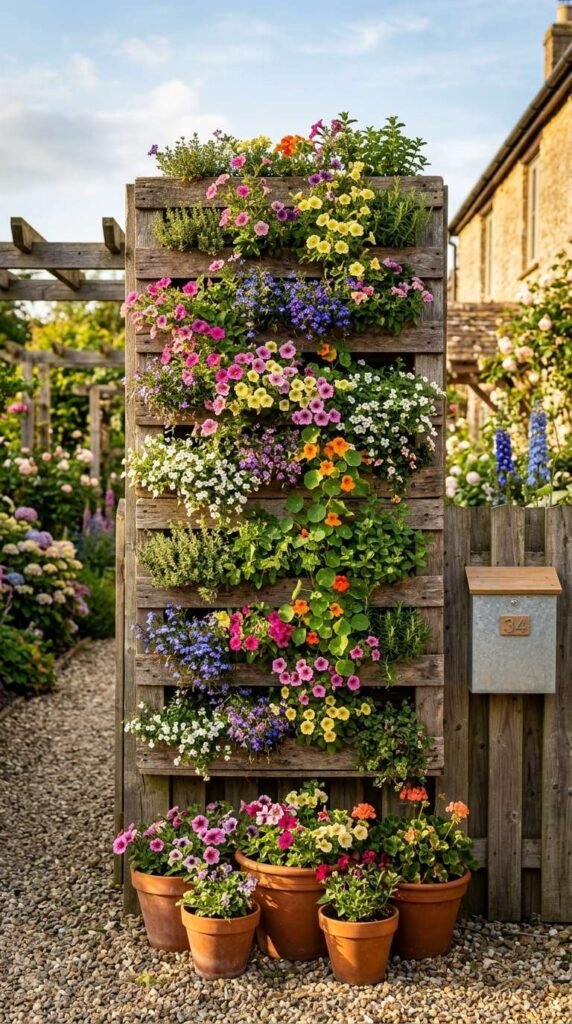
A pallet wood vertical garden is the ultimate solution for anyone who loves rustic garden decor but is working with a small courtyard, balcony, or narrow garden space where horizontal planting room is genuinely limited — because it takes the action of the garden entirely off the ground and lifts it up onto a vertical plane, creating a living wall of color and texture that dramatically increases the visual impact and planting area of any outdoor space without using a single extra square foot of floor space. The aged timber of a salvaged wooden pallet provides exactly the right farmhouse aesthetic character to make the whole display feel genuinely garden-grown rather than artificially constructed.
Source your pallets from hardware stores, garden centers, or plant nurseries that often give them away free — always choose HT-stamped pallets (heat-treated) rather than MB-stamped (methyl bromide treated) for any gardening use, as MB-treated timber contains chemical residues unsuitable for food growing or close contact with bare soil.
Line each planting pocket with landscape fabric stapled firmly in place, fill with multipurpose compost mixed with water-retaining gel crystals vertical gardens dry out significantly faster than ground-level containers and plant densely with trailing annuals or strawberries for the most productive and visually spectacular living wall display your outdoor space has ever seen.
Your garden deserves to feel like your very favourite place on earth, and these rustic garden decor ideas prove that extraordinary outdoor beauty doesn’t require a big budget or a professional designer just a little creativity, an eye for natural materials, and the confidence to let your personality shine through every pot, plank, and climbing rose.
Pick one idea that speaks to your heart and try it this weekend, even if it is as simple as wrapping a pot in burlap or hanging a mason jar lantern from a branch.
Save this pin to your garden decor board so you always have it to return to, share it with a friend who loves their garden as much as you love yours, and get outside and start creating the outdoor space of your dreams today.
Frequently Asked Questions
1. What Defines Rustic Garden Decor?
Rustic garden decor celebrates natural, weathered, and handcrafted elements like reclaimed wood, aged terracotta, wrought iron, and wild informal plantings that feel genuinely organic and unhurried. This style embraces imperfection beautifully, making it one of the most forgiving and personally expressive outdoor decorating approaches available.
2. How Do I Start Creating a Rustic Garden?
Begin by introducing two or three natural material elements like a wooden planter box, a terracotta pot cluster, or a reclaimed wood garden bench to establish the rustic foundation. Build gradually by adding climbing plants, vintage garden tools as decor, and weathered stone pathways that feel collected over time rather than installed all at once.
3. What Plants Suit a Rustic Garden Best?
Lavender, wild roses, foxglove, yarrow, sunflowers, herbs like rosemary and thyme, and climbing hydrangea all thrive beautifully within a rustic garden aesthetic. These informal, abundant, slightly wild growing plants reinforce the natural charm and unpretentious character that defines genuinely beautiful rustic outdoor spaces.
4. What Materials Work Best for Rustic Garden Decor?
Reclaimed wood, weathered terracotta, wrought iron, natural stone, galvanized metal, wicker, and aged brick are the most authentic and enduring materials for rustic garden decor. These natural materials weather gracefully outdoors and actually improve in character and beauty as they age through each passing season.
5. How Do I Add Lighting to a Rustic Garden?
String Edison bulb lights through overhead branches, hang lanterns from shepherd hooks, or place solar powered candle lanterns along pathways to create warm, magical rustic garden lighting. Warm amber bulb tones between 2200K and 2700K enhance the natural, cozy atmosphere of a rustic outdoor space most beautifully after sunset.
6. What Furniture Works Best in a Rustic Garden?
A reclaimed wood bench, wrought iron bistro table and chairs, a wooden swing, or a weathered Adirondack chair all suit a rustic garden perfectly and improve visually with outdoor exposure. Choose furniture that develops a natural patina over time rather than pieces requiring constant maintenance to retain their original appearance.
7. How Do I Create a Rustic Garden on a Budget?
Repurpose old wooden crates as planters, use mason jars as outdoor candle holders, hang vintage window frames as garden art, and source secondhand terracotta pots from thrift stores. These budget-friendly approaches actually create more authentic rustic character than expensive purpose-made garden decor pieces ever could.
8. How Do I Style a Rustic Garden Entrance?
Frame your garden entrance with a reclaimed wood or wrought iron arbor draped in climbing roses, jasmine, or wisteria for an instantly romantic and characterful first impression. Flanking the entrance with large terracotta pots overflowing with lavender or trailing ivy completes the rustic welcome beautifully and fragrantly.
9. How Do I Add Water Features to a Rustic Garden?
A moss covered stone birdbath, a galvanized metal trough water feature, or a simple reclaimed wood barrel pond all introduce the calming presence of water within a rustic garden authentically. Position your water feature where it catches dappled light and surrounded by low growing plants for the most naturally integrated and beautiful result.
10. How Do I Keep My Rustic Garden Looking Beautiful Year Round?
Plant a mix of evergreen shrubs, ornamental grasses, and seasonal flowering perennials so your rustic garden retains structure, texture, and visual interest across every season. Refreshing terracotta pot plantings seasonally and adding weather resistant lanterns and string lights ensures your outdoor space remains warm, inviting, and genuinely beautiful throughout the entire year.
Conclusion
Rustic garden decor is one of the most rewarding and genuinely personal outdoor styling approaches because it celebrates natural beauty, organic imperfection, and the kind of unhurried charm that only comes from layering real materials, abundant plants, and meaningful found objects over time. Whether you are starting from a bare patch of ground or refreshing an existing outdoor space, every reclaimed wood planter, weathered terracotta pot, climbing rose, and softly glowing lantern you introduce brings your rustic garden vision one beautiful step closer to life. The result is always an outdoor space that feels less like a styled set and more like a genuinely beloved, lived-in garden sanctuary worth spending every possible moment inside.