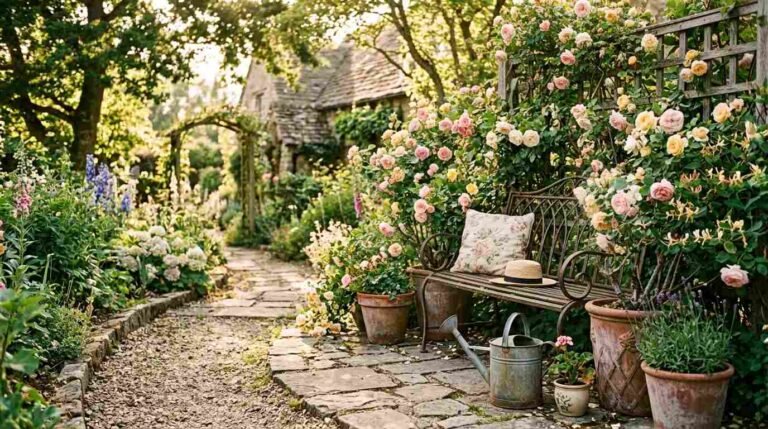
A single gravel path and a wrought iron chair can turn a tiny paved space into something that feels lifted straight from the south of France. That is the charm of good small french courtyard garden ideas — structured plantings, classic materials, and old-world details that make even a modest footprint feel elegant. From boxwood topiaries in stone urns to a wisteria-covered pergola, these ideas bring timeless European style to a compact space, and pair beautifully with our small corner garden ideas guide if you are working with an especially tight footprint. Every idea here fits a real courtyard, not just a chateau. Get ready to fall for twenty-one gorgeous ways to bring French courtyard charm home
1. A Gravel and Stone Courtyard Floor

A gravel courtyard floor brings authentic old-world texture underfoot, and its permeable surface handles rain far better than solid concrete. This flooring choice also feels distinctly French, echoing the courtyards found throughout Provence and the French countryside.
Mix pale gravel with occasional flat stone pavers for visual interest and stable walking paths. Edge the gravel with brick or stone borders to keep it neatly contained within the courtyard’s footprint.
2. A Central Stone Fountain

A stone fountain becomes the natural focal point of a small courtyard, its gentle trickling sound also masking street noise from just beyond the walls. This centerpiece feature instantly signals timeless French style, even in a very compact space.
Choose a fountain scaled to your courtyard’s actual size, since an oversized piece can overwhelm a small footprint. Position it at the courtyard’s center or along a main sightline so it remains visible from the seating area.
3. Boxwood Topiaries in Urns

Boxwood topiaries bring structured, formal greenery to a small courtyard without requiring any in-ground planting space at all. Their neat, sculptural shapes also feel distinctly French, echoing the clipped hedges found in classic European gardens, and matching stone urns are easy to find through most best home decor brands or garden specialty shops.
Place a symmetrical pair at the courtyard’s entrance or main seating area for the most formal, balanced effect. Trim the topiaries every few weeks during the growing season to keep their tidy shape looking sharp.
4. A Wrought Iron Bistro Set

A wrought iron bistro set fits comfortably into even the smallest courtyard, since its delicate, open frame takes up very little visual space. This classic furniture style also instantly signals French cafe charm wherever it is placed.
Choose a set in black or aged bronze for the most authentic, timeless look. Add a small cushion in a soft neutral tone for comfort without covering up the chair’s decorative ironwork.
5. Climbing Wisteria on a Trellis

Choosing a Sturdy Support Structure
Choose a reinforced metal or heavy cedar trellis anchored securely into the wall, since mature wisteria vines grow quite heavy over the years. Check and tighten the mounting hardware annually to make sure the structure can continue supporting the vine’s weight safely.
Wisteria brings dramatic, cascading blooms to a courtyard wall, and few plants feel more distinctly French once fully established. This climbing vine also fills vertical space beautifully in a small footprint where ground planting is limited.
Position the trellis along a sunny wall where the wisteria can climb freely without competing for light. Prune the vine each winter to control its size and encourage the fullest bloom the following spring.
6. A Herringbone Brick Pattern

A herringbone pattern brings genuine old-world craftsmanship to a courtyard floor, and its interlocking design feels far more refined than a simple straight-laid brick pathway. This classic European detail works beautifully even within a compact space.
Choose reclaimed or aged brick for the most authentic French courtyard look rather than anything uniformly new. Lay the pattern at a 45-degree angle to the walls for the most visually dynamic, traditional effect.
7. Potted Olive Trees

Olive trees bring soft, silvery foliage and genuine Mediterranean character to a small courtyard, thriving beautifully in containers even outside their native climate. Their structured, sculptural shape also adds real height without requiring in-ground planting.
Choose large terracotta pots with excellent drainage, since olive trees dislike sitting in wet soil. Position them symmetrically flanking an entrance or seating area for the most classic, balanced French courtyard look.
8. A Stone Wall Fountain

A wall fountain brings the calming sound of water to a courtyard without using any valuable floor space, mounting directly onto an existing vertical surface. This space-saving feature works especially well in the smallest of courtyards.
Choose a fountain in aged or carved stone for the most authentic French character. Let climbing ivy or jasmine grow around the fixture’s edges to soften its formal lines naturally over time.
9. A French Lavender Border

French lavender brings fragrance, color, and genuine regional authenticity to a courtyard border, filling the air with scent every time someone brushes past. This classic planting also attracts pollinators, adding gentle movement to the space.
Plant lavender along the sunniest edge of the courtyard, since it needs strong light to bloom fully. Trim spent blooms regularly throughout summer to encourage a longer flowering season.
10. A Wrought Iron Gate Entrance

A wrought iron gate signals the courtyard’s entrance with real old-world elegance, and its open scrollwork lets glimpses of the garden beyond peek through before visitors even step inside. This architectural detail instantly elevates the whole space’s character.
Choose a gate with detailed scrollwork rather than plain bars for the most authentic French style. Train climbing roses or jasmine through the ironwork for an even more romantic, storybook entrance.
11. Espaliered Fruit Trees

Choosing the Right Tree Variety
Apple, pear, and fig trees all respond especially well to espalier training, tolerating the regular pruning this technique requires. Choose a variety suited to your climate and be patient, since a full espalier pattern typically takes several years to fully train.
Espaliered trees bring structured, sculptural greenery to a courtyard wall while producing real fruit in a footprint that would otherwise stay empty. This centuries-old French technique also turns a plain wall into a genuine garden feature.
Train branches along horizontal wires attached to the wall, pruning regularly to maintain the flat, structured pattern. Position the tree along a sunny wall for the best fruit production over time.
12. A Small Reflecting Pool

A reflecting pool brings a sense of calm formality to a courtyard, its still surface doubling the visual space by mirroring the sky and surrounding greenery. This classic French garden feature works beautifully even at a very small scale.
Keep the pool simple and rectangular for the most formal, traditional look rather than anything overly organic in shape. Position it along the courtyard’s main sightline so the reflection is visible from the primary seating area.
13. A Terracotta Pot Collection

Terracotta pots bring warm, earthy color and genuine regional character to a courtyard, and their naturally aged patina only improves the longer they stay outdoors. This classic material feels distinctly tied to French and Mediterranean garden traditions.
Group pots of varying sizes together along a wall or entrance for a collected, layered look. Choose geraniums or herbs that thrive in containers and echo the warm, sun-soaked feeling of a true French courtyard.
14. A Vine-Covered Pergola

A vine-covered pergola provides genuine shade and shelter in a small courtyard while adding real vertical greenery overhead. Grapevines especially bring an authentic French countryside feeling, evoking classic outdoor dining beneath a leafy canopy.
Position the pergola directly above the main seating area so it provides functional shade during warm afternoons. Train grapevines or climbing roses along the beams as they grow for the fullest overhead coverage.
15. Antique Stone Urns

Stone urns bring sculptural, aged elegance to a courtyard entrance or seating area, and their weathered surface only deepens in character with each passing season. This classic French garden element instantly elevates even a modest space.
Place urns symmetrically flanking a doorway or main path for the most formal, balanced effect. Fill them with a mix of upright and trailing plants for a full, romantic display that echoes traditional French style.
16. A Cafe-Style Seating Nook

A cafe-style nook brings the relaxed charm of a French sidewalk cafe into a private courtyard, creating a genuine destination for morning coffee or afternoon wine. This compact seating arrangement fits comfortably into even the tightest corner.
Choose a small round table with a marble or stone top for the most authentic cafe feel. Pair it with lightweight chairs that can be easily moved or stored, keeping the nook flexible for different uses.
17. A Boxwood Parterre Design

A boxwood parterre brings classic French formal garden design to even a small courtyard, using clipped hedges to create structured, symmetrical patterns. This centuries-old technique instantly signals refined, intentional garden design.
Keep the parterre pattern simple, like a basic square or diamond shape, for a small space rather than an overly intricate design. Fill the compartments with a single flower color for the most elegant, cohesive look.
18. A Weathered Stone Bench

A stone bench offers genuine, durable seating that only grows more beautiful as it weathers naturally over time. This classic material also feels distinctly French, echoing the garden furniture found throughout historic European courtyards.
Position the bench along a shaded wall where climbing vines can frame the seating area naturally. Choose a bench in aged or reclaimed stone for the most authentic, timeworn character.
19. A Rose-Covered Trellis Wall

A rose-covered trellis turns a plain courtyard wall into a romantic, fragrant focal point, especially once the climbing variety fills in fully over a season or two. This vertical greenery also adds real softness to an otherwise hard, paved space.
Choose a repeat-blooming climbing rose variety so the wall stays colorful throughout more of the growing season. Train new canes gently along the trellis structure as they grow rather than letting them sprawl unsupported.
20. A Central Gravel Circle with Topiary

A gravel circle with a single topiary at its center creates a clear, formal focal point that organizes the entire courtyard layout around it. This classic French garden technique brings structure and symmetry even to a very compact space.
Choose a single, well-shaped topiary as the circle’s centerpiece rather than a busy grouping of plants. Radiate stone pavers or gravel paths outward from the circle for a cohesive, intentional overall design.
21. French Doors Opening to the Courtyard

French doors create a seamless visual and physical connection between indoor living space and the courtyard beyond, making both areas feel larger as a result. This classic architectural feature also floods interior rooms with natural light throughout the day.
Choose doors with multiple glass panes for the most traditional French look rather than a single large pane. Flank the doorway with matching potted plants so the transition between indoors and outdoors feels intentional and cohesive.
FAQS
1. What defines a French courtyard garden style?
This style blends formal structure with romantic, natural touches like gravel paths, potted lavender, and wrought iron furniture. It feels elegant yet relaxed at the same time.
2. What flooring works best in a small courtyard?
Gravel or crushed stone paths are classic choices, often paired with reclaimed stone pavers. This combination adds texture while keeping the space feeling open and airy.
3. What plants suit a French courtyard garden?
Lavender, boxwood, and climbing roses all capture the romantic, structured feel of this style. Potted herbs like rosemary and thyme add both beauty and practicality.
4. What furniture fits a small French courtyard?
A wrought iron bistro set or a small weathered bench works beautifully in tight spaces. These pieces add classic French charm without overwhelming the courtyard.
5. How do I add structure to a small courtyard garden?
Clipped boxwood hedges or symmetrical potted plants create a sense of formal order. Even in a small space, this structured approach adds an elegant, intentional feel.
6. Can a small courtyard still feel private?
Yes, tall potted plants, a trellis with climbing vines, or a simple lattice screen all add privacy. These elements enclose the space without requiring major construction.
7. What water features suit a small French courtyard?
A small tiered fountain or a simple stone birdbath both fit the style well. The gentle sound of water adds a peaceful, romantic touch to the space.
8. What lighting works in a French courtyard garden?
Wrought iron lanterns or string lights draped overhead add a warm, romantic glow in the evening. Choose fixtures with an aged or matte black finish for authenticity.
9. How do I keep a small courtyard from feeling cluttered?
Stick to a few key elements, like one seating area, a water feature, and structured plantings, rather than filling every inch. Simplicity keeps the space feeling elegant.
10. Is this style high maintenance to keep up?
Boxwood and lavender require occasional trimming, but overall the style is relatively low maintenance once established. Gravel paths also need little upkeep compared to grass.
Conclusion
A small French courtyard garden brings together elegance and romance in a way that feels timeless and inviting. Gravel paths, potted lavender, and a wrought iron bistro set go a long way toward capturing that classic charm. Start with one element, like a small fountain or a few clipped boxwoods, and let the rest of the courtyard come together naturally. Try one idea this season and bring a touch of French elegance into your outdoor space.