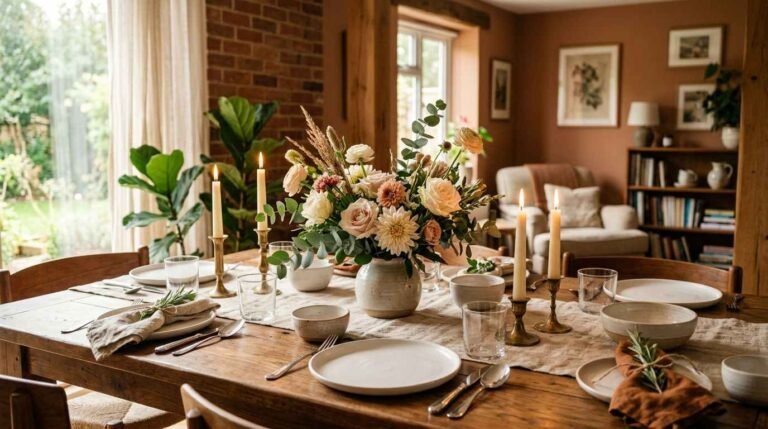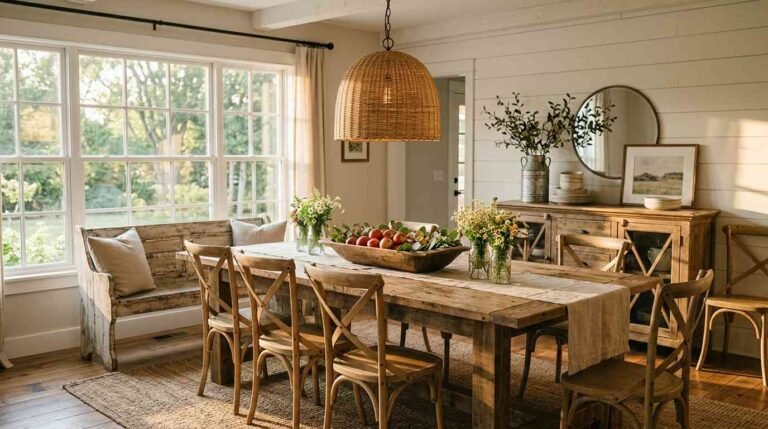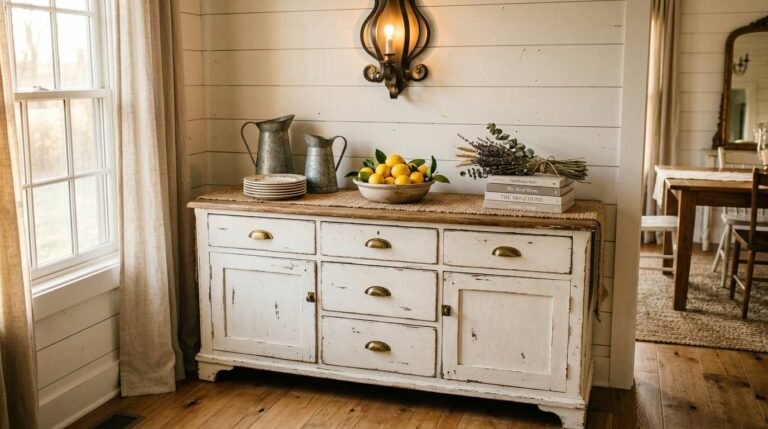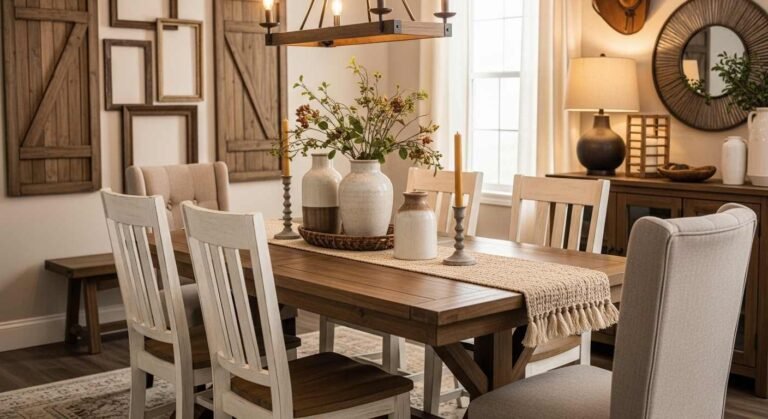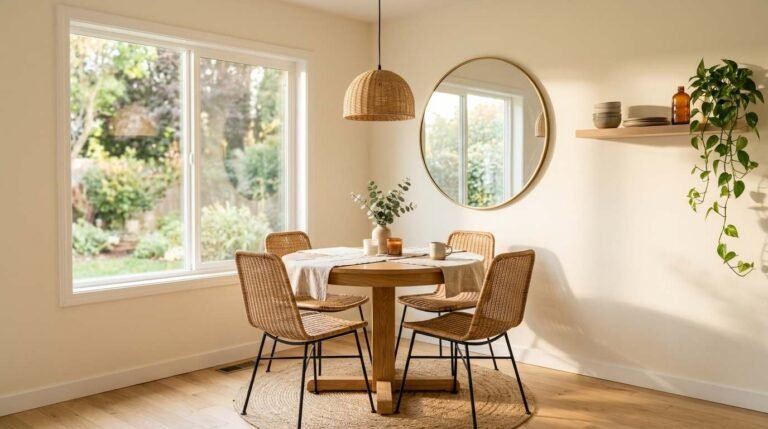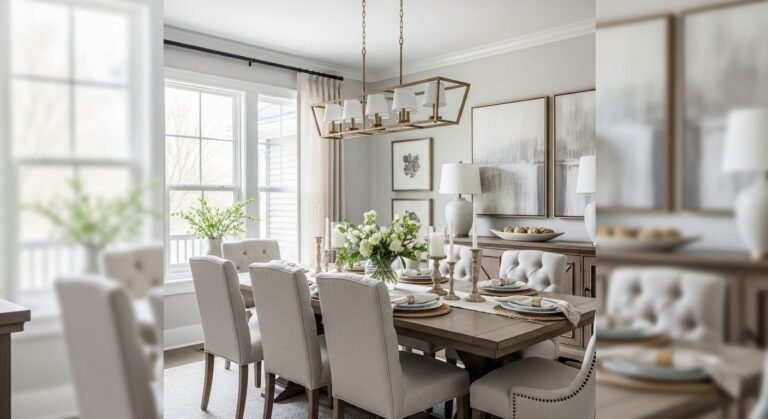
A single blank wall can make an entire dining room feel unfinished, no matter how beautiful the table below it looks. That is why good dining room decor wall art matters so much — the right piece pulls the whole room together and gives your eye somewhere beautiful to land. From a bold gallery wall to a soft watercolor print, these ideas mix scale, texture, and color for real visual impact, in the same spirit that a good french country dining room decor scheme leans on collected, layered pieces. Every idea here works for real rooms, not just showroom photos. Get ready to steal twenty-three gorgeous ways to dress up your dining room walls.
1. A Large-Scale Abstract Canvas
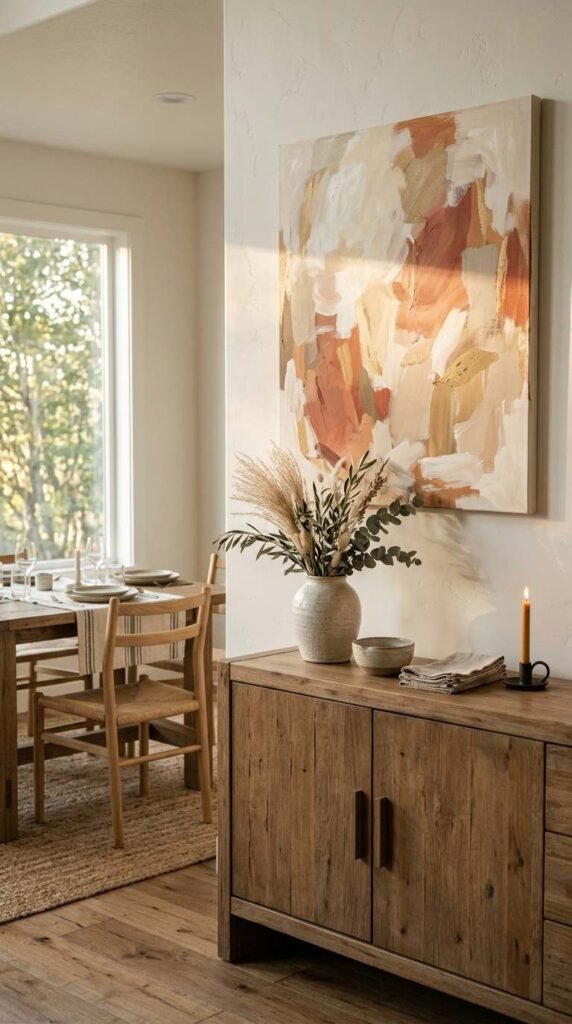
A large-scale abstract canvas solves the problem every big dining wall eventually faces: too much empty space and not enough impact. Instead of scattering several smaller pieces, one oversized canvas fills the area confidently, becoming the room’s clear focal point the moment someone walks in. Abstract designs work particularly well here since they add color and movement without depicting anything literal that could feel dated in a few years. Among stunning dining room decor wall art ideas, this option remains a favorite because it delivers maximum visual impact for a single, straightforward purchase and installation.
Choosing colors that echo something else in the room ties the whole space together effortlessly. In my experience, picking a canvas with at least one tone that matches your chairs, rug, or even a single accent pillow creates a cohesive look without needing to plan an entire palette around the art. Scale matters just as much as color, since a canvas spanning roughly two-thirds the width of the table below feels proportional rather than lost or overwhelming. This balance of bold color and correct sizing is what makes a single abstract piece feel genuinely intentional.
2. A Botanical Print Gallery Wall
Balancing Frame Sizes
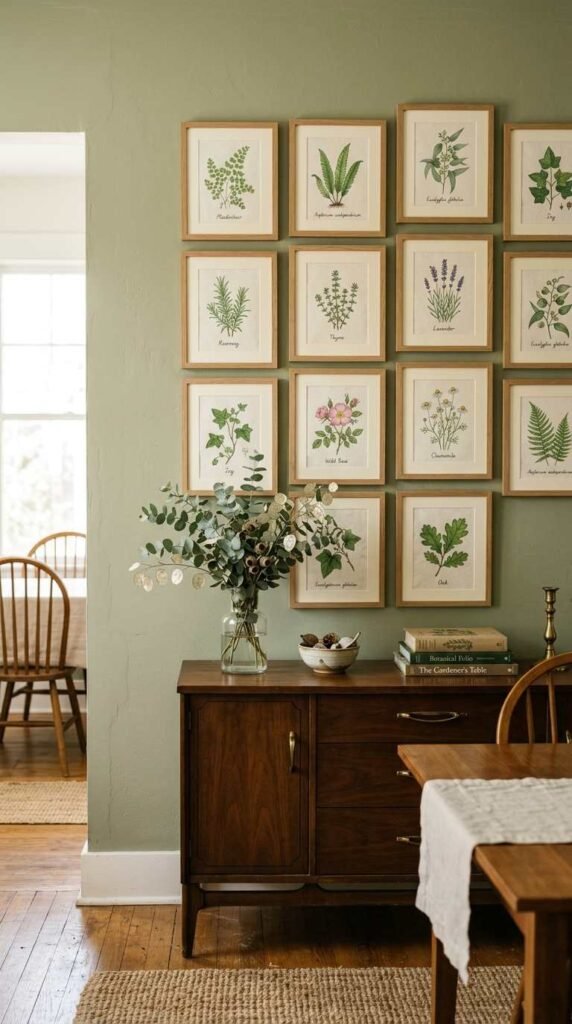
A gallery wall built entirely from botanical prints brings a soft, natural energy into a dining room without needing real plants or a bold splash of color. Arranged in a tidy grid, these prints create a cohesive collection that feels intentional rather than randomly assembled. This approach fits beautifully among stunning dining room decor wall art ideas for anyone who wants detail and personality without committing to one dominant statement piece. Because each print is small, the overall cost stays low, even when covering a fairly large section of wall with several individual frames.
Consistency across the collection is what keeps a botanical gallery wall looking polished. Sticking to one frame color and a similar illustration style, whether that’s line drawings, watercolor, or pressed leaf designs, prevents the wall from feeling mismatched or cluttered. I’ve noticed that leaving two to three inches of even spacing between each frame creates the cleanest, most gallery-like effect. This small grid of greenery-inspired art suits both traditional and modern dining rooms, adapting easily to whatever color palette already exists in the surrounding furniture and walls.
When building a botanical grid, keep every frame the same size rather than mixing dimensions, since uniformity is what makes this particular layout feel clean and organized. A grid of frames around 8 by 10 inches works well for most dining walls, filling enough space to feel substantial without overwhelming a smaller room. I’ve seen mismatched sizes work for eclectic gallery walls elsewhere, but botanical grids specifically benefit from this stricter, more uniform structure.
3. A Vintage Mirror Cluster
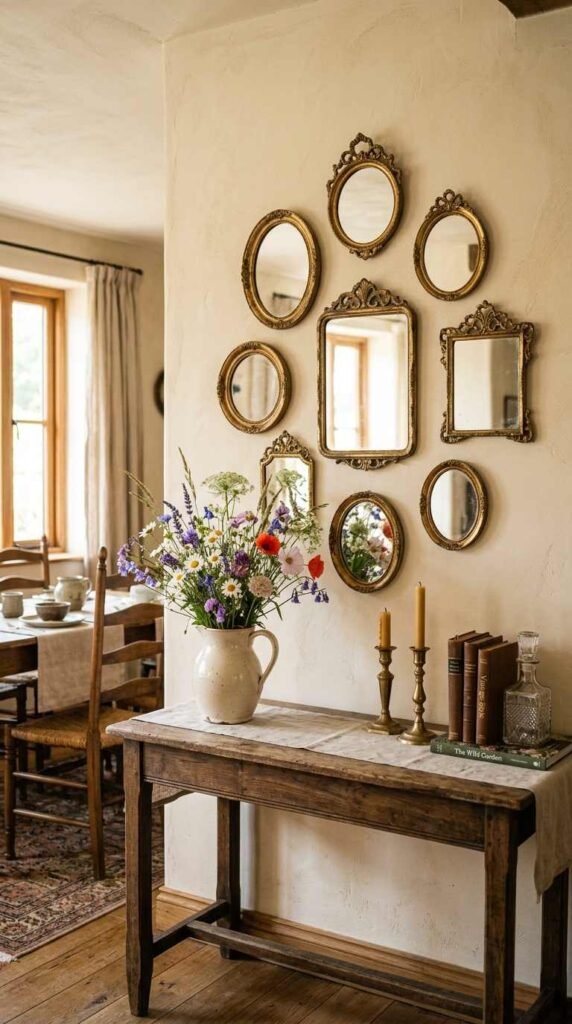
A cluster of vintage mirrors brings a sense of character to a dining room that new, matching decor rarely achieves. Because each mirror comes from a different source, with its own frame shape and finish, the collection naturally feels collected over time rather than purchased all at once. This eclectic quality is exactly what makes vintage mirror clusters stand out among stunning dining room decor wall art ideas, especially for anyone drawn to a more layered, storied look rather than a clean, uniform gallery wall. Thrift stores and estate sales remain excellent, affordable sources for finding these unique pieces.
Light plays a major role in why this idea works so well in practice. As sunlight moves across the room throughout the day, each mirror catches and reflects it slightly differently, creating small, shifting bursts of brightness rather than one static beam. I’ve tried this arrangement above a console table, and the varied frame heights and shapes made the whole wall feel dynamic rather than static. That’s why many designers recommend hanging the largest mirror slightly off-center first, then building smaller ones around it in a loose, organic pattern for the most natural, collected look.
4. A Woven Wall Hanging
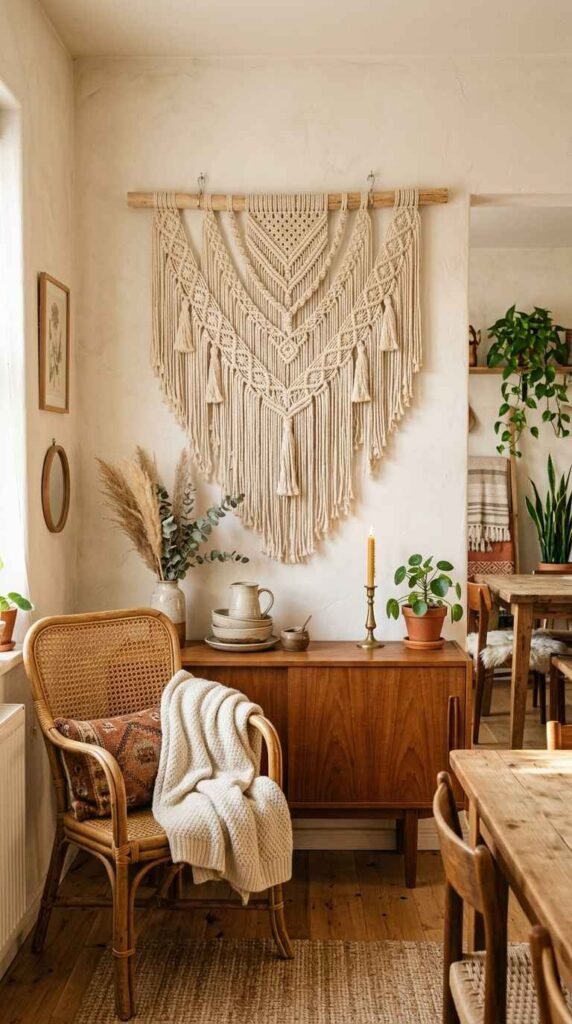
A woven wall hanging introduces texture into a dining room in a way flat, framed pieces simply cannot match. The natural fibers, fringe, and slightly irregular weave add warmth and softness, especially useful in rooms filled with hard surfaces like wood tables, tile, or glass. This tactile quality is part of why woven pieces appear so often among stunning dining room decor wall art ideas for anyone wanting a softer, more organic feel. Unlike a canvas or framed print, the hanging’s texture changes subtly depending on the light in the room, adding quiet visual interest throughout the day.
Choosing the right scale keeps this piece looking balanced rather than overwhelming a smaller wall. A medium-sized hanging, roughly two to three feet wide, suits most standard dining walls without dominating the space the way a large tapestry might. I’ve noticed that pairing a woven piece with simple, unfussy furniture nearby lets its texture become the room’s main visual interest without competing for attention. Because it’s lightweight, hanging one requires only a small nail or hook, making this one of the easiest wall art projects on this entire list to complete.
5. Framed Black and White Photography
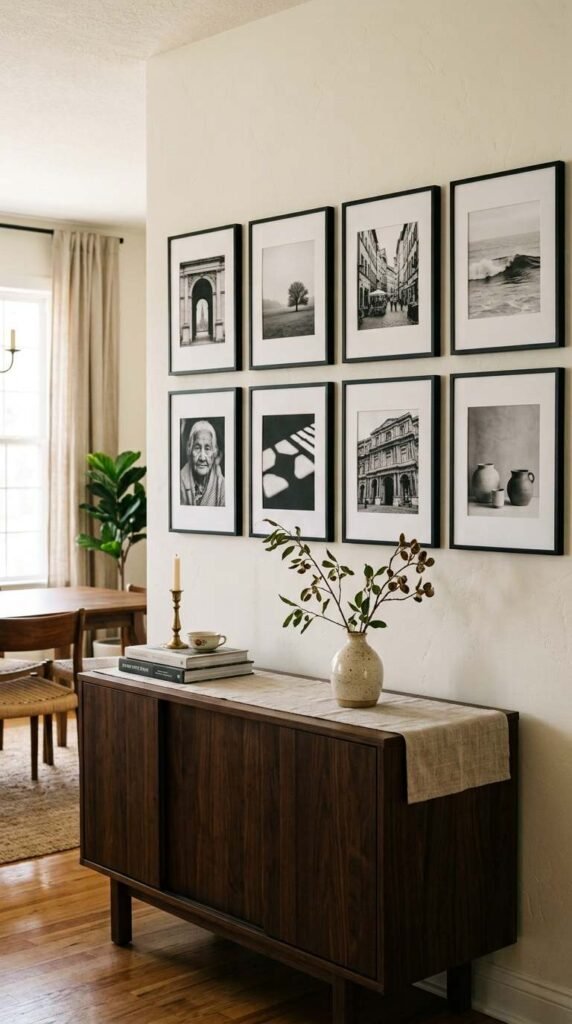
Black and white photography brings a timeless quality to a dining wall that colorful art sometimes struggles to achieve. Because there’s no color to clash with existing furniture or wall paint, these prints slot easily into almost any room, whether the surrounding style is modern, traditional, or somewhere in between. This flexibility is exactly why black and white photography remains one of the most dependable stunning dining room decor wall art ideas across different design styles. Whether the images show landscapes, architecture, or personal family moments, the monochrome palette keeps the overall look cohesive and calm.
Framing choices matter more than people initially expect with this style. Thin black or white frames tend to suit the photography best, letting the images themselves carry all the visual weight without competing framing details. I’ve noticed that arranging three or five photos in a clean horizontal row, spaced evenly, creates a more sophisticated look than a scattered, mismatched arrangement. This straightforward, structured approach suits dining rooms particularly well, since the space benefits from a calm, orderly feel rather than a busier, more eclectic gallery wall layout.
6. An Oversized Statement Clock
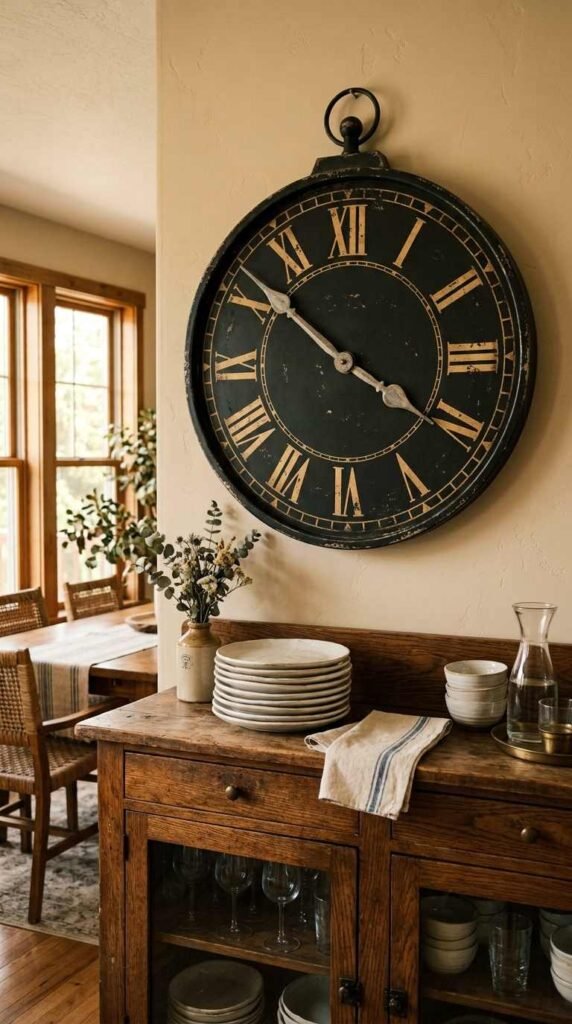
An oversized clock offers something most wall art cannot: real, everyday usefulness alongside its decorative impact. Mounted above a sideboard, its large scale fills wall space confidently, working similarly to a piece of art while still telling time throughout the day. This dual purpose makes an oversized clock a smart addition among stunning dining room decor wall art ideas, particularly for anyone who wants their wall decor to serve a genuine function rather than existing purely for visual interest. Wood, metal, or a simple painted face all suit this look, depending on the room’s existing material palette.
Sizing the clock correctly determines whether it reads as a bold statement or an oddly placed accessory. A clock roughly 24 to 30 inches in diameter tends to work well above standard-sized sideboards, filling the space proportionally without overwhelming the furniture beneath it. I’ve seen this idea used successfully in both farmhouse and modern dining rooms, proving that a well-chosen clock face adapts to nearly any style. This single, functional piece often becomes a genuine focal point, especially in rooms where the rest of the wall decor stays intentionally simple and understated.
7. A Landscape Oil Painting
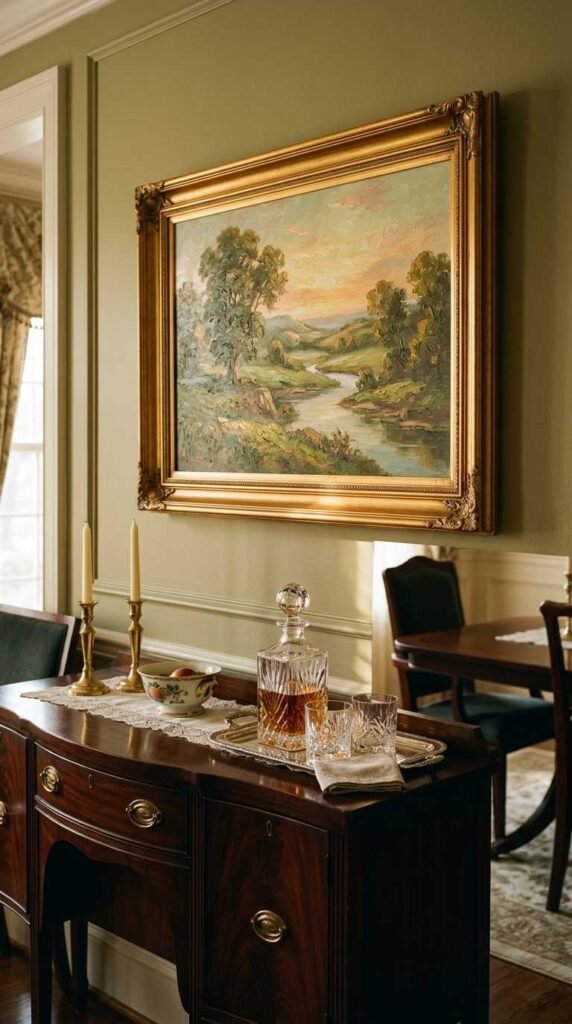
A landscape oil painting brings a sense of quiet sophistication that few other art styles can match. The visible texture of brushstrokes adds depth to the piece, creating something that feels layered and rich rather than flat or purely decorative. This classic quality makes landscape paintings a lasting choice among stunning dining room decor wall art ideas, especially for traditional or transitional spaces where softer, more organic imagery suits the room better than bold abstract shapes. Whether the scene shows rolling hills, a quiet forest, or a coastal view, this style adds warmth without pulling focus away from the table itself.
Choosing a painting with tones that echo the room’s existing palette helps it feel like a natural fit rather than an unrelated addition. In my experience, muted, earthy colors tend to work best in dining rooms, since they complement wood furniture and warm lighting far more easily than bright, saturated hues. A substantial frame, rather than a thin modern one, also suits this style, adding to the painting’s traditional character. This combination of texture, color, and framing gives a landscape painting genuine staying power in a room’s overall design.
8. Framed Fabric Swatches
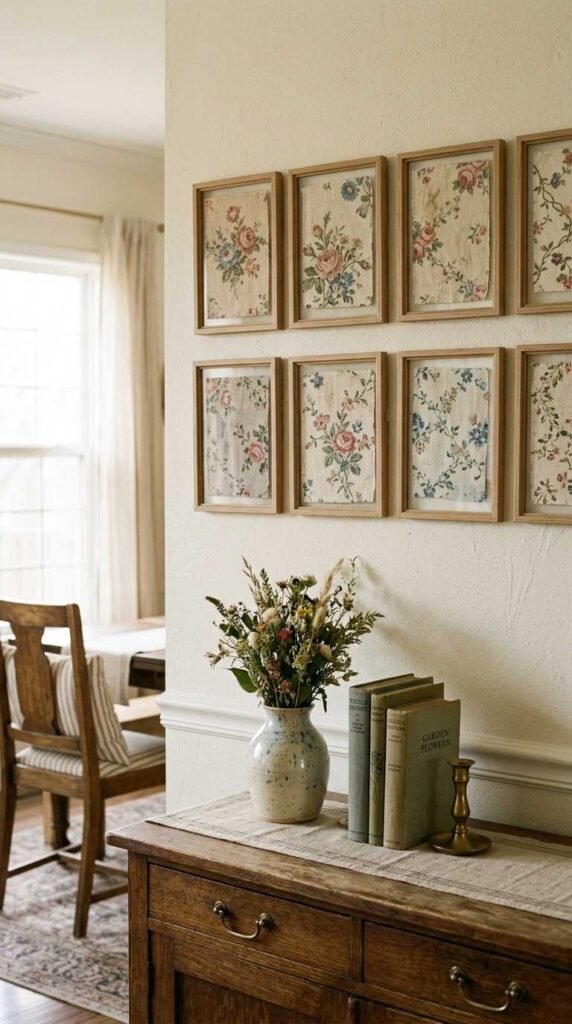
Framed fabric swatches turn an often-overlooked material into genuine wall art, adding texture and pattern in a way flat prints simply cannot replicate. Fabric remnants, whether patterned, woven, or textured, gain new life once matted and framed, creating a tactile display that catches light differently than a printed canvas would. This creative, budget-conscious approach fits neatly among stunning dining room decor wall art ideas for anyone wanting a unique, one-of-a-kind display without spending on traditional artwork. Because fabric swatches are often inexpensive or even leftover from other projects, this idea costs remarkably little to put together.
Coordinating colors across each framed swatch keeps the arrangement feeling intentional rather than like scraps randomly assembled. I’ve noticed that choosing fabrics within the same general color family, even if patterns vary slightly, creates a cohesive look similar to a curated textile collection. Uniform frame sizes and consistent matting also help tie everything together into one unified grid. This idea works particularly well for anyone who sews or has access to fabric samples, turning what might otherwise be discarded material into a genuinely thoughtful piece of dining room decor.
9. Sculptural Metal Wall Art
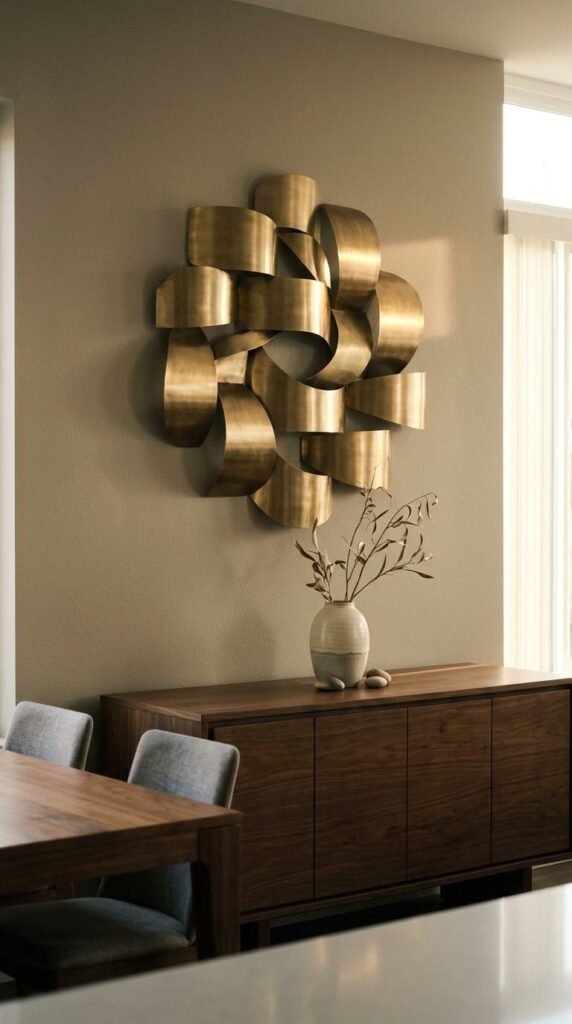
Sculptural metal wall art brings genuine dimension into a space that flat prints and canvases simply cannot achieve. Because the piece extends slightly off the wall, it casts soft shadows that shift subtly as natural light moves throughout the day, adding a quiet, ever-changing quality to the room. This dimensional quality makes metal sculptures a standout choice among stunning dining room decor wall art ideas for anyone wanting something bolder and more textural than traditional framed art. Brushed bronze, matte black, or warm gold finishes all suit different dining room palettes depending on the room’s existing materials.
Placement matters significantly with this style of art, since the piece needs enough open wall space to be appreciated fully. I’ve noticed that sculptural metal art works best when nothing else competes nearby, letting its shape and shadow become the wall’s sole point of interest. Choosing a finish that complements existing metal accents in the room, like chair legs or light fixtures, helps tie the piece into the space’s overall material story. This cohesive approach keeps a bold sculptural choice from feeling disconnected from the rest of the room’s design.
10. Watercolor Floral Prints
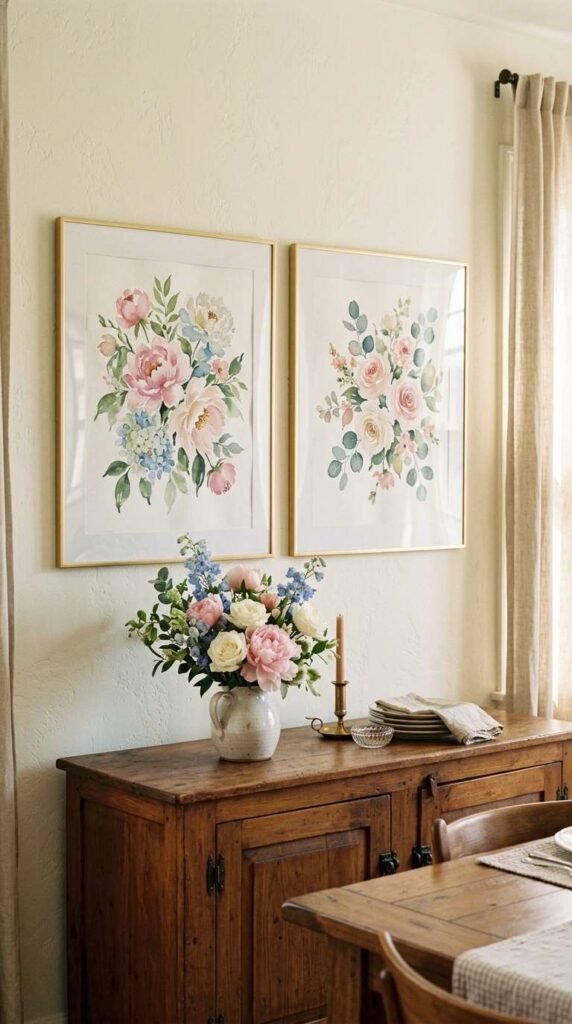
Watercolor floral prints bring a quiet kind of charm that instantly softens a dining room’s atmosphere. I’ve noticed that homeowners often overlook florals because they assume they look too traditional, but modern watercolor styles feel completely different — loose brushstrokes, subtle color washes, and minimal detailing give them a fresh, contemporary edge. They work especially well in dining rooms with lots of natural light, since the soft hues reflect beautifully throughout the day. Whether hung as a single statement piece or grouped in a small cluster, watercolor florals create a welcoming, lived-in warmth that feels effortless rather than overly decorated.
If you’re aiming for dining room decor wall art ideas that feel timeless yet easy to update, watercolor florals are a smart starting point. They’re versatile enough to transition between seasons — lighter blooms for spring and summer, deeper tones for fall and winter — without requiring a full redesign. In my experience, this flexibility makes them a favorite among people who like refreshing their space without spending much. Pair them with simple frames and neutral walls to let the artwork remain the focal point, and you’ll notice the entire room feels more curated and intentional.
11. A Wallpaper Mural Accent
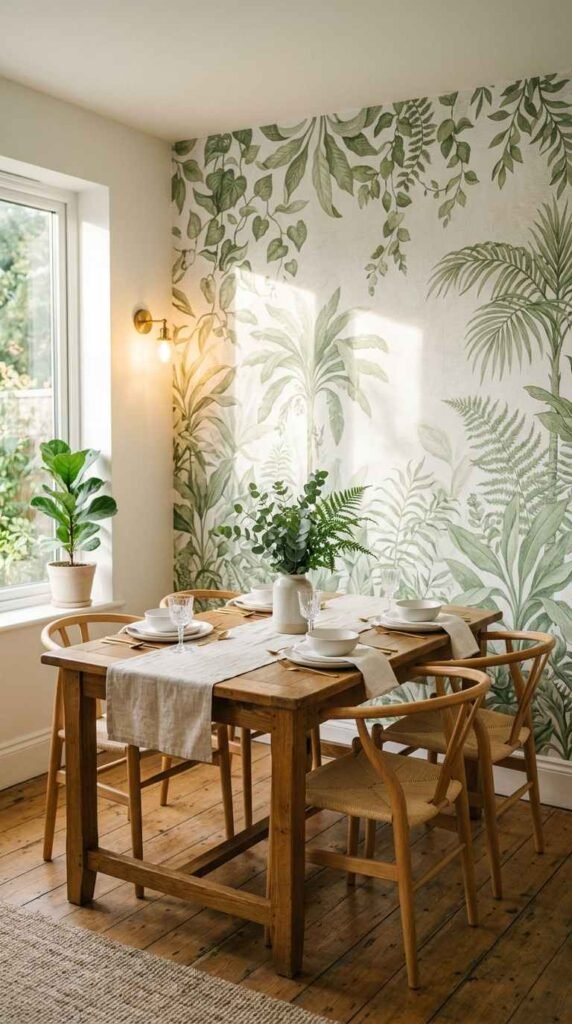
A wallpaper mural accent works like a piece of art that covers the entire wall, and it tends to make the strongest first impression in any dining space. I’ve seen this work well in smaller dining rooms especially, where a bold mural creates the illusion of depth rather than making the space feel cramped. Unlike traditional framed art, a mural doesn’t compete with other decor — it becomes the backdrop that everything else is styled around. Choosing a pattern with movement, like botanical leaves or abstract brushwork, adds richness to the room while keeping the rest of the furniture simple and uncluttered.
This approach is ideal for anyone who wants a dramatic transformation without hanging dozens of individual pieces. Murals immediately set the personality of the room, whether that’s moody and elegant or bright and playful. That’s why many designers recommend starting with the mural first and building the rest of the dining room decor wall art ideas around its color story. Once the mural is in place, minimal styling is needed elsewhere — a few simple frames or a mirror is often enough. The result feels intentional, high-end, and surprisingly easy to maintain over time.
12. A Ceramic Plate Wall Display
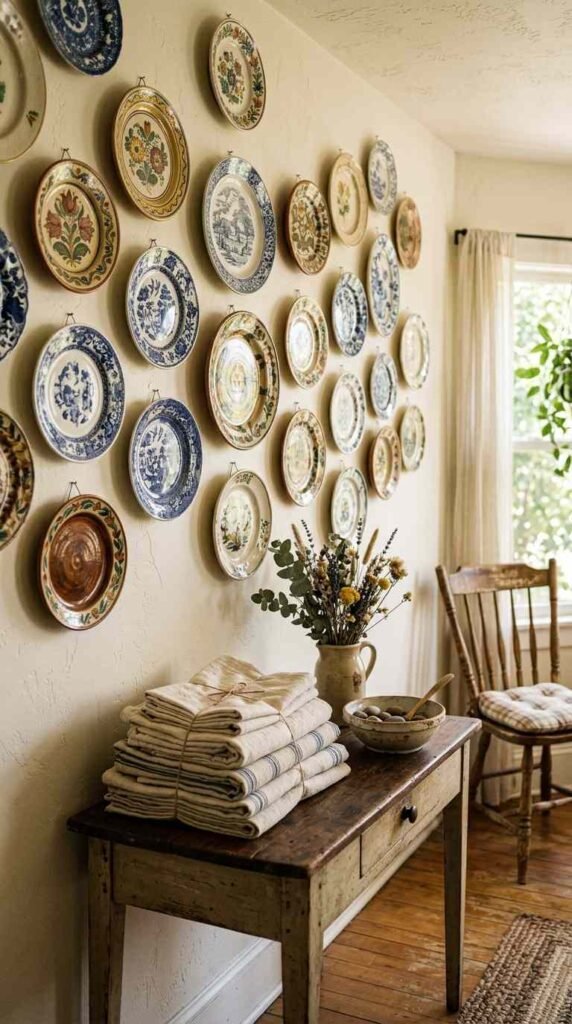
A ceramic plate wall display brings a collected, storytelling quality that flat art simply can’t replicate. Each plate carries its own pattern, texture, and history, which makes the wall feel personal rather than store-bought. I’ve noticed that this style works particularly well for dining rooms because it echoes the idea of gathering and sharing meals, tying the wall decor directly to the room’s purpose. Mixing different plate sizes and slightly varying tones keeps the arrangement visually interesting without looking mismatched, especially when hung using a loose, organic pattern instead of a strict grid layout.
This idea is especially rewarding for anyone who already owns vintage or inherited plates, since it turns sentimental pieces into functional decor. Start with a few plates and build outward gradually, allowing the display to grow naturally over time. Many homeowners find that this method feels less intimidating than committing to one large art piece right away. The layered, textured look adds warmth to the dining room while staying budget-friendly, making it one of the more approachable dining room decor wall art ideas for those who want charm without a big upfront investment.
13. Vintage Map Art
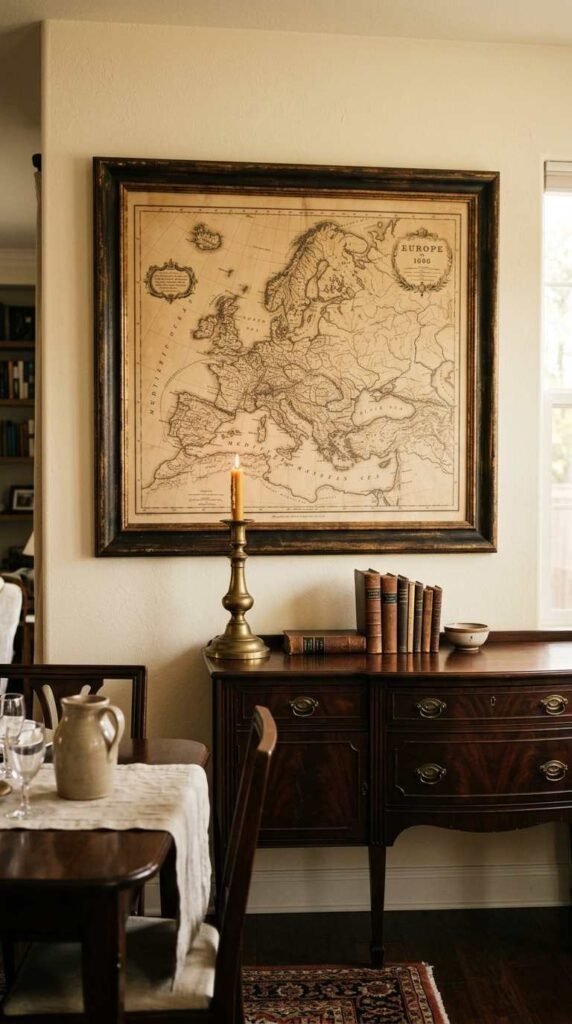
Vintage map art carries a quiet sophistication that feels both personal and worldly at the same time. I’ve noticed that homeowners who love travel or have strong ties to a particular city often gravitate toward this option, since it lets them display something meaningful rather than purely decorative. The aged, sepia tones work especially well against darker wall colors, creating contrast that makes the artwork stand out without feeling harsh. Framed properly, a map instantly adds depth and warmth to a dining room, especially one that leans traditional, vintage, or slightly formal in its overall styling.
What makes vintage map art so versatile is how easily it adapts to different dining room sizes and layouts. A single oversized map can anchor a large wall, while smaller antique maps work well grouped together for a gallery-style display. In my experience, this idea resonates most with people who want their walls to tell a story rather than simply fill space. Choosing a map tied to a hometown, honeymoon destination, or favorite city turns the piece into something guests will genuinely want to ask about during dinner.
14. Line Drawing Portraits
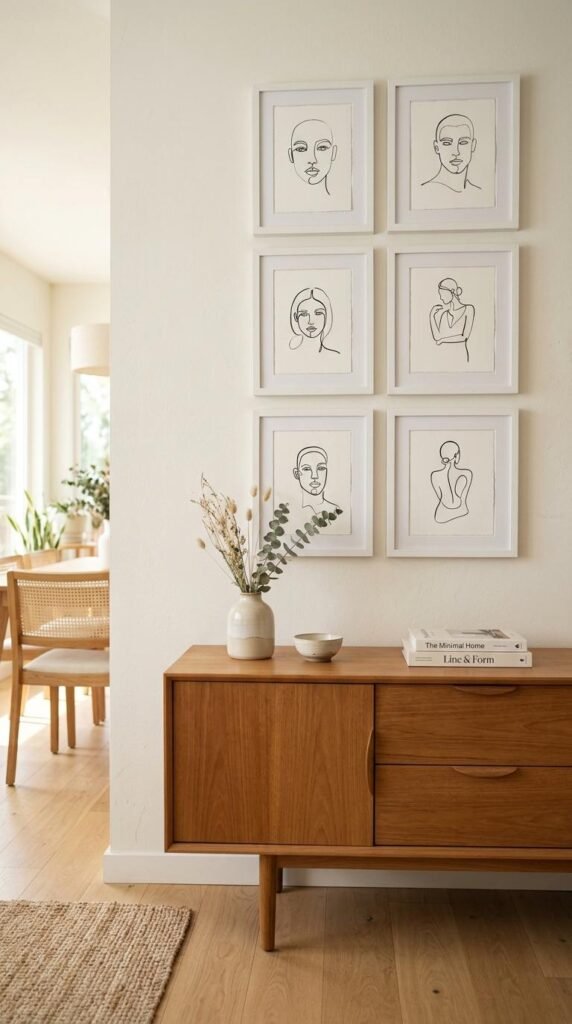
Line drawing portraits bring a refined simplicity that suits dining rooms designed around clean, modern aesthetics. The minimal linework draws the eye without overwhelming the senses, which makes it a favorite among people who prefer subtle over bold. I’ve seen this work well in dining rooms with lighter color palettes, since the black-and-white contrast becomes the main visual interest rather than competing with busy patterns elsewhere. Hung in a simple row or a loose cluster, these portraits give the wall a curated, gallery-like feel that still feels approachable and warm rather than cold or overly formal.
This style is particularly appealing for anyone who wants artwork that feels contemporary but timeless at once. Unlike trend-driven decor, line drawings tend to stay relevant regardless of shifting design trends. That’s why many designers recommend this option for dining rooms meant to feel effortlessly stylish for years to come. Choosing frames in matte black or natural wood keeps the look cohesive, while varying the size and spacing of each portrait adds subtle rhythm to the wall. The result feels intentional, artistic, and quietly sophisticated.
15. A Textile Tapestry Hanging
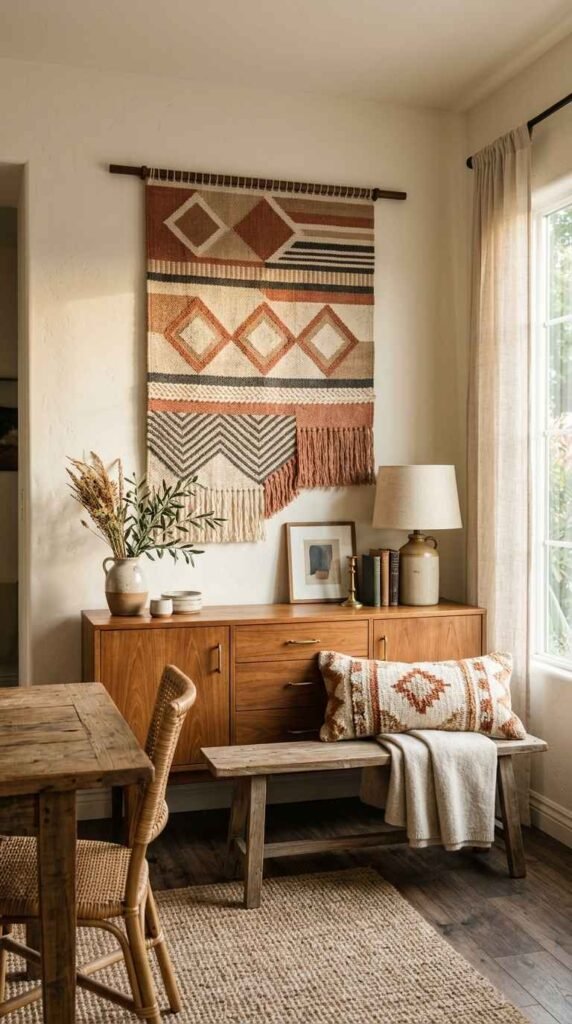
A textile tapestry hanging adds a tactile richness that framed art alone can’t achieve. The woven texture catches light differently throughout the day, giving the wall a subtle sense of movement and depth. I’ve noticed that tapestries work especially well in dining rooms that already lean toward natural materials, like wood tables or rattan chairs, since the fabric ties those elements together seamlessly. Unlike canvas or prints, a tapestry softens the overall look of the room, making the space feel warmer and more relaxed, which is especially appealing for casual or family-style dining areas.
Beyond aesthetics, tapestries are practical for anyone hesitant about drilling multiple holes for frames, since most hang from a simple dowel or rod. This makes them a great option for renters or anyone wanting a low-commitment way to test bold color or pattern on their walls. In my experience, a well-chosen tapestry becomes the anchor piece that pulls the entire dining room’s palette together. Its earthy, handmade quality adds authenticity that mass-produced decor often lacks, giving the space genuine character.
16. Abstract Line Art
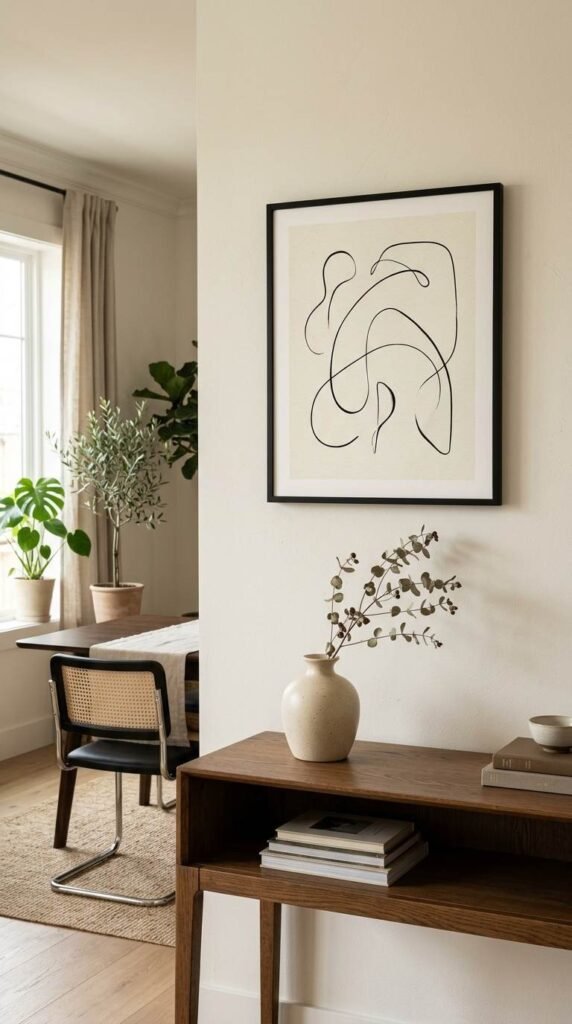
Abstract line art has become a go-to choice for dining rooms that want a modern edge without feeling cold or sterile. The loose, expressive lines create movement on the wall while still keeping the overall composition simple and easy on the eyes. I’ve noticed that this style photographs beautifully too, which is part of why it performs so well on Pinterest — the clean shapes and negative space make it instantly scroll-stopping. It works particularly well as a single large statement piece above a sideboard or dining bench, giving the room a focal point without needing additional decor around it.
What makes abstract line art so practical is its ability to blend into almost any existing color scheme. Because it often relies on tone and form rather than bold color, it doesn’t clash with furniture or table settings. In my experience, this makes it one of the easiest dining room decor wall art ideas to commit to, since it rarely feels outdated or mismatched over time. A single well-placed piece can instantly elevate a plain wall, giving the entire room a more curated, design-forward appearance without much additional effort.
17. Framed Family Photos
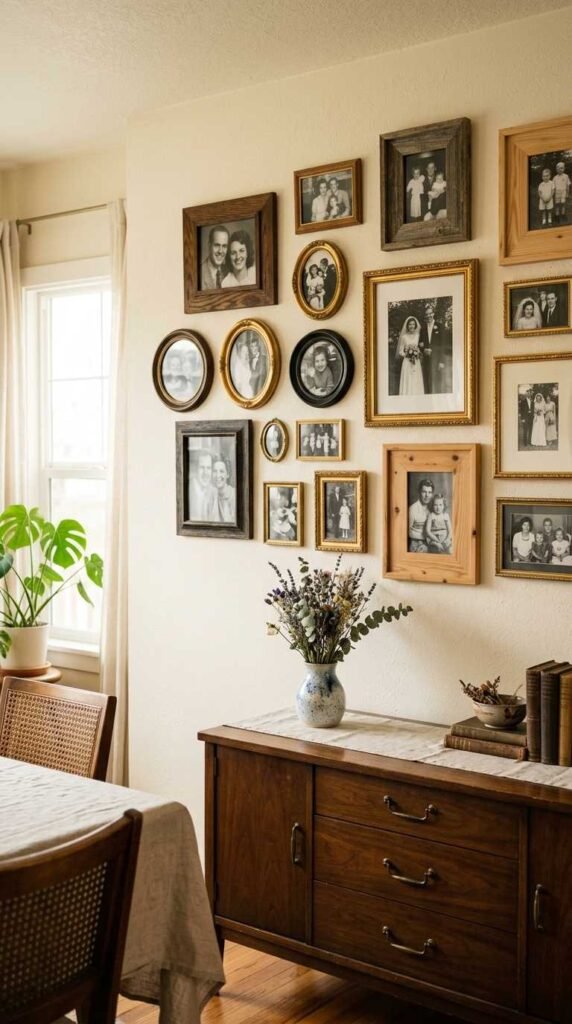
Framed family photos bring an emotional warmth to the dining room that other art simply can’t replicate. Since this is often the space where families gather most, filling the walls with meaningful memories makes the room feel personal rather than showroom-perfect. I’ve seen this work well when photos are kept to a single color treatment, like black-and-white or sepia, since it prevents the wall from feeling too busy or mismatched. Mixing frame sizes while keeping a consistent tone creates a polished, intentional look that still feels authentically personal and lived-in.
This idea works especially well for families who want their dining room to reflect real memories rather than purely decorative trends. Updating the display over time, as new milestones happen, keeps the space feeling current and alive. That’s why many designers recommend leaving a little extra wall space when first installing a photo display, allowing room to grow. In my experience, guests are naturally drawn to these walls during meals, often sparking conversation about the people and moments pictured, which adds a layer of connection that typical wall art rarely achieves.
18. Wood Panel Art
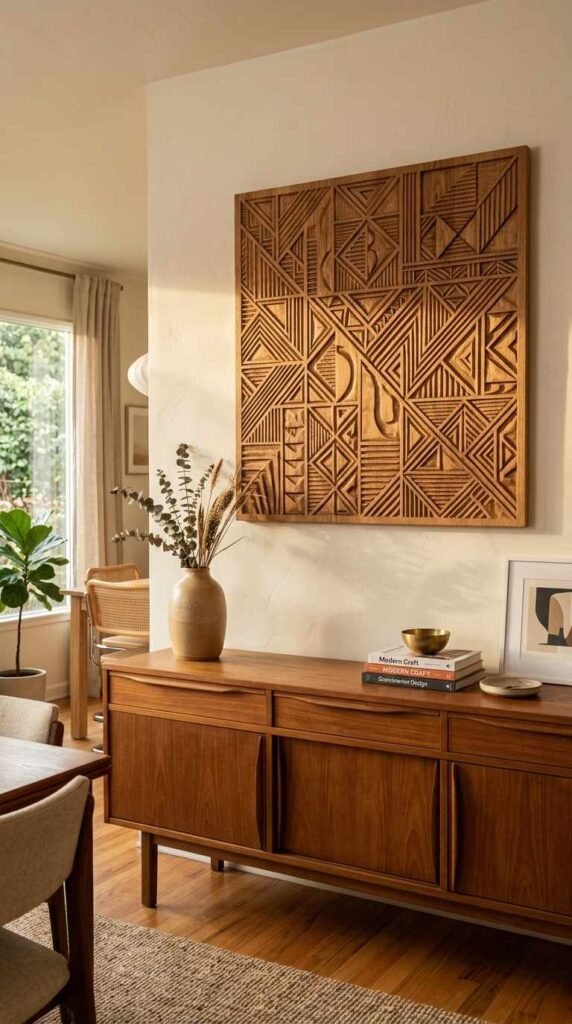
Wood panel art offers a sculptural quality that flat prints or canvases can’t match. The natural variation in grain and tone gives each piece a one-of-a-kind character, which makes the wall feel more artisanal and less mass-produced. I’ve noticed that wood panel art works especially well in dining rooms with a lot of natural materials already present, since it echoes those textures rather than introducing something entirely new. Arranged in geometric patterns like a sunburst or chevron design, it creates striking visual interest while still feeling grounded and warm rather than busy or overwhelming.
This option is particularly appealing for anyone who wants their dining room decor wall art ideas to feel durable and long-lasting rather than trend-based. Unlike paper prints, wood panels resist fading and hold up well over time, making them a practical investment. In my experience, this style pairs beautifully with warm lighting, since the glow enhances the grain and adds a cozy, inviting feel during evening meals. It’s a subtle way to bring texture and depth into the room without relying on color or pattern.
19. A Circular Art Arrangement
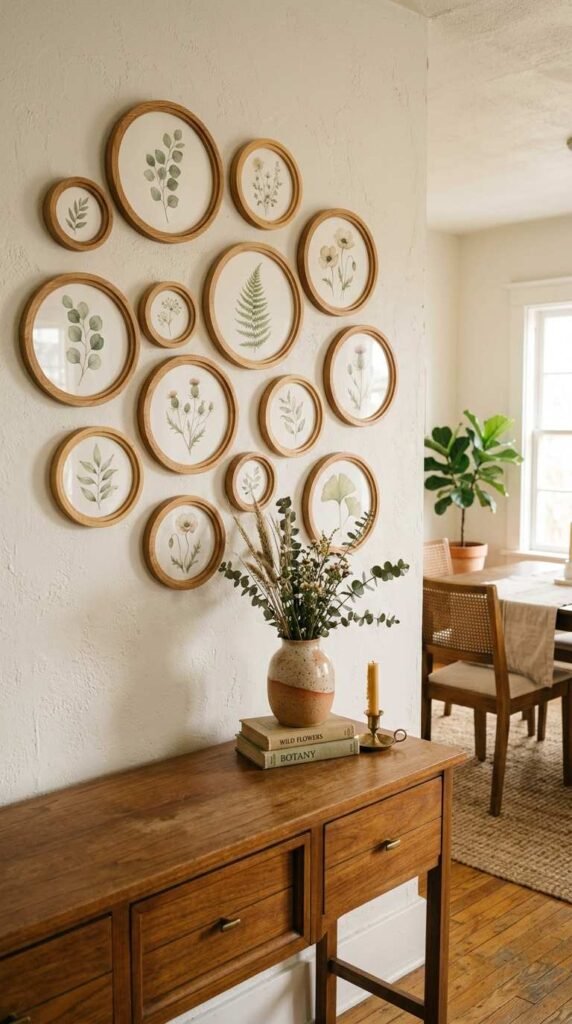
Spacing Round Frames Evenly
A circular art arrangement introduces a softness that square or rectangular frames rarely achieve. The curved edges create a gentler visual rhythm across the wall, which feels especially fitting in dining rooms where the table itself is often round or oval. I’ve noticed that combining a few mirrors within the circular cluster adds an extra layer of light and depth, making the space feel larger and brighter overall. This approach works particularly well above a sideboard or buffet, where the varied circle sizes create movement without needing a large single statement piece.
Getting the spacing right is what makes this idea feel polished rather than random. In my experience, leaving two to three inches of consistent space between each circular piece keeps the arrangement looking intentional and balanced. Laying the pieces out on the floor first, then adjusting gaps before hanging, helps avoid an uneven or cluttered result. Starting with the largest circle as the anchor and building smaller pieces around it also creates a natural flow that feels cohesive rather than scattered across the wall.
20. Neon or LED Word Art
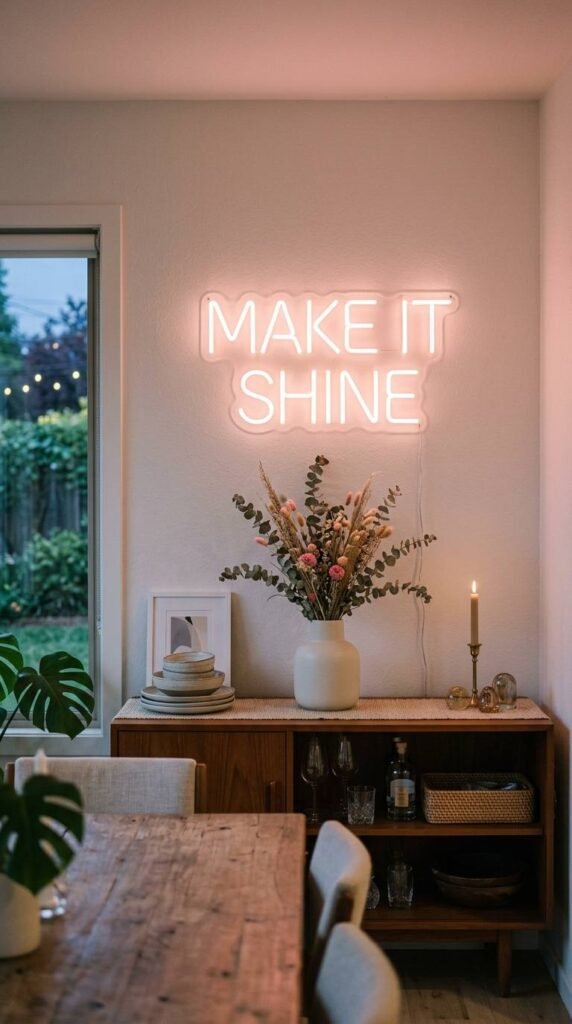
Neon or LED word art brings a playful energy that most traditional wall decor doesn’t offer. Beyond its visual appeal, it doubles as a subtle light source, which is especially useful for evening dinners or gatherings where softer lighting is preferred. I’ve seen this work well in dining rooms that lean slightly more casual or entertaining-focused, since the glow adds warmth and personality without feeling too serious. Choosing a short word or phrase keeps the sign readable and impactful, while a darker accent wall behind it makes the light pop even more dramatically.
This idea works especially well for anyone wanting their dining room decor wall art ideas to feel a little more unexpected and personal. Unlike static prints, a lit sign changes the mood of the room depending on the time of day, adding versatility that flat art can’t offer. In my experience, keeping the rest of the wall relatively simple allows the sign to stand out as the clear focal point. It’s a small addition that consistently draws attention and adds a memorable, conversation-starting element to the space.
21. A Still Life Painting
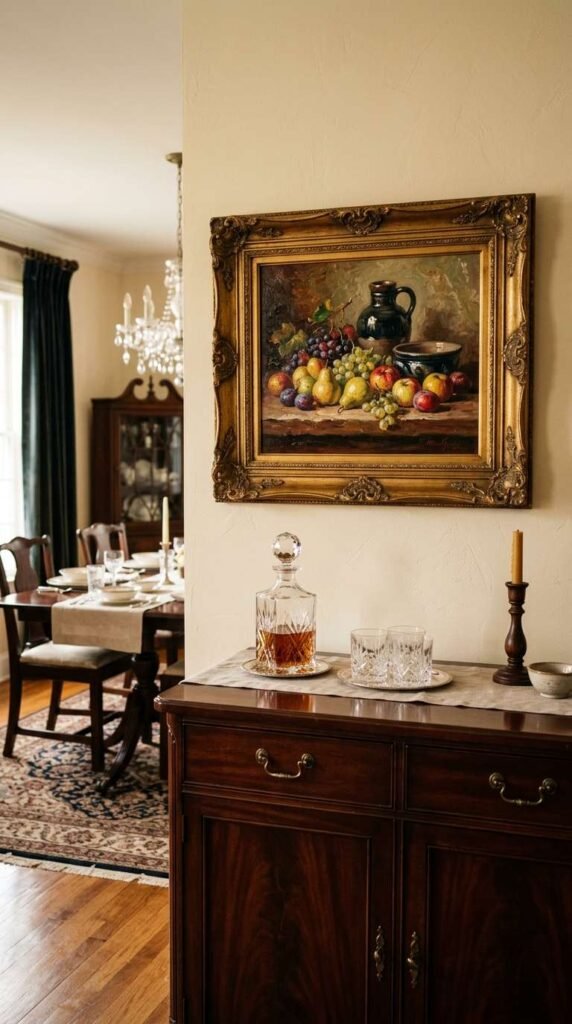
A still life painting brings a sense of timeless refinement that few other art styles can replicate. The rich, layered colors typically found in this genre work beautifully in dining rooms with deeper wall tones, since the painting’s warmth stands out rather than getting lost. I’ve noticed that this style suits homeowners who want their dining room to feel a little more formal or elegant, especially for spaces used regularly for hosting. The traditional subject matter, often fruit, flowers, or tableware, ties naturally into the room’s purpose, creating a subtle but meaningful connection between the art and the space itself.
This option is particularly effective for anyone drawn to a more classic or old-world aesthetic. Choosing an ornate frame enhances the painting’s formal quality, while placing it above a buffet or sideboard gives it the prominence it deserves. That’s why many designers recommend pairing still life art with warmer, dimmable lighting, since it enhances the painting’s depth and richness during evening meals. The result is a dining room that feels curated, sophisticated, and distinctly elevated compared to more casual decor choices.
22. Layered Leaning Art
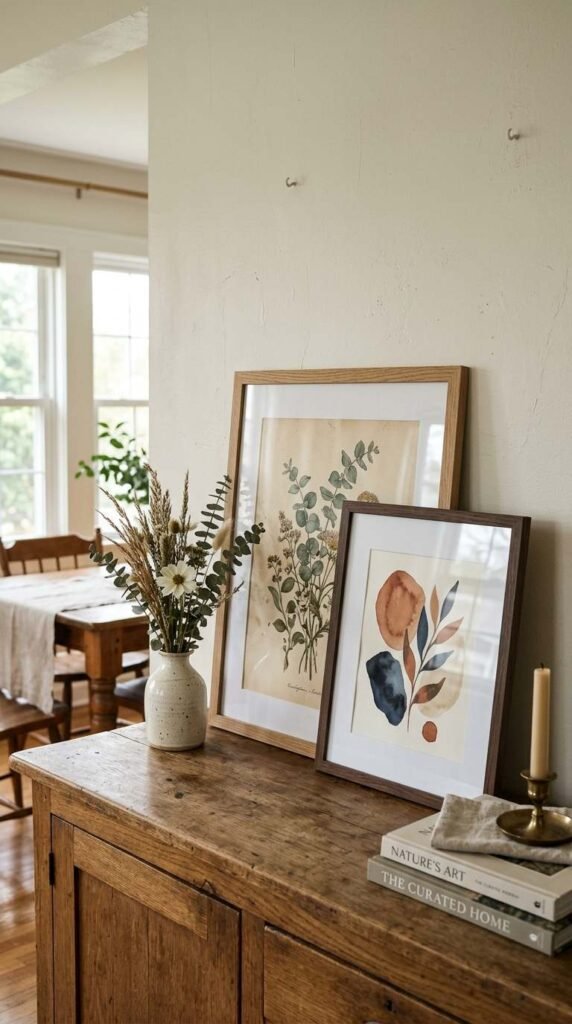
Layering Multiple Pieces
Layered leaning art gives dining rooms a relaxed, editorial quality that feels more like a styled photo shoot than a typical wall display. Instead of committing to fixed placement, pieces rest against the wall on a shelf or ledge, allowing for a naturally imperfect, collected look. I’ve noticed that this style appeals most to people who enjoy switching up their decor seasonally, since nothing is permanently mounted. The slight overlap between frames adds visual depth, making even a narrow wall feel intentional and layered without requiring multiple nail holes or precise measuring.
The key to layering successfully is varying the size, height, and orientation of each piece. In my experience, starting with the largest frame at the back and layering smaller pieces slightly off-center in front creates the most natural, balanced look. Mixing frame materials, like wood and metal, or mixing art styles, like abstract and botanical, keeps the arrangement feeling curated rather than repetitive. Leaving slight gaps between each piece rather than stacking them tightly against one another also helps the display breathe and feel more effortlessly styled.
23. A Seasonal Rotating Art Display
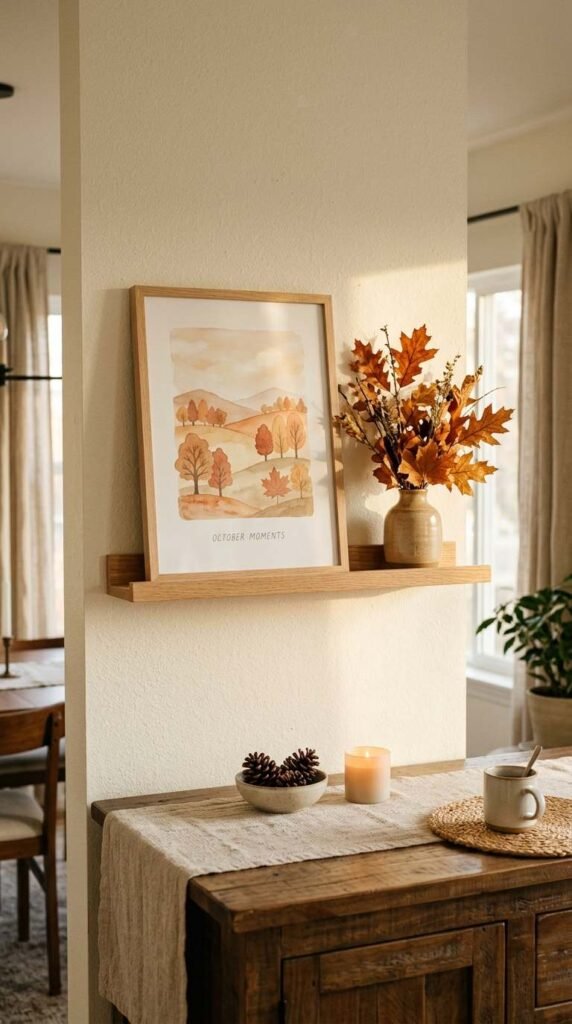
A seasonal rotating art display solves one of the most common dining room dilemmas: wanting change without constantly redecorating. Using a simple picture ledge instead of fixed frames means artwork can be swapped in minutes, making it easy to reflect the mood of each season or upcoming holiday. I’ve seen this work well for households that enjoy hosting throughout the year, since the wall can be quickly refreshed to match a specific occasion or gathering. It also removes the pressure of choosing one final piece, giving the space room to evolve naturally over time.
This idea is especially practical for anyone still figuring out their preferred style, since it allows experimentation without long-term commitment. Rotating in warmer tones for fall, brighter florals for spring, or minimalist prints for everyday use keeps the dining room decor wall art ideas feeling current year-round. In my experience, this flexibility often becomes a favorite feature for homeowners, since it turns wall styling into an ongoing creative outlet rather than a one-time decision. It’s a low-cost, high-impact way to keep the space feeling alive.
FAQs
1. What type of wall art works best for a dining room?
The best choice depends on your room’s mood, but generally, pieces with warm tones, natural textures, or soft color palettes work beautifully since they complement mealtime settings. In my experience, art that feels inviting rather than stark tends to perform best in spaces meant for gathering.
2. Should I choose one large piece or a gallery wall?
Both work well depending on wall size and personal style. A single oversized piece creates a bold focal point with minimal effort, while a gallery wall allows more personality and storytelling. Smaller dining rooms often benefit from one statement piece rather than multiple smaller frames.
3. How high should dining room wall art be hung?
As a general rule, the center of the artwork should sit around 57–60 inches from the floor, which aligns with average eye level. When hanging art above furniture like a buffet, leave about 6–8 inches of space between the top of the furniture and the bottom of the frame.
4. What art styles suit a modern dining room?
Abstract line art, minimalist prints, and geometric wood panels tend to suit modern spaces best. I’ve noticed that keeping color palettes neutral or monochromatic, with one bold accent piece, gives modern dining rooms a clean, intentional look.
5. Can I use a mirror instead of traditional art?
Yes, mirrors work wonderfully as dining room wall art, especially in smaller spaces. They reflect natural light, make the room feel larger, and can be styled solo or clustered with other art pieces for added dimension.
6. What size art fits above a dining room sideboard?
A good general guideline is choosing artwork that spans about two-thirds the width of the sideboard beneath it. This keeps the proportions balanced and prevents the piece from looking too small or overwhelming.
7. Should dining room wall art match the furniture?
It doesn’t need to match exactly, but it should complement the room’s existing tones and materials. That’s why many designers recommend pulling one or two colors from your art into other elements, like table linens or chair cushions, for a cohesive feel.
8. What is the best way to arrange a gallery wall?
Start by laying your pieces out on the floor first, then adjust spacing before committing to nails. Keeping consistent gaps, around 2–3 inches, between frames creates a polished, intentional layout rather than a cluttered one.
9. Can decorative plates work as wall art?
Absolutely. Ceramic or vintage plates add texture and personality that flat prints can’t replicate. They’re especially fitting for dining rooms since they echo the room’s everyday purpose in a charming, collected way.
10. How often should I update my dining room wall art?
There’s no strict rule, but many homeowners refresh their walls seasonally or whenever the room starts to feel stagnant. A rotating display or leaning art setup makes this kind of periodic refresh much easier to manage.
Conclusion
Your dining room walls hold more potential than most people realize. Whether you’re drawn to a bold abstract canvas, a soft watercolor print, or a collected gallery of family photos, the right wall art turns an ordinary space into somewhere people genuinely want to linger. I’ve seen firsthand how a few thoughtful changes to the walls can completely shift the feel of a dining room, making it warmer, more personal, and far more memorable for guests.
The beauty of these dining room decor wall art ideas is that there’s no single right approach. Some homeowners prefer a single dramatic statement piece, while others love the flexibility of a rotating or layered display. Start with whichever idea feels most aligned with your space and personality, then build from there. Small changes often lead to the biggest transformations, and your dining room walls are the perfect place to begin.