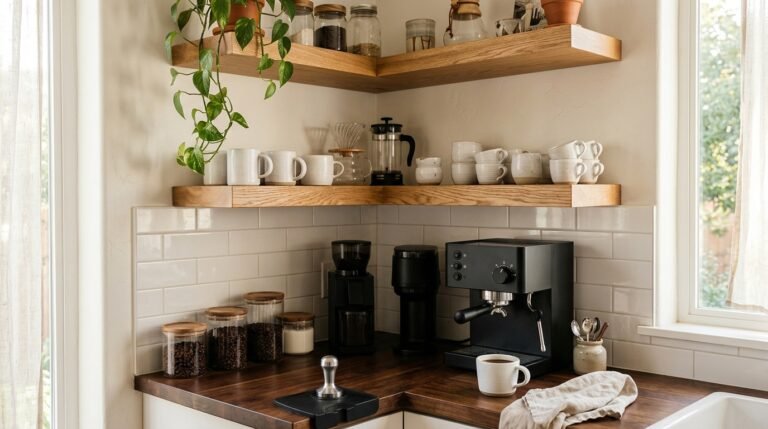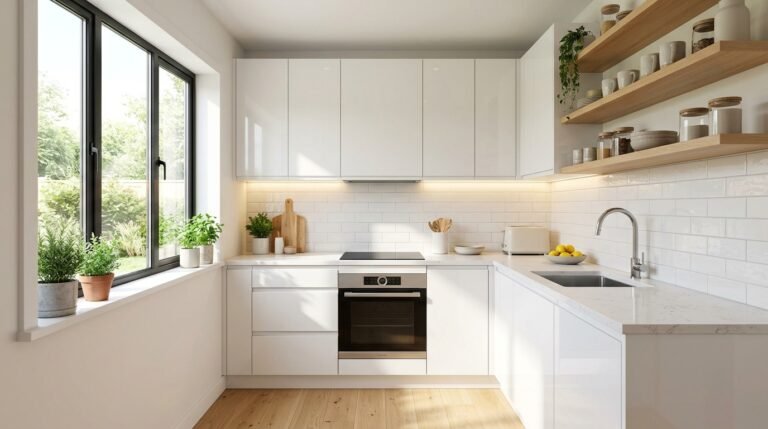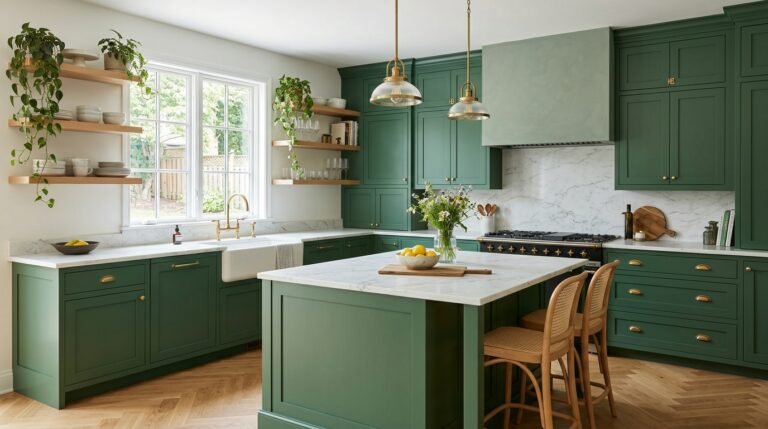
Your kitchen window is doing more than you think. It shapes the light, the mood, and even how much you enjoy your morning coffee. The right kitchen window curtains can turn a plain, forgettable frame into the coziest corner of your home.
But choosing them isn’t always easy. Steam, splashes, strong sun, and nosy street views all matter here. I’ve noticed that most people either pick something too heavy or leave the glass bare because nothing feels practical.
That’s why this guide brings you 22 beautiful, real-world ideas, from sheer linen and café tiers to blinds, bay window drapes, and sliding door panels. Each one is easy to picture and simple to try, whatever your budget or style. In my experience, one small change at the window can make the whole kitchen feel fresh. Scroll through, save your favorites, and find the look that finally feels like home.
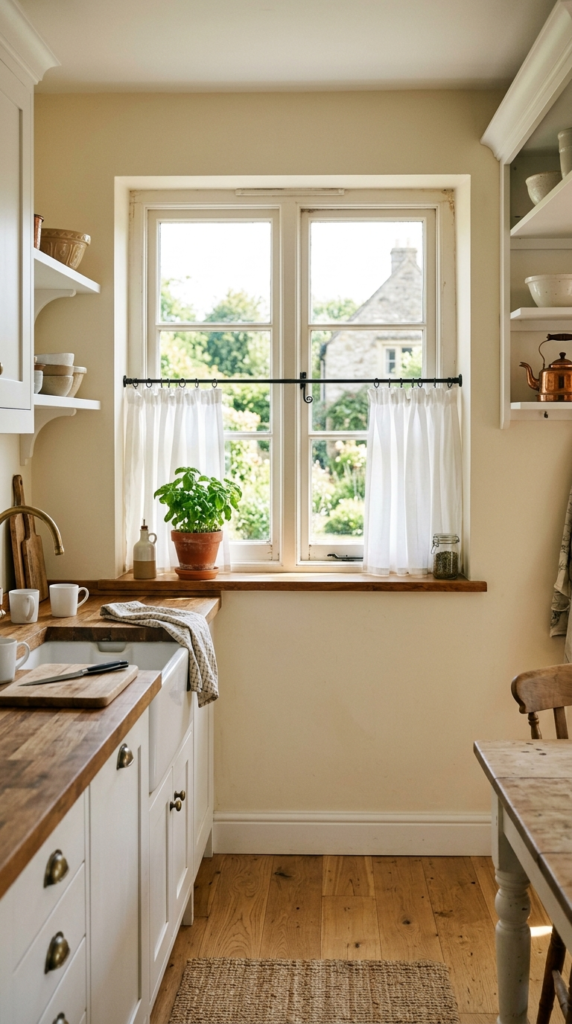
Classic Café Tiers
- Covers the lower half of the glass for privacy while the top stays open to sunlight.
- Adds a cozy, classic look without making the room feel heavy.
- Works well over a sink, where full-length fabric would get splashed.
- Washes easily and can be swapped with the seasons.
- I’ve noticed that a simple rod placed at mid-window height makes a plain frame look finished.
Want privacy without losing the sunshine? Café tiers are the answer. They hang across the lower half of the glass, hiding the view from the street while the top stays open and bright. This simple trick works especially well over a sink, where long fabric would constantly get wet. In real homes, the effect is instantly charming. The window feels framed, the wall feels softer, and the whole kitchen looks a little more welcoming. I’ve seen this work well in small apartment kitchens, where every inch of daylight matters and heavy drapes would make the room smaller.
Choosing the right fabric makes all the difference. Cotton, linen blends, and light eyelet all drape beautifully and wash easily. Pick white or soft cream for a clean, timeless look, or try a subtle stripe for extra personality. Hang the rod about halfway up the window, then step back and check the line. Small details matter here. A simple brass or black rod adds contrast, while scalloped edges add a gentle vintage touch. Many designers recommend keeping the length just below the sill ledge so the fabric hangs neatly and never touches the faucet or counter.
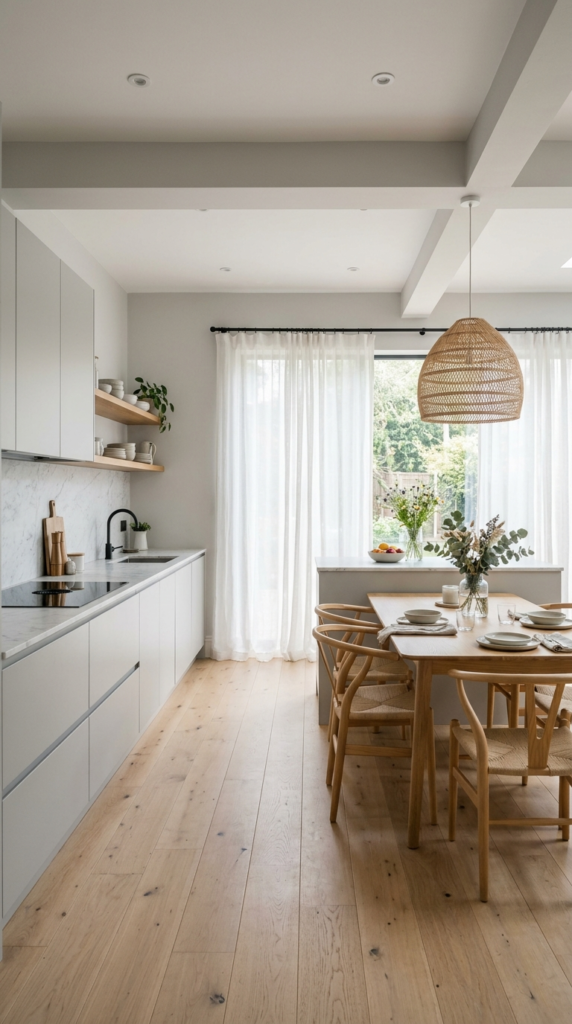
Sheer Linen Panels
- Softens harsh sunlight without blocking the view.
- Adds height and flowing texture to plain walls.
- Keeps the room bright, which helps small kitchens feel bigger.
- Moves gently with a breeze for a calm, relaxed feel.
- In my experience, slightly textured linen looks richer and hides wrinkles better than flat polyester.
Imagine morning light floating into your kitchen like a soft glow. That is what sheer linen panels do. They filter strong sun, reduce glare on counters, and still let you enjoy the view outside. Because the fabric is light and airy, the room never feels closed in. This style works beautifully in modern, coastal, and Scandinavian kitchens, where calm and brightness are the goal. I’ve noticed that hanging the rod higher than the window frame draws the eye upward, making ceilings look taller and the whole space feel more open, elegant, and thoughtfully put together.
Getting the details right keeps this look polished. Choose panels that are one and a half to two times as wide as the window, so the fabric falls in soft folds instead of hanging flat. Let them just skim the floor or stop a finger above it. White, oat, and light sand tones feel fresh and timeless. If your stove sits near the window, check the distance first, because loose fabric and open flames never mix. A tie-back or simple hook can hold the panels aside while you cook, keeping everything safe and neat.
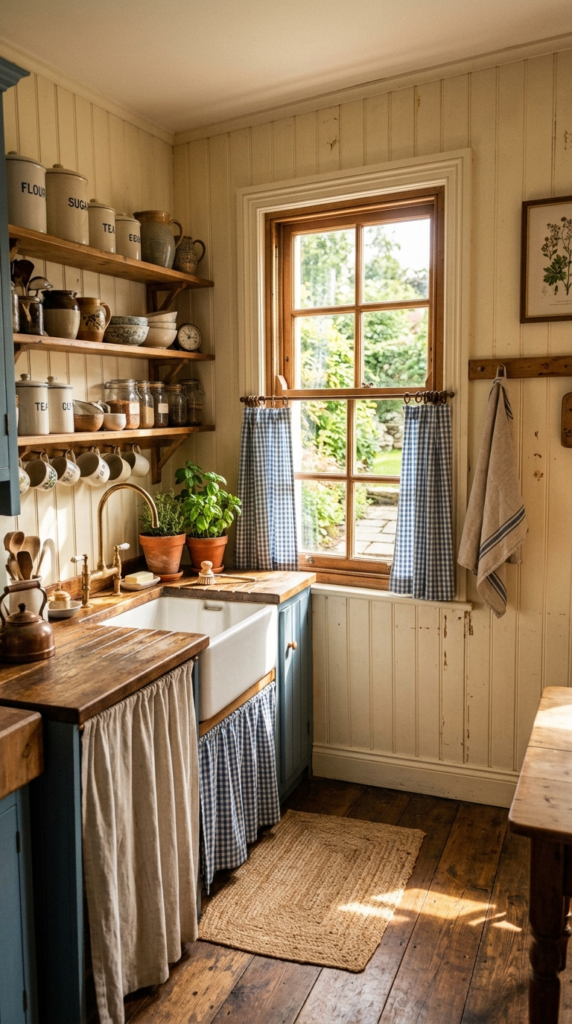
Gingham Farmhouse Style
- Brings instant charm and a touch of nostalgia.
- Adds pattern and color without a full redesign.
- Pairs well with white cabinets, wood tones, and open shelves.
- Budget-friendly and easy to sew or replace.
- I’ve seen this work well when the check is small and the colors match one other item, like a bowl or towel.
Few things feel as warm as a little gingham. This classic pattern turns an ordinary window into a cheerful focal point. Among all kitchen window curtains, checks are the ones people remember, because they bring back memories of grandma’s kitchen and slow weekend breakfasts. Blue and white feels fresh and calm, while red adds playful energy. The best part is how easily it blends with farmhouse, cottage, and vintage decor. Paired with wood shelves and white cabinets, a small pattern can add personality without overwhelming the room. It feels like home.
Scale and color matter more than people expect. Small checks look tidy and traditional, while larger checks feel bolder and more modern. Choose a pattern that echoes something already in your kitchen, such as a ceramic bowl, a tea towel, or a painted chair. Short gathered curtains on a simple wooden rod keep the look light and practical near the sink. Cotton is my favorite choice, because it softens after each wash. If your cabinets have strong color, pick a muted check in pale blue, sage green, or soft gray, so the window stays charming but never feels busy.
Woven Roman Shades
- Adds natural texture that makes plain walls feel richer.
- Raises fully for a clear view or lowers for instant privacy.
- Sits flat against the frame, so it stays away from taps and counters.
- Filters harsh sun into a soft, warm glow.
- I’ve noticed that mid-tone bamboo hides small marks better than white fabric.
Natural texture changes everything. Woven roman shades bring the warmth of bamboo or jute straight into your kitchen, and they do it without taking up any floor space. Pull them up and the window is fully clear. Lower them and you get soft, filtered light with instant privacy. They suit modern, coastal, and boho kitchens equally well. I’ve noticed that the woven pattern adds depth to plain white walls, almost like a piece of art. Because the shade sits flat against the frame, it stays tidy near taps and counters, which makes it ideal for busy cooking zones.
Choosing the right shade is simple when you know what to look for. Pick a light honey or sand tone for small kitchens, and a deeper walnut shade for large rooms with plenty of sun. Consider adding a cotton liner if you want softer light and better privacy at night. Mount the shade inside the frame for a clean look, or outside to make a narrow window seem wider. Cordless lifts are safer for homes with children and pets. Wipe the surface with a dry cloth now and then, and avoid heavy moisture, since natural fibers dislike steam.
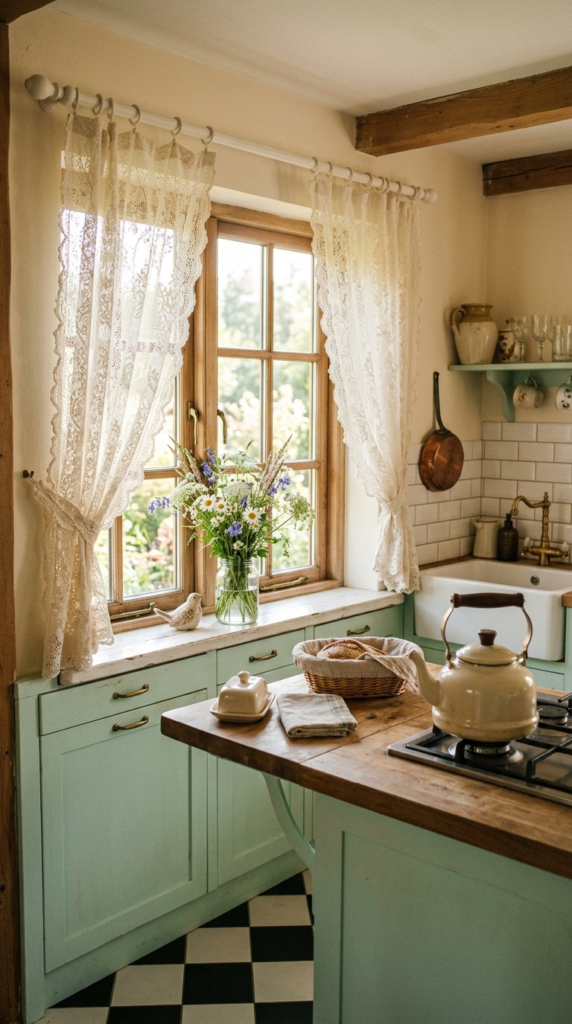
Cottage Lace Panels
- Scatters delicate patterns of light across the room.
- Gives daytime privacy while keeping the space bright.
- Adds vintage charm without feeling heavy.
- Pairs beautifully with pastel cabinets and simple tile.
- In my experience, ivory lace looks softer and more forgiving than stark white.
Lace never really went out of style. It simply grew up. Modern lace panels scatter delicate patterns of light across counters and floors, creating a lovely, ever-changing glow. They offer daytime privacy while keeping the room bright, which is perfect for kitchens facing a busy street. Paired with pastel cabinets, vintage tile, or a simple wildflower jar, lace feels romantic rather than old-fashioned. I’ve seen this work well in cottage and French-country kitchens, where small, thoughtful details tell the story. Even a basic window starts to look like a scene from a favorite storybook, gentle, welcoming, and charming.
Fabric choice decides whether lace feels fresh or dated. Look for cotton or poly-cotton blends with an open, simple pattern, and skip anything too heavy or fussy. Ivory looks softer than bright white and suits warm kitchens beautifully. Keep the panels short or sill-length so they stay clear of the stove and sink. Lace is surprisingly easy to care for. Wash it gently in a mesh bag, then hang it damp so it dries smooth. In my experience, adding a plain rod with small finials keeps the whole look light, balanced, and quietly elegant rather than overly decorated.
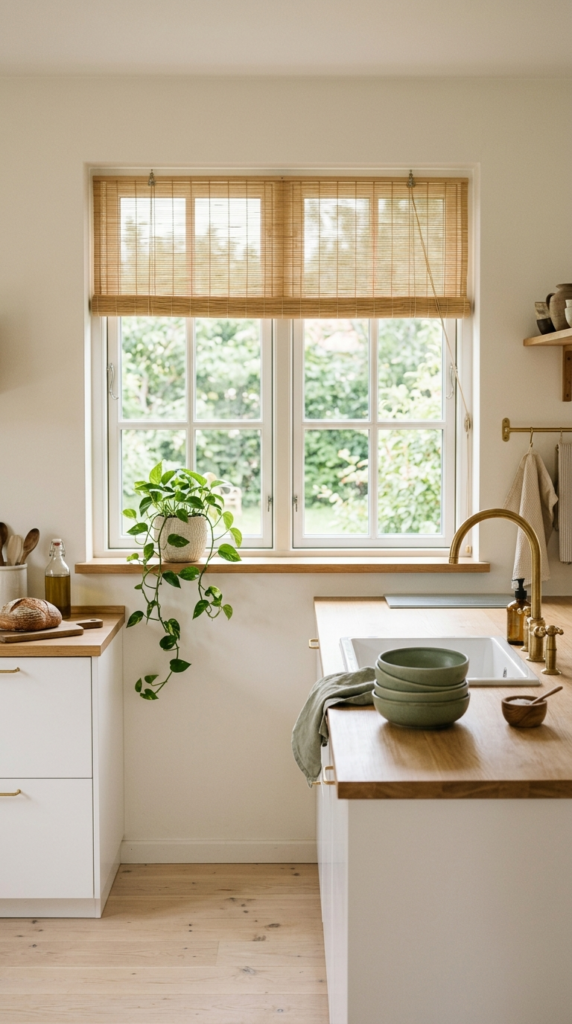
Floral Valance Topper
- Adds color and pattern without covering any daylight.
- Draws the eye upward and makes the window look taller.
- Works as a pretty finishing touch on a plain frame.
- Pairs well with white or cream cabinets.
- Easy to swap with the seasons for a quick refresh.
Sometimes the smallest touch makes the biggest change. A floral valance sits across the top of the window like a pretty frame, adding color and softness without covering any of the view. It is a smart choice when you love sunshine but still want a little decoration. The fabric draws the eye upward and gives plain walls a cheerful lift. I’ve noticed that kitchens with white or cream cabinets benefit most, because the pattern becomes the star. Yellow, sage, and soft pink blooms feel fresh and happy, turning an ordinary morning routine into something a bit more joyful.
Keeping it tidy is easy. Choose a valance about one fifth of the window height, so it adds charm without blocking daylight. Straight, pleated, and scalloped shapes each give a different feel, so pick the one that matches your cabinet style. A small pattern suits compact windows, while larger blooms work well on wide ones. Combine it with plain café tiers or a simple blind below for extra privacy. Choose washable cotton, because kitchens collect steam and splashes. Hang it close to the top of the frame, and the whole window will look taller, neater, and professionally styled.
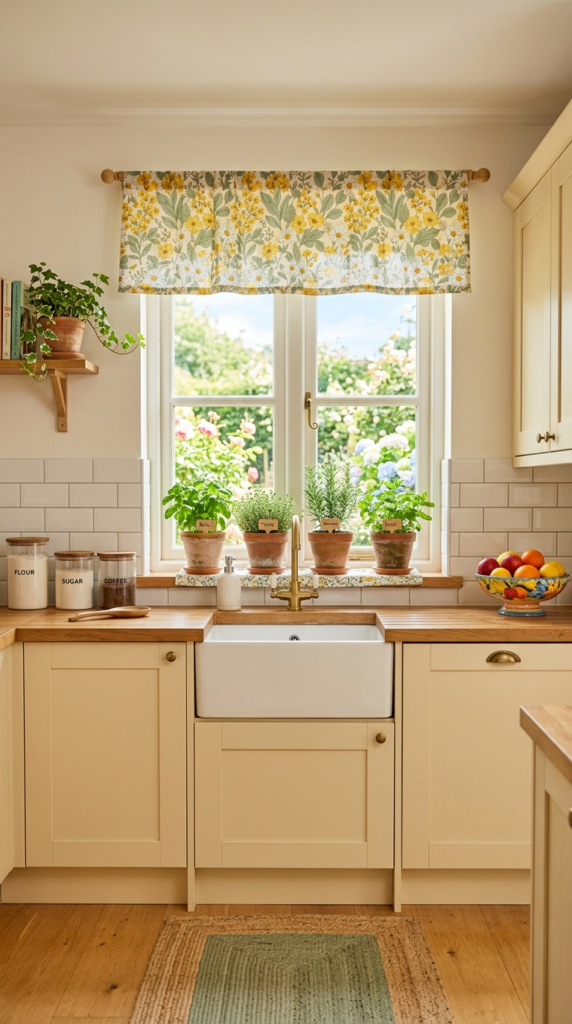
Tie Up Cotton Curtains
- Lets you control light and privacy with one simple knot.
- Keeps fabric away from the sink, stove, and busy counters.
- Adds a soft, relaxed curve to a flat window.
- Budget-friendly compared with custom blinds.
- Easy to restyle with a ribbon, rope, or fabric strip.
Flexibility is the secret here. Tie-up curtains let you decide how much window you want, one knot at a time. Lift the fabric and tie it with a ribbon or jute cord for a bright, open view. Release it in the evening and you have instant privacy. This setup suits busy kitchens, because the fabric stays out of the way while you cook and wash dishes. I’ve noticed that people love how relaxed it looks, almost like the window is smiling. It works in farmhouse, coastal, and modern spaces, and it costs far less than custom blinds.
Fabric weight changes the whole effect. Medium-weight cotton or linen holds a neat fold, while thin voile collapses and looks messy. Sew or clip a ribbon loop at the center of each panel, then tie it where you want the curve to begin. Try a natural rope for a rustic feel or a soft satin ribbon for something sweeter. Keep the panel length at the sill or slightly below. In my experience, a tie placed one third from the bottom gives the prettiest drape. Wash the fabric on a gentle cycle and iron it to keep the folds crisp.
Please also read: 18 coffee bar ideas
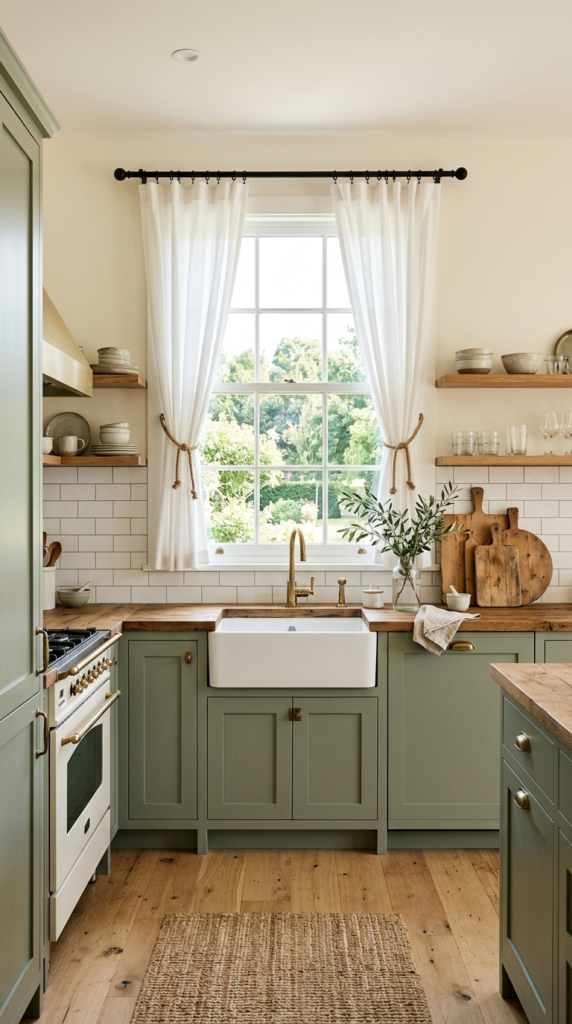
Striped Ticking Panels
- Vertical stripes make the window and ceiling look taller.
- Adds crisp pattern that still feels classic and calm.
- Sturdy ticking fabric handles kitchen use and frequent washing.
- Pairs well with white cabinets and brass or blue accents.
- I’ve seen this work well when the stripes are thin and the colors are limited to two.
Stripes know how to lift a room. Hung vertically, ticking stripes pull the eye upward and make an ordinary window look taller and more polished. The pattern feels fresh, tidy, and quietly confident, which is why it appears so often in coastal and farmhouse kitchens. Navy, black, and soft gray stripes on cream fabric look especially timeless. I’ve noticed that kitchens with plain white cabinets gain real personality from a single striped panel pair. The pattern adds rhythm without adding clutter. It also hides small splashes better than solid white, so the curtains stay looking neat between washes.
Details decide whether stripes feel calm or chaotic. Choose thin or medium stripes for small windows, and wider bands for tall, generous ones. Keep the colors limited to two, so the pattern supports your cabinets instead of fighting them. Cotton ticking is firm, affordable, and easy to wash, which suits a busy cooking zone. Hang the rod just above the frame and let the panels fall to the sill or the floor. In my experience, aligning the stripes carefully at the seams makes the whole window look custom made. Add simple brass rings for a warm, finished touch.
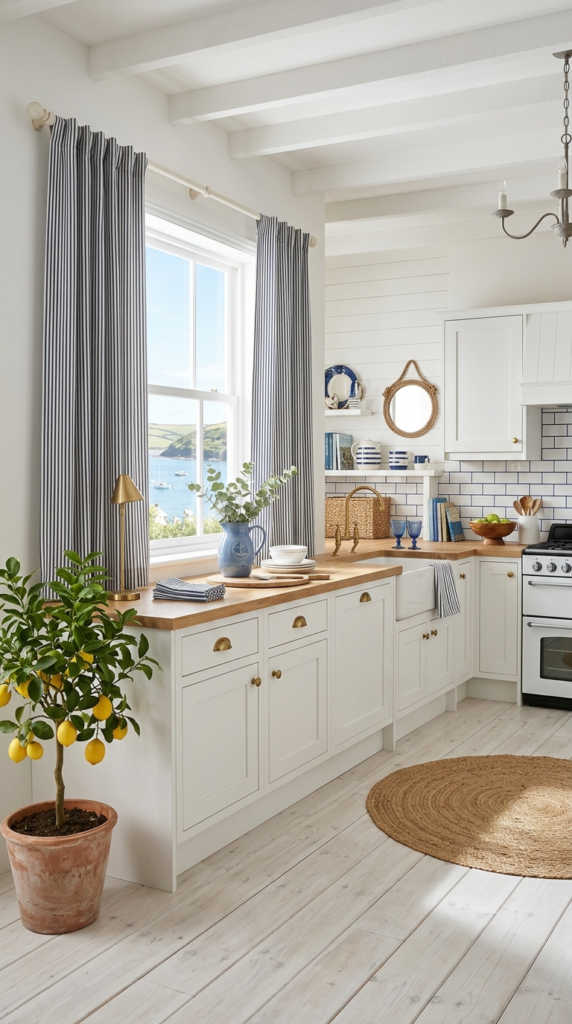
Boho Macramé Curtain
- Adds handmade texture that makes a plain window feel layered.
- Lets sunlight pass through the knots in a soft, patterned glow.
- Works as a light privacy layer over a short window.
- Pairs well with plants, rattan, and wood shelves.
- In my experience, cotton cord stays softer and easier to dust than stiff synthetic rope.
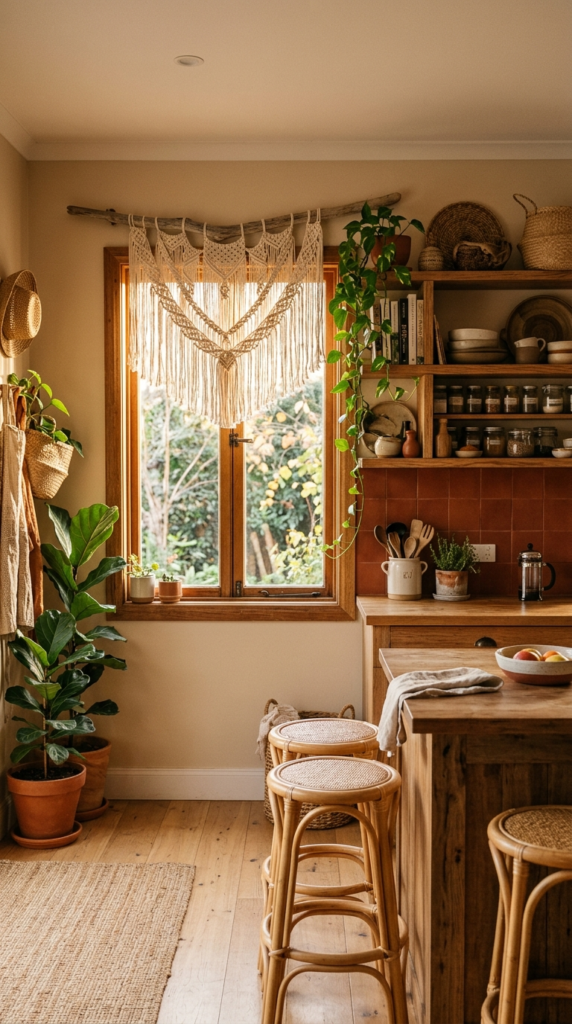
Handmade charm is hard to resist. A macramé curtain turns a simple window into a textured, sculptural feature, and it does so with almost no effort. Sunlight slips through the knots and throws gentle patterns across the counter, which looks stunning in the afternoon. It suits boho, earthy, and relaxed modern kitchens, especially those filled with plants and woven baskets. I’ve seen this work well on small windows above the sink, where a full curtain would feel too heavy. The fringe adds movement, the knots add depth, and the whole corner suddenly feels warm, personal, and wonderfully calm.
Placement and material keep this look practical. Choose natural cotton cord in cream or oat for a soft finish, and hang it from a wooden dowel or driftwood branch. Pair it with a plain liner or a simple blind if you need more privacy at night. Keep it a few inches away from the stove, since open knots collect grease and heat can damage fibers. Dust it weekly with a soft brush and wash it by hand when needed. In my experience, a single statement piece looks best, so keep the surrounding decor simple and let the texture shine.
Pom Pom Trim Detail
- Adds a playful, handmade border to plain curtains.
- Brings in color without repainting or redecorating.
- Catches the light and adds gentle texture and movement.
- Can be added to curtains you already own.
- I’ve noticed that soft pastel shades look sweet without feeling childish.
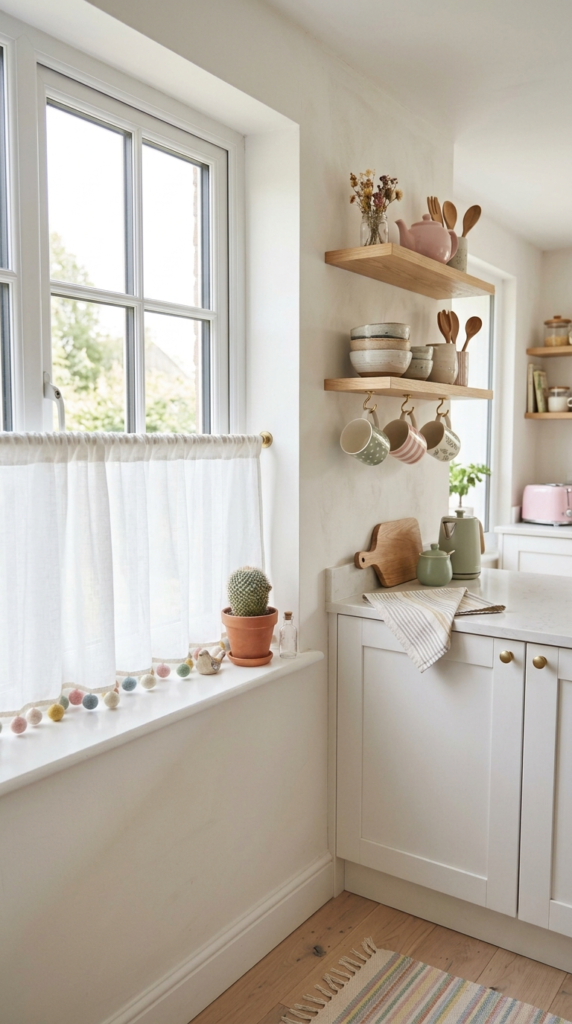
A tiny detail can change the whole mood. Pom-pom trim adds a playful border to plain cotton curtains, and suddenly the window feels happy and handmade. It is a lovely way to bring color into a white kitchen without repainting a single wall. I’ve noticed that pastel pink, sage, and soft yellow balls look sweet without feeling childish. The trim catches the light, adds gentle texture, and gives the fabric a little movement when a breeze passes. Best of all, you can sew or glue it onto curtains you already own, so the upgrade stays simple and affordable.
Keep the trim balanced so it stays charming. Choose small pom-poms for short sill-length panels, and save larger ones for wide windows with plenty of fabric. Stick to two or three colors that match your mugs, tiles, or tea towels. Sew the trim by hand or use fabric glue along the hem, then let it dry flat. In my experience, cotton blends hold trim better than slippery sheer fabric. Hang the curtain a little away from the stove, because fluffy edges collect grease. When it needs cleaning, wash gently inside a mesh bag and air dry.
Deep Green Drap
- Adds richness and depth to a pale kitchen.
- Frames the view like a painting.
- Pairs beautifully with cream cabinets, marble, and brass.
- Creates a cozy glow in the evening.
- I’ve seen this work well when green is the only dark color in the room.
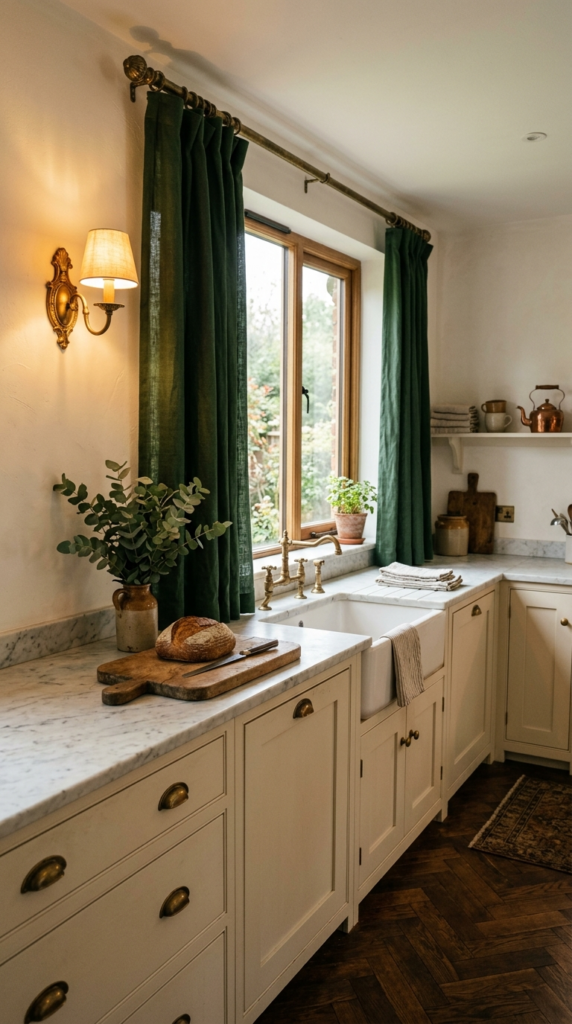
Dark colors can feel surprisingly welcoming. Deep green drapes bring richness and calm, like a quiet forest outside your window. They look stunning against cream cabinets, marble counters, and brass fixtures. Among all kitchen window curtains, rich jewel shades make the strongest style statement without adding clutter. I’ve seen this work well in large kitchens with plenty of daylight, where the color feels cozy instead of heavy. The fabric frames the view like a painting, adds warmth to plain walls, and gives the evening light a lovely, soft glow that makes the room feel special.
Fabric and placement make this look work. Choose washable linen or cotton in olive, forest, or bottle green, and keep the panels simple so the color stays a feature. Hang the rod wide of the frame so the drapes do not block light. In my experience, small kitchens handle deep green best when walls stay pale and the drapes are the only dark element. Add a brass rod for warmth. Keep fabric well away from burners, and choose a length that stops at the sill if the window sits above the sink.
French Door Panels
- Adds privacy to glass doors without blocking light.
- Keeps fabric flat so it never swings or snags.
- Softens hard glass and metal frames.
- Suits French country, farmhouse, and classic kitchens.
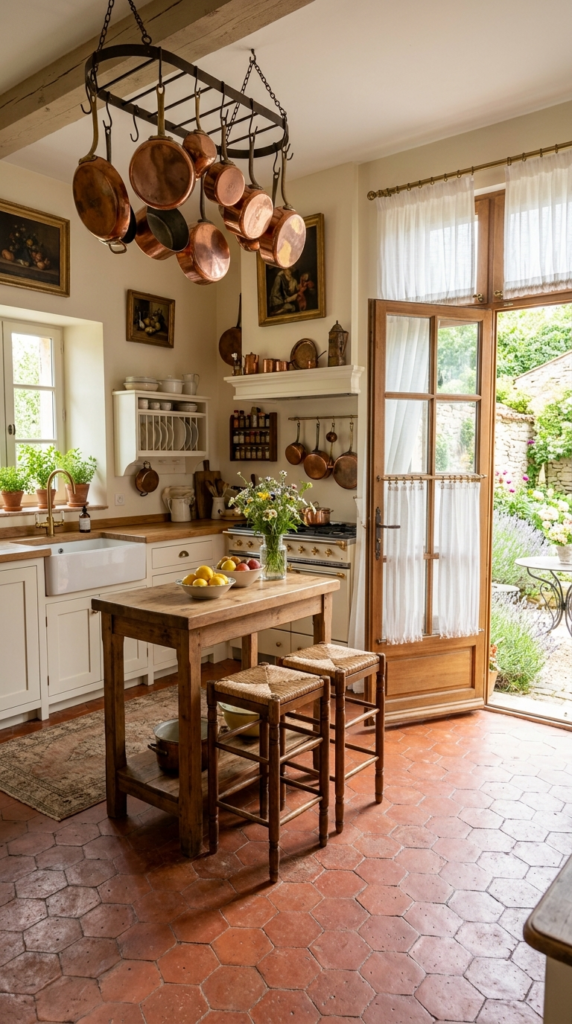
Glass doors need privacy too. Sheer panels fixed to the door itself add softness while letting daylight pour in. They hide the view of the kitchen from the garden, yet the room still feels bright and open. I’ve noticed that this simple idea makes a hard glass door look cozy and finished. It suits French country, farmhouse, and classic kitchens beautifully. Because the fabric stays flat against the glass, it never swings when the door opens or catches on chairs. The result is a tidy, elegant entrance that feels welcoming from both the inside and outside.
Installation is easier than it looks. Use small rods or tension rods at the top and bottom of the glass, then slide on rod-pocket panels and gather them gently. Measure the glass area only, not the whole door. Voile, light cotton, or fine lace work well because they let light through. In my experience, panels about one and a half times the glass width look full without bunching. Check that the fabric clears the handle and lock. Wash it often, since doors collect dust, and choose white or ivory so the look stays fresh.
Sliding Door Drapes
- Adds privacy and softness to a large wall of glass.
- Slides open for a full view or closes for a cozy evening.
- Reduces glare and echo in open-plan kitchens.
- Makes the doorway look taller and more finished.
- In my experience, panels that just skim the floor stay cleaner than long, puddled hems.
Big glass deserves a soft touch. Sliding doors bring in amazing light, but they can also feel bare, glary, and a little exposed at night. Floor-length panels on a ceiling track fix all three problems at once. Slide them open for a full garden view, or close them for a cozy, private evening. I’ve seen this work well in open-plan kitchens, where the door is the biggest wall of glass in the room. The fabric adds height and softness, absorbs echo, and makes the whole dining area feel calmer, warmer, and far more finished.
Track hardware makes daily use effortless. A ceiling-mounted track lets panels glide smoothly and stack neatly to the side, so the doorway stays clear. Choose a medium-weight linen blend in gray, oat, or soft white, and make the panels wide enough to cover the whole door when closed. In my experience, fabric that just skims the floor looks cleaner than long puddled hems, which collect crumbs and pet hair. Add a simple tie-back for cooking time. Keep the panels away from the stove, and wash them every few months so the fabric stays fresh.
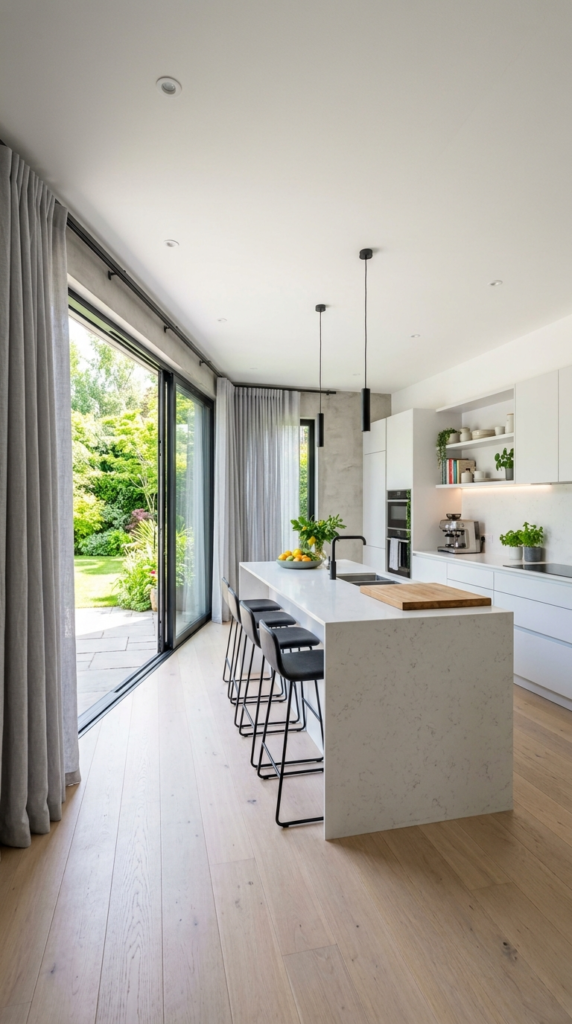
Narrow Window Panel
- Makes a slim window look wider and better balanced.
- Draws the eye upward and adds visual height.
- Hides a plain frame with soft, simple fabric.
- Works beside a stove, fridge, or pantry where space is tight.
- I’ve noticed that light colors keep a narrow corner feeling open.
Slim windows can be stylish too. A narrow frame often feels awkward, but a pair of simple panels turns it into a graceful feature. Hang the rod wider than the glass and the window instantly looks broader and more balanced. I’ve noticed that tall, slim windows beside a stove or fridge are easy to overlook, yet they respond beautifully to a little fabric. Soft cotton adds warmth, hides the plain frame, and draws the eye upward. When you search for kitchen window curtains for small spaces, this simple setup is one of the easiest wins.
A few small choices keep the look sharp. Mount the rod high, close to the ceiling, and let the panels hang straight to the sill or floor. Choose light colors like cream, sand, or pale sage so the narrow space never feels crowded. In my experience, one panel on each side looks better than a single wide curtain, because it frames the glass evenly. Use tie-back hooks to keep fabric clear of burners and prep areas. Wash cotton gently, press the folds, and rehang. The result is a slim, tidy window that finally looks intentional.
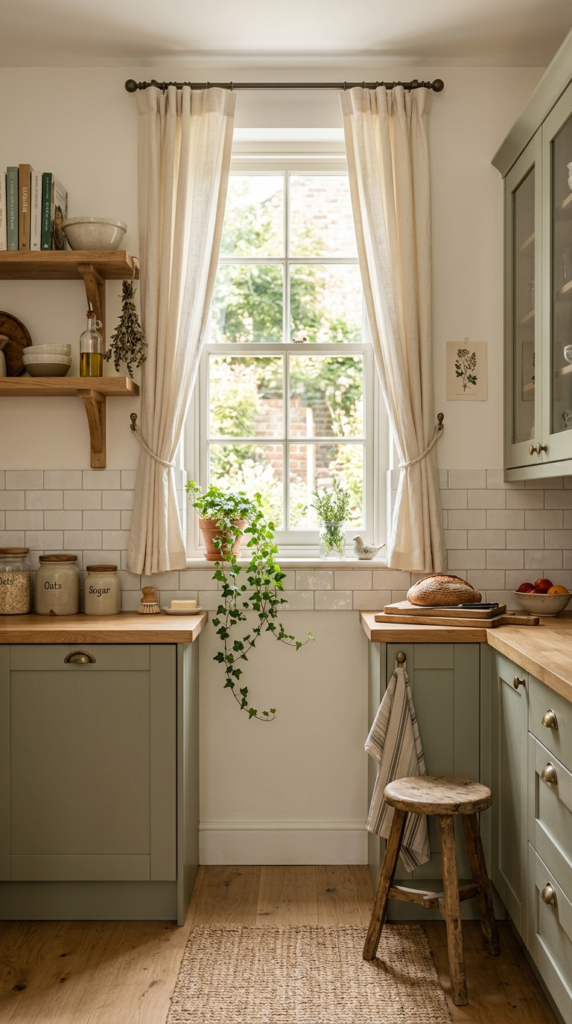
Tea Towel Curtain
- Needs no sewing, so it suits renters and beginners.
- Adds color and pattern for the price of a few towels.
- Easy to swap with the seasons or holidays.
- Brings vintage, lived-in warmth to a plain window.
- I’ve noticed that a rod placed slightly above the frame makes the towels look longer and neater.
Your tea towels might be your next curtains. Clip two or three linen towels onto a slim rod with café clips, and a plain window turns into a charming vintage feature in about five minutes. No sewing, no measuring, no waiting. I’ve seen this work well in rental kitchens, where drilling holes and ordering custom sizes just isn’t practical. The stripes, checks, and prints add color exactly where you want it. When you get bored, swap them for a new set. It is the easiest, most affordable way to give a small window personality and a handmade, lived-in feel.
Choose towels with a loose, open weave so light passes through softly. Pick a pattern that echoes your kitchen, such as red stripes with white cabinets or blue checks with pale tile. Space the clips evenly, and press the towels flat before hanging so the lines look crisp. In my experience, linen and cotton blends drape better than thick terry cloth. Keep the length just above the sink edge so nothing gets splashed. Wash the towels as usual, and hang them back up while damp. The fabric smooths itself out, and the window stays fresh with no effort.
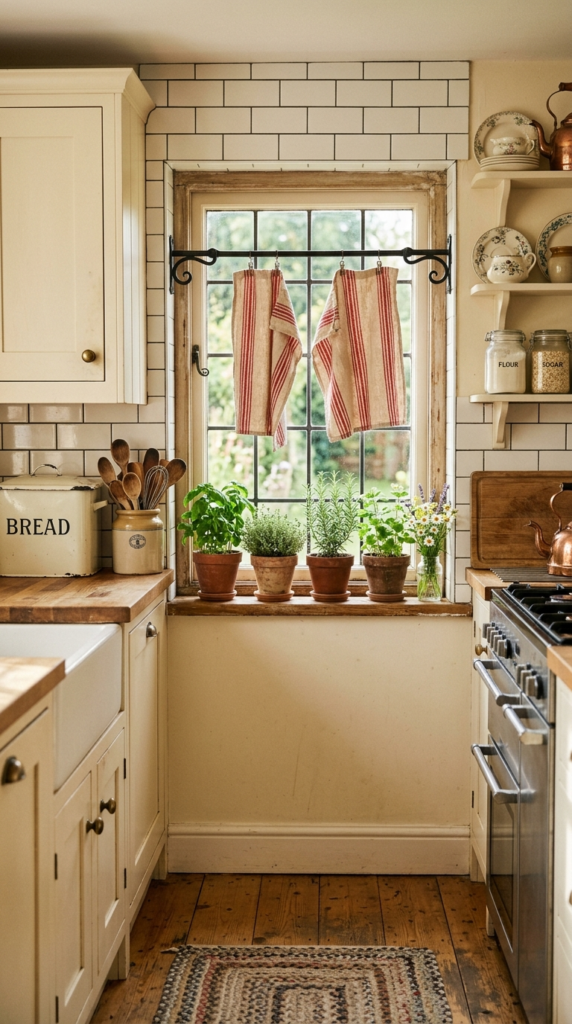
Honeycomb Cellular Shades
- Traps air in its pleats, keeping the kitchen steadier in heat and cold.
- Sits neatly inside the frame for a clean, tailored finish.
- Softens glare without making the room dark.
- Wipes clean with a damp cloth.
- In my experience, top-down bottom-up versions give privacy while keeping the sky visible.
Comfort can look beautiful too. Honeycomb shades have tiny air pockets that trap heat and cold, so your kitchen stays steadier through every season. They also sit flat inside the frame, which gives a clean, tailored finish without any extra fabric. I’ve noticed that the soft, light-filtering fabric calms strong glare on countertops and screens while the room stays bright. It is a smart choice for modern kitchens, rentals, and sunny west-facing walls. The slim profile keeps taps, plants, and sill décor easy to reach, so daily cooking never feels crowded or fussy at all.
Picking the right style takes only a minute. Choose a single-cell shade for light filtering, or a double-cell one for better insulation. White and soft gray suit most kitchens, while sand adds warmth. Measure the inside of the frame in three places and use the smallest width, so the shade fits snugly. In my experience, a top-down bottom-up option is wonderful, because you can lower the top for sunshine while the bottom stays closed for privacy. Choose cordless lifts for safety around children. Wipe the fabric with a damp cloth, and keep it clear of steam from the kettle.
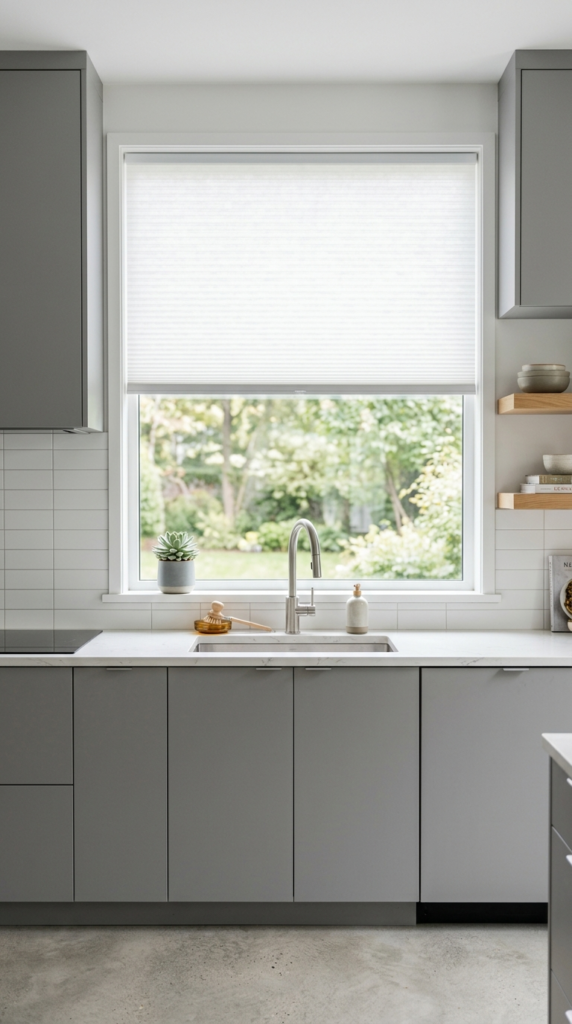
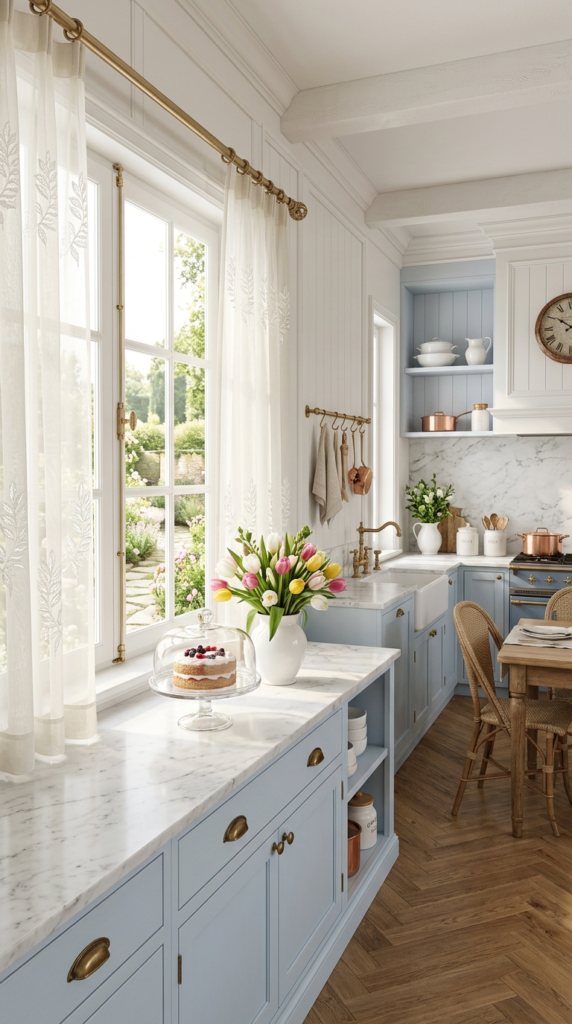
Embroidered Sheer Panel
- Gives a plain sheer a hand-finished, boutique look.
- Keeps daylight high while offering soft daytime privacy.
- The quiet pattern suits many styles better than loud prints.
- Pairs well with pale blue, white, and marble.
- I’ve seen this work well when the embroidery matches the panel color, tone on tone.
Subtle details feel expensive. Embroidered sheers add a quiet pattern of leaves, dots, or tiny flowers, and the result looks like a boutique find. Daylight still floods in, yet the stitching gives the fabric depth you can see up close. I’ve seen this work well in classic and French-inspired kitchens, where pale cabinets and marble counters ask for something refined but not fussy. The pattern is gentle enough to blend with almost any style. It lifts a plain window into a soft, graceful focal point that feels thoughtful, calm, and finished without competing with the rest of the room.
A few choices keep this look polished. Pick tone-on-tone embroidery, such as ivory thread on ivory voile, for the softest effect. Hang the rod just above the window frame and choose panels that fall to the sill or lightly touch the floor. Use fabric about double the window width so the stitching spreads evenly. In my experience, a slim gold or brass rod adds warmth without stealing attention. Wash by hand or in a mesh bag on a delicate cycle. Keep the panels away from the stove, since embroidery and grease are a difficult pair.
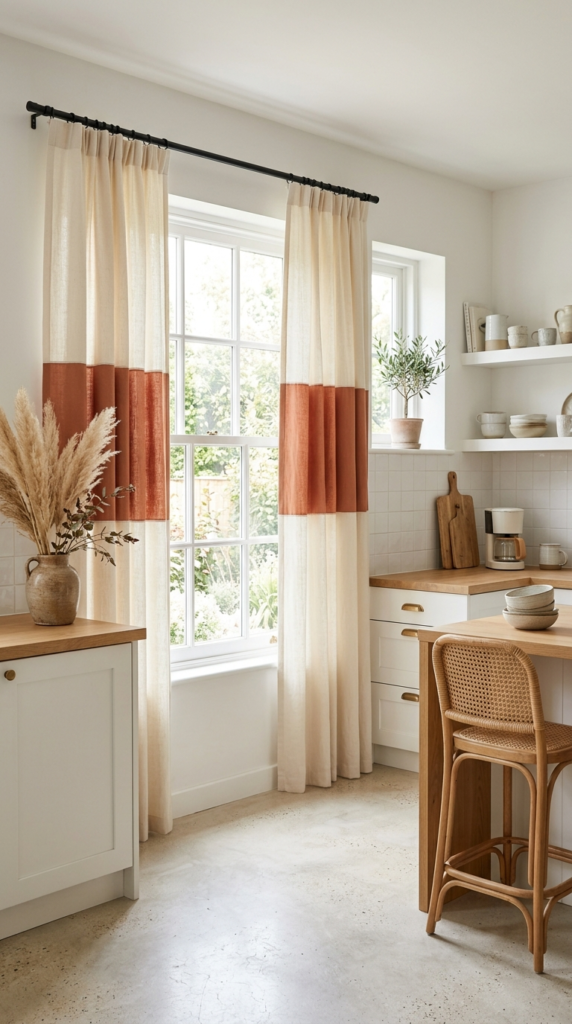
Color Block Panel
- Adds a modern, art-inspired look to a plain window.
- Brings in color in a clean, controlled way.
- Works well in neutral kitchens that need one personality piece.
- Horizontal bands widen the window, while vertical blocks add height.
- I’ve noticed that two shades look calmer than three.
Color can be organized, not chaotic. Color-block panels split the fabric into clean bands of two or three shades, giving a plain window a modern, art-inspired look. Terracotta with cream, navy with white, and sage with oat all feel calm yet creative. I’ve noticed that this style works best in neutral kitchens, where the curtain becomes the single splash of personality. The blocks draw the eye across the window and make the wall feel designed rather than decorated. It is a simple way to look current without changing cabinets, tiles, or paint, and without spending much at all.
Keep the proportions simple so the design feels intentional. Choose horizontal bands for a wider look, or vertical blocks to add height. Limit the palette to colors already in your kitchen, such as a tile accent, a bowl, or a wooden stool. Medium-weight cotton or linen holds clean lines and washes well. Hang the rod just above the frame and let the panels fall to the sill. In my experience, one muted shade and one stronger shade look more polished than three bright ones. Press the seams after washing, and keep the fabric clear of burners.
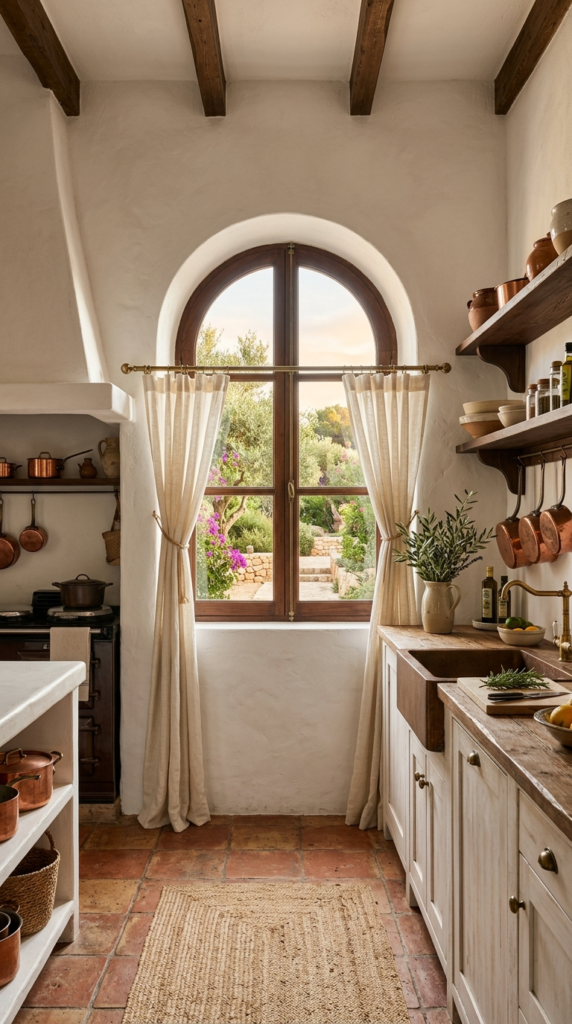
Arched Window Drape
- Shows off the curved top while dressing the sides.
- Adds softness below the arch without blocking light.
- Suits Mediterranean, cottage, and farmhouse kitchens.
- Makes the window feel like an architectural focal point.
- I’ve seen this work well when the rod sits right at the base of the arch.
Arches deserve to be seen. An arched window is one of the loveliest features a kitchen can have, so the goal is to dress it without hiding the curve. Mount the rod at the base of the arch and let soft panels frame the sides, leaving the curved glass fully open. I’ve seen this work well in Mediterranean and cottage kitchens, where plaster walls and wood shelves add warmth. The curve stays on show, the fabric adds softness below it, and the whole wall suddenly feels like a thoughtful, architectural focal point worth a second look.
Placement and fabric matter here. Choose lightweight linen or cotton in cream, sand, or soft white so the panels never compete with the shape above. Hang them slightly wider than the frame, which makes the window look broader and keeps the glass clear. For privacy, add a simple cafe tier or a small roman shade beneath the curve. Brass or black rods both look good, so match your other hardware. That’s why many designers recommend keeping the arch uncovered and dressing only the lower half. Wash gently, press lightly, and keep fabric away from the stove
Burlap Rustic Panel
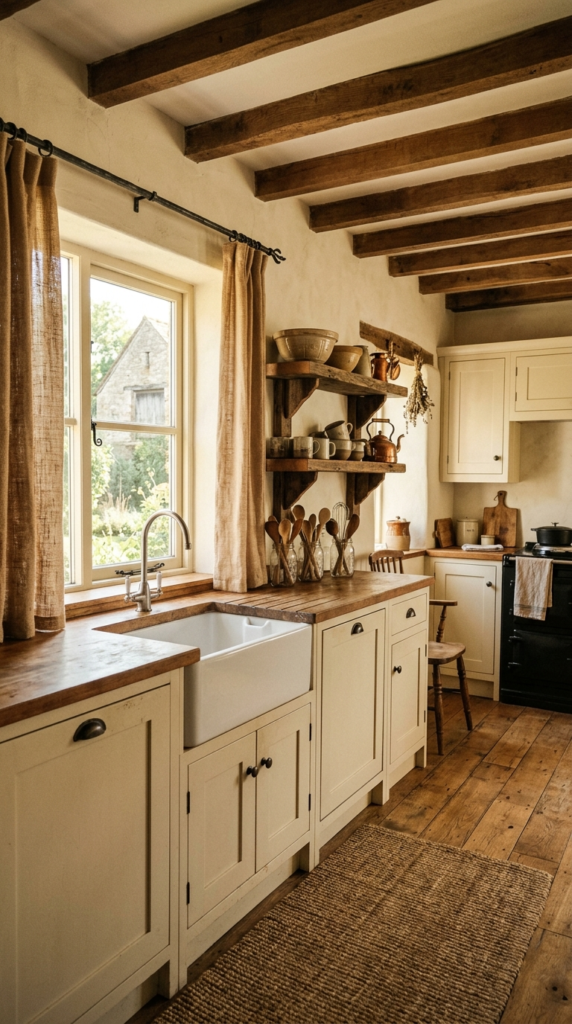
- Adds warm, earthy texture to plain walls.
- Lets daylight glow softly through a loose weave.
- Very budget-friendly for a full window.
- Pairs well with wood shelves, cream cabinets, and iron hardware.
- I’ve noticed that lined burlap looks neater and sheds far less.
Rustic never looks tired when texture leads. Burlap panels bring a warm, earthy feel that suits farmhouse and cabin kitchens perfectly. The loose weave lets daylight glow through while the golden fiber adds instant depth to plain walls. I’ve seen this work well beside open wooden shelves and cream cabinets, where the fabric echoes the natural materials around it. It is also wonderfully affordable, so you can dress a whole window for the price of a few meters. The look feels handmade, grounded, and welcoming, like a kitchen that has hosted many slow Sunday breakfasts and plenty of laughter.
Raw burlap needs a little care to stay pretty. Pre-wash it gently or steam it first, because untreated fabric can shed and shrink. Line the panels with plain cotton if you want better privacy and a softer feel. Keep the length at the sill near the sink, since loose fibers soak up splashes quickly. In my experience, a dark iron rod and simple ring clips balance the rough texture nicely. Keep the fabric well away from burners, and shake it out weekly to remove dust. Spot clean when needed, and the natural color will age beautifully over time.
Pinch Pleat Linen
- Creates tidy, tailored folds that look custom made.
- Stacks neatly at the sides to keep the glass clear.
- Adds height and elegance to larger windows.
- Pairs well with marble, brass, and painted cabinets.
- I’ve noticed that fuller fabric always looks more expensive than thin, flat panels.
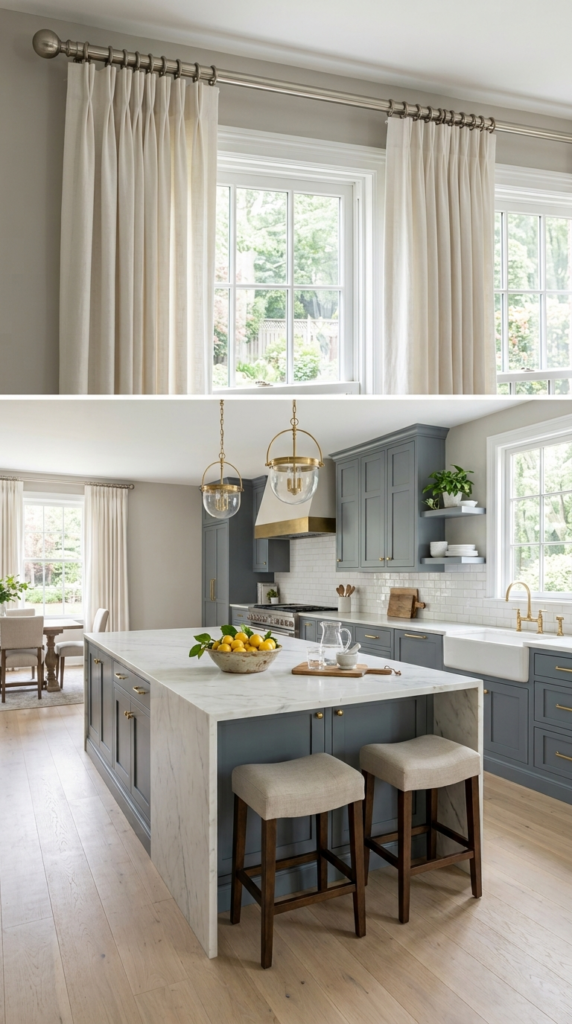
Crisp pleats make a window look tailored. Pinch pleat panels fall in neat, even folds that look custom made, even when the fabric is simple. They suit larger kitchens with an island, marble counters, or brass lights, where a refined finish matters. I’ve noticed that the folds add height and structure that flat panels cannot copy. When opened, the pleats stack tightly to the sides, leaving the glass fully clear for daylight and view. The look feels calm, polished, and quietly luxurious, like a kitchen designed by someone who loves detail but never wants anything to feel fussy.
Fullness is the secret to this style. Buy fabric about two times the window width so the pleats keep their shape when closed. Choose medium-weight linen or cotton in ivory, oat, or soft gray, and hang it on a sturdy rod with rings. Mount the rod a few inches above the frame and let the panels reach the sill or just touch the floor. In my experience, a lining adds weight and helps the folds hang straight. Keep the fabric away from the stove, and vacuum it lightly each month to remove dust.
Faux Wood Blinds
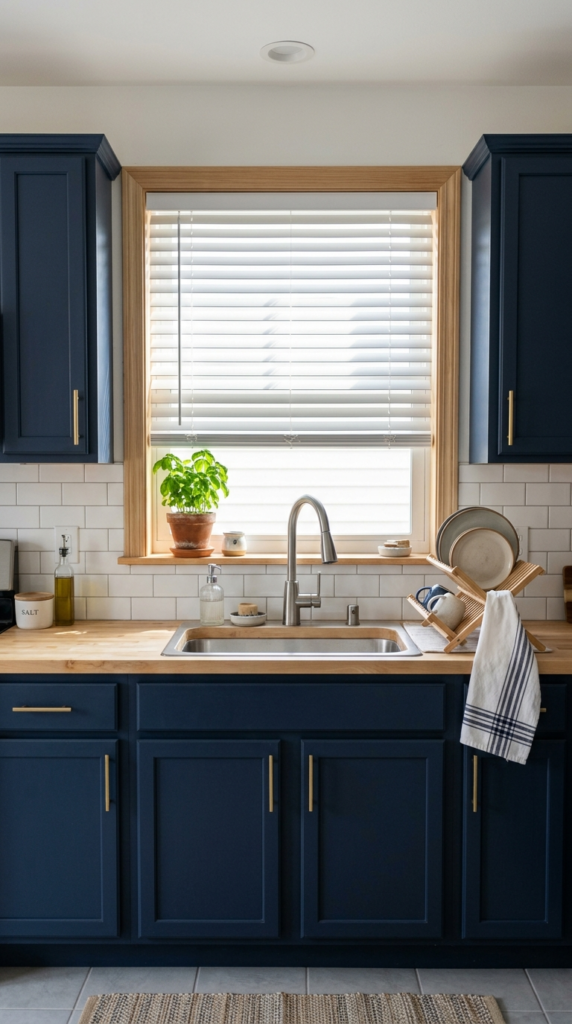
- Handles steam, splashes, and humidity better than real wood.
- Tilting slats aim light without losing privacy.
- Wipes clean in seconds with a damp cloth.
- Gives a crisp, tailored look over a sink.
- In my experience, white slats brighten the room more than dark wood tones.
Busy kitchens need windows that work hard. Faux wood blinds shrug off steam, splashes, and cooking humidity, which makes them one of the most practical choices above a sink. Tilt the slats to aim sunlight at the ceiling, or close them for full privacy. I’ve seen this work well in family kitchens where the window gets daily use and nobody wants delicate fabric near the faucet. The clean horizontal lines look crisp against subway tile and painted cabinets. You get a neat, tailored window that stays easy to live with, season after season, without any fuss.
Small choices make these blinds look expensive. Pick wide two-inch slats for a modern feel, or narrow one-inch slats for traditional windows. White and soft cream brighten the room, while warm oak tones add a natural touch. Mount inside the frame for a built-in look. In my experience, cordless lifts feel smoother and are safer around children and pets. Add short side panels if you want softness without losing function. Dust the slats with a microfiber cloth, then wipe with a damp sponge when grease builds up. Cleaning takes minutes, and the finish stays fresh for years.
Conclusion
A beautiful kitchen doesn’t always need a big renovation. Sometimes it starts with one soft, well-chosen layer at the window. Whether you love breezy linen, playful gingham, or practical blinds, the right kitchen window curtains can bring light, privacy, and personality into your everyday routine. I’ve seen how small changes like these can completely transform a space. So pick one idea that speaks to you and try it this weekend. Save this post on Pinterest so you can come back for inspiration, and share it with a friend who is dreaming of a cozier, brighter kitchen. Your window is waiting.