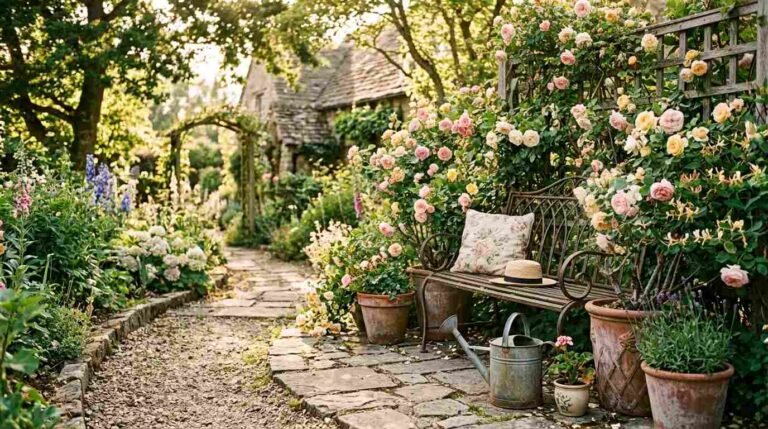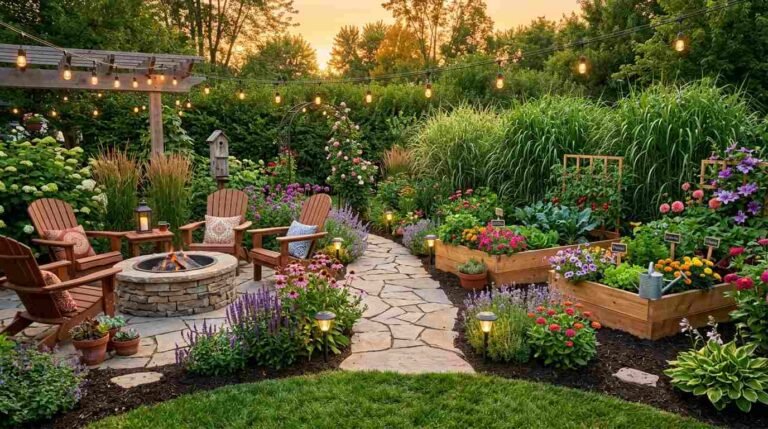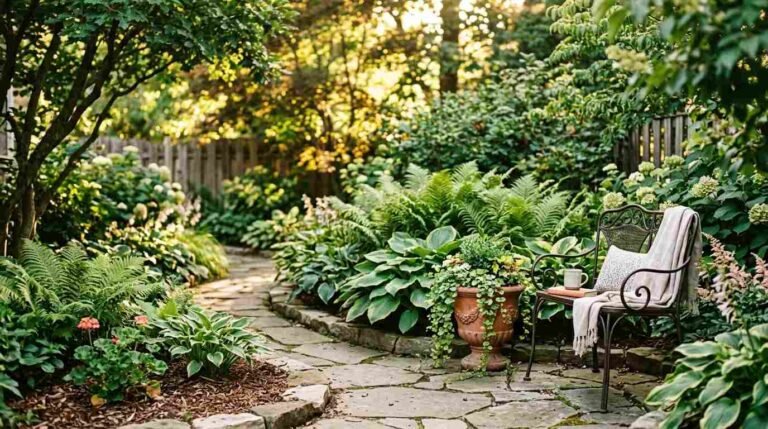
If you want a garden that feels warm, worn in, and easy to sit in, start with the material, not the shopping list. In these 29 rustic garden decor ideas, wood gives the garden its frame, stone gives it weight, metal gives it shine and age, and terracotta gives it warmth. Each idea below names its main material in the first lines, with exact sizes, colors, and steps, so you can copy it in a small yard or a large one. Work with one material first, then add a second one in small amounts, and the garden will look collected instead of matched.
Rustic Garden Decor Ideas by Material: Wood, Stone, Metal, and Terracotta
Wood leads this list, in ideas 1, 3, 4, 7, 9, 11, 12, 13, 16, 18, 20, 21, 22, and 29. Use cedar, pine, oak, or reclaimed pallet wood, and let the gray and brown grain show. Sand only the parts people touch, and oil or seal the rest so the wood ages slowly.
Stone anchors the garden in ideas 5 and 26, and it supports the gate in idea 14 and the barrel pond in idea 16. Choose flagstone, river stone, or cast concrete in gray, cream, and pale brown. Set stones half buried and leave small gaps for moss and thyme.
Metal adds age and light in ideas 2, 8, 14, 15, 19, 24, and 25. Galvanized steel, wrought iron, tin, and copper all start bright and turn soft with rust, patina, and verdigris. Keep metal pieces under a roof edge in winter, and oil the hinges once a year.
Terracotta warms the planting in ideas 6 and 23, and terracotta pots also appear in ideas 3, 10, and 18. The pale orange clay suits lavender, rosemary, and geraniums, and the white mineral marks on old pots are part of the look. Soak new pots for 30 minutes before planting so the clay does not pull water from the soil. Natural fiber, wicker, rattan, jute, and burlap in ideas 10, 17, 22, and 28, softens all four hard materials, so add one fiber piece in each seating area.
1. Weathered Wood Planter Boxes Farmhouse garden feel
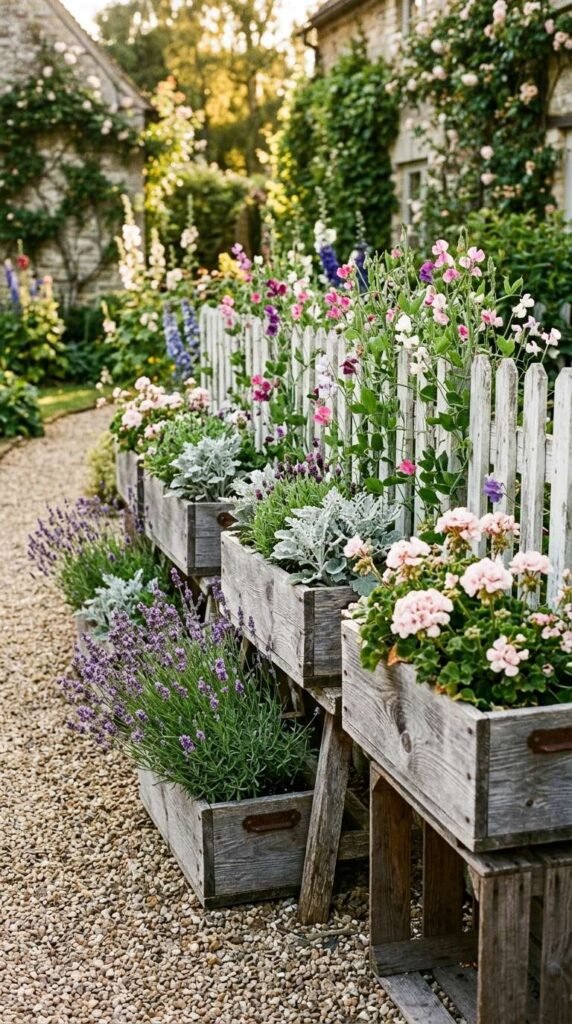
Wood is the material here, and the box itself proves it. Build a planter box from untreated cedar or pine boards, 48 inches long, 12 inches wide, and 10 inches deep, and let the boards weather to silver gray in one summer. The visible grain and the small knots in the wood add depth that a plastic box cannot copy, and a row of three boxes along a fence makes a plain lawn edge look finished.
Drill six 1/2 inch drainage holes in the bottom of each box, then add a 2 inch layer of gravel before the soil. Plant tall salvia at the back, bushy petunias in the middle, and trailing lobelia over the front edge so the colors step down toward the path. Set the boxes 4 inches apart so air can move between them, and brush on a light gray wood stain if you want the aged look in a few weeks instead of a full season.
2. Galvanized Metal Watering Cans as Vintage Flower Vases
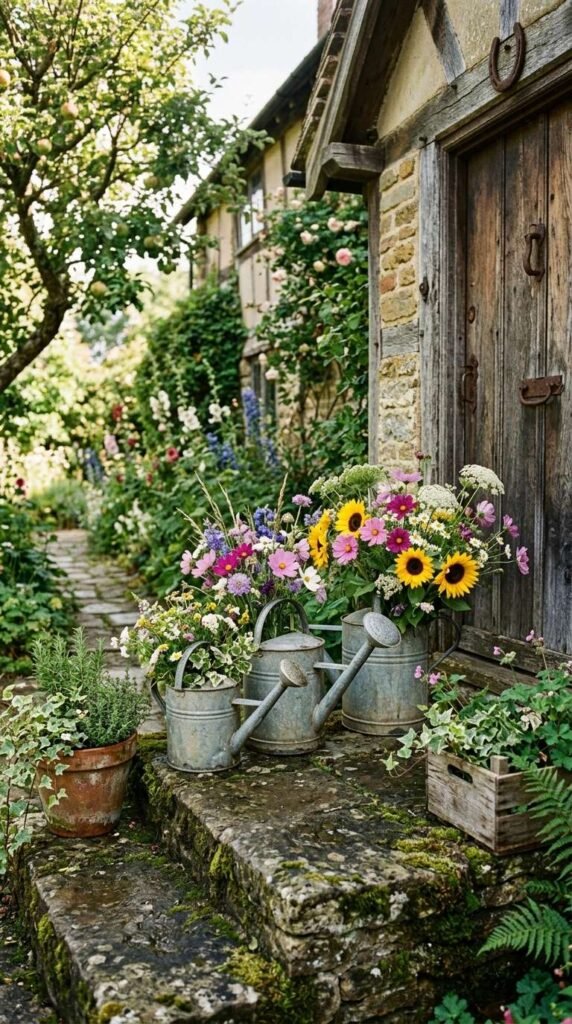
Metal is the material here, and dull silver galvanized steel is the whole point. A group of three old watering cans in heights of 10 inches, 14 inches, and 18 inches, with a few rust blooms on the spouts, looks at home on a doorstep, a bench, or a garden table. The metal reflects light in a soft way, so pink dahlias, yellow marigolds, and white zinnias all look brighter against it.
Look for cans at flea markets and leave the patina alone, since polishing it away removes the age. Fill the cans with water and fresh cut stems for a display that changes each week, or drill four 1/4 inch holes in the bottom and plant trailing nasturtiums in them for a full season. Rinse the inside of each can once a month so old water does not stain the metal.
3. A Vintage Wooden Ladder Plant Display That Steals the Show
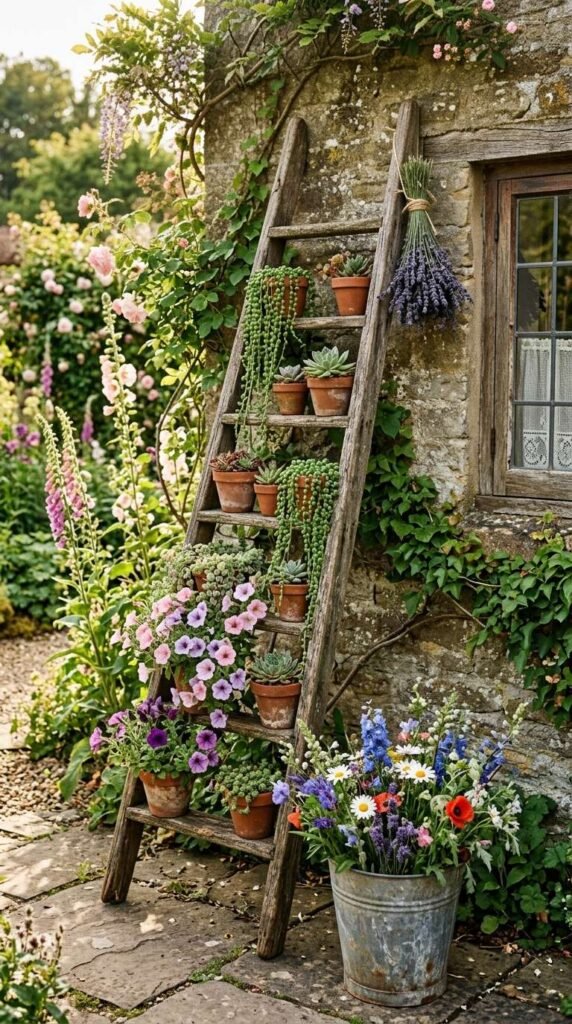
Wood is the material here, in a ladder that adds height where a garden corner is flat. A wooden step ladder about 60 inches tall with four rungs holds eight small pots, and the chipped cream paint over pale green on the rails adds color without any extra decor. It fits a spot only 24 inches wide, so it works on a small patio, a balcony, or a narrow side yard.
Lean the ladder against a fence and screw a small L bracket into the fence at the top rung so wind cannot tip it. Put the heaviest pots, 8 inch terracotta pots with rosemary, on the bottom two rungs, and lighter 4 inch pots with trailing ivy on the top rungs. Water from the top down, and let the lower pots catch the extra drops as they drain.
4. A Reclaimed Wood Garden Sign That Tells Your Story
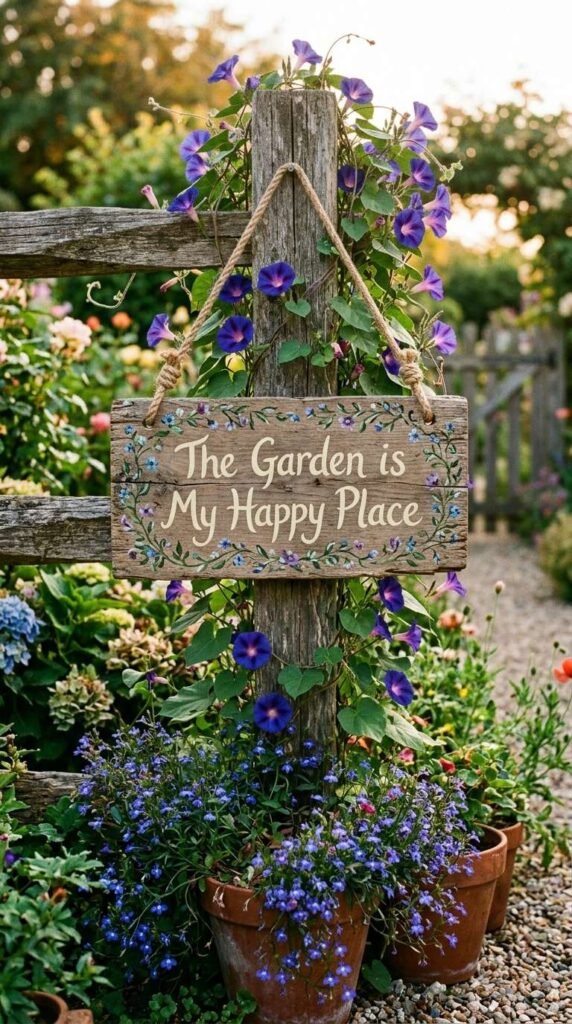
Wood is the material here, in a sign cut from a pallet or an old fence board. A board 24 inches long and 8 inches wide, with rough sawn edges and a few nail holes left in place, gives a garden a voice in a way no bought ornament can. Paint the words in cream or sage green chalk paint, in letters about 2 inches tall, so the sign reads from 10 feet away.
Hang the sign with jute twine or old chain from two small hooks, at eye level near a garden gate or a shed door. Leave the natural imperfections in the wood, and do not sand the face smooth, since the rough grain is the detail that makes the sign look old. Seal the painted letters with one coat of clear outdoor sealant so rain does not wash the paint off in a single season.
5. A Stone Pathway with Moss Accents for Cottage Garden Character
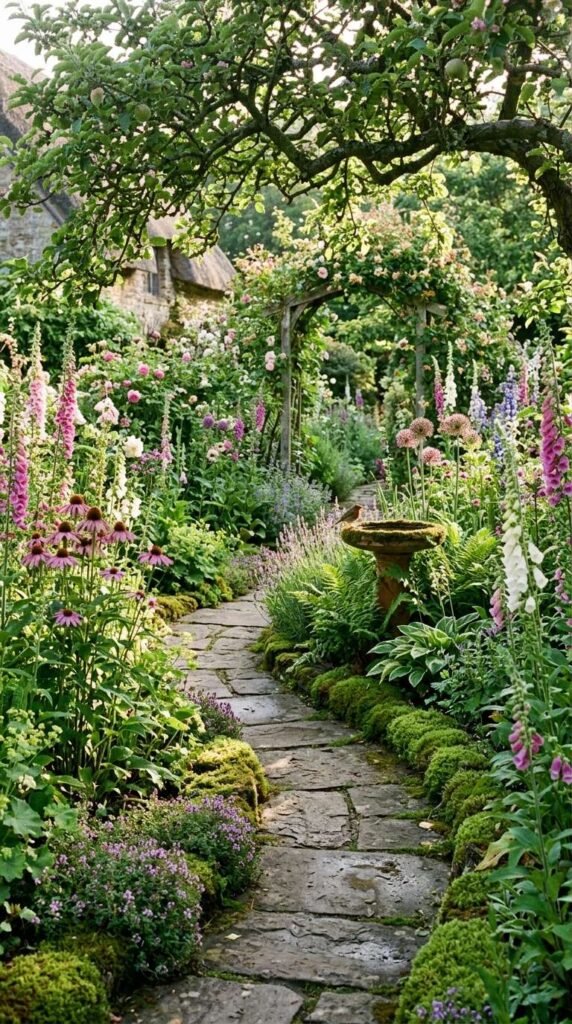
Stone is the material here, in flat flagstones that look as if the garden made the path itself. Irregular stones in gray, cream, and pale brown, each about 16 to 20 inches across, laid with 2 to 3 inch gaps between them, give a path a soft edge that a straight brick line cannot. Creeping thyme and Irish moss in the gaps add a green cushion and a light scent when you brush past them.
Dig the path bed 4 inches deep, add a 2 inch layer of sand, and set each stone level with a small tap from a rubber mallet. Fill the gaps with thyme plants spaced 6 inches apart, and water the path lightly for the first two weeks until the plants root. Keep the path 36 inches wide so two people can walk side by side, and let it curve gently so the garden feels larger than it is.
6. Terra Cotta Pot Clusters for an Earthy Mediterranean Garden Vibe
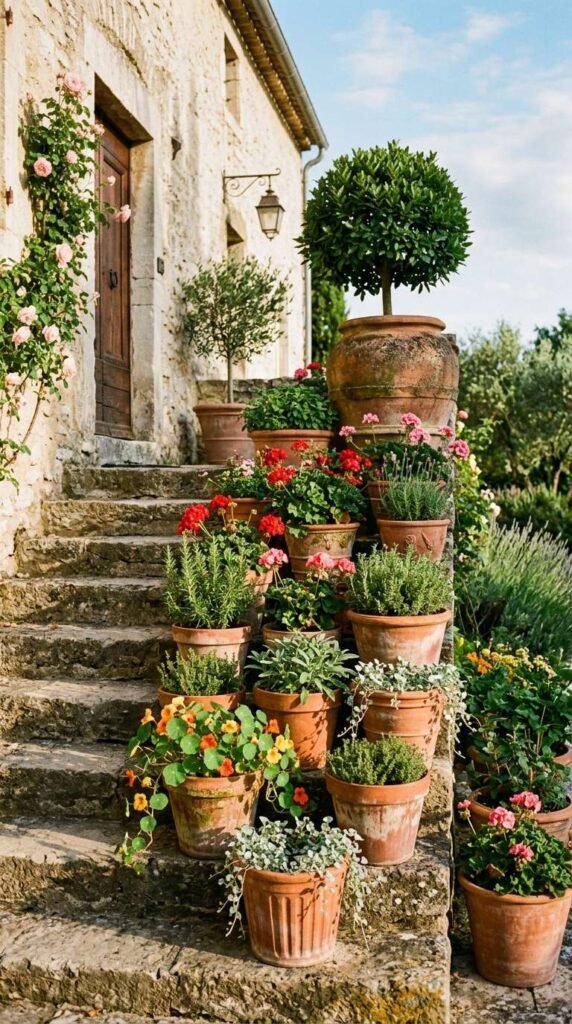
Terracotta is the material here, and its pale orange clay is the warmest color in a rustic garden. Group five pots in sizes of 6 inches, 8 inches, 12 inches, 14 inches, and 18 inches across, along a pale wall or beside a bench, and let white mineral marks and green moss build up on the outside. The pots look best with lavender, rosemary, and white geraniums, which keep the color palette soft and sun warmed.
Raise some pots on upturned pots or brick stacks so the display steps up in height instead of sitting in a flat row. Group plants by use, an all herb cluster near the kitchen door, a pastel flower group by a bench, or a succulent group in a sunny corner. Leave one pot empty or fill it with trailing ivy so the eye has a quiet place to rest between the fuller pots.
7. A Wagon Wheel as a Stunning Rustic Garden Focal Point
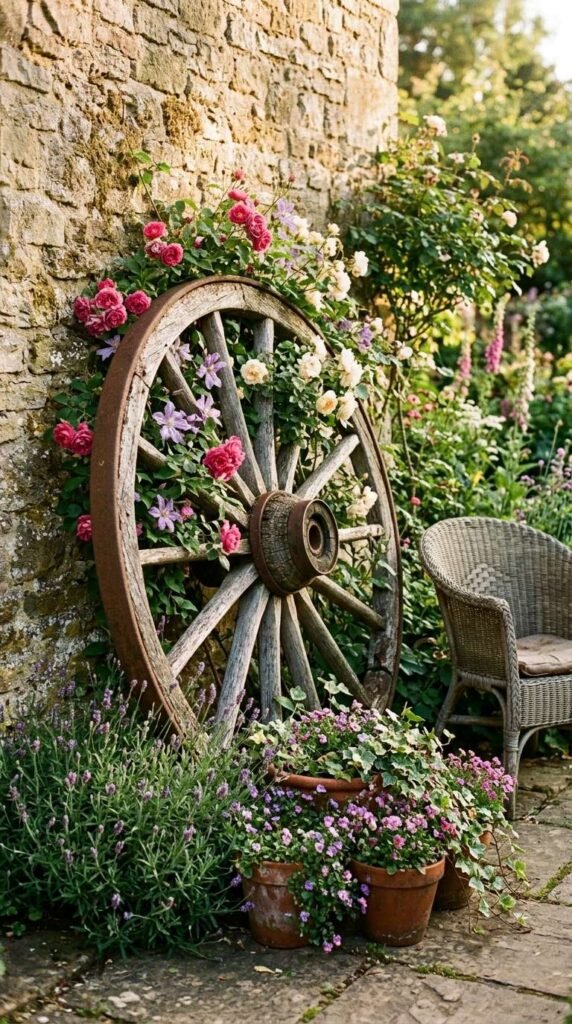
Wood is the material here, in a wagon wheel that is big enough to set the tone for a whole bed. A wooden wheel about 48 inches across, with a dark iron rim and spokes worn smooth by use, leans against a wall or a hedge and reads as a sculpture even before any plant grows on it. It suits a farmhouse garden best, where its size and age feel at home.
Brush the wood with linseed oil once a year and seal any deep cracks before you set the wheel outside. Plant a climbing rose at the base, 18 inches out from the wheel, and train the stems gently through the spokes as they grow, tying them with soft twine every 12 inches. In two summers the wheel will be half covered in blooms, which is the look you want.
8. Hanging Mason Jar Lanterns for Dreamy Outdoor Ambiance
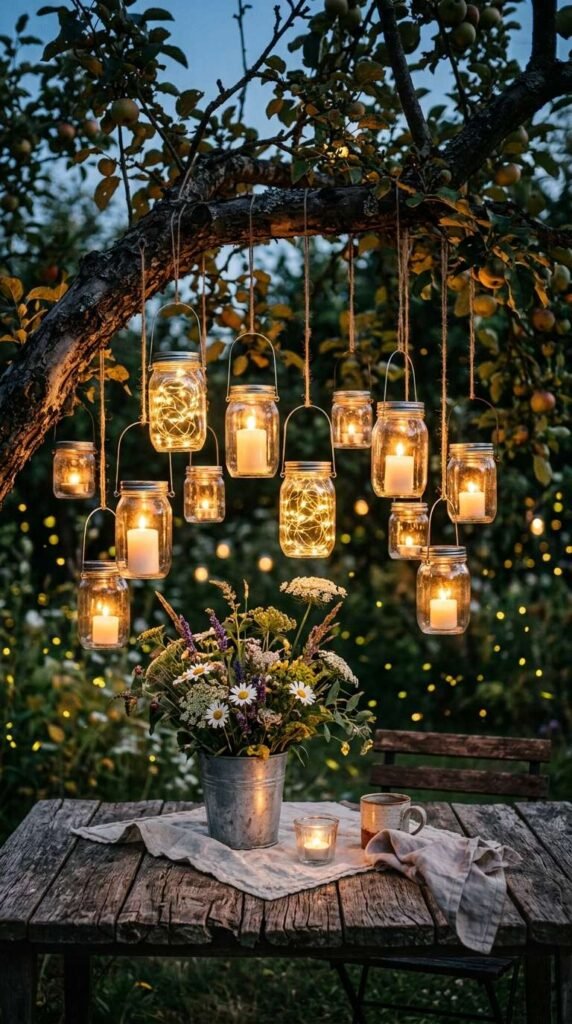
Metal and glass are the materials here, in a mason jar that turns candlelight into a garden light. A quart size glass jar with a wire handle, a metal lid ring, and a tea light inside gives a warm amber glow across about 6 feet of garden. Hang five jars at heights of 60 inches, 66 inches, and 72 inches from a tree branch or a pergola beam, so the light steps down in a gentle line.
Wrap the neck of each jar with jute twine, and tuck a sprig of dried lavender under the twine before you tie it. Use battery fairy lights inside the jars if you want no flame, and set them on a timer to start at dusk. Bring the jars inside during a storm, since a glass jar can crack if it fills with rain and then freezes.
9. An Old Barrel Planter as a Bold Farmhouse Garden Statement
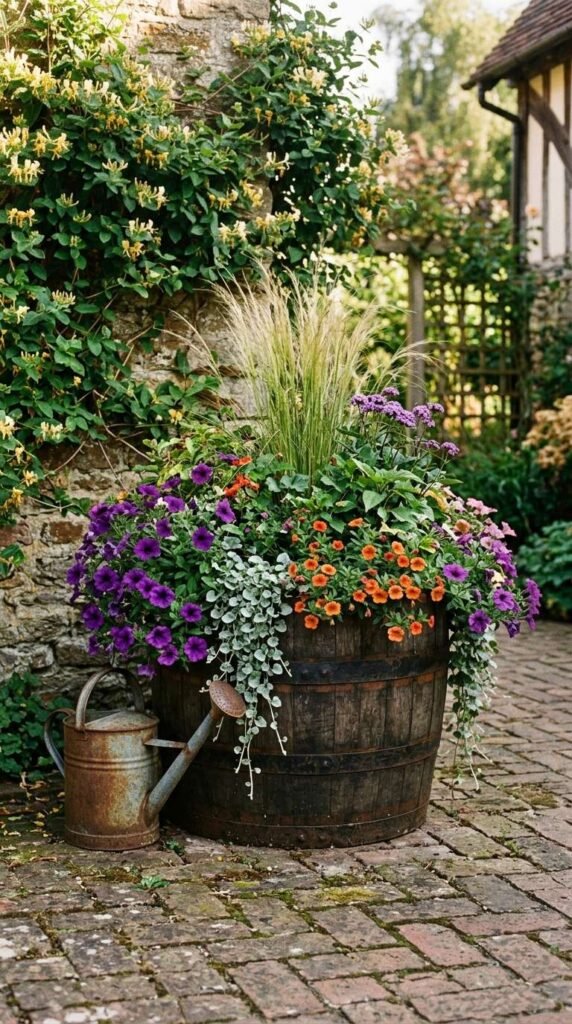
Wood is the material here, in an oak half barrel that holds enough soil for a full season of planting. A half barrel about 26 inches across and 18 inches deep holds about 12 cubic feet of soil, so it dries out far more slowly than a small pot in hot weather. Set it beside a front door, on a patio, or at the end of a driveway, where its size makes it a focal point.
Drill six 1/2 inch drainage holes in the base, then add a 3 inch layer of gravel before the soil. Plant one tall centerpiece, such as ornamental grass or salvia, in the middle, four bushy petunias or geraniums around it, and trailing lobelia at the rim so it spills 12 inches down the sides. Water the barrel in the morning, since the wood and the wide soil surface dry out by afternoon in summer.
10. A Wicker and Rattan Outdoor Furniture Vignette with Vintage Soul
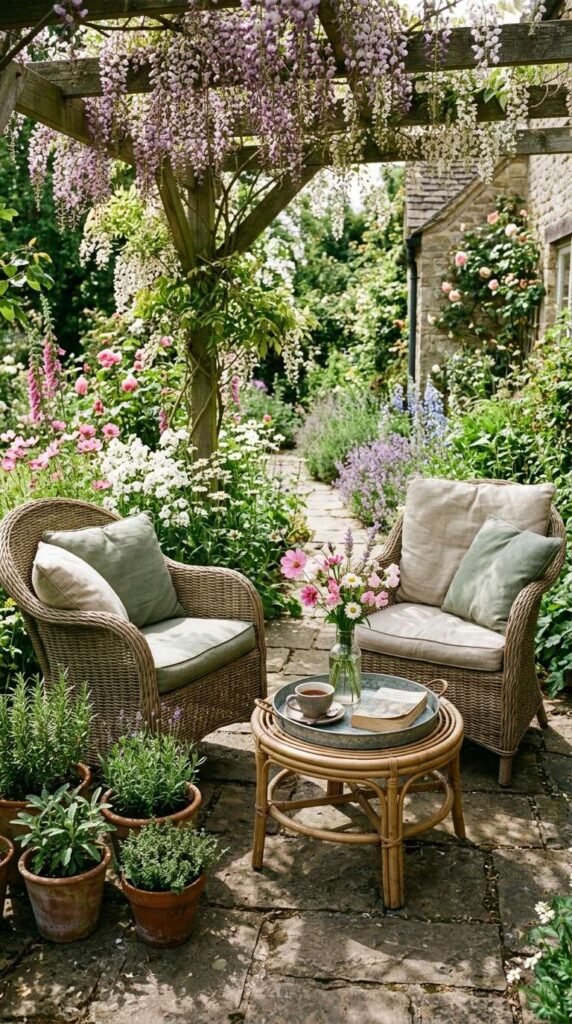
Natural fiber is the material here, in wicker and rattan that weave the seating area into the garden itself. A rattan chair with a thick weave, a small wicker table about 24 inches across, and a jute rug underfoot make a corner feel soft and unhurried. The fiber echoes the woven stems of climbing roses and the criss cross of plant supports nearby, so the furniture and the planting share the same texture.
Layer the chairs with linen cushions in natural cream, a folded vintage quilt over one arm, and a terracotta pot of fresh basil on the table. Set the group where it catches shade after 3 pm, and leave a 30 inch clear path in front of the chairs so people can sit down without stepping on plants. Brush the wicker with a soft brush once a month to keep dust out of the weave.
11. A Rustic Birdhouse Village That Brings Life and Charm to Your Garden
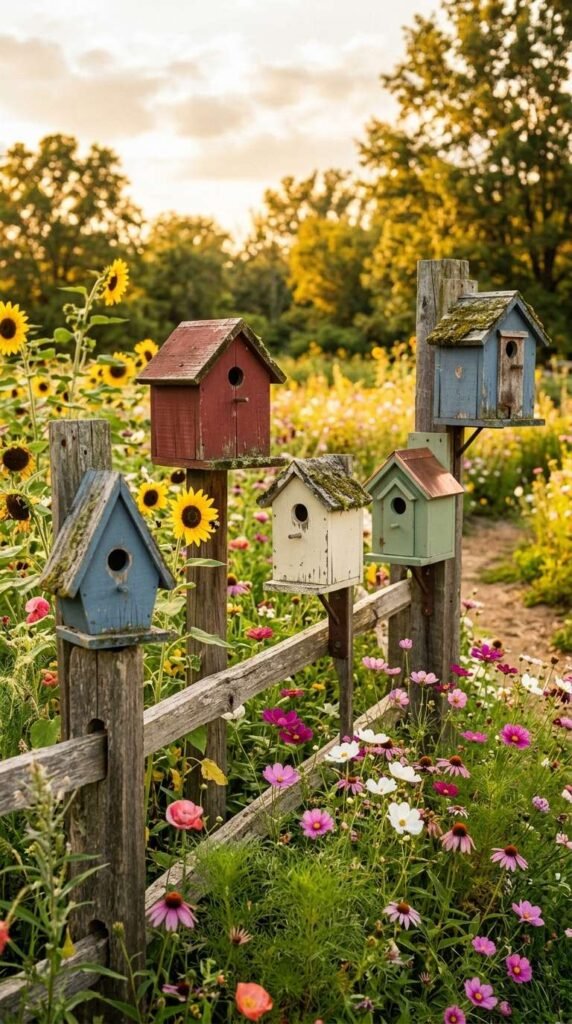
Wood is the material here, in a group of small birdhouses that makes a miniature village in a single bed. Three wooden houses, each about 8 inches wide and 10 inches tall, with a 1 1/2 inch entrance hole, mounted on posts at heights of 36 inches, 48 inches, and 60 inches, look far more alive than one house alone. Paint them in dusty sage, chalky barn red, and old weathered blue, and let the paint wear at the edges.
Face the entrance holes away from the wind, in a spot that gets morning sun and afternoon shade. Plant sunflowers, echinacea, and black eyed Susans around the base of the posts to draw birds and pollinators to the area. Clean each house out in late fall, so the birds have a dry place to return to in spring.
12. A Weathered Fence with Climbing Roses for Pure Romantic Drama
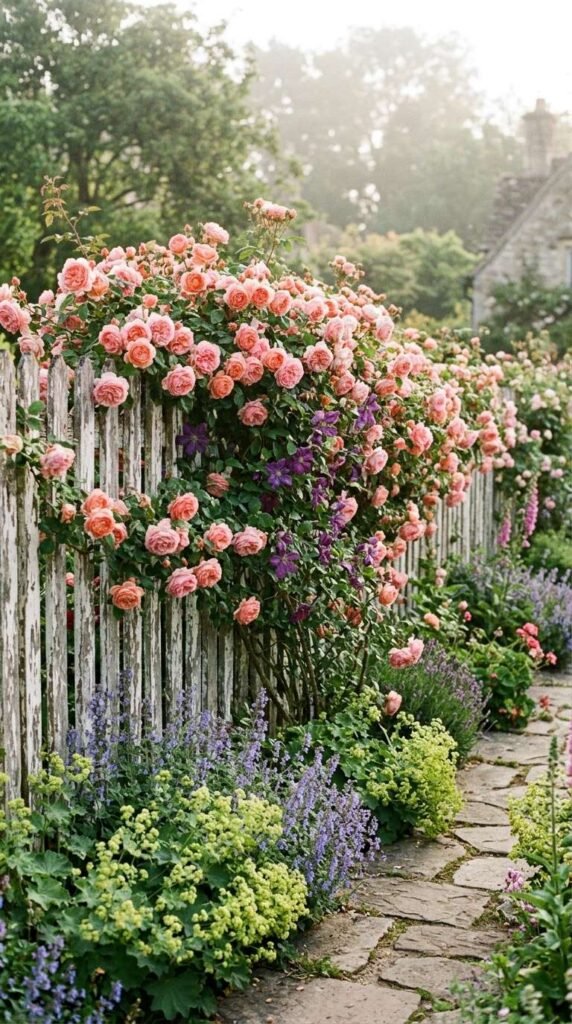
Wood is the material here, in a fence that has turned silver gray and peeling in the sun. A weathered wooden fence about 60 inches tall, with a climbing rose trained along wires fixed 12 inches apart, gives a garden a soft, full edge in June. The rose blooms and the worn wood work together, because the fence looks older and more settled with every flower that covers it.
Plant the rose 18 inches out from the fence base, where the soil is not dry from the posts, and train the main stems sideways along the wires, since horizontal stems flower far more than upright ones. Underplant the fence base with nepeta and foxgloves, spaced 12 inches apart, to fill the lower 24 inches of the fence. Prune the rose in late winter, and cut out any dead wood at the same time.
13. Log Slice Stepping Stones for a Woodland Garden Fairy-Tale Feel
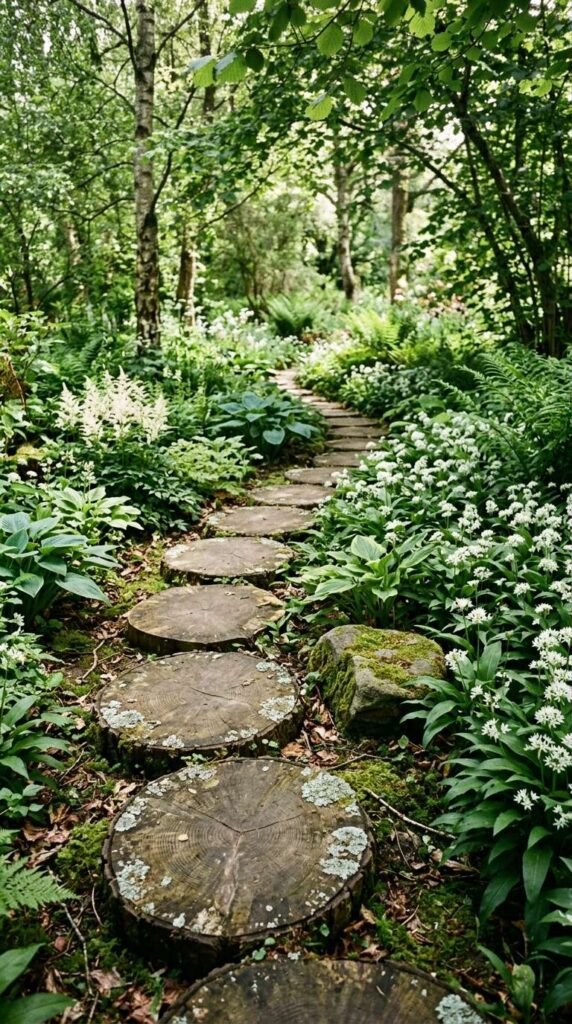
Wood is the material here, in log slices that show the rings and grain of the tree in every step. Cut rounds from a fallen tree, each about 14 inches across and 3 inches thick, and lay them on a sand bed with 2 to 3 inch gaps between them. The rings on each slice make a warm, natural pattern underfoot, and the gaps give ground cover plants a place to grow.
Brush the cut surfaces with exterior wood preservative, and do not use pressure treated timber where children or pets play. Set the slices level with a tap from a rubber mallet, then plant ajuga and creeping jenny in the gaps, spaced 6 inches apart, so the plants bind the path together by the second summer. Replace any slice that softens at the edges, and keep the path clear of fallen leaves in fall.
14. An Antique Garden Gate Entrance That Sets the Whole Scene
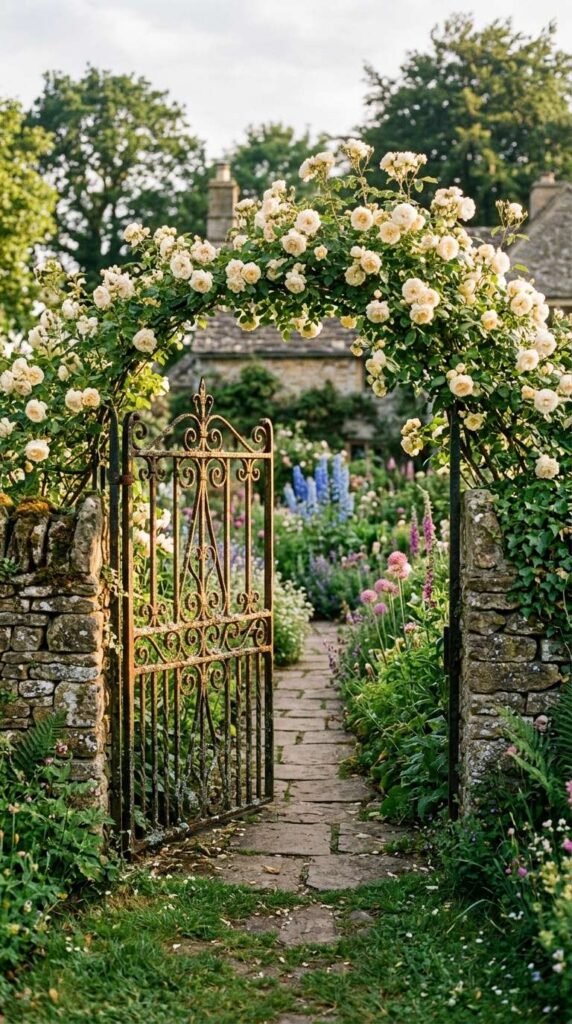
Metal is the material here, in a wrought iron gate that creates a clear threshold into the garden. An iron gate about 36 inches wide and 48 inches tall, with a simple scroll pattern and a ring of rust on the hinges, set in a stone wall or a wooden arch, tells visitors to slow down and look around. Let a climbing rose or honeysuckle grow over the arch so the entrance is half plant and half iron.
Look for genuine iron gates at salvage yards, and treat any deep rust with a rust converter before you seal it, while leaving the surface patina alone. Hang the gate on two new 6 inch strap hinges, and check that it swings clear of the path with at least 2 inches of space under it. Plant lavender 18 inches from each side of the gate so the scent meets visitors as they walk through.
15. A Tin Can Herb Garden for Clever Small Space Garden Decor
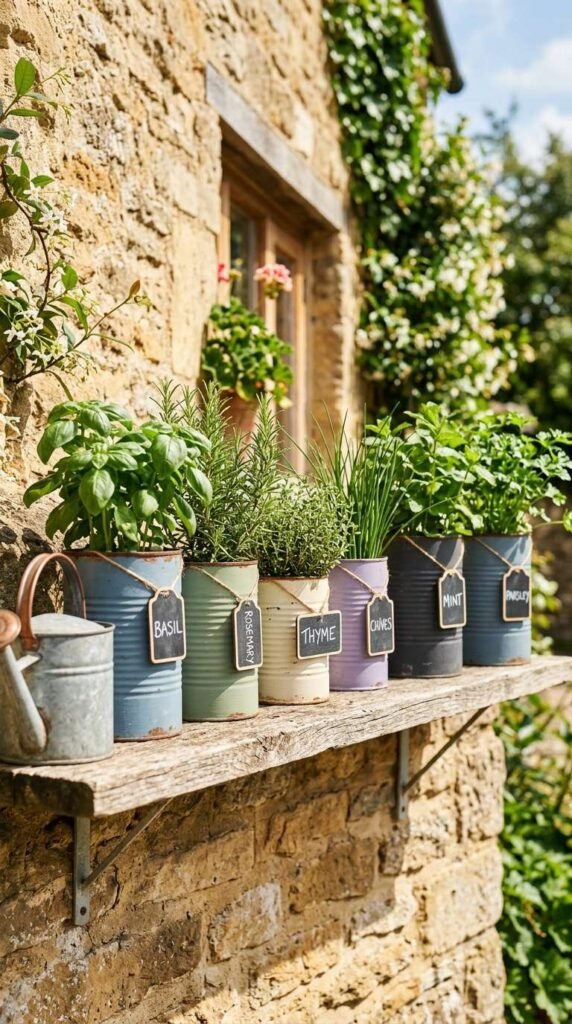
Metal is the material here, in tin cans that turn a sunny wall into a kitchen herb garden. Six tin cans in sizes from 12 ounces to 28 ounces, painted in chalky farmhouse tones or left in their natural steel finish, mounted on a reclaimed wood board 36 inches long, hold thyme, rosemary, oregano, chives, basil, and parsley within a few steps of the kitchen door.
Drill three 1/4 inch drainage holes in the base of each can, then fill it with a half and half mix of compost and horticultural grit. Label each can with a small chalk tag tied on with twine, and water the cans in the morning, since small metal containers dry out fast in sun. Feed the herbs with liquid seaweed fertilizer every two weeks through the growing season.
16. A Wooden Barrel Water Feature for Soothing Garden Ambiance
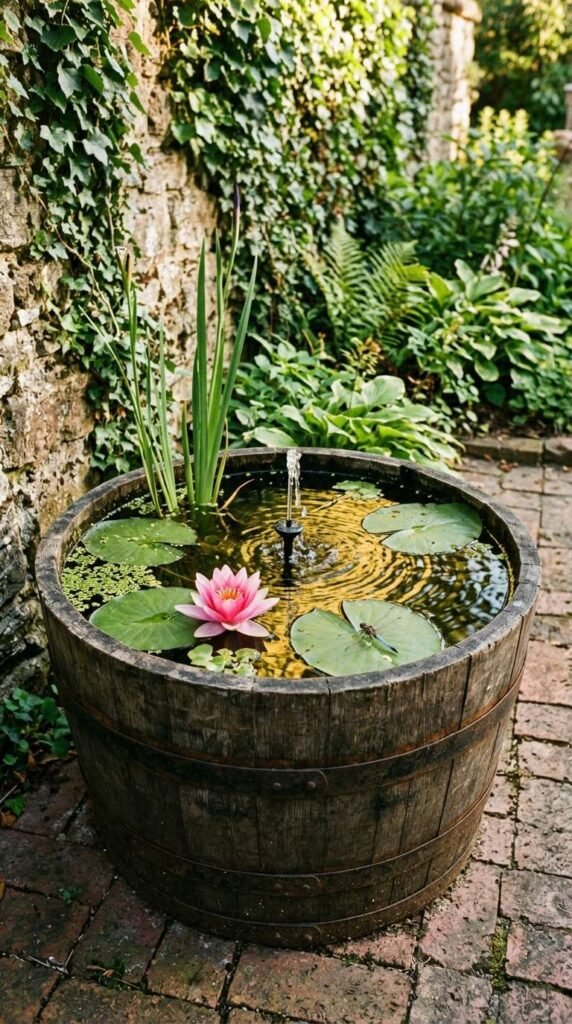
Wood is the material here, in a half barrel that holds a small pond on a patio. A half barrel about 26 inches across and 18 inches deep, lined with pond liner and filled with 12 inches of water, suits a miniature water lily, water forget me not, and a small water iris. Even a small solar pump that makes a gentle trickle can mask street noise and draw birds to the water.
Seal the inside of the barrel with pond liner, then fill it with tap water and let it stand for 48 hours before you plant. Add a small solar fountain pump for gentle movement, and a few freshwater snails from a garden center to help keep algae down. Top the water up once a week in summer, since a shallow barrel loses 1 inch of water a day in hot sun.
17. A Twine-Wrapped Lantern as a Simple and Stunning Garden Centerpiece
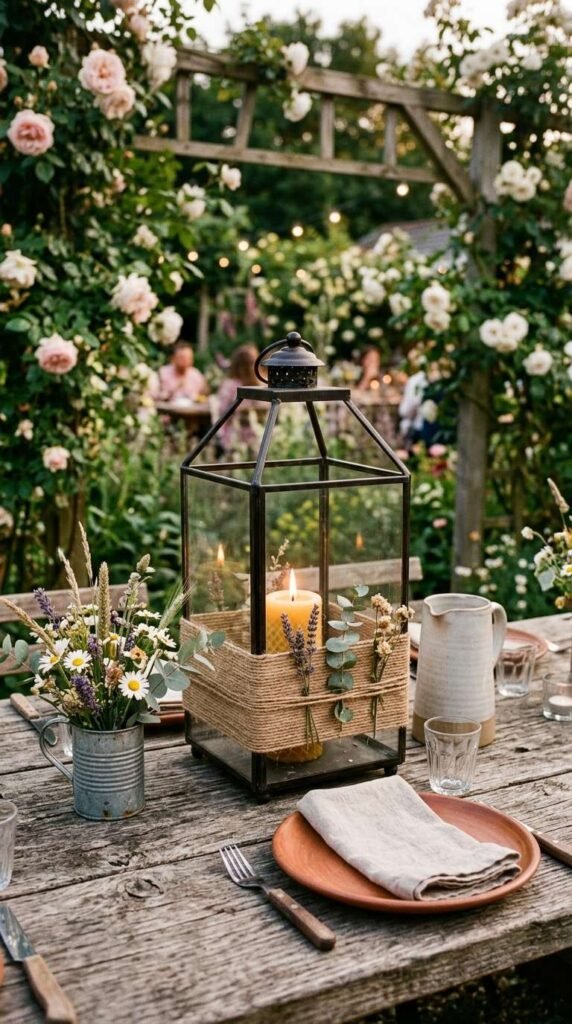
Metal, glass, and jute fiber are the materials here, in a lantern that takes 15 minutes to make and lasts all summer. A glass lantern about 12 inches tall with a clean iron frame, wrapped in close rows of jute twine from the base upward, becomes a table centerpiece that looks handmade. The rough twine, the clear glass, and the warm candlelight inside hit every note of the rustic look at once.
Wrap the twine in neat rows, knotting it at the start and the finish, and fix any loose ends with a small dot of craft glue. Tuck a dried lavender wand or a rosemary sprig under the twine before you finish the last rows so it stays in place. Set three lanterns in sizes of 8 inches, 10 inches, and 12 inches together on a garden table, with a flameless candle in each one, for a group that looks planned rather than placed.
18. A Vintage Crate Planter Stack for Effortless Layered Garden Style
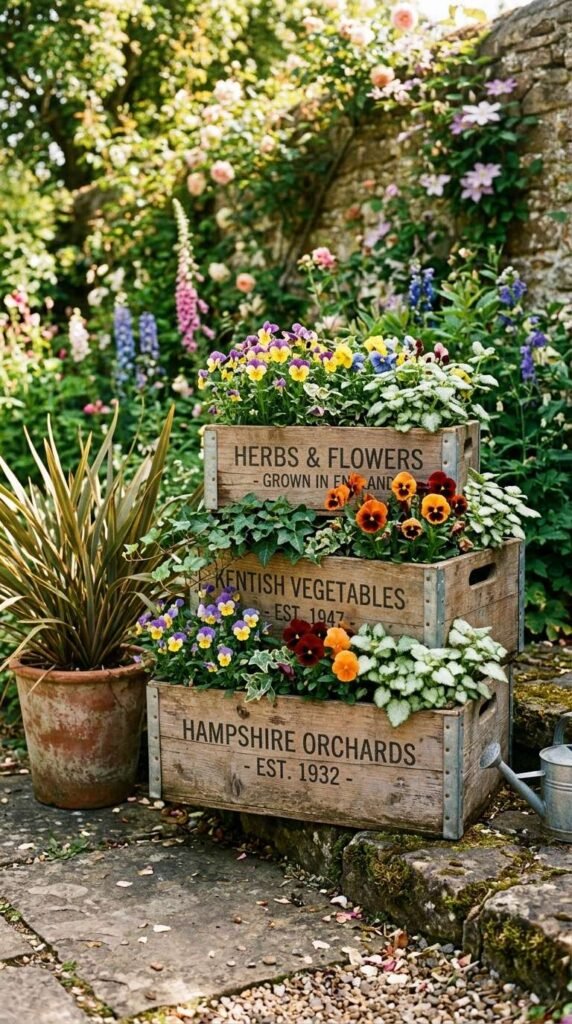
Wood is the material here, in old crates that stack into a tiered planter in minutes. Three wooden crates in sizes of 18 inches, 15 inches, and 12 inches wide, stacked at slight angles to each other, make a display that draws the eye in three directions at once. Look for crates with faded stenciled lettering on the side, such as a fruit or farm name, because the print is the detail that makes the crate look old.
Line each crate with burlap before you fill it with soil, so the soil stays in while water can still drain through the slats. Plant the bottom crate with spring bulbs or ornamental kale, the middle crate with pansies or violas, and the top crate with a trailing plant that will spill 12 inches down the sides as the season goes on. Turn the whole stack a quarter turn every two weeks so all sides get equal light.
19. Corrugated Metal Garden Bed Borders for an Industrial Rustic Twist
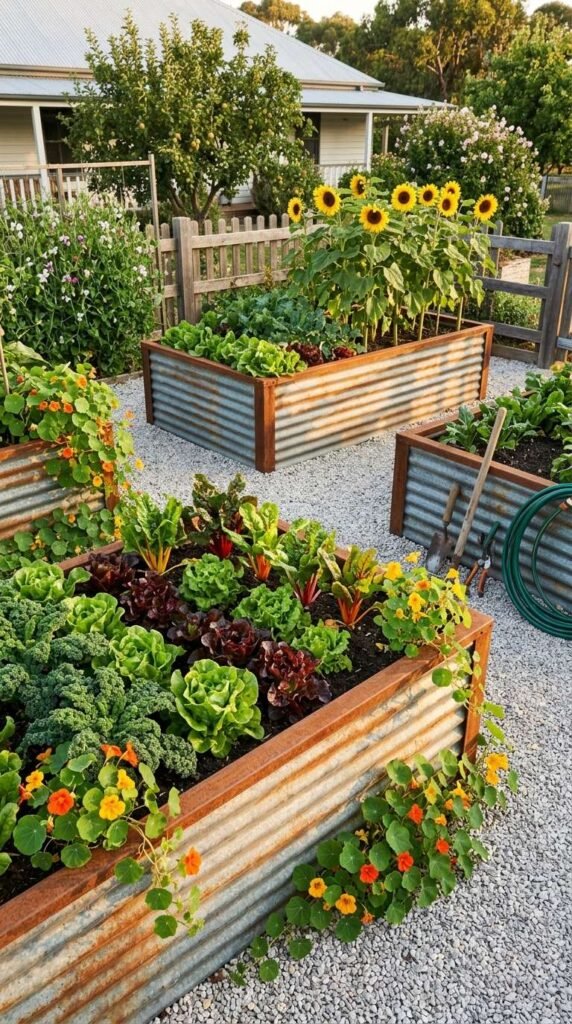
Metal is the material here, in corrugated steel that catches the light in shifting bands of highlight and shadow. A raised bed 48 inches long, 24 inches wide, and 18 inches deep, made from galvanized corrugated steel sheet at least 0.02 inches thick, looks both industrial and traditional in a kitchen garden. The metal starts bright silver, then turns gold, then deep rust brown over two to three years.
Line the inside of the bed with heavy duty pond liner or cardboard before you fill it, to slow any zinc moving into the soil, which matters most if you grow food. Fill the bed with soil to 2 inches below the rim, and plant vegetables or herbs in rows 12 inches apart. Leave the metal uncoated if you like the rusting look, and check the corner bolts once a year to make sure the soil weight has not pulled them loose.
20. A Tree Stump Side Table for the Most Natural Garden Seating Nook
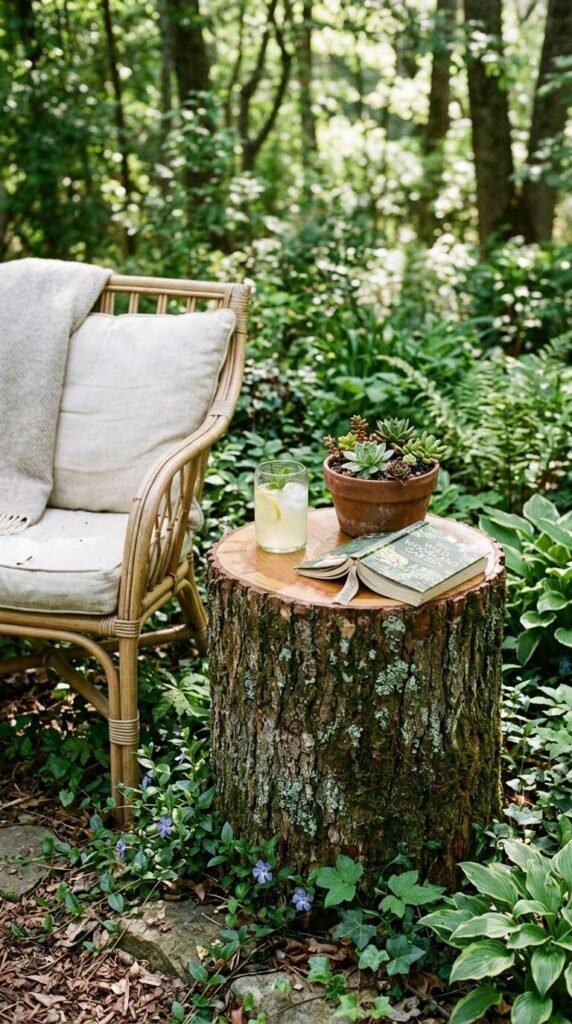
Wood is the material here, in a tree stump that costs nothing and cannot be copied. When a tree comes down, a stump about 18 inches across and 20 inches tall, sanded smooth on top and left with its bark on the sides, makes a side table beside a chair or a bench. Every ring, knot, and patch of lichen makes it unique, and moss will colonize the sides over time.
Sand the top with 60 grit paper, then 120 grit paper, until it feels smooth to the touch, and seal it with two coats of exterior decking oil to protect it from rain. Set the stump where it looks straight onto your best garden view, and leave a 12 inch gap between the stump and the chair so there is room to set a cup down. Oil the top again each spring before the season starts.
21. A Driftwood Garden Sculpture for Coastal Rustic Outdoor Decor
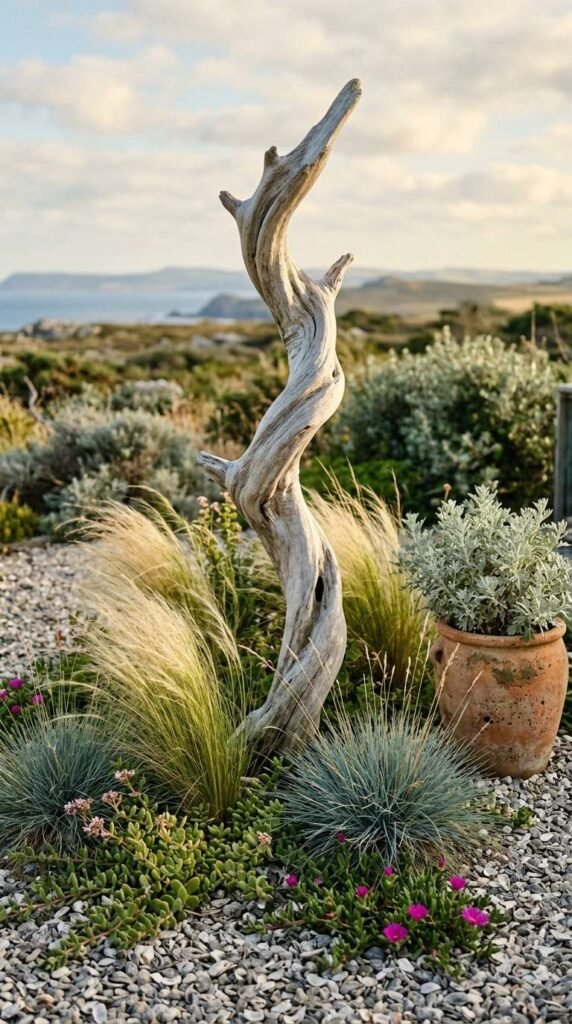
Wood is the material here, in driftwood that has been bleached silver gray by sun and water. A single piece about 36 inches long and 6 inches thick, with no soft or rotting sections, buried 6 to 8 inches into the ground, makes a sculpture that suits sea holly, grasses, and thrift planted around it. The pale color suits every plant color, from bold leaves to pastel cottage flowers.
Collect driftwood from beaches where removal is allowed, or from riverbanks and woodland floors, and tap each piece to check for a hollow sound that means decay inside. Use one large piece as a statement, or group three smaller pieces, 12 inches, 18 inches, and 24 inches long, in a cluster with 6 inches between them. Leave the silver color alone, and do not paint or oil the wood, since the bleached tone is the point.
22. A Rope and Wood Swing Bench for Timeless Garden Charm
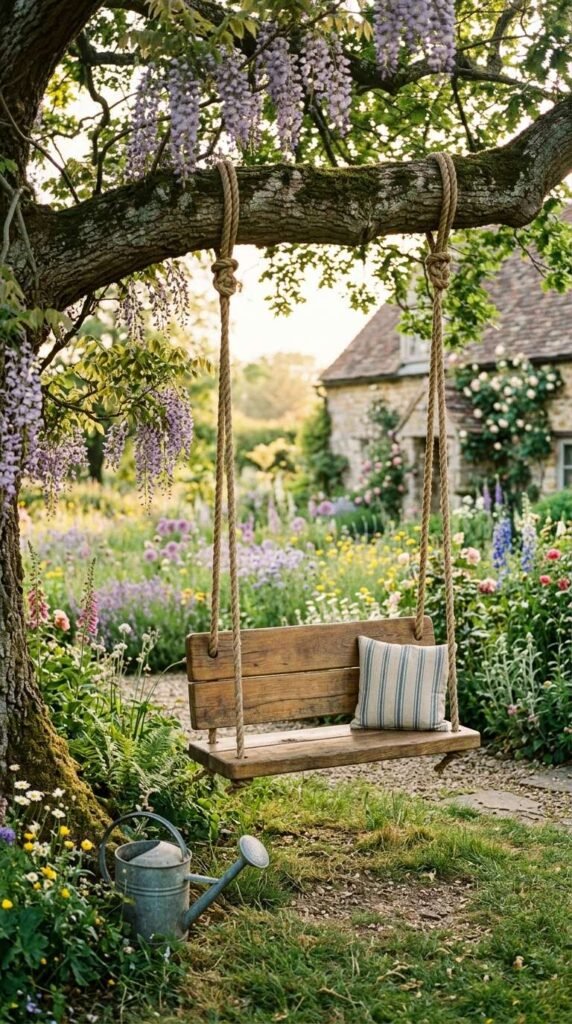
Wood and rope are the materials here, in a swing bench that moves gently between earth and sky. A hardwood plank seat 48 inches long, 12 inches deep, and 1 1/2 inches thick, in oak or ash, hung by manila rope at least 1 inch thick from a branch at least 8 inches across, makes a seat for two people. Sand the seat smooth, and treat it once a year with exterior decking oil.
Drill two holes at each end of the plank, thread the rope through, and knot it firmly below the seat. Hang the swing from proper tree swing eye bolts rated for the load, and leave at least 36 inches of clear space in front of and behind the seat so it can swing without hitting a plant. Check the branch, the bolts, and every knot each spring before the first use of the season.
23. Chimney Pot Planters for Bold Period Garden Character
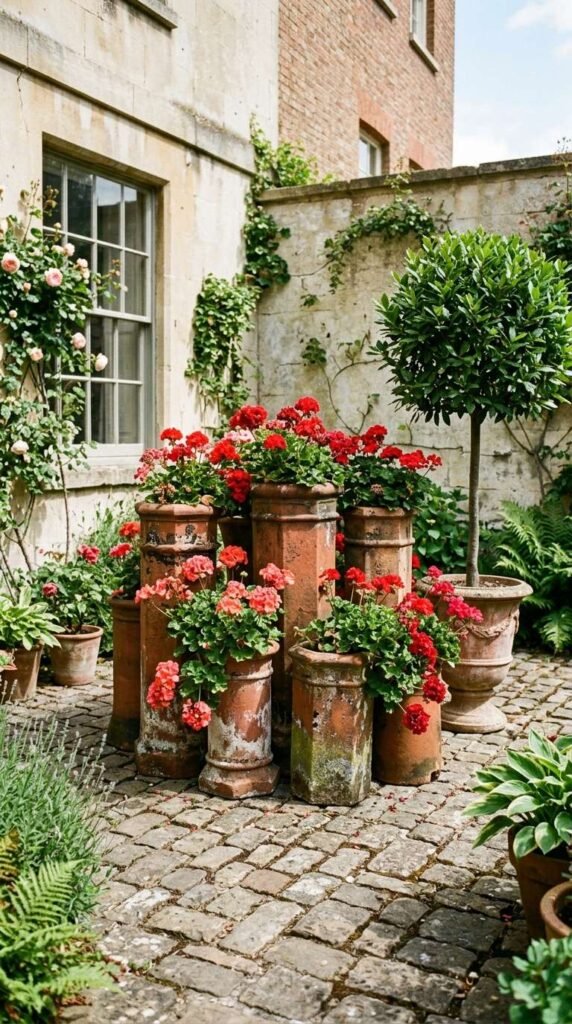
Terracotta is the material here, in chimney pots that have spent decades on a rooftop and carry soot, rain, and weathering in their clay. Three pots in heights of 24 inches, 30 inches, and 36 inches, grouped on a paved courtyard with 6 inches between them, give a garden a sense of period weight that a new pot cannot copy. Their tall, narrow shape suits trailing plants best.
Source genuine Victorian or Edwardian pots from salvage yards, and set each one on a perfectly level surface, since a tall narrow pot can topple in strong wind. Plant geraniums, trailing petunias, or fuchsias in the top, and let the stems spill 18 inches down the sides. Water from the top in the morning, and in winter, move the smallest pot against a sheltered wall so it does not freeze.
24. A Wheelbarrow Flower Display, a Classic Rustic Garden Decor Favorite
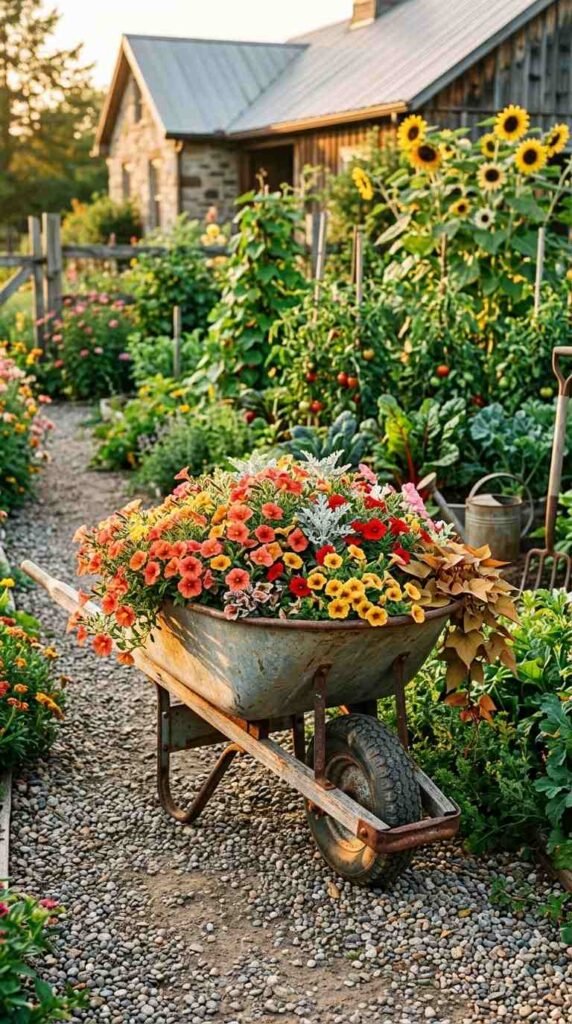
Metal is the material here, in a galvanized wheelbarrow that is both a tool and a planter. An old steel barrow with a tray about 36 inches long and 24 inches wide, a single wobbly wheel, and a dented body, holds about 3 cubic feet of soil, which is enough for a full mix of petunias, sweet alyssum, and trailing lobelia. Park it near a front gate, where it can be wheeled to a new spot when you want a change.
Check that the wheel is sound and the body holds soil before you plant, and patch any large holes with exterior epoxy. Line the base with horticultural fleece, then fill it with compost mixed with slow release fertilizer granules. Choose one color scheme, all orange, all pink, or sunset shades, since a single palette photographs far better than a random mix.
25. A Copper Pipe Trellis for a Warm, Stylish Modern Rustic Garden
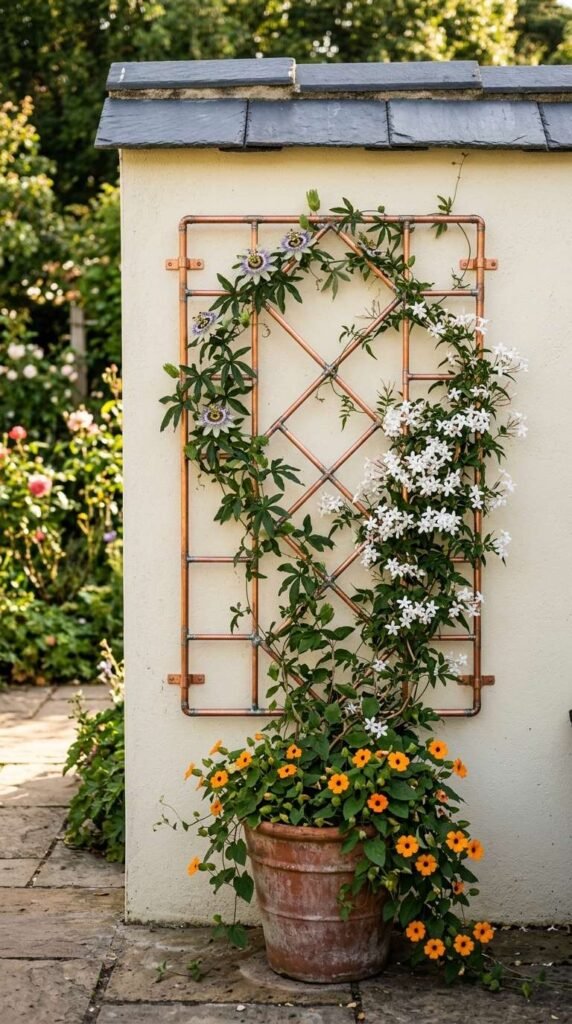
Metal is the material here, in copper pipe that changes color as it ages. A trellis 72 inches tall and 36 inches wide, made from copper tube 5/8 inch or 7/8 inch across, joined with compression fittings, starts bright orange, turns deep reddish brown, and ends in a green verdigris patina that looks a century old. That slow change is the reason gardeners leave copper uncoated.
Fix the trellis to a wall with copper pipe clips every 18 inches, or set the base pipes into steel ground anchors in a bed border. Train climbing plants through the grid with soft garden twine or thin strips of burlap, not wire ties, which can cut into stems as they thicken. In two summers the copper and the green growth will look as if they have always belonged together.
26. Pressed Flower Stepping Stones as the Most Personal Garden Path Decor
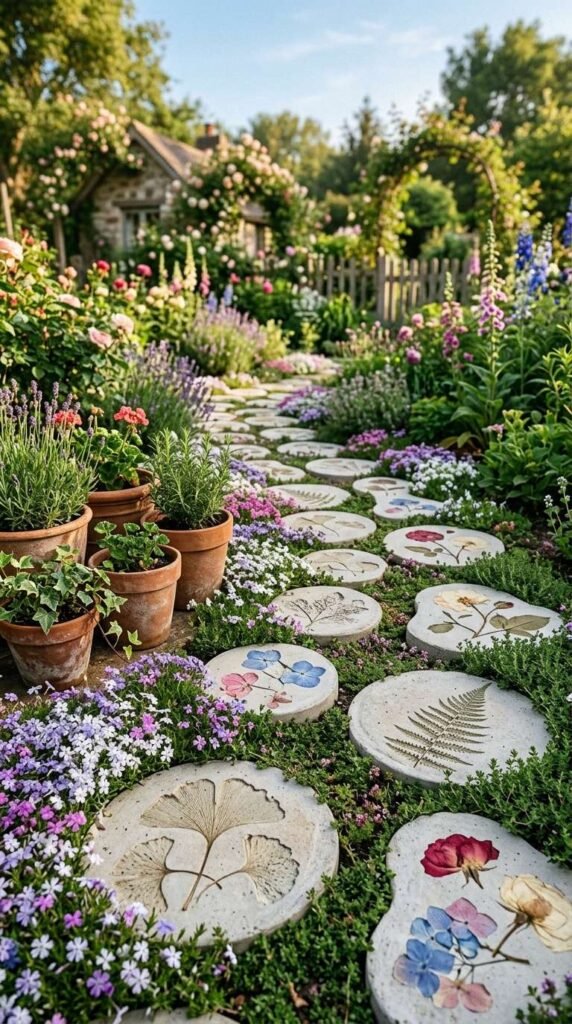
Stone is the material here, in concrete stepping stones pressed with flowers from your own garden. Mix concrete to a stiff consistency, press it into a cake tin or a stone mold to a depth of at least 2 inches, and while the surface is still soft, press a fern frond, a ginkgo leaf, or a daisy flat into it, then lift the plant out to leave its print. The stone keeps the fine lace of the leaf in permanent form.
Press the plants in between one and two hours after you pour, when the concrete is firm but still soft enough to take a print. Let the stones cure for 28 days before you lay them, and seal the surface with concrete sealant if you want the prints to stay crisp for years. Lay the stones 24 inches apart on a sand bed, with moss between them, for a path that feels personal in every step.
27. A Lantern-Lit Garden Nook for the Most Magical Outdoor Living Decor
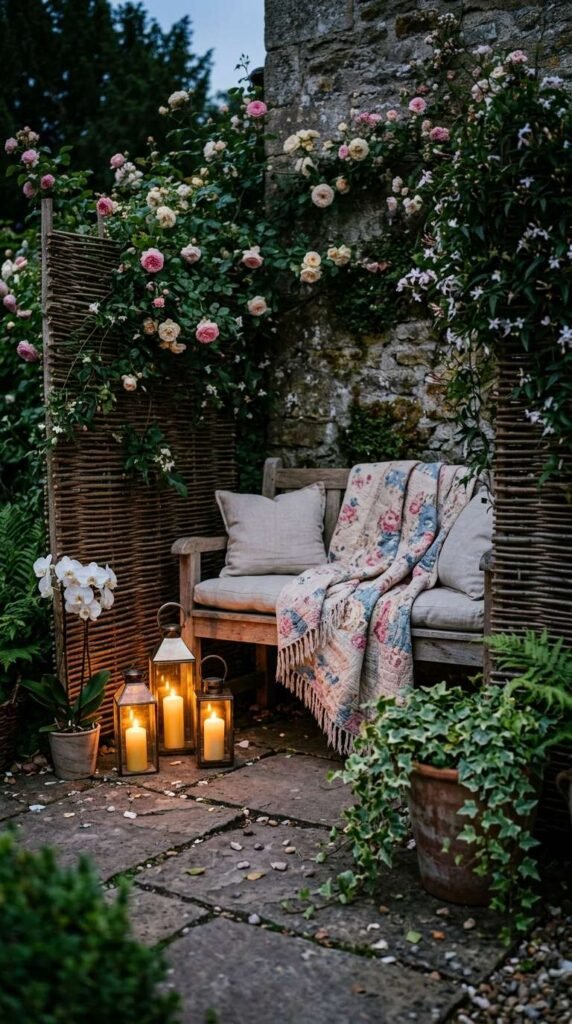
Metal and glass are the materials here, in a small nook lit by lanterns instead of overhead lights. Build the nook from willow hurdles, timber posts, or a hedge on three sides, in a space about 72 inches wide and 60 inches deep, with one chair and a small table inside. The enclosure and the warm light together make the nook feel sheltered, even in a large garden.
Use a mix of floor lanterns, hanging lanterns, and pillar candles in a single warm tone, with warm white fairy lights strung through any climbing jasmine or roses overhead. Set the lanterns on flat stones so they stand level, and keep the candles at least 12 inches from any dry foliage. Sit in the nook at dusk once, and you will know at once why it is worth the effort.
28. Burlap and Twine Wrapped Planters for the Simplest Rustic Garden Upgrade
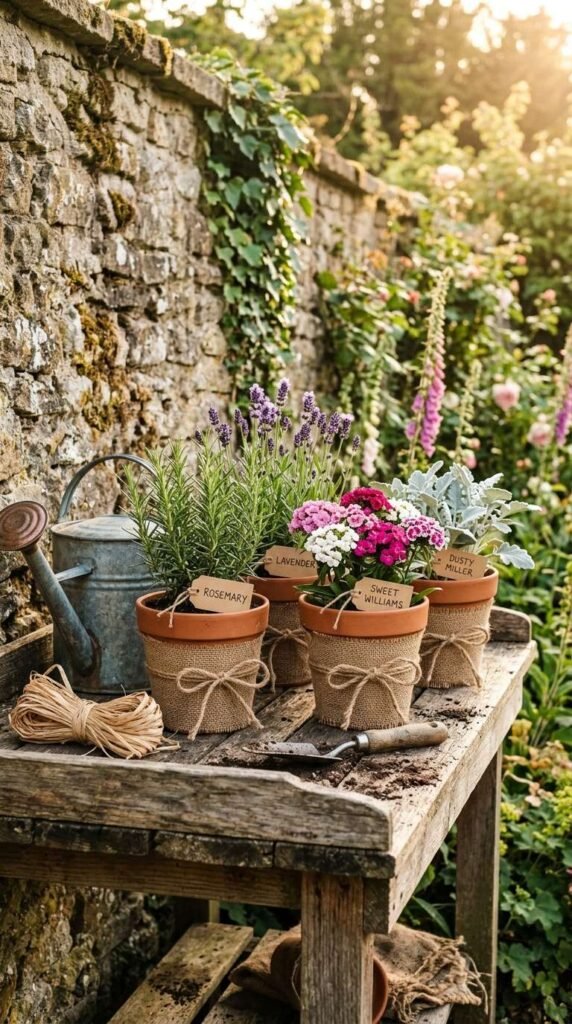
Natural fiber is the material here, in burlap that turns a plain plastic or terracotta pot into a styled one in two minutes. Cut a rectangle of burlap twice the height of the pot and long enough to overlap by 4 to 5 inches around it, fold the top edge down by 1 inch to make a clean rim, then wrap it around the pot and tie it with two or three rounds of jute twine.
Tuck a small sprig of dried lavender or a rosemary sprig under the twine before you tie the bow, for a detail that shows up well in a photo. For outdoor use in a wet climate, choose waxed burlap or a synthetic hessian weave that resists rotting, which will last through a full season. Replace the wrap each spring, since even waxed burlap wears thin after a year outside.
29. A Pallet Wood Vertical Garden Wall for the Ultimate Small Space Garden Decor
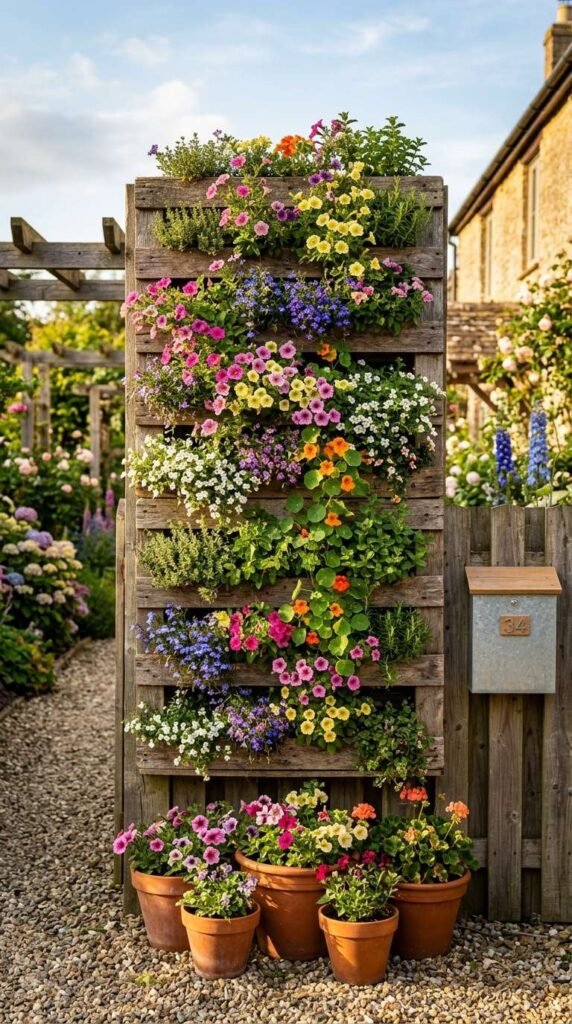
Wood is the material here, in a pallet that turns a bare wall into a living wall. A standard pallet about 48 inches tall and 40 inches wide, stood upright against a sunny wall, holds a dozen small plants in its pockets, and it uses no floor space at all. That makes it the best choice in this list for a small courtyard, a balcony, or a narrow side garden.
Choose a pallet stamped HT, for heat treated, not MB, for methyl bromide treated, since the second type carries chemical residues that do not belong near food or bare soil. Line each pocket with landscape fabric stapled firmly in place, fill it with compost mixed with water retaining gel crystals, since a vertical garden dries out faster than a ground level pot, and plant trailing annuals or strawberries thickly so the wall fills in fast.
Frequently Asked Questions About Rustic Garden Decor Ideas
1. What defines rustic garden decor?
Rustic garden decor uses natural, weathered, and handcrafted materials such as reclaimed wood, aged terracotta, wrought iron, and stone, with informal planting that feels organic and unhurried. The style welcomes imperfection, which makes it one of the most forgiving ways to decorate outdoors.
2. How do I start creating a rustic garden?
Start with two or three natural material pieces, such as a wooden planter box, a terracotta pot cluster, or a reclaimed wood bench, to set the foundation. Add climbing plants, vintage tools, and a stone path over time, so the garden looks collected rather than installed all at once.
3. What plants suit a rustic garden best?
Lavender, wild roses, foxglove, yarrow, sunflowers, rosemary, thyme, and climbing hydrangea all suit a rustic garden. These informal, abundant plants reinforce the natural charm and unhurried character of the style.
4. What materials work best for rustic garden decor?
Reclaimed wood, weathered terracotta, wrought iron, natural stone, galvanized metal, wicker, and aged brick are the most authentic materials for rustic garden decor. These materials weather well outdoors and gain character with each season.
5. How do I add lighting to a rustic garden?
Hang mason jar lanterns from shepherd hooks, string warm white fairy lights through branches, or set solar lanterns along a path. Warm amber bulbs near 2700K suit the cozy feel of a rustic garden best after sunset.
6. What furniture works best in a rustic garden?
A reclaimed wood bench, a wrought iron bistro table and chairs, a wooden swing, or a weathered Adirondack chair all suit a rustic garden. Choose furniture that develops a natural patina over time rather than pieces that need constant care to keep their new look.
7. How do I create a rustic garden on a budget?
Use old wooden crates as planters, mason jars as candle holders, and secondhand terracotta pots from thrift stores. These low cost approaches often make a garden look more authentic than expensive purpose made decor pieces.
8. How do I style a rustic garden entrance?
Frame the entrance with a reclaimed wood or wrought iron arbor draped in climbing roses, jasmine, or wisteria. Place large terracotta pots with lavender or trailing ivy on each side to finish the welcome.
9. How do I add water features to a rustic garden?
A moss covered stone birdbath, a galvanized metal trough, or a reclaimed wood barrel pond all add water to a rustic garden in a natural way. Set the feature where it catches dappled light, with low plants around it so it looks part of the garden.
10. How do I keep my rustic garden looking beautiful year round?
Plant evergreen shrubs, ornamental grasses, and seasonal flowering perennials, so the garden keeps its structure and texture in every season. Refresh the terracotta pots each season, and add lanterns and string lights for warmth in winter.
Conclusion
Pick the material you like most, wood, stone, metal, or terracotta, and start with one idea from it this weekend. A cedar planter box by the fence, a flagstone path through the lawn, a galvanized watering can by the door, or a cluster of terracotta pots by a bench will show you how the rest of the garden should grow. Add pieces one at a time, keep the colors natural, and let the materials age into their look. Save this post to your garden decor board so you can find the idea again when you are ready for the next one.