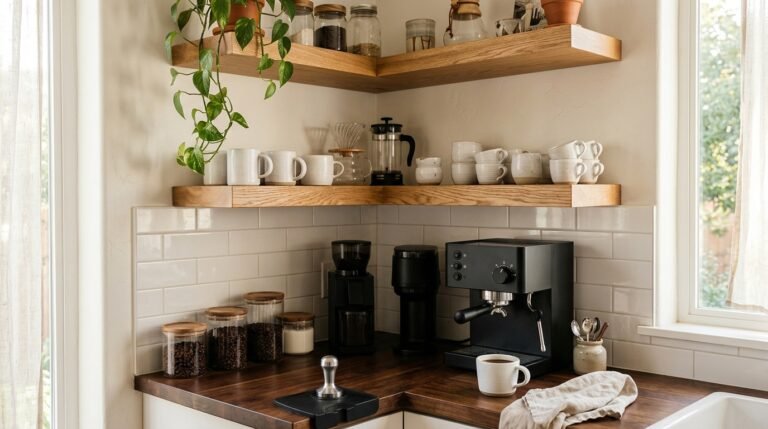
Ever taken out the trash twice in one evening Or squeezed a bin into a spot where it just doesn’t fit Choosing what size kitchen trash can your home needs is easier than it sounds. This guide shares 21 practical ideas, from slim apartment bins to hidden pull-out drawers and family-size cans. I’ve noticed that most people pick a bin by looks alone, then fight overflowing bags every week. Here you’ll find real sizes, simple measuring tips, and styling details that make the right choice clear. Whether your kitchen is tiny, busy, or beautifully open-plan, there’s an idea here to save, try, and love.
13 Gallon Standard Bin
- Fits standard kitchen trash bags found in most stores
- Holds a day or two of family waste
- Keeps the kitchen tidy without extra bins
- Works best in homes of three to five people
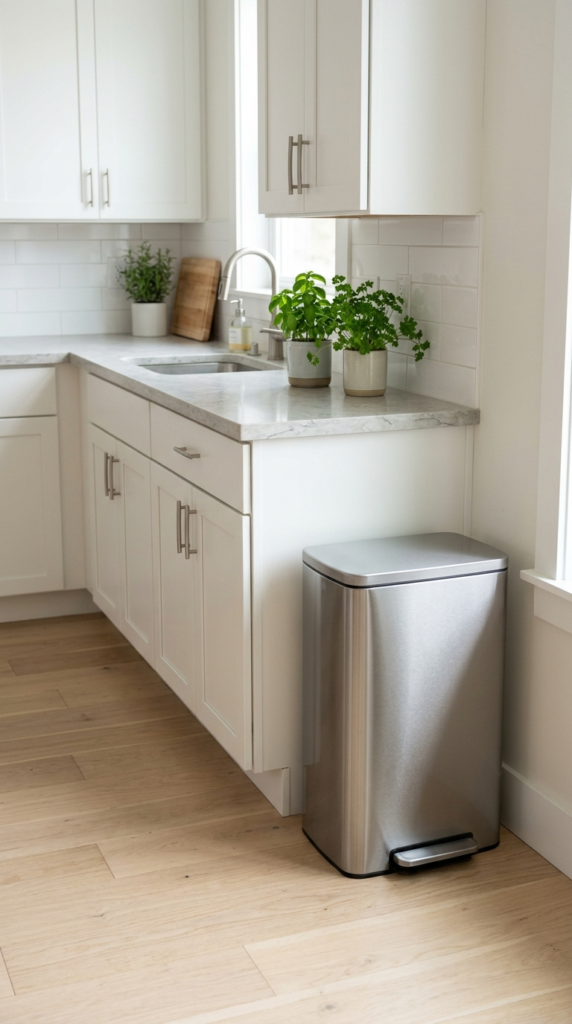
Ever taken out the trash twice in one evening? A 13-gallon bin usually ends that. It is the classic size for a reason, because it matches the tall kitchen bags sold in nearly every store. The shape is tall and narrow, so it tucks beside a cabinet without stealing floor space. If you have ever wondered what size kitchen trash can suits most households, this is the safest starting point. Choose a brushed steel or matte finish, and it blends into the room instead of fighting it. A step pedal keeps your hands free while you cook, which feels easy.
Bigger is not always better when it comes to bins. In my experience, 13 gallons is the sweet spot for most families. Smaller bins fill up before the day ends, while bigger ones become bulky and smelly. Measure the opening of your cabinet or the empty corner where the bin will sit, and leave about two inches on each side for easy movement. Look for a model with a removable inner bucket, because it makes cleaning far simpler. Pick a lid that closes softly, and the kitchen stays quiet. Keep spare bags nearby.
Slim Under Counter Bin
- Slides into narrow gaps next to appliances
- Ideal for small kitchens, studios, and rentals
- Keeps walkways clear in tight layouts
- Usually holds 6 to 10 gallons, so plan to empty it more often
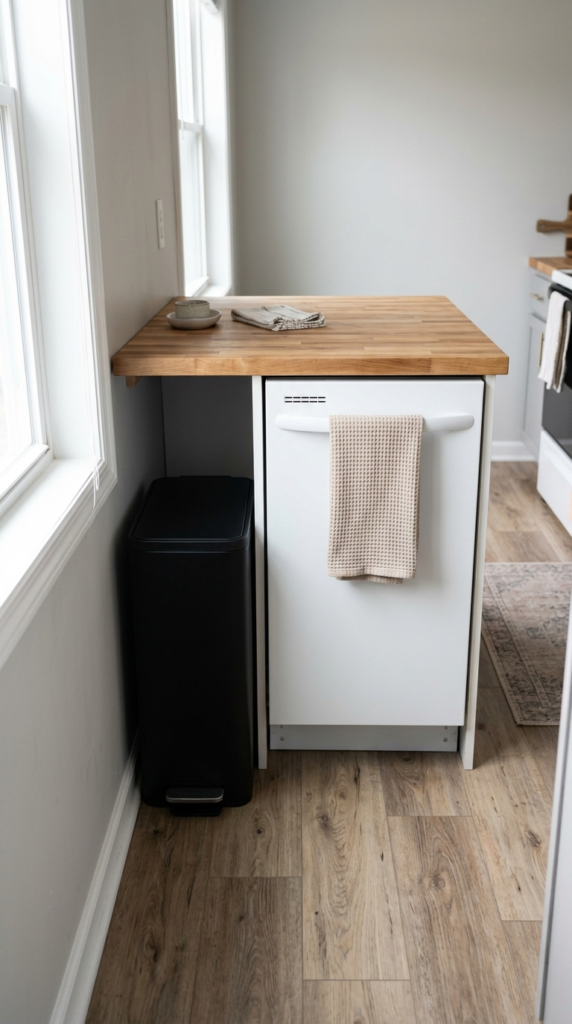
Tight on space? A slim bin can save the day. Rectangular models in the 6 to 10 gallon range slip neatly beside a dishwasher or fridge, using gaps that would otherwise go to waste. The flat back sits flush against the wall, so nothing sticks out into your walkway. In studio apartments and small galley kitchens, that extra inch really matters. Choose a matte black or soft white finish, and it looks like part of the cabinetry. Add a pedal lid, and you keep odors hidden while still cooking comfortably. It makes a cramped kitchen feel calmer.
I’ve seen this work well in rentals where cabinets cannot be changed. The trade-off is capacity, because slim bins fill faster than standard ones. If you cook often, expect to empty it every day or two. Measure the gap first, including the width, depth, and height of the lid when open. Leave a little room so your hand fits easily around the handle. Many people pair a slim bin with a small compost pail on the counter, which keeps food scraps out and the main bin lighter. Choose tough, odor-blocking liners, and the setup stays fresh, simple, and surprisingly stylish.
Pull Out Cabinet Bin
- Hides the bin completely behind a cabinet door
- Opens with a gentle pull or soft touch
- Often splits into two bins for trash and recycling
- Needs a cabinet at least 15 inches wide
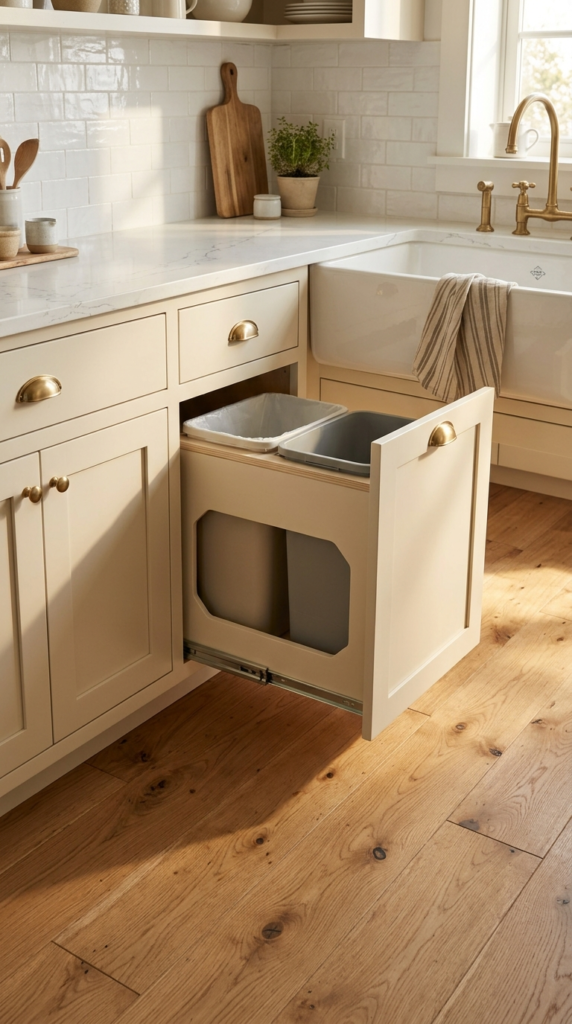
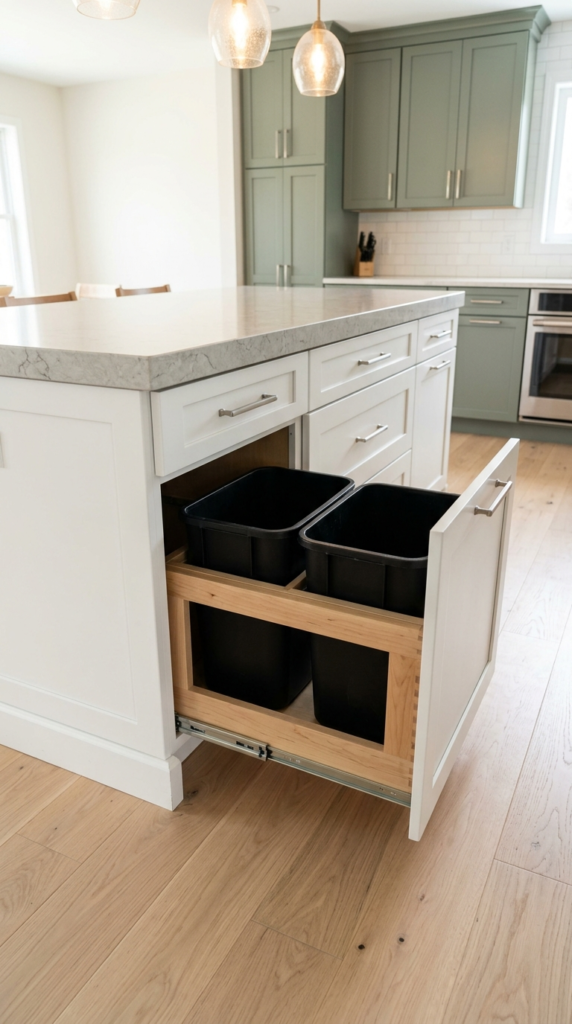
Out of sight, out of mind: that is the beauty of a hidden bin. A pull-out cabinet system tucks the trash behind a door, so your kitchen looks calm and finished. Most double units hold two 8 to 10 gallon buckets, perfect for separating recycling from everyday waste. The drawer glides out smoothly with one hand, even when you are carrying a cutting board full of scraps. Picture clean cabinet fronts, no plastic lids, and no bin in the corner. It is one of the nicest ways to raise the look of a kitchen without changing the layout.
In my experience, measuring is the step people skip, and it causes the most regret. Check the inside width, depth, and height of your cabinet, then subtract room for the slides and door hinges. Most systems need a cabinet at least 15 inches wide. I’ve noticed that soft-close glides last longer and feel better every day. Choose buckets with handles and lids, because carrying them to the outdoor bin should be easy. If you are remodeling, plan the spot near the sink or prep area, so scraps travel only a step or two.
please also read: 20 kitchen island ideas
Dual Sorting Bins
- Gives trash and recycling a clear home side by side
- Saves floor space compared with two separate cans
- Makes sorting easy for kids and guests
- Works best with at least 10 gallons per side
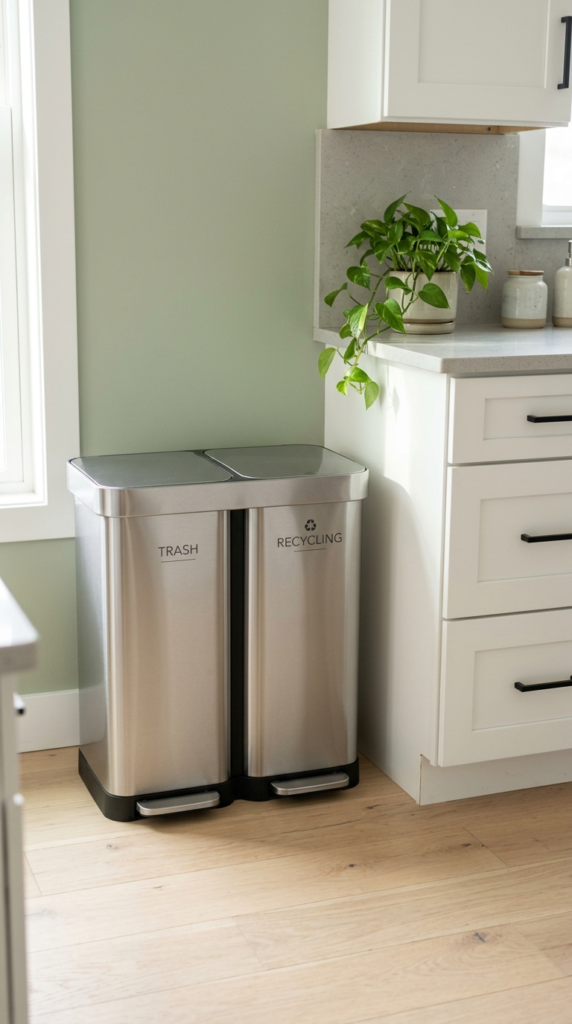
Sorting waste should not feel like a chore. A dual bin puts trash and recycling side by side, so every item has a clear home the moment you toss it. Most models split two 8 to 10 gallon compartments inside one tidy frame, which saves floor space compared with two separate cans. Picture a sleek steel unit beside the cabinets, with matching lids and clear labels. It looks organized, and it helps everyone in the house sort without thinking. Kids and guests learn the system fast, since the choice is obvious. The kitchen feels calmer and cleaner.
In my experience, the biggest mistake is buying a dual bin that is too small for your household. I’ve noticed that recycling often fills faster than trash, especially with boxes and bottles. Look for a unit where each side holds at least 10 gallons, and check that the bags fit properly. Measure your floor space first, including room for the lids to swing open. Choose buckets with removable handles so emptying feels easy. Place the bin near the prep area rather than across the room, and people actually use it. Rinse containers before recycling, and odors stay under control.
Countertop Compost Pail
- Keeps food scraps out of the main bin
- Holds about 1 to 1.5 gallons, ideal for daily prep
- Charcoal filters help block odors
- Makes the main bin lighter and less smelly
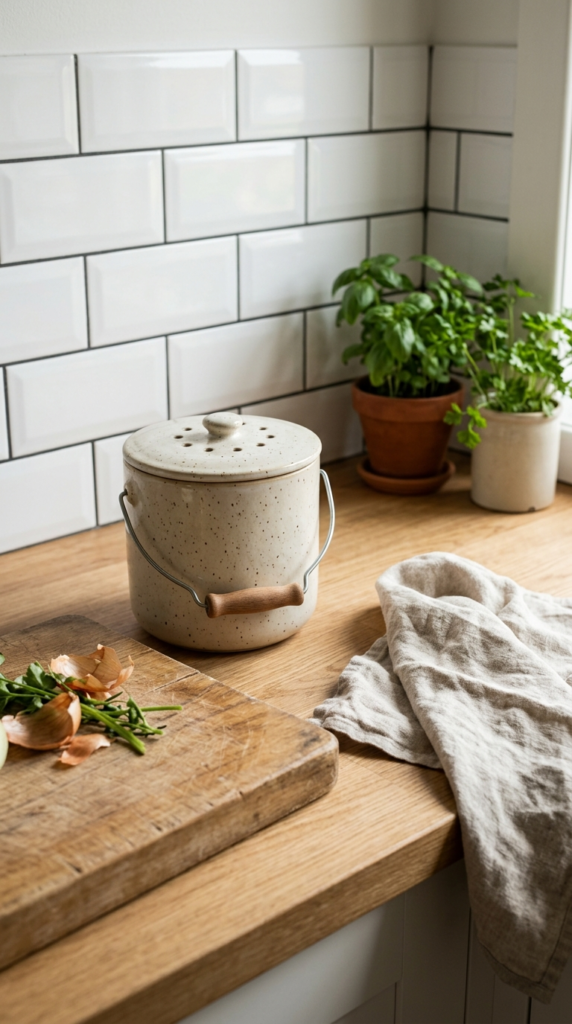
Meet the tiny bin that makes a big difference. A countertop compost pail catches peels, coffee grounds, and eggshells right where you chop, so you skip countless trips across the room. Most hold about one to one and a half gallons, which suits a small household for a day or two. Picture a ceramic or steel pail in cream or soft gray, sitting neatly beside the cutting board. It looks like decor, not waste. Because scraps leave the main bin, your larger can stays lighter, drier, and far less smelly. That small shift changes how the whole kitchen feels.
I’ve seen this work well in homes that cook fresh meals most nights. Food scraps are heavy and wet, and they are the main cause of bad smells in a regular bin. Empty the pail every day or two, and rinse it with warm soapy water. Replace charcoal filters about every three months. Choose a lid that closes snugly, because fruit flies love open containers. If you have no curbside compost pickup, check for a local drop-off or try a small backyard setup. Fewer scraps also means a smaller main bin can work.
Touch Free Sensor Bin
- Opens with a wave, so messy hands stay clean
- Most models hold 13 to 16 gallons for family use
- Closed lid helps keep odors and pests out
- Needs batteries or a rechargeable port
Hands full of raw chicken? Wave and the lid lifts. A touch-free sensor bin keeps germs off handles and makes cooking feel smoother. Most models hold 13 to 16 gallons, so they suit busy family kitchens as well as shared apartments. The lid rises silently, and a gentle close keeps odors locked inside. Picture a sleek stainless body beside handleless cabinets, looking like a small appliance rather than a trash can. It feels modern, clean, and a little bit luxurious. Once you use one during dinner prep, a pedal can feels old-fashioned.
In my experience, sensor bins live or die by their sensors. I’ve noticed that cheap models open at random or lag behind your hand, which gets annoying fast. Look for adjustable sensitivity and a rechargeable battery, because replacing batteries every month is a hassle. Leave about two inches of clearance behind the bin so the lid can open fully. Keep the sensor eye clean with a soft cloth, since splashes can block it. Choose a model with a manual open button for dead batteries. Pick the right bag size, and a snug fit keeps the liner hidden and neat.

Door Mounted Bin
- Uses hidden space inside the sink cabinet
- Keeps floors clear in small kitchens
- Installs with a few screws, no remodel needed
- Usually holds 6 to 8 gallons
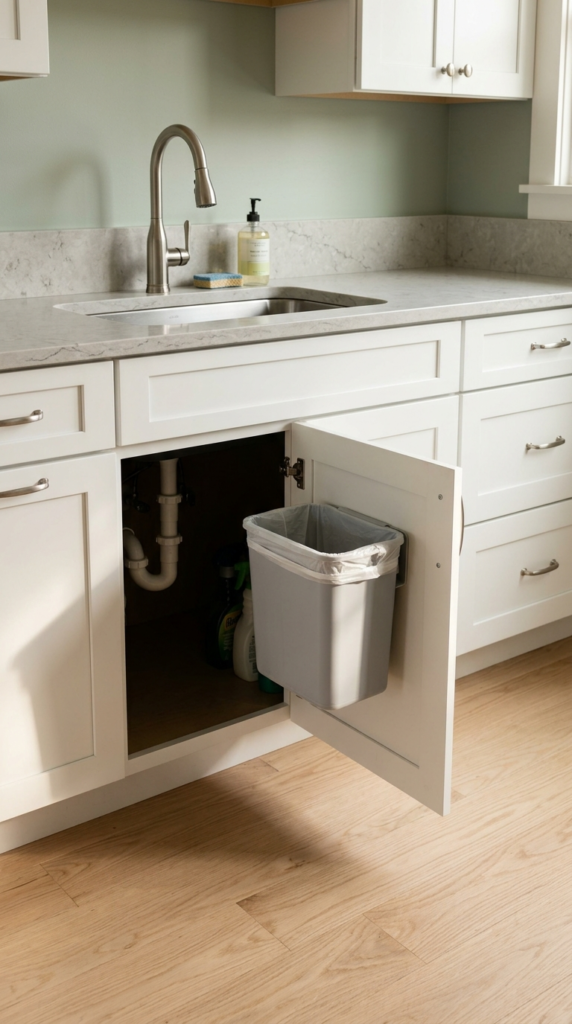
Want a bin that vanishes the moment you close the door? A door-mounted bin hangs on the inside of a cabinet, usually under the sink, and swings out when you open it. It uses space you already have, so no floor area is lost. Most hold 6 to 8 gallons, which suits couples, small families, and light cooks. Picture clean cabinet fronts and a calm, clutter-free corner. It is a quick, budget-friendly upgrade that needs only a few screws. Many renters love it because nothing permanent changes, and the cabinet stays tidy, quiet, and ready.
I’ve noticed that the biggest problem under a sink is pipes, not space. Measure the gap around the drain and garbage disposal before buying, and check that the door still closes fully with the bin attached. Choose a model with a sturdy rail, because a full bag gets heavy quickly. In my experience, a lid helps contain smells in a damp cabinet. Look for removable buckets so cleaning is simple. If the cabinet is narrow, pick a slim frame under 10 inches wide. Take out the bag often, since small bins fill fast, and the cabinet stays fresh.
Large Family Bin
- Handles a full week of waste for big households
- Cuts down daily trips to the outdoor bin
- Works well for families of five or more
- Needs about 17 to 20 inches of floor space
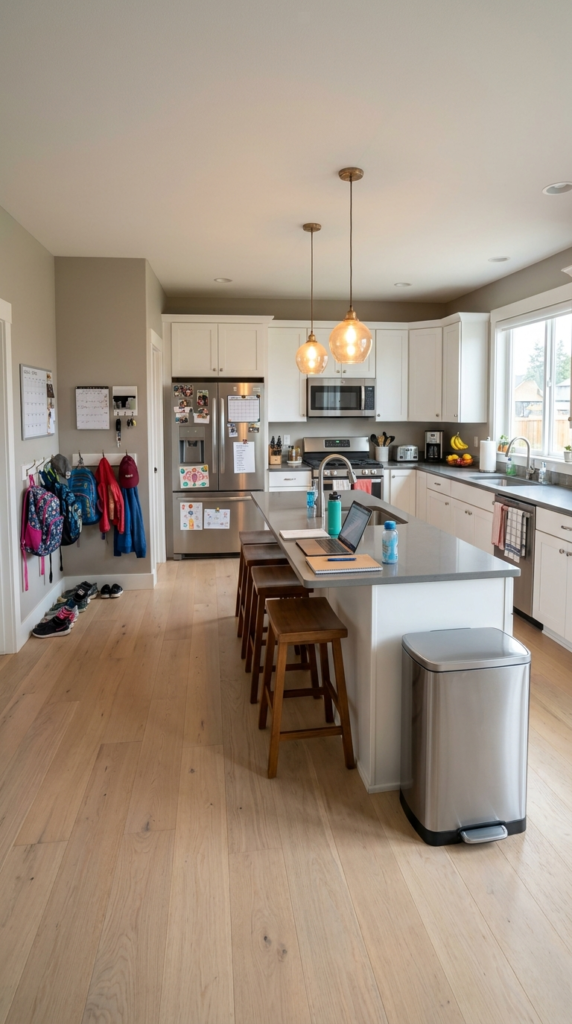
Big family, big mess? A larger bin keeps up. Models from 16 to 30 gallons suit households of five or more, where meals, snacks, and packaging pile up fast. Fewer bag changes mean fewer interruptions during dinner rush. Picture a tall steel can beside the cabinets, lid closed, holding everything without bulging. If you are still asking what size kitchen trash can works for a busy home, this is often the answer. Choose a sturdy frame with a wide pedal and a lid that opens high, so tossing out large boxes feels easy and clean.
I’ve seen this work well in homes with teenagers and weekly pickup. Bigger bins save time, but they come with trade-offs. A full 30-gallon bag can weigh a lot, so lifting it gets tough. That’s why many designers recommend staying near 20 gallons for indoor use. Check that bags fit snugly, because loose liners slip inside. Place the can where you have room to open the lid fully and step around it. Wipe the inside monthly, and add a little baking soda at the bottom. Keep recycling separate, and the main bin stays lighter and fresher.
Round Corner Bin
- Fits awkward corners that waste space
- Round shape softens sharp kitchen lines
- Usually holds 8 to 12 gallons
- Needs round-shaped or flexible bags
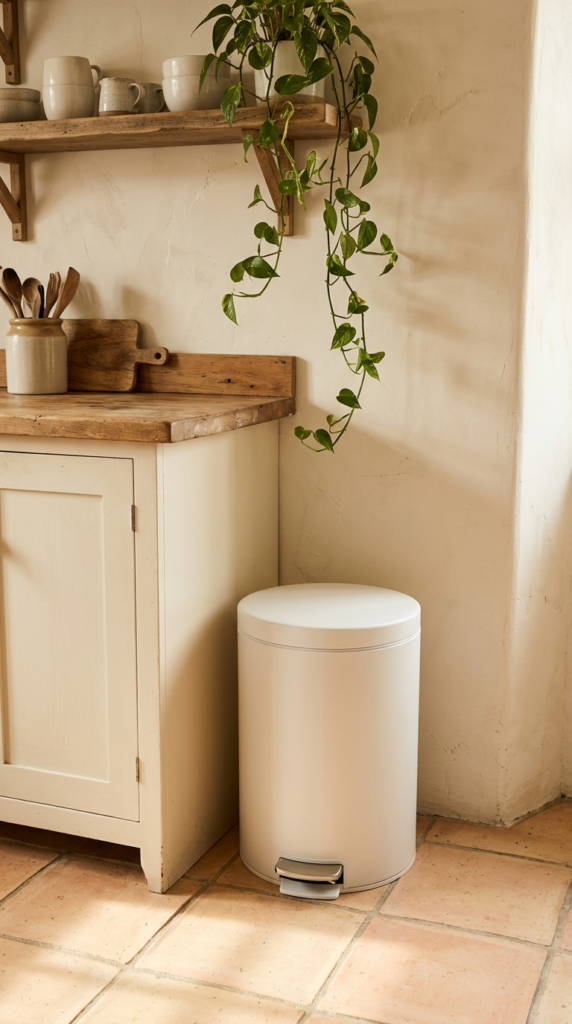
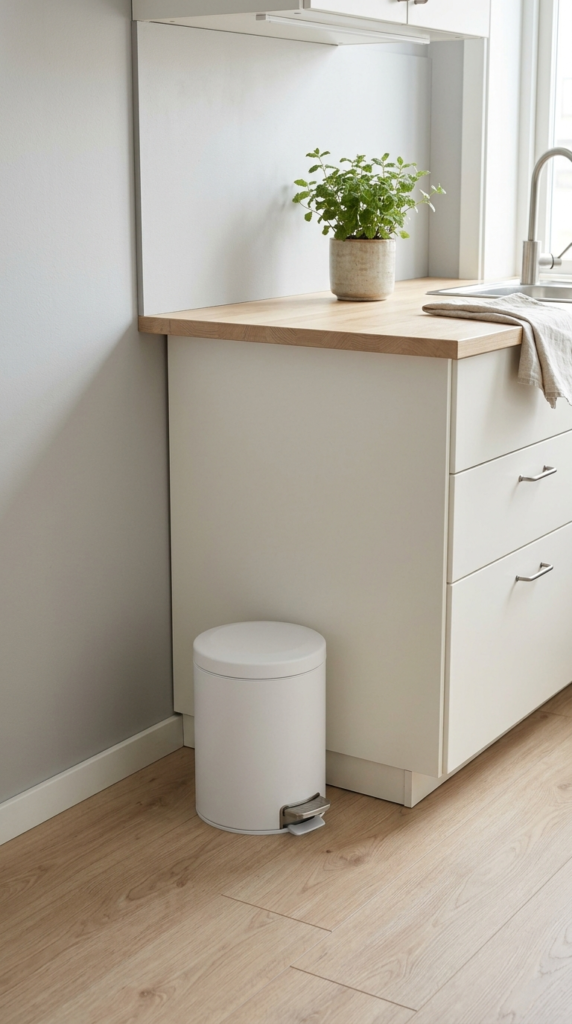
Awkward corners finally get a job. A round bin fits snugly into the tight spots where a square can would stick out, turning forgotten space into something useful. Most round models hold 8 to 12 gallons, which suits couples and small families. The curved shape also softens hard cabinet lines, so the kitchen feels gentler and more relaxed. Picture a matte white bin tucked beside warm wood, with a small plant above it. It looks like decor, not clutter. Choose a pedal lid for hands-free use, and the corner stays neat while you cook dinner.
In my experience, bag fit is the one thing people forget with round bins. Standard tall bags often bunch up or slip, so buy liners made for round cans, or choose drawstring bags in the right gallon size. Measure the corner first, including the swing of the lid, because round lids need clear space above. I’ve noticed that pedal placement matters too, so keep the front of the bin free for your foot. Pick a model with a removable inner bucket for easy cleaning. Check the base for rubber feet, which stop sliding on smooth floors.
Pet Proof Locking Bin
- Keeps curious dogs, cats, and toddlers out
- A latch or twist lid stops tipping and raiding
- A heavy base keeps the can steady
- Usually holds 10 to 13 gallons
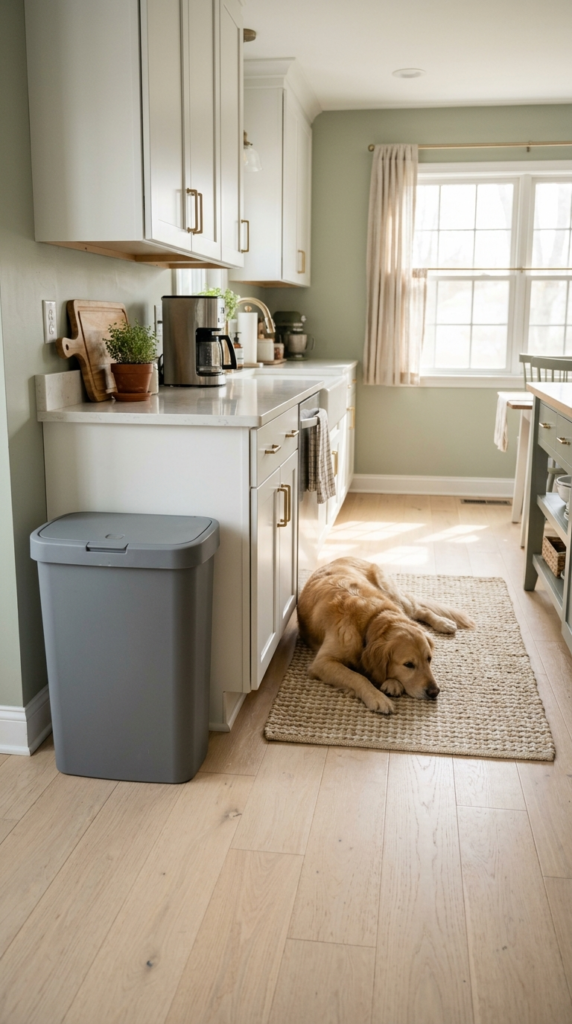
Is your dog treating the trash like a buffet? A locking bin solves that fast. These cans use a latch, a twist lid, or a weighted flap that curious paws cannot pop open. Picture a sturdy matte gray bin sitting calmly beside the cabinets while your pet naps nearby. It keeps smells inside, spilled scraps off the floor, and your evenings stress free. Most pet-friendly models hold 10 to 13 gallons, which suits everyday family cooking. You also skip the hassle of hiding the bin behind a cabinet door. It stays visible, tidy, and secure, and it looks stylish.
I’ve noticed that pets learn quickly, so a weak latch rarely lasts. In my experience, the best designs lock with a firm click or a twist that needs real thumbs. Test the lid before you commit by pushing it from the side, the way a determined nose would. Heavy bases help, because light cans tip over easily, so add rubber feet if the floor is smooth. Wrap meat scraps and fish bones in a small bag first, since pets can smell them through almost any lid. Choose a removable inner bucket, and cleaning stays quick, simple, and less unpleasant.
Wooden Bin Enclosure
- Turns a plain bin into a piece of furniture
- Hides the can while keeping it freestanding
- The top surface doubles as a small display shelf
- Works in rustic, farmhouse, and modern kitchens
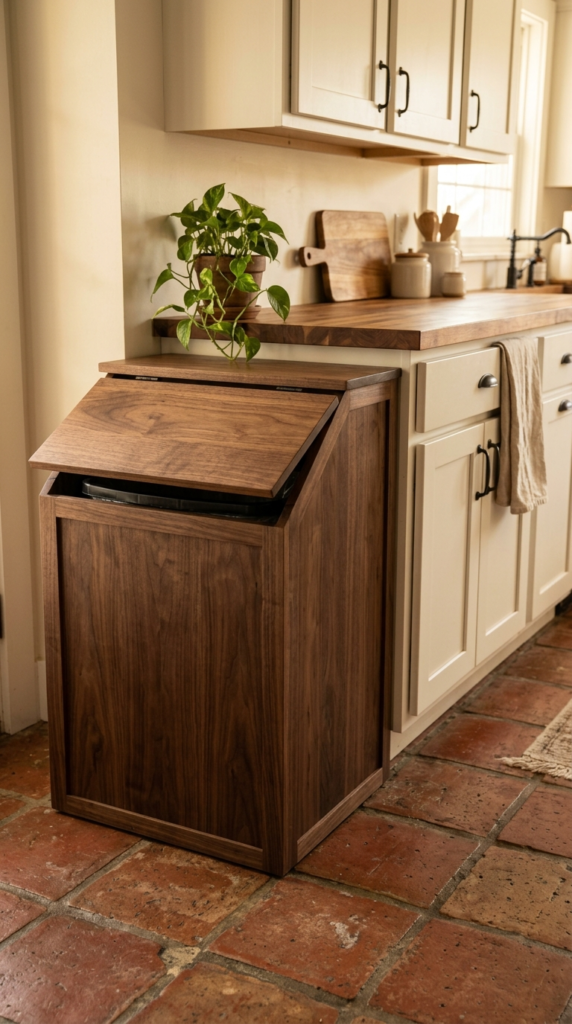
What if your trash can looked like furniture? A wooden enclosure wraps a standard bin in warm timber, with a hinged lid on top and a neat frame around the sides. Suddenly the plastic or steel can disappears, and the corner feels designed. Most enclosures fit 10 to 13 gallon bins, so you keep a familiar size without the clunky look. Picture rich walnut grain beside white cabinets, with a small plant on top. It adds texture, hides clutter, and gives the room a calm, finished feeling that guests notice right away.
I’ve seen this work well in open-plan homes, where the bin sits in plain view of the living room. Measure your inner bin first, then choose an enclosure at least two inches larger on every side so the bin slides in easily. In my experience, a lid with a soft-close hinge stays quiet and lasts longer. Seal natural wood with a water-resistant finish, because spills and damp bags will stain bare timber. Check that the bag can lift out easily through the top. Add a small hook inside for spare liners, and the whole setup stays tidy.
Bag Storage Drawer
- Keeps spare liners right next to the bin
- Helps you match the right bag size every time
- Saves the hunt through cluttered cabinets
- A small drawer or box is enough
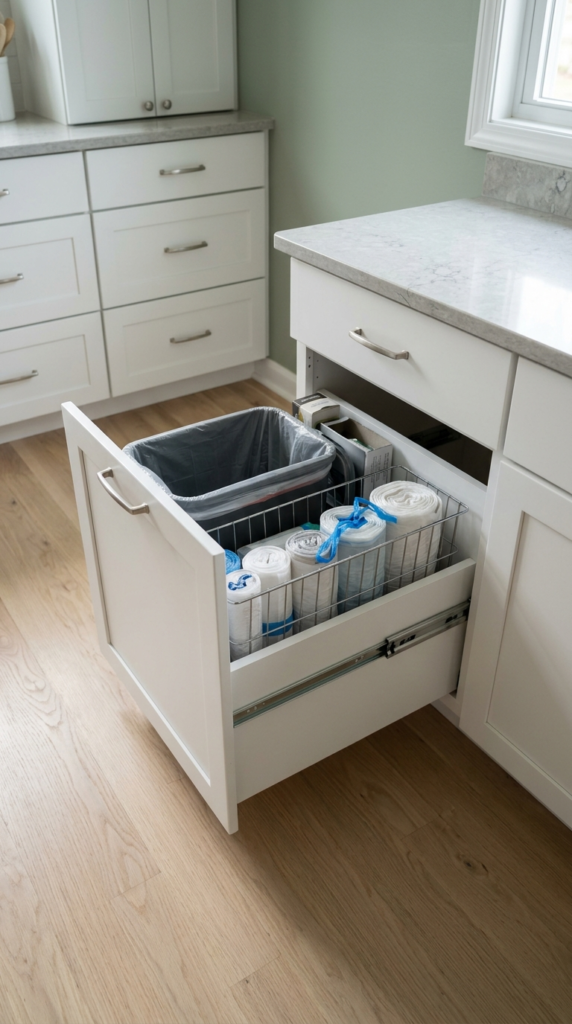
Ever reached for a new bag and found none? A dedicated bag drawer fixes that for good. Place a shallow drawer or a slim organizer right beside the bin, and roll liners so each one pulls off cleanly. Picture a neat row of fresh bags waiting beside the can, ready for the next swap. It saves time, cuts frustration, and keeps the cabinet under the sink free from messy, crumpled plastic. Even a small box inside the cabinet door works well. This tiny habit makes taking out the trash feel quick, calm, and almost effortless.
In my experience, wrong-sized bags cause most bin headaches. A bag that is too small slips inside, while one that is too large bunches and wastes plastic. I’ve noticed that writing the gallon size on the drawer or the box label solves this instantly. Match the liner to your bin: 13-gallon tall bags suit standard cans, and drawstring styles hold up better in bigger ones. Buy a multipack so you never run out. Keep a few spare sizes for guests and parties. Store bags flat and dry, and they stay easy to grab.
Apartment Mini Bin
- Fits studios, dorms, and tiny kitchens
- Usually holds 4 to 8 gallons
- Keeps walkways open and floors clear
- Encourages frequent emptying for a fresher space
Living alone or sharing a small flat? A mini bin might be all you need. Models between 4 and 8 gallons suit one or two people who cook lightly and eat out often. They fit beside a narrow cabinet, under a small counter, or on a shelf without crowding your walkway. Picture a soft white round bin with a quiet pedal, sitting calmly beside a small plant. It keeps the room open and easy to move through. Small bins also push you to empty waste often, which means fewer smells and a fresher kitchen every single day.
In my experience, tiny bins work best when you match them with the right habits. I’ve noticed that renters often buy a size too small, then fight with overflowing bags. Aim for at least 5 gallons if you cook at home most nights. Choose a lid that closes tightly, because small kitchens trap odors quickly. Look for a flat back so the bin sits flush against the wall. Pair it with a countertop compost pail, and the main bin stays lighter. Buy liners made for the exact size, and swapping bags becomes quick, clean, and simple.
Party Overflow Bin
- Handles extra waste from guests and holidays
- Stores away easily until the next event
- Bigger capacity means no mid-party bag changes
- Usually holds 20 to 30 gallons
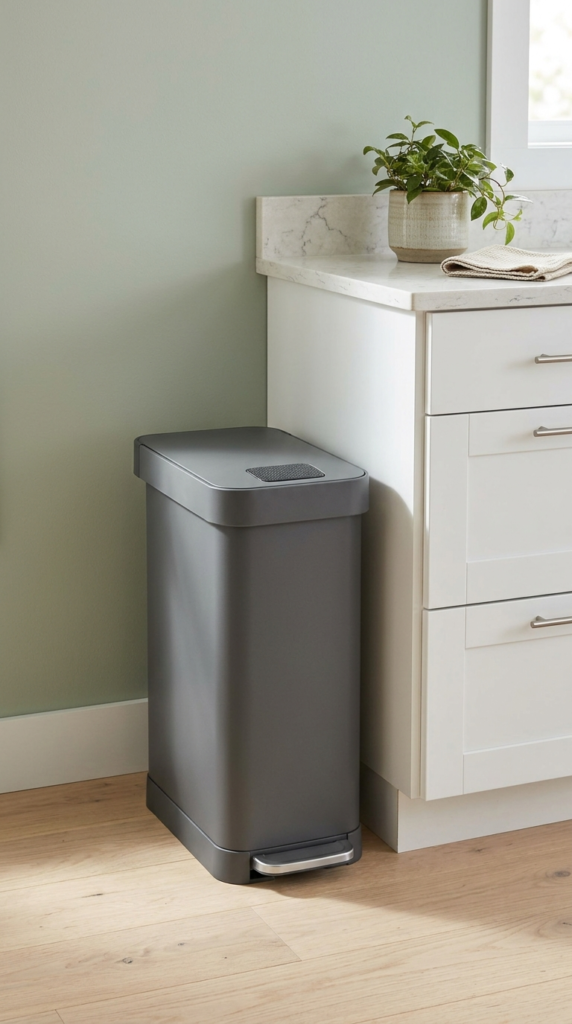
Hosting tonight? Trash piles up faster than you think. A party overflow bin gives you extra room for plates, cups, and packaging, so the main can never spill over while guests are laughing nearby. Models from 20 to 30 gallons work well, and many fold flat or stack for storage. Picture a tall steel bin standing quietly near the island, lid closed, hiding the mess. It keeps counters clear and the kitchen looking welcoming. Place it in a visible spot, and guests toss their own scraps, which means less cleanup for you later.
I’ve seen this work well at holiday dinners and birthday parties. Set the overflow bin a few steps from the food table, not right beside it, so guests can drop plates without crowding. In my experience, a second bin lined with a sturdy bag prevents the embarrassing moment of a ripped liner. Keep a separate box for bottles and cans, since they fill space fast. Check that the lid or opening is wide enough for large trays. After the event, empty it, rinse it, and store it in a closet or garage until next time.

Odor Blocking Lid Bin
- Charcoal filters absorb smells before they spread
- Tight lids keep flies and pests out
- Great for small kitchens and open-plan homes
- Filters need replacing every few months
Smell hits you before you even see the bin. That is why a sealed lid matters. An odor-blocking can uses a tight gasket or a charcoal filter to trap smells inside, so your kitchen stays fresh even after fish night. Most models hold 10 to 13 gallons, which keeps food waste from sitting too long. Picture a clean matte bin beside the cabinets, lid closed, with nothing to notice. It feels calm and cared for. This is especially helpful in open-plan homes, where kitchen smells drift straight into the living room.
In my experience, the can matters less than how you use it. I’ve noticed that most bad smells come from wet food waste sitting in a warm kitchen. Tie bags before they overflow, and wipe the rim weekly with a vinegar spray. Replace charcoal filters every two to three months, or they stop working. Sprinkle baking soda at the bottom of the bin for extra freshness. Choose a lid with a soft seal, because a loose one lets odors escape. Pair it with a compost pail, and the whole setup smells clean.
Island Trash Drawer
- Puts the bin right where you chop and prep
- Keeps walkways free of freestanding cans
- Fits two 8 to 10 gallon buckets in one drawer
- Needs a base cabinet at least 15 inches wide
Why walk across the kitchen with a handful of peels? An island trash drawer puts the bin exactly where the chopping happens. Slide it open with one hand, sweep scraps in, and close it with your hip. Most drawers hold two buckets of 8 to 10 gallons, so trash and recycling stay neatly apart. Picture clean island fronts with no plastic can in sight. It makes cooking faster and cleanup feel almost invisible. For anyone planning a remodel, it is one of the smartest places to build in waste storage because everything stays close, hidden, and easy to reach.
In my experience, the drawer only works if the hardware is strong. I’ve noticed that cheap slides sag once the buckets fill up, so choose full-extension, soft-close glides rated for at least 75 pounds. Measure the cabinet’s inside width and depth, then subtract space for the slide hardware. Keep the drawer away from the cooktop, since heat and grease do not mix with waste. Place it near the sink or main prep zone. Add a small rubber mat at the bottom of each bucket, and spills stay contained. Wipe the buckets monthly, and the drawer stays fresh.
Recycling Station Corner
- Gives paper, glass, and plastic their own clear spots
- Stacks vertically, so it uses very little floor space
- Makes sorting easy for kids and guests
- Works well in a pantry corner or mudroom nook
A tiny corner can become your smartest sorting spot. A recycling station stacks two or three small bins in a slim rack, so paper, glass, and plastic each land in the right place. It uses height instead of floor space, which suits narrow kitchens and pantry nooks. Picture neat labels, matching bins, and a woven basket for flattened boxes. Everything looks planned and calm. When the system is this simple, even kids and guests join in without being asked. Your main kitchen bin stays lighter, and the weekly trip to the curb feels quicker.
I’ve seen this work well in homes where recycling used to pile up in grocery bags. Check your local rules first, because some areas want everything mixed while others need strict sorting. Choose bins with handles, so carrying them outside is easy. In my experience, labels matter more than color, since people follow words faster than guesses. Rinse containers quickly before tossing them in, and odors stay away. Place the rack close to the main bin, not across the room, and the habit sticks. Keep a small flat basket nearby for cardboard, and the corner stays tidy.

Foot Pedal Step Bin
- Opens hands-free with no batteries or sensors
- Soft-close lids keep the kitchen quiet
- Metal pedals and hinges outlast cheap plastic ones
- Comes in sizes from 5 to 16 gallons
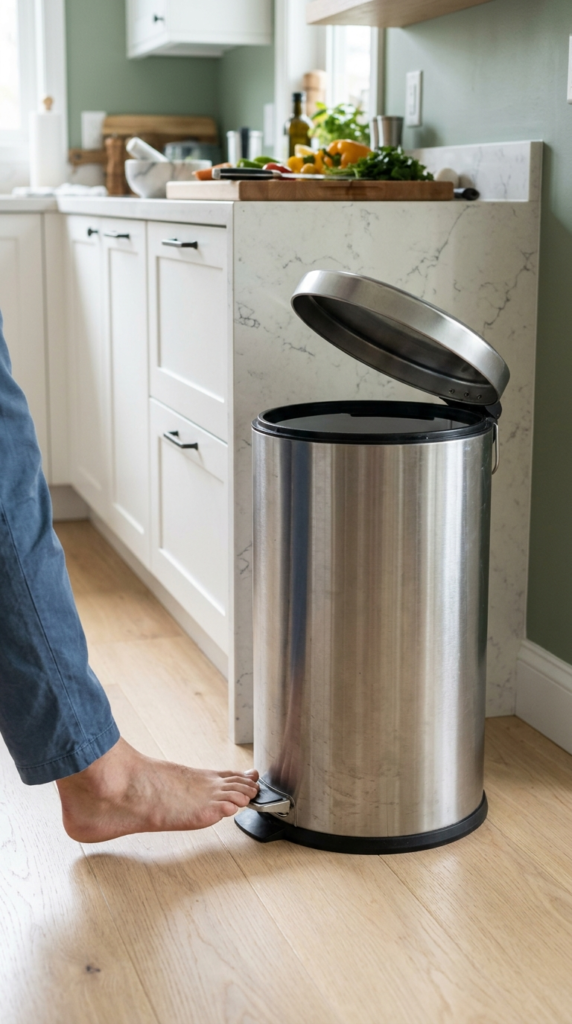
Hands covered in dough? Just tap the pedal. A foot-pedal bin is the simple, no-fuss favorite in kitchens everywhere because it needs no batteries, no sensors, and no learning curve. Your foot lifts the lid, and a soft-close hinge lowers it gently without a bang. Picture a steel bin by the counter, lid rising smoothly while you scrape a board clean. It keeps handles free of raw meat and sticky fingers. Pedal bins come in sizes from 5 to 16 gallons, so you can match one to a tiny apartment or a busy family.
In my experience, the pedal is the part that fails first. I’ve noticed that thin plastic pedals crack within a year, while metal ones with a steel rod last for years. Press the pedal in the store, if you can, and listen for a firm, smooth motion. Check that the bin has rubber feet or a wide base, because a light can slides when you step. Leave a little clear floor in front so your foot reaches easily. Choose a removable inner bucket, and cleaning stays quick. Wipe the pedal monthly, and it works smoothly.
Colorful Accent Bin
- Turns a boring utility item into a style piece
- Adds a pop of color without repainting
- Matches towels, stools, or a backsplash accent
- Easy and affordable to swap later
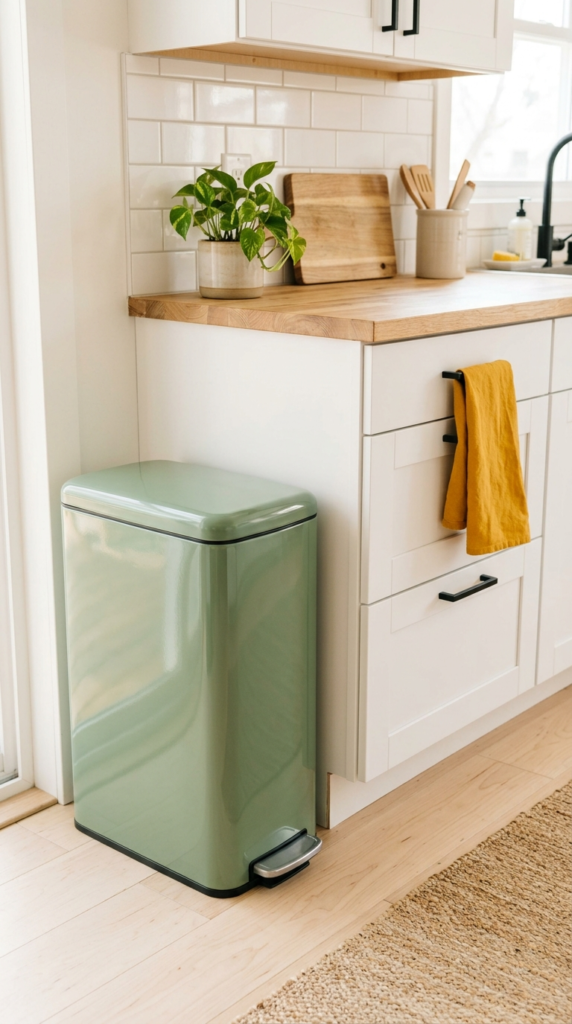
Who says a trash can has to be boring? A colorful bin adds a playful touch to a plain kitchen, and it costs far less than new paint. Sage green, mustard, blush pink, or deep navy can pick up a shade from your towels, stools, or tile. Picture a glossy green bin beside white cabinets, with a matching plant nearby. The whole corner suddenly looks styled on purpose. It is a quick, low-risk way to try a bold color, because swapping it later is simple. Small touches like this make a kitchen feel personal.
I’ve seen this work well in rentals, where walls and cabinets cannot change. Pick one accent color already in the room, and the bin looks intentional instead of random. In my experience, powder-coated steel holds color better than painted plastic, which chips near the pedal. Matte finishes hide fingerprints better than glossy ones, so choose according to your cooking habits. Measure the space first and match the size to your household, because looks should never beat function. Keep the surrounding counter simple, and the color stands out. Wipe it with a damp cloth weekly, and the shade stays bright.
Outdoor Curbside Bin
- Holds the full week’s waste from the kitchen
- Wheels make the walk to the curb easy
- Locking lids keep out animals and weather
- Most hold 32 to 96 gallons
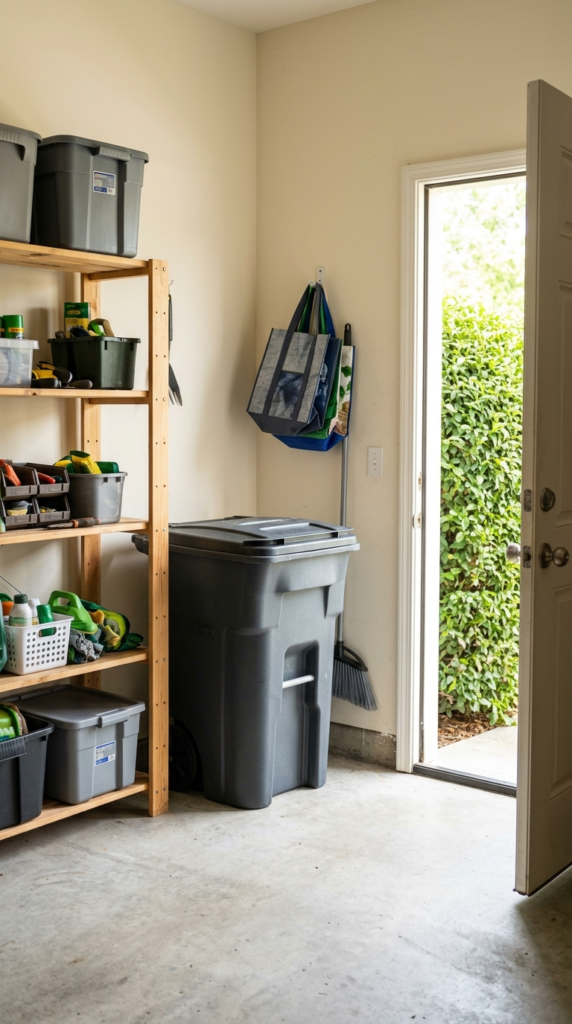
Your kitchen bin is only half the system. Where does all that waste go next? A sturdy outdoor bin with wheels and a tight lid takes over, holding the whole week until pickup day. Most curbside bins run from 32 to 96 gallons, and many cities supply one. Picture a tidy dark gray bin parked beside the garage door, lid shut, handle ready. It keeps odors outside and animals away. When the outdoor bin is right, you can use a smaller, more stylish can inside, since the heavy lifting happens out in the yard.
In my experience, many people buy an outdoor bin before checking local rules. Call your waste service or visit their website first, because some cities require specific bins or lid styles. I’ve noticed that wheels and a sturdy handle save backs on steep driveways. Place the bin on flat, solid ground and, if animals are a problem, add a simple strap or bungee over the lid. Rinse it with a hose every few months, and odors stay low. Keep it in shade when possible, because heat speeds up smells. A little routine keeps the whole system running smoothly.
Bin Placement Zone
- Puts the bin within one step of the sink and prep area
- Keeps it away from oven and fridge doors
- Leaves about 36 inches of clear walkway
- Makes any bin size feel easier to use
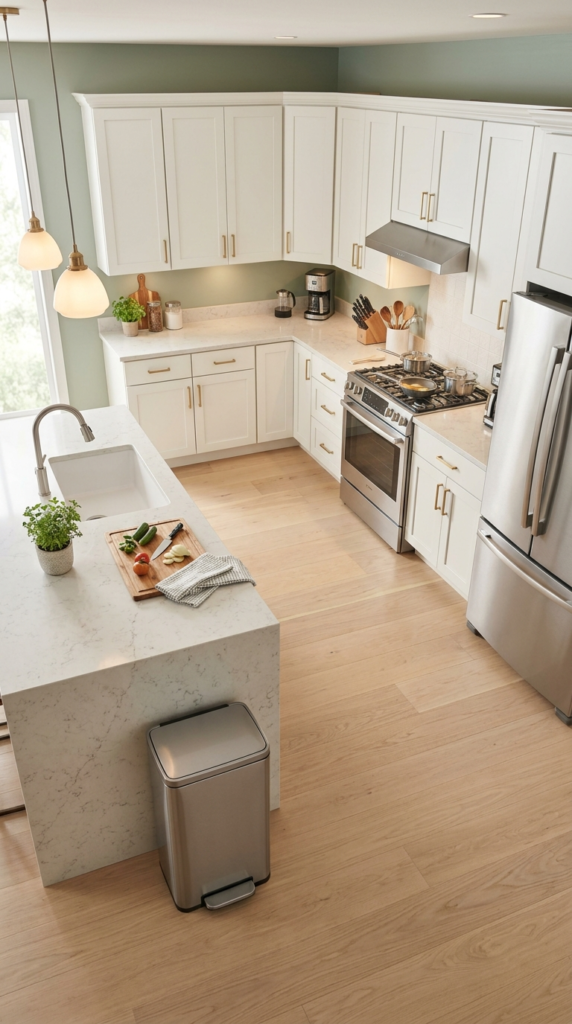
Size gets the spotlight, but placement matters just as much when you pick what size kitchen trash can to buy. The best spot sits within one step of the sink and prep counter, so scraps travel only a few inches. Picture a clear walkway, a bin tucked beside the cabinets, and nothing blocking the oven or fridge doors. Cooking suddenly flows better. A well-placed bin gets used every time, while a badly placed one collects clutter nearby. Even a small can feels roomy when it sits in the right zone, because you never fight it or work around it.
In my experience, the best spot is wherever you naturally drop scraps. I’ve noticed that people place bins by the door, then keep dropping peels on the counter. Stand at your sink and prep area, and notice where your hands go. Leave about 36 inches of walkway, and keep the bin clear of the oven, fridge, and dishwasher doors. Avoid placing it next to the stove, since heat speeds up odors. Test the spot for a week before committing to a cabinet or drawer, and adjust as needed. A simple trial saves money and frustration.
Conclusion
The right bin makes a kitchen feel calmer, cleaner, and easier to use every single day. I’ve seen how small choices like these can completely change the way a space works. Now you have 21 ideas to help you decide what size kitchen trash can truly suits your home, your habits, and your style. Save this post on Pinterest so you can come back whenever you need it. Pick one idea and try it in your own kitchen this week. Then share the article with a friend who’s tired of overflowing bins. A fresher kitchen starts with one smart choice.